Roula Khalaf, Editor of the FT, selects her favourite stories in this weekly newsletter.
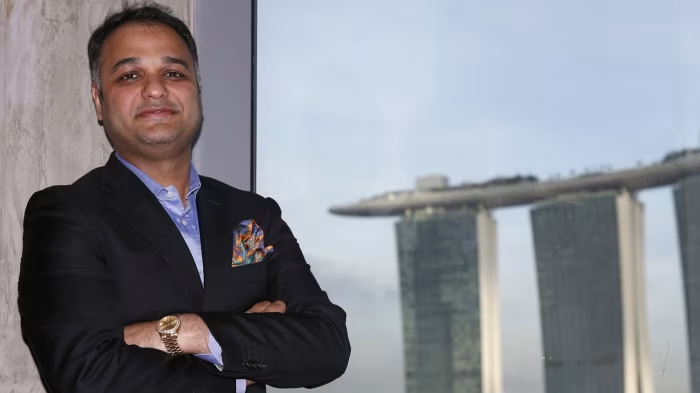
Indian business tycoon Prateek Gupta has denied funnelling millions of dollars to his wife or sprawling group of companies, the missing cash that Trafigura alleges disappeared as part of a huge fraud scheme.
The commodities trading house claims to have lost around $600mn when it became the victim of a “systemic fraud” that it alleges was perpetrated by Gupta and companies he controlled. Trafigura is suing the businessman in London’s High Court.
Gupta claimed on Thursday that he had no knowledge of where the money had gone, telling the court: “I cannot recollect the exact breakdown.”
“So you just lost hundreds of millions of dollars and you can’t remember where it went, is that right?” said Nathan Pillow KC, a lawyer representing Trafigura.
“I don’t have an answer to that,” said Gupta in response, giving evidence via video link on the second day of his testimony as a defendant.
“You don’t, do you, because you’re lying about it,” said Pillow, to which Gupta responded: “I’m not lying.”
Gupta argues that Trafigura’s former star nickel trader, Socrates Economou, orchestrated the scheme, which involved the transportation of purported nickel shipments that in fact contained various low-value materials. Economou staunchly denies he had any knowledge of the arrangement at the time.
Gupta, based in Dubai, denied when questioned that he had given the money to his wife or to other senior officials in his group of companies.
In response to Pillow’s suggestion that he had been “robbing Peter to pay Paul”, by using the money from Trafigura to “pay off other creditors in your business empire”, Gupta said: “No, I don’t agree with that.”
Gupta said in his witness statement that his company, UD Group, had been facing depleted cash reserves in early 2021, when the arrangement was ongoing.
Gupta claimed in court on Thursday that “substantial” sums went towards shipping costs and interest payments, but could not otherwise outline where the money paid by Trafigura for purported nickel shipments had gone.
Giving evidence in the case this week, the businessman repeatedly claimed that he did not oversee the day-to-day operations of the arrangement.
Nov 27 (Reuters) – The U.S. Securities and Exchange Commission is probing investment bank Jefferies (JEF.N), opens new tab over its relationship with bankrupt auto parts supplier First Brands Group, the Financial Times reported on Thursday, citing people familiar with the matter.
The SEC is seeking information from Jefferies about whether it gave investors in one of its funds enough information about their exposure to the auto business, the report said.
Sign up here.
Jefferies said in October that it had limited exposure to First Brands, which filed for Chapter 11 bankruptcy protection in September, and said any potential losses would be “readily absorbable.”
Jefferies’ Leucadia Asset Management fund, through its credit fund Point Bonita, held about $715 million in receivables linked to First Brands. The SEC is investigating whether Point Bonita’s investors were aware of the relationship, according to the FT report.
Jefferies declined to comment.
“The SEC does not comment on the existence or nonexistence of a possible investigation,” an agency spokesperson said.
First Brands did not respond to a Reuters request for comment.
UBS (UBSG.S), opens new tab said earlier this month it was winding down investment funds run by its hedge fund unit O’Connor, after suffering losses due to exposure to First Brands.
Reporting by Prerna Bedi in Bengaluru; Editing by Leslie Adler
Our Standards: The Thomson Reuters Trust Principles., opens new tab
The Jefferies Financial Group Inc. headquarters in New York, US, on Monday, Oct. 20, 2025.
Michael Nagle | Bloomberg | Getty Images
The U.S. Securities and Exchange Commission is investigating Jefferies’ relationship into bankrupt auto parts maker First Brands Group, The Financial Times reported Thursday.
The newspaper, citing people with knowledge of the matter, said the regulator is looking into whether Jefferies gave investors enough information on its Point Bonita fund’s exposure to the failed auto business.
The inquiry into internal controls and potential conflicts within the bank is at an early stage, the report said. It’s not clear whether it will result in any allegations of wrongdoing.
Jefferies came under pressure last month after its exposure to First Brands — which collapsed under a series of complex debt agreements — raised fears of other bad loans on Wall Street.
Jefferies, ytd performance
Shares of Jefferies are down more than 12% this quarter and 27% this year.
When asked for comment, an SEC spokesperson said the agency “does not comment on the existence or nonexistence of a possible investigation.”
Jefferies did not respond to CNBC’s request for comment.
EU to launch full-scale probe into Spanish deal, source says
Barcelona terminal acquisition is part of global bid
European Commission could demand concessions for approval
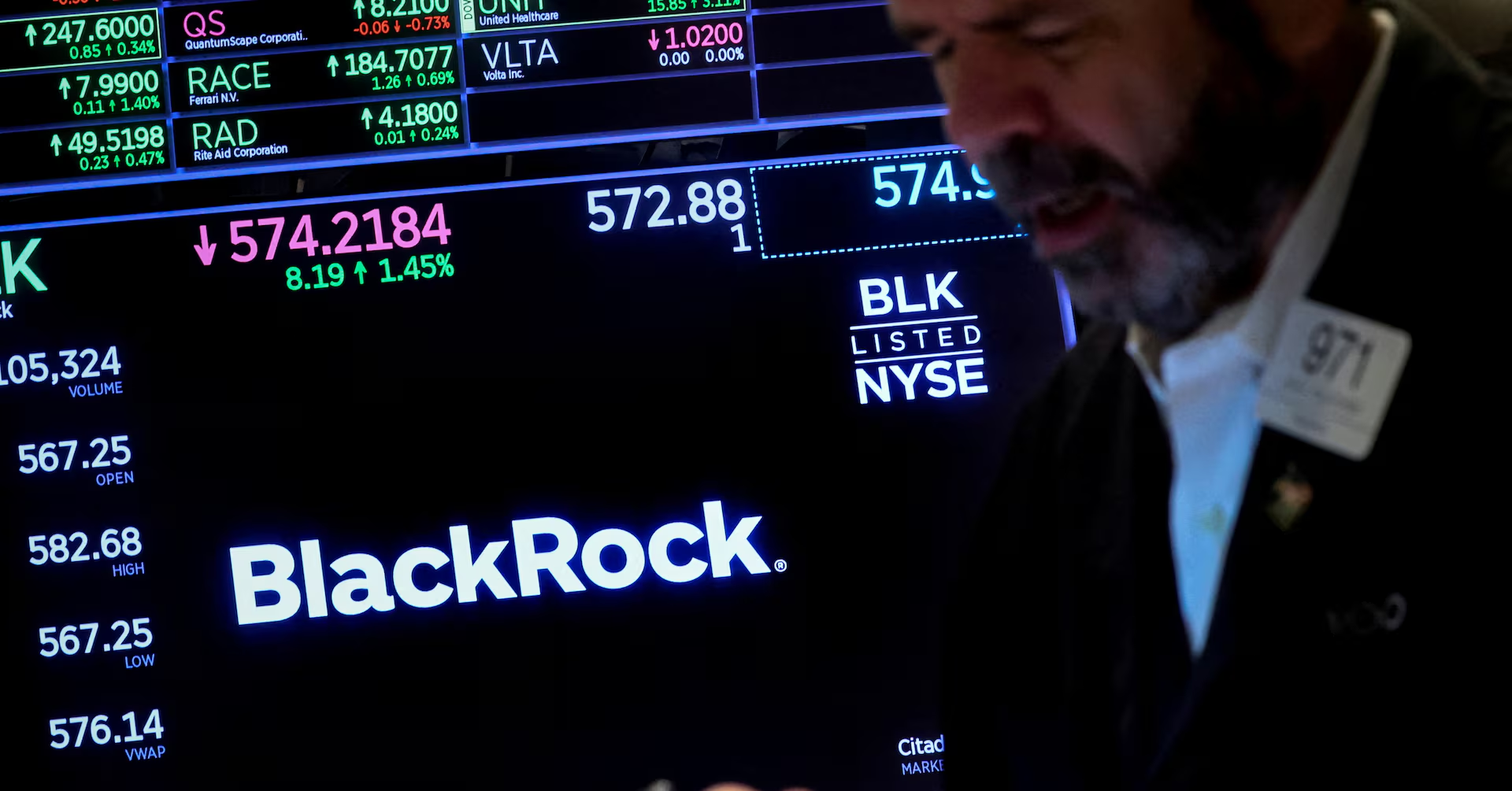
BRUSSELS, Nov 27 (Reuters) – BlackRock and MSC’s bid for most of CK Hutchison’s (0001.HK), opens new tab global port operations faces a hurdle in Europe with EU antitrust regulators set to investigate the Spanish portion of the deal, a person with direct knowledge of the matter said on Thursday.
Hong Kong tycoon Li Ka-shing’s CK Hutchison wants to sell its 80% holding in the $22.8 billion ports business, which encompasses 43 ports in 23 countries, a politically sensitive deal that has been caught up in China-U.S. tensions.
Sign up here.
The likely full-scale investigation by the European Commission, previously unreported, could see regulators demand concessions from BlackRock (BLK.N), opens new tab and MSC in return for clearing the Spanish deal.
The Commission declined to comment. BlackRock, MSC and Hutchison did not immediately respond to several emailed requests for comment.
CK Hutchison has interests in ports across Europe, including in Belgium, Poland and the Netherlands. It was not immediately clear if those other European parts of the global acquisition could also eventually come under scrutiny. The non-EU portions of the deal fall outside the EU’s review jurisdiction.
BARCELONA TERMINAL ACQUISITION UNDER EU SCRUTINY
The overall package, which includes two ports along the strategically important Panama Canal, has become highly politicised between Washington and Beijing.
The Spanish portion of the deal would see Terminal Investment Limited Holding (TiL), a unit of Switzerland-based MSC Mediterranean Shipping Company, and BlackRock acquire joint control of Hutchison’s terminal at Barcelona port.
The terminal can serve multiple mega-ships simultaneously and has an eight-track rail facility – making it the EU’s largest rail terminal on the Mediterranean Sea – that connects the port with traffic to and from Southern Europe.
TiL already operates a terminal at the Spanish port of Valencia.
The European Commission, which acts as the EU competition enforcer, is set to open a full-scale investigation after its preliminary review of the deal ends on December 10, the person said.
Full-scale EU investigations typically last around four months or longer and can lead to firms offering concessions including divestments to address competition concerns and secure regulatory approval.
Reporting by Foo Yun Chee; Editing by Adam Jourdan and Joe Bavier
Our Standards: The Thomson Reuters Trust Principles., opens new tab
Purchase Licensing Rights
An agenda-setting and market-moving journalist, Foo Yun Chee is a 21-year veteran at Reuters. Her stories on high profile mergers have pushed up the European telecoms index, lifted companies’ shares and helped investors decide on their next move. Her knowledge and experience of European antitrust laws and developments helped her break stories on Microsoft, Google, Amazon, Meta and Apple, numerous market-moving mergers and antitrust investigations. She has previously reported on Greek politics and companies, when Greece’s entry into the eurozone meant it punched above its weight on the international stage, as well as on Dutch corporate giants and the quirks of Dutch society and culture that never fail to charm readers.
Anduril’s Altius drones crashed twice in tests this month, according to Air Force summary
Ghost drone system struggled with Russian electronic warfare in Ukraine
Anduril says failures identified by Reuters were “isolated examples”
Company said it produced updated Ghost drone model to address issues
NEW YORK, Nov 27 (Reuters) – A U.S. military plane soared over Florida’s Eglin Air Force Base earlier this month and released a drone made by the defense tech giant Anduril Industries to test whether it could take flight and conduct surveillance.
The drone – a winged model known as Altius – nosedived 8,000 feet into the ground, according to an Air Force test summary, reported here for the first time. Shortly afterwards, a second Altius drone spiraled to earth during a separate test, the summary said.
Sign up here.
Anduril has become one of Silicon Valley’s hottest defense bets as drones reshape warfare in Ukraine and U.S. President Donald Trump pushes the Pentagon to adopt cutting-edge technologies to counter China. The company has ridden a surge of investment into military tech that has helped its valuation more than triple since late 2022 to $30.5 billion.
Anduril has described its Altius drone, which can be used for surveillance and carry munitions, as battle-ready and says it has sent hundreds to Ukraine since Russia’s full-scale invasion started in 2022. The company says Altius can launch from ground, air, or sea and, depending on the model, offer long-range strike capabilities or the ability to fly for hours.
Anduril’s 33-year-old founder Palmer Luckey said in March, opens new tab that Altius drones have “taken out hundreds of millions of dollars worth of Russian targets.” In August, he traveled to Taiwan to deliver the company’s first batch of the drones there.
But the previously undisclosed failure of the two Altius drones during the Air Force tests this month, as well as setbacks for Anduril’s Ghost drone program – including in Ukraine – highlight a gap between the U.S. company’s claims of battlefield readiness and the performance of some of its drones in testing and combat, according to interviews with more than a dozen people, including former Anduril staff, military officials, and people working with drones on the Ukrainian battlefield.
Western drone makers, including Anduril, have had limited impact so far on the battlefield in Ukraine. Mykhailo Fedorov, a deputy prime minister of Ukraine, said on Telegram in November 2024 that of one million drones deployed to the front lines that year, 96% were Ukrainian-made.
Shannon Prior, an Anduril spokesperson, said the incidents documented by Reuters are “isolated examples” across hundreds of tests.
“We are constantly proving out new capabilities for all of our systems, pushing them to the limit so that we can learn, iterate, and improve our systems,” she said. “Test failures are a natural – and intentional – part of that process.”
Prior added the Altius has previously flown “more than 2,000 hours” in tests, demonstrations and deployments, without providing details of what the results of those tests were.
Reuters could not determine how many Altius test flights have resulted in failures.
After the news agency contacted Anduril for comment, the company posted a blog detailing testing issues related to the Altius and Ghost drones, in addition to its command and control software, Lattice. “Those failures, and the learning they afford, are an essential and unavoidable part of the development process,” the company said.
A spokesperson for the Air Force Special Operations Command confirmed the Altius demonstration occurred this month but declined to comment further.
On the same day as the Air Force demo, the Pentagon, opens new tab announced, opens new tab another purchase, opens new tab of Altius drones worth up to $50 million, part of a contract for “testing, training and supportability” of the drones.
The Armed Forces of Ukraine declined to comment on the performance of Anduril’s equipment, saying the effectiveness of weapons and military technology is restricted information, citing laws covering state secrets.
‘WE’RE GOING TO MOVE FAST’
Anduril has a rapidly growing portfolio of weapons systems in development, spanning an autonomous warship it is co-developing with Hyundai to the “Fury,” a large drone designed to fly alongside manned fighter jets.
“We’re going to move fast, build what works and get it into the hands of the people who need it,” Luckey said during a speech in Taiwan this summer.
But Anduril’s setbacks underscore a broader challenge: America’s defense industry, long defined by costly world-class systems such as jets, missiles and aircraft carriers, must adapt to a battlefield where cheap, mass-produced drones have become central to modern warfare.
The Pentagon didn’t respond to a comment request.
The war in Ukraine has provided an opportunity for the company to battle-test and promote its products as it looks to boost its business with the Pentagon and with Taiwan.
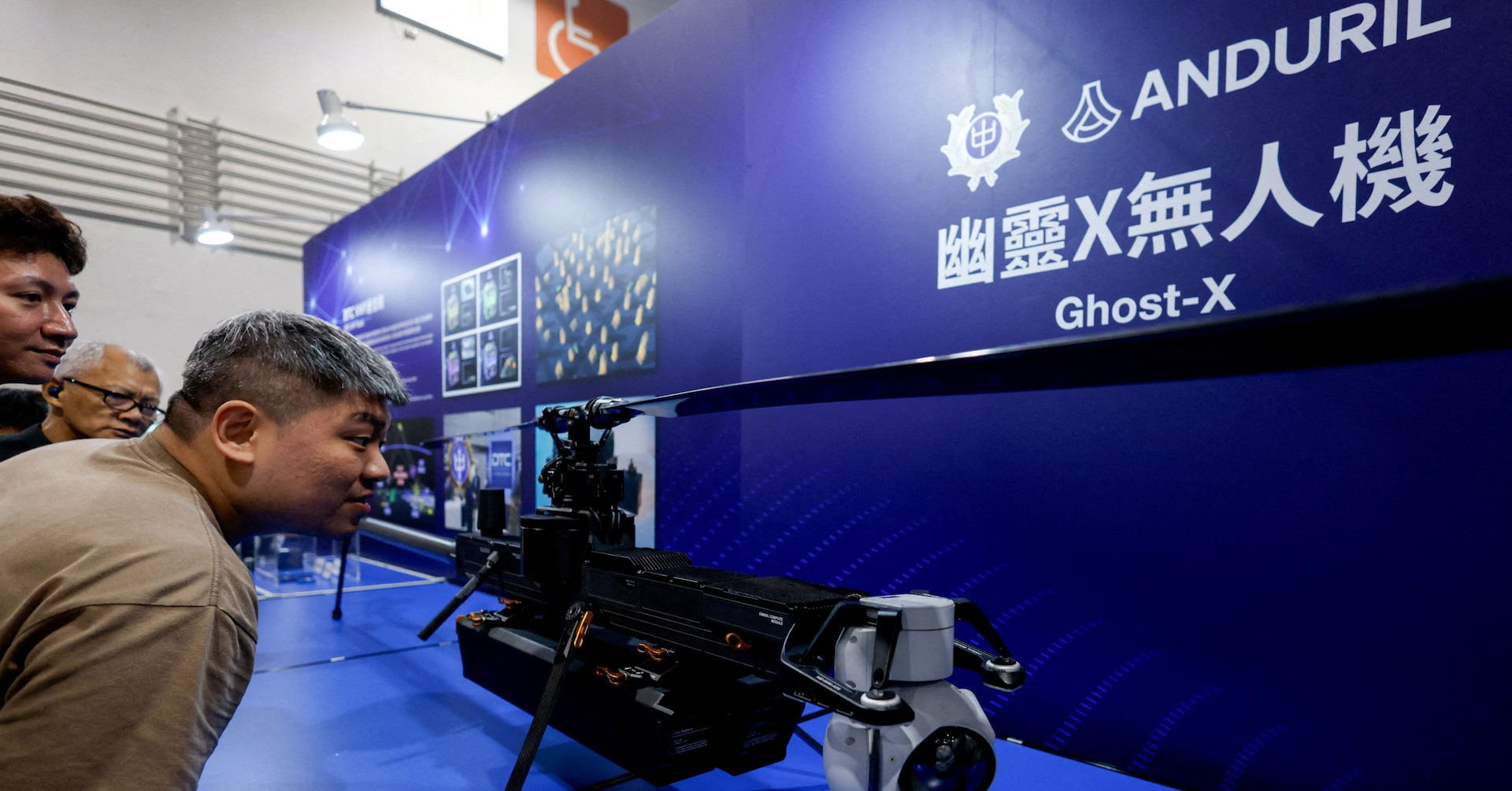
The company sent about 40 models of its Ghost drone, which looks like a miniature helicopter and can be used for reconnaissance, to Ukraine early in the conflict that began in 2022, according to a source with direct knowledge of the matter.
But the initial model struggled to withstand Russian electronic warfare, frustrating Ukrainian soldiers, according to four people familiar with the matter. The person with direct knowledge of the matter said the company misunderstood how both terrain and Russia’s jamming of satellite-based navigation systems could derail flight plans.
Anduril spokesperson Prior said “everyone was having problems” with jamming from the outset of the war. She said that Anduril’s “teams work side by side with end users every day to capture feedback, push software updates in real time, and adapt systems under combat conditions.”
Prior said an updated model, the Ghost X, was delivered to the frontlines in Ukraine in December 2023 and “proved that the lessons learned earlier in the year were addressed.”
GHOST GOES DOWN IN TESTING
But the Ghost X has also had issues in more recent tests. A video shared with Reuters and separately posted in January 2025 on US ArmyWTF, an Instagram account run by an Army veteran, showed a Ghost model spinning out of control before crash landing near soldiers in an unidentified location.
“I told you this would be a clusterfuck,” said one unidentified person in the video.
Reuters verified the footage as having been recorded during a weeks-long U.S. Army exercise in Hohenfels, Germany that began in mid-January, and included use of the Ghost X.
Anduril said the incident occurred due to an issue with a rotor and said it was fixed.
Major Geoffrey Carmichael, a spokesperson for the U.S. Army’s 10th Mountain Division that was involved in the exercise, said that when units are experimenting with new technologies such as drones “hard landings, system failures, and weather-related impacts can occur.”
Of the Ghost X specifically, Carmichael said the drone “demonstrated strong performance in cold, high-altitude, and hot-weather environments” but that units identified areas for improvement, “particularly power management in extreme cold.”
Anduril, in its blog post, said U.S. Army units had “consistently praised” the reliability of Ghost X.
ALTIUS IN UKRAINE
Anduril initially sent about 100 Altius drones to Ukraine in 2023, according to two sources. In March of this year, the UK Ministry of Defence announced a £30 million (about $40 million) contract paid for by a UK-led international fund to send an undisclosed number of Altius drones to Ukraine.
Britain’s Defense Ministry told Reuters the deal was to provide advanced Altius drones to Ukraine to tackle Russian aggression in the Black Sea. It said the Altius drones were recently delivered to the Ukrainian Navy, “who have expressed their satisfaction with them.”
The Ukrainian Armed Forces didn’t provide further comment.
Anduril told Reuters it has “shipped hundreds of Anduril systems to Ukraine” and that “they’ve proven effective against a large number of high-value enemy assets.”
In September, Luckey posted a photo on X, opens new tab showing him carrying a large metal case with the caption: “Loading up and shipping out another truckload of leverage for Ukraine!” The post did not specify what was in the box.
The company has recently indicated it may be more open about its testing results. Earlier this month, Luckey asked his followers on X, opens new tab if the company should share more “behind the scenes.”
Two days later, after making an announcement revealing a new high-end hovering drone called Omen, which the company has said is built for surveillance missions, the company posted, opens new tab a video on X of it crash landing into the dirt – accompanied by the words “developmental learnings.”
Reporting by David Jeans in New York, Cassell Bryan-Low in London and Supantha Mukherjee in Stockholm; additional reporting by Tom Balmforth and Milan Pavicic in London and Max Hunder in Kyiv; Editing by Joe Brock and Michael Learmonth
Our Standards: The Thomson Reuters Trust Principles., opens new tab
Purchase Licensing Rights
David Jeans is a space and defense correspondent for Reuters, based in New York. He covers the intersection of weapons, technology and national security, with a focus on the rise of venture-backed military startups and the Pentagon’s evolving relationship with Silicon Valley. Previously, he covered defense tech for Forbes. He’s also the co-author of WONDER BOY: Tony Hsieh, Zappos and the Myth of Happiness in Silicon Valley, named a Financial Times Best Business Book.
Cassell Bryan-Low is an investigative journalist at Reuters based in London. She previously worked at The Wall Street Journal, including in New York and Paris.
Supantha leads the European Technology and Telecoms coverage, with a special focus on emerging technologies such as AI and 5G. He has been a journalist for about 18 years. He joined Reuters in 2006 and has covered a variety of beats ranging from financial sector to technology. He is based in Stockholm, Sweden.
Rare earth elements are essential to modern technologies, but global dependence on China’s concentrated supply chain creates significant risks, making it crucial for industries and governments to diversify and strengthen these supply chains for greater security and resilience.
Rare earth elements have become indispensable to the modern economy, underpinning technologies from smartphones and electric vehicles to advanced defence systems and data centres. Despite their name, many rare earths are relatively abundant in the earth’s crust, but their supply chains are among the most highly concentrated and complex globally. This concentration, coupled with recent geopolitical tensions and export controls, has exposed critical vulnerabilities that threaten the stability of many industries and organisations — manifesting as regulatory risks, supply disruptions, and rising operational costs. For organiations that rely on rare earths, either directly or indirectly, the urgent need to diversify and transform their supply chains is clear.
A complex and concentrated supply chain
The rare earths supply chain involves multiple intricate processes, including extraction, leaching, thermal cracking, and refining. Each stage requires specialised expertise and infrastructure, making the supply chain capital-intensive and technically challenging. Currently, China controls approximately 70% of global rare earths mining and 85% of refining capacity. This geographic concentration creates a bottleneck, leaving the rest of the world heavily dependent on a single country for these critical materials. For instance, Europe is 98% dependent on China for rare earths, which are needed for hybrid vehicles, fibre optics, and nuclear power, and 97% dependent on China for magnesium, a key material for aerospace and automotive manufacturing.
China’s position is not merely a commercial fact, it is also used as a strategic lever. Often, China’s rare earth policy actions appear to be rooted not so much in the value of the minerals themselves, but more in efforts to advance broader bilateral or multilateral strategic objectives beyond the commodity market. Yet, control over these critical materials gives China significant influence on global supply and pricing. This concentration also means that any disruption — whether due to policy changes, weather events, trade disputes, or environmental regulations — can reverberate across markets worldwide, causing shortages and price volatility.
Export controls and their global impact
In recent years, China has used rare earths as a powerful strategic tool. Ongoing trade tensions between the US and China have brought this issue into sharp focus. In 2025, following announcements of US tariffs on Chinese goods and the inclusion of thousands of Chinese companies on an “entity list” restricting their access to US technology, China responded with export controls and strict licensing requirements on several rare earths and the magnets produced from them. It also halted the export of technology and equipment that could enable other countries to develop their own rare earth mines, refineries, and magnet manufacturing facilities.
These export controls rattled markets and disrupted supply chains. European companies faced long delays and sharp price increases due to shortages of raw materials, and some automobile factories faced the possibility of shutdown.
The sectors affected by these controls are broad and critical: energy, automotive, defence, semiconductors, aerospace, industrial motors, and AI data centres all depend heavily on rare earths. The tightening of this supply chain has threatened production schedules, driven up costs, and raised serious concerns about the resilience of vital infrastructure worldwide.
In October 2025, China announced a 12-month suspension of certain export controls on critical minerals to the US and the EU following an agreement between the US and China. Additionally, China will issue general licenses to facilitate the export of critical minerals, such as gallium, germanium, antimony, and graphite, which are essential for the production of semiconductors, electronics, and renewable energy technologies, including electric vehicle batteries. This will likely benefit US end-users and their global suppliers.
Despite this reprieve, companies dependent on Chinese-origin rare earths remain vulnerable to shifting policies.
Economic and geopolitical stakes
Given China’s position in rare earths, the US and other countries are seeking ways to reduce their reliance on imported rare earth elements.
For example, governments are incentivising investment in domestic rare earths supply chains, streamlining regulatory approvals, and fostering international partnerships aimed at enhancing competitiveness. The US government announced plans to make direct investments in the rare earths industry and has signed agreements with Japan, Thailand, Malaysia, and Australia to boost mining and processing projects outside of China.
This could present mining companies and those companies reliant on their inputs with multiple opportunities to better secure their supply chains.
However, some analysts caution that these efforts will not immediately alleviate the risks associated with China’s position, given the scale and sophistication of its existing infrastructure. For instance, launching a new mining project is a complex, time-consuming process that can take years to discover, develop, and construct. It requires substantial financial capital, technical know-how, permitting approvals, and robust infrastructure. Government support can be a crucial enabler in providing financing, implementing policy reforms, supporting the development of R&D capabilities, and other mechanisms, while also managing environmental risk and community relations.
Preparing for the future
Companies are placing increasing importance on supply security and reliability. To navigate today’s volatile landscape, organisations should proactively address their vulnerabilities by:
Extending visibility beyond tier one suppliers;
Quantifying and modelling exposure to tariffs, climate events, geopolitical changes, and political risks; and
Building agility into sourcing strategies through technology-enabled decision-making.
For mining companies, supply chain resilience may include diversifying mining and refining operations in other regions, such as North America, Australia, Latin America, and Africa, or recycling rare earths to recover valuable materials from waste, reducing the need for primary mining and mitigating environmental impacts.
Platforms like Marsh’s Sentrisk™,combined with specialist risk consulting,empower organisations with deep supply chain intelligence to support more innovative and faster responses. According to Marsh’s Mining Market Update 2025, the insurance industry is also placing greater emphasis on supply chain-linked risks when assessing contingent business interruption coverage. This highlights the growing importance for companies to prioritise mitigation efforts accordingly.
In an era where rare earths are the backbone of critical technologies as well as keys to national and economic security, their secure and sustainable supply is indispensable. Investing in resilience, sustainability, and data-driven supply networks is crucial during this period and beyond.
The Daily Mail’s parent company has been warned it could face a credit downgrade if it loads up with debt to fund its £500m takeover of the Telegraph titles.
The US credit ratings agency S&P Global Ratings said Rothermere Continuation Holdings Ltd (RCHL) – the Jersey-based parent company of Lord Rothermere’s assets including the Daily Mail, Mail on Sunday, Metro and the i Paper – had been put on “credit watch” as it seeks to put a funding package in place to table a formal deal in the coming weeks.
“The detail and funding of the transaction remain unclear but, in our view RCHL has limited headroom under our BB- long-term issuer credit rating to accommodate any additional financial debt, considering its limited size and the fact that Telegraph Media Group (TMG) operates in structurally challenged newsprint and advertising markets,” S&P analysts said in the note.
The note said that given the significant valuation of TMG at £500m, compared with RCHL’s “modest size and scale”, S&P believed the transaction might “materially increase its adjusted leverage beyond our threshold”.
On Saturday, Rothermere’s Daily Mail and General Trust (DMGT) announced a £500m deal with RedBird IMI to buy the Telegraph titles. The two parties have entered a period of exclusivity and aim to complete the terms of the transaction swiftly. However, there is significant speculation over how Rothermere will fund the deal.
Most analysts believe that the Telegraph titles are worth about £350m, and DMGT has said that in order to comply with foreign state influence rules, there would be no foreign state investment or capital in its funding structure.
Some observers have speculated that this could still leave open the possibility of funding from foreign sources that are not state-owned or sovereign wealth funds. Two years ago DMGT had been in talks with Qatari investors about backing a bid for the Telegraph group, but later decided against the move.
Rothermere’s businesses, which also include a Middle East-based events operation and property information services in the UK and US, made £1.1bn in revenues and adjusted pre-tax profits of £78m in the year to 30 September 2024.
The consumer media business made revenues of £613m and £53m in adjusted operating profit. The property information division, which includes Trepp in the US and Landmark and Yopa in the UK, reported £219m in revenues and adjusted operating profits of £22m.
The events and exhibition arm – which hosts four of its five biggest events in Abu Dhabi, Dubai, Saudi Arabia and Egypt – saw revenues increase 67% year-on-year to £272m as adjusted operating profits more than doubled to £42m.
skip past newsletter promotion
after newsletter promotion
Last month, DMGT announced a £906m reorganisation to create a new parent company, RCHL, a move that effectively split DMGT and the non-UK subsidiaries.
RCHL is controlled by a discretionary trust which is held for the benefit of Rothermere and his immediate family.
ISLAMABAD, Nov. 27 (Xinhua) — Pakistan’s central bank foreign exchange reserves increased by 9 million U.S. dollars during the week ending on Nov. 21, the State Bank of Pakistan (SBP) said on Thursday.
In its latest update, the SBP said its reserves rose to 14.56 billion dollars.
Net foreign exchange reserves held by commercial banks stood at 5.04 billion dollars.
The country’s total liquid foreign reserves reached 19.61 billion dollars, according to the SBP. ■
ISLAMABAD, Nov. 27 (Xinhua) — Pakistan’s central bank foreign exchange reserves increased by 9 million U.S. dollars during the week ending on Nov. 21, the State Bank of Pakistan (SBP) said on Thursday.
In its latest update, the SBP said its reserves rose to 14.56 billion dollars.
Net foreign exchange reserves held by commercial banks stood at 5.04 billion dollars.
The country’s total liquid foreign reserves reached 19.61 billion dollars, according to the SBP. ■