Category: 3. Business

  • Better AI Stock to Buy Right Now: Nvidia vs. Oracle

    Better AI Stock to Buy Right Now: Nvidia vs. Oracle

    • Nvidia is growing revenue and profits much faster than Oracle, thanks to surging demand for its AI computing platforms.

    • Oracle is leaning on its cloud backlog and large AI deals, but its current growth still trails Nvidia.

    • Both stocks trade at high valuations, yet Nvidia offers a clearer risk-reward profile for long-term investors.

    • 10 stocks we like better than Nvidia ›

    Nvidia (NASDAQ: NVDA) and Oracle (NYSE: ORCL) sit near the center of the rush to build modern artificial intelligence (AI) infrastructure, making them good candidates for investors searching for AI winners.

    The two businesses, however, attack the trend from different angles. Nvidia designs chips and full AI computing platforms, while Oracle is the longtime enterprise software provider racing to become a major cloud infrastructure provider for AI workloads. For investors choosing between them, Nvidia brings faster growth and higher profitability, while Oracle leans on a massive installed base of customers using its software, as well as a growing cloud computing business.

    Image source: Getty Images.

    It’s difficult to overstate how exciting Nvidia’s growth story is. It’s staggering. Nvidia’s fiscal third-quarter revenue rose 62% year over year to $57.0 billion, up from 56% growth in fiscal Q2. Data center revenue, which includes its AI platforms and represents the bulk of Nvidia’s sales, jumped 66% year over year to $51.2 billion as customers ramped up spending on newer Blackwell systems.

    During the company’s latest earnings call, CEO Jensen Huang argued that Nvidia is benefiting from what he called “three massive platform shifts” occurring simultaneously. The implication is that demand is not tied to a single product cycle but to a broad shift in how computing is done.

    In other words, Huang thinks these are still early days — quite a statement for a company that already commands a market capitalization of $4.4 trillion.

    Additionally, Nvidia’s profitability is extraordinary. The company’s gross margin for fiscal Q3 was 73.4%, and it continues to convert a large portion of revenue into free cash flow. Free cash flow for the quarter, for instance, was $22.1 billion — up from $13.5 billion in the year-ago quarter.

    Of course, investors have to pay up for this growth story. The stock commands a price-to-earnings ratio of 45 as of this writing.

    Oracle’s business is growing much more slowly than Nvidia. However, if the company’s remaining performance obligations (RPOs) are an indicator of how things could unfold in the future, this could change.


    Continue Reading

  • Son threatened mother with knives and told family he would ‘cut your heads off’ – The Irish Times

    Son threatened mother with knives and told family he would ‘cut your heads off’ – The Irish Times

    An elderly couple has been given protection orders after alleging their adult son threatened his mother with two knives and told her and other family members he would “cut your heads off”.

    Their adult daughter, who said her brother is a crack addict, also got a protection order from the emergency domestic violence court at Dolphin House in Dublin.

    She told Judge Gerard Furlong that she, her parents and other family members were sitting around the kitchen table one evening recently when her brother came in shouting and demanding keys.

    He lifted the table up and then grabbed two knives and threatened her mother, aged in her seventies, with them, she said. “She was just doing the crossword.”

    Her brother, aged in his thirties, has been a crack addict for about nine or 10 years and has started to get “stuff” delivered to their home.

    “I haven’t spoken to him for about 10 to 15 years but I had to defend my mother.”

    Her brother pushed her, gardaí were called and they removed him, she said. Gardaí told the family the man was given a letter to go voluntarily to a psychiatric unit.

    However, he returned to the house that same evening and threatened family members, describing them as “rats”, the woman said. “He threatens to kill anyone who comes to the house, to slice their heads off.”

    When the judge said there was enough evidence for the couple to get an interim barring order against their son requiring him to leave the house, the father said he did not want to see him on the streets. “I’m kind of giving him a chance, I want to see what happens.”

    In a separate ex parte (one side only represented) application on Friday, a mother got an interim barring order against her adult son.

    He has had alcohol and drug issues for years but, after she got a barring order in 2022, he went for treatment and came out “a different man” for about a year, she said. He has relapsed since, the woman, becoming tearful, said.

    She permitted him return home for a few days but that turned into months and he will not leave, she said. He is “abusive and aggressive”, she does not feel safe or respected in her home and he was physically abusive to her on an occasion last September, she said.

    “I feel afraid,” she said. Grandchildren living with her are seeing this behaviour and she has “begged” her son to get a job and treatment. “I’m here with a heavy heart,” she said, weeping. “I love him.”

    A woman who said she has pictures on her phone and doctors’ letters to support her claims that her ex partner had beaten her, fractured her spine, headbutted her and was “very possessive and controlling” during their four relationship got a protection order.

    She was living in his home but she had left and is now in a hostel, she said. “I’m safe there now.”

    In another case, a woman got a protection order against her estranged husband. “I go to bed scared,” she said.

    Her husband moved into her home after they got married more than ten years ago and was verbally and physically abusive to her, including spitting at and pushing her and constantly undermining her, she said. He was “very controlling” in many aspects of her life, including financial.

    She ended the relationship in Spring last year after he threatened to assault her and his status as an occupier of her house, a council house, has been removed, she said.

    Since he left the property, he has tried to get her to resume the relationship, she said. He has a significant problem with alcohol and tablets and she felt sorry for him and had sometimes let him back into the house, she said.

    Over the past month, he had become “very abusive” and she wanted no contact but he continues to come to the house, she said. He has no key but, after noticing he had removed a bolt from inside the front door, she changed the locks. He had insisted he had a room in the house and “will be back”. He has threatened to kill himself, saying he had “nothing to lose” and she is constantly fearful he might break in. “I just want it to stop.”

    Continue Reading

  • Archer, Anduril deal shows defense tech profiting from eVTOL progress

    Archer, Anduril deal shows defense tech profiting from eVTOL progress

    Log-in here if you’re already a subscriber

    DUBAI — For the past four years, Archer Aviation has had a clear strategy for commercializing its electric vertical take-off and landing aircraft: concentrate its engineering resources on developing the vehicle’s electric powertrain, and outsource as much as it can of everything else to suppliers. Now, the eVTOL developer has become a supplier itself, providing its electric motors and batteries to defense tech firm Anduril Industries for its recently unveiled hybrid-electric Omen drone.

    The agreement was announced Nov. 18 at the Dubai Airshow, where Anduril displayed a mock-up of Omen at the sprawling Edge Group booth. Anduril the week prior announced a joint venture with United Arab Emirates-based Edge to develop the large tail-sitting drone, which will take off and land vertically on its tail and rotate to fly on the wing in forward flight. Edge is contributing nearly $200 million towards Omen’s three-year development program and the UAE has committed to buying the first 50 Omen systems.

    Related: Archer Aviation CEO delves into the strategy behind Anduril deal

    Archer’s supplier agreement with Anduril — which is separate from its previously announced partnership with the company to develop a hybrid-electric military aircraft — underscores how much the eVTOL industry has evolved since 2021, when Archer, Joby Aviation and other electric air taxi developers listed on the public markets in a wave of investor enthusiasm for urban air mobility.

    Subscribe to Continue Reading

    Our award-winning aerospace reporting combines the highest standards of journalism with the level of technical detail and rigor expected by a sophisticated industry audience.

    • Exclusive reporting and analysis on the strategy and technology of flying
    • Full access to our archive of industry intelligence
    • We respect your time; everything we publish earns your attention

    Subscribe

    Continue Reading

  • US EXIM to invest $100 billion in critical mineral projects in Egypt, Pakistan and Europe – Arab News

    1. US EXIM to invest $100 billion in critical mineral projects in Egypt, Pakistan and Europe  Arab News
    2. US EXIM to invest $100 billion to secure critical mineral supplies, FT says  Business Recorder
    3. Export-Import Bank to spend $100bn to achieve US energy dominance – FT  MarketScreener
    4. Export-Import Bank to spend $100bn to achieve US energy dominance  Financial Times
    5. US Export-Import Bank to invest in Pakistans critical mineral projects  Geo News

    Continue Reading

  • Most Gulf markets gain on Fed rate cut bets, oil weighs – Reuters

    1. Most Gulf markets gain on Fed rate cut bets, oil weighs  Reuters
    2. UAE shares decline on weak oil and rate cut uncertainty  Business Recorder
    3. Emirati Stocks Rebound As Investors Weigh Fed Uncertainty  Finimize
    4. Gulf stock markets cautious ahead of U.S. jobs report  Profit by Pakistan Today
    5. Gulf stocks track global rally on AI optimism, firm oil prices lend support  TradingView

    Continue Reading

  • UK launches critical minerals strategy to reduce dependency on China | Critical minerals

    UK launches critical minerals strategy to reduce dependency on China | Critical minerals

    Keir Starmer has announced a critical minerals and rare earths strategy to build resilience against China, which has a stranglehold on supplies of materials including magnets critical to everything from car doors to fridges.

    “For too long, Britain has been dependent on a handful of overseas suppliers, leaving our economy and national security exposed to global shocks,” the prime minister said.

    The critical minerals initiative comes with a £50m fund to boost production at tungsten and lithium mines in Cornwall. Europe’s largest deposits of lithium are in Cornwall, and the EU singled out the county’s tungsten mine for potential financial support this summer.

    The strategy follows a six-week standoff between China and the EU over the supply of chips used in the car industry, underlining how Beijing is willing to use trade in critical materials for political purposes.

    The UK and the US are now battling to reduce their dependence on China, but the production of rare earths and critical minerals can take years and hundreds of millions of pounds in investment.

    Lithium supplies exist all over Europe, but the raw material needs to be refined into lithium hydroxide, a crystal-like ingredient used to create the charge in car batteries.

    Europe’s only lithium hydroxide refinery, in Germany, has taken five years to build and £150m in investment, showing the scale of the funding needed.

    Last week the EU’s industry commissioner, Stéphane Séjourné, conceded that the bloc was far behind the US, which he said had “a business department that buys stocks of critical materials” before everyone else. “They often buy them from under our noses,” he said.

    Earlier this year, Britain struck a minerals cooperation deal with Saudi Arabia aimed at bolstering supply chains, opening doors for British firms and drawing fresh investment into the UK. Rare-earth minerals are essential for smartphones and electric vehicles and increasingly crucial for building datacentres that power artificial intelligence.

    The UK’s strategy seeks to ensure no more than 60% of any one critical mineral comes from a single partner country by 2035, according to a statement.

    Starmer described critical minerals as “the backbone of modern life and our national security” and argued that boosting domestic production and recycling would help shield the economy and support efforts to lower living costs.

    The government said the UK currently produced 6% of its critical mineral needs domestically. Under the plan, it wants to expand domestic extraction and processing, with a particular focus on lithium, nickel, tungsten and rare earths. It aims to produce at least 50,000 tonnes of lithium in the UK by 2035.

    Continue Reading

  • Exploring Valuation After Strong Year-to-Date Share Price Gains

    Exploring Valuation After Strong Year-to-Date Share Price Gains

    Lloyds Banking Group (LSE:LLOY) stock has seen some movement recently, drawing interest from investors as they weigh the company’s latest returns and prospects. Let’s take a closer look at what is behind the shifts in performance.

    See our latest analysis for Lloyds Banking Group.

    Despite a dip over the past week, Lloyds Banking Group’s share price is still up significantly for the year, with impressive momentum driving a 58.3% year-to-date price return and a remarkable 68.1% one-year total shareholder return. This surge suggests growing confidence in the stock’s outlook, even as the pace of gains has moderated recently.

    If Lloyds’ strong run has you watching for the next potential outperformer, now is the perfect time to discover fast growing stocks with high insider ownership

    But is this surge just catching up to Lloyds’ fair value, or does the bank’s recent climb signal that future growth is already priced in? Could there still be a compelling buying opportunity, or is the market ahead of itself?

    Lloyds Banking Group’s narrative fair value estimate stands above the last close, suggesting upside potential if analysts’ long-range projections play out. The latest market enthusiasm aligns with expectations of stronger growth and returns.

    Lloyds’ significant progress in digital transformation, including expanding mobile-first services for 21 million users, rolling out a new digital remortgage journey, and leveraging AI innovation, continues to drive operating cost reductions and enhances efficiency. This positions the company to support sustained long-term margin expansion and higher earnings.

    Read the complete narrative.

    Want to know the drivers behind this valuation? The narrative hinges on a bold pivot in earnings quality, technology leadership, and rising profit margins. What happens next could reshape the story for shareholders. Curious about the financial leaps and market expectations behind this verdict? See the full narrative for the key assumptions that underpin the fair value calculation.

    Result: Fair Value of $0.94 (UNDERVALUED)

    Have a read of the narrative in full and understand what’s behind the forecasts.

    However, risks remain, including Lloyds’ heavy reliance on the UK economy and intensifying digital competition. Either of these factors could challenge the bank’s growth path.

    Find out about the key risks to this Lloyds Banking Group narrative.

    Looking beyond fair value estimates, Lloyds trades at a price-to-earnings ratio of 14.8x. This is notably higher than both its UK bank peers at 10.6x and the broader European banks average of 9.8x. Compared to a fair ratio of 9.7x, Lloyds also appears more expensive. This raises questions about whether expectations have run too far ahead. Will the market eventually demand stronger growth to justify this premium?

    See what the numbers say about this price — find out in our valuation breakdown.

    LSE:LLOY PE Ratio as at Nov 2025

    If you want to take the story in your own direction, you can dive into the numbers and craft a new Lloyds narrative in just a few minutes. Start now: Do it your way

    A great starting point for your Lloyds Banking Group research is our analysis highlighting 2 key rewards and 2 important warning signs that could impact your investment decision.

    Don’t stop with Lloyds when you could be gaining an edge with fresh stock ideas others might miss. Power up your research now with these hand-picked opportunities:

    This article by Simply Wall St is general in nature. We provide commentary based on historical data and analyst forecasts only using an unbiased methodology and our articles are not intended to be financial advice. It does not constitute a recommendation to buy or sell any stock, and does not take account of your objectives, or your financial situation. We aim to bring you long-term focused analysis driven by fundamental data. Note that our analysis may not factor in the latest price-sensitive company announcements or qualitative material. Simply Wall St has no position in any stocks mentioned.

    Companies discussed in this article include LLOY.L.

    Have feedback on this article? Concerned about the content? Get in touch with us directly. Alternatively, email editorial-team@simplywallst.com

    Continue Reading

  • GSK Shares Surge 31% in 2025 Amid Vaccine Breakthroughs Is There Still Value?

    GSK Shares Surge 31% in 2025 Amid Vaccine Breakthroughs Is There Still Value?

    • Wondering if GSK could be a hidden value opportunity or just another stock riding pharma’s global upswing? You are in the right place for a deep dive into what the numbers really say.

    • GSK’s shares have climbed 31.3% so far this year and are up nearly 40% over the past 12 months. This puts a bright spotlight on its growth and changing risk profile.

    • The buzz around GSK this year has been fueled by positive developments in its pipeline, strategic partnerships, and growing optimism about regulatory milestones. Headlines highlighting advances in its vaccine division and expansion into new markets have amplified investor excitement far beyond the usual quarterly news cycle.

    • Our latest check gives GSK a valuation score of 5 out of 6, which means it screens as undervalued on nearly every metric. In this article, we will walk through exactly how that number is calculated using the most common valuation methods. Stay tuned for a fresh approach to valuation at the end that is changing how savvy investors decide what is truly worth owning.

    GSK delivered 39.1% returns over the last year. See how this stacks up to the rest of the Pharmaceuticals industry.

    The Discounted Cash Flow (DCF) model estimates the value of a company by projecting its future cash flows and then discounting them back to today’s value. This approach aims to determine what those future pounds are worth in present terms.

    GSK’s current Free Cash Flow stands at £5.13 billion. Analyst estimates forecast this figure growing steadily, with Simply Wall St projections indicating Free Cash Flow will reach nearly £7.99 billion by 2029 and over £9.85 billion a decade out. While analysts typically provide forecasts for up to five years, Simply Wall St extends the projection further by applying reasonable industry growth trends to cash flow estimates over a longer period.

    Based on the DCF model, the estimated intrinsic value for GSK is £45.51 per share. This figure represents a substantial 60.7% discount compared to the current trading price. According to these cash flow projections, the market may be significantly undervaluing GSK’s shares at this time.

    Result: UNDERVALUED

    Our Discounted Cash Flow (DCF) analysis suggests GSK is undervalued by 60.7%. Track this in your watchlist or portfolio, or discover 927 more undervalued stocks based on cash flows.

    GSK Discounted Cash Flow as at Nov 2025

    Head to the Valuation section of our Company Report for more details on how we arrive at this Fair Value for GSK.

    For established, profitable companies such as GSK, the Price-to-Earnings (PE) ratio is one of the most widely used valuation metrics. The PE ratio gauges how much investors are willing to pay for each pound of earnings, making it a practical benchmark for companies that consistently generate profits.

    The “right” or fair PE ratio for a stock depends not just on its current profits, but also on future growth expectations and business risk. Companies with higher projected earnings growth or lower risk often justify a higher PE, while those with more uncertainty or slower growth may trade at a discount.

    GSK currently trades at a PE ratio of 13.1x. This is noticeably lower than the average PE for the pharmaceuticals industry, which stands at 23.1x. It is also below the peer average of 17.4x. However, just looking at these benchmarks may ignore important nuances. That is where Simply Wall St’s proprietary “Fair Ratio” comes in.

    The Fair Ratio for GSK is calculated at 25.4x, reflecting factors such as expected earnings growth, profit margins, GSK’s industry, company-specific risks, and its overall market capitalization. This makes it more comprehensive than a simple comparison with peers or industry norms, which can overlook company-specific strengths or risks.

    With GSK’s actual PE (13.1x) significantly below the Fair Ratio, the data suggest the stock is trading at a valuation well below what would be expected given its fundamentals.

    Result: UNDERVALUED

    LSE:GSK PE Ratio as at Nov 2025
    LSE:GSK PE Ratio as at Nov 2025

    PE ratios tell one story, but what if the real opportunity lies elsewhere? Discover 1430 companies where insiders are betting big on explosive growth.

    Earlier we mentioned that there is an even better way to understand valuation, so let’s introduce you to Narratives. A Narrative is simply your story, your own perspective on a company’s outlook, built on your assumptions for future revenue, earnings, margins, and an estimated fair value.

    Narratives go a step beyond traditional ratios by linking GSK’s story to a dynamic financial forecast and arriving at a fair value that makes sense for you. They are easy to create and ready for you to explore on Simply Wall St, right within the Community page used by millions of investors globally.

    With Narratives, you do not just see what the numbers say, but why they matter, helping you decide whether to buy or sell by transparently comparing your Fair Value with the current market price. Plus, every Narrative is kept up to date, automatically reflecting the latest news or earnings to ensure your view evolves alongside real company developments.

    For example, one GSK Narrative might target a fair value as high as £78 per share, while another might take a far more conservative view at just £11.20. This illustrates how different investors weigh risks, rewards, and future prospects. With Narratives, your investment decisions become as adaptable and personalized as your view of the company’s future.

    Do you think there’s more to the story for GSK? Head over to our Community to see what others are saying!

    LSE:GSK Community Fair Values as at Nov 2025
    LSE:GSK Community Fair Values as at Nov 2025

    This article by Simply Wall St is general in nature. We provide commentary based on historical data and analyst forecasts only using an unbiased methodology and our articles are not intended to be financial advice. It does not constitute a recommendation to buy or sell any stock, and does not take account of your objectives, or your financial situation. We aim to bring you long-term focused analysis driven by fundamental data. Note that our analysis may not factor in the latest price-sensitive company announcements or qualitative material. Simply Wall St has no position in any stocks mentioned.

    Companies discussed in this article include GSK.L.

    Have feedback on this article? Concerned about the content? Get in touch with us directly. Alternatively, email editorial-team@simplywallst.com

    Continue Reading

  • Has TC Energy’s 7.7% Rally Outpaced Its True Value After Asset Divestment Progress?

    Has TC Energy’s 7.7% Rally Outpaced Its True Value After Asset Divestment Progress?

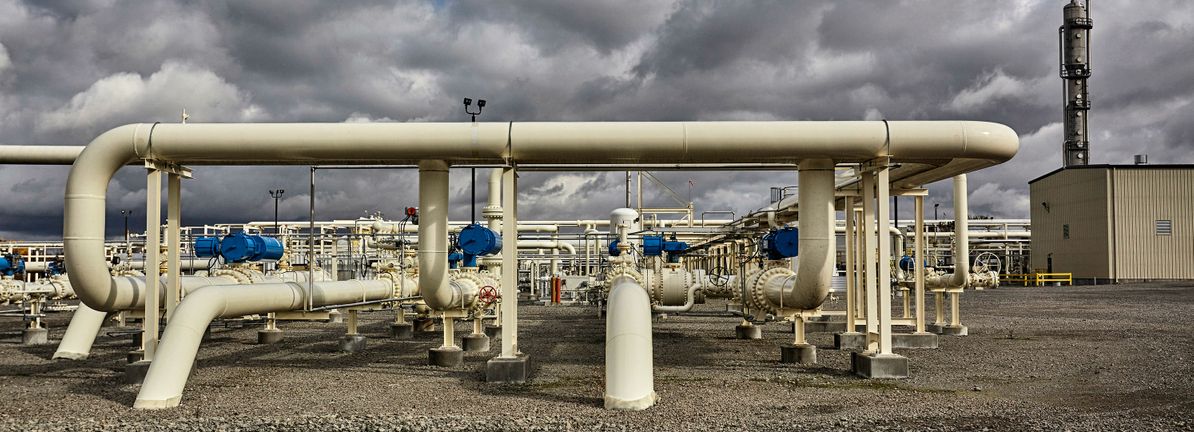
    • Wondering if TC Energy is a bargain or overpriced right now? You are not alone. Investors are buzzing about whether the current stock price reflects its true value.

    • After a 7.7% gain in the past month and an impressive 14.6% return over the last year, TC Energy’s stock has definitely kept things interesting and may be signaling shifting market sentiment.

    • Some of this momentum has been fueled by headlines about TC Energy’s ongoing progress with its asset divestment strategy and steady development of key pipeline projects, both of which are drawing extra attention from analysts. The news flow is giving investors fresh context for recent price swings, adding more fuel to the valuation debate.

    • On our latest scorecard, TC Energy gets a 1/6 for value, based on how many key valuation checks it passes as undervalued. Let’s break down what this score really means. Stick around, as we will reveal a smarter way to approach valuation at the end of the article.

    TC Energy scores just 1/6 on our valuation checks. See what other red flags we found in the full valuation breakdown.

    A Discounted Cash Flow (DCF) model estimates a company’s intrinsic value by projecting its future cash flows and discounting them back to the present. This reflects what those future profits are worth today. This approach helps investors determine if a stock is trading above or below its true worth.

    For TC Energy, the latest available Free Cash Flow (FCF) is approximately CA$402 million. Analyst consensus projects FCF will rise to about CA$2.0 billion by 2029. Beyond that point, future cash flows are extrapolated by Simply Wall St based on estimated growth trends, given that analysts typically only forecast up to five years ahead.

    The DCF calculation arrives at an estimated intrinsic value of CA$45.50 per share using this cash flow trajectory. However, when comparing this figure to the current market price, the model implies the stock is roughly 67.0% overvalued.

    This suggests the current market optimism may be running ahead of the fundamentals reflected in TC Energy’s future cash-generating potential, according to this valuation framework.

    Result: OVERVALUED

    Our Discounted Cash Flow (DCF) analysis suggests TC Energy may be overvalued by 67.0%. Discover 927 undervalued stocks or create your own screener to find better value opportunities.

    TRP Discounted Cash Flow as at Nov 2025

    Head to the Valuation section of our Company Report for more details on how we arrive at this Fair Value for TC Energy.

    For established, profitable companies like TC Energy, the Price-to-Earnings (PE) ratio is a widely used and reliable valuation metric. The PE ratio helps investors understand how much they are paying for each dollar of a company’s earnings, which is a crucial measure when the company’s profits are steady and predictable.

    Continue Reading

  • BHP has made renewed bid approach to Anglo American, source says

    BHP has made renewed bid approach to Anglo American, source says

    Nov 23 (Reuters) – Mining company BHP Group (BHP.AX), opens new tab has made a renewed takeover approach to rival Anglo American (AAL.L), opens new tab, a source familiar with the matter told Reuters on Sunday, just months after the London-listed miner agreed merger plans with Canada’s Teck Resources (TECKb.TO), opens new tab to create a global copper-focused heavyweight.

    Anglo American declined to comment. BHP did not immediately respond to a request for comment outside regular business hours.

    Sign up here.

    BHP has made overtures to Anglo American in recent days, Bloomberg News reported earlier, citing people familiar with the matter, adding that deliberations are ongoing and there is no certainty of a deal.

    Anglo American’s market capitalisation is about $41.80 billion, while BHP’s is around $132.18 billion, based on LSEG data.

    In September, Anglo American agreed plans to merge with Teck in an all-share deal, marking the sector’s second-biggest M&A deal ever.
    The deal came just over a year after BHP scrapped a $49 billion bid for Anglo, a deal that would have boosted the Australian miner’s holdings of copper, the metal seen as essential for the transition to greener energy.

    If the BHP/Anglo deal had gone ahead, the combined entity would have been the world’s largest copper producer, with a total annual production of around 1.9 million metric tons.

    The new Anglo Teck group is expected to have a combined annual copper production capacity of approximately 1.2 million tons, still second to BHP.

    Reporting by Anousha Sakoui, Clara Denina, Melanie Burton, and Gursimran Kaur, Editing by Jane Merriman

    Our Standards: The Thomson Reuters Trust Principles., opens new tab

    Continue Reading