Only battery or fuel-cell electric vehicles eliminate tailpipe emissions
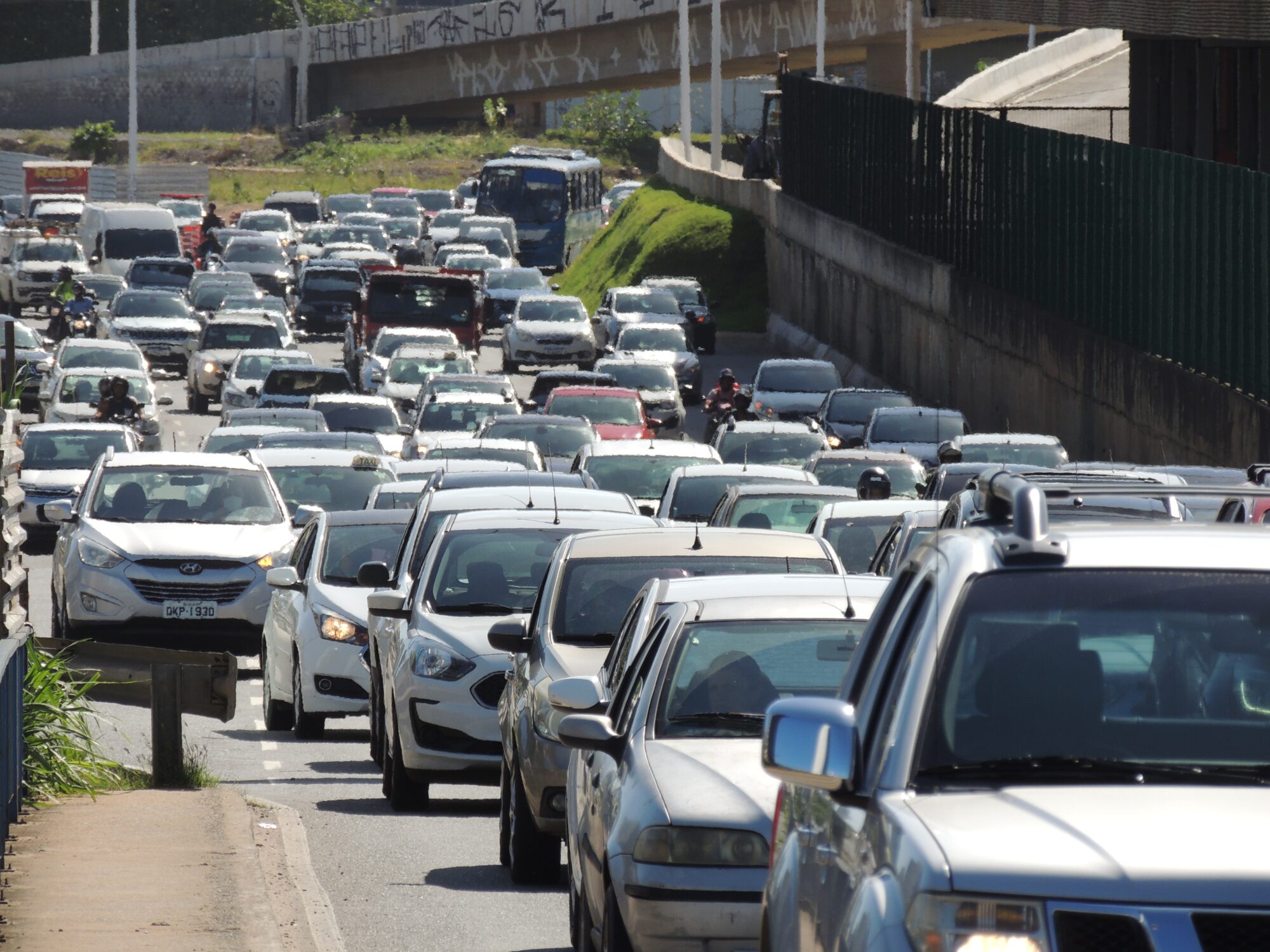
Flex-fuel cars comprise the majority of the fleet in Brazil, but they cannot deliver the same air quality benefits as electrification. Flex-fuel vehicles have no significant benefits over ICE gasoline vehicles in terms of air pollutants that harm human health. Hybrids may reduce these emissions but don’t eliminate them. In contrast, battery and fuel-cell EVs entirely remove tailpipe pollution from city streets—and all places where Brazilians live, work, and breathe
In addition to their air quality benefits, battery electric cars in Brazil produce substantially lower life-cycle greenhouse gas emissions than flex-fuel, hybrid, or improved ICE vehicles, delivering dual benefits of cleaner air and reduced climate impact. For example, battery electric cars emit about one third of the life-cycle emissions of gasoline-ethanol flex-fuel ICE vehicles.
Yet despite the advantages of battery electric vehicles for both air quality and climate, a recent ICCT study found that the lack of strong EV policies in Brazil has allowed automakers to prioritize flex-fuel and ICE vehicles. This is in stark contrast with other major markets where policies have driven rapid EV deployment, such as China and the United Kingdom, and risks further delaying the health and climate benefits of the EV transition in Brazil.
The choice ahead
The evidence is clear: accelerated EV adoption could deliver billions in health savings through 2040. Behind these figures are children who will breathe easier, families kept whole, and lives extended.
With vehicle electrification, Brazil can secure a win-win for both health and climate. Every electric vehicle replacing an ICE vehicle delivers immediate air quality improvements while cutting greenhouse gas emissions. The global transition to EVs is accelerating. With its clean electricity grid and growing domestic auto industry, Brazil is positioned to lead the way.
Vehicle electrification is underway in Brazil—what remains uncertain is the pace. With automakers increasingly able to supply EVs globally and costs declining steadily, policy choices will determine whether Brazil captures the full health, climate, and economic benefits of this transition, or continues bearing the costs of delaying action.
The environmental non-profit Stand.earth fails to see the wood from the trees when it comes to the Canadian forestry industry and Drax’s limited role within it (Drax still burning 250-year-old trees sourced from forests in Canada, experts say, 9 November). We do not own forests or sawmills, and we do not decide what areas are approved for harvesting.
The vast majority (81%) of our Canadian fibre came from sawdust and other sawmill residues created when sawmills produce wood products used in construction and other industries in 2024. The remaining 19% of our fibre came from forest residues, including low-grade roundwood, tops, branches and bark.
Forests in British Columbia are harvested for lumber by timber companies under strict regulations set by the province’s government in joint decision-making with indigenous First Nations. Around 94% of the province’s forests are on public land, and it is a legal requirement for these sites to be reforested in a free-growing condition. Leaving Canada’s forests unmanaged is not the answer to preserving these landscapes. We witnessed this in Jasper, Alberta last year when a wildfire on unmanaged land led to $880m in damages and significant amounts of CO2 released into the atmosphere.
The fibre highlighted in Stand.earth’s report was low-grade roundwood, which was rejected by sawmills following approved harvesting. Without the biomass sector using this harvest residue, it would likely be controllably burned on site to help mitigate wildfire risk. It is far better to positively use this residual fibre to generate renewable electricity. None of the fibre highlighted in this report came from a designated old growth management area or old growth deferral area. Miguel Veiga-Pestana Chief sustainability officer, Drax Group plc
The UK has a hard-won reputation for global forest protection, thanks to its leadership when it hosted COP in 2021. It is a bitter irony that in the run-up to a climate conference hosted in the Amazon, the UK government has signed a new contract to pay billions in subsidies to Drax (Drax power plant to go on earning ‘over £1m a day’ from burning wood pellets, 5 November). Drax burns millions of tonnes of trees every year, with reporting in this newspaper showing it is still burning trees over 250 years old from Canada.
While claiming to still be a forest leader, the UK spends billions supporting an industry that harms them. This contradiction exposes the government’s hollow claims of environmental leadership. Burning imported biomass is no credible climate solution; it simply shifts emissions and destruction elsewhere.
If Britain truly wants to lead on nature and climate, it must stop financing forest loss under the guise of “green” energy and reclaim the mantle of forest leadership to protect ecosystems. Public money should restore and preserve forests – not reward those who destroy them. Matt Williams Senior forest advocate for NRDC (Natural Resources Defense Council)
This audio is auto-generated. Please let us know if you have feedback.
Andrew Rynhard is chief technology officer for Sidero Labs.
Utilities are increasingly relying on edge computing to support fast, dynamic decision-making across distributed infrastructure. From automated grid balancing to substation control and remote fault detection, edge deployments are helping modernize aging critical infrastructure and drive efficiency.
But as utilities become more software-driven, they’re also introducing new cybersecurity challenges, and nowhere is that more true right now than at the edge.
The expanding edge footprint is a significant security shift. Edge nodes are being deployed at transformer stations, within distributed energy resources, at remote monitoring points and alongside smart meters. These systems often operate in locations where no IT staff is anywhere near, let alone onsite. They may rely on cellular or intermittent connections, and they often run continuously for years without routine maintenance cycles.
For adversaries looking to disrupt utility operations or test the resilience of national infrastructure, edge systems have become an increasingly tempting target. However, the security conversation still tends to revolve around network segmentation, threat detection or endpoint access control. Important as those are, they miss one foundational layer: the operating system.
The overlooked surface: OS-level risk in utilities
Every edge deployment runs an operating system and, in many utility environments, that OS is the weakest link. Traditional Linux distributions (originally built for servers or desktops) still underpin many OT systems, grid controllers and IoT gateways. These OSes are powerful, flexible and familiar. But they weren’t designed for today’s threat environment, nor for the realities of edge deployments that now often run on containerized architecture.
Most conventional OSes are mutable by default. Their configuration can drift, their file systems can be written to by any number of services or processes, and their security settings can be altered over time (often unintentionally). In a centralized data center or enterprise network, these issues are manageable because systems are easy to audit and maintain. At the edge, where access is limited and conditions change, they become liabilities. A system that is secure on Day 1 may no longer be secure on Day 1,000, and you may not know what changed.
For utilities now operating thousands of edge systems, the risk compounds quickly. A small misconfiguration rolled out across 10,000 nodes isn’t just a technical error, but an exploitable pattern. Attackers don’t need zero-day vulnerabilities when they can exploit outdated packages, exposed services or poorly secured update mechanisms.
Why immutability matters at the edge
To meet modern security expectations, utilities’ edge infrastructure needs more than reactive patching or policy enforcement. It also needs to be designed from the ground up to resist tampering, misconfiguration and drift. This is where the concept of an immutable operating system becomes powerful.
An immutable OS is one that cannot be altered during runtime. The system boots into a known-good state (defined and verified ahead of time) and remains in that state throughout operation. No one can log in and manually tweak firewall settings, nor can a rogue process write to the disk. Configuration is declarative, meaning it’s defined through code and automatically enforced on every single node, every single time.
This matters to utilities because the edge is largely inaccessible. If something goes wrong (whether it’s an outage, a breach, or just a silent misconfiguration), physical intervention is costly and slow. Immutable systems reduce the need for human touch. They also make it far easier to reason about security posture at scale. If every node is running the exact same image, with the exact same configuration, verified cryptographically, then audit becomes a matter of validating one system, not thousands.
Immutable systems also simplify updates. Rather than patching live systems in-place (which is a risky prospect in operational technology), you replace the running image with a new, verified version. The update is atomic, meaning it either succeeds completely or fails without altering the running system. That kind of rollback safety is critical when uptime and predictability matter more than raw agility.
As utilities begin adopting containerized architectures at the edge, often orchestrated by lightweight Kubernetes distributions, security becomes even more dependent on a trusted foundation beneath the orchestration layer. If the operating system isn’t secure, then no matter how sophisticated your containers or orchestration tools may be, you’re building on sand.
A real-world shift is underway
Some energy providers are already adopting this model, deploying thousands of edge nodes that balance national grids or support DERs with responsive load adjustment. These projects depend on lightweight, secure operating environments that can be centrally managed, even across geographically scattered deployments.
The early results are promising. Organizations are finding they can gain operational flexibility without expanding their risk surface. They’re reducing overhead by eliminating complex patching cycles and increasing resilience through standardized, locked-down software stacks.
More importantly, they’re setting a new baseline for what “secure by design” means in utilities’ edge deployments. Instead of relying on bolt-on security tools or manual oversight, they’re embedding security into the OS itself.
As the edge becomes a permanent and essential part of utility operations, utilities should look for edge systems that are minimal, declarative and tamper-resistant. The operating system should include only the components required to run its specific workload, avoiding unnecessary packages or exposed services that widen the attack surface.
System behavior should be defined through code (declaratively) and enforced automatically across every deployment. Login interfaces such as SSH should be eliminated altogether, especially in field-deployed infrastructure that cannot be reliably maintained through manual intervention. Security should be verified, not assumed, with cryptographic validation of every system image and configuration at boot. Last but not least, when it comes time to update, the process should be both safe and capable of rolling back cleanly in the event of failure, without leaving the system in an unpredictable state.
For utilities facing expanding risk and rising complexity, these tenets form the basis of a more defensible, manageable edge.
It’s easy to focus security attention on the parts of the stack utilities can see: network traffic, APIs, dashboards, etc. But the OS layer is where everything begins. It’s where services run, where controls are enforced, and where mistakes often take root. As utilities modernize, they should demand the same from their software. Security isn’t just a service, but a system property that must start at the operating system.
Item 1 of 2 American Industrial Partners logo is shown in this illustration taken August 21, 2025. REUTERS/Dado Ruvic/Illustration
[1/2]American Industrial Partners logo is shown in this illustration taken August 21, 2025. REUTERS/Dado Ruvic/Illustration Purchase Licensing Rights, opens new tab
PARIS, Nov 21 (Reuters) – U.S. investment firm American Industrial Partners plans to sell or list on the stock market Aluminium Dunkerque, France’s largest aluminium plant, a union official said on Friday.
The local management informed workers’ representatives of AIP’s plan, Johan Vlietinck, a representative of the CGT union at the site, told Reuters.
Sign up here.
Bloomberg News had reported earlier that AIP was considering a sale or listing for Aluminium Dunkerque, which it acquired four years ago following a debt default by GFG Alliance, owned by commodities tycoon Sanjeev Gupta.
A spokesperson for AIP in France said the investment fund was not denying the press reports but would not comment further.
Aluminium Dunkerque did not respond to a request for comment.
The smelter is classed as a strategic site and any non-French buyer would be subject to a special foreign investor procedure, the economy ministry said, without commenting on the reported sale process.
LONG-TERM POWER CONTRACT SECURED
Unions had anticipated a possible sale after Aluminium Dunkerque signed a 10-year power contract with utility EDF in May, providing long-term cost visibility for the energy-intensive business, Vlietinck said.
Aluminium Dunkerque, located next to the northern French port of Dunkirk, produces around 300,000 metric tons of raw aluminium per year and is one of Europe’s biggest aluminium smelters.
It has an annual power consumption roughly equivalent to that of Marseille, France’s second-largest city.
It generates annual turnover of more than 800 million euros ($921.4 million), according to its website.
No offers for the business have been communicated to workers’ representatives, Vlietinck said.
Bloomberg cited sources saying there had been non-binding offers from companies including Rio Tinto (RIO.L), opens new tab, (RIO.AX), opens new tab, Glencore (GLEN.L), opens new tab and Metlen Energy & Metals (MTLN.L), opens new tab. The three companies mentioned all declined to comment.
The CGT is opposed to any potential return of mining group Rio Tinto, which it considers to have underinvested during its ownership of the site before selling it to GFG Alliance, Vlietinck said.
The union would like the French state to invest as part of a consortium, he added.
($1 = 0.8682 euros)
Reporting by Gus Trompiz, editing by Kirsten Donovan and Alex Richardson
Our Standards: The Thomson Reuters Trust Principles., opens new tab
MUMBAI: The rupee fell to an all-time low of 89.48 against the US dollar on Friday, dragged down by weak global risk sentiment and uncertainty surrounding the US–India trade deal. A steady dollar index, which extended gains above the crucial 100 mark following stronger-than-expected US non-farm payroll data of 119,000 and hawkish Fed commentary on delaying rate cuts, further pressured the rupee.
There were also reports of an Indian company being on the list of sanctioned firms for buying Iranian crude. Traders now expect the rupee to weaken further beyond 90 level in the short term, however positive development on the US-India trade deal would relieve pressure on the rupee. The 10-year yields also fell by 4 bps to 6.57 per cent.
The currency is now among the weakest major Asian performers this year, as foreign investors have withdrawn $16.5 billion from Indian equities so far. During the financial year to date, the rupee has depreciated by around 4.4 per cent.
The rupee’s fall comes despite the RBI Governor on Thursday stating that once the US-India trade deal is done it would be positive for the rupee and the current account. But during the day, the RBI stopped defending the rupee at 88.80 (a level it has held for a long time) much to the surprise of importers and dealers.
A trader said that once the dollar-rupee broke decisively above 89, aggressive short covering kicked in across onshore and offshore markets, triggering stops and amplifying the upside move.
At the interbank foreign exchange market, the rupee opened at 88.67 and plunged 82 paise to hit its lowest-ever intra-day level of 89.50 before trading at 89.48 against the American currency. On Thursday, the rupee had depreciated 20 paise to close at 88.68 against the US dollar. The unit had recorded its previous all-time intra-day low of 88.85 on September 30. The previous lowest closing level was registered at 88.81 against the US dollar on October 14.
According to Abhishek Goenka, founder and chief executive officer at IFA Global, the RBI has already expended considerable forex reserves defending 88.80. It’s short position in forwards including NDF is likely over $ 70 billion. “The RBI would have wanted to keep some ammunition dry to intervene at higher levels rather than go all in at 88.80. Going forward we expect the Rupee to settle in a new 88.80-90.00 range. We have maintained that the Rupee will deliberate in a gradual, staircase like manner,” added Goenka.
Rahul Kalantri, vice-president commodities at Mehta Equities Ltd said, “Today’s USD-INR weekly close above 89.20 is a negative signal for the rupee. We expect the rupee to weaken further towards 90.40 and 91 levels, while the key support remains at 88.45.”
This audio is auto-generated. Please let us know if you have feedback.
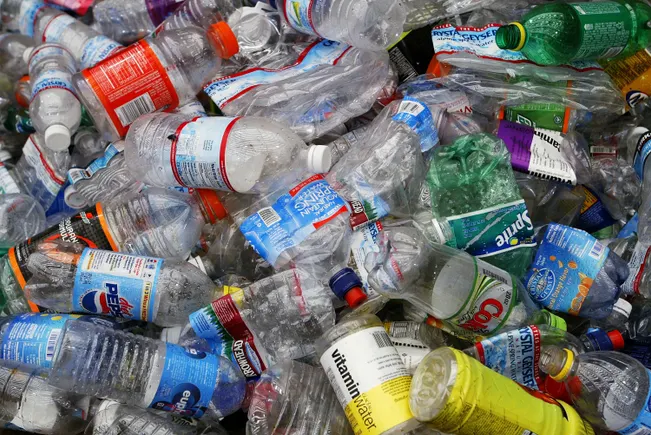
Efforts to modernize bottle bills are still hamstrung by old myths, according to advocates representing the plastics, glass and metal packaging industries. Butevolutions within the U.S. policy landscape amid the Trump administration’s emphasis on domestic manufacturing and the launch of state extended producer responsibility programs havehelped build momentum in a productive year for these bills, they say.
The myths include that MRFs won’t be able to survive alongside bottle deposit schemes and that these systems burden consumers, said leaders from the Association of Plastic Recyclers, Can Manufacturers Institute and Glass Packaging Institute during a webinar Thursday on deposit return systems. The event was organized by the National Stewardship Action Council.
Today, only 20% of U.S. states have bottle deposit programs, and many of those policies are decades old.
“We are fans of many different policies to improve plastics recycling. Bottle deposits are one of them,” said Kate Bailey, APR’s chief policy officer. “Sixty percent of what we collect for plastic recycling, in terms of PET bottles, comes from the 10 states that have bottle deposits.”
GPI President Scott DeFife noted a similar statistic – 60% of the cullet that can go back into glass bottles comes from the 10 bottle bill states, he said. Conversely, when glass is recovered in a commingled single-stream system, the glass is much more likely to end up as something other than a bottle due to quality issues, he said.
Recycling refunds, a newer moniker for these policies, are “hands down the best policy in terms of getting the consumer to see an economic incentive on their container and recycle it,” said Mike Smaha, CMI’s vice president of government affairs.
One new catalyst for bottle bill discussions this year has been the start of packaging EPR programs, led by Oregon. That’s opened more serious conversations in the beverage space about the role for recycling refunds, rather than just EPR fees, Smaha said. “I think that there is a cost savings for folks who want to utilize a recycling refund program versus an EPR program,” he said.
Bailey highlighted Oregon’s depot model. “We’re also learning so much as EPR is rolling out, that not everything is going to be collected through a curbside recycling program,” and drop-off sites will be needed for hard-to-recycle items, Bailey said. “Many of us are familiar with bringing our electronics to a depot for recycling,” which spurs the realization that “you can scale a depot program that can collect bottles.”
Strengthening circularity in the US
There’s more cheap virgin plastic than ever before, according to Bailey. What’s more, for U.S. companies that are still trying to incorporate recycled plastics, it’s often cheaper to source recycled content from Thailand, Vietnam and other parts of Asia than it is from domestic sources.
“We need to make sure the recycled content that companies are using is actually coming from our North American recycling programs,” Bailey said. This will require stronger policies to ensure recycled materials stay in the U.S. and are subsequently reused in U.S. manufacturing, she said, which would go hand in hand with placing disincentives on the use of imported materials.
Smaha described similar priorities for the can sheet manufacturing industry, which he said has invested heavily in U.S. production.
“The problem is we can’t get enough used beverage cans back to feed those plants,” Smaha said. With the current administration’s discussion of reshoring, “we’ve got all this material – whether it’s glass, it’s plastic, it’s metal – that we are consuming and we’re disposing of here in the U.S.; why are we not capturing it and remaking things from it?”
While glass is largely a regional commodity, domestic bottle businesses are still struggling to get enough recycled material, DeFife said.
“Our biggest competition is the landfill,” DeFife said. “End markets that really shouldn’t have to compete for material like this are ending up competing for material.” But circularity rates in bottle bill states are much higher.
To that end, NSAC and the Stewardship Action Foundation recently launched a “ReMade in America” pledge, calling on recycling stakeholders to support “a circular economy that truly works for America and for Americans,” ensuring that material manufactured in the U.S. is then recycled and reused domestically.
This would include commitments from recyclers to process and produce high-quality materials ready for remanufacturing by U.S. manufacturers, and from companies to use that recycled content. Signatories include Republic Services, Recology and others.
States to watch
Advocates celebrated numerous cases of legislative progress in 2025, even for bills that didn’t make it across the finish line.
Maryland and Washington ultimately passed EPR bills this year, but they also discussed bottle bills. Rhode Island ended up approving a needs assessment that calls for data that might be used to consider a possible bottle bill in the future. And a Texas bill moved out of committee before running out of time. “That’s a pretty big win,” Smaha said.
Meanwhile, New York discussed a bottle bill expansion, Iowa assessed changes on redemption access and Michigan held study meetings that could inform possible modernizations.
Illinois and Virginia could be statehouses to watch in the next couple of years, Smaha added.
Bailey expects cost to be a huge factor in upcoming government discussions the next two years. “I think there’s a real opportunity for us to talk about the cost to local governments and the cost to consumers of the problems we have today, and the opportunity to reduce those costs with new programs — like deposits, like EPR — moving forward,” Bailey said.
Additionally, “we’re talking about jobs and domestic manufacturing and a resilient domestic economy, and that message is always welcome in governments, and particularly welcome these days,” Bailey said. “Those are two themes that are really going to be beneficial for us to focus on in the next couple of years.”
EPR is poised to further shift thinking around bottle deposits. As EPR programs in the U.S. get off the ground, “eventually there’s going to get to be a performance objective that needs to be met,” DeFife said.
Examples from around the world show that combination programs have the highest recovery rates, DeFife said, and “I think there’s going to be a realization that some need to change and augment the system in order to get to the higher performance rates.” As such, these discussions will continue “for the next five to 10 years, at least.”
Another key going forward will be not just adding more bottle bills, but actually modernizing this type of policy. This requires understanding pain points in the existing 10 states, and addressing those issues in new bottle bill states, Smaha said.
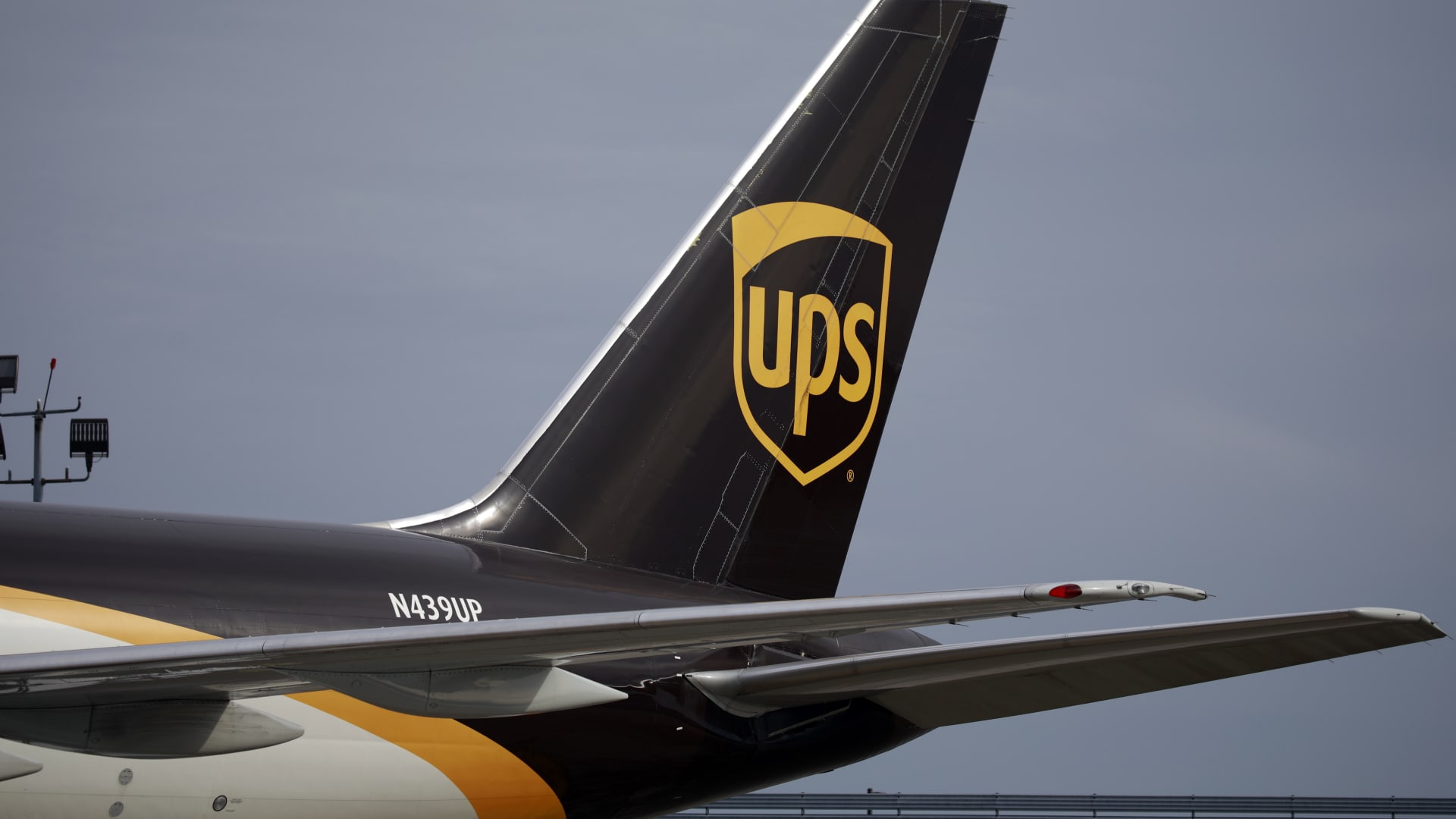
The grounding of MD-11 aircraft after the deadly crash of a UPS plane earlier this month could boost air cargo rates during the peak holiday shipping season, with some capacity out of the market, but analysts aren’t expecting a big impact.
The Federal Aviation Administration on Nov. 8 prohibited flights of MD-11 planes, less than a week after a Honolulu-bound UPS aircraft crashed moments after takeoff from Louisville Muhammad Ali International Airport in Kentucky, killing the three crew members and 11 people on the ground.
Earlier this week, the TAC Index, which tracks air freight rates around the world, said the Baltic Air Freight Index gained more than 4% in the week ended Nov. 17 and that was it up 2.4% last week compared with the same period last year.
“While it is normal for rates to rise ahead of the Thanksgiving holiday in the US and Christmas in Europe, sources suggested they had been given an added boost after the grounding of all MD-11 freighters following a fatal crash in Louisville earlier this month,” it said in a note.
UPS and FedEx each said they were grounding the aircraft, which make up 9% and 5% of their fleets, respectively, according to a Bank of America note.
FedEx did not immediately respond to a request for comment.
UPS said after the crash that it has contingency plans in place to continue providing service.
“We made this decision proactively at the recommendation of the aircraft manufacturer,” UPS said on Nov. 7. “Nothing is more important to us than the safety of our employees and the communities we serve.”
In a Friday statement to CNBC, UPS said the company has not instituted any additional peak season surcharges as a result of the grounding of its 26 MD-11s. Instead, the company said it has secured additional aircraft for its fleet, similar to the leased planes that it procures for the peak season, and has consolidated flight routes to maximize air capacity.
“We have reconfigured our ground network, adding additional capacity to move more packages,” a UPS spokesperson told CNBC. “Our contingency plans give us assurance that we’ll continue to effectively move volume and deliver for our customers now and throughout peak season.”
On the company’s most recent earnings call, which occurred before the fatal crash, CEO Carol Tomé said early forecasts from its top 100 customers signaled the peak season would have a “considerable surge in volume.”
Still, because UPS has begun to phase out its work with Amazon, previously its largest customer, Tomé added that the decrease in Amazon volumes means the total peak season average daily volume in the U.S. will be down year-over-year.
Stifel predicted in a note on Wednesday that the operational and financial impact of the grounding would be “minimal.”
“Importantly, aircraft will be back flying once approved individually, rather than the entire MD-11 fleet awaiting a singular ruling, and the FAA can effectively deputize outside parties to effectuate the inspections, which have already begun, according to management,” the Stifel analysts wrote.
Air cargo volumes in October rose 4% year-over-year, with cargo supply growing an average of 3% year-over-year in the past four weeks, Bank of America said in a note Monday. The analysts said any potential disruption from the grounding was not immediately clear, but that, overall, it expected a more muted holiday shipping season compared with the past two years.
The National Transportation Safety Board, which is leading the investigation into the UPS crash, said the left engine of the jet detached from the wing during takeoff before the plane crashed into a series of businesses just outside of the airport.
In its preliminary report it released Thursday, the NTSB said it found evidence of fatigue cracks in the jet, as well as areas of overstress failure.
Though UPS is headquartered in Atlanta, the Louisville airport is home to its largest global package handling facility.
The crash occurred during the country’s longest government shutdown, which promoted disruptions to air travel due to shortages of air traffic controllers. It also limited some cargo flights. Both commercial and dedicated freight companies carry packages and other goods.
During the shutdown, Treasury Secretary Scott Bessent told ABC News that the slowdown in cargo could lead to shortages around the holiday. The shutdown officially ended last week, and air travel disruptions have largely dissipated.