JERUSALEM, Nov 16 (Reuters) – Israel’s economy grew an annualised 12.4% in the third quarter, the Central Bureau of Statistics said on Sunday, in data that showed a bounceback from a weak second quarter that was hit more by the Gaza war.
The gain in gross domestic product in the July-September period topped a Reuters consensus of an 8% expansion and was led by broad-based gains led by consumer spending, exports and investment.
Sign up here.
GDP in the second quarter was revised to a 4.3% contraction from a prior 3.9%.
Reporting by Steven Scheer; Editing by Andrew Heavens
Our Standards: The Thomson Reuters Trust Principles., opens new tab
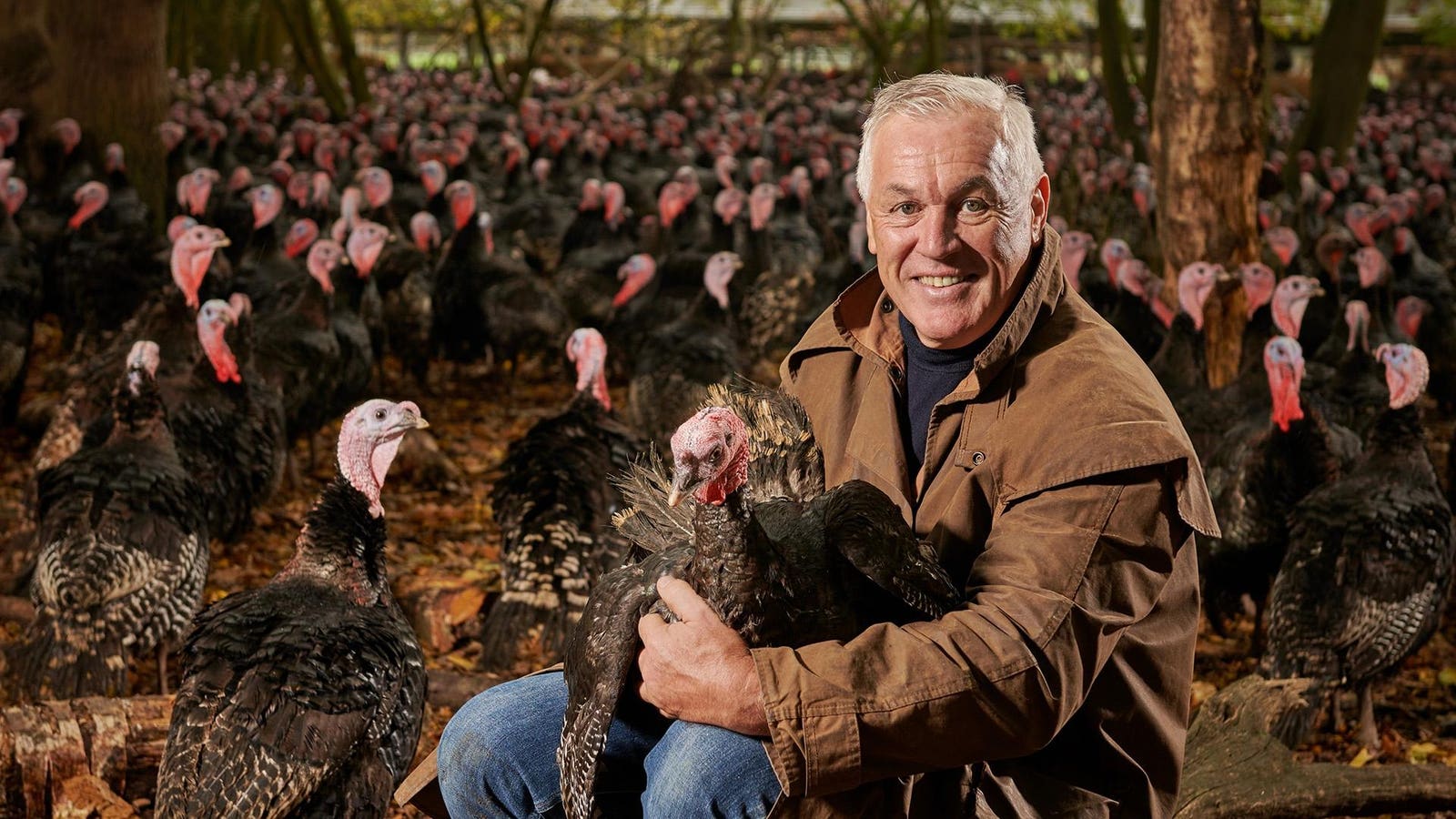
Paul Kelly’s family farm in England has been selling $500 heirloom turkeys for two generations. Now, after a decade breeding them in Virginia, KellyBronze birds are looking to gobble up America’s Thanksgiving market.
After two decades of breeding what the Times of London once called the “Rolls-Royce of turkey,” Paul Kelly wanted to learn from experts with generations of knowledge in America, where turkey farming originated. But once the Briton arrived in 2003, and after spending several weeks visiting turkey farms across Virginia, West Virginia, North Carolina, Massachusetts and Pennsylvania, Kelly was “amazed” to find no farmer or butchery maintained the American traditions, including dry-plucking and hanging, that have set the Essex, England-based KellyBronze apart.
Then again, when a frozen American Butterball costs about a $1 a pound and you’re asking customers to pay around $15 a pound—or nearly $500 for a 32-lb. turkey—high quality has to come with more than a high price.
“I thought, it’s almost impertinent for an Englishman to take turkeys to America,” says Kelly. “But there’s an opportunity there. I started looking, and we took it big.”
Kelly, 62, is now the owner of the only USDA-approved turkey plant in the U.S. that dry-plucks and hangs its birds, which many believe creates crispier skin and better flavor. Since purchasing 130 acres in the foothills of the Blue Ridge Mountains in Crozet, Virginia a decade ago, Kelly has opened America’s first newly built turkey hatchery in years.
KellyBronze, which sells its turkeys at Eataly and other high-end retailers across America, had 2024 revenue of $28 million. About 4% of that comes from the U.S., but Kelly expects that to be 25% within three years as he increases production in Virginia—and he is aiming for annual revenue will hit $80 million by 2028.
Founded in 1971 by Kelly’s parents, Derek and Mollie, KellyBronze is 100% family-owned and has never taken any private investment, though there have been many offers over the years. The business has grown steadily for the past six decades with little debt, and it currently has none. “I have slept at night knowing that every decision we made, we could afford to make, rather than hoping it worked,” says Kelly, who admits that the business is challenging as the bulk of revenue comes in November, December and January. “But, in America, bang, we bought the farm, we built the plant, not having sold one turkey. We were taking risks but risks we could afford.”
Kelly acknowledges the high price of his turkeys can be a “problem” but he is quick to point out that his birds are also three times the age of the typical frozen turkey, and lose 3% of their weight during hanging, and it’s all done by hand, which increases labor costs.
“People aren’t buying it to save money, are they?” asks Kelly. “The sales of amazing wines and the best champagnes go through the roof at Thanksgiving in America, the same as here at Christmas. Not everyone can afford it, but for those that can, it’s there.”
In the U.K, KellyBronze supplies high-end butchers and retailers like Harrods and Selfridges. The Royal Family as well as chef and restaurateur Gordon Ramsay have also supported the brand for years.
The Eaten Path: “We are never going to be Butterball,” Kelly says. “We are a small niche player and we just want to be producing the best possible turkey we can for Thanksgiving.”
KellyBronze
In addition to Kelly’s 130 acres in Virginia, the family owns 90 acres across Scotland and England, where it rents another 140 acres. There are also now 13 British farmers raising turkeys for KellyBronze, including British celebrity chef Jamie Oliver, who started raising a flock five years ago, after spending 25 years as a customer. Oliver calls KellyBronze “the turkey equivalent of Wagyu beef or Pata Negra ham—simply the best of its kind.”
“I became a turkey farmer not out of necessity, but to support an extraordinary artisan family and their craft,” Oliver tells Forbes. “The Kelly family are a shining example of what’s right in British farming. They brought back values and methods that were nearly lost to history.”
Now, after more than 50 years in business, KellyBronze is finally ready to feast on America’s high-end turkey market. “We are never going to be a Butterball. We are never going to be big,” says Kelly. “We are a small niche player and we just want to be producing the best possible turkey we can for Thanksgiving.”
Kelly’s parents bought a small farm the year he was born in 1963. His father worked at a big poultry company and after many years he left so the family could start their own turkey business in 1971 when Kelly was 8 years old. Back then, the British turkey industry was producing what was known as “New York Dressed” birds because, as Kelly explains, “the whole tradition of what we do came from America.”
When Kelly returned to the farm after graduating from an agricultural college attached to Scotland’s Glasgow University in 1983, he pushed his family to take their farming to the next level. In 1984, he changed the family’s breed from a white Wrolstad turkey that originated in Oregon to “the old traditional bronze breed.”
Farm To Table: KellyBronze dry-plucks and hangs its turkeys in the American tradition, which many believe creates crispier skin and better flavor.
KellyBronze
He also started bringing the birds outside where they could roam, dust-bathe, and peck in peace. The Kellys also started dry-plucking and then hanging the birds—at first for 7 days and now for 2 to 3 weeks. It was an expensive approach to a type of poultry that is traditionally quite cheap.
“It was a race to the bottom,” he recalls of British turkey farmers at the time. “We were the laughingstock of the industry.”
That first year, the Kellys had an annual revenue around $300,000 (or about $930,000 today). Despite the slow sales, the family doubled down. In 1987, the Kellys bought a former dairy farm for $90,000 at 10% interest over 10 years. The buildings and 5 acres of grasslands (where Kelly later built a house and now lives) helped the family expand its breeding and allowed them to build a small processing facility. “It was a huge step for us but gave us the space to supply the increased demand that came,” Kelly says. “It proved to be the best investment ever.”
By 1990, “the butchers were phoning us,” and by 1994, sales had skyrocketed to $1.2 million. After adding local farmers to their networkthroughout the 1990s, in 2001, KellyBronze was appointed by then-Prince Charles’ organic food brand Duchy Originals to farm its Christmas turkeys.
In 2003, revenue reached $3.8 million and Kelly was ready to broaden his understanding of traditional techniques and learn from farms in the United States, where it all began. The first turkeys are said to have been imported to England back in 1526, when a trader named William Strickland brought back six birds he obtained from Native Americans during an early voyage across the Atlantic. Eating turkey at Christmastime became fashionable at King Henry VIII’s court, cementing the turkey’s place as a symbol of festivity. The birds then traveled back across the Atlantic, as the colonists at Jamestown in Virginia had shipments of domesticated turkeys arriving on boats from England.
And while no turkey was ever formally recorded at the Pilgrims’ first Thanksgiving with the Wampanoag in Plymouth, Massachusetts in 1621, they were plentiful in the region. Benjamin Franklin once famously called the turkey “a much more respectable bird” than the bald eagle and “a true original Native of America. Eagles have been found in all countries, but the turkey was peculiar to ours.” He even described turkey as “a bird of courage.”
Born To Be Wild: KellyBronze is now producing 4,600 turkeys in the U.S. this year, and Kelly’s hatchery has the capacity to produce 15,000 “poults” every month.
Levon Biss for Forbes
Kelly says the stock he is raising in Virginia is inspired by “the original traditional turkey that was produced in America hundreds of years ago with the Pilgrims.” In 2014, he brought his turkeys back to the continent they originated on, buying his farm for $750,000, and spending another $2.75 million on infrastructure upgrades—with help from a $1 million bank loan that’s already been paid off.
KellyBronze is now producing 4,600 turkeys in the U.S. this year, and Kelly opened his own hatchery in 2018, which has the capacity to produce 15,000 “poults” every month. It’s currently at 5,500 per year and Kelly wants to open another on the East Coast and one on the West Coast.
Doing business in America isn’t easy. For one, sales are super lumpy—95% of Kelly’s U.S. sales occur at Thanksgiving—and KellyBronze might get hit with tariffs from the Trump Administration’s trade war. Kelly shipped turkey eggs from the U.K. to his U.S. hatchery just before the tariff start date. Next season, if the tariffs continue, the eggs could face charges of a few thousand dollars.
“My dream would be for people to order it in January or February of every year. They put their name on one and we’ll grow it to order,” says Kelly, whose son, Toby, 31, and daughter Ella, 28, are now running parts of KellyBronze. “The potential is huge.”
More from Forbes
ForbesMeet The Billionaires Behind A Food Empire Built On Dessert ToppingBy Chloe SorvinoForbesFor Hooters’ Original Founders, Saving The Chain Is A Higher Calling: “America Needs Us.”By Chloe SorvinoForbesMeet The Florida Sugar Barons Worth $4 Billion And Getting Sweet Deals From Donald TrumpBy Chloe SorvinoForbesHow Kettle & Fire Turned Bone Broth Into A $100 Million BusinessBy Chloe Sorvino
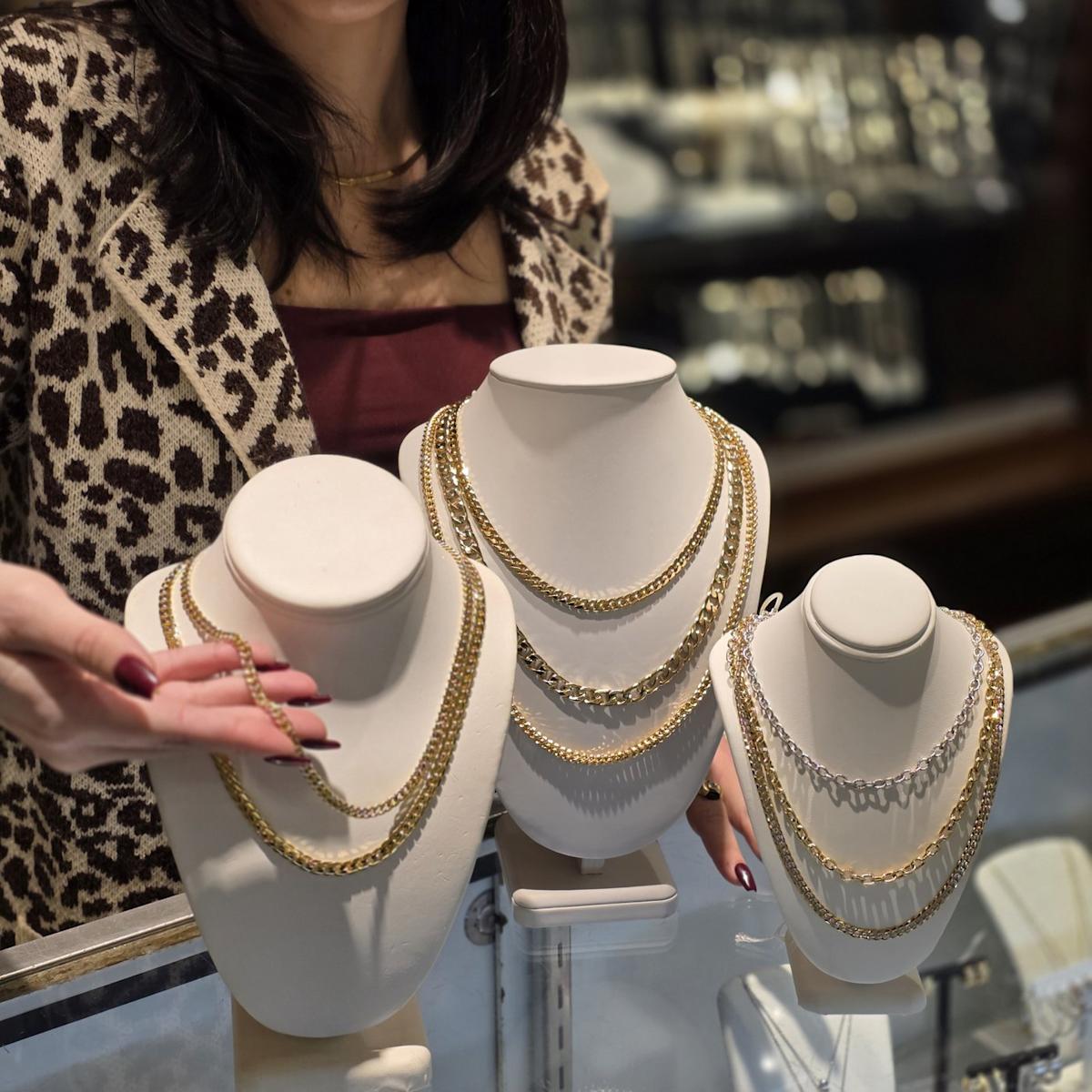
Jewelry hasn’t lost its shine for gift-givers this holiday season, but business owners are expecting a bit more price sensitivity from customers after a surge in gold prices this year.
The holiday season remains a key period for the jewelry industry, with gift items accounting for a significant share of yearly revenues. But jewellers have had to raise prices as the cost of gold sharply increased — soaring roughly 55 per cent year-to-date to top the US$4,000 per ounce mark.
“Anybody and everybody I believe is raising prices and if they’re not, they should be. Because what you have in stock, you cannot replace for the same price if you’re going to reorder it today,” said Colin Nash, president of the Canadian Jewelry Group and owner of Nash Jewellers.
Based on what his business has seen, consumers are still spending so far this year, but by lesser amounts in the face of rising prices — not just for gold, but for the cost of living overall.
“I think that we’re still going to get the traffic, it’s just a question of how much and what are they going to be buying,” he said.
Nash said he thinks some price-sensitive consumers may avoid higher-end gold products altogether in favour of less expensive sterling silver items.
James Poag, co-owner of James O. Poag Jewellers, said he is also seeing consumers keeping a tighter grip on their wallets.
“Maybe some of the product mixes are changing, we’re seeing a lot of lab-grown diamonds and a lot of larger hollow pieces of jewelry as opposed to heavier cast pieces just due to the price of gold,” he said.
He’s also seen an increase in repairs, with people choosing to restore older pieces instead of replacing them, while other customers are trading in older pieces of jewelry and repurposing them into a new design.
Larger jewelry brands are also making adjustments.
Mejuri CEO and co-founder Noura Sakkijha said in a statement that the company introduced 10-karat solid gold products to provide more accessible price points. She added that offering a wide range of materials, including 10- and 14-karat gold as well as vermeil and sterling silver, gives consumers more choice.
“We also made selective and measured price adjustments on certain 14-karat pieces to reflect raw material increases. At the same time, we’re seeing customers explore different materials and gravitate toward more delicate pieces in gold, which we expect to continue during the holiday season,” she said.
But not all price adjustments come from decisions made at the store level.
Nash said that since his company works with higher-end brands like Rolex, Tudor and Roberto Coin, those brands dictate price increases and set their own manufacturer’s suggested retail price. He said once a brand decides that a price increase is needed, it notifies any stores carrying their product to follow suit.
“As soon as they (larger brands) say a 10 per cent price increase on each of the products, we have to follow suit because the prices here have to match what they’re selling for in Calgary, Vancouver, even in the (United) States,” Nash said.
Poag added that sharp rises in gold prices have made repricing difficult.
“It is a constant battle. We have 2,500 rings, so it literally takes months to go through to do repricing, so there certainly is a significant lag time,” he said.
Poag said since the run-up in the commodity price, an average consumer might be paying about 25 to 40 per cent more, depending on the gold content and the item they are purchasing.
There’s no doubt the holiday season is a key time for jewellers.
Poag said it’s typical in the industry for December sales to account for about 20 to 25 per cent of annual revenues.
As sales start to ramp up, Nash said it’s difficult to predict where the price of gold will go as it continues to trade above the US$4,000 mark. Prices hit US$4,300 in October.
“Maybe we hit our ceiling, maybe it’s coming down, but I don’t know. If I was a gambling man, I would still probably bet that gold will stay steady and keep moving just not at the pace that it has been,” he said.
Given the current price dynamics, Poag said he doesn’t think gold prices will come down significantly and it’s not worth it for consumers to delay purchasing in hopes of lower prices.
“I don’t think we’re going to see a significant downward trend,” he said.
This report by The Canadian Press was first published Nov. 16, 2025.
DUBAI, United Arab Emirates, Nov. 16, 2025 (GLOBE NEWSWIRE) — Mutuum Finance (MUTM) is entering one of its most important development stages. The project has been moving steadily across its roadmap, and with Roadmap Phase 2 now nearing completion, interest around the new crypto has grown even stronger. As funding approaches the $20 million mark, the community is watching closely as the next crypto development phase prepares to open the door to the project’s first major product release.
A Clear Vision for a DeFi Crypto Lending Protocol
Mutuum Finance is building a decentralized lending protocol designed for users who want a secure and transparent way to supply assets and access liquidity. The system is powered by smart contracts on Ethereum and aims to streamline the way lenders and borrowers interact. The project focuses on automation, stability and long term sustainability, which has helped it gain traction among DeFi crypto followers looking for early projects with clear development results.
Since its launch in early 2025, Mutuum Finance has continued to grow its community. The project has now raised $18.7 million, drawing steady interest at each presale stage. It has also reached 18,000 holders, a strong milestone for a new crypto still in its development cycle. These numbers show consistent activity and rising demand across multiple market conditions.
The presale has been a major part of Mutuum Finance’s early traction. It began at $0.01 in Phase 1 and progressed to $0.035 in the current Phase 6. This marks a 250% increase from the starting price, one of the reasons why more buyers have taken interest as new stages opened.
Phase 6 itself has been moving quickly. Allocation has now passed 88%, signaling strong demand as the project advances toward the next price level. Many buyers are following the remaining supply closely because each stage has a fixed rate. Once Phase 6 sells out, the price will not return to current levels. This has added a sense of urgency across the community, especially with development milestones approaching.
Token Distribution and Expanded Access for Buyers
Mutuum Finance has a total supply of 4 billion MUTM tokens. Out of this supply, 45.5%, equal to 1.82 billion tokens, is allocated for the presale. This distribution ensures broad early access while giving the ecosystem room to grow after launch.
So far, the presale has sold 800 million tokens, showing stable progress across all phases. With Phase 6 nearing completion, the presale is entering a decisive stage as the team moves closer to Roadmap Phase 3.
To make entry easier, the project now supports card purchases with no limits. This update was announced on X and helped open the presale to users who do not want to rely only on on-chain transactions. The expanded payment options have supported a rise in new buyers as Phase 6 inches toward closure.
Advancing Through Roadmap Phase 2
Roadmap Phase 2 has focused on building and refining the main systems that will power the lending protocol. The team has been working on the liquidity pool mechanics, mtToken logic, interest rate model, debt tracking and liquidation functions. These components form the foundation of the upcoming V1 release.
Phase 2 has also included internal testing, risk checks and preparation for the first public version. The team has emphasized stability and clear design, which is important for a DeFi protocol that plans to handle large amounts of value. As this stage nears completion, it marks a major step forward and sets the groundwork for the next key milestone.
According to the official announcement on X, the first version of the protocol will go live in Q4 2025 on the Sepolia testnet. This version will include the liquidity pool, mtTokens, debt tokens and the liquidator bot. Having a confirmed release window has become a major confidence point for the community, since it shows that the project is moving on schedule.
V1 is expected to introduce the first real look at how Mutuum Finance will operate. Users will be able to test deposits, borrowing, liquidation functions and the mtToken growth system. For a new crypto project moving through its roadmap, delivering a clear and dated milestone is often seen as one of the strongest indicators of momentum.
Security Measures and Community Trust
Security remains one of the core priorities for Mutuum Finance. The project completed a CertiK review and achieved a 90 out of 100 Token Scan score, which is a positive result for a protocol still preparing for its first version. Alongside the audit, the team runs a $50,000 bug bounty to encourage early discovery of code issues. These steps have helped build trust within the community as the project moves into more advanced stages of development.
With Phase 6 over 88% allocated, funding at $18.7 million, a growing user base and V1 confirmed for Q4 2025, Mutuum Finance has entered one of its strongest periods so far. Roadmap Phase 2 is close to completion, and the project is preparing to shift into the next stage of development.
As the DeFi crypto sector continues to evolve, Mutuum Finance is positioning itself as a rising new crypto with clear progress, strong community activity and a roadmap that continues to move forward as expected.
For more information about Mutuum Finance (MUTM) visit the links below: Website: https://www.mutuum.com Linktree: https://linktr.ee/mutuumfinance
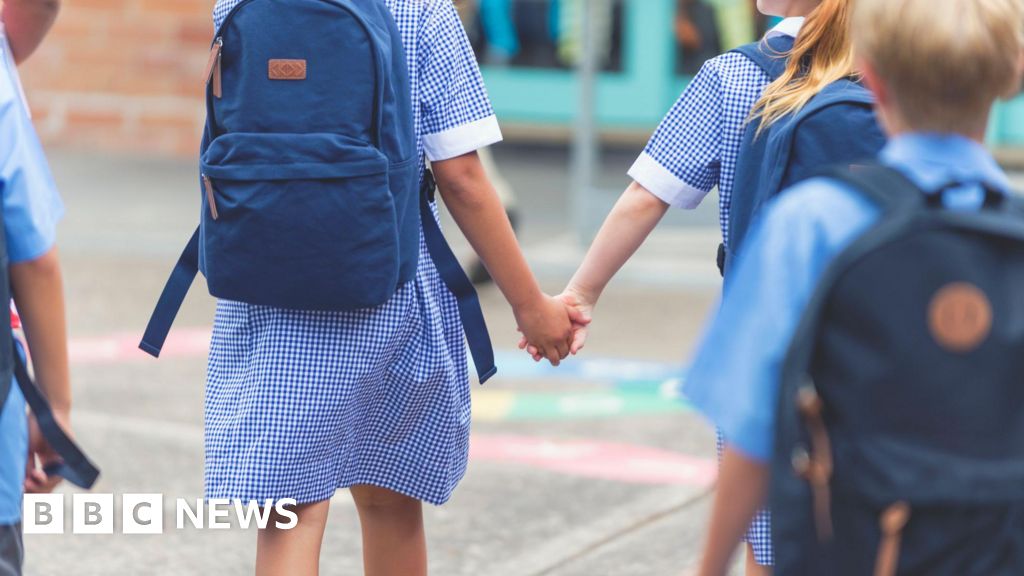
A total of 69 schools in the Australian Capital Territory (ACT) will be forced to close on Monday after coloured play sand was recalled due to asbestos risk, the government has said.
A recall for the products, which were found to have traces of asbestos in some samples, was issued by Kmart and Target on Saturday.
The Australian Competition & Consumer Commission (ACCC) said there was a “low” risk that the asbestos could become airborne or fine enough for inhalation.
Inspections of the schools are under way and could “take days”, said ACT Education Minister Yvette Berry in a post on Facebook. She added that air testing so far has come back “negative to airborne asbestos” from all schools.
State Emergency Service volunteers and school staff have been walking through buildings and “mapping all coloured sand they see” over the weekend, she added.
The ACT government said that people who have been in contact with the product do not require a clinical assessment.
Berry said despite the minimal risk, the government is “required to eliminate risk as much as reasonably practicable”.
Up to 23 schools will remain open as they either have “small stocks” of the sand or do not have any of the product.
The products set out in the recall notice are labelled as Active Sandtub 14 piece Sand Castle Building Set, and Blue, Green and Pink Magic Sand.
Asbestos, once widely used in building materials, can release toxic fibres into the air if disturbed or processed that can cling to the lungs and – over decades – cause cancer.
Importing or exporting asbestos or goods containing asbestos is prohibited under Australian law.
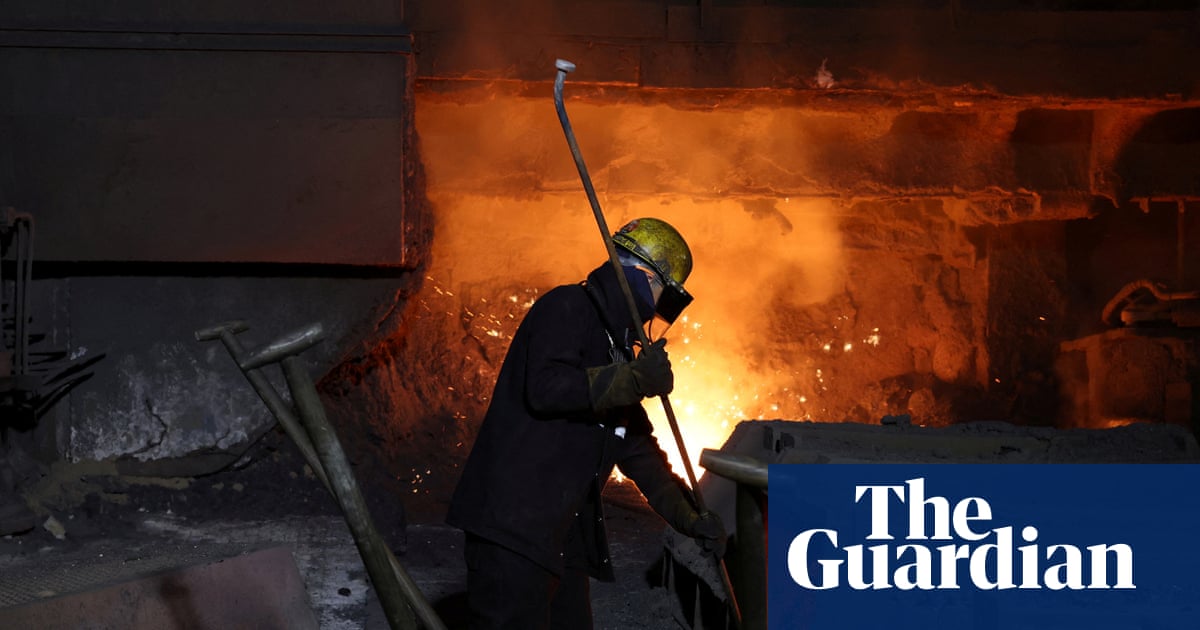
The business secretary, Peter Kyle, has backed a shift to cleaner electric arc technology at the state-controlled British Steel plant, raising questions about the future of the UK’s last remaining blast furnaces.
Kyle said the government was “keen to see that transition happen”, as he works on a new steel strategy, which is expected to be published in December.
A shift to electric arc furnaces at Scunthorpe, Lincolnshire, would secure the future of steel production at the plant – under emergency state control since April – as the UK tries to meet its target of net zero carbon emissions.
However, it would also raise doubts about the fate of blast furnaces that employ thousands of people, and the UK government’s previous pledges to preserve Britain’s primary steelmaking ability, producing steel from iron ore.
When the government recalled parliament in April to take control of British Steel, it feared the site’s Chinese owner, Jingye Steel, was planning to close it permanently, with the loss of as many as 2,700 jobs. Ministers have not yet outlined plans for Scunthorpe’s longer-term future.
The government set aside £2.5bn for the steel industry in its election manifesto last year, but Kyle confirmed that it has already spent hundreds of millions of pounds of that money to keep operations going at British Steel and another manufacturer, Liberty Steel, which fell into insolvency in August.
Kyle said the government had been forced to change plans as the global steel industry faced a slew of crises.
“Britain is operating in a highly complex global environment, which includes, of course, the impact of tariffs, but also the impact of oversupply,” he said. Donald Trump has caused chaos with trade levies, while a huge amount of steel has continued to flood global markets from China as it looks for other markets.
Using up the money set aside for the steel industry would probably mean less money for capital investment. Nevertheless, asked if he thought there would be electric arc furnaces in Scunthorpe, Kyle responded: “I do.” He said he would provide more details in the government’s steel strategy.
Steelworkers will be cautious of the plans after the experience of Tata Steel, which last year cut 2,500 jobs at Port Talbot, in south Wales, as it switched to electric arc furnaces. The plan would also require a deal with Jingye, still the legal owner, to walk away.
A move away from blast furnaces would also raise questions over the UK’s ability to make virgin steel. Jonathan Reynolds, Kyle’s predecessor as business secretary, repeatedly said the government was taking control of the Scunthorpe site to preserve “primary steelmaking”, the ability to produce steel from iron ore.
Alasdair McDiarmid, the assistant general secretary of Community, a union representing steelworkers, said he welcomed “the government’s firm commitment to a just transition”.
skip past newsletter promotion
after newsletter promotion
However, he added that it would be important to “maintain primary steelmaking capacity here in the UK”.
The UK has relied on blast furnaces to produce primary steel, but they generally vent huge amounts of carbon dioxide into the atmosphere. Electric arc furnaces, by contrast, use electricity to melt down scrap steel, not iron ore.
The government is considering investing in a separate facility to turn iron ore into direct reduced iron (DRI), which is compatible with electric arc furnaces. That DRI could then be produced using clean hydrogen, preserving primary steelmaking ability with much lower carbon emissions. However, industry sources have cast doubt on the financial viability of such an arrangement.
Frank Aaskov, the director of energy and climate change policy at UK Steel, a lobby group, said it was “encouraging to see the secretary of state set out a clear future vision for the UK steel industry and British Steel”.
He said the steel industry needs “a stronger business environment through lower power prices and robust trade policies”.
Kyle spoke to the Guardian from Cardiff, where he was meeting small businesses to hear about productivity improvements using digital technology. He said the government wanted to play a “greater role” in coordinating AI training for companies.
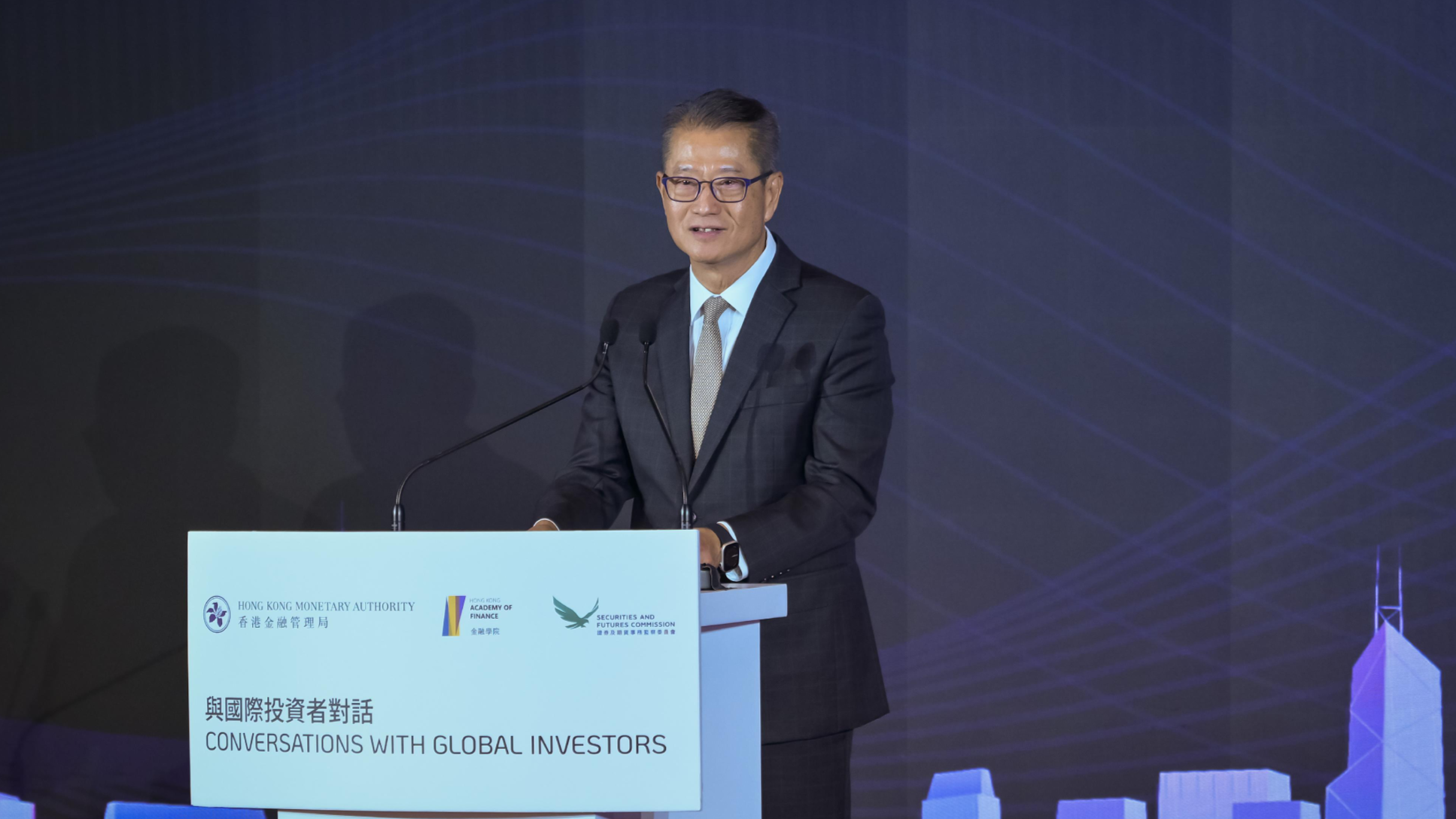
Hong Kong Financial Secretary Paul Chan Mo-po speaks at the Global Financial Leaders’ Investment Summit — Conversations with Global Investors in Hong Kong, Nov 5, 2025. (PHOTO / HKSAR GOVT)
Hong Kong’s economy is expected to maintain its expansion into next year, underpinned by resilient exports, firm investment sentiment and recovering consumer demand, Financial Secretary Paul Chan Mo-po said on Sunday.
Writing in his weekly blog, Chan said the city’s exports in 2026 will be supported by a moderately growing global economy, as most international institutions anticipate, and by a recent easing in trade tensions. Locally, improving consumer and business sentiment will sustain spending and investment.
The Hong Kong Special Administrative Region government will seize emerging opportunities while staying vigilant to external risks, such as uncertainty surrounding the pace of US interest rate cuts and potential shifts in global trade, the finance chief said.
The SAR’s gross domestic product has been expanding for 11 consecutive quarters on a year-on-year basis. In the third quarter of this year, the GDP grew by 3.8 percent in real terms — the strongest in more than 18 months.
ALSO READ: HKSAR to revise GDP forecast upward as economic performance improves
With robust performance in exports, consumption and investment, the SAR government has revised up its full-year growth forecast for 2025 to 3.2 percent from the previous range of 2 to 3 percent.
Merchandise exports in the first three quarters surged 11.3 percent in real terms, powered by shipments to the Chinese mainland and the Association of Southeast Asian Nations, which jumped 14.6 percent and 27.1 percent in volume terms, respectively.
Moreover, Chan noted, the continued rise in fixed investment and local consumption has provided a solid underpinning for economic growth, reinforced by sustained capital inflows, a buoyant stock market and a stabilizing property sector.
The Hang Seng Index — the local stock market benchmark — has risen more than 30 percent so far this year. Average daily turnover in the first 10 months reached HK$258 billion ($33.17 billion) — nearly double that of last year’s full-year average. Over the same period, 81 new listings had raised around HK$216 billion — almost triple the amount a year earlier. This has placed Hong Kong as the world’s top initial public offering destination.
ALSO READ: Economist: HK seen as global growth epicenter
Hong Kong’s status as a financial hub continues to draw global wealth. Since 2022, more than 200 family offices have established or expanded operations in the city with the help of investment promotion agency InvestHK. By the end of last year, assets under management had exceeded HK$35 trillion, up 13 percent year-on-year. These strong factors have helped lift financial services exports by 11 percent this year, contributing over a tenth of GDP growth.
The property market has also turned the corner amid a strong local economy and US interest-rate cuts from September, Chan said.
Sales activities of non-residential properties have picked up from a year ago, and vacancy rates in major shopping districts have fallen since early this year although prices and rents have remained soft.
Riding high on Hong Kong’s recovery momentum, more companies have stepped up investment in offices, some buying multiple floors or entire buildings, and overseas financial institutions increasing their leases of Grade-A space.
READ MORE: HK to secure sustainable economic growth impetus
Tourism has rebounded steadily, with visitor arrivals in the first 10 months climbing 12 percent year-on-year to 41 million, benefiting the catering and retail sectors.
With the economy maintaining strong momentum and market sentiment improving, Chan said, the latest unemployment and underemployment figures to be released on Tuesday are expected to show continued stability.
SEOUL, November 16, 2025– Hyundai Motor Group (the Group) announced today it will invest KRW 125.2 trillion in South Korea over the five-year period from 2026 to the end of 2030, representing the company’s largest-ever domestic investment commitment.
The investment plan significantly expands on the Group’s previous commitment, exceeding the KRW 89.1 trillion investment in Korea from 2021 to 2025 by KRW 36.1 trillion. The new five-year commitment marks an annual average investment of KRW 25.04 trillion over this future period, and a more than 40 percent increase from the annual average over the past five years of KRW 17.8 trillion.
This significant domestic investment strategy highlights the Group’s agility in actively responding to the rapidly changing global business environment, positioning the Group effectively for long-term growth. The plan aims to strengthen South Korea’s status as a global mobility innovation hub as well as stimulate broader economic growth by advancing the AI/Robotics industry and progressing the green energy ecosystem.
The KRW 125.2 trillion investment will be allocated across three key areas:
• KRW 50.5 trillion in future business investment across AI, Software Defined Vehicles (SDVs), electrification, robotics, and hydrogen
• KRW 38.5 trillion in research and development to develop new products and core technologies
• KRW 36.2 trillion in capital investment to optimize production facilities and construct the Group’s Global Business Center (GBC)
A significant portion of the investment will focus on new businesses based on advanced AI technologies, such as robotics, contributing to the development of Korea’s AI/Robotics innovation ecosystem.
The Group is also expected to play a key role in promoting balanced regional development through the establishment of EV-dedicated facilities and the upgrading of production lines at regional manufacturing facilities for new model launches, as well as the construction of a PEM electrolyzer plant in the southwestern region.
Through this mid-to long-term investment, Hyundai Motor Group will support Korea in further strengthening its position as a key global hub for mobility production. The Group plans to diversify export destinations for vehicles produced at domestic plants and significantly expand exports by developing Korea’s EV-dedicated facilities into global export bases.
The Group aims export 2.47 million units by 2030, up from 2.18 million units in 2024, and expand EV exports – including EVs, PHEVs, HEVs, and FCEVs – from 690,000 units to 1.76 million units over the same period.
Focused Investment in Korea’s AI/Robotics Industry and Green Energy Ecosystem
To drive a paradigm shift in the domestic industrial landscape, the Group’s investments will nurture the AI/Robotics industry. This will focus on building AI infrastructure and expanding advanced ecosystems, such as AI-powered robotics.
Hyundai Motor Group recently announced its strengthened collaboration with NVIDIA and is actively enhancing its AI capabilities across in-vehicle AI, autonomous driving, smart factories, and robotics.
To process the massive amount of data required for AI model training and operations, the Group is reviewing the establishment of a high-power AI data center. The data center is planned to feature petabyte-scale storage capacity for AI training data generated by physical AI robots and autonomous vehicles.
The Group is also pushing forward the establishment of the ‘Hyundai Motor Group Physical AI Application Center’, which will play a central role in advancing the physical AI ecosystem. This center will verify the completeness and safety of robots trained on large-scale behavioral data through AI and is expected to serve as an innovation testbed to ensure reliability before deployment in real-world industrial settings
Based on customer-tailored robotics technologies developed through physical AI, Hyundai Motor Group will build a robotics manufacturing and foundry facility. This will enable the Group to produce complete robotics systems in-house and offer foundry services for SMEs lacking manufacturing expertise.
In parallel, the Group will actively support R&D in robotics components by existing automotive parts suppliers. By accelerating the entry of automotive parts suppliers into the robotics sector, these suppliers are expected to contribute to the localization of core components and the export of high-value-added products, further accelerating Korea’s industrial transformation.
The Group is also planning investments in the development of water electrolyzers for green hydrogen production to enhance the green energy ecosystem.
Hyundai Motor Group plans to build a 1GW PEM electrolysis plant in the southwest, capitalizing on the readily available supply of renewable energy, along with nearby hydrogen shipment centers and refueling stations.
To accelerate Korea’s transition to a hydrogen economy, the Group will also establish facilities for manufacturing PEM electrolyzers and hydrogen fuel cell components, positioning these operations as a global export business.
Hyundai Motor Group also plans to actively consider investments – through consultation with the Korean government and local authorities – to establish a hydrogen AI Smart City that integrates the Group’s core technologies, including AI, hydrogen energy, and V2X.
Through expanded investment across various regions, Hyundai Motor Group aims to stimulate local economic growth and lay the foundation for the sustainable growth of Korea and its mobility industry.
Currently, Hyundai Motor Group operates vehicle and parts manufacturing plants in all key geographical regions across Korea. Over the next five years, the company will continue to invest in production line optimization to accommodate the launch of new vehicle models.
New plants are also under construction. Hyundai’s dedicated EV plant in Ulsan will be completed next year, and a new hydrogen fuel cell production facility is scheduled to begin operations in 2027. Kia has completed a new dedicated EV plant for PBVs in Hwaseong, Gyeonggi Province, and is preparing to commence operations.
Hyundai Steel Company is building an LNG power plant at its Dangjin steelworks, with KRW billions also being invested in blast furnace upgrades. Hyundai Engineering Co. Ltd. is expanding nationwide infrastructure, such as EV charging stations, to address underserved areas.
Investment Strategy and Timeline
Hyundai Motor Group’s investment plans by sector from 2026 to 2030 include: KRW 50.5 trillion in future business investment, KRW 38.5 trillion in R&D investments, and KRW 36.2 trillion in capital investments.
Future business investment will be allocated in key technological areas, such as AI-powered autonomous driving, AI-driven autonomous manufacturing, AI robotics, electrification and SDVs, and hydrogen energy to solidify the Group’s foundation for sustainable growth. Key areas of future business investment include:
• AI autonomous driving o AI-powered autonomous driving technology enables a vehicle to perceive its surroundings using sensor data and make real-time driving decisions independently through AI o The Group is developing this technology through its end-to-end deep learning model, Atria AI, and is actively collaborating with 42dot and Motional to bring this vision to life o In parallel, the Group is focusing on the development of AI-driven autonomous manufacturing by integrating AI with robotics and digital twin technologies o Enable AI to independently operate and optimize production processes
• Software Defined Vehicle Development o Recently announced ‘Pleos’ mobility software brand o Plans to unveil an SDV Pace Car in the second half of 2026, decoupling vehicle hardware and software
• Powertrain and Lineup Diversification o Continue to strengthen electrification capabilities o Introduce Extended Range Electrified Vehicles (EREVs) with over 900 km driving range
• Battery Technology Internalization o Strengthen investments to improve battery safety and marketability o Focus on internalizing design and development capabilities for various battery types
• Hydrogen Energy Business Expansion o Enhance the development of next-generation fuel cell systems, hydrogen buses, and trucks o Aim to solidify global leadership in hydrogen fuel cell vehicles o Build a hydrogen ecosystem as well as a full end-to-end hydrogen value chain spanning production, supply, storage, and utilization with various Hyundai Motor Group affiliates
R&D investment will focus on strengthening the Group’s competitiveness in the mobility industry and developing new products and core technologies to flexibly respond to global market conditions.
• Develop new products and core technologies o Focus on the development of hybrid engines for rear-wheel drive applications o Pursue regional strategic models and technology strategies to meet the needs and environments of key global markets
Capital investment will be directed to enhance production optimization in Korea, innovation in manufacturing technology, and the expansion of customer service hubs.
• Hyundai Motor Group’s Global Business Complex (GBC) o Construction will begin after completing the Seoul city permit process o GBC will be a global innovation hub as well as a landmark for Korea and will create significant economic impact during and after construction
Hyundai Motor Group expects the large-scale domestic investment to advance related industries, contribute to strengthening Korea’s position as a global mobility innovation hub, and further energize the national economy.
Alibaba Group Holding has begun a revamp of its artificial intelligence chatbot in a move to match OpenAI’s ChatGPT, according to app store information and media reports, as some observers see “panic” in Silicon Valley over the Chinese tech giant’s rapid AI progress.
The new chatbot app, Qwen, an upgraded and renamed version of the previous app, Tongyi, became available on Android and Apple app stores on Friday.
Alibaba dubbed the updated app the “most powerful official AI assistant for its models” and “the primary entry point for experiencing the latest and most powerful Qwen model”, in app-store descriptions. Alibaba owns the South China Morning Post.
The company also planned to add agentic-AI features to the app to boost shopping on platforms including the main Taobao marketplace, Bloomberg reported.
Alibaba did not immediately reply to a request for comment.
The tech giant, based in Hangzhou, the capital of eastern China’s Zhejiang province, has been pushing adoption and commercialisation of the Qwen series of AI models over the past two years amid the global AI frenzy kicked off by OpenAI.