Delta Air Lines settled a lawsuit that alleged a flight attendant was fired in retaliation for supporting unionization and enduring “sexually assaultive touching” during training.
The flight attendant, Aryasp Nejat, said he was suspended without pay, then fired, for making two pro-union, anti-harassment posts on social media, and was told his sexual harassment allegation would be investigated, but that he never received a follow-up.
The lawsuit, filed in 2024, accused a Delta Air Lines flight attendant who performed uniform inspections on flight attendants during a graduation ceremony, Matthew Miller, of having “engaged in non-consensual, sexually assaultive touching of Nejat with Miller’s hands reaching inside Nejat’s pants close to his genitals and then moving to underneath Nejat’s vest and against Nejat’s chest”.
The lawsuit was settled for an undisclosed sum. Miller did not immediately respond to a request for comment.
“The settlement represents a step towards accountability and healing after a difficult period in my life, and I really hope that my experience helps highlight to the public, and to especially Delta flight attendants, the importance of having a union,” said Nejat, who works as a flight attendant for a different major airline. “I truly believe that Delta values its anti-union campaign over the legal rights of its flight attendants to organize a union and their legal right to make complaints of sexual harassment.”
Nejat said he planned to use the settlement to cover his law school costs.
Several labor unions including the Association of Flight Attendants-CWA, International Association of Machinists and Aerospace Workers and the Teamsters are working to unionize 29,000 flight attendants at Delta, currently the largest single-unit organizing campaign in the US.
Delta has strongly opposed the move. The airline has a union representing pilots at the carrier and one representing dispatchers, but not for attendants – unlike other major airlines, where most workers are predominantly union represented.
“One of the reasons that flight attendant unions were originally formed were to root out sexual harassment, assault or sexual exploitation in order to try to get workers to do what you want them to do, to keep them quiet,” said Sara Nelson, president of the AFA-CWA. “These were the original reasons that we organized over 80 years ago, and we first negotiated a seniority list and a due process in that contract that ensured that something like this, at a minimum, that Aryasp wouldn’t have faced the retaliation for the union support but would have had a due process here.”
A Delta Air Lines spokesperson said: “Delta has consistently maintained his claims are without merit and settled to avoid the expense and distraction of litigation. Delta remains committed to ensuring all employees are treated in line with Delta policy and the law.”
Removing carbon from the atmosphere will now be necessary to avoid catastrophic tipping points, one of the world’s leading scientists has warned, as even in the best case scenario the world will heat by about 1.7C.
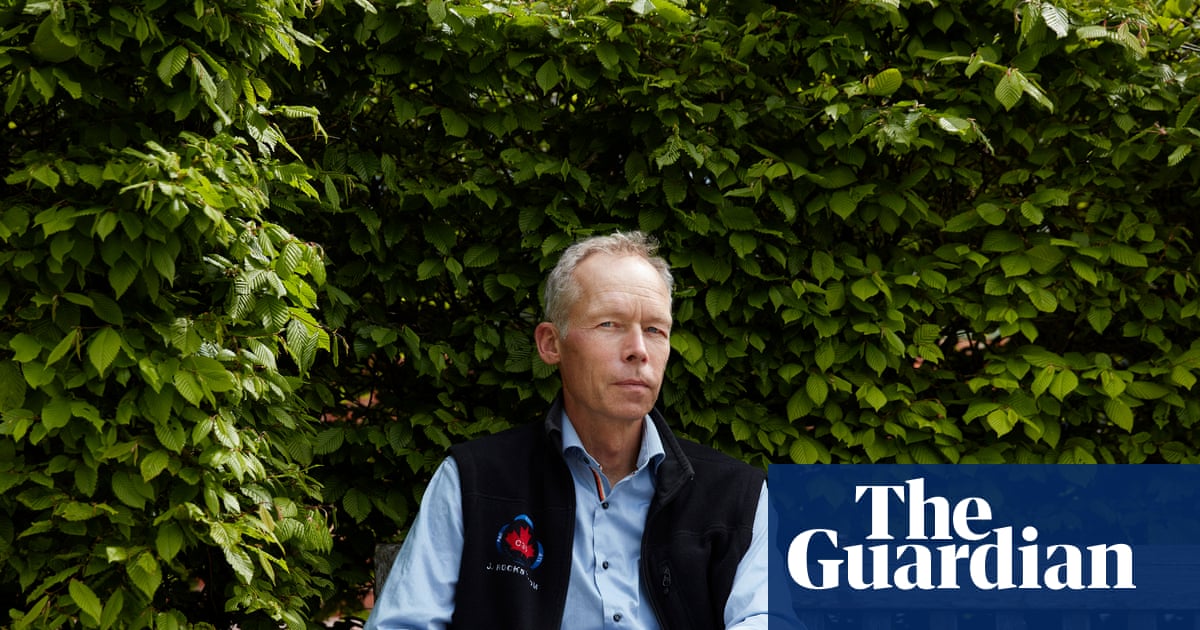
Johan Rockström of the Potsdam Institute for Climate Impact Research, who is one of the chief scientific advisers to the UN and the Cop30 presidency, said 10bn tonnes of carbon dioxide needed to be removed from the air every year even to limit global heating to 1.7C (3.1F) above preindustrial levels.
To achieve this through technological means, such as direct air capture, would require the construction of the world’s second biggest industry, after oil and gas, and require expenditures of about a trillion dollars a year, scientists said. It would need to be done alongside much more drastic emissions cuts and could also have unintended consequences.
Rockström was among several leading climate experts who spoke at a first public event for the Science Council, which was set up as an advisory body by the Belém Cop30 presidency.
In the next five to 10 years, they said the world would overshoot the 1.5C target of the Paris Agreement.
This already happened temporarily in 2024, but UN scientists do not consider the goal breached until the trend is confirmed over an average of 10 years combined with forecasts of the following 10 years, said Thelma Krug, the coordinator of the council.
Another member, Chris Field of Stanford University, said that despite the overshoot, the world should retain the 1.5C target because the longer and higher the world remains beyond that, the greater the risk of more dangerous tipping points in the Antarctic, Greenland, ocean circulation and the Amazon rainforest. It is thought that many coral reef systems will already have passed that point of no return at 1.5C of heating.
Tim Lenton, a tipping point expert at Exeter University, outlined the range of risks that are already close. Still greater dangers lie ahead, he warned, particularly if there is a collapse of the Atlantic meridional overturning circulation system of ocean currents.
“This would trigger other tipping points,” Lenton warned. “We must do everything we can to prevent this.”
A person holds a fan with the phrase ‘Out with the oil lobbyists!’ in protest against oil companies at Cop30 in Brazil. Scientists say it would require far stronger policies to reduce fossil fuel emissions than those currently adopted by many governments. Photograph: Andre Coelho/EPA
Field said 200bn tonnes of carbon dioxide would have to be removed from the atmosphere to cope with every tenth of a degree rise.
At the most, he said this could cope with two-tenths of a degree, but even this would be slow, expensive and could bring a wide range of unintended consequences.
There are a range of options for capturing carbon. The most effective and cheapest is growing forest, which costs about $50 for every tonne of CO2, but means the land cannot be used for other purposes such as agriculture. The most expensive is direct air capture, an industrial process that has never been used at scale, which costs at least $200 per tonne. In between are riskier strategies such as ocean fertilisation, which could disrupt marine ecosystems.
Krug said the IPCC has started a new study on different mechanisms for carbon removal. Rockström told the Guardian he would like the Cop30 presidency to put carbon removal in its declarations to focus attention of the risks and costs ahead.
He said Potsdam Institute modelling had shown that, even with ambitious carbon removal and strong government actions to reduce emissions, it was still only possible to limit heating to between 1.6C and 1.8C. Even this would require far stronger policies to reduce fossil fuel emissions than those currently adopted by governments, which would allow the world to heat by at least 2.7C.
Despite the enormous costs involved, he said the alternative was more devastating droughts, fire storms and suffering.
“Every tenth of a degree matters,” he said. “We are seriously seeing that we are heading at high speed towards a dead end. Scientists continue publishing papers but we are getting nervous. We are seeing really worrying signs,” he said.
Scientists want the prevention of tipping points to be included in the global stocktake of the Cop process. Lenton told the Guardian he welcomed the fact that the UN’s main climate science body, the Intergovernmental Panel on Climate Change, has started studying these risks. He emphasised there were also positive tipping points, when social, economic or technological drivers could push change towards a more stable climate.
‘Ciao bambino!’: Christiana Figueres launched a broadside at the US president, Donald Trump, and the absence of delegates from the country. She said decarbonisation of the global economy was irreversible ‘with or without the US’. Photograph: Eric Baradat/AFP/Getty Images
He said the Cop30 presidency’s willingness to engage was a good sign, though the political circumstances elsewhere in the world were making action difficult.
“I’d love to think this Cop could be its own tipping point,” he said. “It should be, in the sense that the tipping point risks are staring us in the face now, particularly, for example, with the coral reef collapse and the Amazon around us suffering extraordinary droughts and fires.
“There won’t be a new legally binding agreement, but the Cop presidency might put together some new alliances that take into account the tipping point risks and the potential for positive tipping point change. I think that could be the best outcome to hope for.”
One country that will not be part of any new alliance is the United States, which under president Donald Trump has withdrawn from the Paris Agreement again, and is one of four countries – along with Afghanistan, Myanmar and San Marino – not to register a single delegate at the summit.
Christiana Figueres, one of the architects of the Paris Agreement, expressed relief at the absence of the US, addressing Trump with the words “Ciao bambino!”.
“I think it actually is a good thing,” she told reporters. “They won’t be able to do their direct bullying.
“Honestly, the decarbonisation of the global economy is irreversible,” she said. “Momentum is building into the point where it is simply unstoppable, with or without the US.”
Meanwhile, Ethiopia was named as the expected host of Cop32 in 2027, but the host of Cop31 next year remains uncertain, with neither of the two bidders, Australia and Turkey, showing any sign of backing down.
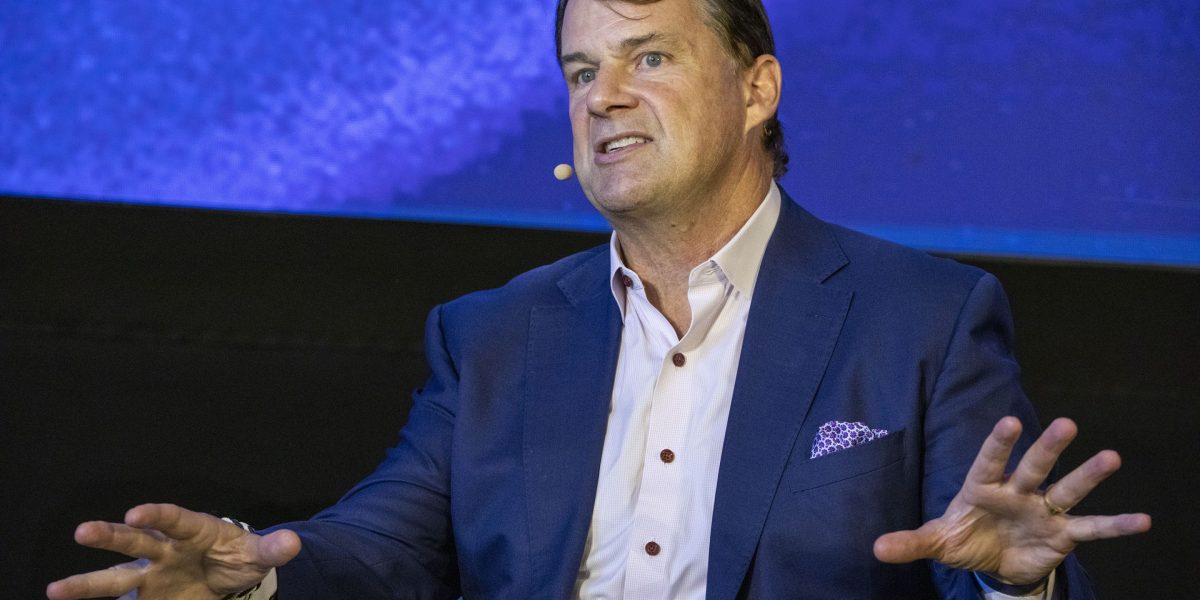
Ford CEO Jim Farley said he was struck by a “shocking” discovery when digging into competitors’ vehicles, and it spurred him into taking action that would help the legacy carmaker compete with the likes of Tesla and Chinese upstarts.
When taking apart competitors’ vehicles, as is standard practice in the automobile industry, Farley said the company found Ford’s Mustang Mach-E had about 1.6 km, or nearly a mile, more wiring than a Tesla Model 3. When it took apart vehicles from its Chinese competitors, the findings were similarly surprising.
“I was very humbled when we took apart the first Model 3 Tesla and started to take apart the Chinese vehicles. When we took them apart, it was shocking what we found,” Farley said on an upcoming episode of the Office Hours: Business Edition podcast, first reported on by Business Insider.
Farley said the revelatory findings convinced the company to make a change. The legacy carmaker, known for ushering in the age of the automobile with its Model T, first launched in 1908, has struggled to compete in recent years, especially with the pace of innovation in electric vehicles being led by Chinese automakers.
In 2022, the CEO created a new division called Model E, in part to help Ford innovate on electric vehicles. The division lost more than $5 billion in 2024, but Farley noted on the podcast he knew diving into EV innovation was going to be “brutal business-wise.”
“My ethos is, take on the hardest problems as fast as you can and do it sometimes in public because you’ll solve them quicker that way,” Farley said, emphasizing the need for shareholders to have insight into Ford’s EV operations.
Still, EV sales in the U.S. have jumped in 2025, partly as consumers looked to buy before the federal EV tax credit expired at the end of September. While EV sales hit an all-time-high in the third quarter, according to Cox Automotive, Farley said on Ford’s third-quarter earnings call last month that EVs will only make up 5% of the U.S. car market in the near term.
Farley is also sounding the alarm about Chinese competitors. Last week, Farley told CBS Sunday Morning Chinese car companies pose an “existential threat” and have the capacity to take over the North American market and put homegrown automakers out of business.
Still, Ford has doubled down on its EV investments. In August, the company said it would pour $5 billion into EV production by changing up its manufacturing process and also revamping its Kentucky plant that produces its F-Series Super Duty trucks. The plan is reportedly to create a $30,000 electric pickup truck for the average person anticipated to be released in 2027.
“We can’t walk away from EVs, not just for the US, but if we want to be a global company, I’m not going to just cede that to the Chinese,” Farley said on the podcast.
Zscaler Zero Trust Gateway is a fully managed service that eliminates the need to install, configure, or manage virtual infrastructure. Built-in high availability and fault tolerance provide resilient, continuous performance without requiring user intervention. With support for all workload traffic paths, it reduces reliance on additional cloud services like NAT gateways, simplifying your deployments.
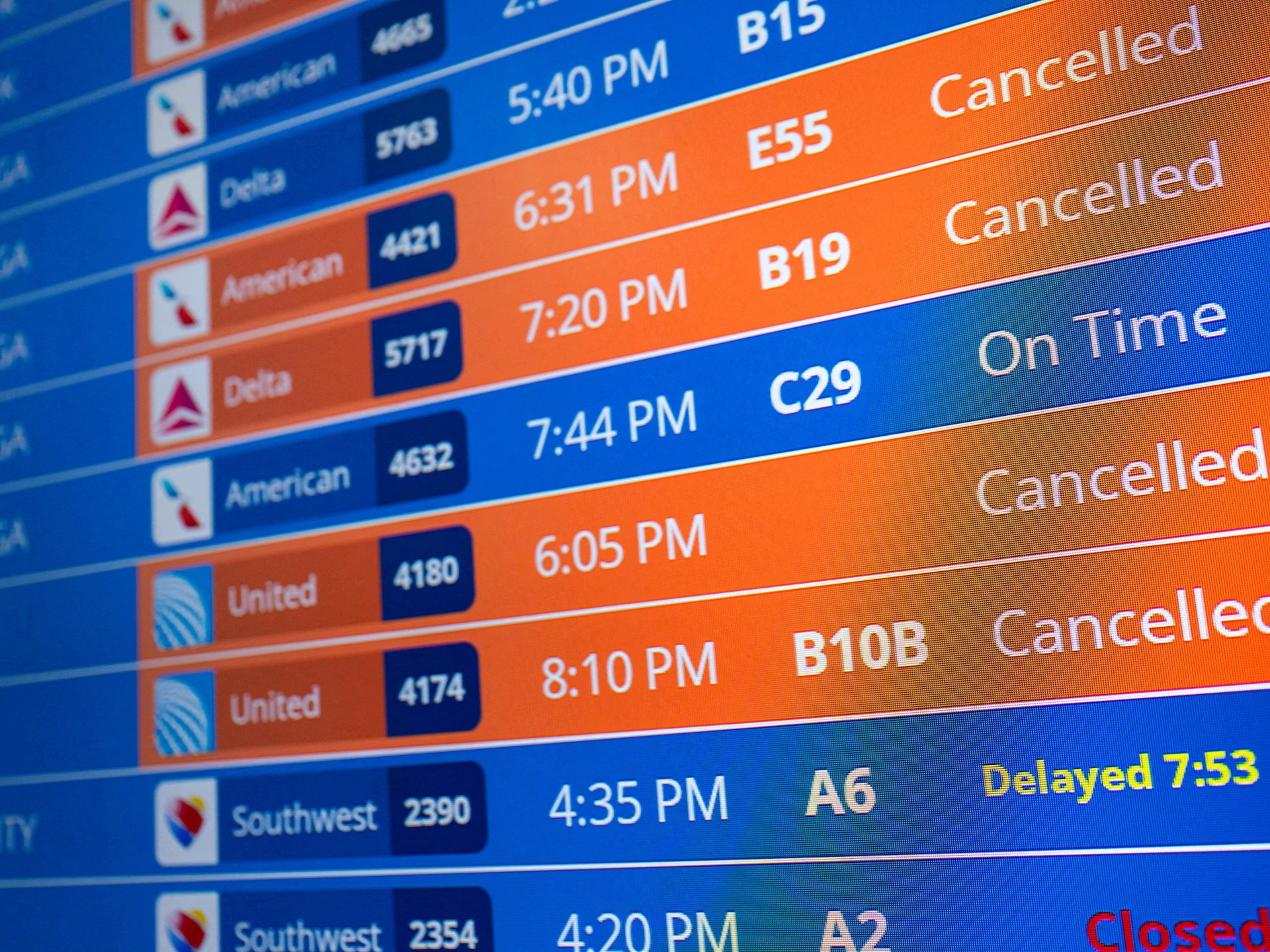
US airlines cancel 1,200 flights, marking five days of disruptions caused by the prolonged government shutdown.
Published On 11 Nov 202511 Nov 2025
Share
Airlines in the United States have cancelled nearly 1,200 flights, marking the fifth consecutive day of mass delays and cancellations sparked by the country’s longest-ever government shutdown.
In addition to cancellations on Tuesday, passengers continued to face long wait times, as more than 1,300 domestic and international flights were delayed in the morning.
Recommended Stories
list of 4 itemsend of list
New York’s LaGuardia Airport, in particular, is seeing significant hold-ups, with average delays of one hour and 40 minutes, according to FlightAware — a platform that tracks flight disruptions worldwide.
On Monday, there were more than 2,400 cancelled flights to, from and within the US, along with over 9,500 delayed flights, according to the same tracker.
The Federal Aviation Administration (FAA) last week instructed airlines to cut 4 percent of daily flights from Friday at 40 major airports due to air traffic control staffing shortages. Reductions rose to 6 percent on Tuesday, then 8 percent on Thursday, and are expected to reach 10 percent by November 14th.
Airlines and the FAA are in talks over whether these cuts will be eased as a record-setting 42-day government shutdown draws to a close.
An end to the shutdown appears to be in sight. On Monday, the Senate passed a bill to reopen the federal government. It now heads to the House of Representatives and, if approved, will go to President Donald Trump’s desk for signing. Once signed, the bill would reopen the government.
Despite progress on Capitol Hill, the president has urged air traffic controllers across the country to return to work, warning that their pay could be “docked” if they do not comply. He also claimed that those who remained on duty during the shutdown would receive a $10,000 bonus.
On Wall Street, airline stocks are taking a hit amid persistent cancellations. As of 11am in New York (16:00 GMT), Delta Air Lines had fallen 1.26 percent since the market opened on Tuesday. United Airlines was down 1.7 percent, while American Airlines had tumbled more than 1.8 percent.
Budget carriers are also being hit hard. New York-based JetBlue has dropped by more than 2 percent, Dallas-based Southwest by 1.8 percent, and Alaska Airlines is down roughly 2.1 percent.
Nike ‘s road back to glory is going to take a while, but CNBC’s Jim Cramer is willing to wait. “The reason I’m defensive about it is because I know very few people who think that Nike can turn,” Cramer said Tuesday on ” Squawk on the Street .” The stock received a 6.4% boost the day after the company reported a fiscal 2026 first-quarter earnings beat on Sept. 30. But shares have since dropped roughly 14%, even with Tuesday’s 4% gain. “It’s one of the better companies out there that’s down,” Cramer added. Nike is a holding in Cramer’s Charitable Trust — the portfolio used by the CNBC Investing Club. Bank of America agrees. In a note to clients on Tuesday, the analysts said, “The recent pullback since first-quarter earnings offers a particularly attractive buying opportunity,” citing continued sales and margin improvements as Nike’s innovation pipeline ramps up. The sneaker and apparel giant has announced a slate of new products, including the NikeSkims sports shape wear collaboration, the upcoming NikeMind shoe collection, as well as the Aero-FIT performance line. As Nike continues to refresh its lineup and introduce new inventory, analysts say that “this could translate into product wins in 2026.” The upcoming FIFA World Cup, which will be hosted in North America, is another tailwind for Nike, analysts said, as it gives Nike “a megaphone” to showcase its latest goods on a global stage. BofA maintained its $84 price target on the stock. NKE 5Y mountain Nike 5 years It’s not been an easy road for Nike investors. The stock has been sliding since hitting a record high close of $177.51 in late 2021. Nike’s post-pandemic direct-to-consumer strategy under former CEO John Donahoe failed to drive growth and alienated its retail partners. However, the company’s latest quarter offered positive signs that Nike’s turnaround strategy under new CEO Elliott Hill is working. Both Nike’s total revenue and earnings per share beat Street expectations. More than a year into his tenure, Hill has been focused on making sports the center of Nike’s universe again, including the creation of sports-themed stores. Even so, Hill candidly told CNBC’s Sara Eisen that a return won’t happen overnight. Key challenges remain, including improving relationships with wholesalers and jump-starting sluggish China sales . Cramer admits that comebacks by apparel brands don’t always work, using the example of Under Armour . But Cramer sees the bet on Nike as a bet on Hill’s strategy, likening him to Starbucks CEO Brian Niccol, who is also in the midst of a major turnaround. He’s confident that both CEOs can get their respective companies back to greatness. “I’m putting it [Nike] in the same category as the barista Starbucks, which I also think is going to come back.”
A zero trust model never assumes any application to be trustworthy by default. Zscaler Zero Trust Cloud provides cloud scale TLS inspection for workload traffic, enforcing advanced threat protection inline. This proactive approach prevents malicious attacks, blocks phishing, stops data leaks, and ensures compliance. By eliminating implicit trust and applying least privilege principles, organizations can simplify operations while boosting security across multi-cloud environments.
Fitch Upgrades Public Property Invest to ‘BBB+’/Stable on Acquisition of SBB Assets Fitch Ratings
Announcing landmark acquisition of NOK 37bn social infrastructure real estate portfolio, becoming the largest listed social infrastructure company in Europe Placera.se
Fitch Upgrades Public Property Invest to ‘BBB+’/Stable on Acquisition of SBB Assets TradingView
SBB has entered into three agreements with Public Property Invest ASA regarding the transfer of SBB’s community portfolio at a value of SEK 32 billion and will convene an Extraordinary General Meeting Placera.se
Public Property Invest : Fitch Upgrades Public Property Invest to BBB+ /Stable on Acquisition of SBB Assets MarketScreener