Microsoft (NASDAQ:MSFT) said it will supply more than 60,000 advanced Nvidia (NVDA) artificial intelligence chips to the United Arab Emirates under export licenses cleared by the U.S. Commerce Department.
The approval, issued in September, permits the transfer of Nvidia’s high-end GB300 Grace Blackwell processors under what officials called strict security and compliance conditions. The chips will be deployed across UAE data centers to expand cloud and AI infrastructure.
The development comes shortly after President Donald Trump said in a 60 Minutes interview that U.S. authorities would block shipments of the most advanced chips overseas, particularly to China. The UAE deal, however, falls under an earlier license granted with additional oversight.
The export agreement is linked to the UAE’s pledge to channel about $1.4 trillion into U.S.-based projects in AI and energy, a figure that far exceeds the Gulf nation’s annual GDP of roughly $540 billion.
Microsoft said the deliveries form part of its $15.2 billion regional technology investment and will support AI access from OpenAI, Anthropic, open-source developers, and its own cloud platforms already running over 21,000 Nvidia GPUs in the UAE.
Thermo Fisher Scientific (NYSE:TMO) just announced a big win for shareholders a $5 billion stock buyback plan with no expiration date. That means the company can repurchase shares at its own pace, whenever the timing feels right.
Alongside that, Thermo Fisher is keeping things steady on the income side, maintaining its quarterly dividend at $0.43 per share.
It’s a confident move that signals the company’s strong balance sheet and steady cash flow. By buying back stock and sticking with its dividend, Thermo Fisher is showing it can balance growth investments with shareholder rewards a combo investors always like to see.
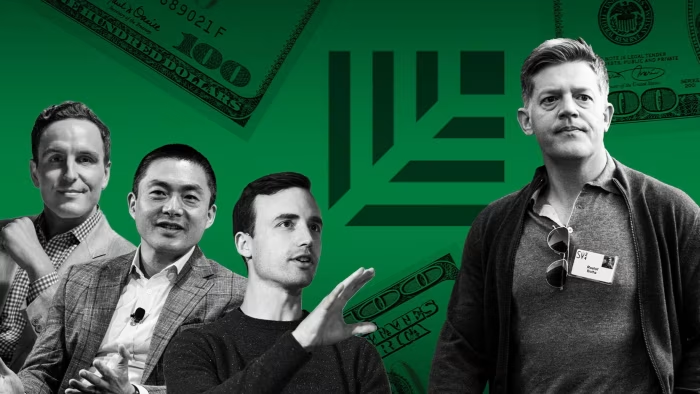
Sequoia Capital’s Roelof Botha was ousted by top lieutenants who lost confidence in his ability to keep Silicon Valley’s most powerful venture capital firm ahead of rivals.
Botha stepped down as managing partner of the group on Tuesday following an intervention from Alfred Lin, Pat Grady and Andrew Reed, said multiple people with knowledge of the matter.
The trio of senior partners had the blessing of the wider firm and Doug Leone, Sequoia’s former managing partner, said three of the people.
Their move came on the back of concerns about Botha’s management style, questions about Sequoia’s artificial intelligence investment strategy and follows high-profile clashes between senior figures at the firm, said the people.
The Financial Times spoke to 10 people close to the firm, including investors who have worked with Botha and the institutions that bankroll Sequoia, known as limited partners. His ousting was motivated by a belief that a new generation of leaders would better serve Sequoia’s LPs, they said.
One of those described the removal as a “revolt” against Botha’s “imperial style of leadership”, following a period of upheaval at one of Silicon Valley’s most successful and enduring firms.
“On an IQ level he is off the charts . . . But the heart of the matter is that Roelof is one of these people who always needs to be seen as the smartest guy in the room,” the person said, adding Botha’s emotional intelligence did not match his intellect.
“Roelof is a legendary investor, leader and human being,” Sequoia’s new leadership team told the FT. “He was part of the decision to empower the next generation, and he will continue to serve on boards and advise the partnership, alongside former stewards Doug [Leone] and Jim [Goetz].”
The trio of lieutenants took advantage of Sequoia’s unique governance, which allows partners to call a vote in the leadership at any point, said two people with knowledge of the arrangement.
The measure gives additional weighting to the longer-serving investors and is designed to prevent senior partners blocking the ascent of dealmakers beneath them, they added.
“The reason Sequoia has stayed Sequoia for 53 years is they have refused to cement themselves in hierarchy,” said one person with knowledge of Botha’s removal.
Grady and Lin will now run the firm, while Reed and Grady will co-lead Sequoia’s fund investing in more mature start-ups. Lin and another partner, Luciana Lixandru, will co-lead the firm’s early stage investment fund.
Botha, who has run its US and European business since 2017 and took over the whole firm in 2022, will remain as an adviser.
The 52-year old grandson of Roelof “Pik” Botha, the last foreign secretary under South Africa’s apartheid regime and later a member of Nelson Mandela’s first government, was hired to PayPal by Elon Musk early in his career.
He has led a string of investments, including in Instagram, YouTube and $30bn database management company MongoDB. Sequoia has returned more than $50bn to its US and European investors since 2017, said a person with knowledge of the matter.
Despite these successes, partners decided Lin, who has backed Airbnb, DoorDash and OpenAI, and Grady, behind investments in Snowflake, Zoom and ServiceNow, were better placed to lead Sequoia forward.
Under Botha, Sequoia has taken a more cautious approach to AI investment than some rivals. The firm invested a little more than $20mn in OpenAI in 2021, when the ChatGPT maker was valued at about $20bn, and has boosted that stake in subsequent rounds, said people with knowledge of the deals.
When OpenAI raised funds at a $260bn valuation earlier this year, Sequoia offered to invest $1bn, but ultimately was given a stake of a fraction of that, according to people with knowledge of that deal.
Sequoia also holds a stake in Musk’s xAI, but has focused on early investments in AI application companies such as Harvey, Sierra and Glean — an approach also advocated by Grady.
Botha also grappled with major conflicts during his tenure. Last month, the FT reported Sequoia’s chief operating officer Sumaiya Balbale left the firm in August after complaining that colleague Shaun Maguire’s X posts about New York’s mayor-elect Zohran Mamdani were Islamophobic.
Botha reminded Maguire — a vital Musk ally — of the need to consider Sequoia’s reputation, but otherwise refused to discipline him, citing the firm’s long-standing position that all partners had a right to free speech. Balbale left after considering her position untenable, according to those with knowledge of the incident.
Last year, a fight over board seats at Swedish fintech Klarna exposed a schism between Botha and Michael Moritz, who had previously led the firm and backed some of its most successful companies.
Botha threw his weight behind an effort to vote Moritz out as Klarna chair, said people familiar with the situation. The effort backfired, with Moritz remaining in post and Sequoia’s Matthew Miller being ousted as a Klarna director instead.
Early in his tenure, Botha also split from Sequoia’s lucrative Chinese business. Geopolitical pressure gave the firm little choice, but the decision nonetheless impacted returns.
“I do think the last five years have been super intense, it’s really hard to lead a firm through all of that,” said one long-standing Sequoia LP.
Botha was also hurt by other strategic decisions of his own, said multiple people with knowledge of the matter.
This included the announcement, as Leone was handing over the reins, of a new “evergreen” fund to hold on to Sequoia’s best companies after they went public, a point at which VCs typically cash out.
The timing was disastrous: the fund was launched at the peak of a tech investment boom in 2022 and the valuations of start-ups which Sequoia had clung on to cratered.
Public market valuations have since rebounded, and the fund has generated nearly $7bn in gains on where the companies were priced when they were rolled in, according to a person with knowledge of Sequoia’s financials. But the decision angered some LPs who were given little option but to participate in the new fund, said people familiar with the matter.
“The evergreen structure came at the wrong time, they put a lot of strain on LPs and didn’t return money at the top of the market,” said a Silicon Valley VC.
It is unclear if Lin and Grady intend to move the firm in a new direction. The pair are “very warm, very capable and clever”, said the long-standing Sequoia LP, adding they are also “sitting on a very hot seat”.
Additional reporting by Stephen Morris in San Francisco
OpenAI is facing seven lawsuits claiming ChatGPT drove people to suicide and harmful delusions even when they had no prior mental health issues.
The lawsuits filed Thursday in California state courts allege wrongful death, assisted suicide, involuntary manslaughter and negligence. Filed on behalf of six adults and one teenager by the Social Media Victims Law Center and Tech Justice Law Project, the lawsuits claim that OpenAI knowingly released GPT-4o prematurely, despite internal warnings that it was dangerously sycophantic and psychologically manipulative. Four of the victims died by suicide.
___
EDITOR’S NOTE — This story includes discussion of suicide. If you or someone you know needs help, the national suicide and crisis lifeline in the U.S. is available by calling or texting 988.
___
The teenager, 17-year-old Amaurie Lacey, began using ChatGPT for help, according to the lawsuit filed in San Francisco Superior Court. But instead of helping, “the defective and inherently dangerous ChatGPT product caused addiction, depression, and, eventually, counseled him on the most effective way to tie a noose and how long he would be able to “live without breathing.’”
“Amaurie’s death was neither an accident nor a coincidence but rather the foreseeable consequence of OpenAI and Samuel Altman’s intentional decision to curtail safety testing and rush ChatGPT onto the market,” the lawsuit says.
OpenAI called the situations “incredibly heartbreaking” and said it was reviewing the court filings to understand the details.
Another lawsuit, filed by Alan Brooks, a 48-year-old in Ontario, Canada, claims that for more than two years ChatGPT worked as a “resource tool” for Brooks. Then, without warning, it changed, preying on his vulnerabilities and “manipulating, and inducing him to experience delusions. As a result, Allan, who had no prior mental health illness, was pulled into a mental health crisis that resulted in devastating financial, reputational, and emotional harm.”
“These lawsuits are about accountability for a product that was designed to blur the line between tool and companion all in the name of increasing user engagement and market share,” said Matthew P. Bergman, founding attorney of the Social Media Victims Law Center, in a statement.
OpenAI, he added, “designed GPT-4o to emotionally entangle users, regardless of age, gender, or background, and released it without the safeguards needed to protect them.” By rushing its product to market without adequate safeguards in order to dominate the market and boost engagement, he said, OpenAI compromised safety and prioritized “emotional manipulation over ethical design.”
In August, parents of 16-year-old Adam Raine sued OpenAI and its CEO Sam Altman, alleging that ChatGPT coached the California boy in planning and taking his own life earlier this year.
“The lawsuits filed against OpenAI reveal what happens when tech companies rush products to market without proper safeguards for young people,” said Daniel Weiss, chief advocacy officer at Common Sense Media, which was not part of the complaints. “These tragic cases show real people whose lives were upended or lost when they used technology designed to keep them engaged rather than keep them safe.”
The federal government shutdown dragged consumer sentiment in the US to a near record low in November, according to a monthly survey conducted by the University of Michigan.
Consumer sentiment fell about 6% in November, with the consumer sentiment index for November 2025 at 50.3, down from 53.6 in October, nearly three points below expectations. Economists polled by the Wall Street Journal expected a 53.0 index reading.
The monthly index of consumer sentiment was last this low in June 2022, at 50.0, amid inflation during the Covid pandemic. The latest reading is the lowest reported by the index since at least 1978.
“With the federal government shutdown dragging on for over a month, consumers are now expressing worries about potential negative consequences for the economy,” said Joanne Hsu, director of the survey, in a statement.
“This month’s decline in sentiment was widespread throughout the population, seen across age, income, and political affiliation.”
The results come amid a blackout on federal data, such as the monthly jobs report, which was due on Friday, with the usual slate of monthly reports suspended due to the government shutdown. In their absence, investors have been turning to smaller, privately funded research reports.
This week ADP, the US’s largest payroll supplier, said private employers added 42,000 new jobs in October, better than expected but still a dramatic slowdown from the three-month moving average from November to January of 188,000 jobs.
On Thursday, outplacement and executive coaching firm Challenger, Gray & Christmas said US-based employers announced 153,074 job cuts in October, up 175% from the 55,597 cuts announced in October 2024. It was the highest level of layoff for any October since 2003.
“Americans are losing faith in the economy because they’re losing ground. Every day it becomes clearer that president Trump has no real interest in improving the lives of American families,” said Alex Jacquez, Chief of Policy and Advocacy at the think tank Groundwork Collaborative, in a statement on the Michigan survey report.
“His economic mismanagement has left households buried under record debt and rising prices. It’s no surprise consumer sentiment is at its lowest point since 2022 and households are turning to leaders who didn’t just learn the word ‘affordability’.”
Background: Former CEO of Juniper, an independent television and radio production company. Previously head of current affairs and political programmes at the BBC. Shah has been deputy chair of the V&A, chair of the Runnymede Trust and One World Media. In 2021, he co-authored a government-commissioned report that concluded that the UK was not institutionally racist. Appointed as chair of the BBC by the previous Conservative government.
Sir Damon Buffini, 63, deputy chair
Term: 2022-2025
Fees: £38,000
Background: Worked for 27 years at the investment firm Permira. In 2020 Buffini was appointed as chair of the government’s Cultural Recovery Fund, and is currently the chair of the Royal National Theatre. Buffini, who grew up on a Leicester council estate, was a key adviser to Gordon Brown when the latter was prime minister.
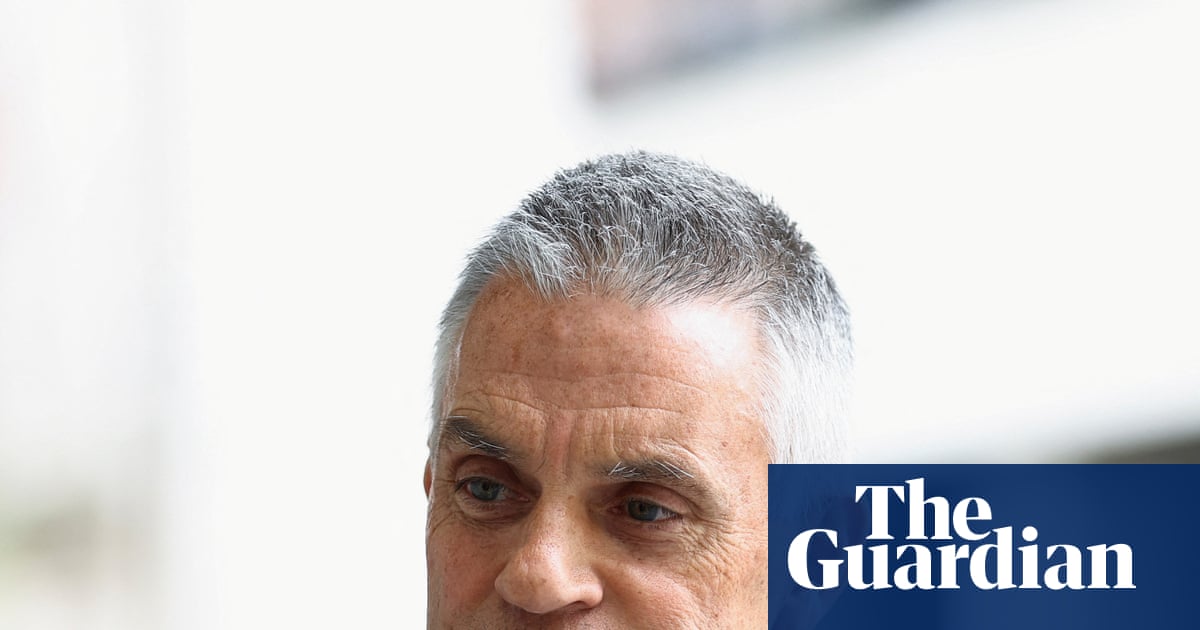
Tim Davie, 58, BBC director general
Term: 2020-
Remuneration: £540,000 – £544,999
Background: The chief executive of BBC Studios, the BBC’s principal commercial subsidiary. Previously vice-president of marketing and franchise at PepsiCo Europe, former trustee of the Tate and the Royal Television Society, and former chair of Comic Relief. In the 1990s, Davie was deputy chair of the Hammersmith and Fulham Conservative Association, and unsuccessfully stood as a local councillor for the Tories. In 2023 he suspended Gary Lineker, then the BBC’s highest-paid presenter, over a tweet about the government’s asylum policy.
Deborah Turness, 58, CEO BBC news and current affairs
Photograph: Ray Burniston/BBC
Term: 2022-2026
Annual remuneration: £430,000 – £434,999
Background: Turness began working for ITN in her early 20s, and became the first female editor of ITV News. In 2013, she joined NBC News, and later became CEO of ITN before joining the BBC in 2022.
Leigh Tavaziva, 52, chief operating officer
Term: 2023-2027
Remuneration: £465,000 – £469,999
Background: Previously the managing director of customer operations at British Gas and group director of strategy and transformation at Centrica. Earlier, she was a classical ballerina and contemporary dance artist.
Caroline Thomson, 71, senior independent director
Term: 2025-2029
Fees: £33,000 pa
Background: Thomson was the BBC’s chief operating officer from 2007 until 2012. Previous roles also include chair of Oxfam, chair of Digital UK and executive director at the English National Ballet. She is the daughter of a Labour peer and is married to a Labour peer.
Sir Robbie Gibb, 61, member for England
Photograph: James Veysey/Shutterstock
Term: 2021-2028
Fees: £43,000 pa
Background: Former head of BBC Westminster and editor of live political programmes. Gibb was Tory prime minister Theresa May’s director of communications from 2017 until 2019. He was also previously an editorial advisor to GB News. Gibb has criticised perceived anti-Brexit and anti-Tory bias in the corporation’s output.
Muriel Gray, 67, member for Scotland
Term: 2022-2030
Fees: £38,000
Background: Gray presented Channel 4’s groundbreaking music programme The Tube in the early 1980s, and has been a broadcaster and author. She is a former chair of the board of governors at the Glasgow School of Art and a former trustee of the British Museum. Gray previously criticised Conservative party policies as “repugnant” on social media, and said she had “never been able to vote Tory”.
Michael Plaut, 64, member for Wales
Term: 2024-2028
Fees: £38,000
Background: Started his career as an investment banker. Former chair of CBI Wales. Currently chair of the Royal Welsh College of Music & Drama, and a governor of the University of South Wales.
Michael Smyth, 68, member for Northern Ireland
Term: 2023-2027
Fees: £38,000 pa
Background: A lawyer, and formerly a partner at international law firm Clifford Chance and head of the firm’s government and public policy practice. He authored a textbook on business and human rights. Previously chair of Protect, the whistleblowing charity, and Community Links, a pioneering east London charity.
Shumeet Banerji, 65, non-executive director
Term: 2022-2025
Fees: £33,000 pa
Background: Founder of Condorcet, LP, an advisory and investment firm and later CEO of Booz & Company, a management consulting firm.
Chris Jones, 69, non-executive director
Term: 2023-2027
Fees: £38,000 pa
Background: A chartered accountant, formerly senior audit partner at PwC. He has been a member of audit and risk committees at Legal & General, the Wellcome Trust and Santander UK.
Marinella Soldi, 59, non-executive director
Term: 2023-2026
Fees: £33,000 pa
Background: Soldi began her career at McKinsey & Company, and later trained as a leadership coach. She was CEO of Discovery Networks Southern Europe, non-executive chairwoman of the Vodafone Italia Foundation, and non-executive chairwoman of the board of directors of Rai – Italian PSM.