Category: 3. Business

  • Dragon Service – Wide Alpha 541N/544S Shanghai Omission + Aries 542N/545S – Ningbo Omission

    Due to an operational scheduling adjustment, WIDE ALPHA 541N/544S will omit Shanghai and ARIES 542N/545S will omit Ningbo to mitigate delays to the forward schedule.

    The below contingency routings have been secured for impacted shipments.

    • Cargo scheduled to discharge at Shanghai from WIDE ALPHA 541N will now discharge at Hong Kong for onward connection.
    • Cargo scheduled to load WIDE ALPHA 544S ex Shanghai will be updated to load ARIES 545S.
    • Cargo scheduled to discharge at Ningbo from ARIES 542N will now discharge at Hong Kong for onward connection.
    • Cargo scheduled to load ARIES 545S ex Ningbo will be updated to load CHRISTA SCHULTE 546S.

    Should you have any questions or require support, please reach out to your local Maersk team using our instant chat channel: Live Chat

    We sincerely apologise for the inconvenience and thank you for your continued support.

    Continue Reading

  • Mitsubishi Heavy Industries Announces Order Intake, Revenue, and Profit Growth in Strong 1H FY2025, Raises Full-Year Order Intake and Revenue Guidance

    Mitsubishi Heavy Industries Announces Order Intake, Revenue, and Profit Growth in Strong 1H FY2025, Raises Full-Year Order Intake and Revenue Guidance

    Tokyo – Mitsubishi Heavy Industries, Ltd. (MHI, TSE Code: 7011) announced that order intake increased 8.5% year-on-year to ¥3,314.7 billion in the half year ended September 30, 2025. Revenue rose 7.3% year-on-year to ¥2,113.7 billion, resulting in profit from business activities (business profit) of ¥171.5 billion, a 2.1% increase over the previous fiscal year, which represented a profit margin of 8.1%. Profit attributable to owners of parent (net income) was ¥114.9 billion, an increase of 7.3% year-on-year, with a profit margin of 5.4%. EBITDA was ¥229.6 billion, a 2.5% increase over 1H FY2024, with an EBITDA margin of 10.9%.

    (billion yen, except where otherwise stated)

    1H FY2025 Financial Results 1H FY2024 (Note) 1H FY2025 YoY YoY%
    Order Intake 3,054.6 3,314.7 +260.0 +8.5%
    Revenue 1,969.2 2,113.7 +144.4 +7.3%

    Profit from Business Activities

    Profit Margin

    168.0

    8.5%

    171.5

    8.1%

    +3.4

    -0.4 pts

    +2.1%

    Profit Attributable to Owners of Parent

    Profit Margin

    107.1

    5.4%

    114.9

    5.4%

    +7.7

    ±0.0 pts

    +7.3%

    EBITDA

    EBITDA Margin

    224.1

    11.4%

    229.6

    10.9%

    +5.5

    -0.5 pts

    +2.5%

    FCF -85.7 151.0 +236.8

    (billion yen, except where otherwise stated)

    1H FY2025 Financial Results by Segment Order Intake Revenue Business Profit
    1H
    FY2025
    YoY (Note) 1H
    FY2025
    YoY (Note) 1H
    FY2025
    YoY (Note)
    Energy Systems (Energy) 1,981.2 +674.5 871.0 +38.8 80.7 -22.4
    Plants & Infrastructure Systems (P&I) 490.6 -108.7 415.9 +36.7 44.6 +16.4
    Logistics, Thermal & Drive Systems (LT&D) 292.8 -35.9 282.4 -21.4 7.6 +1.3
    Aircraft, Defense & Space (ADS) 545.0 -257.0 538.8 +107.1 60.3 +16.3
    Others, Corporate & Eliminations (OC&E) 4.9 -12.6 5.4 -16.7 -21.8 -8.3
    Total 3,314.7 +260.0 2,113.7 +144.4 171.5 +3.4
    • 1H FY2024 results on which YoY figures are based have been retroactively adjusted to reflect the planned sale of ML shares.


    In Energy, order intake increased by ¥674.5 billion YoY mainly due to continued strong demand in Gas Turbine Combined Cycle (GTCC). Contracts for 23 large frame gas turbine units—up 14 units YoY—were concluded during 1H, the majority of which were from customers in North America and Asia. Revenue increased by ¥38.8 billion YoY; the largest gains were seen in GTCC, which continued to execute its sizeable backlog. Segment business profit decreased by ¥22.4 billion YoY due to one-time charges in Steam Power, which offset strong performance in GTCC from both higher revenue and margins.

    In P&I, order intake decreased by ¥108.7 billion YoY due to the absence of large orders booked in the previous fiscal year in Metals Machinery and Machinery Systems. Revenue grew by ¥36.7 billion YoY. Improved margins in Metals Machinery and Machinery Systems helped to raise segment business profit by ¥16.4 billion YoY.

    In LT&D, revenue decreased by ¥21.4 billion YoY due to a decline in units sold in Turbochargers and Heating, Ventilation & Air Conditioning (HVAC) and foreign exchange impact in HVAC. Steady performance in Engines on the back of strong demand in Asia, combined with the rebound from one-time charges associated with a supply chain disruption in Turbochargers during the previous fiscal year, resulted in a ¥1.3 billion YoY increase in segment business profit.

    In ADS, order intake decreased by ¥257.0 billion YoY due to a high base effect from large orders booked in Defense & Space during the previous fiscal year. Revenue increased by ¥107.1 billion YoY, mainly in Defense & Space, where steady progress in backlog execution continued. Increased revenue and higher margins in Defense & Space and Commercial Aviation served to increase segment business profit by ¥16.3 billion YoY.


    FY2025 Earnings Forecast

    MHI revised its guidance for the period ending March 31, 2026, increasing the forecasts for order intake and revenue over the previous announcement made on September 30, 2025, based on stronger-than-anticipated performance during 1H. The full-year dividend forecast of 24 yen per share was unchanged from the announcement made on August 5, 2025.

    (billion yen, except where otherwise stated)

    FY2025 Earnings Forecast FY2024
    Actual (Note)
    FY2025
    Forecast
    (9/30 Announcement)
    FY2025
    Forecast
    (Revised)
    Revised vs.
    Previous
    Order Intake 6,405.1 5,250.0 6,100.0 +850.0
    Revenue 4,361.1 4,750.0 4,800.0 +50.0

    Profit from Business Activities

    Profit Margin

    354.9

    8.1%

    390.0

    8.2%

    390.0

    8.1%

    -0.1 pts

    Profit Attributable to Owners of Parent

    Profit Margin

    245.4

    5.6%

    230.0

    4.8%

    230.0

    4.8%

    ROE

    10.7%

    10%

    EBITDA

    EBITDA Margin

    469.9

    10.8%

    510.0

    10.6%

    FCF 342.7 0.0
    Dividends 23 yen 24 yen
    • FY2024 results have been retroactively adjusted to reflect the planned sale of ML shares.


    (billion yen, except where otherwise stated)

    FY2025 Earnings Forecast by Segment Order Intake Revenue Business Profit
    Previous Revised Previous Revised Previous Revised
    Energy 2,200.0 3,200.0 1,850.0 2,000.0 240.0 240.0
    P&I 900.0 900.0 850.0 850.0 60.0 70.0
    LT&D 750.0 600.0 750.0 600.0 40.0 20.0
    ADS 1,400.0 1,400.0 1,350.0 1,350.0 140.0 140.0
    OC&E 0.0 0.0 -50.0 0.0 -90.0 -80.0
    Total 5,250.0 6,100.0 4,750.0 4,800.0 390.0 390.0


    CFO Message

    “The strong growth MHI achieved in the first quarter continued through the first half of this fiscal year, with order intake, revenue, and business profit all up year-on-year, and net income marking an all-time high for the company,” MHI Chief Financial Officer Hiroshi Nishio commented. Nishio continued, “GTCC was our star performer in terms of order intake, booking 23 large frame gas turbine units across North America and Asia. We continue to see high demand for gas turbines particularly in the U.S., where new electricity demand from the data center buildout and other factors are driving capital expenditures at our utility customers. Revenue was up especially in GTCC and Defense & Space, which made excellent progress executing on their sizeable backlogs. Business profit growth was small, but the fact that we were able to beat last year’s figure—despite one-time expenses recognized in Steam Power—reflects the high normalized margins we are achieving today in GTCC and some other businesses.”

    “Based on our results through the first half,” Nishio went on, “we have increased our order intake and revenue forecasts due to better-than-expected results in Energy Systems, mainly GTCC. We have maintained the business profit guidance announced on September 30, with continued strength from growing revenue and improving margins in other businesses compensating for one-time expenses in Energy Systems in excess of the initial 20-billion-yen risk buffer and weakness in the remainder of the Logistics, Thermal & Drive Systems segment. MHI’s strong performance despite growing uncertainty in global markets is a testament to our resilience as a company, which has been made possible in part by our continued efforts to evolve our portfolio of businesses. We appreciate the continued support of our shareholders and other stakeholders as we work to meet our full-year commitments during the second half of the fiscal year.”


    Attachment 1: 1H FY2025 Financial Results

    Attachment 2: Presentation Materials of Financial Results

    Downloadable PDF of this press release


    Note regarding forward looking statements:

    Forecasts regarding future performance outlined in these materials are based on judgments made in accordance with information available at the time they were prepared. As such, these projections include risk and uncertainty. Investors are recommended not to depend solely on these projections when making investment decisions. Actual results may vary significantly from these projections due to a number of factors, including, but not limited to, economic trends affecting the Company’s operating environment, fluctuations in the value of the Japanese yen to the U.S. dollar and other foreign currencies, and trends in Japan’s stock markets. The results projected here should not be construed in any way as a guarantee by the Company.
    In response to U.S. tariff policy, the Company is pursuing mitigation strategies focused on cost passthroughs. As of the date of this release, the Company expects any impact on performance to be limited in nature.

    Continue Reading

  • Starbucks Deal Shows Foreign Firms Need New Tactics to Survive in China – Bloomberg.com

    1. Starbucks Deal Shows Foreign Firms Need New Tactics to Survive in China  Bloomberg.com
    2. Starbucks and Boyu Announce Joint Venture for the Next Chapter of Growth in China  Starbucks
    3. Starbucks’ China deal frees the coffee chain to prioritize what matters most  CNBC
    4. Chinese Banks Win Over Global Rivals to Finance Starbucks Deal  Bloomberg.com
    5. Intensifying local competition pressures Starbucks (SBUX.US) to ‘let go’—how will Boyu Capital’s $4 billion investment break the deadlock?  富途牛牛

    Continue Reading

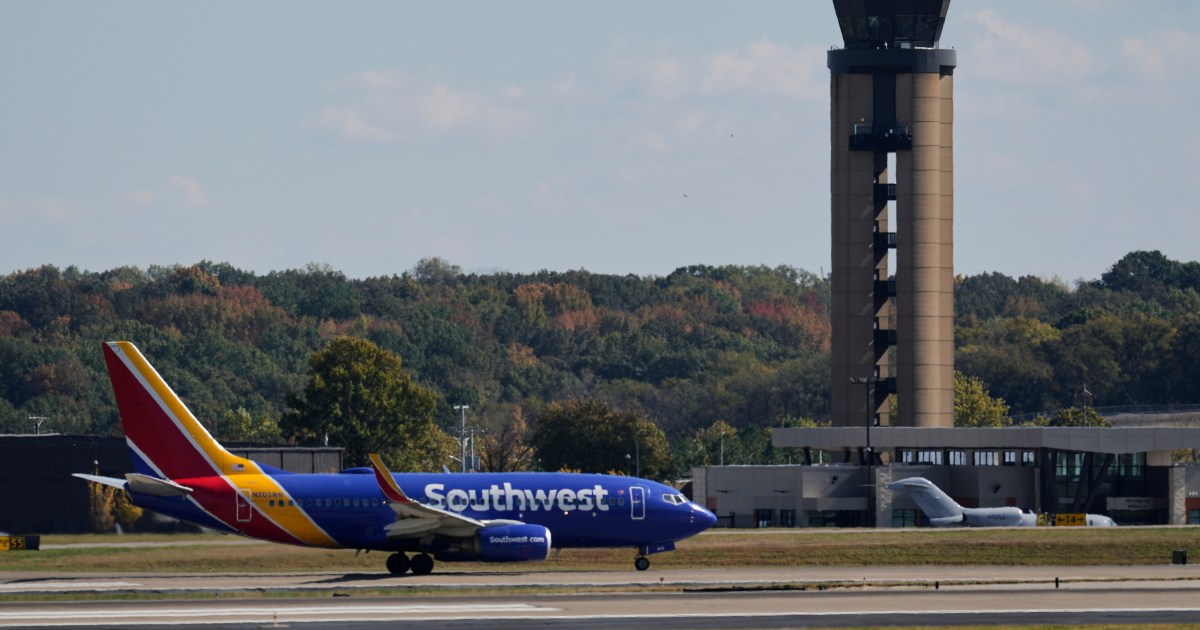
  • Hundreds of US flights cancelled as regulator orders cuts to air traffic | Aviation News

    Hundreds of US flights cancelled as regulator orders cuts to air traffic | Aviation News

    The Federal Aviation Administration is cutting air traffic by 10 percent due to a shortage of air traffic controllers.

    Hundreds of flights across the US have been cancelled following an order from the Federal Aviation Administration (FAA) to temporarily cut air traffic by 10 percent at the country’s 40 largest airports to maintain safety amid a shortage of air traffic controllers due to the government shutdown.

    More than 790 flights scheduled for Friday were cut from airline schedules, according to FlightAware, a website that tracks flight disruptions.

    Recommended Stories

    list of 4 itemsend of list

    That number, already four times higher than Thursday’s daily total of cancellations, was likely to keep climbing, while almost 500 have been cancelled for Saturday so far, according to the website.

    The FAA issued its order on Thursday in response to the growing number of absences by air traffic controllers amid the record-breaking US government shutdown, as Republicans and Democrats remain locked in a standoff in Congress over legislation to fund government services.

    “Since the beginning of the shutdown, controllers have been working without pay,” the FAA order said.

    “This has resulted in increased reports of strain on the system from both pilots and air traffic controllers. This past weekend, there were 2,740 delays at various airports,” it said.

    US Transportation Secretary Sean Duffy said the decision to cancel flights was a proactive safety decision rather than a political measure as the shutdown enters its 38th day on Friday.

    “My department has many responsibilities, but our number one job is safety. This isn’t about politics – it’s about assessing the data and alleviating building risk in the system as controllers continue to work without pay,” Duffy said.

    “It’s safe to fly today, and it will continue to be safe to fly next week because of the proactive actions we are taking,” he said.


    The FAA’s phased-in cuts to air traffic over the next week will see a 4 percent reduction in air traffic on Friday, and will end with 10 percent by November 14.

    The FAA’s order also specifies that airlines do not need to cut international flights, although this decision will be left up to their discretion.

    Impacted airports include Atlanta’s Hartsfield-Jackson, Dallas-Fort Worth, Denver, Chicago O’Hare, and New York’s John F Kennedy international airports.

    FAA Administrator Bryan Bedford said his department would not hesitate to take “further action”, suggesting further cuts to flights could be made down the road.

    The FAA decision puts renewed pressure on Senate Democrats, who are blocking a government spending bill over healthcare spending, as the US is preparing for its busiest travel days of the year at the end of November.

    The FAA employed just over 14,000 air traffic controllers in fiscal year 2024, according to its website.

    They are among the 730,000 “essential” federal employees who have been working without pay for the past five weeks, while another 670,000 have been furloughed, according to the Washington, DC-based Bipartisan Policy Center.


    Continue Reading

  • Approval of “equity swap” derivative contracts

    EMBRAER S.A.
    Publicly Held Company 
    CNPJ/MF 07.689.002/0001-89 
    NIRE 35.300.325.761

    SÃO JOSÉ DOS CAMPOS, Brazil, Nov. 6, 2025 /PRNewswire/ — Embraer S.A. (“Company”) (B3: EMBR3, NYSE: ERJ) informs its shareholders and the market that its Board of Directors, in a meeting held on November 6, 2025, according to the minutes published on the CVM and Investor Relations websites, approved the execution by the Company, with Banco Itaú Unibanco S.A., of derivative agreements of “Equity Swap”, referenced in the shares issued by the Company. Equity Swap agreements will observe the following limits and conditions:

    Equity Swap Settlement: cash settlement, within a maximum period of 12 months from November 7, 2025.

    Maximum Exposure: up to 10,932,998 common shares, observing the limit established in CVM Resolution No. 77/22.

    Conditions: the Equity Swap will allow the Company to receive the price variation related to its shares traded on the stock exchange plus any dividends distributed to the shares subject to the Equity Swap (active end) and pay CDI plus a spread (passive end), during the term of the agreement.

    Purpose: need to mitigate fluctuations in the prices of shares issued by the Company, in view of future payments to be made by the Company within the scope of its long-term incentive plans (phantom shares).

    Antonio Carlos Garcia
    Executive Vice President, Financial & Investor Relations

    SOURCE Embraer S.A.

    Continue Reading

  • Antioxidants, Iodine, and Neuroprotective Effects

    Antioxidants, Iodine, and Neuroprotective Effects

    Introduction
    The rise of seaweed superfoods
    Nutrient and bioactive profile
    How seaweed compounds combat inflammation and aging
    How seaweed waste fuels the circular economy
    Safety and risks
    References
    Further reading


    Seaweeds are no longer just salad; they’re the blueprint for a sustainable, brain-boosting future powered by marine innovation.

    Image Credit: Lesterman / Shutterstock.com

    Introduction

    Seaweed is increasingly recognized as a sustainable and functional food source that supports human health, including cognitive function and cardiovascular balance, through the gut-brain axis.4,5 This article examines its neuroprotective potential and addresses current safety challenges related to heavy metal and iodine accumulation.2,11

    The rise of seaweed superfoods

    Seaweed is an umbrella term for thousands of macroscopic marine algae species, including Rhodophyta, Phaeophyta, and Chlorophyta. Historically, it has been a dietary staple in many Asian countries, commonly consumed in soups, salads, and pickles.1,2

    Seaweed cultivation offers a uniquely sustainable food source, requiring no arable land, fresh water, or synthetic fertilizers, while also providing ecosystem services such as carbon sequestration and nitrogen removal.3 According to recent EU sustainability reports, the seaweed sector is expected to reach a market value of EUR 9 billion by 2030, highlighting its role in global food transition efforts.11

    Seaweed’s dense nutritional and bioactive profile underpins its reputation as a superfood. Phlorotannins, fucoidan, and other polyphenols exhibit antioxidant and neuroprotective properties, which are linked to reduced neuroinflammation and cognitive decline.4,6

    Nutrient and bioactive profile

    Nutriomics research reveals that consumable seaweeds have biochemical compositions distinct from terrestrial plants.1-3 Protein content varies widely, from 5–24% of dry weight in brown algae to as high as 47% in red species. These proteins are rich in essential amino acids and show higher digestibility when enzymatically processed or fermented using marine fungi such as Paradendryphiella salina.1

    Dietary fiber accounts for up to 75% of seaweed’s dry mass, dominated by soluble polysaccharides like fucoidan, alginate, and carrageenan, which act as prebiotics that modulate gut microbiota. Studies confirm that these fibers stimulate beneficial bacterial genera and increase short-chain fatty acid (SCFA) production, which in turn influences brain and immune health.5

    Although the total lipid content is low (1–5% dry weight), seaweeds are a unique plant source of omega-3 long-chain fatty acids, notably EPA and DHA, which support cognitive function and promote anti-inflammatory balance.4,5

    Seaweed also provides calcium, potassium, and iron, alongside vitamins A, C, E, and B12.5 Recent compositional analyses highlight seaweed as one of the few vegetarian sources of bioavailable vitamin B12 and vitamin K.11

    Compounds such as fucoxanthin and phlorotannins contribute to antioxidant and anti-aging properties relevant to the prevention of neurodegeneration.4,5,6

    How seaweed compounds combat inflammation and aging

    Phlorotannins and fucoidan are potent antioxidants that neutralize free radicals and suppress inflammatory pathways such as NF-κB. These compounds also inhibit amyloid-beta aggregation and tau phosphorylation, key pathological steps in Alzheimer’s disease.4,5,6

    Prebiotic polysaccharides from seaweed ferment in the colon to yield SCFAs like butyrate, which improve gut barrier integrity and reduce systemic inflammation.5

    A 2025 meta-analysis of 29 randomized controlled trials found that consuming edible algae lowered systolic and diastolic blood pressure by 2.05 and 1.87 mmHg, respectively. Doses above 3 g/day produced reductions exceeding 3 mmHg, underscoring a dose-response relationship.7

    Additional meta-analyses confirm that brown algae reduce LDL cholesterol and total cholesterol,8 and improve glucose homeostasis by lowering fasting plasma glucose by 4.6 mg/dL and postprandial glucose by 7.1 mg/dL.9

    Collectively, these findings position seaweed as a multifunctional food capable of modulating metabolic, vascular, and neural pathways that contribute to healthy aging.4,7-9

    How seaweed waste fuels the circular economy

    Adopting a circular economic model transforms seaweed byproducts into valuable resources. Research demonstrates that industrial residues and beach-cast seaweed can be repurposed for use in renewable energy and as fertilizers.10

    Some seaweed as a renewable and sustainable resource. (A) Kelp (Saccharina) Phaeophyceae; (B) dulse (Palmaria palmata) Rhodophyta; (C) nori (Porphyra/Pyropia) Rhodophyta; (D) wakame (Undaria pinnatifida) Phaeophyceae.3

    Some seaweed as a renewable and sustainable resource. (A) Kelp (Saccharina) Phaeophyceae; (B) dulse (Palmaria palmata) Rhodophyta; (C) nori (Porphyra/Pyropia) Rhodophyta; (D) wakame (Undaria pinnatifida) Phaeophyceae.3

    Composting seaweed biomass yields premium biofertilizers that enhance soil quality and water retention, with market values two to three times higher than conventional compost.10

    In Denmark, integrating 90% of coastal seaweed waste into energy and fertilizer production resulted in a 32,800-ton reduction in annual CO₂ emissions.10

    Emerging green-extraction technologies now recover bioactives, such as alginates and phlorotannins, from seaweed waste at costs under $0.70/kg, creating nutraceutical and cosmetic ingredients from material that was once discarded.3,10

    Safety and risks

    Seaweeds efficiently sequester both nutrients and contaminants. This dual capacity means they can accumulate heavy metals, including arsenic, cadmium, lead, and mercury, posing potential health risks if unregulated.1,2

    A Malaysian risk assessment reported a hazard index (HI) of 4.38 for metal exposure, exceeding WHO limits.2 However, separate iodine risk analyses indicate that toxicity concerns depend strongly on species and intake levels.11

    A 2025 Korean nationwide study found average iodine levels of 2,432 mg/kg dry weight in sea tangle (Saccharina japonica), compared to less than 200 mg/kg in most red and green algae. Iodine-related hazard indices remained below 1.0 under Korean MFDS guidelines but exceeded 1.0 under EFSA and JECFA standards, particularly for sea tangle and hijiki.11

    Cooking significantly reduces iodine exposure – boiling or blanching can remove up to 90%, and the bioavailability of iodine from seaweed is approximately 75% compared to iodide supplements.11

    In some species, a one-gram serving may deliver over 4,000 µg of iodine, about seven times the EFSA upper intake level of 600 µg/day.11

    International regulations vary widely: Germany limits iodine to 20 mg/kg, France to 2,000–6,000 mg/kg (depending on the species), and Australia restricts imports above 1,000 mg/kg.11 Harmonized global labeling and intake guidance are increasingly necessary as seaweed consumption expands.2,11

    Overall, evidence from recent meta-analyses and risk assessments supports the safety of seaweed consumption when moderate and sourcing is monitored for heavy metals and iodine.2,11

    References

    1. Salgado, C. L., Muñoz, R., Blanco, A., & Lienqueo, M. E. (2021). Valorization and upgrading of the nutritional value of seaweed and seaweed waste using the marine fungi Paradendryphiella salina to produce mycoprotein. Algal Research 53. DOI:10.1016/j.algal.2020.102135, https://linkinghub.elsevier.com/retrieve/pii/S2211926420310031.
    2. Elekwachi, L. O., Hirschkop, D., & Tlusty, M. F. (2023). REVIEW OF THE LITERATURE ON THE SEAWEED INDUSTRY AND FOOD SAFETY ISSUES. University of Massachusetts Boston. DOI:10.13140/RG.2.2.27576.32004, https://www.researchgate.net/publication/376683232_REVIEW_OF_THE_LITERATURE_ON_THE_SEAWEED_INDUSTRY_AND_FOOD_SAFETY_ISSUES.
    3. Pereira, L., & Cotas, J. (2024). Seaweed: a sustainable solution for greening drug manufacturing in the pursuit of sustainable healthcare. Exploration of Drug Science 2(1); 50–84. DOI:10.37349/eds.2024.00036, https://www.explorationpub.com/Journals/eds/Article/100836.
    4. Cokdinleyen, M., dos Santos, L. C., de Andrade, C. J., et al. (2024). A Narrative Review on the Neuroprotective Potential of Brown Macroalgae in Alzheimer’s Disease. Nutrients 16(24); 4394. DOI:10.3390/nu16244394, https://www.mdpi.com/2072-6643/16/24/4394.
    5. Hagan, M., & Fungwe, T. (2025). Investigating the Effect of Seaweed Bioactive Compounds on Gut Microbiota Composition and Dysbiosis: A Systematic Review. Current Developments in Nutrition 9. DOI:10.1016/j.cdnut.2025.106433, https://ffhdj.com/index.php/AgricultureFBC/article/view/1596.
    6. Cadar, E., Popescu, A., Dragan, A., et al. (2025). Bioactive Compounds of Marine Algae and Their Potential Health and Nutraceutical Applications: A Review. Marine Drugs 23(4), 152. DOI:10.3390/md23040152, https://www.mdpi.com/1660-3397/23/4/152.
    7. Casas‐Agustench, P., Mínguez, S., Brookes, Z., & Bescos, R. (2025). Edible Algae Reduce Blood Pressure in Humans: A Systematic Review and Meta‐Analysis of Randomised Controlled Trials. Journal of Human Nutrition and Dietetics 38(4). DOI:10.1111/jhn.70095, https://onlinelibrary.wiley.com/doi/10.1111/jhn.70095.
    8. Shin, D., Shim, S. R., Wu, Y., et al. (2023). How Do Brown Seaweeds Work on Biomarkers of Dyslipidemia? A Systematic Review with Meta-Analysis and Meta-Regression. Marine Drugs 21(4); 220. DOI:10.3390/md21040220, https://www.mdpi.com/1660-3397/21/4/220.
    9. Vaughan, K., Ranawana, V., Cooper, D., & Aceves-Martins, M. (2021). Effect of brown seaweed on plasma glucose in healthy, at-risk, and type 2 diabetic individuals: systematic review and meta-analysis. Nutrition Reviews 80(5); 1194-1205. DOI:10.1093/nutrit/nuab069, https://academic.oup.com/nutritionreviews/article/80/5/1194/6359344.
    10. Eriksen, M. L., Salvador, R., Kjærsgaard, N. C., et al. (2025). Circular business models for composting waste seaweed: Potential, barriers, and enablers. European Journal of Sustainable Development 14(4); 39-50. DOI:10.14207/ejsd.2025.v14n4p39, https://ecsdev.org/ojs/index.php/ejsd/article/view/1777.
    11. Lee, Y., Park, H. J., Jo, M., et al. (2025). Analysis and Risk Assessment of Total Iodine Content in Edible Seaweeds in South Korea. Foods 14(16); 2865. DOI:10.3390/foods14162865, https://www.mdpi.com/2304-8158/14/16/2865.

    Further Reading

    Last Updated: Nov 6, 2025

    Continue Reading

  • China’s exports unexpectedly contract in October — dropping for the first time since March 2024

    China’s exports unexpectedly contract in October — dropping for the first time since March 2024

    A cargo ship loaded with foreign trade containers heads towards Qingdao Port in Qingdao City, Shandong Province, China, on November 5, 2025.

    Costfoto | Nurphoto | Getty Images

    China’s exports in October declined for the first time in nearly two years as businesses’ front-loading momentum tapered off and trade tensions with the U.S. escalated during the month before the two countries reached a deal.

    Outbound shipments dropped 1.1% in October in U.S. dollar terms from a year earlier — their first contraction since March 2024 — disappointing economists’ expectations for 3% growth in a Reuters survey, and compared with a six-month high of 8.3% in September.

    Imports rose 1% last month, missing the estimates for 3.2% growth, as a prolonged housing market downturn and weak job market conditions continued to weigh on consumer demand. They had jumped 7.4% in September.

    Chinese exporters and American buyers breathed a sigh of relief last week after U.S. President Donald Trump and his Chinese counterpart, Xi Jinping, struck a deal during their meeting in South Korea, de-escalating a situation that had threatened to plunge bilateral relations into a full-blown trade war.

    The two countries agreed to roll back a range of punitive measures, including steep tariffs, export controls for critical minerals and advanced technology, while Beijing committed to buying more U.S. soybeans and working with Washington to crack down on fentanyl flows.

    Following the trade truce, the effective U.S. tariff rate on Chinese exports dropped to 31%, according to Macquarie Group’s estimates.

    This is breaking news. Please refresh for updates.

    Continue Reading

  • Trump news at a glance: administration reduces US flights as shutdown stretches on | Trump administration

    Trump news at a glance: administration reduces US flights as shutdown stretches on | Trump administration

    As the record-breaking federal government shutdown stretches toward day 38, US airspace is about to get a little less busy. The same cannot be said for US airports.

    Donald Trump’s Federal Aviation Administration (FAA) has said flights are being reduced to maintain air traffic control safety during the federal government shutdown, now the longest recorded and with no sign of a resolution between Republicans and Democrats to end the federal budget standoff.

    Airline regulators identified “high-volume markets” where the FAA says air traffic must be reduced by 4% by 6am ET on Friday, a move that would force airlines to cancel thousands of flights and create a cascade of scheduling issues and delays at some of the nation’s largest airports.

    Trump’s transportation chief, Sean Duffy, wrote on X Thursday that the decision was “not about politics” but rather “about assessing the data and alleviating building risk in the system as controllers continue working without pay”.

    “It’s safe to fly today, tomorrow, and the day after because of the proactive actions we are taking,” Duffy added.


    US airlines cancel flights after federal directive to cut air traffic

    Experts predict hundreds if not thousands of flights could be canceled. The cuts could represent as many as 1,800 flights and upwards of 268,000 seats combined, according to an estimate by the aviation analytics firm Cirium.

    The affected airports covering more than two dozen states include the busiest ones across the US – including Atlanta, Charlotte, Denver, Dallas/Fort Worth, Orlando, Los Angeles, Miami and San Francisco. In some of the biggest cities – such as New York, Houston and Chicago – multiple airports will be be affected.

    All three airports serving the Washington DC area – Washington Dulles international, Baltimore/Washington international and Ronald Reagan Washington national – will be affected, inevitably causing delays and cancellations for lawmakers as well as other travelers.

    Read the full story


    US supreme court allows Trump to block passport sex markers for trans and non-binary people

    The supreme court on Thursday allowed Donald Trump’s administration to enforce a policy blocking transgender and non-binary people from choosing passport sex markers that align with their gender identity.

    The decision by the high court’s conservative majority is Trump’s latest win on the high court’s emergency docket, and it means his administration can enforce the policy while a lawsuit over it plays out.

    The court’s three liberal justices dissented, with Justice Ketanji Brown Jackson calling the decision a “pointless but painful perversion”.

    Read the full story


    US judge orders Trump administration to fully fund Snap benefits in November

    The ruling by US district judge John J McConnell Jr on Thursday was in response to a challenge from cities and non-profits complaining that the administration was only offering to cover 65% of the maximum benefit. The government said it will rely on $4.65bn on emergency funding.

    “The defendants failed to consider the practical consequences associated with this decision to only partially fund Snap,” McConnell said. “They knew that there would be a long delay in paying partial Snap payments and failed to consider the harms individual who rely on those benefits would suffer.”

    Read the full story


    Workers decry Trump officials as ‘out of control’ as longest shutdown drags on

    As the US federal shutdown enters its second month, government workers are accusing the Trump administration of being “out of control” and bullying people who are “simply trying to do their best”.

    About 700,000 federal employees are furloughed without pay, and about 700,000 additional federal workers have been working without pay through the shutdown.

    Affected workers say the shutdown has been a continuation of attacks they have experienced under the Trump administration, from mass firings – many of which have been overturned or blocked in federal courts – to drastic budget cuts, pushes to take early retirements or resignation buyouts and threats of withholding back pay for workers furloughed during the shutdown.

    Read the full story


    Nancy Pelosi, a force on Capitol Hill for decades, to retire from Congress

    The California Democratic representative and the first woman to serve as speaker, announced on Thursday she will retire from Congress, two years after stepping down from House leadership.

    Even when no longer in leadership, the 85-year-old remained enormously influential among Democrats, quietly counseling her party as they navigate Trump’s second term. In 2024, she played a key role in pushing Biden to withdraw from the presidential race after a disastrous debate performance against Trump.

    Read the full story


    Trump announces plan to cut cost of weight loss drugs and expand access

    The agreement will make oral versions of GLP-1s, which aren’t yet to market but are expected to be approved in the coming months, available at $150 per month for starting doses. The average price for these injectables will be about $350, which will “trend down” to $245 a month over the next two years, the Trump administration said.

    Trump calls the medications the “fat drug”, his term for these semaglutide or tirzepatide shots, known by their brand names: Ozempic, Wegovy, Mounjaro and Zepbound.

    Read the full story


    Senate blocks Democrats’ bid to check Trump power over Venezuela strikes

    The 49-51 vote against passing the resolution, mostly along party lines, came a month after a previous effort to stop strikes against alleged drug trafficking boats in international waters similarly failed, 48-51.

    The new resolution narrowed its scope to attract Republicans, but senators Rand Paul and Lisa Murkowski remained the only two Republicans to cross party lines to support the resolution. Susan Collins and Thom Tillis, who had expressed reservations about the strikes, voted against.

    Read the full story


    What else happened today:


    Catching up? Here’s what happened on 5 November 2025.

    Continue Reading

  • Texas sues Roblox for ‘putting paedophiles and profits’ over safety

    Texas sues Roblox for ‘putting paedophiles and profits’ over safety

    Texas Attorney General Ken Paxton says he has sued Roblox over “flagrantly ignoring” safety laws and “deceiving parents” about the dangers the online video gaming platform poses to young people.

    In a social media post he said Roblox is a “breeding ground for predators”, accusing Roblox of putting “pixel paedophiles and corporate profit” over the safety of Texas children.

    The lawsuit adds to the legal challenges related to online safety and internet predators faced by the gaming giant, which has tens of millions of daily active users.

    Roblox told the BBC it is “disappointed” that it is being sued based on “misrepresentations and sensationalised claims”.

    The company’s spokesperson said in a statement that it shares Paxton’s commitment to keeping children safe online and that it has introduced measures to remove bad actors and protect its users.

    Roblox, which is especially popular with children, operates a massive online platform where users can play solo or with friends.

    Users can also go in to servers and interact with strangers online – a feature that has been criticised for potentially exposing young players to dangerous individuals.

    Parents and children have raised concerns about Roblox, saying that they have seen distressing content or suffered abuse on the platform.

    Paxton called on the company to do more to protect children from “sick and twisted freaks hiding behind a screen”.

    “Any corporation that enables child abuse will face the full and unrelenting force of the law,” he said in a statement on X.

    Texas joins the US states of Kentucky and Louisiana which have also sued Roblox over potential harms to children.

    Dave Baszucki, Roblox’s chief executive, previously told the BBC that parents who are uncomfortable with their children playing games on the platform should not let them use it.

    “That sounds a little counter-intuitive, but I would always trust parents to make their own decisions,” Mr Baszucki said.

    Roblox has introduced features in recent years to tighten age verification and safety for young players.

    The platform said it is rolling out technology to estimate a player’s age using video selfies and other measures before they are allowed to communicate on Roblox.

    Last year, Roblox also announced it will block under-13s from messaging others on the platform unless a parent or guardian grants permission.

    Roblox has been banned in some countries, including Turkey over concerns about child exploitation.

    The platform came under scrutiny in Singapore in 2023 after the government said that a self-radicalised teenager had been groomed online by people on the game’s servers.

    Continue Reading

  • Maynilad Water shares debut steady after $590 million Philippine IPO – Reuters

    1. Maynilad Water shares debut steady after $590 million Philippine IPO  Reuters
    2. Marcos to Maynilad: Never lose sight of the people you serve  GMA Network
    3. Defying market sentiments  Manila Bulletin
    4. PBBM: Maynilad IPO to spark investor interest  Philippine News Agency
    5. President Marcos Jr. to ring PSE bell for Maynilad’s landmark P34-B IPO  InsiderPH

    Continue Reading