Category: 3. Business

  • China borrows as cheaply as US in dollar bond market

    China borrows as cheaply as US in dollar bond market

    Unlock the Editor’s Digest for free

    China has issued dollar bonds at rates equivalent to US Treasury yields, in what bankers on the deal said was the first time Beijing’s borrowing costs have matched Washington’s.

    The bond offering is the latest example of countries taking advantage of being able to issue international debt cheaply, as their borrowing costs in relation to US Treasuries fall to some of the lowest levels on record.

    China’s issuance follows a de-escalation in trade tensions between Beijing and Washington after US President Donald Trump and Chinese President Xi Jinping agreed to a one-year trade truce last week.

    China’s Ministry of Finance issued $4bn of dollar bonds in Hong Kong, pricing the three-year bond on par with US Treasury equivalents, with a coupon of 3.625 per cent. The five-year bond was priced 0.02 percentage points above equivalent US Treasuries.

    “Markets are flush with liquidity and geopolitical tensions have eased,” said David Yim, head of capital markets, Greater China and North Asia, at Standard Chartered, which was one of the bookrunners for the deal.

    Another person noted that investors were interested in Chinese sovereign dollar debt to diversify their portfolios and that the relatively limited issuance had led to the oversubscription.

    Order books showed that the five-year bond was 30 times subscribed, with more than half of the offers coming from central banks, sovereign wealth funds and insurance companies.

    In September, Abu Dhabi sold $2bn in 10-year bonds at a spread to US Treasuries of 0.18 percentage points. South Korea’s finance ministry issued $1bn of dollar bonds with a maturity of five years at a spread of 0.17 percentage points in October.

    China last issued dollar bonds in 2024, when it sold $2bn of debt in Saudi Arabia.

    A syndicate of Chinese, US and other foreign banks managed Thursday’s deal. The proceeds will be used for “general government purposes”, according to the bond term sheet. The deal will be settled next Thursday.

    While Chinese dollar-denominated debt has previously traded at a negative spread to US equivalents, bonds have always been priced at a premium, although the spread has narrowed.

    Continue Reading

  • Huawei HiSec Endpoint Earns Perfect Score in AV-TEST Advanced Threat Protection (ATP) Evaluation

    Huawei HiSec Endpoint Earns Perfect Score in AV-TEST Advanced Threat Protection (ATP) Evaluation

    [Beijing, China, November 5, 2025] Leading independent network security evaluation organization AV-TEST, based in Germany, has released its latest results for the Advanced Threat Protection (ATP) test. Huawei’s HiSec Endpoint intelligent endpoint security system achieved a perfect score across all 10 core test items, earning certification with outstanding performance. This result not only confirms HiSec Endpoint’s technological leadership in advanced threat detection, but also provides a trusted endpoint security solution for critical scenarios such as enterprise environments.

    The AV-TEST ATP evaluation centers on simulating real-world attack scenarios, focusing on stealthy and highly evasive malware. The 10 test items span the entire attack lifecycle, each with stringent performance and effectiveness thresholds. Huawei HiSec Endpoint passed with full marks thanks to four core technical strengths that enable precise detection and prevention of hidden threats:

    • Dual-engine collaborative detection. HiSec Endpoint adopts a hybrid architecture combining static virus detection and dynamic analysis. The static engine, powered by Huawei’s proprietary next-generation Content-based Detection Engine (CDE), deeply verifies file integrity. The dynamic engine leverages the exclusive Graph Streaming Process Engine (GSP) to monitor memory loading situation in real time, capturing hidden malicious module injection. The synergy between the two engines enables precise blocking of malicious programs.

    • Full-link memory tracing. HiSec Endpoint builds a comprehensive capability combining full-stack data recording and dual-mode memory inspection. On one hand, kernel-level probes track process creation and code injection to pinpoint abnormal memory writes. On the other, an innovative endpoint-cloud collaborative memory inspection system uses AI clustering for memory fingerprinting on endpoints, while the server aggregates global samples for continuous AI training and model optimization. This evolving memory threat awareness effectively exposes even fileless execution situations.

    • Intent analysis. The built-in high-performance GSP engine constructs a “shadow graph” within protected memory, covering standard operations such as processes, files, registry access, and HTTPS communication. It also accurately detects covert situations like memory access, thread hijacking, and process injection.

    • In-depth threat handling. Upon threat detection, the GSP engine generates a real-time threat propagation subgraph and executes deep remediation along the graph. Beyond basic actions like terminating malicious processes and isolating suspicious files, it supports fine-grained operations such as restoring critical registry keys, deleting malicious scheduled tasks, and uninstalling persistent services, thoroughly eliminating traces of long-term malware presence while maintaining system stability.

    Huawei’s perfect score in the AV-TEST ATP evaluation is a direct testament to the technical strength of HiSec Endpoint. Looking ahead, as AI-driven attack techniques continue to evolve, Huawei will keep advancing its security capabilities, making every endpoint a fortress of security in the digital world.

    Continue Reading

  • Investor Attestor reviews strategic options for Condor, airline’s CEO says

    Investor Attestor reviews strategic options for Condor, airline’s CEO says

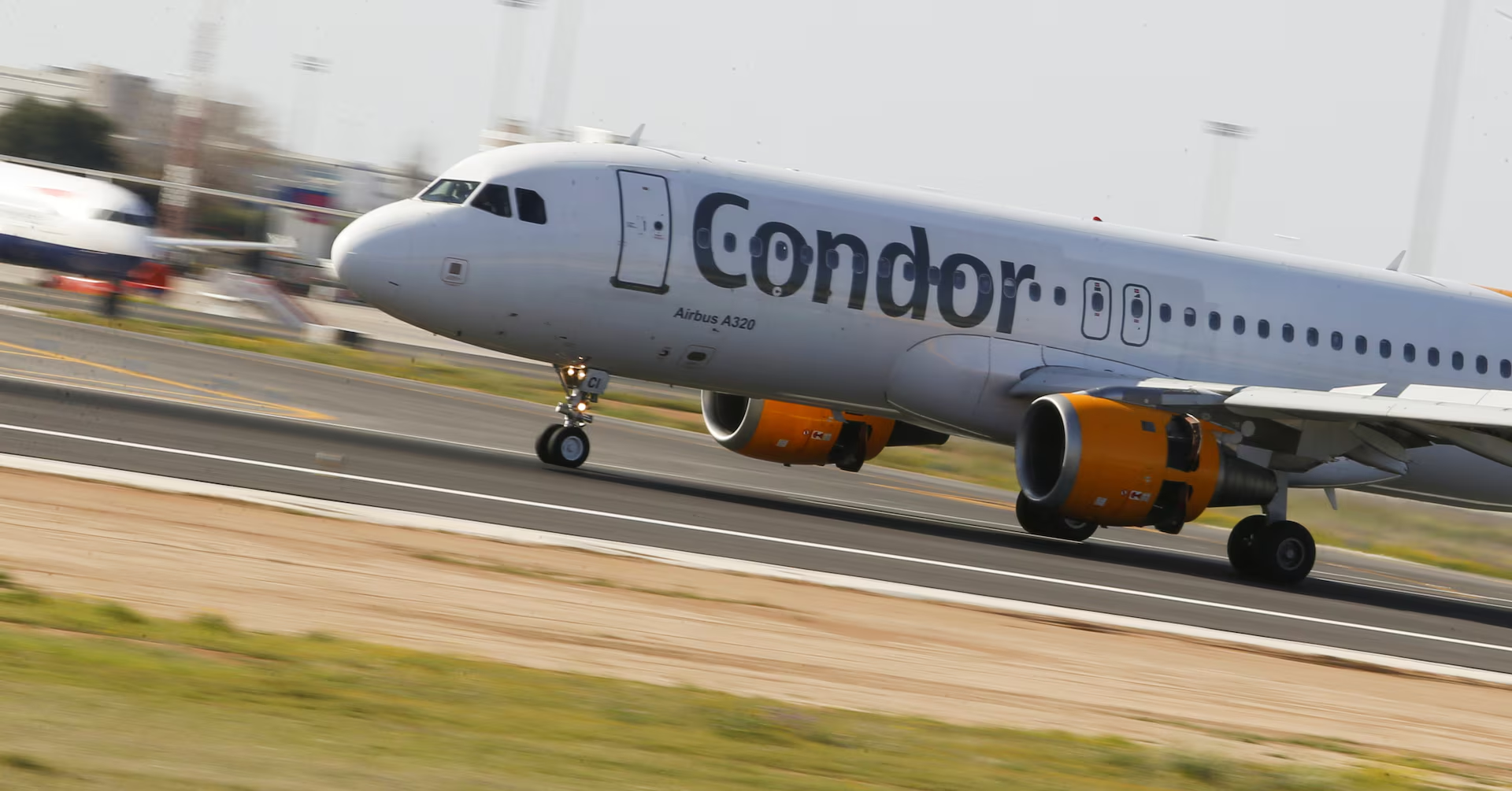
    FRANKFURT, Nov 6 (Reuters) – Investment firm Attestor is reviewing strategic options, including a partial sale, of German charter airline Condor and has hired Barclays (BARC.L), opens new tab to that effect, the carrier’s CEO Peter Gerber said.

    “Attestor recently initiated a process to identify strategic options for Condor,” Gerber told Reuters.

    Sign up here.

    Attestor declined to comment.

    In 2021, Attestor bought 51% of Condor from the German government, which had bailed out the airline after the collapse of former parent Thomas Cook and provided further financial support during the pandemic.

    Condor plans to repay the granted state aid to state-backed lender KfW (KFW.UL) by the end of 2026, by which point Attestor could take over the government’s remaining stake at a previously agreed price.

    “It is important for Condor that it can continue to invest as much as possible and expand its reach,” said Gerber.

    Bloomberg last week reported that Attestor was seeking a partner for its aviation business, which includes Condor and Marabu Airlines, and that it was working with Barclays, citing people familiar with the matter.

    Reporting by Ilona Wissenbach; Writing by Christoph Steitz; Editing by Rod Nickel

    Our Standards: The Thomson Reuters Trust Principles., opens new tab

    Continue Reading

  • The UK breakthrough fuelling a $10bn bidding war

    The UK breakthrough fuelling a $10bn bidding war

    One scoop to start: Charles Schwab is expected to announce a deal to acquire Forge Global, the private share marketplace, with an offer valued as high as $600mn as it seeks to broaden investor access to closely held Silicon Valley unicorns.

    Welcome to Due Diligence, your briefing on dealmaking, private equity and corporate finance. This article is an on-site version of the newsletter. Premium subscribers can sign up here to get the newsletter delivered every Tuesday to Friday. Standard subscribers can upgrade to Premium here, or explore all FT newsletters. Get in touch with us anytime: Due.Diligence@ft.com

    In today’s newsletter:

    • The Imperial College drug behind a $10bn mega-deal

    • Wall Street comes to grips with its socialist mayor

    • In Hong Kong, US finance executives proclaim China bullishness

    The British biotech behind the biggest hostile deal in a decade

    London isn’t exactly known for minting biotech unicorns, unless you count the occasional Oxford spinout or the odd gene-therapy darling.

    But an Imperial College professor may have accidentally sparked the most thrilling hostile pharma battle in years.

    Back in 2023, US biotech Metsera quietly picked up a British obesity drug start-up spun out of Imperial, paying up to $114mn for the professor’s life’s work. Tidy exit, British science wins, and everyone goes home for tea.

    Fast-forward two years and those Imperial antibodies have turned into the belle of Big Pharma’s ball and the world’s most coveted weight-loss drug since Novo Nordisk’s Ozempic and Eli Lilly’s Zepbound remade the industry and investor waistlines alike.

    Today, Novo Nordisk and Pfizer are locked in a $10bn fight for Metsera. This is after Pfizer already sealed a deal, prompting Novo to crash the party with an unsolicited offer and prompting a legal challenge that’s now playing out in Delaware courtrooms and White House corridors.

    On Wednesday evening, Pfizer matched Novo’s offer in an effort to remain in the game. Meanwhile, scrutiny from the US Federal Trade Commission over Novo’s bid has added another twist.

    But what is the fuss actually over? Metsera claims it has next-gen weight-loss tech, including longer-lasting injections and drugs using satiety hormone amylin.

    Behind Metsera sit biotech powerhouses Arch Venture Partners and Population Health Partners, which find themselves presiding over the weight-loss equivalent of a Sotheby’s bidding war.

    As one fund manager put it: Big Pharma needs new hits before their current blockbusters go generic. Cue boardroom bruising, court filings, political arm-twisting and CEO text message diplomacy.

    The ultimate lesson here? While Europe is best at coming up with the most innovative weight-loss drugs, it’s American investors and dealmakers who are the kings of converting that science into multibillion-dollar windfalls. 

    Wall Street comes to terms with Mamdani

    Wall Street is nothing if not pragmatic. That’s even the case when the financial capital of the world elects a democratic socialist for mayor.

    Zohran Mamdani’s win on Tuesday night was all but certain, with virtually every poll showing that not only would he be the next mayor, but he would win by a wide margin.

    But within hours of his victory, Wall Street changed its tone. Even hedge fund billionaire Bill Ackman — notoriously one of Mamdani’s biggest critics — congratulated him on X

    Mamdani’s campaign was laser-focused on affordability, a plan that includes raising taxes. Yet they comforted themselves knowing he would need governor Kathy Hochul’s backing to do any serious damage, such as the much-feared implementation of a 2 per cent tax on incomes over $1mn.

    Of course, some donors on Wall Street of Mamdani’s rival, Andrew Cuomo, were counting voter turnouts in certain neighbourhoods earlier in the day as if the former New York governor could pull off an eleventh-hour coup.

    “The early voting numbers are off the charts. That makes every poll that you’ve seen just wrong,” one hedge fund investor told DD late in the afternoon on Tuesday, a prediction that didn’t age well. 

    But the majority of Wall Street had accepted Mamdani would be the city’s next leader, with many calculating that donating to Cuomo’s campaign was much like throwing more money at a company in a downward spiral. And as the mantra goes, never throw good money after bad.

    Some Wall Street veterans have embraced the mayor-elect. Ralph Schlosstein, chair emeritus of investment bank Evercore, told the FT he voted for Mamdani. “He offered hope and opportunity,” he said.

    At least one doesn’t seem to mind the taxes so much. The veteran financier Antonio Weiss said a “small tax increase paired with a real effort to make government more efficient” is a hard thing to argue against.

    But how did they feel when they found out Lina Khan, former head of the Federal Trade Commission, has taken a role in the transition team? We’ll soon see how much they can stomach.

    Masters of the Universe descend on Hong Kong

    America’s titans of high finance landed in the former British territory this week to pay their tributes to their investor and regulator, the Hong Kong Monetary Authority.

    They came to the HKMA’s Global Financial Leaders’ Investment Summit bearing one key message: China is back on global finance’s agenda.

    The subtext being China and Asia will benefit from increased caution around US exposure from global allocators.

    “What you’ve seen over the course of the last year was, after a shift away, a little bit of a shift back [to China] from global capital allocators and my guess is that will continue,” said Goldman Sachs chief executive David Solomon, who later flew to Beijing to meet with vice-premier He Lifeng.

    “Hong Kong and China is where it begins and ends,” added Ted Pick of Morgan Stanley. “If you believe in a market where investors will reward great companies, where dispersion matters. AI, robotics, [electric vehicle] biotech — where you have not just national champions but global winners . . . you start here.”

    They also came promising a revival in Chinese dealmaking. Jeffrey Perlman, chief executive of Warburg Pincus, said as investors “rethink” their US exposure and look to bring it down by “5 to 7 per cent . . . China is an interesting opportunity”.

    Jean Eric Salata, the incoming chair of EQT, was more circumspect in his optimism. “The buyout market is relatively immature,” he cautioned, although he said the venture capital and growth industries were performing well and the role of Hong Kong as an exit venue and for liquidity was key.

    “A lot of clients that we talk to, particularly non-US clients, feel like they’re over-allocated dollar assets. They’re looking at diversification . . . and one of the big beneficiaries of that, I think, is going to be Asia. And it’s going to be Hong Kong and China,” he said.

    Job moves

    • António Horta-Osório has joined France’s Crédit Commercial de France as deputy chair, his most prominent frontline banking role since resigning from Credit Suisse for breaching Covid-19 quarantine rules almost four years ago.

    • BNP has tapped John Bigham to be head of investment banking for UK corporates. Simon Gates will take over UK corporate coverage and transaction banking.

    Smart reads

    A checkered history A little-known Italian businessman, who also happens to be one of the UK’s top-paid oil executives, could soon own a vital UK energy asset, Bloomberg reports. But allegations of forgery during previous dealmaking are following him closely.

    Some kings Arizona insurance entrepreneur and conservative media figure Chris Buskirk led a coalition of donors who helped re-elect Donald Trump, the Washington Post writes. Now his organisation, Rockbridge, believes an “aristocracy” is needed for the country to progress.

    Missing millions Moshe Silber, 32, owned two Gulfstream jets, three multimillion-dollar homes, luxury cars and jewellery. Now, after being sentenced in a mortgage fraud scheme, bondholders have been left searching for their missing $200mn, The Real Deal reports.

    News round-up

    Citadel Securities and Fortress take stakes in Ripple at $40bn valuation (FT)

    Reform UK treasurer Nick Candy wins fraud claim against tech boss (FT)

    Olivier Amar sentenced to more than five years for defrauding JPMorgan (FT)

    Unilever says Ben & Jerry’s chair no longer suitable for board role (FT)

    BDO nears merger of UK and Irish firms (FT)

    Apple nears deal to pay Google roughly $1bn a year for Siri AI model (Bloomberg)

    OpenAI isn’t yet working toward an IPO, CFO says (WSJ)

    Due Diligence is written by Arash Massoudi, Ivan Levingston, Ortenca Aliaj, Alexandra Heal and Robert Smith in London, James Fontanella-Khan, Sujeet Indap, Eric Platt, Antoine Gara, Amelia Pollard, Kaye Wiggins, Oliver Barnes and Jamie John in New York, George Hammond and Tabby Kinder in San Francisco, Arjun Neil Alim in Hong Kong. Please send feedback to due.diligence@ft.com

    Recommended newsletters for you

    The AI Shift — John Burn-Murdoch and Sarah O’Connor dive into how AI is transforming the world of work. Sign up here

    Unhedged — Robert Armstrong dissects the most important market trends and discusses how Wall Street’s best minds respond to them. Sign up here

    Continue Reading

  • Backlash leaves diversity executives facing career uncertainty

    Backlash leaves diversity executives facing career uncertainty

    Unlock the Editor’s Digest for free

    America’s retreat from diversity efforts has left thousands of inclusion specialists worried about their careers. The move endangers the future of a profession that has catapulted women and people of colour to the top ranks of corporations, universities and government in recent years. 

    One US diversity consultant, who asked that their name be withheld to avoid repercussions for their business, says they lost three contracts within weeks of each other after clients abruptly ended inclusion programmes amid pressure from conservative activists.

    The consultant, who specialised for years in reducing workplace sexual harassment, now markets their services as a general human resources consultant. Continuing a career in diversity was akin to “fighting a losing battle . . . Now I just slip ‘DEI’ in whenever I can.”

    For now, the downturn seems to be limited to the US, where the so-called “anti-woke” backlash has been fiercest. But European diversity professionals are watching the experiences of their US peers and fear they could be next.

    “It might not have impacted me yet, but I’m still mourning my career,” says one London-based inclusion executive, who also declined to be named. “It has been condemned by the most influential country in the world.”

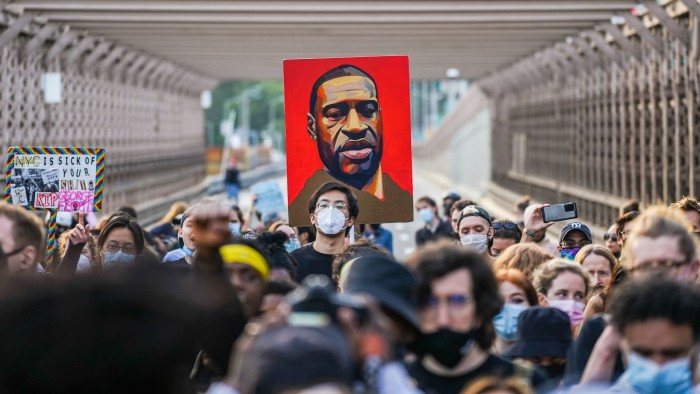
    After the 2020 murder of George Floyd by a police officer prompted a racial reckoning in the US, “chief diversity officer” became one of the hottest job titles in the country. Companies rushed to build out programmes aimed at reducing racial and gender discrimination among staff.

    But there has been a “significant reduction” in the number of jobs with titles mentioning diversity, equity or inclusion (DEI) since President Donald Trump took office in January, pledging to eliminate “illegal and immoral discrimination programmes,” says Nicole Bachaud, a labour economist at jobs site ZipRecruiter.

    The number of people in DEI roles in Russell 3000 companies, an index of the largest publicly-traded US companies, stood at just under 11,000 in August 2025, a drop of 13 per cent from the peak of about 12,400 in July 2022, according to an analysis of public employment records for the Financial Times by workforce intelligence firm Revelio Labs.

    One diversity practitioner describes the downturn in the field as a “double whammy” for women and people of colour. Those in DEI roles are more diverse than other parts of the C-suite, per Revelio Labs’ analysis, which also found that companies with such roles are also more likely to have more diversity at every level of their organisation. Nearly 68 per cent of US workers in DEI roles at Russell 3000 companies since 2022 are women, compared to 46 per cent of non-DEI roles, according to the analysis.

    But Bachaud says that, to some extent, the downturn in the US DEI sector can be explained by the broader slowdown in employment growth since the start of the year. US non-farm payroll figures have changed little since April, according to the latest official data, published in September. 

    “There was a big push in the post-pandemic workplace for increased DEI, so seeing job postings waning after that period isn’t much of a shock as the boom in hiring began to slow,” Bachaud adds.

    US companies first began adding roles focused on weeding out bias in their operations to help them comply with a wave of civil rights legislation in the 1950s and 1960s. This culminated in the Civil Rights Act of 1964, which banned employment discrimination on the basis of race, colour, religion, sex or national origin.

    The work became professionalised in the following decades, with most workers coming into the field through human resources or talent acquisition roles, according to Revelio Labs data.

    “This field has historically suffered from a perception that it lacks rigour,” says David Glasgow, an adjunct professor at NYU law school, who also founded the school’s Meltzer Center for Diversity, Inclusion, and Belonging.

    That could be why diversity teams were especially hard hit by the 2022 wave of Big Tech lay-offs. The cuts accelerated after conservative activists began attacking corporate diversity efforts over the past year, prompting dozens of US companies to disband their DEI teams.

    Meta, for example, folded its DEI team in January and moved its chief diversity officer Maxine Williams into a new role focused on “accessibility and engagement”.

    Revelio Labs tracked workers leaving DEI positions and found that the majority took unrelated roles at different companies, while others transitioned into different functions at the same employer. Very few displaced DEI practitioners found the same type of role elsewhere. Advertisements for jobs with DEI in the title have fallen 74 per cent over the past year, according to recruitment website Indeed.

    Continue Reading

  • Qatar Airways bows out of Cathay Pacific after eight years

    Qatar Airways bows out of Cathay Pacific after eight years


    Hong Kong
     — 

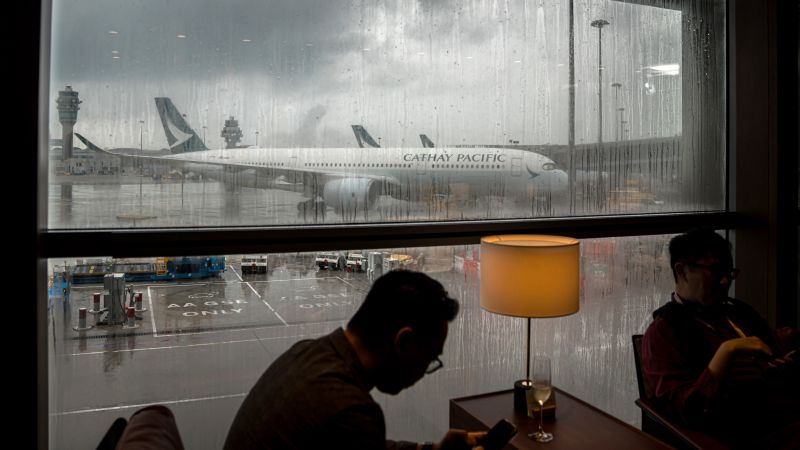
    Qatar Airways will sell its stake in Cathay Pacific Airways for $896 million, ending its eight-year shareholding in Hong Kong’s flagship carrier.

    The Doha-based airline approached Cathay about selling its entire 9.6% holding, which Cathay will buy back at $1.4 per share – subject to the approval of its independent shareholders, according to its Wednesday filing.

    The state-owned flag carrier of Qatar became Cathay’s third-largest shareholder in 2017 when it acquired the stake from Hong Kong-based Kingboard Chemical Holdings and other companies for $662 million. The purchase was the first investment by a Middle Eastern carrier in an East Asian airline.

    “Following a period of record profitability and strong performance, this decision is part of a proactive strategy to optimise our investments and position the group for long-term growth,” said Qatar Airways CEO Badr Mohammed Al-Meer in a statement released by Cathay on Wednesday.

    Upon the completion of the buyback, the holdings of Cathay’s two largest shareholders, Swire Pacific and Air China, will increase to 47.7% and 37.8%, respectively.

    Cathay’s chairman Patrick Healy said the buyback reflects the company’s “confidence” in its future, stressing its commitment to growth through a $12.9 billion investment in its fleet and lounges over the course of seven years, as announced last year.

    Cathay and Qatar said they will continue to collaborate through existing codeshare and alliance agreements. Both airlines are members of Oneworld, one of the three major global airline alliances.

    Qatar Airways has invested in multiple airlines around the world over the last decade. In 2019, it purchased a 5% stake in China’s largest carrier, China Southern Airlines, shares it continues to retain. The Qatari company also owns a 25% share of the International Airlines Group, the parent of British Airways, Spain’s Iberia, Ireland’s Aer Lingus and other, lower-cost carriers.

    Earlier this year, it bought a 25% stake in Virgin Australia, and it is in the final stages of completing a 49% equity investment into Rwandan flag carrier RwandAir.

    Continue Reading

  • [CIIE] PAMA: Century-Old Italian Machine Tool Maker Shows Products Made in China at CIIE

    [CIIE] PAMA: Century-Old Italian Machine Tool Maker Shows Products Made in China at CIIE

    (Yicai) Nov. 5 — PAMA’s Speedmat horizontal boring and milling machine, produced by the Italian machine tool manufacturer at its plant in Lingang Special Area, a key testing ground for economic and trade policies within the Shanghai Free Trade Zone, has drawn many visitors at the China International Import Expo’s technical equipment exhibition area.

    “This is our fifth time participating in the CIIE,” Lu Guoguang, chief financial officer of PAMA Shanghai Machine Tool, told Yicai yesterday. “Famous manufacturers from all over the world come here, and we have gained a lot.

    “On one hand, we meet more customers, and on the other hand, we also showcase our localization capabilities,” Lu said. “Among foreign machine tool brands in China, our degree of localization is the highest. Eighty-five percent of our suppliers are already in China, accounting for 85 percent of our goods value.”

    Established in 1926, PAMA sold its first machine in China in 1989 before setting up a wholly-owned subsidiary in Lingang to realize its strategy of “producing in China for China” in 2011. During the decade of development in the area, the unit’s revenue surged tenfold, General Manager Silvio Smiderle previously revealed.

    “Being in Shanghai, close to Jiangsu and Zhejiang, offers plenty of solutions for suppliers that have anyway the same level as we are accustomed to with our needs,” Andrea Corradini, operations director of PAMA Shanghai, said to Yicai.

    PAMA’s Lingang factory possesses advanced production equipment and has a technical department with complete development capabilities, composed of highly skilled professionals who can communicate independently with customers and conduct research, development, and production according to their needs.

    “Our R&D is conducted at the Lingang plant, which has the conditions in all aspects, such as the supply chain and talent,” Lu pointed out.

    According to Corradini, “what makes a difference between us and our competitors is the solutions that we provide. Our company has 99 years of history, so in this time, we gained experience and know-how, and that is what gives us a leading position.”

    Finding New Opportunities Amid Market Adjustment

    China’s manufacturing industry is experiencing a profound transformation from high-speed growth to high-quality development, but PAMA has a clear understanding of the market changes.

    “It is a bit cool down compared to the past,” Corradini said regarding the Chinese market. “But maybe it’s because it changed the focus, so the attention now of the industry is on automation, efficiency improvement, and cost savings.”

    This change is a positive signal, Corradini pointed out. “It’s a warm-up and makes it ready for the next step, it’s a change in the way to invest and to consider the production way,” and this is precisely where PAMA’s advantage lies, he added.

    “That is our strongest point to provide, based on the experience, the solutions to help our customers to improve their productivity, their efficiency, and to be more profitable,” Corradini said. “As far as our customers become successful, we are successful as well.”

    PAMA counts engineering equipment maker Caterpillar, chemical manufacturer FMC, and luxury car giant Rolls-Royce among its clients. Its revenue topped EUR150 million (USD172.4 million) last year, with the Lingang factory having particularly good performance.

    “Especially in recent years, our output has doubled,” Lu said regarding the plant. PAMA Shanghai added about 2,000 square meters to the factory last year, nearly doubling its production area.

    Regarding PAMA’s future plans, Corradini noted that “short-term, we have no investment plan to set up a new factory, but we know in China things can change very quickly, so we are ready to respond at any time.”

    Continue Reading

  • Returns On Capital At Barry Callebaut (VTX:BARN) Have Hit The Brakes

    Returns On Capital At Barry Callebaut (VTX:BARN) Have Hit The Brakes

    What trends should we look for it we want to identify stocks that can multiply in value over the long term? Typically, we’ll want to notice a trend of growing return on capital employed (ROCE) and alongside that, an expanding base of capital employed. If you see this, it typically means it’s a company with a great business model and plenty of profitable reinvestment opportunities. That’s why when we briefly looked at Barry Callebaut’s (VTX:BARN) ROCE trend, we were pretty happy with what we saw.

    Trump has pledged to “unleash” American oil and gas and these 15 US stocks have developments that are poised to benefit.

    For those who don’t know, ROCE is a measure of a company’s yearly pre-tax profit (its return), relative to the capital employed in the business. Analysts use this formula to calculate it for Barry Callebaut:

    Return on Capital Employed = Earnings Before Interest and Tax (EBIT) ÷ (Total Assets – Current Liabilities)

    0.13 = CHF983m ÷ (CHF18b – CHF10b) (Based on the trailing twelve months to February 2025).

    So, Barry Callebaut has an ROCE of 13%. That’s a relatively normal return on capital, and it’s around the 12% generated by the Food industry.

    See our latest analysis for Barry Callebaut

    SWX:BARN Return on Capital Employed November 6th 2025

    Above you can see how the current ROCE for Barry Callebaut compares to its prior returns on capital, but there’s only so much you can tell from the past. If you’d like, you can check out the forecasts from the analysts covering Barry Callebaut for free.

    While the returns on capital are good, they haven’t moved much. Over the past five years, ROCE has remained relatively flat at around 13% and the business has deployed 76% more capital into its operations. 13% is a pretty standard return, and it provides some comfort knowing that Barry Callebaut has consistently earned this amount. Over long periods of time, returns like these might not be too exciting, but with consistency they can pay off in terms of share price returns.

    On another note, while the change in ROCE trend might not scream for attention, it’s interesting that the current liabilities have actually gone up over the last five years. This is intriguing because if current liabilities hadn’t increased to 57% of total assets, this reported ROCE would probably be less than13% because total capital employed would be higher.The 13% ROCE could be even lower if current liabilities weren’t 57% of total assets, because the the formula would show a larger base of total capital employed. So with current liabilities at such high levels, this effectively means the likes of suppliers or short-term creditors are funding a meaningful part of the business, which in some instances can bring some risks.

    The main thing to remember is that Barry Callebaut has proven its ability to continually reinvest at respectable rates of return. Yet over the last five years the stock has declined 43%, so the decline might provide an opening. For that reason, savvy investors might want to look further into this company in case it’s a prime investment.

    If you want to know some of the risks facing Barry Callebaut we’ve found 5 warning signs (3 are a bit unpleasant!) that you should be aware of before investing here.

    For those who like to invest in solid companies, check out this free list of companies with solid balance sheets and high returns on equity.

    Have feedback on this article? Concerned about the content? Get in touch with us directly. Alternatively, email editorial-team (at) simplywallst.com.

    This article by Simply Wall St is general in nature. We provide commentary based on historical data and analyst forecasts only using an unbiased methodology and our articles are not intended to be financial advice. It does not constitute a recommendation to buy or sell any stock, and does not take account of your objectives, or your financial situation. We aim to bring you long-term focused analysis driven by fundamental data. Note that our analysis may not factor in the latest price-sensitive company announcements or qualitative material. Simply Wall St has no position in any stocks mentioned.

    Continue Reading

  • Huawei Enables MTN South Africa to Obtain the World’s First AN L4 Certification Issued by TM Forum in IP Network Field

    Huawei Enables MTN South Africa to Obtain the World’s First AN L4 Certification Issued by TM Forum in IP Network Field

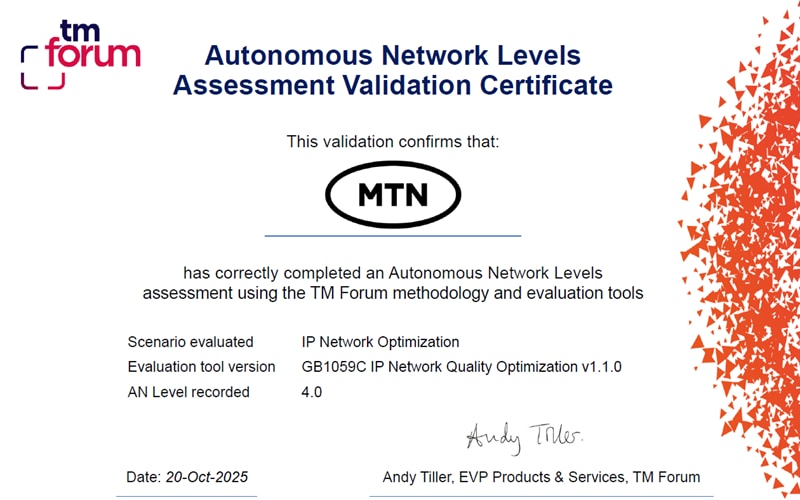
    [Johannesburg, South Africa, November 6, 2025] In the Autonomous Network (AN) level assessment conducted by TM Forum, an influential global telecom organization, Huawei has supported MTN South Africa to achieve a breakthrough in the IP network field. MTN has achieved the world’s first Autonomous Network Level 4 in the IP Network Optimization Questionnaire (GB1059C v1.1.0). This milestone demonstrates international recognition of MTN’s technical capabilities in autonomous networks and establishes its innovative leadership among global carriers.

    Autonomous Network Levels Assessment Validation Certificate of MTN South Africa

    TM Forum leads the development of Autonomous Networks Level (ANL) assessment standards in collaboration with industry partners since 2024.

    At Digital Transformation World (DTW) 2025, TM Forum officially launched its Autonomous Network Levels Assessment Validation (ANLAV) Service Guide. By focusing on high-value scenarios and establishing comprehensive architecture, process, and interface standards, TM Forum provides global carriers with objective benchmarks for network evolution, driving the industry towards advanced autonomous networking capabilities.

    In the AN L4 assessment for MTN South Africa, TM Forum conducted two rounds of rigorous evaluations focused on IAADE (Intent, Awareness, Analysis, Decision, Execution) autonomous closed-loop capabilities. By leveraging Huawei Xinghe Intelligent Autonomous Driving Network Solution, supported by iMaster NCE-IP Network Digital Map and NetMaster Network Agent, MTN South Africa achieved end-to-end closed-loop functionality including intent awareness, intelligent analysis, decision simulation, and automated execution.

    TM Forum’s ANLAV report demonstrated that MTN South Africa has achieved the highest grade (“Grade A”) across all dimensions (per the GB1059C v1.1.0 standard), particularly excelling in network congestion and path interruption optimization. This success marks MTN as the first global carrier to achieve AN L4 certification for the IP domain.

    “This recognition reflects MTN’s continued investment in cutting-edge technology to ensure that our customers enjoy the most reliable and intelligent network in South Africa,” said Zoltan Miklos, General Manager for Access Planning and Architecture at MTN South Africa. “Our autonomous network evolution allows us to plan, anticipate and resolve issues before they impact users — a crucial step in managing network performance in order to deliver superior digital experiences for all.”

    Miklos added that the achievement underscores how MTN is setting new global standards in network performance. “Automation and intelligence are redefining network performance globally,” he said. “MTN South Africa’s achievement showcases how African innovation and collaboration can set new benchmarks in network excellence.”

    Wang Hui, President of the NCE Data Communication Domain in  Huawei’s Data Communication Product Line, said,“Congratulations to MTN South Africa on being awarded the world’s first Level 4 Autonomy Network certification in IP field, a milestone that reinforces its leadership in innovation among global carriers. Huawei remains committed to empowering networks with AI technologies. Through deepened collaboration with MTN South Africa, we will deliver sustained value to customers while accelerating the intelligent evolution of next-generation networks.”

    Continue Reading

  • Asian Shares Rise After Two-Day Loss, Dollar Dips: Markets Wrap

    Asian Shares Rise After Two-Day Loss, Dollar Dips: Markets Wrap

    (Bloomberg) — Asian equities rebounded from their steepest two-day decline since April, as dip buyers returned after a brief pullback in technology shares, driven by concerns about lofty valuations.

    MSCI’s regional gauge rose 1.3%, with Hong Kong and Japan among the biggest gainers. All 11 industry groups in the index advanced, with more than two stocks gaining for every one that fell. Softbank Group Corp. shares rose 0.5% as it explored a potential takeover of US chipmaker Marvell Technology Inc.

    Asian gains came after Wall Street indexes bounced back from Tuesday’s selloff as traders bought the dip on some of the biggest winners of the AI boom. Futures on the S&P 500 and Nasdaq 100 indexes were relatively flat. Qualcomm Inc. shares fell 2.6% in late trading, becoming the latest chipmaker to deliver an upbeat forecast and still leave investors underwhelmed.

    “For investors with cash on the sidelines, the recent market pullback seems like a good time to buy, especially for investors with a longer time horizon,” said Robert Edwards at Edwards Asset Management. “Earnings are crushing it and growing faster than revenues, and that often leads to multiple expansion.”

    After a brief pullback that stirred concerns about stretched valuations, buyers returned as strong earnings momentum and upbeat private economic data lifted stocks. The shift in sentiment came after the global equity rally hit a speed bump earlier this week, when Wall Street executives cautioned that lofty valuations could trigger a correction.

    Concerns about a narrowing cohort of stocks driving equity gains have become louder, while a pivot in the Federal Reserve’s commentary dented optimism about interest-rate cuts.

    Meanwhile, President Donald Trump’s use of broad powers to impose his signature tariffs faced questions at the Supreme Court, which appeared skeptical of the sweeping global levies. Trump announced the century-high levies in April as part of his economic policy to reshape global trade.

    In a nearly three-hour hearing Wednesday, the court hinted it was ready to put significant limits on Trump’s far-reaching agenda for the first time since he took office in January.

    “It will certainly have a place in the back of the mind for investors,” said Nick Twidale, chief market analyst at AT Global Markets in Sydney. “Until it transfers to any action, I don’t think we will see much of a reaction from markets.”

    While the importance of this case and the likelihood of a close split on the court argue for lengthy deliberation, the expedited consideration of the case and likely desire to avoid even larger eventual refunds imply that the court is likely to rule in December or January, Goldman Sachs Group Inc. economists including Alec Phillips wrote in a note.

    In other corners of the market, gold held its gains, while oil edged up after three days of losses. The dollar fell slightly against all Group-of-10 peers, and Treasuries rose. The Bloomberg Dollar Spot Index edged 0.1% lower after snapping a five-day rally on Wednesday.

    The dollar fell most against the yen, which rose after wage data showed faster growth in Japan’s labor cash earnings, supporting the case for the Bank of Japan to normalize its policy.

    Meanwhile, the number of Chinese companies in MSCI Inc.’s global stock gauges has climbed for the first time in nearly two years, setting up the market for more inflows from passive investors.

    More Chinese stocks were added to MSCI’s Global Standard Indexes than deleted in the quarterly shuffle for the first time since February 2024, according to data compiled by Bloomberg. The index provider added 26 Chinese companies and removed 20.

    Corporate Highlights:

    Arm Holdings Plc, which provides the most widely used technology in computing processors, gave a bullish revenue forecast, helped by increasing interest in designing chips to run AI data centers. United Overseas Bank Ltd. shares slumped after the lender set aside its biggest provision of S$615 million ($470 million) citing commercial real estate risks in the US and Greater China. James Hardie Industries Plc shares tumbled after rivals sounded fresh warnings on the US home-improvement market, worsening what’s been a disastrous year for the company’s management and investors. The US will cut flight capacity by 10% at 40 high-volume markets across the country to alleviate pressure on air traffic controllers and the aviation system during what is now the longest government shutdown in history. International routes will be spared. Nissan Motor Co. has agreed to sell its global headquarters in Yokohama for ¥97 billion ($630 million) to a group sponsored by Hong Kong-listed autoparts maker Minth Group. Pony AI Inc. and WeRide Inc. fell on their trading debuts in Hong Kong after the pair of Chinese robotaxi firms battled for investors during their public offerings, which raised more than $1.1 billion. Some of the main moves in markets:

    Stocks

    S&P 500 futures were little changed as of 12:59 p.m. Tokyo time Japan’s Topix rose 1.5% Australia’s S&P/ASX 200 rose 0.3% Hong Kong’s Hang Seng rose 1.6% The Shanghai Composite rose 0.9% Euro Stoxx 50 futures were little changed Currencies

    The Bloomberg Dollar Spot Index was little changed The euro rose 0.1% to $1.1507 The Japanese yen rose 0.2% to 153.88 per dollar The offshore yuan was little changed at 7.1272 per dollar Cryptocurrencies

    Bitcoin was little changed at $103,638.01 Ether fell 0.2% to $3,434.82 Bonds

    The yield on 10-year Treasuries declined two basis points to 4.14% Japan’s 10-year yield advanced one basis point to 1.670% Australia’s 10-year yield advanced five basis points to 4.37% Commodities

    West Texas Intermediate crude rose 0.3% to $59.80 a barrel Spot gold rose 0.2% to $3,987.71 an ounce This story was produced with the assistance of Bloomberg Automation.

    –With assistance from Joanna Ossinger and Winnie Hsu.

    ©2025 Bloomberg L.P.

    Continue Reading