Sandvik has secured first place in this year’s edition of Comprend’s Webranking – for the fourth consecutive year. Corporate governance, careers, share information, and sustainability are particularly strong areas.
Sweden’s 155 largest companies were included in this year’s Webranking by Comprend, where the average score was 46.7. Sandvik took the top spot with 86.6 points, ahead of Trelleborg (85.1) in second place and Pandox (78.7) in third.
“I’m extremely proud that we once again top the Swedish webranking, and we put a lot of effort into optimizing the digital experience for all visitors,” says Björn Roodzant, Head of Communications and Sustainability at Sandvik. “The award is proof of excellent work, but we are aware that we must continue to evolve and improve to maintain our leading position.”
Another confirmation of Sandvik’s high-quality website is a monthly survey conducted by the company Webperf. While the Webranking focuses on content, Webperf measures technical aspects such as accessibility, speed, web standards, and information security. Here, Sandvik has been best in class among all OMX 30 companies every month for almost two years (since December 2023).
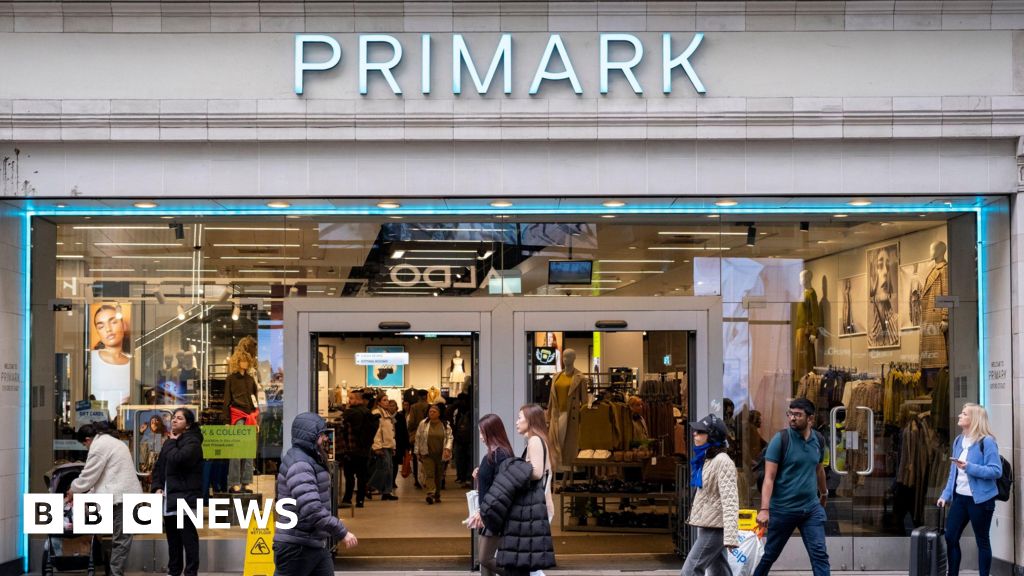
Primark saw sales drop in the UK as people spent less at the budget retailer, its owner Associated British Foods (ABF) said.
In the year to September it saw a 3.1% fall in like-for-like sales compared with the year prior, which it said reflected weak consumer confidence that meant shoppers were spending less in stores.
The company said it expected the “subdued” retail market to impact Primark sales into 2026.
Across the entire business, which alongside Primark also owns food brands Twinings, Ovaltine and Ryvita, profits fell 13% to £1.4bn for the year and ABF said it was exploring splitting off the fast-fashion retailer and its foods brands into two separate businesses.
Chief executive George Weston said though he was “confident” for 2026, it depended on the “consumer environment” which was was “particularly unpredictable at the moment”.
Shoppers have been tightening their belts amidst cost increases from rising inflation, leading them to spend less on things like fashion and turning to even cheaper competitors such as Shein and Temu.
Inflation, the rate at which prices rise, has held stubbornly at 3.8% for the year to September. Although inflation is down from highs seen in 2022-2023, it remains above the Bank of England’s target of 2%.
Randeep Somel, fund manager at M&G Investments told the Today programme the decline of Primark sales showed “the consumer is staying at home and seeing how the Budget goes at the end of this month”.
The Associated British Foods boss said in a call after the financial results that there was a “working assumption” in ABF that a separation of Primark “is where we would like to get to”, although no decision had been made.
The news comes as a series of casualties on the UK high street continue as the costs of maintaining bricks-and-mortar stores becomes too high amidst rising online competition and pressure on consumer spending.
Recent retail names that have had to close stores or enter administration include Bodycare, Claire’s, and Pizza Hut which said it will be slashing the number of restaurants it operates.
Making its global debut at EICMA, the Honda WN7 is Honda’s first electric motorcycle. Under the tagline of ‘Be the wind’, the all-new bike has been developed to offer the refined, quiet and smooth ride – with instant acceleration – that only EVs can provide. At the same time, extensive testing on Europe roads helps to ensure the Honda WN7 has all the Honda hallmarks of riding enjoyment, balance and poise. Built around a 9.3kWh lithium-ion battery and 18kW motor*2, the Honda WN7 is A2 license compliant, and offers the convenience of a 140km range and – in addition to home charging – compatibility with the CCS2*3 car charging infrastructure which allows a 20% to 80% charge in 30 minutes. The Honda WN7’s technical specification includes full LED lighting with a unique DRL signature, ‘frameless chassis’, forward and reverse walking speed assist, multiple power modes, Regenerative Deceleration Selector, forward/reverse Walking Speed Mode, Selectable Speed Limit Assist (SSLA), Cornering ABS and Honda Selectable Torque Control (HSTC). The slim, futuristic design language is complemented by a new Honda product mark, and fittingly for such a ground-breaking machine, the arrival of the Honda WN7 comes at the same time as a new EV branding for Honda’s two-wheeled line-up.
BP has said it will ramp up efforts to hive off parts of the business, as the energy company reported a drop in profits in its latest quarter.
The company reported an underlying profit of $2.2bn (£1.7bn) in the three months ended in September. It marked a slowdown against its previous quarter, when it made a profit of $2.4bn, but beat analyst expectations of $1.98bn.
Its chief executive, Murray Auchincloss, who is under pressure from shareholders to reverse years of underperformance by moving away from renewable projects and increasing investments in oil and gas, said BP would push to sell off parts of the business faster.
“We are looking to accelerate delivery of our plans, including undertaking a thorough review of our portfolio to drive simplification and targeting further improvements in cost performance and efficiency,” he said.
Auchincloss, who has vowed to sell off $20bn of assets by the end of 2027, added that he expects the company will have sold or announced the sale of $5bn worth by the end of the year.
It comes after BP’s new chair, Albert Manifold, told staff on his first day in the job last month that the company needed to accelerate a plan to cut costs and sell assets.
BP has already managed to agree to sell its US onshore wind business to LS Power, as well as a deal to offload its Dutch retail fuel sites and its electric vehicle charging hubs.
This week BP also agreed to sell its stakes in US shale assets for $1.5bn, including four Permian central processing facilities: Gand Slam, Bingo, Checkmate and Crossroads.
However, BP did not provide an update on the sale of its multibillion-dollar Castrol lubricants unit, which will be a central part of its plan to raise at least $20bn by 2027.
The company is under pressure from Elliott Management, the activist New York hedge fund which is known for its attempts to shake up listed companies. It has built up a stake in BP and has been pushing the company to cut costs.
skip past newsletter promotion
after newsletter promotion
BP launched a significant cost-cutting scheme over the summer, raising the prospect of further job cuts. The company, which is headquartered in London and employs about 100,000 people worldwide, said in January that it expected to cut thousands of jobs and contractor positions as part of its plans to reduce costs.
The company said in August it expects 6,200 jobs to go – about 15% of its office-based workforce – which is higher than the 4,700 announced at the start of the year, and it will use artificial intelligence to drive the cost cuts.
BP said at the time it had already slashed 3,200 contractor roles since January, with another 1,200 to go by the end of 2025.
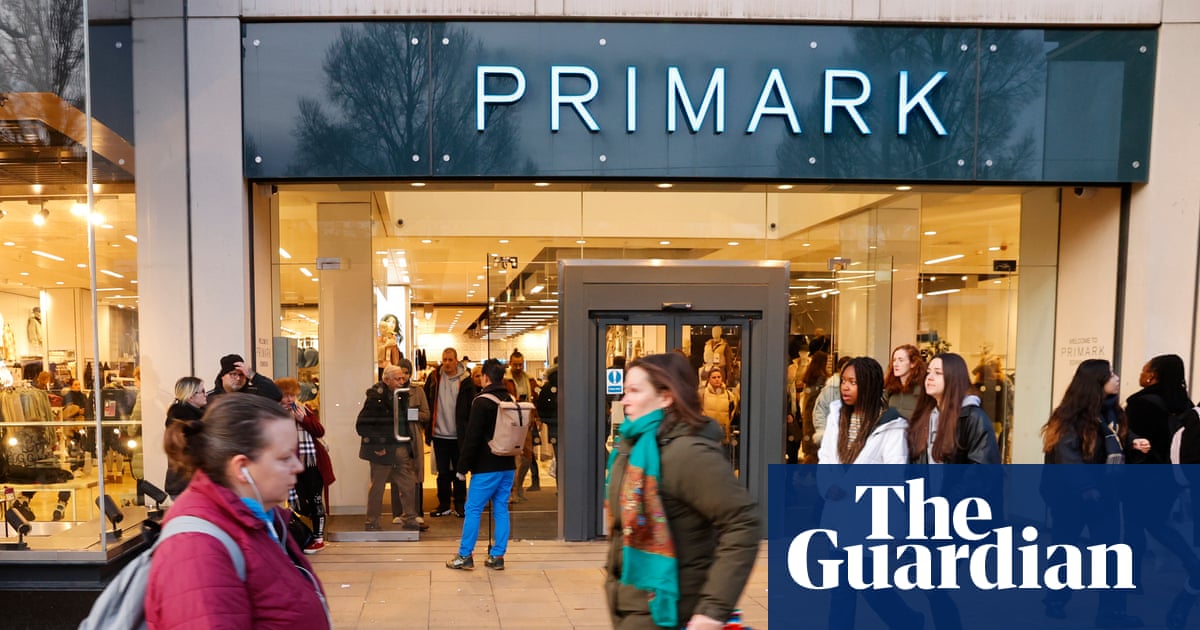
The owner of Primark is considering splitting the fashion retailer from its food division, which contains Twinings and Kingsmill, amid a “challenging external backdrop”.
Associated British Foods (ABF) said it was considering splitting off Primark from its food arm, which includes sugar production and grocery brands, “with a view to maximising long-term value”.
The group has launched a strategic review, carried out with the help of the advisory firm Rothschild & Co, with the backing of its largest shareholder, the Weston family’s Wittington Investments.
The company said the family, which owns 59% of ABF, remained “committed to maintaining majority ownership of both businesses”. The family sat in sixth position on the 2025 Sunday Times Rich List, with its wealth valued at nearly £18bn.
ABF, which is valued at £16bn as a group, said no decision had been taken and the board would provide and update “as soon as practicable”.
Earlier this year, the Primark chief executive, Paul Marchant, resigned after an allegation made by a woman about his behaviour towards her in a social situation.
The group also announced a fall in sales and profits on Tuesday as its sugar and agriculture businesses faced higher costs and it closed its Vivergo bioethanol plant.
ABF said pre-tax profits had slumped by more than a quarter to £1.4bn as revenues slipped by 3% to £19.4bn in the year to 13 September.
Its sugar business fell £205m into the red as its revenues slid 12% to £2bn after the decision to close Vivergo as well as higher costs and lower prices for its sugar.
Sales at Primark rose 1% to £9.5bn. A 3% fall in sales at established UK and Irish stores was offset by 20% growth in the US and 2% growth in mainland Europe, where Primark is opening new stores.
The company said sales were hit by “cautious consumer sentiment and the lack of a seasonal purchasing catalyst during mild autumn weather [last year]”.
It added that shopping activity within elements of Primark’s customer base was particularly weak as the spending power of those on low incomes was hit by higher energy and food bills.
Primark has more than 470 stores across 18 countries, including 187 shops in the UK.
skip past newsletter promotion
after newsletter promotion
ABF closed Vivergo after the UK government signed a duty free deal on the product with the US. It is also finalising the merger of its bakeries business, which includes the Kingsmill brand, with rival Hovis.
George Weston, the chief executive of ABF, said: “This was a year of intense strategic and operational activity within ABF. Most of our businesses delivered robust financial results, while navigating a challenging external backdrop.
“Looking ahead, we are confident in the group outlook for 2026 although much depends on the consumer environment, which is particularly unpredictable at the moment.”
He said he fully backed the review, adding that ABF’s food business was “less well understood” than Primark but had “a highly attractive portfolio, deep global expertise and much potential”.
“Primark has an incredibly strong international brand, a powerful customer proposition, and substantial growth opportunities,” he said.
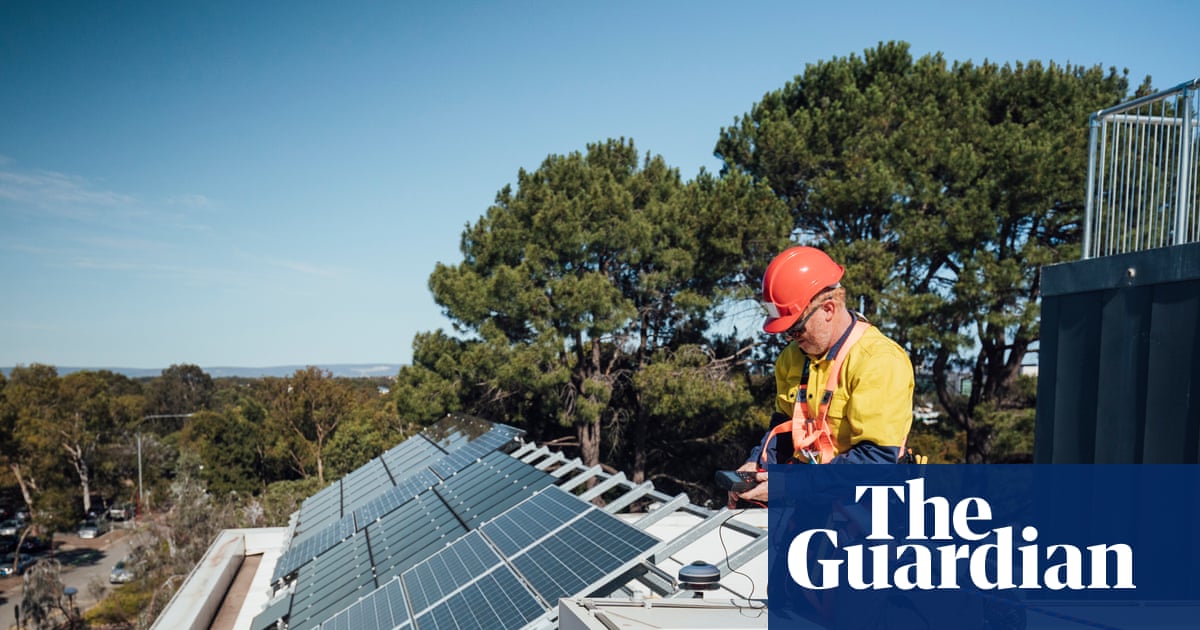
The “solar sharer” offer, set to be available from July next year, is designed to encourage households to use more power in the middle of the day – when solar is plentiful.
The energy minister, Chris Bowen, said he hoped the initiative would benefit the grid by taking pressure off during peak times.
“We’re a solar nation … with 4.2 million households with solar on their roofs,” he said.
How do I get free solar power?
Customers will need a smart meter to take it up the offer. Homes without a smart meter can request one from their energy retailer, and most will install them for free.
Different energy companies may offer different solar sharer plans, provided they meet minimal criteria to be set by the Australian Energy Regulator.
Further details of the scheme are yet to be finalised, with the energy department and regulator currently seeking feedback.
After the initial rollout, the government plans to consult with other states, with a view to extending the offer to other places by 2027.
What if I don’t want to wait?
If free power sounds appealing, households don’t need to wait for the regulated offer.
AGL’s Three for Free, Red Energy’s Red EV Saver, GloBird Energy’s ZeroHero, OVO Energy’s Free 3 plan and Synergy’s Midday Saver all offer free power periods.
The ACCC estimates that 79% of homes could save money by switching to a better deal.
The Australian government’s Energy Made Easy site compares energy price offers in NSW, Queensland, South Australia, Tasmania and the Australian Capital Territory. A similar tool is provided by the Victorian government.
Meanwhile more than 4.2m Australian homes are already benefiting directly from their rooftop solar.
“Solar customers consistently have lower bills, about 18% less than non-solar customers, even though they consume more electricity from the grid,” a report by the ACCC says.
“Customers with solar and battery systems pay even lower bills.”
Which households are likely to benefit most?
Bowen says the solar sharer offer will advantage households able to shift their power use into the zero-cost power period – like professionals or families working from home, retirees, or customers with smart appliances scheduled to turn on in the middle of the day.
For others, the solar sharer may not be the cheapest offer available. “This was never claimed to be a one-size-fits all answer to everyone’s problems,” Bowen says.
Brian Spak, the general manager for policy and advocacy at Energy Consumers Australia, says low-income households may have limited ability to benefit from these plans.
“The best way to maximise savings is to use more energy when power is free and less when it is expensive… but this is easier said than done,” he said.
“For households where no-one is home during the day, they may find it difficult to make use of cheaper power.”
How do I make the most of free power?
Helen Oakey, CEO at Renew, a national not-for-profit that advocates for sustainable living, says “It’s about being smart with your timing”.
“Run your dishwasher, washing machine or dryer in the middle of the day instead of the evening. Set your hot water system or heat pump to operate during daylight hours.”
Households can also set timers to pre-heat or pre-cool their homes at times when electricity is free or cheap, she says.
“If you’ve got an electric vehicle, you can plug it in for a midday ‘solar snack’ rather than charging overnight.”
Oakey says a well-insulated, efficient and fully electric home will “make every kilowatt go further”.
“Replacing gas appliances with electric options you can run during the day is one of the simplest ways to get more value from solar – whether it’s on your roof, or on someone else’s!”
Will free solar power make my bills cheaper?
Some are sceptical about the need for government intervention.
“I’m not sure anyone will necessarily benefit. It depends on the aggregate of their consumption and the prices that apply outside of those periods,” says Prof Bruce Mountain, the director of the Victorian Energy Policy Centre.
“This is populist nonsense,” he says. “These things have long existed in the market. There’s no need to mandate them.”
Households can already choose plans with zero cost periods, Mountain says – he himself has been on one for the last three years, switching his dishwasher, washing machine, and electric vehicle charger to make the most of those hours.