Category: 3. Business

  • Baker McKenzie advises on Trustmarque Group’s merger with Ultima Business Solutions | Newsroom

    Baker McKenzie advises on Trustmarque Group’s merger with Ultima Business Solutions | Newsroom

    Baker McKenzie has advised One Equity Partners and its portfolio company, Trustmarque Group, a leading technology services partner, on the merger between Trustmarque and Ultima Business Solutions, a premier managed services provider owned by Apse Capital. Upon completion, the combined business will form a leading IT channel powerhouse in the UK.

    The transaction will mark a transformative milestone, bringing together a combined Gross Invoiced Income (GII) expected to reach GBP 1 billion. With a proposed unified workforce of over 1,000 employees, the combined business will be poised to unlock greater innovation, agility, and market impact. This planned strategic alignment not only strengthens operational capabilities but also sets the stage for bold growth, deeper customer engagement, and a shared vision to lead the industry with purpose and performance. Together, the combined businesses will provide a comprehensive portfolio of expert driven, end-to-end IT solutions and managed services with pioneering IP at the core. From One Equity Partners, Andrew Dunn (Partner) and Vittorio Palladino (Principal) will remain on the board of the combined business.

    The Baker McKenzie team was led by Private Equity Partner, Justin Hutchinson, with support from Private Equity Associates Angus Duncan, Emma Burton and Francesca Cohen. The team also included Debt Finance Partner, Nick O’Grady; Tax Partner, Natalie Dunne; and Antitrust & Competition Partner, Anthony Gamble.

    Commenting on the deal Justin Hutchinson, said: “We’re proud to have supported One Equity Partners and Trustmarque on this transformative transaction, which brings together two highly respected businesses in the UK technology services space. This deal highlights our strength in advising private equity sponsors and their portfolio companies on complex mergers and acquisitions, particularly in the technology and business service sectors.”

    Continue Reading

  • Speech by Governor Cook on the economic outlook and monetary policy

    Speech by Governor Cook on the economic outlook and monetary policy

    Thank you, David. I appreciate the opportunity to speak again at the Brookings Institution.1 It is always an honor for me to return to the place where I held my first job as an aspiring economist. I had the good fortune to be a research assistant for the eminent economist and public servant, including as Vice Chair of the Fed, Alice Rivlin early in my career. It was a formative, if not transformative, experience for me, and I remain grateful to her and Brookings for it.

    Today, I would like to speak to you about how I see the U.S. economic outlook evolving, specifically through the lens of the dual mandate given to the Federal Reserve by Congress to promote maximum employment and price stability. Then, I will discuss how my assessment of the outlook guides my thinking on monetary policy.

    I will start by acknowledging that, due to the government shutdown, this is a challenging time to give an economic outlook speech. Federal statistical agencies, including the Bureau of Labor Statistics, the Census Bureau, and the Bureau of Economic Analysis, have not produced many of the data I regularly use in assessing the economy, such as monthly employment data from BLS and the personal consumption expenditures (PCE) price index from BEA. The longer the shutdown lasts, the more data could be disrupted.

    Economic Outlook

    However, we are not flying blind. The staff at the Federal Reserve and I use a wide variety of data from administrative sources and various private-sector providers to continually evaluate the state of the economy in real time. That practice has become essential in recent weeks given the lack of official releases. These data include alternative measures of inflation, labor-market activity, and production and spending, inflation. For example, states continue to report data on unemployment insurance (UI) claims, and online job boards provide data on available positions. Various firms provide pricing data on a variety of products and services, including housing and vehicles, and offer information on credit card spending, the moods of consumers and employers, and manufacturing and service-sector output. In my first speech as a Governor in 2022, I encouraged the use of more high-frequency, real-time data from the private sector, and I think this has borne fruit.2 And, of course, the Reserve Banks in the Fed System are a rich source of statistical and anecdotal data, some of which are documented in the Beige Book report policymakers receive before each Federal Open Market Committee (FOMC) meeting.

    In addition, I find broad outreach to business leaders, workers, nonprofits, and families around the country essential in understanding the state of the economy. I will rely on this outreach, these alternative data sources, and the latest available federal data when discussing my outlook today.

    Inflation

    First, I will turn to inflation. Based on the available data for September, it is estimated that the PCE price index rose 2.8 percent in the 12 months ending in September, significantly above our 2 percent target. Core inflation, which excludes the volatile food and energy categories, was also estimated to be 2.8 percent. Both of these readings are as high or higher than their readings a year before, propped up by an increase in tariff-affected goods prices.

    My outreach to business leaders suggests that the pass-through of tariffs to consumer prices is not yet complete. Many firms have adopted a strategy of running down their inventories at lower price levels before raising prices. Others have reported waiting until tariff uncertainty is resolved before passing increases on to consumers. New car models, clothing lines, and other products will be coming onto the market, and that process will continue to provide firms with an opportunity to level set prices. As such, I expect inflation to remain elevated for the next year.

    Nonetheless, the effect of tariffs on prices, in theory, should represent a one-time increase. It is encouraging that most long-run inflation expectations, including from the New York Fed Survey of Consumer Expectations, are low and stable at this juncture. When excluding tariff effects, 12-month core PCE inflation through September appears to be about 1/2 percentage point lower at about 2.3 percent, suggesting that underlying inflation has continued to make progress toward target. My assessment is that inflation is on track to continue on its trend toward our target of 2 percent once the tariff effects are behind us. The big caveat is that tariff effects must prove not to be persistent and that monetary policy remains appropriately focused on achieving that goal.

    This is a point worth dwelling on for just a moment. The FOMC’s firm commitment to its inflation mandate is imperative to ensure that inflation does remain in check, as I do expect in my baseline forecast. So let me be clear. I am committed to reaching our 2 percent inflation target. Moreover, I will be prepared to act forcefully, if the tariff effects appear to be larger or last longer than expected, or if other evidence emerges that higher levels of inflation are becoming entrenched in expectations.

    Labor market

    I will now turn to the labor market. We have less recent official data on the labor market, but the latest available indicators suggest that the labor market remains solid, though gradually cooling. The unemployment rate edged up over this summer from 4.1 percent in June to 4.3 percent in August, a relatively low reading one would expect to see in a healthy economy. To put 4.3 percent into perspective, the average unemployment rate over the 50-year period preceding the pandemic was 6.2 percent. Since August, more recent labor-market indicators, such as UI claims, job postings, and individuals’ assessments of job availability, signal little change to the August reading—at most a small uptick. Taken together, the slightly rising unemployment rate indicates the labor market is softening, but only modestly so.

    I would be remiss if I did not mention slowing in payroll gains observed over the summer. In most cases, a sharp slowing in payrolls would suggest increasing slack and would generally be accompanied by an increase in the unemployment rate. However, in this instance, the slowing in payrolls can mostly be explained by a coincident decline in population growth due to immigration policy. Because they are currently driven by fluctuations in population growth, the payroll numbers do not provide a definitive signal about labor-market slack. Therefore, it would be prudent for us to consult the other indicators I already mentioned.

    It is important to recognize that there appear to be worsening outcomes for vulnerable and low-to-middle-income (LMI) households. In the labor market, youth and Black unemployment rates, both of which tend to be more cyclical than total unemployment, have steadily risen since this spring through the latest readings in August. The deteriorating labor market experienced by these two vulnerable groups mirrors other emerging strains in some households’ financial health and balance sheets. Among LMI households, we have observed large increases in delinquencies, especially last year, and there is some evidence that their spending has stagnated, in particular compared to the robust spending growth of their higher-income counterparts. This is sometimes called a “two-speed” economy, when the well-off are doing well, while LMI and vulnerable households are not.

    Monetary policy works by affecting conditions for the entire economy and is not well suited to produce specific outcomes for specific groups of people. Ultimately, I believe delivering on our dual-mandate goals will produce the best outcomes for all Americans. Nonetheless, it is important for policymakers to monitor the two-speed economy. Understanding the challenges faced by so many Americans underscores the reasons why we need to get monetary policy right. Vulnerable and LMI households are the ones who will be the first and most hurt, if the labor market were to suddenly deteriorate or if inflation were to remain too high.

    Economic activity

    To turn to economic activity, recent readings are consistent with solid overall growth. Output has been supported by household consumption that has held up better than expected earlier this year. Yet, what has been more striking is the strength of business investment. Business investment has been driven by investment in high-tech equipment and software, seemingly mostly related to AI. As I have mentioned in previous speeches, that suggests to me there is a reason to be sanguine about future productivity growth.3 I see AI as a general-purpose technology, on par with the steam engine and the personal computer, that has the potential to transform the economy and boost productivity. I expect this sector to continue to provide support to output growth over the next few years, at least.

    In the very near term, I see the federal government shutdown as weighing on activity this quarter. Furloughing federal workers and forgoing government purchases of goods and services, including those provided by contractors, directly lowers output in the public sector. And spillover effects to the private sector are worth considering. Potential delays in government payments, permits, inspections, insurance provision and other functions could slow certain spending and investment activities, and some small business contractors with very little cushion may never be paid and may ultimately close their businesses. I see both sets of effects as being largely temporary. It is anticipated that they would unwind in the following quarter after the shutdown ends.

    In summary, after a temporary slowdown due to the government shutdown, I expect the economy to grow moderately over the medium term, supported by an AI productivity boom. I see the labor market as still solid, but I am highly attentive to downside risks. I see inflation as remaining somewhat elevated due to tariff effects and subject to upside risks.

    Monetary Policy

    Having articulated my outlook, I will turn to my current view of monetary policy. At the FOMC meeting last week, I supported the Committee’s decision to lower the target range for the fed funds rate by a quarter-point to 3-3/4 to 4 percent. I viewed that decision as appropriate, because I believe that the downside risks to employment are greater than the upside risks to inflation. I view the latest reduction in the fed funds rate as another gradual step toward normalization. I see the current policy rate as remaining modestly restrictive, which is appropriate given that inflation remains somewhat above our 2 percent target.

    At last week’s meeting, I also supported the decision to conclude the reduction of the aggregate securities holdings on the balance sheet on December 1. The long-stated plan had been to stop balance sheet runoff when reserves were somewhat above the level the Committee deemed consistent with ample reserve conditions. In the several weeks ahead of our latest meeting, signs, such as an increase in repo rates relative to administered rates, did emerge suggesting this standard had been reached. These developments were anticipated as the size of the balance sheet declined and supported the decision to cease runoff.

    Looking ahead, policy is not on a predetermined path. We are at a moment when risks to both sides of the dual mandate are elevated. Keeping rates too high increases the likelihood that the labor market will deteriorate sharply. Lowering rates too much would increase the likelihood that inflation expectations will become unanchored. As always, I determine my monetary policy stance each meeting based on the incoming data from a wide variety of sources, the evolution of my outlook, and the balance of risks. Every meeting, including December’s, is a live meeting.

    Thank you again for the opportunity to return to Brookings. I look forward to our conversation.


    1. The views expressed here are my own and not necessarily those of my colleagues on the Federal Open Market Committee. Return to text

    2. Lisa D. Cook (2022), “Economic Outlook,” speech delivered at the Peterson Institute for International Economics, Washington, D.C., October 6. Return to text

    3. See Lisa D. Cook (2024), “What Will Artificial Intelligence Mean for America’s Workers?” speech delivered at the Ohio State University, Columbus, Ohio, September 26. Return to text


    Continue Reading

  • Sharing burdens, increasing impact with robust vaccine cold chains

    Sharing burdens, increasing impact with robust vaccine cold chains

    Vaccination is one of the most effective tools for preventing infectious diseases in both humans and animals. Safe and effective vaccines reduce mortality, improve productivity and protect communities from zoonotic diseases that can cross species barriers. However, the success of vaccination programs depends not only on the quality of vaccines produced but also on how they are stored, transported and handled. When vaccines are exposed to temperatures outside their recommended range, their potency can decline, leading to a failure to generate adequate immune protection. Such failures can erode public trust when vaccinated individuals, both human or animal, still fall ill with the targeted disease.

    Maintaining vaccines within the correct temperature range from the point of manufacture to administration is therefore critical. The temperature-controlled system that preserves vaccine potency along the travel route is known as the cold chain. A robust cold chain ensures that vaccines remain active and efficacious until their expiry date, forming the backbone of successful immunisation and vaccination programs.

    Public health systems worldwide devote substantial resources to building and maintaining cold chain infrastructure. An effective cold chain requires three key elements. First, personnel: trained staff to manage vaccine storage and distribution at every point in the system, ensuring that handling protocols are consistently applied. Second, equipment: reliable refrigeration and transport equipment capable of maintaining required temperatures, together with temperature-monitoring devices that allow real-time oversight. Third, procedures: standardised protocols that guide proper equipment use, temperature monitoring, and the safe transport and storage of vaccines.

    When any of these components fail, whether due to lack of training, power outages or equipment breakdowns, the integrity of vaccines can be compromised. For this reason, continuous investment in cold chain systems is not optional but essential for sustaining vaccine confidence and effectiveness.

    While public health vaccination programs often receive strong institutional and financial support, animal health services in many low- and middle-income countries remain under-resourced. The consequences are significant: inadequate cold chain capacity can lead to unreliable vaccine supplies, loss of potency and high mortality from diseases that are otherwise preventable.

    These weaknesses in animal health systems have several important wider implications. Livestock owners who experience disease outbreaks following vaccination may lose confidence both in vaccines and in veterinary health care services. High animal mortality can make it difficult to detect outbreaks early, diminishing the sensitivity of surveillance systems. Poor disease surveillance allows zoonotic pathogens — that is, those that can infect both animals and humans — to circulate unnoticed in animal populations, potentially spilling over into human communities. Finally, these outbreaks may have serious negative impacts on household livelihoods and national economics.

    As a consequence, inadequate investment in animal health cold chains not only affects livestock productivity but also undermines public health security and food systems.

    Encouraging progress has been made in Bangladesh, where a community-based One Health initiative funded by the USAID Feed the Future Bangladesh Livestock and Nutrition Activity and UK Research and Innovation-funded One Health Poultry Hub has highlighted the benefits of shared responsibility across sectors. A farmer survey conducted under the Bangladesh Livestock and Nutrition Activity revealed very low levels of vaccination coverage. This finding was presented at a national meeting that brought together public health, animal health and environmental health officials, along with local government representatives, reflecting the essence of the One Health approach, which seeks to balance and optimise the health of people, animals and ecosystems through cross-sectoral collaboration.

    Public health officials were surprised to learn about the low coverage of livestock vaccination for two key reasons. Firstly, in rural districts facing high child undernutrition, improving access to nutrient-rich animal-source foods is seen as vital. Second, frequent high mortality in animals reduces surveillance sensitivity and timely disease outbreak reporting. Rather than attributing blame to veterinary services, they expressed readiness to support joint action. Proposed areas of collaboration included cold chain training, shared maintenance responsibilities and coordinated monitoring of livestock vaccination coverage. They further recommended that animal vaccination data, particularly for zoonotic and high-priority diseases, be routinely shared with District Public Health Nutrition Committees. This integration would help raise awareness of challenges in veterinary health systems and strengthen links between animal health and human nutrition initiatives.

    Importantly, discussions also explored the potential for shared cold chain infrastructure. Public health facilities in Bangladesh now possess well maintained refrigeration units, backup power generators and trained personnel. Public health officers felt that, with proper coordination, these existing structures could benefit veterinary vaccination programs — and were keen to take this idea forward. (While the World Health Organization prohibits human and animal vaccines from being stored in the same refrigerator, this barrier can be overcome by installing separate storage units powered by a unified electricity source and shared backup systems.)

    This example from Bangladesh illustrates the value of the One Health approach in addressing common logistical challenges. In many contexts, animal health and public health services operate in parallel, each maintaining their own infrastructure, staff and supply systems. However, greater efficiency and resilience can be achieved through integrated planning and resource sharing. Beyond Bangladesh, this idea is also being considered in the four countries participating in the West African One Health project — Sierra Leone, Guinea, Liberia and Nigeria — which aims to strengthen the mitigation and prevention of outbreaks and address sectoral inequities through increased multisectoral collaboration.

    In fact, the Guinean National Health Security Agency is currently coordinating with the National Directorate of Veterinary Services regarding the storage and distribution of dog rabies vaccine. In Guinea, rabies vaccines are distributed through a tiered system to maintain cold chain integrity. Vaccines are first stored at four regional veterinary laboratories, then transferred to refrigerators within the Prefectural Directorates of Livestock, and subsequently to human health centres at the sub-prefectural level. Transport is conducted using coolers with regularly-replaced ice packs. Most health centres are equipped with solar-powered refrigerators. Coordination between the Expanded Vaccination and Primary Health Care Program and the National Directorate of Veterinary Services ensures effective management and safety of animal vaccinations.

    Access to potent vaccines, safe food and effective disease control underpins both human and animal health. Yet sustaining these systems requires collaboration across sectors that have traditionally worked in isolation. The One Health approach offers a pragmatic and equitable framework for doing so. By sharing cold chain resources — equipment, expertise and maintenance systems — countries can strengthen both public and veterinary health services while maximising the impact of limited resources. In short, investing together means saving together: protecting livestock, safeguarding people and securing the health of the ecosystems we all depend on.

    Continue Reading

  • Nation topped goal of ‘one million more’ STEM graduates over the past decade, analysis finds

    Nation topped goal of ‘one million more’ STEM graduates over the past decade, analysis finds

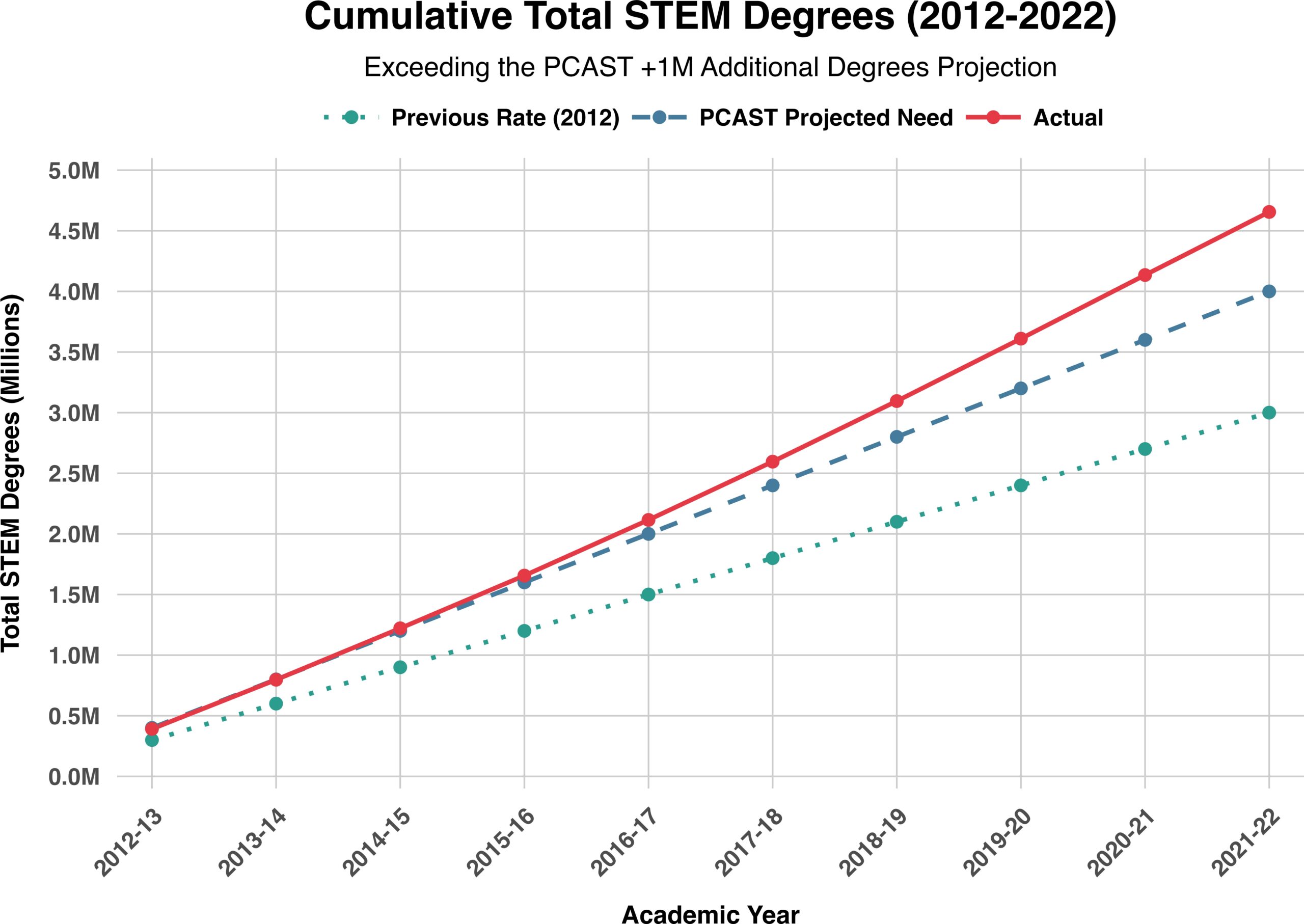
    • Between 2012 and 2022, a national target of 4 million STEM degrees earned in the United States was surpassed by 16%, cumulatively totaling 4.65 STEM degrees over that decade. This exceeded a projected need of 4 million, which was one million more than the baseline projection.
    • Degree-completion rates for STEM undergraduates have improved to now match or even exceed those of non-STEM peers in many cohorts.
    • Representation of Hispanic students and women in STEM undergraduate programs has shown notable gains. But significant gaps remain for Black students and American Indian and Alaska Native students.
    • The study emphasizes that keeping and improving national‐level data collection is critical for sustaining STEM education progress and policy oversight.

    A recent analysis of national higher-education data by a researcher at the University of California, Santa Cruz, found that the United States exceeded the goal of producing one million more graduates in the fields of science, technology, engineering, and mathematics (STEM) over the course of a decade. That goal, set in a 2012 report by then-President Barack Obama’s Council of Advisors on Science and Technology (PCAST), was one of several national objectives created to maintain America’s scientific leadership position in an increasingly competitive global landscape.

    The analysis, by National Science Foundation postdoctoral fellow Haider Ali Bhatti was, on the one hand, good news: It indicates that the expansion of programs intended to support STEM education outcomes in the years following the report’s publication yielded a successful return on investment.

    But at the same time, Bhatti’s study serves as a warning about the danger of tearing down federal institutions and the information infrastructure they provide. His findings underscored the vital importance of keeping and improving national-level data collection for sustaining STEM education progress and establishing policies and priorities that aim to maintain U.S. leadership in an increasingly competitive scientific and economic landscape.

    Let the data speak

    The study is framed in the present-day context of the growing challenges faced by U.S. universities: public skepticism of their value, claims of ideological indoctrination, and the ongoing dismantling of diversity, equity, and inclusion initiatives. 

    Haider Ali Bhatti

    “These criticisms demand higher education research to demonstrate tangible outcomes of progress informed by evidence-based evaluations,” said Bhatti, in UC Santa Cruz’s Department of Ecology & Evolutionary Biology. “In this climate of heightened public scrutiny, undergraduate STEM education offers a particularly valuable disciplinary domain to assess higher-education outcomes given its importance to national workforce development goals and global economic competitiveness.”

    Relying largely on data from the National Center for Education Statistics (NCES), Bhatti found that the number of STEM degrees obtained in the decade following the 2012 “Engage to Excel” report exceeded the goal of an additional million graduates by 16%. He also found that the proportion of STEM degrees among all degrees conferred increased over the decade, reversing previous declining trends.

    Stemming economic threats

    In addition, STEM employment expanded correspondingly, with growth surpassing the PCAST report’s projections, according to Bhatti. In his study, he explained how the 2012 report emerged as a response to specific workforce and educational concerns facing the country in the years prior. While America had historically relied on foreign-born STEM professionals to satisfy unmet workforce demands, the presidential advisory council warned that this strategy was no longer sustainable.

    STEM education and employment opportunities were increasing globally, making other countries potentially more attractive to STEM-trained workers and creating potential vulnerabilities for American economic stability, the study states. Furthermore, other research showed that STEM-related jobs represented some of the best opportunities for upward mobility in the American economy, offering high wages and lower unemployment rates than other sectors.

    The 2012 report concluded that expanding access to these high-quality careers provided a potential pathway to reduce income inequality if more Americans were trained in STEM fields. Against this backdrop of global competition and domestic opportunity, PCAST established concrete, measurable goals to address what the report characterized as a critical “decision point” for American educational and economic leadership at the time of its publication.

    Other encouraging and stubborn trends

    In his study, Bhatti cited other research that analyzed national data to assess progress on two other goals in the PCAST report: improving retention rates among students in STEM fields, and increasing demographic representation. At the time of the report, only 40% of students who started as STEM majors graduated with a STEM degree. To assess progress on that front, Bhatti presented results from research that analyzed longitudinal cohort data from the ongoing Beginning Postsecondary Students (BPS) study by NCES.

    That research found improved retention rates among bachelor’s degree students in STEM fields, at 52%, along with a phenomenon that Bhatti said is more powerful: retention rates in STEM that were equal to or higher than those in non-STEM fields at the bachelor’s degree level. Given the typical amount of exploration and changing of majors that undergraduates do, Bhatti said it was encouraging to see comparatively less attrition in STEM disciplines than in other fields.

    In regards to increasing demographic representation, Bhatti reported mixed progress, with national data showing substantial gains for Hispanic students and women, but also persistent gaps for Black and American Indian/Alaska Native students. According to NCES data, the share of Hispanic STEM degree recipients increased from 9.5% to 14.7%.

    Bhatti also found that the percentage of science and engineering degrees earned by women rose from 43% to 49% at the associate’s level, while remaining stable at about 50% for bachelor’s degrees over the past decade. 

    But overall, NCES data show an upward trend for women in STEM: Between 2012 and 2022, the share of women who earned STEM degrees increased steadily from just under 32% (124,853) to over 37% (193,625). 

    Refuting critics with proof of ROI

    Besides NCES, Bhatti examined other national reports, data sets, and longitudinal studies spanning over 10 years since the publication of the PCAST report. And now, more than a decade later, he said if higher education’s critics are correct, we would expect minimal to no progress toward these goals. But his study clearly showed otherwise.

    “Overall, these results reveal patterns that challenge public narratives about the diminishing state of higher education—particularly in undergraduate STEM education,” Bhatti concluded. “These findings provide an evidence-based foundation for both evaluating past investments and guiding future strategies to strengthen America’s talent development in the evolving global STEM ecosystem.”

    Bhatti emphasized that NCES is a division of the U.S. Department of Education, which has been critically defunded and affected by mass layoffs due to federal restructuring. “This work shows the importance of data infrastructure to check if we, as a nation, are on track in the increasingly competitive world of STEM,” he said. “We need things like NCES to enable evidence-based evaluations of our educational progress.”

    While his study is largely positive about recent trends in undergraduate STEM education, Bhatti also noted several caveats. The decade covered by his study included large‐scale reforms as well as variability across institutions and regional systems. Thus, Bhatti said national averages may have masked pockets of underperformance. 

    In addition, while degree production and completion have improved, Bhatti’s findings stop short of documenting the quality of the learning experience, the alignment of degrees with workforce needs, or long‐term career outcomes. He points out that “degree counts alone are insufficient; we must also ask whether graduates are succeeding in the jobs of today and tomorrow.”

    His analysis, “One million more: assessing a decade of progress in undergraduate STEM education,” originally appeared  in the journal Journal of Microbiology & Biology Education on August 21.

    Continue Reading

  • News | RTX’s Pratt & Whitney announces inaugural GTF MRO Network awards

    News | RTX’s Pratt & Whitney announces inaugural GTF MRO Network awards

    “Eagle Services Asia has a track record of deploying
    transformative technology – such as robotics, automation and machine learning –
    to boost efficiency, enhance product quality, and create
    a safer, smarter operator experience,” said Shangari Meleschi, vice president,
    Asia Pacific and Türkiye Aftermarket Operations,
    Pratt & Whitney. “Our culture of shared learning
    drives continuous improvement and innovation.”

    The GTF MRO network is comprised of the industry’s
    leading MRO companies and includes 21 shops across four continents, plus
    additional sites with quick-turn capability. The network is part of Pratt &
    Whitney’s EngineWise® solutions, which provide engine operators with a variety
    of aftermarket services resulting in long-term value.

    About
    Pratt & Whitney 
    Pratt & Whitney,
    an RTX business, is a world leader in the design, manufacture and service of
    aircraft engines and auxiliary power units for military, commercial and civil
    aviation customers. Since 1925, our engineers have pioneered the development of
    revolutionary aircraft propulsion technologies, and today we support more than
    90,000 in-service engines through our global network of maintenance, repair and
    overhaul facilities.

    About RTX
    RTX is the world’s
    largest aerospace and defense company. With more than 185,000 global employees,
    we push the limits of technology and science to redefine how we connect and
    protect our world. Through industry-leading businesses – Collins Aerospace, Pratt
    & Whitney, and Raytheon – we are advancing aviation, engineering integrated
    defense systems for operational success, and developing next-generation
    technology solutions and manufacturing to help global customers address their
    most critical challenges. The company, with 2024 sales of more than $80
    billion, is headquartered in Arlington, Virginia.

    For questions or to schedule an interview,
    please contact 
    [email protected].

    Continue Reading

  • Beer from Victorian Arctic expedition to be opened

    Beer from Victorian Arctic expedition to be opened

    A brewer plans to open up a 150-year-old bottle of beer, made for an Arctic expedition, so a modern version can be created.

    The original Allsopp’s Arctic Ale was bottled in Burton-upon-Trent for Sir George Nares, when he set out to reach the North Pole in 1875.

    It was later discovered in a box in a garage in Gobowen, Shropshire, and sold at auction for £3,300 in 2015.

    The buyer was Dougal Gunn Sharp, founder and master brewer of Edinburgh-based Innis & Gunn, and he now plans to use the ale to seed a new limited-edition beer.

    Samuel Allsopp & Sons in Burton-upon-Trent designed the beer for sailors enduring temperatures as low as -40C and it had an alcohol strength of about 9%.

    The beer was said to resist freezing because of its unfermentable sugars and it had six times the calorie content of conventional beer.

    It was used on a number of British Arctic expeditions and records from the time said it was dark brown and so thick it had to be lifted from the brewing copper in buckets.

    Mr Sharp plans to work in partnership with Allsopp’s Brewery on the new beer, which will be called Innis & Gunn 1875 Arctic Ale.

    He said: “Some people might think it’s madness to open it, but I think the real madness would be to leave it sitting on a shelf.

    “Beer is meant to be shared, particularly on this, its 150th anniversary.”

    Mr Sharp also said there was “something very special” about being able to taste a “piece of brewing and maritime history”.

    Jamie Allsopp, founder of the revived Allsopp’s Brewery and a direct descendant of Samuel Allsopp, said there was “something uniquely romantic about Allsopp’s Arctic Ale”.

    He said the beer was “one of the strongest and most extraordinary beers ever made” and he said when he was first approached by Mr Sharp with the idea of making a new version “I honestly thought he was mad.”

    The idea of using the original beer to create a new one was “a kind of alchemy”, he said.

    The new beer will be released later this year, with a small number of hand-bottled examples sold through a ballot.

    Continue Reading

  • Platelet Lymphocyte Ratio and Mean Platelet Volume as Predictive Biomarkers for Spontaneous Passage of Distal Ureteric Stones in Patients Undergoing Medical Expulsive Therapy

    Platelet Lymphocyte Ratio and Mean Platelet Volume as Predictive Biomarkers for Spontaneous Passage of Distal Ureteric Stones in Patients Undergoing Medical Expulsive Therapy


    Continue Reading

  • Pay-to-Play Remains High at 10.1%; Invested Capital Increased for Late-Stage Rounds and Tech Venture Financings

    Pay-to-Play Remains High at 10.1%; Invested Capital Increased for Late-Stage Rounds and Tech Venture Financings

    Cooley handled 217 reported venture capital financings in Q3 2025, representing $23 billion of invested capital. Deal volume decreased slightly since last quarter. In Q3, deal volume decreased across Series Seed, A and C financings, with Series C showing a significant drop, from 22 deals in Q2 to eight in Q3. Invested capital also decreased for Series Seed and C deals, but increased for Series A, B, D and higher. Series D and higher showed the largest increase, from $1.4 billion in invested capital in Q2 to nearly $18 billion in Q3. This is the highest invested capital seen in Series D and higher rounds in the history of this report (since 2014), driven in part by one large late-stage tech deal that closed this quarter.

    Median pre-money valuations increased for Series Seed and B rounds, but decreased for Series A, C, D and higher rounds. Series C showed the most significant decrease, with the median pre-money valuation dropping from $357 million in Q2 to $175 million in Q3. Series A, D and higher rounds saw a slight decrease in median pre-money valuations, and Series Seed and B rounds saw an increase in Q3. The percentage of deals with pre-money valuations greater than $100 million (at all stages) remained high but decreased slightly, from 37% of deals in Q2 to 36% of deals in Q3.

    The percentage of deals representing flat rounds decreased, while the percentage of deals representing up rounds increased. Down rounds represented 19.9% of deals, up rounds represented 76.6% of deals and flat rounds represented 3.5% of deals for Q3. This compares to 19.8%, 73.5% and 6.8% for down, up and flat rounds, respectively, in Q2.

    The percentage of deals involving recapitalization increased from 1.6% of deals in Q2  to 3.2% of deals in Q3. The percentage of deals with pay-to-play provisions increased from 9.7% of deals in Q2 to 10.1% of deals in Q3.

    Liquidation preference structures continued to remain favorable to companies, with 95% of deals having a “1x” liquidation preference, and 97% of deals having nonparticipating preferred stock. The percentage of deals with redemption provisions and deals with accruing dividends increased during Q3. Deals with accruing dividends represented 3.2% of deals this quarter, up from 2.4% in Q2.

    In PitchBook’s Annual Global League Tables from Q2 2025, Cooley was named the #1 law firm in the US and globally for representation of companies raising venture capital. PitchBook also ranked Cooley #1 in the US for the representation of all clients in the combination of venture capital financings, initial public offerings (IPOs), M&A and private equity transactions. In addition, Cooley received a #1 ranking for overall representation in venture capital financings in several industries and sectors, securing leading rankings in pharmaceuticals and biotech, healthcare devices and supplies, IT hardware, consumer goods and services, and media.

    Additionally, LSEG’s Global Venture Capital Review for the first half of 2025 named Cooley the #1 law firm for representing companies raising venture capital based on deal count, as well as the #1 law firm for venture capital firm representations based on overall deal value. LSEG also named Cooley the #1 law firm for representing companies in private equity transactions.

    Spotlight on technology

    The deal volume for tech company venture financings saw a slight decrease to 118 reported deals in Q3 compared to 120 reported deals in Q2. Conversely, the amount of invested capital for tech company venture financings increased significantly this quarter, from $3.6 billion in invested capital for Q2 to $20 billion in invested capital for Q3. This is the highest invested capital for tech company financings seen in the history of the report. Similarly, the average reported deal size of venture financings for tech companies increased significantly, from $30 million in Q2 to $169 million in Q3. Notably, the median reported deal size also rose, from $13 million in Q2 to $15.9 million in Q3.

    Spotlight on life sciences

    In Q3, both deal count and invested capital decreased for life sciences company financings, from 60 reported deals representing $2.2 billion in invested capital in Q2 to 46 reported deals representing $2.1 billion in invested capital in Q3. Conversely, reported average deal sizes for venture financings of life sciences companies increased in Q3 to an average size of $45 million, compared to $37 million in Q2. However, the median reported deal size declined, from $24.6 million in Q2 to $21.6 million in Q3. The percentage of life sciences company venture financings structured in tranches decreased to 28.3% of reported deals in Q3, down from 31.7% in Q2.

    Continue Reading

  • MUD HCT Offers Better Survival Than Haploidentical HCT with PTCy | Targeted Oncology

    MUD HCT Offers Better Survival Than Haploidentical HCT with PTCy | Targeted Oncology

    For adult patients with acute leukemia or myelodysplastic syndrome (MDS), matched unrelated donor (MUD) hematopoietic cell transplantation (HCT) is associated with significantly improved survival outcomes compared with haploidentical HCT.1 This advantage is driven by lower rates of severe complications, including primary graft failure, grade 3 to 4 acute graft-vs-host disease (GVHD), moderate to severe chronic GVHD, and nonrelapse mortality (NRM).

    The findings from a large-scale, retrospective registry analysis drawing from the Center for International Blood and Marrow Transplant Research (CIBMTR) database showed that haploidentical HCT recipients had a 15% higher risk of overall mortality at 3 years compared with MUD HCT recipients. Haploidentical HCT was associated with a 19% higher risk of a GVHD-free, relapse-free (GRFS) event (death, severe GVHD, or relapse) at 3 years.

    A critical moderating factor, according to study authors, is donor age. MUD donors in the study were substantially younger than haploidentical donors. When the analysis was restricted to donors under 30 years of age, the overall survival difference between the 2 groups disappeared. However, GRFS and NRM remained worse in the haploidentical group. Notably, younger haploidentical donors were associated with a lower risk of disease relapse compared with younger MUDs.

    “These differences should be carefully weighed in the context of patient and donor-related factors but support the prioritization of a readily available MUD over a haplo[identical donor] to ensure optimal outcomes following HCT,” authors wrote in the study published in Blood Advances.

    While haploidentical HCT offers advantages like near-universal donor availability and speed, the data supports prioritizing a readily available MUD to optimize outcomes. These findings provide crucial guidance for donor selection in the modern era of transplantation.

    Study Objective and Context

    The study aimed to perform a definitive comparison of long-term outcomes for adult patients receiving either MUD or haploidentical HCT with posttransplant cyclophosphamide (PTCy)-based GVHD prophylaxis. PTCy has become the new standard of care, making this comparison critical for clinical decision-making. Previous studies were limited by smaller cohort sizes and shorter follow-up periods. This analysis leveraged the extensive CIBMTR database to provide a robust, real-world assessment.

    The analysis included 5873 adult patients from 143 US centers who underwent their first HCT between January 2017 and December 2021. There were 1973 patients in the MUD cohort and 3900 patients in the haploidentical cohort. Patients were treated for acute leukemia (74.2%) or MDS (25.8%).

    The study focused on 2 primary outcomes: 3-year overall survival (OS) and 3-year GRFS. Cox regression and sensitivity analyses using inverse probability of treatment weighting were employed to compare outcomes while adjusting for potential confounding factors.

    Significant differences existed between the 2 groups, notably in donor age and patient ancestry. MUD donors were significantly younger, with a median age of 27.5 years, compared with 35.7 years for haploidentical donors. MUD recipients were older on average (62.1 years vs 58.8 years for haploidentical recipients). The MUD cohort also had a much higher proportion of non-Hispanic White patients (86.4%) compared with the haploidentical cohort (59.0%).

    Primary Findings: MUD Transplants Demonstrate Superior Outcomes

    Multivariable analysis confirmed that MUD HCT was associated with significantly better primary outcomes compared to haploidentical HCT. The risk of overall mortality at 3 years was 15% higher in the haploidentical HCT group. Besides donor type, other significant predictors of mortality included disease risk index, patient age, HCT comorbidity index, and donor age. The risk of a GRFS event (defined as death, grade 3 to 4 acute GVHD, moderate-severe chronic GVHD, or relapse) was 19% higher for recipients of haploidentical grafts. These results were corroborated by a sensitivity analysis using propensity score weights.

    Analysis of Secondary Outcomes and Complications

    The superiority of MUD HCT in the primary end points was driven by lower rates of severe complications and NRM. Relapse risk was not found to differ between the 2 donor types in the overall analysis.

    The study conducted several subgroup analyses that revealed important nuances in the data, particularly concerning donor age, conditioning intensity, and disease type.

    Given that MUD donors were significantly younger, an unplanned analysis was performed restricting the cohort to donors < 30 years of age. The difference in OS between MUD and haploidentical HCT was no longer statistically significant (HR, 1.12, P =.132). GRFS (HR, 1.15, P =.032) and NRM (HR, 1.51, P <.001) remained worse in the haploidentical group.

    In this younger donor cohort, haploidentical HCT was associated with a lower risk of relapse compared to MUD HCT (HR, 0.83, P =.028). This underscores the profound impact of donor age on HCT outcomes and suggests that prioritizing younger haploidentical donors could mitigate some of the observed disadvantages.

    The study also examined outcomes based on whether patients received myeloablative conditioning (MAC) or reduced-intensity conditioning (RIC). In the MAC cohort, haploidentical HCT was associated with an increased mortality risk compared with MUD (HR, 1.23, P =.018). In the RIC cohort, OS did not differ between the 2 donor types (P =.06). Additionally, haploidentical HCT was associated with worse GRFS and higher NRM regardless of conditioning intensity. These findings differ from a previous CIBMTR analysis published in Blood in 2021 comparing MUD and haploidentical HCT with PTCy. Those findings showed that there were no differences in graft failure, relapse, NRM, and OS between donor types with MAC regimens.2

    Outcomes varied when analyzed by the primary disease. In patients with MDS, haploidentical HCT resulted in significantly worse OS (HR, 1.35, P =.001) and worse GRFS (HR, 1.40, P <.001) compared with MUD HCT.1 In those with AML, haploidentical HCT was associated with worse GRFS (HR, 1.15, P =.016), but there was no significant difference in OS. In patients with acute lymphoblastic leukemia, there was no significant difference in either OS or GRFS between the 2 donor types.

    REFERENCES:
    1. Modi D, Aljawai Y, DeFor T, et al. Matched Unrelated vs Haploidentical Donor Hematopoietic Cell Transplantation Using Post-Transplant Cyclophosphamide. Blood Adv. 2025 Oct 6:bloodadvances.2025017194. doi: 10.1182/bloodadvances.2025017194. Online ahead of print.
    2. Gooptu M, Romee R, St Marti A, et al. HLA-haploidentical vs matched unrelated donor transplants with posttransplant cyclophosphamide-based prophylaxis. Blood. 2021 Jul 22;138(3):273-282. doi: 10.1182/blood.2021011281

    Continue Reading

  • Outrage in Paris as Shein prepares to open its first permanent store | Shein

    Outrage in Paris as Shein prepares to open its first permanent store | Shein

    The online fast-fashion retailer Shein will open its first permanent, bricks-and-mortar store in the world in Paris this week, amid political outrage, fury from workers and warnings from city hall that it will damage the French capital’s progressive image.

    The Singapore-based clothing company, which was founded in China, has built a massive online business despite criticism over its factory working conditions and the environmental impact of low-cost, throwaway fashion.

    Shein, which has previously trialled temporary pop-up stores, will on Wednesday open a permanent shop on the sixth floor of Paris’s prestigious BHV department store, a historic building that has stood opposite Paris’s city hall since 1856. There are about 23 million Shein customers in France, one of its biggest European markets.

    But with vast banners for Shein draped across the building, the brand’s arrival has sparked outrage over the promotion of fast fashion.

    The office of the French minister for small businesses said Shein’s Paris presence sent “a bad signal that should be avoided”. Several leading independent French fashion brands have pulled their products from the BHV store in protest.

    “There would be no sense being sold in the same shop as Shein,” Guillaume Alcan, a co-founder of the French ethical footwear brand Odaje, told Le Monde. Disneyland Paris abandoned plans to open a Christmas pop-up store in BHV and pulled out of creating themed window displays for the end-of-year holidays, saying “conditions were no longer in place” to “calmly hold Christmas events” at the location.

    Shein branding on the outside of the department store building. Photograph: Abdul Saboor/Reuters

    After Shein’s arrival was announced, a French state-owned bank pulled out of talks with the operator of the department store to buy the building. Paris city hall blocked plans for a Paris rugby stadium to carry the BHV logo.

    BHV staff have staged strikes and street protests in recent weeks.

    Nicolas Bonnet-Oulaldj, Paris’s Communist deputy mayor in charge of commerce, said of Shein’s arrival: “We are totally against this. It is the complete opposite of Paris’s policy to develop independent shops and support products that are made in France.”

    Ian Brossat, a Communist party senator in Paris, said: “Shein coming to BHV is a real provocation, particularly since the national assembly and senate recently approved a law to restrict ‘ultra fast-fashion’.”

    Shein, which has defended its labour and environmental policies, has said its presence in France will attract younger shoppers and boost other high street businesses. It will also open permanent shops in the French cities of Dijon, Reims, Grenoble, Angers and Limoges inside Galeries Lafayette department stores, which are operated by the same group that manages Paris’s BHV.

    skip past newsletter promotion

    The row intensified on Monday after the French finance minister, Roland Lescure, threatened to ban Shein in France if it resumed selling “childlike” sex dolls. France’s anti-fraud unit reported the presence of the dolls on Shein’s e-commerce site this weekend.

    “These horrible items are illegal,” Lescure told the BFM TV channel, promising a judicial investigation. Shein told Reuters: “The products in question were immediately removed from the platform as soon as we became aware of these major shortcomings.”

    France has already fined Shein three times in 2025 for a total of €191m (£167m). The biggest fine, of €150m, was imposed for failing to comply with online cookie legislation. The company is contesting this. Other fines were issued for false advertising, misleading information and not declaring the presence of plastic microfibres in its products.

    The European Commission is investigating Shein over risks linked to illegal products. Shein said at the start of the investigation earlier this year that it welcomed “efforts that enhance trust and safety for European consumers when shopping online”. In May, the company said it had “intensified its product safety and quality controls”.

    Continue Reading