Category: 3. Business

  • Group Stepping Stones Triple P for South Korean families of children with developmental disabilities: a pilot study | BMC Research Notes

    Group Stepping Stones Triple P for South Korean families of children with developmental disabilities: a pilot study | BMC Research Notes

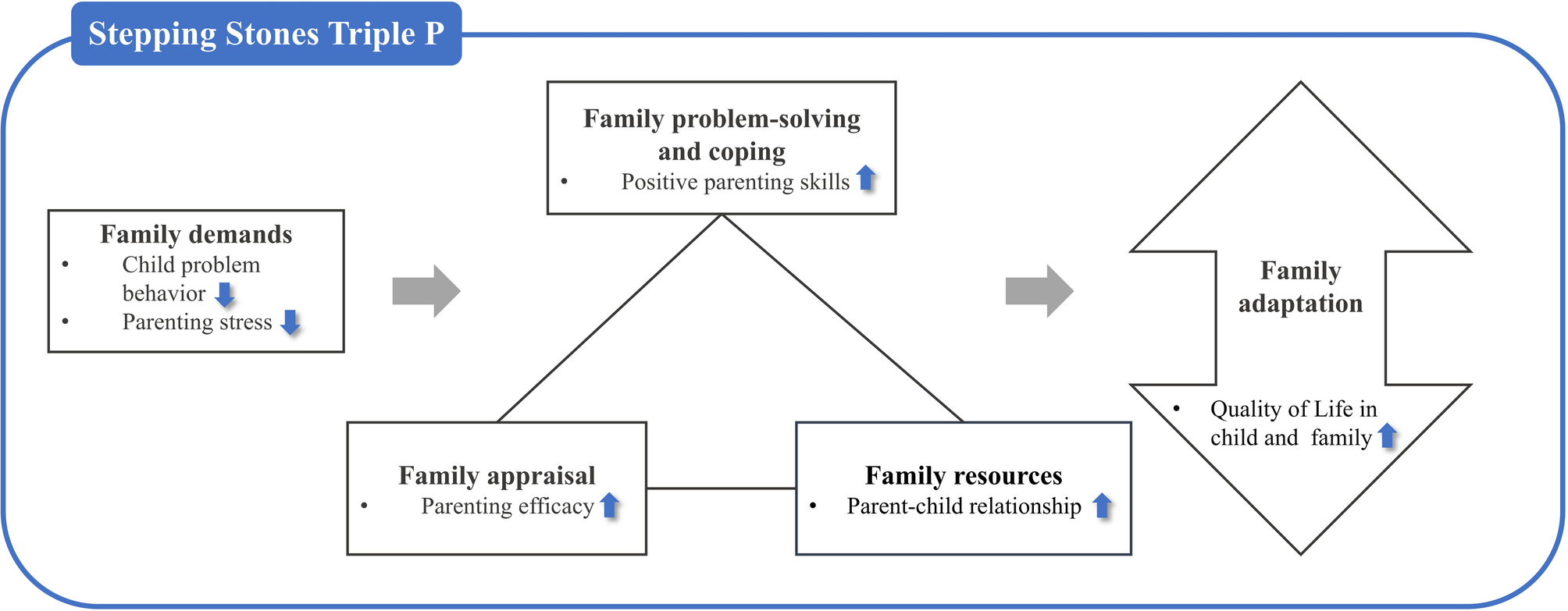
    To our knowledge, our pilot study is the first attempt to conduct Level 4 Group SSTP among South Korean families. We adapted the Group SSTP to South Korean families of children with DDs and evaluated the intervention’s feasibility and effectiveness on the child and family outcomes based on the Resiliency Model [22].

    Participants expressed high satisfaction with the intervention, indicating its potential in South Korea. They valued learning practical parenting skills and sharing insights with peers, with some expressing a desire to maintain connections after the sessions. While remote sessions eased participation for some, others preferred in-person meetings, suggesting that future research could offer both options. Overall, the feedback confirmed the intervention’s feasibility.

    However, attrition was a potential consideration in assessing the feasibility, as two parents withdrew early. One, a single mother of a child with significant behavioral challenges, discontinued after the first session due to difficulty managing her child during the session, noting the absence of caregiving support. Another mother missed several sessions due to personal reasons, without attributing her non-participation to dissatisfaction with the intervention or difficulties with the virtual format.

    Compared to traditional in-person delivery, the virtual format improved accessibility, enabling parents from distant regions to participate in real time. Nevertheless, the absence of a controlled physical environment may have introduced distractions that affected retention. The challenges experienced by the caregiver may have resulted from the combination of the specific characteristics of this intervention with its online delivery format, rather than the modality alone. For example, the parent might have more readily participated in an online program that actively engaged the child, thereby reducing the cognitive and logistical demands of attending to both the session and the child simultaneously. This highlights the need to assess not only the feasibility of the delivery modality in isolation but also the feasibility of the entire intervention package within its implementation context. Future research should explore strategies such as providing additional support for childcare or incorporating content that actively engages children.

    In terms of individual-level score trends, Subject 6 demonstrated the most positive changes in all outcomes, except for the child’s problem behavior, across the time points (T0–T2). The baseline scores for the outcomes were relatively unfavorable, and the mother was young and had a lower economic status. She expressed a desire to participate in an additional round of the intervention, as she found it particularly helpful in learning parenting strategies tailored to her child. This participant did not report prior intervention experience, which may help explain the notable improvements observed. On the other hand, Subject 2 exhibited the least favorable outcomes, including declines in parenting efficacy, positive parenting skills, and family QoL. Notably, this participant’s baseline scores were relatively high, and her economic status was comparatively more favorable than that of other participants. The differences between the two subjects may stem from disparities in opportunities to participate in various interventions, influenced by their differing socioeconomic statuses. These patterns, though based on a small sample, highlight the importance of considering caregiver background and tailoring program outreach and delivery to reach underserved populations who may benefit most. Thus, future studies should investigate caregivers’ backgrounds, including prior intervention experiences with various delivery modalities such as virtual formats, to better understand how these may influence participation and engagement. Moreover, as in other countries where SSTP is implemented nationally [26], adopting the program at a national level in South Korea may be particularly beneficial for underserved families who lack access to parenting resources.

    Additionally, although Subject 2 reported a high level of satisfaction with the intervention and provided positive qualitative feedback, she rated the usability and usefulness of the mobile app the lowest among all participants and expressed difficulties with app usage. Conversely, Subject 7, who reported the second-highest ratings for the usability and usefulness of the mobile app, demonstrated the greatest reduction in the child’s behavioral problems. This may suggest that the mobile app functioned as a supplementary tool in delivering the intervention, and its seamless integration into the intervention process could enhance overall effectiveness.

    In terms of group level, we observed that comparisons between T0 and immediately post-intervention (T1) showed no statistically significant differences. However, we found significant effects of the intervention on child and family outcomes, including children’s behavior problems, QoL, parenting stress, efficacy, positive parenting behavior, and the parent-child relationship, from pre-intervention to one month post-intervention (T2).

    One possible explanation for these findings is the cumulative effects of the intervention. SSTP focuses on providing families with practical parenting strategies that align with their values and needs, aiming to empower them to manage challenges independently [23]. Even after the intervention, families continued to apply positive parenting skills, which may have contributed to the improved outcomes observed over time.

    The main limitation of our study was its small sample size. Therefore, our findings should be interpreted with caution. The outcome data gathered only from participant reports may have had a self-report bias. Including other informants may provide a more balanced assessment of the intervention.

    Continue Reading

  • Variations in surgical practice and adverse events following isolated proximal humerus fracture in adults – a comparative longitudinal cohort study of 53,852 patients from Denmark, England, and Sweden | BMC Medicine

    Variations in surgical practice and adverse events following isolated proximal humerus fracture in adults – a comparative longitudinal cohort study of 53,852 patients from Denmark, England, and Sweden | BMC Medicine

    Study design

    This multi-national population-based cohort study presents routinely collected data from Danish, English, and Swedish patient registries and electronic health records that were linked to national statistics in each country.

    Data sources

    We extracted individual participant data from the Danish National Patient Registry (DNPR), Hospital Episode Statistics Admitted Patient Care database (HES APC) for England, and from the Swedish National Patient Register (SNPR) [12,13,14]. For simplicity, the term registry will be used in the following for all three countries.

    The DNPR includes data from all Danish hospitals, both public and private, covering inpatient care and, since 1995, also including outpatient care. It captures information such as diagnoses, surgical procedures, treatments, complications, and hospital admissions. The DNPR also records information on outpatient visits to specialist clinics and emergency department visits [12]. After identifying the Danish study population in the DNPR, it was linked to the Civil Registration System (CRS) by the unique 10-digit personal identification number given to all Danes at birth or immigration since 1968. This allows individual-level linkage of data between multiple registries. The CRS also contains information on date of birth, age, sex, and vital status [17].

    HES APC is a dataset containing data on all remunerated activity within National Health Service hospitals (NHS) or NHS-funded care in England where the patient requires an inpatient stay in secondary care. This includes day-case procedures and provides data on primary and secondary clinical diagnoses. Data can be linked at a patient level to all other secondary care episodes within the NHS, in addition to national mortality data [14].

    The SNPR contains information from inpatient care and, since 2001, also from outpatient care, thus including hospital admissions, emergency department visits, and specialist outpatient visits. It covers data from all Swedish hospitals, both public and private, and includes information on patient demographics, diagnoses, treatments, and procedures [13]. To ensure a high degree of completeness from the SNPR, the Swedish data extract did not include data from before 2001.

    Information about the specific content of each national patient registry is provided in Table S1 (Additional file 1: Table S1) [12,13,14, 17,18,19,20,21]. Furthermore, population data for incidence calculation were extracted from national statistics in each country [18, 20, 21]. All individual-level data were provided in a de-identified format.

    Participants

    Based on the International Classification of Diseases, 10th Revision (ICD-10), all adults (≥ 18 years) with PHF (S.42.2*) were identified in the three national patient datasets [11,12,13].

    The participants’ first fracture on each arm was included. In cases where laterality codes were missing, only the first fracture in one arm was included. Each index episode was analysed as an independent observation.

    The exclusion criteria included the presence of bilateral PHF, any concurrent injury, and cancer registered at the same episode/index date as the fracture. This was to exclude polytrauma and pathological fractures. Specific details of the ICD-10 codes used for including and excluding patients, as well as recording comorbidities and SAEs, are found in Table S2 (Additional file 1: Table S2-S4).

    Primary outcome

    The primary outcome variables were the numbers of pre-defined surgical procedures for PHF. The Nordic Medico-Statistical Committee (NOMESCO) Classification codes (NCSP-codes) were used to identify surgical procedures linked to the ICD-10 code in Denmark and Sweden, while Operational Procedure Codes, 4th Edition (OPCS-4) were used to identify surgical procedures linked to the ICD-10 code in England [19, 22]. The predefined surgical procedures were: plate fixation, screw fixation, K-wire fixation, intramedullary nail (IM nail) fixation, external fixation, and arthroplasty. If patients had surgery within 30 days after the fracture index date, surgery was considered as initial treatment. If the index date of the surgical procedure was later than 30 days after the fracture, the initial treatment was categorised as non-operative, thus, they were excluded from the analysis. A complete coding list for the surgical procedures can be found in Table S2 (Additional file 1: Table S2). If more than one surgical procedure was performed on the same date and no data were available to classify which was the primary, the procedure was classified using a predefined hierarchy (Additional file 1: Table S5).

    Secondary outcomes

    Each specific surgical procedure was linked to the first episode of each SAE in a set of SAEs, occurring within 30 days after the index date of the surgical procedure. The SAEs were identified based on ICD-10 codes and included: stroke, respiratory tract infection, myocardial infarction, pulmonary embolus, urinary tract infection, and acute renal failure. In addition, mortality within 30 and 90 days was counted.

    Covariates

    To identify potential confounding, age, sex, and comorbidities were compared between surgical subgroups and between countries. Information on history of ischaemic heart disease (IHD), diabetes mellitus (DM), and chronic obstructive pulmonary disease (COPD) was extracted. The overall level of comorbidity was calculated as the CCI using the algorithm by Quan et al. [23]. In Denmark and Sweden, a one-year lookback period was applied when extracting past medical history and CCI variables, whereas in England, no time limit was applied to the lookback period due to the limitation of no outpatient and emergency department information within the English dataset.

    Data processing

    The primary investigators, responsible for the data in each participating country, cleaned and processed their national data. Data management flow charts for each country can be found in supplementary material (Additional file 2: Fig. S1a,b,c). Patient-level analyses were performed securely according to locally agreed data management procedures. Do-files were developed and shared among the three countries to enable reproducible analytical pipelines in each centre.

    Statistical analysis

    National baseline characteristics of patients divided by surgical subtype after isolated PHF were presented to identify potential differences in population profiles and sources of bias.

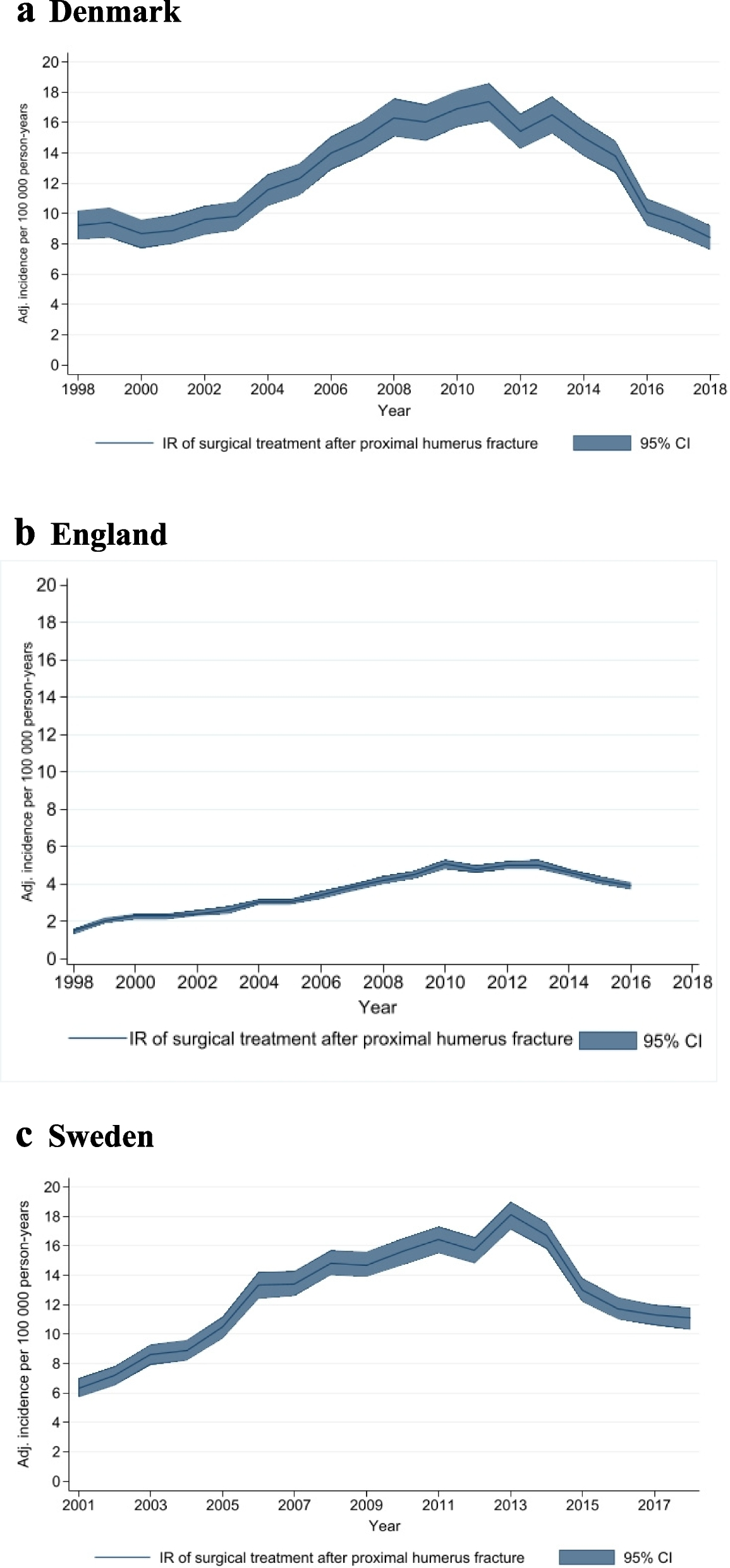
    For each country, incidence rates (IR) per 100,000 person-years with 95% confidence intervals (95% CI) were calculated for all surgically managed PHFs and for each surgical subtype. This was done by using national population estimates. In addition, age- and sex-specific IRs were calculated. The annual surgical IRs for all three countries were plotted against the date of a Cochrane systematic review and a large clinical trial, to determine if there was an impact of trial recruitment or publication of high-quality evidence [9, 10].

    SAEs, occurring within 30 days of each surgical procedure, were presented as cumulative incidence proportions (hereafter referred to as incidence) with 95% CI, assuming a normal approximation to the Poisson distribution for random count data.

    Survival analysis using a Kaplan–Meier method was undertaken to show survival over the first post-operative year, as well as for the entire study period. Patients were censored at the date of death or end of follow-up, whichever came first.

    Multivariable logistic regression analysis was undertaken to determine the impact of age (in 20-year age bands), sex, and overall comorbidity (using CCI categorised as (0–1), (2–3), (4 +)) upon the rise of SAEs within 30 days as well as 30-day, 90-day, and 1-year post-operative mortality.

    Aggregated results from each country were compiled by the first author. The statistical package Stata (version 17, StataCorp, College Station, TX) was used for data cleaning, pre-processing, and statistical analyses.

    The study was reported according to the Strengthening the Reporting of Observational Studies in Epidemiology (STROBE) statement [24].

    Continue Reading

  • UK economy ‘doomed’ under Labour, says Ryanair chief | Ryanair

    UK economy ‘doomed’ under Labour, says Ryanair chief | Ryanair

    The UK economy is “doomed” under the Labour government, the boss of Ryanair has said before this month’s budget, as the airline revealed a jump in first half profits.

    Michael O’Leary, the chief executive of the budget airline, hit out at Rachel Reeves, accusing the chancellor of failing to deliver on her programme of economic growth.

    “The UK economy under the current leadership is doomed,” he said. “The UK badly needs growth, but the way to deliver growth is through selective tax cuts … you are not going to grow the UK economy by taxing wealth or by taxing air travel.”

    It comes as airlines brace for the possibility of another increase in air passenger duty (APD) at the budget on 26 November. APD is a tax levied on flights departing from UK airports, though carriers typically pass on the cost to passengers through higher fares. The tax is expected to rise on 1 April, adding up to £2 to the cost of a short-haul economy flight.

    If it were to increase again, O’Leary said, airlines might move operations from some of the UK’s smaller airports to economies with lower business taxes, such as Sweden and Italy.

    “I hold very little faith in Rachel Reeves or the current economic strategy of the Labour government,” he said, adding that reports of possible new wealth taxes were driving traffic out of London.

    “Rich people are fleeing … as they are trying to find low-fare flights to get the hell out of London before Rachel Reeves taxes their mansions, their income and inheritance.”

    The airline, which is headquartered in Dublin and employs about 26,000 people worldwide, reported a profit after tax of €2.5bn (£2.2bn) in the first half of its financial year, a rise of 42% compared with the equivalent period last year.

    Ryanair flew 119 million people in the period, up 3%, thanks to more Boeing aircraft deliveries than expected and strong demand for travel. Air fares rose by 13% to €58 on average, and O’Leary added that prices were unlikely to fall next year.

    “Short-haul European air fares … are going to modestly increase for the next four or five years,” he said. “I think you are going to see, not just in Ryanair but across the airlines, modest price increases through 2027 and 2028.”

    skip past newsletter promotion

    The airline expects to exceed its passenger growth target for the year, forecasting a rise of more than 3% in its 2026 financial year to 207 million people, up from a previous estimate of 206 million.

    O’Leary, who has led Ryanair since 1994, also criticised EU proposals that would require airlines to allow passengers to bring two free cabin bags on to an aircraft, arguing that airlines would not be able to fit them on the plane.

    The government was approached for comment.

    Continue Reading

  • Gut microbiota in diarrheic and healthy calves: comparative analysis of 16S rRNA gene full-length sequences | BMC Veterinary Research

    Gut microbiota in diarrheic and healthy calves: comparative analysis of 16S rRNA gene full-length sequences | BMC Veterinary Research

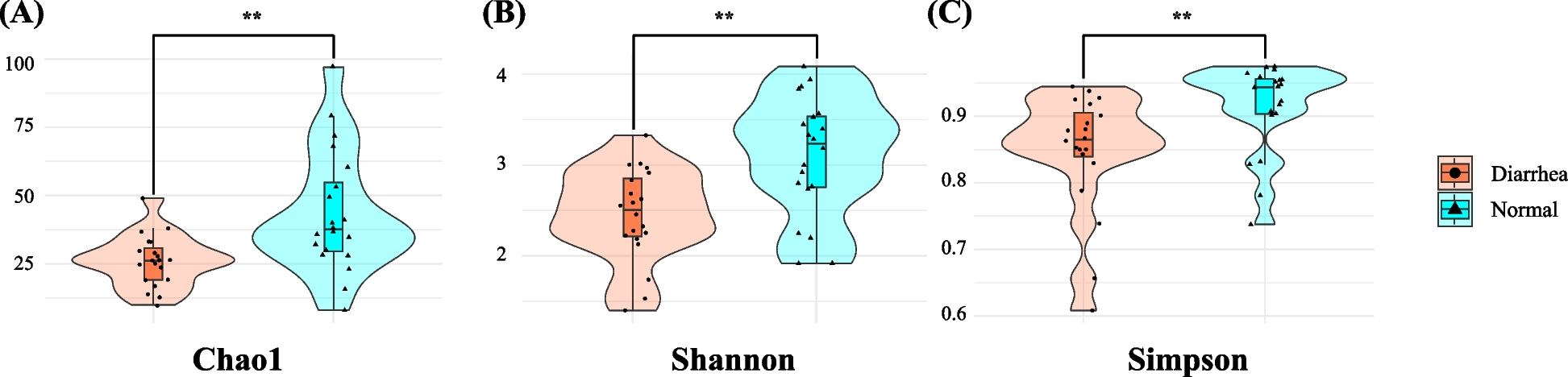
    In this study, we investigated the potential association of NCD with shifts in the fecal microbiota and characterized these microbial changes at the taxonomic and functional levels. Our analysis of alpha diversity revealed a significantly reduced fecal microbiota diversity in diarrheic calves than in normal calves. The diarrheic group showed lower richness (Chao1) and evenness (Shannon and Simpson indices), indicating an association between NCD and significantly reduced microbial diversity. Lower alpha diversity often signifies a dysbiotic state, implying disrupted gut microbiota balance [23]. This may be related to the overgrowth of pathogenic or opportunistic bacteria and the concurrent depletion of beneficial or commensal taxa [23]. Such disruptions in early life may be associated with alterations in gut barrier function, nutrient utilization, and immune regulation, which could be linked to diarrheal episodes [23].

    Our findings align with those in earlier reports demonstrating the correlation between NCD and diminished microbial diversity [11]. Underscoring the importance of a robust and diverse microbiota for gut health in calves. Reduced alpha diversity may serve as an indicator of gut health and disease susceptibility in neonatal calves [3]. Practically, monitoring these diversity indices may help identify at-risk animals sooner, facilitating timely interventions [24]. Additionally, strategies to preserve or restore microbial richness, such as the use of selective probiotics, prebiotics, and optimized feeding practices, may help mitigate diarrhea onset or severity and improve both calf welfare and farm productivity [25,26,27].

    PCoA based on Bray–Curtis and Jensen–Shannon divergence measures indicated clear compositional differences in the fecal microbiota between normal and diarrheic calves. Despite some overlap, the two groups clustered distinctly, with diarrheic samples generally occupying more positive values on axis 1 and normal samples more negative values. The centroids for each group remained separate, indicating a marked shift in microbial community structure [11]. These clustering patterns suggest that NCD is associated with a broad restructuring of the gut microbial ecosystem, rather than merely a reduction or enrichment of a few specific taxa [2, 3]. In particular, the divergence along axis 1, which explained a substantial portion of the total variance, suggested the presence of group-specific microbial assemblages. Similar results in earlier studies on calf diarrhea [2, 3, 11] corroborate the notion of a distinct microbiota composition in diarrheic calves compared with their healthy peers, potentially reflecting pathogen overgrowth and beneficial microbe depletion. In practice, rapid microbiota profiling can help identify at-risk calves before clinical signs appear, enabling targeted management or therapeutic interventions [24]. Moreover, the pronounced shift in microbial community composition may inform future studies aimed at developing microbial or metabolite-based biomarkers for NCD.

    Our results indicated that NCD is associated with disruptions in gut microbiota homeostasis, characterized by reduced abundances of beneficial taxa generally considered beneficial namely, those associated with gut health and anti-inflammatory effects (e.g., Faecalibacterium, Lawsonibacter) [11], and increased abundances of opportunistic or pathogenic bacteria (e.g., Escherichia, Salmonella, Klebsiella) [2, 3]. The LEfSe results further highlighted these differences, with E. coli and S. enterica exhibiting high LDA scores in diarrheic samples. These findings highlight association between NCD and disruptions in the gut microbiota, particularly an overrepresentation of opportunistic or pathogenic bacteria and a reduction in potentially beneficial taxa [3]. The increased prevalence of E. coli, S. enterica, and Klebsiella spp. aligns with their known roles in gastrointestinal diseases [2, 3], whereas the decline in Faecalibacterium and Lawsonibacter supports evidence that reduced beneficial microbes may impair gut barrier integrity and immune homeostasis [11]. Moreover, Lactobacillus and Limosilactobacillus, which are often considered beneficial under balanced conditions, were unexpectedly abundant in diarrheic calves, potentially due to small-intestinal mucosal damage leading to decreased lactase activity and the resultant increase in residual lactose in the colon [28, 29]. This elevated lactose could favor the proliferation of lactic acid bacteria under inflammatory or dysbiotic conditions [28, 29]. Furthermore, previous study has indicated that Lactobacillus abundance may increase during the recovery phase from diarrhea [3], suggesting that the higher abundance observed in our diarrheic calves might also reflect a compensatory or transitional response. Taken together, these findings indicate that the role of Lactobacillus in NCD is likely context-dependent, and further longitudinal studies are warranted to distinguish pathological overgrowth from recovery-associated expansion.

    The LEfSe results corroborated these patterns, showing that specific taxa not only dominate in diseased states but may also exert an outsized influence on the overall microbial community structure. Pronounced shifts in bacterial composition underscore the importance of maintaining a balanced gut microbiota for neonatal calf health [30]. From an academic perspective, these results add to the growing body of evidence that NCD involves both established pathogens (e.g., Escherichia and Salmonella) and lesser-known contributors (e.g., Limosilactobacillus) [2, 11]. Practically, routine microbiota monitoring may enable the earlier identification of calves at risk and provide preliminary insights for potential interventions, such as probiotics or prebiotics, to restore beneficial taxa or suppress potential pathogens [31]. Moreover, the differential abundance of certain species, including E. coli, L. reuteri, S. enterica, and K. pneumoniae on the pathogenic side, and F. prausnitzii, and L. asaccharolyticus as potential beneficial indicators could inform future development of diagnostic panels or therapeutic interventions.

    The results of the present study identified several metabolic pathways that differed significantly between diarrheic and normal calves (Fig. 5). Diarrheic samples displayed higher predicted abundances of pathways related to carbohydrate breakdown, specifically the Entner–Doudoroff pathway, hexitol fermentation, N-acetylneuraminate degradation, pentose phosphate pathway and dTDP–N–acetylhomosamine biosynthesis. These results suggest that the gut microbiota of diarrheic calves is functionally oriented toward rapid carbohydrate utilization and fermentation, possibly reflecting an inflammatory or dysbiotic state conducive to opportunistic microbes [3, 32]. The increased enrichment of the pathways, such as the Entner–Doudoroff pathway and hexitol fermentation, indicates a greater capacity to convert various sugars into energy and fermentation end products, potentially contributing to the clinical manifestations of diarrhea (e.g., increased osmotic pressure and altered short-chain fatty acid profiles) [33, 34]. The shifts in these functional pathways align with the compositional changes observed in diarrheic calves, particularly the overabundance of Escherichia and Salmonella, as many of these taxa thrive on simple carbohydrates such as those present under inflamed gut conditions [35,36,37]. Compared to alpha diversity, which reflect global community structure but offer limited insight, pathway-based profiling may provide more information for targeted intervention. Monitoring specific metabolic signatures may enable earlier detection of dysbiosis and better inform dietary or therapeutic strategies for NCD management. Understanding and monitoring these functionally enriched pathways may provide a basis for exploratory diagnostic tools and inform future intervention strategies to mitigate dysbiosis and its clinical consequences in NCD.

    Nevertheless, our study also has some limitations. First, although our sample size (20 normal and 20 diarrheic calves) provided valuable insights, larger-scale investigations may offer greater statistical power to detect subtle microbial shifts. Second, our study did not incorporate longitudinal sampling; hence, we cannot definitively conclude how the microbiota evolves from pre-diarrheic to post-recovery stages. Third, although we performed functional predictions using PICRUSt2, which infers gene content from 16S rRNA profiles, these predictions do not measure actual gene expression or metabolic activity. Future studies incorporating higher-resolution approaches such as shotgun metagenomics or metatranscriptomics will be valuable to confirm the functional relevance of the microbial shifts observed and to explore gene-level and pathway-specific mechanisms involved in NCD pathogenesis. Therefore, interpretations regarding enriched metabolic pathways should be considered hypothetical and warrant confirmation though metagenomic, transcriptomic, or metabolomic approaches. Fourth, although diarrheic calves in this study were tested negative for major pathogens (bovine rotavirus, bovine coronavirus, Cryptosporidium, Giardia, and E. coli K99) using a rapid antigen detection kit, other infectious etiologies may not have been fully excluded. Therefore, the observed microbial shifts may have been partially influenced by undiagnosed enteric infections, and interpretation of causal relationships should be approached with caution. Future studies should employ longitudinal designs to track microbiota changes from birth through recovery and clarify the cause-and-effect relationships in NCD. Multi-omics approaches (e.g., shotgun metagenomics and metabolomics) can confirm the functional capacities suggested by predictive tools such as PICRUSt2. Fifth, extending this study to different geographical regions and farm management systems may enhance the generalizability of our findings and foster more robust NCD prevention strategies. Additionally, because the calves ranged in age from 2 days to 2 months, age-related physiological changes may have influenced the gut microbiota composition. However, due to the absence of data regarding precise day-of-age, a direct age-matching analysis between groups could not be conducted. While all calves were within the neonatal period, it is known that microbial communities undergo rapid maturation during this time. Therefore, we cannot exclude the possibility that some of the observed microbial variation was due to age-related dynamics rather than solely diarrheal status. Finally, fecal consistency was diagnosed by a veterinarian during routine examinations. However, a standardized scoring system was not applied, and additional health indicators (e.g., body temperature, appetite, mental state) were not systematically recorded. These limitations reduce the granularity of clinical assessments.

    Continue Reading

  • global markets in a year of Trump 2.0

    global markets in a year of Trump 2.0

    By Canan Sevgili, Paolo Laudani, Vera Dvorakova and Alessandro Parodi

    (Reuters) -In the year since Donald Trump’s election as U.S. president, global financial markets have had to navigate policy shocks and unprecedented uncertainty and high volatility, with stocks, gold and crypto hitting record highs.

    After Trump defeated Democratic rival Kamala Harris on November 5, 2024, the dollar roared higher, along with stocks and bitcoin, while Treasury yields rose, as investors priced in the likelihood of greater strain on U.S. finances.

    Since then, the U.S. administration has struck deals on trade, while upending global supply chains and decades of post-war international diplomacy.

    Investors are learning to ride out the unpredictability, including clear ways to trade Trump’s tendency to amp up threats only to later back down. The so-called TACO trade – “Trump always chickens out” – has become a feature.

    Here is a snapshot of where major markets are now, compared to when Trump was elected.

    UP THE BIT, DOWN THE GREEN

    The dollar has offered the clearest reflection of how the rest of the world has reacted to Trump’s erratic approach. It surged after the election, as investors bought into the idea that a Trump-fuelled spending splurge would fuel the economy, but it has lost a net 4% in value since then.

    Trump’s tariffs on trade partners and uncertainty over their impact have driven investors to find alternatives. His crypto-friendly policies, which have drawn scrutiny over unprecedented conflict of interest, have sent bitcoin to a record high of $125,835.92 in October. Geopolitical tensions and tariffs have also driven gold, a classic safe-haven, to a record $4,381 an ounce in October.

    Demand for dollars is unlikely to wane any time soon as when financial market turbulence or geopolitics heats up, it is often investors’ first choice, or “the cleanest dirty shirt”, as Piotr Matys, senior FX analyst at In Touch Capital Markets, says.

    CHECKING IN ON STOCKS

    Stock markets everywhere have hit record highs this year, powered in large part by enthusiasm over artificial intelligence and the prospect of lower global interest rates.

    Trump’s April 2 “Liberation Day” tariff announcement was a first major test and it hit markets hard. The MSCI World Index tumbled 10%, but has since rebounded to record highs, gaining over 20% since Election Day.

    The S&P 500 is up 17% since last November, thanks to AI fever, while in Europe, defense stocks have been at the heart of the rally, as Trump forced regional governments to spend more on their own security, while war rages in Ukraine. Tech-fueled rallies and a softer dollar have boosted equities in Japan, South Korea, and China too.

    TESLA – AN ELECTRIC YO-YO

    Trump’s relationship with Elon Musk, the world’s richest man, was a key driver of Tesla stock in the weeks after the election. Musk had spent over $250 million backing Trump’s reelection bid last year and even joined his campaign trail.

    Musk’s fortune swelled, as shares in his EV maker almost doubled in less than two months to hit a record high of $488.5.

    But the honeymoon did not last. After Musk launched Trump’s budget-slashing Department of Government Efficiency (DOGE) in January, Tesla’s brand loyalty rate dropped dramatically as the CEO’s flirtation with politics spooked buyers, contributing to a drop in deliveries for two consecutive quarters.

    Tesla shares hit a low in April before rebounding as tensions between Musk and Trump spilled into the open, culminating in a split by late May.

    Despite the turbulence, the world’s most valuable carmaker has outperformed struggling legacy rivals, including Detroit’s GM, Ford and Stellantis.

    BOND YIELDS RISE

    Since Trump’s election, bond yields have surged across major economies, reflecting investor concerns over rising government borrowing and the sustainability of public finances.

    One of the concerns among investors in U.S. Treasuries was the likely cost of funding Trump’s planned tax cuts. His “One Big Beautiful Bill”, which passed in July, is expected to increase the federal deficit by around $3.8 trillion in the coming 10 years.

    However, with the Federal Reserve cutting rates and inflation seemingly contained, 30-year Treasury yields are up just 14 basis points at 4.66% since last November.

    The rise in Japanese government bonds (JGB) has been more aggressive, with 30-year yields up nearly 85 basis points to record highs while French and German 30-year yields are up 62 and 59 bps, respectively, since November 5, 2024.

    BALANCING TRADE

    One of Trump’s key areas of focus is the U.S. trade balance, something he says is proof America is being “ripped off” by partner countries and that tariffs, aside from being “the most beautiful word in the dictionary” are the only way to correct it.

    Trump’s tariffs have driven up the cost of doing business and made planning more complicated. But they are eroding the trade deficit. The most recent data shows it hit a two-year low of $60.2 billion in June, and the deficit with China shrank by 70% over five months to its lowest level in over 21 years.

    Similarly, the U.S.-EU trade balance spiked ahead of the tariff announcement before declining. This suggests that “the trade war may be hurting the EU more than it does China,” which has a stronger back-up plan than the Europeans, said Ipek Ozkardeskaya, a senior analyst with Swissquote.

    (Reporting by Canan Sevgili, Paolo Laudani, Vera Dvorakova, and Alessandro Parodi, Additional reporting by Arda Dipova; Editing by Amanda Cooper and Conor Humphries)

    Continue Reading

  • Xage Security and NVIDIA collaborate to deliver lightning-fast, zero trust security for AI and critical infrastructure

    Xage Security and NVIDIA collaborate to deliver lightning-fast, zero trust security for AI and critical infrastructure

    Xage Security, vendor of Zero Trust access and protection, announced the integration of its Xage Fabric Platform with the NVIDIA BlueField Data Processing Unit (DPU), delivering advanced security controls for AI factories and critical infrastructure. 

    Leveraging the advanced hardware acceleration of BlueField-3, Xage scales identity-based access controls across massive data centers and mission-critical environments, ensuring exceptional performance and resilience. With Xage’s Zero Trust enforcement for humans, systems, AI models and agents, organizations gain a complete, closed-loop security architecture. 

    “Given the massive innovation opportunities of AI, we need to make sure that organizations’ deployments are not held back by cybersecurity gaps—and we need to have the necessary protections run at extraordinary speed and scale,” said Roman Arutyunov, co-founder and senior vice president of product at Xage Security. “That’s why we’re collaborating with NVIDIA to help deliver lightning-fast and jailbreak-proof security at the heart of the modern AI factory and AI-enabled critical infrastructure.”

    “As AI factories emerge as the foundational infrastructure accelerating AI innovation, safeguarding them has become a critical priority,” said Ofir Arkin, senoir distinguished architect for cybersecurity at NVIDIA. “Together, NVIDIA BlueField and Xage’s zero-trust security enable organizations to modernize their protection strategies across AI factories and infrastructure —driving secure, scalable innovation forward.”

    Agentic AI systems rely on autonomous agents that collaborate with other agents, models, and APIs to make decisions and take action. Xage’s dynamic access control integration of NVIDIA BlueField provides a software-defined, hardware-accelerated foundation to govern and enforce data flows between agents and models in real time.

    Xage applies least-privilege controls at every step of these interactions, governing not only which agents can access specific data, pipelines, or models, but also the exact actions agents can perform, and for how long. With role-based segmentation running at line speed on BlueField, organizations can prevent unauthorized privilege escalation and data leakage, and enforce policy-based privilege deescalation to block risky actions, ensuring that AI agents remain trustworthy and compliant as they scale and evolve.

    To further safeguard operations, Xage delivers definitive, resilient controls that are enforced even as AI systems self-modify or generate new behaviors. This gives enterprises the confidence to unlock the full productivity and potential of agentic AI, without exposing themselves to undue risk, even in the most complex, autonomous environments.

    Xage also enforces secure separation of AI workloads, preventing lateral movement and safeguarding datasets, workloads, and models. Thanks to its implementation directly on the BlueField DPU, Xage’s identity-based segmentation operates at line speed, delivering low-latency, high-efficiency security that reduces the attack surface without sacrificing performance.

    Finally, Xage delivers full-stack protection for mission-critical systems and applications, providing robust access controls and protection not just for AI, but the full IT and operational technology (OT) stack in the data center and critical infrastructure environments.

    By running on NVIDIA BlueField, Xage brings hardware-accelerated Zero Trust enforcement to the most demanding environments, from data centers to critical infrastructure in sectors such as energy, manufacturing, utilities, and transportation where millions of assets and billions of data flows must be secured in real time. 

    This integration makes it possible to govern and enforce access to assets and data at unprecedented scale, preventing unauthorized activity and containing threats before they can disrupt essential services.

    Beyond protection and performance, Xage provides auditable identity and access controls to help organizations achieve compliance with cybersecurity and AI regulations, including NIST, NERC CIP, EU NIS2, and U.S. Zero Trust mandates. By supporting full visibility into who or what acts on data, models, and infrastructure, Xage builds assurance into AI-powered operations.

    Continue Reading

  • Travel buyers’ optimism rebounds – GBTA survey

    Travel buyers’ optimism rebounds – GBTA survey

    Global travel buyers are showing renewed confidence in the business travel sector, with 43 per cent now optimistic about the industry’s outlook for the remainder of 2025, according to the latest GBTA (Global Business Travel Association) survey.

    The October survey, which polled 591 travel buyers and suppliers worldwide, found that optimism among buyers had increased by 15 percentage points compared to the association’s previous July survey.

    Buyers’ outlook on business travel spending stayed relatively consistent compared with three months ago, with 30 per cent expecting a decrease in spend this year (compared with 31 per cent in July). On average, travel spend is expected to decline by 19 per cent, up slightly from 17 per cent in July.

    EMEA-based travel buyers are least likely to expect a decline in volume (29 per cent) or spending (23 per cent) compared to their peers in other regions.

    A third of buyer respondents (35 per cent) said they expect travel volumes to decline as a direct a result of US government actions, including the ongoing government shutdown. This decline is also expected to be around 19 per cent.

    Suppliers too are regaining confidence. In October, 37 per cent expect a drop in business travel revenue, compared to 48 per cent in July.

    Revenue concerns are most pronounced among accommodation suppliers (59 per cent), which is consistent with July’s result (58 per cent). Travel management companies are less likely to expect a decrease (32 per cent in October compared to 48 per cent in July) while more airline professionals expect a decline (50 per cent in October versus 39 per cent in July).

    “This latest poll reflects what has always been the industry’s innate ability to innovate and change – to succeed in the face of challenges,” said GBTA CEO Suzanne Neufang.

    “Business travel is showing signs of resilience and adaptation, with optimism rebounding and new patterns emerging. However, the poll results also underscore the need for thoughtful strategies to navigate external pressures and internal policy shifts,” she said.

    Shifting business travel patterns

    Nearly two in five travel buyers (39 per cent) reported an increase in “linked” or multi-meeting/multi-destination trips, according to GBTA’s October poll. One-third (33 per cent) have seen longer trip durations and another third (32 per cent) said day trips have decreased in the past year. 

    Forty-three per cent of travel programmes now also have defined policies for blended or “bleisure” travel, with 71 per cent of buyers citing benefits of improved employee satisfaction and 68 per cent noting better work-life balance. 

    However, concerns remain for travel managers around duty of care (59 per cent), expense tracking (55 per cent) and insurance coverage (46 per cent).

    Meanwhile, some employees are also paying out-of-pocket for travel upgrades. Two in five travel managers (43 per cent) said their employees at least occasionally pay for upgrades that aren’t covered by company policy. These include flight cabin upgrades (78 per cent) followed by airport lounge access (30 per cent) and extra hotel nights (29 per cent).

    Continue Reading

  • Atos inaugurates new Cybersecurity and Infrastructure Management Operations Center in Seville

    Atos inaugurates new Cybersecurity and Infrastructure Management Operations Center in Seville

    The company expands its global network of interconnected SOCs and reinforces its commitment to cybersecurity and technological innovation in Spain.

    The SOC network offers advanced cybersecurity services through proactive monitoring, early detection of cyberattacks, analysis, response and incident management — ensuring client trust.

    Atos Modern Security Operations Center (MSOC) stands out for its adaptability and flexibility to the specific needs of each client, providing advanced and scalable solutions.

    This strategic facility includes crisis rooms, continuous monitoring areas, cybersecurity labs for IT, OT, and IoT, and a dedicated cybersecurity training center — all essential to the continuous development of top national talents.

    This MSOC is creating a new cybersecurity environment that leverages state-of-the-art technology.


    Paris, France & Madrid, Spain – November 3, 2025

    Atos, a global leader of AI-powered digital transformation, today announces that its state-of-the-art Modern Security Operations Center (MSOC) was inaugurated in Seville on October 31 during a ceremony chaired by Jorge Paradela, Minister of Industry, Energy and Mines of the Regional Government of Andalusia, Spain.

    The Andalusian Minister of Industry, Energy and Mines and President of the Andalusian Digital Agency (ADA), Jorge Paradela, highlighted that “the future of cybersecurity in Andalusia lies in consolidating an ecosystem that combines the institutional strength of the Andalusian Digital Agency, the technical excellence of our professionals, and private-sector innovation.”

    Jorge Paradela thanked Atos for its commitment to Andalusia, describing it as “a step forward in consolidating the Andalusian region as a national and international benchmark in digital protection, innovation, and public-private collaboration, while strengthening our collective capabilities, fostering local talent, and multiplying opportunities for innovation.” He added that this path is guided by the Andalusian Cybersecurity Strategy.

    The new Atos MSOC delivers advanced services in monitoring, analytics, incident response and technology infrastructure management. Already in service for several months and operating 24/7/365, the MSOC addresses the growing complexity of threats and technological challenges.

    A strategic center serving leading clients

    Atos’ MSOC is a strategic operations hub, delivering high-capacity, efficient Managed Detection and Response and SOC services, as part of Atos’ global SOC network, becoming its 18th facility worldwide. This opening is testament to Atos’ commitment to digital security, innovation, operational excellence and investment in Iberia.

    A new cybersecurity environment

    As part of its ongoing evolution strategy, the MSOC is developing a new cybersecurity ecosystem designed to enhance prediction, detection and response capabilities against advanced threats.

    As part of this evolution, the Seville center will leverage:

    • Atos-curated and generated threat intelligence delivered through the Atos Threat Intelligence Sharing Platform;
    • Centrally managed and tuned detections, threat hunting and automation playbooks;  
    • As well as an AI-powered Virtual SOC Analyst.


    According to Arancha Jiménez, VP of Cybersecurity at Atos Iberia, “The integration of the latest Atos innovations of which autonomous AI agents into SOC operations represents a significant step forward. At the Seville center, this technology enhances analytical efficiency and strengthens our real-time response capabilities to cyberthreats.”

    She added, “This center marks a decisive step in our commitment to innovation and continuous improvement for our clients — enabling faster, more effective anticipation and response to incidents, and helping them prioritize resources through secure, reliable, and adaptive solutions.”

    This approach allows Atos to strengthen client protection, cybersecurity being key to business trust and continuity.

    ***

    Note to editors – Atos Group’s cybersecurity products and services

    As a global cybersecurity leader with more than 6,500 experts and 2,500 cybersecurity patents, Atos Group helps organizations navigate the evolving threat landscape with end-to-end, AI-powered security—enabling their pursuit of digital sovereignty and trust.

    Under its Eviden brand, the Group offers a sovereign portfolio of cybersecurity products built on three complementary areas of expertise: data encryption, identity and access management, and digital identity.  Developed and manufactured in Europe, these products comply with the highest European certification standards to safeguard sensitive data, secure digital access and protect the identities across users, systems, and connected devices.

    Cybersecurity services, delivered under the Atos brand, offer an integrated blend of strategic consulting, solution integration and continuous managed security services – spanning the entire security lifecycle. With a global network of 18 security operations centers (SOCs) processing more than 31 billion security events per day and serving over 2,000 trusted customers, Atos delivers a proactive, globally informed approach to securing operations. Its teams operate with deep industry expertise across all sectors, ensuring robust data protection, regulatory compliance, and business continuity worldwide.

    Download the PDF document

    ***

    About Atos Group

    Atos Group is a global leader in digital transformation with c. 67,000 employees and annual revenue of c. €10 billion, operating in 61 countries under two brands — Atos for services and Eviden for products. European number one in cybersecurity, cloud and high performance computing, Atos Group is committed to a secure and decarbonized future and provides tailored AI-powered, end-to-end solutions for all industries. Atos Group is the brand under which Atos SE (Societas Europaea) operates. Atos SE is listed on Euronext Paris.

    The purpose of Atos Group is to help design the future of the information space. Its expertise and services support the development of knowledge, education and research in a multicultural approach and contribute to the development of scientific and technological excellence. Across the world, the Group enables its customers and employees, and members of societies at large to live, work and develop sustainably, in a safe and secure information space.


    Press contacts


    Spain: Christian Suell | christian.suell@atos.net | +34652969482


    Global PR team: Isabelle Grangé | isabelle.grange@atos.net | +33 (0)6 64 56 74 88

    Continue Reading

  • Hong Kong Developer Plans Creditor Haircuts in Bid to Shore Up Finances – Bloomberg

    1. Hong Kong Developer Plans Creditor Haircuts in Bid to Shore Up Finances  Bloomberg
    2. New World to Issue Up to $1.9 Billion of New Securities, Notes  Bloomberg
    3. New World Development Debt Exchange: $1.9B Offer to Optimize Finances – News and Statistics  IndexBox
    4. Hong Kong developer New World to raise US$1.9b of new debt for liquidity  The Edge Singapore
    5. New World Development launches up to US$1.9 billion debt exchange offer  CNA

    Continue Reading

  • India's Ambuja Cements profit soars on price recovery, volumes growth – Reuters

    1. India’s Ambuja Cements profit soars on price recovery, volumes growth  Reuters
    2. Ambuja Cements Q2 Results: Revenue rises 22% from last year; firm raises FY28 capacity target  CNBC TV18
    3. Ambuja Cements Q2FY26: Net profit soars 364%, posts highest-ever Q2 revenue  financialexpress.com
    4. Ambuja Cements Q2 results: Adani Group company’s profit nearly triples to ₹1,388 crore  livemint.com
    5. Ambuja Cements Q2 Results LIVE: Net profit surges 268% to Rs 1,766 crore, revenue up 25%  Moneycontrol

    Continue Reading