Category: 3. Business

  • ‘A lot of this is speculative’: faith and fear mix amid $3tn global datacentre boom | Artificial intelligence (AI)

    ‘A lot of this is speculative’: faith and fear mix amid $3tn global datacentre boom | Artificial intelligence (AI)

    The global investment spree in artificial intelligence is producing some remarkable numbers and a projected $3tn (£2.3tn) spend on datacentres is one of them.

    These vast warehouses are the central nervous system of AI tools such as OpenAI’s ChatGPT and Google’s Veo 3, underpinning the training and operation of a technology into which investors have poured vast sums of money.

    Despite concerns that the AI boom could be a bubble waiting to burst, there are few signs of it at the moment. The Silicon Valley AI chipmaker Nvidia last week became the world’s first $5tn company and Microsoft and Apple’s valuations hit $4tn, the latter for the first time. A restructuring at OpenAI has valued the company at $500bn and a stake owned by Microsoft at more than $100bn. This could lead to a $1tn flotation as early as next year.

    On top of that, Google’s owner Alphabet has reported revenues of $100bn in a single quarter for the first time, helped by growing demand for its AI infrastructure, while Apple and Amazon have also just reported strong results.

    It is not just the financial world, politicians and tech companies who have faith in AI: it is also the communities hosting the infrastructure behind it.

    In the 19th century, demand for coal and steel from the Industrial Revolution shaped the destiny of Newport. Now the Welsh city is hoping for a new chapter of growth from the latest transformation of the global economy.

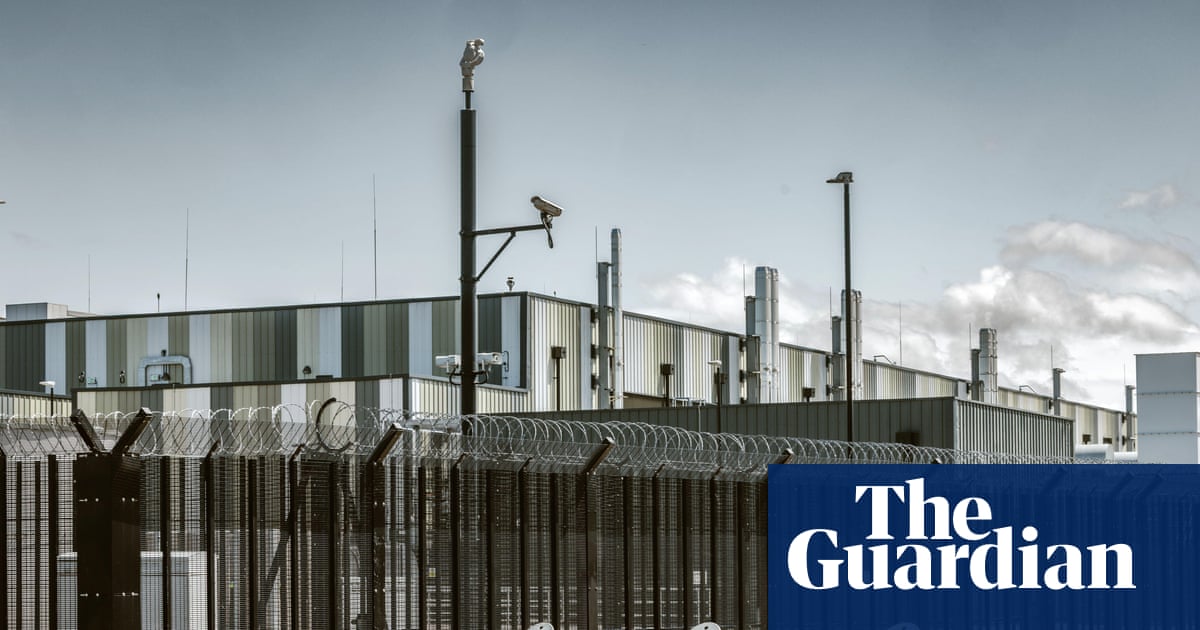
    On the outskirts of Newport, on the site of a former radiator factory, Microsoft is building a datacentre that will help meet what the tech industry hopes will be exponential demand for AI.

    Microsoft is building a datacentre at Imperial Park, near Newport, Wales. Photograph: Dimitris Legakis/Athena Pictures

    Standing on a concrete floor that will soon host thousands of humming servers, the Labour leader of Newport city council, Dimitri Batrouni, says the Imperial Park datacentre is a chance to tap into the economy of the future.

    “With cities like mine, what do you do? Do you worry about the past and try to bring steel back with 10,000 jobs – it’s unlikely. Or do you embrace the future?” he says.

    But despite the market’s current positivity about AI, questions remain about the sustainability of the tech industry’s outlay.

    Four of the biggest players in AI – Amazon, Facebook parent Meta, Google and Microsoft – have increased spending on AI. Over the next two years they are expected to spend more than $750bn on AI-related capital expenditure, meaning non-staff items such as datacentres and the chips and servers inside them.

    It is a spending spree that Manning & Napier, a US investment company, describes as “nothing short of incredible”. The Newport site alone will cost hundreds of millions of dollars. Last week, the California-based Equinix said it was planning to invest £4bn on a centre in Hertfordshire.

    In March, the chair of the Chinese e-commerce group Alibaba, Joe Tsai, warned he was seeing signs of excess in the datacentre market. “I start to see the beginning of some kind of bubble,” he said, pointing to projects raising funds for construction without commitments from potential customers.

    There are 11,000 datacentres globally already, up 500% over the past 20 years. And more are coming. How this will be funded is a source of concern.

    Analysts at Morgan Stanley, the US investment bank, estimate that global spending on datacentres will reach nearly $3tn between now and 2028, with $1.4tn covered by the cashflow of the big US tech companies – also known as “hyperscalers”.

    That means $1.5tn needs to be covered from other sources such as private credit – a growing part of the shadow banking sector that is raising the alarm at the Bank of England and elsewhere. Morgan Stanley believes private credit could plug more than half of the funding gap. Mark Zuckerberg’s Meta has tapped the private credit market for $29bn of financing for a datacentre expansion in Louisiana.

    Gil Luria, the head of technology research at the US investment firm DA Davidson, says the hyperscaler investment is the “healthy” part of the boom – the other part less so, which he describes as “speculative assets without their own customers”.

    The debt they are using, he says, could trigger ramifications beyond the tech industry if it goes sour.

    “The providers of this debt are so eager to deploy capital into AI, that they may not be properly assessing the risks of investing in a new unproven category supported by very quickly depreciating assets,” he says.

    “While we are at the early stages of this influx of debt capital, if it does rise to the level of hundreds of billions of dollars it could end up representing structural risk to the overall global economy.”

    Harris Kupperman, a hedge fund founder, said in a blogpost in August that datacentres will depreciate twice as fast as the revenue they generate.

    The $500bn Stargate site in Abilene, Texas is a collaboration between OpenAI, SoftBank and Oracle. Photograph: Daniel Cole/Reuters

    Underpinning this expenditure are some lofty revenue expectations from Morgan Stanley, with revenues from generative AI – chatbots, AI agents, image generators – expected to grow from $45bn last year to $1tn by 2028. Tech companies are relying on businesses, the public sector and individuals to produce enough demand for AI – and to pay for it – to justify those revenue expectations.

    OpenAI’s ChatGPT, the emblematic product of the AI boom, now has 800 million active weekly users, which is a boon for the optimists. But doubts have been raised over business takeup so far. For instance, investor faith in the AI boom was rattled in August when the Massachusetts Institute of Technology published research showing that 95% of organisations are getting zero return from their investments in generative AI pilots.

    The Uptime Institute, which inspects and rates datacentres, says many projects will not be built – an indicator that some are part of the hype machine and won’t get off the ground.

    “An important point to understand is that a lot of this speculative,” says Andy Lawrence, the executive director of research at Uptime. “Many of the datacentres, often announced with a fanfare, either will never be built, or will be built and populated only partially, or gradually, over a decade.”

    He adds that many of the datacentres announced in this multitrillion-dollar programme will be “either specifically intended to support AI workloads, or will mainly do so”.

    Microsoft points out that its Newport datacentre will not be used solely for AI. As well as being the central nervous systems for AI systems such as ChatGPT and Microsoft’s Copilot, datacentres do all the day-to-day IT work we take for granted – as providers of “cloud” services where companies rent out servers instead of buying their own: handling email traffic, storing company files and hosting Zoom calls.

    “We have a lot of ways to use this infrastructure. It becomes very much a general purpose technology,” says Alistair Speirs, a general manager at Microsoft’s cloud business.

    Elsewhere, though, are massive projects that are all-in on AI. The Stargate venture in the US is a $500bn joint venture between OpenAI, Oracle and SoftBank that aims to build a network of AI datacentres across the US. A UK version of Stargate is also coming to North Tyneside in north-east England. Microsoft is building the word’s most powerful AI datacentre in Fairview, Wisconsin, and is backing an AI-dedicated site in Loughton, Essex, while Elon Musk’s xAI has built the “colossus” project in Memphis, Tennessee.

    Work on an estimated 10GW of new datacentre capacity around the world – representing roughly a third of the UK’s power demand – is expected to start this year, according to the property group JLL. However, this is the aggregate maximum capacity and datacentres typically operate at about 60%.

    A further 7GW will reach completion this year, according to JLL.

    Currently, global datacentre capacity is 59GW, so the pace of expansion is rapid and Goldman Sachs expects it to double by the end of 2030. This carries a further infrastructure cost of its own, according to Goldman, with $720bn of grid spending needed to meet that energy demand.

    At the Newport site, a native of the city, the construction safety specialist Mike O’Connell, has returned as a consultant. After a career that has spanned oil rigs, offshore wind and datacentres around the world, he is back at his birthplace – now a tech hub that hosts datacentres and semiconductor companies.

    “I am looking to stay in the local community,” he says. O’Connell’s teenage grandson is starting work at the Newport site under an electrical apprenticeship. There is a belief, and hope, that datacentres such as this represent a generational employment opportunity for the area.

    Investors and tech companies, having pledged trillions of dollars, are counting on a long-term return, too.


    Continue Reading

  • Renewed drive for autonomous cars as tech giants muscle in

    Renewed drive for autonomous cars as tech giants muscle in

    Stay informed with free updates

    Car giants from General Motors and Stellantis to Volkswagen are racing to develop autonomous vehicles as they seek to compete with Tesla and other new rivals on “the next frontier” of growth.

    After shelving plans to develop robotaxis last year, General Motors recently said it would introduce an “eyes-off, hands-free” semi-autonomous driving system in its vehicles from 2028. Meanwhile, rivals such as Volkswagen and Stellantis are partnering with Uber to scale up its fleet of autonomous vehicles.

    Legacy carmakers have long struggled to keep up with the pace of advances in self-driving technology made by the likes of Waymo and Baidu in the US and China. But to fill the gap, some companies have partnered with ride-hailing group Uber while others have poached talent from Apple and technology rivals as they seek new sources of revenue.

    “Will there be the stomach by management to try to balance expectations from Wall Street with actually making generational disruptive moves and changes to culture and speed?” Tu Le, founder of the Sino Auto Insights consultancy, said of GM’s revived initiative. “This is the million dollar question.”

    None of the systems being developed envision full automation that will be driverless at all locations. But the ultimate aim is for the vehicle to drive itself on its own without human intervention in certain defined areas.

    GM’s work is being led by its new chief product officer and driverless tech pioneer Sterling Anderson, who joined GM in June after co-founding driverless vehicle start-up Aurora. Before that, he led Tesla’s Autopilot efforts.

    “Autonomy will make our roads safer. It will be the cornerstone of GM’s modern portfolio going forward,” Anderson said.

    Anderson plans to debut the company’s new semi-autonomous system in the Cadillac Escalade IQ, an electric sport utility vehicle, that will allow drivers to take their eyes and hands off the road while driving on some highways.

    But analysts say the pivot towards autonomous technology will pose an inherent dilemma for traditional carmakers.

    Margins in the ride-hailing market are notoriously thin, and scaling a robotaxi service will require heavy capital investment at a time when the automotive industry is already struggling with the higher costs of developing electric vehicles and the loss of profits in China.

    “The carmakers need to produce profit and cash whereas the big tech giants need to produce growth. The market is not holding them to the same agenda, which gives the tech giants a much greater advantage to pursue things like robotaxis,” HSBC analyst Mike Tyndall said.

    Individual ownership of vehicles is also a limitation to ride hailing. For the industry’s economics to work, “we’ll have to give up personal ownership”, he added.

    To save costs and accelerate the pace of expansion, rivals such as Volkswagen and Stellantis have chosen to partner with Uber to scale up its fleet of autonomous vehicles.

    Stellantis said last week it would jointly develop robotaxis with Uber, chipmaker Nvidia and Taiwan’s Foxconn with the aim of producing them from 2028. Starting in the US, Uber plans to deploy about 5,000 of Stellantis’ autonomous vehicles with capabilities that can be driven by themselves in limited, pre-mapped areas.

    The group behind Jeep, Peugeot and Fiat brands is also collaborating with Chinese robotaxi company Pony.ai to develop autonomous vehicles in Europe.

    “I’m convinced we can deliver substantial value in the emerging robotaxi market and space,” Stellantis chief executive Antonio Filosa told analysts on Thursday.

    In April, Volkswagen said it plans to commercially launch its ID. Buzz autonomous vehicles on the Uber platform, starting in Los Angeles next year.

    VW’s tie-up came after Argo AI, a self-driving vehicle group jointly backed by the German group and Ford, abruptly shut down in late 2022. Executives acknowledged at the time that establishing fully autonomous technology that is profitable and scalable would cost billions of dollars and take too long.

    Having invested more than $10bn over the past decade, GM’s chief executive Mary Barra also ended efforts to build and manage a fleet of robotaxis after a disastrous accident in 2023 brought a halt to operations at Cruise, its former driverless car division. 

    While Tesla and Waymo, the Alphabet-owned self-driving car company, have pinned their future in expanding their robotaxi service, GM has pivoted towards developing self-driving vehicles for personal use with its Super Cruise “hands-off” driver assistance software.

    “We’re enjoying approximate 70 per cent margins on [the Super Cruise] business,” Barra said at a recent earnings briefing, adding that Super Cruise customers have nearly doubled year-on-year to more than 500,000. 

    “When you look at owning a fleet and all the other aspects that go into running a robotaxi fleet, that’s not our core business today. We are focused on personal autonomy.” 

    Additional reporting by Stephen Morris in San Francisco

    Continue Reading

  • QuickLtd (TSE:4318) Margin Decline Challenges Profit Stability Narrative

    QuickLtd (TSE:4318) Margin Decline Challenges Profit Stability Narrative

    QuickLtd (TSE:4318) reported net profit margins of 9.2%, marking a decline from 12.4% in the previous year and signaling tighter margins for investors to watch. Over the past five years, the company’s earnings have climbed at an average rate of 14.8% per year, though the most recent year saw negative earnings growth. With the stock trading at a Price-To-Earnings ratio of 14.4x, which is below the industry average of 14.8x but higher than peers at 11.3x, and one minor risk related to dividend sustainability offset by the reward of attractive valuation, investors are likely weighing lower current profitability against a solid long-term growth track record.

    See our full analysis for QuickLtd.

    Next, we will take a closer look at how these results measure up against the most widely discussed narratives about QuickLtd. This will highlight where the earnings align and where expectations may need to be updated.

    Curious how numbers become stories that shape markets? Explore Community Narratives

    TSE:4318 Revenue & Expenses Breakdown as at Nov 2025
    • Net profit margin has dropped from 12.4% to 9.2% year over year, showing a notable tightening even as the company maintains high earnings quality.

    • Recent margin compression alongside generally positive valuation signals highlights an interesting contrast: while the filing characterizes profit quality as “high,” the latest figure suggests that sustainable profitability may face short-term pressure.

      • The blend of strong long-term growth, evidenced by a 14.8% average five-year earnings growth rate, and near-term margin contraction raises important questions about the durability of value for investors.

      • Despite the drop, ongoing high earnings quality supports the argument that the margin slide could be more cyclical than structural, but investors will need to watch closely for signs of stabilization.

    • The main risk highlighted in filings is related to dividend sustainability, contrasting with the reward of QuickLtd currently trading below DCF fair value (4777.04 vs the share price of 2353.00).

    • While reward signals focus attention on undervaluation, the persistence of even a “minor” risk around dividends invites caution for income-focused investors.

      • The company’s long-term earnings strength suggests the underlying business could eventually support payouts, yet sharp negative earnings in the recent year keep payout confidence in check.

      • This tension, with one minor risk stacked against a major upside indicator, demands close attention to future cash flows and payout ratios to see which side wins out.

    Continue Reading

  • Kyoei Steel (TSE:5440) Margins Improve, Reinforcing Value Narrative Despite Dividend Sustainability Concerns

    Kyoei Steel (TSE:5440) Margins Improve, Reinforcing Value Narrative Despite Dividend Sustainability Concerns

    Kyoei Steel (TSE:5440) reported net profit margins of 3.5%, inching up from last year’s 3.4%, while EPS growth for the year landed at 1.2%, which is well below its five-year average annual pace of 8.3%. Looking ahead, earnings are forecast to grow 6.0% per year and revenue 2.3% per year, both trailing the broader Japanese market’s expected averages of 7.7% and 4.5%. With a Price-To-Earnings ratio of 9x and share price of ¥2298 notably under the estimated fair value of ¥2617.61, investors see a blend of modest growth, steady profitability, and strong relative valuation in the latest results.

    See our full analysis for Kyoei Steel.

    Next, we will put these figures in context by comparing them to the most widely discussed narratives surrounding Kyoei Steel, highlighting where the numbers support or push back against prevailing views.

    Curious how numbers become stories that shape markets? Explore Community Narratives

    TSE:5440 Earnings & Revenue History as at Nov 2025
    • Net profit margins inched up to 3.5%, just above last year’s 3.4%. However, annual earnings growth was 1.2%, lagging behind its 8.3% five-year average.

    • The prevailing narrative points to Kyoei Steel’s higher margins as a sign of operational quality. At the same time, the sharp slowdown in earnings growth highlights why the story is not all about steady progress.

      • While margins ticked up, the shortfall versus historical earnings pace signals an easing business environment. Many investors cite stable profitability as a reason for optimism on future performance.

      • The current pace leaves some tension between hopes for continued operational improvements and the reality of slowing growth, keeping expectations balanced rather than outright bullish.

    • The company faces a flagged risk regarding the sustainability of its dividend, even as its five-year track record for earnings growth remains solid.

    • The prevailing narrative notes that while investors value Kyoei Steel for its history of dividend payments and reputation as a defensive holding, concerns about maintaining current payout levels are not easily dismissed.

      • Dividend consistency is seen as a key reason to hold the stock. The latest results, with a slip in growth rates, put more focus on future cash flow capacity.

      • Bulls may point to past stability, but the flagged risk signals that management will need to balance distributions with reinvestment, rather than assuming the dividend is on autopilot.

    • With a Price-To-Earnings ratio of 9x, well below the industry average of 12.9x and peer average of 45.3x, and a current share price of ¥2298 trading under its DCF fair value of ¥2617.61, Kyoei Steel stands out on relative valuation.

    • The prevailing narrative is that investors see compelling value at current levels, especially when comparing these valuation multiples and fair value gaps to market norms.

      • A share price below fair value suggests limited downside risk. The discount to sector averages gives value-focused investors a clear reason to monitor the stock.

      • However, with growth below the broader market, the discount may also reflect justified caution unless upcoming quarters reignite earnings momentum.

    Continue Reading

  • Ryoden (TSE:8084) Earnings Growth Slows, Challenging Bullish Momentum Narrative

    Ryoden (TSE:8084) Earnings Growth Slows, Challenging Bullish Momentum Narrative

    Ryoden (TSE:8084) reported annual earnings growth of 3.4%, trailing its five-year average of 9.3%. Net profit margins reached 2.4%, up from last year’s 2%, signaling incremental improvement at the bottom line. Investors may take note of the company’s consistent profitability and improving margins, especially given ongoing questions around dividend sustainability.

    See our full analysis for Ryoden.

    Next, we will put Ryoden’s latest numbers in context by comparing them with the prevailing narratives followed by investors and the Simply Wall St community.

    Curious how numbers become stories that shape markets? Explore Community Narratives

    TSE:8084 Earnings & Revenue History as at Nov 2025
    • Ryoden’s five-year annualized earnings growth is 9.3%, but the latest reporting period showed a slower 3.4% increase. This highlights how momentum has eased compared to its longer-term average.

    • Looking at the current pace alongside the prevailing market view, investors notice that the company remains well-positioned. Past compound growth demonstrates strong fundamentals, but the recent slowdown signals that future upside might depend on Ryoden’s ability to build on structural sector trends or accelerate its expansion.

      • What stands out is that despite the step down in near-term growth, Ryoden’s track record can still support optimism about its capability to benefit from Japan’s automation wave and digital infrastructure buildout.

      • On the other hand, a single less robust year might prompt “wait and see” attitudes until management delivers another uptick. This shows that momentum is more than just a legacy story.

    • With a price-to-earnings ratio of 13.9x, Ryoden’s shares trade below the broader Japanese electronics industry average of 15.6x but above the peer group’s average of 11.6x. This indicates investors price in some quality, but are not placing a full sector premium.

    • Evaluating this in the context of the prevailing market view, investors see that Ryoden’s PE discount to the industry average underscores room for rerating. The premium to peers suggests moderate expectations around efficiency or growth differentiation.

      • Consensus narrative notes that Ryoden’s strategic moves to diversify and upgrade its portfolio could eventually warrant a higher multiple. The current position in the valuation range reflects the market’s desire for more proof of sustained profit growth.

      • What is noteworthy is that the numbers show neither exuberance nor deep skepticism from the market. This reinforces the view that improved quarterly momentum or a sector tailwind could be turning points.

    Continue Reading

  • Meet The Billionaire Family Behind A Food Empire Built On Dessert Topping

    Meet The Billionaire Family Behind A Food Empire Built On Dessert Topping

    Bob Rich’s frozen food business was so successful that he bought the first naming rights to an NFL Stadium in 1973. With the Buffalo Bills’ home set to be demolished after this season, his son, Bob Jr. looks back on the cold realities of running a $5.8 billion family business.


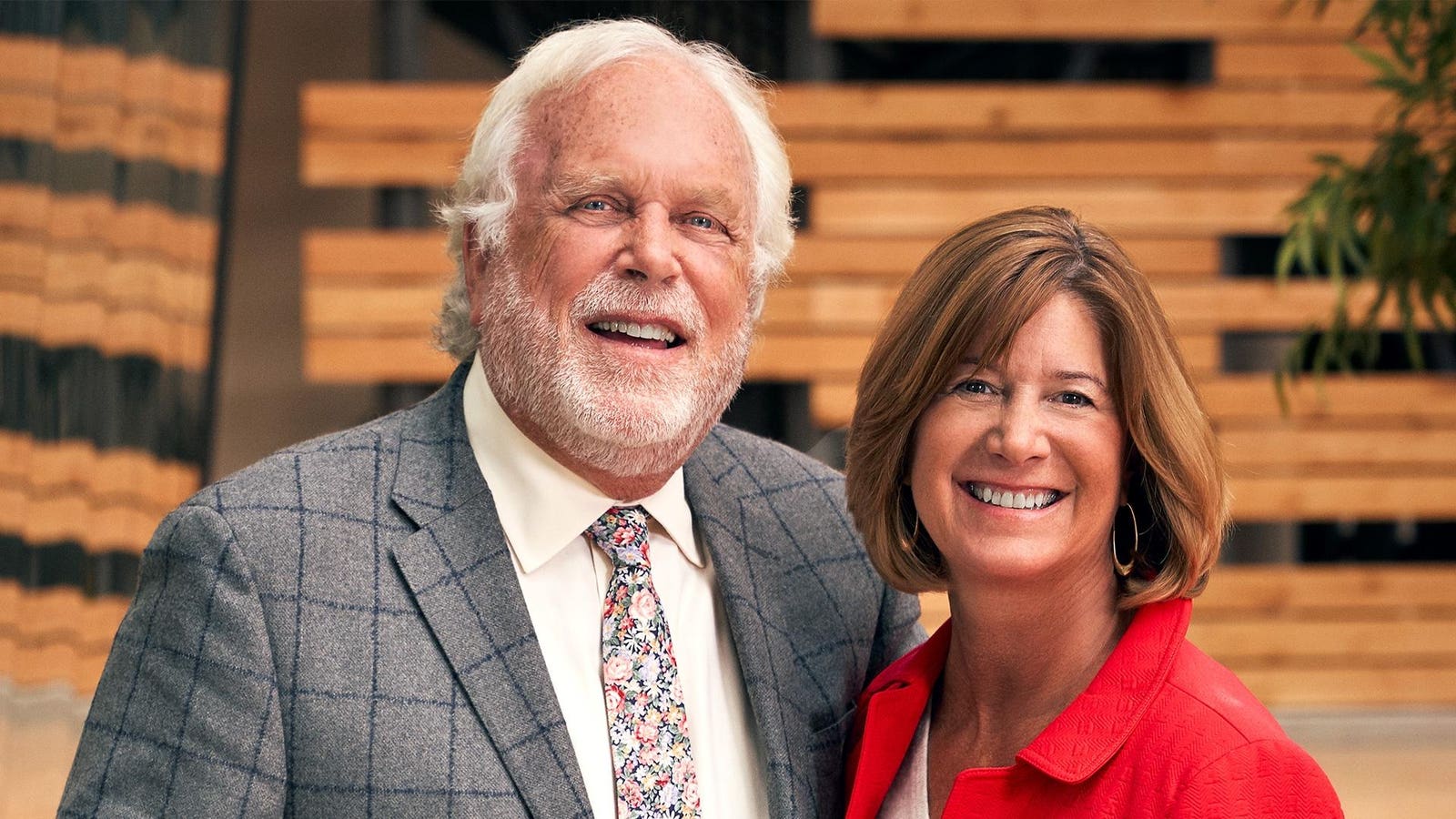
    Whenever someone offers to acquire Rich Products—Buffalo, New York’s $5.8 billion (annual sales) food giant that you’ve probably never heard of—its senior chairman and son of the founder, Bob Rich Jr., has a form letter ready for his assistant to send back.

    The response gets sent often, according to Rich: “We say, Dear blank, thank you for your interest in our company. Rich Products is not for sale. Yours Truly.”

    His assistant often asks if he wants to know who she’s sending the letter back to, but he actually doesn’t. “I don’t really care,” the 84-year-old billionaire says, chuckling. “How bad is that?”

    “Our biggest priority is that we want to remain a privately held company for eternity,” adds his wife, Mindy, 68, who is chairman of Rich’s and its board.

    Rich’s north star is keeping the business under 100% family control, as he says, “to have the freedom to make decisions quickly and move ahead with more speed.” His father, Bob Sr., invented the first non-dairy whipped topping in 1945—three years before the better-known (and dairy-based) Reddi-Wip came to market—and Rich’s signature whipped topping is now sold in more than 100 countries. It remains one of the top products for an expansive food conglomerate—which Forbes values at north of $7 billion—whose range of products include cookies sold at supermarket bakeries, cold foam offered at coffee shops, pizza dough for independent and chain pizzerias, as well as SeaPak frozen seafood and Carvel ice cream cakes. Its longtime customers include Walmart, Kroger, and Dunkin’, Publix, Sodexo and more.

    “Growth for us is not exponential. It’s not a straight line. It goes step by step,” says Rich, whose fortune Forbes estimates at $6.5 billion, based on his stake in the business and other investments.

    The company expects to grow annual revenue to $10 billion by 2030, and the plan to get there includes more “breakthrough” products designed for restaurants and wholesalers that alleviate labor woes as well as reformulating some bestsellers for the MAHA era.

    And there’s another massive change ahead for Rich’s: At the end of this NFL season, the Buffalo Bills’ stadium—which became the first to sell naming rights to a business in 1973 when Bob Sr. spent $1.5 million for a 25-year contract, the only one to make a bid—will be demolished. It bore the Rich family name until 1997, when it was renamed for team founder Ralph Wilson until 2015.

    “Now there are about 500 stadiums around the world that have sold their naming rights. It was a crazy decision,” Rich says, “that was okay.”

    Bob and Mindy, avid Bills fans, say they are excited for the new stadium, just as they are excited about what’s on the horizon for Rich’s as it moves into its next 80 years. “I saw someone walking around last week wearing a shirt that said, ‘We still call it Rich Stadium,’ which I laughed about,” says Bob. “It’ll be a point of pride for everybody, including us.”


    The son of a Buffalo dairyman, Robert E. Rich delivered milk for his father during summers in high school and when he graduated in 1935 he started his own dairy business. It soon became one of the largest in the region. Then, during World War II, he served as a milk administrator while dairy was rationed and got inspired when a chance call from a hospital purchasing agent mentioned how they were using soybean-based milks and creams from Henry Ford’s George Washington Carver Laboratory. After a tour of the facility, Rich was granted rights to their manufacturing system for a symbolic $1 fee. And he set out to develop a dessert topping—less fattening and harder to spoil, and, above all, cheaper to make than whipped cream—to the masses.

    His frozen blue cans of Rich’s non-dairy whipped topping were a hit—he had $29,900 in sales that first year in 1945 (or about $540,000 today)—and as World War II rations came to an end and post-war grocery spending boomed, so did sales. By 1952, sales topped $1 million (or $12 million today) for the first time. And the business prevailed even after attracting 40 different lawsuits from the dairy industry claiming he was counterfeiting cream. Rich didn’t let any of that stop him, and he quickly brought the treat around the world.

    “My father used to joke that his office was the tray of an airplane,” says Bob Jr., who joined the business full-time in 1963 after summers and afterschool hours spent on the family loading docks. Bob Jr. had to be wooed by his father. His interests had been elsewhere, after playing hockey as the backup goalie for Buffalo’s American Hockey League franchise, a failed 1964 Olympics hockey tryout and interviews with the Air Force and the CIA. But Bob Sr. offered his son the chance to build a plant in Canada and oversee a $1 million budget (about $10 million today) as president of the company’s first international division.

    The father and son had a competitive relationship at first. But they soon realized they were teammates after the first 5,000 pounds of topping from Bob Jr.’s new Canadian factory wouldn’t whip, and Bob Jr. had to swallow his pride and ask his dad for help.

    Rich’s first major acquisition came in 1976, the year that company annual sales topped $100 million for the first time. The business purchased SeaPak frozen seafood for $11.5 million—and it cemented the business’s strategy of useing acquisitions to grow. Bob Jr. became president of Rich’s two years later, and has added 60 brands through acquisitions since. He also bought Buffalo’s struggling Triple A baseball team to make sure the franchise stayed in the city and has owned the Buffalo Bisons, the minor league franchise of the Toronto Blue Jays, since 1983.

    Later that year, Bob Jr. met Mindy, 16 years younger, at a Buffalo Bisons baseball game. It turned out that she also grew up in a family-owned food business—one based in Cincinnati— that sold donuts and other products like extruded crunchy onion rings.

    The two wed—it was Bob Jr.’s third marriage—and Mindy started working at Rich’s “the day we got back from our honeymoon” in 1985—in the company’s internal entertainment department. (And it wasn’t until years later that she realized that, after her family sold its business amid problems, some of the brands changed hands a few times, and the onion ring brand even ended up being owned by Rich’s.) “Having grown up in the food industry, it didn’t make sense when we got married for me to work anywhere else,” says Mindy. By 1996, annual sales topped $1 billion.

    Bob Jr. took over as chairman in 2006, after his father passed away at 92. Bob Sr. had spent 61 years at the helm of the company, and until his death he always had a dog-eared piece of paper in his pocket with the company’s annual sales. Rich’s had made a profit every year it was in business at the time (and that’s still true today). Forbes estimated annual sales in the final year of his life at $2.4 billion.

    Bob Jr. inherited a fortune worth at least $1.5 billion. His younger brother, David, who became a priest and had moved to Jackson, Mississippi to work for an Anglican Church, inherited the rest of the family stake, worth hundreds of millions. Their sister, Joanna, whose husband sued his father-in-law twice and lost both times, was cut out of the will.

    As Rich’s became a $3 billion (annual sales) company in 2013, the business went on a new acquisition spree, adding patented smoothie machine brand F’Real Foods as well as three wholesale bakery businesses.

    With that kind of growth, the Riches had to make a concerted effort to stop talking about work at home, and even vowed that they would never speak of work while spending time on their fishing boat. “I’d say we were successful 80% of the time,” Mindy recalls. Rich has written several novels about fishing, and 2015’s Looking Through Water about an estranged father and son at a fly fishing tournament was turned into a movie with Michael Douglas that was released in September.

    In 2021, when annual sales were $4 billion, Rich decided to replace himself as chairman of the board, which he had run for the past 15 years, and determined Mindy was the perfect person to replace him. “It’s given me the opportunity to step into a new role as a senior chairman and brought new joy watching Mindy bring her personality to the forefront,” Rich says.

    “Our approach to being transparent and authentic during the challenging times has helped us build trust,” she adds. “You can’t always paint a rosy picture when the picture is maybe not as rosy as you’d like it to be.”

    One thing the Riches agree on is Bob Sr.’s guiding principle—remaining private: “We realized that publicly held companies couldn’t have the stability that we could in a well-run privately held company that has continuity of leadership and direction.”

    That unwavering commitment to being family-owned doesn’t mean that the family needs to have Rich’s be family-run in the future. For years, they had a rule in place that any of his four children who want to work at Rich’s must first get a job and a promotion at another company.

    The heir apparent would be Ted Rich, 56, Bob’s second-eldest son who started at Rich’s in sales in 1995 at 26 years old, and is now the chief growth officer. But Ted, who is also on Rich’s board and leads the family council, demurs when asked if he’s next in line: “Every day I wake up and just think about the importance of stewardship,” he says. “I’m just happy to be a part of it and offer my leadership where I can, candidly. I will continue to support and offer my leadership in any way possible.”

    “I you’re not moving forward, it’s not going to work,” adds Ted. “You can’t stand still in business.”

    Rich’s CEO Richard Ferranti, 65, describes Bob and Mindy’s leadership style as “simple but powerful.” Referencing one of their core beliefs that “you can’t do good business with bad people,” he shares a moment that drove this ideal home to him a few years ago. Ferranti had been pursuing a large acquisition that would have reshaped Rich’s portfolio and significantly expanded its customer base. “On paper, it was a game-changer,” he says.

    But late in the due-diligence process, they uncovered two serious issues. As Ferranti recalls, “While this company’s explanations and mitigation plans met legal and regulatory requirements, what stood out was their lack of genuine care and concern for the impact on customers and reputation. That gave us a window into the management team’s values, and since we planned to retain most of them, it was a deal-breaker. Walking away from something that big was difficult and easy at the same time.”

    Another important aspect of what Rich’s doesn’t compromise on is its location. Rich says the business is often asked to move its headquarters to “wonderful warm climate cities” often with tax incentives or other funding offered. But he doesn’t think twice.

    “We are a Buffalo company,” he says. “We’re going to fight for our community. And, as everybody says—last one to leave, turn out the lights. If that happens, it’ll probably be us.”

    More from Forbes

    ForbesMeet The Mastermind Behind The $1.9 Billion Poppi DealForbesInside The Billion-Dollar Red Sauce War: Carbone Vs. Rao’sForbesMeet The Florida Sugar Barons Worth $4 Billion And Getting Sweet Deals From Donald TrumpForbesFor Hooters’ Original Founders, Saving The Chain Is A Higher Calling: “America Needs Us.”

    Continue Reading

  • Inside the race to train AI robots how to act human in the real world

    Inside the race to train AI robots how to act human in the real world

    Now that artificial intelligence has mastered almost everything we do online, it needs help learning how we physically move around in the real world.

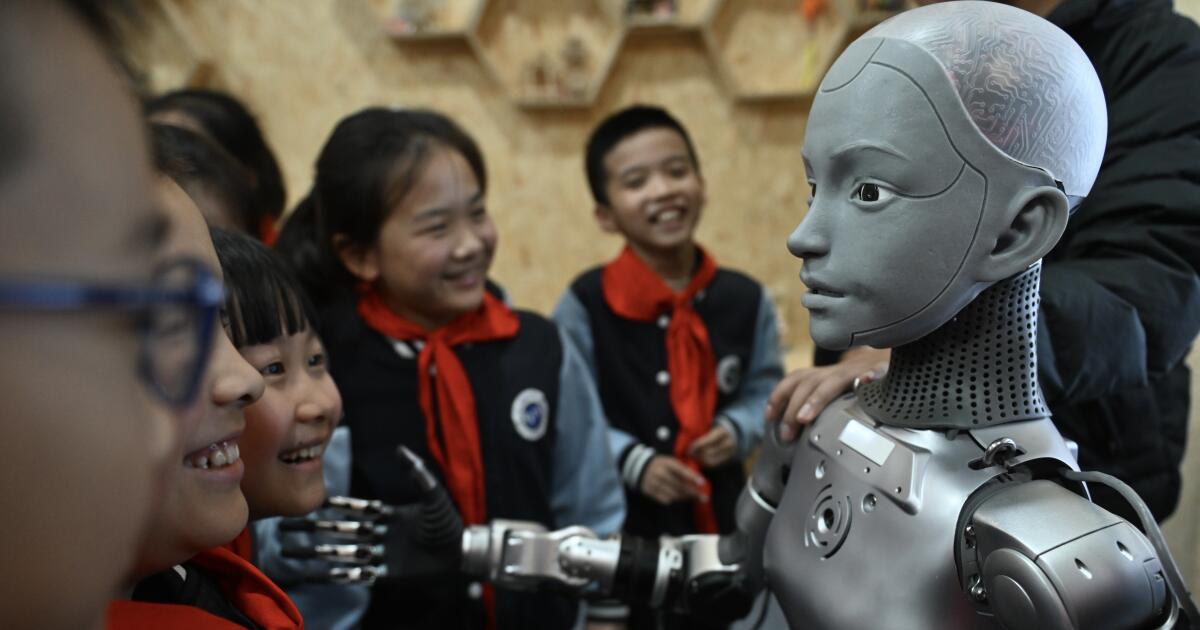
    A growing global army of trainers is helping it escape our computers and enter our living rooms, offices and factories by teaching it how we move.

    In an industrial town in southern India, Naveen Kumar, 28, stands at his desk and starts his job for the day: folding hand towels hundreds of times, as precisely as possible.

    He doesn’t work at a hotel; he works for a startup that creates physical data used to train AI.

    A robot practices for the 100-meter race before the opening ceremony of the World Humanoid Robot Games in Beijing in August.

    (Ng Han Guan / Associated Press)

    He mounts a GoPro camera to his forehead and follows a regimented list of hand movements to capture exact point-of-view footage of how a human folds.

    That day, he had to pick up each towel from a basket on the right side of his desk, using only his right hand, shake the towel straight using both hands, then fold it neatly three times. Then he had to put each folded towel in the left corner of the desk.

    If it takes more than a minute or he misses any steps, he has to start over.

    His firm, a data labeling company called Objectways, sent 200 towel-folding videos to its client in the United States. The company has more than 2,000 employees; about half of them label sensor data from autonomous cars and robotics, and the rest work on generative AI.

    Most of them are engineers, and few are well-practiced in folding towels, so they take turns doing the physical labor.

    “Sometimes we have to delete nearly 150 or 200 videos because of silly errors in how we’re folding or placing items,” said Kumar, an engineering graduate who has worked at Objectways for six years.

    The carefully choreographed movements are to capture all the nuances of what humans do — arm reaching, fingers gripping, fabric sliding — to fold clothes.

    The captured videos are then annotated by Kumar and his team. They draw boxes around the different parts of the video, tag the towels, and label whether the arm moved left or right, and classify each gesture.

    Kumar and his colleagues in the town of Karur, which is about 300 miles south of Bengaluru, are an unlikely batch of tutors for the next generation of AI-powered robots.

    “Companies are building foundation models fit for the physical world,” said Ulrik Stig Hansen, co-founder of Encord, a data management platform in San Francisco that contracts with Objectways to collect human demonstration data. “There’s this huge resurgence in robotics.”

    Encord works with robotics companies such as Jeff Bezos-backed Physical Intelligence and Dyna Robotics.

    Tesla, Boston Dynamics and Nvidia are among the leaders in the U.S. in the race to develop the next generation of robots. Tesla already uses its Optimus robots — which seem to be often remotely controlled — for different company events. Google has its own AI models for robotics. OpenAI is beefing up its robotics ambitions.

    Nvidia projects the humanoid robot market could reach $38 billion over the next decade.

    There are also many lesser-known companies trying to provide the hardware, software and data to make a mass-produced, multitasking humanoid robot a reality.

    Robots at Nvidia's booth an an expo in Beijing

    Robots are displayed at Nvidia’s booth during the China International Supply Chain Expo in Beijing in July.

    (Mahesh Kumar A. / Associated Press)

    Large language models that power chatbots such as ChatGPT have mastered using language, images, music, coding and other skills by hoovering up everything online. They use the entire internet to figure out how things are connected and mimic how we do things, such as answering questions and creating photo-realistic videos.

    Data on how the physical world works — how much force is required to fold a napkin, for example — is harder to get and translate into something AI can use.

    As robotics improves and combines with AI that knows how to move in the physical world, it could bring more robots into the workplace and the home. While many fear this could lead to job losses and unemployment, optimists think advanced robots would free up humans from tedious work, lower labor costs and eventually give people more time to relax or focus on more interesting and important work.

    Many companies have entered the fray as shovel sellers in the AI gold rush, seeing an opportunity to gather data for what is being called physical AI.

    One group of companies is teaching AI how to act in the real world by having humans guide robots remotely.

    Ali Ansari, founder of San Francisco-based Micro1, said emerging robotics data collection increasingly focuses on teleoperations. Humans with controllers make the robot do something like picking up a cup or making tea. The AI is fed videos of successful and failed attempts at doing something and learns to do it.

    The remote-control training can happen in the same room as the robots or with the controller in a different country. Encord’s Hansen said that there are warehouses planned in Eastern Europe where large teams of operators will sit with joysticks, guiding robots across the world.

    There are more of these, what some have dubbed “arm farms,” popping up as demand increases, said Mohammad Musa, founder of Deepen AI, a data annotation firm headquartered in California.

    “Today, a mix of real and synthetic data is being used, gathered from human demonstrations, teleoperation sessions and staged environments,” he said. “Much of this work still occurs outside the West, but automation and simulation are reducing that dependency over time.”

    Some have criticized teleoperated humanoids for being more sizzle than substance. They can be impressive when others are controlling them, but still far from fully autonomous.

    Ansari’s Micro1 also does something called human data capture. It pays people to wear smart glasses that capture everyday actions. It is doing this in Brazil, Argentina, India, and the United States.

    San José-based Figure AI, partnered with real estate giant Brookfield to capture footage from inside 100,000 homes. It will collect data about human movement to teach humanoid robots how to move in human spaces. The company said it will spend much of the $1 billion it raised to collect first-person human data.

    Meta-backed Scale AI, has collected 100,000 hours of similar training footage for robotics through its prototype laboratory set up in San Francisco.

    Still, training bots isn’t always easy.

    Twenty-year-old Dev Mandal created a company in Bengaluru, hoping to cash in on the need for physical data to train AI. He offered India’s inexpensive labor to capture movements. After advertising his services, he got requests to help train a robotic arm to cook food as well as a robot to plug and unplug cables in data centers.

    But he had to give up the business, as potential clients needed the physical movement data collected in a very specific manner, making it tougher for him to make money, even with India’s inexpensive labor. Clients wanted an exact robot arm, for example, using a certain kind of table with purple lights to be used.

    “Everything, down to the color of the table, had to be specified by them,” he said. “And they said that this has to be the exact color.”

    Still, there’s lots of work for the towel folders of Karur.

    Their boss, Objectways founder Ravi Shankar, says that in recent months, his firm has captured and annotated footage of robotic arms folding cardboard boxes and T-shirts and picking out certain colored objects on a table.

    It recently started annotating videos from more advanced humanoid robots, helping train them to sort and fold a mix of towels and clothes, folding them and placing them in different corners of the table. His team had to annotate 15,000 videos of the robots doing the jobs.

    “Sometimes the robot’s arms throw the clothes and won’t fold properly. Sometimes it scatters the stack,” but the robots are learning quickly said Kavin, 27, an Objectways employee who goes by one name. “In five or 10 years, they’ll be able to do all the jobs and there will be none left for us.”

    Continue Reading

  • Airline-style a la carte pricing is landing at hotels

    Airline-style a la carte pricing is landing at hotels

    Travelers booking hotel reservations online may soon notice that the process increasingly mirrors what it’s like to buy airline tickets.

    Want early check-in or late check-out? More space, a higher floor or a garden view? Pool access or a “hydration station” (aka bottled water) in your room?

    Check “yes” before you book and the cost will be added to your basic room rate.

    How about milk and cookies for the kids or a gourmet snack box for your dog? Those bonus amenities can be waiting for you in your room, for an added, prepaid fee.

    Artificial intelligence and other innovative technologies are turning hotel operators into travel retailers, selling much more than just rooms.

    Individual properties can now creatively unbundle and repackage their room inventories, allowing guests to personalize their stays and increasing revenue.

    But it can be tricky for a hotel to find the sweet spot between giving guests more control over the details of their stays and leaving them feeling like a hotel is charging for perks that guests expect for free.

    Boutique perks

    At the 14-room Lakehouse Inn in Lee, Massachusetts, a new AI-powered booking platform helps match guests with specific rooms and maximizes returns on each booking.

    “Each of our rooms is unique, and previously guests could only book a room type, i.e., king or queen, and then call us if they wanted a specific room,” said co-owner Kurt Inderbitzin.

    The Lakehouse Inn’s new booking platform asks prospective guests their preferred room size, bedding, location and view. Then it provides detailed photos and descriptions of a few specific rooms that meet the requests.

    The question, then, becomes whether a guest is willing to pay more for a room that’s a little bit more to their liking.

    Only 14% of U.S. hotel guests were willing to pay a premium for a room with a better view, and only 11% for a room on a higher floor, according to surveys conducted earlier this year by Atmosphere Research Group, a travel industry market research firm.

    “I’m a budget traveler and never spend extra” on perks, said Debbie Twombly, 74, a substitute teacher in Astoria, Oregon.

    While some guests may feel nickel-and-dimed if they are asked to pony up for once-standard amenities like bottled water or pool access, others will pay for amenities they view as contributing to the enjoyment of their stay.

    Los Angeles-based leadership brand strategist Anne Taylor Hartzell, 50, is fine with paying extra for a better view. “I’ve also paid for a bottle of bubbles to be chilled and waiting in my room,” she said.

    At the 79-room Inn at the Market, a boutique hotel tucked in Seattle’s historic Pike Place Market, hotel guests can prepay to have a bouquet of market flowers or a box of fresh macaron cookies from a bakery around the corner waiting in their rooms.

    And even though only around 5%-10% of guests opt for one of these a la carte perks, the additional income is “a positive outcome” that helps the property stand out from the city’s other downtown properties, said Jay Baty, the inn’s marketing and sales director.

    Columbia Hospitality, which manages about 50 unique properties across the country, has also added optional upgrades into its booking path.

    Its 73-room Wren hotel in Missoula, Montana, offers flower bouquets and an in-room pour-over coffee station as pre-bookable perks.

    In Walla Walla, Washington, its hip, 80-room Finch offers a s’mores kit and half-pound boxes of chocolates.

    AI-powered amenities

    It’s not just boutique inns that are taking advantage of new ways to create custom stays.

    In 2024, more than 5,000 Wyndham hotels adopted new technology that allows properties to text guests 24 hours before check-in with locally tuned add-on offers.

    These include early check-in at a Howard Johnson hotel near Disneyland, and a basket of sunscreen and beach toys at a Days Inn in Jekyll Island, Georgia.

    “The most successful hotels are those offering add-ons that truly enhance the experience at a price that makes sense for both sides,” said Scott Strickland, Wyndham’s chief commercial officer.

    Other large chains are also using new technology to expand optional attributes, amenities and add-on services offered during booking.

    Among them are IHG Hotels & Resorts, Marriott International and Hilton Hotels, according to a closely watched global business travel forecast for next year.

    A slippery slope

    At a time when U.S. hotels are facing big challenges from owner rentals like Airbnb and VRBO, it can be tempting for properties to lean on new technology to offer ever more add-ons.

    But this only works if hotels are prepared to deliver on all the products and experiences that technology permits them to offer to guests upfront.

    “Letting guests reserve a fruit and cheese plate or rose petals on the bed upon arrival is great,” said Henry Harteveldt, president of Atmosphere Research Group.

    “But it means a hotel has to make sure the cheese doesn’t look like it’s from the castaway bin at Safeway and that there are always fresh rose petals on hand and a staff member on duty who can artfully arrange them.”

    Harteveldt said this means hotel owners need to ask themselves a new question: “Just because we can do this, should we?”

    Continue Reading

  • Why Pfizer Can Still Prevail in the Obesity Fight With Novo Nordisk – The Wall Street Journal

    1. Why Pfizer Can Still Prevail in the Obesity Fight With Novo Nordisk  The Wall Street Journal
    2. Pfizer Addresses Proposal for Metsera  Business Wire
    3. Novo Nordisk submits proposal to acquire Metsera, Inc.  GlobeNewswire
    4. MIKE DAVIS: Foreign weight-loss drugmaker seeks fat profits by gobbling up American upstart  Fox Business
    5. Key facts: Pfizer gains antitrust approval for Metsera; faces lawsuits  TradingView

    Continue Reading

  • Five-Year Losses Worsen, but Turnaround and Value Narrative Holds

    Five-Year Losses Worsen, but Turnaround and Value Narrative Holds

    Surteco Group (XTRA:SUR) remains unprofitable, with its losses deepening by 49.3% annually over the past five years. Looking forward, earnings are forecast to grow 57.45% per year and the company is expected to reach profitability within the next three years. Revenue is projected to grow at a slower 3.5% annually compared to the German market’s 6%. For investors, the biggest rewards center on the anticipated turnaround in profitability and the company’s attractive valuation metrics. However, risks around its financial health and dividend sustainability remain front of mind.

    See our full analysis for Surteco Group.

    Now that we have the headline numbers, let’s see how they measure up against the narratives circulating in the market. Some perspectives may be confirmed, while others could get a reality check.

    Curious how numbers become stories that shape markets? Explore Community Narratives

    XTRA:SUR Revenue & Expenses Breakdown as at Nov 2025
    • Surteco’s DCF fair value is €18.61, about 50% above the current share price of €12.40, highlighting the company’s substantial valuation discount by this method.

    • Rather than hinting at near-term catalysts, the prevailing market view singles out attractive valuation and the probability of a turnaround in profitability as the core investment thesis.

      • This unusually wide gap suggests a market “sleeper” dynamic, where investors may be slow to price in anticipated profit growth of 57.45% per year.

      • However, the lack of speculative attention keeps the stock off the radar for momentum traders and shifts focus to disciplined, value-oriented holders instead.

    • The Price-to-Sales Ratio of 0.2x is well below industry averages, supporting continued appeal as a deep value play.

      • With sector trends rewarding margin resilience and operational steadiness, Surteco’s valuation mismatch could correct quickly if sentiment shifts or profitability arrives sooner than expected.

      • At the same time, investors wary of “story stocks” may see this pricing as a rare cushion against broad market volatility.

    • Annual losses have expanded at a steep 49.3% rate over five years, yet the company is projected to shift to profitability within three years with earnings growth of 57.45% per year.

    • Even without significant news flow to spark excitement, the prevailing market view sees Surteco as a quiet “steady hand” pick, where sector stability and a credible roadmap to profits balance out recent financial pain.

      • This narrative supports the view that “boring is good” in defensive sectors, especially if profit inflection arrives on schedule.

      • Nonetheless, bears who focus solely on past losses may be overlooking the scale of projected improvement now priced in by fundamental analysts.

    Continue Reading