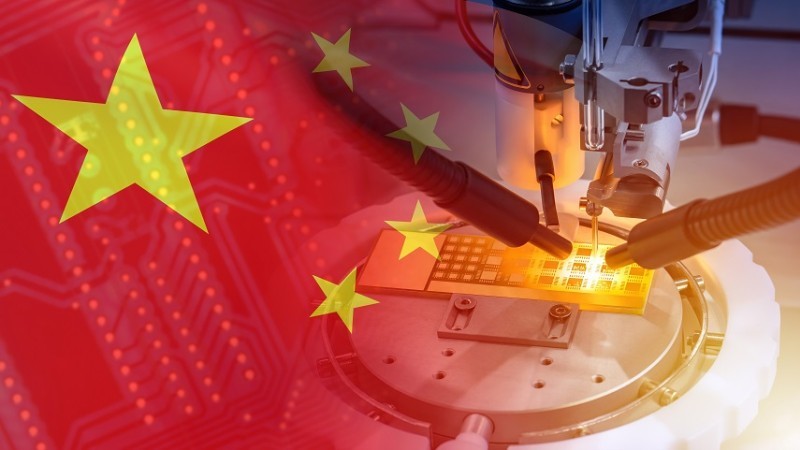
China’s decision to impose export controls on rare earths was a “mistake” and drew attention to Beijing’s ability to use them as a coercive tool, US Treasury Secretary Scott Bessent said in an interview published Saturday.
Westlake Chemical Partners (WLKP) reported a net profit margin of 4.8%, matching last year’s performance. Earnings have declined by 6.7% per year over the past five years and most recently slipped into negative growth. Revenue is forecast to grow at 7.7% per year, lagging behind the broader US market’s 10.3% pace. Shares currently trade at $18.86, notably below the fair value estimate of $49.88. While reported earnings are viewed as high quality, concerns about dividend sustainability, financial strength, and underwhelming growth expectations are shaping how investors interpret these results.
See our full analysis for Westlake Chemical Partners.
The next section puts these results in context by comparing the numbers against the widely followed narratives. This is where consensus may hold up, and where opinions might get tested.
Curious how numbers become stories that shape markets? Explore Community Narratives
NYSE:WLKP Earnings & Revenue History as at Nov 2025
Westlake Chemical Partners maintained a net profit margin of 4.8%, unchanged from last year, showing resilience despite challenging sector conditions.
Momentum comes from stable cash flows and secure distribution agreements, which attract investors looking for reliable income even as broader manufacturing and chemical demand fluctuates.
Consistent margins support the investment case for predictable distributions, supporting the view that the partnership’s structure shields it from some cyclical shocks.
Investors favor its reputation as a “safe haven” for yield within a volatile sector, prioritizing reliability over headline growth.
Earnings have declined by 6.7% per year over the last five years, with the most recent period seeing negative earnings growth, highlighting an area of continued weakness.
While long-term profit deterioration fuels caution, proponents point out that high-quality earnings and durable parent company relationships can mitigate downside risk.
The extended earnings slump is offset by above-average reliability in reported earnings quality, which bulls say is unusual during sector downturns.
Even in the face of falling earnings, guaranteed partnership income streams limit short-term cash flow shocks that typically worry income-seeking investors.
Shares at $18.86 remain well below the DCF fair value estimate of $49.88, and the price-to-earnings ratio is lower than both the chemicals industry average and peer group, underscoring a notable discount.
The considerable gap between price and fundamental value draws attention from investors searching for value, especially with sector volatility keeping more richly valued peers out of reach.
This valuation disconnect suggests a margin of safety for buyers, even as weaker financial positioning and tepid revenue forecasts discourage some.
A discounted multiple to both industry and peers strengthens the value thesis, provided income stability persists.
Don’t just look at this quarter; the real story is in the long-term trend. We’ve done an in-depth analysis on Westlake Chemical Partners’s growth and its valuation to see if today’s price is a bargain. Add the company to your watchlist or portfolio now so you don’t miss the next big move.
Westlake Chemical Partners continues to struggle with declining earnings growth, soft long-term performance, and questions around the sustainability of its dividends.
If a more reliable income stream is what you want, check out these 2008 dividend stocks with yields > 3% that have strong yields and a track record of sustainable payouts.
This article by Simply Wall St is general in nature. We provide commentary based on historical data and analyst forecasts only using an unbiased methodology and our articles are not intended to be financial advice. It does not constitute a recommendation to buy or sell any stock, and does not take account of your objectives, or your financial situation. We aim to bring you long-term focused analysis driven by fundamental data. Note that our analysis may not factor in the latest price-sensitive company announcements or qualitative material. Simply Wall St has no position in any stocks mentioned.
Companies discussed in this article include WLKP.
Have feedback on this article? Concerned about the content? Get in touch with us directly. Alternatively, email editorial-team@simplywallst.com
Quaker Chemical (KWR) remains unprofitable, with losses having increased at a rate of 1.1% per year over the last five years. While revenue is forecast to grow at 4% annually, this pace trails the broader US market’s expected 10.3% growth. For investors, slow revenue forecasts and persistent losses keep attention on the gap between the current trading price of $138.89 and the estimated fair value of $255.48. Sentiment is likely to remain cautious until the path to profitability becomes more visible.
See our full analysis for Quaker Chemical.
Next, we will see how these headline figures stack up against the market’s prevailing narratives for Quaker Chemical, highlighting where the numbers reinforce sentiment and where they raise new questions.
See what the community is saying about Quaker Chemical
NYSE:KWR Earnings & Revenue History as at Nov 2025
Analysts see profit margins climbing from -0.4% now to a sizable 25.9% by 2028, a dramatic swing that is unusual for the sector and signals high earnings leverage if improvements materialize.
According to the analysts’ consensus view, much of this turnaround banks on major shifts in product mix and cost control:
They highlight that double-digit growth in advanced, sustainable chemistries, combined with bold cost-cutting aimed at $40 million in annualized savings, is projected to elevate recurring margins across fast-growing verticals like automation and energy storage.
Yet, the consensus narrative also notes ongoing exposure to margin pressure from cost inflation and end-market risk, which have led to goodwill impairments and regional profit volatility, especially outside Asia.
See why analysts think Quaker Chemical’s margin shift could upend expectations. Read the full Consensus Narrative. 📊 Read the full Quaker Chemical Consensus Narrative.
Quaker’s net leverage stands at 2.6x trailing EBITDA, reflecting the strain of recent acquisitions, interest expense, and direct restructuring charges on the company’s capital structure.
Analysts’ consensus view contends that elevated financial risk and restricted flexibility may curb strategic moves:
Significant new investments, such as plants in China and Thailand, could boost longer-term earnings but also limit room for buybacks, further acquisitions, or balance sheet repairs until profits recover.
Bears point to increased interest costs and restructuring outlays, warning these may hold back net income and free cash flow, especially if targeted cost savings do not materialize as planned.
With shares trading at $138.89 while DCF fair value is estimated at $255.48 and the analyst price target is 157.60, Quaker Chemical stands at a notable discount to both intrinsic and consensus valuation models.
Analysts’ consensus view points out that this apparent bargain reflects real tension:
On one hand, the discount may entice if future earnings growth and margin expansion deliver as forecasted, as these would justify a higher price-to-earnings multiple down the line.
However, critics stress that a premium price-to-sales ratio and lag behind industry growth suggest the company’s discounted trading level is warranted until there is visible progress towards profitability and stronger financial footing.
To see how these results tie into long-term growth, risks, and valuation, check out the full range of community narratives for Quaker Chemical on Simply Wall St. Add the company to your watchlist or portfolio so you’ll be alerted when the story evolves.
Noticed something different in the figures above? Share your perspective and craft a unique narrative in just a few minutes. Do it your way.
A great starting point for your Quaker Chemical research is our analysis highlighting 1 key reward and 2 important warning signs that could impact your investment decision.
Quaker Chemical’s heavy debt load, restructuring costs, and lagging profit margins create real uncertainty about its financial strength and flexibility in the future.
If you want companies in stronger shape, check out solid balance sheet and fundamentals stocks screener (1984 results) where you’ll find businesses with healthier balance sheets and far less financial stress than what Quaker faces today.
This article by Simply Wall St is general in nature. We provide commentary based on historical data and analyst forecasts only using an unbiased methodology and our articles are not intended to be financial advice. It does not constitute a recommendation to buy or sell any stock, and does not take account of your objectives, or your financial situation. We aim to bring you long-term focused analysis driven by fundamental data. Note that our analysis may not factor in the latest price-sensitive company announcements or qualitative material. Simply Wall St has no position in any stocks mentioned.
Companies discussed in this article include KWR.
Have feedback on this article? Concerned about the content? Get in touch with us directly. Alternatively, email editorial-team@simplywallst.com
Akastor (OB:AKAST) remains in a loss-making position, with no signs of a positive net profit margin or quality earnings over recent periods. While the company has managed to reduce losses at a rate of 57.7% per year over the last five years, revenue is projected to decline by 1.9% annually for the next three years, and profit growth is not expected to accelerate beyond the wider Norwegian market. The combination of ongoing unprofitability, anticipated revenue contraction, and a price-to-sales ratio of 8.8x, which is much higher than the industry and peer averages, puts pressure on the valuation. The current share price of NOK 11.12 stands well above the estimated fair value of NOK 1.3.
See our full analysis for Akastor.
Next, we will see how these headline numbers compare with the prevailing market narratives, and whether recent results reinforce or challenge the story investors are following.
See what the community is saying about Akastor
OB:AKAST Earnings & Revenue History as at Nov 2025
Forecasts point to a sharp average annual revenue decrease of 36.9% over the next three years, setting Akastor apart even in a tough industry environment.
According to the analysts’ consensus view, while strategic contracts and operational improvements—such as AKOFS Offshore’s new agreements—are cited as potential stabilizing forces, the aggressive revenue guidance signals analysts remain cautious about near-term recovery.
Bulls highlight recent offshore contracts and asset sales as long-range growth drivers, yet consensus anchors on imminent top-line pressure.
Dividends from asset sales and organic growth at HMH are flagged as positives, but only if macroeconomic headwinds and supply chain disruptions do not further undermine revenue stability.
See how the latest numbers stack up to the consensus view and weigh the full story in our deep-dive 📊 Read the full Akastor Consensus Narrative..
Even if Akastor’s profit margin matches the GB Energy Services industry average of 12.2% in three years, earnings are projected to settle at NOK 28.2 million, which is dramatically lower than today’s NOK 1.6 billion.
Analysts’ consensus narrative emphasizes that achieving durable profitability is a steep climb, not least because global trade friction and supply chain issues threaten net margins and any material earnings improvement.
Persistent loss-making status overshadows operational efficiencies. Forecasts do not expect Akastor to become profitable within the next three years.
Scenarios modeled show only a convergence to sector margins, rather than a structural leap, which limits the scope for upside surprises unless operational catalysts over-deliver.
Akastor’s price-to-sales ratio stands at 8.8x, which is well above both the Norwegian Energy Services average of 0.8x and peers at 0.9x. This raises questions about whether expectations are too optimistic relative to declining fundamentals.
The consensus view underlines that at the current share price of NOK 11.12, investors are paying a significant premium over DCF fair value at NOK 1.30. Analysts see a price target of 19.0 as achievable only with a PE ratio of 255.4x on future earnings.
Market participants see little margin of safety. The wide spread between DCF value and both market and analyst targets reflects uncertainty over whether performance can justify elevated multiples.
While sector momentum could help, Akastor’s own revenue and margin trajectory leave little room for upside without tangible progress on contracts or divestments.
To see how these results tie into long-term growth, risks, and valuation, check out the full range of community narratives for Akastor on Simply Wall St. Add the company to your watchlist or portfolio so you’ll be alerted when the story evolves.
Interpret the figures your own way. Use your insights to build a fresh narrative in just a few minutes with Do it your way.
Akastor faces persistent losses, heavy revenue declines, and a price that remains well above fair value. This situation casts doubt on any near-term recovery or upside potential.
If high valuations and unpredictable outlooks make you skittish, check out these 832 undervalued stocks based on cash flows to discover stocks trading at more attractive prices with stronger downside protection.
This article by Simply Wall St is general in nature. We provide commentary based on historical data and analyst forecasts only using an unbiased methodology and our articles are not intended to be financial advice. It does not constitute a recommendation to buy or sell any stock, and does not take account of your objectives, or your financial situation. We aim to bring you long-term focused analysis driven by fundamental data. Note that our analysis may not factor in the latest price-sensitive company announcements or qualitative material. Simply Wall St has no position in any stocks mentioned.
Companies discussed in this article include AKAST.OL.
Have feedback on this article? Concerned about the content? Get in touch with us directly. Alternatively, email editorial-team@simplywallst.com
Eli Lilly (LLY) delivered standout results, with earnings climbing at a 20% annual pace over the past five years and surging 120% in the last year alone. Net profit margins rose to 31% versus 20.5% a year ago. Looking ahead, earnings are forecast to grow at 19.3% per year, outpacing the broader US market’s 15.9% estimate. Despite a lofty Price-to-Earnings ratio of 42 times, which sits well above industry norms, the current share price of $862.86 still trails a discounted cash flow fair value of $1,226.48. This highlights the tension between rapid growth and premium valuation as investors digest the report.
See our full analysis for Eli Lilly.
The next section puts these headline numbers in context by measuring them against widely held market narratives. Some assumptions will be confirmed, while others may face tough questions.
See what the community is saying about Eli Lilly
NYSE:LLY Earnings & Revenue History as at Nov 2025
Robust volume and revenue growth from medicines like Mounjaro and Zepbound, supported by a global chronic disease surge and new manufacturing capacity, are fueling sustained sales expansion well above the US market’s 10.4% revenue growth average.
Analysts’ consensus view highlights strategic bets on obesity and diabetes as the engine for continued market share gains and larger addressable markets.
Rapid global launches and rising demand underpin analyst forecasts of revenue rising 18.7% annually for the next three years, compared to industry averages.
This medical trend aligns with the consensus expectation of earnings reaching $34.2 billion and profit margins climbing from 25.9% to 38.4% by 2028.
For the full community debate on whether these launches can sustain such momentum, check out the consensus narrative and see how analysts break down both the upside and challenges. 📊 Read the full Eli Lilly Consensus Narrative.
Forecasted profit margins are set to leap from 25.9% to 38.4% in the next three years, with new drug launches in neurodegenerative and specialty categories (such as Kisunla and donanemab) underpinning this expectation.
Analysts’ consensus view sees margin expansion as a function of innovation and market reach, but warns that heavy R&D investment and overconcentration in a few therapies could lead to volatility.
Notably, a deep late-stage clinical pipeline is expected to open up multibillion-dollar markets, but failures or delays would meaningfully dent these margin projections.
Strategic use of digital platforms (LillyDirect) is flagged as another profit lever, but reliance on pricing power leaves margins vulnerable to regulatory changes.
Eli Lilly’s Price-to-Earnings ratio of 42 times sits far above the US Pharmaceuticals industry average of 18.1 times. The $862.86 share price remains below both the analyst target of $919.33 and the DCF fair value of $1,226.48.
Analysts’ consensus view acknowledges investors are willing to pay a premium based on outsized growth and margin prospects, as long as the company can navigate future risks.
The current valuation gap reflects bullish long-term expectations, tempered by uncertainty over drug pricing regulation and reliance on a handful of high-revenue drugs.
Even at this elevated multiple, the projected earnings power and fair value estimates provide some cushion. However, the ongoing premium depends on Eli Lilly delivering on innovation and scale.
To see how these results tie into long-term growth, risks, and valuation, check out the full range of community narratives for Eli Lilly on Simply Wall St. Add the company to your watchlist or portfolio so you’ll be alerted when the story evolves.
Think you have a unique take on these results? Bring your perspective to life and build your own narrative in just a few minutes. Do it your way
A great starting point for your Eli Lilly research is our analysis highlighting 3 key rewards and 1 important warning sign that could impact your investment decision.
Eli Lilly’s heavy dependence on a handful of high-growth drugs leaves it vulnerable to regulatory shifts and volatility if market conditions change.
If that concentration risk makes you wary, search for more predictable performance with companies in stable growth stocks screener (2103 results) offering reliable revenue and earnings across all market cycles.
This article by Simply Wall St is general in nature. We provide commentary based on historical data and analyst forecasts only using an unbiased methodology and our articles are not intended to be financial advice. It does not constitute a recommendation to buy or sell any stock, and does not take account of your objectives, or your financial situation. We aim to bring you long-term focused analysis driven by fundamental data. Note that our analysis may not factor in the latest price-sensitive company announcements or qualitative material. Simply Wall St has no position in any stocks mentioned.
Companies discussed in this article include LLY.
Have feedback on this article? Concerned about the content? Get in touch with us directly. Alternatively, email editorial-team@simplywallst.com
Consumer inflation declined to 2.8% year-on-year in October from 2.9% YoY in September, creeping closer to the National Bank of Poland’s target of 2.5%. There were no major surprises with respect to gasoline and house energy prices, and both categories had a pro-inflationary impact on October’s CPI reading.
High frequency data suggested that this year food prices were relatively stable, and we expected only a slight increase, whereas seasonality was largely what drove food prices up last October. A flat reading for food prices (0.0% MoM) was surprisingly low this year. Still, the main surprise came from core inflation excluding food and energy prices. We don’t yet know the full CPI details, but we estimate that it dropped to around 3% YoY from 3.2% YoY in the last two months.
The flash October CPI may convince the Monetary Policy Council to consider yet another 25bp rate cut at the November meeting. Policymakers have cut rates at each policy sitting on the rates since July, but the Council still has room for further policy easing. The new macroeconomic projection may also provide rate setters with more confidence in a favourable inflation scenario for Poland over the medium term. Our baseline scenario had assumed that rates would remain unchanged in November, but the low October CPI reading puts the decision into a slightly different perspective.
Policymakers continue to stress upside risks to the mid-term inflation outlook, including expansionary fiscal policy, robust consumption growth, elevated wage dynamics and uncertainty about the impact of ETS2 on prices – but inflation is inevitably heading towards the central bank target of 2.5% and may even undershoot it temporarily. We think a 25bp rate cut in November is now more likely than a pause.
China’s official manufacturing purchasing managers’ index slowed to 49.0, down from 49.8. This marked a 6-month low, tying April for the lowest level of the year. It came in below expectations for a smaller moderation to 49.6.
The slowdown was seen across all the major subcategories. Production fell into contraction for the first time in 6 months, down to 49.7. This was the lowest level since May 2023. The new orders subindex also fell after two consecutive months of increases, down to 48.8, the lowest level since August 2024. New export orders contributed to this decline, falling to a 6-month low of 45.9. Employment remained in contraction for a 32nd consecutive month. Yet, it saw a relatively smaller downturn of just 0.2pp to 48.3.
We saw large, medium, and small-sized enterprises all sliding into contractionary territory for the first time since April. The trend of larger enterprises outperforming continued in the month.
The downturn in the PMI marks a poor start to the fourth quarter and may cause some concern, given that growth has been supported by external demand and industrial activity. On a brighter note, the PMI has been in contractionary territory since April, but this has not translated into weakness in hard activity data. Come next month’s PMI data, it will be interesting to see if the tariff reduction and extended trade truce with the US help support a recovery of new export orders.
Samsung has announced plans to establish a next-generation artificial intelligence (AI) “megafactory” in partnership with US chipmaker Nvidia. The initiative, revealed on Friday and reported by Focus Taiwan, aims to integrate AI throughout Samsung’s entire semiconductor production ecosystem.
According to Samsung, the platform will operate on more than 50,000 Nvidia GPUs and serve as an “intelligent manufacturing platform” capable of analysing, predicting, and optimising chip production in real time.
“The Samsung AI Factory goes beyond traditional automation,” a company official said. “It connects and interprets immense data generated across chip design, production and equipment operations.”
What do Samsung and Nvidia offer currently?
The megafactory marks the latest chapter in a 25-year partnership between Samsung and Nvidia. Their collaboration began when Samsung supplied DRAM chips for Nvidia’s first-generation graphics cards and has since expanded to include foundry and memory technology.
Current joint efforts include the development of HBM4, Nvidia’s next-generation high-bandwidth memory, built using Samsung’s sixth-generation 10nm-class DRAM and 4nm logic base die. Samsung said it will continue to advance its portfolio of HBM, GDDR and SOCAMM solutions alongside foundry services to “drive innovation and scalability across the global AI value chain.”
How the process of chipmaking will be enhanced?
At the heart of the new AI factory will be Nvidia’s Omniverse and Cuda-X platforms, which will enable Samsung to create digital twins of entire chip fabs. These virtual models simulate real-world factory conditions, allowing engineers to test new processes, predict maintenance needs and fine-tune operations without interrupting physical production.
Samsung will also use Nvidia’s cuLitho software to speed up computational lithography, a key step in chipmaking that determines circuit precision. The company expects up to a 20-fold increase in performance, enabling faster design iterations and higher chip yields.
Also Read | After Nvidia’s $5 trillion milestone, Huang races ahead of ex-Microsoft CEO
Smarter robots to process real-time data
Beyond chip design and lithography, Samsung plans to apply Nvidia’s AI capabilities to robotics and automation. The company is deploying RTX Pro 6000 Blackwell Server Edition GPUs to enhance humanoid robot performance and Jetson Thor modules to power real-time AI reasoning and execution in its smart robotic systems.
The collaboration will also extend into AI-enhanced mobile networks. Through joint development of AI-RAN technology, Samsung and Nvidia aim to enable edge devices, such as drones and industrial robots, to process real-time data locally using GPU acceleration, reducing latency and enhancing operational efficiency.
“This AI-powered mobile network will play a crucial role as a neural network essential in the widespread adoption of physical AI,” Samsung said.
Also Read | Nvidia stock is still a buy. Why $5 trillion isn’t the top.
Expanding across global facilities
Samsung plans to roll out the AI factory infrastructure across its semiconductor plants worldwide, including the upcoming chip facility in Taylor, Texas. The move underlines the company’s ambition to lead across all semiconductor categories: memory, logic, foundry and advanced packaging.
Already, Samsung’s proprietary AI models power over 400 million consumer devices. Through its new Megatron framework, the company intends to embed similar capabilities into its manufacturing systems — enabling intelligent summarisation, multilingual interaction, and advanced reasoning across production lines.
Beyond chip design and lithography, Samsung plans to apply Nvidia’s AI capabilities to robotics and automation.
“This is a critical milestone in our journey to lead the global shift toward AI-driven manufacturing,” the Samsung official added.
Key Takeaways
The AI megafactory will utilize over 50,000 Nvidia GPUs for real-time analysis and optimization.
Nvidia’s platforms will allow for the creation of digital twins to simulate production processes.
Samsung aims to enhance both chip production and AI capabilities in mobile networks through this collaboration.
Roula Khalaf, Editor of the FT, selects her favourite stories in this weekly newsletter.
Pick your poison: beer or cigarettes? Weak share prices are pushing cash yields on the biggest brewers closer to those of sin-bin stalwart, Big Tobacco. For investors with the bottle for a sector that seems to be sliding into pariah territory, that could spell opportunity.
Recent news has contributed to investors’ sour mood. Shares in AB InBev, the world’s largest brewer and maker of Budweiser and Stella Artois beers, fell on Thursday despite an unexpectedly generous $6bn two-year share buyback. Numbers two and three, Heineken and Carlsberg, recently reported falls in quantity sold, and stuck with already-watered down profit forecasts.
Over the past year, only shares in Carlsberg are in the black — and then, only barely. Its heftier rivals are each down roughly a tenth. Volumes have become a key metric for investors as brewers try to offset mature western markets with growth in less developed countries and in newer categories such as alcohol-free beer.
But key growth spots have gone flat, with Brazil hurt by bad weather and economic uncertainty — a factor in China too, which also this year banned alcohol from official events. Consumption in Vietnam, a market prized for its large, young population, has been slow to recover from the impact of a strict 2020 drink-driving law.
Mega-brewers’ relegation from the premium to the bargain shelves has been a long process. From trading on at least 20 times expected earnings in 2020, the three brewers now trade on between 12 and 14 times 2026 forecasts. Investors appear to fear that consumption will flag under the influence of public health groups and a more alcohol-conscious younger generation.
Investors gloomily peering into their half-empty glasses could choose to see things differently. Granted, neither Big Beer’s top nor bottom line have been effervescent of late. But managers have used a mix of price rises and cost cuts to boost free cash flow. AB Inbev, whose annual cash generation after investments is 9 per cent of its market capitalisation, is not far short of the 12 per cent yielded by tobacco stocks — a sector that has handsomely rewarded investors prepared to accept its sinful status.
Big Beer, for all its doubters, isn’t Big Tobacco. It still has growth potential if key markets steady. In the meantime, cash is a good consolation.