- Video, Audio, Photos & Rush Transcript: Governor Hochul Rallies with Union Leaders to Save Long Island Jobs Governor Kathy Hochul (.gov)
- Equinor Warns of Empire Wind Termination If Trump Halt Stands Bloomberg.com
- Can the Courts Rescue Renewables? Heatmap News
- Ørsted is losing EUR 1.5m per day from US stop-work order Energy Watch
- Top energy officials join discourse on Trump’s offshore wind assault 4C Offshore
Category: 3. Business
-
Video, Audio, Photos & Rush Transcript: Governor Hochul Rallies with Union Leaders to Save Long Island Jobs – Governor Kathy Hochul (.gov)
-

Northbound I-279 Parkway North Restrictions Start Monday in Ross Township | Department of Transportation
Pittsburgh, PA – The Pennsylvania Department of Transportation (PennDOT) is announcing lane and shoulder restrictions on northbound Interstate 279 (Parkway North) in Ross Township, Allegheny County, will begin Monday, January 12 weather permitting.
Single-lane and shoulder restrictions will occur on northbound I-279 at the Jacks Run Road Bridge located between Cemetery Lane and Bellevue Road. Restrictions will occur daily from 9:00 AM to 4:00 PM through Friday, January 16.
Crews from Pugliano Construction Company, Inc. will conduct bridge repair work.
PennDOT is not involved in this work and is providing this information as a public service announcement only. For additional information contact Brent Wasko at 412-350-2451.
Please use caution if traveling in the area.
Motorists can check conditions on major roadways by visiting www.511PA.com. 511PA, which is free and available 24 hours a day, provides traffic delay warnings, weather forecasts, traffic speed information and access to more than 1,200 traffic cameras. 511PA is also available through a smartphone application for iPhone and Android devices, by calling 5-1-1, or by following regional X alerts.
Find PennDOT’s planned and active construction projects at www.pa.gov/DOTprojects. Subscribe to PennDOT news and find transportation results in Allegheny, Beaver, and Lawrence counties at www.pa.gov/DOTdistrict11.
Find PennDOT news on X, Facebook, Instagram and LinkedIn.
MEDIA CONTACT: Steve Cowan, 412-429-5010
# # #
Continue Reading
-

Philadelphia Fed Announces New Members, Chair, and Deputy Chair of Its Board of Directors
News Release
09 Jan ’26
Peter Ruggiero was appointed as a Class B director, and Michael DiPiano was appointed as a Class C director. William Lo was appointed chair, and Kisha Hortman Hawthorne was appointed deputy chair.
For immediate release
Contact: Sarah Katz, Media Relations
Philadelphia – The Federal Reserve Bank of Philadelphia announces the appointment of new members as well as a new chair and deputy chair of its board of directors.
Peter Ruggiero, president and CEO of Crayola, has been appointed a Class B director. Michael DiPiano, managing general partner and chairman of NewSpring Capital, was appointed a Class C director.
William Lo, CEO of Crystal Steel Fabricators, has been named chair. Kisha Hortman Hawthorne, senior vice president and chief operating officer of the Care Network and Behavioral Health and Crisis Center at the Children’s Hospital of Philadelphia, was appointed deputy chair.
All terms began January 1, 2026.
About the Board of Directors
The Federal Reserve Bank of Philadelphia’s nine-member board of directors oversees Bank operations, offers observations on economic conditions, establishes the Bank’s discount rate, and is a link between the Federal Reserve and the communities in the Third District, which includes eastern Pennsylvania, southern New Jersey, and Delaware. In keeping with the Federal Reserve Act, District member banks elect three Class A directors to represent banking and three Class B directors to represent the public, while the Board of Governors appoints three Class C directors, including the chair and deputy chair of the board, to represent the public. Neither Class B nor Class C directors may be directors or officers of a bank or bank holding company, and Class C directors may not have any financial interests in such organizations.
About the Federal Reserve Bank of Philadelphia
The Federal Reserve Bank of Philadelphia helps formulate and implement monetary policy; supervises state member banks, bank holding companies, and savings and loan holding companies; and provides financial services to depository institutions and the federal government. It is one of the 12 regional Reserve Banks that, together with the Board of Governors in Washington, D.C., make up the Federal Reserve System. The Federal Reserve Bank of Philadelphia serves eastern and central Pennsylvania, southern New Jersey, and Delaware.
Continue Reading
-
Lithium-ion battery precautions to keep your home safe – City of Kelowna
- Lithium-ion battery precautions to keep your home safe City of Kelowna
- Lithium-ion battery fires surge in Mississauga sparks calls for action Mississauga.com
- January fire data drives shift in recycling safety Resource Recycling
- Letter: Beware the dangers of lithium batteries Chico Enterprise-Record
- Lithium-Ion-Influenced Fires: Back to Basics Fire Engineering
Continue Reading
-
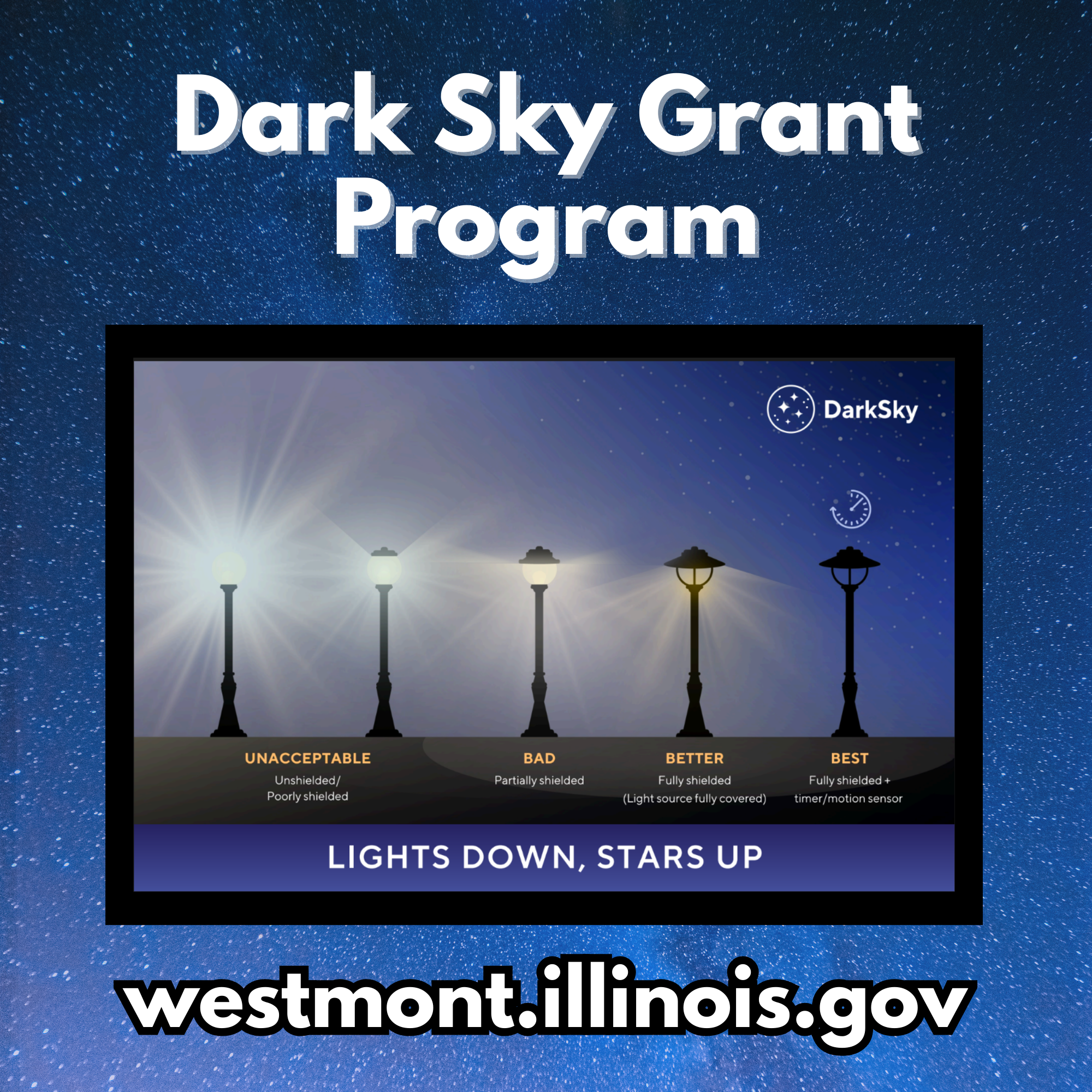
Westmont Offers Dark Sky Grant Opportunity • Westmont, IL
Westmont, Illinois – Date Issued: January 9, 2026
The Westmont Dark Sky Grant Program is intended to incentivize Westmont residents and businesses to consider changes to their properties that will reduce or even eliminate unnecessary light pollution, and protect our evening skies for everyone to see and enjoy. The goals of the Dark Sky Grant are:
1) PROMOTE the importance of reducing our carbon footprint by protecting dark skies and reducing light pollution
2) IMPROVE the welfare and quality of life for all people and wildlife
3) PROVIDE FUNDING for Dark Sky projects that meet grant criteria (while funds are available)
4) RECOGNIZE & REWARD residents & businesses for their support of our Dark Sky InitiativeThe grant program will begin in January 2026 and continue through November 1, 2026, or until grant funds for this program have been exhausted.
To participate, Village residents and businesses must go online and fill out the application form. The sign-up form includes questions regarding: 1) the importance of a Dark Sky initiative, 2) Dark Sky practices that you have completed in the past, and 3) Dark Sky plans for upcoming property improvements.
As part of the grant application, the applicant must list in detail their intended Dark Sky purchase. The Westmont Environmental Improvement Committee (EIC) will review applications to confirm that program criteria is met. If the grant is approved, then the business or resident will complete their Dark Sky improvement, provide proof of purchase as well as evidence that the project has been completed, then the Village will award the reimbursement grant to the recipient. Grants will be awarded on a first-come, first-served basis providing that the application meets grant eligibility and there are still funds available.
DARK SKY GRANT PROGRAM – INFORMATION & DETAILS
- Must be a resident or business located within the geographic boundaries of the Village of Westmont
- Grant program will run through November 1, 2026, or until funds have been depleted
- Grant intended for new Dark Sky home improvement projects started on or after January 1, 2026, and completed by November 1, 2026
- Grants will NOT be awarded for projects that were completed before 2026
- Applicants must complete and submit an online Dark Sky Grant application to be considered for the grant
- Applications will be reviewed by the EIC and Village Staff to determine eligibility – after review, the Village will notify all applicants regarding the status of their application
- Once a grant application has been approved, then the applicant must complete their Dark Sky project by November 1, 2026 and submit all necessary documentation including purchase receipts and a photo of the completed project to Village of Westmont Communications; upon fulfilling all grant requirements for the approved project, the Village of Westmont will process and issue the amount of the approved grant to the recipient
- Only one grant, up to $500, will be awarded per calendar year per physical address located in the Village of Westmont
- Grants will not be awarded to any applicant related to a specific physical address who has already received funds from the Village of Westmont for the same project
- Grant applicants may be required to allow in-person inspection of completed projects
lf you have further questions, please contact EIC Staff Liaison Larry Mclntyre at communications@westmont.il.gov or 630-981-6245.
WHY DARK SKY
Dark Sky initiatives are based on the understanding that all life on Earth relies on a circadian rhythm, a daily cycle of light and dark to govern life-sustaining behaviors such as reproduction, nourishment, sleep and protection from predators. Scientific evidence suggests that artificial light at night can have a negative effect on the world’s ecosystems. However, there are a variety of additional reasons to embrace a Dark Sky initiative.
AESTHETICS
One of the easiest to understand benefits of a Dark Sky initiative is aesthetics. Simply put, light pollution prevents people from seeing the natural beauty of our nighttime skies. Dark Sky embraces that idea that people have a right to enjoy the stars in the nighttime sky.
SAFETY
Outdoor lighting is intended to enhance safety and security at night, but too much lighting may actually have the opposite effect. Visibility should always be the goal. Glare from bright, unshielded lights may reduce overall visibility and restrict our ability to see an entire area clearly.
COST
It is estimated that 30% of all nighttime lighting is wasted in the form of having lights that are too bright or overlighting areas unnecessarily by not having proper shielding. This results in citizens wasting billions of dollars while creating millions of tons of unnecessary carbon dioxide to power this extra light output.
WHAT CAN WE DO?
There are three main factors that citizens can address to improve night time lighting aesthetics, environmental impact, safety, and costs – BRIGHTNESS, SHIELDING & COLOR TEMPERATURE. The following criteria must be addressed to be considered for the Dark Sky Grant Program.
BRIGHTNESS
Because LED lights use less energy than incandescent and fluorescent lights, lighting selections are often made that produce a brightness well beyond what is needed. Bright lights do not necessarily translate into improved safety and may cause glare, making it difficult to see the area intended to be lit. To be dark sky compliant, light bulb wattage should not exceed 60W, while 40W bulbs are preferred (LED equivalent wattage of 5W – 9W).
SHIELDING
Dark Sky-compliant fixtures include shielding that focuses light in a downward direction and prevents light from being emitted in an upward direction, or out toward neighboring properties. Shielding also allows for the opportunity to light only intended areas rather than spreading light beyond the intended area.
COLOR TEMPERATURE
Many LED lights shine at a color temperature that negatively affects humans, animals, and pollinators. Blue light (often marked as daylight or cool white) affects our circadian rhythm and can be damaging to the human eye. Dark Sky compliant lights that produce a color temperature of 3000K or less (typically marked as soft-white or warm-white) are ideal for producing the desired effect of providing light while not over-illuminating a specific area.
ADDITIONAL DARK SKY STRATEGIES
Additionally, technologies such as motion sensors, dimmers, and timers allow for outdoor lights to only be used when needed, saving money, benefiting our environment, and preserving citizens’ view of the night sky.
MORE INFORMATION
DarkSky is committed to the idea that a night sky, filled with stars, should be celebrated and protected. DarkSky strives to accomplish this by providing leadership, tools, and resources for individuals, policymakers, and industry. DarkSky strives to reduce light pollution and promote responsible outdoor lighting that is beautiful, healthy, and functional. For more information, visit their website at darksky.org.
###
Continue Reading
-

Reimagining Merchandising in the Era of Agentic AI
Retail is detail. And merchandising sits at its heart because the decisions it governs shape almost everything a retailer does—what to sell, how much to pay for it, how to price and promote it, how much inventory to hold, where to allocate it, and how to collaborate with suppliers.
Written in conjunction with
Written in conjunction with
Bain’s recent research on the future of retail highlights how operational complexity is challenging the ways core functions operate. Despite expanded product assortments, proliferating channels, increased shopper expectations, and technology disruption, many merchandising teams still rely heavily on spreadsheets and manual effort. The problem is not data access but the capacity to fully understand it and make consistent, high-quality decisions.
The stakes are rising further as generative AI tools such as ChatGPT promise to disrupt both strategic processes and day-to-day business management. Just as autonomous “AI shoppers” are beginning to research, compare, and buy on behalf of customers, AI agents can transform how retailers keep pace.
To take advantage of this, leading companies are moving beyond experimentation—using AI not just to understand the landscape but to make, and increasingly automate, decisions across the business.
What AI really changes
Generative AI tools can already perform work that once consumed endless hours for category teams, such as scanning performance reports, summarizing shopper reviews, and tracking competitors. Retailers are beginning to reap these benefits. French retailer Carrefour has been applying generative AI to procurement workflows to speed up tasks such as supplier quote comparisons. This frees up time for higher-value work and delivers tangible productivity benefits. Broadly, Bain & Company projects have shown that applying AI solutions can create efficiency gains of up to 50% to 70% for key tasks while also increasing merchants’ AI literacy.
Beyond this, agentic AI opens up incredible potential for retailers. Whereas traditional analytics tools could describe what had happened, they couldn’t reason across fragmented data, adapt to changing context, or support decisions as work unfolded. Agentic AI changes this. These tools combine generative reasoning with orchestration models that can monitor data, reason across signals, and recommend (or take) actions autonomously within guardrails set by the business to ensure appropriate human oversight.
Agents can process large volumes of structured and unstructured data—ranging from competitor catalogs and product attributes to customer sentiment and search behavior—to surface emerging risks or opportunities. Over time, they evolve from summarizing data to recommending actions and, eventually, executing many of these autonomously.
This shift is about more than speed. It represents a move from spreadsheets and dashboards to collaborative decision agents embedded at the heart of retail.
Applying agents in merchandising
Agents can reshape both strategic category management and everyday performance. At the strategic end, AI helps merchants rapidly build customer-centric category strategies by synthesizing performance data, shopper insights, and external signals. By simulating thousands of customer behavior scenarios, agents can identify duplication, gaps, and unmet needs. Similar transformations apply to pricing, promotion, and supplier strategy. By consolidating supplier information in one place, AI enables merchants to prepare for negotiations, compare commercial terms, and draft agreements in as little as one hour, compared with days previously. One European grocery retailer, for example, has improved own-brand development by using AI to simplify specifications, compare suppliers, and manage cost pressure amid inflation.
Closer to execution, agents can support the adjustments needed as plans meet reality. For example, an agent might spot that sales in a particular category are below expectations, check whether competitors have cut prices or customer sentiment has shifted, and then recommend potential next steps. Or an agent could help decide when and where to mark down products, improve inventory allocation by flagging stock imbalances, and spot emerging micro-trends across social, review, and competitor data.
US-based multinational Walmart, for example, has embedded agents into daily routines. Its Wally assistant helps interpret performance data and answers operational questions in seconds, bringing AI directly into merchandising decisions.
Translating AI into action: scaling value
Retailers seeing the most success with AI start with practical, high-impact use cases, build the right data and architecture, and redesign workflows and roles so AI is used consistently and effectively. Following a “crawl-walk-run” model can deliver tangible value within three to six months, using existing data and workflows rather than waiting for major system overhauls.
The simplest entry point is often equipping merchants and planners with general-purpose tools such as ChatGPT to build AI literacy and make existing processes more efficient, from data analysis to report writing and competitive intelligence.
In the crawl phase, AI is connected to data for a specific decision, such as refining a category strategy using recent performance, shopper insights, and competitor context. Tractor Supply, the rural lifestyle retailer, shows how this can scale. The firm deployed ChatGPT Enterprise, supported by AI champions across multiple departments, and generated hundreds of use cases, from quickly turning loss-prevention information into actionable insights to reducing time spent accessing and analyzing other data.
In the walk phase, AI is connected to more data sources and steps in the workflow, enabling agents to recommend assortment, promotion, or pricing actions. Target, for example, has worked with Bain and OpenAI to build AI agents that help store teams with operations and customer interactions, as well as within merchandising to better understand category performance ahead of vendor discussions.
In the run phase, agents are wired directly into execution systems, enabling AI-initiated pricing, promotion, or inventory changes with human oversight. Bain’s AI Retail Merchant Assistant, for example, can embed AI into merchandising workflows. It can consolidate performance, trend, and supplier data to support strategic choices on assortment, pricing, and promotions, as well as surfacing role-specific insights that accelerate confident decision making across the merchandising life cycle.
Building strong foundations
Navigating the shift to the run phase—agentic AI—requires the right foundations. Retailers must connect core internal data, such as point of sale, margin, inventory, loyalty, and supply chain execution, with relevant external signals including competitor activity, digital behavior, and sentiment.
A generative AI reasoning layer, supported by an agentic orchestration layer that calls forecasting, optimization, pricing, and workflow tools, sits on top of this.
Technology alone, however, is not enough. While generative AI can be applied effectively to existing systems, adding agents to inefficient processes only exacerbates challenges. Successful organizations rethink how merchandising work gets done—from the role of the merchant to the end-to-end merchandising process—as part of their efforts to embed AI.
This means reshaping roles and routines. As AI agents take on more of the analytical heavy lifting, merchants can spend less time assembling data and more time on judgment and strategy. New roles will emerge, such as AI product owners responsible for shaping use cases, prioritizing features, and ensuring tools fit merchant workflows. Core processes, including category reviews, sign-offs, and vendor meetings, will also increasingly change, starting with agent-generated scenarios rather than static presentations.
Accelerating momentum to scale
A practical checklist for building momentum begins with defining an agentic AI and decision matrix, describing which decisions can be automated, which require review, and which remain human-only.
Choosing two or three pilot use cases linked to quantifiable outcomes, such as promotion optimization or assortment localization, and carrying out a data inventory are next steps.
Senior executive sponsorship matters if changes are to stick. The chief merchandising officer or equivalent must own the merchant AI roadmap, with change management and training embedded in live work rather than treated as a separate program. Over time, AI literacy should become a core merchandising capability, something expected of every merchant, rather than a specialist skill held by a few experts.
Defining key performance indicators, reporting cadence, and pilot review timelines also pushes progress forward. Finally, governance is critical: What guardrails need to be in place, what circumstances would trigger a rollback of any AI-related pilots or processes, how will AI use be audited, and how is this all laid out in vendor and supplier policies?
The opportunity—and the risk of waiting
Retail is already in its AI era. Early deployments are delivering measurable gains, but the greatest value will accrue to retailers that translate these outcomes into a fundamentally new merchandising model.
Merchandising is a natural starting point for broader transformation because decisions made here cascade into supply chain, store operations, labor, and digital execution. Redesigning merchandising processes is therefore often the fastest way to drive AI improvement across the rest of the operating model.
What comes next extends beyond merchandising into store operations, shaping workforce tasking, deployment, and on-shelf execution. The path forward is clear: Start with practical use cases tightly linked to profit-and-loss impact, build the data and orchestration backbone, and redesign merchant roles and processes so AI is embedded into how decisions get made. Retailers that move deliberately and at scale will convert early productivity gains into decisively better category strategies, stronger outcomes, and new commercial opportunities. Those that wait risk being shaped by others’ agents rather than owning their future.

OpenAI
OpenAI is an AI research and deployment company. Our mission is to ensure that artificial general intelligence benefits all of humanity. Founded in 2015, OpenAI develops cutting-edge AI technologies, including the GPT series of language models, and partners with organizations to integrate AI capabilities into real-world applications responsibly. OpenAI is committed to building safe, ethical AI systems and fostering transparency, safety, and alignment across the global AI ecosystem.
Continue Reading
-
5 ways we’re transforming artificial intelligence into impact
Innovation
We’re applying AI across our company to help us work smarter and faster so we can reach patients sooner
At Merck, we’re in the business of knowledge, insights and innovation — rooted in intelligence.
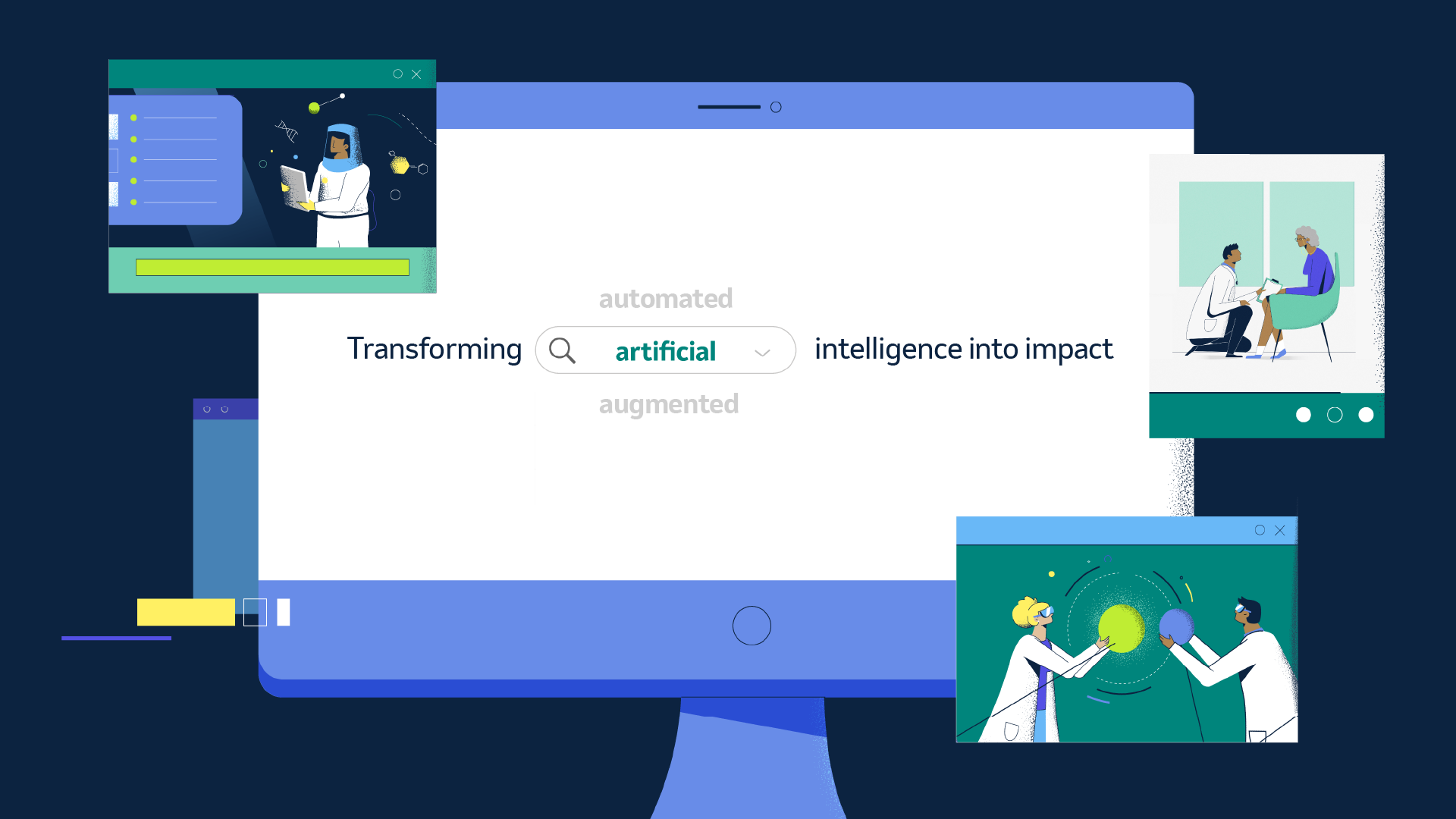
Today, artificial intelligence (AI) — or what could also be “automated”, “accelerated” or “augmented” intelligence — lies not only in software and computer systems, but in the data, development and delivery of these intelligent tools to achieve better outcomes for patients.
Here are five ways we’re using AI to drive our purpose of saving and improving lives around the world.
Accelerating the discovery of new medicines
Drug discovery remains an endeavor where only about 1 in 10 drug candidates that enter clinical trials ultimately receive regulatory approval. We’re working to change that by enabling scientists to use AI and machine learning (ML) foundation models to enhance and build upon their existing approaches to drug design before experimental testing and clinical trials.
We recently developed two foundation models which uncover patterns in disease to find better drug targets, allow faster molecular design and rapidly test small molecules, including cyclic peptides, for efficacy and toxicity before going into the clinic.
By unlocking patterns within vast datasets, these AI models enable our scientists to accelerate the discovery of leading therapeutic candidates — a process that normally takes 10 years — allowing us to potentially get therapies to patients faster without compromising scientific rigor.

Optimizing clinical trials
Enrolling people in clinical trials and keeping them engaged once they’ve signed up remains a significant challenge across our industry, with approximately 20% of activated sites failing to enroll a single participant. We’re addressing this by using AI to help improve site selection, patient matching and retention. For example, predictive models can flag patients at higher risk of dropping out, enabling targeted interventions that improve retention and keep trials on track.

Automating workflows to improve productivity
Our enterprise-wide training program helps employees understand the latest digital technology, including generative and agentic AI, and learn how to use it responsibly. Our proprietary AI platform — which more than 80% of our workforce uses — applies large language models to enable employees to automate, simplify and digitize processes that historically took more time, freeing us up to prioritize more impactful work.

Modernizing manufacturing
Generative AI helps protect our supply chain when potentially disruptive events like natural disasters or port delays occur. Our systems can produce event-based risk assessments in under 30 minutes — allowing us to quickly see which products and sites are affected and act to avoid or reduce shortages and delays.
In vaccine manufacturing, we’re using computer vision — another form of AI — to inspect vials and syringes for defects. This results in less waste, lower costs and higher production speed.

Streamlining education and engagement with health care providers
We’re using AI to streamline information for providers and patients to ensure we deliver the right details to the right people when it matters most.
We’ve embedded AI across the content life cycle — from conception through medical, legal and regulatory review — so that we can organize messages more intelligently. The result: higher quality, personalized content that gets to health care providers faster.
Supporting this is our generative AI-powered chatbot for our field representatives. It summarizes relevant insights and helps us respond in real time to provider needs.

It all starts with data
Data powers AI. We have a vast repository of proprietary and secure data, but for it to be usable, it must first be structured and organized.
We’re continuously working to create a frictionless data flow so AI can reliably and accurately drive faster, more targeted and personalized outcomes.
Data is critical to our business strategy and to our pipeline. When our data is high-quality, well-manicured and organized to support powerful insights, we can make more accurate and intelligent predictions — and move faster to deliver the medicines and vaccines patients are waiting for.
Read more about how we’re using data science, AI and machine learning.
Continue Reading
-
CONTAINERS QUARTERLY: Asia-Europe enters 2026 with seasonal firmness, structural uncertainty – S&P Global
- CONTAINERS QUARTERLY: Asia-Europe enters 2026 with seasonal firmness, structural uncertainty S&P Global
- Container Shipping Rates Jump 16% as Carriers Push Opportunistic Increases gCaptain
- Drewry WCI jumps 16% on Transpacific & Asia-Europe rate hikes Fibre2Fashion
- Pre-Lunar New Year demand to give trans-Pac market first test of 2026 Journal of Commerce
- World Container Index increased 16% to $2,557 per 40ft container FreshPlaza
Continue Reading
-

Diesel was distributed instead of regular gas at many Colorado gas pumps
Colorado state regulators have received more than 200 complaints this week after customers who thought they were getting regular unleaded gasoline filled their tanks with diesel fuel at Costco, King Soopers and Murphy Express pumps.
The state’s Division of Oil and Public Safety began receiving complaints Thursday after diesel fuel was loaded from a Sinclair terminal in Henderson and sent to many gas stations in the Denver metro area between 2 p.m. Wednesday and 6 a.m. Thursday, the division said.
A sample taken from the Costco gas station at River Pointe in Sheridan on Thursday and confirmed the contamination, a spokesperson from the state agency said in an email. State employees will continue testing fuel to identify impacted retailers and station owners are working to stop the sale of the bad fuel.
Cher Haavind, deputy director for Colorado’s Department of Labor and Employment, said Friday afternoon that the state does not have a list of gas stations that were impacted, but said Sinclair is conducting its own investigation to identify the gas stations that received the diesel fuel.
All affected pumps should be pumping uncontaminated unleaded gas in the next 24 to 36 hours, she said.
State officials believe the contamination is limited to gas stations in the Denver metro area, but sent an alert to about 3,000 gas stations across Colorado to warn them about the contamination, Haavind said.
By 8:30 a.m. Friday, Sinclair had also contacted all of its distributors and was working on a process for receiving complaints from consumers, she said.
“A consumer that did purchase fuel within the timeframes that we outlined would have seen issues with engine performance by now, as quickly as driving away from the retailer to very shortly thereafter, so it would have presented itself very close to the point of fueling,” Haavind said.
A representative from King Soopers said about a dozen of their gas stations received the wrong fuel. Once they became aware of the issue, workers took “immediate action” by shutting down the fuel lines and dispatching teams to perform diagnostic tests.
The following King Soopers gas stations were impacted:
- 14967 Candelas Pkwy., Arvada
- 25701 E. Smoky Hill Rd., Aurora
- 17000 E. Iliff Ave., Aurora
- 3050 S. Peoria St., Aurora
- 1045 S. 1st St., Bennett
- 12167 Sheridan Blvd., Broomfield
- 2355 W. 136th Ave., Broomfield
- 7284 Lagae Rd., Castle Pines
- 750 N. Ridge Rd., Castle Rock
- 5125 W. Florida Ave., Denver
- 1611 Pace St., Longmont
- 12959 S. Parker Rd., Parker
- 17761 Cottonwood Dr., Parker
Representatives from Costco and Murphy Express did not immediately provide a list of impacted gas stations.
Zach Hope, petroleum program manager for the Division of Oil and Public Safety, said the state is working to figure out what caused the mix-up and inspectors continue to collect more samples.
“This is, as far as I know, unprecedented in the many years I’ve worked here for sure,” said Hope, who has worked at the division for 18 years.
“The important thing is to find out how to avoid this in the future. This doesn’t benefit anybody and so Sinclair’s investigation should point to the root cause and we will work with them to make sure that they take some steps to alleviate the possibility of that happening again,” Hope said.
As the investigation continues, the state has not issued any fines or enforcement action, Hope said.
“It is unlikely at this point that we would pursue that, given our belief that this was not so much an act of negligence or even intentional decisions that led to this,” he said.
Sinclair did not respond to a request from The Colorado Sun seeking more information.
Drivers who are experiencing car issues should contact the gas station where they purchased the fuel to initiate a claims process, Hope said.
The impact the fuel mix-up has on a car’s engine depends on how much diesel fuel was added to the tank, Stephen Martindale, service director at Phil Long in Denver said.
“If that fuel tank was really low and they fueled up, it’s not going to run but a couple of 100 feet before it stalls,” Martindale said, explaining that gas engines cannot produce enough heat to ignite diesel.
He recommended drivers who suspect they got contaminated fuel to bring their cars to a dealership. Mechanics will likely drain the tank, clear the lines and replace the fuel filter, if needed, and add a fuel additive to help clean things up, he said.
“You’re probably looking at a tow bill to get it in and then you’re probably looking in the neighborhood of about 1,000 bucks,” he said, including the cost of disposing of the contaminated fuel.
“That’s where the prices add up and a lot of it depends on how much we have to drain out of the tank,” he said. “ It’s contaminated, it’s no good to anybody.”
Anyone who believes they received contaminated gas can file a complaint with the division online or by calling 303-866-4967.
Continue Reading
-
Eastbound I-376 Parkway East Daylight Restrictions Begin Monday in Allegheny County – Commonwealth of Pennsylvania (.gov)
- Eastbound I-376 Parkway East Daylight Restrictions Begin Monday in Allegheny County Commonwealth of Pennsylvania (.gov)
- PennDOT Continues $70.1M I-376 Project Construction Equipment Guide
- Daylight lane restrictions on part of eastbound I-376 begin Monday, last through late March WPXI
- More bridge beam deliveries are scheduled for Parkway East this week Yahoo
- TRAFFIC: Eastbound I-376 Parkway East overnight restrictions WPXI
Continue Reading