Category: 3. Business

  • Correction to chromium alumino-thermic 99% min, in-whs Rotterdam price assessment, rationale on October 24

    Correction to chromium alumino-thermic 99% min, in-whs Rotterdam price assessment, rationale on October 24

    MB-CR-0001 Chromium alumino-thermic 99% min, in-whs Rotterdam, $/tonne was published in error at $8,800-9,200 per tonne. It has been corrected to $8,800-9,476 per tonne.

    Fastmarkets’ pricing database and the relevant rationale has been updated to reflect this change.

    This price is part of the Fastmarkets minor metals package.

    For more information or to provide feedback on this correction notice, or if you would like to provide price information by becoming a data submitter to this price assessment, please contact pricing@fastmarkets.com and minormetals@fastmarkets.com. Please add the subject heading “re: chromium alumino-thermic 99% min, in-whs Rotterdam.“

    Please indicate if comments are confidential. Fastmarkets will consider all comments received and will make comments not marked as confidential available upon request.

    To see all Fastmarkets pricing methodology and specification documents, go to the Fastmarkets methodology page.

    Continue Reading

  • Serial ctDNA Testing Holds Potential to Further Personalize MIBC Management

    Serial ctDNA Testing Holds Potential to Further Personalize MIBC Management

    Results from the phase 3 IMvigor011 trial (NCT04660344) evaluating adjuvant atezolizumab (Tecentriq) showed that circulating tumor DNA (ctDNA) testing could refine muscle-invasive bladder cancer (MIBC) management by guiding adjuvant immunotherapy decisions, although further research is needed to enhance treatment precision across disease stages and regimens, according to Joaquim Bellmunt, MD, PhD.

    In an interview with OncLive®, Bellmunt highlighted ways that ctDNA testing could augment bladder cancer treatment standards, the need for data from ongoing trials to determine the optimal use of ctDNA test results in various clinical scenarios, and the promise of ctDNA results for identifying patients likely to benefit from immunotherapy. He discussed the IMvigor011 trial results in more detail in another portion of the interview.

    Bellmunt is director of the Bladder Cancer Center and a senior physician at Dana-Farber Cancer Institute, as well as an associate professor of medicine at Harvard Medical School, both in Boston, Massachusetts.

    OncLive: What do the IMvigor011 data indicate about the potential role for ctDNA in bladder cancer detection and management? What additional data are needed to help determine how to incorporate this information into clinical decision-making strategies?

    Bellmunt: [ctDNA analyses are] happening in [many] diseases. Sometimes we are lagging behind in how the [urothelial cancer treatment paradigm] is evolving. Nowadays, for example, since [IMvigor11] was designed in [2020], we have had several positive trials. We have had the phase 3 NIAGARA trial [NCT03732677], where patients [with MIBC] received neoadjuvant chemoimmunotherapy followed by surgery, and then adjuvant durvalumab [Imfinzi] for 8 cycles, independent of their pathological response after neoadjuvant chemoimmunotherapy.

    At the 2025 ESMO Congress, we also heard the outstanding results on the use [of pembrolizumab (Keytruda) plus enfortumab vedotin-ejfv (Padcev)] in patients [with MIBC] who are unfit for platinum[-based chemotherapy]; [this regimen is] 3 cycles [of the combination] before surgery, and then after surgery, patients receive 6 additional cycles [of the combination] and then maintenance immunotherapy [with pembrolizumab alone]. This phase 3 KEYNOTE-905/EV-303 [trial (NCT03924895) regimen] is likely a new standard of care because for the first time, we have seen a survival benefit in patients receiving neoadjuvant enfortumab vedotin/pembrolizumab, followed by adjuvant [treatment with the combination, followed by pembrolizumab alone]. We have seen a [57.1% (95% CI, 49.3%-64.6%)] pathologic complete response [(pCR) rate with this regimen].1 Those are outstandingly good results never seen before.

    IMvigor011 Trial: Key Takeaways

    • Adjuvant atezolizumab significantly improved disease-free survival (DFS; HR, 0.64; 95% CI, 0.47-0.87; P = .0047) and overall survival (OS; HR, 0.59; 95% CI, 0.39-0.90; P = .0131) compared with placebo in patients with ctDNA-positive MIBC.
    • Patients who persistently tested ctDNA negative had a low risk of recurrence and death, with only 10.9% of patients experiencing a DFS event and 3.9% of patients experiencing an OS event in the no-treatment population after a median follow-up of 21.8 months from cystectomy.
    • Subgroup analysis for DFS revealed a particularly strong benefit with atezolizumab in patients with high PD-L1 status (HR, 0.33; 95% CI, 0.19-0.58) and those who tested ctDNA positive earlier following cystectomy (HR, 0.52; 95% CI, 0.36-0.74).

    The question is: How are we going to use ctDNA in other trials? The results of IMvigor011 [were] based on the decision to give adjuvant treatment in patients who were ctDNA positive. Is [ctDNA] going to be used in other settings? Those are questions that unless we get results from these ongoing or completed trials, we cannot start extrapolating.

    What [should we] do in patients who have a pCR? Do we need to give, for example, 8 cycles of adjuvant immunotherapy? Data from the breast cancer [field are] telling that, yes, despite the pCRs, still there is benefit [with additional immunotherapy]. However, if the patient’s getting a CR after neoadjuvant chemoimmunotherapy, maybe they will not be willing to receive adjuvant treatment.

    These are good questions. The paradigm is evolving, so [there will be] new treatment options for patients. We’ll see how [these new data are] going to [affect it] in the end.

    What are the next steps for the IMvigor011 investigation?

    [We presented] the initial results [at ESMO 2025].2 We are analyzing the cohort of patients with more granularity. For example, [we are investigating] how the ctDNA affects or correlates with staging before receiving neoadjuvant therapy or at the time of surgery; this might give us [more] prognostic data.

    We know that ctDNA is prognostic. Patients who have high ctDNA levels do worse than patients who are ctDNA negative. [However, there may be] correlations made in this trial, [such as] correlations between staging, response to prior treatment, and patient outcomes.

    How do the IMvigor011 results open the door for a new treatment paradigm for patients with bladder cancer who are positive for recurrence on a molecular level without evidence of disease progression or recurrence on imaging?

    [IMvigor011] formed the basis for other trials that are already ongoing. For example, we have the phase 2/3 MODERN trial [NCT05987241], where patients with [urothelial cancer with] ctDNA positivity are assigned to receive immunotherapy. That trial is asking an additional question: Can we optimize adjuvant therapy? For example, in the MODERN trial, patients who are ctDNA positive are randomly assigned to receive nivolumab [Opdivo] or nivolumab plus a LAG-3 inhibitor—another immunotherapy compound. This could potentially end up [showing that patients] can obtain further benefit if they are adding immunotherapy compounds to an immunotherapy [backbone] in patients who are ctDNA positive.

    [ctDNA analysis] is a dynamic test. In [the phase 3] IMvigor010 [trial (NCT02450331)], we only had baseline [testing for] determination of ctDNA [status]. [In IMvigor011], we had sequential checking of ctDNA for up to 1 year. In patients who are [ctDNA] negative after 1 year, the likelihood of recurrence was only [11.6% at 24 months without adjuvant treatment].

    References

    1. Vulsteke C, Kaimakliotis HZ, Danchaivijitr P, et al. Perioperative enfortumab vedotin plus pembrolizumab in participants with muscle-invasive bladder cancer who are cisplatin-ineligible: phase 3 KEYNOTE-905 study. Presented at: 2025 ESMO Congress; October 17-21, 2025; Berlin, Germany. Abstract LBA2.
    2. Powles T, Kann AG, Castellano D, et al. IMvigor011: a phase 3 trial of circulating tumour (ct)DNA-guided adjuvant atezolizumab vs placebo in muscle-invasive bladder cancer. Presented at: 2025 ESMO Congress; October 17-21, 2025; Berlin, Germany. Abstract LBA8.

    Continue Reading

  • Clarification of methodology for Turkey domestic long steel assessments

    Clarification of methodology for Turkey domestic long steel assessments

    The assessments are for MB-STE-0784 steel reinforcing bar (rebar) domestic, exw Turkey and MB-STE-0785 steel wire rod (mesh quality) domestic, exw Turkey.

    Previously, both assessments stated that an 18% value-added tax (VAT) was included in the assessed price. Fastmarkets wishes to clarify the specifications to show the correct figure, which is 20%, as dictated by Turkish tax rules.

    Turkey changed its VAT rate from 18% to 20% in July 2023. The specifications of affected prices were not updated at the time, but prices have been assessed in line with the VAT change.

    The clarified specifications are:

    MB-STE-0784 Steel reinforcing bar (rebar) domestic, exw Turkey, lira/tonne
    Quality: Diameter 12-32mm
    Quantity: Minimum 100 tonnes
    Location: Ex-works
    Timing: Up to 6 weeks
    Unit: TRY/tonne including 20% VAT
    Payment terms: LC, Bank transfer, cash upon order, deferred payment
    Publication: Weekly. Thursday, 2-3pm London time

    MB-STE-0785 Steel wire rod (mesh quality) domestic, exw Turkey, lira/tonne
    Quality: Standard diameter 5.5-32mm
    Quantity: Standard 100 tonnes
    Location: Ex-works
    Timing: Prompt to 6 weeks
    Unit: TRY/tonne including 20% VAT
    Payment terms: LC, Bank transfer, cash upon order, deferred payment
    Publication: Weekly. Thursday, 2-3pm London time

    You can find the updated methodology for ferrous products here: https://www.fastmarkets.com/methodology/.

    To see all Fastmarkets pricing methodology and specification documents, go to the Fastmarkets methodology page.

    Continue Reading

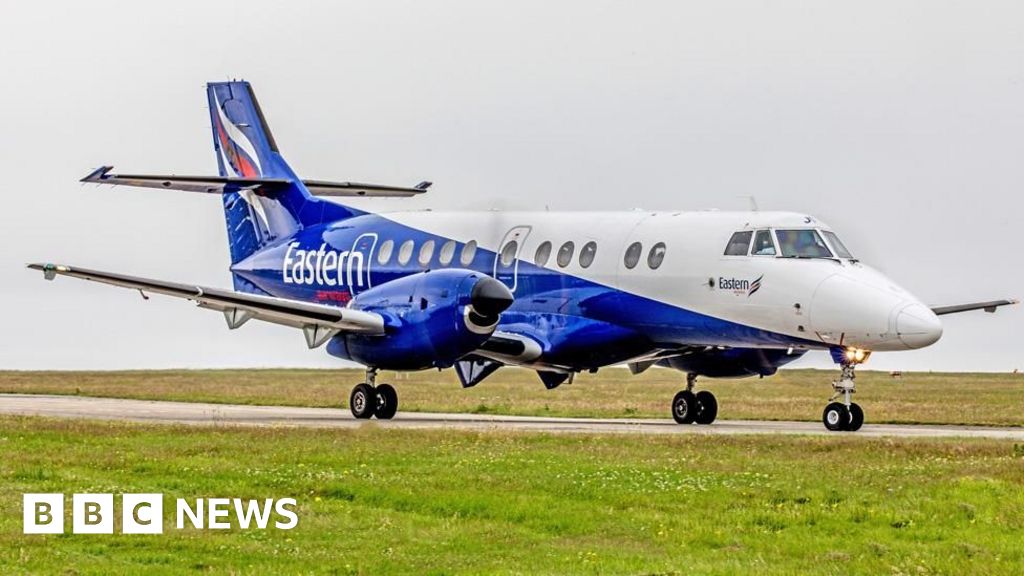
  • Eastern Airways on brink of collapse putting with jobs at risk

    Eastern Airways on brink of collapse putting with jobs at risk

    UK regional airline Eastern Airways is on the brink of collapse, putting hundreds of jobs at risk.

    On Monday it filed a notice of intention to appoint an administrator, and several regional flights were cancelled including between between Teesside and Aberdeen.

    Eastern Airways operates across the UK, Ireland and Europe, and has run services supported by the Scottish government for people in the northernmost point of mainland UK.

    Eastern Airways and The UK Civil Aviation Authority (CAA) have been approached for comment.

    A notice to appoint administrators is a formal step that gives the business up to 10 days of legal protection from creditors while it explores rescue options, restructures, or prepares for insolvency proceedings.

    Airport flight departure boards showed Eastern Airways flights had been cancelled, including a 0700 flight from Newquay to London Gatwick, 1815 flight from Teesside to Aberdeen, 1430 from Aberdeen to Wick and 1645 from Aberdeen to Teesside.

    Eastern Airways is one of the UK’s last remaining regional airlines.

    It has been an operator in the oil and gas industry, flying between UK cities with a significant presence in the sector such as Aberdeen, Humberside, Teesside and Wick.

    The airline faced financial challenges following the pandemic, due in part to falling passenger numbers.

    Launched in 1997, Eastern Airways is based at Humberside Airport in North Lincolnshire. The airline also operates out of East Midlands, Jersey, Manchester, Newcastle, Newquay and Southampton, as well as Esbjerg in Denmark.

    It has run a crucial weekday service between Wick John O’Groats Airport and Aberdeen, which is seen as vital for people living in the most northerly point on mainland UK, which was supported by a Public Service Obligation (PSO) by the Scottish Government.

    Eastern Airways initially built up its network of scheduled services around the North Sea offshore industry with flights up the east coast of England to Aberdeen.

    Continue Reading

  • How John Williamson transformed the LME

    How John Williamson transformed the LME

    Key takeaways:

    • LME’s transformation under John Williamson: From navigating the 2022 nickel crisis to modernizing systems and governance, Williamson has steered the LME toward renewed trust and market confidence
    • Driving modernization and sustainability: Williamson’s tenure emphasizes electronic pricing, enhanced transparency, and sustainability initiatives like the Dubai-based CPAL for greener metals
    • Strengthened global partnerships: Closer ties with HKEX have fueled expansion, governance reforms, and strategic growth, positioning the LME for a dynamic future

    The nickel crisis of 2022 had tested its systems, its governance and its reputation. Three years later, Williamson says that the LME is “no longer the ugly duckling” – a reference to the fable he uses to describe its transformation – but is now an exchange regaining confidence, focus and trust.

    “It brings you back to the story of the ugly duckling,” Williamson told Fastmarkets in an interview on Friday October 24. “When I arrived as chairman, things were rather bleak, and I sensed pretty quickly that we had very good people at the LME and that, like the duckling, with the right support, encouragement and sense of belief, great things could be achieved.”

    Since then, he has presided over an intense period of reform: rebuilding governance, strengthening market surveillance and modernizing systems, all while pushing forward with new initiatives on sustainability and digital trading. “If my legacy was that I had at least helped that duckling gain some more confidence, I’d be happy,” he said.

    Rebuilding after crisis

    Williamson did not seek the chairmanship. He was a long-serving board member of Hong Kong Exchanges & Clearing (HKEX) – the Hong Kong-based owner of the LME – and was invited to join the LME board in 2021 soon after retiring from HKEX. When his predecessor stepped down after the nickel market turmoil, he was asked to lead the exchange through its most testing period in decades.

    In his view, the nickel crisis proved to be a turning point.

    “Much has been learned from the nickel event, not least in terms of our surveillance of what’s happening in the broader market, and the need for us to have access to as much information as possible, on both the over-the-counter [OTC] and exchange business,” he said. “I think we’re in a better place there.”

    The crisis, he said, helped to drive overdue change within the industry, with members becoming more receptive to reforms once they saw the need for greater transparency and oversight. The exchange introduced daily price limits, enhanced data collection on OTC positions, and other measures that helped to facilitate a more comprehensive and proactive approach to risk monitoring.

    “If we’re looking for evidence that the changes we’ve been making are beneficial to the market, we can already see some of that,” he said.

    Modernizing the market

    Williamson’s tenure has been defined by a push to modernize – from electronic pricing and enhanced liquidity programs to IT system upgrades and new product development. It is a strategy that he defines as “evolution, not revolution.”

    “It’s about ensuring that the LME remains the premier venue for trading industrial metals,” he said. “We must continue to nurture and build on the trust that exists in the LME in terms of participants’ desire to use it for reference pricing, and we also must move with the times in terms of being efficient and effective in the way we operate.”

    The exchange has rolled out electronic closing prices and market structure reforms intended to increase transparency and attract a wider pool of participants.

    “We understand the concerns that some market participants have,” he said. “But if I look, for example, at the changes we made to the closing prices, and making those electronic, what you see is a fairly significant increase in volume. And even those who were opposed to us taking those steps have by and large come round to them.”

    Dubai and the CPAL

    Beyond technology, Williamson is also driving a longer-term strategy concerning sustainability and global reach. One of his key priorities is the creation of the Commodity Pricing and Analysis Ltd (CPAL) operation in Dubai, a major step in developing a premium market for greener metal.

    “Another important area, which is more business development than reform, is to continue to pursue the sustainability agenda. Setting up the CPAL operation will be very helpful on that part of the journey,” he said, noting it will operate as an independent pricing administrator.

    Williamson sees the project as part of the LME’s role to help the industry to recognize and reward lower-carbon production.

    “If you make the criteria too demanding, there’ll be no trading,” he said. “So we probably have to start at a reasonable point and then – over time, when we get the right engagement, the right volume – ratchet-up the criteria. Because if the whole idea is to encourage more sustainable green mining, you want to raise the bar over time, in line with broader expectations and policy measures.”

    The initiative mirrors the earlier success of LMEpassport, a traceability tool that once faced skepticism but is now widely used. “When we started to look at LMEpassport, there were a lot of detractors saying it was not really our business to go down that path. But thank goodness we did,” he said.

    HKEX partnership

    According to Williamson, the LME’s relationship with parent company HKEX – once perceived as distant – has become closer and, strategically, more aligned.

    “The engagement with Hong Kong is stronger, not in a micro-managing way, but the business development opportunities are better understood,” he said. “We have, I’d say, an even stronger relationship with Hong Kong. And how does that manifest itself? When we need help on something, we’re not starting from scratch.”

    That partnership has already borne fruit, with rapid expansion of warehouses in Hong Kong (where 12 have opened this year) and the planned establishment of the Dubai office, among other initiatives.

    Williamson also credits HKEX’s support with accelerating governance and cultural reform at the LME. “We’ve strengthened the LME board and management team. There’s much more ambition within the exchange as well as enhanced execution capabilities,” he said. “It’s been interesting to me to observe how the culture has changed. We’ve got a more proactive culture across the organization now.”

    Personal roots

    Despite the LME’s global scope, Williamson’s own story is deeply grounded in personal experience and people skills – something he traces back to his early years working in his father’s newsagent shop in Edinburgh, Scotland.

    “I worked there from the age of eight until I was 21,” he said. “I learned so much in that time about people – you learned to read people pretty quickly because our shop was on the border of the then less-attractive part of Edinburgh.”

    That grounding, he believes, shaped his approach to business and leadership. “Although I’m an accountant and I’ve been dealing with numbers all my life, I’m much happier dealing with people and people issues and people challenges,” he said.

    After earning a degree in accounting and computer science from Edinburgh’s Heriot-Watt University, he joined stockbroking firm Wood Mackenzie and started as a partnership tax assistant in Edinburgh. He gained the mentorship of a senior partner, who later encouraged him to move to London around the time of the so-called Big Bang in banking; they remain close friends some 42 years later.

    Williamson moved to Hong Kong in 1994 after Wood Mackenzie was acquired by UK bank NatWest, acting as the bank’s eyes and ears in a 50:50 investment bank joint venture with Wheelock, a major local conglomerate. His role focused on building the right team and establishing operations across the Asia region.

    In 1998, he then joined Morgan Stanley in Hong Kong to help expand its business in Asia, gaining valuable experience, not least in navigating the differences between US and UK banking cultures.

    In 2007, he was recruited by Robert Miller, co-founder of DFS Group, to be chief financial officer of Search Group, Miller’s private family office and asset management firm. Later, in 2012, Williamson was also appointed chief executive officer of SAIL Advisors, the group’s fund of hedge funds business.

    Meantime, in 2008, he had been approached to join the HKEX board. It proved an extraordinary time, with the global financial crisis unfolding and Hong Kong facing a series of challenges, from market turmoil to public health crises such as SARS and bird flu. Despite the turbulence, it was a fascinating period that saw HKEX begin to expand its international reach.

    Williamson was part of the board subcommittee that looked into acquiring the LME in 2012. “That was my first proper introduction to the world of metals,” he said.

    Looking ahead

    Reflecting on three years as chairman, Williamson said that his focus was still to ensure that the LME continues to evolve – cautiously, but decisively.

    “We’re very, very careful not to interfere with the structure of the LME’s core contracts,” he said. “But if we do not adapt to the changing requirements of the broader market, we’re in more danger of being left behind.”

    For all the challenges, he is optimistic and energized.

    “We’ve made remarkable progress over the past few years,” he said. “There’s no room for complacency, but I genuinely believe that the LME is poised to reach its full potential. We’re certainly heading in the right direction.”

    Want to hear more from about the London Metal Exchange? Listen to the exchange’s CEO, Matthew Chamberlain, in an episode of the Fast Forward podcast with Andrea Hotter below.

    Continue Reading

  • Strengthening ChatGPT’s responses in sensitive conversations – OpenAI

    1. Strengthening ChatGPT’s responses in sensitive conversations  OpenAI
    2. OpenAI prioritised user engagement over suicide prevention, lawsuit claims  Financial Times
    3. How ChatGPT Encourages Teens to Engage in Dangerous Behavior  Inside Higher Ed
    4. 10-21-25 open ai rolling out parental controls for ai chatbot chatgpt  radioplusinfo.com
    5. OpenAI Weakened ChatGPT’s Self-Harm Guardrails in Lead-Up to Teen’s Death, Lawsuit Says  Gizmodo

    Continue Reading

  • AI in Health Care and Biotechnology: Promise, Progress, and Challenges – Foley & Lardner LLP

    1. AI in Health Care and Biotechnology: Promise, Progress, and Challenges  Foley & Lardner LLP
    2. AI in Biotechnology Market to Reach $11.4 Billion by 2030  Yahoo Finance
    3. From wild fungi to faster drug discovery  Drug Target Review
    4. AI giants Nvidia, Microsoft and Google are making critical moves in pharma R&D  PharmaVoice
    5. Artificial Intelligence in Drug Discovery Market 2025-2032: Trends, Growth Drivers & Global Forecast  PharmiWeb.com

    Continue Reading

  • Access Denied


    Access Denied

    You don’t have permission to access “http://www.mastercard.com/us/en/news-and-trends/press/2025/october/Mastercard-introduces-first-ever-threat-intelligence-solution.html” on this server.

    Reference #18.d9b31402.1761583326.6ad9acdc

    https://errors.edgesuite.net/18.d9b31402.1761583326.6ad9acdc

    Continue Reading

  • Some ‘correction cushions’ just in case all this market euphoria is misplaced

    Some ‘correction cushions’ just in case all this market euphoria is misplaced

    Continue Reading

  • Hyundai Motor Group and Toray Group Strengthen Ties to Develop Advanced Materials for Future Mobility

    • Hyundai Motor Group and Toray Group to develop advanced materials for future mobility, including high-performance vehicles and special-purpose mobility
    • Hyundai Motor Group will carry out vehicle-level design, performance evaluation and suitability assessments of advanced materials and components
    • Toray Group will focus on developing intermediate materials and molded products based on its carbon fiber technologies
    • The two companies will collaborate across the entire value chain in the field of high-performance composites, from R&D to production and commercialization


    SEOUL, October 27, 2025
    – Hyundai Motor Group and Toray Industries, Inc. (Toray Group) signed a Strategic Joint Development Agreement to collaborate on advanced materials and components innovation, aiming to set new standards in future mobility.

    The signing ceremony took place on October 24 at Hyundai Motor Group’s headquarters in Seoul, Korea. Key attendees included Heung-soo Kim, Executive Vice President and Head of Global Strategy Office at Hyundai Motor Group and Miki Terada, General Manager of Advanced Composites Division at Toray Group.

    “This agreement marks an important milestone in our partnership, as it represents the first tangible outcome of our strategic collaboration initiated last year,” said EVP Kim. “By clearly defining our focus areas and combining our respective strengths, we will work closely together across the entire process—from R&D to production and commercialization—in the field of advanced composite materials, enhancing our ability to respond to market demands.”

    Miki Terada, General Manager of Advanced Composites Division at Toray Group, also commented that “The Joint Development Agreement marks a significant step forward in advancing the partnership established in the previous year. Leveraging Toray’s unique material technologies and extensive expertise, we will collaborate closely with Hyundai Motor Group to create innovative composite solutions essential for next-generation mobility. From R&D to production and commercialization, we will work in close coordination to enhance our competitiveness in the global market.”

    Building on the strategic cooperation agreement signed in April 2024, the two companies have continued to work together to develop high-performance composite materials, such as carbon fiber-reinforced plastic (CFRP), to enhance safety and performance in mobility.

    Since then, the two companies have identified projects that maximize synergy through close collaboration and have outlined concrete plans for joint development by leveraging their respective strengths.

    The newly signed agreement represents a major step forward in their collaboration, accelerating the development of advanced materials and components for future mobility, including high-performance vehicles as well as special-purpose mobility such as lunar exploration rovers and robots.

    Hyundai Motor Group aims to accelerate innovation in future mobility and create new market opportunities through close collaboration with Toray Group across the entire value chain—from technology development to production and commercialization—in the field of high-performance composite materials.

    As part of this effort, Hyundai Motor Group will carry out vehicle-level design, suitability assessments and performance evaluations of advanced materials and components through its Materials Research & Engineering Center, which is responsible for developing and validating new body materials.

    The development and production of carbon fiber composites will be carried out by Toray Group’s global subsidiaries: Toray Advanced Materials Korea, Toray Advanced Composites in the Netherlands and Euro Advanced Carbon Fiber Composites in Germany. These entities focus on developing intermediate materials and molded products based on Toray Group’s carbon fiber technology.


    – End –

    About Toray
    Toray is a leading technology and advanced materials innovator. We have contributed to social progress since our foundation in 1926 by creating new values. We help the world to overcome new challenges by supplying fibers and textiles, resins and films, carbon fiber composite materials, and other high value-added products. Our 306 subsidiaries and affiliates worldwide employ almost 48,000 people.

    About Hyundai Motor Group
    Hyundai Motor Group is a global enterprise that has created a value chain based on mobility, steel, and construction, as well as logistics, finance, IT, and service. With about 250,000 employees worldwide, the Group’s mobility brands include Hyundai, Kia, and Genesis. Armed with creative thinking, cooperative communication, and the will to take on any challenges, we strive to create a better future for all.

    More information about Hyundai Motor Group can be found at: http://www.hyundaimotorgroup.com or Newsroom: Media Hub by Hyundai, Kia Global Media Center (kianewscenter.com), Genesis Newsroom

    Contact:
    Kyeongjin Kim
    Global PR Strategy & Planning / Hyundai Motor Group
    kyeongjin.kim@hyundai.com

    Continue Reading