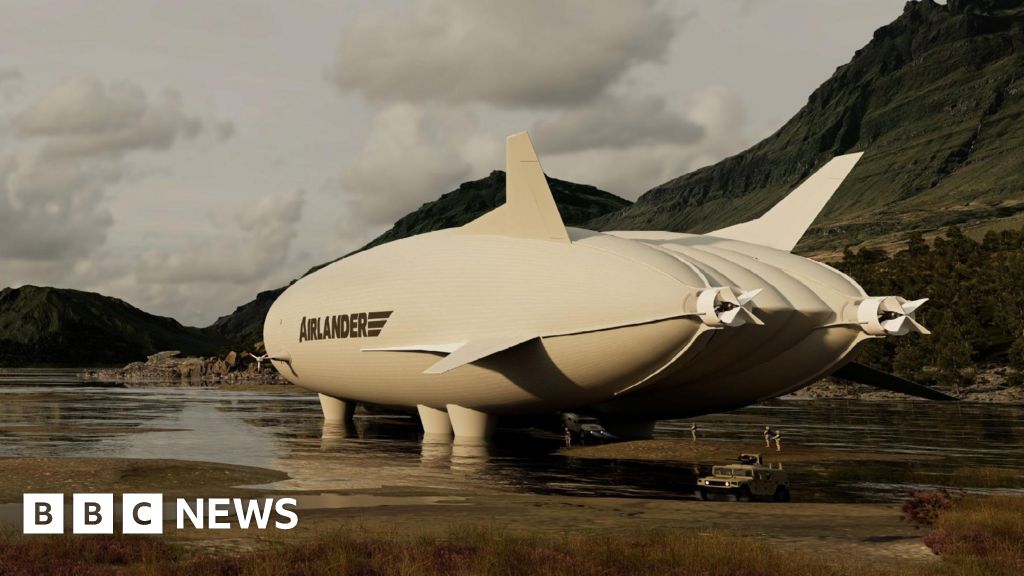
The company behind the Airlander 10 giant hybrid aircraft has secured its first reservations for use in the military.
Bedford-based Hybrid Air Vehicles (HAV) said three had been reserved by an “innovative defence contractor” looking to make use of Airlander’s unique capabilities.
Airlander 10, which has not yet gone into production, was expected to initially be certified for civil use, but HAV said its versatile nature meant it could be modified to meet the needs of the military market.
George Land, executive director of sales at HAV, said they were “pleased to be working with an undisclosed customer to provide three aircraft for further customisation”.
The Airlander is a combination of an airship and a plane and currently uses four combustion engines and gases to take-off and in flight.
HAV said the Airlander could:
be used to transport personnel and equipment to austere environments as well as holding, releasing and recovering drones
was capable of remaining in the air unrefuelled for up to five days, and operating from any relatively flat surface, including water
could lift a payload of over three tonnes enabling high powered radars to remain aloft for days on end, as opposed to hours at present
could cost-effectively survey large areas, monitoring anti-submarine warfare sensors
The company said new threats across the globe required new solutions, and Airlander would directly respond to current and emerging threats.
Work on a production facility started last December in Doncaster where it was expected airships would be built and tested in 2026.
The company had previously said the European-based Air Nostrum Group had reserved 10 Airlanders, but that number had increased to 20, for delivery by 2027.
The Airlander has been designed to be about 320ft (98m) long, with a cabin underneath, making it the world’s longest aircraft.
Mr Land said: “Its versatility, high payload, and endurance have always given Airlander 10 obvious advantages over other aircraft in Command, Control, Communications, Computers, Intelligence, Surveillance, and Reconnaissance (C4ISR).
“As warfare evolves to meet current threats this capability is ever more valuable, and we have worked hard to showcase the aircraft’s capabilities.”
He added that they expected other military reservations to follow.
Amazon has revealed the cause of this week’s hours-long AWS outage, which took everything from Signal to smart beds offline, was a bug in automation software that had widespread consequences.
In a lengthy outline of the cause of the outage published on Thursday, AWS revealed a cascading set of events brought down thousands of sites and applications that host their services with the company.
AWS said customers were unable to connect to DynamoDB, its database system where AWS customers store, due to “a latent defect within the service’s automated DNS [domain name system] management system”.
DynamoDB maintains hundreds of thousands of DNS records. It uses automation to monitor the system to ensure records are updated frequently to ensure additional capacity is added as required, hardware failures are handled and traffic is distributed efficiently.
The root cause of the issue, AWS said, was an empty DNS record for the Virginia-based US-East-1 datacentre region. The bug failed to automatically repair, and required manual operator intervention to correct.
AWS said it had disabled the DynamoDB DNS planner and DNS enactor automation worldwide while it fixes the conditions that led to the outage and adds extra protections.
The issue also caused outages for other AWS tools as a result.
Platforms including Signal, Snapchat, Roblox, Duolingo, as well as services such as banking sites and the Ring doorbell company were some of the 2,000 companies affected by the outage, according to Downdetector – a site that monitors internet outages – with more than 8.1m reports of problems from users across the world.
While services were restored in a matter of hours, the impact of the outage was felt widely.
Customers of Eight Sleep – a smart bed company that connects to the internet to control the temperature and incline of a person’s bed – found they were unable to adjust the bed or the temperature of the bed during the outage because they were unable to connect to the bed in their phone app.
The company’s chief executive, Matteo Franceschetti, apologised to customers on X and this week rolled out an update to its services that would allow users to control the bed’s critical functions via Bluetooth in the event of an outage.
Dr Suelette Dreyfus, a computing and information systems lecturer at the University of Melbourne, said the outages showed how dependent the world was on single points of failure on the internet.
“That single point isn’t just AWS – they’re the biggest cloud provider with 30% or so of the market – but rather the cloud as a whole, which is basically just three companies,” she said.
“The internet was designed to be resilient; many other channels existed for routing around problems or attacks, but we’ve lost some of that resilience by becoming so dependent on a handful of giant tech companies to provide not just data storage but also house data services.”
At Nokia, we create technology that helps the world act together.
As a B2B technology innovation leader, we are pioneering networks that sense, think and act by leveraging our work across mobile, fixed and cloud networks. In addition, we create value with intellectual property and long-term research, led by the award-winning Nokia Bell Labs, which is celebrating 100 years of innovation.
With truly open architectures that seamlessly integrate into any ecosystem, our high-performance networks create new opportunities for monetization and scale. Service providers, enterprises and partners worldwide trust Nokia to deliver secure, reliable and sustainable networks today – and work with us to create the digital services and applications of the future
Unlike in the United States and New Zealand, it’s illegal in Australia to advertise prescription medicines directly to the public.
The main idea is to avoid demand for a drug that may not be appropriate, but which doctors may feel under pressure to prescribe.
But drug companies can get around this restriction by running “awareness” ads that indirectly promote their products.
For instance, we’re currently seeing ads raising awareness about weight loss that don’t mention the names of specific Ozempic-style drugs. Instead, these ads recommend you speak to your doctor about your weight.
The main argument for such awareness ads is they encourage people to seek help from their doctor, rather than suffer from symptoms they might have been embarrassed about, or have not been able to address themselves.
For instance, Novo Nordisk and Eli Lilly – which make weight-loss drugs – told the ABC recently their campaigns were trying to raise awareness of obesity as a chronic disease.
The main counterargument is that awareness ads act as drug promotion in disguise.
So, should pharmaceutical companies be allowed to run awareness ads for diseases or conditions their drugs treat?
We asked five experts. Four out of five said no. Here are their detailed answers.
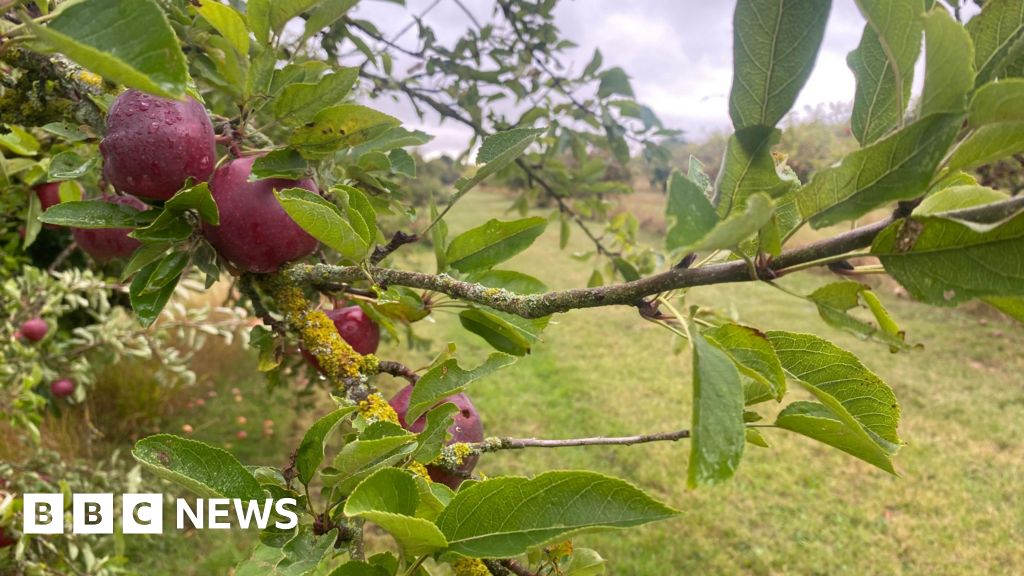
The owner of a historical orchard said its apple trees will not survive being dug up and moved to make way for a proposed busway.
Coton Orchard lies in the path of the proposed £200m Cambourne to Cambridge (C2C) guided busway.
Planners hoped that linking the town and city will ease congestion on local roads and 10,000 trips will be made each day on the new route.
However, Anna Gazeley, whose family owns the Coton Orchard, told an ongoing public inquiry into the proposals that 12 of the oldest Bramley apple trees on the site were “fragile”, vital to the area’s ecosystem and would not survive the move.
The C2C Busway project has been put together by the Greater Cambridge Partnership (GCP) on behalf of Cambridgeshire County Council.
If it goes ahead it will see a new busway built from Cambourne to Cambridge, via the Bourn Airfield development, Hardwick, Coton, and the West Cambridge Site.
A pathway alongside the busway is also proposed for pedestrians and cyclists. A travel hub is also planned at Scotland Farm.
The proposed route would run through Coton Orchard, which is a century-old 60-acre site.
Ms Gazeley told the inquiry on Wednesday that her father bought the orchard in 1996 after he had seen other orchards he knew from his childhood disappear.
She told inspectors about the ecological importance of the orchard, and shared fears about the impact the development would have on its “fragile” trees.
It was “one of the largest remaining traditional orchards in Cambridgeshire” and had been designated a priority habitat under the UK Biodiversity Action Plan and a county wildlife site, she said.
“This is a habitat with ecological memory – more than 100 botanical species have been recorded in its understory, such as mosses, liverworts, fungi… confirming as ecological evidence has shown that this site has matured far beyond commercial cultivation,” she added.
She said the trees were “fragile” and argued they would not survive the move.
“The applicant now accepts the veteran status of those founding Bramleys, yet still asserts that no loss or deterioration would result from the scheme,” she said.
One of the legal representatives of the Cambridgeshire County Council challenged Ms Gazeley on her evidence and questioned its credibility.
They highlighted an example in her written submission of a reference she made to an article about the impact of moving trees, which they said did not actually exist.
They said: “You referred to a reference that does not exist. It has been made up and hallucinated by AI.”
Ms Gazeley said she had used AI to help create her submission and accepted it may not be a perfect document.
However, she said there were other references made and advice taken from experts about the impact of moving the trees.
She said: “Those trees, they are hollow, they are fragile, the features that make them veteran trees is what makes them structurally very poor.
“The thought that you can sever the roots, pull them up, drag them the length of the orchard to put them in a hole and expect them to survive with no deterioration defies credibility.”
At the conclusion of the inquiry, which is taking place in Cambourne and expected to last until November, inspectors will make recommendations to the government about the scheme.
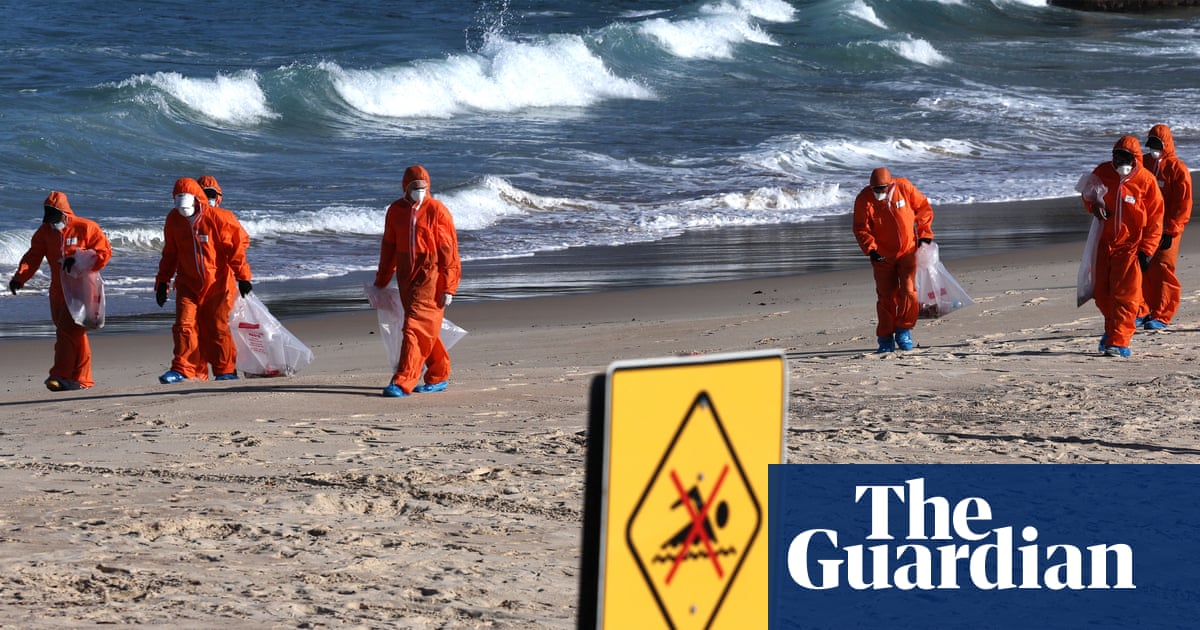
A secret report reveals the likely source of the fatberg balls that closed a raft of Sydney beaches last summer – with most coming from the deepwater ocean outfalls at Malabar, Bondi and North Head.
The partly-redacted scientific report, obtained by Guardian Australia under freedom of information laws, points to a combination of heavy rains and a buildup of fats, oils and greases as the likely cause of the “poo balls”.
Authorities are unable to say when balls could wash up again – but are urgently working on solutions.
“We do believe that fat is accumulating somewhere in the system. We know [it’s] in the pipes, definitely, [but] we’re unsure of its whereabouts specifically,” Sydney Water’s environment manager, Ben Armstrong, told Guardian Australia.
The report notes that the debris balls “are assumed to be of a sewage origin” and their “discharge is most likely to be from an outfall, but the stormwater system may also be implicated”.
“Fats, oils and greases (FOGs) in the sewerage system provide the ‘stickiness’ for the debris balls. They possibly adhere to the sides of pipes. Particulate material may then stick to these FOGs,” the oceanographic modelling report by WQ Data states.
“High rainfall in the year or so leading up to the discharge of the debris balls effectively ‘primes’ the sewerage (or stormwater) system. Within a few days prior to their discharge, further rainfall is sufficient to move the combined FOGs and particles out of the pipes.”
Wave action then rolls the combined FOGs and particulate matter into balls. Between October 2024 and February 2025, “the oceanographic / meteorological conditions were suitable for the debris balls to be released and for them to be moved to the Sydney and NSW south coast beaches”.
Oceanographic modelling data prepared by WQ Data. Photograph: WQ Data Pty Ltd
Work by Sydney Water and the NSW Environment Protection Authority (EPA) suggests the so-called fatbergs are due to an increased use of vegetable oils, which break down slowly, an increase in food outlets and the overall growth of the city’s population.
The EPA has previously said testing revealed the balls were consistent with human-generated waste such as grease and faecal matter.
There are particular concerns about the Malabar sewage treatment plant.
“There are global issues about fatbergs and sewers, and it’s effectively the same thing,” the chair of the EPA’s advisory panel, and an independent expert, Prof Stuart Khan says.
“This particular sewer [at Malabar] has had a long time for fats, oils and grease to build up.
“There’s nearly 2 million customers in that system and over the past 10 years, not only has there been growth in population using that system, but also increasing numbers of food outlets that may or may not have appropriate trade waste licenses in place or the right infrastructure in terms of grease traps and things to be preventing run off of fats, oils and grease.”
The release of the oceanographic report, commissioned by Sydney Water, suggests the state-owned corporation could have known as early as 3 February 2025 that the debris balls were likely from its ocean outfalls. That is the date of the “preliminary draft”.
Guardian Australia first reported in October 2024 that a team of scientists was investigating whether the balls could be linked to sewage and whether they could have come from water treatment plants.
The EPA chose to reveal the content – but not the source – of the beach balls on the day of the US election in November.
The EPA publicly confirmed their likely origin in April 2025 when it issued a preliminary investigation notice to Sydney Water.
Since then, the two agencies have been conducting urgent studies to ascertain the extent of the problem.
Sydney’s sewage system relies on three “deepwater ocean outfall” pipes that run up to 4km out to sea at Malabar, Bondi and North Head. The sewage receives primary treatment to remove some solids and is then pumped through pipes, exiting through diffusers 60 metres below the surface, where the plume mixes with seawater.
Treatment plants map
Prior to 1990, Sydney’s sewage was discharged from the bottom of the cliffs near the plants, just a few hundred metres out to sea. Pollution was a regular phenomenon, particularly after rain, with faecal contamination and other rubbish regularly washing onto beaches.
The ocean outfalls were highly successful in improving water quality, with faecal contamination becoming almost negligible, except immediately after rain, when stormwater runoff sometimes caused an issue.
But the growth in population, food outlets and industry, particularly in Sydney’s west, is causing a buildup of fats, oils and grease in the system, which threatens to overwhelm it.
The oceanographic study
The study commissioned by Sydney Water, which mapped oceanographic currents and winds, traced the balls back to more than one of the three major sewage outfalls.
It hypothesises that heavy rain about six months prior to the discharge of the balls, which occurred between October 2024 and January 2025, primed the system and further heavy rain then dislodged the fatbergs.
“No single discharge from a single origin could be responsible for the appearance of the debris ball on all beaches between October 2024 and February 2025.
“Ten (or perhaps more) discharge events may be responsible for the observed debris balls on the beaches during this period.”
skip past newsletter promotion
after newsletter promotion
The report studied 10 incidents. The first balls were found on Coogee beach in October 2024. Subsequent incidents occurred at other eastern suburbs beaches and Botany Bay, Manly, the northern beaches and on the south coast.
The report and subsequent studies raise the question of whether Sydney Water’s sewage system has reached its limits and whether debris balls will return to the beaches this summer if rainfall conditions are repeated.
“We’ve had rainfall events and pulses going through the system without having debris balls previously, to our knowledge,” Khan says.
“So we’re trying to find out: why now? And why only sometimes now? Why not after every wet weather event? There are questions around whether the catchment to the sewer is changing, and therefore whether or not it’s something that we’re going to see more often. If that’s the case, then better controls over what goes into the sewer will be important.”
Wastewater systems in greater Sydney. Illustration: Sydney Water
There are concerns about what is lurking in the deepwater outfall pipes.
Sydney Water can inspect other parts of the system, but is unable to inspect these pipes, which are 35 years old. To undertake maintenance would require decommissioning the outfalls and reverting to releasing barely treated sewage at Sydney’s cliffs.
The solution
Armstrong says Sydney Water’s “Save our sinks” campaign encourages businesses and households to avoid putting oils and fats, milk, coffee grounds and other solids down the sink.
Changing consumer behaviour is an important part of the solution, he says. Maintenance is also crucial.
Julian Thompson, operations manager at the Environmental Protection Authority, says Sydney Water has “a fairly stringent” maintenance program, particularly around the Malabar catchment.
“They spend quite a lot of money on desilting their sewers. They have crews that can get into those pipes. It sounds like a pretty unpleasant job, but they’re basically within those large pipes … taking out fats, oils and greases, taking out wet wipes and other things that block up sewers.”
The longer-term solutions require greater investment and some hard decisions for the NSW government.
“What we’re currently doing now is not sustainable – discharging 80% of the sewage produced by 5 million people into the ocean after only primary treatment,” Khan says. “Every drop of water we send out into the Pacific Ocean is wasted water.”
Sydney Water is looking to expand or build water resource recovery facilities which take sewage, highly treat it and render it suitable for reuse. It has a demonstration plant at Quakers Hill.
This could reduce pressure on the existing wastewater system while potentially providing Sydney with a non-rainfall-dependent form of additional drinking water.
A map showing proposed new water treatment sites and Sydney Water’s existing plants, which have deepwater outfall pipes that reach up to 4km off the coast.
“The NSW government made a very clear statement that we would only proceed with that if it could be demonstrated that there’s a social license for it,” Khan says.
Sydney Water’s long-term plan has these projects listed with a 10-year horizon. They may need to be brought forward.
The state’s water minister, Rose Jackson, says: “Sydney Water is now working to prevent future events through new programs to help reduce the amount of fats, oils and grease entering the wastewater system.”
She noted the long-term plan to upgrade the system and reduce the volume of water flowing through the outfalls.
“This approach delivers environmental benefits while avoiding the significant cost to customers of upgrading coastal plants and pipelines to manage increasing flows, she said.
Mysterious debris balls that washed up in Sydney were examined by Prof Jon Beves and his team at UNSW. Photograph: Prof Jon Beves
The three parties will carry out a field trial from October 23 to October 24, 2025 at the 53rd Artistic Gymnastics World Championships in Jakarta where local seniors will be able to experience the app.
Furthermore, the three parties will develop a points-based health-promotion insurance concept. This proposed service will convert users’ exercise assessments from the app and participation in health check-ups into points, which can then be used for insurance premium discounts or other benefits. Participating insurance companies will be selected by the parties at a later date.
Through this initiative, FIG aims to promote the widespread adoption of gymnastics programs for seniors and accelerate its contribution to extending healthy life expectancies through sports, as envisioned by the ASWG. The initial target for this insurance service will be the estimated 30 million worldwide participants in FIG’s Gymnastics for All sports program. FIG will also contribute to the World Health Organization (WHO)’s Global Action Plan on the Public Health Response to Dementia [1].
Fujitsu will contribute to promoting the health of seniors through its advanced skeleton recognition AI technology. Furthermore, under its Uvance business model, which addresses societal challenges, Fujitsu will continue to co-create with Uvance Partners to realize advanced health management services through Decision Intelligence powered by data and AI, thereby advancing people’s well-being.
Acer Medical will enhance the abnormal gait pattern detection function in aiGait to meet the growing demand for preventive medicine and smart healthcare in aging societies. Acer Medical is transforming routine movements—like standing, sitting, and walking—into valuable clinical insights. The goal is to help caregivers and clinicians detect subtle changes early, enabling timely intervention and improving patient outcomes.
Roula Khalaf, Editor of the FT, selects her favourite stories in this weekly newsletter.
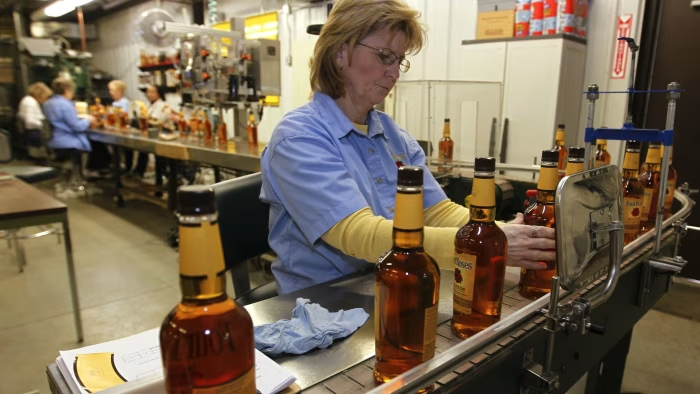
Japan’s Kirin Holdings has put its Kentucky bourbon brand Four Roses up for sale at a price of $1bn, as the brewer pivots away from the struggling spirits sector towards healthcare.
Kirin has been working with advisers from UBS to test interest from potential buyers in recent weeks, with first-round bids expected as early as next month, according to two people familiar with the matter.
The sale process comes during a tough period for brewers and distillers as they contend with changing habits among younger consumers, who are reducing alcohol consumption. In Japan, beer consumption has dropped, hurting Kirin’s core product.
Kirin and UBS declined to comment.
Kirin, a Japanese conglomerate that generates more than $15bn a year in sales and produces everything from lager and spirits to rare diseases medicines under its Kyowa Kirin subsidiary, has owned Four Roses since 2002.
Tracing its origins back to 1888, Four Roses is produced in a distillery in Lawrenceburg, Kentucky, in the heart of so-called Bourbon Country. Four Roses generated about $70mn in adjusted earnings annually and was expected to fetch as much as $1bn, the people said.
After first entering the pharmaceutical sector in the 1980s, Kirin has accelerated its push into healthcare in recent years, as well as shedding non-core beverage assets, such as a soft drinks joint venture in China.
Last year the company bought the skincare and supplements company Fancl as part of the effort. And in 2023 it launched a $1.3bn takeover for Australia’s largest vitamin company Blackmores.
Across 2024, Kirin’s pharmaceutical division generated 23 per cent of the group’s $15.4bn in total revenue, up from 20 per cent in 2020. Shares in Kirin are up 14 per cent so far this year, giving it a market value of nearly $13.6bn as of Thursday’s close.
Four Roses was likely to draw interest from strategic buyers, but some large drinks conglomerates might remain on the sidelines as they grappled with problems with their own product portfolios, the people said.
The S&P food and beverage index is down 4.9 per cent over the past year, whereas the wider S&P 500 index is up 16 per cent over the same period.
There were no guarantees that the sale process would result in a deal, the people cautioned. It is also possible that Kirin may opt to sell off a stake in the business through a joint venture, they added.