Category: 3. Business

  • Samsung Electronics and SoftBank Corp. To Collaborate on AI-RAN Technologies for Next-Generation Telecommunications – Samsung Global Newsroom

    Samsung Electronics and SoftBank Corp. To Collaborate on AI-RAN Technologies for Next-Generation Telecommunications – Samsung Global Newsroom

    Samsung Electronics and SoftBank Corp. have signed a Memorandum of Understanding (MOU) for joint research into next-generation communications technologies, including 6G and AI-based radio access network (AI-RAN) innovations.

    The two companies will categorize next-generation communications technologies into four candidate areas — 6G, AI for RAN, AI and RAN, and Large Telecom Model (LTM) — and collaborate on select fields to drive future innovation. Leveraging their advanced technological expertise and network deployment capabilities, they plan to identify new use cases, jointly develop core technologies and demonstrate the technologies’ effectiveness.

    This year marks a significant push toward 6G standardization, with discussions emerging on new frequency bands such as the 7GHz spectrum. Under the “AI for RAN” concept, AI-RAN technologies are expected to play a pivotal role in optimizing wireless networks.

    Moreover, AI-RAN orchestration technologies under the “AI and RAN” concept — designed to seamlessly integrate AI workloads with base station workloads and operate them efficiently — hold significant potential for network optimization and enhanced user experiences. The use of Generative AI within communications networks is being considered a viable area of research as well.

    “Through this collaboration with SoftBank, we aim to define meaningful use cases for both operators and end users, while securing key technologies for future commercialization,” said JinGuk Jeong, Executive Vice President and Head of Advanced Communications Research Center (ACRC) at Samsung Research. “Building on our advanced expertise in AI-RAN and 6G, Samsung will continue to lead innovation in next-generation communications.”

    “We are very pleased to collaborate with Samsung, a global leader in communications technologies. By combining our advanced expertise, we will accelerate the realization of next-generation networks that evolve to become more efficient and highly reliable through AI-RAN,” said Hideyuki Tsukuda, Executive Vice President and CTO, SoftBank Corp. “SoftBank remains committed to taking on the challenge of building the next-generation social infrastructure essential for a future society where AI and humans coexist.”

    Samsung Electronics continues to lead research in 6G and AI-powered communications technologies through its ACRC under Samsung Research. In November, the company plans to host the Silicon Valley Future Wireless Summit, an event aimed at fostering dialogue among industry leaders, academia and government organizations on AI-RAN research.

    Continue Reading

  • Exclusive: ConocoPhillips to lay off Canada employees in November, company memo shows

    Exclusive: ConocoPhillips to lay off Canada employees in November, company memo shows

    • Layoffs part of plan to cut global workforce by 25%
    • Canadian employees to be notified in early November
    • U.S. oil price drop pressures companies to cut staff
    CALGARY/HOUSTON, Oct 23 (Reuters) – U.S. oil company ConocoPhillips (COP.N), opens new tab is laying off employees at its Canadian operations, according to three sources and a company memo reviewed by Reuters, as it moves to cut up to a quarter of its global workforce by next year.

    The memo did not specify how many layoffs would take place but said they would begin at the company’s Canadian operations in the first week of November.

    Sign up here.

    Employees in Calgary will be notified virtually on November 5 and those in the company’s Surmont oil sands operation in northern Alberta and its Montney shale play in British Columbia will be told in person the following day, the memo said.

    “We will not be sharing area-specific workforce numbers for current or impacted employees and contractors,” ConocoPhillips spokesperson Dennis Nuss said in an email.

    FALL IN OIL PRICES FORCES STAFF AND SPENDING CUTS

    ConocoPhillips employed 950 people in Canada as of the end of 2024, according to the company’s website, and its 2024 Canadian production was 164,000 barrels of oil equivalent per day (boe/d).

    A fall in oil prices has put ConocoPhillips and its U.S. rivals under pressure this year, forcing them to cut staff, curb capital spending and reduce drilling.

    U.S. oil major Chevron (CVX.N), opens new tab announced it would lay off, opens new tab up to 20% of its staff in February, and other energy companies, including SLB (SLB.N), opens new tab and BP (BP.L), opens new tab, are also cutting their workforces.
    In Canada, the major domestic oil sands players have remained relatively sheltered from the downturn, due to years of cost-cutting and the insulating effects of a lower Canadian dollar, which makes Canadian oil exports more attractive to foreign buyers.

    But the U.S. industry’s pain has spread to Canada, with U.S.-owned companies beginning to cut their Canadian divisions as they consolidate operations and seek to become more efficient.

    In September, Canada’s Imperial Oil (IMO.TO), opens new tab , which is majority-owned by ExxonMobil and has reported strong profits this year, said it would cut its workforce by about 20% by the end of 2027, part of a major restructuring that will eventually shutter most of its presence in the oil-and-gas city of Calgary.

    Reporting by Amanda Stephenson in Calgary; Georgina McCartney and Arathy Somasekhar in Houston; Editing by Franklin Paul and Edmund Klamann

    Our Standards: The Thomson Reuters Trust Principles., opens new tab

    Continue Reading

  • Nikkei 225, CSI 300, Hang Seng Index

    Nikkei 225, CSI 300, Hang Seng Index

    A HDR evening shot taken at sunset of the Tokyo skyline.

    Fgm | E+ | Getty Images

    Asia-Pacific markets rose Friday, after the White House said that U.S. President Donald Trump and China’s President Xi Jinping were set to hold talks next week.

    U.S. Press Secretary Karoline Leavitt said Trump will leave for Malaysia late Friday and then travel to Japan and South Korea, meeting Xi next Thursday after speaking at the Asia-Pacific Economic Cooperation CEO Summit, Reuters reported.

    Japan’s benchmark Nikkei 225 index climbed 0.78%, while the Topix added 0.39%. Japan’s core inflation rate accelerated to 2.9% in September, the first increase since May and in line with expectations from economists polled by Reuters.

    This was higher than the 2.7% seen in August. The core inflation metric in Japan strips out the prices of fresh food but includes energy costs.

    Headline inflation in Japan also climbed to 2.9% from 2.7% the previous month.

    South Korea’s Kospi jumped 1.35% and the small-cap Kosdaq was 0.92% higher.

    Australia’s ASX/S&P 200 was trading 0.19% higher on open.

    Futures of Hong Kong’s Hang Seng Index pointed to a stronger open, trading at 26,139 against the index’s previous close of 25,967.98.

    Overnight, the three major averages closed higher. The S&P 500 climbed 0.58% to close at 6,738.44, boosted by tech stocks, after a batch of strong earnings results.

    The Dow Jones Industrial Average traded up 144.20 points, or 0.31%, to finish at 46,734.61. The Nasdaq Composite outperformed, rising 0.89% to settle at 22,941.80, seeing support from the gains in Nvidia, Broadcom and Amazon. A nearly 3% jump in shares of fellow artificial intelligence player Oracle also boosted sentiment.

    — CNBC’s Sean Conlon, Pia Singh and Lim Hui Jie contributed to this report.

    Continue Reading

  • A new playbook for venture capital in Africa

    The mismatch is hard to ignore: Africa accounts for 18% of the global population and 5% of GDP, yet attracted just 0.6% of global venture capital (VC) in 2024. While funding rose from $1.4 billion in 2019 to a peak of $4.6 billion in 2022, it fell sharply to $1.5 billion last year.

    Over the same period, the number of active VC investors dropped from more than 1,000 to just over 500, and only 188 startups raised capital in 2024, compared to 353 at the peak in 2022 and a base of 117 in 2019.

    This is not just a cyclical slowdown; it reflects deeper structural constraints in how capital is accessed, allocated, and scaled across the continent. It invites a rethink of the role of venture capital in Africa — a sector that holds the potential to catalyse transformative change, but only if it evolves to meet African realities.

    We have highlighted four key areas to consider:

    1. VCs will need to have boots-on-the-ground experience

    Global models often assume mature infrastructure and high consumer liquidity and, in return, demand a “grow-at-all-costs” trajectory. Yet these conditions are not consistently present across African markets.

    As an example, the African Development Bank estimates the continent’s annual financing gap for structural transformation at more than $400 billion. These gaps require a rethinking of how capital is deployed — with strategies rooted in sustainable growth, contextual insight, and business resilience that enable startups to thrive amid real-world constraints.

    The role of VCs with Africa experience, grounded in the lived realities of the markets they serve, becomes indispensable.

    2. African startups build ecosystems, not just products

    A critical mindset shift is recognising that in Africa, startups are not just building products — they are building ecosystems. By addressing consumer needs, they also fill infrastructure gaps.

    In this context, the role of venture capital is not just to fund innovation, but to support the systems that innovation depends on. This makes African VCs patient ecosystem builders; this is especially true in foundational sectors with deep structural barriers like fintech, logistics, and energy, which together accounted for 80% of Africa’s VC funding in 2024.

    3. Diversification is needed as VC is underpenetrated and too concentrated

    Yet even as startups take on the work of building ecosystems, a critical structural gap persists: the capital needed to scale them remains out of reach for many. While seed funding has grown in recent years, follow-on capital — from Series A onwards — remains scarce.

    The data illustrates this imbalance: in 2024, the top ten investments accounted for 51% of total deal value, and just 28 startups absorbed nearly half of all VC funding on the continent between 2019 and 2024.

    Geographically, 84% of 2024’s VC funding went to only four countries: Nigeria, Kenya, South Africa, and Egypt. Without more sustained growth-stage financing and long-term commitment, many ventures that have proven viable and impactful risk stalling before they scale — or even worse, failing due to a lack of financing.

    4. More funding is needed, and it can and must come from the continent

    But allocation is only part of the equation. Africa must mobilise its domestic capital base to align with the specific needs of the continent.

    The Africa Finance Corporation recently noted that an estimated $4 trillion is held by domestic institutions such as pension funds — capital that could be redirected toward critical infrastructure and enterprise development. Ghana’s new policy mandating that 5% of pension fund assets be allocated to venture capital and private equity, amounting to approximately $300 million annually, offers a concrete example of how local capital can play a catalytic role.

    Projections show Africa’s population will grow from around 1.5 billion today to approximately 3.8 billion by 2100, representing nearly 40% of the world’s population. The choices made today about how we fund, scale, and support innovation on the continent will shape not just Africa’s future, but the future of global markets, labour forces, and growth trajectories.

    We just cannot afford for venture capital in Africa to be an afterthought given its crucial role in the private sector.

    Continue Reading

  • Japan September inflation edges higher for first time since May

    Japan September inflation edges higher for first time since May

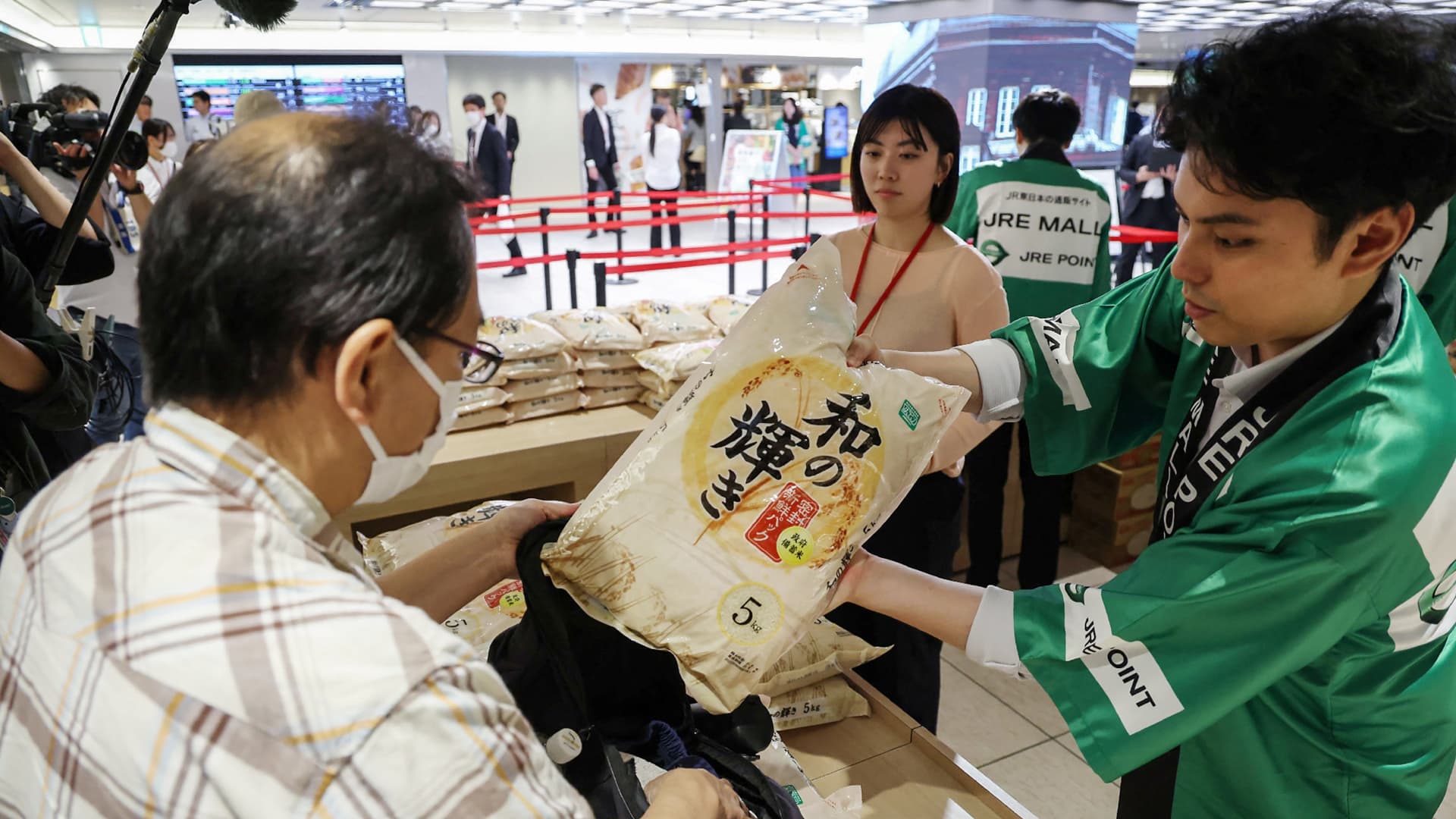
    Government stockpiled rice, which was transported by bullet train, or the “shinkansen”, into the capital is handed over to those who pre-ordered bags, at Tokyo Station on June 10, 2025.

    Str | Afp | Getty Images

    Japan’s core inflation rate accelerated to 2.9% in September, the first increase since May and in line with expectations from economists polled by Reuters.

    This was higher than the 2.7% seen in August. The core inflation metric in Japan strips out the prices of fresh food but includes energy costs.

    Headline inflation in Japan also climbed to 2.9% from 2.7% the previous month, above the Bank of Japan’s 2% target.

    In contrast, the so-called “core-core” inflation rate — which strips out both fresh food and energy costs and is closely monitored by the BOJ — eased to 3% from 3.3% in August.

    Rice inflation, which drew headlines earlier this year, eased sharply to 49.2%, down from 69.7% the previous month. In May, rice inflation hit 101.7%, the highest level in over 50 years.

    Japan’s Nikkei 225 was 0.78% up after the decision, while the yen strengthened marginally to trade at 152.53 against the dollar.

    Stock Chart IconStock chart icon

    The data comes as Japan sees a new prime minister in Sanae Takaichi, who inherits an economy beset by trade uncertainties, cost-of-living worries, and a central bank determined to raise interest rates and normalize monetary policy.

    Inflation will be a major bugbear for Takaichi to tackle, experts previously told CNBC. Japan has a large population of retirees drawing pensions and those on a fixed income, making inflation “very painful” for them, Tomohiko Taniguchi, Special Advisor at the Fujitsu Future Studies Center, told CNBC’s “Squawk Box Asia” on Oct 13.

    “How to tackle inflation is going to be the first litmus test to judge whether Takaichi could deliver a policy package,” Taniguchi said.

    Headline inflation has been above the BOJ’s target for 41 straight months, a run stretching back to April 2022.

    Jesper Koll, expert director at financial services firm Monex Group told CNBC on Wednesday after Takaichi took power that “if inflation in Japan is still is not below 2% in six to nine months time, the popularity of this cabinet is going to plummet because [to] the Japanese people… the number one, number two, number three concern is inflation.”

    Takaichi was reportedly planning an economic stimulus package of more than 13.9 trillion yen ($92.19 billion) to help households cope with inflation, investment in growth industries, and national security, Reuters reported on Oct. 22. The package could be announced as early as next month.

    Continue Reading

  • Hyundai Motor Hosts 15th World Skill Olympics, Pitting Technicians Against Real-World Repair Challenges

    • The global skills competition for Hyundai Motor Company’s top technicians has been held biannually since 1995
    • 75 participants from 50 countries from around the world, gathered at the Global Learning Center in Cheonan, Korea from October 20–23
    • Technicians were evaluated through written and practical tests in three categories: internal combustion engine vehicles, electric vehicles and commercial vehicles


    SEOUL, October 23, 2025
    – Hyundai Motor Company hosted the 15th World Skill Olympics from October 20 to 23 at the Global Learning Center (GLC) in Cheonan, South Korea, bringing together technicians from around the world to demonstrate their skills in a structured competition. 

    The company’s World Skill Olympics, began in 1995, takes place every two years. It serves as a platform for Hyundai Motor technicians worldwide to demonstrate their skills and exchange technical knowledge. 

    This year’s competition featured 75 outstanding technicians from 50 countries, who earned their spots through regional qualifiers. Participants included representatives from regions, such as Europe, the Middle East, Latin America and Southeast Asia. 

    Hyundai Motor conducted evaluations in three categories: internal combustion engine vehicles, electric vehicles, and commercial vehicles.  

    Notably, beginning with the last competition, Hyundai Motor introduced virtual reality (VR) assessments, enabling the safe evaluation of challenging, high-risk maintenance tasks in realistic environments. The company plans to actively use the evaluation data gathered from this competition for future technician training programs. 

    On the final day, Hyundai Motor hosted an awards ceremony to honor the top performers in each category. The top three participants from each discipline received gold, silver and bronze trophies, along with cash prizes.  

    The overall winner of the competition, Mr. Dovydas Cole from the United States, achieved the highest score among all participants. 

    In addition, this year’s awards ceremony featured a congratulatory video message from José Muñoz, President and CEO of Hyundai Motor Company, marking the successful conclusion of the 15th World Skill Olympics and recognizing the efforts of all the participating technicians. 

    Going forward, Hyundai Motor plans to encourage the growth of regional competitions to further enhance the technical skills of its global technicians and foster pride among its workforces.


    ###


    About Hyundai Motor Company
    Established in 1967, Hyundai Motor Company is present in over 200 countries with more than 120,000 employees dedicated to tackling real-world mobility challenges around the globe. Based on the brand vision ‘Progress for Humanity,’ Hyundai Motor is accelerating its transformation into a Smart Mobility Solution Provider. The company invests in advanced technologies such as robotics and Advanced Air Mobility (AAM) to bring about revolutionary mobility solutions while pursuing open innovation to introduce future mobility services. In pursuit of a sustainable future for the world, Hyundai will continue its efforts to introduce zero-emission vehicles with industry-leading hydrogen fuel cell and EV technologies.

    More information about Hyundai Motor and its products can be found at: https://www.hyundai.com/worldwide/en/ or Newsroom: Media Hub by Hyundai

    Follow our Hyundai Global Newsroom Instagram channel @hyundai_mediahub


    Jihyun Park
    Global PR Team / Hyundai Motor Company
    pjh85@hyundai.com


    Continue Reading

  • Asian Stocks Higher as Trump-Xi Plan Eases Nerves: Markets Wrap

    Asian Stocks Higher as Trump-Xi Plan Eases Nerves: Markets Wrap

    (Bloomberg) — Asian stocks rose on Friday as a plan for Donald Trump and Xi Jinping to meet eased nerves around a trade war. Oil prices edged lower ahead of US inflation data.

    An MSCI gauge of Asian shares was up around 0.3%, following a move higher on Wall Street on Thursday. Technology stocks were among the best performers in the region, with South Korean chipmaker SK Hynix Inc. jumping more than 5%. That helped Korea’s Kospi Index add to its blistering rally this year, leading Friday’s gains with a 1.5% rise in early trading. The dollar was little changed.

    The moves came after the White House said President Trump will meet his Chinese counterpart Xi Jinping on Oct. 30, a chance for the leaders of the world’s two largest economies to cool the temperature after a recent flare-up in trade tensions. But quantum-computing stocks also got a boost from reports that the Trump administration was mulling financial support for some firms, a move to counter China.

    Investors are now turning their attention to the delayed inflation report from the US, which will be released on Friday. The cross-asset moves overnight suggest investors are optimistic the inflation reading won’t be a major drag to global markets that have zoomed higher over the past month.

    “Valuations continue to be the best argument for bears, but the relentless buy-the-dip approach of investors has even the most pessimistic investors questioning their outlook,” said Mark Hackett at Nationwide.

    Shares in Intel Corp helped lift the mood overnight, climbing in post-market trading after an upbeat revenue forecast. Treasuries had snapped a three-day rally overnight as yields rose across the curve, with the 10-year climbing five basis points to 4%.

    West Texas Intermediate jumped 5.6% to settle near $62 a barrel on Thursday, the most since the start of the Israel-Iran conflict on June 13. The latest US oil sanctions signaled a major policy turn from the Group-of-Seven price cap strategy that sought to limit Russia’s earnings without disrupting supply or driving up global prices.

    “As with the trade war, the fallout from the oil sanctions is murky at best, although we expect that from the perspective of the market at least, the kneejerk spike in crude will represent the bulk of the attention devoted to this matter, as it were,” said Ian Lyngen, Vail Hartman and Delaney Choi at BMO Capital Markets.

    Inflation Focus

    Investors will likely look past any evidence of stubborn inflation in Friday’s consumer price index report, as money markets brace for a Federal Reserve rate cut next week.

    The September CPI report was delayed due to the US government shutdown. Economists in a Bloomberg survey forecast the core CPI, which excludes food and fuel, to have climbed 0.3% for a third straight month as higher import duties continue to gradually filter through to consumers. The projected monthly gain will keep the annual core CPI at 3.1%.

    Friday’s CPI is important in the sense that it’s one of the few economic data points that we will see given the government shutdown, according to Emily Bowersock Hill, founding partner of Bowersock Capital Partners.

    “But since the Federal Reserve is likely more focused on the labor market, we don’t expect Friday’s CPI to weigh heavily on next week’s Fed decision,” she said. “We will likely see two more rate cuts this year, in October and December.”

    Prospects for Fed easing, durable earnings growth and AI investment spending support the view that the equity bull market has further room to run, according to Ulrike Hoffmann-Burchardi at UBS Global Wealth Management. But she also sounds a note of caution.

    “Any setbacks in US-China relations or potential concerns about the durability of the AI-driven rally could trigger bouts of volatility,” she said.

    How should regulators react to the blurring line between investing and gambling? Let us know in the latest Markets Pulse survey.

    Some of the main moves in markets:

    Stocks

    S&P 500 futures were little changed as of 10 a.m. Tokyo time Hang Seng futures rose 0.7% to the highest since Oct. 10, 2025 Nikkei 225 futures (OSE) rose 1.2% Japan’s Topix rose 0.5% to a record high Australia’s S&P/ASX 200 was little changed Euro Stoxx 50 futures rose 0.1% Currencies

    The Bloomberg Dollar Spot Index was little changed The euro was unchanged at $1.1618 The Japanese yen was little changed at 152.67 per dollar The offshore yuan was little changed at 7.1239 per dollar Cryptocurrencies

    Bitcoin rose 0.9% to $110,547.22 Ether rose 1% to $3,870.74 Bonds

    The yield on 10-year Treasuries was little changed at 4.00% Australia’s 10-year yield advanced three basis points to 4.15% Commodities

    West Texas Intermediate crude fell 0.3% to $61.58 a barrel Spot gold rose 0.1% to $4,131.71 an ounce This story was produced with the assistance of Bloomberg Automation.

    ©2025 Bloomberg L.P.

    Continue Reading

  • US weekly jobless claims increase, more people collecting unemployment checks, economists estimate – Reuters

    1. US weekly jobless claims increase, more people collecting unemployment checks, economists estimate  Reuters
    2. Wall Street Analysis: Uptick in U.S. Initial Jobless Claims Signals ‘Internal Strain’ in Labor Market!  富途牛牛
    3. Unemployment Insurance (UI) Claims  Economic Policy Institute
    4. US Initial Jobless Claims Rose Last Week, State Data Suggest  Bloomberg.com
    5. Unemployment Claims Are Rising — What It Means and How to Protect Yourself  moneywise.com

    Continue Reading

  • Meta Layoffs Included Employees Who Monitored Risks to User Privacy – The New York Times

    1. Meta Layoffs Included Employees Who Monitored Risks to User Privacy  The New York Times
    2. Exclusive: Meta slashes jobs in its AI operations  Axios
    3. Meta lays off 600 from ‘bloated’ AI unit as Wang cements leadership  CNBC
    4. Meta tells some employees their jobs are being replaced by tech — read the memo  businessinsider.com
    5. Reddit Sues Perplexity for Alleged Illegal Data Scraping  Analytics India Magazine

    Continue Reading

  • Can the plastic recycling industry be saved?

    Can the plastic recycling industry be saved?

    MaryLou CostaTechnology Reporter

    Getty Images A man adds an empty plastic bottle to a large pile of plastic bottles.Getty Images

    There’s no shortage of plastic to recycle

    In the plastic recycling industry, the casualties keep coming.

    Waste management company Biffa’s Sunderland plant closed in February after opening in 2022 at a cost of £7m, while rival Viridor closed its Avonmouth plant in 2022, Skelmersdale in 2023 and confirmed this summer that its Rochester plant would close, too.

    Like falling dominoes, plastic recycling plant closures have been endemic across Europe too: another big name, Veolia, will close its two German operations this year, while seven plastic recyclers closed in the Netherlands last year.

    Meanwhile, companies Borealis, Dow and Nester have all dropped plans to construct new plastic recycling plants in Europe.

    Industry body Plastic Recyclers Europe equates this to the loss of nearly one million tonnes of plastic recycling capacity since 2023.

    “Without decisive political action, Europe will replace its recycling industry with dependency on unsustainable imports and growing volumes of waste, undermining both its economic resilience and its climate leadership,” the organisation told the BBC in a statement.

    And more closures are likely, warns James McLeary, managing director for Biffa’s polymers division, as the industry here and in Europe faces its most challenging year yet. High energy and labour costs here are two factors, in parallel with the fact that sourcing virgin and recycled plastic from Asia is currently cheaper than buying European recycled plastic.

    Plastic recycling plant closures are affecting the US as well, also prompted by the low price of virgin plastic, causing the country to miss its recycled content targets, as S&P Global reports.

    “There’s a big global dependence building on Asian plants, and we then have the situation where (plant operators in the UK and Europe) are going to make very tough decisions. Either they run their plants at a point where they’re literally not making anything, or they decide to close,” explains Mr McLeary, who is based in County Durham.

    Getty Images A man walks down a massive pile of plastic bottles in BangladeshGetty Images

    The UK alone exports hundreds of thousands of tonnes of plastic waste

    A dependence on exporting plastic waste also hasn’t helped. The UK exported around 600,000 tonnes of plastic waste last year, according to environmental analysts at ENDS Report – 5% more than in 2023.

    Loopholes in current UK legislation mean plastic waste collectors are inadvertently incentivised to export rather than process domestically. Meanwhile, manufacturers using plastic packaging are still inclined to use cheaper virgin plastic from abroad, and stomach being taxed for it.

    Ahmed Detta, CEO and founder of plastic waste recycler Enviroo, is frustrated by the flaws and contradictions that he feels are plaguing the industry and disrupting the goal of creating a circular economy that keeps materials in use for as long as possible.

    “For me, a circular economy is a win-win. Every single person in that journey has to have some benefit, and that’s not working,” says Mr Detta, who is based in London.

    “Brands aren’t aligning with the circular economy. They’re saying, ‘why should I buy recycled material when it’s cheaper for me to pay the fine for the plastics packaging tax, than actually pay for recycled materials? No one is saying, ‘let’s unite’.”

    Biffa A man in an orange hi-viz jacket stands at a conveyor belt carrying squashed plastic bottles.Biffa

    It’s tough for UK based recyclers to make money

    So concerned is RECOUP, a UK-based plastic recycling independent authority, that its head of policy and infrastructure, Steve Morgan, warns: “We are almost witnessing the demise of plastic recycling as we know it, unless we have some interventions. There’s no way a lot of recyclers in the UK can compete.”

    UK regulations have benefited foreign markets more than they have the UK, and serious reform is needed, Mr Morgan argues.

    “There are an awful lot of fantastic technologies developing. But it’s a scale up of those and how they can actually make money, to continue to exist and then also thrive, is the secondary thing,” says Mr Morgan, who is based in Peterborough.

    “The commercial viability long term is just not there at the moment. There are some really good people producing technologies that we couldn’t even dream of 10 years ago. But I just feel we’re not going to see any real change in the next two to three years without some intervention.”

    RECOUP is urging the UK government to introduce a single plastic recycling certification scheme aimed at reducing the export of plastic waste and making more companies more inclined to use recycled packaging.

    Mr Morgan is optimistic that a UK government consultation this year will seriously consider what changes should be implemented to save the plastic recycling industry.

    Plastics Europe Wearing a white top, Virginia Janssens leans her arm on the back of her chair as she turns to face the camera.Plastics Europe

    Europe is in danger of falling behind in plastic recycling says Virginia Janssens

    Packaging reforms are indeed being implemented, alongside £10bn of investment in new plastic sorting and processing facilities, according to a spokesperson from the UK Department for Environment, Food and Rural Affairs (DEFRA).

    They also say the Deposit Return Scheme, launching in October 2027, will create higher quality material for recycling, as consumers will be encouraged to return drinks bottles and cans to collection points to collect the small deposit they will have paid on purchase. The government has also convened a Circular Economy Taskforce.

    “Our collection and packaging reforms will support UK-based recycling, meaning we can reduce our dependency on exports of plastic waste,” says the spokesperson. “The export of waste is subject to strict controls set out in UK legislation.”

    Over in Brussels, Virginia Janssens is the managing director at Plastics Europe, which represents plastic producers, including those with recycling operations and that use recycled materials. She’s concerned that the plastic recycling industry is set to flourish outside Europe.

    “Business will go where it makes sense and where it’s cheapest to build. If those big production plans are built somewhere else, with huge investments of billions, they’re not all of a sudden then going to decide to go back and build one in Europe,” says Ms Janssens.

    “It will have a huge effect on our value chain. It would set us back to 20 years ago, when we would have to incinerate or use landfill more, and that would be a real shame. Nobody wants this.”

    But there are some bright spots in an otherwise struggling industry.

    Biffa, for example, has recently acquired bottle manufacturer Esterform, which uses recycled PET.

    Meanwhile, Enviroo recently secured £58m to build a new recycling facility in the north-west of England, specialising in converting PET drink bottles into a recycled granulate that can be used in food packaging.

    Due to be operational by 2026, the plant is expected to process up to 35,000 tonnes of plastic annually.

    Mr Detta believes being a specialist in an industry of generalists, and going back to the fundamentals of plastic recycling, will be his key to success.

    “I’m not here to tell you I’ve got the most innovative technology. No – I’ve looked at the real, hardcore problems and said, ‘What is it that I need to resolve?”

    Plastic Energy, meanwhile, is successfully converting plastic waste into pyrolysis oil that can be used to make food and medical grade plastic. Headquartered in London, the company has plants in Spain, France and the Netherlands.

    CEO Ian Temperton is preparing to benefit from an anticipated under supply of recycled plastic as recycled content targets kick in across Europe: by 2040, plastic drinks bottles must contain at least 65% recycled content.

    “We’re about developing and continuing to enhance the technology that deals with waste plastics. Having partners commit to new investments over the next couple of years is going to be a bit harder, but it’s very clear the market will be very significantly under-supplied against any version of the targets,” says Mr Temperton.

    “So I will keep my team focused on the best technology for when that comes.”

    More Technology of Business

    Continue Reading