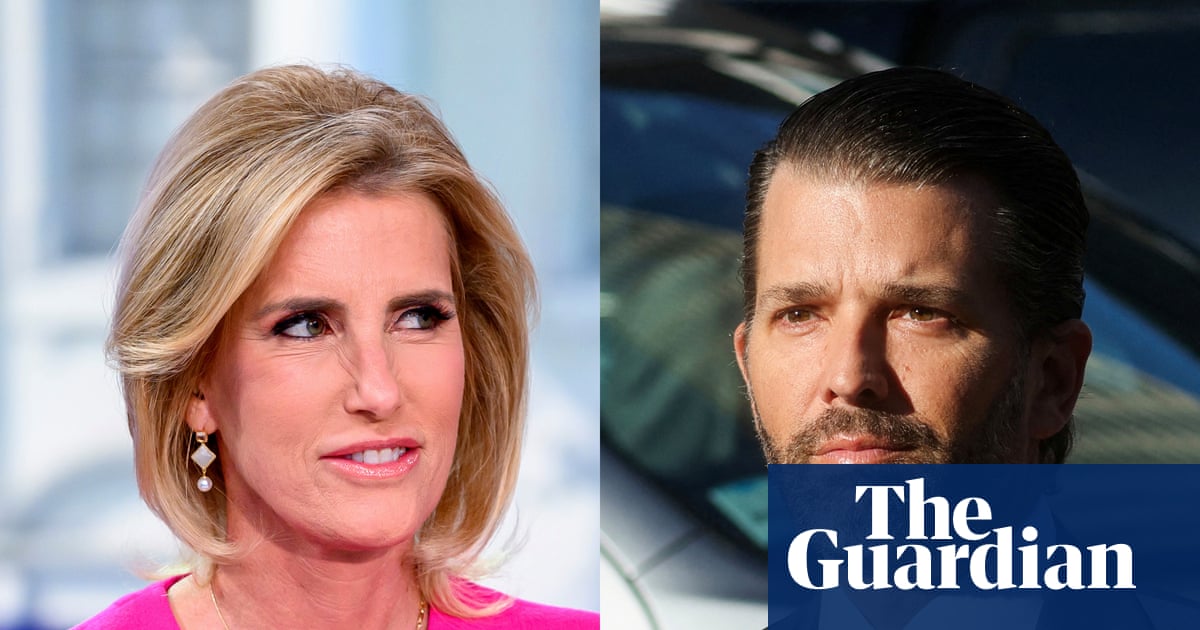
Fox News host Laura Ingraham is joining a business venture that includes Donald Trump Jr – after she repeatedly criticized the business dealings of another president’s son: Hunter Biden.
Ingraham, Trump Jr and Chamath Palihapitiya, a business associate of Donald Trump’s eldest son and namesake, were all listed as board members of a new venture seeking to go public on the stock market, according to Bloomberg. It purports to “fund the next chapter of American Exceptionalism and help Make America Grow Again”.
A filing for the company, Colombier Acquisition Corp III, has designated it as a special-purpose acquisition company, or Spac, which is a shell company that raises money on the stock market before merging with an existing company that isn’t on the market yet. The company is looking to raise $260m in its initial public offering (IPO).
The announcement emphasizes the growing coziness between Fox and the Trump family. In February, Fox launched a weekend show featuring Lara Trump, Trump’s daughter-in-law who joined the network as a contributor in 2021. While the network, during Joe Biden’s Oval Office term, had appeared to grow cold toward Trump, it has fully embraced his second presidency.
Ingraham, a longtime star of the network, was a vocal critic of Hunter Biden and his business dealings while his father was vice-president under Barack Obama. She argued that Biden utilized his dad’s political influence to carry out business deals.
Media Matters, a liberal media watchdog group, estimated that Ingraham mentioned Hunter Biden in more than 150 episodes of her show in 2023 and 2024, in the second half of his father’s presidency. Last December, when Joe Biden pardoned his son, a move that was seen as controversial among liberals and conservatives, Ingraham compared the family to the Corleone mob family of the fictional Godfather movie franchise.
“Given what we’ve learned about the long-term corruption and deception of the Biden family, the Corleones have nothing on them,” Ingraham said.
Joe Biden had previously said he would not use his executive authority to pardon his son. But, upon pardoning him, the then president said his son had become a political target. In addition to controversial links to foreign companies while his father was vice-president, Hunter Biden was also found guilty of felony charges related to a handgun purchase in 2018 and federal taxes.
Last November, after his father won the election, Trump Jr announced his new role at 1789 Capital, an investment firm with close ties to conservative donors. The company’s website says that it funds “the next chapter of American exceptionalism”. So far, it has invested in companies in AI, energy, defense and three of billionaire Elon Musk’s companies. In September, the firm quietly passed $1bn in assets, according to Reuters.
The company, in a statement to Reuters, said that it “maximizes transparency and compliance, even though no one at the fund has ever worked in government”. The White House, meanwhile, has insisted that Trump and his family have never engaged in conflicts of interest.
Trump and his eldest sons were found guilty of civil fraud in 2024. In August, an appeals court threw out the $355m penalty a New York judge ordered Trump to pay after he was deemed guilty of fraud in his real estate business, though the appeals court affirmed the overall fraud verdict.
Thomas Fuller | SOPA Images | Lightrocket | Getty Images
Netflix is due to report third-quarter earnings after the closing bell Tuesday.
The streaming service is no longer offering investors quarterly subscriber updates, but Wall Street will be keen to hear how recent price hikes and the platform’s growing advertising tier are faring — especially as businesses across all sectors grapple with consumers tightening their purse strings.
Here’s what Wall Street expects for the company’s most recent quarter:
Earnings per share: $6.97, according to LSEG
Revenue: $11.51 billion, according to LSEG
Netflix posted major earnings beats for the first and second quarter of the year. The company noted that revenue gains in the first half of the year were due to higher subscription prices, an increase in ad revenue and more member sign-ups.
“Q3 saw Netflix making progress on a number of non-core initiatives including podcasts, physical locations, and games,” Mike Proulx, vice president and research director at Forrester, said in a statement.“But will Netflix find itself spread too thin as it advances a diversification strategy? Consumers choose Netflix because of its quality content. If the company goes too broad to become all things entertainment, it risks diluting its core.”
This story is developing. Please check back for updates.
This holiday season, rather than searching on Google, more Americans will likely be turning to large language models to find gifts, deals, and sales. Retailers could see up to a 520 percent increase in traffic from chatbots and AI search engines this year compared to 2024, according to a recent shopping report from Adobe. OpenAI is already moving to capitalize on the trend: Last week, the ChatGPT maker announced a major partnership with Walmart that will allow users to buy goods directly within the chat window.
As people start relying on chatbots to discover new products, retailers are having to rethink their approach to online marketing. For decades, companies tried to game Google’s search results by using strategies known collectively as search engine optimization, or SEO. Now, in order to get noticed by AI bots, more brands are turning to “generative engine optimization,” or GEO. The cottage industry is expected to be worth nearly $850 million this year, according to one market research estimate.
GEO, in many ways, is less a new invention than the next phase of SEO. Many GEO consultants, in fact, came from the world of SEO. At least some of their old strategies likely still apply since the core goal remains the same: anticipate the questions people will ask and make sure your content appears in the answers. But there’s also growing evidence that chatbots are surfacing different kinds of information than search engines.
Imri Marcus, chief executive of the GEO firm Brandlight, estimates that there used to be about a 70 percent overlap between the top Google links and the sources cited by AI tools. Now, he says, that correlation has fallen below 20 percent.
Search engines often favor wordiness—think of the long blog posts that appear above recipes on cooking websites. But Marcus says that chatbots tend to favor information presented in simple, structured formats, like bulleted lists and FAQ pages. “An FAQ can answer a hundred different questions instead of one article that just says how great your entire brand is,” he says. “You essentially give a hundred different options for the AI engines to choose.”
The things people ask chatbots are often highly specific, so it’s helpful for companies to publish extremely granular information. “No one goes to ChatGPT and asks, ‘Is General Motors a good company?’” says Marcus. Instead, they ask if the Chevy Silverado or the Chevy Blazer has a longer driving range. “Writing more specific content actually will drive much better results because the questions are way more specific.”
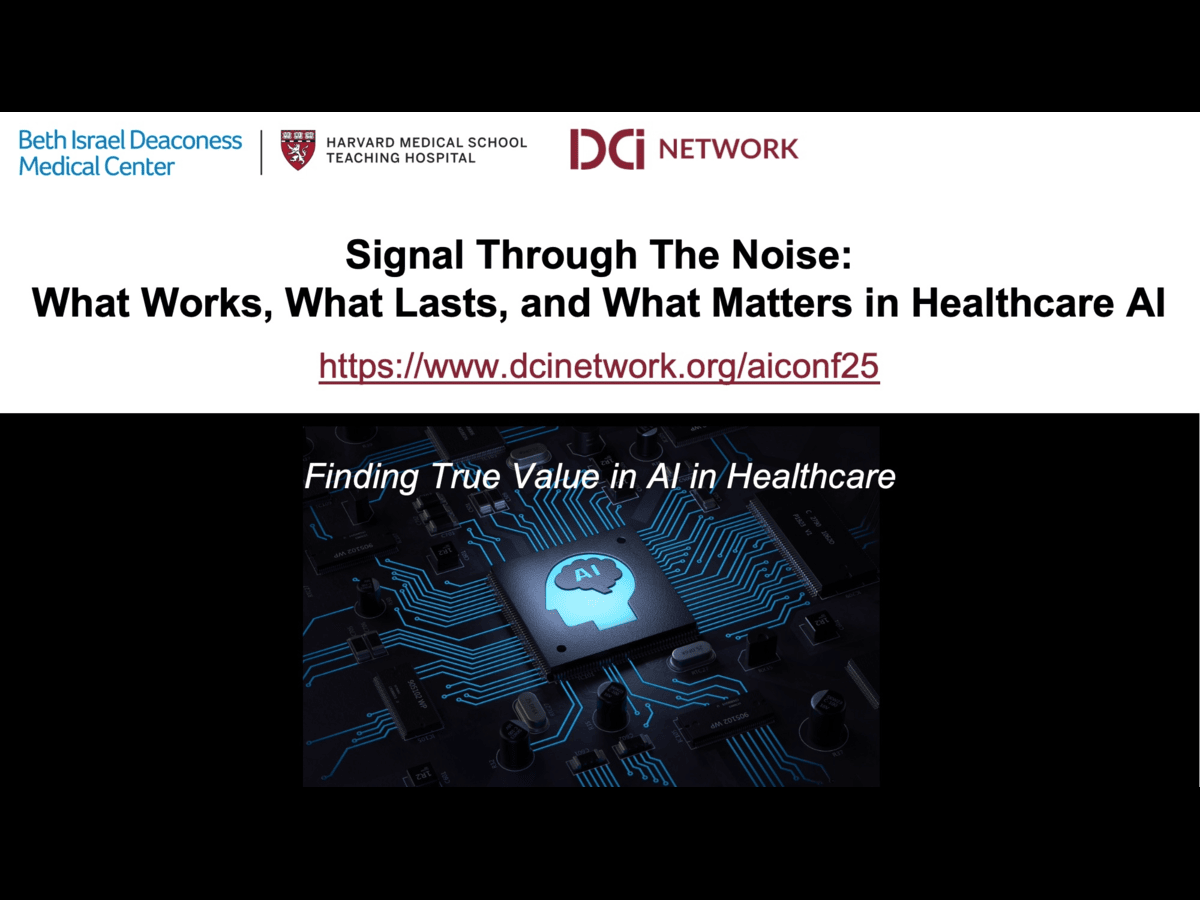
The Division of Clinical Informatics (DCI) Network hosted multiple stakeholders—including researchers, policymakers, and industry and health care professionals—at the “Signal Through the Noise: What Works, What Lasts, and What Matters In Healthcare AI” conference in Boston in September 2025.
Themes included centering the patient, prioritizing transparency and patient safety, and using artificial intelligence to improve “mundane” tasks.
In this event recap, DCI Network founder and conference cochair Yuri Quintana, PhD, shares conference insights and future directions for health care artificial intelligence.
While the development of artificial intelligence (AI) continues to rapidly accelerate, successful adoption of AI tools in health care has lagged []. The technology has yet to fulfill its positive potential in this sector, and concerns about its negative potential are just beginning to be addressed [,]. In addition to sector-specific challenges, there are simply too many tools about which too little—especially when it comes to aspects like privacy, ethics, and patient safety—is known. The signal is obscured by a great deal of noise.
DCI Network’s 2025 AI Conference
The Division of Clinical Informatics (DCI) Network hosted researchers, clinicians, tech innovators, patients, and patient advocates in Boston in September 2025 to filter out that noise and distinguish true value from hype. The conference—“Signal Through The Noise: What Works, What Lasts, and What Matters in Healthcare AI” []—touched on everything from new agentic AI tools to regulatory frameworks and highlighted key priorities for the use of AI in medicine, including:
Centering the patient: Tools need to be built and used not only with the patient in mind or in the loop, but with the patient at the center, consulting and co-designing at every step.
Elevating the “mundane”: Developing and refining tools to address administrative, back-office pain points (reducing burden and freeing up time for health care workers) is more likely to build trust, increase engagement, and have more impact than focusing on “shinier” innovations.
Providing transparency across the life cycle of every tool: Creating transparency—for example, in how models are trained or how patient data are used and protected—is crucial for trust, engagement, and appropriate, ethical use of AI tools.
Never losing sight of the “north stars”: Core principles—including safety, equity, and efficacy—should shape and guide innovation in health care AI.
Fostering AI literacy with tailored education: To develop and use AI tools safely and effectively, every stakeholder needs to understand what they are.
Yuri Quintana, PhD, Chief of the DCI at the Beth Israel Deaconess Medical Center, Assistant Professor of Medicine at Harvard Medical School, and Senior Scientist at the Homewood Research Institute—along with fellow DCI Network colleagues Steven E Labkoff, MD, and Leon Rozenblit, JD, PhD—organized and chaired the 3-day event.
Having had the good fortune of attending the conference, I further connected with Dr Quintana via email to get his impressions and insights.
Yuri Quintana, PhD, cochaired DCI Network’s 2025 AI Conference.
Essential Foundations
You’ve developed several apps that have effectively improved health care delivery []. Were there any major lessons from developing those apps that you think are relevant for the deployment of AI in health care and for this conference?
YQ: While AI promises new opportunities, it is essential not to lose past lessons learned on what works in successful digital health solutions. One of these is the need to develop patient-centric solutions through co-design with patients. Often, in the rush to introduce new technologies, patient involvement is overlooked or done as an afterthought. Successful solutions always include patients early, not only in development but also in the ongoing postmarket release of technologies.
You’ve talked about the problem of amplification without verification when it comes to AI in health care []. What do you think are the biggest obstacles or reservations industries and health care institutions have when it comes to building a “culture of verification”?
YQ: Verification is often viewed as a hindrance to innovation. However, verification is also essential in ensuring that solutions actually address the problem they are intended to solve. When properly done, verification enhances the product’s evolution toward consumer needs and market realities, preventing product failures. Additionally, failure in health care can lead to patient harm, making verification an essential part of AI in health care.
Conference Aspirations
You’re bringing many different stakeholders together for this conference—what are you hoping the cross-talk will reveal or facilitate that siloed conversations often miss? Are there specific lessons you think different stakeholders can learn from one another?
YQ: We hope that the interactions between private sector and public sector groups will lead to a better understanding of how they can collaborate toward improved AI system development, evaluation, and regulation, ensuring better solutions with measurable outcomes and a valuable return on investment. There are numerous AI solutions with unclear outcomes or unquantifiable metrics of success.
What do you hope the real-world impact of this conference will be?
We hope the conference will not only help disseminate best practices in AI for health care but also lead to productive new collaborations among its members. Many new initiatives have arisen from our past conferences. We hope this trend of collaborative innovation continues.
Dr Quintana delivering opening remarks on the second day of the conference.
Insights and Next Steps
What were the biggest takeaways from this conference for you? Were there any emerging best practices, systems, or frameworks that stood out as immediately relevant and/or scalable?
YQ: There was clear evidence that some groups are making meaningful strides toward improved approaches to measuring outcomes. Among those making the most measurable outcomes are applications that may seem mundane, but automating and improving mundane processes will lead to a more efficient health care system, freeing up staff to spend more time with patients.
Did anything you learned from the conference surprise you?
YQ: There was a very warm and welcoming reception to patient views, which led to more inspired conversations on how to bring patient centricity to AI. The delegates engaged with the patients throughout the entire conference. We hope to have more patients and patient advocacy groups at future conferences. We also had a diverse group of presenters, including start-ups, students, early-career investigators, and experienced researchers. This demonstrates that significant progress is being made across the range of stakeholders. A diverse panel of experts evaluated the contributed papers, and although we only selected the top submissions, it was evident that excellence was present across all sectors and age groups.
What gaps in the conversation do you think still need to be addressed in future events or publications?
YQ: There was a clear call for more transparency and for clearer ethics from AI developers. While ethical principles have been articulated, there are few examples of AI developers demonstrating how ethics were applied in the development and operation of their systems. More work needs to be done in these areas.
Coming out of this conference, how do you feel about the future of AI in health care?
YQ: I believe the advancements in hardware and software will continue to accelerate at a rapid pace. The ability for the AI community to develop AI responsively and transparently is yet to be seen. The current lack of transparency in many systems leaves a lot of work and incentives to be designed to bring transparency and trust to levels that most people want to see. Overall, I am optimistic that we will see more open discussions on these topics, leading to better evaluation and transparency of AI in health care.
A Final Thought
For my part, as an attendee, the tone, aims, and implications of this conference can perhaps best be summed up with the following statement by Stephen Hawking [], quoted by one of the presenters: “Our future is a race between the growing power of technology and the wisdom with which we use it.”
JMIR Publications was one of the sponsors of the “Signal Through The Noise: What Works, What Lasts, and What Matters in Healthcare AI” conference. The sponsorship included waived conference registration fees for two attendees, including this article’s author.
Mexico City — [October 21, 2025] — Estée Lauder, the flagship brand of The Estée Lauder Companies, is proud to announce its official launch in the Amazon.com.mx Premium Beauty store. This launch expands access to Estée Lauder’s high-performance skin care, best-in-class makeup and iconic fragrances for customers across Mexico, combining prestige beauty with the ease and convenience of Amazon.
Building on the successful debuts in the Amazon Premium Beauty stores in the U.S. and Canada, the brand’s launch in Mexico marks a key milestone in expanding access to Estée Lauder’s hero products for Latin American consumers, bringing prestige beauty closer to them, whether in major cities or remote regions, through Amazon’s convenient and reliable shopping experience.
“We’re thrilled to partner with the Amazon.com.mx to bring our globally renowned products to new and existing consumers across Mexico, one of the fastest-growing prestige beauty markets in Latin America. Through the lens of ‘The Beauty of Performance,’ we’re excited to deliver our hero products and an elevated, high-touch experience grounded in our night science leadership, skin tone authority and longstanding fragrance expertise,” said Justin Boxford, Global Brand President, Estée Lauder.
Within the Estée Lauder brand storefront on Amazon.com.mx, customers in Mexico will be able to discover, learn about, and shop Estée Lauder’s best-in-class hero products, such as the award-winning, iconic Advanced Night Repair Serum and the #1 selling foundation, Double Wear Stay-In-Place. Customers can also find their other favorite brand franchises and products, including Revitalizing Supreme+, Re-Nutriv, and Futurist Hydra Rescue Moisturizing Foundation.
“The addition of Estée Lauder to our Premium Beauty store marks a transformative moment for beauty retail in Mexico. We’re proud to make these iconic products available to millions of customers nationwide, combining the trust and heritage of Estée Lauder with Amazon’s innovative shopping experience and reliable delivery network. This launch reflects our ongoing commitment to delighting Mexican consumers with broader access to premium beauty, whether they’re shopping from Mexico City or Merida, Monterrey or Oaxaca,” said Pedro Huerta, Amazon Mexico’s Country Manager.
When shopping Estée Lauder in the Amazon.com.mx Premium Beauty store, Prime members will enjoy fast, free delivery on every order.
Shop Estée Lauder now in the Amazon.com.mx Premium Beauty store at www.amazon.com.mx/esteelauder
ABOUT ESTÉE LAUDER
Estée Lauder is the flagship brand of The Estée Lauder Companies Inc. Founded by Estée Lauder, one of the world’s first female entrepreneurs, the brand today continues her legacy of creating the most innovative, sophisticated, high-performance skin care and makeup products and iconic fragrances — all infused with a deep understanding of women’s needs and desires. Today Estée Lauder engages with women in over 150 countries and territories around the world and at a variety of touch points, in stores and online. And each of these relationships consistently reflects Estée’s powerful and authentic point of view. Follow @esteelaudermexico on Instagram, Facebook.
ABOUT THE ESTÉE LAUDER COMPANIES
The Estée Lauder Companies Inc. is one of the world’s leading manufacturers, marketers, and sellers of quality skin care, makeup, fragrance, and hair care products, and is a steward of luxury and prestige brands globally. The company’s products are sold in approximately 150 countries and territories under brand names including: Estée Lauder, Aramis, Clinique, Lab Series, Origins, M·A·C, La Mer, Bobbi Brown Cosmetics, Aveda, Jo Malone London, Bumble and bumble, Darphin Paris, TOM FORD, Smashbox, AERIN Beauty, Le Labo, Editions de Parfums Frédéric Malle, GLAMGLOW, KILIAN PARIS, Too Faced, Dr.Jart+, the DECIEM family of brands, including The Ordinary and NIOD, and BALMAIN Beauty.
The Estée Lauder Companies Lorena Salgado [email protected]
Investors Rainey Mancini [email protected]
ABOUT AMAZON
Amazon is guided by four principles: customer obsession rather than competitor focus, passion for invention, commitment to operational excellence, and long-term thinking. Amazon strives to be Earth’s most customer-centric company, Earth’s best employer, and Earth’s safest place to work. Customer reviews, 1-Click shopping, personalized recommendations, Prime, Fulfillment by Amazon (FBA), AWS, Kindle Direct Publishing, Kindle, Career Choice, Fire tablets, Fire TV, Amazon Echo, Alexa, Just Walk Out technology, Amazon Studios, and The Climate Pledge are some of the products and services pioneered by Amazon. For more information, visit aboutamazon.mx and follow @AmazonNews.
PRESS CONTACTS
Amazon Alexandra Pineda – [email protected] Jeffrey Group – [email protected]
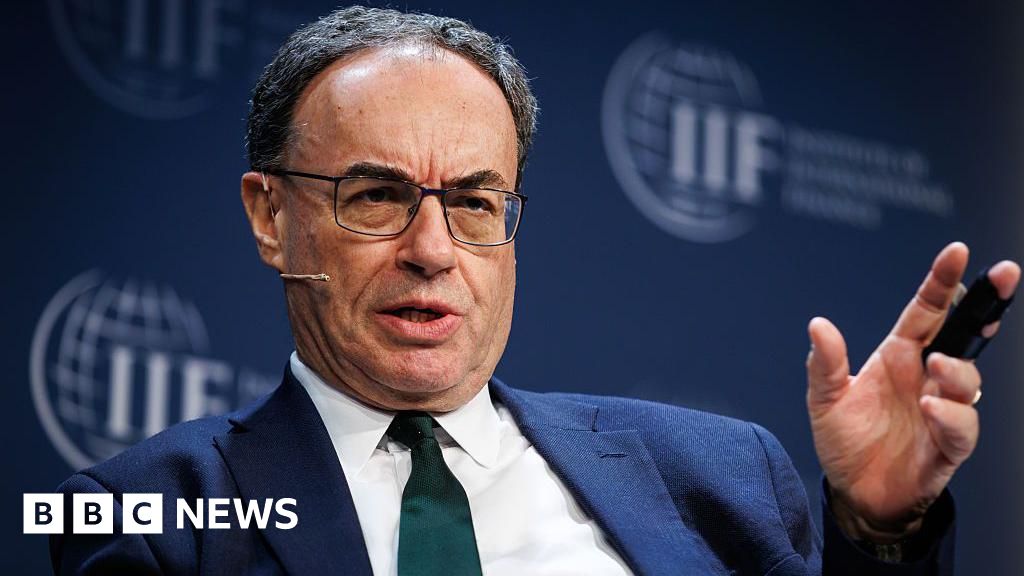
The collapse of two US companies could be a sign of wider problems in the financial system and “alarm bells” were ringing, the governor of the Bank of England has said.
Andrew Bailey told a House of Lords committee that it was important to take the failure of car parts supplier First Brands and subprime car lender Tricolor “very seriously” – and drew parallels with the 2008 financial crisis.
He said it was unclear whether these were one-off issues, or a case of “the canary in the coal mine”.
Mr Bailey also said the Bank of England was planning to run a “stress test” of private equity and credit firms.
The bankruptcies of First Brands and Tricolor have raised questions about the quality of deals in what is known as the private credit market – where companies arrange loans from non-bank lenders.
Mr Bailey said he did not want “to sound too foreboding at this point”, but that “there is a lot we don’t know about First Brands and Tricolour”.
“I think the big question… is: are these cases idiosyncratic, or are they what I call the canary in the coalmine?
“Are they telling us something more fundamental about the private finance and private assets sector?
“I think that’s still a very open question in the US. I think it’s a question we have to take very seriously.”
On the way loans were being made by private credit, Mr Bailey said there was starting to be “what used to be called sort of slicing and dicing and tranching of loan structures”.
“And, you know, if you’re involved before the financial crisis, the alarm bells start going off at that point.”
Reflecting on the tone of the conversation prior to the 2008 financial crisis, he said that back then there had been a belief that sub-prime mortgages were “too small to be systematic” but that this had been “the wrong call”.
Last week, Jamie Dimon, the boss of US banking giant JPMorgan Chase, warned the failure of the two US firms could be a sign of more to come.
“My antenna goes up when things like that happen,” he told analysts. “I probably shouldn’t say this, but when you see one cockroach, there are probably more.”
Also appearing before the House of Lords’ financial services regulation committee, Sarah Breeden, the Bank’s deputy governor for financial stability, said the Bank would be examining the private finance sector.
“We can see the vulnerabilities here,” she said. “We can see parallels with the global financial crisis.”
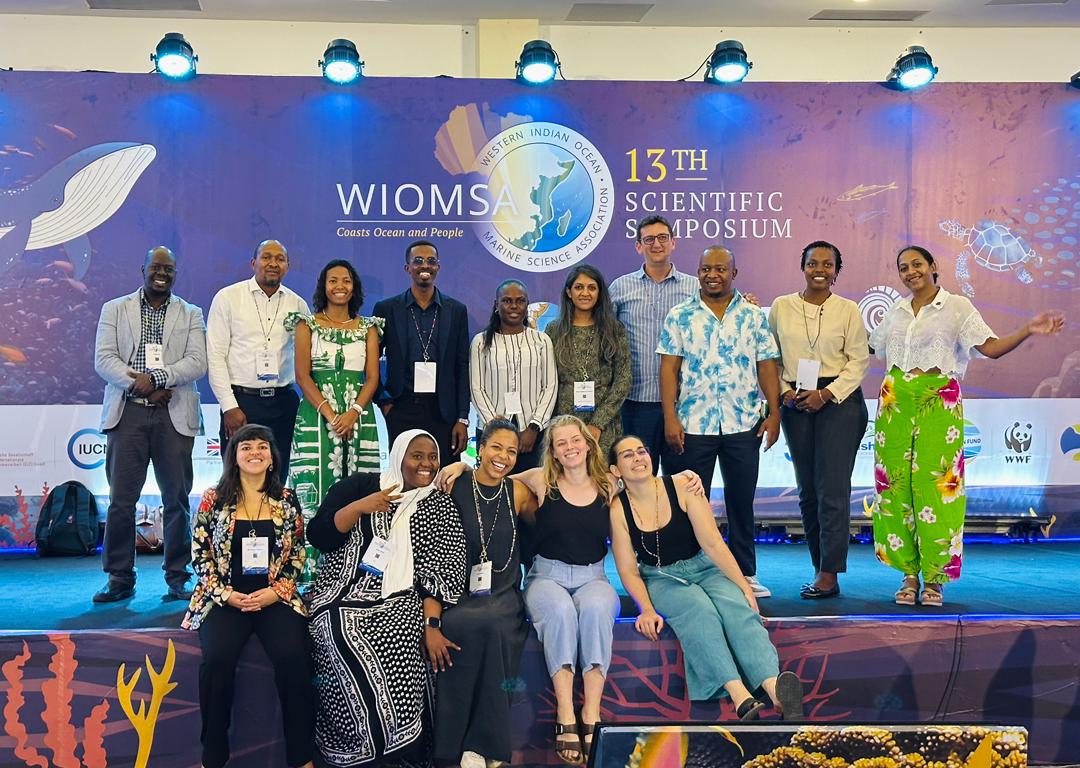
IUCN played a leading role throughout the week, demonstrating the power of the GBW Initiative in advancing science, policy, and community-led action across the Western Indian Ocean. The team’s engagement spanned five days, over 15 co-led sessions, and ten thematic areas, reaching more than 1,200 participants across the region and globally.
A highlight of the Symposium was the special session on seagrass ecosystems, where IUCN through WIOCOR Project, together with WIOMSA and the IOC-RECOS Project, soft-launched the Regional Seagrass Status Report. This moment marked a critical step toward developing a regional vision for seagrass conservation, harmonizing monitoring and management, and establishing a roadmap for transboundary seagrass LMMAs. The week also spotlighted IUCN’s leadership in ecosystem assessments through the Red List of Ecosystems for mangroves, seagrasses, and corals, linking cutting-edge science to conservation planning and policymaking.
The discussions extended to the high seas, with sessions on the Biodiversity Beyond National Jurisdiction (BBNJ) Agreement, where African researchers and policymakers explored readiness for ratification, capacity-building opportunities, and science-policy interfaces. IUCN’s work on OECMs and LMMAs highlighted the importance of community-led governance in achieving global 30×30 conservation targets, while sessions on Tangible Actions to Tackle plastic pollution translated international commitments into locally driven, actionable solutions, emphasizing circular economy approaches, inclusive interventions, and scalable impact.
Throughout the Symposium, Nature-based Solutions (NbS) and the ReSea Project emerged as unifying threads, connecting ecosystem restoration, climate resilience, and sustainable livelihoods across the Western Indian Ocean. IUCN showcased how regenerative ocean economies, including sustainable fisheries, aquaculture, and seascape restoration, can create biodiversity-positive development while providing tangible economic opportunities for coastal communities.
WIOMSA 2025 demonstrated the Great Blue Wall’s role as Africa’s flagship regenerative seascape initiative, connecting local action to global policy, strengthening partnerships, and positioning the Western Indian Ocean as a leader in ocean conservation innovation. With the Regional Seagrass Status Report soon to be finalized, expanding LMMAs, and emerging opportunities for science, investment, and community engagement, the GBW continues to set the stage for resilient, nature-positive oceans across Africa.