Category: 3. Business

  • The Best Warren Buffett Stocks to Buy With $1,000 Right Now

    The Best Warren Buffett Stocks to Buy With $1,000 Right Now

    Warren Buffett will be at the helm of Berkshire Hathaway for just a few more months, but his wisdom and guidance will continue to inspire investors to make sound decisions and stay in the market through volatility.

    If you’re looking for some excellent Buffett stocks to add to your portfolio today, and you have $1,000 available to invest, consider Amazon (NASDAQ: AMZN) and American Express (NYSE: AXP).

    Image source: American Express.

    Buffett has said that buying Amazon stock wasn’t his idea, and that one of his investing managers made the call. However, he has professed admiration for Jeff Bezos and admitted that he missed the boat by not considering it earlier; Berkshire Hathaway only added it to the equity portfolio in 2019.

    At that time, artificial intelligence (AI) was a nebulous term to many investors, even though Amazon has been using it in some form throughout its e-commerce empire for decades. When generative AI had a major breakthrough in 2022, Amazon became an immediate player, offering a wide assortment of tools and services for its Amazon Web Services (AWS) cloud-computing clients.

    It’s hard to overstate the opportunity here. As CEO Andy Jassy put it, “How often do you have an opportunity that’s $123 billion of annual revenue run rate where you say it’s still early?” Amazon is investing hundreds of millions of dollars in the AI business, more than any competitor in its field, as it expands with more high-level chips and data centers, as it has more demand than capacity right now — even with its $100 billion run rate, it can’t keep up.

    And that’s just AI, which isn’t even its biggest business today. That title, of course, goes to e-commerce, and Amazon controls around 40% of the U.S. e-commerce market, which itself is still growing. As Amazon improves its value proposition with more products and faster shipping speeds, it’s poised to keep its dominant position and grab greater market share.

    For a company as large as Amazon to report double-digit sales growth is quite a feat, and with Amazon’s sales up 13% year over year in the 2025 second quarter, investors can be confident in Amazon’s abilities to perform, as well as its incredible long-term opportunity.

    American Express is the quintessential Buffett stock, and it’s been a part of Berkshire Hathaway’s portfolio for almost 30 years.

    Continue Reading

  • CKI calls for Thames Water renationalisation after ‘high-risk’ creditor plan

    CKI calls for Thames Water renationalisation after ‘high-risk’ creditor plan

    Unlock the Editor’s Digest for free

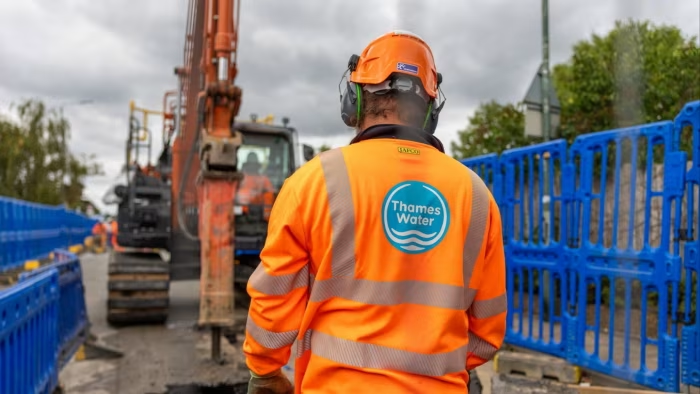
    Hong Kong investor CK Infrastructure, whose overture for Thames Water was spurned earlier this year, has called on the UK to renationalise the troubled utility, warning that an unsatisfactory bidding process has led to a plan that imperils the company.

    Potential bidders for Thames Water, which is struggling under nearly £20bn of debt, were “excluded” from making an offer, according to a complaint by CKI to the sector regulator, Ofwat, earlier this month and seen by the Financial Times.

    KKR, the private equity firm that Thames Water selected as its preferred bidder to take it over, walked away in June. That has left Britain’s largest water company in the hands of its creditors, which include the hedge fund Elliott Management and the US private capital firm Apollo Global Management.

    CKI accused the creditors — who have said they would publicly list Thames Water and write down its debt by 25 per cent in exchange for leniency on fines and targets — of short-termism, in an explosive intervention to Ofwat.

    The Hong Kong-based firm slams the creditors’ plan as a “high-risk proposition that gives rise to unnecessary risk of further failures”.

    “Only a single consortium is allowed to take part [in the rescue process], including distressed debt hedge funds who lack tangible operating experience in the water sector and who so far appear to be aiming for an early exit and payout in March 2030, with Thames Water’s future then passed to someone else,” CKI said in the Ofwat letter, signed by Andrew Hunter, deputy managing director of CK Infrastructure’s UK business.

    CKI, which owns Northumbrian Water, added that it “would willingly put our plan to the test against that of others”, if the government temporarily renationalises Thames Water.

    The Sunday Times reported that CKI had written to Ofwat.

    The regulator is currently mulling the creditors’ proposal, which would see them take over the business formally in exchange for £3.15bn equity, a writedown of the debt and a stock market listing as soon as 2030.

    Hunter warned that the creditors are not injecting sufficient cash and that the additional debt is being loaned at “high” interest rates, suggesting that an even larger proportion of customers’ cash will go towards servicing the borrowings.

    If the creditor plan does not go ahead, Thames Water — which provides water and sewerage services to 16mn households in London and the south east — could become the first water company in England to be temporarily renationalised under the government’s special administration regime.

    The intervention by CKI throws down the gauntlet to the government, which has insisted that it favours a “market-led” solution while refusing to comment on the creditors’ proposals.

    The special administration regime, or SAR, is designed to ensure that essential utilities keep running if a company fails. A special administrator — a private company — would be brought into stabilise and restructure the business ahead of a sale to new owners or renationalisation.

    CKI alleged in the letter that bidding was far from market-led, given that KKR was given exclusivity and that the process has not reopened since the private equity firm walked away.

    CKI’s letter goes on to claim that the creditors’ request for leniency on fines and pollution targets creates a “moral hazard” and that CKI would seek no such special treatment.

    CKI and Ofwat declined to comment.

    The Department for the Environment, Food and Rural Affairs said: “The company remains financially stable, but we have stepped up our preparations and stand ready for all eventualities, including applying for a Special Administration Regime if that were to become necessary.”

    The creditors’ consortium said on Sunday that it had “put forward a comprehensive plan which restores the company’s financial resilience and delivers a stretching operational turnaround led by an experienced world-class board.”

    It countered that CKI had not put in a “viable” proposal for Thames Water, and that its plan to invest in infrastructure would have “slowed the turnaround and significantly delayed a return to compliance” and “alienated the UK’s debt markets for water companies”.

    Thames Water referred queries to the creditor consortium.

    Continue Reading

  • Evaluating Helios Technologies (HLIO) Valuation as Demand and Operational Gains Drive Investor Optimism

    Evaluating Helios Technologies (HLIO) Valuation as Demand and Operational Gains Drive Investor Optimism

    Helios Technologies (NYSE:HLIO) shares climbed higher after the company saw increased demand from its industrial and health & wellness segments. This growth was fueled by strong sales of its quick-release coupling products and effective cost discipline.

    See our latest analysis for Helios Technologies.

    Helios Technologies’ share price has rebounded over the past quarter, delivering a notable 46% gain in the last 90 days as investors responded to the company’s operational improvements and upbeat outlook. Despite some recent volatility, the 1-year total shareholder return of 8.9% points to a stock that appears to be regaining momentum as its end markets strengthen.

    If Helios’ strong recent run has you looking for more opportunities, consider broadening your search and discover fast growing stocks with high insider ownership.

    But with shares having soared recently, the key question is whether Helios Technologies still offers value at current levels or if the market has fully priced in its anticipated growth, which could leave would-be buyers on the sidelines.

    The narrative’s fair value of $60.60 is higher than Helios Technologies’ last close at $52.98, suggesting room for further upside if analyst assumptions play out. The price target reflects expectations that operational improvements and industry megatrends could lift earnings and margins in the years ahead.

    The shift in the industry towards electrification of mobile and industrial equipment is driving OEM demand for sophisticated electro-hydraulic and electronic control solutions. Helios is actively innovating in these areas, for example with Enovation Controls and Cygnus Reach, which supports both top-line growth and margin expansion over the medium to long term.

    Read the complete narrative.

    Curious about which future profit levers and bold margin goals underpin this premium fair value? The narrative’s assumptions involve ambitious improvements you might not expect for an industrial firm. Uncover the details that analysts believe could send shares even higher.

    Result: Fair Value of $60.60 (UNDERVALUED)

    Have a read of the narrative in full and understand what’s behind the forecasts.

    However, risks remain if the market shifts away from traditional hydraulics or if Helios struggles to offset ongoing end-market volatility through innovation and diversification.

    Find out about the key risks to this Helios Technologies narrative.

    While the narrative suggests room for upside, a closer look at Helios Technologies’ price-to-earnings ratio raises questions. Shares currently trade at 50.3 times earnings, much higher than US Machinery industry peers at 24.2x and also above the fair ratio of 41.3x. This may indicate the market is already pricing in significant future growth. Does this premium leave little margin for error if expectations fall short?

    See what the numbers say about this price — find out in our valuation breakdown.

    NYSE:HLIO PE Ratio as at Oct 2025

    If you see things differently or want to dive into the data on your own terms, you can craft a custom perspective in just minutes. Do it your way.

    A great starting point for your Helios Technologies research is our analysis highlighting 3 key rewards and 1 important warning sign that could impact your investment decision.

    Don’t miss your chance to stay ahead. Savvy investors are constantly scanning the market for standout opportunities beyond the headlines. Make your next smart move with these powerful strategies:

    This article by Simply Wall St is general in nature. We provide commentary based on historical data and analyst forecasts only using an unbiased methodology and our articles are not intended to be financial advice. It does not constitute a recommendation to buy or sell any stock, and does not take account of your objectives, or your financial situation. We aim to bring you long-term focused analysis driven by fundamental data. Note that our analysis may not factor in the latest price-sensitive company announcements or qualitative material. Simply Wall St has no position in any stocks mentioned.

    Companies discussed in this article include HLIO.

    Have feedback on this article? Concerned about the content? Get in touch with us directly. Alternatively, email editorial-team@simplywallst.com

    Continue Reading

  • Bitcoin, Energy and the Future of Sustainable Crypto

    Bitcoin, Energy and the Future of Sustainable Crypto

    Professor Andrew Urquhart is Professor of Finance and Financial Technology and Head of the Department of Finance at Birmingham Business School (BBS).

    This is the ninth installment of the Professor Coin column, in which I bring important insights from published academic literature on cryptocurrencies to the Decrypt readership. In this article, I discuss Bitcoin energy usage, and the future for sustainable cryptos.

    When you hear the words “Bitcoin mining,” you might picture giant warehouses packed with whirring computers, gobbling up electricity like there’s no tomorrow. That image isn’t far from reality.

    Since Bitcoin launched in 2009, its proof-of-work (PoW) system has been both its greatest strength and its biggest controversy. It keeps the network secure and decentralized, but it also ties digital finance to very real energy and environmental costs.

    Professor Coin: What Gives Bitcoin Its Value?

    The go-to benchmark is the Cambridge Bitcoin Electricity Consumption Index (CBECI), which estimates that Bitcoin mining consumes electricity on the scale of mid-sized countries. But here’s the catch: Bitcoin’s energy use doesn’t rise smoothly. Instead, it follows market cycles. When Bitcoin’s price surges, miners switch on more rigs, pushing up hashrate, difficulty, and electricity demand. When prices dip, older or less efficient machines go dark.

    Stoll, Klaaßen and Gallersdörfer (2019) pegged annual consumption around 46 TWh back then, with ~22 megatons of CO₂ emissions More recently, new data suggests that consumption has grown substantially.

    According to the 2025 Cambridge Digital Mining Industry Report, Bitcoin’s annual electricity usage is now estimated at 138 TWh, with network-wide emissions of approximately 39.8 Mt CO₂e. The same report also notes that 52.4 % of the energy used by miners comes from sustainable sources (renewables + nuclear) as of 2025.

    These updated figures help us see that while Bitcoin’s environmental footprint remains significant, the composition of its energy mix is also shifting—offering a more nuanced narrative for 2025.

    How Much Energy Does Bitcoin Really Use? Less Than You Might Think

    New research asks a broader question: what’s the total environmental cost? A 2023 paper by Chamanara et al. (2023) estimates Bitcoin mining at ~173 TWh, adding in CO₂, water, and land impacts.

    Meanwhile, the UN University warned that mining draws heavily on freshwater in regions with scarce supply. And it’s not just the running of machines: de Vries (2021) estimated tens of kilotons of e-waste annually from discarded ASIC rigs, since miners churn through hardware every couple of years. This holistic picture means Bitcoin’s footprint is now seen as multi-dimensional: electricity, emissions, water, land, and waste.

    Here’s where the story gets interesting. Not every blockchain guzzles energy like Bitcoin. In September 2022, Ethereum’s Merge replaced PoW with proof-of-stake (PoS). Overnight, its energy use dropped by ~99.9%. Same user experience, radically different environmental profile. This one move showed the world that crypto doesn’t have to be a climate villain.

    What is Proof of Stake? How it Differs From Proof of Work

    Ethereum’s success has raised uncomfortable questions for Bitcoin. If another major chain can deliver security and functionality without the same energy burn, should Bitcoin follow?

    Purists say no: PoW is what gives Bitcoin its incorruptible, apolitical security. Critics counter that clinging to PoW risks political backlash, carbon taxes, or even outright bans in certain jurisdictions.

    Not all miners are environmental bad actors. Some argue they are part of the solution, not the problem. In Texas, mining farms strike deals with grid operators, curtailing power when demand spikes. In Iceland and Canada, miners plug into cheap hydropower. Recent engineering research even explores using mining to monetize excess methane from landfills or stranded renewables that would otherwise be wasted.

    Elon Musk Gushes About Bitcoin ‘Energy’ Demands—Years After Environmental Gripes

    The optimistic narrative goes like this: Bitcoin mining could act as a “buyer of last resort” for surplus green energy, smoothing out variability in solar and wind production. Studies like Hossain & Steigner (2024) and others suggest that, under the right conditions, mining could become an economic driver for renewable projects.

    But the jury is still out—whether miners truly accelerate the green transition or just opportunistically chase cheap power depends on location, incentives, and regulation.

    So where does that leave us in 2025? Here are the big takeaways:

    • Bitcoin’s footprint is real and significant. We’re not just talking electricity, but also carbon, water, land, and e-waste.

    • Design matters. Ethereum’s Merge proved that PoS can slash energy costs without breaking a network. Bitcoin, by contrast, has doubled down on PoW.

    • Nuance is needed. Not all mining is equal—coal-based rigs in Kazakhstan are very different from hydro-powered farms in Quebec.

    • Policy pressure is rising. Expect governments to ask not just “how much power?” but “what kind of power, where, and with what externalities?”

    Bitcoin will always carry the energy question with it. Whether it becomes a climate villain or an unlikely green ally depends on choices made by miners, policymakers, and communities in the next few years.

    For now, one truth is clear: in crypto, the invisible isn’t weightless. The future of digital money is tied, quite literally, to the power grid.

    • Cambridge Centre for Alternative Finance, 2025. Cambridge Digital Mining Industry Report 2025. Cambridge Judge Business School.

    • Chamanara, N., Pereira, A.O., Dsouza, C., Pauliuk, S. and Hertwich, E.G., 2023. The environmental footprint of bitcoin mining across the globe. Earth’s Future, 11(11), e2023EF003871.

    • de Vries, A., 2021. Bitcoin boom: What rising prices mean for the network’s energy consumption. Joule, 5(3), pp.509–513

    • Stoll, C., Klaaßen, L. and Gallersdörfer, U., 2019. The carbon footprint of bitcoin. Joule, 3(7), pp.1647–1661.

    • Hossain, M. & Steigner, T., 2024. Balancing Innovation and Sustainability: Addressing the Environmental Impact of Bitcoin Mining. 10.48550/arXiv.2411.08908.

    • de Vries-Gao, A. & Stoll, C., 2021. Bitcoin’s growing e-waste problem. Resources Conservation and Recycling, 175. 105901. 10.1016/j.resconrec.2021.105901.

    Continue Reading

  • Subgroup Analysis Yields Clinically Meaningful Responses With T-DXd in HER2+ Breast Cancer

    Subgroup Analysis Yields Clinically Meaningful Responses With T-DXd in HER2+ Breast Cancer

    A clinically meaningful progression-free survival benefit (PFS) was observed with fam-trastuzumab deruxtecan-nxki (T-DXd; Enhertu) plus pertuzumab (Perjeta), despite prior treatment, hormone receptor status, or PIK3CA mutations, when compared with taxol, trastuzumab, and pertuzumab (THP), for patients with HER2-positive advanced or metastatic breast cancer. The results were presented as a subgroup analysis for the phase 3 DESTINY-Breast09 trial (NCT04784715) at the European Society for Medical Oncology Congress 2025.

    Prior Treatment Status

    The PFS assessment for prior treatment status looked at those with de novo disease or recurrent disease. The median PFS for patients with de novo disease and treated with T-DXd plus pertuzumab was not calculable (NC; 95% CI, 36.5-NC) compared with 31.2 months (95% CI, 23.5-NC) for patients treated with THP (HR, 0.49; 95% CI, 0.35-0.70). The PFS for those with recurrent disease in the T-DXd plus pertuzumab arm was 38.0 months (95% CI, 26.9-NC) and 22.5 months (95% CI, 18.1-NC) for those in the THP arm (HR, 0.63; 95% CI, 0.46-0.87).

    The confirmed objective response rate (cORR) for patients with de novo disease receiving T-DXd plus pertuzumab (n = 200) was 90.5% (95% CI, 85.6%-94.2%) with 16.5% of patients having a complete response (CR) and 74.0% having a partial response (PR) vs 82.0% (95% CI, 76.0%-87.1%) in the THP arm (n = 200) and 6.5% having a CR and 75.5% having a PR. For those with recurrent disease, the cORR for those with de novo disease (n = 183 vs 187) was 79.2 (95% CI, 72.6%-84.9%) with 13.7% having a CR and 65.6% having a PR vs a cORR of 74.9% (95% CI, 68.0%-80.9%) with 10.7% having a CR and 64.2% having a PR.

    The median duration of response (DOR) for de novo disease in the T-DXd plus pertuzumab arm was 39.2 months (95% CI, 35.1-NC) vs 31.3 months (95% CI, 24.5-NC) for those in the THP arm. For those with recurrent disease, the median DOR was 35.3 months (95% CI, 27.3-NC) vs 21.9 months (95% CI, 18.4-NC) in the THP arm.

    Baseline characteristics for those with de novo disease in the T-DXd plus pertuzumab arm compared with the THP arm was an ECOG performance status of 0 (68.0% vs 60.5%), brain metastases (5.0% vs 3.5%), visceral metastases (73.0% vs 68.5%), hormone receptor positive status (56.0% vs 53.0%), and PIK3CA mutations not detected (73.0% vs 72.5%). For those with recurrent disease, the characteristics included an ECOG performance status of 0 (65.6% vs 66.8%), brain metastases (8.2% vs 8.0%), visceral metastases (73.8% vs 70.1%), hormone receptor positive status (51.9% vs 55.1%), and PIK3CA mutations not detected (65.6% vs 64.7%).

    For those with de novo or recurrent disease, any treatment-emergent adverse effects (TEAEs) occurred in 100% vs 99.4% of patients in the T-DXd arm vs 99.0% vs 98.9% in the THP arm. TEAEs of grade 3 or higher were noted in 57.0% vs 52.5% in the T-DXd arm and 51.0% vs 53.8% in the THP arm. Any TEAEs leading to discontinuation occurred in 23.0% vs 18.2% of patients in the T-DXd arm vs 33.3% vs 22.8% in the THP arm. Adjudicated drug-related interstitial lung disease (ILD)/pneumonitis occurred in 14.5% vs 9.4% in the T-DXd arm and 1.0% vs 1.1% in the THP arm.

    Hormone Receptor Status

    The median PFS for patients who were hormone receptor-positive was 38.0 months (95% CI, 36.0-NC) in the T-DXd plus pertuzumab arm and 27.7 months (95% CI, 22.4-NC) for patients in the THP arm (HR, 0.61; 95% CI, 0.44-0.,84). For patients who were hormone receptor-negative, the median PFS in the T-DXd plus pertuzumab arm was 40.7 months (95% CI, 40.7-NC) vs 22.6 months (95% CI, 17.3-32.7) in the THP arm (HR, 0.52; 95% CI, 0.37-0.73).

    “Patients with [hormone receptor-positive disease] could receive concurrent [endocrine therapy] benefit after 6 cycles of T-DXd or discontinuation of taxane [therapy], which occurred in 13.5% [of patients in the T-DXd plus pertuzumab arm] vs 38.3% [in the THP arm],” Sibylle Loibl, MD, PhD, chair of the German Breast Group and the Chief Executive Officer, and associate professor of obstetrics and gynecology at the Goethe University of Frankfurt, said in the presentation.

    Regarding cORR for patients with hormone receptor-positive disease in the T-DXd plus pertuzumab arm (n = 207) was 81.2% (95% CI, 75.2%-86.2%), with 14.5% of patients having a CR and 66.7% having a PR. In the THP arm (n = 209), the cORR was 77.0% (95% CI, 70.7%-82.6%) with 7.2% of patients having a CR and 69.9% having a PR. For patients with hormone receptor-negative disease, the cORR in the T-DXd plus pertuzumab arm (n = 176) was 89.8% (95% CI, 84.3%-93.8%), with 15.9% of patients having a CR and 73.9% having a PR. In the THP arm (n = 178), the cORR was 80.3% (95% CI, 73.7%-85.9%) with 10.1% of patients having a CR and 70.2% having a PR.

    The median DOR for patients with hormone receptor-positive disease receiving T-DXd plus pertuzumab was 35.3 months (95% CI, 34.8-NC) vs 26.4 months (95% CI, 22.3-NC) for patients in the THP arm. For those with hormone receptor-negative disease, the median DOR in the T-DXd plus pertuzumab arm was 39.2 months (95% CI, 398.2-NC) vs 26.3 months (95% CI, 20.2-NC) in the THP arm.

    Baseline characteristics for patients who are hormone receptor-positive in the T-DXd plus pertuzumab vs THP arms included an ECOG performance status of 0 (68.1% vs 61.7%), brain metastases (4.8% vs 3.3%), visceral metastases 71.0% vs 67.5%), de novo disease (54.1% vs 50.7%), and PIK3CA mutations not detected (70.5% vs 69.4%). For patients who are hormone receptor-negative, the baseline characteristics included an ECOG performance score of 0 (65.3% vs 65.7%), brain metastases (8.5% vs 8.4%), visceral metastases (76.1% vs 71.3%), de novo status (50.0% vs 52.8%), recurrent status (50.0% vs 47.2%), and PIK3CA mutations not detected (68.2% vs 68.0%).

    Regarding safety for hormone receptor-positive and hormone receptor-negative status, any TEAEs occurred in 1010% vs 99.4% in the T-DXd arm and 98.1% vs 100% in the THP arm; and TEAEs of grade 3 or higher occurred in 52.4% vs 57.7% in the T-DXd arm and 52.7% vs 52.0% in the THP arm; serious TEAEs were noted in 28.2% vs 25.7% compared with 29.0% vs 20.6%; TEAEs leading to discontinuation occurred in 17.0% vs 25.1% and 27.1% vs 29.7%; and adjudicated drug-related ILD/pneumonitis occurred in 9.7% vs 14.9% and 0.5% vs 1.7%, respectively.

    PIK3CA Mutation Status

    The median PFS for patients with PIK3CA mutations was 36.0 months (95% CI, 29.7%-NC) vs 18.1 months (95% CI, 15.1-25.6) in both arms, respectively, (HR, 0.52; 95% CI, 0.35-0.77). For those with PIK3CA not detected, the median PFS was 40.7 months (95% CI, 38.0-NC) for patients in the T-DXd plus pertuzumab arm and 32.7 months (95% CI, 24.2-NC) in the THP arm (HR, 0.57; 95% CI, 0.43-0.77).

    The cORR for patients with PIK3CA mutations in the T-DXd plus pertuzumab arm (n = 116) was 81.0% (95% CI, 72.7%-87.7%) with 14.7% of patients having a CR and 66.4% having a PR vs a cORR of 73.6% (95% CI, 64.8%-81.2%) in the THP arm (n = 121) with 4.1% having a CR and 69.4% having a PR. For those who did not have PIK3CA mutations detected, the cORR was 87.2% (95% CI, 862.6%-91.0%) with 15.4% having a CR and 71.8% having a PR in the T-DXd plus pertuzumab arm (n = 266) vs 80.8% (95% CI, 75.6%-85.4%) with 10.5% having a CR and 70.3% having a PR in the THP arm (n = 266).

    The median DOR for patients with PIK3CA mutations was 34.8 months (95% CI, 34.8-NC) in the T-DXd plus pertuzumab arm vs 18.4 months (95% CI, 13.2-26.1) in the THP arm. For those with PIK3CA mutations not detected, the median DOR was 39.2 months (95% CI, 35.3-NC) vs NC (95% CI, 25.6-NC).

    Baseline characteristics for patients with PIK3CA mutations between either arm included an ECOG performance status of 0 (61.2% vs 62.8%), brain metastases (6.9% vs 5.0%), visceral metastases (64.7% vs 63.6%), recurrent disease status (53.4% vs 54.5%), and hormone receptor positive status (52.6% vs 52.9%). For those with PIKik3CA mutations not detected, characteristics included an ECOG performance status of 0 (69.5% vs 63.9%), brain metastases (6.4% vs 6.0%), visceral metastases (77.1% vs 71.8%), de novo disease (54.9% vs 54.5%), and hormone receptor positive status (54.9% vs 54.5%).

    For those with PIK3CA status detected or not detected, any TEAEs occurred in 100% vs 99.6% in the T-DXd arm and 99.2% vs 98.9% in the THP arm; grade 3 or higher TEAEs occurred in 53.0% vs 55.8% and 45.0% vs 55.7%; TEAEs leading to discontinuation in 17.4% vs 22.3% and 24.2% vs 30.2%; and adjudicated drug-related ILD/pneumonitis in 9.6% vs 13.2% and 2.5% vs 0.4%, respectively.

    DESTINY-Breast09 Study Design

    Patients were randomly assigned 1:1:1 to either T-DXd plus placebo (blinded until the PFS analysis; n = 387), T-DXd plus pertuzumab (n = 383), or THP (n = 387). This analysis focused on the T-DXd plus pertuzumab and THP arms.

    The primary end point was PFS by blinded independent central review, with secondary end points including overall survival, PFS by investigator, ORR by BICR/investigator, DOR, PFS2 by investigator, and safety and tolerability.

    The investigators noted that if patients discontinued T-DXd due to adverse effectsAEs except for higher than grade 2 interstitial lung disease, patients could switch to trastuzumab. For patients with hormone receptor-positive disease, concurrent use of endocrine therapy was allowed after 6 cycles of T-DXd or who discontinued taxane.

    Patients were enrolled if they had first-line HER2-positive advanced/metastatic breast cancer; a disease-free interval of 6 months or more from last neoadjuvant or adjuvant therapy; 1 prior line of endocrine therapy for advanced/metastatic breast cancer; and asymptomatic brain metastases were allowed.

    Reference

    Loibl S, Jiang Z, Barroso-Sousa R, et al. Trastuzumab deruxtecan (T-DXd) + pertuzumab vs taxane + trastuzumab + pertuzumab (THP) for patients with HER2+ advanced/metastatic breast cancer: additional analyses of DESTINY-Breast09 in key subgroups of interest. Presented at the European Society for Medical Oncology Congress 2025, October 17-21, 2025; Berlin, Germany. LBA18.

    Continue Reading

  • Highland rail line closes as £4.5m upgrade begins

    Highland rail line closes as £4.5m upgrade begins

    A railway line in the west Highlands has been closed to allow for £4.5m worth of upgrades to be carried out over the coming weeks.

    The Kyle line stretches more than 50 miles (80km) from Inverness to Kyle of Lochalsh.

    Around 4.5 miles (7km) of track will be upgraded between Achnashellach and Strathcarron, with worn rails, sleepers and ballast to be replaced in order to improve the long-term reliability and safety of the route.

    To allow the work to be carried out safely, the line will remain closed between Dingwall and Kyle of Lochalsh until Monday 10 November.

    The project also includes inspections of bridges and drainage improvements to help prevent flooding and weather-related disruption.

    An amended train service has been put in place between Inverness and Dingwall, calling at Beauly, Muir of Ord, and Conon Bridge.

    Buses will replace train services between Inverness and Stromeferry, with a shuttle bus connecting Stromeferry and Kyle of Lochalsh.

    ScotRail Service Delivery Director Mark Ilderton said: “We’re grateful to customers for their patience and understanding when these vital improvements take place.”

    Continue Reading

  • Why Wall Street is fearful of more lending blow-ups – The Economist

    1. Why Wall Street is fearful of more lending blow-ups  The Economist
    2. JP Morgan CEO issues blunt warning on auto industry bankruptcies  TheStreet
    3. JPMorgan’s Dimon on Tricolor losses: ‘It is not our finest moment’  Yahoo Finance
    4. ‘Cockroach’ jabs and regional bank breakdowns: The week private credit’s ‘golden’ narrative got a little less shiny  businessinsider.com
    5. Factoring Swells Worries for Tariff-Hit Auto-Parts Manufacturers  Bloomberg.com

    Continue Reading

  • Adjuvant Therapy Confers Postoperative ctDNA Clearance, DFS Benefit in CRC

    Adjuvant Therapy Confers Postoperative ctDNA Clearance, DFS Benefit in CRC

    Adjuvant therapy can feasibly yield circulating tumor DNA (ctDNA) clearance in a portion of patients with colorectal cancer (CRC) and postoperative ctDNA positivity, with clearance correlating with superior disease-free survival (DFS) outcomes, according to findings from the INTERCEPT CRC study presented at the European Society for Medical Oncology (EMSO) Congress 2025.1

    ctDNA dynamics data after the time of surgery or ablation revealed that 69% of patients had ctDNA negativity on all tests, while 18% had positive results on all tests. Additionally, 3.1% had ctDNA clearance on at least 2 tests, 2.4% had clearance on 1 test, and 8% converted from ctDNA negativity to positivity. Furthermore, adjuvant therapy resulted in ctDNA clearance among 26% (n = 20/77) of patients with ctDNA-positive results after surgery, with 13 (17%) having clearance on at least 2 tests.

    From the time of first ctDNA-positive test result in the stage I to III CRC population, DFS outcomes were significantly improved among those with clearance on at least 2 tests (P <.0001). Data revealed similarly significant outcomes among patients with stage IV disease (P <.0001).

    Following adjuvant therapy, 70% of patients had ctDNA negativity on all tests, while 19% had positive results on all tests. Other data showed that 1.5% had ctDNA negativity on at least 2 tests, 1.4% had clearance on 1 test, and 9% converted from ctDNA negativity to positivity.

    The study population included 403 patients who had ctDNA-positive results at any time after surgery and adjuvant treatment, with 4.2% showing at least 1 subsequent negative reading without any intervention. Furthermore, 2.1% of this population had ctDNA-negative results on at least 2 sequential tests without any intervention, and 1.7% had no recurrences at the time of follow-up. Among patients with spontaneous ctDNA clearance, the median duration of clearance was 11.2 months, and the mean tumor molecules per milliliter was 0.06 (range, 0.02-1.89).

    “Adjuvant treatment can clear a quarter of the patients [who] are ctDNA positive postoperatively. Those with ctDNA clearance had superior DFS,” presenting author Emerik Osterlund, MD, PhD, a postdoctoral fellow in Gastrointestinal Medical Oncology at The University of Texas MD Anderson Cancer Center, stated in the presentation.1 “The rate and durability of [spontaneous] ctDNA clearance was very low.”

    According to Osterlund, previous studies have demonstrated how ctDNA can be employed to monitor minimal residual disease, with ctDNA positivity representing a strong risk factor for disease recurrence following procedures administered with curative intent.2 However, he noted limited findings on the rates and durability of spontaneous ctDNA clearance, the process of transitioning from ctDNA positivity to negativity without any intervention. Consequently, Osterlund and colleagues aimed to evaluate the behavior and clearance of ctDNA following procedures with curative intent among patients with stage I to IV CRC.

    As part of the INTERCEPT program, 1301 patients with newly diagnosed or previously treated resectable stage I to IV CRC enrolled on the study, with 53% having stage I to III disease and 47% having stage IV disease. Patients received standard-of-care therapy—surgical resection with or without neoadjuvant and adjuvant treatment—and underwent tissue collection and testing via ctDNA assays in the postoperative setting and/or following therapy. Investigators then conducted routine surveillance via imaging & labs, with ctDNA assay testing occurring approximately every 3 months at each surveillance visit.

    “ctDNA clearance is useful for seeing potential benefit in novel therapeutic studies,” Osterlund concluded.1

    References

    1. Osterlund E, Maddalena G, Pellatt AJ, et al. Circulating tumour DNA (ctDNA) clearance and correlation with outcome in the INTERCEPT colorectal cancer (CRC) study. Presented at the European Society for Medical Oncology (ESMO) Congress 2025; October 17-21, 2025; Berlin, Germany. Abstract 732MO.
    2. Dasari A, Morris VK, Allegra CJ, et al. ctDNA applications and integration in colorectal cancer: an NCI Colon and Rectal-Anal Task Forces whitepaper. Nat Rev Clin Oncol. 2020;17(12):757-770. doi:10.1038/s41571-020-0392-0.

    Continue Reading

  • Relacorilant Plus Nab-Paclitaxel Yields PFS Advantage in PARP Inhibitor–Exposed PROC

    Relacorilant Plus Nab-Paclitaxel Yields PFS Advantage in PARP Inhibitor–Exposed PROC

    Relacorilant plus nab-paclitaxel (Abraxane) produced a progression-free survival (PFS) benefit vs nab-paclitaxel alone in a subgroup of patients with platinum-resistant ovarian cancer (PROC) who had received prior PARP inhibitor treatment, including those who had progressed during PARP inhibitor treatment, according to findings from a pre-planned subgroup analysis of the phase 3 ROSELLA trial (NCT05257408), which were presented at the 2025 ESMO Congress.1

    In the subgroup of patients who had prior exposure to a PARP inhibitor, relacorilant plus nab-paclitaxel (n = 114) elicited a median blinded independent central review (BICR)–assessed PFS of 7.36 months (95% CI, 5.59-8.18) vs 4.63 months (95% CI, 3.55-5.72) with nab-paclitaxel alone (n = 120; HR, 0.60; 95% CI, 0.42-0.85; nominal P = .0035). The investigator-assessed overall response rates (ORRs) in these respective groups were 39.5% and 30.8%.

    Furthermore, in the subgroup of patients who had progressed on a prior PARP inhibitor, the BICR-assessed median PFS with relacorilant plus nab-paclitaxel (n = 86) was 7.36 months (95% CI, 5.39-8.44) vs 3.94 months (95% CI, 3.32-5.72) with nab-paclitaxel alone (n = 97; HR, 0.56; 95% CI, 0.37-0.84; nominal P = .0046). The investigator-assessed ORRs in these respective groups were 34.9% and 26.8%.

    “Consistent benefit was reported in this subgroup analysis in PARP [inhibitor]–pretreated patients [with] relacorilant plus nab-paclitaxel,” presenting author Domenica Lorusso, MD, PhD, said.

    Lorusso is director of the Gynaecological Oncology Unit at Humanitas Hospital San Pio X, as well as a full professor of obstetrics and gynecology at Humanitas University, Rozzano, in Milan, Italy.

    What Were the Rationale and Design of the ROSELLA Trial?

    Ovarian cancers harbor glucocorticoid receptor expression, which is a marker of poor prognosis. Relacorilant is a novel, selective glucocorticoid receptor antagonist that restores cancer sensitivity to cytotoxic chemotherapy.

    ROSELLA enrolled patients with epithelial ovarian, primary peritoneal, or fallopian tube cancer who had an ECOG performance status of 0 or 1, had progressed less than 6 months after their last dose of platinum therapy, and had received 1 to 3 prior lines of therapy, including prior bevacizumab. Patients were randomly assigned 1:1 to receive nab-paclitaxel at 80 mg/m2 on days 1, 8, 15 of each 28-day cycle, in combination with relacorilant at 150 mg on the day before, the day of, and the day after nab-paclitaxel infusion; or nab-paclitaxel monotherapy at 100 mg/m2 on the same nab-paclitaxel dosing schedule.

    PFS by BICR and overall survival (OS) served as the dual primary end points. Secondary end points included investigator-assessed PFS, ORR, duration of response, clinical benefit rate, and safety.

    What Data Have Been Previously Reported From ROSELLA?

    Previously, data presented at the 2025 ASCO Annual Meeting showed that the addition of relacorilant to nab-paclitaxel extended median PFS by BICR compared with nab-paclitaxel alone across the entire population of patients with PROC (HR, 0.70; 95% CI, 0.54-0.91; log-rank P = .0076).1,2 Furthermore, data from the interim OS analysis showed that the addition of relacorilant generated a clinically meaningful median OS improvement across the full analysis set, at 16.0 months vs 11.5 months (HR, 0.69; 95% CI, 0.52-0.92; nominal log-rank P = .0121).

    What Additional Efficacy Data Were Seen in the Analysis of Prior PARP Inhibitor–Exposed Patients in ROSELLA?

    The addition of relacorilant to nab-paclitaxel also showed a trend toward improved OS among patients who had received a prior PARP inhibitor, although these data were only at 50% maturity at the time of this interim analysis.1 The median OS was 15.61 months (95% CI, 12.02-not reached) with relacorilant plus nab-paclitaxel vs 12.58 months (95% CI, 10.09-15.18) with nab-paclitaxel alone (HR, 0.77; 95% CI, 0.53-1.13; nominal P = .1834).

    What Was the Safety Profile of Relacorilant Plus Nab-Paclitaxel in Patients in ROSELLA Who Had Received Prior PARP Inhibition?

    Lorusso noted that relacorilant plus nab-paclitaxel continued to be well tolerated in the prior PARP inhibitor subgroup. Any treatment-emergent adverse effects (TEAEs) were observed in all patients in this subgroup. Among safety-evaluable patients with prior PARP inhibitor exposure who received relacorilant plus nab-paclitaxel, grade 3 or higher TEAEs were seen in 71.1%, and serious AEs were reported in 31.6%. TEAE-related dose reductions of relacorilant (7.0%), dose reductions of nab-paclitaxel (46.5%), treatment interruptions (72.8%), and treatment discontinuations (8.8%) were also observed.

    Among safety-evaluable patients with prior PARP inhibitor exposure who received nab-paclitaxel alone (n = 117), grade 3 or higher TEAEs were seen in 64.1%, and serious AEs were reported in 21.4%. TEAE-related dose reductions of nab-paclitaxel (29.1%), treatment interruptions (58.1%), and treatment discontinuations (6.8%) were also observed.

    “The safety profile in the trial subgroup was very similar to that [seen in] the overall population,” Lorusso concluded.

    Disclosures: Lorusso reported receiving grants from or having contracts with AstraZeneca, Clovis, Genmab, GSK, Immunogen, Incyte, MSD, Novartis, PharmaMar, Seagen, and Roche; receiving consulting fees from AstraZeneca, Clovis Oncology, Genmab, GSK, Immunogen, MSD, PharmaMar, Seagen, and Novartis; receiving payment or honoraria from AstraZeneca, Clovis, Corcept, Genmab, GSK, Immunogen, MSD, Oncoinvest, PharmaMar, Seagen, and Sutro; receiving support for attending meetings and/or travel from GSK, AstraZeneca, Clovis, and MSD; and participating on Data Safety Monitoring or Advisory Boards for AstraZeneca, Clovis, Corcept, Genmab, GSK, Immunogen, MSD, Oncoinvest, PharmaMar, Seagen, and Sutro.

    References

    1. Lorusso D, Quesada S, Chan JK, et al. ROSELLA (GOG3073, ENGOTov72, APGOT-OV10): relacorilant + nab-paclitaxel in the subgroup of patients with platinum-resistant ovarian cancer (PROC) previously exposed to a PARP inhibitor. Presented at: 2025 ESMO Congress; October 17-21, 2025; Berlin, Germany. Abstract LBA45.
    2. Olawaiye A, Gladieff L, Gilbert L, et al. ROSELLA: a phase 3 study of relacorilant in combination with nab-paclitaxel versus nab-paclitaxel monotherapy in patients with platinum-resistant ovarian cancer (GOG-3073, ENGOT-ov72). J Clin Oncol. 2025;43(suppl 17):LBA5507. doi:10.1200/JCO.2025.43.17_suppl.LBA5507

    Continue Reading

  • Final Analysis of COMPASSION-15 Presented at ESMO 2025

    HONG KONG, Oct. 19, 2025 /PRNewswire/ — On October 19, 2025, Akeso (9926.HK) announced the final analysis results from the COMPASSION-15/AK104-302 study at the 2025 European Society of Medical Oncology Congress (ESMO 2025) .  COMPASSION-15 is a Phase III clinical trial evaluating cadonilimab, Akeso’s first-in-class PD-1/CTLA-4 bispecific antibody, in combination with oxaliplatin and capecitabine as first-line treatment for unresectable, locally advanced, recurrent, or metastatic gastric or gastroesophageal junction (G/GEJ) adenocarcinoma.  Professor Shen Lin, principal investigator from Peking University Cancer Hospital, presented the findings in an oral session at ESMO 2025.

    In this final analysis presented at ESMO 2025 (median follow-up: 33.9 months), the cadonilimab regimen demonstrated enhanced long-term survival benefits in first-line advanced G/GEJ adenocarcinoma. With the extended follow-up period and more mature data, the cadonilimab treatment regimen showed a further reduction in the risk of death compared to the control group. This consistent benefit was observed across all PD-L1 expression subgroups.

    The interim analysis of COMPASSION-15, with a median follow-up of 18.7 months, was previously published in Nature Medicine in January 2025. The data presented at ESMO 2025 were analyzed using the same statistical methodology.

    COMPASSION-15 2025 ESMO Data

    In the intent-to-treat (ITT) population:

    • With long-term follow-up, the cadonilimab regimen demonstrated a significant 39% reduction in the risk of death (OS HR 0.61) versus the control group, showing further improvement over the data from the median 18.7-month follow-up (OS HR 0.66).
    • With extended follow-up, in the PD-L1 CPS ≥5 population, the cadonilimab regimen demonstrated a significant 51% reduction in the risk of death (OS HR 0.49; p < 0.001) compared to the control group, showing further improvement over the data from the median 18.7-month follow-up (OS HR 0.58).
    • With long-term follow-up, in the PD-L1 CPS <5 population, the cadonilimab regimen showed a significant 24% reduction in the risk of death (OS HR 0.76; 95% CI: 0.59-0.99; p = 0.019) versus the control group, with a strengthening trend of benefit compared to the data from the median 18.7-month follow-up (OS HR 0.75; 95% CI: 0.56-1.00).
    • Following extended the follow-up period, the cadonilimab combination regimen maintained a favorable safety profile, with no new safety signals emerging.

    In the COMPASSION-15 study, patients with PD-L1 CPS <5 (low expression) and CPS <1 (negative expression) are 49.8% and 23%, respectively, of the ITT population. This represents a higher proportion of PD-L1 low and negative patient population in COMPASSION-15 compared to previous Phase III trials of other immune checkpoint inhibitors used in the treatment of first-line gastric cancer. Previous studies have shown limited responses to PD-1/L1 inhibitors in PD-L1 low-expression or negative patients.

    Cadonilimab was approved by the NMPA in September 2024 for the first-line treatment for advanced gastric cancer, offering a new and effective immunotherapy option. Cadonilimab has been included in the 2025 CSCO Gastric Cancer Guidelines as the only Category I recommendation (Level 1A evidence) for first-line immunotherapy, regardless of PD-L1 expression, and is currently widely used in clinical practice.

    Forward-Looking Statement of Akeso, Inc.
    This announcement by Akeso, Inc. (9926.HK, “Akeso”) contains “forward-looking statements”. These statements reflect the current beliefs and expectations of Akeso’s management and are subject to significant risks and uncertainties. These statements are not intended to form the basis of any investment decision or any decision to purchase securities of Akeso. There can be no assurance that the drug candidate(s) indicated in this announcement or Akeso’s other pipeline candidates will obtain the required regulatory approvals or achieve commercial success. If underlying assumptions prove inaccurate or risks or uncertainties materialize, actual results may differ materially from those set forth in the forward-looking statements.

    Risks and uncertainties include but are not limited to, general industry conditions and competition; general economic factors, including interest rate and currency exchange rate fluctuations; the impact of pharmaceutical industry regulation and health care legislation in P.R.China, the United States and internationally; global trends toward health care cost containment; technological advances, new products and patents attained by competitors; challenges inherent in new product development, including obtaining regulatory approval; Akeso’s ability to accurately predict future market conditions; manufacturing difficulties or delays; financial instability of international economies and sovereign risk; dependence on the effectiveness of the Akeso’s patents and other protections for innovative products; and the exposure to litigation, including patent litigation, and/or regulatory actions.

    Akeso does not undertake any obligation to publicly revise these forward-looking statements to reflect events or circumstances after the date hereof, except as required by law.

    About Akeso
    Akeso (HKEX: 9926.HK) is a leading biopharmaceutical company committed to the research, development, manufacturing and commercialization of the world’s first or best-in-class innovative biological medicines. Founded in 2012, the company has created a unique integrated R&D innovation system with the comprehensive end-to-end drug development platform (ACE Platform) and bi-specific antibody drug development technology (Tetrabody) as the core, a GMP-compliant manufacturing system and a commercialization system with an advanced operation mode, and has gradually developed into a globally competitive biopharmaceutical company focused on innovative solutions. With fully integrated multi-functional platform, Akeso is internally working on a robust pipeline of over 50 innovative assets in the fields of cancer, autoimmune disease, inflammation, metabolic disease and other major diseases. Among them, 24 candidates have entered clinical trials (including 15 bispecific/multispecific antibodies and bispecific ADCs. Additionally, 7 new drugs are commercially available. Through efficient and breakthrough R&D innovation, Akeso always integrates superior global resources, develops the first-in-class and best-in-class new drugs, provides affordable therapeutic antibodies for patients worldwide, and continuously creates more commercial and social values to become a global leading biopharmaceutical enterprise.

    For more information, please visit https://www.akesobio.com/en/about-us/corporate-profile/ and follow us on Linkedin.

    SOURCE Akeso, Inc.

    Continue Reading