Category: 3. Business

  • Asian shares are mostly higher after Wall St ends an erratic day with gains

    Asian shares are mostly higher after Wall St ends an erratic day with gains

    MANILA, Philippines — MANILA, Philippines (AP) — Most Asian stock indexes rose on Thursday, tracking gains on Wall Street following a topsy-turvy trading day.

    U.S. futures were nearly flat, while oil prices were higher.

    Japan’s Nikkei 225 rose 0.8% to 48,069.71 as investor sentiment was lifted by a strong start to the earnings season and expectations of U.S. rate cuts.

    Japan’s core machinery orders, excluding ships and electric power, fell 0.9% month-on-month in August, missing market expectations for a 0.4% gain but showing marked improvement from a 4.6% drop in July, according to data released Thursday.

    South Korea’s Kospi surged to a record high, adding 1.8% to 3,722.67 on buying of tech and auto stocks that was spurred by expectations that the U.S. and Korea are getting closer to a deal on tariffs on Korean exports. Samsung Electronics and automakers Hyundai Motor and Kia Corp. were among gainers.

    In Chinese markets, Hong Kong’s Hang Seng index shed 0.4% to 25,799.27, while the Shanghai Composite index rose 0.1% to 3,916.10.

    Australia’s S&P/ASX 200 climbed 8% to 9,063.70, breaching the 9,000 level for the first time amid gains in gold stocks. Miners in resource-rich Australia are benefitting from a runup in gold prices. Early Thursday, the precious metal was up 1.2% at 4,252.30 per ounce.

    Also, the jobless rate rose to 4.5% in September, the highest in four years, stepping up expectations that the country’s Reserve Bank may resume rate cuts as early as next month.

    India’s BSE Sensex added 0.5% while Taiwan’s Taiex advanced 1.5%.

    On Wednesday, most U.S. stocks rose. The S&P 500 added 0.4% to 6,671.06, but only after jumping toward one of its biggest gains since the summer, erasing it all and then climbing back.

    The Nasdaq composite climbed 0.7%, closing at 22,670.08 after earlier pinballing between a drop of 0.4% and a rally of 1.4%. The Dow Jones Industrial Average lagged the market, shedding less than 0.1% to 46,253.31.

    Technology stocks helped lead the way Wednesday following a better-than-expected profit report from Netherlands-based ASML, a major equipment supplier to the semiconductor industry. It expects its revenue for 2025 to be 15% above last year’s, while next year’s should be at least as high as this year’s. Several big banks also drove the market higher.

    Companies are under pressure to deliver strong profits after their stock prices broadly surged 35% from a low in April. To justify those gains, which critics say made their stock prices too expensive, companies will need to show they’re making much more in profit and will continue to do so.

    Profit reports are under more scrutiny than usual as investors seek insights into the health of the U.S. economy. The U.S. government’s latest shutdown is delaying important updates on the economy, such as a report on inflation that was due Wednesday.

    In other dealings early Thursday, U.S. benchmark crude oil gained 58 cents to $58.85 per barrel. Brent crude, the international standard, rose 55 cents to $62.46 per barrel.

    The dollar rose to 151.07 Japanese yen from 151.06 yen. The euro climbed to $1.1658 from $1.1648.

    ___

    AP Business Writers Stan Choe and Matt Ott contributed.
    Continue Reading

  • Lindsey Oil Refinery workers accuse ministers of sitting on hands

    Lindsey Oil Refinery workers accuse ministers of sitting on hands

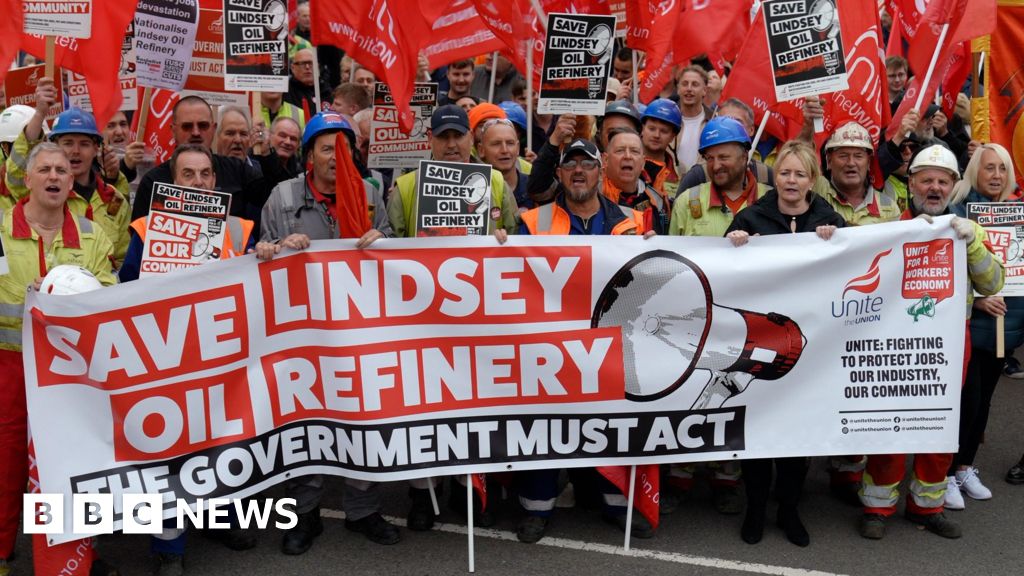
    Workers at an under-threat oil refinery have accused ministers of “sitting on their hands”.

    At a rally on Wednesday, members of the Unite union called for urgent action to secure the future of Lindsey Oil Refinery, which was taken over by the Official Receiver in June when Prax Group went into administration.

    About 255 employees remain at the site in North Lincolnshire after 125 were told they would be made redundant this month. A jobs fair will be held in Immingham later to support them.

    Speaking in the Commons, Energy Minister Michael Shanks said the government wanted to “support as much investment in that site as possible”.

    Dave Smith, a Prax worker and union representative, said: “We’ve been asking the government for help and support – we know the country needs the fuel security, and yet they seem to be sitting on their hands.

    “Everyone has been left scratching their heads wondering why we are in this position.”

    Sub-contractor Anne Holmes, 63, said the site supported about 1,000 people, including those in the supply chain, and its closure would “a huge knock-on effect”.

    “It’s not just the Prax employees, it’s the rest of us who work here as well,” she said.

    “I’m an older person and I’m not going to get another job – this is it for me.”

    Last week, an investment group expressed interest in joining forces with the government to buy the refinery.

    In a debate in the House of Commons on Tuesday, Conservative MP Martin Vickers, who represents Brigg and Immingham, said the government “should be taking a more proactive role in determining the future of the refinery”.

    He said “at least two investors” were “looking to take over the whole site” and asked whether the government would back this.

    In response, Shanks said the Official Receiver was “considering a number of bids to make sure they are viable” and he would be happy to have conversations with Vickers on the subject.

    Speaking at the rally, Sharon Graham, general secretary of the Unite union, said workers had been badly let down and urged the government to invest in green fuel production at the site.

    “Ed Miliband again is missing in action, and we have a Labour government, and I’m sorry to say it, with absolutely no plans for the oil and gas industry,” she added.

    The Insolvency Service said there were “ongoing discussions with a number of parties to progress bids with the objective of achieving a sale of the business”.

    A jobs fair hosted by Grimsby Jobcentre was held at Immingham Civic Centre.

    Representatives from British Steel, Myenergi, Humberside Engineering Training Association, Navigo and Associated British Ports attended the event, according to the Local Democracy Reporting Service.

    Nick Gregory, the a manager at the job centre, said: “This is a very difficult time for those supply chain employees and their families and our hearts go out to them.”

    The government has also offered a training guarantee designed to help workers find new employment.

    Additional reporting by Ivan Morris-Poxton, Local Democracy Reporting Service.

    Continue Reading

  • Farmers near Newbury blame extreme weather for poor harvest

    Farmers near Newbury blame extreme weather for poor harvest

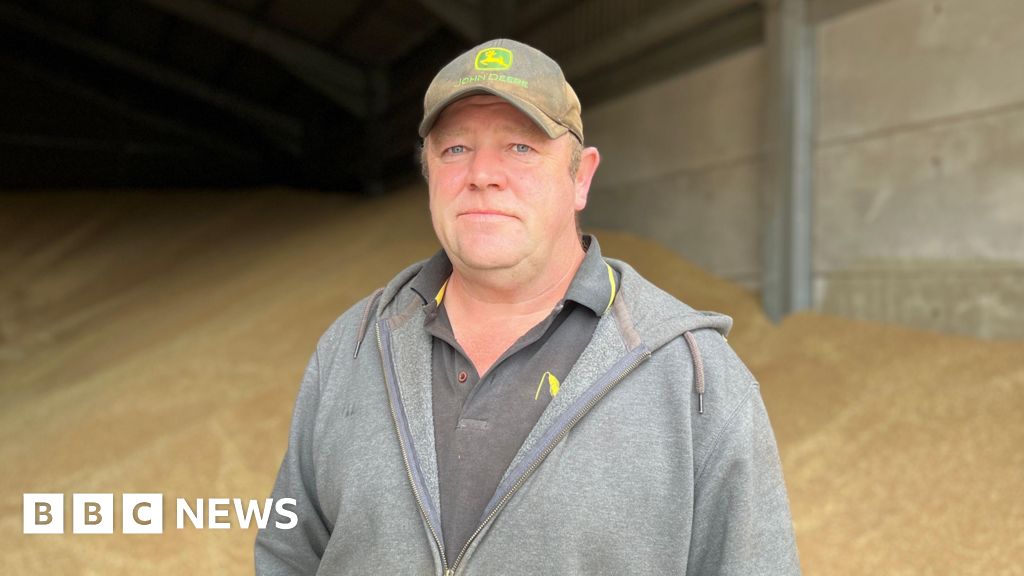
    BBC Dan stands in front of a pile of grain, he is wearing a grey zip hoodie with a grey polo shirt with yellow trim. He is wearing a light grey baseball cap. BBC

    Dan Willis says the impact of the weather on his crop has been “horrific”

    Farmers have blamed extreme wet weather followed by prolonged dry spells for a very poor harvest.

    Dan Willis, who runs a farm near Newbury, said the weather had been “horrific”.

    While George Brown, who also farms in West Berkshire, said he thought the conditions could lead to some farmers selling up.

    Provisional government figures for the 2025 English barley harvest showed a 14% decrease compared to last year, while spring barley had fallen 23%.

    Dan Willis runs the 1,500-acre Rookery Farm near Newbury. He said it had been a terrible harvest.

    “Probably the worst I’ve recorded in my career, over 40 years.

    “The weather has played its part horrifically. We had an extremely wet autumn, an extremely wet winter, followed by an extremely dry spring and summer.

    “It really did impact the yields. Something in the order of between 50 and 70% in places.

    But he believed farmers were very ingenious.

    “They will find ways around things. They’ve got great resolve, that’s why we still produce food,” he said.

    “If we didn’t have that resolve farming would be long gone in this country.

    “You draw deep that you have friends which are in a similar position that you can talk it through with and you’ve got your family, and you’ve got to lean upon them.”

    Government figures also revealed the majority of the main cereal crops saw lower yields this year compared to last year, with winter barley a notable exception.

    Despite there being a nearly 10% increase in land dedicated to growing oats, that crop also showed a decrease in yield this year.

    George Brown George stands with a lush green field behind him. He has a brown overcoat and a navy jumper. His hair is fair, as is his beardGeorge Brown

    George Brown thinks that some farmers will decide to sell their land

    George Brown runs Priors Farm near also Newbury. He said it stayed dry for so long “I guess you can be grateful that you got any sort of crop”.

    “Coming through June I think we were all very worried that we weren’t getting to a harvest at all at that point,” he said.

    George thinks some farmers are selling up because of the financial pressures they are facing.

    “If you look, there’s a huge amount of farm auctions, farm dispersal sales going on constantly at the moment,” he said.

    “There’s a lot of land for sale. People don’t have the confidence to carry on.

    “I absolutely want to keep farming, it gets to the point where if there’s no money in it then you’ve got to take a change of tack,” he said.

    Dr Paola Tosi, an associate professor in Crop Science at the University of Reading, thinks farmers may have to get used to these conditions.

    She said: “They’ve been extreme in the sense that they’re some of the worst we’ve seen on record, but I’m not sure we should use the term ‘unusual’.

    “Last season was also not good.

    “This could be the new usual. We need to come to terms with and tackle and make sure we prepared to fight it. To control it, to mitigate it.

    “At the University of Reading there is research going back to 1990 saying that this was going to happen and that crops were going to suffer,” she said.

    Continue Reading

  • ‘Unsafe’ Crosby Village GP practice shut down

    ‘Unsafe’ Crosby Village GP practice shut down

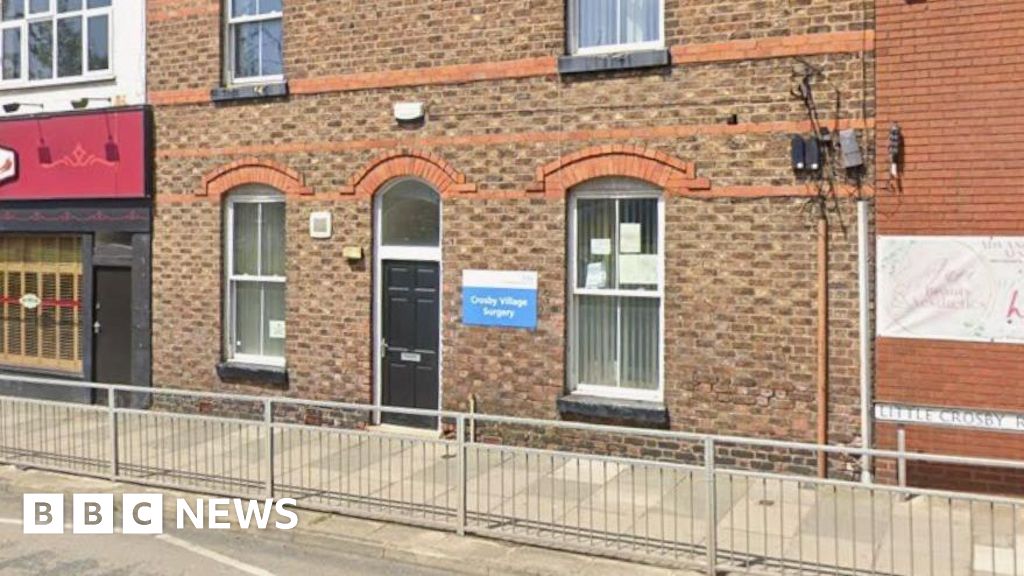
    A GP practice deemed “unsafe” and “no longer fit for purpose” has been permanently closed down by NHS bosses.

    Services were terminated at Crosby Village Surgery by the NHS Cheshire and Merseyside Integrated Care Board (ICB) after a period of temporary closure and following several reviews.

    Councillors at Bootle Town Hall were told the providers running the surgery, Crosby Village Surgery Ltd, had proposed to close it due to the building’s condition.

    Patients will continue to be seen at two other surgeries, Crossways Practice and Thornton Practice.

    Tracy Jeffes, interim place director at the ICB, told councillors the decision to close the surgery was “reasonable” due to the state of the building.

    Councillor David Roscoe suggested the decision was removing a facility from a “densely populated area” and questioned whether the right infractructure was in place to meet demand.

    He asked: “Is there any updates about getting some sort of health facility in that area, particularly located around Crosby village?”

    Ms Jeffes responded: “At present, there isn’t a particular scheme [planned] in Crosby. As we discussed previously, there has been a limited amount of investment or capital investment available.

    “I have to be honest, that has been a challenge – to improve the quality of the estate – but we’ve been trying our best to to bring investment in, to bring capital in where we can, and we’ll continue to refresh our estate plans.”

    Continue Reading

  • What a surprise spike in the unemployment rate means for interest rates and the economy

    What a surprise spike in the unemployment rate means for interest rates and the economy

    The rate of unemployment in Australia is on the rise again. Official labour force data released on Thursday shows that in the month to September, Australia’s seasonally adjusted unemployment rate jumped from 4.3% to 4.5%.

    That’s the highest rate since November 2021. The surprise jump strengthens the case for the Reserve Bank of Australia to cut the official cash rate in November.

    Back in November last year, the seasonally adjusted rate of unemployment was 3.9%. It has now been above 4% for ten consecutive months, and has only been going in one direction: up.

    What could this mean for interest rates?

    In its recent decisions, the Reserve Bank’s monetary policy board has jumped at any signs of higher price inflation. But it has retained a favourable outlook on labour market conditions.

    In its most recent September decision, the board stated:

    labour market conditions have been broadly steady in recent months and remain a little tight.

    Such an outlook does not seem an option in light of today’s unemployment numbers.

    The Reserve Bank has a full employment mandate to achieve “the maximum level of employment consistent with low and stable inflation”.

    The mandate doesn’t put a specific numerical rate on this full employment goal. However, the rate of unemployment is now well above any credible estimate of full employment.

    Employment growth is slowing

    The reason why the rate of unemployment is rising is not hard to spot. Employment growth is slowing.

    In 2024, my calculations based on the official labour force data show an average of 32,600 extra people became employed each month, compared with an extra 33,900 looking for work.

    With growth in employment and the labour force relatively balanced, the rate of unemployment remained stable.

    So far in 2025, each month only an average of 12,900 extra people have moved into employment.

    The number of people looking for work has responded to the weaker labour market conditions, also growing less each month than in 2024, by 22,100 on average.

    But unemployment is rising because the increase in the number of people looking for work in 2025 has been much bigger than the increase in employment.

    Labour force figures for September suggest the jobs market may be cooling.
    Joel Carrett/AAP

    A cooling jobs market

    No matter which statistic you look at, my analysis of the official labour force data reveals the signs of a weakening labour market are clear to see.

    Monthly hours worked grew on average by 0.27% each month in 2024, but only 0.04% so far in 2025.

    In 2024, the total stock of jobs rose by 351,600. In the first six months of 2025, it grew by just 44,100.

    And the proportion of people who have jobs, but want to work more hours, has increased from 9.9% to 10.4% since the end of 2024.

    Government spending

    The reason employment growth is slowing is not what might have been expected – but is even more worrying.

    Since about mid-2021, employment growth in Australia has been propped up by a fast pace of job creation in what is known as the non-market sector, which consists of:

    • health care and social assistance
    • education and training
    • public administration and safety.

    That growth has come about as the federal government has pushed for improvements in the quality of government services, and expanded the National Disability Insurance Scheme (NDIS) and childcare services.

    It has been expected for some time that eventually, the rate of increase in government spending on services would slow. That would in turn cause growth in non-market employment and total employment to slacken.

    What’s really driving the trend?

    However, that is not what has caused the slower employment growth in 2025.

    In fact, today’s data release shows that growth in total hours worked in the non-market sector has continued at pretty much the same pace as in previous years.

    Instead, the drop-off in total hours worked has been due to employment in the market sector declining.

    Private employers are responding to what they see as weaker economic conditions, by reducing the rate at which they are adding new jobs.

    This is a further undeniable sign of a weakening labour market.

    Continue Reading

  • Givaudan inaugurates a new White Biotechnology Innovation Centre in Toulouse, France

    Givaudan inaugurates a new White Biotechnology Innovation Centre in Toulouse, France

    Givaudan, the global leader in Fragrance & Beauty, is proud to announce the opening of its new White Biotechnology Innovation Centre (BIC) in Toulouse. This state-of-the-art site strengthens Givaudan capabilities, advancing research and development, and accelerating the creation of high-precision beauty ingredients. Positioned within Givaudan’s biotechnology R&D and innovation ecosystem, the site will work in synergy with the other centres in Orsay and in Pomacle.

    Givaudan Active Beauty imagines, designs, and creates iconic molecules that consumers love – leveraging biotechnology to deliver exceptional results. The BIC in Toulouse will feature cutting-edge laboratories that consolidate Givaudan’s expertise in white biotechnology, including a dedicated fermentation lab and biocatalysis development area. New scientific concepts can be efficiently scaled up and transformed into next-generation ingredients. 

    “Opening the White Biotechnology Innovation Centre in Toulouse is a milestone in Givaudan’s strategy to pioneer sustainable and scientifically supported cosmetic ingredients. This new centre reinforces Givaudan’s global footprint, enhancing collaboration across our different sites to co-create the future of beauty, in line with our 2030 strategy.”

    Gilles Andrier, CEO of Givaudan

    “This Innovation Centre is designed to foster teamwork and creativity between marketing and R&D. It will allow us to service our customers with original and award-winning innovative ingredient solutions.” 

    Markus Rassmann, Head of Active Beauty

    Built with sustainability and innovation at its core, this new site in Toulouse enhances Givaudan’s collaborative capabilities, advancing the future of beauty through nature and science.


    About Givaudan
    Givaudan is a global leader in Fragrance & Beauty and Taste & Wellbeing. We celebrate the beauty of human experience by creating for happier, healthier lives with love for nature. Together with our customers we deliver food experiences, craft inspired fragrances and develop beauty and wellbeing solutions that make people look and feel good. In 2024, Givaudan employed over 16,900 people worldwide and achieved CHF 7.4 billion in sales with a free cash flow of 15.6%. With a heritage that stretches back over 250 years, we are committed to driving long-term, purpose-led growth by improving people’s health and happiness and increasing our positive impact on nature. This is Givaudan. Human by nature. Discover more at: www.givaudan.com.

    About Givaudan Fragrance & Beauty
    Givaudan Fragrance & Beauty crafts inspired fragrances to perfume lives and memories, and develops innovative beauty and wellbeing solutions that make people look and feel good all over the world. Nature is both our responsibility and our most precious muse. We are just as committed to sustainability as we are to creating innovative products that satisfy consumer needs and anticipate their desires. With a collaborative approach that favours co-creation, we have built a diverse portfolio across personal care, fabric care, hygiene, home care, fine fragrances, and beauty, reflecting our multidisciplinary expertise. This is Givaudan. Human by nature. Learn more at www.givaudan.com/fragrance-beauty.

    About Givaudan Active Beauty
    Givaudan Active Beauty crafts avant-garde cosmetic actives and high-end specialties that make people look and feel good. We bring nature’s most precious gifts to the art of personal care in the form of biotech & botanical high-performing molecules, delighting consumers. Our extensive portfolio of award-winning skin & hair ingredients spans a variety of benefits for human beauty: from well-ageing and self-tanners to radiance, microbiome-friendly, soothers, hydrators, and more. Backed by solid scientific recognition and consumers’ awareness, we remain at the cutting edge of this rapidly expanding market to deliver sustainable solutions supporting the growth of our customers. This is Givaudan. Human by nature. Learn more at www.givaudan.com/fragrance-beauty/active-beauty.


    For further information please contact
    Claudia Pedretti, Head of Investor and Media Relations
    T +41 52 354 0132
    E claudia.pedretti@givaudan.com

    Pauline Martin, Fragrance & Beauty Communications
    E pauline.martin.pm1@givaudan.com

    Continue Reading

  • Kuehne+Nagel accelerates India growth with 100,000 sqm fulfilment centre expansion

    Kuehne+Nagel accelerates India growth with 100,000 sqm fulfilment centre expansion


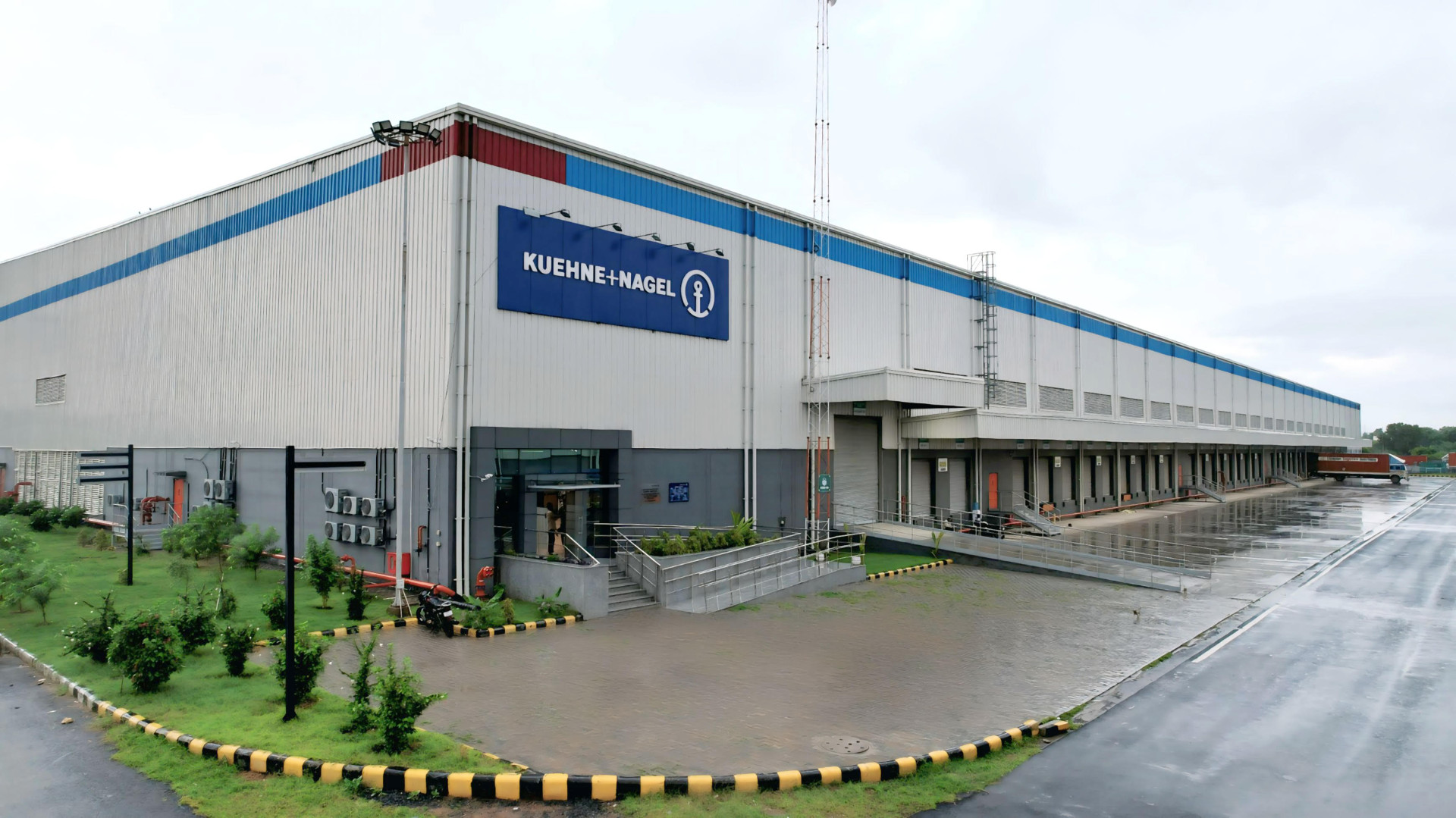
    Kuehne+Nagel distribution centre expansion India

    India is projected to become the world’s third-largest economy by 2030, with strong growth across high-tech, automotive, consumer goods, and healthcare sectors. Rising demand in these industries is driving the need for scalable, high-performance logistics infrastructure.

    The new fulfilment centres are equipped with automation technologies, including telescopic conveyors and high-performance sorting systems, enabling a 75% increase in peak order handling capacity.

    The locations span tier-1 cities Mumbai and Kolkata, tier-2 hubs Gurgaon and Nagpur, and Rajpura in tier-3 — aligned with India’s multi-city industrial growth. Gurgaon and Nagpur continue to evolve as growth hubs for multiple industries, while Rajpura, is gaining traction in manufacturing and distribution.

    “India is a key growth market for Kuehne+Nagel,” said Damian Raczynski, Senior Vice President, Contract Logistics, Kuehne+Nagel Asia Pacific. “We invest where our customers are — and this expansion strengthens our ability to serve high-demand sectors like consumer and healthcare with speed, reliability, and flexibility.”

    Continue Reading

  • HD Hyundai Electric Accelerates Expansion into the North American Low- and Medium-Voltage Circuit Breaker Market with UL Certification

    HD Hyundai Electric Accelerates Expansion into the North American Low- and Medium-Voltage Circuit Breaker Market with UL Certification

    • Secures UL and cUL certifications for four types of low- and medium-voltage circuit breakers, reinforcing competitiveness in North America
    • Global low- and medium-voltage circuit breaker market projected to reach USD 29.2 billion by 2034, growing at a CAGR of 8.8%
    • “The company plans to expand its presence beyond high-voltage transformers to include low- and medium-voltage circuit breakers in North America.”

    SEOUL, South Korea, Oct. 15, 2025 /PRNewswire/ — HD Hyundai Electric has secured UL certification, establishing a foothold to expand its market share in North America’s low- and medium-voltage circuit breaker market.

    HD Hyundai Electric announced on Tuesday, October 14, that four types of its low- and medium-voltage circuit breakers — air circuit breakers (ACB), molded case circuit breakers (MCCB), vacuum circuit breakers (VCB), and magnetic contactors (MC) — have obtained UL (Underwriters Laboratories) and cUL (Canadian UL) certifications, the leading safety standards in the North American market.

    The UL certification is a globally recognized mark of safety and quality granted by Underwriters Laboratories, a prominent U.S.-based safety certification organization, following rigorous testing and evaluation of electrical, electronic, and industrial equipment. Although not legally mandatory, UL and cUL certifications are effectively required for electrical products distributed in North America, particularly those with potential safety risks such as fire or electric shock. As such, they play a critical role in ensuring product reliability and enhancing market competitiveness.

    Low- and medium-voltage circuit breakers are essential components in power distribution systems, delivering electricity generated at power plants to end users. They ensure stable power supply and protect facilities by interrupting excessive current flow during overloads. Depending on voltage levels, they are widely used across residential, commercial, and industrial applications — representing a large and resilient market closely tied to everyday life.

    According to Global Market Insights, the global low- and medium-voltage circuit breaker market is projected to grow from USD 12.2 billion in 2024 to nearly USD 29.2 billion by 2034, representing a compound annual growth rate (CAGR) of 8.8% — a 2.4-fold increase over the decade.

    An HD Hyundai Electric official said, “With the acquisition of UL certification, we plan to expand our presence beyond high-voltage transformers — where we have consistently held the top market share in North America — into the broader power distribution equipment sector, including low- and medium-voltage circuit breakers.”

    Meanwhile, HD Hyundai Electric plans to complete the construction of a new power distribution equipment plant in Cheongju, Korea, by the end of this year, further supporting its expansion in the low- and medium-voltage segment. The new Cheongju plant will feature an advanced smart factory system designed to maximize manufacturing efficiency. Once completed, the facility is expected to double the company’s annual production capacity of low- and medium-voltage circuit breakers to approximately 13 million units.

    SOURCE HD Hyundai

    Continue Reading

  • Plug-in hybrids pollute almost as much as petrol cars, report finds | Electric, hybrid and low-emission cars

    Plug-in hybrids pollute almost as much as petrol cars, report finds | Electric, hybrid and low-emission cars

    Plug-in hybrid electric vehicles (PHEVs) pump out nearly five times more planet-heating pollution than official figures show, a report has found.

    The cars, which can run on electric batteries as well as combustion engines, have been promoted by European carmakers as a way to cover long distances in a single drive – unlike fully electric cars – while still reducing emissions.

    Data shows PHEVs emit just 19% less CO2 than petrol and diesel cars, an analysis by the non-profit advocacy group Transport and Environment found on Thursday. Under laboratory tests, they were assumed to be 75% less polluting.

    The researchers analysed data from the onboard fuel consumption meters of 800,000 cars registered in Europe between 2021 and 2023. They found real-world carbon dioxide emissions from PHEVs in 2023 were 4.9 times greater than those from standardised laboratory tests, having risen from being 3.5 times greater in 2021.

    “Real-world emissions are going up, while official emissions are going down,” said Sofía Navas Gohlke, a researcher at Transport and Environment and the co-author of the report. “This is the gap that is getting worse and it is a real problem. As a result, PHEVs pollute almost as much as petrol cars.”

    The researchers attributed most of the gap to overestimates of the “utility factor” – the ratio of miles travelled in electric mode to the total miles travelled – finding that 27% of driving was done in electric mode even though official estimates assumed 84%. The European Commission has announced two corrections to the utility factor ratio that will narrow the gap but not close it entirely, according to the analysis.

    Even when the cars were driven in electric mode, the analysis found that levels of pollution were well above official estimates. The researchers said this was because electric motors were not strong enough to operate alone, with their engines burning fossil fuels for almost one-third of the distance travelled in electric mode.

    Patrick Plötz, head of energy economics at the Fraunhofer Institute for Systems and Innovation Research, who was not involved in the study, said it was a “very useful contribution” after years in which parts of the automotive industry argued there was too little data to accurately assess real-world emissions.

    “The results demonstrate, beyond any doubt, that the gap between official and real-world PHEV fuel consumption and CO2 emissions is much, much larger than for gasoline or diesel cars,” said Plötz, who has published research on the topic. “Any policy changes with respect to PHEVs should be made with utmost care and in the light of that data.”

    Hybrid cars have been drawn back into the political debate as carmakers have pressed the EU to weaken CO2 targets. A ban on new combustion engine cars in 2035 has been subject to heavy lobbying from the automotive industry and opposition from member states with large car industries.

    “There must not be a drastic cut in 2035,” the German chancellor, Friedrich Merz, said after a summit last week with the country’s struggling automobile industry, promising to do “everything in [his] power” to achieve that. Other senior German politicians have floated plug-in hybrids as one example of possible “flexibilities” they could introduce to the legislation.

    skip past newsletter promotion

    The researchers calculated that the underestimate of PHEV emissions had let four major carmaker groups avoid more than €5bn (£4.3bn) in fines between 2021 and 2023, by making it artificially easier to comply with the EU’s fleet-average CO2 targets. They added that drivers of PHEVs would also be paying about €500 more a year in running costs than would be assumed under laboratory tests.

    “The bold claims that manufacturers like to make about their plug-in hybrid vehicles are clearly way off the mark,” said Colin Walker, a transport analyst at the Energy and Climate Intelligence Unit.

    “Consumers are being duped into believing that in buying a PHEV, they are helping the environment and saving money,” he said. “In reality, PHEVs are little better than regular petrol and diesel cars when it comes to the fuel they consume, the CO2 they produce and the money they cost to run.”

    Continue Reading

  • ‘Of course it’s a bubble’: AI start-up valuations soar in investor frenzy – Financial Times

    ‘Of course it’s a bubble’: AI start-up valuations soar in investor frenzy – Financial Times

    1. ‘Of course it’s a bubble’: AI start-up valuations soar in investor frenzy  Financial Times
    2. ‘Absolutely’ a market bubble: Wall Street sounds the alarm on AI-driven boom as investors go all in  Yahoo Finance
    3. The coming crash  The Korea Times
    4. Investors on guard for risks that could derail the AI gravy train  Reuters
    5. The AI Bubble and Counterfeit Money  Counterpunch

    Continue Reading