Category: 3. Business

  • 2025 Nine month sales | Givaudan

    2025 Nine month sales | Givaudan

    Ad hoc announcement pursuant to article 53 LR

    “We are very pleased with our continued good sales performance in the first nine months of 2025, against very strong prior year comparables. The natural hedges of Givaudan continue to support our strong performance across business segments, geographies and customer groups, despite the ongoing geopolitical, trade and macroeconomic challenges. Givaudan remains highly focused on supporting our customers’ growth in developing innovative products which consumers love.”

    Gilles Andrier, CEO

    Sales performance

    In the first nine months of 2025 Givaudan recorded sales of CHF 5,743 million, an increase of 5.7% on a like-for-like¹ (LFL) basis and an increase of 1.7% in Swiss francs.

    Givaudan continued the first nine months of the year with good volume growth and maintained its operations and global supply chain at a high level.

    With higher input costs in 2025, including tariffs, the Company is implementing price increases in collaboration with its customers to fully compensate for the increases in input costs.

    The good growth was supported by the 8.1% LFL in the high growth markets, the continued outperformance of local and regional customers across the group and the sustained strong performance of Fine Fragrance.

    Fragrance & Beauty sales were CHF 2,923 million, an increase of 8.0% LFL and an increase of 5.1% in Swiss francs.

    On a business unit basis, Fine Fragrance sales increased by 18.7% LFL against a high prior year comparable growth of 17.8%, and Consumer Products sales increased by 5.9% LFL against a strong prior year comparable growth of 15.9%. Sales of Fragrance Ingredients and Active Beauty increased by 1.5% LFL, with strong double-digit growth in Active Beauty offset by weaker performance in Fragrance Ingredients.

    Taste & Wellbeing sales were CHF 2,820 million, an increase of 3.4% LFL and a decrease of -1.5% in Swiss francs.

    On a regional basis, sales increased in South Asia, Middle East and Africa by 8.8% LFL, in Europe by 3.8% LFL, in North America by 3.9% LFL and in Latin America by 3.1% LFL. Sales decreased in Asia Pacific by -0.5% LFL. Within the product segments, there was broad based good growth in health care, snacks, sweet goods, and in dairy.

    Our mid and long term ambitions

    Our 2025 strategy, ‘Committed to Growth, with Purpose’, is our intention to deliver growth in partnership with our customers, through creating inspiring products for happier, healthier lives and having a positive impact on nature, people and communities.

    Ambitious targets are an integral part of this strategy, with the Company aiming to achieve organic sales growth of 4–5% on a like-for-like basis and free cash flow2 of at least 12%, both measured as an average over the five-year period strategy cycle. In addition, we aim to deliver on key non-financial targets around sustainability, diversity and safety, linked to Givaudan’s purpose.

    With average like-for-like sales growth of 7.2% for the period 2021–2024 and the continued strong like-for-like growth in the first nine months of 2025 of 5.7%, Givaudan is highly likely to exceed the upper end of its average five-year sales growth target of 4–5% on a like-for-like basis for the period 2021–2025.

    Our bold and ambitious long-term purpose goals are defined in four domains: creations, nature, people and communities. Our ambitions include doubling our business through creations that contribute to happier, healthier lives by 2030, becoming climate positive before 2050, becoming a leading employer for inclusion before 2025 and sourcing all materials and services in a way that protects the environment and people by 2030.


    Further information

    Upcoming events
    Full year results – 29 January 2026


    Contact
    Claudia Pedretti, Head of Investor and Media Relations
    T +41 52 354 01 32
    E claudia.pedretti@givaudan.com


    Key tables

    Sales performance for the nine month period ended September


    2025

    2024

    January to September
    In millions of Swiss francs

    Group

    Fragrance
    & Beauty

    Taste & 
    Wellbeing

    Group

    Fragrance
    & Beauty

    Taste &
    Wellbeing

    Sales as reported

    5,743

    2,923

    2,820

    5,644

    2,782

    2,862

    – growth in CHF (%)

    1.7%

    5.1%

    -1.5%

    7.2%

    10.8%

    3.9%

    like-for-like¹ (%)

    5.7%

    8.0%

    3.4%

    13.0%

    15.6%

    10.7%

    Acquisition impact (net) (a)

    41

    42

    -1

    17

    26

    -9

    – acquisition impact (net) (%)

    0.7%

    1.5%

    0.0%

    0.3%

    1.0%

    -0.3%

    Currency effects

    -262

    -123

    -139

    -324

    -146

    -178

    – currency effects (%)

    -4.7%

    -4.4%

    -4.9%

    -6.1%

    -5.8%

    -6.5%

    (a) Acquisitions and divestments


    2025

    2024

    January to September
    In millions of Swiss francs

    Group

    Fragrance
    & Beauty

    Taste &
    Wellbeing

    Group

    Fragrance
    & Beauty

    Taste &
    Wellbeing

    Acquisitions and divestments

    41

    42

    -1

    17

    26

    -9

    – Vollmens

    2

    2


    – b.kolor

    40

    40


    20

    20


    – Amyris


    6

    6


    – Discontinued and disposed business

    -1


    -1

    -9


    -9

    Sales performance for the three month period ended September


    2025

    2024

    Quarter only
    In millions of Swiss francs

    Group

    Fragrance 
    & Beauty

    Taste & 
    Wellbeing

    Group

    Fragrance 
    & Beauty

    Taste & 
    Wellbeing

    Sales as reported

    1,879 

    968 

    911

    1,907 

    956 

    951

    – growth in CHF (%)

    -1.5%

    1.3%

    -4.3%

    10.2%

    13.9%

    6.8%

    – like-for-like¹ (%)

    4.4%

    6.8%

    2.1%

    14.1%

    16.0%

    12.4%

    Acquisition impact (net) (b)

    2

    2


    19 

    20

    -1

    – acquisition impact (net) (%)

    0.1%

    0.2%

    0.0%

    1.1%

    2.4%

    -0.1%

    Currency effects

    -115

    -55

    -60

    -87

    -37

    -50

    – currency effects (%)

    -6.0%

    -5.7%

    -6.4%

    -5.0%

    -4.5%

    -5.5%

    (b) Acquisitions and divestments


    2025

    2024

    Quarter only
    In millions of Swiss francs

    Group

    Fragrance 
    & Beauty

    Taste & 
    Wellbeing

    Group

    Fragrance 
    & Beauty

    Taste & 
    Wellbeing

    Acquisitions and divestments

    2

    2


    19

    20

    -1

    – Vollmens

    2

    2


    – b.kolor


    20

    20


    – Discontinued and disposed business


    -1


    -1

    Sales performance by business activity


    2025

    2024

    January to September
    in %

    Sales growth LFL¹

    Sales growth LFL¹

    Fragrance & Beauty

    8.0%

    15.6%

    – Fine Fragrance

    18.7%

    17.8%

    – Consumer Products

    5.9%

    15.9%

    – Fragrance Ingredients and Active Beauty

    1.5%

    10.8%

    Taste & Wellbeing

    3.4%

    10.7%

    – Europe

    3.8%

    6.3%

    – South Asia, Middle East and Africa

    8.8%

    17.9%

    – North America

    3.9%

    5.1%

    – Latin America

    3.1%

    28.9%

    – Asia Pacific

    -0.5%

    10.1%

    Sales performance by geography


    2025

    2024

    January to September
    In millions of Swiss francs

    Sales
    reported

    LFL¹ %

    CHF %

    Sales
    reported

    LFL¹ %

    CHF %

    LATAM

    643

    5.7%

    -4.3%

    672

    29.5%

    5.7%

    APAC

    1,366

    4.6%

    -0.5%

    1,373

    12.1%

    7.0%

    NOAM

    1,328

    3.5%

    0.3%

    1,323

    5.7%

    3.9%

    EAME

    2,406

    7.6%

    5.7%

    2,276

    13.1%

    9.8%

    High growth markets

    2,787

    8.1%

    6.5%

    2,618

    20.9%

    10.5%

    Mature markets

    2,956

    3.4%

    -2.4%

    3,026

    6.6%

    4.5%

    Total Group

    5,743

    5.7%

    1.7%

    5,644

    13.0%

    7.2%

    Continue Reading

  • Indian textile exporters turn to Europe, offer discounts to offset US tariffs – Reuters

    1. Indian textile exporters turn to Europe, offer discounts to offset US tariffs  Reuters
    2. Textiles face tariff turmoil amid US-China tensions and India’s woes  Business Standard
    3. US tariffs hit India’s textile exports by 50%: CITI | Tap to know more | Inshorts  Inshorts
    4. U.S. tariff hits Indian textile and apparel exporters; 50% drop in revenues, says survey  Fortune India
    5. India’s 28% textile export share at risk as US tariffs bite: CITI  Fibre2Fashion

    Continue Reading

  • IATA – WSOC 2025 Speech

    IATA – WSOC 2025 Speech


    Translations: WSOC大会欢迎辞 – Mark Searle (pdf)

    Introduction


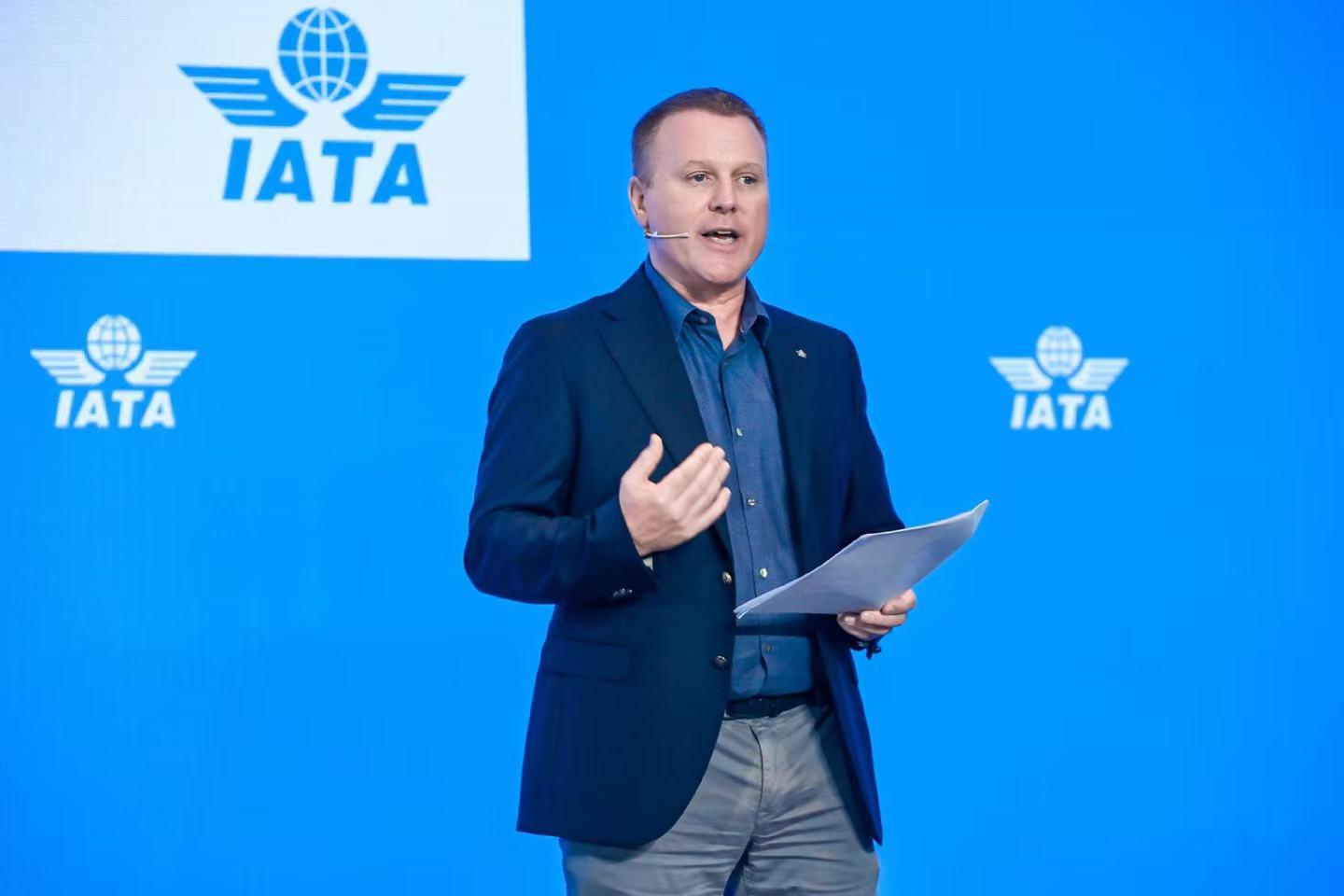
    Ministers, ladies and gentlemen, colleagues, welcome to the IATA World Safety and Operations Conference.

    A special welcome to our VIPs:

    • Wang Yongli, Executive Vice Governor of Fujian Provincial People’s Government
    • Han Jun, Deputy Administrator of CAAC
    • Wu Bing, Mayor of Xiamen Municipal People’s Government
    • Ma Tao, Regional Director of ICAO Asia and Pacific Office
    • Zhao Dong, Chairman of Xiamen Airlines

    It is a pleasure to be in Xiamen, and I will start by thanking our host, Xiamen Airlines, for the warm welcome. This is the first time that WSOC is meeting in China. And it’s significant. China is an aviation powerhouse: one of the world’s largest markets for passenger services and air cargo. From the standpoint of safety and operations it presents several good examples to follow:

    • Many carriers have signed the IATA Safety Leadership Charter
    • In line with global standards, it is safeguarding critical spectrum bandwidth for aviation as it rolls out 5G telecommunications technology
    • And new entry / exit points with neighbouring Tajikistan and Kyrgyzstan have created over 40 international waypoints, giving airlines more flexibility to use advanced navigation systems for safer, more efficient routes

    Working together—industry and the authorities—we are supporting China to get the most out of its significant investments in aviation. Our last tally showed that aviation contributes $250 billion to China’s GDP and supports 10.2 million jobs.

    The improvements that we have achieved here demonstrate the important role of leadership, global standards and data analysis in making aviation the safest mode of transport. We must never let that slip, even in the face of evolving risks.

    And make no mistake, airlines are operating in an increasingly conflict-ridden environment with grave consequences that have been all too clear recently.

    • An Azerbaijan Airlines jet was downed with 38 lives lost, and
    • In Sudan, two further incidents together claimed 25 lives.

    Fortunately, such tragedies are rare, but they remain completely unacceptable. Civilian aircraft should never face such risks, even by accident.

    And we cannot forget that, in addition to these well reported tragedies, airlines face and safely manage disruptions from geopolitical instability every day.

    • The war in Ukraine cancels up to 2,000 flights every day and reroutes another 1,500
    • The India–Pakistan conflict forced more than 200 daily diversions, with traffic at some waypoints rising 70–80%
    • Drone incursions, such as we are seeing in Poland, Germany, Denmark, and Norway, add further strain
    • And, lastly, reports of GNSS interference have grown by more than 200% between 2021 and 2024

    Even with established procedures, precautionary measures, restrictions and rerouting, confidence and connectivity is disrupted, journeys are longer, and costs and emissions are higher.  

    As leaders of global aviation’s safety and operations, we have a duty to manage today’s risks while anticipating and preparing for the risks of tomorrow. That is the “future proofing” that is referenced in the theme of this conference.

    Future proofing begins with your leadership—the role of which is expressed in the IATA Safety Leadership Charter. The Charter now encompasses some 90% of global traffic. It points us towards a safety culture that  focuses on the two fundamental tools we have to continue to improve safety and operations:

    • Global standards which we must keep relevant, and
    • Making the best use of the enormous amount of data we generate to improve our operations

    That, of course, is nothing new but we can and must do more with both.

    Global standards are the bedrock of global aviation. We could not provide the connectivity that the world needs if each country had its own rules. We must avoid fragmentation by ensuring that the standards we have are continuously adapted to be fit for purpose.

    Data has long helped us make critical decisions. We are capturing more data than ever before. And, with the capabilities of artificial intelligence, our ability to turn that data into critical insights that deliver more relevant and powerful outcomes continues to grow.

    Global standards and data will recur throughout the WSOC program. In anticipation of that, I’d like to help set the scene with some reflections on how these apply to IATA’s work on some of our most critical topics.

    Global Standards

    Let’s start with global standards, where we have an important agenda of standards that either need to be defended, implemented, or both. Here are four priority examples:

    1. GNSS interference, which I mentioned earlier, is a critical example. Neither spoofing nor jamming of GNSS systems is acceptable. But with geopolitical tensions driving such risks, our crews are well trained to manage them. Together with EASA, IATA has launched a GNSS Resilience Plan built on four priorities: monitoring and reporting, prevention tools, backup infrastructure, and civil–military coordination. The next step is for ICAO to advance these solutions with global standards, guidance, and reporting.
    2. The radio spectrum we rely on for navigation is defined in ITU’s global standards and must be protected for safety of operations. But the growing demand for spectrum from 5G and eventually 6G is challenging aviation’s allocations. In the US, Australia, and Canada, some 5G rollouts created interference risks near airports and forced costly retrofits. The lesson is clear: we need stronger coordination with telecom regulators and realistic timelines for sunsetting of mitigations, as well as future on-board systems that are more resilient.
    3. Global standards ensure the safe carriage of lithium batteries by passengers and that matters because almost every traveler carries lithium-powered devices. An IATA survey found that while 57% of passengers believe they know the rules and another 36% say they know the basics, nearly half mistakenly think it’s safe to pack power banks or small devices in checked baggage or are unclear about power limits. To reinforce the standards, we are launching the Travel Smart with Lithium Batteries campaign to raise awareness on the rules that keep everyone safe.
    4. The last example I’ll raise on global standards is accident reporting, set out clearly in Annex 13 of the Chicago Convention. Yet only 58% of accidents between 2019 and 2023 have, to date, delivered a final report. When reports are delayed, the industry loses vital safety insights and space is created for speculation, rumors, and conspiracy theories. That’s why we continue to remind governments of their obligations while also recognizing success, such as the timely preliminary reports published for recent accidents in India, South Korea, and the US.

    Data

    Turning to data, the first point I want to emphasize is how our growing use of safety and operational information is transforming the industry. The flagship is the Global Aviation Data Management (GADM) program, which turns millions of data points from our members into actionable intelligence.

    This is clearly demonstrated with Turbulence Aware – included in GADM – which enables pilots and dispatchers to share information on this safety risk. Participation in the program has grown by 25% over the last year. The fleet of 3,200 Turbulence Aware aircraft now includes new joiners Air France, Etihad and the SAS. And with each new contributing aircraft the better our ability to mitigate the risks of turbulence.

    We also see the potential in SafetyIS  which is so rich in-flight data from 217 airline contributors that we can now achieve predictive insight. For example, a spike in collision-avoidance alerts was identified at a major Latin American airport before it was noticed locally—allowing timely interventions that reduced risks and improved safety.

    And lastly, we see the potential for data to transform the safety world in the rollout of risk-based IOSA. Data on risks guides how the audits are adapted to each airline. And, as a result, we are seeing more findings – some 8,000 corrective actions have already been identified and that number will grow.

    I encourage all of you to make sure that your airline is getting the most out of this data revolution by joining two important communities:

    • GADM which includes the Flight Data eXchange (FDX), Incident Data eXchange (IDX), and Maintenance Cost Data eXchange (MCX)—provides critical insights that help airlines and regulators make better decisions.        
    • IATA Connect. Already 5,600 users from over 600 organizations have come together in a community that shares data and insights from IATA’s many safety programs that can make us all safer. Soon this community will expand to include ISAGO users adding another important dimension to its potential.

    ICAO Assembly


    Just before concluding my remarks, I have two additional points to those on leadership, data and standards. First, I would like to quickly report on the conclusions of the 42nd ICAO Assembly that took place earlier this month. We all know that ICAO is incredibly important for our industry as the ultimate keeper of global standards. That’s why every three years we make a major effort to ensure that the industry’s concerns are heard by the delegates and reflected in the Assembly’s conclusions.

    In total this year, IATA submitted 14 papers, largely with very positive results. Some of the highlights include:

    • Accepting our recommendation that data from its two key state audits USOAP (Universal State Oversight Audit Program) and the State Safety Program Implementation Audit (SSP-IA) should feed into the standard-setting process.
    • Supporting a move forward to increase in pilot retirement age to 67
    • Reaffirming the need for States to adhere to the framework, laid out in Annex 13, to complete accident investigations as internationally agreed.
    • Ensure that aircraft equipment mandates, are achievable across all stakeholders that they will impact

    Including these in the final Assembly report is of great consequence. And our job over the next three years is to use the Assembly’s endorsements to implement the required changes.

    Supply Chain


    Secondly the supply chain. Safety resilience also depends on the wider aviation system. And today, the supply chain is under strain.

    • Aircraft deliveries fell to just 1,254 in 2024, 30% below pre-COVID peaks
    • The backlog has grown to a record 17,000 aircraft
    • Engine issues have grounded hundreds of aircraft

    The financial hit will exceed $11 billion this year, but the greater concern is safety: stretched fleets, delayed maintenance, and limited spares erode the buffers that protect operations.

    IATA is responding with tools like MRO SmartHub, which allows members to have better visibility of the serviceable used aircraft parts available  in the aftermarket and gives airlines real-time data to reduce parts delays and keep fleets flying safely.

    Together with Oliver Wyman, we are releasing a new report at this conference. It calls for urgent action: expand capacity, promote fair competition and alternatives, and improve forecasting and data visibility,  practical steps to restore resilience and protect aviation’s safety margins.

    Conclusion


    On that note, on behalf of the whole IATA team, I look forward to working with you and your teams to provide the leadership needed to improve safety and operations with relevant global standards and the power of data.  

    The challenges that we face are many and dynamic. But by keeping focused on leadership, standards and data, I know that we will be able to build an industry that is even safer, more efficient and fully able to provide the connectivity that the world needs to prosper.

    I wish you all a productive and successful conference.

    Continue Reading

  • The ‘Superwood’ that’s 10 times stronger than steel

    The ‘Superwood’ that’s 10 times stronger than steel

    A US company has engineered a new type of wood that it says has up to 10 times the strength-to-weight ratio of steel, while also being up to six times lighter.

    “Superwood” has just launched as a commercial product, manufactured by InventWood, a company co-founded by material scientist Liangbing Hu.

    Over a decade ago, Hu set out on a quest to reinvent one of the oldest building materials known to humankind. While working at the University of Maryland’s Center for Materials Innovation, Hu, who’s now a professor at Yale, found innovative ways to re-engineer wood. He even made it transparent by removing part of one of its key components, lignin, which gives wood its color and some of its strength.

    His real goal, however, was to make wood stronger, using cellulose, the main component of plant fiber and “the most abundant biopolymer on the planet,” according to Hu.

    The breakthrough came in 2017, when Hu first strengthened regular wood by chemically treating it to enhance its natural cellulose, making it a better construction material.

    The wood was first boiled in a bath of water and selected chemicals, then hot-pressed to collapse it at the cellular level, making it significantly denser. At the end of the weeklong process, the resulting wood had a strength-to-weight ratio “higher than that of most structural metals and alloys,” according to the study published in the journal Nature.

    Now, after years of Hu perfecting the process and filing over 140 patents, Superwood has launched commercially.

    “From a chemical and a practical standpoint, it’s wood,” explained InventWood CEO Alex Lau, who joined the business in 2021. In buildings, that would allow for structures potentially up to four times lighter than today, Lau said, meaning they would be more earthquake resistant, as well as easier on foundations, making construction faster and easier.

    “It looks just like wood, and when you test it, it behaves like wood,” Lau added, “except it’s much stronger and better than wood in pretty much every aspect that we’ve tested.”

    InventWood is manufacturing Superwood in its plant in Frederick, Maryland, and although the production time is now measured in hours rather than days, it will take some time to scale up, Lau said.

    Initially, the company plans to focus on external applications such as decking and cladding, before moving on to internal applications such as wall paneling, flooring and home furniture sometime next year.

    “People always complain that furniture breaks down over time, and that’s often because it sags or breaks down at the joints, which are currently made of metal because wood isn’t strong enough,” said Lau. Superwood could be used to replace these parts, he said, as well as screws, nails and other metal fasteners.

    Eventually, Lau projects that an entire building could be constructed out of Superwood, although that would require more testing.

    Much like in Hu’s original experiment, the wood is strengthened via a chemical process that alters the basic structure of the cellulose and is compressed very tightly without springing back. “In theory, we can use any kind of wooden material,” Lau said. “In practice, we’ve tested with 19 different kinds of species of wood as well as bamboo, and it’s worked on all of them.”

    InventWood says Superwood is up to 20 times stronger than regular wood and up to 10 times more resistant to dents, because the natural porous structure of the wood has been collapsed and toughened. That makes it impervious to fungi and insects. It also gets the highest rating in standard fire resistance tests.

    InventWood says its tests show Superwood is up to 20 times stronger than regular wood.

    Superwood currently costs more than regular wood and also has a larger manufacturing carbon footprint, but Lau said that compared to steel manufacturing, the carbon emissions are 90% lower.

    He added that the target is “not to be cheaper than wood, but to be competitive with steel,” when manufacturing scales up.

    Other types of engineered wood have existed as construction materials for a long time, but InventWood says that these are simply rearranged pieces of wood that are held together with adhesives, rather than wood that has been altered at the molecular level like Superwood.

    Timber construction has had a resurgence in recent years, and wood is now used to build skyscrapers. The city of Milwaukee — which already hosts the world’s tallest timber tower, the 284-foot (87-meter) Ascent MKE — has revealed plans to build an even taller one, at a whopping 600 feet (183 meters) in height.

    Currently, concrete is by far the most-used construction material on Earth, and even though its production has plateaued in recent years, making concrete generates 7% of the world’s global carbon emissions.

    Philip Oldfield, an architecture professor and head of the School of Built Environment at the University of New South Wales, in Australia, who is not involved with InventWood, said timber has environmental benefits over many other building materials as its production processes are less intensive than steel and concrete, and timber stores CO2 in its woody biomass through photosynthesis. “Wood products can be considered a long-term carbon storage system, and construction with wood could see our cities ‘lock in’ carbon emission in buildings for long periods of time,” he added.

    However, he points out that existing engineered timber products are already competing with steel and concrete. “The barrier to more timber buildings isn’t really the need for more strength,” he explained, “it’s that the construction industry is risk averse and slow to change.”

    To see more timber in buildings, he argued, we need better education, pilot projects and improved regulatory frameworks: “But stronger timber products like this Superwood could allow architects to create larger spans and more durable finishes with timber, which would certainly be beneficial and could foster greater timber uptake.”

    Continue Reading

  • Samsung on track for highest profit in 3 years

    Samsung on track for highest profit in 3 years

    Unlock the Editor’s Digest for free

    Samsung Electronics expects to post its highest operating profit in three years on the back of high demand for memory chips used in artificial intelligence, after several quarters of tepid growth fuelled concerns it was losing ground to rivals.

    The tech conglomerate on Tuesday said operating profit in the quarter ending in September rose more than 30 per cent compared with a year ago to Won12.1tn ($8.5bn).

    The figure is significantly higher than the Won9.7tn forecast by analysts as compiled by Bloomberg.

    Samsung’s shares rose as much as 3 per cent to a record high of Won97,500 on Tuesday. The company’s stock has rallied more than 66 per cent in the past six months as a result of the AI boom.

    The South Korean chipmaker this month signed a letter of intent with OpenAI to supply semiconductors for the ChatGPT maker’s $500bn Stargate data centre project.

    Samsung accounts for just over a quarter of the global market for high-bandwidth memory products, which are used in Nvidia’s most advanced AI chips, with SK Hynix and US-based Micron the other leading groups in the sector, according to consultancy TrendForce.

    The numbers were released in an earnings guidance and were not broken down by division. The company expects to deliver full earnings at the end of this month.

    Continue Reading

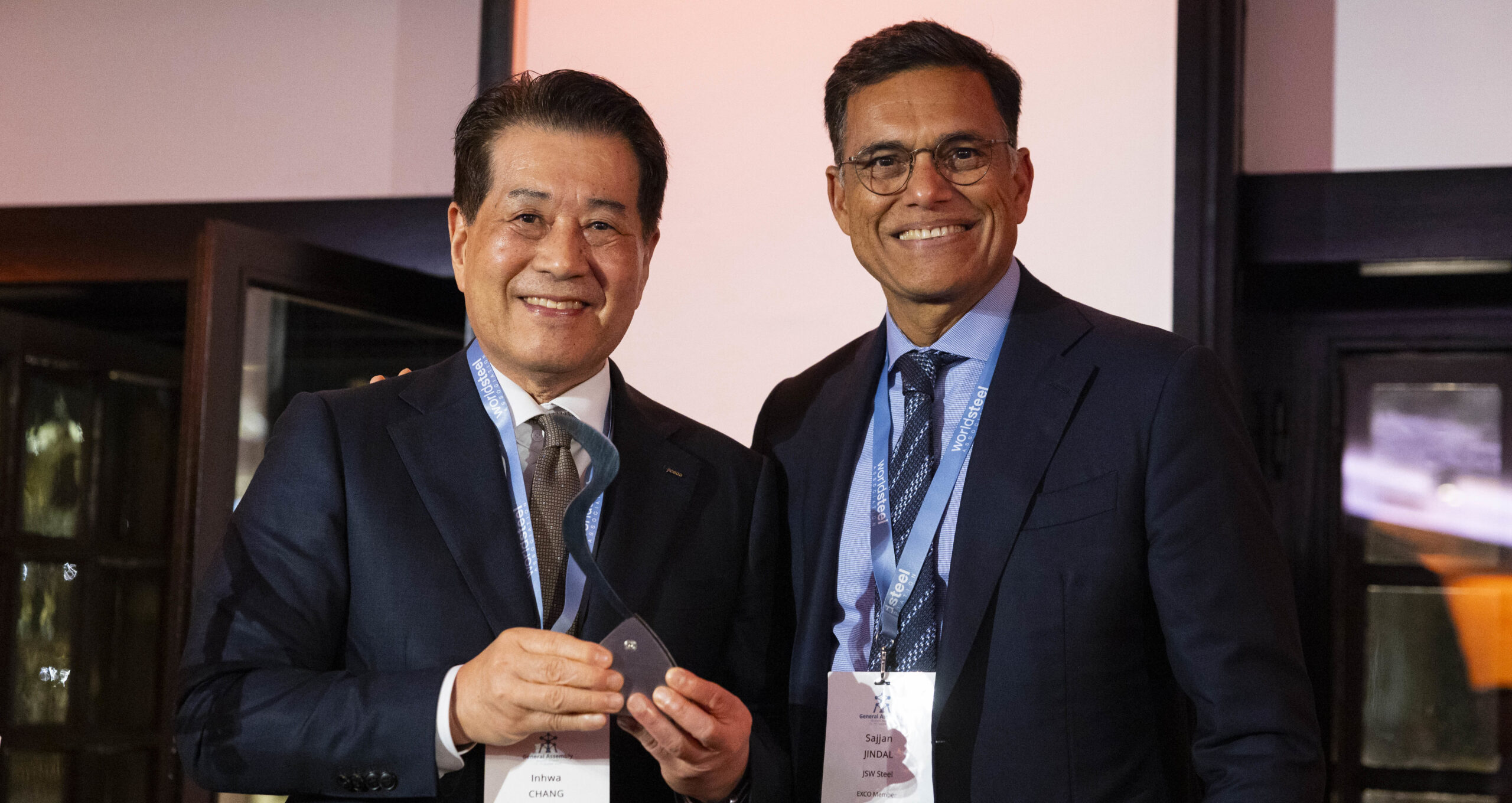
  • 16th Steelie Awards winners announced

    16th Steelie Awards winners announced

    The Steelie Awards recognise member companies for their contribution to the steel industry over a one-year period. The selection process for the shortlist varies between awards. In most cases the submissions are requested via the appropriate worldsteel committee. Entries are then judged by selected independent expert panels. The winners and judges for each award are listed below.


    Excellence in low-carbon steel production:

    EMSTEEL – Pioneering low-carbon steel: EMSTEEL’s multi-lever net-zero strategy

    Judges:

    • Paul Brooks, Bekaert/Consultant
    • Ian Cameron, Principal Metallurgist, Ferrous, Hatch
    • Feng Liu, Process Pyrometallurgist, Pyrometallurgy, Hatch
    • Henk Reimink, Consultant
    • Neil Rose, Process Engineering Trainee, Pyrometallurgy, Hatch
    • Prof. Yansong Shen, Director, SCoPE Lab for Green Metals, University of New South Wales
    • Beth Valiaho, Consultant
    • Professor Aidon Yang, University of Oxford


    Innovation of the year:

    InfraBuild – SENSE 600: Innovative lower-embodied carbon reinforcing steel solution

    Judges:


    Excellence in sustainability:

    Ternium – Winds of change: Ternium’s first step into renewable energy in Argentina

     Judges:

    • Luiz Cláudio Allemand, Lawyer, Independent
    • -Ing Sabina Grund, Associate Director Sustainable Development, International Zinc Association
    • Danhak Gu, Policy Analyst, OECD
    • Gordon Peeling, Director, Great Quest
    • Professor Runa Sarkar, Indian Institute of Management Calcutta
    • Jim Woods, Corporate Affairs, O-I Glass


    Excellence in Life Cycle Assessment:

    HBIS Group Co., Ltd. – “LCA+Life Well-Being Index” Collaborative Evaluation System: Innovating to driving marketing and application of metal decorative products.

    Judges:


    Excellence in people:

    ArcelorMittal – Integration of army veterans and supporting the families of fallen employees

    Judges:


    Excellence in communications programmes:

    ArcelorMittal – The Paris 2024 Olympic and Paralympic Games

     Judges:

    • Silvia Antonioli, Founder & Head of Content, Momo Media
    • Andrew Baud, Founder & Chief Executive, TALA
    • Sally Eggeling, Partner, Studio Lead, Omnicom Production
    • Ian Higginson, Founder, Creative Director, MakeAlias
    • John Stokes, CEO, CentreBlue


    #Ends#

    Notes

    The World Steel Association (worldsteel) is one of the largest and most dynamic industry associations in the world, with members in every major steel-producing country. worldsteel represents steel producers, national and regional steel industry associations, and steel research institutes. Members represent around 85% of global steel production.


    Continue Reading

  • Fighting cancer with a tiny molecule shows big promise

    Fighting cancer with a tiny molecule shows big promise

    Reading time: 2 minutes

    Stefan Moisyadi (center) with his research team.

    A tiny molecule called a nanobody may succeed where today’s cancer drugs often fail, according to University of Hawaiʻi at Mānoa researcher Stefan Moisyadi, who has been refining the concept for nearly a decade.

    “Antibodies won the Nobel Prize for immunotherapy,” said Moisyadi, a scientist at the Yanagimachi Institute for Biogenesis Research at the John A. Burns School of Medicine (JABSOM). “They work in some cancers, but not all. In colorectal cancer, they hardly work at all. But when we used nanobodies, bingo, it worked.”

    The study, published in eGastroenterology, shows how Moisyadi and his team from JABSOM, the UH Cancer Center, and the College of Tropical Agriculture and Human Resilience used mRNA (messenger ribonucleic acid) to make the body produce nanobodies that block PD-L1—a molecule that helps tumors hide from the immune system. By stopping PD-L1, nanobodies allow immune cells to recognize and attack cancer.

    Smaller, stronger and more affordable

    Nanobodies are about one-tenth the size of regular antibodies, cheaper to make, and more resilient under stress, according to the research.

    “They don’t trigger an immune response in the patient,” Moisyadi said. “They penetrate better because they’re small. They can even refold back to their original shape when conditions improve. Basically, they’re indestructible—they work much better and they’re cheaper.”

    Basically, they’re indestructible—they work much better and they’re cheaper.
    —Stefan Moisyadi

    While traditional antibody treatments can cost patients more than $200,000 a year, nanobody therapy—delivered as mRNA, similar to the COVID-19 vaccines—could cost only a fraction of that, making it far more accessible to patients.

    “People can’t afford antibody treatments,” Moisyadi said. “Here we make an RNA version. The patient’s own cells turn it into a protein… It goes into the circulation, finds the tumor, and blocks PD-L1.”

    In mouse studies, the treatment cut tumor growth by about 50%—a major result for a cancer that rarely responds to immunotherapy.

    Now collaborating with the University of Maryland, Baltimore County, Moisyadi hopes to see this breakthrough continue growing from its roots in Hawaiʻi.

    “This works,” he said. “We have the chance to be on the cutting edge. We need to have leaders’ buy-in because everyone here is still focused on antibodies.”

    Read more at JABSOM

    Continue Reading

  • Tata Electronics buys Chinese iPhone supplier Justech’s India unit

    Tata Electronics buys Chinese iPhone supplier Justech’s India unit

    Tata signage is visible during the launch of the TATA EV charging hub in Mumbai, India, on September 9, 2025.

    Indranil Aditya | Nurphoto | Getty Images

    Tata Electronics has acquired Chinese industrial firm Justech Precision’s India unit for close to $100 million, according to two people familiar with the matter, as the Tata Group subsidiary bolsters its manufacturing capacity to benefit from Apple’s focus on iPhone manufacturing in India.

    The transaction was concluded in August, with HSBC Bank and HDFC Bank advising on the deal, according to the people close to the deal.

    Headquartered in the city of Kunshan in Jiangsu, China, Justech Precision has been a supplier to Apple since 2008. It provides industrial equipment, such as computer numerical control machines used for precise cutting and fabrication tasks, to Foxconn, the world’s largest assembler of Apple products.

    Justech Precision Industry India, incorporated in late 2019 and based in the southern Indian state of Tamil Nadu did not respond to CNBC’s requests for comments, neither did Tata Group. Tata Electronics declined to comment.

    In January, Tata Electronics reportedly bought a 60% stake in Taiwanese contract manufacturer Pegatron’s India operation that operates an iPhone plant, Reuters reported. The deal’s value was not disclosed.

    The acquisitions come as Tata Electronics, which began assembling iPhones in India in 2023, seeks to expand its manufacturing capacity as Apple reportedly plans to source all of the iPhones for the U.S. market from India by the end of 2026.

    Apple, which still manufacturers most of its smartphones in China, has been taking urgent steps to build capacity in India with contract manufacturers Tata Electronics and Foxconn, pivoting away from China amid higher tariffs and geopolitical tensions.

    Foxconn still accounts for two-thirds of India’s total iPhones shipments, with Tata making the remaining one-third, according to Neil Shah, co-founder and vice president at market research firm Counterpoint Research, who expects that market share could change soon as Tata scales up its manufacturing.

    Tata currently operates two plants in the southern Indian state of Tamil Nadu and one in neighboring Karnataka, which was formerly owned by Wistron.

    Made in India by 2026

    Get a weekly roundup of news from India in your inbox every Thursday.
    Subscribe now

    Prime Minister Narendra Modi has in recent years worked to promote India as a smartphone manufacturing hub, eager to embrace Apple and use it as a symbol to attract other high-tech firms to the country for manufacturing and development.

    But Apple has also faced challenges in its early experiments manufacturing in the country, most notably at a Wistron factory in Bengaluru assembling older model iPhones, which saw a labor riot in late 2020.

    Apple is looking to build "highly localized" partners to become "truly diversified," instead of bringing Chinese or Taiwanese partners in India and be dependent on them, Shah said, but finding alternatives for components sourced primarily from Chinese suppliers could take years.

    "It will not be a sprint to build like-for-like supplier ecosystem as it enjoyed in China, but a marathon and a step by step process," Shah added.

    India will account for around 26% of global iPhone shipments by the end of 2025, up from 20% at the start of the year, according to the latest estimate by Counterpoint.

    Apple's Chief Operating Officer Jeff Williams visited Justech's innovation exhibition center in Jiangsu during his trip to China in March where he pledged to continue to make large-scale investment in the country.


    Continue Reading

  • Samsung Electronics Achieves UL Solutions’ ‘Zero Waste to Landfill’ Platinum Designation Across All Global Manufacturing Sites

    Samsung Electronics Achieves UL Solutions’ ‘Zero Waste to Landfill’ Platinum Designation Across All Global Manufacturing Sites

    Samsung Electronics has achieved UL Solutions’ “Zero Waste to Landfill” Platinum designation across all of its global manufacturing sites — marking the first major milestone in the company’s environmental strategy.


    “Zero Waste to Landfill” is a claim validation program administered by UL Solutions, a global safety science company. Designations are determined by the percentage of waste diverted from landfills, serving as a key indicator of a company’s resource circularity efforts. Platinum represents a 100% landfill diversion rate, while Gold and Silver represent 95% to 99% and 90% to 94% respectively.


    Since announcing its Environmental Strategy in 2022, focused on climate action and resource circularity, Samsung has steadily advanced sustainable management practices — repurposing waste generated at its sites into valuable resources and expanding other recycling initiatives worldwide.


    Last year, all 10 business sites of the Device Solutions (DS) Division earned Platinum designation through integrated validation. This year in July, the Device eXperience (DX) Division’s Hungarian subsidiary, SEH-P, also achieved Platinum, marking the final step in securing Platinum status across all 22 domestic and overseas DX manufacturing sites.


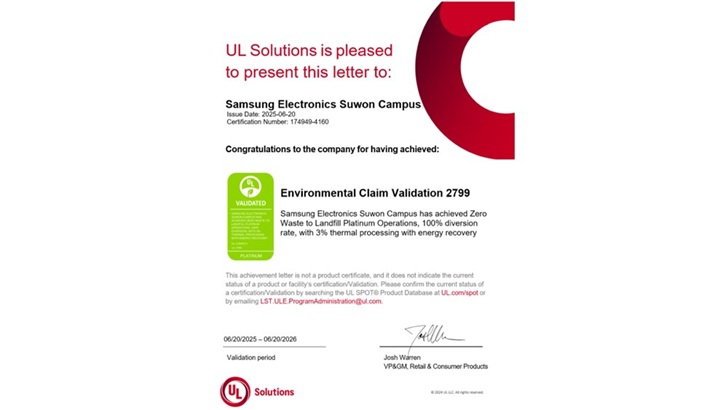
    ▲ “Zero Waste to Landfill” Platinum designation for Samsung’s headquarters in Suwon, issued by UL Solutions


    Samsung Electronics has established key directions for waste management — strengthening sorting systems, expanding reuse and increasing resource recovery — and has been implementing them through concrete initiatives.


    Examples include introducing more refined waste separation systems within worksites and strengthening employee training to ensure thorough sorting.1 Food waste and used paper are composted,2 while general and construction waste is recycled into alternative fuels3 or basic raw materials.4 In addition, e-waste and battery residues are repurposed for solid fuel production.5 Through these efforts, Samsung has made steady progress toward its goal of achieving Zero Waste to Landfill.


    ▲ Plastic waste reduction training at Samsung Electronics’ SEHC subsidiary in Vietnam


    Samsung is continuously developing technologies to recycle waste generated from semiconductor production processes into materials that can be reused in semiconductor manufacturing. For example, waste liquids are reused as a cleaning agent in scrubbers that reduce air pollutants and as water treatment agents in wastewater treatment facilities. In addition, adsorbents, activated carbon and catalysts used to control air pollutants undergo regeneration and are reused as raw materials for the same applications.


    ▲ Waste adsorbent regeneration process


    Samsung recycled approximately 1.32 million tonnes of waste in 2024 — equivalent to 260,000 five-tonne waste trucks.


    In addition to reducing waste at its worksites, Samsung has also repurposed by-products and discarded materials into new resources. The Galaxy S25, launched this year, has incorporated recycled cobalt extracted from previously used Galaxy smartphones and batteries discarded during the manufacturing process through Samsung’s Circular Battery Supply Chain. Discarded wafer trays from semiconductor manufacturing were recycled and applied to the Galaxy S25 series’ components as well.


    Looking ahead, Samsung Electronics plans to further enhance systematic waste sorting and material-specific management to secure high-quality recycled resources and expand their application in products, strengthening its commitment to resource circularity.


    Junhwa Lee, Executive Vice President and Head of Global EHS Office, DX Division at Samsung Electronics, highlighted the significance of the achievement as “a major milestone” in the company’s environmental management strategy, adding that the company will continue to apply innovation across all areas of its business to put sustainable management into practice.


    More information on Samsung Electronics’ sustainability initiatives can be found on the Samsung Electronics Sustainability website.


    1 Subsidiaries in Hungary (SEH-P), Malaysia (SEMA), Brazil (SEDA-P(M)), Türkiye (SETK-P), etc.
    2 Subsidiaries in Thailand (TSE-P), India (SIEL-P(C)), Malaysia (SEMA), Mexico (SEM-P), etc.
    3 Subsidiaries in Vietnam (SEHC), Malaysia (SEMA), the United States (SEHA), etc.
    4 Subsidiaries in Vietnam (SEV, SEVT), etc.
    5 Subsidiary in Indonesia (SEIN-P)

    Continue Reading

  • Building Tomorrow’s Classroom Today – Samsung Newsroom Malaysia

    Building Tomorrow’s Classroom Today – Samsung Newsroom Malaysia

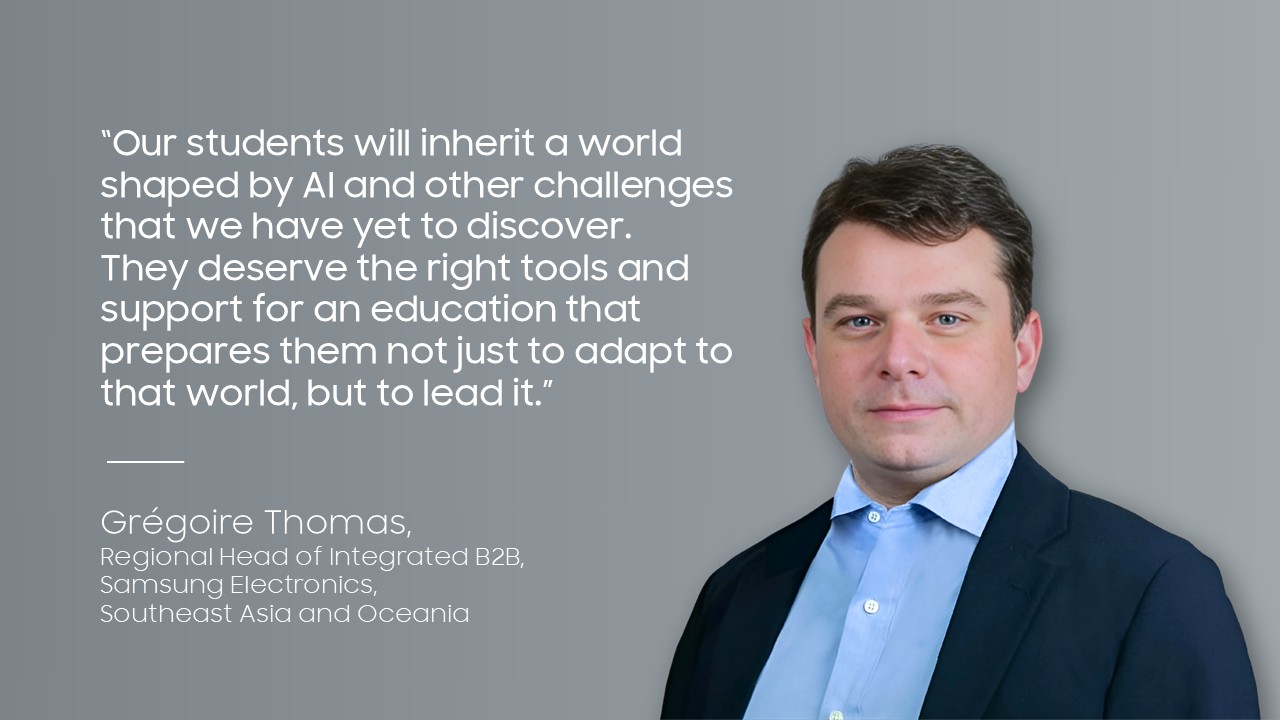
    By Grégoire Thomas, Regional Head of Integrated B2B, Samsung Electronics, Southeast Asia and Oceania


    Picture this: a student in rural Indonesia collaborates on a science presentation with peers in Singapore and Thailand, using their AI-powered tablets to translate their respective languages for one another in real-time while an intelligent display in their classrooms brings their shared workspace to life. Far from being science fiction, these scenarios are already possible today, thanks to technology.


    Working with educators across Southeast Asia and Oceania, I have had the privilege to witness a generation of digital-native students who don’t just use technology; but intuitively reach for it as something deeply embedded into their every day. Compared to preceding generations, these students approach problems differently, learn differently, and simply put, are also expecting their educational experiences to match the increasingly connected world that they will one day inherit from us.


    This is not a question of whether technology belongs in education, but instead, whether we can be bold enough to reimagine how education can further grow thanks to technology.


    Classrooms Powered by AI


    Samsung AI Assistant on the new AI-powered Interactive Display is built with intelligent, intuitive tools to organise lessons and collaborative learning


    At Bett 2025 earlier this year, we unveiled something I’m genuinely excited about – our new AI-powered Interactive Display that integrates Samsung AI Assistant, equipping educators with more intelligent and intuitive tools to both organise and transform lessons.


    Features like AI Summary help teachers create concise lesson recaps automatically, making planning much easier and simplifying post-class reviews for students. Meanwhile, Live Transcript converts conversations into text in real time for students to revisit and reinforce what they’ve learned in class. Armed with these tools, educators can transform lessons into dynamic and interactive experiences that maximise learning outcomes.


    Students at Al Muslim Bekasi utilising the Samsung Notes app, with in-built Galaxy AI features


    Furthermore, we recently rolled out the Samsung Digital Lighthouse School programme in Indonesia, starting with two schools: Al Muslim Bekasi and Salman Al Farisi Bandung. The programme aims to accelerate the digital transformation journeys of schools and enhance the learning experiences of over 2,500 students with AI-enabled Galaxy devices such as the Galaxy Tab S and A Series, with holistic protection by Samsung Knox.


    At the end of the day, we want to have technology that inspires both educators and students to explore, discover and collaborate. Technology should not overshadow the human connection but instead, enhance it.


    Equity and Ecosystems  

    A concern that many educators have with technology is equity and access. When done right, technology can bridge, instead of widen, the gaps.


    When a student in Bandung accesses the same AI-powered learning tools as someone in Seoul; when language barriers are removed through real-time translation; and when personalised learning can be adapted to the different paces and styles of both teachers and students, that is democratisation in action. A decade ago, high-speed internet used to be accessible only to those who could afford it.; today, these technologies are well within reach of most students across our region. Technology for technology’s sake doesn’t solve anything; instead, it is about creating ecosystems that benefit everyone.


    However, educators are also just as concerned about having the right solutions on hand to help them fully maximise that potential, not just for students, but also for teaching staff. We work with local Edutech partners for classroom device management, as well as change management support, to better enhance learning outcomes for students. These collaborations are built around the understanding that technologies, like tablets for classrooms, are only as transformative as the support system around them. After all, tools are only as good as the hands that wield them.


    Working within the System, Not Against It

    Beyond devices, software and services, it is extremely important to have a clear understanding of national education strategies, curriculum requirements, as well as the long-term vision for digital learning. We have been engaging and collaborating with education ministries across the region to ensure that initiatives are designed to support and integrate with these existing frameworks.  


    Our Samsung Learning Hub, launched in January, exemplifies this approach. This digital resource hub for educators offers online training, teaching materials, certifications, and a community to further support teaching and learning outcomes. For digital learning initiatives to succeed, they must aim to complement and not replace traditional teaching methods.


    The Imperative for Collaboration

    The future of education cannot be a solo act, but must be built through collaboration among educators, students, parents, policymakers, and technology companies like Samsung. Here is my challenge to everyone reading this: whether you are an educator frustrated by the limitations of current teaching methods, a policymaker grappling with budget constraints, or even a fellow technology professional looking to make a real difference:


    Let’s stop talking about the future of education and start building it. Let’s be bold enough to experiment, humbly explore new innovations to figure out what works, and persist in our efforts to continue iterating until we get it right, together.


    Our students today will inherit a world shaped by AI, climate change, and other challenges that we have yet to discover. They deserve an education that prepares them not just to adapt to that world, but to lead it. For that to happen, we must also ensure that they are both enabled and empowered with the right tools and support to drive better and more effective learning outcomes in this digital-first world. Are we ready to lead it together?


    Experience the Future of Education with Samsung at Bett Asia

    At Samsung, we believe in building the future of education together. We welcomed attendees to experience our vision in action at Bett Asia in Kuala Lumpur that happened from 1-2 October 2025, and discover how technology can enhance, not replace, the human connection in the classroom. Attendees had the opportunity to speak with our experts, see live demonstrations, and learn how Samsung is helping create dynamic, interactive, and equitable learning environments for the next generation.


    Let’s start building tomorrow’s classroom, today.

    Continue Reading