Category: 3. Business

  • Sarepta to seek approval for gene therapy in rare muscular dystrophy

    Sarepta to seek approval for gene therapy in rare muscular dystrophy

    An experimental gene therapy from Sarepta Therapeutics increased levels of the gene missing in an ultra-rare form of muscular dystrophy, according to data the company presented Friday.

    The company has said it plans to file for approval in the disease, known as limb-girdle muscular dystrophy (LGMD) 2E. That would make it the first approved treatment in LGMD, a broad collection of highly rare diseases that can deprive patients of the ability to walk and in some cases shorten life. But it is likely to face a significant uphill battle. 

    The LGMD 2E therapy relies on the same gene-ferrying virus that Sarepta uses in its other treatments, including its approved gene therapy for Duchenne muscular dystrophy, Elevidys, and experimental gene therapies for several other LGMD subtypes. 

    STAT+ Exclusive Story

    This article is exclusive to STAT+ subscribers

    Unlock this article — plus daily coverage and analysis of the pharma industry — by subscribing to STAT+.

    Already have an account? Log in

    View All Plans

    To read the rest of this story subscribe to STAT+.

    Subscribe

    Continue Reading

  • What is Nvidia, the world’s leading AI chipmaker entangled in US-China trade tensions?

    What is Nvidia, the world’s leading AI chipmaker entangled in US-China trade tensions?

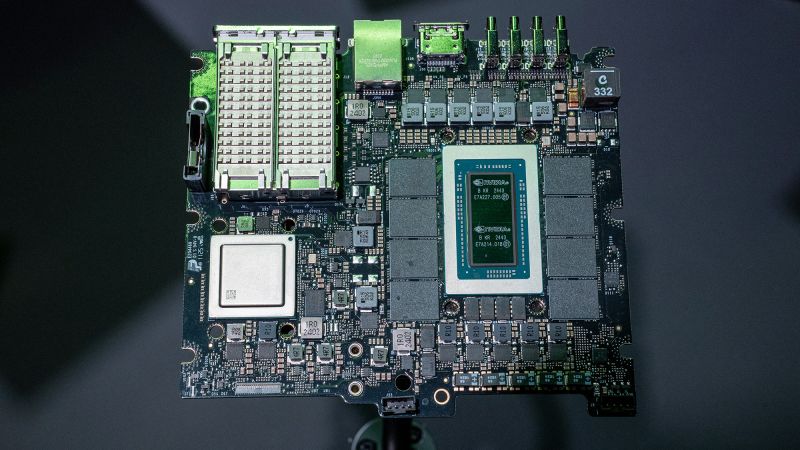
    Tech giant Nvidia is the world’s leading artificial-intelligence chipmaker, but the company’s success has also put it in the crossfire of trade tensions.

    The Santa Clara, California-based company, which is approaching a market capitalization of $5 trillion, has seen rapid growth due to its chips, which are predominantly used to power massive data centers used by other tech firms, like OpenAI, the creator of popular AI chatbot ChatGPT.

    But Nvidia’s leading technology has been used as a negotiating tool in President Donald Trump’s trade spat with China, which was kickstarted by Trump’s sweeping tariffs in April and has escalated over rare earth mineral disputes.

    It’s further complicated Nvidia’s relationship with China, where it was doing roughly 25% of its graphics processing unit sales, estimates Gil Luria, head of technology research at D.A. Davidson. Nvidia’s popularity has also embroiled the company in a steep controversy for potentially allowing China to skirt around export restrictions as trade tensions continue.

    “Nvidia has gotten caught in the middle of two very important things: a trade dispute between China and the United States … but more importantly, AI has become a matter of national security,” Luria said.

    Nvidia CEO Jensen Huang has argued that restricting sales of American AI chips will ultimately enable Chinese developers to create their own alternatives.

    Huang, 62, was born in Taiwan, and at age 9 was sent by his parents to live in Tacoma, Washington. In 1993, the Oregon State and Stanford University grad co-founded Nvidia, which started as a graphics-based processing company.

    Huang — who is worth $167 billion, according to the Bloomberg Billionaires Index — has been treated as a rockstar in Taiwan for his success in the AI chips race, and previously worked as a microprocessor designer at now-competitor AMD.

    “It’s really unusual to have somebody who can go from starting what was at the time a very small tech startup and throw it to the extraordinary level of success that Nvidia has grown to,” John Villasenor, a nonresident senior fellow at Brookings Institution and professor at the University of California, Los Angeles, said of Huang.

    Nvidia powers the data centers that support AI technology and has been the go-to provider of those chips.

    Nvidia essentially created the architecture for anyone who develops AI, leading to a surge in demand for its technology, according to Arun Sundararajan, a professor of technology, operations and statistics at NYU Stern School of Business.

    The company said in September that it would invest up to $100 billion in OpenAI and provide it with data center chips as soon as late 2026.

    Nvidia is competing with AMD for deals with partners like OpenAI, which said Monday it would use 6 gigawatts of AMD chips to power OpenAI’s data centers.

    “The competition has undeniably arrived. Customers will choose the best technology stack for running the world’s most popular commercial applications and open-source models. We’ll continue to work to earn the trust and support of mainstream developers everywhere,” an Nvidia spokesperson said in a statement shared with CNN.

    In recent years, the US government has sought to restrict Chinese access to American technology to slow Beijing’s progress on AI, thus allowing the United States to take the lead. Trump continued the trend in April, when he restricted China’s access to chips, including Nvidia’s H20, as part of his trade war.

    Such restrictions on the sale of chips offended China, Luria said, and ultimately led to Beijing limiting the purchase of chips to their companies.

    But the White House recently reversed their position.

    People visit the booth of Nvidia at a supply chain expo in Beijing on July 17, 2025.

    “You want to sell the Chinese enough that their developers get addicted to the American technology stack,” Commerce Secretary Howard Lutnick said in July.

    Trump in August greenlit sales of chips to China in an agreement with US chipmakers. Nvidia and AMD, Trump said, would give 15% of revenue from China sales to the US in exchange for export licenses. That includes giving China access to Nvidia’s H20 chips, which were released in 2024 to maintain access to the Chinese market following strict export controls.

    But Beijing seemed unimpressed and trade tensions have only escalated since the start of a tit-for-tat trade war in April.

    China has since increased import restrictions on US chips, including Nvidia’s processors. Trump said Friday on Truth Social that he would impose a 100% tariff on China “over and above any Tariff they are currently paying” beginning November 1 over export controls on rare earth minerals.

    “Where this all gets resolved is unclear,” Luria said, because China believes “that stopping the sale of Nvidia chips into China creates some leverage on the US in the negotiation.”

    Commerce Department officials are investigating whether Nvidia’s customer, Singapore-based Megaspeed, is helping China sidestep export restrictions for access to Nvidia’s tech, according to a report from the New York Times. CNN has not independently verified the Times’ reporting.

    Nvidia did not respond to CNN’s request for comment.

    And Nvidia’s H20 chips are widely believed to have contributed to DeepSeek, an advanced Chinese AI model that shook Silicon Valley upon its release earlier this year, raising concerns that China was further ahead on AI than previously understood.

    China could also gain access to the chips on the black market, since another country could buy Nvidia’s chips and resell them to China, Sundararajan said.

    “The bigger issue is if we push harder to restrict global access to Nvidia’s products, can that be counterproductive? Because it forces these countries to speed up their own pace of innovation,” Sundararajan said.
    Continue Reading

  • AI–Enhanced SALT Score Improves Accuracy in Alopecia Areata Assessment

    AI–Enhanced SALT Score Improves Accuracy in Alopecia Areata Assessment

    A novel artificial intelligence (AI) tool could improve the accuracy and objectivity of alopecia areata severity and treatment efficacy, according to the authors of a proof-of-concept case report published in JAAD Case Reports.1

    The current standard for quantifying hair loss in alopecia areata is the Severity of Alopecia Tool (SALT) score, the authors explained. But in real-world clinical practice, the SALT score is rarely used due to its time-consuming nature and, notably, high interrater variability.2 Trichoscopy is another tool that allows for more detailed visualization of the hair and scalp to differentiate alopecia areata and monitor treatment progress, but it has limited availability in clinical settings because it requires specialized equipment and examiner expertise.

    The new approach detailed in the care report leverages an AI-powered assessment tool to track and manage alopecia areata.1 The system automatically calculates the area of alopecia (AI-Area) to derive an AI-SALT score.

    “This case demonstrates a proof-of-concept for tracking and managing [alopecia areata] using an AI-based assessment tool,” the authors wrote. “For this case of [alopecia areata], AI is used to calculate accurate areas of alopecia, and trichoscopy was used to detect early follicular regrowth, providing a faster, more comprehensive, and objective evaluation of disease progression and treatment response.”

    In the case of a 47-year-old male receiving intralesional triamcinolone acetonide for a solitary alopecia areata patch, the AI tool provided a more accurate and sensitive assessment than traditional manual methods. Specifically, the AI-SALT Score captured incremental progress between early visits that the Manual-SALT Score failed to detect.

    “Using the AI tool to assess this patient’s alopecia, demonstrates fast, easy-to-use AI-powered imaging via smartphone to precisely and objectively quantify alopecia for clinical evaluation,” the authors wrote. “Furthermore, percentage change of alopecia area provides more accurate and sensitive assessment than the manual SALT system demonstrated by the AI-SALT scores’ finer decimal-level precision.”

    This enhanced sensitivity has a direct impact on patient adherence and overall management value. At the 8-week mark, the patient was considering discontinuing treatment due to a lack of noticeable improvement based on subjective observation. However, the AI tool’s objective data, which demonstrated clear progress, alongside trichoscopic images showing hair regrowth, motivated the patient to continue therapy. This demonstrates the tool’s ability to ensure sustained adherence when therapy is working and improve outcomes.

    A crucial aspect of the case is that it shows the AI tool’s capacity to generate objective, standardized documentation, the authors noted. Insurers routinely require precise evidence of disease severity, including accurate SALT scores, to approve high-cost treatment coverage. By offering fast, easy-to-use, and highly precise quantification, this AI-based system can provide the verifiable metrics needed to satisfy coverage requirements, potentially reducing administrative burden and accelerating patient access to care.

    “Today, AI tools are increasingly being used to assess skin disorders, and we are beginning to integrate these tools into our daily clinical practice,” the authors explained. “In this case, the integration of AI enabled more accurate monitoring and patient engagement, suggesting potential to improve care through personalized and informed management of [alopecia areata].”

    The tool does have limitations, they noted, especially in cases of androgenetic alopecia, which does not have distinct patches of hair thinning. However, combining AI assessment with trichoscopy to quantify individual hairs or follicular units does enhance assessment, they explained. The AI-SALT score’s utility should also be validated in more severe or widespread alopecia and beyond single-patch cases, as well as in diverse populations.

    “Here, we present a proof-of-concept for integrating AI tools in clinical settings to assess and monitor AA, demonstrating the potential to deliver precise and objective data that inform treatment decisions and patient engagement,” the authors concluded. “However, this is a proof-of-concept used on one patient, and further validation is necessary to ensure broader applicability.”

    References

    1. Chan E, Ramsay K, Tyli R, et al. AI-based alopecia assessment: a proof of concept for enhancing accuracy and objectivity in hair loss measurement. JAAD Case Rep. Published online October 7, 2025. doi:10.1016/j.jdcr.2025.09.023.

    2. King BA, Senna MM, Ohyama M, et al. Defining severity in alopecia areata: current perspectives and a multidimensional framework. Dermatol Ther. 2022;12(4):825-834. doi:10.1007/s13555-022-00711-3

    Continue Reading

  • AstraZeneca announces historic agreement with US Government to lower the cost of medicines for American patients

    AstraZeneca today announces a historic agreement with President Donald J. Trump’s administration to lower the cost of prescription medicines for American patients while preserving America’s cutting-edge biopharmaceutical innovation.

    At a landmark event at the White House, AstraZeneca CEO Pascal Soriot joined President Trump and members of his Administration to confirm the Company voluntarily met all requests set out in the President’s July 31st letter. The Company agrees to a range of measures which will enable American patients to access medicines at prices that are equalized with those available in wealthy countries.

    As part of the agreement, AstraZeneca will provide Direct-to-Consumer (DTC) sales to eligible patients with prescriptions for chronic diseases at a discount of up to 80% off list prices. AstraZeneca will participate in the TrumpRx.gov direct purchasing platform, which will allow patients to purchase medicines at a reduced cash price from AstraZeneca.

    AstraZeneca has also reached an agreement with the US Department of Commerce to delay Section 232 tariffs for three years, enabling the Company to fully onshore medicines manufacturing so that all of its medicines sold in America are made in America. This will be achieved through the Company’s recently announced $50 billion investment in US medicines manufacturing and R&D over the next five years to help deliver $80 billion in Total Revenue by 2030, 50% of which is expected to be generated in the US.

    Pascal Soriot, Chief Executive Officer, AstraZeneca, said: “Every year AstraZeneca treats millions of Americans living with cancer and chronic diseases and, as a result of today’s agreement, many patients will access life-changing medicines at lower prices. This new approach also helps safeguard America’s pioneering role as a global powerhouse in innovation and developing the next generation of medicines. It is now essential other wealthy countries step up their contribution to fund innovation.”

    AstraZeneca’s commitment to the US and American patients is further reflected in the Company’s largest single investment in a manufacturing facility to date, where the Company broke ground yesterday in Virginia. This facility will support AstraZeneca’s weight management and metabolic portfolio and our leading antibody drug conjugate cancer pipeline. Additionally, a newly expanded manufacturing facility in Coppell, Texas, will officially open next week. Looking ahead, AstraZeneca will open a cell therapy manufacturing facility in Rockville, Maryland early next year and its second major R&D centre in Cambridge, Massachusetts will open in late 2026.

    The US is AstraZeneca’s largest market by sales and is also home to 19 R&D, manufacturing and commercial sites. The Company’s US workforce exceeds more than 25,000 people and supports more than 100,000 jobs overall across the country. In 2025, AstraZeneca created approximately $20 billion of overall value to the American economy.

    Notes

    AstraZeneca’s agreement with US Government
    This is the second agreement that a pharmaceutical company has made with the US Department of Health and Human Services to lower the cost of medicines for American patients in the past two weeks. Specific terms of this agreement remain confidential.

    AstraZeneca

    AstraZeneca (LSE/STO/Nasdaq: AZN) is a global, science-led biopharmaceutical company that focuses on the discovery, development, and commercialization of prescription medicines in Oncology, Rare Diseases, and BioPharmaceuticals, including Cardiovascular, Renal & Metabolism, and Respiratory & Immunology. Based in Cambridge, UK, AstraZeneca’s innovative medicines are sold in more than 125 countries and used by millions of patients worldwide. Please visit www.astrazeneca-us.com and follow the Company on social media @AstraZeneca.

    Media Inquiries

       Fiona Cookson               

    +1 (212) 814-3923

    US Media Mailbox: usmediateam@astrazeneca.com           

    Continue Reading

  • US moves to cancel one of the world’s largest solar farms

    US moves to cancel one of the world’s largest solar farms

    Unlock the White House Watch newsletter for free

    The US has moved to cancel what would have been the largest solar project in North America, as the Trump administration expands its attack on the embattled renewable energy industry.

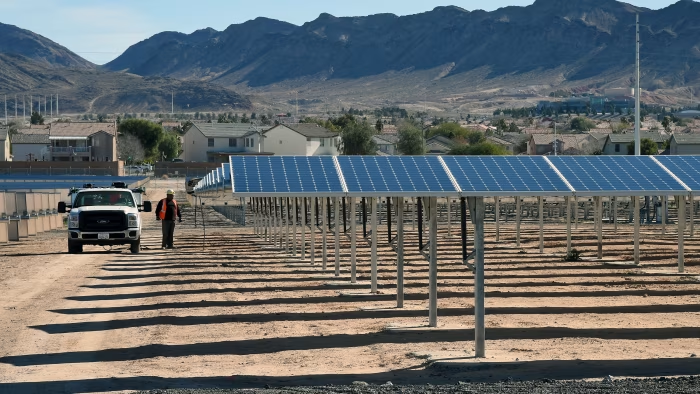
    Late on Thursday the Bureau of Land Management scrapped approval for Esmeralda 7, a 6.2 gigawatt project that could have powered nearly 2mn homes. It had begun the permitting process under the Biden administration.

    The high-profile Nevada solar project backed by NextEra Energy, the largest renewable energy company in the US, is the latest to become a casualty of the Trump administration. The American president has called renewable energy projects a “scam”.

    The Esmeralda 7 project consisted of seven solar farms and battery systems and was backed by power developers including Arevia Power, ConnectGen and Invenergy. It would have covered about 62,300 acres of federal lands in the Nevada desert north-west of Las Vegas.

    Since January, Doug Burgum’s Department of the Interior has accelerated permitting for fossil fuel projects while tightening restrictions on solar and wind initiatives.

    Large offshore wind projects have already been drawn into the administration’s crosshairs. In April Burgum ordered Equinor to halt construction activities on its 810 megawatt Empire offshore wind farm and issued a stop work order on Ørsted’s Revolution Wind.

    While both projects were eventually allowed to proceed, industry backers say the uncertainty undermines US energy needs and investor confidence.

    The crackdown on renewables comes as the country faces soaring power demand due to the proliferation of data centres to fuel the rise of artificial intelligence as well as the electrification of vehicles and home appliances.

    NV Energy, the state’s largest utility, projects that power demand will be 34 per cent higher in 2035 compared with 2022.

    “We remain deeply concerned that this administration continues to flout the law to the detriment of consumers, the grid and America’s economic competitiveness,” said Ben Norris, vice-president of regulatory affairs for the Solar Energy Industries Association.

    “We need more power on the grid, fast, and the solar and storage industry is ready to provide it, but we need the administration to get serious about truly achieving American energy dominance.” 

    The Department of the Interior did not confirm that the project had been cancelled, but said it and the project developers had “agreed to change” approach and that they would have the option to “submit individual project proposals to . . . more effectively analyse potential impacts”.

    NextEra said it “remain[s] committed to pursuing our project’s comprehensive environmental analysis by working closely with the Bureau of Land Management”.

    Invenergy declined to comment.

    Continue Reading

  • Europe’s Interoperability Push Undermines Western Tech Leadership

    Europe’s Interoperability Push Undermines Western Tech Leadership

    Many successful tech firms rely on closed, integrated ecosystems that limit third-party access to preserve consistent performance, user privacy, and device security. With its Digital Markets Act, the European Commission has mandated a different approach by requiring a small number of designated “gatekeepers,” the vast majority of which are American, to open up their platforms to third parties. But the EU’s interoperability requirements do not just create heavy engineering burdens on firms and distort investment into new features, they also directly harm European consumers by forcing companies like Apple to weaken its security and withhold innovative new features in the single market.

    The DMA imposes numerous interoperability obligations on service providers, which the EU has framed as necessary to ensure “all developers have an effective and predictable path to interoperability and are enabled to innovate.” Notably, Article 6(7) sets out specific obligations for ensuring “effective interoperability”—a tenuous standard in practice which, as ITIF has argued, is not limited to protecting as-efficient competitors and the EU is enforcing in a way akin to public utility regulation rather than more “light touch” conduct-focused rules. In addition to interoperability, the DMA’s Article 6(4) also requires gatekeepers to allow sideloading applications and Article 5(4) bans gatekeepers from restricting business users from steering customers to other platforms or payment options.

    The EU’s DMA interoperability regime is already imposing a heavy cost. Specifically, the DMA’s interoperability rules broadly require Apple to give third-party developers the same level of access to core iOS software features that Apple’s own apps and services enjoy. As such, Apple is being forced to gut the seamless and secure ecosystem that it has built and optimized internally for years. Not only does this increase the number of external developers with deep system access to iOS, creating privacy and security risks, but it also reduces Apple’s incentive and ability to roll out new features. Indeed, the introduction of Apple Intelligence, the company’s new suite of on-device AI tools, was already delayed in Europe, signaling a new normal in which European consumers may receive major technological innovations later than the rest of the world.

    The interoperability provisions also reach into Apple’s hardware ecosystem, posing yet another set of important risks to security and privacy that will be passed on to consumers in the form of reduced innovation. For example, the European Commission’s interoperability rules for connected devices limit Apple’s ability to roll out new features without having to effectively white-label them for third-party connected device rivals. Unsurprisingly, this has had a chilling effect on Apple’s European release of Live Translation for AirPods, a new feature that synchronizes audio between the earbuds and the iPhone in real time. Delivering Live Translation to third-party earbuds requires opening low-level audio and pairing controls that currently keep user data secure, and doing so risks compromising conversation data. Unfortunately, the new normal for European consumers is clear: delayed or stifled innovation for reduced privacy and security.

    In addition to the interoperability requirements, the EU is using other parts of the DMA to tear down Apple’s “walled garden.” For example, anti-steering provisions require Apple to allow developers to direct users to external payment channels, bypassing the App Store’s vetted transaction system—dismantling the secure payment architecture that has long protected users from fraud and unauthorized data collection. Moreover, sideloading rules force Apple to permit alternative app stores and direct app downloads outside its established review process. As Apple has pointed out, this change has not only created a more fragmented user experience, but enabled the distribution of apps that circumvent local laws, such as gambling applications in jurisdictions where gambling is illegal. Rather than protect consumers, the DMA is introducing new vectors for fraud and illegal content.

    To be sure, this undermining of American tech companies under the DMA is no accident; EU policymakers deliberately calibrated the DMA’s gatekeeper thresholds to capture leading American tech companies while exempting European competitors (only later was one European company, Booking.com, designated). Indeed, DMA rapporteur Andreas Schwab expressly stated that the regulation should focus on the “top five” rather than include European firms to “appease the United States.” This discriminatory approach underscores how the EU is using digital regulations like the DMA for protectionist economic reasons rather than to promote consumer welfare.

    Indeed, the DMA’s interoperability mandates are discriminatory in both design and effect. For American gatekeepers, these obligations impose steep compliance costs, force the disclosure of proprietary technology, and delay product rollouts. This undermines not only U.S. but broader Western technological leadership because it creates opportunities primarily for Chinese rivals to free ride off the DMA and close the global technological gap. The Trump administration has made clear it will not tolerate such measures, and with good reason: when regulations target U.S. companies, they cease to be neutral competition policy and become non-tariff trade barriers. If Brussels continues down this path, the result will be not only weaker Western competitiveness but also escalating transatlantic trade frictions—damaging EU-U.S. relations while the United States reconsiders its trade policies.

    The DMA’s current approach is not a balanced competition policy, but rather a set of overbroad, discriminatory mandates that impose disproportionate burdens on American firms, weaken Western technological leadership, and risk deepening trade frictions at a moment when transatlantic cooperation is crucial. Promoting competition and expanding opportunities for developers are worthwhile goals, but they should be pursued through collaborative frameworks that provide the utmost respect for privacy, security, and technical feasibility, rather than be imposed through heavy-handed regulations like the DMA. Otherwise, the EU’s course risks undermining not just innovation, but also the collective ability of the West to maintain its technological edge against strategic rivals such as China.

    Continue Reading

  • Strathcona Resources terminates takeover bid for MEG – Reuters

    1. Strathcona Resources terminates takeover bid for MEG  Reuters
    2. Breakingviews – Canadian M&A battle is about oil’s murky future  Reuters
    3. Strathcona Resources Brief: Says Following Sale of MEG, It Will Be the Only Pure Play Oil Co in North America Producing More Than 50 Mbbls/d Without Mines Or Refineries  MarketScreener
    4. Cenovus announces amended agreement with increased price to  GlobeNewswire
    5. Cenovus Energy and MEG Energy: A Strategic Partnership  Info Petite Nation

    Continue Reading

  • Novo Nordisk shuts cell therapy unit amid restructuring – Reuters

    1. Novo Nordisk shuts cell therapy unit amid restructuring  Reuters
    2. Novo Halts Work on Cell Therapy Cure for Diabetes to Cut Costs  Bloomberg.com
    3. Novo Nordisk halts work on cell therapy for diabetes to cut costs, Bloomberg News reports  Global Banking | Finance | Review
    4. Novo Nordisk to Close Cell Therapy Division Amid Global Restructuring  Yahoo Finance
    5. Novo Nordisk cuts hit production line jobs at key US plant, posts show  AOL.com

    Continue Reading

  • Study Shows Promise for ONO-4578 and Nivolumab Combo in Gastric Cancer | Targeted Oncology

    Study Shows Promise for ONO-4578 and Nivolumab Combo in Gastric Cancer | Targeted Oncology

    A phase 2 clinical trial (NCT06256328)1 for patients with previously untreated HER2-negative unresectable advanced or recurrent gastric cancer found that a combination of ONO-4578, an EP4 antagonist, and nivolumab (Opdivo), an anti–PD-1 antibody, resulted in statistically significant prolongation of progression-free survival (PFS). Full results will be announced at an upcoming academic meeting.2

    What is the Phase 2 Study Investigating?

    The multicenter, randomized phase 2 clinical trial, conducted by Ono Pharmaceutical Co, took place in 63 locations across Japan, South Korea, and Taiwan. There were 210 patients enrolled who received 40 mg of ONO-4578 once daily and 360 mg of nivolumab every 3 weeks in combination with chemotherapy, until disease progression or unacceptable toxicity was observed. This treatment was compared with placebo in combination with nivolumab and chemotherapy. The primary end point of PFS was met. No new safety concerns were identified in the trial.1,2

    Secondary end points included overall survival (OS), objective response rate (ORR), best overall response (BOR), duration of response (DOR), disease control rate (DCR), time to response (TTR), the maximum percent of change in the sum of diameters of the target lesions, and PFS after the next line of therapy, all measured up to 2 years.1

    Treatment for ONO-4578 and nivolumab and chemotherapy included a daily dose of ONO-4578, oxaliplatin on specified days, capecitabine on specified days, S-1 on specified days, and nivolumab on specified days. Treatment for placebo and nivolumab and chemotherapy also consisted of oxaliplatin, capecitabine, S-1, nivolumab, and a placebo drug daily.1

    What Patients Were Eligible?

    To be eligible for the study, patients must have been diagnosed with esophagogastric junction cancer, be able to provide tumor tissue samples, and have not been treated with systemic chemotherapy as first-line therapy.1

    Exclusion criteria included being unable to take oral medicines; having HER2-positive disease; having contraindications to nivolumab, oxaliplatin, S-1, or capecitabine; having a history of severe drug-related adverse reactions caused by NSAIDs; having a history of concurrent autoimmune disease; and getting headaches and/or nausea associated with brain metastasis.1

    What Is the Mechanism of Action of ONO-4578?

    ONO-4578 is a selective oral antagonist of EP4. Its primary function is to exert an antitumor effect by suppressing EP4 mediated effects of PGE2 and by restoring cancer immunity. EP4 is one of the prostaglandins E2 (PGE2) receptors.1,2

    In the phase 1 clinical trial (NCT03155061)3 in patients with unresectable advanced or recurrent gastric cancer, including gastroesophageal junction cancer, the combination of ONO-4578 and nivolumab showed antitumor effect and a manageable safety profile after the third-line or later treatment.

    What Are the Next Steps in Research?

    Ono is conducting several other clinical studies of ONO-4578, including a global phase 1 trial (NCT06547385)4 in patients with colorectal cancer. The open-label, uncontrolled study of approximately 40 patients is meant to evaluate the tolerability and safety of combination of ONO-4578 and ONO-4538 and the standard-of-care XELOX plus bevacizumab (Avastin), or the safety of ONO-4578 with ONO-4538 and the standard-of-care FOLFOX plus bevacizumab as first-line therapy, in patients with unresectable, advanced, or recurrent colorectal cancer. Ono is also evaluating the efficacy of ONO-4578 in patients with lung and breast cancer in other clinical trials.

    REFERENCES:
    1. A Study to Investigate the Efficacy and Safety of ONO-4578 in Combination With Nivolumab and Chemotherapy in Chemotherapy-naïve Participants With HER2-negative Unresectable Advanced or Recurrent Gastric Cancer (Including Esophagogastric Junction Cancer). ClinicalTrials.gov. Updated July 29, 2024. Accessed October 10, 2025. https://clinicaltrials.gov/study/NCT06256328
    2. Ono Announces ONO-4578 (EP4 antagonist) in Combination with Opdivo and Chemotherapy Met the Primary Endpoint in a Phase 2 Clinical Trial in Patients with Certain Gastric Cancer. News release. Ono Pharma. Published October 9, 2025. Accessed October 10, 2025. https://www.ono-pharma.com/en/news/20251009_2.html
    3. Study of ONO-4578 With and Without ONO-4538 in Subjects Advanced or Metastatic Solid Tumors. ClinicalTrials.gov. Updated June 5, 2025. Accessed October 10, 2025. https://clinicaltrials.gov/study/NCT03155061
    4. Study of ONO-4578 and XELOX/FOLFOX Plus Bevacizumab in Colorectal Cancer. ClinicalTrials.gov. Updated August 9, 2024. Accessed October 10, 2025. https://clinicaltrials.gov/study/NCT06547385

    Continue Reading

  • Fitch Affirms Egypt at 'B'; Outlook Stable – Fitch Ratings

    1. Fitch Affirms Egypt at ‘B’; Outlook Stable  Fitch Ratings
    2. Minister of Finance: Our economic, financial situation is good and improving  الهيئة العامة للاستعلامات
    3. S&P upgrades Egypt’s rating to ‘B’ as reforms drive a rebound in economic growth  TradingView
    4. Weekend Briefing: Top 10 News Highlights You Might Have Missed  ArabFinance
    5. Egypt’s Cautious Comeback: IMF Support and Rising FDI Fuel Growth  Global Finance Magazine

    Continue Reading