- India’s Bharti Telecom to open $1.7 bln mega bond issue next week, bankers say Reuters
- Bharti Telecom plans ₹15,000 cr bond issue next week Communications Today
- Bharti Telecom Considers Record ₹150 Billion Bond Issuance for Debt Refinancing scanx.trade
- Airtel Might be Planning a $1.7 Billion Bond Offer TelecomTalk
- Indian billionaire Sunil Mittal plans BIG move, considers offering Rs 15080 crore… DNA India
Category: 3. Business
-
India's Bharti Telecom to open $1.7 bln mega bond issue next week, bankers say – Reuters
-
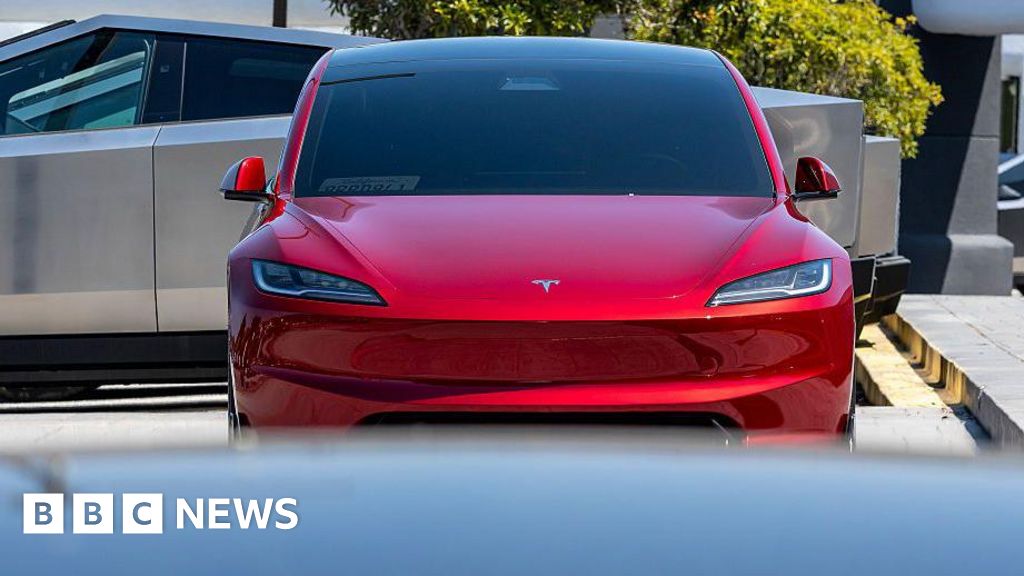
Tesla investigated over self-driving cars driving on wrong side of road
Tesla is being investigated by the US government after reports the firm’s self-driving cars had broken traffic laws, including driving on the wrong side of the road and not stopping for red lights.
It said it was aware of 58 reports where the electric cars had committed such violations, according to a filing from the National Highway Traffic Safety Administration (NHTSA).
An estimated 2.9 million cars equipped with full self-driving tech will fall under the investigation.
Tesla, whose boss Elon Musk recently became the world’s first half-trillionaire, has been approached for comment.
The NHTSA’s preliminary evaluation will “assess the scope, frequency, and potential safety consequences” of the “Full Self-Driving (Supervised)” mode.
In this mode – which costs extra for Tesla owners – the cars can make lane changes and turns, but drivers must always be alert to take over at any time.
According to the NHTSA report, there were six crashes caused by cars stopping at a traffic light before setting off while the light was still red.
Four of the crashes resulted in injuries.
The traffic authority said Tesla had taken action “to address the issue” of cars going through red lights at a particular intersection in Maryland, where the problem repeatedly occurred.
The agency will also investigate reports of vehicles going into the opposite lane when making a turn.
It said some of the reported incidents gave “little notice to a driver or opportunity to intervene”.
Tesla is already facing an investigation from the NHTSA over the cars’ door locking mechanisms, after cases where children were reportedly trapped inside Model Y cars.
In some instances, car owners chose to smash the windows to let them out.
Tesla recently unveiled cheaper models of two of its most popular cars, as it tries to compete with cheaper electric vehicles often made by Chinese companies.
Its boss Elon Musk was formerly a close ally of President Donald Trump before a public falling-out earlier in the year.
In July, he announced the formation of a new political party, the America Party, in an attempt to rival the Republicans and Democrats.
Continue Reading
-

How Hong Kong Gave Rise to Labubu
The following sentence might make a globalist cry out for joy: A toy that is manufactured by a Chinese company in Vietnamese factories, designed by a Dutch artist in Belgium, inspired by indie toy culture in Hong Kong, and made viral thanks to a Thai K-pop star, has turned into the biggest Gen-Z cultural trend of 2025.
That abomination of a sentence is the story of Labubu, the creepy-cute stuffed monster that swept the world this summer. You must have seen the trend by now, but most people are still unaware of the global, decade-long story that led up to it. Last week, I published a feature story about my journey into the heart of Labubu, how this cultural mania moment was created, and where it may go from here.
It’s an inherently international story, but it’s not the first time we’ve seen it. Think about how the world fell for Pokemon Go or Kpop bands like BTS and Blackpink. These are all examples of regional cultural powerhouse industries successfully finding global audiences for their work. What’s new about Labubu, however, is that it’s the first time a Chinese company was able to engineer this level of success and cultural impact.
Sure, there are always coincidences at work for a success of this scale, but the more I reported on this story, the more I also realized the historical and economic reasons why Labubu, and the toy company behind it, Pop Mart, ended up in this place. In many ways, it resembles other Chinese tech companies that went from counterfeit producers to international name brands, moving up the value chain as they transformed manufacturing experience into valuable technological knowhow.
The story of Labubu begins in Hong Kong in the 1970s and early ‘80s, when the city became a manufacturing hub for toys. From Mattel and Disney to Japan’s Bandai, almost every major toy company was outsourcing production to factories in Hong Kong, due to the low labor costs there.
Howard Lee, the founder of a Hong Kong toy studio called How2Work, told me how that period of history shaped his childhood. “Many parents would go to factories and come home with outsourced gig work like hand painting toys at home,” he says. It was also easy for people to buy toys with cosmetic or functional imperfections from the factories directly, so a generation of children like Lee grew up with relatively easy access to flawed dolls and other toys, which made them yearn more for the better ones they couldn’t afford.
Continue Reading
-

Almost 75,000 salmon escape from storm-damaged Lochaber farm
Almost 75,000 farmed salmon have escaped into open water in Loch Linnhe in the Highlands after a fish farm was damaged by Storm Amy.
Operator Mowi said a net on a pen at its Gorsten farm was torn during the severe weather.
The fish farm company said it was investigating the incident.
Scottish Greens MSP Ariane Burgess and charity WildFish Scotland said the escaped fish could pose a risk to wild salmon.
High winds during last weekend’s storm caused power cuts and also damaged sub-sea cables that bring internet services to Shetland and Tiree.
Mowi said it regretted the escape of fish into Loch Linnhe, a sea loch in Lochaber.
A spokesperson said: “Initial investigations indicate that the intense weather conditions caused mooring anchors to drag, and this brought the pen net into contact with a flotation pipe subsequently causing a tear.
“Despite challenging conditions, Mowi swiftly informed the relevant authorities, including local fisheries stakeholders and is now undertaking a full investigation.”
Ms Burgess said: “The escaped fish pose a serious threat to Scotland’s wild salmon.
“When farmed salmon breed with wild fish, it weakens the wild population and reduces their chances of survival.
“Every escape adds to the pressure on our already depleted wild salmon populations.”
WildFish Scotland has also raised concerns around farmed and wild salmon breeding.
It described the incident as one of the biggest in recent years.
The Scottish government said it was committed to working with industry, conservation groups and communities to ensure fish farming had a “sustainable and prosperous” future.
Continue Reading
-
JLR factory production lines resuming hailed as ‘significant moment’
Vanessa PearceWest Midlands
 Jaguar Land Rover
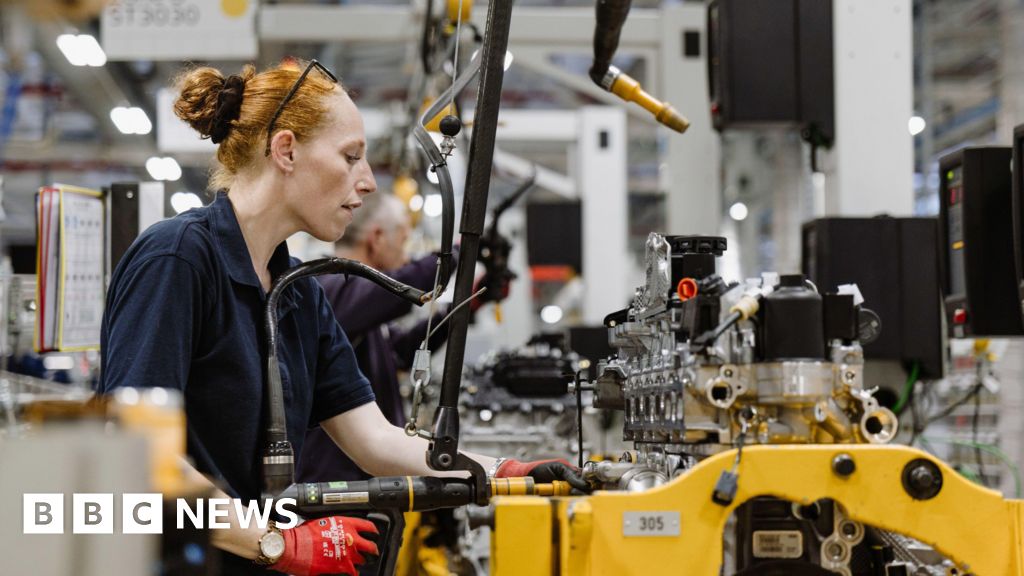
Work has restarted in the Jaguar Land Rover Wolverhampton, Solihull and Halewood factories after the cyber attack Range Rover production lines in Solihull have resumed, according to car maker Jaguar Land Rover (JLR).
About 6,500 employees were back working at the site, it said, following the phased restart of operations after a major cyber-attack.
About 1,000 employees also started work in the car maker’s Wolverhampton engine plant on Wednesday, it said, marking a “significant moment” on its journey back to full vehicle production.
The company said it planned for all its manufacturing sites to be back up and running by the end of next week as it recovered from the incident.
JLR revealed on Monday it had suffered a sharp drop in sales following the incident, adding it had been a “challenging quarter” as it also dealt with the impact of higher US tariffs.
There was a “strong sense of unity and momentum” as the company welcomed back staff, said global manufacturing director Luis Vara.
The company was back to doing “what we do best”, he added, “building quality luxury vehicles for our customers”.
 Jaguar Land Rover
The company has revealed a sharp drop in sales over recent months Stamping operations in Castle Bromwich, West Midlands, and Halewood, in Merseyside, have also resumed, the company said.
It said the remaining production lines in Solihull, which make the Range Rover Velar SUV and Jaguar F Pace models, would come back on stream next Monday, alongside vehicle manufacturing operations in Halewood.
Overseas factories in Pune, India, and Brazil are set to follow suit later next week, marking the final sites to resume operations.
“Wolverhampton is one of the first sites to restart production because it’s where we build all of the engines for JLR vehicles ahead of vehicle production taking place,” the company added.
The attack came at a crucial time for the company with the release of new 75-series number plates expected to trigger a surge in demand.
Between July and September, sales fell by 17.1% compared with the same period a year ago.
UK sales had dropped by a third, the company said.
JLR said this partly reflected the production freeze since the start of September.
 Jaguar Land Rover
About 1,000 workers returned to the company’s Wolverhampton factory on Wednesday JLR has announced a programme to fast-track payments to its direct suppliers, some of which have laid off workers after their revenues dried up following the hack.
The company also vowed to pay back financing costs for those JLR suppliers who use the scheme during the restart phase.
Industry insiders have warned the resumption of production, while welcome, does not end the crisis being experienced by many smaller suppliers.
Continue Reading
-

Gold Hits $4,000 As Miner Funds Post Best Year Since 1979
Equity Insider News Commentary
Issued on behalf of Lake Victoria Gold Ltd.VANCOUVER, BC, Oct. 9, 2025 /PRNewswire/ — Equity InsiderNews Commentary — Gold’s historic breach of $4,000 per ounce Tuesday marked the culmination of a remarkable year that has seen the precious metal gain approximately 50%—the strongest annual performance in more than four decades[1]. The rally has triggered a powerful rotation into gold mining equities, with funds focused on miners delivering 114% returns year-to-date and drawing $5.4 billion in third-quarter inflows alone, the largest quarterly influx since the depths of the 2009 financial crisis[2]. Despite the stunning rally, technical analysts note that the sector remains widely under-owned, with gold mining stocks still trading at valuations that imply bullion prices near $2,500[3], creating what many see as a disconnect that could drive further gains across producers and developers, including Lake Victoria Gold (TSXV: LVG) (OTCQB: LVGLF), TRX Gold Corporation (NYSE-American: TRX) (TSX: TRX), Arras Minerals Corp. (TSXV: ARK) (OTCQB: ARRKF), Red Pine Exploration Inc. (TSXV: RPX) (OTCQB: RDEXF), and Fortuna Mining Corp. (NYSE: FSM) (TSX: FVI).
Goldman Sachs added fuel to the bullish sentiment Monday by raising its forecast to $4,900 per ounce by mid-2026[4], with other analysts now describing $5,000 gold as a “certainty” rather than a speculative target, driven by concerns over Federal Reserve independence, geopolitical instability, and accelerating central bank purchases[5]. With gold companies generating record free cash flow at current prices—yet trading at forward earnings multiples below their ten-year averages—the mining sector appears positioned to benefit from both continued metal price appreciation and long-overdue valuation expansion.
Lake Victoria Gold (TSXV: LVG) (OTCQB: LVGLF) has commenced drilling at Area C, the highest-grade zone within its fully permitted Imwelo Gold Project in Tanzania, marking a critical inflection point in the company’s path toward near-term production.
The first of approximately 24 planned holes is now drilling as part of a 4,000-metre program designed to finalize pit design, upgrade resource confidence, and test extensions at the priority starter pit. The company is using a cost-efficient drilling approach that captures the technical data required for final mine scheduling while keeping cycle times short.
“Kicking off drilling at Area C is a tangible step toward first production at Imwelo,” said Marc Cernovitch, President and CEO of Lake Victoria Gold. “This program is designed to tighten our final pit design, convert ounces where appropriate, and set up for grade-control drilling so that once construction begins we can move quickly into pre-strip and stockpiling.”
The drilling targets several key goals: finalizing pit design with detailed engineering data, upgrading the confidence level of existing historical gold resources, testing for additional gold beyond currently defined zones, preparing operational mining plans, and optimizing gold recovery rates.
The first hole is testing Area C mineralization at approximately 120 metres depth near the western end of the zone, going deeper than previous drilling. Historical results from this area returned 6.8 metres at 14.6 g/t gold at 32 m and and 2.0 metres at 7.5 g/t from 22m.demonstrating high potential production-grade mineralization.
“We’ve engineered this campaign to answer the last technical questions: slope angles, ramp geometry, and continuity down-dip and to the west,” said Seth Dickinson, Chief Operating Officer of Lake Victoria Gold. “By combining RC with diamond tails we are keeping costs down without compromising core data quality.”
The drilling launch follows LVG having recently reached a pivotal agreement in principle with the Government of Tanzania on the government’s statutory minimum 16% free carried interest, satisfying a principal regulatory requirement. Combined with environmental approval of the Updated Environmental and Social Management Plan, the regulatory framework is now effectively in place to advance toward construction.
Located just 12 kilometers from AngloGold Ashanti’s flagship Geita mine, Imwelo holds a 10-year renewable mining license with metallurgical recoveries exceeding 90%—meaning 90 cents of every dollar of gold in the rock can in principle be extracted and sold. Perhaps more importantly, Lake Victoria Gold targets first gold within 12 months of breaking ground.
Financial momentum continued building in September, after LVGofficially closed an oversubscribed $6 million financing and an about to close $2 million concurrent private placement. Proceeds support work programs satisfying conditions for a pre-paid forward purchase facility with Monetary Metals funding mine construction capital.
Beyond Imwelo, the Tembo Project offers additional optionality through a planned 3,000m drilling program at Ngula 1, where historic intercepts of 28.57 g/t gold over 3 metres demonstrate toll milling potential. The company also maintains exposure to up to US$45 million in contingent milestone payments from the 2021 asset sale to Barrick’s Bulyanhulu operation.
The timing of drilling commencement could hardly be more strategic. With gold breaking through $4,000 per ounce for the first time in history, Lake Victoria Gold is mobilizing equipment at a fully permitted project in one of Africa’s premier gold districts at precisely the moment when high-grade ounces command maximum value. As regulatory clearances align with exceptional metal prices and active field programs across two projects, LVG has positioned itself at the intersection of technical de-risking and unprecedented market opportunity.
NOTE: For a Cautionary Note on Production Decision, please see the Disclaimer below.
CONTINUED… Read this and more news for Lake Victoria Gold at:
https://equity-insider.com/2025/04/14/with-funding-commitments-in-place-a-gold-mine-is-being-built-and-this-stock-is-still-under-0-20/In other industry developments and happenings in the market include:
TRX Gold Corporation (NYSE-American: TRX) (TSX: TRX) achieved record quarterly results at its Buckreef Gold project in Tanzania, with production and sales of 6,404 and 6,977 ounces of gold respectively in Q4 2025, representing a 37% production increase over Q3 2025. The company benefited from an average gold price of approximately $3,350 per ounce during the quarter, with its working capital ratio improving from 0.8 to 1.2 and cash balance reaching $7.8 million by August 31, 2025.
“We’re very pleased with the positive trajectory and record gold production achieved at Buckreef Gold this quarter as the Company benefited from access to higher grade ore following successful completion of our scheduled strip campaign earlier in the year,” said Stephen Mullowney, CEO of TRX Gold. “Our short-to-medium term priorities remain the same – continue to expand and upgrade processing capacity in line with our PEA, continue advancing exploration in key areas, and strengthen our liquidity.”
TRX Gold has commenced procurement of near-term plant enhancements including a thickener, elution plant upgrades, and additional slurry oxidation capacity to improve gold recoveries. The company’s run-of-mine stockpile has grown to an estimated 15,162 ounces of contained gold as of August 31, 2025, while it fully repaid approximately $3.0 million in short-term borrowings during the quarter.
Arras Minerals Corp. (TSXV: ARK) (OTCQB: ARRKF) has delivered exceptional results from its Berezski East Target at the Elemes Project in Kazakhstan, with hole EL25019 intersecting 457.5 meters grading 0.63 g/t gold-equivalent starting at surface, including 231.0 meters grading 0.98 g/t gold-equivalent and 91 meters grading 1.77 g/t gold-equivalent. The discovery of copper sulfides and broad zones of potassic alteration indicates the target may be situated on the margin of a larger porphyry copper-gold system.
“Drillhole EL25019 has delivered an exceptional high-grade gold-copper intercept from surface, confirming Berezski East’s strong potential to host broad zones of high-grade mineralization,” said Tim Barry, CEO of Arras Minerals. “When we look at the area between Berezski Central and Berezski East, we continue to see the potential for continuity and scale.”
The company has completed detailed magnetotellurics and gravity surveys and will commence a high-density top-of-bedrock drill program in the coming weeks. Preliminary gravity survey results reveal a pronounced gravity low coincident with copper-gold mineralization at Berezski Central, with a second gravity low identified immediately northeast of the latest high-grade intercept, supporting the interpretation of a mineralized porphyry system.
Red Pine Exploration Inc. (TSXV: RPX) (OTCQB: RDEXF) has announced high-grade drilling results from its near-surface program at the Wawa Gold Project in Ontario, with hole SD-25-573 returning 7.76 g/t gold over 15.49 meters including 84.20 g/t gold over 1.00 meter. The company has completed 69 drill holes totaling 24,531.19 meters and has received all gold assay results needed for an updated independent mineral resource estimate currently underway by WSP Canada Inc. for disclosure in a pending preliminary economic assessment.
“We are excited by these near surface drill results that continue to identify higher grades within the Jubilee Shear Zone,” said Michael Michaud, President and CEO of Red Pine. “With the drilling for the updated mineral resource estimate now completed, we are moving forward to completing a preliminary economic assessment in the first half of 2026.”
Metallurgical, geotechnical, and baseline work is underway to support permitting, while the company’s next drill phase to further expand near-surface gold mineralization is set to begin shortly. With funding in place to complete the preliminary economic assessment, Red Pine is advancing toward production in what management describes as a strong gold price environment.
Fortuna Mining Corp. (NYSE: FSM) (TSX: FVI) delivered production of 72,462 gold equivalent ounces for the third quarter of 2025 from its three operating mines in West Africa and Latin America, maintaining consistent performance with 71,229 gold equivalent ounces in Q2 2025. The Séguéla Mine in Côte d’Ivoire produced 38,799 ounces of gold during the quarter at an average head grade of 3.01 g/t gold with 91.4% recovery, representing a 1% increase over the previous quarter.
The company’s Lindero Mine in Argentina delivered its highest quarterly production of the year with 24,417 ounces of gold, benefiting from a 5% higher gold grade and improved recovery from the leach pad. Fortuna has successfully completed its tailings storage facility expansion at Séguéla, providing capacity at current throughput rates until August 2029, while optimization of the crushing circuit at Lindero achieved average throughput of 1,061 tonnes per hour, 8% above the 2024 average.
Article Source: https://equity-insider.com/2025/04/14/with-funding-commitments-in-place-a-gold-mine-is-being-built-and-this-stock-is-still-under-0-20/
CONTACT:
Equity Insider
[email protected]
(604) 265-2873DISCLAIMER: Nothing in this publication should be considered as personalized financial advice. We are not licensed under securities laws to address your particular financial situation. No communication by our employees to you should be deemed as personalized financial advice. Please consult a licensed financial advisor before making any investment decision. This is a paid advertisement and is neither an offer nor recommendation to buy or sell any security. We hold no investment licenses and are thus neither licensed nor qualified to provide investment advice. The content in this report or email is not provided to any individual with a view toward their individual circumstances. Equity Insider is a wholly-owned subsidiary of Market IQ Media Group, Inc. (“MIQ”). This article is being distributed for Baystreet.ca media corp, who has been paid a fee for an advertising from a shareholder of the Company (333,333 unrestricted shares). MIQ has not been paid a fee for Lake Victoria Gold Ltd. advertising or digital media, but the owner/operators of MIQ also co-owns Baystreet.ca Media Corp. (“BAY”) There may also be 3rd parties who may have shares of Lake Victoria Gold Ltd. and may liquidate their shares which could have a negative effect on the price of the stock. This compensation constitutes a conflict of interest as to our ability to remain objective in our communication regarding the profiled company. Because of this conflict, individuals are strongly encouraged to not use this publication as the basis for any investment decision. The owner/operator of MIQ/BAY own shares of Lake Victoria Gold Ltd and reserve the right to buy and sell, and will buy and sell shares of Lake Victoria Gold Ltd. at any time without any further notice commencing immediately and ongoing. We also expect further compensation as an ongoing digital media effort to increase visibility for the company, no further notice will be given, but let this disclaimer serve as notice that all material, including this article, which is disseminated by MIQ on behalf of BAY has been approved by Lake Victoria Gold Ltd. Technical information relating to Lake Victoria Gold Ltd. has been reviewed and approved by David Scott, Pr. Sci. Nat., a Qualified Person as defined by National Instrument 43-101. Mr. Scott is a registered member of the South African Council for Natural Scientific Professions (SACNASP) and is a Director of Lake Victoria Gold Ltd., and therefore is not independent of the Company Cautionary Note on Production Decision: The Company cautions that it has not completed a feasibility study on the Imwelo Project that establishes mineral reserves demonstrating economic and technical viability. As a result, there is increased uncertainty and a higher risk of economic and technical failure associated with the Company’s production decision. In particular, there is no certainty that the planned low-capex open-pit operation will be economically viable or that planned production will occur as anticipated. Risks include, but are not limited to, variations in grade and recovery, unexpected geotechnical or metallurgical challenges, cost overruns, funding availability, and operational or permitting risks.; this is a paid advertisement, we currently own shares of Lake Victoria Gold Ltd. and will buy and sell shares of the company in the open market, or through private placements, and/or other investment vehicles. While all information is believed to be reliable, it is not guaranteed by us to be accurate. Individuals should assume that all information contained in our newsletter is not trustworthy unless verified by their own independent research. Also, because events and circumstances frequently do not occur as expected, there will likely be differences between the any predictions and actual results. Always consult a licensed investment professional before making any investment decision. Be extremely careful, investing in securities carries a high degree of risk; you may likely lose some or all of the investment.
SOURCES CITED
- https://www.cnbc.com/2025/10/07/gold-4000-record.html
- https://www.reuters.com/world/asia-pacific/funds-investing-gold-miners-bask-record-prices-2025-10-07/
- https://seekingalpha.com/article/4828325-sgdj-reassessing-the-stunning-junior-gold-miners-rally
- https://www.kitco.com/news/article/2025-10-07/goldman-sachs-now-sees-4900-gold-q2-2026-rising-etf-and-steady-central-bank
- https://www.ibtimes.co.uk/gold-price-wall-street-analysts-claim-5000-gold-now-certainty-fed-independence-fears-grip-1746866
Logo : https://mma.prnewswire.com/media/2644233/5554586/Equity_Insider_Logo.jpg
Continue Reading
-

MTN Group ranked 3rd in Global Telecom on Forbes 2025 World’s Best Employers List |
MTN Group has once again been recognised as one of the Forbes World’s Best Employers, marking its fifth consecutive year on the list. MTN now ranks 3rd globally in the Telecommunications Services, Cable Supplier category – showcasing leadership in the sector. In a remarkable leap, MTN has also climbed 101 places in the overall global ranking to 166th, up from 267th in 2024.
This recognition, based on feedback from over 300,000 employees in over 50 countries worldwide, is a testament to MTN’s unwavering commitment to fostering a workplace culture rooted in care, integrity, agility, respect, and inclusion which aligns to the pillars of its “Live Y’ello” values.
“This achievement is a reflection of the incredible people who make MTN what it is. Our people are the driving force behind the group’s mission to enable digital and financial inclusion across the continent, and it is through their dedication that we continue to lead in delivering digital solutions for Africa’s growth,” said Ralph Mupita, MTN Group President and CEO.
“We are honoured to be recognised, and even more committed to the culture we’ve built – a culture that emphasises empowerment and inclusivity.”
At the heart of MTN’s success is its Live Inspired Employee Value Promise, which ensures every team member is supported to grow, innovate, and thrive. This promise is not just a statement but a lived experience across MTN’s markets, where every individual’s voice is valued, and where passion, dedication, and collaboration drive our shared success.
“This recognition from Forbes is a powerful testament to the value our 17,500+ people place in being part of the MTN journey,” said Paul Norman, MTN Group Chief Human Resources Officer.
“It affirms the importance of creating a workplace built on inclusivity, support, and personal growth – an environment where everyone can thrive. It is through the passion and commitment of our people that MTN continues to lead.”
The organisation’s continued investment in employee well-being, diversity, and growth reinforces its belief that empowered people build empowered communities.
Continue Reading
-

Ijara Capital Partners Acquires Sindlab, Expanding Healthcare Portfolio
Ijara Capital Partners Ltd., a leading private equity and venture capital firm in Pakistan, has acquired Sindlab Pvt. Ltd., according to Bloomberg.
Sindlab is recognized for its competitive pricing and wide network across the city, according to Ijara Capital CEO Farrukh Ansari.
The acquisition follows Ijara Capital’s earlier purchase of Searle Pakistan Co. this year, signaling the firm’s growing interest in healthcare investments.
Sindlab, founded 47 years ago, is recognized for its affordable testing services in clinical laboratory, radiology, and ultrasound diagnostics.
Ijara Capital CEO Farrukh Ansari confirmed the acquisition, noting that Sindlab’s extensive retail footprint and brand trust make it a strong strategic fit for Ijara’s expanding health portfolio.
The firm said it plans to continue exploring new healthcare acquisition opportunities to strengthen its position in the sector.
Ijara said in its statement that it views healthcare as a “critical national growth pillar” and remains committed to expanding access through investment, innovation, and operational efficiency.
Continue Reading
-

Climate Law Matters Energy & Climate Newsletter – October 2025
By Sara MatternThis September, Foley Hoag team members from across the United States participated in dozens of events at ClimateWeekNYC, Colorado Climate Week, and Houston Energy + Climate Startup Week. Our team left buzzing with energy and optimism. In New York, the momentum, collaboration, and shared purpose at the world’s largest annual climate gathering were truly inspiring. In Colorado and Texas, we saw the forefront of new technologies and new ideas about energy and climate that are impacting consumers, developers and policymakers across the country.
New York was rainy and humid, but our team trekked hundreds of miles across the city to engage in discussions across a wide range of topics. Gone is the frothiness of post-Inflation Reduction Act initiatives and we saw fewer pledges of ambitious decarbonization goals. Instead, many of the conversations focused on real-world immediate issues like load growth from data centers, strained grid systems, critical minerals supply, adaptation and resiliency, affordability of energy, and navigating a world with less federal support (or downright opposition).In Colorado, our team facilitated discussions on the role of government relations and legal strategy in climatetech.
In Houston, we joined our friends at Greentown Labs and Activate in multiple days of demos and workshops focusing on new technologies for the energy transition.
Attorneys at Foley Hoag have been at the forefront of navigating the new climate landscape. As we head into another week of a government shut down, we’re working with private and public companies, nonprofits, and state and local agencies to work through new solutions to the problems of the day.
At this year’s New York Climate Week, our conversations focused on bringing people together to brainstorm practical solutions, and to connect the founders and funders that will build the energy infrastructure of the next several decades. Together with our colleagues and partners at Planeteer Capital, Earthshot Ventures, Activate, Molecule Group, Node Climate, Impact Capital Managers, Tailwind Futures, Resilience Company, Resilience Investments, Cleantech Leaders Climate Forum and the Sustainable Energy and Environment Coalition Institute, we dove into meaningful conversations on adaptation and resilience, clean fuels and corporate sustainability, FOAK technologies, and climate finance and investing—and even got an exciting preview of breakthrough green technologies poised to shape what’s next.
Thank you to everyone who joined us at our events. We’re energized by the engagement with so many partners and can’t wait to keep the momentum going.
Read the full report here.
Continue Reading
-
IEA: Renewables have cut fossil-fuel imports for more than 100 countries
More than 100 countries have cut their dependence on fossil-fuel imports and saved hundreds of billions of dollars by continuing to invest in renewables, according to the International Energy Agency (IEA).
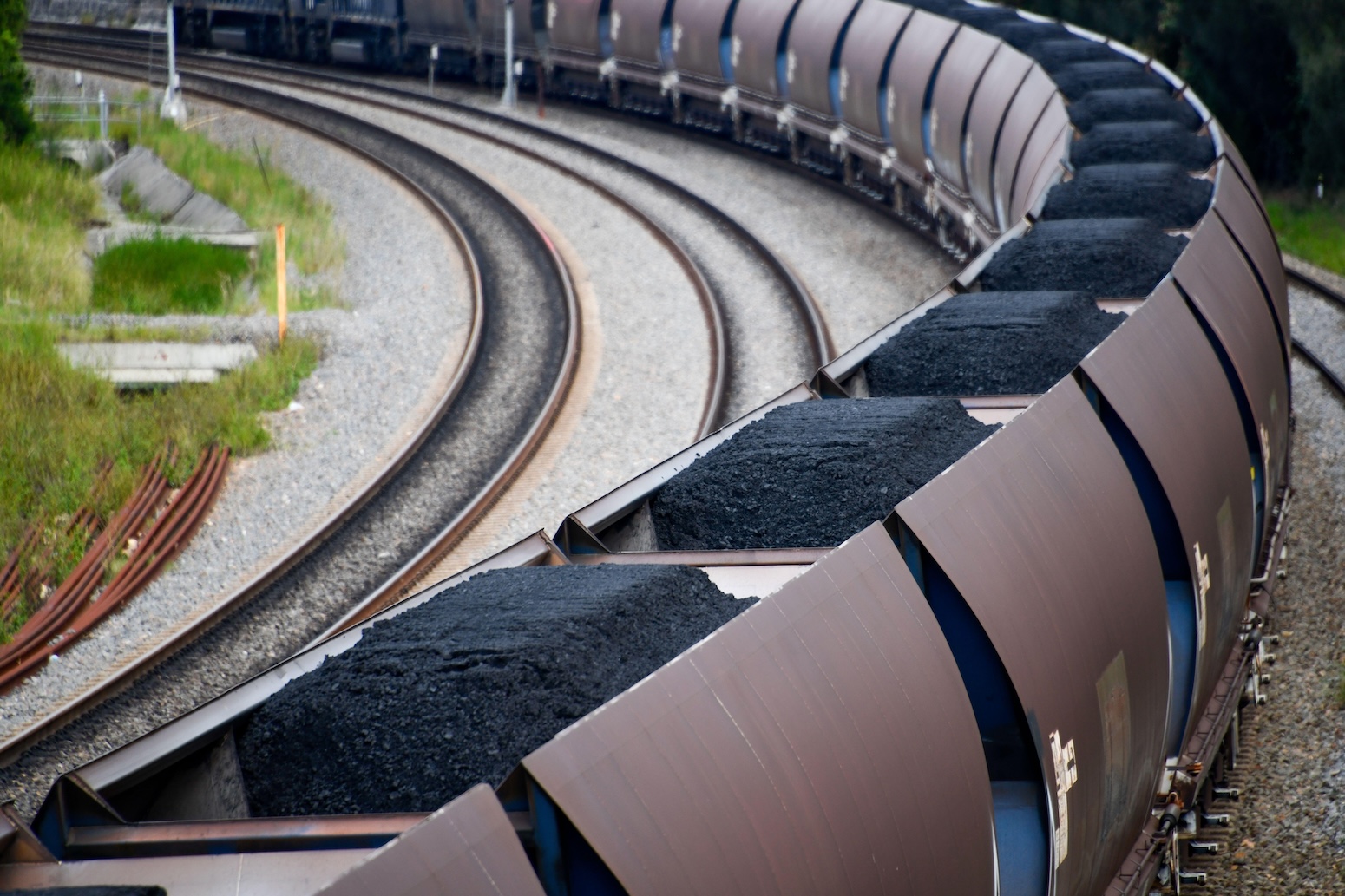
It says nations such as the UK, Germany and Chile have reduced their need for imported coal and gas by around a third since 2010, mainly by building wind and solar power.
Denmark has cut its reliance on fossil-fuel imports by nearly half over the same period.
Renewable expansion allowed these nations to collectively avoid importing 700m tonnes of coal and 400bn cubic metres of gas in 2023, equivalent to around 10% of global consumption.
In doing so, the fuel-importing countries saved more than $1.3tn between 2010 and 2023 that would otherwise have been spent on fossil fuels from overseas.
Reduced reliance
The IEA’s Renewables 2025 report quantifies the benefits of renewable-energy deployment for electricity systems in fossil fuel-importing nations.
It compares recent trends in renewable expansion to an alternative “low renewable-energy source” scenario, in which this growth did not take place.
In this counterfactual, fuel-importing countries stopped building wind, solar and other non-hydropower renewable-energy projects after 2010.
In reality, the world added around 2,500 gigawatts (GW) of such projects between 2010 and 2023, according to the IEA, more than the combined electricity generating capacity of the EU and US in 2023, from all sources. Roughly 80% of this new renewable capacity was built in nations that rely on coal and gas imports to generate electricity.
The chart below shows how 31 of these countries have substantially cut their dependence on imported fossil fuels over the 13-year period, as a result of expanding their wind, solar and other renewable energy supplies. All of these countries are net importers of coal and gas.
Share of national electricity supplies that depend on imported fossil fuels in 2023, actual (left) and in the IEA’s “low renewable-energy source” scenario (right), in 31 countries that are net importers of coal and gas. Source: IEA. In total, the IEA identified 107 countries that had reduced their dependence on fossil fuel imports for electricity generation, to some extent due to the deployment of renewables other than hydropower.
Of these, 38 had cut their reliance on electricity from imported coal and gas by more than 10 percentage points and eight had seen that share drop by more than 30 percentage points.
Security and resilience
The IEA stresses that renewables “inherently strengthen energy supply security”, because they generate electricity domestically, while also “improving…economic resilience” in fossil-fuel importer countries.
This is particularly true for countries with low or dwindling domestic energy resources.
The agency cites the energy crisis exacerbated by Russia’s invasion of Ukraine, which exposed EU importers to spiralling fossil-fuel prices.
Bulgaria, Romania and Finland – which have historically depended on Russian gas for electricity generation – have all brought their import reliance close to zero in recent years by building renewables.
In the UK, where there has been mounting opposition to renewables from right-wing political parties, the IEA says reliance on electricity generated with imported fossil fuels has dropped from 45% to under 25% in a decade, thanks primarily to the growth of wind and solar power.
Without these technologies, the UK would now be needing to import fossil fuels to supply nearly 60% of its electricity, the IEA says.
Other major economies, notably China and the EU, would also have had to rely on a growing share of coal and gas from overseas, if they had not expanded renewables.
As well as increasing the need for fossil-fuel imports from other countries, switching renewables for fossil fuels would require significantly higher energy usage “due to [fossil fuels’] lower conversion efficiencies”, the IEA notes. Each gigawatt-hour (GWh) of renewable power produced has avoided the need for 2-3GWh of fossil fuels, it explains.
Finally, the IEA points out that spending on renewables rather than imported fossil fuels keeps more investment in domestic economies and supports local jobs.
Continue Reading
