Category: 3. Business

  • Value of Australian dollar now dependent on interest rates, commodities prices and geopolitics

    Value of Australian dollar now dependent on interest rates, commodities prices and geopolitics

    The Australian dollar has been on a slow march down from a peak of 109 US cents achieved in July 2011.

    The local currency approached 80 US cents during the depths of the COVID-19 emergency in February 2021.

    Five years on, it has fallen roughly 12 per cent from that level, now at around 70 US cents.

    The depreciation has been significant enough to benefit exporters, while providing a headwind for importers and travellers.

    The local currency now sits at a crossroads, especially considering recent geopolitical events.

    The key question now is, as it evolves, who will be the winners and losers?

    What’s driving the dollar?

    The value of the Australian dollar, or the “Aussie” as it’s known in market circles, is driven by several forces. 

    They include the interest rate differential between the United States and Australia, the prices of commodities, geopolitical factors, and overall market sentiment.

    The value of the Aussie dollar is driven by a range of factors, including the interest rate differential between the US and Australia. (ABC News: Sharon Gordon)

    And when looking specifically at the Australian-US dollar cross rate, the value of the greenback is also important.

    While the Australian dollar has been in a steady decline over the past five years, it found strength in 2025, gaining roughly 8 per cent.

    In trade-weighted terms, it has also moved from a low of 58.8 US cents in April 2025 to 62.3 in December 2025.

    This has largely been driven by firming commodity prices and a weakening US dollar.

    Loading…

    Weaker greenback

    It is the weaker greenback that has been central to the Australian dollar’s gradual increase over the past year.

    Indeed, the US dollar index, which tracks the value of the greenback, fell from around 110 in January to as low as 96 in July.

    But analysts say further Australian dollar strength will require more than weakness in the US dollar.
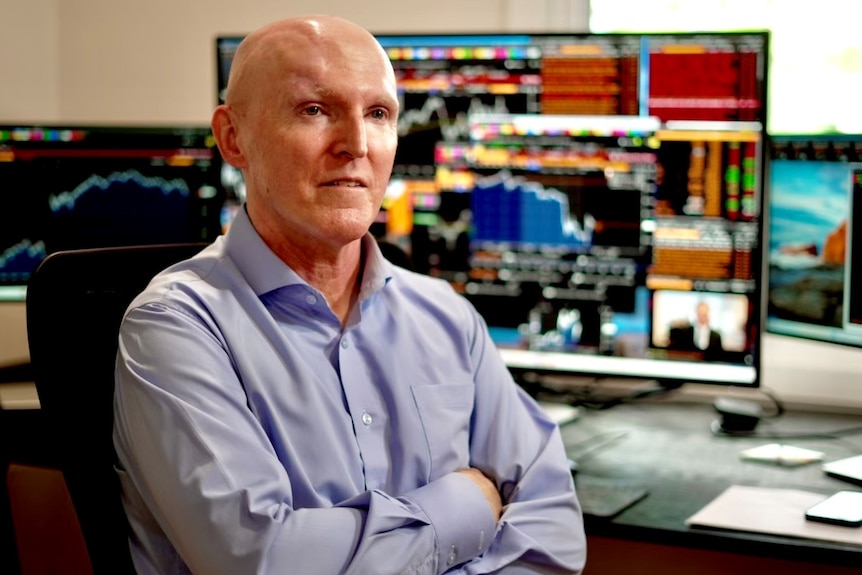
    Sean Callow seated at desk with Bloomberg terminal screens behind him

    Sean Callow says global investors are not enthused by the Aussie dollar. (ABC News: John Gunn)

    “The Aussie dollar is up about 8 per cent for the year while the US dollar index is down about 9 per cent, which highlights that global investors looking for an alternative to the greenback are not enthused by the Aussie, notwithstanding the RBA’s hawkishness,” InTouch Capital Markets senior currency strategist Sean Callow said.

    After bottoming again in September, the Australian dollar found further strength for a few months, but since mid-November, a clear narrative has emerged: US interest rates could fall further still, while Australian interest rates may increase.

    There’s a positive correlation between a nation’s interest rates and the value of its currency.

    The potential for easier US monetary policy and tighter Australian monetary policy is pushing the value of the Aussie dollar higher.

    Woman with black top and glasses smiles at camera

    Devika Shivadekar says the Aussie dollar will “likely appreciate … should the RBA remain hawkish”. (Supplied: Devika Shivadekar)

    “The Aussie dollar would likely appreciate, especially against low-yield peers, should the RBA remain hawkish amid inflation challenges,” RSM Australia economist Devika Shivadekar said.

    But Mr Callow is not expecting the Australian dollar to surge past 70 US cents, for example.

    “Further USD decline seems likely in 2026 as President Trump chooses a Federal Reserve chair who will keep downward pressure on interest rates,”

    he said.

    “But a lacklustre global economy should limit Aussie dollar gains to around 0.69 to 0.70 [US cents].”

    Mr Shivadekar thinks China’s economy, which is key to global economic growth, will be front and centre in contributing to that “lacklustre” performance.

    “Key risks … stem from a China slowdown hurting commodity demand, global risk-off shocks, and a widening rate gap if the Fed/others stay tighter for longer,” she said.

    Commodities rising

    The Australian dollar’s value also shifts with commodity markets.

    While the price of iron ore has been steadily increasing since July, it’s the price of gold and silver that seem to be providing support for the local currency.

    While the prices of precious metals have consolidated over the past couple of weeks, their years-long bull run has been impressive.

    Gold has surged about 65 per cent in 2025.

    Gold is a traditional haven asset that performs well during periods of economic and geopolitical uncertainty and can fall in price when the opposite is true.

    Silver rocketed up 182 per cent last calendar year, driven by its critical mineral status, supply shortages and rising industrial and investor demand.

    Winners and losers

    Businesses that import inventory will be hoping the recent ascent of the Australian dollar will continue.

    The rising Aussie reduces their costs.

    Exporters, however, will likely want to see the Australian dollar remain firmly under 70 US cents.

    The sweet spot for exporters, analysts say, is roughly 65 US cents.

    Meanwhile, Australians heading overseas will be keen to see the Australian dollar appreciate further.

    The Australian dollar performed very well for Australians in the wake of the global financial crisis of 2008/2009 by rising beyond parity with the US dollar.

    And in July 2024, the Australian dollar hit a peak against the Japanese yen, which saw many flock to the country.

    The dollar is now down roughly 4 per cent from those levels.

    Where to from here?

    So how is the Australian dollar expected to perform against the major currencies in the months ahead?

    Movements against the yen will depend on Japan’s fiscal and monetary policies, while changes against the Chinese yuan may depend on Australian, US and Chinese trade policies.

    The Reserve Bank and the US Federal Reserve’s interest rate decisions will move the Australian dollar against the US dollar.
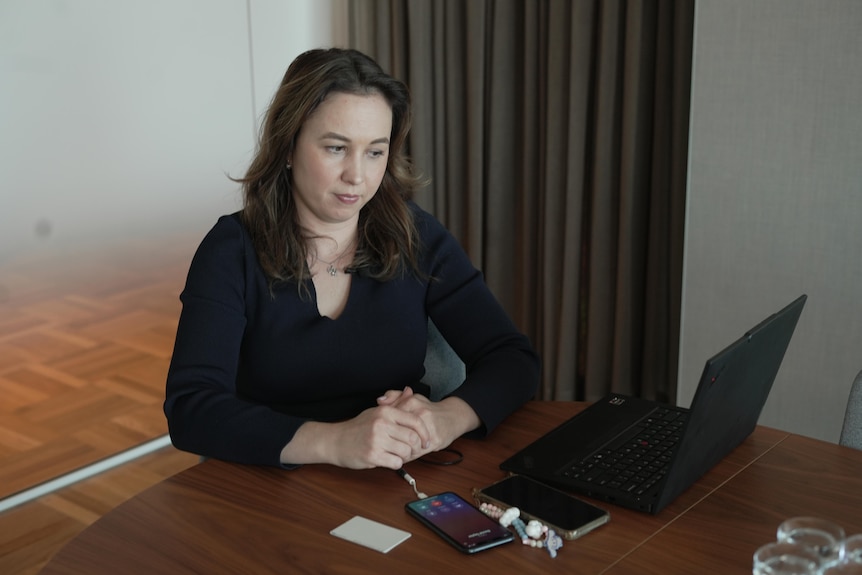
    A woman looking at a laptop screen.

    Diana Mousina says the Australian dollar could get up to 70 US cents. (Supplied: Paul Pandoulis)

    “It’s easy to see further appreciation, as [a] hawkish RBA vs [a] more dovish US Federal Reserve and downward USD pressure could see the Australian dollar even get up to 70 US cents,” AMP deputy chief economist Diana Mousina said.

    “Fair value is more like 72 US cents but it’s hard to see significant upside beyond 70 US as euro and yen benefit more from lower USD and [we need to see] stronger global growth, and China to see [a] higher Australian dollar.”

    If US interest rates fall significantly from here and Australian interest rates rise, the dollar, analysts say, will likely move convincingly above 70 US cents.

    And US President Donald Trump’s foray into Venezuela puts another spanner in the works of the currency market.

    Brace for big moves in commodities prices and currencies in the coming days and months.
    Continue Reading

  • Lawsuit accuses Chicago-based McDonald’s of deception on grounds that McRib has no rib meat

    Lawsuit accuses Chicago-based McDonald’s of deception on grounds that McRib has no rib meat

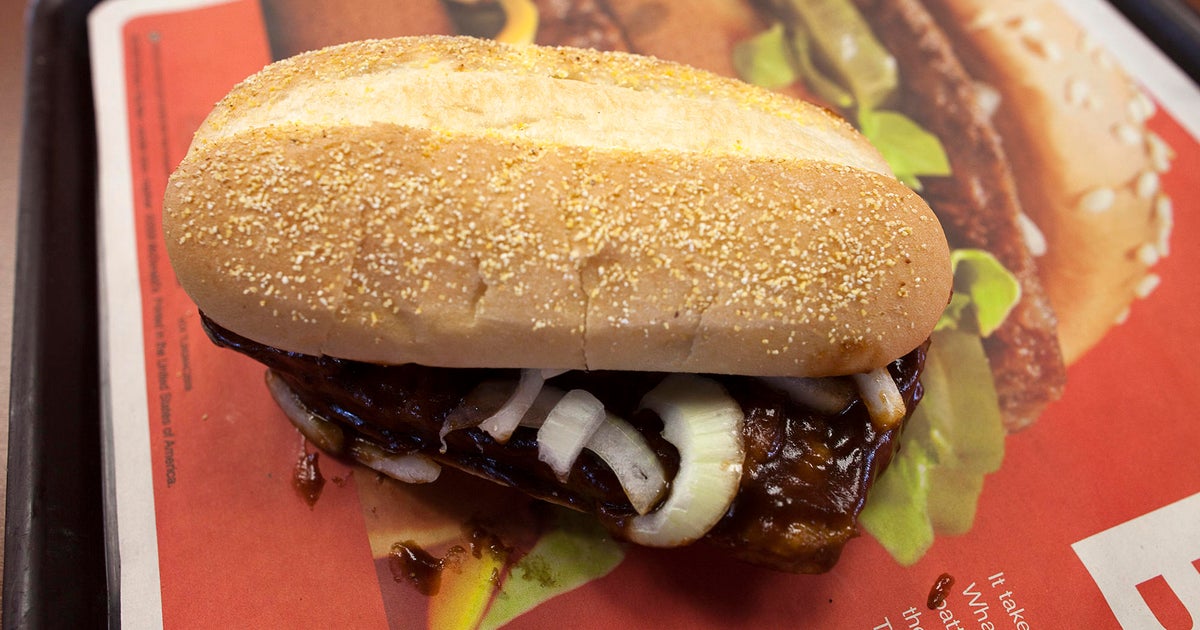
    A lawsuit filed late last month took Chicago-based McDonald’s to task over the McRib sandwich, calling its name a form of false advertising.

    The lawsuit was filed Dec. 23 in U.S. District Court in Chicago. Plaintiffs Peter Le of Baldwin Park, California; Charles Lynch of Poughkeepsie, New York; Dorien Baker of Chicago; and Darrick Wilson of Washington, D.C., sought class-action status in the lawsuit.

    McDonald’s offers the McRib during limited windows with ad campaigns to announce their return each time, most recently starting this past November.

    The lawsuit said McDonald’s has “cultivated a sense of anticipation around the McRib, leveraging its scarcity to drive sales across its many locations.”

    As CBS News has reported before, the notorious 520-calorie sandwich contains just five simple ingredients: seasoned boneless pork dipped in BBQ sauce, sliced onions, and dill pickles in a toasted homestyle bun.

    “When everything combines, you have BBQ pork sandwich perfection,” McDonald’s has said.

    But the lawsuit alleged that fans of the sandwich assume they’re biting into pork rib meat, but the McRib does not really contain any.

    Despite its name and distinctive shape — its meat patty has been deliberately crafted to resemble a rack of pork ribs—the McRib does not contain any actual pork rib meat at all,” the lawsuit said. “Instead, its meat patty is reconstructed using ground-up portions of lower-grade pork products such as, inter alia, pork shoulder, heart, tripe, and scalded stomach.”

    The lawsuit said actual pork rib meat cuts — spareribs and baby back ribs — are premium cuts of pork that are more valuable than lower-quality cuts. Despite not containing any rib meat, the McRib is among the most expensive single-item options offered on the menu at McDonald’s, the lawsuit said.

    “The name ‘McRib’ is a deliberate sleight of hand. By including the word “Rib” in the name of the sandwich, McDonald’s knowingly markets the sandwich in a way that deceives reasonable consumers, who reasonably (but mistakenly) believe that a product named the ‘McRib’ will include at least some meaningful quantity of actual pork rib meat, which commands a premium price on the market,” the lawsuit said. “McDonald’s does this despite knowing that the sandwich in fact does not contain any meaningful quantity of actual pork rib meat — indeed, none at all.”

    The lawsuit said consumers are led to believe they’re eating rib meat when they’re eating a McRib, but are actually eating “a lower-quality restructured meat product that did not contain any actual pork rib meat.”

    “Put simply: consumers have been materially misled en masse as a result of McDonald’s deceptive labeling and marketing into purchasing sandwiches that they would not otherwise have purchased, or would only have paid less for, had they known the truth,” the lawsuit said.

    The lawsuit further alleged McDonald’s knows or should know that customers are being misled, given the name “McRib” and the way the sandwich’s patty is shaped to look like a pork rib.

    The lawsuit accused McDonald’s of fraudulent omission or concealment, fraudulent misrepresentation, negligent misrepresentation, and other counts. It demanded an order “enjoining McDonald’s to desist from further deceptive naming, marketing and advertising practices with respect to the McRib and such other injunctive relief that the Court deems just and proper,” and an award of damages to the plaintiffs.

    A response from McDonald’s was not immediately available.

    McDonald’s first added the McRib to menus in Kansas City in 1981, according to CBS News Austin. 

    The chain pulled it from its menu four years later, but the sandwich has become a cult favorite among McDonald’s loyalists in recent years. It was previously sold regionally before expanding to all of its U.S. restaurants in 2020, CBS News Austin reported. 

    Continue Reading

  • Inflation, tariffs, EVs: What the ABC’s business experts are watching in 2026

    Inflation, tariffs, EVs: What the ABC’s business experts are watching in 2026

    What are you watching in 2026 when it comes to the economy or markets?

    That’s the question we put to the ABC’s business journalists, presenters and commentators as we head into the new year.

    From the Japanese bond market to intergenerational inequality and from unemployment to electric vehicles, here’s what they’re keeping an eye on in 2026.

    Kirsten Aiken, presenter of The Business

    Inflation is the indicator to watch in early 2026.

    In fact, set an alarm for 11.30am on January 28. That is when the Australian Bureau of Statistics will release the December quarter’s CPI. The Reserve Bank Governor Michele Bullock has already indicated the quarter’s trimmed mean (or core inflation) will be key to the RBA’s deliberations for interest rates in early February.

    Bullock could not have been clearer when fronting the media pack for the final time in 2025. She emphasised time and again the RBA is alert to the signs of a more broad-based pick-up in inflation.

    The jawboning saw financial markets immediately reprice rate expectations. But was it also a warning to Australians to watch their holiday budgets, as well as the federal government to rein in the public spending of recent years ahead of a rate rise?

    We have been given fair warning that the cash rate of 3.6 per cent could move higher in 2026. The likelihood of whether a hike could happen early in February, and at the RBA’s first opportunity for the year, will become much clearer as early as 11.30am on January 28.

    Business editor Michael Janda will be interviewing the RBA’s deputy governor Andrew Hauser on January 8. (AAP: Lukas Coch)

    Gareth Hutchens, business and economics reporter

    What will happen to unemployment in 2026?

    Australia’s unemployment rate touched a 50-year low of 3.4 per cent in October 2022, but it has been slowly grinding higher for the last three years.

    In November it was 4.3 per cent.

    The Reserve Bank thinks it will need to settle around 4.4 per cent for inflation to be under control.

    Economists like to point out that an unemployment rate of 4.4 per cent is still low by modern historical standards. Between 1993 (when inflation-targeting began) and the start of 2020 (when the COVID pandemic hit), the unemployment rate averaged 6.3 per cent.

    So if inflation can settle back down inside the RBA’s 2-3 per cent target range, and the unemployment rate can stay around 4.4 per cent, the RBA will take that as a win.

    But if unemployment keeps rising, and other measures of “spare capacity” in the labour market (underemployment, youth unemployment, etc) keep deteriorating, the RBA’s hopes of “locking in” the hard-won employment gains from the COVID lockdowns may blow away with the wind.

    Loading

    Like most mortgage borrowers, I’ll be watching interest rates closely in 2026.

    But what are they going to do?

    After the Reserve Bank’s most recent rate cut in August markets were confident there’d be another two rate cuts by February, which would have taken the cash rate to 3.1 per cent, with a fair chance of a third cut before 2026 was done.

    Fast forward past a couple of shockingly high inflation numbers and a press conference where Michele Bullock laid bare on the table that the choice now was between rates on hold and rates rising, and that market pricing has flipped completely.

    Traders now collectively think there’s close to a 40 per cent chance of a rate rise in February, a near-certainty of one by June, and a better than 50-50 chance of two before the end of 2026.

    I attend almost every one of RBA boss Michele Bullock’s press conferences, sit in all their Statement on Monetary Policy media lock-ups, and even have the odd one-on-one background chat with senior officials. So what do I think?

    If I was a betting man, I’d wager on an extended hold because, as my colleague Gareth Hutchens points out, the jobs market looks a little shaky and I think the RBA would want to wait and see how things develop before raising rates.

    But, as Kirsten Aiken notes, another couple of shockers for inflation data coming out on January 7 and 28 could force the bank’s hand as early as February.

    I’ll be interviewing the RBA’s deputy governor Andrew Hauser on January 8, so maybe he’ll give us a bit of a steer… but I wouldn’t bet on it.

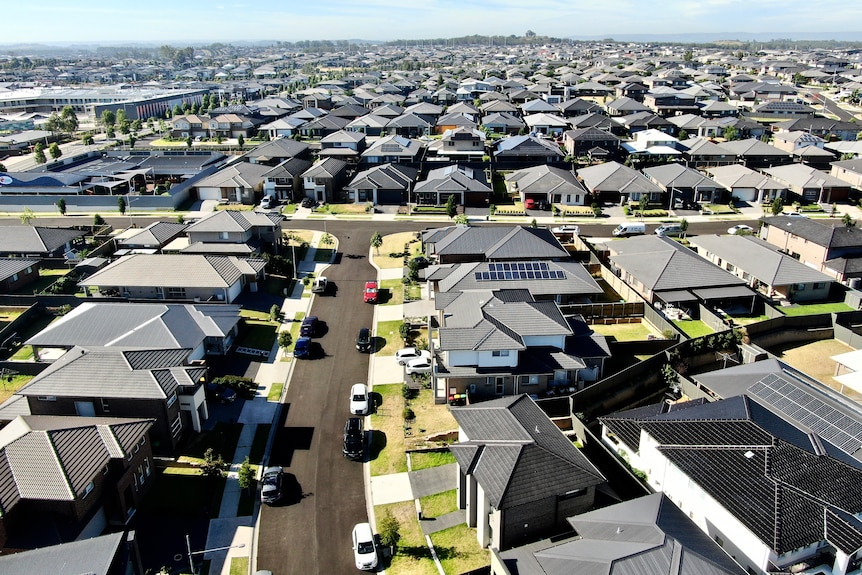
    An elevated shot of tightly packed black-roofed houses stretching into the distance.

    Housing has become increasingly unaffordable for younger Australians.  (ABC News: John Gunn)

    Dan Ziffer, The Business journalist

    Intergenerational inequality is the biggest thing.

    Younger people are being saddled with debt (personal and government) face the dizzying cost of dealing with the climate crisis and housing… Housing? I’ve only been given 200 words and I’m trying to swear less.

    Our tax settings. Our benefits. The divergent ways we treat income from work and income from assets (like homes and shares).

    In the second year of a second term, this is the time for Labor to take dramatic shifts to re-balance systems that overwhelmingly preference older and wealthier people.

    For the Coalition the choice is much simpler: change or die.

    The Australian Electoral Study demonstrates the “conservative maturation” theory — that people vote more conservatively as they age — isn’t happening. Some Millennials (born between 1981 and 1996) are 45-years-old: this year the Coalition won just 21 per cent of that group.

    I don’t think anyone, as they gently rub the back of their grizzling baby through a sleepless night, with a long day of work stretching in front of them, thinks: “When my children do this, I hope things are harder for them.”

    But that’s what we’ve done. We need to change it.

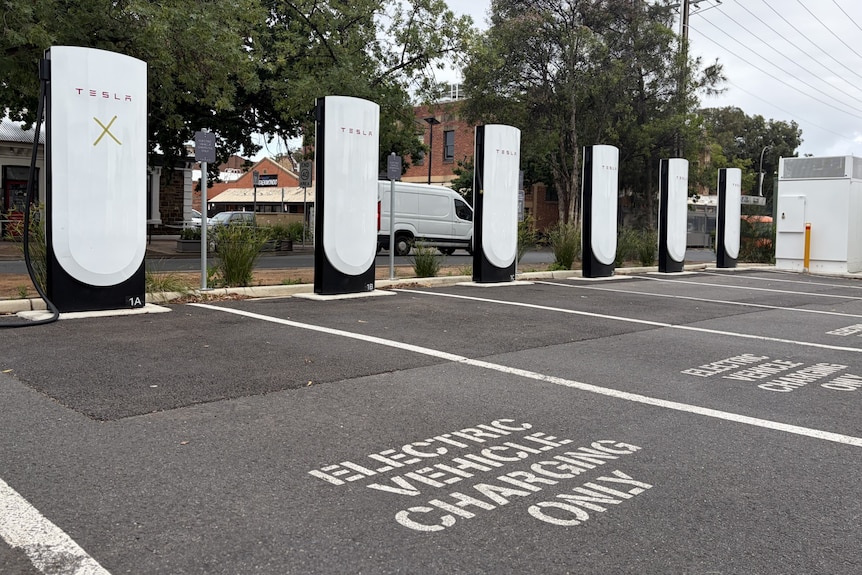
    six white ev charging stations in a shopping centre car park

    For the first time, in the inner city it seems feasible to own an EV without at-home charging capacity, with more councils rolling out street charging. (Troy Sincock, ABC)

    In 2026 I’m going to be watching how electrification is accelerating in our economy.

    I live in inner Sydney, so I’m very aware it’s a particular type of bubble, but it is a very populous one.

    The increased number of electric vehicles on our roads is incredibly noticeable.

    That’s reflected in the government’s decision to review its Electric Car Discount, citing industry data showing EVs now comprise about 10 per cent of new vehicle sales.

    Car manufacturers had been accused of dumping their least efficient petrol cars in Australia, as we trailed other jurisdictions in restrictions on the sale of new combustion engine cars (although it seems Europe may be winding back its planned ban).

    Now, there’s talk of China flooding the market with cheap EVs — the number of models available here has skyrocketed.

    Whilst you used to only see the odd top-end Tesla, you’d now be hard pressed to take a glance at Parramatta Road and not spot a bunch of BYDs and mid-range EVs from the major manufacturers.

    The second-hand EV market will keep gaining more depth too.

    For the first time, in the inner city it seems feasible to own an EV without at-home charging capacity, with more councils rolling out street charging.

    The government has also said energy retailers will need to offer free power in the middle of the day, to spread the benefits of solar beyond those who can afford panels and batteries, including to renters.

    So is 2026 the year of electrification for the masses? Let’s see.

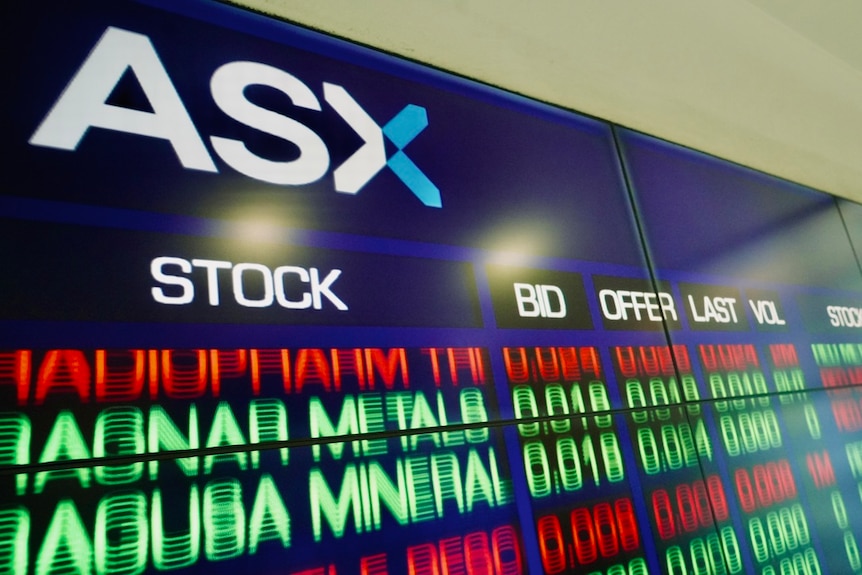
    ASX

    The low interest rate ‘risk on’ environment supported gains in risky assets like equities across the board, particularly in technology stocks.  (ABC News: John Gunn)

    Alicia Barry, ABC News 24’s finance reporter

    If rates move higher will investors have to work harder for returns? 

    Active managers, who focus on the performance and outlook of individual companies have had a tough run in the last few years locally, outpaced by passive money chasing the benchmarks, like index funds. 

    The low interest rate “risk on” environment supported gains in risky assets like equities across the board, particularly in technology stocks. 

    Blackrock strategist for APAC and the Middle East Ben Powell says if rates drift higher, investors need an active investment strategy, “having to pick where we have conviction, be that in artificial intelligence or elsewhere. Because the central bankers, they’re still nice people, but they’re constrained by inflation from being quite as supportive for risk and for markets as we all got used to.” 

    So where to look if rates go up? Citi says AI won’t dominate quite as much in 2026 and expects cyclical stocks (those exposed to economic cycles like miners) to do well. 

    The investment bank prefers financial stocks over consumer staples (which are typically seen as defensive). It’s possible 2026 will finally be the year of the stock picker.

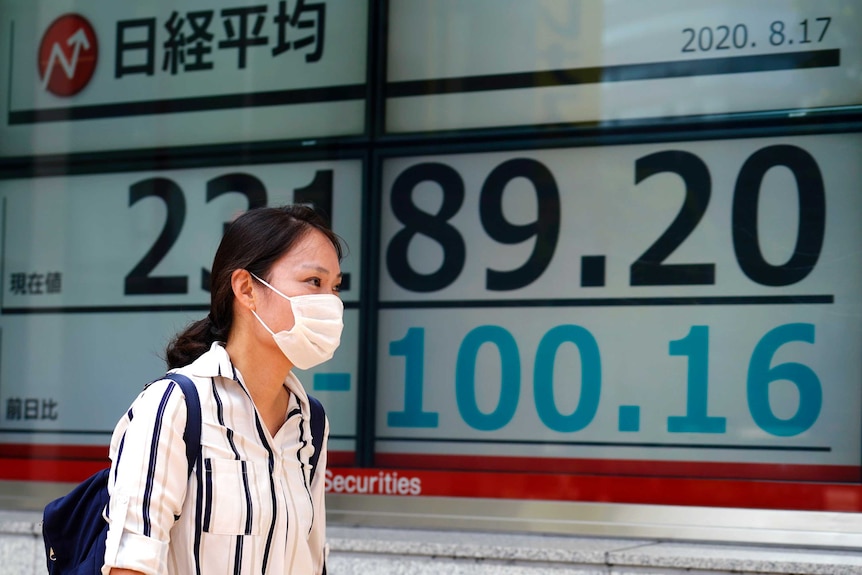
    A woman wearing a face mask walks past a electronic screen showing numbers.

    A woman walks past an electronic stock board showing Japan’s Nikkei 225 index at a securities firm in Tokyo Monday, Aug. 17, 2020. Japanese stocks sank while other Asian markets gained Monday after Japan reported a record economic contraction as the coronavirus pandemic weighed on retailing, investment and exports. (AP: Eugene Hoshiko)

    All eyes will be on the Bank of Japan in coming weeks and months.

    It’s considered a giant funding source to the world’s global financial markets, especially Wall Street.

    In past decades Japanese interest rates have been extremely low.

    Known as the carry trade, investors would borrow yen from Japan and invest in US assets including Treasury bills and stocks on Wall Street, which offered relatively lucrative returns.

    On December 19, the Bank of Japan, keen to hit its inflation target of 2 per cent and with one eye on increased business confidence, hiked its benchmark interest rate by 0.25 percentage points to 0.75 per cent.

    In contrast the Reserve Bank of Australia’s cash rate stands at 3.6 per cent.

    Immediately following the announcement, the Japan 10-year government bond yield rose above 2 per cent — it’s highest level since 1995.

    Trillions of dollars are tied up in and around the carry trade and Japanese investments in the US.

    The key question is how high Japanese interest rates need to go before borrowing from Japan becomes too expensive, overriding future returns from US assets.

    In this case, large flows of money could return home to Japan, deeply cutting into Wall Street liquidity and, potentially, Australian superannuation funds currently heavily exposed to American markets.

    donald trump tariff

    Australian businesses were caught out by US President Donald Trump’s global upheaval in 2025. (Reuters: Jonathan Ernst)

    Emilia Terzon, national business reporter

    I’ll be watching out for more tariff turmoil.

    Australian businesses — from beef producers through to bikini designers — were caught out by US President Donald Trump’s global upheaval in 2025. 

    We even had Australia Post temporarily suspend most shipping to the US! Many businesses are still recovering from the disruption to their supply chains and pricing structures, especially those that manufacture goods in China and then import them into the US.

    I’ll be looking out for how the Australian government, including Austrade, deals with any more disruption, and of course at any more tariff directions out of the White House.

    Continue Reading

  • AI startups push 72-hour weeks, reviving China’s ‘996’ culture to stay ahead

    AI startups push 72-hour weeks, reviving China’s ‘996’ culture to stay ahead

    Magnus Muller, the 24-year-old CEO of the AI startup Browser Use, works seven days a week from the time he rises (reportedly around 7 a.m.) to when he goes to bed — usually around 1 a.m.

    Kinjal Nandy, CEO of AI startup Sonatic, recently posted a job that asks the prospective employee to work seven days a week, while AI startup Cognition’s CEO Scott Wu told the Washington Post about an “extreme performance culture” that includes working nights and weekends. (1)

    In job listings and X postings, “996” is the PIN number for businesses seeking hyper-dedicated employees.

    So why are these California-based CEOs working so hard? In part, it’s a throwback to the “grind culture” of the late 1990s and early 2000s during the first dot-com boom, when long hours and “sleeping under your desk” were seen as proof of startup devotion.

    The other reason, as Caroline Winnett, the executive director of Berkeley SkyDeck, UC Berkeley’s tech accelerator program told the Washington Post (2), is that the companies building AI now will capture the market, and the window of opportunity is only two or three years.

    This reasoning motivates young founders to race as hard as they can to build their businesses — and they are in a dead heat with their Chinese competitors.

    In the last 10 years, Elon Musk and his companies have become paragons of grind culture, with Musk openly arguing 80- to 100-hour workweeks are essential to success.

    The term 996 first gained traction in the U.S. after Alibaba founder Jack Ma said (3) in a 2019 interview that young people should see working 12 hours a day, six days a week as a “blessing” — comments that he had to walk back after online backlash.

    Many of the founders who espouse the 996 ethos are in their 20s, when they don’t have other obligations to get in the way of their quest to be first-to-market with world-disrupting technology.

    To the elite few who live in San Francisco and work for an AI startup, a 72-hour work week may sound like the only path to a future of untold riches.

    But for most workers, including older workers and younger workers who aren’t all about the money, 996 sounds like a prison rather than a key to success.

    Continue Reading

  • A dumpling dream: Big restaurant, gathering spot begins construction

    A dumpling dream: Big restaurant, gathering spot begins construction

    by Scott Nishimura, Fort Worth Report
    January 4, 2026

    Editor’s note: During the holiday season, the Fort Worth Report is following up on the stories you told us you appreciated the most in 2025.

    Last winter, longtime Fort Worth restaurateur and dumpling purveyor Hao Tran had just agreed to a lease on a substantially larger location in White Settlement.

    Fast forward nearly a year, construction is due to start in January on Hao’s Duong DeVille, named for a Cadillac her father bought when she and her two siblings were children.

    Her target opening is late spring. Construction will take about five months, according to Tran and her landlord Will Churchill, who owns the shopping center at Loop 820 and White Settlement Road with his sister, Corrie Fletcher.

    Tran is still noodling on whether to retain Hao’s Grocery & Café at 120 St. Louis Ave. on Fort Worth’s Near Southside.

    To keep her smaller shop, Tran says she needs to make it more economically viable: cooking classes and private events, such as prix-fixe dinners, pay the bills.

    Produce and other grocery items line shelves around Hao’s Grocery & Café in Fort Worth on Nov. 17, 2025. Owner Hao Tran plans to open a restaurant in the next year. (Maria Crane | Fort Worth Report/CatchLight Local/Report for America)

    “The retail doesn’t cover the rent,” she said in early November, noting she’d already booked three events for the following month. “That’s the only way I can sustain business here.”

    Tran regards the opportunity to build a 3,601-square-foot restaurant at the new shopping center as a godsend. “It literally dropped in my lap,” she said.

    Tran juggles the business with her full-time career as a Trimble Technical High School teacher. She taught science at the campus for 25 years including culinary courses in the last two.

    Tran opened the cafe seven years ago after spending years cooking for pop-ups. 

    She estimated she surpassed 1 million dumplings sold in early 2025. She runs her shop four days a week and fills out her schedule with the classes and events.

    Now at 57, and after a few unsuccessful attempts to expand, Tran thought she was done with that idea.

    “I was going to retire (from teaching) and work through this until I didn’t want to do it anymore,” she said over bowls of pho one recent Sunday evening.

    (Maria Crane | Fort Worth Report/CatchLight Local/Report for America)
    Hao Tran is the owner of Hao’s Grocery & Café in Fort Worth on Nov. 17, 2025. Tran has been working toward opening a restaurant in White Settlement where she will serve Vietnamese food. (Maria Crane | Fort Worth Report/CatchLight Local/Report for America)

    Unknown to her, Tran and her shop were on the radar of Churchill and Fletcher — the twin great grandchildren of the Fort Worth auto dealer Frank Kent. The siblings had purchased real estate at Loop 820 south of White Settlement Road and were renovating and repositioning the multiple commercial buildings on the site.

    The duo’s prime target: a restaurant to broaden the offerings along the west side border of Fort Worth. Nearby Parker County is enjoying explosive growth with developments including the Walsh housing community and the UTA West campus. West Fort Worth’s high-end neighborhoods of Montserrat and Montrachet also bring potential customers.

    The twins’ pursuit of Tran was similar to other efforts they’ve launched in commercial real estate where they first purchased sites, identified tenants they wanted, and then pursued deals. Melt Ice Creams on West Magnolia Avenue and Heim Barbecue are two such businesses they championed.

    In Tran’s case, Churchill and Fletcher offered to finish out the new restaurant space at their expense.

    (Maria Crane | Fort Worth Report/CatchLight Local/Report for America)
    Hao Tran walks around the future location of her restaurant in White Settlement on Nov. 17, 2025. Tran has been running Hao’s Grocery & Café in Fort Worth and working as a teacher while strategizing the restaurant. (Maria Crane | Fort Worth Report/CatchLight Local/Report for America)

    “From our perspective, she’s a great lady with an immense amount of talent,” Churchill said. “To do a project that is worthy, it’s going to take a significant amount of capital. We felt it was important to take the burden of that responsibility on ourselves.

    “It allows her to execute without having debt hanging over her head every day,” he said. “If she was a normal office tenant, we don’t do anything close to that.”

    “It is a gift,” Tran says. “I have to work the business. Use it well.”

    Churchill and Fletcher had some delays on their originally envisioned timeframe. Over the past year, the two also sold the family’s auto businesses; repositioned their Fort Brewery business; and began construction of a Weatherford location of Heim Barbecue.

    The extra time was welcomed by Tran, who’s had plenty of time to consider her strategy. “I wasn’t in a rush,” she said.

    (Maria Crane | Fort Worth Report/CatchLight Local/Report for America)
    Hao Tran looks at floor plan renderings of her future restaurant in White Settlement on Nov. 17, 2025. Tran has been running Hao’s Grocery & Café in Fort Worth and working as a teacher while strategizing the restaurant. (Maria Crane | Fort Worth Report/CatchLight Local/Report for America)

    Her Near Southside shop has three employees, not including Tran, and virtually no seating other than a small private dining room. 

    She estimates the new restaurant will need 15 to 25 staffers as the space will seat 124 inside and another 34 on the patio, she said.

    The new restaurant will have a full bar, a change from her BYOB cafe. There will also be a television.

    “We’re not going to be a sports bar,” she said. “It’ll be a place where friends and community can gather and sit and have a drink at 10 o’clock on Tuesday night.”

    The cafe is open from noon to 8 p.m. Thursday through Friday and noon to 5 p.m. Saturday and Sunday, with events and classes on other days.

    At the new place, Tran wants to start with Thursday to Sunday dinner service, then expand to other weekdays and times. Even if the hours aren’t yet set, she knows she wants a late dining room.

    “That area needs it,” she said. “It needs a late-night place that’s got great food and great vibes.”

    She said she’s asked longtime vendor and friend Thai “Luu” Vo, a Fort Worth vegan food truck operator, to become her chef de cuisine.

    In preparation for the next stage of her life, Tran sold her home and moved into a garage apartment two years ago.

    “I got rid of 80% of my personal belongings,” she said. “I’m living very feng shui.”

    Scott Nishimura is a senior editor for the Documenters program at the Fort Worth Report. Reach him at scott.nishimura@fortworthreport.org.At the Fort Worth Report, news decisions are made independently of our board members and financial supporters. Read more about our editorial independence policy here.

    This <a target=”_blank” href=”https://fortworthreport.org/2026/01/04/a-dumpling-dream-big-restaurant-gathering-spot-begins-construction/”>article</a> first appeared on <a target=”_blank” href=”https://fortworthreport.org”>Fort Worth Report</a> and is republished here under a <a target=”_blank” href=”https://creativecommons.org/licenses/by-nd/4.0/”>Creative Commons Attribution-NoDerivatives 4.0 International License</a>.<img src=”https://i0.wp.com/fortworthreport.org/wp-content/uploads/2021/04/cropped-favicon.png?resize=150%2C150&amp;quality=80&amp;ssl=1″ style=”width:1em;height:1em;margin-left:10px;”>

    <img id=”republication-tracker-tool-source” src=”https://fortworthreport.org/?republication-pixel=true&post=339300&amp;ga4=2820184429″ style=”width:1px;height:1px;”><script> PARSELY = { autotrack: false, onload: function() { PARSELY.beacon.trackPageView({ url: “https://fortworthreport.org/2026/01/04/a-dumpling-dream-big-restaurant-gathering-spot-begins-construction/”, urlref: window.location.href }); } } </script> <script id=”parsely-cfg” src=”//cdn.parsely.com/keys/fortworthreport.org/p.js”></script>

    Continue Reading

  • CES 2026, Sector Rotation and Other Key Things to Watch this Week

    CES 2026, Sector Rotation and Other Key Things to Watch this Week

    Markets enter 2026’s first full trading week with an extraordinary convergence of events including the Consumer Electronics Show (CES) in Las Vegas where Nvidia (NVDA) CEO Jensen Huang and AMD (AMD) CEO Lisa Su will deliver keynote speeches that could significantly influence AI infrastructure investment narratives following recent sector volatility. The week features a comprehensive economic data calendar building to Friday’s December jobs report at 8:30am, which will provide the final employment snapshot of 2025 and potentially influence Federal Reserve policy expectations after the central bank’s more hawkish December meeting. Monday’s ISM Manufacturing data kicks off the week with insights into industrial sector health and pricing pressures, while Wednesday delivers an intensive convergence of ADP employment, ISM Non-Manufacturing data, and JOLTS job openings that together will paint a complete picture of labor market and business activity conditions. The absence of major earnings allows economic data and CES technology announcements to dominate market attention as institutional participants return from holiday breaks and establish 2026 positioning. The week will test whether markets can sustain momentum from any year-end Santa Claus Rally or if concerns about Fed policy, inflation persistence, and AI spending sustainability will pressure stocks early in the new year.

    Here are 5 things to watch this week in the Market.

    CES 2026: AI Hardware Innovation Showcase

    The Consumer Electronics Show in Las Vegas brings heightened focus to semiconductor leaders as Nvidia (NVDA) CEO Jensen Huang and AMD (AMD) CEO Lisa Su deliver keynote speeches that could determine AI infrastructure sector sentiment heading into 2026. Huang’s presentation will be scrutinized for announcements about next-generation AI accelerators beyond the Blackwell architecture, data center roadmaps, and any commentary about customer demand sustainability following recent concerns about return on AI capital expenditures. New product reveals, partnership announcements, or updated AI performance metrics could either reinforce Nvidia’s technology leadership or raise questions about competitive threats from custom chips developed by hyperscalers. AMD’s Lisa Su faces pressure to demonstrate credible AI accelerator momentum with MI300 series adoption and competitive positioning against Nvidia’s dominance in data center GPUs. Any major wins with cloud service providers or enterprise customers could boost AMD’s credibility in AI infrastructure markets. Both keynotes will be watched for commentary about AI application evolution, edge computing developments, and the sustainability of current investment cycles. The CES announcements come at a critical juncture following Oracle and Broadcom’s disappointing earnings that triggered sharp selloffs in AI-related stocks, making this week’s messaging particularly important for sector stabilization.

    Continue Reading

  • ‘Be very, very suspicious’: Neighbourly breach makes users vulnerable – expert

    ‘Be very, very suspicious’: Neighbourly breach makes users vulnerable – expert

    The website was initially shut down on New Year’s Day after the breach was uncovered but is now back online again.
    Photo: Screenshot

    People who have had their personal information stolen from the Stuff-owned Neighbourly platform could be vulnerable to online threats, a cyber security expert says.

    Neighbourly has lost names, email address, private messages, posts and GPS locations which have been put up for sale on the dark web.

    The website was initially shut down on New Year’s Day after the breach was uncovered but is now back online again.

    Neighbourly has told members it will look to get a court injunction, but it is satisfied the breach was quickly contained.

    It surfaced around the same time of another major breach with privately-owned Manage My Health, which more than 120,000 patient files compromised.

    “The most concerning thing about the Neighbourly one is that there is GPS information in there, which I assume is people’s homes,” Patrick Sharp, general manager at Aura Information Security told RNZ.

    “So that, correlated with other information that’s out on the internet might provide some kind of attack opportunity for an attacker.”

    Sharp said the taking of the information was “absolutely” a concern.

    “After the Medibank breach in Australia in 2022 there were tens, or maybe hundreds of thousands of actual financial crimes that resulted from the information stolen in that breach… so this is probably the beginning,” he said.

    “Bear in mind as well that the people who are impacted by the ManageMyHealth breach and the Neighbourly breach are potentially people who are quite vulnerable and don’t understand how to protect themselves.

    “So if a member of your family, an elderly person in your family, or anything like that tells you that they’re affected then you should probably help them try to understand or vet any kinds of unsolicited contact they get from anyone as well,” Sharp said.

    “I think more than anything they need to be suspicious, and if someone calls you out of the blue or you get an email which you’re not expecting, you should just be very, very suspicious about it.”

    Sharp said cyber attacks rise toward the end of the year, and websites or platforms growing in size an expose vulnerabilities.

    “The reality is that websites are very complex systems and they go through a lot of change as they update new features and so on, and so when they do that, the possibilities of introducing new vulnerabilities into those websites is very, very possible,” Sharp said.

    “And so unless they maintain a high degree of security during the development process and the update process, those vulnerabilities can be quite impactful,” he said.

    “In practice one it’s out there, it’s out there,” Sharp said.

    Neighbourly earlier said it took its data privacy responsibilities seriously and had contacted members directly.

    On its website, it promotes itself with the tag line “your personal information is safe”.

    Lives could be put at risk

    Gorilla Technology chief executive Paul Spain said the Neighbourly data breach was “really significant”.

    “There’s a large amount of data involved and it impacts somewhere between 800,000 and one million people potentially,” he said.

    “The size of the breach suggests that it is certainly a possibility for a large percentage of those people who have their data taken.”

    Spain also said the taking of GPS co-ordinates was a concern and would be concerning for some people.

    “I guess the reality is when there’s this many people impacted then probably most folks won’t directly be impacted, but you just don’t know whether you’re going to get targeted with some sort of a scam where they know some personal information and they are able to take advantage of you,” he said.

    “And if that ends up leaking out on the dark web and becomes available to anybody that could actually put, in some cases, put people’s lives at risk.”

    He said a court injunction would be to stop people who are New Zealand-based from referencing the information.

    “Because once it’s available out there, of course, anybody can get it and so you could just do a court injunction that says ‘hey, this is private information and shouldn’t be published through through legitimate platforms’,” he said.

    “But it’s still available unfortunately to anyone that chooses to pay for it or retrieve the portions of it that might be leaked for free.”

    Spain described the Neighbourly breach as a wake-up call.

    “And unfortunately we seem to have, I think, a kind of ‘she’ll be right, mate’ attitude to cyber security in New Zealand for a lot of organisations, and it’s surprising, you know, how many organisations don’t get regular cyber security audits carried out or have a good level of clarity around where their risks are and what they can do to reduce those risks.

    “You know, an organisation of the scale of stuff.co.nz who own Neighbourly, they should be at the scale to make sure that they’re keeping on top of these things.”

    Sign up for Ngā Pitopito Kōrero, a daily newsletter curated by our editors and delivered straight to your inbox every weekday.

    Continue Reading

  • Subway and Bus Fare Rises to $3 in New York City on Sunday – The New York Times

    1. Subway and Bus Fare Rises to $3 in New York City on Sunday  The New York Times
    2. The road ahead for transit in New York City in 2026 includes fare hikes  Fox News
    3. Changes to Metro-North fares start Sunday  fox61.com
    4. How commuters are planning for MTA fare hikes  News 12 – The Bronx
    5. MTA fare increases to $3 for commuters on buses and subway trains in NYC  ABC7 New York

    Continue Reading

  • ‘It can’t be worse, right?’: What’s ahead for the economy in 2026

    ‘It can’t be worse, right?’: What’s ahead for the economy in 2026

    Photo: 123rf

    The past year was a tough grind for many households and businesses but forecasters say there is economic improvement on the horizon.

    Kelly Eckhold, chief economist at Westpac, said he was expecting the economy to be much stronger in 2026, with growth in GDP of about 3 percent over the year compared to a flat 2025.

    “That’s supported by lower interest rates in the coming year. Whereas in 2025 we saw relatively strong performance by the primary sector and tourism to some extent but not so much the services sector and the bits of the economy that really drive the major urban areas, we think we probably have much more balanced growth in 2026.”

    Households might not see much wage growth initially, he said, because that was one of the last things to move, but inflation should be weaker. “The cost of living crisis should ease off a bit.”

    Gareth Kiernan, chief forecaster at Infometrics, agreed things should improve.

    “It can’t be worse, right? You’ve had good export prices, you’ve got interest rates which are headed lower than we had been thinking… there’s a bit of caution coming on some of those exports… but I think between the effects of the strong prices over the last 18 months and the low interest rates and the government doing more in the infrastructure space – if not anywhere else, you put all those together and there are enough signs that growth should be better.”

    He said the international environment would be something to keep an eye on. “Trump and the tariffs had derailed things somewhat through the early part of this year and that sort of has hung over the economy for the rest of 2025. But who really knows in that space, I guess.”

    He said there were some small signs that the labour market was already improving and that should continue to build. “There does seem to be a bit more of an air of optimism and maybe a bit more genuine growth starting to come through as opposed to the high business confidence we had a year ago which didn’t really translate into anything much this year.”

    Economists from BMI, a Fitch Solutions company, said they expected 2 percent growth in 2026.

    “The Reserve Bank of New Zealand’s rate cuts will continue to ease monetary policy conditions – even if most of the easing cycle is likely behind us – supporting household spending and business investment. We anticipate a 25 basis points cut to 2 percent by the end of 2026. Government infrastructure projects – including Auckland’s City Rail Link, major highway upgrades such as the Waikato Expressway, and water resilience programmes – will add momentum. Externally, strong demand for dairy and meat, alongside a tourism rebound, should underpin growth.

    “However, downside risks persist. An escalation in global trade tensions or new tariffs could weaken export performance, while a slower-than-expected recovery in Mainland China – New Zealand’s largest trading partner – would dampen agricultural demand.

    “Domestically, persistent labor shortages and wage pressures could restrain productivity, and delays to infrastructure projects would reduce fiscal support. Additionally, if inflation proves sticky, the Reserve Bank may pause or reverse rate cuts, curbing the anticipated lift to consumption and investment.”

    Simplicity chief economist Shamubeel Eaqub said he was much more optimistic about 2026. “Mainly because we’re starting to see a bottom in a lot of things a the moment. Some of the distress is fading.”

    But he said the recovery would not be felt evenly.

    “I think there has been a real expansion of poverty in New Zealand, there’s a chunk of New Zealanders that are continuing to do it really tough.

    “They’re stuck in that position where they work in industries that are not going to recover strongly. They work in industries that have relative low-wage, they work and live in places where the cost of living has gone up a lot with rents… so these things are not going to turn around quickly.

    “A rising economy Is not enough to lift them up.. But for the median and for the people in the top end I think things will look a lot better.”

    Sources of growth will change, he said, as some of the momentum shifted out of the primary sector.

    “But by the second half of the year, all the weight of the rate cuts, the cumulative benefits of all the rate cuts would have come through. And we should start to see banks lending again because, you know, they’re fair weather friends.

    “And then once they start lending money, that’s when you really juice up the cycle because it’s really about investments.

    “When people start to make investments and businesses make investments, that’s really when the economy recovers. Also, I’m getting more optimistic on the government’s capex plans.

    “For the last couple of years, they’ve been reducing spending, reducing spending, reducing spending. That’s really the only place austerity has worked so far in not investing in infrastructure. But if you look at all the announcements that have taken place in the second half of this year, it’s all about central government and local government doing more next year. And so all the pipeline stuff, it looks like we are going to see quite a lot of activity starting in the beginning of next year. So with the government coming back and hopefully the private sector coming back through the middle of next year, you’ve kind of got more of a platform for growth.”

    [ https://rnz.us6.list-manage.com/subscribe?u=211a938dcf3e634ba2427dde9&id=b4c9a30ed6 Sign up for Money with Susan Edmunds], a weekly newsletter covering all the things that affect how we make, spend and invest money

    Continue Reading

  • America’s drone dilemma

    America’s drone dilemma

    Unlock the White House Watch newsletter for free

    The writer is the author of ‘Chip War’

    Shortly before Christmas the US Federal Communications Commission gave an unexpected gift to America’s drone industry. By adding all foreign-made drones and key components to its “Covered List” of equipment that poses an unacceptable national security risk, the commission de facto banned China’s DJI, the industry leader in drones. This opens the market to US drone companies. It may also mark a shift towards greater use of import restrictions in Washington’s tech competition.  

    The FCC — previously best known for regulating obscenities on TV — is now taking centre stage in the tech war. It has authority to ban imports of any communications equipment that it believes facilitates espionage or threatens critical infrastructure. From internet routers to drones, as the range of communication equipment increases so does the FCC’s authority. Congressional legislation has expanded its reach, arming it to take on technology challenges posed by China.

    The FCC’s move comes as a counterpoint to President Donald Trump’s broader détente with China as the US tries to reduce its rare earth vulnerabilities. Yet Trump himself has also outlined a strategy of “drone dominance”, with the Pentagon planning to purchase 300,000 small attack drones by 2028.

    The Russia-Ukraine War has exposed a “drone gap” in American defence production. Many US companies still rely on China for key components like batteries and motors. In 2024, China cut off battery sales to US drone companies, forcing makers like Skydio to ration battery sales.

    The problem that US drone companies face is scale. China’s DJI is estimated to sell more than half the world’s cheap, first-person view drones. Because of this, China is also the leader in producing many key drone components. This provides major advantages. Companies can only justify developing specialised chips and other hardware if they can amortise the cost over many units sold. China’s market dominance has made it impossible for foreign companies to compete.

    During the first Trump administration, the US tried to address this by imposing a 25 per cent tariff on imported Chinese drones. DJI quickly pivoted its production base for US sales to Malaysia. In 2024, Malaysia exported three times as many drones by value to the US as China did.

    The ease with which China’s drone industry shifted production shows why globalised supply chains make tariffs a blunt and often ineffective tool.

    Drones weren’t the only industry to relocate production. Now Trump’s trade officials are pushing other Asian countries to limit the rerouting of Chinese goods. 

    Although the US has leaned more heavily on tariffs (under Trump) and export controls (under Trump and President Joe Biden), the drone ban is not the first time America has banned Chinese tech imports. The first Trump administration prohibited use of Huawei’s telecom equipment, for example. The Biden administration banned the Chinese communication equipment and software used in connected cars, using the Commerce Department’s Office of Information and Communications Technology and Services.

    Congress is now considering legislation to bolster the commerce department’s powers. Senior Republican legislators recently called on commerce secretary Howard Lutnick to use this authority against imports of Chinese equipment in sectors including data centres, robotics and the energy grid.

    The FCC’s move against drones shows that the Trump administration has plenty of legal power should it choose to act. Beijing will not be pleased but its long history of forcing Chinese companies to buy local products will undermine any criticism it raises. This year, targeted import restrictions could look more attractive than blanket tariffs.

    Continue Reading