Category: 3. Business

  • Americans drank more milk in 2024, reversing a decade-long decline

    Americans drank more milk in 2024, reversing a decade-long decline

    For more than a decade, Americans have been steadily drinking less milk each year.

    But the latest federal data show sales of milk beverages turned around in 2024, increasing by 358 million pounds or just under 1 percentage point from the previous year to 43.2 billion pounds.

    It’s the result of a resurgence in sales of whole milk, which have been trending upward since 2014. The category saw a 3% increase from 2023 and helped offset the continued declines in most other categories, including reduced-fat and skim milk.

    Whole milk has benefited from the diet craze around protein driven largely by health and fitness influencers, said Leonard Polzin, dairy markets and policy outreach specialist for the University of Wisconsin-Madison’s Division of Extension.

    “The more protein, the better. Consumers are all about that,” Polzin said. “The other portion is kind of a shift towards healthy fats too. So for example, cottage cheese is having a real moment right now.”

    Industry data shows whole milk consumption is up in both households with children and those without, according to Karen Gefvert, chief policy officer for Edge Dairy Farmer Cooperative, which represents farmers in Wisconsin and Minnesota.

    Gefvert said whole milk has also benefited from increasing consumer interest in whole foods and foods that are minimally processed – a trend that has been promoted by the Trump administration’s Make America Healthy Again agenda.

    “There are a ton of really great things in whole milk, and I think that’s resonating with consumers,” Gefvert said.

    Federal data going back to 1975 show total U.S. milk sales peaked in 2009 at more than 55.4 billion pounds. That total steadily declined to a record low of 42.8 billion pounds in 2023.

    Consumption of plant-based milk alternatives has declined in recent years. But Polzin said it’s hard to know if those consumers are making the shift to dairy or simply cutting back on drinking milk of any kind.

    Polzin said increasing milk consumption is especially good for dairy farmers. That’s because milk sold as beverages, known in the industry as fluid milk, has a greater impact on the prices paid to farmers.

    But Gefvert said this effect is not as prominent in states like Wisconsin, where most milk is processed into cheese and other products. She said most farmers in the state have a more subdued take on last year’s sales increase.

    “It was not significant and is likely just sort of a pause in the inevitable continuous decline in fluid milk sales,” Gefvert said.

    She said there is hope that whole milk sales in particular will continue to increase. Congress recently passed federal legislation to reintroduce the option to the National School Lunch Program, which currently requires schools to offer low-fat or skim milk to students. The Whole Milk for Health Kids Act is expected to be signed by President Trump.

    Medical experts are divided on whether full fat dairy options, which contain high levels of saturated fat, negatively affect human health.

    Earlier this year, a scientific panel that advises the federal government on dietary guidelines concluded there wasn’t enough evidence to change the existing guidance, which recommends Americans drink low-fat or skim rather than whole milk.

    This story was produced in partnership with Harvest Public Media, a collaboration of public media newsrooms in the Midwest and Great Plains. It reports on food systems, agriculture and rural issues.

    Continue Reading

  • Insmed To Present at the 44th Annual J.P. Morgan Healthcare Conference

    Insmed To Present at the 44th Annual J.P. Morgan Healthcare Conference

    BRIDGEWATER, N.J., Jan. 2, 2026 /PRNewswire/ — Insmed Incorporated (Nasdaq: INSM), a people-first global biopharmaceutical company striving to deliver first- and best-in-class therapies to transform the lives of patients facing serious diseases, today announced that management will present at the J.P. Morgan 2026 Healthcare Conference in San Francisco, on Monday, January 12, 2026, at 3:00 p.m. PT / 6:00 p.m. ET.

    This event will be webcast live and can be accessed by visiting the investor relations section of the Company’s website at www.insmed.com. Webcasts will be archived for a period of 30 days following the conclusion of the live events.

    About Insmed

    Insmed Incorporated is a people-first global biopharmaceutical company striving to deliver first- and best-in-class therapies to transform the lives of patients facing serious diseases. The Company is advancing a diverse portfolio of approved and mid- to late-stage investigational medicines as well as cutting-edge drug discovery focused on serving patient communities where the need is greatest. Insmed’s most advanced programs are in pulmonary and inflammatory conditions, including two approved therapies to treat chronic, debilitating lung diseases. The Company’s early-stage programs encompass a wide range of technologies and modalities, including gene therapy, AI-driven protein engineering, protein manufacturing, RNA end-joining, and synthetic rescue.

    Headquartered in Bridgewater, New Jersey, Insmed has offices and research locations throughout the United States, Europe, and Japan. Insmed is proud to be recognized as one of the best employers in the biopharmaceutical industry, including spending five consecutive years as the No. 1 Science Top Employer. Visit www.insmed.com to learn more or follow us on LinkedIn, Instagram, YouTube, and X.

    Contact:

    Investors:

    Bryan Dunn
    Vice President, Investor Relations
    (646) 812-4030
    [email protected]

    Media:

    Claire Mulhearn
    Vice President, Corporate Communications
    (862) 842-6819
    [email protected] 

    SOURCE Insmed Incorporated


    Continue Reading

  • Low water levels delay plan to bring cell service to popular hunting area near Fort Providence

    Low water levels delay plan to bring cell service to popular hunting area near Fort Providence

    Listen to this article

    Estimated 3 minutes

    The audio version of this article is generated by AI-based technology. Mispronunciations can occur. We are working with our partners to continually review and improve the results.

    Fort Providence, N.W.T., is now home to a portable shelter and mobile hotspot that could provide coverage to traditional land use areas around the community — but it’s not in use just yet.

    The unit was built through a partnership between Deh Gáh Got’îê First Nation and N.W.T.-based telecommunications company SSi Canada, and received a $480,000 grant from the federal government’s Universal Broadband Fund.

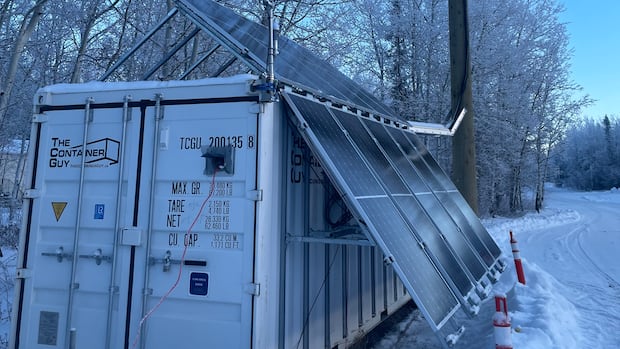
    The unit is a 10-by-20-foot shipping container, and is powered by a small solar array and backup generator. Half of it contains equipment for mobile coverage and wifi provided by Starlink. The other half is a heated safety shelter that people can sit in. 

    SSi Canada calls the structure the Land-Life-Link, or L3.

    “If you’re trying to get away from the elements, if you’re trying to get away from an emergency, you can stay there for quite a while,” said Dean Proctor, SSi Canada’s chief development officer.

    Proctor told CBC News the unit has been in Fort Providence and fully functional since June. He added it should provide cell service and mobile data over an approximately five-kilometre radius, with some variation depending on the terrain.

    “Primarily it’s for people stranded out on the land, so they have communication access if they need to call for help or things like that,” said Greg Nyuli, the executive director at Deh Gáh Got’îê First Nation.

    A solar panel
    A picture of the solar array on the Land-Life-Link taken during the construction process. (Submitted by SSi Canada)

    Nyuli said Deh Gáh Got’îê First Nation plans to bring the shelter to a healing lodge downstream of Fort Providence on the Mackenzie River, to provide some connectivity in an area that’s popular for hunting, fishing and harvesting.

    But because of low water levels on the river, they likely won’t be able to bring it there on the ice road this winter as planned.

    “The access route we usually use in the winter is like totally rocky, because there’s no water,” he explained.

    Nyuli said they are now planning to bring the unit downstream on a small barge this summer — though if water levels are low again in the main channel of the Mackenize River, this might not be possible either.

    “The only option other than that would be a big helicopter, and we certainly can’t afford that,” he said.

    Deh Gáh Got’îê First Nation Chief Michael Vandell said the unit is currently up and running behind the Fort Providence’s Snowshoe Inn.

    He said the First Nation is planning to move the unit to outside the local school in the centre of town so students and others can access the wifi it provides more easily. Vandell said the goal is to do this early in the new year.

    Continue Reading

  • Ivanhoe Mines Announces First Anode Production from Kamoa-Kakula Copper Smelter – Ivanhoe Mines

    Ivanhoe Mines Announces First Anode Production from Kamoa-Kakula Copper Smelter – Ivanhoe Mines

    Kamoa-Kakula smelter is Africa’s largest copper smelter with a capacity of 500,000 tonnes of copper per annum

    Kamoa-Kakula 2026 sales set to exceed production as 20,000 tonnes of stockpiled copper in concentrate is smelted and sold as 99.7%-pure copper anodes at current record copper prices

    Kakula Mine Stage Two dewatering complete; selective mining of eastern side of Kakula Mine recommenced ahead of schedule

    Kolwezi, Democratic Republic of the Congo–(Newsfile Corp. – January 2, 2026) –  Ivanhoe Mines (TSX: IVN) (OTCQX: IVPAF) Executive Co-Chairman Robert Friedland and President and Chief Executive Officer Marna Cloete announced that the first copper anodes were produced by Kamoa-Kakula’s on-site, state-of-the-art 500,000-tonne-per-annum direct-to-blister copper smelter on December 29, 2025, approximately five weeks after the commencement of the smelter’s heat-up and one week after the first feed of concentrate.

    Watch the video showing first feed of concentrate and casting of the first batch of anodes at the Kamoa-Kakula copper smelter: https://vimeo.com/1150929862/8c8a54cbda?share=copy&fl=sv&fe=ci

    Ivanhoe Mines’ Founder and Executive Co-Chairman Robert Friedland commented:

    “The first production of copper anodes from our world-class smelter is a defining moment for Kamoa-Kakula… This achievement is the culmination of a $1.1 billion investment, 18 million man-hours of disciplined execution, and an outstanding health and safety record that reflects the professionalism and commitment of everyone involved.

    “This facility will proudly deliver the highest-quality Congolese copper anodes to the international markets, setting a new global benchmark for scale, efficiency, and sustainability. I want to extend my sincere thanks to the extraordinary Kamoa Copper team, as well as our contractors and partners from across the world whose expertise, innovation, and teamwork made the design and delivery of this state-of-the-art facility possible. Together, we have built something exceptional that will serve global consumers for generations to come.”

    Smelter ramp-up underway to achieve a steady-state annualized rate of 500,000 tonnes of 99.7%-pure copper anode, making it the largest copper smelter in Africa.

    The ramp-up of the Kamoa-Kakula copper smelter will continue throughout 2026, with completion expected towards year-end. As announced on December 3, 2025, Kamoa-Kakula’s copper production is estimated at between 380,000 and 420,000 tonnes of copper in 2026, with the mid-point of 400,000 tonnes of copper representing approximately 80% of the smelter’s total capacity.

    Kamoa-Kakula’s management team will prioritize the processing of concentrates produced by the Phase 1, 2, and 3 concentrators through the on-site smelter, with any excess concentrate toll-treated at the Lualaba Copper Smelter (LCS), near Kolwezi, in the Democratic Republic of the Congo (DRC).

    Heat-up and completion of hot commissioning of the smelter furnace, as well as boiler, steam systems, acid circuit and the concentrate dryer were completed in line with expectations. The furnace successfully reached its operating temperature of 1,250 degrees centigrade (2,282 degrees Fahrenheit) for five days prior to the first feed of concentrate.

    Prior to the first feed of concentrate into the smelter, Kamoa-Kakula’s on-site concentrate inventory contained approximately 37,000 tonnes of copper. Total unsold copper in concentrate at the smelter, held in stockpiles and the smelting circuit, is expected to be reduced to approximately 17,000 tonnes during 2026 as the smelter ramps up. Therefore, 2026 copper sales are expected to be approximately 20,000 tonnes higher than copper production as the on-site inventory of unsold copper concentrate is destocked, predominantly during H1 2026. As destocking occurs, Kamoa-Kakula’s management aims to capitalize on near-record-high copper prices.

    The installation of the uninterruptible power supply (UPS) facility was completed prior to the first feed of concentrate into the smelter, which took place on December 21, 2025. The 60-megawatt (MW) UPS is designed to provide up to two hours of instantaneous back-up power to the smelter, protecting the operation from voltage fluctuations in the domestic DRC grid. In addition, construction of Kamoa-Kakula’s 60 MW on-site solar (PV) facilities continues to progress well. The solar site, with battery storage, is expected to be the largest of its kind in Sub-Saharan Africa. The solar facilities are expected to be operational from Q2 2026, providing 24 hours a day of uninterruptible power, in addition to the approximately 180 MW of on-site diesel-powered, back-up generator capacity already in place.

    Cannot view this image? Visit: https://afnnews.qaasid.com/wp-content/uploads/2026/01/279364_0c60ce2f84c6ca43_003.jpg

    A view over the casting wheels during the first batch of anodes produced by the Kamoa-Kakula Copper Smelter on December 29, 2025.

    Cannot view this image? Visit: https://afnnews.qaasid.com/wp-content/uploads/2026/01/279364_0c60ce2f84c6ca43_004.jpg

    Kamoa-Kakula’s Copper Smelter is the largest copper smelter in Africa with an annualized nameplate capacity of 500,000 tonnes of 99.7%-pure copper anodes.

    Cannot view this image? Visit: https://afnnews.qaasid.com/wp-content/uploads/2026/01/279364_0c60ce2f84c6ca43_005.jpg

    Kamoa-Kakula’s operating margins are set to expand due to reduced logistics costs from the smelter, as well as sales of by-product sulphuric acid

    Kamoa-Kakula’s margins are expected to expand as the smelter ramps up, as concentrates produced by Phase 1, 2, and 3 concentrators are smelted on-site, rather than being exported unbeneficiated. Kamoa-Kakula’s logistics costs are expected to approximately halve as the copper content per truck-load exported more than doubles, from approximately 45% contained copper in concentrate to 99.7%-pure copper anodes. Further savings are expected to be also achieved through the significant revenues generated from sulphuric acid sales.

    In addition to the first production of copper anodes, the Kamoa-Kakula smelter also produced its first batch of by-product sulphuric acid. The smelter is expected to produce up to 700,000 tonnes per annum of high-strength sulphuric acid at steady-state operations, which will be sold locally.

    Sulphuric acid is in high demand by other mining operations across the Central African Copperbelt, especially following the export ban of acid by Zambia in September 2025. Spot acid prices have reached as high as $700 per tonne in Kolwezi in recent months. The first sale of acid by Kamoa-Kakula has already taken place, with the first delivery expected in the coming weeks.

    Construction of copper smelter delivered with industry-leading health and safety record

    Kamoa-Kakula’s projects team extended their industry-leading health and safety record during the construction of the smelter. During the 18 million hours worked, only one lost time injury (LTI) was recorded, an exceptionally rare industry achievement. Therefore, the lost-time injury frequency rate (LTIFR) for the delivery of the smelter was approximately 0.054 per million hours worked.

    The last project delivered by Kamoa-Kakula’s project team was the Phase 3 concentrator, which was completed in mid-2024 without a single LTI recorded.

    Stage Two dewatering of Kakula Mine complete; selective mining on the eastern side commenced ahead of schedule in late December

    Stage Two dewatering activities are complete, with the first pair of high-capacity submersible dewatering pumps (Pumps 3 and 4) running dry. As announced on December 3, 2025, following an underground survey, Pumps 3 and 4 were repositioned lower in late November to enable an additional Stage Two dewatering. Since then, the water level has declined by a further 19 metres to the level shown in Figure 1. The second pair of Stage Two pumps (Pumps 1 and 2), which are approximately 20 metres lower in elevation compared with Pumps 3 and 4 are expected to run dry in January 2026.

    Stage Three dewatering activities will take over from Stage Two dewatering, and consist of re-commissioning the existing, water-damaged underground horizontal pump stations, which are used for steady-state operations. The rehabilitation work consists of fitting new pump motors, substations and electrical cabling. All required equipment is on site, and installation will begin once access to the horizontal pump stations becomes available.

    Cannot view this image? Visit: https://afnnews.qaasid.com/wp-content/uploads/2026/01/279364_0c60ce2f84c6ca43_006.jpg

    Figure 1. A schematic of the underground water levels at the Kakula Mine as at December 22, 2025, overlaid with the underground pumping infrastructure.

    There is currently 5,600 litres per second of installed pumping capacity at the Kakula Mine, excluding the Stage Two pumping infrastructure. Stage Three dewatering activities are expected to continue into Q2 2026 and will not be on the critical path for Kakula’s mining operations.

    In addition, the western side of the Kakula Mine has been dewatered, enabling the mining of higher-grade areas. Head grades from mining areas on the western side of Kakula are expected to increase from 3.5% copper in January to approximately 4.0% copper by the end of Q1 2026. In addition, selective mining on the eastern side of the Kakula Mine began ahead of schedule at the end of December.

    Qualified Persons

    Disclosures of a scientific or technical nature at the Kamoa-Kakula Copper Complex in this news release have been reviewed and approved by Steve Amos, who is considered, by virtue of his education, experience, and professional association, a Qualified Person under the terms of NI 43-101. Mr. Amos is not considered independent under NI 43-101 as he is Ivanhoe Mines’ Executive Vice President, Projects. Mr. Amos has verified the technical data disclosed in this news release.

    Ivanhoe has prepared an independent, NI 43-101-compliant technical report for the Kamoa-Kakula Copper Complex, which is available on the company’s website and under the company’s SEDAR+ profile at www.sedarplus.ca:

    • Kamoa-Kakula Integrated Development Plan 2023 Technical Report dated March 6, 2023, prepared by OreWin Pty Ltd.; China Nerin Engineering Co. Ltd.; DRA Global; Epoch Resources; Golder Associates Africa; Metso Outotec Oyj; Paterson and Cooke; SRK Consulting Ltd.; and The MSA Group.

    The technical report includes relevant information regarding the assumptions, parameters, and methods of the mineral resource estimates on the Kamoa-Kakula Copper Complex cited in this news release, as well as information regarding data verification, exploration procedures and other matters relevant to the scientific and technical disclosure contained in this news release.

    About Ivanhoe Mines

    Ivanhoe Mines is a Canadian mining company focused on advancing its three principal operations in Southern Africa; the Kamoa-Kakula Copper Complex in the DRC, the ultra-high-grade Kipushi zinc-copper-germanium-silver mine, also in the DRC; and the tier-one Platreef platinum-palladium-nickel-rhodium-gold-copper mine in South Africa.

    Ivanhoe Mines is exploring for copper in its highly prospective, 54-100% owned exploration licences in the Western Forelands, covering an area over six times larger than the adjacent Kamoa-Kakula Copper Complex, including the high- grade discoveries in the Makoko District. Ivanhoe is also exploring for new sedimentary copper discoveries in new horizons including Angola, Kazakhstan, and Zambia.

    Information contact

    Follow Robert Friedland (@robert_ivanhoe) and Ivanhoe Mines (@IvanhoeMines_) on X.

    Forward-looking statements

    Certain statements in this release constitute “forward-looking statements” or “forward-looking information” within the meaning of applicable securities laws. Such statements and information involve known and unknown risks, uncertainties, and other factors that may cause the actual results, performance, or achievements of the company, its projects, or industry results, to be materially different from any future results, performance, or achievements expressed or implied by such forward-looking statements or information. Such statements can be identified using words such as “may”, “would”, “could”, “will”, “intend”, “expect”, “believe”, “plan”, “anticipate”, “estimate”, “scheduled”, “forecast”, “predict” and other similar terminology, or state that certain actions, events, or results “may”, “could”, “would”, “might” or “will” be taken, occur or be achieved. These statements reflect the company’s current expectations regarding future events, performance, and results and speak only as of the date of this release.

    Such statements include, without limitation: (i) statements that 2026 copper sales are expected to be approximately 20,000 tonnes higher than copper production as the on-site inventory of unsold copper concentrate is destocked, predominantly during H1 2026; (ii) statements that the Kamoa-Kakula smelter is Africa’s largest copper smelter with a capacity of 500,000 tonnes of copper per annum; (iii) statements that total unsold copper in concentrate at the smelter, held in stockpiles and the smelting circuit, is expected to be reduced to approximately 17,000 tonnes during 2026 as the smelter fully ramps up; (iv) statements that the ramp-up of the Kamoa-Kakula copper smelter will continue throughout 2026, with completion expected towards year-end; (v) statements that head grades from mining areas on the western side of Kakula are expected to increase from 3.5% copper in January to approximately 4.0% copper by the end of Q1 2026; (vi) statements that Kamoa-Kakula’s copper production is estimated at between 380,000 and 420,000 tonnes of copper in 2026, with the mid-point of 400,000 tonnes of copper representing approximately 80% of the smelter’s total capacity; (vii) statements that Kamoa-Kakula’s management team will prioritize the processing of concentrates produced by the Phase 1, 2, and 3 concentrators through the on-site smelter, with any excess concentrate toll-treated at the Lualaba Copper Smelter; (viii) statements that Kamoa-Kakula’s 60 MW on-site solar site, with battery storage, is expected to be the largest of its kind in Sub-Saharan Africa and that the solar facilities are expected to be operational from Q2 2026, providing 24 hours a day of uninterruptible power; (ix) statements that once fully ramped up, the smelter’s overall copper recovery is expected to be 98.5%; (x) statements that Kamoa-Kakula’s margins are set to expand as logistics costs approximately halve as the copper content per truck-load exported more than doubles, from approximately 45% contained copper in concentrate to 99.7%-pure copper anodes. Further savings are also expected to be achieved through the significant revenues generated from sulphuric acid sales; (xi) statements that Stage Three dewatering activities are expected to continue into Q2 2026 and will not be on the critical path for Kakula’s mining operations, and; (xii) statements that head grades from mining areas on the western side of Kakula are expected to increase from 3.5% copper in January to approximately 4.0% copper by the end of Q1 2026.

    Forward-looking statements and information involve significant risks and uncertainties, should not be read as guarantees of future performance or results, and will not necessarily be accurate indicators of whether such results will be achieved. Many factors could cause actual results to differ materially from the results discussed in the forward-looking statements or information, including, but not limited to: (i) uncertainty around the rate of water ingress into underground workings; (ii) the ability, and speed with which, additional equipment can be secured, if an as required; (iii) the continuation of seismic activity; (iv) the full state of underground infrastructure; (v) uncertainty around when future underground access can be fully secured; (vi) the fact that future mine stability cannot be guaranteed; (vii) the fact that future mining methods may differ and impact on Kakula operations; and (viii) the ultimate conclusion of the assessment of the cause of the seismic activity at Kakula and the impact of same on the final mining plan at the Kamoa Kakula Copper Complex. Additional factors also include those discussed above and under the “Risk Factors” section in the company’s MD&A for the three and nine months ended September 30, 2025, and its current annual information form, and elsewhere in this news release, as well as unexpected changes in laws, rules or regulations, or their enforcement by applicable authorities; changes in the rate of water ingress into underground workings; recurrence of seismic activity; the state of underground infrastructure; delays in securing full underground access; changes to the mining methods required in the future; the failure of parties to contracts with the company to perform as agreed; social or labour unrest; changes in commodity prices; and the failure of exploration programs or studies to deliver anticipated results or results that would justify and support continued exploration, studies, development or operations.

    Although the forward-looking statements contained in this news release are based upon what management of the company believes are reasonable assumptions, the company cannot assure investors that actual results will be consistent with these forward-looking statements. These forward-looking statements are made as of the date of this news release and are expressly qualified in their entirety by this cautionary statement. Subject to applicable securities laws, the company does not assume any obligation to update or revise the forward-looking statements contained herein to reflect events or circumstances occurring after the date of this news release.

    The company’s actual results could differ materially from those anticipated in these forward-looking statements as a result of the factors outlined in the “Risk Factors” section in the company’s MD&A for the three and nine months ended September 30, 2025, and its current annual information form.

    To view the source version of this press release, please visit https://www.newsfilecorp.com/release/279364

    Continue Reading

  • Record year for wind and solar electricity in Great Britain in 2025

    Record year for wind and solar electricity in Great Britain in 2025

    Mark Poynting,Climate researcher,

    Becky Dale,Senior data journalist, BBC Verifyand

    Jess Carr,Data designer

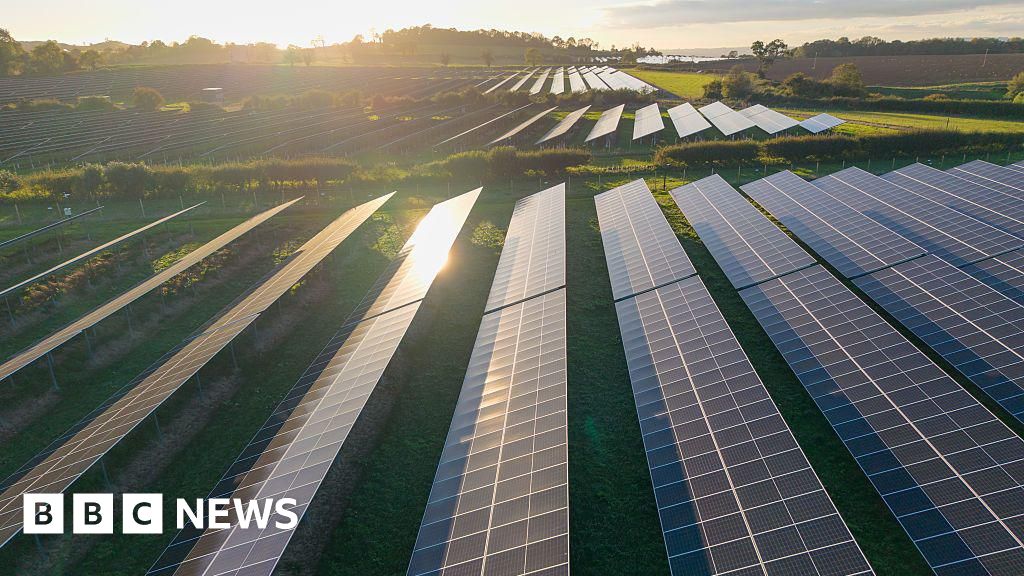
    Getty Images Rows of solar panels in green fields and between hedgerows. Getty Images

    Renewable energy – considered crucial to limiting climate change – produced a record amount of electricity in Great Britain in 2025, BBC analysis shows.

    Wind was the biggest single renewable source of electricity, according to the provisional figures from the National Energy System Operator (Neso).

    But solar-powered electricity rose by nearly a third on 2024 levels, helped by the UK’s sunniest year on record and the expansion of solar panels around the country.

    While behind renewables, electricity from fossil gas also rose slightly, highlighting the challenge of reaching the government’s “clean power” target by 2030.

    “It has been quite a strong year in terms of deployment of renewables,” said Pranav Menon, research senior associate at the Aurora Energy Research think tank.

    “[But] what we’re not seeing is kind of the exponential scale-up that you’d need to get to clean power 2030, because those targets are very, very ambitious,” he added.

    Under its “clean power” target, the government aims to use hardly any polluting gas to produce electricity by 2030. It is also under pressure to meet its pledge to bring energy bills down by up to £300 by then and has argued that clean power can achieve this.

    Neso data – and the clean power target – only cover Great Britain and not Northern Ireland, which has its own electricity transmission system operator.

    The recent growth of renewables has been one of the strongest areas of progress in the world’s attempts to tackle climate change.

    The trend has been notable in Great Britain over the past decade too. The government wants to ramp up renewables even more quickly to help meet its own clean power goal and reduce its planet-warming carbon emissions.

    In 2025, wind, solar, hydro and biomass generated more than 127 terawatt hours (TWh) of electricity in Great Britain, according to BBC analysis of provisional Neso data.

    That beats the previous high of 119TWh in 2024.

    Green bar chart showing the total amount of electricity generated from renewable sources by year, from 2009 to 2025. The bar heights increase across the period from a low of 9 terawatt hours in 2010 to a high of 127 terawatt hours in 2025.

    Wind generated more than 85TWh – nearly 30% – of Great Britain’s electricity last year, up slightly on 2024, according to analysis of Neso data.

    But the most notable change was solar power.

    Over the course of the year, solar panels generated more than 18TWh – over 6% of British electricity.

    While that is still a relatively small share, it marks a growth of more than 4TWh versus 2024.

    At its peak, solar was producing more than 40% of electricity for a small number of half-hour periods in July.

    Back in 2013, no such period had more than roughly 5% of electricity generation from solar.

    A two-section chart showing on top the daily contribution of solar to Britain's total electricity generation in 2025 broken into 30-minute periods which are coloured according to their intensity, from white representing 0% to a deep orange to represent 50% or higher. Every day is ordered top-to-bottom from 1 January to 31 December and left-to-right from midnight to 23:59. The days in summer have more shaded blocks as would be expected with longer days and winter days have fewer. The bottom section repeats this chart in multiple facets, one per year from 2013 to 2024, with the overall intensity of shading darkening as years progress to correspond to solar's increased share in generation.

    Part of the reason is the expansion of solar panels across the UK. More large solar farms came online this year, including the biggest at Cleve Hill near Faversham, in Kent.

    And it was a record year for solar panels on rooftops, with about 250,000 new small-scale installations reported to the Microgeneration Certification Scheme.

    With 2025 the UK’s sunniest year on record, conditions were ideal for British solar panels to capitalise on long, sunny days through the spring and summer.

    “Solar’s probably a bigger part of the system than we’d expected, given the cost has come down so much,” said Michael Grubb, professor of energy and climate change at University College London.

    Renewables can generate significant amounts of electricity when conditions are right. On roughly a third of days in 2025, at least half of Britain’s electricity came from renewables, according to BBC analysis of Neso data.

    Tile chart with one tile per day arranged by year from 2009 at the top to 2025 at the bottom, shaded on a gradient scale where white represents 0% share of electricity generated from renewables to dark green which represents 50% or more. On average the years 2009 to 2013 are very light and the more recent years are much darker, with more days reaching the 50% mark.

    But the British electricity grid often still leans heavily on fossil fuel gas.

    Analysis of Neso’s figures shows gas generated more than 77TWh – roughly 27% – of electricity, up from 72TWh in 2024.

    That increase could be down to several factors, including Britain importing slightly less electricity from Europe, lower nuclear generation, the closure of the last coal power station in 2024 and higher electricity demand.

    Driven by the rise in gas, Britain’s electricity was slightly more polluting in 2025 than 2024, according to Neso’s data.

    In 2025, each kilowatt-hour (kWh) of electricity generated 126g of planet-warming carbon dioxide on average – up from 124g/kWh in 2024 but down from 505g/kWh in 2012.

    Area chart showing the proportion of Britain's electricity generation by different fuel sources for each year from 2009 to 2025. In 2009 about three-quarters of all electricity came from gas and coal, with nuclear picking up most of the remaining generation. Renewables including wind and solar were a tiny fraction at that time, but have steadily increased their share up to 2025, with fossil fuel generation decreasing at the same time.

    With the exception of wind and solar, Neso’s figures only cover generation connected to the main transmission network.

    They do not include smaller-scale gas, biomass and hydro operators feeding in electricity at a local level, but these contribute a relatively small fraction of Britain’s total generation.

    Separate analysis of UK government data by the climate website Carbon Brief – which includes these smaller sources and Northern Ireland – shows very similar trends to the Neso data for Great Britain. That includes a new renewables record and a slight rise in gas generation.

    Off track for clean power?

    The government has defined its “clean power” target as 95% of all electricity generated in Britain coming from renewables and nuclear energy by 2030.

    In 2024 clean sources produced almost three-quarters of total electricity generation for the year, according to government figures.

    These numbers differ from Neso data, which includes imports as well as some gas generation not covered by the government’s clean power definition.

    Government figures for 2025 will not be released until later this year – but the amount of gas still in the electricity mix shows there is much to be done.

    “There’s still a significant number of periods in the year where the sun’s not shining, the wind’s not blowing, demand is high […] and that’s where the system is sort of forced to rely on gas-fired power to turn up and meet demand,” said Mr Menon.

    He added that there were solutions to this challenge. They include technologies like batteries – to store renewable electricity to use when it is less sunny and windy – as well as other low-carbon sources like nuclear, which can provide dependable output.

    One of the other struggles in meeting the clean power target is the need to upgrade the electricity grid, partly to connect new renewables and move their electricity around the country.

    Sometimes the grid cannot cope with all of the renewable electricity that could be generated, leading to wind farms being paid to reduce their output.

    Grid upgrades should help to reduce the problem but upgrades add to costs in the short term.

    That could offset some of the savings from some of the cheapest renewables which are starting to displace gas power, according to Prof Grubb.

    But he said he still expected bills to start to come down in the coming years – partly due to those renewables, but also assuming gas prices fall from their recent high levels.

    In response to the renewables data, Energy Secretary Ed Miliband said: “After years of delay and underinvestment, this government is keeping its promise to take back control of Britain’s energy with clean homegrown power.”

    This would “protect households against volatile fossil fuel markets”, he added.

    But shadow energy secretary Claire Coutinho called on the government to ditch its clean power target, arguing it was raising energy bills.

    “Britain is generating more renewable power than ever before, but people should know about the extra costs that come along with it,” she said.

    Thin, green banner promoting the Future Earth newsletter with text saying, “The world’s biggest climate news in your inbox every week”. There is also a graphic of an iceberg overlaid with a green circular pattern.

    Continue Reading

  • China’s five green economy challenges in 2026

    China’s five green economy challenges in 2026

    As China heads into the new year it will start rolling out its 15th five‑year plan, this one is for 2026-2030.

    Beijing is doubling down on greening its economy, and aims to hit two major climate goals: “carbon peaking”, where carbon dioxide emissions have reached a ceiling by 2030, and “carbon neutrality”, where net carbon dioxide emissions have been driven down to zero by 2060.

    Yet, China’s green push sits uneasily with its energy realities: coal still provides about 51% of its electricity as of mid‑2025, underpinning China’s difficulty in greening its energy system swiftly. Here are five major challenges that will shape China’s green transition as it moves into 2026.

    1. Energy transmission and wastage

    Imagine standing in western China (for instance in Tibet, Xinjiang and Qinghai), which produces a lot of solar and wind energy. On bright and windy days, these installations generate vast amounts of clean electricity. Yet much of that power goes to waste.

    China’s grid can only handle a limited load, and when renewable generation peaks, it risk overloading the power network. So grid operators respond by telling energy producers to dial down output, which is a process called “curtailement”. The result is that electricity from the west often fails to reach eastern economic hubs, such as Beijing, Tianjin, Shandong, Jiangsu, Shanghai, Zhejiang, Fujian and Guangdong, where demand is greatest.

    China needs to invest heavily in the ways to transport and store excess energy. The State Grid Corporation of China claims that it will be spending 650 billion yuan (£69 billion) in 2025 to upgrade the power network, and perhaps much more in subsequent years.

    The challenge here is sustaining these capital-intensive projects while the broader economy still grapples with the lasting effects of the 2021 property crisis.

    China is building massive solar farms, but also coal-fired power stations.

    2. Cutting coal without blackouts

    Even as China vows to go green and be a world leader in environmental energy, it continues to expand its coal capacity, and has added enough new coal-fired power stations in 2024 to power the UK twice over per annum. This apparent contradiction stems from concerns over energy security.

    Beijing is determined to avoid a repeat of the blackouts and power shortages of 2020–2022. Coal provides dependable, round‑the‑clock power that renewables cannot yet fully replace. Yet the steady expansion of coal capacity undercuts China’s climate pledges and highlights ongoing tensions between China’s president, Xi Jinping’s, dual carbon goals and the country’s pressing energy demands, which raises questions about how far political ambition can stretch against economic reality.

    3. Taming overcapacity without hurting growth

    China’s vast manufacturing strength, which was once an asset, is now posing a problem. The rapid expansion of solar, wind, and electric vehicle industries has created overcapacity across the clean‑tech sector. Factories are producing more panels, turbines, and batteries than the domestic market can absorb. This has created a cut-throat price war, where companies sell at below cost price, which erodes company profits.

    Beijing must find a balance between restraining overproduction without choking growth in green industries. This balancing act is politically sensitive, as local governments depend on these industries to create jobs (7.4 million in 2023), and generate substantial revenue. It was estimated that in 2024 green industries contributed 13.6 trillion yuan to China’s economy or 10% of the country’s GDP.

    4. Trade tensions from overcapacity

    China’s surplus of clean tech such as cheap solar panels, electric vehicles (EVs), and batteries, have triggered trade tensions abroad. In 2023 and 2024, the European Union investigated allegations of Chinese subsidies being poured into EVs, wind turbines and solar panels. Tariffs of up to 35.3% were placed on Chinese EVs. However, tariffs on Chinese solar panels and wind turbines have not been imposed so far.

    But, on January 1 2026 the EU’s Carbon Border Adjustment Mechanism (CBAM) comes into effect. The CBAM is a carbon tax that Europeans will pay if imported goods are made using high carbon emissions. While the tax does not explicitly target EVs and solar panels, it will cover carbon-intensive materials used in their production, such as steel and aluminium, which are made using coal-fired plants.

    What this means is Chinese clean tech might lose its competitive edge in the European market as customers are driven away from its products. Industrial players might rely on exports to stay afloat given the highly competitive nature of China’s domestic green market, but the CBAM is likely to undermine China’s green industry.

    5. Fulfilling green targets locally

    Chinese local governments are formally responsible for putting Beijing’s climate policies into practice, but many are expected to implement these policies largely on their own. While provincial authorities typically have more fiscal resources and technical expertise, city-level governments within each province often don’t have the funds to do so, which makes it difficult to deliver on green initiatives in practice.

    At the same time, even when local authority leaders are told to achieve climate‑related targets, their career advancement remains closely linked to conventional economic performance indicators such as GDP growth and investment.

    All of this helps explain the continued enthusiasm for new coal‑fired power projects. They are framed not only as a fail‑safe in case renewables and grids cannot meet rising demand, but also as avenues for local employment, fixed‑asset investment and fiscal revenue.

    China’s continued greening in 2026 will be challenged by all of these issues.

    Continue Reading

  • The rise and fall of Babycham – the sparkling pear drink that sold the champagne lifestyle at a small price

    The rise and fall of Babycham – the sparkling pear drink that sold the champagne lifestyle at a small price

    As a cultural historian who has worked with and lectured on the drinks industry for many years I was asked to write a book about post-war Britain and the drinks that made it. I immediately knew I had to include Babycham – a post-austerity tipple that had made Britain smile.

    Britain in the early 1950s was gradually emerging from the shadow of war and was dealing with bankruptcy and post-war shortages. By the time of Queen Elizabeth II’s coronation in 1953, British manufacturing was getting back on its feet.

    In that year, a little-known Somerset brewery, Showerings, hit upon a novel idea: offer cash-strapped Britons sick of the grey years of austerity a festive, sparkling alcoholic tipple that was cheap but fun. Thus was born Babycham, the celebratory drink that looked like champagne, but wasn’t.

    I have distinct memories of my mum drinking the sparkling beverage in the 1960s, sometimes with brandy as a cheap, working-class alternative to the classic champagne cocktail. And who can forget those wonderful, deer-themed champagne coupes which Babycham distributed, and which are now collectors’ items.

    As I write in my book Another Round, it was originally named “Champagne de la Poire” by its creators, Francis and Herbert Showering of Shepton Mallet in Somerset. Babycham was a new alcoholic perry – a cider made from pears. It had the modest strength of 6% alcohol-by-volume and came in both full-sized bottles and fashionable, handbag-sized four- and two-ounce versions.

    At sixpence a bottle, Babycham’s bubbles come at a fraction of the price of genuine French bubbly – a luxury that very few could afford. Babycham came to epitomise the brave new world of mid-1950s Britain – British ingenuity still seemed to lead the world, and anything seemed possible.

    Marketing with fizz

    Babycham’s innovative brand design, marketing methods and advertising techniques brought flashy and flamboyant American techniques to the staid world of British beverages as its makers exploited not just the expanding potential of magazines and radio but, crucially, the revolutionary medium of television advertising. Perhaps most importantly, it was also the first British alcoholic drink to be aimed squarely at women.

    Showerings and their advertising guru Jack Wynne-Williams made Babycham into the first British consumable to be introduced through advertising and marketing, rather than marketing an existing product. Their eye-catching new baby deer logo featured in the ad campaign of autumn 1953 and has been with us ever since. And it was equally prominent when their groundbreaking debut TV ad in 1956 made Babycham the first alcoholic brand to be advertised on British television.

    In order to convey the idea that Babycham provided a champagne lifestyle at a beer price, Showerings advised their (largely female) customers that it was best served in an attractive and undeniably feminine French champagne coupe. Coupes were soon being customised by Showerings, who plastered them with the brand’s distinctive new deer logo and thereby created an instant kitsch collectable. In this way, Babycham offered the aspirational female Briton of the 50s and 60s a fleeting illusion of glamour and sophistication at the price of an average pub tipple.

    All of this Americanised marketing paid handsome dividends. Babycham’s sales tripled between 1962 and 1971. These bumper sales enabled the Showerings to be acquired by drinks leviathan Allied Breweries in 1968, and after the merger Francis Showering was appointed as a director of the new company.

    It was only in the early 1980s that Babycham’s sales began first to fall, and then to plummet. During this decade the drinks market was becoming more sophisticated and diverse. Women were turning more to wine and cocktails than to retro tipples made from sparkling pear juice.

    However, after a period in the doldrums, the Babycham brand is back. In 2016, a younger generation of Showerings bought back the family’s original cider mill in Shepton Mallet and sought to revive their famous sparkling perry, relaunching Babycham in 2021.

    If it is remembered at all, it’s now associated with celebrations such as birthdays or Christmas. No longer seen as a regular indulgence. The Babycham brand and its winsome fawn logo do seem rather old-fashioned today but in an age of nostalgia for the Britain of the past it could be ripe for a renaissance.


    Looking for something good? Cut through the noise with a carefully curated selection of the latest releases, live events and exhibitions, straight to your inbox every fortnight, on Fridays. Sign up here.


    Continue Reading

  • K-Electric shows steady progress during 2025 – K-Electric

    K-Electric shows steady progress during 2025 – K-Electric

    Karachi, January 2, 2026: In a year marked by return of economic stability, K-Electric (KE), Pakistan’s only vertically integrated power utility, showed steady progress across its businesses of generation, transmission, distribution, and supply, alongside continued investments in digital transformation and customer engagement.

    Moonis Alvi, KE CEO, said: “K-Electric has always focused on customer satisfaction, and we will continue to facilitate our customers with utmost dedication. Karachi is our responsibility and we will continue to serve the city with all our effort.

    “The revised MYT has presented new challenges, but we will balance the best of what we have to offer to both the city and the company.”

    The year-end business performance round-up shows KE’s focus on ensuring reliable power for Karachi’s households, commercial hubs, and industrial units, while catering to the city’s unique operational and demand dynamics.

    Peak demand

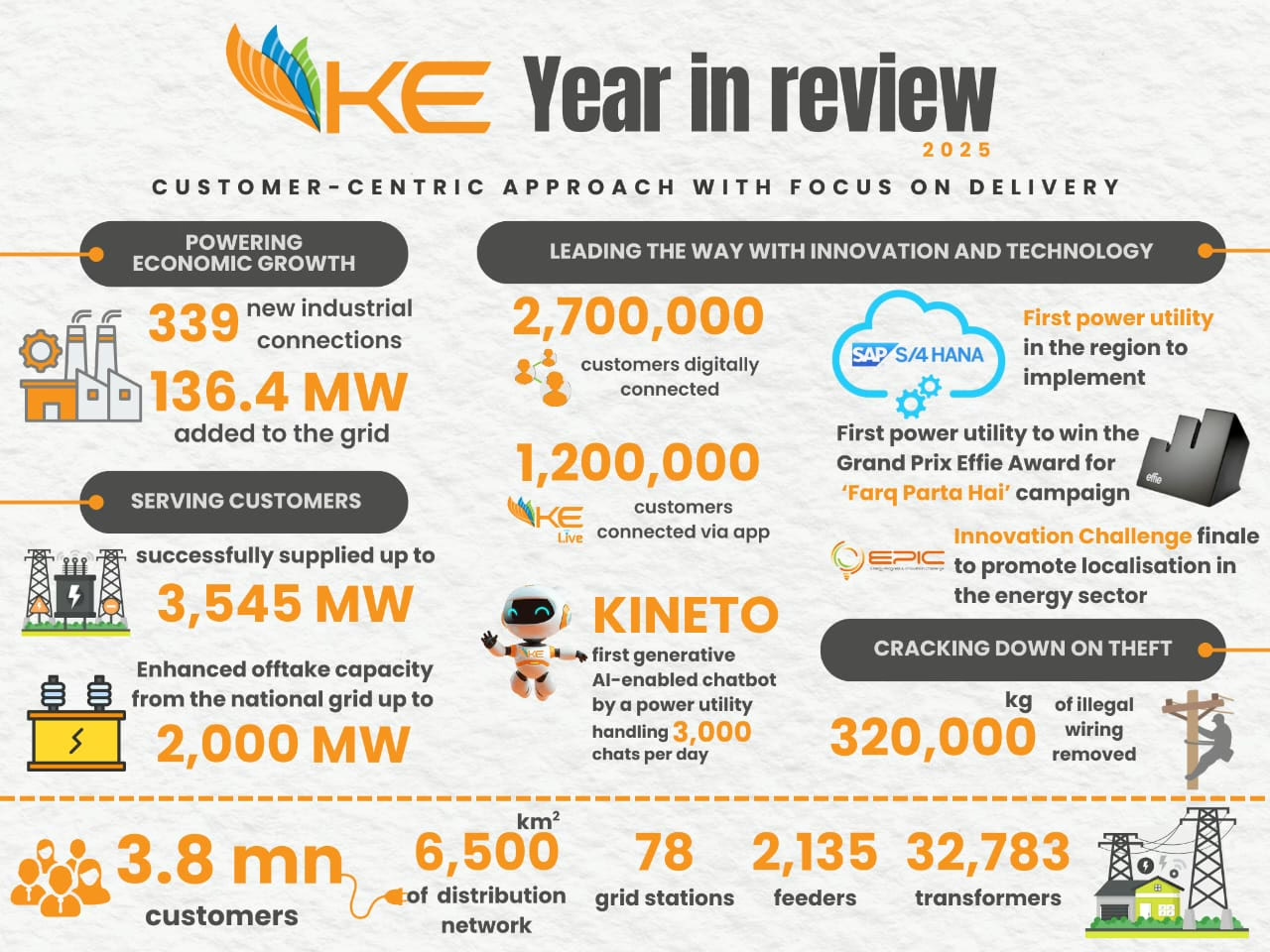
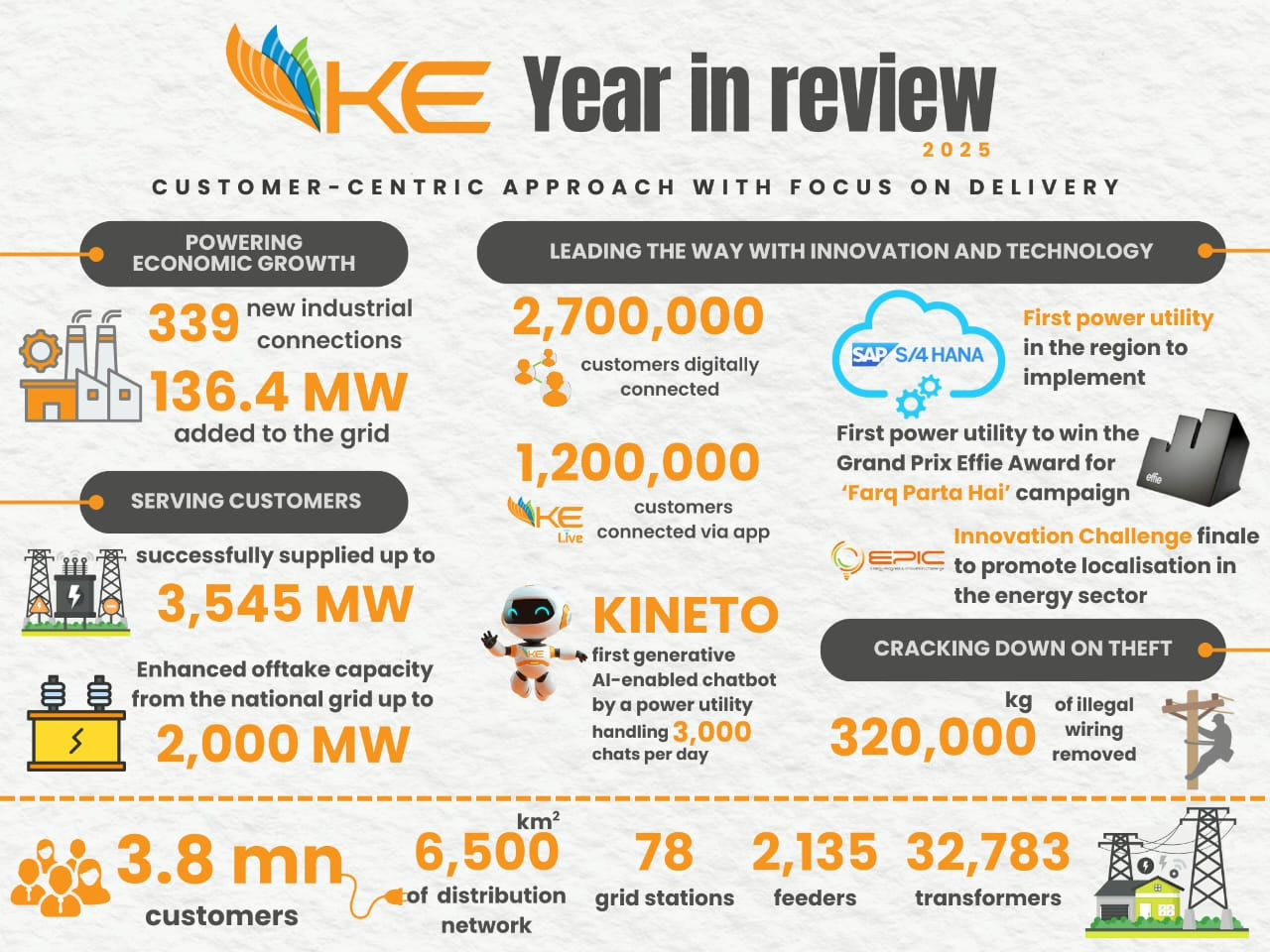
    Karachi, Pakistan’s largest and most populous city, recorded a peak demand of 3,563 MW during June 2025 which was ably met with a peak supply of 3,545 MW, demonstrating KE’s grid resilience during peak summer conditions. Average demand for the year (January-November) hovered around 2,353 MW, reflecting the city’s expanding economic activity and urban growth. Monthly average demand figures fluctuated around 1,470 MW in winters and 2,920 MW during summers reflecting seasonal variations in consumption patterns.

    Generation up to the task

    KE’s generation infrastructure played a key role in meeting Karachi’s seasonal demand variations, particularly during peak summer months when consumption rises sharply.

    During 2025, KE’s generation portfolio supported the city’s growing energy landscape. The utility continued to optimise existing assets, while advancing planning and regulatory processes for future capacity additions aligned with affordability and sustainability goals.

    KE also accelerated its transition to cleaner energy. Through competitive bidding, the utility secured Pakistan’s lowest renewable tariffs, ranging between PKR 8.9 and PKR 11.6 per unit for its 640 MW clean energy projects. The Bid Evaluation Reports for projects at Dhabeji, Winder, and Bela were approved by NEPRA in May 2025 and are set to add green energy to KE’s generation mix capacity over the coming years, contingent upon necessary regulatory approvals.

    Transmission continues with strength

    KE continued to strengthen Karachi’s power supply infrastructure and secure access to surplus, economically viable energy from the national grid. During the year, the KKI grid and its associated interconnection facilitated an increased offtake capacity of up to 2,000 MW from the national grid, enhancing the overall stability and resilience of the network alongside wheeling of cheaper power to the economic hub of the country.

    Crackdown on electricity theft

    KE continued to prioritise network reliability and loss reduction, while addressing challenges stemming from electricity theft and non-payment in high-loss pockets.

    Over 25,000 kunda removal drives were carried out across the serviced region and nearly 320,000 kilogrammes of illegal wiring was removed till November-end.

    Customer facilitation

    As part of its customer-centric approach, KE also organised 310 customer facilitation camps across the city. These camps provided on-ground assistance for billing, payments, new connections, and meter-related queries.

    Collectively, these initiatives contributed to recoveries amounting to PKR 409 million, reflecting the role of engagement and awareness in improving payment behaviour and service access.

    Industrial, net-metered connections

    Supporting Karachi’s industrial base remained a key priority during the year. KE provided 339 new industrial connections, which added a cumulative sanctioned load of 136.4 MW to the network, till November-end. These connections supported sectors including manufacturing, textiles, FMCG, ports, and export-oriented industries, reinforcing Karachi’s role as Pakistan’s economic engine.

    KE also continued to facilitate customer participation in renewable energy through its net metering process. Between January and November 2025, the utility had connected 9,676 net-metered customers, adding over 230 MW in available capacity. Net metering approvals and interconnections were processed in line with prevailing regulatory frameworks, contributing to distributed generation within the city.

    Digitisation

    Digital transformation continued to reshape customer experience and operations. KE launched Kineto, Pakistan’s first generative AI-powered chatbot by a power utility, designed to provide instant, 24/7 support and streamline customer interactions across key service areas. The chatbot now sees nearly 3,000 chats a day on average. Billing information, outage updates, and service queries remain main queries.

    KE also became one of the first power utilities in the region to implement SAP S/4HANA RISE, strengthening cybersecurity, transparency, and data-driven decision-making.

    Customer engagement through digital channels rose to 2.7 million digitally connected customers, compared with 1.94 million the previous year. E-billing adoption increased to 13 percent from 8 percent, while nearly 70 percent of all bills were paid through online/alternate digital channels.

    During the year, KE was also awarded top honours at the Effie Awards Pakistan 2025, securing the prestigious Grand Prix for Campaign of the Year along with a Gold Effie in the Small Budget category for its energy conservation campaign ‘Farq Parta Hai’.

    Meanwhile, by the start of December, over 1.2 million customers were actively using the KE Live App, a number that stood at 1.0 million at the start of the year.

    Energy Progress & Innovation Challenge (EPIC)

    Committed to fostering creativity, innovation, and localisation in the energy sector, KE also held the Energy Progress & Innovation Challenge (EPIC) with the finale being held in June 2025.

    It united entrepreneurs, academia, researchers, and think tanks to develop solutions for the energy sector. EPIC received over 250 entries centered around AI-driven forecasting using edge computing for improved demand prediction and smarter dispatch, machine learning–based asset health diagnostics to monitor cables and transformers and reducing outages, IoT-enabled fleet tracking for faster field operations and response times, real-time energy theft detection through AI-based anomaly identification, renewable integration models assessing PV impact, and optimising battery storage for grid stability.

    MYT

    During the year, KE’s Multi-Year Tariff was also approved, establishing a framework for investments, performance benchmarks, and cost recovery.

    Subsequently, the determination was revised downwards by NEPRA. This revision has been challenged before the court and the same is pending adjudication. Considering the revision, company is assessing pathways to ensure reliable power supply for Karachi.

    During the year, NEPRA also approved write-off claims amounting to approximately PKR 50 billion for the period FY 2017-2023, recognising these as legitimate and prudent costs following due review.

    As KE moves into the new year, the utility remains focused on strengthening infrastructure, supporting industrial growth, improving recoveries, and expanding digital access, all while balancing affordability, reliability, and regulatory compliance.

    Continue Reading

  • Boström, C. E. et al. Cancer risk assessment, indicators, and guidelines for polycyclic aromatic hydrocarbons in the ambient air. Environ. Health Perspect. 110, 451–488 (2002).

    Google Scholar 

  • Kim, K. H., Jahan, S. A., Kabir, E. & Brown, R. J. A review of airborne polycyclic aromatic hydrocarbons (PAHs) and their human health effects. Environ. Int. 60, 71–80 (2013).

    Article 
    CAS 

    Google Scholar 

  • Shrivastavaa, M. et al. Global long-range transport and lung cancer risk from polycyclic aromatic hydrocarbons shielded by coatings of organic aerosol. Proc. Natl Acad. Sci. USA 114, 1246–1251 (2017).

    Article 

    Google Scholar 

  • Babek, O. et al. Reservoir deltas and their role in pollutant distribution in valley-type dam reservoirs: Les Kralovstvi dam, Elbe River, Czech Republic. Catena 184, 104251 (2020).

    Article 
    CAS 

    Google Scholar 

  • González-Gaya, B. et al. Biodegradation as an important sink of aromatic hydrocarbons in the oceans. Nat. Geosci. 12, 119–125 (2019).

    Article 

    Google Scholar 

  • Li, R. F., Hua, P., Zhang, J. & Krebs, P. Effect of anthropogenic activities on the occurrence of polycyclic aromatic hydrocarbons in aquatic suspended particulate matter: evidence from Rhine and Elbe rivers. Water Res. 179, 115901 (2020).

    Article 
    CAS 

    Google Scholar 

  • Lv, M. et al. Human impacts on polycyclic aromatic hydrocarbon distribution in Chinese intertidal zones. Nat. Sustain. 3, 878–884 (2020).

    Article 

    Google Scholar 

  • González-Gaya, B. et al. High atmosphere–ocean exchange of semivolatile aromatic hydrocarbons. Nat. Geosci. 9, 438–442 (2016).

    Article 

    Google Scholar 

  • Cooley, S. W., Ryan, J. C. & Smith, L. C. Human alteration of global surface water storage variability. Nature 591, 78–81 (2021).

    Article 
    CAS 

    Google Scholar 

  • Janssen, A. B. G. et al. Shifting states, shifting services: Linking regime shifts to changes in ecosystem services of shallow lakes. Freshwater Biol. 66, 1–12 (2020).

    Article 

    Google Scholar 

  • Janssen, A. B. G. et al. Characterizing 19 thousand Chinese lakes, ponds and reservoirs by morphometric, climate and sediment characteristics. Water Res. 202, 117427 (2021).

    Article 
    CAS 

    Google Scholar 

  • Li, D. F. et al. High Mountain Asia hydropower systems threatened by climate-driven landscape instability. Nat. Geosci. 15, 520–530 (2022).

    Article 
    CAS 

    Google Scholar 

  • Ryan, J. C., Smith, L. C., Cooley, S. W., Pitcher, L. H. & Pavelsky, T. M. Global characterization of inland water reservoirs using ICESat-2 altimetry and climate reanalysis. Geophys. Res. Lett. 47, e2020GL088543 (2020).

    Article 

    Google Scholar 

  • Cooley, S. W. Global loss of lake water storage. Science 380, 693 (2023).

    Article 
    CAS 

    Google Scholar 

  • Seopela, M. P., McCrindle, R. I., Combrinck, S. & Augustyn, W. Occurrence, distribution, spatio-temporal variability and source identification of n-alkanes and polycyclic aromatic hydrocarbons in water and sediment from Loskop dam, South Africa. Water Res. 186, 116350 (2020).

    Article 
    CAS 

    Google Scholar 

  • Wilcke, W. Global patterns of polycyclic aromatic hydrocarbons (PAHs) in soil. Geoderma 141, 157–166 (2007).

    Article 
    CAS 

    Google Scholar 

  • Chamberlain, K. J., Lehnert, K. A., McIntosh, I. M., Morgan, D. J. & Wörner, G. Time to change the data culture in geochemistry. Nat. Rev. Earth Environ. 2, 737–739 (2021).

    Article 

    Google Scholar 

  • Janssen, A. B. G. et al. Exploring, exploiting and evolving diversity of aquatic ecosystem models: a community perspective. Aquat. Ecol. 49, 513–548 (2015).

    Article 
    CAS 

    Google Scholar 

  • Spake, R. et al. Implications of scale dependence for cross-study syntheses of biodiversity differences. Ecol. Lett. 24, 374–390 (2021).

    Article 

    Google Scholar 

  • Laubmeier, A. N. et al. Ecological dynamics: integrating empirical, statistical, and analytical methods. Trends Ecol. Evol. 35, 1090–1099 (2020).

    Article 

    Google Scholar 

  • Gurevitch, J., Koricheva, J., Nakagawa, S. & Stewart, G. Meta-analysis and the science of research synthesis. Nature 555, 175–182 (2018).

    Article 
    CAS 

    Google Scholar 

  • Nakagawa, S., Yang, Y. F., Macartney, E. L., Spake, R. & Lagisz, M. Quantitative evidence synthesis: a practical guide on meta-analysis, meta-regression, and publication bias tests for environmental sciences. Environ. Evidence 12, 8 (2023).

    Article 

    Google Scholar 

  • Pizzini, S. et al. PAHs, PCBs, PBDEs, and OCPs trapped and remobilized in the Lake of Cavazzo (NE Italy) sediments: temporal trends, quality, and sources in an area prone to anthropogenic and natural stressors. Environ. Res. 213, 113573 (2022).

    Article 
    CAS 

    Google Scholar 

  • Yoon, S. J. et al. Large-scale monitoring and ecological risk assessment of persistent toxic substances in riverine, estuarine, and coastal sediments of the Yellow and Bohai seas. Environ. Int. 137, 105517 (2020).

    Article 
    CAS 

    Google Scholar 

  • Baskaran, D. & Byun, H. Current trend of polycyclic aromatic hydrocarbon bioremediation: mechanism, artificial mixed microbial strategy, machine learning, ground application, cost and policy implications. Chem. Eng. J. 498, 155334 (2024).

    Article 
    CAS 

    Google Scholar 

  • Yunker, M. B. et al. PAHs in the Fraser River basin: a critical appraisal of PAH ratios as indicators of PAH source and composition. Org. Geochem. 34, 489–515 (2002).

    Article 

    Google Scholar 

  • Liu, D. et al. Data-driven insights into the contamination of polycyclic aromatic hydrocarbons in marine bays. Environ. Sci. Technol. 58, 15202–15213 (2024).

    CAS 

    Google Scholar 

  • Li, W. W. et al. Spatiotemporal occurrence, sources and risk assessment of polycyclic aromatic hydrocarbons in a typical mariculture ecosystem. Water Res. 204, 117632 (2021).

    Article 
    CAS 

    Google Scholar 

  • Vilanova, R. M., Fernández, P., Martı́nez, C. & Grimalt, J. O. Polycyclic aromatic hydrocarbons in remote mountain lake waters. Water Res. 35, 3916–3926 (2001).

    Article 
    CAS 

    Google Scholar 

  • Hadibarata, T., Syafiuddin, A. & Ghfar, A. A. Abundance and distribution of polycyclic aromatic hydrocarbons (PAHs) in sediments of the Mahakam River. Mar. Pollut. Bull. 149, 110650 (2019).

    Article 
    CAS 

    Google Scholar 

  • Bigus, P., Tobiszewski, M. & Namieśnik, J. Historical records of organic pollutants in sediment cores. Mar. Pollut. Bull. 78, 26–42 (2014).

    Article 
    CAS 

    Google Scholar 

  • Hites, R. A., Laflamme, R. E. & Farrington, J. W. Sedimentary polycyclic aromatic hydrocarbons: the historical record. Science 198, 829–831 (1977).

    Article 
    CAS 

    Google Scholar 

  • Guo, J. Y., Chen, J. G. & Wang, J. F. Sedimentary records of polycyclic aromatic hydrocarbons in China: a comparison to the worldwide. Crit. Rev. Environ. Sci. Technol. 47, 1612–1667 (2017).

    Article 
    CAS 

    Google Scholar 

  • Wang, W. W., Xu, J. L., Qu, X. L., Lin, D. H. & Yang, K. Current and future trends of low and high molecular weight polycyclic aromatic hydrocarbons in surface water and sediments of China: insights from their long-term relationships between concentrations and emissions. Environ. Sci. Technol. 56, 3397–3406 (2022).

    Article 
    CAS 

    Google Scholar 

  • Martins, C. C. et al. Polycyclic aromatic hydrocarbons (PAHs) in a large South American industrial coastal area (Santos Estuary, southeastern Brazil): sources and depositional history. Mar. Pollut. Bull. 63, 452–458 (2011).

    Article 
    CAS 

    Google Scholar 

  • Jones, K., Sanders, G., Wild, S. R., Burnett, V. & Johnston, A. E. Evidence for a decline of PCBs and PAHs in rural vegetation and air in the United Kingdom. Nature 356, 137–140 (1992).

    Article 
    CAS 

    Google Scholar 

  • Kuempel, C. D. Sedimentation sifted out of pollution priorities. Science 379, 1098–1099 (2023).

    Article 
    CAS 

    Google Scholar 

  • Shen, H. Z. et al. Global atmospheric emissions of polycyclic aromatic hydrocarbons from 1960 to 2008 and future predictions. Environ. Sci. Technol. 47, 6415–6424 (2013).

    Article 

    Google Scholar 

  • McDonough, C. A., Khairy, M. A., Muir, D. C. G. & Lohmann, R. Significance of population centers as sources of gaseous and dissolved PAHs in the lower great lakes. Environ. Sci. Technol. 48, 7789–7797 (2014).

    Article 
    CAS 

    Google Scholar 

  • Abbott, B. W. et al. Human domination of the global water cycle absent from depictions and perceptions. Nat. Geosci. 12, 533–540 (2019).

    Article 
    CAS 

    Google Scholar 

  • Ramirez-Castaneda, V. et al. A set of principles and practical suggestions for equitable fieldwork in biology. Proc. Natl Acad. Sci. USA 119, e2122667119 (2022).

    Article 
    CAS 

    Google Scholar 

  • Spake, R. et al. Improving quantitative synthesis to achieve generality in ecology. Nat. Ecol. Evol. 6, 1818–1828 (2022).

    Article 

    Google Scholar 

  • González-Gaya, B., Zuniga-Rival, J., Ojeda, M. J., Jimenez, B. & Dachs, J. Field measurements of the atmospheric dry deposition fluxes and velocities of polycyclic aromatic hydrocarbons to the global oceans. Environ. Sci. Technol. 48, 5583–5592 (2014).

    Article 

    Google Scholar 

  • Guo, Z. F. et al. Global meta-analysis of microplastic contamination in reservoirs with a novel framework. Water Res. 207, 117828 (2021).

    Article 
    CAS 

    Google Scholar 

  • Hoel, E. P., Albantakis, L. & Tononi, G. Quantifying causal emergence shows that macro can beat micro. Proc. Natl Acad. Sci. USA 10, 19790–19795 (2013).

    Article 

    Google Scholar 

  • Khelifa, R. & Mahdjoub, H. An intersectionality lens is needed to establish a global view of equity, diversity and inclusion. Ecol. Lett. 25, 1049–1054 (2022).

    Article 

    Google Scholar 

  • Zipkin, E. F. et al. Addressing data integration challenges to link ecological processes across scales. Front. Ecol. Environ. 19, 30–38 (2021).

    Article 

    Google Scholar 

  • Husic, B. E. & Pande, V. S. Ward clustering improves cross-validated Markov state models of protein folding. J. Chem. Theory Comput. 13, 963–967 (2017).

    Article 
    CAS 

    Google Scholar 

  • Ward, J. H. Hierarchical grouping to optimize an objective function. J. Am. Stat. Assoc. 58, 236–244 (1963).

    Article 

    Google Scholar 

  • Wang, J. F. et al. Geographical detectors-based health risk assessment and its application in the neural tube defects study of the Heshun region, China. Int. J. Geogr. Inf. Sci. 24, 107–127 (2010).

    Article 
    CAS 

    Google Scholar 

  • Guo, Z. F. et al. Regionally distinct threats from polycyclic aromatic hydrocarbons in global reservoirs. figshare https://doi.org/10.6084/m9.figshare.30626969 (2025).

Continue Reading

  • The electric vehicle transition and vanishing fuel tax revenues

    The electric vehicle transition and vanishing fuel tax revenues

    The world is rapidly transitioning to battery-electric vehicles (BEVs), with internal combustion engine (ICE) sales declining1. Consequently, public revenues from motor fuel taxes are falling, creating potential fiscal gaps if not replaced2. This trend has been unfolding for years due to ICE efficiency gains and the rise of hybrid vehicles, but now the transition to full BEVs amplifies the effect, and several countries already face fiscal pressures (Supplementary Table 1). While prior studies have assessed this dynamic in advanced3,4,5 and some middle-income economies6, its implications for low- and lower-middle-income countries remain underexplored7. Critics may argue that expanding electricity access should take priority in such contexts; however, the BEV transition is accelerating faster than expected8. Cost declines and design improvements, largely driven by Chinese automakers and battery manufacturers, have brought affordable BEVs to global markets9,10. China’s BEV sales are projected to surpass ICE sales in 202511, and tariffs on Chinese vehicles in the USA and Europe are pushing low-cost BEVs into developing markets. This shift is already visible across Latin America, Southeast Asia and Africa, where imports from BYD, Leapmotor and JAC Motors are rising12. This situation raises three key questions: how large is the fiscal impact of declining fuel tax revenues, how does it vary across countries and what policy options exist to address it?

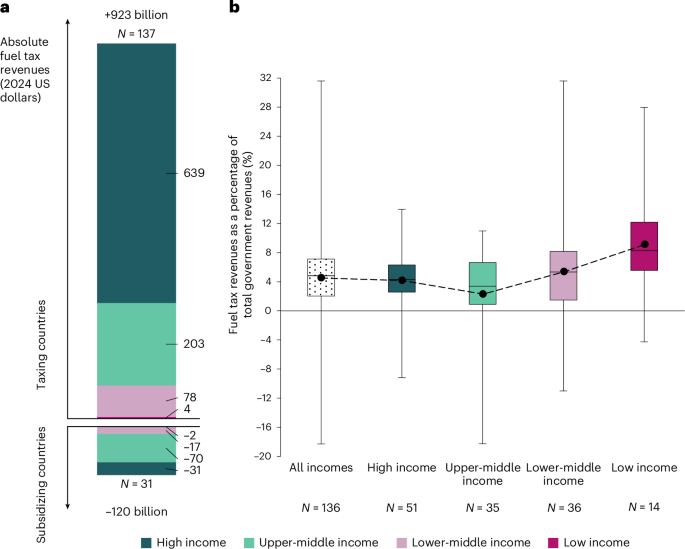
    To address these questions and bring evidence to the policy discourse, we assembled a new dataset of global fuel tax revenues from gasoline and diesel road vehicles by collecting data from multiple sources and performing some simple transmutations following the benchmark gap approach (Methods). This price gap approach compares local retail prices to a global benchmark price—typically international spot prices for motor fuels—where the difference reflects the presence of a tax or subsidy. While this method has important limitations, including the assumption of uniform benchmark prices and distribution costs across countries as well as consistent retail and marketing margins within countries, it remains a highly relevant and practical tool for quantifying and comparing fuel price distortions across a wide range of national contexts. The data cover 168 countries across four income levels, with the most recent year of data availability being 2023. They include tax revenues from both motor gasoline and diesel. While we recognize that a substantial portion of diesel is consumed by heavy-duty vehicles—whose electrification is progressing more slowly—this fuel remains a key component of overall road transport taxation in many countries13. We found that 137 countries implement a net tax on road vehicle fuel, whereas 31 countries provide net subsidies to road vehicle fuel (Fig. 1a). In total, we estimated that over US$920 billion (in 2024 US dollars) were collected in fuel tax revenues across the 137 taxing countries in 2023. To put this figure into comparison, in 2023 the global investment into renewable power generation was reported at US$735 billion14.

    Fig. 1: Global motor fuel tax transition exposure in absolute terms and relative terms as a percentage of total government revenues.

    a, Fuel tax revenues are shown for taxing countries on the positive y axis (N = 137 countries) and subsidizing countries on the negative y axis (N = 31 countries). Values are calculated for the year 2023 and shown in real 2024 US dollars. Country income levels are grouped according to the World Bank classification. The definition of taxing versus subsidizing countries follows the benchmark gap approach detailed in Methods. The labels for +US$4 and –US$2 billion point to the low-income taxing and subsidizing countries, respectively, in bright pink. b, Fuel tax revenues as a percentage of total government revenues for all countries (N = 136), high-income countries (N = 51), upper-middle-income countries (N = 35), lower-middle-income countries (N = 36) and low-income countries (N = 14) for the year 2023. The lower and upper box boundaries represent the 25th and 75th percentiles, respectively. The line inside the box represents the median, and the lower and upper whiskers extend to the minimum and maximum of all the data, respectively. The black dots connected by the dashed black line represent the average within each country grouping. Note that the total number of countries in b is lower due to data availability constraints (see Methods for further explanation). See Supplementary Figs. 1 and 2, which display a sensitivity analysis of this figure with high and low benchmark assumptions (Los Angeles CARBOB and Singapore Mogas 92 RON, respectively) for refined gasoline and diesel. See also Supplementary Fig. 3, which reproduces this figure with four outlier countries (Benin, Jordan, Yemen and Venezuela) adjusted.

    Source data

    Beyond absolute exposure, we found that relative fuel tax revenue exposure varies greatly across countries. As a percentage of total government revenues, fuel tax revenues in most countries fall between 4% and 8%. However, when comparing relative exposure by income level, we found that low-income countries are the most affected, with over 9% average exposure, whereas upper-middle- and high-income countries face considerably lower levels, around 2–4% on average. This means that low-income countries face about three times the exposure to potential revenue loss from declining fuel taxes compared with their more affluent counterparts. For context, Organization for Economic Co-operation and Development (OECD) countries spend on average 15% of total government revenues on education, 26.5% on health and 6.5% on defence15,16.

    The decarbonization of the economy has led and will be leading to changing sources of public revenues. High- to middle-income countries have begun tapping new sources of revenue, such as carbon taxes or road tolls. High-income countries can do this with a relative ease of implementation—that is, their high administrative capacity and broad-based fiscal frameworks allow for swift adjustment to recover lost revenues. Low-income countries may not be as well equipped, lacking the institutional quality or organizational structure required to design new tax schemes. In the case of the transition to BEVs, most low- to lower-middle-income countries with high percentages of total government revenues generated by fuel tax also exhibit weak institutional quality (Fig. 2).

    Fig. 2: Country-specific fuel tax transition exposure versus institutional quality.
    figure 2

    Fuel tax revenue exposure, on the y axis, is calculated as motor fuel tax revenues as a percentage of total government revenues for the year 2023. Institutional quality, on the x axis, is assessed per country on the basis of the World Governance Indicators from the World Bank Group for the year 2023. See Supplementary Note 1 for a full description of how each axis is calculated. The countries are colour-coded to indicate income level according to the World Bank classification. High-, upper-middle-, lower-middle- and low-income countries are shown in dark green, light green, light pink and dark pink, respectively. The countries are shape-coded to indicate the presence of a debt crisis according to data from the Justice Debt Portal. Countries in a debt crisis are depicted with triangles and countries not in a debt crisis with shaded circles. The 19 countries where debt crisis data are missing are depicted with hollowed circles. We found a negative correlation (Pearson coefficient r = −0.27 for 115 taxing countries) between fuel tax transition exposure and institutional quality. See Supplementary Fig. 4, which reproduces this figure with four outlier countries (Benin, Jordan, Yemen and Venezuela) adjusted.

    Source data

    In addition, many exposed countries are in a debt crisis, leading to a greater risk of exposure. In the aftermath of COVID-19, debt distress surged in low- and middle-income countries as governments increased borrowing to offset deficits caused by reduced economic activity and rising public health-care expenditures during lockdown17. This was further exacerbated by limited access to global financial markets and currency depreciation. Consequently, some countries in the upper-left quadrant of Fig. 2—namely, Yemen, Benin, Lebanon, Mozambique, Madagascar, Kenya and Suriname—now face a double exposure with limited headroom to react: fuel tax revenues represent a large share of government income, institutional capacity is too weak to compensate for potential revenue losses and excessive external debt burdens make revenue compensation via debt impossible. We also note that some countries, such as Nigeria, Angola and Vietnam, are major fossil fuel producers and have invested heavily in their domestic oil and gas industries. However, with the decline in oil demand for transport due to the rise of BEVs, these investments could soon become obsolete, resulting in further revenue losses. This situation requires careful consideration, as the political economy of these vested interests may complicate the transition, thus warranting a more in-depth analysis.

    In this unfolding narrative, challenges are distributed unevenly. Countries with a heavy reliance on fuel tax revenues and low institutional capacity face the greatest challenges. Should the global BEV transition continue to unfold faster than anticipated, the international community may need to offer assistance for countries with this double exposure. Institutions such as the World Bank or the United Nations Development Program could take the lead in this regard, structuring new tax implementation strategies and frameworks for road vehicles, though they should be cognizant of trade-offs. Key factors include understanding how different taxation types can support or hinder the BEV transition, offer flexibility to manage negative externalities efficiently, reduce implementation barriers and prioritize fairness more readily2. Historically, low-income countries have often relied on indirect taxes (for example, import taxes) due to easier administration18. Applying these to imported BEVs would raise upfront costs and slow adoption in high-risk markets9. Alternatives such as distance-based road charges are emerging19,20, though implementing and enforcing such systems requires substantial technical capacity. Electricity taxation faces considerable implementation barriers—particularly in informal or off-grid contexts—making it an ineffective substitute for fuel taxes or road-use revenue recovery.

    When implementing tax reform, it is crucial for these international organizations to collaborate with local governments to simultaneously minimize social backlash from blanket tax hikes and manage political pushback from lost revenues. Importantly, there may be an additional dynamic that exacerbates the need for international support. In view of the increasing BEV production in China and the previously discussed import hurdles in high-income countries, lower-income countries may soon face an incoming flood of cheap Chinese BEVs. This dynamic could support both the global transition to low-carbon transport and the provision of affordable mobility for the population; however, concerns over public revenue may create incentives for governments to impose trade restrictions. Mediating this situation will be easier if policymakers are prepared with taxation options at their disposal. Interestingly, complex regulations and entrenched political interests may slow tax reform in high-income countries, whereas low-income countries, lacking institutional path dependency, could move faster if supported internationally.

    As with policymaking, our analysis must be interpreted in local contexts. Applying a global benchmark price can overstate exposure in high-fuel-cost regions such as Japan or California and understate it in countries with lower environmental standards, such as Nigeria or Pakistan. This uncertainty is especially relevant for oil producers and refiners, where below-benchmark retail prices may not imply a straightforward subsidy but rather an opportunity cost to the government, reflecting forgone export revenues. Subsidy estimates for these countries should therefore be interpreted with caution. Nigeria illustrates the fiscal complexity of fuel dependence: it exports crude oil yet imports refined petroleum at market prices due to limited refining capacity. Consequently, revenue outcomes depend on fuel pricing policies and BEV adoption dynamics. Strategically balancing ICE and BEV use could therefore reduce costly fuel imports. These dynamics have two implications. First, our estimates of revenue gaps for countries that both produce and refine oil are probably conservative. Second, estimated fuel tax revenue gaps in crude-oil-exporting countries warrant more nuanced interpretation. Future research could therefore focus more closely on these countries.

    The aim of our analysis is not to assess current fiscal risks from BEV penetration but rather to highlight potential future exposure as countries transition their fleets to become fully electric. As such, our framing for policymakers is forward-looking, recognizing that road transport electrification is underway but still requires sustained policy support. Namely, we suggest that national policymakers continue to support the transition to BEVs, accelerating its speed. Anticipating potential tax revenue challenges and developing strategies to address them will help policymakers sustain a supportive environment for BEV adoption throughout the transition. Our analysis suggests that policymakers should assess the exposure of their country using frameworks such as the one depicted in Fig. 2. If this assessment reveals transition challenges, alternative tax options—such as distance-based charging—will require administrative capacity and investment that must be built up over time. In many non-OECD countries, this may involve seeking support from international organizations as discussed above. When implementing such alternative tax options, policymakers should be wary of equity implications—for instance, those related to the affordability of mobility or privacy concerns. Finally, assessing the exposure of individual countries is difficult given the lack of comparable data, and we suggest that international organizations undertake a systematic effort to compile and publicly share regularly updated data on fuel tax revenues across countries. Better data and anticipatory analysis can help governments sustain BEV support by preparing alternative revenue sources, thereby increasing the likelihood of rapid global transport decarbonization.

    Continue Reading