Category: 3. Business

  • MajesTEC results with teclistamab in relapsed and/or refractory multiple myeloma

    The BCMA × CD3 bispecific T cell engager teclistamab has potent antitumour activity in patients with heavily pretreated relapsed and/or refractory multiple myeloma (RRMM), resulting in EMA and FDA approval in the fourth and fifth lines, respectively. Now, the phase III MajesTEC-3 trial shows that earlier use of teclistamab, combined with the anti-CD38 antibody daratumumab, improves outcomes.

    In MajesTEC-3, 587 patients with RRMM after 1–3 prior lines of therapy  were randomly assigned (1:1) to receive teclistamab–daratumumab versus daratumumab plus dexamethasone and either pomalidomide (DPd) or bortezomib (DVd). Patients with only 1 prior line of treatment were required to have lenalidomide-refractory disease, and prior BCMA-directed therapy or disease refractory to anti-CD38 antibodies was an exclusion criterion. The primary end point was progression-free survival (PFS).

    Continue Reading

  • AI data centres step up as flexible grid assets

    Artificial intelligence (AI) is driving a rapid increase in electricity demand, adding strain to power systems that are already constrained. Large AI data centres, in particular, require fast and reliable grid connections, yet grid planners typically treat them as inflexible, always-on loads. In many regions, this mismatch has led to multi-year delays for new data centre projects, slowing the deployment of AI while grid operators struggle to manage peak demand without costly infrastructure upgrades.

    Writing in Nature Energy, Ayse K. Coskun and colleagues show that data centres do not have to operate in this rigid way. The team demonstrates that AI data centres can function as flexible, grid-aware loads, easing pressure on constrained power systems. Rather than relying on new hardware or on-site batteries, the researchers developed a software-based control system that adjusts computing workloads in real time in response to grid conditions. By accounting for the trade-off between power use and performance, their approach enables certain AI jobs to slow down during periods of grid stress while maintaining service-level agreements (SLAs).

    Continue Reading

  • UK manufacturing PMI hits 15-month high as output and orders rise

    (Alliance News) – UK manufacturing showed further signs of stabilisation at the end of 2025, with output and new orders edging higher and the sector recording its strongest reading in more than a year, according to survey data published by S&P Global on Thursday.

    The seasonally adjusted S&P Global UK manufacturing purchasing managers’ index rose to 50.6 points in December from 50.2 in November, marking a 15-month high and remaining above the 50.0-point threshold that separates expansion from contraction.

    The final reading was, however, below the earlier flash estimate of 51.2 points published in mid-December.

    Manufacturing output increased for a third consecutive month, supported in part by stock building and efforts to clear backlogs of work. New orders rose for the first time since September 2024, with domestic demand cited as the main driver, while the decline in export orders eased to one of the weakest rates seen in nearly four years.

    Growth was uneven across the sector. Output rose across consumer, intermediate and investment goods producers, the first time this has occurred since August 2024, but the expansion was concentrated among large manufacturers. Small and medium-sized firms continued to report declines in both output and new orders.

    Employment remained in contraction territory, with job losses recorded for a 14th straight month, although the pace of decline eased to its weakest level during that period.

    Price pressures picked up in December. Input cost inflation accelerated as manufacturers reported higher prices for a range of materials, including energy, metals, and electronics, and as suppliers passed on higher payroll-related costs. Output prices also rose after falling in November.

    Rob Dobson, director at S&P Global Market Intelligence, said: “Further signs of growth emanated from the UK manufacturing sector before the turn of the year. Output rose for the third successive month and new order intakes improved, albeit slightly, for the first time since September 2024.”

    He added: “UK manufacturers benefited from several reduced headwinds towards the end of the year, as the negative impacts of the uncertainty surrounding the autumn budget, tariffs and the JLR cyber-attack all moderated.

    “The start of 2026 will show if growth can be sustained after these temporary boosts subside.”

    The UK manufacturing PMI is compiled by S&P Global from responses to questionnaires sent to purchasing managers at around 650 manufacturers, with data collected between December 4 and 18.

    The UK’s services and composite PMIs will be published on Tuesday.

    By Eva Castanedo, Alliance News reporter

    Comments and questions to newsroom@alliancenews.com

    Copyright 2026 Alliance News Ltd. All Rights Reserved.

    Continue Reading

  • Call to vets to talk up orf vaccination

    Call to vets to talk up orf vaccination

    Zoetis says now, ahead of lambing season, is a good time to be engaging with farmers on importance.

    Call to vets to talk up orf vaccination

    Zoetis has called on vets to engage with farmers ahead of the lambing season on the importance of orf prevention.

    The company is also calling on vets to ensure they are providing farmers with clear guidance to counter inconsistent vaccination practices.

    The NOAH Livestock Vaccination Guideline categorises orf vaccination as a category two vaccination recommended in flocks where orf is present, but research suggests not all farmers carry out vaccination correctly, with only 27% of respondents using the correct site, the axilla1.

    A further 37% use the vaccine up to a week after opening a vial, when the shelf life is 8 hours, 33% vaccinate too close to making and 73% do not separate their vaccinated and non-vaccinated animals.

    A lamb being vaccinated against orf.

    ‘Highlight benefits’

    Zoetis, which has the vaccine Scabigard, said it had an extensive range of information, including leaflets and videos, to help vets with conversations with farmers.

    Tim Potter, national veterinary manager at Zoetis, said: “Orf can spread quickly through a flock having stayed on equipment and in the environment for months, and potentially years.

    “We are encouraging vets to highlight the benefits of vaccination for orf with Scabigard on any farms where orf is known to be present and our comprehensive vaccination guidelines will help ensure effective and consistent protection for flocks at risk of the disease.”

    1. Small S et al (2019). Do UK sheep farmers use orf vaccine correctly and could their vaccination strategy affect vaccine efficacy? Vet Record 185(10): 305.

    Continue Reading

  • Portfolio Spotlight: Leading the digital shift to deliver smarter public services

    Councillor Hardyal Dhindsa, Cabinet Member for Digital and Organisational Transformation, reflects on a year of pioneering innovation which is delivering tangible results.

    I am committed to ensuring our Council is not only fit for the future but also more responsive to the needs of every resident.

    This year, we have moved from discussing the potential of technology to seeing tangible benefits in the hands of our residents. Our mission remains clear: using digital tools to make processes smoother, while protecting the essential services we all rely on.

    Residents who call Derby City Council are now greeted by an improved and more inclusive telephone version of our digital helper, Darcie. By upgrading Darcie to a generative AI model, we have placed Derby at the forefront of local government innovation. Darcie is more than a chatbot; she understands context and provides quick, detailed answers 24 hours a day, 365 days a year. Darcie resolves 57% of queries directly, ensuring residents no longer wait in long queues for simple tasks, and allowing staff to dedicate more time to those with complex needs.

    Importantly, Darcie is now more inclusive, supporting nine of the city’s most widely spoken languages, from Punjabi to Polish. This pioneering work has gained national recognition, winning prestigious awards for AI innovation and collaborative excellence. Our progress was even highlighted in the House of Lords, where the Bishop of Derby, the Right Revd Libby Lane, cited our work as a national blueprint for best practice.

    Innovation at the Council is always built on trust. This December, the Information Commissioner’s Office (ICO) awarded us a high assurance rating, confirming that our data security is as robust as our technology is ambitious.

    Following resident feedback, we have also simplified registering for paperless billing and, from 1 April, we are launching a more generous Council Tax Support scheme. This is a significant step in making our support fundamentally fairer for low-income households.

    Our progress extends to our physical spaces too. Registration services have relocated to Riverside Chambers, offering two new ceremony rooms against the backdrop of the River Derwent. I’m looking forward to officially launching the new registry office in the new year.

    Looking toward 2026, we will continue to explore how technology can further reduce administrative burdens, ensuring our systems and staff are fully prepared for the significant shifts ahead. By building a smarter, fairer, and more connected Derby now, we are laying the essential foundations for a successful transition through Local Government Reorganisation.

    Continue Reading

  • South West Water shares strangest sewer discoveries of 2025

    South West Water shares strangest sewer discoveries of 2025

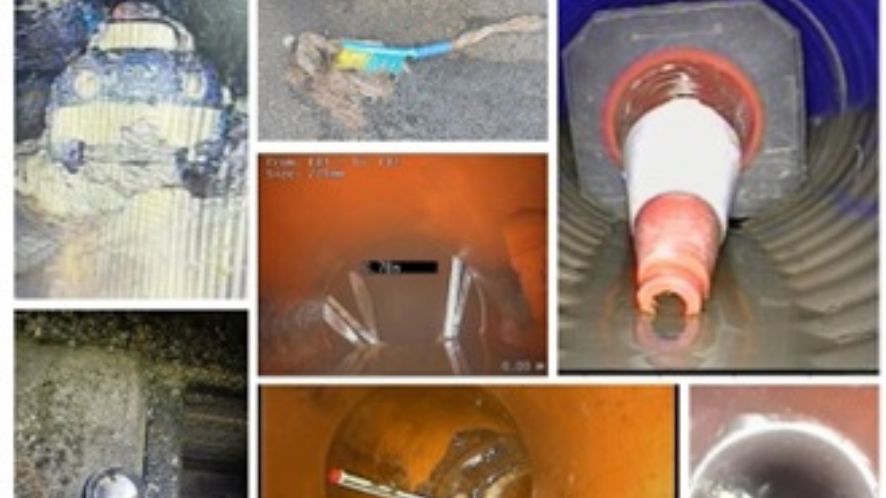
    A toy car, a dog bowl and a traffic cone – these are just some of the strangest and unexpected items South West Water’s teams came across while inspecting the region’s sewers in 2025.

    Also among the discoveries were a trolley wheel that had clearly gone the wrong way, a hand brush which had taken an unexpected detour, a football that missed its goal, and even a tyre that made its way underground – a collection of bizarre finds that raised more than a few eyebrows.

    Spotted during routine inspections by South West Water’s teams, with many highlighted using new AI-assisted analysis of CCTV footage, these unusual items left teams wondering how such an unusual mix of objects ended up making their way beneath our streets.

    While operators are used to dealing with everyday culprits such as wet wipes, fats, oils and greases blocking the sewers, these discoveries were a little harder to explain!

    Throughout 2025, South West Water piloted advanced AI technology to improve sewer inspections across its network, helping teams review footage more efficiently and flag unusual items more quickly.

    Traditionally, teams use specialised CCTV cameras lowered into pipes to record thousands of hours of footage, which technicians and office staff then manually reviewed to locate faults, structural issues, and blockages.

    In 2025, this process was enhanced by AI systems trained to automatically label and highlight objects and anomalies in the footage, reducing manual effort and helping teams identify unusual finds and potential problems sooner.

    Training the AI involves processing tens of thousands of images from the network. These images teach the system what typical sewer conditions look like, as well as the many variations of faults an operator might encounter.

    A serious message

    Behind these strange discoveries is a serious message.

    Blockages caused by inappropriate items in the sewer can lead to wastewater backing up into homes and gardens, damage to infrastructure, and environmental pollution to local watercourses and seas. It can cause flooding in streets, roads, and other public spaces, especially during wet weather.

    In the last year, South West Water has cleared around 7,000 avoidable blockages from its net-work, working 24 hours a day to keep our sewers flowing.

    However, all of these blockages could be prevented with a little more care about what goes down the loo or sink and especially down the drains.

    Andy Pettifer, Wastewater Operations Manager at South West Water, said: “Finding a toy car or a football in a sewer might raise a few eyebrows, but it’s a serious issue that our teams are facing each year.

    “Our sewers are designed for wastewater only, and anything else can cause blockages that affect homes, businesses, and the environment. So please, only flush the three P’s and if it’s not pee, poo or paper, please put it in the bin or dispose of your waste responsibility.”

    Continue Reading

  • CHANGE-seq-BE finds off-target changes in the genome from base editors

    CHANGE-seq-BE finds off-target changes in the genome from base editors

    To do so, CHANGE-seq-BE starts with a whole genome, but instead of immediately sequencing it, scientists split the genome into tiny circles of DNA. They then take those circles and expose them to the base editor being tested. Afterward, they treat the DNA with a special enzyme that detects if base editing occurred, opening those — and only those — DNA circles with evidence of base editing into linear strands. The linear strands of DNA are then selectively sequenced, requiring far fewer resources than competing techniques. They optimized it for both major types of base editors (adenine and cytosine base editors). After developing the method, the scientists wanted to know if it truly was both more comprehensive and resource-efficient than conventional approaches, so they tested them head-to-head.

    “When we directly compared it to other methods, CHANGE-seq-BE found almost all sites nominated by those methods, as well as many that it was exclusively able to detect,” Tsai said. “We showed that this unbiased approach was more sensitive while using only about 5% of the sequencing reads.”

    Given the technique’s sensitivity, ease of use and efficient resource utilization, others have already begun adopting it. Full experimental protocols and software to enable CHANGE-seq-BE are described in the study, enabling this adoption. For example, in addition to the clinical application reported in the paper, clinical trials at St. Jude and beyond have integrated the technique into their planning, using it as a safety and efficiency evaluation tool. CHANGE-seq-BE was also recently used to characterize the first patient-specific in vivo genome editing treatment. Fundamental research labs investigating base editing have also begun using it to test for off-targets early in their process, better identifying the most promising approaches to pursue than existing screens. These early adopters show the technique’s appeal to researchers and clinicians alike, and its promise to push forward the future of base editing.

    “We’ve enabled those developing these therapies to quickly understand and find the base editors with the highest potential activity and specificity,” Tsai said. “We hope that methods like CHANGE-seq-BE will open the door toward more genome editing therapies being developed for and reaching the patients who need them.”

    Authors and funding

    The study’s co-first authors are Cicera Lazzarotto, formerly of St. Jude; and Varun Katta, St. Jude. The study’s other authors are Yichao Li, Garret Manquen, Rachael Wood, Jacqueline Chyr and Azusa Matsubara, St. Jude; Elizabeth Urbina and GaHyun Lee, formerly of St. Jude; Xiaolin Wu, Frederick National Laboratory of Cancer Research; and Suk See De Ravin, National Institutes of Health.

    The study was supported by grants from the National Institutes of Health Somatic Cell Genome Editing Consortium Program through National Institutes of Allergy and Infectious Diseases (U01AI176470 and U01AI176471), National Heart Lung and Blood Institute (U01HL163983), St. Jude Collaborative Research Consortium on Novel Gene Therapies for Sickle Cell Disease, St. Jude PARADIGM Blue Sky Project, the Doris Duke Charitable Foundation (2020154) and the American Lebanese Syrian Associated Charities (ALSAC), the fundraising and awareness organization of St. Jude.


    Continue Reading

  • Drifting towards deflation in the Euro zone

    Drifting towards deflation in the Euro zone

    In yesterday’s preview of 2026, one of my four predictions was that the Euro zone will resume its drift back towards deflation. The main reason for this is that the currency union is stuck in the same kind of paralysis that has reigned since the sovereign debt crisis in 2011/12. That crisis was papered over by the ECB, which has morphed into a fiscal bailout vehicle for high-debt countries, while nothing was ever actually done to bring down debt overhangs in Italy and Spain. As a result, neither country has fiscal space, which means every shock descends into wrangling over joint EU debt issuance. That’s an inherently deflationary equilibrium. Speed and magnitude of policy stimulus will always be too small. This dysfunction compounds into chronic underperformance and deflation over time.

    There’s one big difference from the sovereign debt crisis in 2011/12 however. At the time, Germany was chalking up solid growth rates, while it’s really struggling at the moment. This means that deflationary pressure is radiating out from Germany now, while the opposite was true after the sovereign debt crisis. In today’s post, I take a look at economic slack across the world’s major economies. Germany is the only country where economic slack is now bigger than after 2008.

    Before I get into the weeds, an important caveat: no one has any clue how to estimate economic slack. People often calculate output gaps as the difference between GDP and “potential,” which is usually some kind of time-series moving average. The issue is that time-series averages follow actual GDP much too closely, so when a country goes into a prolonged downturn, output gap estimates are small because potential GDP follows actual GDP down. To avoid this issue, I calculate a linear trend for GDP based on the average quarterly growth rate in the five years before COVID and do the same thing for the five years before the 2008 crisis. Of course, my linear trends can hardly be thought of as potential either. But they’re a better approximation of slack – in my view – than some kind of moving average.

    As the panel of charts above shows, Germany’s GDP as of Q3 ‘25 was nine percent below its pre-COVID trend, a bigger gap than after the global financial crisis on a comparable time scale. In Q3 ‘13, this gap was seven percent. Germany is the only place where the gap is currently bigger than it was then. Deflationary pressure will be radiating out from Germany to the rest of the Euro zone.

    It’s also worth noting that essentially no country has GDP currently above its pre-COVID trend, while many countries have GDP substantially below, including China, France and the UK. The global equilibrium we’re slipping into is a deflationary one, much like in the decade after the global financial crisis.

    Continue Reading

  • FTSE 100 index hits 10,000 milestone in new year rally

    FTSE 100 index hits 10,000 milestone in new year rally

    The FTSE 100 tracks the performance of the the 100 largest companies on the London Stock Exchange. That includes mining firms Antofagasta, Rio Tinto and Peers Endeavour which have been boosted by surging metals prices.

    Defence firms also performed strongly, with Bae Systems, Babcock and Rolls-Royce all saw their value increase, as did large banks, including Lloyds, Barclays, Standard Chartered and HSBC.

    Dan Coatsworth, head of markets at AJ Bell, said: “This is a historic moment and already makes 2026 one of the most significant years for the blue-chip index since its launch in 1984.”

    He said crossing the 10,000-point threshold was “the best New Year’s present Chancellor Rachel Reeves could want”.

    “The FTSE 100’s achievements just go to show what’s possible when buying UK shares.

    “It also proves to cynics that the UK market is not stuck in the mud, and that the US stock market is not the only place to make money.

    Continue Reading

  • First independent businesses confirmed for Town Hall Place retail hub

    • New town centre shops include pottery painting, haberdashery, a health and wellness café and a multicultural grocery store
    • Shops expected to open January or February 2026
    • Significant milestone in Tamworth’s regeneration programme

    An exciting variety of independent businesses have been selected to join Tamworth town centre’s brand new retail hub, bringing things like pottery painting, craft workshops and healthy food to the high street.

    Tamworth Borough Council is delighted to welcome the first tenants to its affordable retail space – Town Hall Place – who are all busy fitting out their shops ready for opening next year.

    Town Hall Place has been designed to improve the choice and appeal of the town centre in line with what shoppers want, while providing opportunities for more niche businesses to set up and grow.

    The first successful applicants for the seven units have therefore been carefully chosen in line with those ambitions.

    Brew health and wellness café 

    Brew is a new health and wellness café which will offer a selection of healthy food and drink including bagels, salads, acai bowls, fruit sorbets, matcha, iced teas, protein and collagen shakes.

    It’s being opened by Amy Collins, who had been looking for the perfect location to bring her business dream to life for a couple of years.

    She said: “I’ve always been health conscious, especially with food, and I think there’s an opportunity for something like this in Tamworth. I’ve had the dream of owning a café here for a long time, but I haven’t found the right place at an affordable price. When this opportunity came up, I had to go for it!”

    Castle Notions haberdashery 

    Castle Notions aims to merge traditional haberdashery retail with community engagement, offering a place where people can buy their fabric, wool, buttons, thread and sewing machine accessories, but also learn new skills.

    Alongside a retail offering of premium products, owner of the business, Novel Wust, plans to host workshops and social sessions in sewing, knitting, children’s crafts, sustainable fashion, upcycling, heritage crafts and theatre costume making.

    For Novel, opening Castle Notions also represents a dream come true. While coming from a corporate background, Novel has had a passion for crafting since she was a child, inspired by her parents who work as tailors. 

    “This is about creating a community that transcends conventional shopping. I want to offer a personal service, somewhere people can join with others and be creative, or get help with a project they are stuck on. To teach children a skill away from computers and screens,” Novel said.

    The Paint Pot Studio

    Kate Watts has a vision to create a welcoming space for people of all ages to relax with cake and refreshments while trying their hand at a variety of different creative pursuits.

    The Paint Pot Studio will offer ceramic pot painting sessions throughout the year, alongside a rotating programme of additional arts and crafts activities, such as painting in different mediums, bubble art, T-shirt making and more.

    Further down the line, Kate hopes to include themed events, birthday parties, painting parties and after school clubs.

    “This will be a space where people can chill out and be creative, while enjoying a coffee and cake,” Kate said. “One of my main drives is the price point; I want to be able to offer something for all budgets, where families can have fun away from screens, without spending a fortune.

    “This has always been bubbling in the background and I decided to just go for my dreams. I want something to pass on. It is scary, but the support I’ve had from the council so far has been amazing.”

    Tropical Market

    The Tropical Market will offer a variety of authentic raw African and Caribbean foods and cooking ingredients, including plantain, beans, yam, cassava, frozen fish and meats, herbs and spices.

    This grocery store venture is the brainchild of Fred Borson who recently moved to Tamworth from Birmingham and spotted a gap for authentic ingredients in the local area.

    As well as providing produce from different cultures, Fred is also hoping to bring the community together through cultural events at the shop, such as cooking classes on how to use the various ingredients.

    Fred, who currently works as a contractor for the civil service, said: “These are ingredients that you can’t buy in the local area. It’s a dream to have my own business, to serve the community and bring people together. 

    “People are trying to eat healthier with less reliance on ready meals, so we will provide the raw ingredients to help them do that. It’s about bringing the sunshine to your home.”

    Final stages of town centre regeneration

    The official opening of Town Hall Place marks the final stages of the multi-million-pound Future High Streets Fund regeneration project, which has seen the opening of a brand new college, a revitalised St Editha’s Square, the widening of the Castle Gateway, and the creation of a second enterprise centre in the town.

    Extensive community engagement carried out prior to the original funding bid being submitted five years ago, revealed ‘niche shops’ as the number one thing people would like to see more of in the town centre. 

    Councillor Carol Dean, Leader of Tamworth Borough Council, said: “We know people want to see more variety in the town centre, and we hope Town Hall Place will help provide that. The units are small and affordable, with favourable terms to attract more creative, niche business.

    “This isn’t just about filling the units; it’s about getting the right type of businesses in there that genuinely add to the town and provide new reasons for people to visit. With these first confirmed tenants, we believe we’ve done that, so it’s now over to shoppers to come and support these new businesses, which will hopefully have a snowball effect on the rest of the town centre.

    “With the advice and support of our business team, the aim would be to help the new ventures grow to the point they can move to a more permanent vacant unit in the town.”

    While the council is in discussions with various other potential tenants, expressions of interest in the remaining units are still welcomed as we seek to get the right mix of businesses.

    More information is available on the Town Hall Place webpage.

    For more information about the Future High Streets Fund project and all the different elements that have been delivered so far, please visit www.transformingtamworth.gov.uk. 

    Continue Reading