Category: 3. Business

  • how the ancients invested in precious metals

    how the ancients invested in precious metals

    “All I want is an income of 20,000 sesterces from secure investments”, proclaims a character in a poem by Juvenal (1st-2nd century CE), the Roman poet.

    Today, 20,000 sesterces would be equivalent to about A$300,000 in interest from investments. Anyone would be very happy with this much passive annual income.

    Like today, people in ancient times understood that investing money could help them consolidate and grow their wealth.

    As the Roman novelist Petronius (1st century CE) once wrote,

    Whoever has money sails with a fair breeze, and governs his fortune as he wishes.

    So, how exactly did ancient people invest their money?

    A lofty house with hidden silver

    In ancient Greek and Roman times, there was no stock market where you could buy and trade shares in a company.

    If you wanted to invest your cash, one of the more popular options was to obtain gold or silver.

    People did this to protect against currency fluctuations and inflation. They usually kept the metals either in bullion form or in the form of ware like jewellery. Storing these items could be risky and prone to theft.

    The Roman poet Virgil (70-19 BCE) describes the estate of a wealthy person that included “a lofty house, where talents of silver lie deeply hidden” alongside “weights of gold in bullion and in ware”.

    A talent was the largest unit of currency measurement in ancient Greece and Rome, equivalent to about 25kg of weighed silver.

    A detail from a mosaic of Virgil Writing the Aeneid, held in the Bardo Museum in Tunis, Tunisia.
    Roger Wood/Corbis/VCG via Getty Images

    Usually the metals were stored in a special vault or security cupboard.

    The Roman writer Cicero (106-43 BCE) recalls how a wealthy lady named Clodia would take gold (perhaps bars or ingots or plates) out of a security cupboard when she wished to lend money to someone. The gold could then be exchanged for coinage.

    Market booms – and busts

    The price of these metals could, however, occasionally be subject to unpredictable fluctuations and crashes in price, though less often than currency.

    The Greek historian Polybius (c. 200-118 BCE) says that when a new gold vein was discovered in Aquileia, Italy, only two feet deep, it caused a gold rush. The new material flooded the market too quickly and “the price of gold throughout Italy at once fell by one-third” after only two months. To stabilise the gold price, mining in the area was quickly monopolised and regulated.

    When people wanted to trade precious metals, they would sell them by weight. If the gold or silver or bronze had been worked into jewellery or other objects, this could be melted down and turned into bullion.

    People must have delighted in owning these precious metals.

    The Athenian writer Xenophon (c. 430-350 BCE) gives a clue about the mindset of ancient silver investors:

    Silver is not like furniture, of which a man never buys more once he has got enough for his house. No one ever yet possessed so much silver as to want no more; if a man finds himself with a huge amount of it, he takes as much pleasure in burying the surplus as in using it.

    A number of Roman wills reveal people leaving their heirs silver and gold in the form of bars, plates or ingots.

    Roman Gold Bars AD Bank of England Museum
    Roman gold ingot, dating to circa 375 AD, in the Bank of England Museum collection.
    Joyofmuseums, CC BY-SA 4.0, CC BY

    Commodities that could not be ‘ruined by Jupiter’

    Aside from metals, agricultural commodities were also very popular, especially grain, olive oil, and wine.

    To profit from agricultural commodities, people bought farmland and traded the commodities on the market.

    The Roman statesman Cato thought putting money into the production of essential goods was the safest investment. He said these things “could not be ruined by Jupiter” – in other words, they were resistant to unpredictable movements in the economy.

    Whereas precious metals were a store of wealth, they generated no income unless they were sold. But a diversified portfolio of agricultural commodities guaranteed a permanent income.

    People also invested and traded in precious goods, like artworks.

    When the Romans sacked the city of Corinth in 146 BC, they stole the city’s collection of famous artwork, and later sold the masterpieces for huge sums of money at auction in order to bring profit for the Roman state.

    At this auction, the King of Pergamon, Attalus II (220-138 BCE), bought one of the paintings, by the master artist Aristeides of Thebes (4th century BCE), for the incredible sum of 100 talents (about 2,500kg of silver).

    Eccentric emperors

    Political instability or uncertainty sometimes raised the price of these metals.

    The Greek historian Appian (2nd century CE) records how during the Roman civil war in 32-30 BCE:

    the price of all commodities had risen, and the Romans ascribed the cause of this to the quarrelling of the leaders whom they cursed.

    A bust of Emperor Caligula in the Louvre museum.
    A bust of Emperor Caligula in the Louvre museum.
    By anonymous – Clio20, CC BY-SA 3.0, CC BY

    Eccentric emperors might also impose new taxes or charges on commodities, or try to manipulate the market.

    The Roman historian Suetonius (c. 69-122 CE) tells us the emperor Caligula (12-41 CE) “levied new and unheard of taxes […] and there was no class of commodities or men on which he did not impose some form of tariff”.

    Another emperor, Vespasian (17-79 CE), went so far as to “buy up certain commodities merely in order to distribute them at profit”, says Suetonius.

    Clearly, investing in commodities 2,000 years ago could help build personal wealth – but also involved some risk, just like today.

    Continue Reading

  • Bloomberg Intelligence: Oil Pushes Higher With Ukraine Talks and China’s Pledge in Focus – Bloomberg.com

    1. Bloomberg Intelligence: Oil Pushes Higher With Ukraine Talks and China’s Pledge in Focus  Bloomberg.com
    2. Oil settles up over 2% on dented peace hopes in Ukraine, tensions in Yemen  Reuters
    3. Geopolitical tensions continue to disrupt the global energy market, driving volatile increases in international oil prices.  富途牛牛
    4. Crude Oil Prices Rally on no Breakthrough to end the Ukraine War  TradingView — Track All Markets
    5. Oil Holds Gain as Traders Weigh Geopolitics Against Inventories  Bloomberg.com

    Continue Reading

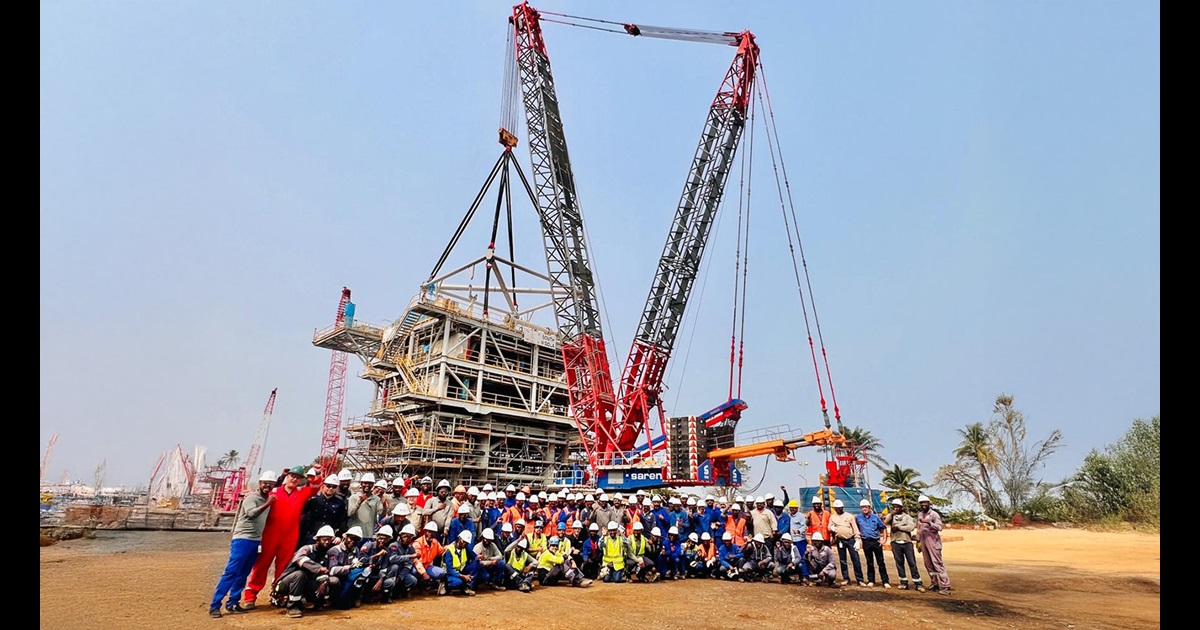
  • First oil at new platform is major milestone for chevron in Angola — Chevron

    First oil at new platform is major milestone for chevron in Angola — Chevron

    The South N’dola success marks a new chapter in Chevron’s long history in Angola.

    Chevron has been operating in Angola for more than 70 years. Today, the company operates two offshore tracts in Angola, Block 0 and deepwater Block 14, through a wholly owned subsidiary, Cabinda Gulf Oil Co. Ltd.

    Through the company, Chevron continues to contribute to the Angolan economy. During its construction phase, South N’dola was expected to create more than 800 local jobs, and now that it is producing, it will deliver oil and gas to local Angolan plants.

    Continue Reading

  • Cryptocurrency slump erases 2025 financial gains and Trump-inspired optimism | Cryptocurrencies

    Cryptocurrency slump erases 2025 financial gains and Trump-inspired optimism | Cryptocurrencies

    As 2025 comes to a close, Donald Trump’s favorable approach to cryptocurrency has not proven to be enough to sustain the industry’s gains, once the source of market-wide optimism and enthusiasm. The last few months of the year have seen $1tn in value wiped from the digital asset market, despite bitcoin hitting an all-time-high price of $126,000 on 6 October.

    The October price peak was short-lived. Bitcoin’s price tumbled just days later after Trump’s announcement of 100% tariffs on China sent shockwaves across the market on 12 October. The crypto market saw $19bn liquidated in 24 hours – the largest liquidation event on record. Ethereum, the second-largest cryptocurrency, saw a 40% drop in price over the next month. Eric Trump’s own crypto company endured a similar drop in its value in December.

    In Donald Trump, the crypto industry was delivered the pro-bitcoin president they were promised during his campaign. Within days of taking office for the second time, he issued an executive order that repealed restrictions on cryptocurrency and introduced new favorable regulations as well as a presidential working group on digital assets.

    “The digital asset industry plays a crucial role in innovation and economic development in the United States, as well as our Nation’s international leadership,” the order read. He placed cryptocurrency front and center in American policy.

    Again in March, Trump announced a new strategic cryptocurrency reserve that fueled a 62% rally in the market prices of three out of five of the coins named to the reserve. Bitcoin, the world’s most valuable cryptocurrency, went up 10% to $94,164 in the hours after the reserve was announced.

    A line chart visualizing the fluctuating price of bitcoin over the past year

    Cryptocurrency is sensitive to both narratives and confidence in global markets, said Rachael Lucas, the head of marketing and communications at BTC Markets, Australia’s largest cryptocurrency exchange. It’s what is called a risk-on asset, an investment that does better when investors are feeling confident about the economy and are willing to take on more risk, Lucas said.

    “The Trump administration may be pro-crypto, but tariffs and tight monetary policy outweigh positive vibes,” said Lucas. “And it’s also just a reminder, especially for people in crypto, that macro forces really matter more than political stances.”

    In November, bitcoin suffered its biggest drop in price since 2021, bringing the coin’s value to less than $81,000. While bitcoin regained some of that value in the weeks after, the digital token started December with another slump, dropping 6% after Strategy, the biggest holder of bitcoin, cut its earnings forecast because of the slide in crypto prices. Bitcoin’s price now hovers near $90,000, up from years past but significantly lower than its peak.

    In the first few days of December 2025, Eric Trump’s crypto firm, American Bitcoin Corp, saw 40% of its value – roughly $1bn – wiped out.

    The Trump family scion put on a bullish face and declared he would ride out the decline. “I’m holding all my @ABTC shares – I’m 100% committed to leading the industry,” Eric Trump said on X at the time.

    Some experts fear the industry is entering a so-called crypto winter, a prolonged period of stagnation or losses. The last time, crypto winter lasted from the end of 2021 through 2023, when the FTX mogul Sam Bankman-Fried was tried and convicted. Those years saw bitcoin slump 70% in price.

    Despite the optimism fueled by Trump’s win, the current market downturn shows the crypto-friendly administration wasn’t enough to usher in a return to the “retail mania” of 2021, when there was a huge upswing in individual stock trading, said Christian Catalini, the founder of the MIT Cryptoeconomics Lab.

    “The recent crash isn’t a change in sentiment, but a collision of three structural factors: the aftershocks of a $19bn leverage washout in October; a risk-off rotation driven by US-China tariff tensions; and, crucially, the potential unraveling of the corporate treasury trade,” Catalini said.

    Another potential factor that may have shaken the crypto market is the downturn in share prices of AI stocks like Nvidia, said Lucas.

    “One of the reasons why bitcoin is tied to the AI cycle is because a lot of the bitcoin miners actually started leveraging their energy towards new datacenters,” she said. “Not only is crypto a technical asset, we have the miners actually tied into AI devices going up. That negative sentiment tends to sneak into crypto.”

    Despite concerns over a crypto winter, notable players in the crypto space Larry Fink, the CEO of investment management firm BlackRock, and Brian Armstrong, the co-founder of Coinbase, the largest crypto exchange in the US, expressed optimism about the long-term value of the currency at a recent New York Times conference. Armstrong said “there was no chance” the price of bitcoin would go to zero and in fact 2025 would be seen as the year “when crypto went from gray market to a well-lit establishment”. Fink, for his part, said his firm had observed “legitimate long owners investing in the currency”, including sovereign wealth funds.

    Lucas said that this downturn in crypto prices was not inconsistent with past four-year bitcoin cycles and that she was not worried about entering a much more sustained crypto winter.

    “If I was looking at it from a traditional bitcoin cycle, we are actually technically in a bear market,” said Lucas. “But as you can see, even with all of these macros that are affecting the market, bitcoin has still managed to set a price above $80,000.”

    Continue Reading

  • Nikkei 225 Holds Near 50,500 As Investors Lock In Gains (NKY:IND) – Seeking Alpha

    1. Nikkei 225 Holds Near 50,500 As Investors Lock In Gains (NKY:IND)  Seeking Alpha
    2. Nikkei falls as tech stocks track Wall Street  Business Recorder
    3. Continued Consolidation Called For Japan Stock Market  Nasdaq
    4. Japanese Stocks Mixed in Morning Trading  وكالة الانباء اليمنية سبأ
    5. Japan’s Nikkei average futures down 0.4% in early trade  marketscreener.com

    Continue Reading

  • SEC Announces Retirement of Division of Corporation Finance Deputy Director Cicely LaMothe

    The Securities and Exchange Commission today announced that Cicely LaMothe, Deputy Director of the Division of Corporation Finance, has retired from the agency.

    “Cicely has gone above and beyond the call of duty over the past twenty-four years to serve the public in her many critical roles in the Division of Corporation Finance,” said Jim Moloney, Director of the Division of Corporation Finance. “Throughout her tenure she has contributed her passion, commitment, and accounting expertise to support our mission – to ensure investors have the information they need to make informed decisions. She will be sorely missed, and we wish her all the best on her next chapter.”

    Ms. LaMothe joined the Division of Corporation Finance in 2002 and has served in multiple senior leadership positions, including Program Director of the Disclosure Review Program, Associate Director of the Office of Assessment and Continuous Improvement, and Associate Director of Disclosure Operations before being named Deputy Director for Disclosure Operations in 2022. She served as Acting Director until Jim Moloney was appointed Director on September 30, 2025.

    During Cicely’s tenure she:

    • Increased regulatory transparency through the issuance of external guidance, including 25+ new and updated Compliance and Disclosure Interpretations (covering clawbacks, deSPACs, Rule 10b5-1, etc.), Staff Legal Bulletin 14M clarifying views on the application of Rule 14a-8, and seven CF Staff Statements on rapidly evolving crypto-related matters (liquid staking, stablecoins, mining activities, meme coins, crypto ETPs).
    • Drove policy recommendations to the Commission regarding the acceleration of registration statements with mandatory arbitration provisions as well as Concept Releases covering both Foreign Private Issuers and Asset-Backed Securities.
    • Expanded accommodations for companies submitting draft registration statements to promote capital formation.
    • Advanced key improvements in the division’s approach on the reviews of public company disclosures that modernize and enhance the efficiency and effectiveness of regulatory oversight.

    “After more than two decades at the SEC, I depart with a deep sense of honor and gratitude for the opportunity to serve the American public. The work has been incredibly challenging and rewarding, and I have learned immensely from the dedicated individuals who commit themselves daily to this critical mission. To my colleagues, your integrity and, more importantly, your friendship, has been my true inspiration and constant motivation,” said Ms. LaMothe.

    Before coming to the SEC, Ms. LaMothe worked for six years in the private sector, including as the financial reporting manager for a public company and with a national accounting firm. Ms. LaMothe earned her bachelor’s degree in accounting from Hampton University and is a licensed Certified Public Accountant.

    Continue Reading

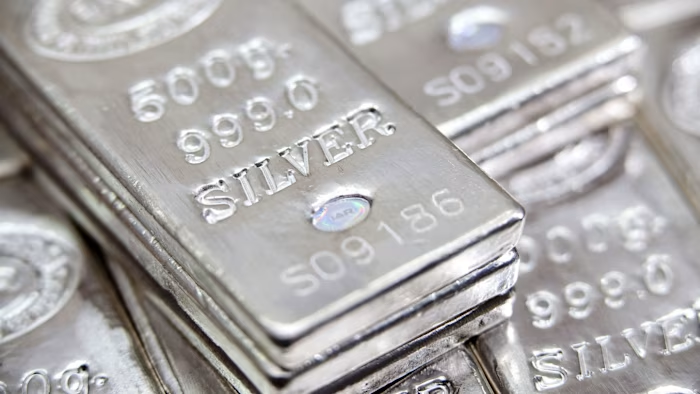
  • Silver price tumbles as record-breaking rally goes into reverse

    Silver price tumbles as record-breaking rally goes into reverse

    Stay informed with free updates

    Silver prices tumbled on Monday, dragging down gold and other precious metals, as a record-breaking rally went abruptly into reverse. 

    Spot silver prices fell 9 per cent by late-afternoon trading to just under $72 a troy ounce, on track for their biggest one-day fall since the Covid pandemic, reversing the gains it had made during the thinly traded Boxing Day session. 

    The decline spilled over into gold, which slid more than 4 per cent to just above $4,300, dragging it down from the string of record highs it had reached in recent sessions. 

    Traders said the move reflected both profit-taking after a strong run, and a reaction to a notice issued by CME on December 26 indicating that margin requirements for a range of metal futures contracts, including silver and gold, are set to rise after the close on December 29. The higher margins raise the cost of holding leveraged positions, prompting some traders to pare back exposure. 

    Rushabh Amin, a multi-asset portfolio manager at Allspring Global Investments, said a combination of the higher margin requirements, thin liquidity, and other factors were “working against not just silver but bleeding into other precious metals”. 

    “This is not a blow-off top, per se, but a very strong consolidation,” he added, referring to a market term for a steep drop that follows a speculative surge.

    The sell-off followed a record rally in the metal, as investors moved into haven assets as a refuge against geopolitical tensions and worries over the debasement of traditional currencies such as the US dollar. Spot prices breached $80 per ounce for the first time in early trading on Monday, from $50 as recently as November. 

    Analysts have seen signs of a speculative bubble in precious metals, as a rush of investor interest comes into asset classes with a constrained level of supply. The metals have also been boosted by US interest rate cuts that have sapped the relative attractiveness of dollar assets. 

    Ole Hansen, head of commodity strategy at Saxo Bank, said silver’s rally had become “parabolic”, leaving the market vulnerable as margin requirements, while rising, remained low by historical standards.

    In a sign of growing attention on silver’s surge, Elon Musk wrote on X on December 26 that higher prices were “not good”, citing the metal’s widespread industrial use. 

    In a December 29 note, UBS said gold’s surge had been driven in part by “seasonal liquidity” and demand for real assets, warning that prices were trading at an “elevated premium” after the metal’s strongest year since 1979. 

    Continue Reading

  • China’s 2026 Tariff Schedule Targets High-Tech, Healthcare Sectors

    China’s 2026 Tariff Schedule Targets High-Tech, Healthcare Sectors

    China’s State Council has issued the Tariff Adjustment Plan for 2026, updating import and export tariffs on a range of goods and adding new tariff lines to the schedule. The 2026 plan focuses on the development of key industries, in particular those related to high-end technology, the green transition, and healthcare, while upholding the country’s commitments under existing free trade agreements.


    The State Council Tariff Commission (SCTC) has released the updated tariff schedule for 2026, implementing new provisional tariff reductions and adjusting tariff lines in efforts to boost development in focus industries and support domestic provision of key services.

    The 2026 tariff schedule includes tariff reductions on critical components and materials related to advanced and emerging technologies, renewable energy, and healthcare in particular. Meanwhile, most-favored nation (MFN) tariffs for certain imports previously granted tariff reductions have been restored in response to changing supply and demand in domestic industries.

    The new tariff schedule will be implemented from January 1, 2026.

    Explore vital economic, geographic, and regulatory insights for business investors, managers, or expats to navigate China’s business landscape. Our Online Business Guides offer explainer articles, news, useful tools, and videos from on-the-ground advisors who contribute to the Doing Business in China knowledge.
    Start exploring

    Overview of China’s 2026 Tariff Adjustment Plan

    • Tariff schedule adjustments: In 2026, China’s tariff schedule covers 8,972 product categories, 12 more than in 2025.
    • Provisional import tariff rates: From January 1, 2026, 935 product categories will be subject to provisional import tariffs that are lower than most favored nation (MFN) rates.
    • Tariff reductions: In 2026, China will continue to lower tariff rates on goods entering the country to support the development of new quality productive forces, enhance people’s livelihoods, expand high-level opening up, and promote high-quality development.
    • Tariff increase: From January 1, 2026, import tariffs on some commodities will be raised to enhance the productivity of domestic industries in response to changes in domestic supply and demand. Examples include micro motors, printing machines, and sulfuric acid.
    • Conventional tariff rates: Conventional tariff rates will be applied to imported goods originating from 34 countries or regions covered by China’s 24 free trade agreements (FTAs) and preferential trade arrangements.
    • Preferential tariff treatment: China will continue to grant zero-tariff treatment to 43 least-developed countries with which it has established diplomatic relations. At the same time, preferential tariffs will continue to be applied to some imported goods originating in Bangladesh, Laos, Cambodia, and Myanmar.
    • Tariff structure updates: To serve scientific and technological progress, the development of the circular economy, and the development of the under-forest economy, new tariff lines and descriptions have been added to the tariff schedule.
    • Tariff quota: Tariff quota management will continue to be implemented on eight categories of commodities: wheat, corn, rice, sugar, wool, wool top, cotton, and fertilizer. Tax rates on these commodities remain unchanged.
    • Export tariffs: Export tariffs will continue to be imposed on 107 commodities, including ferrochrome, 68 of which are subject to provisional export tariff rates.

    Tariff adjustments in 2026

    Tariff reductions

    In 2026, China will implement provisional tariff reductions on 935 categories of goods, with new tariff adjustments made to “enhance the synergy between domestic and international markets and resources, and to expand the supply of high-quality goods”. The reductions particularly seek to benefit the development of innovative and emerging technologies – the “new quality productive forces” – and to improve the quality of life in China, in particular by lowering the cost of access to high-quality healthcare services.

    Find Business Support

    As such, many of the new tariff reductions target key components for emerging technologies, with tariffs reduced on products for use in advanced materials, aviation, lithium-ion batteries, renewable energy, and semiconductors, including CNC hydraulic air cushions, carbon fiber prepreg, recycled black powder, and unroasted pyrite.

    Additionally, tariffs have been reduced on a range of healthcare products, including artificial blood vessels, formulated diagnostic kits for sexually transmitted diseases, and angular contact ball bearings for medical devices, among others.

    Tariff increases

    Starting January 1, 2026, China will also restore MFN rates on certain products that previously enjoyed reduced tariffs, in order to enhance the productivity of domestic industries based on changes in domestic industrial development and supply and demand. These include restoring the MFN rates for imports of commodities such as micro motors, printing machines, and sulfuric acid.

    Tariff reductions under FTAs

    Special tariff rates negotiated through FTAs will continue to be applied to certain imported goods originating from the 34 trading partners that are covered by China’s 24 FTAs and preferential trade arrangements. 

    Further tariff reductions will be implemented in accordance with the FTAs between China and the following countries:

    • New Zealand
    • Peru
    • Switzerland
    • South Korea
    • Australia
    • Pakistan
    • Mauritius
    • Cambodia
    • Nicaragua
    • Ecuador
    • Serbia
    • The Maldives
    • The Regional Comprehensive Economic Partnership (RCEP)

    Additionally, existing preferential tariff rates will continue to be applied to relevant imported goods, including rates implemented under:

    • The FTAs between China and ASEAN, Chile, Singapore, Georgia, Iceland, and Costa Rica;
    • The early harvest arrangement of the FTA between China and Honduras;
    • The Closer Economic Partnership Arrangement (CEPA) between the Mainland and Hong Kong and Macao;
    • The Cross-Strait Economic Cooperation Framework Agreement (ECFA); and
    • The Asia-Pacific Trade Agreement.

    Addition of new tariff items

    The number of tariff lines will be increased from 8,960 in 2025 to 8,972 in 2026, with additions serving to enhance scientific and technological development and support the development of the circular economy and under-forest economy. The new additions include intelligent biomimetic robots (as well as other robots), bio-aviation kerosene, and under-forest ginseng.

    In addition to the new tariff items, updated descriptions have been provided for wild ginseng, forest ginseng, biodiesels, and intelligent bionic robots.

    Understanding the China’s 2026 tariff schedule

    Bolstering technological self-reliance

    The SCTC states that one of the intents of the tariff reductions is to “promote high-level technological self-reliance and the construction of a modern industrial system”, reflecting China’s ongoing efforts to bolster self-reliance in core technologies, such as semiconductors, as well as modernize and move its traditional industries up the value chain.

    Find Business Support

    The new tariff schedule therefore temporarily reduces tariffs on goods that are essential for the production of advanced materials, such as CNC hydraulic air cushions for presses, for which the tariff has been reduced from 12 percent to 6 percent, and irregularly shaped composite contact strips, for which the tariff will be lowered from 8 percent to 5 percent. Additionally, duties on carbon fiber prepregs for use in aircraft have been lowered from 17 to just 5 percent, in an effort to enhance the competitiveness of China’s aircraft construction industry.

    Tariff reductions also extend to specialised equipment used in semiconductor manufacturing, including constant temperature and humidity control devices for coating and developing machines. By lowering import costs for such equipment, the authorities aim to ease constraints in upstream manufacturing processes while domestic capabilities continue to be developed.

    The tariff reductions thereby seek to enhance the development of key industries in which China is seeking to bolster its competitiveness and self-reliance, notably aircraft building and semiconductors, two strategically important areas in which it is still reliant on imports.

    Supporting the green transition

    The second target of the tariff reductions according to the SCTC is to support the “comprehensive green transformation of economic and social development”. As such, tariffs on resource-based commodities that are essential for the production of batteries, namely recycled black powder for use in lithium-ion batteries (for which the tariff has been reduced from 6.5 percent to 3 percent) and unroasted pyrite (further reduced from 1 percent in 2025 to 0 percent in 2026). Tariff reductions for a range of other battery materials and components remain in place from previous years.

    China is massively expanding its renewable energy capacity and output, with plans to continue this expansion in the years to come under its dual carbon targets and its carbon reduction commitments set out in its Nationally Determined Contributions (NDCs) announced in September 2025. In its NDCs, China has targeted to increase the installed capacity of wind and solar power generation to six times its 2020 levels by 2035, while striving to reach 3,600 GW. Additionally, it aims to make electric vehicles the “main driver” of new vehicle purchases.

    Meeting these targets will require sustained, large-scale investment across the clean-energy value chain, particularly in battery manufacturing and energy storage. By lowering tariffs on key upstream inputs, China is seeking to reduce production costs, mitigate supply bottlenecks, and support the domestic scaling of strategic green industries, while also maintaining access to global supply chains at a time of heightened international competition in clean-tech manufacturing.

    Improving healthcare provisions

    Continuing one of the priorities set out in the 2025 tariff adjustment schedule, China will further reduce tariffs on selected medical equipment and healthcare-related materials in an effort to improve healthcare standards and overall quality of life. The latest reductions focus on both advanced medical devices and diagnostic inputs, reflecting an emphasis on improving access to high-quality treatment and disease detection.

    Key tariff cuts include artificial blood vessels, for which tariffs have been reduced from 4 percent to 2 percent, as well as pre-prepared diagnostic reagent kits used to detect hepatitis A, B and C viruses, HIV, and Treponema pallidum (syphilis), which will see tariffs fall from 3 percent to zero. In addition, tariffs on specialised angular contact ball bearings for medical equipment have been halved from 8 percent to 4 percent.

    These reductions signal a continued policy focus on lowering the cost of advanced medical technologies and critical diagnostics, supporting both healthcare providers and patients. They also underline China’s broader objective of upgrading its healthcare system through improved access to high-end imported components and materials, while complementing domestic efforts to move up the medical manufacturing value chain.

    Significance of the addition of new tariff lines

    Beyond adjustments to existing tariff rates, the additions of new tariff lines also closely align with China’s evolving industrial and development priorities, particularly in advanced technologies, the circular economy, and rural economic revitalization.

    Find Business Support

    For instance, the addition of wild and under-forest ginseng underscores a policy priority that has been increasingly emphasized as part of China’s broader rural revitalization strategy. Developing the under-forest economy, which encompasses economic activities conducted beneath forest canopies, such as the cultivation of medicinal herbs and specialty agricultural products, was explicitly highlighted in the recommendations for the 15th Five-Year Plan. The new additions therefore reflect efforts to standardise classifications, improve regulatory oversight, and support the scaling and commercialization of high-value forest-based products (under-forest ginseng will now be subject to a 20 percent MFN tariff). This, in turn, aligns with broader objectives to raise rural incomes, improve land-use efficiency, and promote more sustainable models of agricultural development.

    The inclusion of bio-aviation kerosene, as well as other aviation kerosene, suggests an effort to better differentiate fuels within the tariff framework and to accommodate the development and use of alternative and lower-carbon aviation fuels. This reflects China’s longer-term ambitions to reduce emissions in hard-to-abate sectors such as aviation, while supporting the development of more resource-efficient and sustainable energy pathways.

    Finally, the addition of tariff lines for intelligent biomimetic robots underscores China’s ambitions in emerging and advanced technologies. Robotics has been identified as a key component of China’s push to develop new quality productive forces, with applications spanning manufacturing, healthcare, logistics, and environmental monitoring. By explicitly recognizing intelligent biomimetic robots within the tariff schedule and refining the definitions for intelligent bionic robots, China is signalling a desire to better accommodate technological advances and support domestic innovation and industrial upgrading.

    About Us

    China Briefing is one of five regional Asia Briefing publications. It is supported by Dezan Shira & Associates, a pan-Asia, multi-disciplinary professional services firm that assists foreign investors throughout Asia, including through offices in Beijing, Tianjin, Dalian, Qingdao, Shanghai, Hangzhou, Ningbo, Suzhou, Guangzhou, Haikou, Zhongshan, Shenzhen, and Hong Kong in China. Dezan Shira & Associates also maintains offices or has alliance partners assisting foreign investors in Vietnam, Indonesia, Singapore, India, Malaysia, Mongolia, Dubai (UAE), Japan, South Korea, Nepal, The Philippines, Sri Lanka, Thailand, Italy, Germany, Bangladesh, Australia, United States, and United Kingdom and Ireland.

    For a complimentary subscription to China Briefing’s content products, please click here. For support with establishing a business in China or for assistance in analyzing and entering markets, please contact the firm at china@dezshira.com or visit our website at www.dezshira.com.
     

    Continue Reading

  • 3M to debut AI-powered assistant ‘Ask 3M’ and expanded 3M Digital Materials Hub at CES 2026

    3M to debut AI-powered assistant ‘Ask 3M’ and expanded 3M Digital Materials Hub at CES 2026

    3M to debut AI-powered assistant ‘Ask 3M’ and expanded 3M Digital Materials Hub at CES 2026

    New generative tool and capabilities can accelerate customer-centric innovation, enable creation of previously nonexistent materials

    ST. PAUL, Minn., Dec. 29, 2025 /PRNewswire/ — 3M (NYSE: MMM) today announced two digital innovations that will accelerate customer design workflows:

    • Ask 3M, a new AI-powered digital assistant that helps customers find solutions to design challenges using 3M’s vast portfolio of adhesives and tapes
    • An expanded 3M Digital Materials Hub, which enables direct collaboration with 3M scientists through the Workbench feature and powers virtual materials sampling for generative solutions that don’t yet exist

    To speed the introduction of solutions for 3M customers, these tools leverage generative AI, advanced modeling, and simulation-ready data cards, empowering users to design and digitally validate materials before investing in physical prototypes. 

    “At 3M, we’re combining decades of material science with AI so engineers can make better decisions, faster,” said Holly Semerad, chief marketing officer for 3M’s Safety & Industrial Business Group. “Together, Ask 3M and the 3M Digital Materials Hub allow customers of varying scope and scale to move from design challenge to solution concept then digital selection and simulation in minutes. We can further accelerate the testing timeframe with small quantity purchase options for final and confident prototyping.”

    At launch, Ask 3M will be piloted to engineers solving bonding design challenges utilizing tapes and adhesives—largely within 3M’s Safety & Industrial Business Group. Leveraging Amazon Web Services’ (AWS) secure and scalable AI capabilities, including Amazon Bedrock and AgentCore, Ask 3M and the 3M Digital Materials Hub demonstrate how agentic AI and advanced simulation can help 3M customers accelerate innovation cycles, reduce prototyping costs, and bring better products to market faster. Powered by AWS, the AI assistant guides users through substrates, environmental conditions, assembly methods, and performance targets to recommend suitable options, helping teams move from problem to product-fit more quickly.

    The expanded 3M Digital Materials Hub, which launched in early 2025, will now include Optical Models, which represent 3M optical film performance for use in common simulation environments. Engineers in automotive, consumer electronics, and advanced manufacturing can quickly assess optical behaviors and material tradeoffs earlier in the process, reducing iterations and enabling faster decision-making. In a pilot with select customers, engineers reported that the tool enables seamless use of 3M materials into virtual simulations, accelerating prototyping and design.

    In addition to these capabilities, the expanded platform also enables customers to request bespoke virtual materials—ones that solve their specific design challenges but don’t yet exist. It does this by leveraging 3M’s decades of material science and engineering expertise, which means the path to create these unique solutions is already in place and 3M can accelerate their development and delivery.

    “With these platforms, 3M is redefining how engineers discover, evaluate, and simulate materials,” said Jason Langfield, 3M Digital Materials Hub project lead. “By drawing on 3M’s deep technological and application expertise, we can deliver secure, scalable access to mechanical models, optical models and virtual materials, while helping our customers reduce iterations, accelerate decisions, and bring better solutions to market faster.”

    3M will showcase these solutions as part of its exhibition at CES 2026, located at Booth #8505 in the North Hall of the Las Vegas Convention Center. To learn more, or to schedule a meeting at CES, please email CES-3M@mmm.com.

    For more information on 3M’s presence at CES, visit https://news.3m.com/CES.  

    About 3M 
    3M (NYSE: MMM) is focused on transforming industries around the world by applying science and creating innovative, customer-focused solutions. Our multi-disciplinary team is working to solve tough customer problems by leveraging diverse technology platforms, differentiated capabilities, global footprint, and operational excellence. Discover how 3M is shaping the future at 3M.com/news. 

    SOURCE 3M Company

    Continue Reading

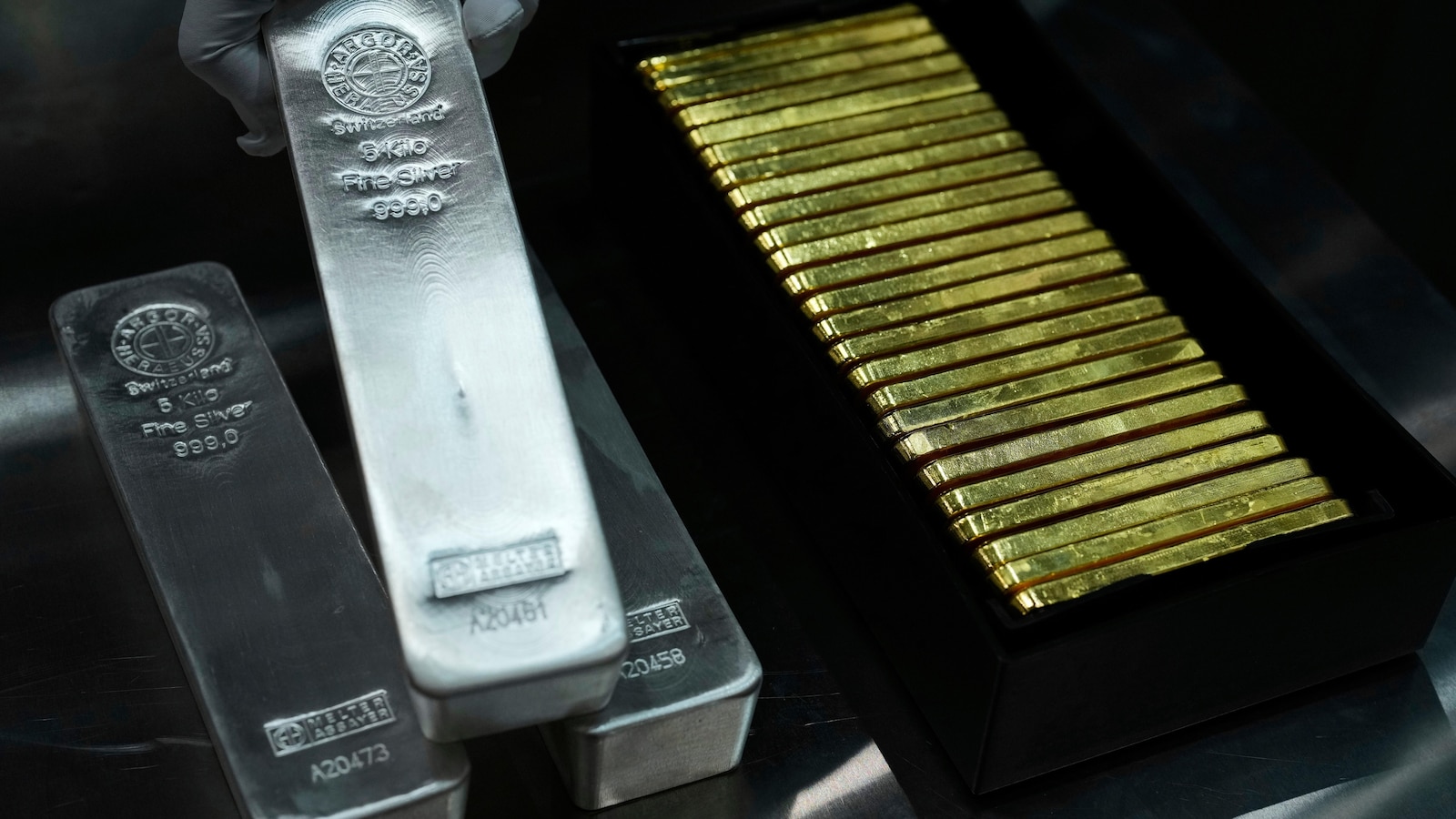
  • Surging silver and gold slide after CME raises margin requirements

    Surging silver and gold slide after CME raises margin requirements

    Silver and gold futures are falling sharply after the Chicago Mercantile Exchange, one of the world’s largest trading floors for commodities, required traders to put up more cash to invest in precious metals

    NEW YORK — Silver and gold futures fell sharply Monday after the Chicago Mercantile Exchange, one of the world’s largest trading floors for commodities, asked traders to put up more cash to make bets on precious metals with prices surging this year.

    This year, gold futures are up 65% and silver has more than doubled.

    The CME raised margin requirements for gold, silver and other metals in a notice posted to the exchange’s website Friday. These notices require traders to put up more cash on their bets in order to insure against the possibility that the trader will default when they take delivery of the contract.

    Exchanges sometimes boost margin requirements when a commodity or other security goes on a significant run. In its notice, the CME said it was raising margin requirements “per the normal review of market volatility.”

    Silver futures tumbled 8% early Monday while gold slid 5%

    Silver prices have skyrocketed this year, topping records dating back to the early 1980s when traders tried and failed to corner the silver market. Supplies have dwindled, with production at major mines slowing. At the same time there’s been an increased industrial need for silver for solar panels as well as data centers.

    Silver futures were roughly $30 an ounce at the beginning of 2025, and briefly touched $80 an ounce before the CME’s announcement.

    Gold futures have risen due in part to geopolitical uncertainty and fears that a bubble is forming in some stock markets. Silver is sometimes referred to among investors as the “poor man’s gold” because it trades in similar patterns as gold for a fraction of the price. But unlike gold, silver has more industrial applications so it tends to more volatile and more exposed to economic cycles.

    Continue Reading