Category: 3. Business

  • Policy brief: ambient AI scribes and the coding arms race

    Ambient AI scribes—digital tools that listen to clinician–patient encounters and draft clinical notes—have moved from pilot projects into mainstream use at many large health systems. These tools promise to relieve physicians of tedious documentation and have shown early success in reducing burnout and after-hours “pajama time.” Independent evaluations confirm reductions in cognitive load and burnout1,2.

    Yet adoption is no longer driven solely by well-being. The business case increasingly centers on revenue capture through more intensive coding. Ambience Healthcare’s July 2025 funding announcement, for instance, described its platform as “the leading ambient AI system for documentation, coding, and clinical documentation integrity,” highlighting how it “drives revenue-cycle performance”3. This language marks a clear pivot from earlier messaging about saving doctors time, signaling that ambient AI is now positioned as both a burnout remedy and a revenue engine—a shift that raises important questions about who ultimately benefits.

    Competitive forces are accelerating this transition (Table 1). Doximity’s release of a free AI scribe signals that basic transcription is commoditizing4, shifting differentiation “after the transcript”—to how well products structure documentation that supports compliant, higher-complexity coding and comprehensive problem lists. Riverside Health in Virginia saw an 11% rise in physician work relative value units (wRVUs) and a 14% increase in documented Hierarchical Condition Category (HCC) diagnoses per encounter5. Northwestern Medicine clinicians using Nuance DAX billed more high-level Evaluation and Management (E/M) visits on average6, and a 2024 Texas Oncology study found that ambient scribes increased documented diagnoses from 3.0 to 4.1 per encounter7.

    Table 1 Selected ambient AI scribe systems in current use

    Collectively, these findings suggest that while ambient AI remains framed publicly as a tool for efficiency and burnout relief, its economic implications are increasingly difficult to ignore. It is against this backdrop that we compare how ambient scribes interact with U.S. fee-for-service and Medicare Advantage payment models (summarized in Table 2).

    Table 2 Payment models explained

    Divergent incentives in fee-for-service and Medicare Advantage

    This emerging revenue narrative raises two questions. First, can ambient AI improve the fidelity of documentation without distorting clinical priorities? Existing payment systems already influence clinical priorities and documentation, even without AI; the concern is whether ambient scribes amplify, mitigate, or reconfigure those distortions. Second, even if health systems see a short-term revenue bump, what happens once payers respond? Because incentives differ by payment model, we contrast Medicare Advantage (MA) and fee‑for‑service (FFS)—including U.S. Original Medicare Parts A and B—as illustrative examples (Table 2), noting that analogous distinctions between per‑encounter payment and risk‑adjusted capitation exist in other health systems as well.

    On the first question, potential rises in wRVUs or HCCs do not necessarily mean upcoding; they often reflect previously omitted details now captured. From the provider’s viewpoint, capturing all legitimate billing complexity also helps offset the cost of ambient AI subscriptions. In the absence of direct reimbursement pathways, accurate coding becomes essential for sustaining adoption. Under-documentation is common: busy clinicians omit longstanding conditions, understate decision complexity, or skip the specificity coding rules require. Hospitals have long used electronic health record tools—such as Epic’s Best Practice Advisories (BPAs)—to remind clinicians to add diagnoses for risk adjustment8. At the policy level, the American Medical Association’s (AMA) Digital Medicine Payment Advisory Group is advising on coding and payment pathways for AI—including ambient AI scribes—and, given that practice expense is a major RVU component under AMA’s Resource-Based Relative Value Scale (RBRVS), how these costs are classified has become an important question for reimbursement design. From a payment perspective, ambient AI interacts with FFS and MA in different ways for providers and plans. In FFS (including Original Medicare and commercial fee-for-service), richer documentation tends to support higher-level E/M codes and additional billable services, so the revenue effect flows directly to clinicians and health systems. In MA, richer documentation primarily increases the plan’s risk-adjusted capitation payments by raising members’ risk scores; providers benefit only if their contracts with the plan share in that additional revenue (e.g., through capitation, shared savings, or risk- and quality-based bonuses).

    What we mean by “upcoding” differs by market. In MA and other capitated, risk-adjusted arrangements, upcoding means documenting additional diagnoses (often HCCs) that raise risk scores and, in turn, payments to plans and—where contracts pass through some of that revenue—sometimes to providers. In FFS, it means billing a higher E/M level or more services based on documented complexity. Ambient AI can facilitate both: more complete diagnosis capture in MA and more support for higher-level E/M coding in FFS. Similar dynamics exist in DRG-based hospital payment, where more detailed documentation can shift discharges into higher-weighted DRGs. Related dynamics appear in other systems that adjust payments based on coded diagnoses or activity—for example, primary care commissioning in the English NHS—although the magnitude of payment differences and the scope for ambient scribes to shift revenue may be smaller.

    Payer responses and long-run equilibrium

    The second question is where policy meets economics, especially in MA, where risk scores are tied to payments to plans. More complete documentation initially boosts risk‑adjusted capitation payments for MA plans, but regulators quickly adjust risk‑score formulas. As adoption widens, the financial advantage erodes and may even raise premiums for all. MA already applies coding intensity adjustments; if AI accelerates diagnostic capture, those offsets—and other countermeasures—will likely deepen. Evidence shows in-home risk assessments and chart reviews raise risk scores and payments—the patterns that prompted CMS to institute coding intensity adjustments9. Whether providers share in any temporary revenue gain depends on how they are paid by the plan—pure FFS contracts may see little direct impact, whereas capitated or shared-savings arrangements can transmit plan revenue gains to clinicians and health systems. If more complete documentation also prompts earlier or more appropriate treatment—for example, more proactive management of chronic conditions that are now reliably captured—ambient scribes could contribute to better outcomes and, in value‑based or prevention‑oriented systems, potentially lower long‑run costs rather than simply higher near‑term payments.

    Payer responses will also play out in provider contracts. In FFS arrangements, health plans can tighten audits, deploy automated E/M downcoding tools, or cut base rates at renegotiation to offset documentation‑driven level increases, especially when outcomes do not improve. For example, starting in October 2025, Cigna began automatically reducing many level 4–5 E/M claims by one level unless documentation clearly supports higher complexity10, and Aetna Better Health has applied similar reviews11. Some providers may thus face blended effects: a near-term bump from richer documentation, followed by across-the-board offsets (in capitated programs) and contract-level rate recalibration (in FFS). In either case, late adopters may end up missing the temporary upside yet practicing under a lower baseline set after everyone else’s gains have been priced in.

    Who pays? Who gains?

    Who ultimately pays for the potential rise in payments driven by ambient scribe technology? In the case of MA, taxpayers fund higher risk-adjusted payments to plans—and, where revenue is shared, to providers—until CMS adjustments catch up; in commercial FFS markets, employers and workers bear higher premiums until plans lower fees or downcode. Non-adopters may experience relative losses during the transition if baseline rates fall in response to industry-wide coding intensity. Vendors will have winners and losers; the winners will profit from subscription revenue and accumulated data assets. For clinicians and patients, the promise persists: less pajama time and a record that better reflects the encounter. The unresolved question is whether better coding translates into better care.

    Distributional implications deserve attention. Large systems with integration teams, clinical documentation integrity (CDI) staff, and capital budgets can adopt and tune these tools fastest. Safety-net clinics and small practices may lag, either because subscription and workflow costs are real or because they are wary of compliance exposure. If baseline rates adjust downward while sophisticated adopters keep finding compliant documentation gains at the margin, the gap between resourced and under-resourced providers could widen. MA-heavy safety-net practices may be especially exposed: coding-intensity adjustments could claw back recent gains, leaving late adopters worse off. That is not an argument to halt adoption; it is a case for pairing diffusion with guardrails and targeted support.

    Governance and policy guardrails

    What should those guardrails be? First, physicians and health systems must retain authorship: disable auto-accept and require active review of diagnoses and billing elements. Random audits comparing audio to signed notes can check drift toward “chart-stuffing.” Second, policymakers and large health systems could require transparency about AI-drafted content and certify tools that meet documentation quality standards. Such guardrails would protect against excessive note inflation while supporting appropriate use. Third, clinicians evaluating vendors should evaluate vendor claims against clinical and operational endpoints, not higher E/M levels or HCC capture. Fourth, health systems should exercise contract and pricing discipline: avoid overpaying in a race to match competitors; include clawbacks if payer offsets occur; protect data rights and avoid vendor lock-in; and benchmark against low-cost scribing to ensure one is paying for value beyond transcription. Fifth, clinicians in direct contact with patients should be transparent with patients. A clear, nontechnical disclosure that an AI assistant records to help the clinician document the visit—and that the clinician reviews and controls the note—can protect trust without derailing care12. Finally, payers and policymakers should align oversight with value. Audits should test medical necessity; in capitated programs, recalibrate risk models so payments track patients’ true need.

    Ambient AI collapses the distance between care and coding more completely than any prior documentation tool. If revenue optimization becomes its defining purpose, we risk repeating a familiar cycle—an arms race that ends with higher administrative friction, payer pushback, and little improvement at the bedside. The equilibrium is still in flux. In the near term, some systems will capture real revenue gains; in time, commoditization and payer countermeasures will erode those advantages. Rather than accept a payer–provider standoff, regulators could make downcoding criteria transparent and appealable, while setting clear rules for AI-generated notes. Focused audits should target truly unjustified upcoding without penalizing completeness. These steps would align ambient AI with value-based care rather than a coming coding arms race.


    Continue Reading

  • Bin collection dates and recycling over the Christmas period – Eastleigh Borough Council

    1. Bin collection dates and recycling over the Christmas period  Eastleigh Borough Council
    2. South Kesteven District Council issues Christmas recycling tips  BBC
    3. Recycle right this Christmas: what to do with wrapping paper  brcnow.bundaberg.qld.gov.au
    4. Make Christmas as waste free as possible  South Lanarkshire View
    5. So. Much. Wrapping. Recycle responsibly this Christmas  Bay Post-Moruya Examiner

    Continue Reading

  • Report 10/2025: Derailment of a freight train at Audenshaw

    Report 10/2025: Derailment of a freight train at Audenshaw


    Request an accessible format.

    If you use assistive technology (such as a screen reader) and need a version of this document in a more accessible format, please email enquiries@raib.gov.uk. Please tell us what format you need. It will help us if you say what assistive technology you use.

    Audenshaw video

    Summary

    At about 11:25 on 6 September 2024, a freight train derailed as it crossed a bridge that carries the railway over a public footpath in Audenshaw, Greater Manchester. The derailment involved 9 of the train’s 24 fully laden wagons and led to extensive damage to the track, the bridge and some of the wagons. No one was injured during the accident, but the railway at this location was closed for around 8 weeks, while repairs were undertaken.

    The derailment occurred due to a loss of restraint of the track gauge between the rails. This caused the wagons’ wheels on the right-hand side to drop from the rail into this widening space.

    The railway tracks over the bridge were installed on a longitudinal bearer system (LBS). An LBS is a track support arrangement in which the rails are mounted on timber bearers that run longitudinally under the rails and not on sleepers and ballast, as is typically found on the railway. The rails are mounted using baseplates, which are screwed onto the bearers.

    The spread of the track’s gauge was caused by the failure of a number of the screws securing the baseplates to the longitudinal wooden bearers. Subsequent metallurgical examinations showed that these screws had sustained fatigue damage before the arrival of the train. RAIB examinations of a section of the LBS recovered from site found that there had been previous screw failures at the same locations. Records of inspection and maintenance activities confirmed that there had been at least three previous failures, with one occasion known to have been before 2020, although many of the required records were not available.

    Vehicle dynamics analysis and fatigue calculations carried out by RAIB during this investigation showed that these screws were not expected to have an infinite fatigue life when installed in the configuration used on the bridge, even though the forces from trains on the track were below the maximum limits stated in Network Rail standards. The LBS was installed in 2007 and an increase in the volume of traffic over the bridge since 2015 had accelerated the rate of fatigue of the screws.

    The investigation also found that those screws which had failed, or were failing before the passage of the train, had not been detected by Network Rail’s inspection regime. This was because both the automated and manual inspection regimes were not capable of reliably detecting this type of failure. RAIB also found that the regular dynamic track geometry measurements were within the allowable limits in standards, so no further action was mandated. It further found that the significance of previous screw failures had not been appreciated by those responsible for inspecting and maintaining the LBS at this bridge.

    There were two underlying factors. Network Rail did not have effective processes for managing LBS assets, in regard to their design assurance, installation, inspection and maintenance.

    RAIB also found that the track team in the maintenance unit responsible for the LBS at this bridge had neither recorded, nor reported, previous screw failures, and this had not been identified nor corrected by Network Rail’s assurance regime over a period of years.

    Recommendations

    RAIB has made eight recommendations to Network Rail. The first recommendation aims to give greater assurance of the components used in its designs of LBS. The second recommendation is to improve its management of LBSs, including design, installation and maintenance guidance, and the reporting of component failures. The third recommendation deals with the competence of staff who manage those assets.

    The fourth recommendation is for Network Rail to improve the interfaces between the two disciplines responsible for the track and structures assets to better manage them. The fifth recommendation is for Network Rail to better understand the effects from the condition of the LBS supporting structure on the track’s behaviour.

    The sixth recommendation is for Network Rail to review the way in which it assesses the effects of changes in rail traffic on its LBS assets and to consider any subsequent necessary changes in design, inspection or maintenance activity.

    The seventh recommendation is to improve its records of its LBS assets, ensuring that it knows the configurations of its LBS assets nationwide.

    The eighth recommendation is for Network Rail to improve its own assurance processes for LBS assets to ensure that staff are keeping accurate records of inspection and maintenance activities.

    Notes to editors

    1. The sole purpose of RAIB investigations is to prevent future accidents and incidents and improve railway safety. RAIB does not establish blame, liability or carry out prosecutions.

    2. RAIB operates, as far as possible, in an open and transparent manner. While our investigations are completely independent of the railway industry, we do maintain close liaison with railway companies and if we discover matters that may affect the safety of the railway, we make sure that information about them is circulated to the right people as soon as possible, and certainly long before publication of our final report.

    3. For media enquiries, please call 01932 440015.

    Newsdate: 24 December 2025

    Continue Reading

  • REMINDER: Changes to train services at London Waterloo over the Christmas period as Network Rail carry out major upgrades – Network Rail media centre

    1. REMINDER: Changes to train services at London Waterloo over the Christmas period as Network Rail carry out major upgrades  Network Rail media centre
    2. New Year services  Travel And Tour World
    3. West Coast Main Line work disrupts Milton Keynes/Northampton trains  BBC
    4. Changes to train services at London Waterloo over the Christmas period as Network Rail carry out major upgrades  railuk.com
    5. Travelling by Rail this Christmas and New Year in the UK? Have fun with that…  Economy Class & Beyond –

    Continue Reading

  • Most people say cash for Christmas is a good gift, poll finds : NPR

    Most people say cash for Christmas is a good gift, poll finds : NPR

    Still looking for a last-minute Christmas gift? A new poll finds that most people find cash or gift cards an acceptable holiday gift.


    STEVE INSKEEP, HOST:

    All right, you got one more shopping day before Christmas. For some people, it’s time to get started. If you’re still searching for a gift, you could take inspiration from this 1953 hit by Eartha Kitt.

    (SOUNDBITE OF SONG, “SANTA BABY”)

    EARTHA KITT: (Singing) Santa, baby, just slip a sable under the tree for me. Been an awful good girl.

    LEILA FADEL, HOST:

    If, however, you don’t want to splurge on a fur coat or a ’54 convertible or the deed to a platinum mine…

    INSKEEP: (Laughter).

    FADEL: …A poll from the Associated Press and the NORC Center for Public Affairs Research suggests most Americans think giving cash is just fine, which is my preferred gift.

    INSKEEP: Got it.

    MARJORIE CONNELLY: We asked a question on what people consider suitable or acceptable holiday gifts, and we gave them four options to say whether they thought they were acceptable or not acceptable.

    INSKEEP: We are listening to Marjorie Connelly, a senior fellow at AP-NORC. The poll found about 60% of Americans – 6 out of 10 – think cash is a very acceptable present. Only 6% think cash is very unacceptable. It was about the same for gift cards, although there is a generation gap.

    CONNELLY: We found that older people, they did not find that cash or gift cards were quite as acceptable as younger people. Younger people were very in favor of getting cash or gift cards.

    FADEL: OK, that tracks ’cause I give cash to all my nephews and nieces, and they love it.

    INSKEEP: There you go.

    FADEL: Connelly also warns how well cash or gift cards are received can depend on who’s giving.

    CONNELLY: If you’re getting the cash from, you know, your great-aunt or your grandmother, it’s one thing. I don’t know if I’d want to get cash from my boyfriend.

    INSKEEP: Ah, I see.

    FADEL: Yeah, that makes sense. The poll also finds that cash is preferable to another last-minute option – regifting. Just 22% of the respondents thought that was very acceptable.

    CONNELLY: If something’s very nice, and I think the other person would appreciate it, I think that would be OK. If it’s just something that’s junky, I’m just getting it – moving it out of my house, that’s another story.

    INSKEEP: (Laughter) Here’s something that’s more popular than regifting – giving an item bought secondhand. About 30% say that’s very acceptable, but again, the context matters.

    CONNELLY: I would give a secondhand item that maybe came from a really – like, a nice antique store as – not, like, a – you know, a junk store.

    FADEL: OK. So I guess a regifting closet is not a thing we should be doing.

    INSKEEP: Exactly not.

    Copyright © 2025 NPR. All rights reserved. Visit our website terms of use and permissions pages at www.npr.org for further information.

    Accuracy and availability of NPR transcripts may vary. Transcript text may be revised to correct errors or match updates to audio. Audio on npr.org may be edited after its original broadcast or publication. The authoritative record of NPR’s programming is the audio record.

    Continue Reading

  • N.L. nursing staffing crunch poses big risk to patients this holiday season, says union

    N.L. nursing staffing crunch poses big risk to patients this holiday season, says union

    Listen to this article

    Estimated 3 minutes

    The audio version of this article is generated by AI-based technology. Mispronunciations can occur. We are working with our partners to continually review and improve the results.

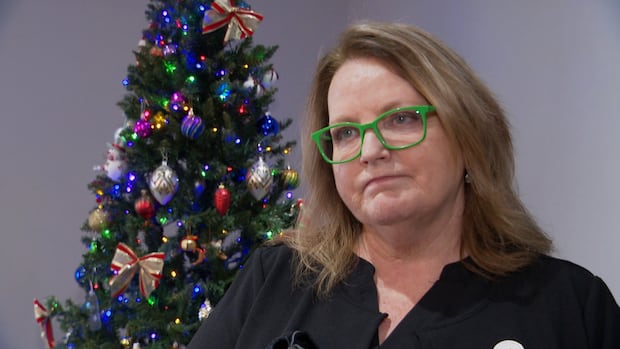
    Newfoundland and Labrador’s registered nurses’ union is calling on families to stay vigilant about the care of their loved ones who find themselves in the health-care system this holiday season.

    Yvette Coffey, president of the province’s registered nurses’ union, said the provincial health authority needs to end its reliance on mandatory overtime just to keep health-care services running.

    “It is a big, big potential for undue harm for the people who are in our care over this holiday season,” Coffey told CBC Radio’s On the Go.

    Coffey said the union and health authority were supposed to meet almost two weeks ago to discuss scheduling issues, which happened earlier this week.

    “If they had met with us on December 12, in early December, we wouldn’t be talking about that issue right now with an emergency department without any staff over Christmas,” Coffey said.

    According to Coffey, more than a dozen nurses were mandated to work overtime at Carbonear General Hospital last weekend. (Eddy Kennedy/CBC)

    If departments aren’t staffed, registered nurses will be mandated to work overtime. Last weekend in Carbonear, Coffey said more than a dozen people had to stay beyond their eight or 12 hour shifts.

    Coffey said once mandated for overtime nurses are asked to self-assess whether they are fit to practice or too exhausted.

    “They liken it to the RCMP pulling somebody over who they believe to be impaired and asking them whether or not they feel impaired. There is no external or independent judgement,” she said.

    CBC News asked NLHS for an interview on Tuesday but no one was immediately available.

    ‘Be diligent’

    Coffey also cautioned people who find themselves inside the health-care system over the holidays.

    “Come for care because the people who are working in that system are dedicated professionals,” she said.

    “But you also need to know that some of those nurses might be working 16, 20 or 24-hour shifts, and you need to be diligent, as well, in the care of your loved one.”

    Coffey said travel agency nurses aren’t readily available during the holidays, including the Christmas period. She added most travel nurses are from outside the province and they work for private agencies and aren’t invested in the province’s people or healthcare.

    “They have no allegiance to us,” she said.

    She wants the province to implement a provincial travel pool of nurses and said in January a briefing note will be sent to the provincial government to formally propose the provincial travel pool of nurses.

    In the meantime, Coffey said staff and patients may be at risk due to inadequate staffing.

    “Mandatory overtime for nurses means increased risk of injury, but for our patients it means increased risks of mistakes and undue harm.”

     Download our free CBC News app to sign up for push alerts for CBC Newfoundland and Labrador. Sign up for our daily headlines newsletter here. Click here to visit our landing page.

    Continue Reading

  • Baker McKenzie Advises UST on the Acquisition of a Majority Stake in Italdesign Giugiaro from Lamborghini | Newsroom

    Baker McKenzie Advises UST on the Acquisition of a Majority Stake in Italdesign Giugiaro from Lamborghini | Newsroom

    UST, a global technology transformation company headquartered in California, has signed an agreement to acquire a majority stake in Italdesign Giugiaro S.p.A., a historic automotive design and engineering firm that has helped shape the industry’s history.

    The current shareholder of Italdesign, Automobili Lamborghini — part of the Audi Group — will retain an equity interest.

    The Audi Group will remain a long-term strategic partner of Italdesign, ensuring continuity and collaboration in the areas that have defined the company’s reputation for over five decades.
    The transaction creates a strong partnership that combines UST’s expertise in automotive engineering, artificial intelligence, software-defined vehicle development and digital ecosystem design, with Italdesign’s deep knowledge in vehicle and industrial product design and engineering, prototyping, small-series production, and automotive electronics.

    Together, the companies will be able to offer a comprehensive and integrated portfolio of services — from initial concept and design through hardware and software development to production systems — to support the development of modern, digitally advanced vehicles.

    UST and Italdesign also intend to extend this integrated approach on a global scale. UST will enable Italdesign to expand its international presence through UST’s global network in more than 30 countries.

    Completion of the transaction is subject to regulatory approvals.

    Baker McKenzie assisted UST with a team led by Partner Paolo Ghiglione, supported by Partner Anna Marina De Vivo and Associate Giacomo Lamperti, who handled the corporate aspects of the transaction. The London team was led by UST relationship partner, Ash Tiwari, with support from Senior Associate Niraj Visani and associate Ambrose Teo.

    The Baker McKenzie team also included Senior Counsel Alessia Raimondo and Associate Nicolò Crespi for employment matters, Associate Francesca Montefusco for real estate, and Counsel Antonio Lattanzio for regulatory issues. Counsel Philipp Schuett and associate Hannah Mack managed the German law aspects.

    London corporate partner, Ash Tiwari, commented on the transaction: “It was fantastic to support UST on this exciting and important transaction which will enable the combined business to support the development of fully modern, digitally enabled vehicles and to extend this integrated approach to a global scale. We look forward to partnering with the UST team again.” 

    Linklaters advised the Audi Group


    Continue Reading

  • Treasury yields dip as stronger GDP data clouds rate path

    Treasury yields dip as stronger GDP data clouds rate path

    A trader works on the floor at the New York Stock Exchange (NYSE) in New York City, U.S., Dec.15, 2025.

    Brendan McDermid | Reuters

    U.S. Treasury yields declined on Wednesday as investors positioned for a shortened trading day ahead of the holidays.

    The 10-year Treasury yield — the benchmark for U.S. government borrowing — was more than 3 basis points lower at 4.134%. The yield on the 2-year Treasury note fell more than 1 basis point to 3.51%. The 30-year bond yield slipped more than 3 basis points to 4.794%.

    One basis point equals 0.01%, or 1/100th of 1%, and yields and prices move inversely to one another.

    On Wednesday, the Labor Department reported that jobless claims for the week ended Dec. 20 came in at 214,000, signifying a decrease from the prior week’s 224,000 and coming in less than the Dow Jones forecast for 225,000.

    Investors continued to digest delayed Commerce Department data that showed the U.S. economy grew by 4.3% in the third quarter — its fastest pace in two years. However, the stronger-than-expected number reported Tuesday potentially complicates the Federal Reserve’s path on interest rates.

    National Economic Council Director Kevin Hassett — one of the leading contenders to succeed Jerome Powell as Fed chair next year — told CNBC that the Fed remains “way behind the curve” on rate cuts compared with other countries’ central banks, and is not lowering rates quickly enough.

    His comments contrast with those of Cleveland Fed president Beth Hammack, who this past weekend said rates should be held at their current level for several months, as she believes inflation concerns still outweigh labor market weakness.

    According to the CME FedWatch Tool, a majority of investors now expect rates to remain on hold until April, at which point the Fed will resume reductions.

    Bond markets will close early at 2 p.m. on Wednesday and will be closed Thursday for Christmas Day.

    Continue Reading

  • Warwickshire County Council marks a Year of Progress and Partnership as 2025 draws to a close.

    Warwickshire County Council marks a Year of Progress and Partnership as 2025 draws to a close.

    As the festive season begins and 2025 comes to an end, Warwickshire County Council is reflecting on a year of achievement, resilience, and collaboration that has made a real difference to communities

    across the county. From responding to emergencies to investing in the future, this has been a year defined by partnership and progress. 

    The year began with challenges, as January’s severe flooding saw Warwickshire firefighters rescue 12 people stranded in floodwater. Alongside this, we launched the Public Health Annual Report, opened a state-of-the-art fire training facility, and approved vital investment in specialist resourced provisions. 

    Throughout the year, Warwickshire has embraced innovation and sustainability. Electric vehicles became part of our mobile library service, and we proudly hosted Stage 4 of the Lloyds Tour of Britain Men’s race. Alongside these achievements, we focused on strengthening communities, expanding transport links and celebrating local heroes whose acts of bravery and kindness remind us why Warwickshire is such a special place. 

    Young people have been at the heart of our work. From youth-led conferences and mental health podcasts to supported internships and work experience programmes, Warwickshire’s next generation has shaped the conversation and inspired change. We’ve also celebrated our rich heritage and culture, marking 200 years since the birth of the modern railway, restoring Chesterton Windmill’s sails, and hosting exhibitions and festivals that brought people together. A previously lost Tudor portrait of King Henry VIII was even discovered hanging on the walls in Shire Hall!  

    Economic growth and opportunity have remained a priority, with over 350 businesses benefitting from the Skills Escalator Fund and new plans approved to help more people into work. Major road improvements, new bus services, and ambitious regeneration projects have strengthened connectivity and laid the foundations for the future. 

    As part of our Christmas Advent Calendar campaign, we have been shining a light on these achievements and thanking everyone who played a part in making Warwickshire the best it can be. Together, we’ve shown that progress is possible when communities and partners unite. 

    Talking about the last year, Leader of Warwickshire County Council, Councillor Georger Finch said: 


    “This year has truly highlighted the strength and spirit of Warwickshire. Together, we’ve achieved incredible things, from supporting our most vulnerable residents to driving innovation, discovering history and shaping the future of our young people.  


    “As we look ahead to 2026, our commitment is unwavering, to make Warwickshire a place where everyone can live their best life. For now, I hope you’re able to take some time to relax and enjoy the festive season with your loved ones and friends. 


    “Wishing you all a very Happy Christmas and a prosperous New Year!” 

    To keep up with the latest news in 2026 follow us on social or visit our news site https://www.warwickshire.gov.uk/warwickshirenews Alternatively you can sign up to our weekly newsletter, Warwickshire Update to get all the latest information sent directly to your inbox. You can sign up to the newsletter here.  

    We’ll see you tomorrow for the final day of our Christmas countdown calendar!

    And make sure you follow us on social media – Facebook and Instagram 


    Continue Reading

  • Warwickshire County Council marks a Year of Progress and Partnership as 2025 draws to a close

    Warwickshire County Council marks a Year of Progress and Partnership as 2025 draws to a close

    As the festive season begins and 2025 comes to an end, Warwickshire County Council is reflecting on a year of achievement, resilience, and collaboration that has made a real difference to communities

    across the county. From responding to emergencies to investing in the future, this has been a year defined by partnership and progress. 

    The year began with challenges, as January’s severe flooding saw Warwickshire firefighters rescue 12 people stranded in floodwater. Alongside this, we launched the Public Health Annual Report, opened a state-of-the-art fire training facility, and approved vital investment in specialist resourced provisions. 

    Throughout the year, Warwickshire has embraced innovation and sustainability. Electric vehicles became part of our mobile library service, and we proudly hosted Stage 4 of the Lloyds Tour of Britain Men’s race. Alongside these achievements, we focused on strengthening communities, expanding transport links and celebrating local heroes whose acts of bravery and kindness remind us why Warwickshire is such a special place. 

    Young people have been at the heart of our work. From youth-led conferences and mental health podcasts to supported internships and work experience programmes, Warwickshire’s next generation has shaped the conversation and inspired change. We’ve also celebrated our rich heritage and culture, marking 200 years since the birth of the modern railway, restoring Chesterton Windmill’s sails, and hosting exhibitions and festivals that brought people together. A previously lost Tudor portrait of King Henry VIII was even discovered hanging on the walls in Shire Hall!  

    Economic growth and opportunity have remained a priority, with over 350 businesses benefitting from the Skills Escalator Fund and new plans approved to help more people into work. Major road improvements, new bus services, and ambitious regeneration projects have strengthened connectivity and laid the foundations for the future. 

    As part of our Christmas Advent Calendar campaign, we have been shining a light on these achievements and thanking everyone who played a part in making Warwickshire the best it can be. Together, we’ve shown that progress is possible when communities and partners unite. 

    Talking about the last year, Leader of Warwickshire County Council, Councillor George Finch said: 


    “This year has truly highlighted the strength and spirit of Warwickshire. Together, we’ve achieved incredible things, from supporting our most vulnerable residents to driving innovation, discovering history and shaping the future of our young people.  


    “As we look ahead to 2026, our commitment is unwavering, to make Warwickshire a place where everyone can live their best life. For now, I hope you’re able to take some time to relax and enjoy the festive season with your loved ones and friends. 


    “Wishing you all a very Happy Christmas and a prosperous New Year!” 

    To keep up with the latest news in 2026 follow us on social or visit our news site https://www.warwickshire.gov.uk/warwickshirenews Alternatively you can sign up to our weekly newsletter, Warwickshire Update to get all the latest information sent directly to your inbox. You can sign up to the newsletter here.  

    We’ll see you tomorrow for the final day of our Christmas countdown calendar!

    And make sure you follow us on social media – Facebook and Instagram 


    Continue Reading