Ferrycarrig Construction Pty Ltd has been fined $40,000 after a NSW Environment Protection Authority (EPA) investigation found the company supplied dozens of falsified waste dockets relating to works at the Sydney Metro Waterloo construction site.
The investigation was launched after a site auditor raised concerns with the EPA in May 2024. Further enquiries confirmed the forged records were supplied on four separate occasions in response to Sydney Metro Joint Venture’s (JV) repeated requests for proof of lawful disposal by the construction company.
EPA Executive Director Regulatory Operations Steve Beaman said the supply of falsified documentation is unacceptable.
“Our investigation into Ferrycarrig found that between September 2023 and April 2024, 68 falsified waste dockets were provided to the Sydney Metro joint venture, falsely claiming 990 tonnes of waste had gone to an approved facility,” Mr Beaman said.
“While there is no evidence in this case that waste was improperly disposed of, protecting the integrity of our waste tracking system is crucial and the EPA expects accurate and reliable record keeping at all times.
“Accurate waste records ensure transparency and traceability across the NSW waste sector and ensure that building waste is managed safely and lawfully.
“We will continue to monitor waste managed by this operator closely to ensure it is properly tracked and lawfully disposed of.”
The EPA issued four penalty notices, two statutory notices during the investigation, interviewed company representatives and relevant parties, and assessed a large volume of records before taking regulatory action.
As one of the flagship events of Türkiye’s entrepreneurship ecosystem, Global Expansion Day took place earlier this month under Garanti BBVA’s sponsorship. This year’s edition stood out for its broader international footprint, with official delegations and innovation-focused business development organizations from 15 countries in attendance. The event gave entrepreneurs direct access to an expanded global network, helping them forge meaningful cross-border connections.
Delegations from Japan, the United Kingdom, Italy, Spain, Germany, Switzerland, and Singapore were joined by prominent organizations including Techstars, GITEXS, Sistem Global, IGNITERS Tech Law, Garanti BBVA Partners, GIRVAK, and La French Tech. With this lineup, Global Expansion Day further strengthened its position as one of the region’s most effective platforms for boosting the international growth of Türkiye-based scale-ups.
The agenda featured opening remarks by Garanti BBVA Executive Vice President Ceren Acer Kezik, followed by contributions from Techstars MEA & APAC Partnerships Director Steven Kinvi, Prof. Canan Dağdeviren of MIT Media Lab, and other prominent figures from the entrepreneurship ecosystem. Discussions focused on global scaling strategies, innovation-led growth, and the role of strong international networks in helping startups compete globally.
An entrepreneurship journey spanning 20 years
According to Acer Kezik, Garanti BBVA views entrepreneurship not only as a driver of economic growth but also as a force for cultural transformation. She pointed to the bank’s nearly 20-year track record of supporting entrepreneurs from the idea stage through to global expansion, and said Global Expansion Day is designed to bring founders together with the right investors and strategic partners to support their international growth: “Our goal is to build the right connections to take entrepreneurs from the local market to the global stage.”
The executive also noted that Garanti BBVA’s entrepreneurship strategy, which began with a focus on women entrepreneurs, has since expanded to include technology-driven scaleups. To date, the bank has supported close to 60 startups, with total investment volumes approaching $40 million, while its partnership with Techstars has helped connect Turkish entrepreneurs with global networks.
Now in its second year, Global Expansion Day further boosted the international visibility of Türkiye’s startup ecosystem. As part of the event, entrepreneurs took part in a structured B2B matchmaking program, with 24 selected scale-ups holding one-on-one meetings with investors and country representatives across sectors including artificial intelligence, generative AI, sustainability, fintech, marketing technologies, and cybersecurity.
Tohoku University and Fujitsu Limited today announced their successful application of AI to derive new insights into the superconductivity mechanism of a new superconducting material. Their findings demonstrate an important use case for AI technology in new materials development and suggests that the technology has the potential to accelerate research and development and drive innovation in various industries such as environment and energy, drug discovery and healthcare, and electronic devices. The AI technology was utilized to automatically clarify causal relationships from measurement data obtained at NanoTerasu Synchrotron Light Source. This achievement was published in the Nature Portfolio scientific journal Scientific Reports on December 22, 2025.
To achieve this result, the two parties used Fujitsu’s AI platform Fujitsu Kozuchi to develop a new discovery intelligence technique to accurately estimate causal relationships. Fujitsu will begin offering a trial environment for this technology in March 2026. Furthermore, in collaboration with the Advanced Institute for Materials Research (WPI-AIMR), Tohoku University, the two parties applied this technology to data measured by angle-resolved photoemission spectroscopy (ARPES) [1], an experimental method used in materials research to observe the state of electrons in a material, using a specific superconducting material as a sample.
Fujitsu will begin offering a trial environment for this technology in March 2026. Moving forward, both organizations will further leverage this technology along with NanoTerasu’s world-class capabilities in spatial resolution to automatically clarify the causal relationships between phenomena at the microscopic level. This will contribute to the development of new functional materials that address global environmental issues, one of Fujitsu’s materiality priorities, including in the areas of high-temperature superconductivity and next-generation low-power consumption devices.
Queensland leads the nation in new energy generation and storage connections in 2025.
Nearly 3GW of new generation across 11 projects added to the grid.
Four more connection agreements signed in 2025 for continued energy generation growth.
The Crisafulli Government is delivering affordable, reliable and sustainable power for Queenslanders.
The Crisafulli Government has connected more new electricity generation and storage projects than any other state in 2025, delivering on the commitment for more affordable, reliable and sustainable power for Queenslanders.
This year, Powerlink has connected 11 projects to Queensland’s power system, representing almost 3 gigawatts of new generation and storage.
The 11 projects included Broadsound Solar Farm, Swanbank BESS, Tarong BESS and Clarke Creek Wind Farm.
The strong record of completing connections is matched by continued growth in the pipeline of new generation and storage projects in Queensland, with four connection agreements for new projects signed in 2025 now entering the delivery phase.
Treasurer and Minister for Energy David Janetzki said the volume and variety of new connections demonstrated the Crisafulli Government’s commitment to a market-led approach to drive the state’s energy future.
“The Crisafulli Government’s Energy Roadmap is grounded in economics and engineering, unlike the former Labor Government’s ideological Energy and Jobs Plan,” Treasurer Janetzki said.
“By improving Queensland’s existing energy assets while building what is needed for the future, the Crisafulli Government is putting downward pressure on energy prices, optimising investment to respect taxpayer money and boosting private sector investment in new generation.”
“We need coal generation, more wind and solar, and additional dispatchable supply, including gas turbines, smaller and more manageable pumped hydro, and batteries for firming and storage.”
By 2030, the Energy Roadmap forecasts up to 6.8GW of additional wind and large-scale solar, another 600MW of gas-fired generation and up to 3.8GW of new storage.
Queensland is also expected to have at least 3.1GW of short-duration batteries – 2.4GW more than today – and up to 3.4GW of additional medium-duration storage by 2035.
Powerlink Interim Chief Executive Darryl Rowell said the timely and cost-effective delivery of new connections made Queensland an attractive place for private investment in new energy generation and storage.
“Powerlink’s work will connect Queenslanders to affordable, reliable and sustainable power into the future, a key part of the Queensland Energy Roadmap,” Mr Rowell said.
“The connection agreements signed with an additional four projects this year will commit a further 850MW, once delivered.
“All of these agreements are for battery projects, which will prove vital over time to maintain strength and stability in the grid as the power generation mix evolves.
“Batteries also allow us to store Queensland’s abundant solar generation during the day for use during the evening demand.
“Powerlink’s longer-term pipeline is extremely strong and is currently processing connection applications representing more than 43GW of generation and storage.
“As we look forward to 2026, we are firmly focused on building a resilient, future ready transmission network that supports Queensland’s energy needs and delivers lasting value for customers, communities and the State.”
More information on Powerlink’s connection process can be found at: powerlink.com.au/connect-our-network
MidCoast Council’s Community Conversations program has finished for 2025, with strong attendance and open discussion across many towns and villages in the region.
Mayor Claire Pontin said the program helps Council connect with the community and understand what matters most to local areas.
“Community Conversations are about strengthening the collaboration between Council and communities,” Mayor Pontin said.
“They help us build understanding, hear local concerns and work together on shared priorities.”
During 2025, Community Conversations were held at 18 locations. Larger towns hosted two sessions, while smaller villages hosted one. A total of 647 people attended.
Each session included presentations from Council’s General Manager and Directors, followed by time for questions and discussion. Information was tailored to each location, covering both region-wide issues and local topics.
The second round of sessions took place in October and November 2025. These sessions included updates on flood recovery, as well as information on local and regional projects.
Community members raised a variety of topics, including drainage and flood recovery, road conditions, potholes, bridges and footpaths, coastal erosion, planning and development, and public amenities.
Council’s presentation focused on three main priorities: improving roads, achieving long-term financial sustainability, and improving the customer experience.
Council explained the challenges in managing assets, such as roads and buildings, across their full lifespan. MidCoast Council is responsible for 3,643 kilometres of roads. This is the second largest road network in NSW. Many other council road networks are considerably smaller.
Council estimates an extra $34.5 million per year is needed to bring the road network up to a good standard.
Council reviewed its operations to reduce costs and increase efficiency. As a result, an additional $6.7 million was redirected to road works in 2025-26.
Some of the efficiency improvements over recent years included the closure of Nabiac Library, the divestment of MidCoast Assist, improving returns from Council-owned properties, increased fees and charges to cover the full cost of services, increased use of technology to reduce operational costs, and the decision to review developer contribution plans.
Mayor Pontin acknowledged that some of these decisions have been difficult for the community but emphasised that it’s important to face the difficult reality that MidCoast Council’s roads will get worse without a significant increase in investment.
“Like many councils across Australia, MidCoast Council is facing a number of challenges including decades of underfunding on road maintenance, the rising costs of materials, reduced federal government funding, cost shifting by State governments, and the impact of extreme weather,” explained Mayor Pontin.
“We are strongly advocating for changes that would reduce the burden on regional councils and ratepayers. However, for now, we need to do the best we can with what we’ve got.
“It’s important that community members understand the broader issues affecting local government, and I thank all those who attended a Community Conversation this year.”
Feedback showed that community members valued the chance to speak directly with Councillors and staff, receive updates and raise concerns.
A number of communities raised concern about speed limits. Council reminds residents that speed limits are set by Transport for NSW, not Council. Views on speed limits can be submitted through the Transport for NSW website at https://www.transport.nsw.gov.au/roadsafety/topics-tips/speeding/have-your-say/speed-limits-have-your-say
Things that need fixing, issues and requests can be reported to Council through the Report and Request service at https://www.midcoast.nsw.gov.au/Contact-us/Report-and-request
23 December 2025: We are fulfilling our commitment to make additional goodwill adjustments following ASIC’s Better and Beyond Report (Report 811).
In early February 2026, CBA will commence making further goodwill payments to the value of approximately $68 million to relevant concession customers who have incurred unusually high fees. Customers don’t need to do anything – we’ll contact eligible concession customers.
CBA’s total goodwill payments will rise to approximately $93 million, including the approximately $25 million already paid in response to ASIC’s Better Banking for Indigenous Consumers Report (Report 785).
Once payments have been made, we expect CBA’s combined goodwill payments to be higher in dollar value than the cumulative payments of any other bank in response to ASIC’s Reports 785 and 811.
Supporting a diverse group of customers
Concession customers are a large and diverse group with different financial circumstances and requirements.
Some concession customers make a choice to use different banking options. Some of them choose our Streamline Basic account, which is CBA’s basic account, and others opt for accounts offering extra features and benefits, which can incur additional fees. Customers are informed of their options and the terms and conditions of accounts are available to customers prior to them making a choice and opening an account. Each year, we take steps to contact identified eligible concession customers about the availability of the Streamline Basic account.
Our commitment
CBA remains committed to delivering products and services for a broad range of customer needs and providing sustainable, full-service banking for all Australians.
An oral formulation of semaglutide has received United States Food and Drug Administration approval for a new drug or biologic under the Prescription Drug User Fee Act.
The University of Alabama at Birmingham served as one of the clinical trial sites, led by W. Timothy Garvey, M.D., professor in the UAB School of Health Professions.
Researchers found that oral semaglutide is nearly as effective as the widely used injectable version for treating obesity, delivering about 13.7 percent average weight loss over 64 weeks. The Phase 3 OASIS-4 trial compared a 25 mg once-daily pill to placebo alongside lifestyle counseling and showed significant improvements in blood pressure, cholesterol, blood sugar and inflammation.
Side effects, primarily gastrointestinal, were consistent with other GLP-1 medications and led to discontinuation in only about 5 percent of participants.
“The oral option could improve long-term adherence by offering patients a non-injectable alternative with similar metabolic benefits,” Garvey said. “We need ways to keep patients on these medicines long term, and an effective oral preparation could help us do that.”
At UAB, Garvey holds the C. E. Butterworth Endowed Professorship in the Department of Nutrition Sciences and is a University Professor in the School of Health Professions.
Funding for the OASIS-4 clinical trial was provided by Novo Nordisk.
Musculoskeletal injuries are one of the most common workplace health risks in Australia. These injuries often occur when workers perform physically demanding tasks that involve handling and maintaining heavy equipment.
Recognising the need for a systematic approach to reduce these risks in our Operations Services (OS) Maintenance teams, we launched our OS Maintenance Redesign Team (MRDT) in 2020. Their goal? To find practical and scalable solutions to improve safety and reduce physical strain for maintenance crews across the company’s operations.
Drawing on their broad technical, operational, and health and safety expertise, the project team uses the structured problem-solving model of our BHP Operating System (BOS) principles to design practical and replicable solutions.
This has resulted in the delivery of more than 400 safety initiatives across Minerals Australia since the project’s inception. These are now embedded into OS Maintenance systems and supported by audits and the Standardised Work App to help create long-term impact.
A frontline-led injury response strategy
One of the most impactful injury-prevention initiatives has been the introduction of lightweight sling and shackle sets. This solution was developed after a team member sustained an injury while lifting a 30kg shackle overhead. In response, the OS Maintenance Redesign Team partnered with local Mackay vendor, Soft Rigging Solutions (SRS), to produce sling and shackle sets using a lightweight material, reducing the lifting requirement from 30kg to just 3kg – a tenfold improvement.
This significantly lowered musculoskeletal risk and enabled a broader range of workers to safely perform the task. Following a successful trial at Goonyella, the initiative was rolled out across multiple sites, including Peak Downs, Caval Ridge, and Saraji in Queensland, as well as Newman in Western Australia.
The winner of the Health and Hygiene award in our 2025 Health, Safety, Environment and Community (HSEC) Awards, the OS Maintenance Redesign Team demonstrates how thoughtful design can safeguard workers and strengthen operational excellence across our operations.
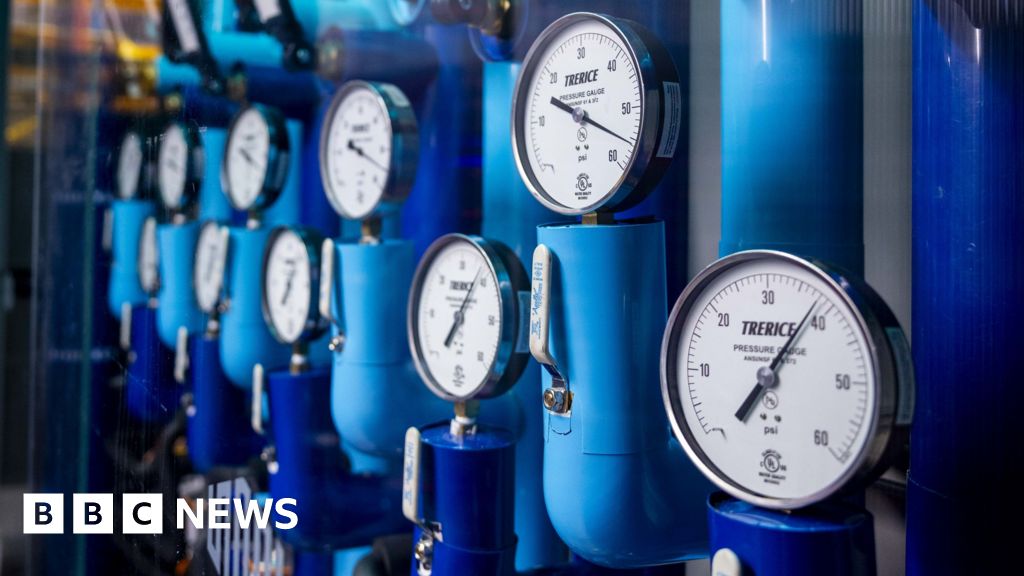
Data centres can’t function without cooling systems
They work 24/7 at high speeds and get searingly hot – but data centre computer chips get plenty of pampering. Some of them basically live at the spa.
“We’ll have fluid that comes up and [then] shower down, or trickle down, onto a component,” says Jonathan Ballon, chief executive at liquid cooling firm Iceotope. “Some things will get sprayed.”
In other cases, the industrious gizmos recline in circulating baths of fluid, which ferries away the heat they generate, enabling them to function at very high speeds, known as “overclocking”.
“We have customers that are overclocking at all times because there is zero risk of burning out the server,” says Mr Ballon. He adds that one client, a hotel chain in the US, is planning to use heat from hotel servers to warm guest rooms, the hotel laundry and swimming pool.
Without cooling, data centres fall over.
In November, a cooling system failure at a data centre in the US sent financial trading tech offline at CME Group, the world’s largest exchange operator. The company has since put in place additional cooling capacity to help protect against a repeat of this incident.
Currently, demand for data centres is booming, driven partly by the growth of AI technologies. But the huge amounts of energy and water that many of these facilities consume mean that they are increasingly controversial.
More than 200 environmental groups in the US recently demanded a moratorium on new data centres in the country. But there are some data centre firms that say they want to reduce their impact.
They have another incentive. Data centre computer chips are becoming increasingly powerful. So much so that many in the industry say traditional cooling methods – such as air cooling, where fans constantly blow air over the hottest components – is no longer sufficient for some operations.
Mr Ballon is aware of rising controversy around the construction of energy-devouring data centres. “Communities are pushing back on these projects,” he says. “We require significantly less power and water. We don’t have any fans whatsoever – we operate silently.”
Iceotope
Iceotope says its tech can cut the cost of cooling by up to 80%
Iceotope says its approach to liquid cooling, which can soothe multiple components in a data centre, not just the processing chips, may reduce cooling-related energy demands by up to 80%.
The company’s technology uses water to cool down the oil-based fluid that actually interacts with computer tech. But the water remains in a closed loop, so there is no need to continually draw more of it from local supplies.
I ask whether the oil-based fluids in the firm’s cooling system are derived from fossil fuel products and he says some of them are, though he stresses that none contain PFAS, also known as forever chemicals, which are harmful to human health.
Some liquid-based data centre cooling technologies use refrigerants that do contain PFAS. Not only that, many refrigerants produce highly potent greenhouse gases, which threaten to exacerbate climate change.
Two-phase cooling systems use such refrigerants says Yulin Wang, a former senior technology analyst at IDTechEx, a market research firm. The refrigerant starts out as a liquid but heat from server components causes it to evaporate into a gas and this phase change soaks up a lot of energy, meaning it is an effective way of cooling things down.
In some designs, data centre tech is fully immersed in large quantities of PFAS-containing refrigerant. “Vapours can get out of the tank,” adds Mr Wang. “There could be some safety issues.” In other cases, the refrigerant is piped directly to the hottest components, computer chips, only.
Some companies that offer two-phase cooling are currently switching to PFAS-free refrigerants.
Yulin Wang
Yulin Wang warns of safety issues with some cooling chemicals
Over the years, firms have experimented with wildly different approaches to cooling, in a race to find the best means of keeping data centre gadgets happy.
Microsoft famously sank a tube-like container full of servers into the sea off Orkney, for example. The idea was that cold Scottish seawater would improve the efficiency of air-based cooling systems inside the device.
Last year, Microsoft confirmed that it had shuttered the project. But the company had learned much from it, says Alistair Speirs, general manager of global infrastructure in the Microsoft Azure business group. “Without [human] operators, less things went wrong – that informed some of our operational procedures,” he says. Data centres that are more hands-off appear more reliable.
Initial findings showed the subsea data centre had a power usage effectiveness, or PUE, rating of 1.07 – suggesting it was far more efficient than the vast majority of land-based data centres. And it required zero water.
But in the end, Microsoft concluded that the economics of building and maintaining subsea data centres weren’t very favourable.
The company is still working on liquid-based cooling ideas, including microfluidics, where tiny channels of liquid flow through the many layers of a silicon chip. “You can think of a liquid cooling maze through the silicon at nanometre scale,” says Mr Speirs.
Researchers are coming up with other ideas, too.
In July, Renkun Chen, at the University of California San Diego, and colleagues, published a paper detailing their idea for a pore-filled membrane-based cooling technology that could help to cool chips passively – without the need to actively pump fluids or blow air around.
“Essentially, you are using heat to provide the pumping power,” says Prof Chen. He compares it to the process by which water evaporates from a trees’ leaves, inducing a pumping effect that draws more water up through the plant’s trunk and along its branches to replenish the leaves. Prof Chen says he hopes to commercialise the technology.
New ways of cooling down data centre tech are increasingly sought-after, says Sasha Luccioni, AI and climate lead at Hugging Face, a machine learning company.
This is partly due to demand for AI – including generative AI, or large language models (LLMs), which are the systems that power chat bots. In previous research, Dr Luccioni has shown that such technologies eat up lots of energy.
“If you have models that are very energy-intensive, then the cooling has to be stepped up a notch,” she says.
Reasoning models, which explain their output in multiple steps, are even more demanding, she adds.
They use “hundreds or thousands of times more energy” than standard chat bots that just answer questions. Dr Luccioni calls for greater transparency from AI companies regarding how much energy their various products consume.
For Mr Ballon, LLMs are just one form of AI – and he argues they have already “reached their limit” in terms of productivity.