Category: 3. Business

  • Government confirms plans for gas reservation on east coast

    Government confirms plans for gas reservation on east coast

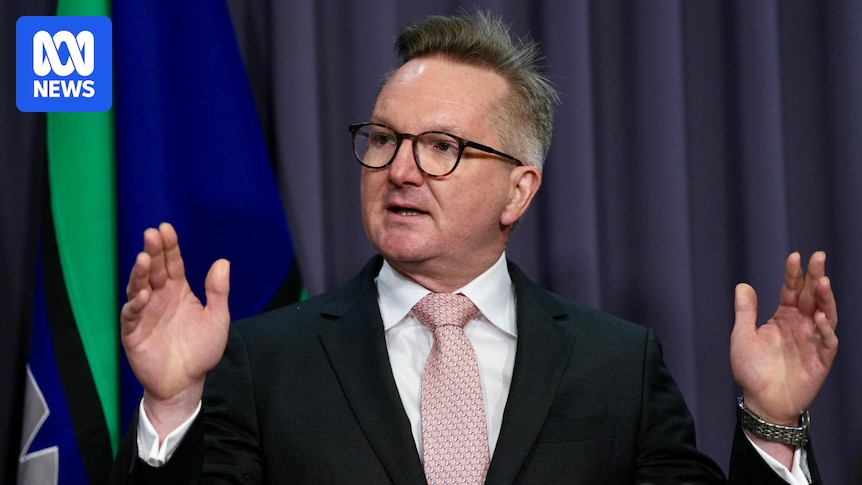
    Gas producers on Australia’s east coast will have to reserve a portion for domestic use to shore up supply and put “downward pressure” on prices, the federal government has confirmed.

    The long-awaited move was signed off by cabinet in Canberra on Monday and will now be subject to a period of consultation.

    After much deliberation about the best model for a reservation scheme, Energy Minister Chris Bowen and Industry Minister Tim Ayres said cabinet had settled on a permit scheme.

    That would see exports limited until producers ensured that between 15 and 25 per cent of extracted gas was reserved for local use.

    Mr Bowen said the scheme would start operating in 2027 but would apply to any new contracts entered into from today.

    “Most Australians think that Australians should have first rights to what’s under Australian soil … and Australians are right about that,” Mr Bowen said.

    Loading

    Continue Reading

  • Christmas spending habits revealed: early birds, or last-minute shoppers? – Link Scheme

    1. Christmas spending habits revealed: early birds, or last-minute shoppers?  Link Scheme
    2. Retailers hope ‘panic weekend’ will bring Christmas cheer to UK sales  The Guardian
    3. Lackluster UK footfall on Super Saturday dipped -6.9% year-on-year  London Business News
    4. Christmas shoppers to splash £261m this weekend in panic shopping frenzy  Daily Record
    5. How much are you spending on Christmas?  Luxembourg Times

    Continue Reading

  • Crypto carry: Market segmentation and price distortions in digital asset markets

    The rapid growth of cryptocurrency markets has created new challenges for financial regulators and policymakers. With total crypto capitalisation in excess of $3 trillion, understanding how well these markets function has become essential for financial stability considerations. In this regard, a particularly puzzling feature has emerged over recent years: the persistent and large gap between crypto futures and spot prices, the so-called basis or crypto carry has been very large, at times exceeding 40% per annum. This raises important questions about crypto market efficiency, regulatory barriers, and the role of institutional capital in newly emerging asset classes.

    The puzzle of crypto carry

    In well-functioning markets, arbitrage activity typically eliminates persistent price differences between related securities. Yet pricing inefficiencies appear to be widespread across cryptocurrency markets. Makarov and Schoar (2020) document substantial arbitrage deviations in crypto assets and find that transaction costs alone cannot explain the magnitude of these spreads. Similarly, in cryptocurrency futures markets, the difference between futures and spot prices, known as carry or basis, has remained stubbornly large and volatile. This phenomenon is often portrayed in financial media as a risk-free arbitrage opportunity. However, our research demonstrates that this perception is misleading and that understanding why this carry persists offers valuable lessons for financial regulation and market design.

    Figure 1 shows the time series of annualised crypto carry for bitcoin (BTC) and ether (ETH) for one-month and three-month futures contracts. Carry is persistent, shows large spikes and averages around 7-8% per year, depending on the asset and contract. On the face of it, crypto thus offers an 8% return per year that carries no price risk, as futures and spot prices converge at maturity.

    Figure 1 The dynamics of crypto carry for bitcoin (BTC) and ether (ETH)

    Notes: The figure shows the dynamics of crypto carry for BTC and ETH on the crypto-native exchange OKEx.
    Sample: March 2019 to July 2024 for OKEx. The data on crypto derivatives come from Skew and Coinmetrics.

    What drives crypto carry?

    The textbook framework for futures pricing suggests that this futures-spot differential should reflect interest rate differentials, storage costs, and convenience yields. In commodities markets, for instance, convenience yields typically favour holding the physical asset due to its immediate availability for production or consumption (Gorton and Rouwenhorst 2006, Koijen et al. 2018). This serves as the starting point of our analysis.

    Our empirical analysis in a recent paper (Schmeling et al. 2025) reveals that observable fundamental factors cannot explain the magnitude and volatility of crypto carry. Interest rate differentials between cryptocurrency lending markets and traditional finance are too small and stable to account for the large swings in crypto carry. Storage costs for digital assets are negligible. This leaves convenience yields as the primary driver. However, contrary to commodity markets, Figure 1 shows that cryptocurrencies exhibit the opposite pattern: a negative convenience yield, meaning investors prefer futures contracts over spot holdings. This resembles dynamics observed in some government bond markets, where balance sheet constraints make derivatives more attractive than the underlying securities (e.g. Duffie 2020, Schrimpf et al. 2020).

    The key question therefore is: where do these large and negative convenience yields in crypto come from? Two key forces emerge from the data. First, we observe that smaller, trend-following investors generate substantial buying pressure in futures markets (see Figure 2). Using data from the Commodity Futures Trading Commission, we show that increases in net long positions by smaller traders (classified as ‘nonreportables’) are strongly associated with higher carry. These investors appear attracted to futures contracts because they offer leveraged exposure to cryptocurrency price movements with minimal upfront capital, particularly on unregulated exchanges where high leverage is possible.

    Figure 2 The dynamics of positions in bitcoin futures on the Chicago Mercantile Exchange (CME) from different investor types

    Notes: This figure shows the dynamics of positions in BTC futures on the CME from different types of investors, i.e. dealer intermediaries, institutional investors, leveraged funds, and nonreportables, respectively.

    We provide causal evidence supporting this demand-driven explanation from the introduction of micro Bitcoin futures on the Chicago Mercantile Exchange (CME) in May 2021. These contracts, sized at one-fiftieth of standard Bitcoin futures, made it significantly easier for smaller investors to trade these contracts. Using a difference-in-differences analysis, we find that this introduction increased carry on the CME relative to other exchanges by approximately 11%, providing causal evidence that demand from smaller investors pushes up the basis.

    Why don’t arbitrageurs close the gap?

    If demand from smaller investors drives up futures prices relative to spot, sophisticated market participants should take advantage through cash-and-carry trades: buying spot cryptocurrency while simultaneously selling futures contracts. This strategy should lock in the price differential and eliminate the mispricing. So why doesn’t this happen on a sufficient scale?

    The answer lies in regulatory barriers and margining frictions that create limits to arbitrage. Regulatory barriers have long restricted many institutional investors from holding spot cryptocurrencies in the first place, which makes executing a cash-and-carry trade impossible for them. Even those able to hold spot positions face a critical friction: the absence of cross-margining between spot and futures positions on regulated exchanges. On the CME, traders cannot post spot Bitcoin as collateral for futures positions but must instead pledge liquid assets in US dollars. This means arbitrageurs must effectively fund their positions twice, once for the spot purchase and again for futures margin requirements.

    This friction exposes carry traders leaning against a wide basis to substantial risk. When futures prices rise before contract maturity, traders holding short futures positions face mark-to-market losses that can trigger forced liquidations before the spot and futures prices converge. Our analysis shows that with leverage of just ten times (far below the maximum offered on many exchanges), the futures leg of a cash-and-carry strategy would have faced liquidation in over half the months in our sample.

    Empirically, we document that higher carry – futures bitcoin prices rising more than spot – significantly predicts liquidations of short futures positions. A 10% increase in standardised carry predicts a 22% increase in sell liquidations relative to total open interest over the following month. This confirms that what appears as a risk-free trade actually exposes arbitrageurs to considerable liquidation risk, limiting their willingness to deploy capital.

    The importance of frictions and regulation: The spot exchange-traded fund natural experiment

    The introduction of spot Bitcoin exchange-traded funds (ETFs) in January 2024 provides causal evidence on how reducing regulatory barriers affects price distortions. While the exchange-traded funds do not resolve the cross-margining friction itself, they allow institutional investors in traditional finance to more easily hold instruments tracking spot Bitcoin as part of cash-and-carry strategies.

    Using a difference-in-differences analysis around the exchange-traded funds introduction, we find that crypto carry decreased by approximately three percentage points across all exchanges and by an additional five percentage points on the Chicago Mercantile Exchange (see Figure 3). These represent economically large reductions of 36% and 97% of mean carry, respectively. This finding demonstrates that regulatory barriers separating cryptocurrency markets from traditional finance have tangible effects on pricing efficiency.

    Figure 3 The dynamics of basis around the introduction of the spot Bitcoin exchange-traded fund

    Notes: The figure shows the dynamics of one-month BTC basis on CME (red) and the average basis on OKEx, Huobi, Deribit and Kraken (blue) around the introduction of the spot BTC ETF (marked with dashed vertical line).

    Broader lessons

    Our findings highlight several important broader implications. First, market segmentation driven by regulatory restrictions can create persistent pricing distortions even in fairly liquid markets. When sophisticated arbitrage capital cannot freely move between market segments, less sophisticated investors can drive prices away from fundamental values, potentially creating feedback loops during price booms. Second, establishing clear regulatory frameworks early in the development of new asset classes can promote healthier market dynamics. Rather than waiting for markets to mature before establishing clear rules, proactive regulation may prevent the buildup of structural inefficiencies.
    More broadly, recent contributions emphasise that regulatory design and the growing integration of crypto into traditional finance, e.g. via stablecoins, tokenisation, and exchange-traded funds, can materially shape market functioning and pricing dynamics (Cecchetti and Schoenholtz 2025, Aldasoro et al. 2024, Claessens and Auer 2018). Third, our analysis demonstrates that cryptocurrency futures markets, dominated by smaller retail investors on the long side, behave differently from traditional commodity or financial futures markets where commercial entities and institutions play larger roles. Understanding these differences is essential for appropriate regulatory design.

    References

    Aldasoro, I, G Cornelli, L Gambacorta, M Ferrari Minesso and M M Habib (2024), “Stablecoins and money market funds: Less similar than you think”, VoxEU.org, 22 November.

    Aquilina, M, J Frost and A Schrimpf (2024), “Decentralised Finance (DeFi): a functional approach”, Journal of Financial Regulation 10(1): 1–27.

    Cecchetti, S and K L Schoenholtz (2025), “Crypto, tokenisation, and the future of payments”, VoxEU.org, 22 August.

    Claessens, S and R Auer (2018), “Regulating cryptocurrencies: Assessing market reactions”, VoxEU.org, 9 October.

    Duffie, D (2020), “Still the World’s Safe Haven?”, Hutchins Center Working Paper No. 62.

    Gorton, G and K G Rouwenhorst (2006), “Facts and Fantasies about Commodity Futures”, Financial Analysts Journal 62(2): 47-68.

    Koijen, R S, T J Moskowitz, L H Pedersen and E B Vrugt (2018), “Carry”, Journal of Financial Economics 127(2): 197-225.

    Makarov, I and A Schoar (2020), “Trading and Arbitrage in Cryptocurrency Markets”, Journal of Financial Economics 135: 293-319.

    Schmeling, M, A Schrimpf and K Todorov (2025), “Crypto Carry”, Working Paper.

    Schrimpf, A, H S Shin and V Sushko (2020), “Leverage and Margin Spirals in Fixed Income Markets during the COVID-19 Crisis”, BIS Bulletin No. 2.

    Continue Reading

  • Tight supply forecast for Australia’s east coast gas market in Q2 2026

    Tight supply forecast for Australia’s east coast gas market in Q2 2026

    Overall gas supply on Australia’s east coast is expected to be sufficient in the second quarter of 2026; however, the southern states (Victoria, New South Wales, South Australia, Tasmania and the Australian Capital Territory) will collectively rely on surplus gas from Queensland and gas stores to meet demand, the ACCC’s latest gas inquiry report reveals.

    The latest forecasts from gas producers suggest a range between a 15 petajoule (PJ) surplus and an 8 PJ shortfall for the east coast gas market in the second quarter of 2026, depending on the amount of uncontracted gas exported by the Queensland-based LNG producers.

    Queensland is anticipated to have sufficient gas to meet local needs, while the southern states are projected to need an additional 26 PJ of gas through the quarter.

    “The gap between gas demand and supply from southern gas sources leading into and through winter has widened in recent years, largely due to reduced production from legacy gas fields and increased demand for gas-powered electricity generation,” ACCC Commissioner Anna Brakey said.

    “Some of Queensland’s surplus gas will need to be transported to the southern states to help fill the forecast supply gap in the second quarter of 2026.”

    As at Monday 22 December, Victoria’s Iona gas storage facility was estimated to require about 12 PJ of gas injections before May 2026 to replenish gas stores ahead of the 2026 winter period.

    The quarterly supply-demand outlook for Australia’s southern states (2026)

    Source: ACCC analysis of data obtained from gas producers in October 2025 and of the domestic demand forecast (Step Change scenario) from AEMO, Gas Statement of Opportunities (GSOO), March 2025

    Note: Totals may not sum due to rounding. The quantity required to meet long-term LNG SPAs includes feed gas requirements (such as fuel) required to produce LNG.

    Recent prices are within expected ranges 

    Contracted gas prices have been steady at around $13-15 per gigajoule (GJ) since falling from the very high levels seen during 2022-23. The prices are within expected ranges given expectations of LNG netback prices and domestic supply and demand conditions.

    Prices offered by gas producers to retailers for 2026 supply fell 3 per cent to $13.56 per GJ in the first half of 2025. Prices offered by gas retailers to commercial and industrial users fell 5 per cent to $14.43 per GJ.

    While prices appear to be relatively stable, more gas is being contracted on a short-term basis than in previous years. The volume of gas sold under short-term contracts increased by 78 per cent to 57 PJ in the first half of 2025 compared to the first half of 2024.

    “We’ve heard from a range of commercial and industrial gas users that, while prices have stabilised, current price levels continue to pose challenges to the viability of their businesses,” Ms Brakey said.

    “These challenges are exacerbated by difficulties in obtaining long-term agreements for gas supply. Short-term contracts do not provide the cost predictability and supply certainty that longer-term contracts provide.”

    The ACCC has also continued to hear concerns from commercial and industrial gas users about the inflexibility of the expression of interest processes under the Gas Market Code.

    Gas users remain concerned about a lack of competition between gas suppliers, though some users told the ACCC they had observed recent improvements.

    Gas costs of production

    The ACCC has released with today’s report advice from an independent research firm on long-run gas production costs in the east coast gas market. Gas production costs can influence the prices producers are willing to accept for supply as well as longer-term investment decisions. One of its key observations is that, in the absence of new sources of gas supply, production costs are expected to rise over time as lower cost reserves are depleted.

    The ACCC welcomes feedback on this accompanying report.

    LNG netback price series review

    The ACCC has commenced a review of the methodology for calculating LNG netback prices to ensure that this price series remains an accurate resource for market participants on price benchmarks relevant to Australia’s east coast gas market. The ACCC has set out issues relevant to the review in the December 2025 gas inquiry report and invites submissions from stakeholders by 6 February 2026.

    Retailer best practice selling guidance

    The ACCC has developed draft voluntary best practice retailer selling guidance for comment. The draft guidance follows the ACCC’s Retailer Behaviour Review last year, which found that some retailers’ selling practices persistently fell short of what would be expected in a well-functioning retail market.

    The draft guidance is published in the December 2025 gas inquiry report and is open for comment until 27 February 2026.

    Background

    Australia’s east coast gas market is an interconnected grid joining Queensland, New South Wales, Victoria, South Australia, Tasmania and the ACT. The Northern Territory and Western Australia are separate gas regions.

    In 2025, the Australian Treasurer directed the ACCC to hold an inquiry into the market for the supply of natural gas in Australia. This direction provided that the ACCC would continue its inquiry into the gas market, which first commenced in 2017. The new direction requires the ACCC to conduct the inquiry until 30 June 2030.

    The ACCC’s inquiry examines the wholesale gas market, primarily gas sold by producers to large gas buyers, including commercial and industrial gas users and gas retailers.

    The ACCC’s next interim gas inquiry report is scheduled for March 2026.

    Continue Reading

  • Feedlotting for farm business success at Piangil | Media releases | Media centre | About

    Feedlotting for farm business success at Piangil | Media releases | Media centre | About

    22 December 2025

    Mixed farmers are invited to an upcoming workshop series hosted by Agriculture Victoria in Piangil, starting February 2026.

    Agriculture Victoria Mixed Farming Development Officer, Roger Harrower said the workshops with Elders Senior Livestock Production Advisor Rob Inglis, would be ideal for any farmer contemplating setting up or restarting a sheep feedlot to improve their management of seasonal, market and business conditions.

    ‘We’re kicking off this series focusing on the practicalities of designing and building a feedlot and what makes it profitable,’ Mr Harrower said.

    ‘Farmers will explore why feedlotting sheep might suit their business, key regulations, infrastructure options, feed storage, delivery and cost.

    ‘The following workshops will dive deeper into specifics; workshop 2 will focus on feedlot nutrition, while workshop 3 will cover animal welfare, marketing options and strategies to scale operations in line with seasonal and business resilience considerations,’ he said.

    All workshops will be held at Piangil Community Centre, 8 Beveridge Street, Piangil:

    Workshop 1–Designing and building a profitable feedlot

    11 February 2026 from 9:30 am to 12:30 pm

    Workshop 2–Feeding and nutrition feedlot workshop

    March 2026, details to follow

    Workshop 3–Beyond the feedlot: welfare, markets and integration

    June 2026, details to follow.

    Interested farmers are encouraged  to register for all 3 workshops at www.trybooking.com/DFOTE or contact Roger directly on 0407 729 024, roger.harrower@agriculture.vic.gov.au.

    Find more information about available drought support at www.agriculture.vic.gov.au/drought or call 136 186.


    Media contact: Tessa Butler


    Continue Reading

  • Nifty 50, Hang Seng Index, Nikkei 225, China LPR

    Nifty 50, Hang Seng Index, Nikkei 225, China LPR

    19 November 2025, China, Shanghai: Boats sail past downtown Shanghai on the Huangpu River. The tallest building on the skyline is the Shanghai Tower (rear).

    Bernd von Jutrczenka | Picture Alliance | Getty Images

    Asia-Pacific markets were set to climb Monday as investors look toward benchmark lending rate decisions coming out of China later in the day.

    The one-year rate influences most new and outstanding loans, while the five-year benchmark affects mortgages.

    Australia’s S&P/ASX 200 rose 0.54% in early trade.

    Japan’s Nikkei 225 futures pointed to a stronger open, with the futures contract in Chicago at 50,565 and its counterpart in Osaka at 50,330, compared to the previous close of 49,507.21. The Bank of Japan raised its policy rate by 25 basis points to 0.75% —a three-decade high— last Friday.

    Hong Kong’s Hang Seng index futures were at 25,843, higher than the HSI’s last close of 25,690.53.

    Last Friday in the U.S., stocks rose for a second winning day, boosted by Oracle, as the artificial intelligence trade regained its footing after experiencing volatility.

    Oracle shares were up 6.6% after TikTok agreed to sell its U.S. operations to a new joint venture that includes the software giant and private equity investor Silver Lake.

    The Nasdaq Composite rose 1.31%, closing at 23,307.62. The S&P 500 added 0.88% to close at 6,834.50. The Dow Jones Industrial Average advanced 183.04 points, or 0.38%, and settled at 48,134.89.

    Continue Reading

  • Chicago holiday travelers: Thousands of travelers going through O’Hare, Midway airports, roads as Christmas travel rush begins

    Chicago holiday travelers: Thousands of travelers going through O’Hare, Midway airports, roads as Christmas travel rush begins

    CHICAGO (WLS) — The holiday travel rush is on as people make the trip to be with their loved ones. The roads and airports are busy this weekend.

    A record number of people are expected to travel.

    ABC7 Chicago is now streaming 24/7. Click here to watch

    According to the AAA, the worst time to travel is between 1 and 7 p.m. Sunday. At Chicago O’Hare International Airport, hundreds of thousands are projected to come and go as the holiday rush begins.

    More than 263,000 people are traveling through O’Hare on Sunday as records continue to fall nationwide with each holiday season.

    “We are going to France for Christmas and will be there through new year,” traveler Jeff Brown said. “No presents, we are buying memories.”

    “I’m going to Cairo, Egypt,” traveler Talal Awartani said. “I’m going to see my family and attend my cousin’s wedding… on Christmas Day.”

    According to the Chicago Department of Aviation, air travel between both of Chicago’s airports is expected to be up 6% compared to the same period last year.

    But it’s not just the skies that are busy, so too are the roads. In Illinois alone, some 5.7 million people will be hitting the tollways between now and January 1.

    SEE ALSO | Holiday shoppers pack Chicago’s Magnificent Mile on ‘Super Saturday’ looking for last-minute gifts

    “Yet again, we’ve done it,” AAA spokesperson Molly Hart said. “Whether it was thanksgiving, for Christmas and year end, we are breaking records. People are getting on the planes, getting on the road and taking other modes of transportation.”

    The good news is, despite the long lines and the crowds, delays at O’Hare Sunday were kept at a minimum, averaging only 15 minutes, with very few cancellations being reported.

    For one young family off to London, that news was music to their ears.

    “First time with our 15-month old, taking the longest trip that he’s ever taken so far,” traveler Ami Modi said.

    While Sunday was the busiest air travel day at O’Hare, at Midway Airport, otherwise known as the “busiest square mile in aviation,” crowds aren’t expected to peak until December 27. Either way, allowing plenty of time and patience will be key over the next two weeks.

    Copyright © 2025 WLS-TV. All Rights Reserved.

    Continue Reading

  • China Paces Yuan Gains to Shield Exporters, Curbing Carry Trade – Bloomberg.com

    1. China Paces Yuan Gains to Shield Exporters, Curbing Carry Trade  Bloomberg.com
    2. Yuan heads for longest weekly winning streak since June  Business Recorder
    3. The strengthening of the Chinese yuan may support bitcoin prices  Bitget
    4. China’s yuan edges higher ahead of US inflation print, near 14-month high  Forex Factory
    5. PBOC sets USD/CNY reference rate at 7.0572 vs. 7.0550 previous  FXStreet

    Continue Reading

  • Samsung To Host Series of Tech Forums at CES 2026 – Samsung Global Newsroom

    Samsung To Host Series of Tech Forums at CES 2026 – Samsung Global Newsroom

    Samsung Electronics today announced that it will host a series of four moderated Tech Forum panel discussions at CES 2026, to highlight industry trends and unveil its distinct AI vision and strategy.

    Samsung’s Tech Forums will be held Jan. 5–6 at Samsung’s dedicated exhibition space in the Latour Ballroom at the Wynn Las Vegas. The company will host a total of four moderated panels covering AI, Home Appliances, Services and Design. Samsung executives along with partners, academics, media and industry analysts will participate in each session by topic:

    • When Everything Clicks: How Open Ecosystems Deliver Impactful AI (Jan. 5, 9:00 AM)  Yoonho Choi, Digital Appliances Business, Samsung Electronics (Chair, Home Connectivity Alliance)

    Description: Collaborating smart home innovators hold an open discussion on the necessity of cross-industry partnership and what it takes for meaningful smart home technology to be woven into daily living.

    • In Tech We Trust? Rethinking Security & Privacy in the AI Age (Jan. 5, 2:00 PM) — Shin Baik, Group Head, AI Platform Center, Samsung Electronics

    Description: Experts in security and AI examine the science of trust and how transparency and secure systems can spark a meaningful change for AI adoption.

    • FAST Forward: How Streaming’s Next Wave is Redefining Television (Jan. 5, 4:00 PM)
      Salek Brodsky, Executive Vice President, Visual Display Business, Samsung Electronics

    Description: Leaders in TV and entertainment explore the next wave of streaming, including free ad-supported streaming television (FAST), hybrid models and creator-led channels to shape a more interactive future.

    • The Human Side of Tech: Designing a Future Worth Loving (Jan. 6, 1:00 PM) — Mauro Porcini, President and Chief Design Officer, DX Division, Samsung Electronics

    Description: Design leaders urge the tech industry to look beyond minimalist, spec-driven approaches toward more expressive, human-centered design shaped by new materials, AI and creativity.

    In covering the latest trends in technology and daily living, the Technology Forum discussions will serve as a complement to the company’s latest product innovations, which will be showcased at the Samsung Exhibition Zone at the Wynn from Jan. 5–7.

    Continue Reading

  • Couple lose home loan complaint in face of $50,000 break fee

    Couple lose home loan complaint in face of $50,000 break fee

    The main banks are now advertising rates of 4.49 percent for 12 months.
    Photo: RNZ

    A couple who regretted their decision to fix their home loan for five years in 2023 have been unsuccessful in their complaint against their bank.

    They complained to the Banking Ombudsman, which issued a case note on its decision this month.

    It said the couple fixed their home loan for one year in 2021 and 2022. But in 2023, they refixed at the lowest rate available, which was for five years.

    Reserve Bank data shows that through 2023, the average special five-year rate was between 6.29 percent and 6.66 percent.

    This year, they contacted the bank to ask about breaking their fixed term.

    The main banks are now advertising rates of 4.49 percent for 12 months.

    The couple said the bank had misled and pressured them into refixing the loan for five years.

    The woman said she relied on advice from bank staff and wanted the bank to waive the cost of breaking the fixed term, which had been estimated at $45,000 to $50,000.

    The ombudsman scheme said it reviewed the correspondence the couple had with the bank,

    “There was no evidence bank staff pressured [her] when they refixed in 2021 and 2022. In 2021, [she] chose to fix for one year at the lowest available rate after being offered hardship assistance, which she declined. In 2022, both customers again chose a one-year term at the lowest rate.

    “In 2023, [the customer] requested a home loan review session with a senior business manager. [She] recalled the manager saying interest rates were likely to rise, and said she relied on this advice when choosing to fix for five years. The bank did not record the conference call with her, although the manager shared the standard bank disclosures with her, and the manager’s follow-up email summarised the scenarios discussed and interest rate options. The email did not contain any advice or suggestion to fix for a five-year term.”

    The ombudsman noted the woman asked about the five-year rate and accepted it, along with a $3000 loyalty payment, which required her to stay with the bank for at least three years.

    “[She] was given time, options and accurate written information before she made the decision. We found no evidence of pressure or misleading conduct by the bank.

    “We also considered whether the bank properly disclosed early repayment charges. The original loan agreement and subsequent variation letters explained how these charges were calculated and noted that such charges ‘could be large’. The bank met its obligations under the Credit Contracts and Consumer Finance Act 2003.”

    The complaint was not upheld.

    Mortgage adviser Jeremy Andrews, of Key Mortgages said he did not see many cases like this.

    “I did have a case last month where a client had fixed his loan in for five years with his bank directly at 6.39 percent. He didn’t receive any specific advice from the bank that there’s a was good chance of rates dropping over the next five years, and if they did, he could be looking at significant early payment penalties or break fees.

    “He was horrified to find out how much the break fees were, even for a small mortgage with just over three years remaining, well into five figures of fees.

    “Once we had his break fees on his mortgage, we ran figures through our break cost benefit calculator. Whilst his fees were substantial, it was looking in his favour at the time to pay the break fee to move onto lower rates at the most similar remaining term.”

    He said it was part of a mortgage adviser’s job to check clients’ goals and help structure their mortgage to achieve them.

    “We discuss the risks and costs of break fees, to confirm understanding before fixing in long term, and potential implications if there’s reasons they might want to restructure or break their fixed rate in future.”

    Longer terms we restarting to become more popular again, he said.

    Sign up for Money with Susan Edmunds, a weekly newsletter covering all the things that affect how we make, spend and invest money

    Continue Reading