Ricoh is a leading provider of integrated digital services and print and imaging solutions designed to support digital transformation of workplaces, workspaces and optimize business performance.
Headquartered in Tokyo, Ricoh’s global operation reaches customers in approximately 200 countries and regions, supported by cultivated knowledge, technologies, and organizational capabilities nurtured over its 85-year history. In the financial year ended March 2025, Ricoh Group had worldwide sales of 2,527 billion yen (approx. 16.8 billion USD).
It is Ricoh’s mission and vision to empower individuals to find Fulfillment through Work by understanding and transforming how people work so we can unleash their potential and creativity to realize a sustainable future.
Singapore, 15 December 2025: World’s largest anti-fraud organisation the ACFE has announced Weiyi Tan, CFE, FSIArb, LLM, as newly elected member of its 2026–2027 Board of Regents
The Board of Regents is the ACFE’s highest elected office, and Regents are elected directly by Certified Fraud Examiners (CFEs) from around the world. Following a ballot featuring nine candidates, Weiyi Tan, CFE, FSIArb, LLM, is one of three selected to fill open positions on the board.
Weiyi co-heads the firm’s Asia-Pacific Regulatory and Investigations Group. She has been practicing law for more than 20 years and is qualified in Singapore, the U.K. (England and Wales) and the U.S. (New York). Weiyi advises clients on investigations into corruption, fraud and other white-collar offenses, and assists them with their response to enforcement and regulatory authorities. She also advises clients on the design and implementation of their anti-bribery and anti-fraud compliance programmes.
Weiyi has been a Certified Fraud Examiner (CFE) since 2015 and served as president of the ACFE Singapore Chapter from 2019 to 2023. She regularly speaks on fraud-related topics and has been a trainer and speaker at the Annual ACFE Global Fraud Conference and the ACFE Fraud Conference Asia-Pacific. She has been appointed to the Goods and Services Tax Board of Review by the Ministry of Finance in Singapore and serves as Vice President of the Singapore Institute of Arbitrators. She has also been recognised as a “Next Generation Partner” for White Collar Crime by The Legal 500 Asia-Pacific and named “Litigation Star” by Benchmark Litigation Asia-Pacific.
Board of Regents members will begin their official two-year terms in February 2026, contributing to the ACFE’s mission of advancing fraud prevention, detection, and investigation globally.
ACFE President John Gill, J.D., CFE said: “The ACFE Board of Regents represent the best our global membership and uphold values such as leadership, trust, innovation and hard work that define the anti-fraud profession. We’re honoured to welcome Weiyi and the fellow Regents-elect joining her as new appointees of our Board.”
Also elected to the 2026–2027 ACFE Board of Regents were David Nkang Odu, CFE, MBA, Senior Manager and Head, Currency Management Centre, Central Bank of Nigeria, Makurdi Branch, Nigeria, and Kimberly Figel Benoit, CFE, Inspector General, U.S. Library of Congress, Washington, D.C.
Global Regulatory and Investigations expertise
From compliance and risk management matters, throughout internal and regulatory investigations, enforcement action, to remediation and recovery, Clyde & Co provides clients with a full suite of regulatory and investigations service.
The firm has on-the-ground support in emerging markets including Africa, the Middle East, Asia and Latin America, as well as deep experience in the mature regulatory and enforcement markets of the United States, United Kingdom, Europe, Australia and Canada.
Sam Tate, Partner, Global Head of Regulatory & Investigations, London, said: “Weiyi’s election is testimony to her outstanding capabilities in the regulatory and investigations space, as well as to the global breadth and depth of the firm’s practice. We are proud that Weiyi has been selected to hold office in one of the world’s most recognised anti-fraud organisations.”
Weiyi Tan said: “The Board establishes and maintains the ACFE’s high standards, and it is an honour to be chosen by my peers to serve on the Board. I look forward to promoting the ACFE’s mission of advancing fraud prevention, detection, and investigation globally.”
The percentage of U.S. employees who reported using AI at work at least a few times a year increased from 40% to 45% between the second and third quarters of 2025. Frequent use (a few times a week or more) grew from 19% to 23%, while daily use moved less, ticking up from 8% to 10% during the same period.
###Embeddable###
The latest Gallup Workforce results are based on a nationally representative survey of 23,068 U.S. adults employed full- and part-time conducted by web Aug. 5-19 using the Gallup Panel.
U.S. employees working in knowledge-based jobs, such as technology or professional services, were more likely to use AI than those in frontline positions. Seventy-six percent of employees in technology or information systems, 58% in finance, and 57% in professional services used AI in their role a few times a year or more. In contrast, within industries with higher rates of frontline employees, 33% of employees in retail, 37% in healthcare and 38% in manufacturing reported using AI at work at the same frequency.
Workforce Divided Over Level of Organizational AI Adoption
In Q3 2025, 37% of employees said their organization has implemented AI technology to improve productivity, efficiency and quality. Forty percent said their organization had not, and 23% said they did not know. The percentage of those who said they did not know was lower than the percentage who reported using AI at work at least a few times in the past year, but higher than the percentage who reported using it frequently. This gap suggests that a portion of employees used personal AI tools or otherwise used AI without awareness of their organization’s AI strategy.
###Embeddable###
Employees in individual contributor roles (26%) were more likely than managers (16%) and leaders (7%) to say they did not know whether their organization had implemented AI technology. Part-time employees, those working on-site, and employees in frontline roles or industries also reported higher uncertainty. Employees who are further from organizational decision-making have been less aware of AI implementation.
A previous version of this question did not offer a “don’t know” response, which effectively encouraged respondents to make their best guess. Under that format, the share of employees who believed their organization had implemented AI rose from 33% in May 2024 to 44% in May 2025, while the share saying their organization had not implemented AI fell from 67% to 56%.
In the latest survey, Gallup added a “don’t know” option to capture uncertainty about AI adoption. Because respondents could indicate a lack of knowledge, the Q3 2025 results are not directly comparable to earlier measurements. The fact that 23% chose “don’t know” highlighted substantial variation in how well information about AI adoption was reaching employees.
Employees Use AI to Consolidate Information, Generate Ideas
More than four in 10 employees surveyed in Q2 2025 who used AI at least yearly indicated that they used AI technology to consolidate information (42%) and generate ideas (41%) and 36% said they used it to learn new things. What employees reported using AI for did not change meaningfully from Gallup’s initial measure in Q2 2024.
###Embeddable###
In answer to a question asking what types of AI they used in their role, more than six in 10 U.S. employees who used AI at work reported using chatbots or virtual assistants. AI writing and editing tools were the next most commonly used tools (36%), followed by AI coding assistants (14%).
###Embeddable###
While the use of more advanced or specialized AI tools — such as those designed for data science, analytics or coding — is still relatively rare, employees who reported using AI at work frequently were more likely to use such tools. The largest gap between frequent and less frequent workplace AI users was in the use of coding assistants (22% vs. 8%) and data science or analytics tools (18% vs. 8%).
Implications
AI use in the workplace continues to grow, with 45% of employees in Q3 2025 saying they used AI at least a few times a year. Even so, daily use is still limited to about 10% of the American workforce, trails organizational AI adoption rates, and is concentrated in specific roles and industries. Gallup research shows broader AI adoption among employees is strongly associated with having greater managerial support for AI and strategic integration of AI in their role.
It used to be curry sauce, egg yolk and red wine that ruined Britain’s clothes but in a sign of the times laundry detergents are being reformulated to tackle stains left by matcha lattes, Aperol spritz and bubble tea.
In a month when year-end gongs are dished out, from BBC Sports Personality to Pantone’s Colour of 2026 (a white called “cloud dancer”), matcha has received the dubious accolade “stain of the year”.
The honour has been handed to the Japanese green tea after it topped the inaugural “stains index”. The ranking, compiled by the washing detergent maker Unilever, identified “new and emerging stains based on evolving lifestyles and culture”.
To this end, matcha, Aperol and bubble tea top what was an actual laundry list of the country’s hottest stains. However, it could also be a proxy of the zeitgeist, given gen Z’s thirst for morning matcha coffees and fluorescent boba teas.
While some could consider the topic a bit of a turn-off, Donna Macnab, Uniliver’s director of laundry research and development, said the world of stains offered an “interesting reflection on our lifestyles and routines”.
“The first thing you notice about stains like matcha and Aperol is they’re very highly coloured. These bright colour pigments [there’s a chlorophyll in matcha] penetrate the fibres, making the drinks difficult to remove,” she said.
Washing powder adverts used to be preoccupied with wholesome outdoor stains such as mud and grass stains and Macnab said these stains had not gone away, but added: “As we see new pigments and residues emerge, we test new formulas and adapt our products.”
To compile the index, Unilever polled 2,000 UK adults on their most frequent and biggest stains “concerns”, looking at “traditional” marks such as blood, mud and grass, alongside “modern” stains, including Aperol, glitter and matcha.
Perhaps due to their social media-friendly food choices, the research found young Britons were tackling a notably higher volume of dirty marks, with 70% of generation Z staining their clothes every week compared with 16% of boomers.
Matcha topped the list of stains gen Z experienced more of in the past 12 months, with 39% reporting stubborn green marks, followed closely by Aperol (38%). Another food trend leaving its mark was “hot sauces” notably sriracha (34%).
While red wine (47%) and curry sauce (47%) were still Britain’s top stain headaches when putting a wash on, for gen Z it fast food grease (40%) and coffee and tea (29%). The poll also revealed that 91% of gen Z had thrown away clothing because it was spoiled by a mark.
“We are picking up that younger people don’t know tips for getting stains out,” said Macnab, who added that the advice had not changed much over the years: scrape off the excess and soak in soapy cold water before sticking it in the wash.
But it is not just what gen Z are eating and drinking that is leaving its mark, it is their beauty regimes, too, with makeup and fake tan among the top “lifestyle” stains.
In response to the research, scientists based at Unilever’s Port Sunlight laboratories in Wirral have tweaked the formulas of its Persil and Surf brands to ensure they are a match for matcha.
It was not the first time that changing lifestyles sent the company’s experts back to the drawing board. Last year, Unilever launched the Persil spinoff Wonder Wash to tackle the musty smell of gym gear.
The shift to remote working meant “athleisure” clothing such as T-shirts, joggers and leggings were being worn every day. The company identified that this had made smells rather than stains a problem, with invisible sweat and smell-causing body oils, clinging to athleisure wear.
The index will be updated annually to monitor new stains and inform the development of Unilever’s new laundry products.
The Public Service Association of New South Wales and Community and Public Sector Union (SPSF Group) NSW Branch acknowledges the Traditional Custodians of the lands where we work and the places in which we live. We pay respect to Ancestors and Elders, past, present and future. We recognise the unique cultural and spiritual relationship and celebrate the contributions of First Nations peoples to Australia.
For members who are blind or have low levels of vision, a wide range of adaptive technologies and tools are available to assist. Applications such as Jaws Screen Reader can help access union information.
In addition, Vision Australia has a list of resources for the visually impaired HERE.
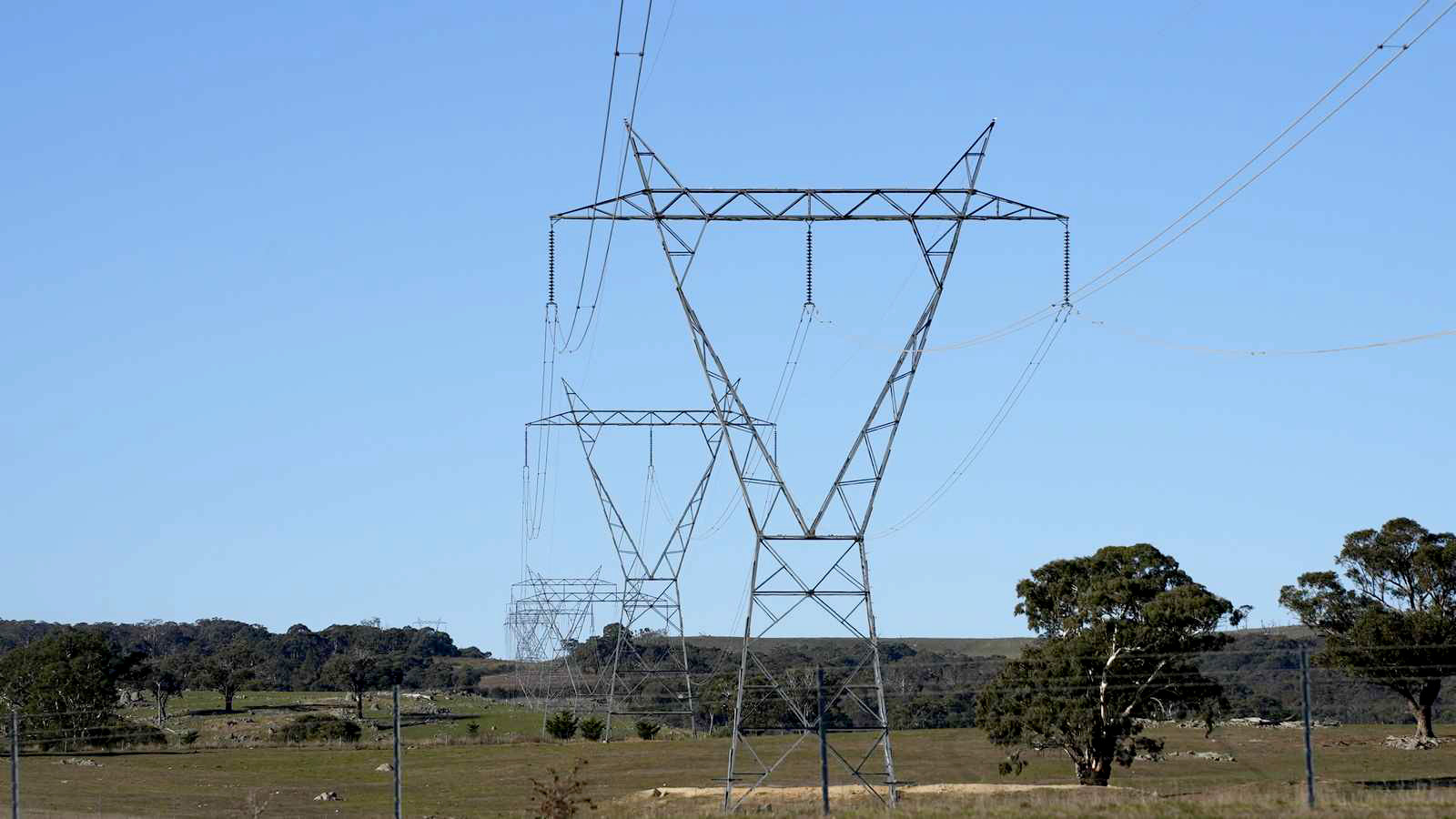
ACCIONA together with our JV partner Genus, has been awarded a contract to construct the Western Renewables Link, an essential transmission project that will assist in facilitating Victoria’s renewable energy future.
The contract is subject to satisfaction of conditions precedent and commencement of construction activities is still subject to the project receiving all necessary state and federal approvals.
Spanning approximately 190 kilometres, the Western Renewables Link will deliver a new 500 kV double-circuit transmission line from Bulgana in western Victoria to the Sydenham terminal station in Melbourne’s North-West.
The project will unlock large-scale renewable energy from the region, enabling more than 3,000 MW of new generation and powering up to one million Victorian homes.
Bede Noonan, ACCIONA CEO, Australia and New Zealand, said ACCIONA is proud to bring its local expertise combined with global experience to deliver this project.
“ACCIONA is proud to be contributing to Australia’s clean energy transformation by playing a leading role in the delivery of transmission networks across Australia.
“Core to our delivery is our collaborative approach, working hand in hand with local communities and stakeholders.” Bede said.
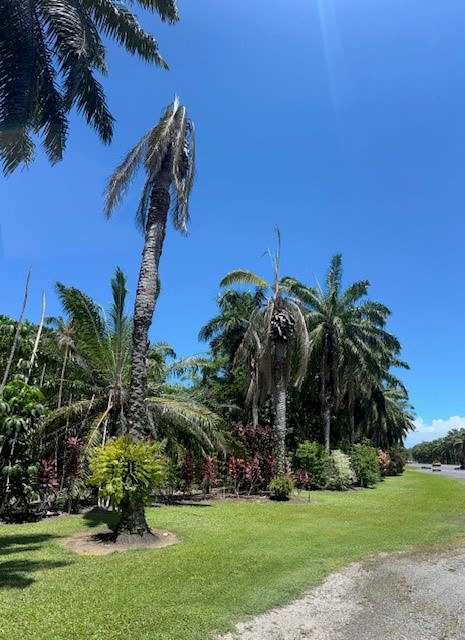
Douglas Shire Council will remove three unsafe Oil Palms on the verge of Port Douglas Road, in front of Oaks Resort Port Douglas, before the end of the year (subject to contractor availability).
Council arborists have been monitoring the palms for the past two months after observing a rapid decline in their health. The trees now appear dead, with failed central fronds and significant basal bracket fungi indicating advanced internal decay.
Given the prominent location and proximity to traffic, Council sought an independent arborist assessment, which confirmed that all three palms are structurally compromised, affected by pathogenic decay, and highly likely to fail.
Based on this expert advice, Council will proceed with their removal as a necessary safety measure.
Council acknowledges the community’s appreciation for this well-known avenue of palms and understands that their removal may be disappointing. This decision follows detailed inspections and independent professional recommendations to ensure public safety.
[TOKYO – 2025/12/15] – NTT DATA, a global leader in AI, digital business and technology services, has been selected as a 2025 CDP Climate Change “A List” company for the fourth consecutive year and CDP Water Security “A List” company for the first time by the international NGO CDP*1. NTT DATA was recognized as a leader for its transparency and performance in climate change and water initiatives.
CDP surveys corporate environmental information at the request of institutional investors who make ESG investments. The companies are assessed by a score of A to D, based on the comprehensiveness of disclosure, awareness and management of environmental risks. CDP also investigates how companies demonstrate environmental leadership best practices, such as setting ambitious and meaningful targets. CDP scores are widely used to drive investment and procurement decisions towards a resilient and Earth-positive economy.
The CDP disclosure cycle 2025 assessed over 22,100 companies around the world. NTT DATA has been recognized as one of the companies achieving an “A” rating, based on its implementation of key criteria emphasized by CDP, such as comprehensive and transparent environmental information disclosure, board-level oversight, ambitious target setting and initiatives across the entire supply chain.
NTT DATA was commended for its approach to water related initiatives and incorporating “efficient water management in data centers” into its environmental policy. NTT DATA’s approach to water security includes conducting water stress assessments, analyzing all data centers for water-related risks and setting improvements of WUE (Water Usage Effectiveness) as a target for efficient water management. As a result of these initiatives, NTT DATA was selected for the A List for the first time.
Notes to editors
About CDP CDP is a global non-profit that runs the world’s only independent environmental disclosure system for companies, capital markets, cities, states and regions to manage their environmental impacts.
About NTT DATA
NTT DATA is a $30+ billion business and technology services leader, serving 75% of the Fortune Global 100. We are committed to accelerating client success and positively impacting society through responsible innovation. We are one of the world’s leading AI and digital infrastructure providers, with unmatched capabilities in enterprise-scale AI, cloud, security, connectivity, data centers and application services. Our consulting and industry solutions help organizations and society move confidently and sustainably into the digital future. As a Global Top Employer, we have experts in more than 70 countries. We also offer clients access to a robust ecosystem of innovation centers as well as established and start-up partners. NTT DATA is part of NTT Group, which invests over $3 billion each year in R&D.
As Australian shares face a challenging start to the week, influenced by global tech sector declines, investors may find themselves exploring alternative opportunities within the market. Penny stocks, often representing smaller or newer companies, continue to capture interest despite their somewhat outdated label. By focusing on those with solid financial foundations and potential for growth, these stocks can offer surprising value and stability in uncertain times.
Name
Share Price
Market Cap
Financial Health Rating
Alfabs Australia (ASX:AAL)
A$0.41
A$117.5M
★★★★★☆
EZZ Life Science Holdings (ASX:EZZ)
A$1.495
A$70.52M
★★★★★★
Dusk Group (ASX:DSK)
A$0.78
A$48.57M
★★★★★★
IVE Group (ASX:IGL)
A$2.88
A$442.63M
★★★★★☆
MotorCycle Holdings (ASX:MTO)
A$3.12
A$230.45M
★★★★★★
Veris (ASX:VRS)
A$0.074
A$39.99M
★★★★★★
West African Resources (ASX:WAF)
A$2.90
A$3.31B
★★★★★★
Service Stream (ASX:SSM)
A$2.24
A$1.37B
★★★★★★
EDU Holdings (ASX:EDU)
A$0.94
A$135.3M
★★★★★☆
GWA Group (ASX:GWA)
A$2.41
A$632.09M
★★★★★☆
Click here to see the full list of 427 stocks from our ASX Penny Stocks screener.
Let’s take a closer look at a couple of our picks from the screened companies.
Simply Wall St Financial Health Rating: ★★★★☆☆
Overview: DUG Technology Ltd is a technology company offering hardware and software solutions to the technology and resource sectors across Australia, the United States, the United Kingdom, Malaysia, and the United Arab Emirates, with a market cap of A$281.66 million.
Operations: The company’s revenue is derived from three main segments: Hpcaas ($27.44 million), Services ($51.87 million), and Software ($10.47 million).
Market Cap: A$281.66M
DUG Technology Ltd, with a market cap of A$281.66 million, provides hardware and software solutions to various sectors globally. The company has three revenue streams: Hpcaas (A$27.44 million), Services (A$51.87 million), and Software (A$10.47 million). Despite being unprofitable, DUG has improved its financial position from negative shareholder equity five years ago to positive now, indicating progress in reducing losses by 51.3% annually over the past five years. It trades at 83.1% below its estimated fair value and maintains more cash than total debt, suggesting potential for future growth despite current challenges in profitability and volatility stability at 7%.
ASX:DUG Debt to Equity History and Analysis as at Dec 2025
Simply Wall St Financial Health Rating: ★★★★★★
Overview: Immutep Limited is a biotechnology company focused on developing novel Lymphocyte Activation Gene-3 related immunotherapies for cancer and autoimmune diseases in Australia, with a market cap of A$552.65 million.
Operations: The company’s revenue is primarily derived from its immunotherapy segment, which generated A$5.03 million.
Market Cap: A$552.65M
Immutep Limited, a biotechnology company with a market cap of A$552.65 million, is focused on developing immunotherapies and has recently entered into a strategic collaboration with Dr. Reddy’s Laboratories for the development and commercialization of its lead product, eftilagimod alfa (efti), in selected markets. The agreement includes an upfront payment of US$20 million and potential milestone payments up to US$349.5 million, alongside double-digit royalties on sales. Despite being pre-revenue with A$5 million in revenue from its immunotherapy segment, Immutep’s strong cash position exceeds both short-term and long-term liabilities, supporting ongoing clinical trials for various cancers.
ASX:IMM Debt to Equity History and Analysis as at Dec 2025
Simply Wall St Financial Health Rating: ★★★★★☆
Overview: Wagners Holding Company Limited produces and sells construction and related building materials across several countries, including Australia, the United States, New Zealand, the United Kingdom, Papua New Guinea, and Malaysia; it has a market cap of A$719.01 million.
Operations: Wagners Holding generates revenue through its Construction Materials segment at A$257.69 million, Project Services at A$105.71 million, Earth Friendly Concrete at A$0.16 million, and Composite Fibre Technology at A$68.45 million.
Market Cap: A$719.01M
Wagners Holding, with a market cap of A$719.01 million, has shown robust financial health and growth potential. Its interest payments are well covered by EBIT, and the net debt to equity ratio of 12.6% is satisfactory. The company has experienced management and board teams with average tenures over eight years. While short-term assets cover short-term liabilities, they fall short for long-term obligations. However, Wagners’ debt reduction over five years and substantial earnings growth of 120.9% last year indicate strong operational performance in its construction materials segment, supported by inclusion in the S&P/ASX Emerging Companies Index recently.
ASX:WGN Financial Position Analysis as at Dec 2025
This article by Simply Wall St is general in nature. We provide commentary based on historical data and analyst forecasts only using an unbiased methodology and our articles are not intended to be financial advice. It does not constitute a recommendation to buy or sell any stock, and does not take account of your objectives, or your financial situation. We aim to bring you long-term focused analysis driven by fundamental data. Note that our analysis may not factor in the latest price-sensitive company announcements or qualitative material. Simply Wall St has no position in any stocks mentioned.
Companies discussed in this article include ASX:DUG ASX:IMM and ASX:WGN.
This article was originally published by Simply Wall St.
Have feedback on this article? Concerned about the content? Get in touch with us directly. Alternatively, email editorial-team@simplywallst.com