With air traffic on the rise in recent years, airports have placed increasing urgency on labor-saving initiatives and efficiency improvements, particularly in ground operations. Against this backdrop, the MLIT, airlines, and airport operators are collaborating to promote the automation of towing tractors and buses used for passengers and crew transport. However, airports operate in a significantly different environment compared to public roads. Achieving autonomous operation requires extensive optimization across both technical and environmental aspects. Specifically, unique operating rules for runways, taxiways, and aprons need to be established, along with vehicle control systems that function in environments where aircraft and vehicles coexist. Furthermore, while safe traffic has traditionally relied on communication between human drivers, autonomous vehicles require new communication methods to ensure safety when they operate alongside human-driven vehicles.
NEC’s VME enable autonomous driving by leveraging over half a century of experience in air traffic control and airport-related systems, as well as close collaboration with stakeholders that include airlines and autonomous vehicle manufacturers.
The introduction of VME also enables automatic signal control at intersections within airport restricted areas. This facilitates safe and smooth traffic management among both human drivers and autonomous vehicles. Additionally, cameras placed in low-visibility areas send video to autonomous vehicle operators, helping to cover blind spots and support precise safety management.
Going forward, NEC will continue to leverage digital technologies to help build a next-generation mobility society, striving to create safe, secure, and efficient transportation infrastructure.
If you’ve driven past Sylvia Park lately, you’ll have noticed a giant blue-and-yellow newcomer has arrived!
Getting the green light for New Zealand’s first IKEA store at Sylvia Park wasn’t as simple as dropping in some flat-packs and grabbing an Allen key! The construction, now complete, was one of the most technically demanding resource consent processes planners say the city has seen and showcased the breadth of expertise within Auckland Council.
The application was lodged in October 2021 and, although limited notified to adjoining neighbours, IKEA secured written approvals from all parties. As no submissions were received, a hearing was not required, a rarity for a development of this scale.
Still, the technical work involved was substantial. Over 20 specialists contributed to assessments spanning urban design, ecology, transport, cultural effects, economics and stormwater.
The site’s location within the wider Sylvia Park retail precinct required several planning variations to ensure strong pedestrian connections and seamless integration with the existing metropolitan centre especially for people walking between shops, carparks and the train station.
Transport specialists played a significant role, shaping safer pedestrian links, vehicle-access arrangements, and a reconfigured parking layout. Auckland Council’s Transport Engineer Honwin Shen said:
“Our focus was making access intuitive for everyone, people walking from the train station, buses arriving more frequently, and motorists navigating a much busier precinct. The connections had to feel effortless.”
Mana whenua groups were strong partners in the process, providing guidance that influenced site layout, cultural artwork and the naturalisation of a stream corridor. They also delivered cultural inductions for contractors and put in place accidental-discovery protocols for any Māori artefacts encountered during excavation.
Council’s economic specialist Shyamal Maharaj considered how a retailer of IKEA’s international scale might influence nearby centres including Newmarket, Panmure and Botany.
“Our analysis showed that while IKEA draws significant footfall, its product range is sufficiently distinct that it complements rather than erodes the vitality of surrounding centres.”
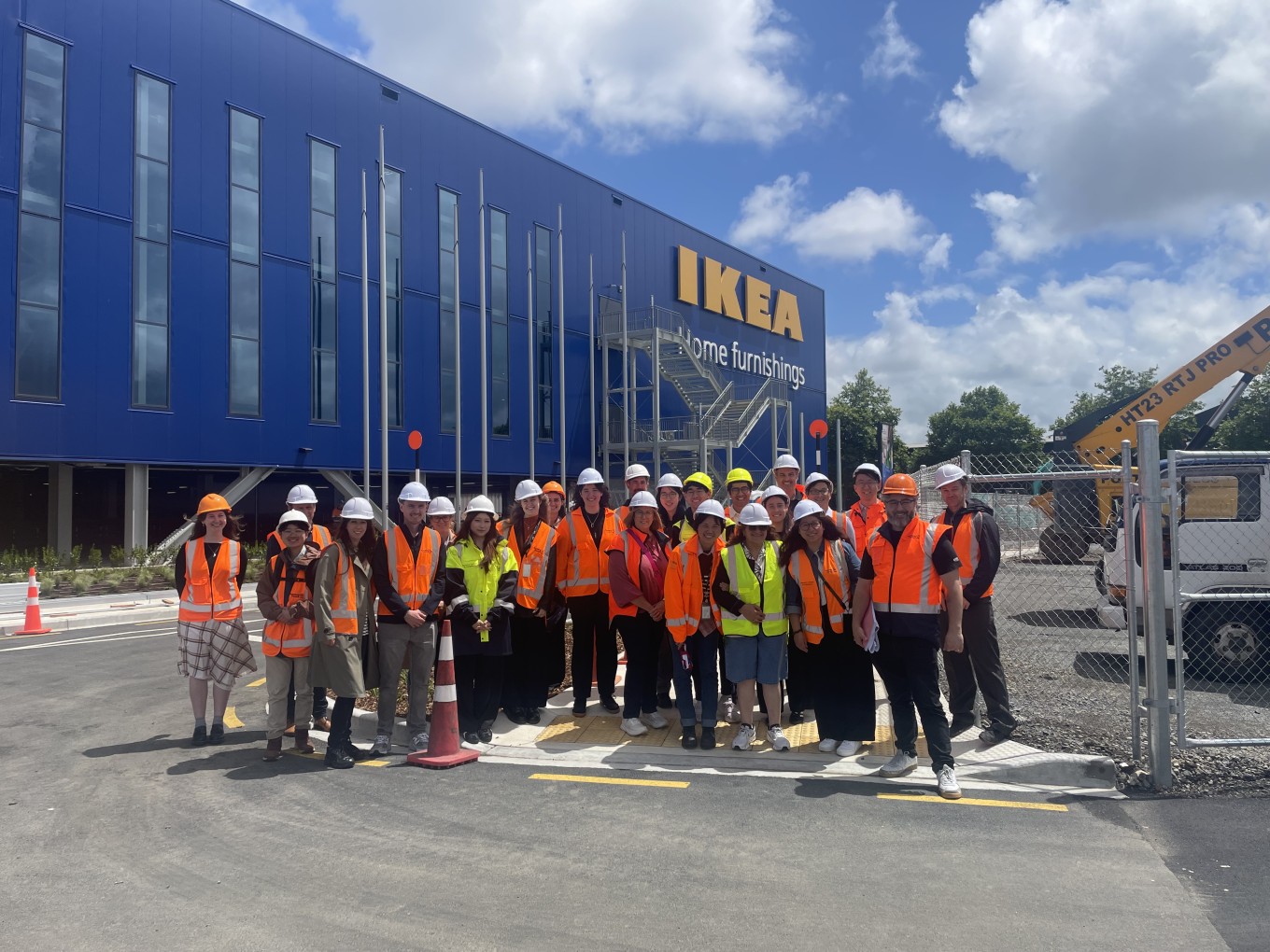
Recently, Auckland Council’s resource consents team visited the construction site with Naylor Love and Kiwi Property to reflect on how several months of planning work has now materialised on the ground.
Processing planner Oscar Orellana says seeing their work turn into a real, physical project has been especially rewarding.
“Working across so many disciplines—transport, ecology, cultural heritage—really expanded my understanding of what it takes to deliver a major project. Seeing that work reflected in what’s being built on site has been genuinely motivating.”
For the team, IKEA is more than just a big blue box, it’s a reminder of the value of the resource consent system. Careful assessments across environmental, cultural and economic fronts are exactly what give major developments the confidence, and community backing, to go ahead.
IKEA Aotearoa: Key Facts
Location: Sylvia Park, Mount Wellington
Status: completed
Opened: December 2025
Consent lodged: October 2021
Notification: limited-notified to adjoining neighbours including KiwiRail
Submissions received: none (all neighbours provided written approval)
Hearing: Not required
Key considerations: transport, cultural effects, economic impacts, stream naturalisation, urban design, integration with Sylvia Park, contamination, construction impacts
Mana whenua role: site design input, artwork, naturalisation corridor, contractor inductions, accidental-discovery protocols
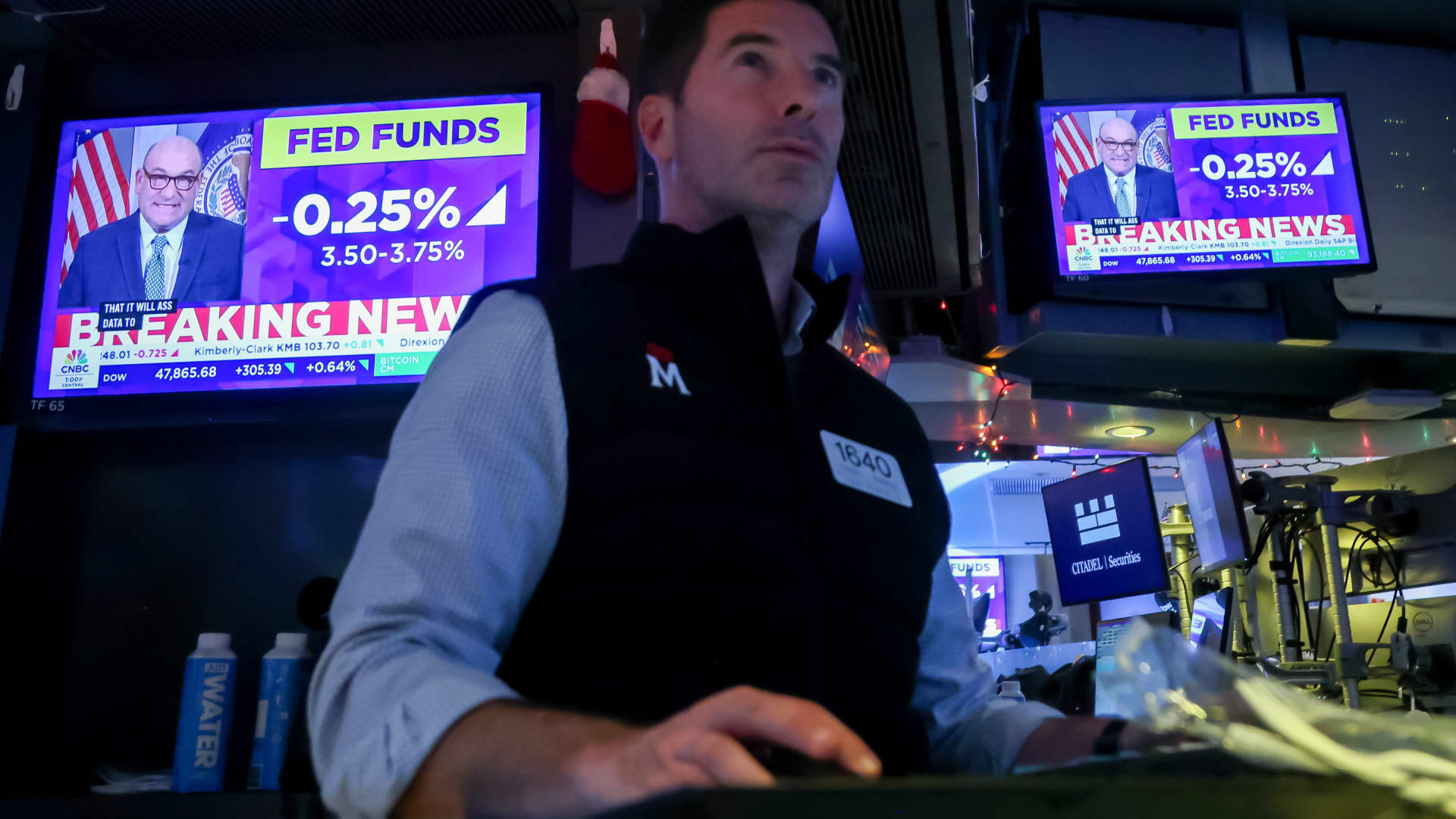
A television station broadcasts the Federal Reserve’s decision to cut rates on the floor of the New York Stock Exchange (NYSE) in New York, US, on Wednesday, Dec. 10, 2025.
Michael Nagle | Bloomberg | Getty Images
Stock futures were little changed on Sunday night following a mixed week on Wall Street amid a big rotation out of tech and into parts of the market trading at lower valuations. Traders also braced for a slew of U.S. economic data reports ahead this week.
Dow Jones Industrial Average futures rose 43 points, or 0.1%. Futures tied to the S&P 500 gained 0.1% along with Nasdaq-100 futures.
Those moves come after the S&P 500 and Nasdaq Composite fell last week, as Oracle and Broadcom led a rotation away from artificial intelligence. The S&P 500 lost 0.6% last week, while the Nasdaq shed 1.7%. The Dow, which is less exposed to tech and AI than the other two benchmarks, rose 1.1%.
Oracle plunged 12.7% for the week, while Broadcom shed more than 7%. The S&P 500 tech sector dropped 2.3%.
“The S&P 500’s Magnificent-7 might be less magnificent in 2026 as their fierce competition in the AI race starts to erode the monopolies they have enjoyed,” wrote Ed Yardeni, president of Yardeni Research. “The beneficiaries of that competition are likely to be the S&P 500’s Impressive 493.”
Economic data reports could set the tone for the market in the week ahead.
November nonfarm payrolls figures are set for release Tuesday, along with October retail sales figures. These reports were delayed due to the U.S. government shutdown that took place in the fall.
The November consumer price index is due out on Thursday.
Our extensive experience in the maritime domain set us up for success in the development of asset and lifecycle management systems that optimise performance throughout a vessel’s operational life.
Optimising performance over a vessel’s lifecycle
Lifecycle Upkeep Sustainment Intelligence (LUSI)
Our ships are built to operate for decades, supporting our customers as they connect communities and manage fleet operations around the world. To maximise the value and performance of these vessels we developed LUSI, a fully integrated information management platform that consolidates data from onboard systems, asset management tools and engineering processes.
LUSI captures relevant operational and maintenance data and transforms it into timely, actionable analysis, enabling operators to make informed decisions, plan maintenance more effectively, reduce downtime and enhance vessel capability.
Technologies are changing at a rapid rate and to ensure our customers remain fully supported, we provide tailored training for maintenance and operating crews, as well as specialised training for onboard monitoring and information systems.
Our training solutions are designed to enhance crew capability, improve vessel performance, and ensure safe, efficient operations throughout the vessel’s lifecycle.
Combining classroom learning, digital tools and onboard instruction our globally delivered programs ensure crews are ready for deployment.
We deliver proven performance, next generation innovation and mission-critical reliability.
With more than three decades of experience manufacturing ships for commercial and defence customers, and production facilities in Australia, the United States, Philippines and Vietnam, we are renowned for delivering proven and reliable naval vessels.
An efficient, modular approach
At the heart of our manufacturing approach, is a commitment to quality, efficiency and safety, combining advanced technologies with smart manufacturing processes to deliver vessels.
We take a modular approach to our shipbuilding operations across the globe. This involves building prefabricated modules of a ship indoors and transferring to our large vessel assembly bays to complete the manufacture of each vessel.
Automation drives productivity and accuracy across the value chain, from robotic welding, to automated material handling and computer controlled cutting and forming. Our systems minimise error and reduce waste whilst allowing our skilled tradespeople to focus on innovation and craftsmanship.
Through the application of digital twin technology and with a digital thread connecting each stage of the manufacturing process stage, our customers can be assured of a quality product, that is built on time and on budget.
Veterans and trainees’ approach ‘growth journey as a family’
At Minneapolis VA, health professions trainees are learning skills to advance their careers, and they’re also providing more access to care for Veterans in need.
Iida Jacobsen, a trainee in the Occupational Therapy Fellowship Program, is in her second year of training at VA. After getting her license, she chose to do her fellowship with VA since she had such great experience in her field work last summer.
The primary reason for choosing VA was her love of working with Veterans. “My grandpa was a Veteran, but I feel it goes more beyond that,” said Jacobsen. “I feel like I have a calling to work with Veterans. It’s a natural affinity that has driven me my whole life.”
Unique learning opportunities
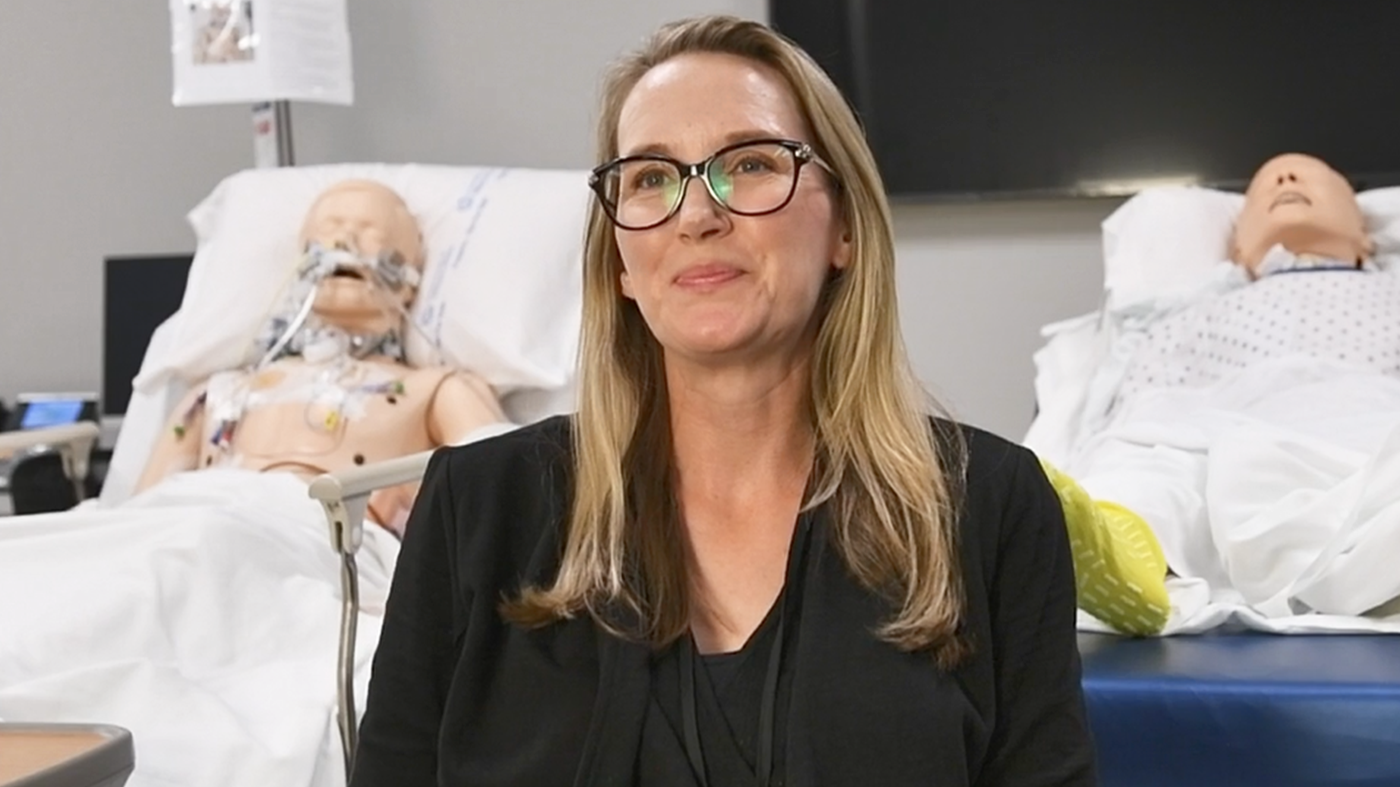
Iida Jacobsen, OTR/L, a trainee at Minneapolis VA, describes the training she receives at a VA medical center and how she feels about working with Veterans. VA educates more than 122,000 health professions trainees across the nation every year, making VA the largest provider of health professions education in the nation.
Another reason Jacobsen was drawn to VA is it offered her an opportunity to train across multiple disciplines within the medical center—an experience she described as one of the unique advantages of VA training.
“The fact that I was able to shadow the pain clinic, inpatient mental health and spinal cord, was a really valuable experience and really speaks to the learning opportunities that VA provides for its students and trainees,” said Jacobsen.
More than 122,000 trainees in over 60 disciplines trained this year in VA medical centers across the nation, receiving these unique training opportunities.
For Michelle Berg, a nurse practitioner resident at Minneapolis VA, the various features of the training programs are reassuring and help build confidence.
“In clinical, you might order tests, or you might order imaging, but you rarely saw the end result of those,” said Berg. “And so, entering into a residency gives kind of a safety net underneath, after starting to practice and have that additional support.”
Veterans enjoy working with trainees
VA trainees often say Veterans enjoy being a part of the learning experience. Jacobsen recalled multiple Veterans saying they hope they are helping her learn something.
“I really think it speaks to the Veteran population because they still have this definite, deep fulfillment of service to students, to civilians. I really felt a deep sense of gratitude that they still wanted to be a part of the next generation of trainees,” said Jacobsen.
Laurie Humiston, the Occupational Therapy Fellowship Coordinator for Jacobsen’s program, echoes those experiences in her daily work and believes it is the best part of her job.
“I get to connect trainees and Veterans through their growth journeys, gaining skills that help each other,” said Humiston. “The trainees become more advanced practice providers, and Veterans get to benefit from that teaching. They also get to see how that teaching happens, and so we all approach that growth journey as a family.”
Veterans benefit overall
Berg is thankful for the profound experience gained from working with VA as she transitions into practice as a nurse practitioner. She is glad that the skills she learned will help her to take better care of Veterans.
“Working with the Veterans and understanding their special needs has been something that no matter where my career takes me, I will now provide better care of Veterans overall,” said Berg.
For Jacobsen, her love of working with VA stretches beyond the high-quality training. She believes in VA’s mission of caring for those who have served in the nation’s military and encourages others to do so as well.
“I’m always a deep advocate for VA and for the Veteran population,” said Jacobsen. “So, I would say if this ever reaches any others who are wanting to give VA a shot—let this be a message to make that a reality. It’s an experience that you won’t regret, and VA really has a lot of opportunities and experiences that would aid in any student’s learning.”
VA partners with more than 1,450 academic institutions throughout the nation, making VA’s health professions education program the largest in the United States. These programs, overseen by the Office of Academic Affiliations, are shaping the next generation of health care professionals for VA and the nation.