The audio version of this article is generated by AI-based technology. Mispronunciations can occur. We are working with our partners to continually review and improve the results.
A new employee group at Horizon Health Network is working to support the growing cohort of internationally-trained staff with the company.
Abidemi Balogun, a registered nurse in Saint John who is originally from Nigeria, said the International Educated Employee Resource Group, which was started earlier this year, gives internationally-trained staff a sense of belonging and a safe space to share ideas.
“Mainly what this group is all about is just to give them … support,” said Balogun.
“Support by mentorship, leadership, giving them that empowerment.”
Marwa Elnady, a Saint John registered nurse originally from Egypt, said she wished a program like this one was available when she first moved to New Brunswick.
LISTEN | Marwa Elnady and Abidemi Balogun hope efforts help newcomers settle and stay:
Information Morning – Saint John15:30New peer support program for international health care workers
Host Emily Brass speaks with some internationally born health-care workers who are trying to give other newcomers in their field a leg up, with social support and cultural guidance. Marwa Elnady and Abidemi Balogun hope their efforts will help newcomers settle in and stay.
She said when she moved to Saint John, she had to find settlement agencies on her own, which she said can be demoralizing while living and working in a new environment.
“One of the phases is the frustration phase when sometimes we lose hope with everything, see [the] struggles more than the opportunities,” said Elnady.
According to Horizon, there are 740 internationally-trained employees with the health authority, including 430 nursing staff and 30 salaried physicians.
Balogun said it’s not just moving to Canada that can lead to culture shock, moving within Canada can be shocking, too.
Before moving to Saint John, Balogun lived in Ontario after moving from Nigeria, but he said moving from one province to another still had its adjustment period.
“I came [to] Saint John in 2019 when we [had few] Africans,” said Balogun.
“I could imagine if I was coming directly from Africa.”
Elnady said it’s important to make newcomers feel at home, not only for their mental and physical health, but also for the health of hospital patients.
She said not feeling a sense of belonging can eventually lead employees to not putting their all into their work.
It can also lead to staffing retention issues.
“If I’m not happy in Saint John, I won’t be staying,” said Elnady.
Balogun said there are still some employees who “are not really aware of this program,” so the group needs to find ways to spread the word.
Glynn Barton, chief operations officer at BCP, said: “Work will begin on Twin Sails, as scheduled, on 15 December, with the team installing key components before Christmas.
“There has been a delay, outside of the council’s control, relating to a key process in the manufacturing of the components from our supplier.
“This process must happen to ensure the components meet the required safety standards needed to be installed.
“Our team will work continue to work throughout December to ensure the bridge can return to use as soon as possible.
“We will keep residents updated on these repairs as we go.”
In May last year, the bridge remained out of action for almost three months after another fault was identified during scheduled checks.
Earlier this year, BCP councillors approved £6m of funding from the Community Infrastructure Levy to deliver a long-term solution.
The investment will focus on improving the lifting mechanism and addressing recurring reliability problems that have disrupted journeys for residents and businesses.
Brussels [Belgium], December 13 (ANI/WAM): In the third quarter of 2025, 49.3% of net electricity generated in the EU came from renewable energy sources, an increase of 3.8% compared with the 47.5% registered in the same quarter of 2024, according to figures by Eurostat, the statistical office of the European Union.
Among EU countries, in the third quarter of 2025, Denmark, with 95.9%, had the highest share of renewables in net electricity generated, followed by Austria (93.3%) and Estonia (85.6%). The lowest shares of renewables were recorded in Malta (16.6%), Czechia (19.7%) and Slovakia (21.1%).
In 21 EU countries, the share of renewable energy sources in net electricity generation increased in the third quarter of 2025. The largest year-on-year increases were recorded in Estonia (+20.6 percentage points (pp)), Latvia (+18.9 pp) and Austria (+16.3 pp).
Most of the electricity generated from renewable sources came from solar (38.3%), wind (30.7%) and hydro (23.3%), followed by combustible renewable fuels (7.2%) and geothermal energy (0.5%). (ANI/WAM)
(This content is sourced from a syndicated feed and is published as received. The Tribune assumes no responsibility or liability for its accuracy, completeness, or content.)
Bajwa, J., Munir, U., Nori, A. & Williams, B. Artificial intelligence in healthcare: transforming the practice of medicine. Future Healthc. J.8, e188–e194 (2021).
Google Scholar
Bohr, A. & Memarzadeh, K. The rise of artificial intelligence in healthcare applications. In Artificial Intelligence in Healthcare (eds Bohr, A. & Memarzadeh, K.) 25–60 (Academic Press, 2020).
Moynihan, A. et al. New technologies for future of surgery in Ireland: An RCSI working Group report 2024. Surgeon23, 120–132 (2025).
Google Scholar
Sauerbrei, A., Kerasidou, A., Lucivero, F. & Hallowell, N. The impact of artificial intelligence on the person-centred, doctor-patient relationship: some problems and solutions. BMC Med. Inform. Decis. Mak.23, 73 (2023).
Google Scholar
Duffourc, M., Møllebæk, M., Druedahl, L. C., Minssen, T. & Gerke, S. Surgeons’ perspectives on liability for the use of artificial intelligence technologies in the United States and European Union: results from a focus group study. Ann. Surg. Open6, e542 (2025).
Google Scholar
Park, H. J. Patient perspectives on informed consent for medical AI: a web-based experiment. Digit. Health10, 20552076241247938 (2024).
Google Scholar
Iserson, K. V. Informed consent for artificial intelligence in emergency medicine: a practical guide. Am. J. Emerg. Med.76, 225–230 (2024).
Google Scholar
Pallocci, M. et al. Informed consent: legal obligation or cornerstone of the care relationship? Int. J. Environ. Res. Public Health20, 2118 (2023).
Google Scholar
Ng, I. K. Informed consent in clinical practice: old problems, new challenges. J. R. Coll. Physicians Edinb.54, 153–158 (2024).
Google Scholar
Director, S. Does black box AI in medicine compromise informed consent? Philos. Technol.38, 62 (2025).
Google Scholar
De Menech, C. Artificial intelligence and self-determination in medical field. Eur. J. Priv. Law Technol.1, 164–180 (2022).
Google Scholar
World Health Organization. Ethics and governance of artificial intelligence for health: WHO guidance. https://iris.who.int/handle/10665/341996 (World Health Organization, 2021).
Pruski, M. AI-enhanced healthcare: Not a new paradigm for informed consent. J. Bioethical Inq.21, 475–489 (2024).
Google Scholar
Mello, M. M., Char, D. & Xu, S. H. Ethical obligations to inform patients about use of AI tools. JAMA334, 767–770 (2025).
Google Scholar
Cahill, R. A., Duffourc, M. & Gerke, S. The AI-enhanced surgeon—integrating black-box artificial intelligence in the operating room. Int. J. Surg.111, 2823–2826 https://doi.org/10.1097/JS9.0000000000002309 (2025).
Google Scholar
Oliphant, K. Medical malpractice and compensation: comparative observations. In Medical Malpractice and Compensation in Global Perspective (eds Oliphant, K. & Wright, R.) 513–562 (Walter de Gruyter, 2013).
Borysiak, W. Concept of due care in medical law in a comparative perspective. Eur. J. Health Law31, 1–26 (2023).
Google Scholar
Duffourc, M. & Gerke, S. Decoding US Tort Liability in Healthcare’s Black-Box AI Era: lessons from the European Union. Stanf. Tech. L. Rev.27, 1–70 (2023).
Google Scholar
Raab, E. L. The parameters of informed consent. Trans. Am. Ophthalmol. Soc.102, 225–232 (2004).
Google Scholar
Almekkawy, M. et al. Therapeutic systems and technologies: state-of-the-art applications, opportunities, and challenges. IEEE Rev. Biomed. Eng.2, 325–339 (2019).
Google Scholar
Davis V. Nassau Ophthalmic Servs., P.C., 232 A.D.2d 358, 648 N.Y.S.2d 454 (1996).
BGH, judgment of 13-6-2006 – VI ZR 323/04 (OLG Frankfurt a.M.).
Johnson v. Jacobowitz, 65 A.D.3d 610, 884 N.Y.S.2d 158 (2009).
Mills v. Oxford University Hospitals NHS Trust, [2019] EWHC 936 (QB).
Snow v. Royal United Hospitals Bath NHS Foundation Trust, [2023] EWHC 42 (KB).
BGH, judgment of 22-09-1987 – VI ZR 238/86 (Karlsruhe).
Stover v. Association of Thoracic and Cardiovascular Surgeons, 635 A.2d 1047, 431 Pa.Super. 11 (1993).
OLG Cologne, judgment of 21.09.2011 – 5 U 188/10.
Bayley v George Eliot Hospital NHS Trust, [2017] EWHC 3398 (QB).
OpenAI on Thursday unveiled the latest artificial intelligence (AI) model in its GPT series, in collaboration with long-standing partners Nvidia and Microsoft. The company claimed major improvements in reasoning, speed, and real-world task performance in GPT-5.2.
Here’s all you need to know:
Features of GPT-5.2
A few months after the rollout of GPT-5, OpenAI has introduced upgrades to the model. The company claims that the latest version is capable of creating spreadsheets and presentations, writing code, perceiving images, and understanding long contexts.
Long-context reasoning was tested on OpenAI’s MRCRv2 benchmark — an evaluation that measures a model’s ability to integrate information spread across long documents. This makes the model well-suited for deep analysis, synthesis, and complex multi-source workflows.
On image perception, the Sam Altman-led company said the model has a stronger grasp of visual elements, showing improved comprehension of images.
The company also noted that GPT-5.2 Thinking is more accurate than the GPT-5.1 Thinking model. The blog post added that GPT-5.2 sets new performancebenchmarks, outperforming industry professionals across 44 occupations.
GPT-5.2 plans, pricing
OpenAI has rolled out three variants of GPT-5.2 — Instant, Thinking, and Pro — all of which are available under paid plans. GPT‑5.2 is priced at $1.75/1 million input tokens and $14/1 million output tokens, with a 90% discount on cached inputs.
Performance benchmarks
GPT-5.2 outperformed human experts in knowledge-based tasks across 44 occupations. The company added that the Thinking plan of GPT-5.2 beat top industry professionals in 70.9% of comparisons on GDPval knowledge-work tasks. These tasks include making presentations, spreadsheets, and other work artefacts.
In terms of speed, GPT-5.2 Thinking produced outputs for given tasks at more than 11 times the speed and at less than 1% of the cost of expert professionals, the company said.
GPT-5.2 Thinking’s average score per task was 9.3 percentage points higher than GPT-5.1’s, increasing from 59.1% to 68.4%.
For coding, GPT-5.2 Thinking sets a new benchmarkwith a score of 55.6% on SWE-Bench Pro, which evaluates real-world software engineering tasks.
For professional use, GPT-5.2 Thinking can debug production code and implement complex features across large codebases.
How to access GPT-5.2?
To access OpenAI’s advanced AI model GPT-5.2, users must be subscribed to a Plus, Pro, Business, or Enterprise plan.
In ChatGPT, GPT-5.2 Instant handles everyday tasks, such as general assistance, technical writing, and translation.
GPT-5.2 Thinking helps with coding, summarising long documents, answering queries based on attached files, and solving math and logic problems.
The Pro version, which is yet to be fully explored, is expected to demonstrate stronger performance in highly complex tasks, such as advanced programming and system-level reasoning.
Heightened competition
Rivals, including Google and Microsoft, have been pumping billions of dollars into developing AI systems. Recently, OpenAI CEO Sam Altman had accepted that Google’s recent successes in AI could “create some temporary economic headwinds for our company,” The Information reported.
Google introduced Gemini 3, which the tech giant says is its most capable model yet. Software developers claim that it performs better in automating website and product design, as well as writing code.
Also Read: Rise of the machines: From AI to AGI to the uncharted realm of Superintelligence
Mark Zuckerberg is going all-in on a new high-stakes project: a “superintelligence” lab in Meta, focussed on building AI systems that surpass human-level intelligence.
Anthropic’s Claude unveiled Opus 4.5 in November, boosting Claude’s ability to write detailed code, create sophisticated agents, and streamline enterprise workflows through spreadsheet and financial analysis.
The process of designing operating concepts for new vehicles is more complex today than ever before, as customer needs have diverged drastically around the world. For example, sporty, largely distraction-free driving is much more important in Europe than in Asia, where bumper-to-bumper traffic is a part of everyday life in the big cities. Passengers should be able to take advantage of the time they spend stuck on the road – with features tailored to their personal needs. The Porsche solution is to transform the interior into an experience zone. “With Porsche Digital Interaction, we connect intelligent software and advanced hardware to create a seamless, personalized, and networked driving experience,” explains Sajjad Khan, Member of the Executive Board, Car-IT.
Conventional dashboards cannot fulfill the different requirements. The solution: a symbiosis of analog controls and a digital cockpit. While a few years ago, a handful of round instruments defined the driver’s direct field of vision, state-of-the-art cockpits like that in the Cayenne Electric incorporate large sections of the dashboard.
Up to four displays allow the driver and codriver to interact with the SUV. It was the responsibility of Ivo van Hulten, Director of Driver Experience, and his team to make these displays user-friendly.
Designer: Ivo van Hulten, Director of Driver Experience, is responsible for the UX/UI design.
The main focus was to develop a UX/UI design that makes operation more intuitive and ergonomic, as well as safer and more comfortable. “UX” stands for user experience, and “UI” for user interface. A logically structured UX/UI concept therefore not only affects vehicle operation, but can also have an impact on the brand experience and customer satisfaction.
A balance of emotion and function
“The Macan Electric concept served as a basis for the UX/UI design,” explains van Hulten. “Again, with the Cayenne, the aim was to create a good balance of emotion and function, without diminishing the focus on Porsche. Our models are developed with the driver in mind. Operating vehicle features should not distract them if at all possible.”
That’s what Porsche refers to as the Driver Experience. The driver is the focus of activity, with each touch, every necessary action, designed to increase the level of comfort and support the task of driving. Considering the sheer number of functions available in the Cayenne Electric, that’s a herculean task.
In addition, the range of functions will continue to expand throughout the vehicle’s service life, as the Cayenne can be updated in the digital age. New functions can be downloaded over the air (OTA), which works much like with a smartphone. Simply install an update for immediate access to new features.
Software experts: Sajjad Khan (left) talking with colleagues. He has been the Member of the Executive Board, Car-IT, since 2023. A lot of his expertise went into the new Cayenne Electric.
AI-supported voice recognition
What that means for the driver is best explained using the Porsche Voice Pilot. “The AI-supported Voice Pilot is based on high-performance large language models (LLM),” says Sajjad Khan. “This makes it a true conversation partner that not only understands what you say but also what you mean.”
Complex interconnected issues are therefore no longer a problem for the new voice assistant. “What is the best restaurant in Stuttgart? Which dish has the best recommendation? Where can I park?”
If specific questions like these come up while driving, the Voice Pilot recognizes natural language and can help. An online update can be carried out via the vehicle’s App Center, thereby giving it new functionalities. Rather than hardware alone, it will largely be software that determines the range of functions in the future.
Manual operation is a breeze, too. The design team has managed to seamlessly integrate the central input unit into the dashboard in the form of the Flow Display. This curved OLED design transitions smoothly into the central console and thus enables extraordinary control logic. A newly developed wrist pad simplifies operation. It allows the driver to operate the digital and analog elements ergonomically – even in dynamic driving situations.
Generous display landscape
Along with up to another three monitors, the Flow Display forms the largest digital user interface in a Porsche. Directly in front of the driver, a fully digital 14.25-inch OLED instrument cluster displays information about the speed, navigation, assistance systems, and infotainment. There you can also choose a new view, the “Signature Screen,” which closely resembles the traditional round instruments that became a trademark feature during the air-cooled Porsche era.
State of the art: Despite the short charging times for the Cayenne at suitable fast chargers, you just might be able to get in some video game time. All content is displayed smoothly on the curved Flow Display.
The optional 14.9-inch codriver display offers entertainment, app control, and video streaming even during the drive, without distracting the driver. The Cayenne Electric also optionally offers a head-up display with augmented-reality technology. With a size of 87 inches, it shows the road about 10 meters in front of the vehicle and embeds virtual driver assistance and navigation content into the real-world view as needed.
Intuitive operation of the most important functions
In addition, configurable widgets in the lower part of the Flow Display enable intuitive operation of the most important functions. The color scheme of all the digital surfaces throughout the interior can be adapted using the Themes app.
There are five color schemes and theme worlds to choose from, all of which modify the appearance of the Flow Display, the instrument cluster, other displays, and the ambient lighting, transforming the digital user interface into a customizable design element.
The App Center contributes to the increasing individualization of the Cayenne by allowing Porsche apps and those of third-party providers to be kept up to date at all times. Regardless of where in the world the Cayenne Electric finds itself, it can be adjusted to meet regional preferences with ease.
The Cayenne Electric’s Digital Key can transform smartphones and smartwatches into vehicle door openers. Using ultra-wideband (UWB) radio technology, the Cayenne is able to recognize cell phones or watches and automatically unlock or lock the doors as you approach or walk away. The Porsche Digital Key can be easily shared with Apple or Android users via SMS or AirDrop and used with Apple or Google Wallet. Up to seven additional users are possible. Individual users can also be assigned different permissions, restricting the Cayenne’s functions to certain users, including unlocking the trunk and opening the hood.
Key factor: The Cayenne Electric can be opened via smartphone or smartwatch using the Digital Key. The key can be shared with up to seven people and is used via the Wallet app.
Designed to be touched
For all its focus on digitalization, Porsche never lost sight of tactile elegance. While the eye-catching Flow Display offers ultrasmooth operation, analog or capacitive control elements have been maintained for the most common functions. Buttons on the outer edge of the combi display, in the steering wheel spokes, and below the Flow Display allow convenient and direct access to radio, telephone, and air-conditioning functions. The lights, the Porsche Electric Sport Sound (PESS), and the parking assistance functions can also be controlled.
Additionally, there are two freely configurable joker buttons. These, too, contribute to the Driver Experience. Maximum ease of use with minimal distraction for the driver meets extraordinary innovation and state-of-the-art design. “Because the driver is of central importance in everything we do,” says Sajjad Khan.
“Enter Electric!“
The Volkswagen Group invites you to find out much more about electromobility with a cross-brand communication campaign. You can find more information about electromobility at Porsche on this Newsroom microsite.
Info
Text first published in the Porsche magazine Christophorus 417 – out now!
Text: Christian Bangemann Photos: Porsche
Copyright: All images, videos and audio files published in this article are subject to copyright. Reproduction in whole or in part is not permitted without the written consent of Dr. Ing. h.c. F. Porsche AG. Please contact newsroom@porsche.com for further information.
Weaker milk prices, elevated costs and global market uncertainty mean that Irish dairy farmers are facing into a more challenging year in 2026.
That’s according to Dr. Emma Dillon, Senior Research Officer and Economist with the Teagasc National Farm Survey who addressed the recent Teagasc Outlook 2026 Conference, and presented a paper co-authored with Trevor Donnellan, Head of the Agricultural Economics and Farm Surveys Department, Teagasc.
Dr. Dillon highlighted the importance of the global supply and demand context, noting that 2025 marked a year of significant production growth worldwide. Irish milk production is estimated to increase by 4-5% in 2025, EU production up slightly, less than 0.5%, while other key exporting regions such as the US and New Zealand are also expected to publish production increases.
As a result of this increased supply, Dr. Dillon explained, global dairy commodity markets have been under downward pressure in recent months.
This volatility fed directly into milk price movements this year. Irish milk prices are estimated to have risen by about 3% year-on-year in 2025, but Dr. Dillon stressed the sector’s reliance on commodity markets: “When those markets are performing well, the Irish milk price will do well. When they are in difficulty, we are in difficulty.”
Dr. Emma Dillon presenting at the Teagasc Outlook 2026 Conference
Illustrating the impact on this volatility, Dr. Dillon noted that the average dairy farmer is estimated to generate a net margin of 21c/L in 2025 or €2,600/ha, the outlook for 2026 is less positive, however.
Driven largely by the global trade imbalance, ongoing geopolitical and economic uncertainty, along with oversupplied markets, Dr. Dillon provided a forecast for Irish dairy farms for the year ahead: “We are expecting more moderate supply growth in 2026, with lower prices anticipated in the first half of the year,” Dr. Dillon said. “It is very difficult to pinpoint when prices will recover.”
For her forecast on margins for the year ahead, Dr. Dillon used an average Irish milk price of 42c/L (actual constituents) or 37c/L (base price), with production expected to remain stable and costs sticking to their elevated levels. Overall, the Teagasc economist forecast that the average dairy farm net margin would fall to €1,500/ha or lower in 2026, with the net margin per litre forecast to dip to 11.5c/L. However, increased returns from calf and cull cow sales are expected to buffer dairy farmers somewhat from lower market prices, especially in the early half of the year.
Dr. Dillon concluded her presentation by explaining that the Irish dairy sector remains highly exposed to swings in global commodity prices due to the relatively inelastic nature of dairy demand and the slow supply response possible within the sector. However, she noted that the medium to long term prospects look favourable, driven by expected global growth in protein demand and strengthening economic conditions in Southeast Asia, though challenges around inflation and cost of living persist.
For dairy farmers preparing for the year ahead, Dr. Dillon reinforced the messaging from the recent Teagasc National Dairy Conference on cost control and benchmarking.
“Dairy farm incomes need to be viewed in the context of almost 1.9 labour units per farm (1.4 labour units being family labour),” Dillon noted. “Benchmarking costs, controlling overheads, stress-testing cash flow and maintaining liquidity will be essential in the year ahead.”
For full insights and to read Dr. Dillon’s paper from the Teagasc Outlook 2026 Conference, visit here.
But Wernham said most passengers cannot make the walk to other transport links and asked Cumberland Council and Stagecoach to confirm what assessments were undertaken before the decision was made.
He has also questioned whether options such as using a smaller single decker bus were considered to keep operating costs down.
Stagecoach said it had engaged closely with Cumberland Council throughout the review process and will continue to work with the authority to explore any feasible alternatives.
It comes after the Labour-controlled council launched “Cumberland Go” – a set of subsidised bus services to enhance services operating in and around Carlisle, Anthorn, Whitehaven, Ravenglass, Millom, Barrow and Egremont.
The BBC has approached Cumberland Council for comment.
Fred Bretzke has amassed about two million views on YouTube for what he describes as “boring” plumbing videos.
Ten years ago, Bretzke, an instructor in SAIT’s School of Construction, saw an opportunity to inject new life into teaching Plumbing using computer animation. As the 2024/25 Cadmus Trades Teaching Chair, he went a step further — creating a 3D-enhanced supplement to the 2020 National Plumbing Code appendix.
The Cadmus award is designed to foster faculty excellence in skilled trades teaching. Award recipients receive $20,000 in funding and a four-month break from teaching to work on their project.
It’s in the code
As the manual of technical requirements for all plumbing design and installation in Canada, the code book is a critical tool in Bretzke’s teaching toolbox.
“Parts of the book haven’t changed much over the years,” says Bretzke. “The figures are just stick drawings — many from 40 to 50 years ago. It’s hard to teach from a drawing like that.”
Securing computer equipment, digital tools and a handful of AI voice programs through his Cadmus budget, Bretzke used his project time (plus some) to create 65 3D animations and eight holograms to help interpret existing code appendix articles from basic installations to detailed plumbing designs.
After uploading everything to YouTube, he combined screenshots and a QR code link to each animation into a handy reference guide in book form.
“Each AI-narrated video is about three minutes,” he says. “I did the design, made the animations, wrote the scripts, managed the narrations and put everything together.”
A screenshot of Bretzke’s 3D code supplement animation for A-2.6.3.1.(2)-A pertaining to potable water systems in commercial kitchens.
Made for teaching
The animations are primarily intended as teaching tools for trades instructors.
“When you’re teaching with the videos, the idea is you stop and start as needed,” he says. “I could probably spend three hours teaching to a three-minute video and explaining all the references.”
According to Bretzke, a single animation can cover about 15 pages in an apprentice’s Individual Learning Module — the standardized training materials used in trades and technical courses.
“Trades are very visually oriented,” he says. “Seeing things in 3D helps expedite learning and makes everything more accessible to the student.”
Bretzke even translated the script for a few of the animations into additional languages, including French, Hindi and Mandarin.
When he first started using animations in the classroom, some of his students were hesitant, he admits. But if the tech is easy to use, people will use it, he says.
“I’m teaching my students not to ignore technologies like AI and 3D,” says Bretzke. “I’ve been on construction sites where there’s a 3D artist with no knowledge of the trade working with a plumbing foreman to try and turn a hand drawing into a 3D image. Imagine being a tradesperson who could do both? You’d be a hot commodity.”
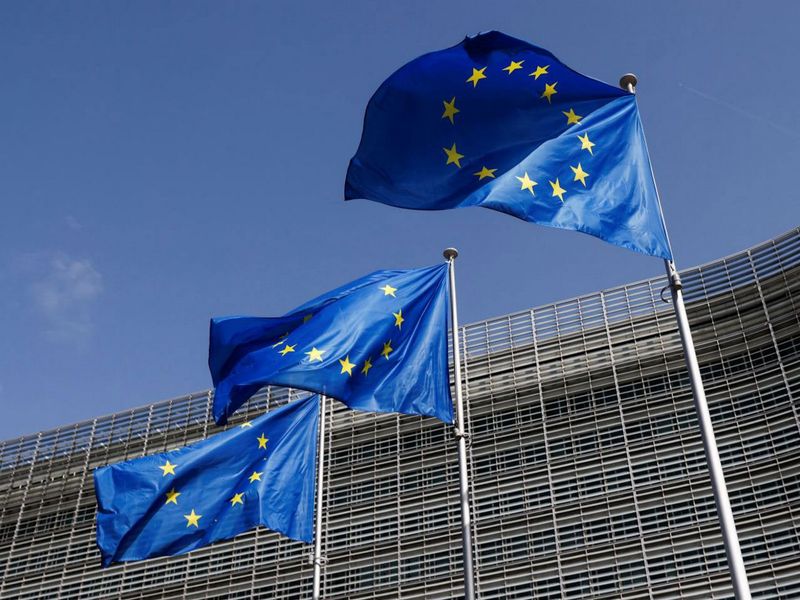
French and Dutch regulators have stymied a controversial plan by stock exchange group Euronext that could have driven the settlement of more than 1,250 exchange traded funds to its own platform.
Euronext unveiled plans earlier this year to consolidate ETF listings on its bourses as a way of improving liquidity. But a related plan that could have made its own central securities depository (CSD) the default settlement venue for Paris and Amsterdam-listed funds triggered an industry backlash over fears of higher costs. Rival Euroclear and market maker Jane Street were among those critical of the plan.
However, intervention by regulators the Autorité des Marchés Financiers and the Autoriteit Financiële Markten has pushed Euronext to change its plans.
“The regulators took a view and we are now adjusting that,” said Pierre Davoust, head of Euronext’s depository Euronext Securities. He added that regulators “have asked us to review” the connectivity between it and Euroclear — a move that maintains a choice of settlement venue for traders.
“We never intended to discriminate against any CSD,” he said. “The purpose of the project was never to deny customers the choice. It was to give them choice.”
Euroclear said in a statement that, as a result of complaints it had made, the AMF and the AFM judged Euronext’s plans to be “discriminatory . . . not justified by a risk which may affect the smooth and orderly functioning of the financial markets . . .[and] not justified by the necessity to ensure the efficient and economic settlement of the transactions”.
The AMF declined to comment. The AFM said it could not comment on specific cases, but added: “In general, the AFM aims to ensure fair competition between CSDs. Open access, where market participants such as exchanges, central counterparties and CSDs grant access to each other’s infrastructures, contributes to this goal.”
The intervention by regulators has been greeted positively by many in the industry.
“Our members welcome recent developments that will grant them the flexibility to continue to settle through the ICSD [international central securities depository],” said Lara Shevchenko, markets structure expert at the European Principal Traders Association, an industry body representing 20 market makers.
“This will ensure current levels of settlement efficiency in European ETF markets are maintained,” she added.
Jim Goldie, Emea head of capital markets, ETFs and indexed strategies at Invesco, said keeping a choice of depositories “is a good outcome for investors”.
The plan by Euronext — which operates seven stock exchanges across Europe, including Milan, Paris and Amsterdam — to consolidate ETF listings was broadly welcomed by the industry, as it was seen to be tackling the fragmentation and illiquidity that often stems from a single ETF being listed on several exchanges.
But many in the sector had feared the related proposal to make Euronext Securities, where its Milan ETFs are already settled, the default settlement venue for ETFs listed in Paris and Amsterdam would mean a rise in post-trade fragmentation.
At present, most European ETF trades are settled on international CSDs operated by Euroclear and Clearstream, which has the effect of unifying trade settlement.
One issue with the Euronext plan was the fact that many of the ETFs listed in France and the Netherlands are also cross-listed on other European bourses, such as the London, Swiss and Xetra exchanges, where market participants settle through ICSDs.
Even for Euronext’s own listings, its settlement plans would have only applied to the quarter of ETF trading conducted on exchange, with other trades still settled via ICSDs.
Moreover, Euronext Securities only supports euro-denominated ETFs, meaning a trader wanting to switch between dollar and euro share classes would need to settle in two different locations. It also only covers secondary market trades, with primary market activity — the creation and redemption of ETF shares — still settled via Euroclear.
The fear was that this fragmentation would have split inventories, meaning more switching of stocks between venues would be necessary. This would have raised costs and increased the risk of settlement “fails”, which market makers would be penalised for.
The cost of paying these penalties would likely be recouped by market makers quoting wider bid-offer spreads, which would disadvantage end investors.
Jane Street put out research earlier this year saying that Euronext’s proposed changes may “make timely settlement more operationally challenging”.
It added: “This could have a knock-on effect on spreads in ETFs as market makers incorporate potentially higher operational costs and penalties from late settlement into their prices.”
As a result of Euronext’s changes to its plans following discussions with the regulator, it will still name its own depository as the default for Paris and Amsterdam-listed ETFs from September 2026, but will make it easier for market participants to opt out and use an alternative venue.
“Trading members will be able to continue using the Euroclear CSD,” said Euronext’s Davoust. “We want to provide competition and choice and give our clients the option to settle outside of Euroclear. There are retail brokers who would prefer that.”