Category: 3. Business

  • Berkshire Hathaway (BRK.B) Valuation Check After Steady Share Price Gains

    Berkshire Hathaway (BRK.B) Valuation Check After Steady Share Price Gains

    Berkshire Hathaway (BRK.B) quietly keeps doing what it does best, compounding value in the background while the market chases headlines. With the stock grinding higher this year, it is worth unpacking what is driving that steady climb.

    See our latest analysis for Berkshire Hathaway.

    At around $504.34 per B share, Berkshire’s steady 11.8 percent year to date share price return and five year total shareholder return of 122.77 percent suggest that long term momentum remains firmly intact, even if short term sentiment occasionally wobbles.

    If Berkshire’s slow and steady climb appeals to you, it may be worth seeing what else is available by exploring fast growing stocks with high insider ownership.

    With shares hovering near record highs yet still trading at a sizable discount to some intrinsic value estimates, investors face a familiar Berkshire dilemma: is this a fresh buying opportunity or is future growth already priced in?

    On a last close of $504.34 per B share, Berkshire trades on a 16.1x price to earnings ratio, cheaper than many peers despite its scale and track record.

    The price to earnings multiple compares what investors are paying today for each dollar of current earnings. This is a particularly relevant lens for a mature, diversified conglomerate like Berkshire Hathaway. With a five year earnings growth rate of 5.4 percent per year and high quality earnings, the current multiple suggests the market is not extrapolating especially aggressive profit growth from here.

    Against direct peers, Berkshire looks attractively priced, with its 16.1x price to earnings ratio sitting well below the peer average of 25.3x. However, within the broader US diversified financials industry, the shares appear more fully valued. They are trading above the 13.6x industry average and only slightly below the estimated fair price to earnings ratio of 16.9x, a level the market could gravitate toward if sentiment or fundamentals shift.

    Explore the SWS fair ratio for Berkshire Hathaway

    Result: Price to Earnings of 16.1x (UNDERVALUED)

    However, Berkshire is not risk free. Slowing earnings growth and a recent net income decline raise questions about how long its valuation gap can persist.

    Find out about the key risks to this Berkshire Hathaway narrative.

    While the 16.1x price to earnings ratio hints at sensible pricing, our DCF model tells a stronger story. With shares at $504.34 versus an estimated fair value of $768.37, Berkshire screens as materially undervalued, raising the question of whether the market is underestimating its long term cash generation.

    Look into how the SWS DCF model arrives at its fair value.

    BRK.B Discounted Cash Flow as at Dec 2025

    Simply Wall St performs a discounted cash flow (DCF) on every stock in the world every day (check out Berkshire Hathaway for example). We show the entire calculation in full. You can track the result in your watchlist or portfolio and be alerted when this changes, or use our stock screener to discover 911 undervalued stocks based on their cash flows. If you save a screener we even alert you when new companies match – so you never miss a potential opportunity.

    If you see things differently or want to dive into the numbers yourself and shape your own investment story in minutes, Do it your way.

    A great starting point for your Berkshire Hathaway research is our analysis highlighting 1 key reward and 2 important warning signs that could impact your investment decision.

    If Berkshire has your attention, do not stop there. Use the Simply Wall Street Screener to uncover more targeted opportunities that match your strategy.

    This article by Simply Wall St is general in nature. We provide commentary based on historical data and analyst forecasts only using an unbiased methodology and our articles are not intended to be financial advice. It does not constitute a recommendation to buy or sell any stock, and does not take account of your objectives, or your financial situation. We aim to bring you long-term focused analysis driven by fundamental data. Note that our analysis may not factor in the latest price-sensitive company announcements or qualitative material. Simply Wall St has no position in any stocks mentioned.

    Companies discussed in this article include BRK-B.

    Have feedback on this article? Concerned about the content? Get in touch with us directly. Alternatively, email editorial-team@simplywallst.com

    Continue Reading

  • Odronextamab Plus CHOP Produces Deep, Potentially Durable Responses in Previously Untreated DLBCL

    Odronextamab Plus CHOP Produces Deep, Potentially Durable Responses in Previously Untreated DLBCL

    The CD20 × CD3-directed bispecific antibody odronextamab produced high, potentially durable complete responses (CR) and had a generally manageable safety profile when administered in combination with standard CHOP chemotherapy to patients with previously untreated diffuse large B-cell lymphoma (DLBCL) and high-risk features, according to initial results from part 1 of the phase 3 OLYMPIA-3 study (NCT06091865).1

    Data presented during the 2025 ASH Annual Meeting and Exposition showed that the objective response rate (ORR) with this rituximab (Rituxan)–free regimen was 78% with the weekly 80 mg dose of odronextamab plus CHOP and was 100% for the weekly 160 mg dose of odronextamab plus CHOP. The complete response rates were 44% and 100% for each dose, respectively. The median duration of response, duration of complete response, and progression-free survival were not yet reached at the early analysis. Based on the combination of efficacy and safety, the 160 mg dose of odronextamab was selected for further investigation in the randomized portion of the study comparing the bispecific with rituximab.

    “Data from part 1a of OLYMPIA-3 suggest that when combining odronextamab with CHOP in previously untreated patients with DLBCL, rituximab was not required to achieve deep and durable responses,” lead investigator Jean-Marie Michot, MD, from Institute Gustave Roussy, said during a presentation of the results. “The safety profile of fixed duration odronextamab-CHOP treatment was generally manageable in patients with previously untreated DLBCL with high-risk features, with no new safety signals compared with previous reports.”

    OLYMPIA-3 Study Design and Patient Characteristics

    The open-label study was designed with 2 parts. In part 1, the dose of odronextamab was escalated and optimized. Standard CHOP was given on day 1 and 8 of each cycle and odronextamab was administered starting on day 8, initially at a step-up dose of 0.7/4/20 mg and then at varying dose levels including 80 mg or 160 mg weekly and 160 mg and 320 mg every 2 weeks, with data only available for the weekly doses. Part 2 of the study will continue CHOP with patients randomly assigned to receive odronextamab (Odro-CHOP) or rituximab (R-CHOP).

    Across all of part 1, the median age of patients was 66 years (range, 24-81), with nearly a third aged 75 or older (32%). ECOG performance status was 0 (40%), 1 (45%), and 2 (14%). The primary cell of origin was non-GCB (59%), and all patients had de novo DLBCL. IPI score was 3 for 36% and 4 to 5 for 27% of patients. The Lugano stage was III to IV for 95% of patients.

    At the time of the analysis, 77.8% of patients enrolled to the 80 mg dose had completed cycle 1 to 6 (7 of 9). The remainder of patients in this group had discontinued early, due to physician decision (n = 2). In the 160-mg arm (n = 13), all patients had completed cycle 1 and 84.6% had completed cycle 6. Two discontinued early due to physician decision. The relative dose intensity was 87% in the 80-mg group and 77% in the 160-mg group.

    “Most patients completed 6 cycles of odronextamab-CHOP at both dose levels,” said Michot. “There were few dose reductions of odronextamab and no permanent treatment discontinuations due to TEAEs related to odronextamab. There were no clinically important differences in safety between dose levels.”

    Additional Odronextamab Efficacy Findings

    The median duration of follow-up was 9.2 months for those enrolled in the 80 mg dose and was 7.8 months for those in the 160 mg dose. At the assessment, most responses remained ongoing. “CRs appeared durable,” Michot said.

    In a biomarker analysis, B cell counts declined quickly following the initiation of therapy. There was an initial drop with CHOP administration, with B cells being completely cleared with the initiation of odronextamab.

    There was slight T cell margination following the initiation of therapy, but these were transient and like prior reports with odronextamab, Michot said. T cell findings were similar for each dose.

    Odronextamab Safety Profile in OLYMPIA-3

    Grade 3 or higher treatment emergent adverse events (TEAEs) were experienced by all patients treated with the 80 mg and 160 mg doses of odronextamab. Serious TEAEs were seen in 77.8% of those treated with the 80 mg dose and for 92.3% of those administered the 160 mg dose. TEAEs led to treatment interruption or delay for 66.7% of those in the 80-mg arm and for 84.6% of those in the 160-mg group.

    TEAE led to an odronextamab dose reduction for no patients in the 80 mg-arm and for 1 in the 160-mg group. Dose results in CHOP due to TEAEs were needed for 1 patient in the 80-mg group and for 5 in the 160-mg group. TEAEs led to treatment discontinuation for 1 patient in each dose level arm. There was 1 TEAE that led to death in the 160-mg arm. “Of note, there were no dose-limiting toxicities reported,” Michot said.

    Across both doses, the most common TEAE was neutropenia (81.8%), cytokine release syndrome (CRS; 54.5%), anemia (45.5%), and nausea (40.9%). The most common treatment-related adverse events were similar with neutropenia seen in 77.3% of patients, CRS in 54.5%, anemia in 45.5%, and nausea in 36.4%.

    CRS was solely grade 1/2 in severity, with 40.9% of patients having a grade 1 event and 13.6% having a grade 2 event. Tocilizumab was administered to manage CRS for 27.3% of patients and steroids were given for 18.2%. The median CRS duration was 3.8 months and the median time to onset was 9 hours. CRS mostly occurred during the step-up dosing phase at the lowest dose of 0.7 mg, after this initial step-up the rates of CRS were low. There were no cases of immune effector cell–associated neurotoxicity syndrome or tumor lysis syndrome.

    Infections were seen in 81.8% of patients treated across both levels. Of these, 31.8% were grade 3 in severity and 9.1% were grade 4. Opportunistic infections were experienced by 50% of patients, of which only 1 patient had a grade 3 or higher opportunistic infection. The most commonly reported events were CMV infection or reinfection (27% for both) or COVID-19 and oral candidiasis (18% for each).

    Odronextamab Regulatory History and Further Study

    In August of 2025, the FDA issued a complete response letter (CRL) for a biologics license application for odronextamab for the treatment of relapsed/refractory follicular lymphoma following 2 or more lines of systemic therapy.2 Additionally, in March of 2024,3 the agent received 2 CRLs for DLBCL and follicular lymphoma. In both cases, the applications were based on phase 2 findings. The CRL issued in August noted concerns with site inspections completed at a plant ran by Catalent Indiana LLC.

    Odronextamab is the subject of several clinical trials across several disease settings, either as monotherapy or in various combination regimens, including the phase 3 OLYMPIA-2 study (NCT06097364) for follicular lymphoma and the phase 3 OLYMPIA-5 study (NCT06149286) looking at odronextamab plus lenalidomide for follicular lymphoma.

    References

    1. Michot J-M, Yagci M, Kargus K, et al. Odronextamab plus chemotherapy in patients with previously untreated diffuse large B-cell lymphoma (DLBCL): First Results from part 1 of the Phase 3 Olympia-3 study. Blood. 2025;146 (Supplement 1):abstract 65. doi:10.1182/blood-2025-65
    2. Regeneron Reports Second Quarter 2025 Financial and Operating Results. News release. Regeneron. August 1, 2025. Accessed December 6, 2025. https://tinyurl.com/bdz4e7ex
    3. Regeneron provides update on biologics license application for odronextamab. News release. Regeneron. March 25, 2024. Accessed December 6, 2025. https://tinyurl.com/mr2w4j8x

    Continue Reading

  • Rusfertide Continues to Show Strong Results for Polycythemia Vera

    Rusfertide Continues to Show Strong Results for Polycythemia Vera

    Treatment with the hepcidin mimetic rusfertide continued to demonstrate sustained hematocrit control below 45% and high rates of phlebotomy ineligibility through week 52 for patients with polycythemia vera (PV), according to updated findings from the phase 3 VERIFY study (NCT05210790) presented at the 2025 ASH Annual Meeting.1

    For those who crossed over from placebo to rusfertide, there was a rapid and durable drop in their hematocrit levels within the first 4 weeks. Both groups had similar levels of hematocrit control by week 52, regardless of having received a placebo or rusfertide in the first part of the study. For those continuing rusfertide from part 1a of the study to part 1b, the response rate, defined as absence of phlebotomy eligibility, went from 76.9% to 84.1%. For those who switched from placebo in part 1a to rusfertide in part 1b, the response went from 32.9% to 77.9%.

    “Rusfertide met the primary and all 4 secondary end points in VERIFY from baseline to week 32 and continued to provide durable, sustained control of hematocrit below 45% and phlebotomy ineligibility through week 52,” lead investigator Andrew Kuykendall, MD, at Moffitt Cancer Center in the Department of Malignant Hematology, said during a presentation of the results. “After 52 weeks of treatment in VERIFY, rusfertide was well tolerated with a safety profile that was consistent with prior observations.”

    Updated VERIFY Data: Rusfertide in Polycythemia Vera

    • Rusfertide provided durable hematocrit control less than 45% and high phlebotomy ineligibility through 52 weeks in patients with polycythemia vera.
    • Patients switching from placebo experienced rapid, sustained hematocrit reduction and normalization of iron parameters without worsening systemic iron deficiency.
    • The treatment was well tolerated, with mostly mild-to-moderate adverse events, supporting ongoing long-term evaluation and planned regulatory submission.

    What is the study design of VERIFY?

    The phase 3 study was broken into several parts. In part 1a, patients were randomly selected to receive the current standard of care plus rusfertide (n = 147) or placebo (n = 146) for 32 weeks, with primary end points assessed at weeks 20 to 32. After this initial period, patients in the placebo group crossed over to receive rusfertide plus standard of care. This open-label part of the study (part 1b; n = 274) continued until week 52, at which point the durability of response was assessed. Standard of care was defined as phlebotomy with or without cytoreductive therapy. Subsequent parts of the study are ongoing to assess long-term safety. Results from ASH were for Part 1b.

    Baseline characteristics were balanced between groups in part 1a of the study, Kuykendall noted. In part 1b, the median age was 57 years, and most patients were male (72.6%). Nearly half of patients had high-risk PV (44.9%), which was defined as having a prior thromboembolic event and/or age 60 or older. The median age at PV diagnosis was 51 years, and the median PV duration was 2.9 years.

    Nearly half of patients were not on a cytoreductive therapy for part 1b of the study (44.9%), which was consistent with part 1a. For those on therapy, the most common was hydroxyurea (38.3%), followed by interferons (13.9%). There was a small subset of patients on ruxolitinib (2.6%; Jakafi).

    What were the results from part 1a of the VERIFY study?

    In part 1a of the study, rusfertide was superior to placebo across all key end points. For placebo and rusfertide, respectively, the response rates were more than doubled (32.9% vs 76.9%; P <.0001), and 62.6% of those on rusfertide had a hematocrit lower than 45% compared with 14.4% for placebo (P <.0001). There were fewer (P <.0001) mean phlebotomies required with rusfertide (n = 0.5) compared with placebo (n = 1.8).

    In addition to clinical end points, patient-reported outcomes were also superior with rusfertide. For the PROMIS fatigue SF-8a T-score, there was a 0.17 increase at week 32 with placebo compared with a decline of 1.78 for rusfertide, suggesting less fatigue (-1.95 delta; P = .0268). Improvement was also seen in Myelofibrosis Symptom Assessment Form Version 4.0 Total Symptom Score 7 Items, with a 0.54 drop with placebo and a 2.40 drop for rusfertide (-1.87 delta; P = .0239).

    What were the new rusfertide findings from part 1b of VERIFY?

    The median time to phlebotomy was not reached in the rusfertide arm compared with 16 weeks in the placebo group for part 1a. In part 1b, the median time to phlebotomy was not estimable in both arms. “Once patients switched from placebo to rusfertide, time to first phlebotomy looked similar in both groups,” Kuykendall said.

    Ferritin levels normalized over time for those receiving rusfertide, with a continued improvement seen with rusfertide throughout the course of the study. There was no change with placebo in part 1a but a consistent climb in ferritin once patients crossed over to received rusfertide. There was only a small change in serum iron levels in both groups of patients (from ~6 µm ol/L at baseline increasing to ~10 µm ol/L). Transferrin levels decreased with rusfertide while transferrin saturation increased. As with all levels, a significant shift could be seen with patients moved from placebo to rusfertide.

    “Rusfertide lowered hematocrit levels without exacerbating systemic iron deficiency,” added Kuykendall.

    There was a modest improvement in mean corpuscular volume levels with rusfertide. Leukocytes counts were stable in both arms with a slight increase, and an improvement in platelet counts was seen with rusfertide.

    What was the safety profile for rusfertide in VERIFY?

    At the data cutoff, 86.7% of patients continued to receive open-label rusfertide, with discontinuations being uncommon, Kuykendall said. In part 1a, just 7.5% of patients discontinued rusfertide due to adverse events (AEs; n = 8) or study withdrawal (n = 3). This compares with a discontinuation rate of 4.1% in the placebo group for AEs (n = 5) and disease progression (n = 1). In part 1b, the discontinuation rate was 2.6%, with 3 from AEs, 2 from lack of efficacy, 1 for other reasons, and 1 for study withdrawal.

    In part 1a, there were fewer secondary cancer events in the rusfertide group compared with placebo (3 vs 8, respectively). In part 1b, those who switched from placebo had 2 cancer events compared with 4 in the arm that was on rusfertide for both part 1a and 1b.

    Most AEs were grade 1 or 2 in severity, with at least 1 treatment-emergent adverse events (TEAEs) occurring in 86.3% of those in the placebo group and for 90.3% of those in the rusfertide group in part 1a. In part 1b, TEAE rates were similar between groups at approximately 75%. The most common grade 3 TEAE were anemia, asthenia, and hypertension, Kuykendall noted. These occurred in 3 patients each. Serious AEs were experienced by 3.4% of patients in part 1a and by 2.6% in part 1b.

    In part 1a of the study, injection site reactions occurred in 32.9% of those in the placebo group and in 55.9% in the rusfertide group. In part 1b, infusion site reactions were seen in 32.9% of those in the crossover group and for 9.7% in the rusfertide arm.

    “Optimistically, you can see that some of the injection site reactions actually go down in the rusfertide arm from week 32 to 52, suggesting it may lessen over time,” Kuykendall said.

    What are the next steps for rusfertide?

    A regulatory submission is being planned for rusfertide as a treatment for patients with PV. Data for the submission will come from the VERIFY study along with results from the REVIVE study (NCT04057040). In the REVIVE study,2 the response rate with rusfertide was 60% compared with 17% for placebo (P = .002).

    Parts 2 and 3 of the VERIFY study will continue to assess long-term efficacy and safety for rusfertide, with part 2 scheduled to go to week 156 and part 3 expending from the end of part 2 through the end of treatment.

    References

    1. Kuykendall A, Bankar A, Pettit K, et al. Rusfertide or placebo plus current standard-of-care therapy for polycythemia vera: Durability of response and safety results through week 52 from the randomized controlled phase 3 VERIFY study. Blood. 2025;146(suppl 1): 81. doi:10.1182/blood-2025-8
    2. Kremyanskaya M, Kuykendall AT, Pemmaraju N, et al. Rusfertide, a hepcidin mimetic, for control of erythrocytosis in polycythemia vera. N Engl J Med. 2024;390(8):723-735. doi:10.1056/NEJMoa2308809


    Continue Reading

  • Rupee to break Rs280 barrier against dollar – Newspaper

    Rupee to break Rs280 barrier against dollar – Newspaper

    KARACHI: Though the rupee has been appreciating against the dollar in what dealers describe as a managed way, the market expects the local currency to break the Rs280 barrier by the end of this month.

    At the same time, market players believe it will be difficult for the State Bank to engineer a weaker rupee to boost exports, arguing that past experiences of devaluation failed to deliver a sustained increase in export volumes.

    Some currency experts said the scope for further devaluation to support exports was limited, particularly as the US dollar itself has come under pressure against major global currencies.

    “There is no mathematical calculation behind this expectation that the dollar may slip below Rs280 by the end of this month. It is the market sentiment and it happens at the end of the year,” said Atif Ahmed, a currency dealer in the interbank market. He believes the dollar will slip below Rs280 only for a brief period.

    Experts warn against devaluation, say past episodes failed to increase exports

    Other experts said dollar demand would remain steady but sentiment had improved after a $3 billion rollover from Saudi Arabia, which they expect to support the rupee.

    “If anything, the risk right now is that the rupee may trade below 280 per dollar, which could destabilise export-based industries, whereas a mild depreciation would be the right way forward,” said Faisal Mamsa, CEO of Tresmark.

    During the current fiscal year, the rupee has appreciated gradually, with more noticeable gains since July 31, when the dollar hit its peak for the year. On July 31, the dollar was traded at Rs284.27, compared to Rs280.42 on the last trading day of the outgoing week.

    One dealer noted that the US dollar has already lost about 12 per cent against major international currencies, arguing that the rupee had effectively helped the dollar remain relatively strong and stable in the local market.

    Exports, however, have been declining. They fell 15.4pc in November, swelling the trade deficit for the first five months of FY26 to $37.2bn and putting pressure on the current account.

    The market has been rife with speculation that the government is under pressure to devalue the rupee to support exporters, but the currency’s gradual appreciation has dismissed such perceptions.

    “Yes, the calls for a weaker rupee have grown louder. You hear the usual arguments: global demand is soft, INR (the Indian rupee) drifting towards 90 per dollar, exporters cannot price orders due to high costs, and a correction will magically ‘fix competitiveness’,” Mr Mamsa said.

    The rupee had collapsed from 180 to 300 against the dollar in just two years — one of the sharpest devaluations in the region. But there was no meaningful export boom, no import compression beyond what the SBP manually enforced and no structural improvement.

    “A few publications this week are again glorifying REER (Real Effective Exchange Rate) and implying that a weaker rupee is somehow ‘necessary’. It’s a familiar narrative: REER goes above 100, currency is ‘overvalued’, therefore devalue it. It’s an incomplete way to look at a modern FX (foreign exchange) market,” Mr Mamsa said.

    Currency experts also pointed out that the IMF has not treated REER as a primary barometer for the exchange rate since 2018, but exporters continue to exert political pressure for devaluation to shore up margins.

    Published in Dawn, December 7th, 2025

    Continue Reading

  • Stocks manage to close volatile week in green – Newspaper

    Stocks manage to close volatile week in green – Newspaper

    KARACHI: The Pakistan Stock Exchange (PSX) managed to close the first week of December in positive territory, despite early volatility and a lack of positive economic triggers. Investors were seen taking profits after a turbulent start, but mid-week developments, particularly in the political and investment sectors, provided some much-needed optimism.

    According to Topline Securities, the KSE-100 index rose by 0.24 per cent on a week-on-week basis, buoyed by the approval of the prime minister’s summary for Field Marshal Syed Asim Munir’s appointment as Chief of Defence Forces, ending months of uncertainty. Additionally, Saudi Arabia’s decision to extend its $3 billion deposit with Pakistan’s central bank for another year was a key catalyst for market recovery.

    Pakistan’s headline inflation for November stood at 6.15pc, slightly down from 6.24pc in October, indicating a minimal change. Meanwhile, the country’s trade deficit for November widened to $2.86bn, a 33pc year-on-year increase. Exports fell by 15.4pc year-on-year, while imports saw a modest 5.4pc rise, further exacerbating the trade imbalance.

    Other economic indicators showed mixed results. Cement despatches (domestic and exports) dropped by 3.2pc year-on-year in November, while urea offtake surged by 25pc year-on-year, driven by strong demand for the rabi season.

    Index posts modest rise as political clarity and Saudi rollover boost investor confidence

    On the foreign reserves front, the State Bank of Pakistan’s reserves increased by $14m to $14.57bn. The commercial banks’ foreign exchange holdings remained stable at $5.01bn, pushing the country’s total liquid reserves to $19.59bn.

    The cement sector emerged as a major contributor to the KSE-100’s weekly performance, adding 535 points, with the sector benefiting from a 2pc year-on-year growth in local despatches. Meanwhile, the energy and petroleum (E&P) sector added 351 points, driven by progress on the LNG diversion plan and the auction of offshore blocks, which attracted Turkish investment.

    AKD Securities noted that market participation dropped by 22pc week-on-week due to volatility, with average traded volume declining to 680m shares from 863m the previous week. However, the market closed on a positive note, largely thanks to developments on the political and international fronts.

    According to Arif Habib Ltd (AHL), the KSE-100 index rose modestly from 166,677 to 167,086 points, a 407.88 points week-on-week increase. The IMF’s Executive Board’s anticipated approval of a $1.2bn disbursement under the Extended Fund Facility (EFF) and Resilience and Sustainability Fund (RSF) on Monday is expected to bolster investor sentiment further. Additionally, the government’s progress in tackling the power sector’s circular debt could provide further optimism.

    The market’s current price-to-earnings (P/E) ratio of 8.43x is slightly below its 15-year average of 8.59x, while its dividend yield of 5.78pc is also somewhat lower than the historical average of 6.11pc. These factors make local equities attractive relative to other investment avenues.

    Central government debt rose to Rs77 trillion in October, reflecting a 0.5pc month-on-month increase and an 11.4pc year-on-year rise. Despite this, the rupee showed signs of stabilisation, appreciating by 0.04pc week-on-week to close at Rs280.42 against the US dollar.

    AKD Securities foresees continued momentum in the KSE-100 index, supported by successful IMF Executive Board approval, reduced flood impacts, and improved credit ratings by global agencies. These developments, alongside the likelihood of foreign portfolio and direct investment inflows, particularly from Saudi Arabia and the US, could provide a foundation for sustained market growth.

    Looking ahead, AHL analysts expect the positive market sentiment to persist, particularly in the wake of an inflow of $1.2bn from the IMF.

    The outlook remains cautiously optimistic, with investors focusing on economic stabilisation and political developments as key drivers for the market in the near term.Political stability and foreign support are key factors keeping investor confidence afloat, even as ongoing issues like the trade deficit and inflation continue to weigh on sentiment.

    With key IMF approvals on the horizon, market participants will be closely watching any further developments that could affect the investment climate.

    Published in Dawn, December 7th, 2025

    Continue Reading

  • Did Cameco’s (TSX:CCO) Expanded Role in Nuclear Fuel Just Reframe Its Long-Term Investment Narrative?

    Did Cameco’s (TSX:CCO) Expanded Role in Nuclear Fuel Just Reframe Its Long-Term Investment Narrative?

    • Cameco Corporation recently presented at the Mines and Money @ Resourcing Tomorrow conference in London, where Global Managing Director Dominic Kieran outlined the company’s role in the nuclear fuel supply chain.

    • The presentation highlighted how Cameco’s combination of uranium mining, fuel services, and its interest in Westinghouse is increasingly central to long-duration reactor projects and secure nuclear fuel sourcing.

    • We’ll now explore how Cameco’s expanding role across uranium supply and Westinghouse exposure could influence its investment narrative and long-term positioning.

    AI is about to change healthcare. These 30 stocks are working on everything from early diagnostics to drug discovery. The best part – they are all under $10b in market cap – there’s still time to get in early.

    Cameco mainly suits investors who believe in a long-lived nuclear buildout and tighter uranium supply, with Westinghouse broadening its role from mining into the wider fuel cycle. The London conference appearance reinforces that narrative but does not materially change the near term focus on utility contracting momentum as a key catalyst, or on production and supply chain reliability as the most immediate risk.

    The recent binding term sheet with Brookfield Asset Management and the US Department of Commerce around Westinghouse reactors, with at least US$80 billion of proposed project financing support, is particularly relevant here. It underlines how Cameco’s exposure to Westinghouse could benefit if long duration reactor projects advance to final investment decisions, even as any delays or cancellations would still weigh on the broader thesis.

    Yet against this expanding opportunity set, the risk that final investment decisions for new reactors slip further is something investors should be very aware of…

    Read the full narrative on Cameco (it’s free!)

    Cameco’s narrative projects CA$3.9 billion revenue and CA$1.2 billion earnings by 2028. This requires 2.6% yearly revenue growth and an earnings increase of about CA$666 million from CA$533.6 million today.

    Uncover how Cameco’s forecasts yield a CA$151.75 fair value, a 20% upside to its current price.

    TSX:CCO Community Fair Values as at Dec 2025

    Fourteen fair value estimates from the Simply Wall St Community span roughly CA$50.81 to CA$151.75, showing how differently retail investors weigh Cameco’s prospects. As you compare these views, keep in mind that many are anchored to expectations that long term reactor buildouts eventually unlock higher uranium and fuel services demand, which may or may not materialize on the timelines currently assumed.

    Explore 14 other fair value estimates on Cameco – why the stock might be worth less than half the current price!

    Disagree with existing narratives? Create your own in under 3 minutes – extraordinary investment returns rarely come from following the herd.

    Don’t miss your shot at the next 10-bagger. Our latest stock picks just dropped:

    This article by Simply Wall St is general in nature. We provide commentary based on historical data and analyst forecasts only using an unbiased methodology and our articles are not intended to be financial advice. It does not constitute a recommendation to buy or sell any stock, and does not take account of your objectives, or your financial situation. We aim to bring you long-term focused analysis driven by fundamental data. Note that our analysis may not factor in the latest price-sensitive company announcements or qualitative material. Simply Wall St has no position in any stocks mentioned.

    Companies discussed in this article include CCO.TO.

    Have feedback on this article? Concerned about the content? Get in touch with us directly. Alternatively, email editorial-team@simplywallst.com

    Continue Reading

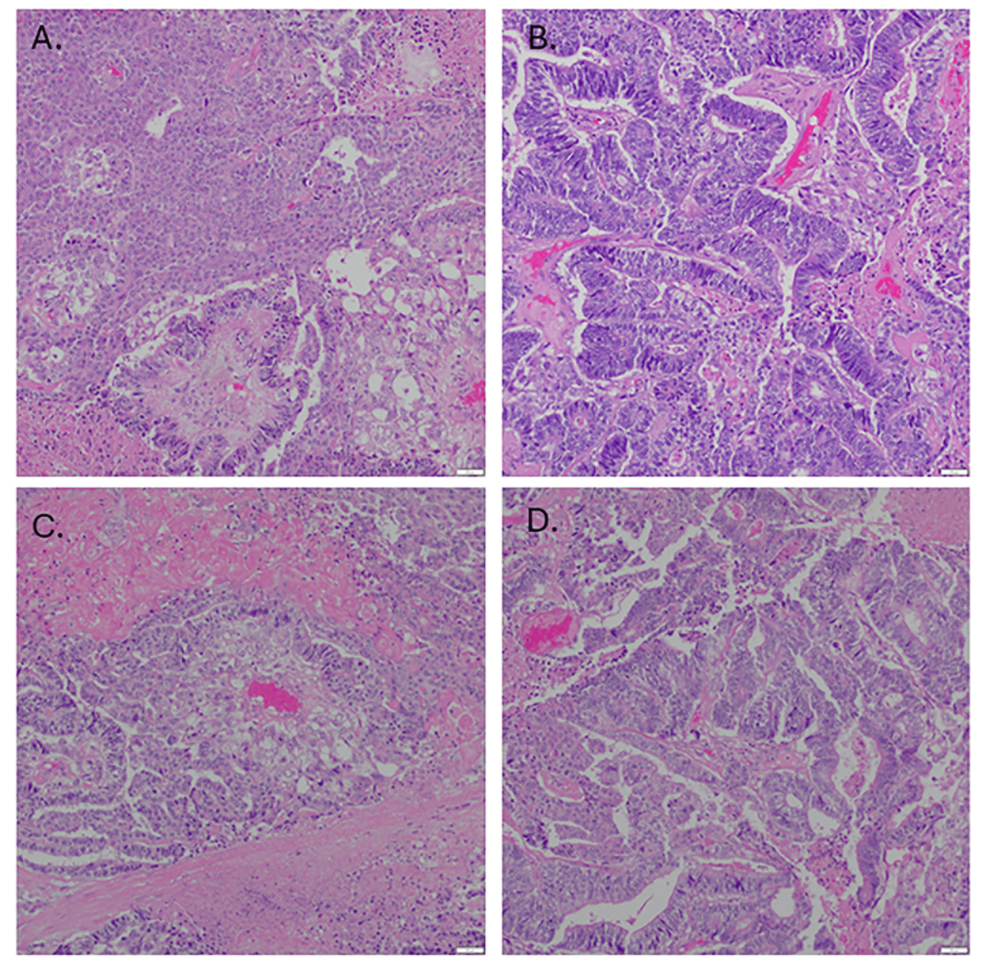
  • Genetics of High-Grade Endometrioid Adenocarcinoma of the Ovary With Yolk Sac Differentiation: A Case Report

    Genetics of High-Grade Endometrioid Adenocarcinoma of the Ovary With Yolk Sac Differentiation: A Case Report

    Continue Reading

  • Does Lumen’s New AWS Firewall Product and CTO Shift Reframe Its Cloud Security Ambitions (LUMN)?

    Does Lumen’s New AWS Firewall Product and CTO Shift Reframe Its Cloud Security Ambitions (LUMN)?

    • In early December 2025, Lumen Technologies announced the launch of Lumen Defender Managed Rules for AWS Network Firewall and confirmed upcoming leadership changes, with Executive Vice President and Chief Technology and Product Officer David Ward resigning and board member James Fowler stepping into the role in January 2026.

    • The combination of a new AI-era cloud security offering powered by Black Lotus Labs and the appointment of a seasoned technology leader positions Lumen to push further into higher-value, security-focused enterprise services.

    • We’ll now examine how Lumen’s new AWS-integrated cybersecurity product reshapes its investment narrative around higher-margin, cloud-centric enterprise growth.

    The end of cancer? These 29 emerging AI stocks are developing tech that will allow early identification of life changing diseases like cancer and Alzheimer’s.

    For Lumen, the core belief is that its pivot from shrinking legacy telecom services toward AI-enabled, cloud-centric enterprise networking and security can eventually outweigh ongoing revenue declines and losses. The new AWS-integrated Defender rules strengthen that story on the product side, but they do not materially change the near term financial catalyst, which is still progress on stabilizing revenue and managing the balance sheet, nor do they ease the biggest risk around high debt levels and continued unprofitability.

    The launch of Lumen Defender Managed Rules for AWS Network Firewall looks most relevant because it directly connects Black Lotus Labs threat intelligence to a major cloud marketplace, aligning with the catalyst around expanding Network as a Service and digital platform adoption. Getting Lumen’s security stack closer to where enterprises already run workloads, such as AWS, could help support utilization of its network and security services, which is central to the investment case.

    Yet against this push into AI era security, investors should also be aware of how Lumen’s large debt load and ongoing losses could…

    Read the full narrative on Lumen Technologies (it’s free!)

    Lumen Technologies’ narrative projects $11.8 billion revenue and $1.5 billion earnings by 2028.

    Uncover how Lumen Technologies’ forecasts yield a $7.23 fair value, a 12% downside to its current price.

    LUMN Community Fair Values as at Dec 2025

    Ten fair value estimates from the Simply Wall St Community span about US$2 to US$14.50 per share, highlighting very different views on Lumen’s upside. As you weigh those perspectives, remember that continued double digit declines in legacy revenue and the company’s ongoing unprofitability may have a significant bearing on how the turnaround story ultimately plays out.

    Explore 10 other fair value estimates on Lumen Technologies – why the stock might be worth as much as 76% more than the current price!

    Disagree with existing narratives? Create your own in under 3 minutes – extraordinary investment returns rarely come from following the herd.

    Opportunities like this don’t last. These are today’s most promising picks. Check them out now:

    This article by Simply Wall St is general in nature. We provide commentary based on historical data and analyst forecasts only using an unbiased methodology and our articles are not intended to be financial advice. It does not constitute a recommendation to buy or sell any stock, and does not take account of your objectives, or your financial situation. We aim to bring you long-term focused analysis driven by fundamental data. Note that our analysis may not factor in the latest price-sensitive company announcements or qualitative material. Simply Wall St has no position in any stocks mentioned.

    Companies discussed in this article include LUMN.

    Have feedback on this article? Concerned about the content? Get in touch with us directly. Alternatively, email editorial-team@simplywallst.com

    Continue Reading

  • PSX stays quiet amid mixed macros

    PSX stays quiet amid mixed macros


    KARACHI:

    The Pakistan Stock Exchange (PSX) saw a quiet week, with the KSE-100 index edging up 408 points to close at 167,086, as sentiment remained steady amid mixed economic indicators and key developments on the external financing front.

    AHL’s weekly review noted that Saudi Arabia rolled over its $3 billion deposit with the State Bank of Pakistan until December 2026, while headline inflation held nearly unchanged at 6.1% in November. However, weakness in trade performance, slower OMC and cement dispatches, and a widening deficit underscored persisting macro pressures, even as reserves and the rupee marked marginal improvement.

    On a day-on-day basis, the PSX kicked off Dec’25 on a strong note, with the KSE-100 index closing at 168,062, up 1,385 points, or 0.83%. On Tuesday, the market witnessed profit-taking as the index closed at 167,642, down 420 points, or 0.25%.

    As anticipated, the bourse continued its consolidation between the 166-168k range on Wednesday, with the KSE-100 closing at 166,145, down 1,495 points, or 0.89%. The PSX extended its consolidation phase on Thursday and closed flat at 166,284, up 138 points, or 0.08%.

    The market ended the week by extending its consolidation phase but the KSE-100 managed to close above the 167k mark at 167,086, posting a gain of 802 points, or 0.48%.

    AHL observed that the KSE-100 index increased from 166,677 last week to 167,086 this week, posting a modest increase of 408 points (+0.24% WoW). Saudi Arabia on Thursday rolled over its $3 billion deposit with the State Bank for another year, extending the facility to Dec’26.

    Headline inflation for Nov’25 stood at 6.1% YoY, showing little change from October’s reading of 6.2% and broadly aligning with expectations. Oil marketing companies’ sales in Nov’25 came in at 1.4 million tons, reflecting a 5% MoM and 10% YoY decline, whereas cumulative 5MFY26 sales rose by 1% YoY to 6.81 million tons.

    Pakistan’s trade deficit widened to $2.9 billion in Nov’25, as exports fell to $2.4 billion (a decline of 15.4% YoY and 15.8% MoM) while imports increased to $5.3 billion (up 5.4% YoY, though down 13.7% MoM). Over 5MFY26, the cumulative deficit expanded by 37.2% YoY to $15.5 billion.

    Cement dispatches in Nov’25 stood at 4.14 million tons, marking a 3.2% YoY and 13.1% MoM decline due to softer domestic demand and lower exports. Despite this, 5MFY26 dispatches grew 11.5% YoY to 21.4 million tons.

    Urea offtake rose sharply by 25% YoY in Nov’25 to 817k tons, driven by strong Rabi-season demand and increased discounts by manufacturers, although cumulative 11MCY25 urea sales remained 4% lower YoY. DAP offtake, however, declined by 14% YoY to 216k tons.

    The central government debt reached Rs77 trillion in Oct’25, reflecting a 0.5% MoM increase and an 11.4% YoY rise from Rs69.1 trillion in Oct’24. The SBP-held reserves rose by $14 million to $14.57 billion during the week, while commercial bank reserves remained broadly stable at $5.01 billion, AHL said.

    Danyal Hussain of JS Global wrote that the KSE-100 remained largely range bound during the week, closing at 167,086 points, reflecting a 0.2% WoW increase. Market participation improved, with average daily turnover increasing 21% WoW.

    The week commenced with inflation for Nov’25 arriving at 6.1%, taking 5MFY26 average inflation to 5% compared to 7.9% during the same period of last year. Meanwhile, the country’s trade deficit widened by 33% YoY to $2.85 billion, as exports fell 15% YoY while imports rose 5% during the month.

    Additionally, the FBR’s tax revenue collection recorded a shortfall of around Rs349 billion in 5MFY26. In governance and reform developments, the finance minister stated that an action plan for implementing 15 priority IMF recommendations will be finalised by the end of December 2025.

    In other news, Saudi Arabia extended its $3 billion deposit facility for Pakistan until Dec’26, providing a much-needed external account support. Pakistan’s central government debt rose to Rs77 trillion in Oct’25, driven mainly by domestic borrowings, which climbed 23% YoY to Rs45.49 trillion. On the privatisation front, final bidding for PIA is scheduled for December 23, Hussain said.

    Continue Reading

  • Pat Gelsinger wants to save Moore’s Law, with a little help from the Feds

    Pat Gelsinger wants to save Moore’s Law, with a little help from the Feds

    Image Credits:Slava Blazer Photography / TechCrunch

    A year after being pushed out of Intel, Pat Gelsinger is still waking up at 4 a.m., still in the thick of the semiconductor wars — just on a different battlefield. Now a general partner at venture firm Playground Global, he’s working with 10 startups. But one portfolio company has captured an outsized share of his attention: xLight, a semiconductor startup that last Monday announced it has struck a preliminary deal for up to $150 million from the U.S. Commerce Department, with the government set to become a meaningful shareholder.

    It’s a nice feather in the cap of Gelsinger, who spent 35 years across two stints at Intel before the board showed him the door late last year owing to a lack of confidence in his turnaround plans. But the xLight deal is also shining a spotlight on a trend that’s making people in Silicon Valley quietly uncomfortable: the Trump administration taking equity stakes in strategically important companies.

    “What the hell happened to free enterprise?” California Governor Gavin Newsom asked at a speaking event this week, capturing the unease that’s rippling through an industry that has long prided itself on its free-market principles.

    Speaking at one of TechCrunch’s StrictlyVC events at Playground Global, Gelsinger — who is xLight’s executive chairman — seemed unbothered by the philosophical debate. He’s more focused on his bet that xLight can solve what he sees as the semiconductor industry’s biggest bottleneck: lithography, the process of etching microscopic patterns onto silicon wafers. The startup is developing massive “free electron lasers” powered by particle accelerators that could revolutionize chip manufacturing. If the technology works at scale, that is.

    “You know, I have this long-term mission to continue to see Moore’s law in the semiconductor industry,” Gelsinger said, referencing the decades-old principle that computing power should double every two years. “We think this is the technology that will wake up Moore’s law.”

    The xLight deal is the first Chips and Science Act award under Trump’s second term, using funding earmarked for early-stage companies with promising technologies. Notably, the deal is currently at the letter of intent stage, meaning it’s not finalized and details could still change. When pressed on whether the funding could end up being double the announced amount — or potentially not materialize at all — Gelsinger was candid.

    “We’ve agreed in principle on the terms, but like any of these contracts, there’s still work to get done,” he said.

    The technology xLight is pursuing is pretty serious in both scale and ambition. The company plans to build machines roughly 100 meters by 50 meters — about the size of a football field — that will sit outside semiconductor fabrication plants. These free electron lasers would generate extreme ultraviolet light at wavelengths as precise as 2 nanometers, far more powerful than the 13.5 nanometer wavelengths currently used by ASML, the Dutch giant that utterly dominates the EUV lithography market.

    “About half of the capital goes into lithography,” Gelsinger explained of the entire semiconductor industry. “In the middle of a lithography machine is light. . . [and] this ability to keep innovating for shorter wavelength, higher power light is the essence of being able to continue to innovate for more advanced semiconductors.

    Leading xLight is Nicholas Kelez, whose background is unusual for the semiconductor world. Before founding xLight, Kelez led quantum computer development efforts at PsiQuantum (a Playground Global portfolio company) and spent two decades building large-scale X-ray science facilities at national labs including SLAC and Lawrence Berkeley, where he was Chief Engineer for the Linac Coherent Light Source.

    So why is this viable now when ASML abandoned a similar approach almost a decade ago? “The difference was the technology wasn’t as mature,” explained Kelez, who was speaking at the event alongside Gelsinger. Back then, only a handful of extreme ultraviolet lithography (EUV) machines existed, and the industry had already sunk tens of billions into the incumbent technology. “It just wasn’t the time to take on something completely new and orthogonal.”

    Now, with EUV ubiquitous in leading-edge semiconductor manufacturing and existing light source technology hitting its limits, the timing looks better. The key innovation, according to Kelez, is treating light like a utility rather than building it into each machine. “We go away from building an integrated light source with the tool, which is what [ASML does] now and that fundamentally constrains you to make it smaller and less powerful,” he said. And instead, “We treat light the same way you treat electrical power or HVAC. We build outside the fab at utility scale and then distribute in.”

    The company is aiming to produce its first silicon wafers by 2028 and have its first commercial system online by 2029.

    There are, naturally, hurdles, though right now, competing with ASML directly does not appear to be one of them. “We’re working very closely with them to basically design how we integrate with an ASML scanner,” Kelez said. “So we’re working with both them, as well as their providers, [like] Zeiss, who does their optics.”

    When asked whether Intel or other major chipmakers have committed to purchasing xLight’s technology, Gelsinger said they have not. “Nobody has committed yet, but the work is going on with everybody on the list that you would expect, and we’re having intense conversations with all of them.”

    Meanwhile, the competitive landscape is heating up. In October, Substrate — a semiconductor manufacturing startup backed by Peter Thiel — announced it raised $100 million to develop U.S. chip fabs, including an EUV tool that sounds awfully similar to xLight’s approach. Gelsinger doesn’t see them as direct competition though. “If Substrate is successful, they could be a customer for us,” he said, offering that Substrate is focused on building a full-stack lithography scanner that would ultimately need a free electron laser, which is exactly what xLight is developing.

    Gelsinger’s relationship with the Trump administration adds another layer to the story. He brought up xLight to Commerce Secretary Howard Lutnick back in February, before Playground funded the startup and before Lutnick was confirmed. At that point, Kelez says, he’d already spent more than a year pitching xLight to the government as a way to bring chip manufacturing back to the U.S., but the new arrangement has drawn criticism from some who view the administration’s approach as overreach.

    Gelsinger is unapologetic, framing it as necessary for national competitiveness. “I measure it by the results,” he said. “Does it drive the results that we want and that we need to reinvigorate our industrial policies? Many of our competitive countries don’t have such debates. They’re moving forward with the policies that are necessary to accomplish their competitive outcomes.”

    He pointed to energy policy as another example. “How many nuclear reactors are being built in the US today? Zero. How many being built in China today? 39. Energy policy in a digital AI economy equals the economic capacity of the nation.”

    For xLight, the government stake comes with minimal strings attached. The Commerce Department won’t have veto rights or a board seat, says Kelez (pictured above). “No information rights, nothing,” Gelsinger adds. “It’s a minority investment, in a non-governing way, but it also says we need this company to succeed for national interest.”

    xLight has raised $40 million from investors including Playground Global and is planning another fundraising round next month, in January. Unlike fusion or quantum computing startups that need billions, Kelez said xLight’s path is more manageable. “This is not fusion or quantum,” he said. “We don’t need billions.”

    The company also signed a letter of intent with New York to build its first machine at the New York CREATE site near Albany, though that agreement also needs finalization.

    For Gelsinger, xLight is clearly more than just another portfolio company. It’s a chance to cement his relevance in the semiconductor industry that he helped build, even if his methods put him at odds with Silicon Valley’s traditional ethos.

    Asked about navigating his principles in the current political environment, Gelsinger retreated to a more technocratic view of corporate leadership — one where the money is from the U.S. government, administrations are temporary, and CEOs must remain above the fray.

    “CEOs and companies should neither be Republican or Democrat,” he said. “Your job is to accomplish the business objective, serve your investors, serve your shareholders. That is your objective. And as a result, you need to be able to figure out what policies are beneficial on the R side or what policies are beneficial in the D side, and be able to navigate through them.”

    He added separately of that $150 million from the Trump administration, “Taxpayers will do well.”

    When asked if working across 10 startups is enough for someone who used to run Intel, Gelsinger was emphatic. “Absolutely. The idea that I can now influence across such a wide range of technologies — I’m a deep tech guy at the core of who I am. My mind is so stretched here, and I’m just grateful that the Playground team would have me to join them and let me make them smarter and be a rookie venture capitalist.”

    He paused, then added with a grin: “And I gave my wife back her weekends.”

    It’s a nice thought, though anyone who knows Gelsinger’s reputation as a workaholic might wonder how long that arrangement will last.

    Continue Reading