Category: 3. Business

  • Trump sons’ bitcoin venture sheds a third of its value in crypto turmoil

    Trump sons’ bitcoin venture sheds a third of its value in crypto turmoil

    Unlock the White House Watch newsletter for free

    Shares in a US cryptocurrency miner backed by Donald Trump Jr and Eric Trump shed a third of its value on Tuesday as early investors cashed out en masse at the end of a lock-up period.

    American Bitcoin was down 37 per cent by mid-afternoon in New York, wiping roughly $1bn from its market value. Trading volume in the stock was almost 40 times the daily average, according to Bloomberg data.

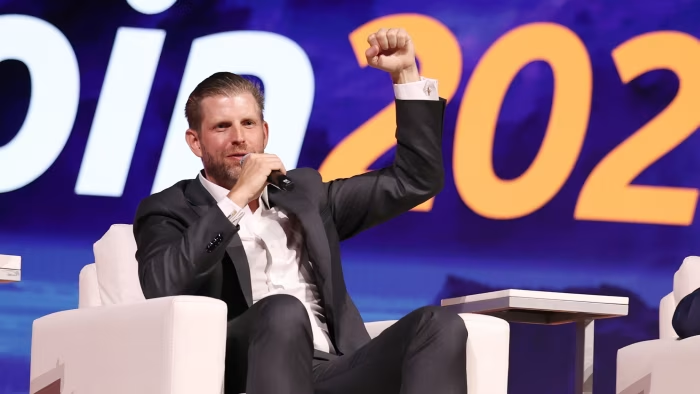
    Eric Trump attributed the sell-off to investors in a $215mn private placement in June exercising their ability to “cash in on their profits for the first time”.

    This is “why we will see volatility” in the company’s share price, the president’s son said on X. “I’m holding all my [American Bitcoin] shares — I’m 100% committed to leading the industry.”

    American Bitcoin, which says its “ambition is to build the strongest and most efficient Bitcoin accumulation platform in the world”, went public in September through a reverse merger with Nasdaq-listed miner Gryphon Digital Mining.

    Eric Trump is American Bitcoin’s co-founder and chief strategy officer. Donald Trump Jr was an early investor. Matt Prusak, American Bitcoin’s president, said the end of the share lock-up period “affects who can buy or sell, not the assets we operate or the work the team is doing every day”.

    Donald Trump has loosened regulations on the crypto sector since returning as president this year and has vowed to make the US a digital currency “superpower”. He previously described the value of crypto as based on “thin air”.

    The broader crypto market has tumbled in recent weeks as investors have pulled back from risky assets, with bitcoin down about 30 per cent since its latest peak in early October. Bitcoin steadied on Tuesday, however, up 5 per cent at about $90,000 per token.

    American Bitcoin — which creates new bitcoin through the computational process known as mining and also maintains its own “strategic” bitcoin reserve — was originally called American Data Centers but rebranded in late March in a joint venture with Hut 8, another crypto miner.

    As part of the deal, Hut 8 agreed to hand over all of its mining equipment in exchange for a majority interest in ADC. Hut 8’s shares were down 11 per cent on Tuesday.

    American Bitcoin is among several crypto companies backed by the president’s sons, who also co-founded World Liberty Financial, which has issued billions of its own tokens and lists Donald Trump as co-founder emeritus.

    The value of its WLF token has collapsed 86 per cent over the past year, according to CoinMarketCap data.

    Trump Media & Technology Group, which runs the Truth Social app and is controlled by the president’s family, earlier this year said it planned to raise $1.5bn in fresh equity and another $1bn through convertible bonds to create a “bitcoin treasury”.

    TMTG’s share price is down almost 70 per cent this year.

    Shares in other so-called bitcoin treasury companies have tumbled in recent months amid the wider sell-off for hundreds of digital assets.

    Michael Saylor’s Strategy — which pioneered the model and holds 650,000 bitcoin, equivalent to 3.1 per cent of the world’s total supply of the cryptocurrency — has fallen 40 per cent this year as investors have cooled on the company’s prolific issuance of shares, convertible debt and new preferred equity instruments to fund its bitcoin-buying spree.


    Continue Reading

  • Sam Altman issues ‘code red’ at OpenAI as ChatGPT contends with rivals | ChatGPT

    Sam Altman issues ‘code red’ at OpenAI as ChatGPT contends with rivals | ChatGPT

    Sam Altman has declared a “code red” at OpenAI to improve ChatGPT as the chatbot faces intense competition from rivals.

    According to a report by tech news site the Information, the chief executive of the San Francisco-based startup told staff in an internal memo: “We are at a critical time for ChatGPT.”

    OpenAI has been rattled by the success of Google’s latest AI model, Gemini 3, and is devoting more internal resources to improving ChatGPT.

    Last month, Altman told employees that the launch of Gemini 3, which has outperformed rivals on various benchmarks, could create “temporary economic headwinds” for the company. He added: “I expect the vibes out there to be rough for a bit.”

    OpenAI’s flagship product has 800 million weekly users but Google is also highly profitable due to its search business and has substantial data and financial resources to throw at its AI tools.

    Sam Altman. Photograph: José Luis Magaña/AP

    Marc Benioff, the chief executive of the $220bn (£166bn) software group Salesforce, wrote last month that he had switched allegiance to Gemini 3 and was “not going back” after trying Google’s latest AI release.

    “I’ve used ChatGPT every day for 3 years. Just spent 2 hours on Gemini 3. I’m not going back. The leap is insane – reasoning, speed, images, video … everything is sharper and faster. It feels like the world just changed, again,” he wrote on X.

    OpenAI is also delaying a foray into putting advertising in ChatGPT as it focuses on improving the chatbot, which celebrated its third birthday last month.

    The head of ChatGPT, Nick Turley, marked the anniversary with a post on X pledging to break new ground with the product.

    He wrote: “Our focus now is to keep making ChatGPT more capable, continue growing, and expand access around the world – while making it even more intuitive and personal. Thanks for an incredible three years. Lots more to do!”

    Despite lacking the cash flow support enjoyed by rivals Google, Meta and Amazon, which is a big funder of competitor Anthropic, OpenAI has received substantial funding from the likes of the SoftBank investment group and Microsoft. In its latest valuation, OpenAI reached $500bn, up from $157bn last October.

    OpenAI is loss-making and expects to end the year with annual revenues of more than $20bn, which Altman expects will grow to “hundreds of billion[s]” by 2030. The startup is committed to steep revenue growth after pledging to spend $1.4tn on datacentre costs to train and operate its AI systems over the next eight years.

    skip past newsletter promotion

    “Based on the trends we are seeing of how people are using AI and how much of it they would like to use, we believe the risk of OpenAI of not having enough computing power is more significant and more likely than the risk of having too much,” said Altman last month.

    Apple has also responded to increasingly intense competitive pressures in the sector by naming a new vice-president of AI. Amar Subramanya, a Microsoft executive, will replace John Giannandrea.

    Apple has been slow to add AI features to its products in comparison with rivals such as Samsung, which have been quicker to refresh their devices with AI features.

    Subramanya is joining Apple from Microsoft, where he most recently served as corporate vice-president of AI. Previously, Subramanya spent 16 years at Google, where his roles included the head of engineering for the Gemini assistant.

    Earlier this year, Apple said AI improvements to its voice assistant Siri would be delayed until 2026.

    Continue Reading

  • Partnering with Ricursive Intelligence: A Premier Frontier Lab Pioneering AI for Chip Design

    Partnering with Ricursive Intelligence: A Premier Frontier Lab Pioneering AI for Chip Design

    Compute is the most valuable resource in the AI world we live in today. Nvidia. Google TPUs. Amazon Trainium. OpenAI and Broadcom’s partnership. Elon’s recent post about Tesla’s AI chips.

    Designing the most performant chips for AI workloads sits at the heart of accelerating technological progress.

    But major hurdles exist.

    First, chip design is slow. It takes 12-24 months at mature nodes and 18-36 months at the leading edge for 5nm or 3nm.

    Second, chip design is prohibitively expensive. It costs on average $200-250 million for 7nm, $450-500 million for 5nm, and $600-650 million for 3nm. Roughly 50-70% of that is human labor. Another 5-15% is Electronic Design Automation tooling spend in a market long dominated by Cadence and Synopsys, where each generates $5-6 billion in annual revenue and are worth approximately $90-100 billion in market cap.

    AlphaChip caught my eye for these exact reasons. It gave us a peek at AI’s potential to transform the entire chip design process, showing we can cut the floorplanning step in physical design from months to hours.

    What if we could extrapolate this and build AI to automate the entire flow, from architecture design to RTL to verification, all the way through physical design?

    What if chip design took days, not two to three years? Every day is massively costly; some reports from August 2024 indicated that a multi-month Blackwell delay could result in more than $10 billion in lost revenue for 2025 alone. More importantly, imagine the revenue potential unlocked when new generations of chips are designed faster and shipped earlier.

    What if each design didn’t cost hundreds of millions of dollars? What if chip companies didn’t need to operate large human teams on top of clunky EDA tooling?

    And most exciting: what if we unlocked novel chip designs we might never have explored?

    AlphaChip revealed an important human bias: in chip design, we tend to think in Manhattan grid-like structures. AlphaChip’s designs were different, more organic in shape, more like forms inspired by nature. So different, in fact, that humans wanted to reject them at first … Yet AlphaChip went on to shape four generations of the TPU.

    We at Sequoia are so excited to partner with co-founders Anna Goldie and Azalia Mirhoseini, leading their very first round from the formation of Ricursive Intelligence. They pioneered AI for chip design by creating and leading the AlphaChip effort and are at the epicenter of this emerging AI for chip design ecosystem. They are visionaries with incredible clarity of thought, intensely ambitious, humble yet exceptionally accomplished, and real talent magnets who move, and inspire others to move, with urgency and velocity.

    Anna and Azalia founded Ricursive Intelligence to build the frontier AI lab defining this category. In just the first weeks since company formation, they have assembled a team with the highest talent density you can imagine in the field.

    Their core belief: chip design is the compute bottleneck, and progress in AI, hardware and infrastructure is capped by the speed and efficiency of silicon creation.

    In their words: “If we get this right, it’s not just faster chip design cycles; it’s a fundamental expansion of what’s possible in hardware. Once chip design becomes fast and accessible, everyone will be able to customize. The automation here will unlock a flood of new hardware innovation.”

    Anna and Azalia’s vision for Ricursive is to define a new movement, from “fabless” to “designless.” Fabless, meaning a company designing chips without owning expensive fabs, outsourcing production to foundries. Designless, meaning outsourcing not only manufacturing but the entire chip design process, taking an idea and converting it into a manufacturable design.

    We envision a world where Ricursive helps any company design chips for its own workloads faster, more efficiently and more creatively than is possible today. In doing so, Ricursive can help revolutionize the most valuable resource in our era: compute. We could not be more excited to help build a true generational company in the making.

    Continue Reading

  • Exclusive: Exxon in talks with Iraq about buying Lukoil stake in giant West Qurna 2 oilfield, sources say – Reuters

    1. Exclusive: Exxon in talks with Iraq about buying Lukoil stake in giant West Qurna 2 oilfield, sources say  Reuters
    2. Exclusive: Exxon Mobil approached Iraq about buying Lukoil’s West Qurna oilfield stake, sources say  Reuters
    3. ExxonMobil in talks to buy Russian stake in major Iraqi oil field: Report  thecradle.co
    4. Baghdad invites US firms to replace Lukoil at West Qurna-2  MSN
    5. Iraq opens bidding for major oil field as US sanctions sideline Russian operator  Türkiye Today

    Continue Reading

  • Bobcat sues Caterpillar over construction equipment patents

    Bobcat sues Caterpillar over construction equipment patents

    Dec 2 (Reuters) – Bobcat sued construction equipment rival Caterpillar (CAT.N), opens new tab in Texas federal court and at a U.S. trade tribunal on Tuesday, alleging that technology in many of Caterpillar’s dozers, excavators and other machinery infringes Bobcat’s patents.
    Bobcat said in the complaints, opens new tab that Caterpillar’s construction equipment infringes patents covering technology for improved machine control and agility.

    Sign up here.

    Bobcat asked the court for an unspecified amount of monetary damages and the U.S. International Trade Commission for an order blocking imports of Caterpillar’s patent infringing equipment. It also filed related lawsuits against Caterpillar in German district court and at the European Union’s Unified Patent Court.

    Spokespeople for Caterpillar did not immediately respond to a request for comment. Bobcat spokesperson Nadine Erckenbrack said the company seeks to “protect our patented technologies, defend fair competition, and safeguard the innovation and craftsmanship that have defined our company for more than 65 years.”

    Bobcat, which specializes in compact construction equipment, was founded in North Dakota as Melroe Manufacturing Company in 1947 and acquired by South Korea-based Doosan (241560.KS), opens new tab
    in 2007. The lawsuit said that Caterpillar copied Bobcat’s “skid-steer loader” technology for compact machinery.

    “CAT’s use of so many of Bobcat’s patented technologies is consistent with its pattern and practice of identifying and emulating the key features in its competitors’ products,” Bobcat said in the Texas complaint.

    The lawsuits are Doosan Bobcat North America Inc v. Caterpillar Inc, U.S. District Court for the Eastern District of Texas, Nos. 2:25-cv-01184 and 2:25-cv-01185; and In the Matter of Certain Skid-Steer Loaders, Compact Track Loaders, Excavators, Wheel Loaders, Dozers and Components Thereof, U.S. International Trade Commission.

    For Bobcat: Sean Pak, Iman Lordgooei, Nathan Hamstra, Marc Kaplan and James Pak of Quinn Emanuel Urquhart & Sullivan

    For Caterpillar: attorney information not yet available

    Reporting by Blake Brittain in Washington

    Our Standards: The Thomson Reuters Trust Principles., opens new tab

    Continue Reading

  • Bitcoin rebounds after drawdown hits 20%. Is the crypto winter over or just starting?

    Bitcoin rebounds after drawdown hits 20%. Is the crypto winter over or just starting?

    Continue Reading

  • Finance can put trade at risk, leaving the global economy ‘on the brink’ – with developing countries hardest hit

    Finance can put trade at risk, leaving the global economy ‘on the brink’ – with developing countries hardest hit

    A new UN Trade and Development report says reforms to global financial systems are key to reducing vulnerability, improving predictability and supporting stronger alignment between trade, finance and development.


    • Globalization is being rewired by geopolitics and policy shifts. The financial system will have to adapt to better serve the real-economy needs.

    • Policy volatility is now a persistent challenge for trade, investment and development.

    • Financial shocks spill over rapidly into the real economy, revealing gaps in the global economic architecture.

    • Developing economies drive global growth but face the highest financing and climate risks.

    • Coordinated reforms linking trade, finance, debt and climate action can restore stability and recentre development.


    Global growth will slow to 2.6% in 2025, down from 2.9% in 2024, as global trade and investment face growing pressure from financial volatility and geopolitical uncertainty, according to UN Trade and Development’s new “Trade and Development Report 2025: On the Brink – Trade, finance and the reshaping of the global economy”. The report shows that shifts in financial markets move global trade almost as strongly as real economic activity, influencing development prospects worldwide.

    UN Trade and Development (UNCTAD) Secretary-General Rebeca Grynspan said the findings show how financial conditions increasingly determine the direction of global trade: “Trade is not just a chain of suppliers. It is also a chain of credit lines, payment systems, currency markets and capital flows.”

    Global trade rose by about 4% early in 2025, driven in part by firms accelerating imports ahead of tariff changes, but also by structural shifts: Services are expanding faster, supported by growth in the digital economy and artificial intelligence, and South–South trade is growing above average. Beneath these factors, underlying trade growth is estimated at between 2.5% and 3% and is expected to ease further as financial conditions influence production and investment decisions more strongly.

    More than 90% of global trade depends on bank finance. Dollar liquidity and cross-border payment systems are also crucial for international trading activities. This deep reliance on financial channels makes trade closely linked to global financial and monetary conditions. A shift in interest rates or investor sentiment in a major financial centre can affect trade volumes worldwide. For developing countries, where access to affordable credit is limited, these financial pressures can undermine otherwise viable trade transactions.

    The report also highlights the increasing role of financial factors of commodity markets, particularly in essential food systems.


    For several major food trading companies, more than 75% of income now stems from financial operations rather than the physical movement of goods.

    Developing economies face mounting pressures

    Developing economies are forecast to grow by 4.3%, significantly faster than advanced economies. But they face higher financing costs, greater exposure to sudden shifts in capital flows and rising climate-related financial risks. These factors limit the fiscal and investment space needed to sustain growth.

    The global South accounts for more than 40% of world output, nearly half of global merchandise trade and more than half of global investment inflows.

    Yet its role in global financial markets remains limited. Excluding China, developing countries represent only about 12% of global equity market value and around 6% of global bond issuance.

    Because their domestic financial markets are small, many developing economies rely on external borrowing at significantly higher cost. Borrowing rates of 7% to 11% are common, compared with 1% to 4% in major advanced economies. 

    These elevated costs often reflect structural issues in the international financial architecture rather than economic fundamentals, reducing long-term investment and slowing growth.

    Climate vulnerability adds to financial pressures. Countries repeatedly exposed to extreme weather now pay an estimated 20 billion dollars more each year in interest because lenders perceive them as riskier. Since 2006, these additional premiums have cost climate-vulnerable economies about 212 billion dollars – resources that could have supported social investment or climate adaptation.

    Dollar dominance continues to anchor global finance

    Despite gradual diversification of international reserves, the dollar remains central to global finance. Its share of international payments through SWIFT has risen from 39% to about 50% in five years. 

    The United States also accounts for half of global equity market value and about 40% of global bond issuance. 

    While this provides stability in uncertain periods, it also links developing economies to financial cycles over which they have limited influence.

    Targeted reforms to restore stability and support development

    UNCTAD outlines a set of practical reforms aimed at reducing financial vulnerability, improving predictability and supporting stronger alignment between trade, finance and development. The report calls for:

    • Fix the multilateral trade dispute system so rules are enforced and uncertainty is reduced.
    • Update trade rules for today’s economy; including services, digital trade, climate action and new industrial strategies.
    • Close data gaps on trade and investment statistics to better inform and coordinate policies.
    • Reform the international monetary system to limit harmful swings in currencies and capital flows.
    • Strengthen regional and domestic capital markets so developing countries can raise affordable long-term finance.
    • Use macroprudential tools (rules that reduce negative financial spillovers) to better protect trade and investment.
    • Improve transparency in commodity trading and expand access to affordable trade finance, especially for small businesses.

    Rebeca Grynspan said reconnecting trade and finance is essential for lasting stability: “What does genuine resilience require? Integrated policy frameworks that recognize links between trade, finance and sustainability.” She added that coordinated reforms can strengthen long-term development prospects: “Fundamentally, we cannot understand trade isolated from finance.”

    Continue Reading

  • Billionaire Dell family to seed Trump accounts for kids with $250

    Billionaire Dell family to seed Trump accounts for kids with $250

    Natalie ShermanBusiness reporter

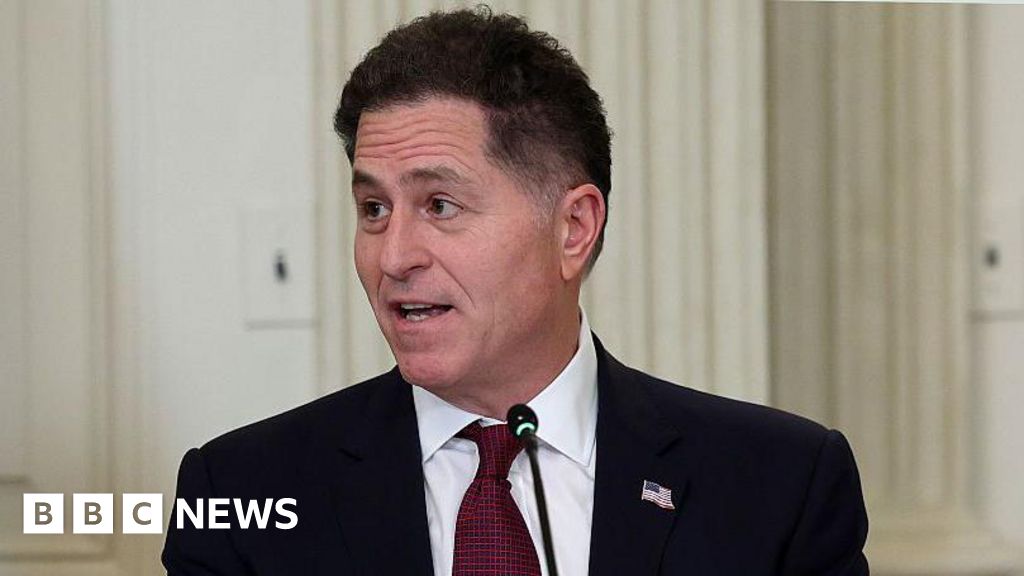
    Getty Images Dell Technologies CEO Michael Dell at a 2025 event promoting Trump accounts Getty Images

    Tech billionaire Michael Dell and his wife, Susan, have announced plans to donate $250 to 25 million children across the US.

    The $6.25bn (£4.72bn) gift will bolster Trump-branded investment accounts, which were authorised by Congress as part of its tax and spending bill earlier this year with the aim of encouraging families save for retirement.

    As part of that scheme, babies born between 2025 and 2028 are also eligible to receive $1,000 from the government.

    The Dells said their gift, which targets children age 10 and under, was intended to help seed those accounts and expand the savings opportunity to even more children.

    “We’ve seen what happens when a child gets even a small financial headstart – their world expands,” Michael Dell said in a video on social media announcing the donation.

    Unlike the government plan, the Dells said children age 10 and under, who were born before 1 January 2025 were eligible for their gift, provided they live in areas where the median income is below $150,000.

    The Dells said they expected the gift to reach almost 80% of children age 10 and under in the US. It is among the largest ever private donations to go directly to Americans.

    Dell, the chief executive of Dell Technologies with a fortune that Forbes estimates at almost $150bn, also urged other philanthropists and employers to make similar commitments.

    “Two great people. I love Dell!!!” President Donald Trump wrote in all capital letters on social media in response to the announcement.

    How Trump accounts work

    The money will be routed through the new Trump-branded accounts, which by law must be invested in an index fund that reflects the wider stock market.

    It is not currently possible to set up a Trump account. The government has said that process will launch next year, with more details available at that time.

    Parents are eligible to contribute up to $5,000 in after-tax funds to the accounts, a figure that will be adjusted for inflation, with employers, charitable organisations and others also able to donate.

    The child can access the money at age 18 at which point the account converts into a retirement account. While the money grows tax free, withdrawals are subject to taxes and possibly a penalty if made before the age of 59 and a half.

    The White House Council of Economic Advisers earlier this year estimated that $1,000 could grow to more than $5,800 over the course of 18 years, assuming a 10.3% rate of return.

    When they were created earlier this year, the Trump accounts met with significant scepticism from critics, who argued that the accounts would primarily benefit better off families, who have extra money to set aside, while being less flexible than other, existing savings vehicles.

    The Tax Foundation, a think tank focused on tax policy, on Tuesday said that Trump accounts were “well intentioned” but would “add another layer to an already overcomplicated savings account system in the United States”.

    “Trump Accounts do not offer much of an additional incentive to save,” it added. “Rather, the main benefit is in the form of the $1,000 initial deposit from the federal government and whatever employers choose to contribute.”

    Treasury Secretary Scott Bessent also drew criticism from Democrats after promoting the scheme as a way to support alternatives to government-funded retirement benefits, calling it a “backdoor to privatizing Social Security”.

    Continue Reading

  • Newly appointed drugs chief set to leave FDA, STAT News reports – Reuters

    1. Newly appointed drugs chief set to leave FDA, STAT News reports  Reuters
    2. Top FDA drug regulator plans to depart weeks into job  The Washington Post
    3. As US FDA Turns: Can Makary, Prasad And Pazdur Make It Work?  Citeline News & Insights
    4. Fire the mean girls at the FDA, win the midterms  Washington Times
    5. Pazdur Questions Safety, Legality of FDA’s Expedited Drug Approval Programs  BioSpace

    Continue Reading

  • Oil prices steady on worries about geopolitical risks to supply – Reuters

    1. Oil prices steady on worries about geopolitical risks to supply  Reuters
    2. Oil holds steady as markets weigh Russian strikes, Venezuela tensions  The Express Tribune
    3. Opec+ set to hold oil output  Dawn
    4. Oil rises on supply worries after CPC attack  Business Recorder
    5. Brent Crude higher on OPEC, but will it last? – Forex trading double top on USD/CAD [Video]  FXStreet

    Continue Reading