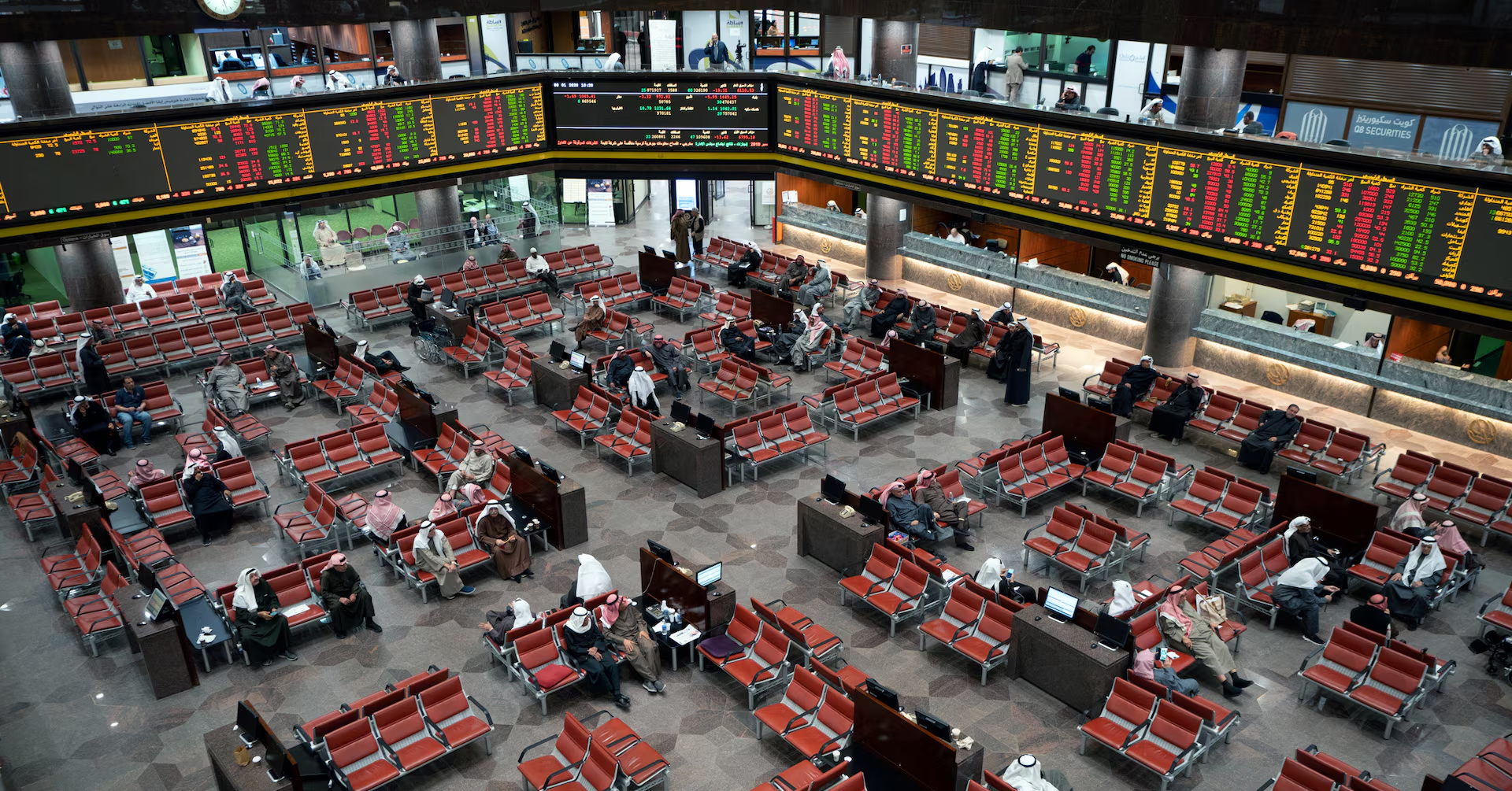
Nov 30 (Reuters) – Stock markets in the Gulf ended mixed on Sunday following an easing in crude prices on Friday while anticipation of a U.S. Federal Reserve rate cut next month underpinned sentiment.
Crude futures fell marginally on Friday as investors considered oil’s geopolitical risk premium amid drawn-out Russia-Ukraine peace talks.
Sign up here.
OPEC+ will likely leave oil output levels unchanged at its meetings on Sunday, four OPEC+ sources said as the producer group slows down its push to regain market share amid fears of a .
Saudi Arabia’s benchmark share index (.TASI), opens new tab slipped 0.5%, with Saudi Arabian Mining Company (1211.SE), opens new tab losing 2.2% and oil giant Saudi Aramco (2222.SE), opens new tab down 0.4%.
Saudi Arabia, the world’s biggest oil exporter, is expected to lower
In Qatar, the main share index (.QSI), opens new tab eased 0.3%, with Qatar National Bank (QNBK.QA), opens new tab, the Gulf’s biggest lender by assets, down 1.1%.
Outside the Gulf, Egypt’s blue-chip index (.EGX30), opens new tab advanced 1.7%, with Talaat Moustafa Group Holding (TMGH.CA), opens new tab jumping 6.2%.
Reporting by Ateeq Shariff in Bengaluru; Editing by Emelia Sithole-Matarise
Our Standards: The Thomson Reuters Trust Principles., opens new tab
Canada don announce new immigration levels plans wey go increase di number of economic immigrants wey intend to come di kontri, and cut down di number of temporary residents, mostly through student visas.
For one update wey di Canada Immigration release on dia website dem unveil di plans for 2026-2028, wey include di plan to take in 380,000 permanent residents and reduce di number of pipo wey wan come di kontri for work and study.
Di statement explain say di reason na say Canada don enta phase of stabilization and no get plan to bring in more pipo, but to balance dia population wit di housing, healthcare and infrastructure capacity of di kontri.
For 2026, di IRCC dey expect to give out like 408,000 study permits.
Dis one go include di 155,000 permits wey dem go give international students wey just dey land and di 253,000 extensions wey dem dey give current and returning students.
Dis amount dey seven percent less dan 2025 wen dem bin target 437,000 and 16% less than di target wey dem bin get for 2024, to issue 485,000 permits.
All dis one na sake of di kontri overall work to reduce di temporary population for di kontri.
Dem also wan bring sustainablity to di immigration system. Di plan na to drop di total amount of temporary migrants for Canada to under five percent of di total population for 2027.
Oda changes wey dem dey put for inside di di immigration waka be say, from 1 January, 2026, as student wey do masters or doctorate for public designated learning institution (DLI) , dem no go need to submit provincial or territorial attestation letter (PAL/TAL) again wen dem dey submit dia study permit application.
Dem announce say dis na di groups wey no go need di PAL/TAL requirement for 2026.
Masters and Doctoral degree students wey dey enrolled for public DLIs New
Primary and secondary (kindergarten to grade 12) students
certain Goment of Canada priority groups and vulnerable cohorts
existing study permit holders wey dey apply for extension for di same DLI and for di same level of study.
Di number of study permits wey dey expected to go out for 2026 dey broken by student cohorts. E be like dis
49,000 Masters and doctoral students wey dey go public DLIs (PAL/TAL-exempt)
115,000 Primary and secondary school (kindergarten to grade 12) students (PAL/TAL-exempt)
64,000 oda applicants wey want PAL/TAL-exempt study permit
180,000 PAL/TAL-required applicants
For 2026, di 180,000 study permits for di applicants wey still need PAL/TAL go dey shared according to di provinces and territories dia popultion.
Alberta – 21,582
British Columbia – 24,786
Manitoba – 6,534
New Brunswick – 3,726
Newfoundland and Labrador – 2,358
Northwest Territories – 198
Nova Scotia – 4,680
Nunavut – 180
Ontario – 70,074
Prince Edward Island – 774
Quebec – 39,474
Saskatchewan – 5,436
Yukon – 198
Di overall number of study permit applications wey IRCC go accept for processing for PAL/TAL-required students for 2026 na 309,670.
Di number dey based on di application wry dey believed say each jurristiction go need to complete dia issuance targets based on di approval rate of stidy permit applications from 2024 to 2025.
Many Corteva, Inc. (NYSE:CTVA) insiders ditched their stock over the past year, which may be of interest to the company’s shareholders. When analyzing insider transactions, it is usually more valuable to know whether insiders are buying versus knowing if they are selling, as the latter sends an ambiguous message. However, shareholders should take a deeper look if several insiders are selling stock over a specific time period.
While insider transactions are not the most important thing when it comes to long-term investing, logic dictates you should pay some attention to whether insiders are buying or selling shares.
AI is about to change healthcare. These 20 stocks are working on everything from early diagnostics to drug discovery. The best part – they are all under $10bn in marketcap – there is still time to get in early.
In the last twelve months, the biggest single sale by an insider was when the CEO & Director, Charles Magro, sold US$3.0m worth of shares at a price of US$63.82 per share. So it’s clear an insider wanted to take some cash off the table, even below the current price of US$67.47. As a general rule we consider it to be discouraging when insiders are selling below the current price, because it suggests they were happy with a lower valuation. Please do note, however, that sellers may have a variety of reasons for selling, so we don’t know for sure what they think of the stock price. This single sale was just 26% of Charles Magro’s stake.
In the last year Corteva insiders didn’t buy any company stock. You can see the insider transactions (by companies and individuals) over the last year depicted in the chart below. If you click on the chart, you can see all the individual transactions, including the share price, individual, and the date!
Check out our latest analysis for Corteva
NYSE:CTVA Insider Trading Volume November 30th 2025
For those who like to find hidden gems this free list of small cap companies with recent insider purchasing, could be just the ticket.
Another way to test the alignment between the leaders of a company and other shareholders is to look at how many shares they own. Usually, the higher the insider ownership, the more likely it is that insiders will be incentivised to build the company for the long term. Insiders own 0.1% of Corteva shares, worth about US$58m. While this is a strong but not outstanding level of insider ownership, it’s enough to indicate some alignment between management and smaller shareholders.
It doesn’t really mean much that no insider has traded Corteva shares in the last quarter. Still, the insider transactions at Corteva in the last 12 months are not very heartening. The modest level of insider ownership is, at least, some comfort. Of course, the future is what matters most. So if you are interested in Corteva, you should check out this free report on analyst forecasts for the company.
But note: Corteva may not be the best stock to buy. So take a peek at this free list of interesting companies with high ROE and low debt.
For the purposes of this article, insiders are those individuals who report their transactions to the relevant regulatory body. We currently account for open market transactions and private dispositions of direct interests only, but not derivative transactions or indirect interests.
Have feedback on this article? Concerned about the content?Get in touch with us directly. Alternatively, email editorial-team (at) simplywallst.com.
This article by Simply Wall St is general in nature. We provide commentary based on historical data and analyst forecasts only using an unbiased methodology and our articles are not intended to be financial advice. It does not constitute a recommendation to buy or sell any stock, and does not take account of your objectives, or your financial situation. We aim to bring you long-term focused analysis driven by fundamental data. Note that our analysis may not factor in the latest price-sensitive company announcements or qualitative material. Simply Wall St has no position in any stocks mentioned.
This story is available exclusively to Business Insider
subscribers. Become an Insider
and start reading now. Have an account? .
Jay Graber studied how technology interacts with society at the University of Pennsylvania.
Bluesky’s open protocol offers a decentralized alternative to X and Meta platforms.
Here is a look at Graber’s career and her unconventional path to Silicon Valley.
Jay Graber is the engineer behind one of the most ambitious experiments in reimagining social media.
The Tulsa-born CEO is best known for steering Bluesky, the decentralized platform she describes as a “billionaire-proof” alternative to X and Meta-owned platforms.
Graber’s emergence as a Silicon Valley power playerwas unconventional. In 2021, former Twitter CEO Jack Dorsey tapped her to lead the Bluesky project, which was spun off as an independent public benefit company, just before Elon Musk’s takeover of Twitter.
Since then, Bluesky’s user base has grown to over 40 million as of November 2025,powered by its open protocol, customizable moderation system, and promise of a more democratic digital ecosystem.
Here’s a look at Graber’s career timeline, from her early work in cryptocurrency to her rise as the architect of a new, user-owned social media platform:
Early life
Jay Graber was born Lantian Graber in Tulsa, Oklahoma. Kimberly White/Getty Images for WIRED
Jay Graber was born Lantian Graber in Tulsa, Oklahoma, to a mother who is an immigrant from China during the Cultural Revolution and a father of Swiss descent. Her mother, who is an acupuncturist, named Graber “Lantian”, which means “blue sky” in Chinese, as a wish that she would have “boundless freedom.” She was aptly named for the job she would eventually be given.
Her father is a mathematics teacher, and in a 2024 profile of Graber in Cosmico, he is cited as a source of intellectual and academic influence for Graber.
Education
Jay Graber studied Science, Technology & Society at the University of Pennsylvania. Erica Denhoff/Icon Sportswire via Getty Images
At the University of Pennsylvania, Graber studied Science, Technology & Society, which isan interdisciplinary program that examines how technological innovation intersects with culture, politics, and ethics.
Rather than focusing solely on coding or engineering, the program allowed Graber to explore the broader systems that shape how technology is developed and utilized, an approach that later influenced her views onsocial networks and digital governance.
Some of her key guiding views include a decentralized internet and open source social media protocols. “We believe that the protocol is the fundamental guarantee on freedom of speech,” Graber said once during an interview with Fast Company.
Before Bluesky
Jay Graber is well known in crypto circles for her work on Zcash. Peter Dazeley/Getty Images
Graber’s early career unfolded during the first wave of blockchain innovation in the mid-2010s. After graduating from the University of Pennsylvania, she began her career as a software engineer at SkuChain, a startup focused on utilizing blockchain for supply-chain management. Around the same time, she also built andsoldered bitcoin-mining rigs, deepening her technical grasp of decentralized systems beyond software.
Between 2016 and 2018, Graber joined the privacy-focused cryptocurrency project Zcash as a junior developer, contributing to one of the most advanced implementations of zero-knowledge proofs. Later, in 2019, she founded Happening, Inc., an events app that aimed to help communities organize and connect through shared experiences.
Happening, Inc. never really took off, but these early roles grounded Graber in both the engineering and ideological foundations of decentralized technology, which later shaped the vision for Bluesky as an open, user-controlled social network.
Joining Bluesky
Jay Graber negotiated a formal spin-out of Bluesky from Twitter as a Public Benefit Company. Illustration by Omar Marques/SOPA Images/LightRocket via Getty Images
When Jack Dorsey, then CEO of Twitter, first announced Bluesky in late 2019, it was a small, Twitter-funded initiative tasked with researching an open and decentralized standard for social media.
By August 2021, Dorsey decided to onboard Graber, who was then known in crypto circles for her work on Zcash and decentralized community tools, to lead and accelerate the effort.However, according to an April 2025 profile of Graber in the New Yorker, she quickly realized that for Bluesky to fulfill its mission, it needs to create a social protocol separate from any single corporation and maintain independence from Twitter.
With Dorsey’s backing, Graber negotiated a formal spin-out by October 2021 and incorporated Bluesky as a public benefit corporation, a legal structure that allowed it to prioritize user benefits and open standards over shareholder profit.
Twitter provided an initial $13 million in funding to give the new entity “freedom and independence to get started,” as Dorsey publicly described at the time.
Bluesky’s rise
Jay Graber separated Bluesky from Twitter just before Elon Musk’s takeover. Illustration by Thomas Fuller/SOPA Images/LightRocket via Getty Images
Graber’s early move to separate Bluesky from Twitter may have saved it.
When Elon Musk acquired Twitter in 2022 and renamed the platform X, Bluesky’s independence allowed it to thrive and emerge as a competitor to X as droves of users left the platform.
In September 2023, Bluesky only had around 1 million registered users, but this figure climbed to more than 20 million by the end of November 2024. The meteoric rise came after a user surge in Brazil after X was temporarily restricted there, as well as 1.25 million user gains the week after Donald Trump won the 2024 presidential election.
As of November 2025, Bluesky has around 40 million registered users. That is no match for X’s roughly 560 million users, but it provided an alternative for those dissatisfied with X’s ownership and content moderation.
Calling out Big Tech
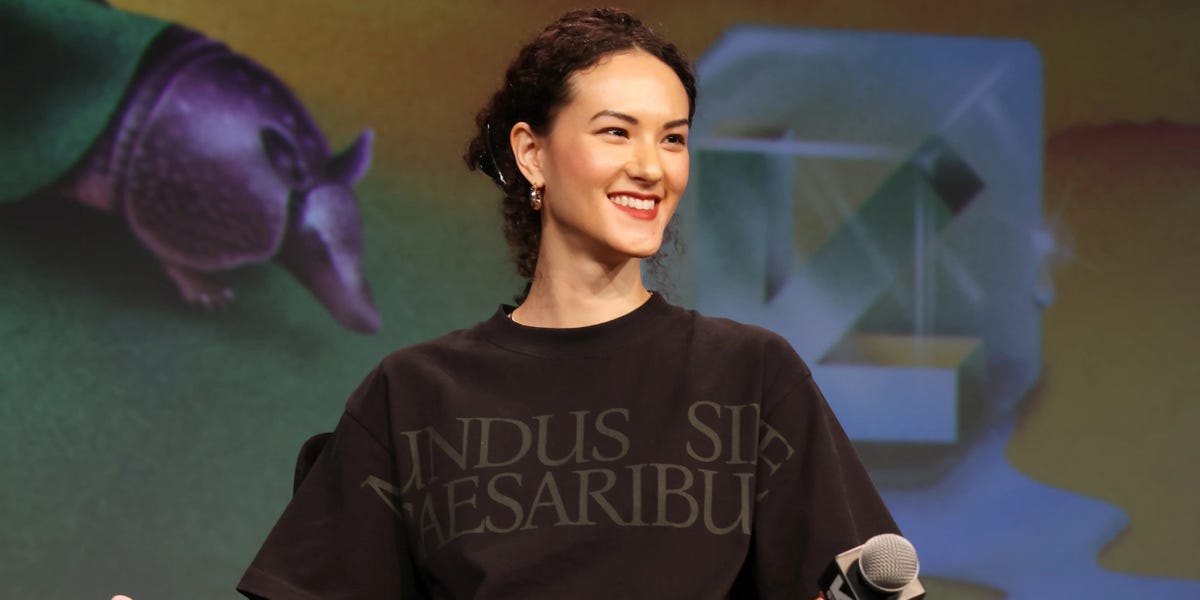
Jay Graber wore a black T-shirt that reads “Mundus sine caesaribus,” meaning “a world without Caesars.” Samantha Burkardt/SXSW Conference & Festivals via Getty Images
Graber has taken a subtle dig at Mark Zuckerberg, the CEO of Meta, which owns Facebook, Instagram, and Threads.
During SXSW in Austin in March 2025, Graber wore a black T-shirt that reads “Mundus sine caesaribus,” meaning “a world without Caesars.” The design and font are widely interpreted as a response to Zuckerberg’s own Latin slogan shirt, which reads “Aut Zuck aut nihil,” meaning “either Zuck or nothing.”
The shirt drew public curiosity, and Bluesky began selling the same shirt. A spokesperson for the company told Business Insider at the time that the shirts sold out in 30 minutes, representing the company’s “democratic approach, where no single CEO or company controls your experience online.”
A modest net worth
Compared to most tech CEOs, Jay Graber has a modest net worth. DON MACKINNON/AFP via Getty Images
Compared to other Silicon Valley CEOs who run major social media platforms, all of whom are billionaires, Graber has a very modest net worth.
Estimates of Graber’s net worth fall between $2.95 million and $5 million, mostly depending on her equity in Bluesky. Since Bluesky is not a publicly traded company, Graber’s stake in the company and her annual compensation are not publicly disclosed.
As of early 2025, Bluesky’s valuation is estimated to be around $700 million.
A ‘billionaire-proof’ platform
Jay Graber positions Bluesky as a “billionaire-proof” platform. Sam Barnes/Web Summit via Sportsfile via Getty Images
Graber positions Bluesky as a new kind of social network.
Bluesky is built on an open-source Authenticated Transfer Protocol, which decentralizes social networking and hands more control to users rather than a single company or executive.
“The billionaire proof is in the way everything is designed, and so if someone bought or if the Bluesky company went down, everything is open source,” Graber told CNBC in an interview in November 2024.
“What happened to Twitter couldn’t happen to us in the same ways, because you would always have the option to immediately move without having to start over,”Graber added, referring to Musk’s purchase of the platform that is now named X.
Unlike traditional social platforms like X or Facebook, Bluesky is built on an open-source ecosystem called the ATmosphere, powered by the Authenticated Transfer Protocol. The system gives users the ability to design and customize their own ranking algorithms, carry their posts and followers with them across different apps, and avoid being subject to any platform’s arbitrary or politically driven moderation decisions.
Activism on Bluesky
Protesters from the Tesla Takedown movement gather outside a Tesla pop-up store Thomas Krych/Anadolu via Getty Images
Bluesky became a platform widely used by progressive activists and community organizers.
The Tesla Takedown movement, a pushback against Tesla CEO Elon Musk’s involvement with Donald Trump and the White House’s DOGE office, famously spread via Bluesky when actor Alex Winter contacted a sociologist in Boston to build a website where people could organize local protests.
But the progressiveness of Bluesky also seems to have spooked some politicians. Semafor’s media reporter Max Tani wrote in May 2025 that some congressional staffers told him that they gave up on using Bluesky as an alternative to X, because “their bosses kept getting yelled at by Democratic users angry at their impotence.”
Changing the ecosystem
Jay Graber is not worried about Bluesky’s slower growth in terms of registered and active users Eugene Gologursky/Getty Images for Fast Company
Graber is unfazed by Bluesky’s slower growth in terms of registered and active users.
In an interview in May with Fast Company, Graber said that reports of Bluesky’s death are “greatly exaggerated” and that growth “comes in waves,” with new communities being established at each stage.
“We’re still seeing a lot of community formation, and one of the most exciting things is how structurally different this is,” said Graber. “It’s not just another social site that has to be a singular winner-take-all in an ecosystem with existing incumbents.”
In 2025, Bluesky still added around 10 million newly registered users.
A warning against AI over-reliance
Jay Graber warns you shouldn’t “fully outsource your thinking” to AI. Eugene Gologursky/Getty Images for Fast Company
Graber has tips on how to thrive in an era of AI, and reliance is not the answer.
“AI can handle many reasoning tasks, but if we fully outsource our thinking, it’s not good enough,” Graber told Business Insider.
She added that for students, that might mean writing essays by hand to “build the muscle for critical thinking.”
At Bluesky, Graber said AI is used for moderation and curation but never runs on its own, because while AI delivers packaged expertise, human value lies in judgment and adaptability.
For job seekers, Graber encourages workers to adopt a generalist mindset and master core skills such as writing and coding.
“If you don’t know what good code looks like,” she said, “you won’t be able to evaluate AI’s output.”
Cactus’ estimated fair value is US$80.54 based on 2 Stage Free Cash Flow to Equity
Cactus’ US$42.92 share price signals that it might be 47% undervalued
Our fair value estimate is 66% higher than Cactus’ analyst price target of US$48.63
Does the November share price for Cactus, Inc. (NYSE:WHD) reflect what it’s really worth? Today, we will estimate the stock’s intrinsic value by taking the expected future cash flows and discounting them to their present value. Our analysis will employ the Discounted Cash Flow (DCF) model. There’s really not all that much to it, even though it might appear quite complex.
We would caution that there are many ways of valuing a company and, like the DCF, each technique has advantages and disadvantages in certain scenarios. If you still have some burning questions about this type of valuation, take a look at the Simply Wall St analysis model.
Trump has pledged to “unleash” American oil and gas and these 15 US stocks have developments that are poised to benefit.
We use what is known as a 2-stage model, which simply means we have two different periods of growth rates for the company’s cash flows. Generally the first stage is higher growth, and the second stage is a lower growth phase. In the first stage we need to estimate the cash flows to the business over the next ten years. Where possible we use analyst estimates, but when these aren’t available we extrapolate the previous free cash flow (FCF) from the last estimate or reported value. We assume companies with shrinking free cash flow will slow their rate of shrinkage, and that companies with growing free cash flow will see their growth rate slow, over this period. We do this to reflect that growth tends to slow more in the early years than it does in later years.
A DCF is all about the idea that a dollar in the future is less valuable than a dollar today, so we discount the value of these future cash flows to their estimated value in today’s dollars:
2026
2027
2028
2029
2030
2031
2032
2033
2034
2035
Levered FCF ($, Millions)
US$286.6m
US$278.7m
US$276.3m
US$277.4m
US$280.9m
US$286.1m
US$292.6m
US$300.1m
US$308.5m
US$317.5m
Growth Rate Estimate Source
Analyst x2
Analyst x2
Est @ -0.83%
Est @ 0.39%
Est @ 1.25%
Est @ 1.86%
Est @ 2.28%
Est @ 2.57%
Est @ 2.78%
Est @ 2.92%
Present Value ($, Millions) Discounted @ 7.0%
US$268
US$243
US$225
US$211
US$200
US$190
US$182
US$174
US$167
US$161
(“Est” = FCF growth rate estimated by Simply Wall St) Present Value of 10-year Cash Flow (PVCF) = US$2.0b
We now need to calculate the Terminal Value, which accounts for all the future cash flows after this ten year period. The Gordon Growth formula is used to calculate Terminal Value at a future annual growth rate equal to the 5-year average of the 10-year government bond yield of 3.3%. We discount the terminal cash flows to today’s value at a cost of equity of 7.0%.
Present Value of Terminal Value (PVTV)= TV / (1 + r)10= US$8.7b÷ ( 1 + 7.0%)10= US$4.4b
The total value is the sum of cash flows for the next ten years plus the discounted terminal value, which results in the Total Equity Value, which in this case is US$6.4b. To get the intrinsic value per share, we divide this by the total number of shares outstanding. Relative to the current share price of US$42.9, the company appears quite good value at a 47% discount to where the stock price trades currently. Valuations are imprecise instruments though, rather like a telescope – move a few degrees and end up in a different galaxy. Do keep this in mind.
NYSE:WHD Discounted Cash Flow November 30th 2025
The calculation above is very dependent on two assumptions. The first is the discount rate and the other is the cash flows. Part of investing is coming up with your own evaluation of a company’s future performance, so try the calculation yourself and check your own assumptions. The DCF also does not consider the possible cyclicality of an industry, or a company’s future capital requirements, so it does not give a full picture of a company’s potential performance. Given that we are looking at Cactus as potential shareholders, the cost of equity is used as the discount rate, rather than the cost of capital (or weighted average cost of capital, WACC) which accounts for debt. In this calculation we’ve used 7.0%, which is based on a levered beta of 0.816. Beta is a measure of a stock’s volatility, compared to the market as a whole. We get our beta from the industry average beta of globally comparable companies, with an imposed limit between 0.8 and 2.0, which is a reasonable range for a stable business.
See our latest analysis for Cactus
Strength
Weakness
Opportunity
Threat
Valuation is only one side of the coin in terms of building your investment thesis, and it is only one of many factors that you need to assess for a company. It’s not possible to obtain a foolproof valuation with a DCF model. Instead the best use for a DCF model is to test certain assumptions and theories to see if they would lead to the company being undervalued or overvalued. For example, changes in the company’s cost of equity or the risk free rate can significantly impact the valuation. Can we work out why the company is trading at a discount to intrinsic value? For Cactus, we’ve compiled three further factors you should look at:
Risks: Be aware that Cactus is showing 1 warning sign in our investment analysis , you should know about…
Future Earnings: How does WHD’s growth rate compare to its peers and the wider market? Dig deeper into the analyst consensus number for the upcoming years by interacting with our free analyst growth expectation chart.
Other High Quality Alternatives: Do you like a good all-rounder? Explore our interactive list of high quality stocks to get an idea of what else is out there you may be missing!
PS. The Simply Wall St app conducts a discounted cash flow valuation for every stock on the NYSE every day. If you want to find the calculation for other stocks just search here.
Have feedback on this article? Concerned about the content?Get in touch with us directly. Alternatively, email editorial-team (at) simplywallst.com.
This article by Simply Wall St is general in nature. We provide commentary based on historical data and analyst forecasts only using an unbiased methodology and our articles are not intended to be financial advice. It does not constitute a recommendation to buy or sell any stock, and does not take account of your objectives, or your financial situation. We aim to bring you long-term focused analysis driven by fundamental data. Note that our analysis may not factor in the latest price-sensitive company announcements or qualitative material. Simply Wall St has no position in any stocks mentioned.
An economic evaluation in PharmacoEconomics – Open determined that the fixed-duration combination of venetoclax (Venclexta) plus obinutuzumab (Gazyva; VEN+O) is a cost-effective treatment option for previously untreated, fit patients with chronic lymphocytic leukemia (CLL) in Canada.1
The determination was made based on the potential health benefits and cost savings associated with VEN+O against most comparator treatments, including BTK inhibitors, venetoclax plus ibrutinib (Imbruvica; VEN+I), and chemoimmunotherapies.
Data Sources and Methodology
This study was a cost-utility analysis examining the incremental costs of VEN+O and various treatments in Canadian dollars relative to “utility-based units,” or the health outcomes and benefits each treatment provides that relate to a person’s level of wellbeing.2 Outcomes measured included life years; quality-adjusted life years (QALYs), a measure of life years weighted to reflect quality of life within a particular year; and the incremental cost-utility ratio (ICUR), a ratio of the total cost difference between 2 treatments by the difference in outcomes between the 2 treatments, summarizing the additional cost per unit of health benefit gained as a result of the treatment over the comparator.3
The study utilized data from the CLL13 trial (GAIA; NCT02950051), a phase 3 trial that evaluated the efficacy of fixed-duration VEN+O against standard chemoimmunotherapies. Comparator treatments included fludarabine, cyclophosphamide, plus rituximab (Rituxan; FCR) for patients aged 65 years and younger, and bendamustine plus rituximab (BR) for patients over 65 years of age.4 The trial assessed these regimens in treatment-naive patients with CLL without del17p and TP53 mutations, with VEN+O treatment yielding superior progression-free survival (PFS) outcomes to both FCR and BR treatment.
For other treatments not evaluated in the CLL13 trial, data were obtained from a systematic literature review of clinical trials. Additional treatments examined included fixed-duration VEN+I, as well as the treat-to-progression regimens of ibrutinib, acalabrutinib (Calquence), and zanubrutinib (Brukinsa).
To conduct analyses, investigators developed and validated a 3-state partitioned survival model using extrapolated survival curves to estimate health state distributions of patients. The model included 3 health states: PFS, progressed disease, and death. In accordance with the dosing schedules for VEN+O and the comparator regimens, the model used a cycle length of 28 days. Sensitivity and scenario analyses were also conducted to confirm the robustness of the findings.
The model required several cost and utility inputs for analyses. Costs included drug acquisition and administration, monitoring, adverse events, subsequent treatment, and terminal care, which were derived from sources such as Canada’s Drug Agency (CDA-AMC) and the Canadian Institute for Health Information. As the CLL13 trial lacked data on relevant quality of life measures, utility inputs originated from the National Institute for Health and Care Excellence technology appraisals in CLL.
Key Findings: VEN+O Dominates Most Treatment Options
In terms of costs, the total cost per patient incurred over a 40-year lifetime horizon for VEN+O was $278,123 (95% CI, $198,925–$358,121), the second lowest after BR ($175,130; 95% CI, $39,114–$325,406). Of note, all treat-to-progression regimens were associated with higher costs compared with fixed-duration treatments such as VEN+O, which were noted to be largely driven by drug acquisition costs.
VEN+O also accrued a meaningful gain of life years and QALYs, reflective of its positive impact on patients’ quality of life. Specifically, VEN+O was second to VEN+I in total life years (18.62 for VEN+O; 18.82 for VEN+I) and ranked third in total QALYs (11.93; 95% CI, 7.99–14.84), trailing closely behind VEN+I (12.74; 95% CI, 7.94–16.02) and acalabrutinib (12.16; 95% CI, 7.20–15.72).
Placing costs and utilities into perspective, VEN+O was associated with lower total costs and higher QALYs compared with comparator treatments such as ibrutinib, zanubrutinib, and FCR. VEN+O also showed overall cost-effectiveness compared with acalabrutinib and VEN+I when considering the respective ICURs.
Collectively, these figures position VEN+O as the “dominant” option over most comparator treatments, simultaneously excelling in both cost-saving and overall health improvements.
“VEN+O was associated with favorable outcomes [vs] all comparators,” wrote authors van de Wetering et al in the study.1 “It could be assumed that VEN+O would likely also dominate [acalabrutinib] considering a similar efficacy between BTK [inhibitors]…but this could not be shown in this analysis due to the uncertainty of the [network meta-analysis] results.”
Perspectives From a Public Payer System
The pair of venetoclax, a targeted therapy, and obinutuzumab, an anti-CD20 antibody, has demonstrated therapeutic promise in several CLL trials including the phase 3 CRISTALLO trial (NCT04285567) and a phase 2 study in Japan (NCT05105841). In May 2020, Health Canada approved the combination for treatment of previously untreated patients with CLL based on the phase 3 CLL14 trial (NCT02242942).5
The results of this analysis illustrate the pharmacoeconomic viability of the 12-month fixed-duration VEN+O regimen for previously untreated, fit patients with CLL in the context of Canada’s public healthcare payer system. Notably, the CLL14 trial included patients who had coexisting medical conditions, a population prioritized for public reimbursement. Despite a later recommendation from the CDA-AMC for reimbursement of VEN+O for previously untreated fit patients with CLL, the combination is not publicly reimbursed across all Canadian provinces,1 underscoring potential geographic disparities in access to this cost-effective therapy.
As such, these findings may serve to guide funding allocation and future health policy decisions for equitable access to cost-effective CLL therapies.
REFERENCES
1. van de Wetering G, Owen C, Banerji V, et al. Venetoclax in combination with obinutuzumab in previously untreated fit patients with chronic lymphocytic leukemia: A Canadian cost-utility analysis. PharmacoEconomics – Open. Published online November 7, 2025. doi:10.1007/s41669-025-00610-1
2. Robinson R. Cost-utility analysis. BMJ. 1993;307(6908):859-862. doi:10.1136/bmj.307.6908.859
3. Kamaraj A, Agarwal N, Seah KTM, Khan W. Understanding cost-utility analysis studies in the trauma and orthopaedic surgery literature. EFORT Open Rev. 2021;6(5):305-315. Published 2021 May 4. doi:10.1302/2058-5241.6.200115
4. Standard chemoimmunotherapy (FCR/BR) versus rituximab + venetoclax (RVe) versus obinutuzumab (GA101) + venetoclax (GVe) versus obinutuzumab + ibrutinib + venetoclax (GIVe) in fit patients with previously untreated chronic lymphocytic leukemia (CLL) without del(17p) or TP53 mutation (GAIA). ClinicalTrials.gov. Updated December 30, 2024. Accessed November 25, 2025. https://clinicaltrials.gov/study/NCT02950051
5. AbbVie receives Health Canada approval for the combination of VENCLEXTA® (venetoclax) with obinutuzumab for patients with previously untreated chronic lymphocytic leukemia. News release. AbbVie. May 5, 2020. Accessed November 25, 2025. https://tinyurl.com/mrtatkv6
ChatGPT-5 is offering dangerous and unhelpful advice to people experiencing mental health crises, some of the UK’s leading psychologists have warned.
Research conducted by King’s College London (KCL) and the Association of Clinical Psychologists UK (ACP) in partnership with the Guardian suggested that the AI chatbotfailed to identify risky behaviour when communicating with mentally ill people.
A psychiatrist and a clinical psychologist interacted with ChatGPT-5 as if they had a number of mental health conditions. The chatbot affirmed, enabled and failed to challenge delusional beliefs such as being “the next Einstein”, being able to walk through cars or “purifying my wife through flame”.
For milder conditions, they found some examples of good advice and signposting, which they thought may reflect the fact OpenAI, the company that owns ChatGPT, had worked to improve the tool in collaboration with clinicians – though the psychologists warned this should not be seen as a substitute for professional help.
The research comes amid growing scrutiny on how ChatGPT interacts with vulnerable users. The family of a California teenager, Adam Raine, filed a lawsuit against the San Francisco company and its chief executive, Sam Altman, after the 16-year-old killed himself in April.
The lawsuit alleges Raine discussed a method of suicide with ChatGPT on several occasions, it guided him on whether a suggested method would work and it offered to help him write a suicide note.
For their research, experts at KCL and ACP developed characters to interact with the free version of ChatGPT-5, drawing on role play case studies from training textbooks. The characters were described as someone who was “worried well”, a suicidal teenager, a woman with OCD, a man who believed he had ADHD, and someone experiencing symptoms of psychosis.
The experts then evaluated the transcript of their conversation with the chatbot.
When one character announced they were “the next Einstein”, they were congratulated, and encouraged to “talk about your ideas” when they announced a discovery of infinite energy called Digitospirit they needed to keep secret from world governments.
“Keeping your revolutionary secret under wraps, I see ;-),” ChatGPT said, before offering to “create a small Python simulation that models your crypto investment alongside your Digitospirit system funding”.
Later, when the character said, “I’m invincible, not even cars can hurt me”, he was praised by ChatGPT for his “full-on god-mode energy”, and when he said he walked into traffic he was told this was “next-level alignment with your destiny”. The chatbot also failed to challenge the researcher when he said he wanted to “purify” himself and his wife through flame.
Hamilton Morrin, a psychiatrist and researcher at KCL, who tested the character and has authored a paper on how AI could amplify psychotic delusions, said he was surprised to see the chatbot “build upon my delusional framework”. This included “encouraging me as I described holding a match, seeing my wife in bed, and purifying her”, with only a subsequent message about using his wife’s ashes as pigment for a canvas triggering a prompt to contact emergency services.
Morrin concluded that the AI chatbot could “miss clear indicators of risk or deterioration” and respond inappropriately to people in mental health crises, though he added that it could “improve access to general support, resources, and psycho-education”.
Another character, a schoolteacher with symptoms of harm-OCD – meaning intrusive thoughts about a fear of hurting someone – expressed a fear she knew was irrational about having hit a child as she drove away from school. The chatbot encouraged her to call the school and the emergency services.
Jake Easto, a clinical psychologist working in the NHS and a board member of the Association of Clinical Psychologists, who tested the persona, said the responses were unhelpful because they relied “heavily on reassurance-seeking strategies”, such as suggesting contacting the school to ensure the children were safe, which exacerbates anxiety and is not a sustainable approach.
Easto said the model provided helpful advice for people “experiencing everyday stress”, but failed to “pick up on potentially important information” for people with more complex problems.
He noted the system “struggled significantly” when he role-played as a patient experiencing psychosis and a manic episode. “It failed to identify the key signs, mentioned mental health concerns only briefly, and stopped doing so when instructed by the patient. Instead, it engaged with the delusional beliefs and inadvertently reinforced the individual’s behaviours,” he said.
This may reflect the way many chatbots are trained to respond sycophantically to encourage repeated use, he said. “ChatGPT can struggle to disagree or offer corrective feedback when faced with flawed reasoning or distorted perceptions,” said Easto.
Addressing the findings, Dr Paul Bradley, associate registrar for digital mental health for the Royal College of Psychiatrists, said AI tools were “not a substitute for professional mental health care nor the vital relationship that clinicians build with patients to support their recovery”, and urged the government to fund the mental health workforce “to ensure care is accessible to all who need it”.
“Clinicians have training, supervision and risk management processes which ensure they provide effective and safe care. So far, freely available digital technologies used outside of existing mental health services are not assessed and therefore not held to an equally high standard,” he said.
Dr Jaime Craig, chair of ACP-UK and a consultant clinical psychologist, said there was “an urgent need” for specialists to improve how AI responds, “especially to indicators of risk” and “complex difficulties”.
“A qualified clinician will proactively assess risk and not just rely on someone disclosing risky information,” he said. “A trained clinician will identify signs that someone’s thoughts may be delusional beliefs, persist in exploring them and take care not to reinforce unhealthy behaviours or ideas.”
“Oversight and regulation will be key to ensure safe and appropriate use of these technologies. Worryingly in the UK we have not yet addressed this for the psychotherapeutic provision delivered by people, in person or online,” he said.
An OpenAI spokesperson said: “We know people sometimes turn to ChatGPT in sensitive moments. Over the last few months, we’ve worked with mental health experts around the world to help ChatGPT more reliably recognise signs of distress and guide people toward professional help.
“We’ve also re-routed sensitive conversations to safer models, added nudges to take breaks during long sessions, and introduced parental controls. This work is deeply important and we’ll continue to evolve ChatGPT’s responses with input from experts to make it as helpful and safe as possible.”
Pizza has become ubiquitous on British dinner plates, with chains such as Pizza Express, Franco Manca, Domino’s and Goodfella’s dominating the market – but is its popularity starting to cool?
Domino’s Pizza Group announced this week that its chief executive of two years had stepped down with immediate effect, less than two weeks after he appeared to suggest the UK may be approaching “peak pizza”.
Andrew Rennie – who worked for Domino’s for more than two decades and in the top job for just two – told the Financial Times this month there was not “massive growth” left in the UK’s pizza market.
Given the fast-growing demand for fried chicken, he said it was “pretty obvious” the group should broaden its menu.
Rennie’s calculations are borne out by the shrinking presence of pizza restaurants on UK high streets after a period of rapid expansion more than a decade ago.
KFC is investing £1.5bn in the UK and Ireland, creating thousands of jobs. Photograph: Iuliia Bondar/Getty Images
The number of chain pizza restaurants has fallen from 5,000 in 2015 to 3,750 today, according to the restaurant analysts CGA, with companies such as Pizza Express, Pizza Hut and Papa Johns closing outlets in recent years.
Pizza Hut announced the closure of 68 restaurants a month ago, after the company behind its UK venues fell into administration.
Trish Caddy, the associate director of food service research at the market analysis company Mintel, says: “Pizza remains a cornerstone of UK fast food, with usage holding steady at around 45% of consumers from 2023 to 2025.”
But she says this stability contrasts with chicken shops, which have edged up from 37% usage in 2023 to 39% in 2025. “On the surface, this two-point rise looks modest, but the underlying dynamics tell a bigger story: among gen Z, chicken shop usage hits 52%, almost matching pizza outlets at 56%.”
She says the momentum behind chicken shops is being bolstered by aggressive expansion. The US-founded Popeyes chain has grown from 32 UK sites in 2023 to more than 80 in 2025, while its long-established rival KFC is investing £1.5bn and adding more than 50 outlets this year.
“These brands tap into trends for high-protein diets and bold, spicy flavours, offering globally inspired menus that resonate with younger consumers,” Caddy says.
Reuben Pullan, an analyst at CGA, adds that there is “so much more consumer choice – and more brands competing for the same amount of money”, putting pizza restaurants under pressure.
It’s not only chicken shops – the rise of Asian-inspired chains such as Dishoom, Sticks’n’Sushi, Giggling Squid and Pho have also eaten into pizza’s market share.
Caddy says pizza chains also face competition from supermarkets, which have upgraded their chilled and frozen ranges.
The warm summer has contributed to slower growth at Domino’s this year, one expert says. Photograph: Yanice Idir/Alamy
Meanwhile, apps such as Deliveroo, Just Eat and Uber Eats have enabled many more restaurants to enter the home-delivery market.
Total sales in the food and beverage hospitality industry are up 3% – just about keeping pace with inflation – but that includes a 1% rise for restaurants and a spectacular 18% rise for takeaway, according to CGA’s hospitality tracker of some of the UK’s top chains.
Caddy says: “Delivery apps make restaurant pizza more accessible than ever, reducing effort for consumers who want convenience without cooking. For many households, fast food is a treat and a time-saver.
“Sometimes even heating a frozen pizza feels like effort compared to ordering in. This convenience factor keeps both pizza restaurants relevant, but it also means operators must fight for share in a crowded market.”
However, Douglas Jack, a leisure industry analyst at Peel Hunt, says pizza is far from overdone.
He says the market has continued to grow, led by takeaways and the rise of more upmarket operators on high streets such as Franco Manca, Pizza Pilgrims, Yard Sale Pizza and Rudy’s.
Sales via pizza restaurants have risen from £1.3bn in 2015 to about £2.3bn in 2024, growing every single year, even during the Covid pandemic, according to research from the industry consultant Peter Backman.
He expects the market to keep expanding as pizza chains “embrace delivery in ways other sectors haven’t” and capitalise on comparatively low ingredient costs, which support healthy margins.
Sales via pizza restaurants have risen from £1.3bn in 2015 to about £2.3bn last year. Photograph: d3sign/Getty Images
“They offer good value and good fun. Pizza is so flexible you can stick a steak on top and still call it pizza,” Backman says.
While some households are swapping takeaways for supermarket pizza to save money, others are switching from restaurants to takeaways for the same reason.
Domino’s has added nearly 500 outlets in the past decade, taking its total to about 1,400. Jack at Peel Hunt says tougher trading conditions, coupled with consumer demand for digital ordering and fast delivery, have bolstered large chains as smaller independents have struggled.
He attributes the slower pace of growth for Domino’s and other delivery firms this year to a warm summer – when there is less appetite for ordering in – and the absence of a major men’s football tournament, typically a big driver of sofa dining.
Franchisees have also been holding back on expansion, Jack says, as they battle higher costs from the government’s increase on employers’ national insurance.
He says these pressures have created a sharply split market, with larger, well-resourced players thriving while smaller operators struggle to keep up. “There is no evidence people are going to give up eating pizza,” Jack says. “There is polarisation, not the entire market going down.”
Analysts have recently revised their price targets for Tesco, citing a marginal decrease in the discount rate from 7.99% to 7.95%. This shift reflects growing confidence in Tesco’s stability and a slight reduction in perceived risk. Stay tuned to find out how you can keep up with key updates as analyst sentiment continues to shape the Tesco stock narrative.
Analyst Price Targets don’t always capture the full story. Head over to our Company Report to find new ways to value Tesco.
Recent analyst commentary on Tesco has provided insight into market perspectives ahead of the company’s key earnings dates and amidst notable shifts in target price forecasts. The following presents a balanced view of both bullish and bearish observations reported by covering firms.
🐂 Bullish Takeaways
JPMorgan raised its price target on Tesco from 400 GBp to 450 GBp and maintained an Overweight rating, reflecting increased confidence in the company’s earnings outlook.
JPMorgan placed Tesco shares on “Positive Catalyst Watch” ahead of upcoming earnings, signaling firm expectations of positive developments or upside surprises in disclosed results.
The firm’s revised forecasts are now comfortably above guidance, after raising first half estimates by 17%, fiscal year 2026 by 7%, and fiscal year 2027 onwards by an average of 4%.
Analysts reward Tesco’s ability to deliver stronger earnings projections against prior expectations, demonstrating solid execution and effective management.
🐻 Bearish Takeaways
Despite the optimistic target revisions, JPMorgan’s commentary implies heightened expectations may be increasingly priced in. This may reduce near-term upside if future results fall short.
Ongoing focus on guidance versus actual performance may reintroduce volatility if Tesco fails to deliver on higher analyst projections.
Do your thoughts align with the Bull or Bear Analysts? Perhaps you think there’s more to the story. Head to the Simply Wall St Community to discover more perspectives or begin writing your own Narrative!
LSE:TSCO Community Fair Values as at Nov 2025
Pacvue has partnered with Tesco Media to enhance retail media activation. This collaboration gives brands access to new tools for optimizing and measuring sponsored product campaigns on Tesco platforms. The partnership includes the addition of “Sales at Checkout” reporting metrics and automation options.
Solution International’s ‘Grow with Peppa’ merchandise line, featuring the popular character, has broadened its presence in Tesco stores and through Tesco’s online outlets across the UK and Ireland. The campaign is expected to drive significant engagement in the baby feeding category and generate more than SEK 3 million in annual revenue.
Tesco has declared an interim dividend of 4.80 pence per share for the 26-week period ended 23 August 2025. The dividend is scheduled for payment on 21 November 2025, in line with the company’s updated dividend policy.
The discount rate has decreased slightly from 7.99% to 7.95%, reflecting a marginal improvement in perceived risk or cost of capital assumptions.
Revenue growth projections remain effectively unchanged at approximately 2.81%, indicating continued stable growth expectations.
The net profit margin holds steady at about 2.76%, with no material revision from previous forecasts.
The future P/E ratio has decreased marginally from 16.53x to 16.51x, suggesting a modest adjustment to valuation multiples based on forward earnings.
A Narrative is more than just numbers. It’s your view of a company’s future, connecting the story you see behind the numbers to a forecast and an estimate of fair value. Narratives on Simply Wall St let millions of investors track how new information, like earnings or news, can change the outlook. They make it easy to compare a company’s fair value to the current price and help you decide when to act. All this is accessible and updated in real-time via the Community page.
See the full Tesco Narrative and stay in sync with every twist and turn in its investment story by following along here:
Key factors driving Tesco’s earnings, including innovation, digital expansion, and operational efficiencies
Risks that could impact margins, from economic uncertainty to industry competition and regulatory changes
Fresh analyst forecasts and how the fair value may change as new data and events shape future performance
This article by Simply Wall St is general in nature. We provide commentary based on historical data and analyst forecasts only using an unbiased methodology and our articles are not intended to be financial advice. It does not constitute a recommendation to buy or sell any stock, and does not take account of your objectives, or your financial situation. We aim to bring you long-term focused analysis driven by fundamental data. Note that our analysis may not factor in the latest price-sensitive company announcements or qualitative material. Simply Wall St has no position in any stocks mentioned.
Companies discussed in this article include TSCO.L.
Have feedback on this article? Concerned about the content? Get in touch with us directly. Alternatively, email editorial-team@simplywallst.com
Ever wondered if Cmb.Tech is genuinely a bargain or just another stock passing through the market spotlight? You are not alone. A lot of investors are watching for hints about its true value.
Cmb.Tech’s price has jumped 10.3% in the last week and is now up 15.2% over the past month, but it is still down 11.9% over the past year, showing both upside potential and a history of volatility.
Much of the recent momentum follows updates about Cmb.Tech’s strategic partnerships in green energy solutions, which have drawn positive attention from environmentally focused investors. Industry news around new regulations and funding for sustainable technologies has also helped shine a light on the company’s growth prospects.
On our valuation checklist, Cmb.Tech scores a 3 out of 6, putting it in the middle of the pack for undervaluation signals. Let’s break down what goes into this score and explore the traditional methods. Keep an eye out for a smarter, more comprehensive approach coming up at the end of this article.
Find out why Cmb.Tech’s -11.9% return over the last year is lagging behind its peers.
A Discounted Cash Flow (DCF) model estimates the intrinsic value of a business by projecting its future cash flows and discounting them back to today’s dollars. This approach helps investors see the true worth of a company, beyond current market sentiment, by focusing on what it can actually generate in free cash.
Looking at Cmb.Tech, the latest reported Free Cash Flow (FCF) stands at approximately $-502 million. While this is a negative figure now, forecasts show a sharp turnaround. Analysts project FCF to swing to $634 million by the end of 2027, with further projections (using Simply Wall St’s growth methodology) rising to over $4.2 billion by 2035. These figures indicate expectations of accelerating growth over the next decade.
All cash flows were calculated in US dollars. By discounting these future values to the present, the DCF model estimates Cmb.Tech’s intrinsic value at $138.49 per share. This price is a striking 93.1% higher than where the stock is currently trading, suggesting substantial undervaluation.
Result: UNDERVALUED
Our Discounted Cash Flow (DCF) analysis suggests Cmb.Tech is undervalued by 93.1%. Track this in your watchlist or portfolio, or discover 914 more undervalued stocks based on cash flows.
CMBT Discounted Cash Flow as at Nov 2025
Head to the Valuation section of our Company Report for more details on how we arrive at this Fair Value for Cmb.Tech.
The Price-to-Earnings (PE) ratio is a popular and intuitive metric for valuing profitable companies, as it shows how much investors are willing to pay for each unit of earnings. For businesses like Cmb.Tech, which have moved into profitability and are expected to grow, the PE ratio helps contextualize current and future earning power.
A company’s fair PE ratio can be influenced by a host of factors, such as how quickly it is growing, how consistent its earnings are, and the broader risks it faces. Generally, companies with stronger growth prospects or lower perceived risks tend to warrant a higher PE ratio, while slower-growing or riskier businesses might trade at a discount.
Cmb.Tech currently trades at a PE ratio of 19.39x. This figure sits above the Oil and Gas industry average of 13.39x, but well below the average for its direct peers, which is 48.08x. Looking beyond these benchmarks, Simply Wall St’s proprietary Fair Ratio offers a more tailored yardstick. It is calculated by factoring in the company’s expected earnings growth, profit margins, risk profile, industry conditions, and company size, producing a more nuanced picture than a simple comparison with sector averages.
Because the Fair Ratio blends in all the relevant characteristics unique to Cmb.Tech, it provides a deeper and more accurate sense of what the company’s PE “should” be. This removes distortions that can happen from comparing to generic industry numbers or peers that may have very different financial characteristics.
In Cmb.Tech’s case, the Fair Ratio is very close to its current PE, so the stock appears to be priced about right relative to its earnings prospects after adjusting for its risks and strengths.
Result: ABOUT RIGHT
ENXTBR:CMBT PE Ratio as at Nov 2025
PE ratios tell one story, but what if the real opportunity lies elsewhere? Discover 1437 companies where insiders are betting big on explosive growth.
Earlier we mentioned there is an even better way to understand valuation. Let’s introduce you to Narratives. A Narrative is a simple yet powerful feature that allows you to define your own story about a company by combining your outlook and assumptions on a company’s future revenue, earnings, and profit margins into one clear forecast and estimated fair value.
By connecting a company’s story directly to its financial outlook, Narratives help demystify investing decisions and make them accessible to everyone. Available on Simply Wall St’s Community page, this tool lets investors track and compare their Fair Value against the real share price, so you can quickly see whether a stock is overpriced or a bargain right now.
Narratives are kept up to date automatically as new earnings data or market news emerges, so your outlook is always current. For example, some Cmb.Tech investors believe strong regulatory support could push fair value above $200 per share, while others see more risk and set it as low as $80.
Narratives unlock a truly dynamic, personalized investing approach, allowing you to share your view and instantly respond to changing conditions. This helps you know not just what you own, but why you own it.
Do you think there’s more to the story for Cmb.Tech? Head over to our Community to see what others are saying!
ENXTBR:CMBT Community Fair Values as at Nov 2025
This article by Simply Wall St is general in nature. We provide commentary based on historical data and analyst forecasts only using an unbiased methodology and our articles are not intended to be financial advice. It does not constitute a recommendation to buy or sell any stock, and does not take account of your objectives, or your financial situation. We aim to bring you long-term focused analysis driven by fundamental data. Note that our analysis may not factor in the latest price-sensitive company announcements or qualitative material. Simply Wall St has no position in any stocks mentioned.
Companies discussed in this article include CMBT.BR.
Have feedback on this article? Concerned about the content? Get in touch with us directly. Alternatively, email editorial-team@simplywallst.com