Tommaso Mancini-Griffoli will join the BIS on 1 March 2026.
Tommaso Mancini-Griffoli, currently Assistant Director, Payments, Currencies, and Infrastructure, at the International Monetary Fund (IMF), has been appointed to head the BIS Innovation Hub.
Mr Mancini-Griffoli will join the BIS on 1 March 2026 and lead work to explore technological solutions within the central bank community on innovation.
He will drive stakeholder collaboration and support the overall delivery of the BIS mandate as a senior member of the BIS leadership team.
The Board of Directors of the Bank for International Settlements (BIS) has appointed Tommaso Mancini-Griffoli as Head of the BIS Innovation Hub (BISIH). He will lead the BIS Innovation Hub in its mission to foster international collaboration among central banks on innovative financial technology.
He is currently Assistant Director in the Monetary and Capital Markets Department of the IMF, responsible for payments, currencies and financial market infrastructures. He will join the BIS on 1 March 2026 for a five-year term. As Head of the BIS Innovation Hub, he will be a member of the Executive Committee of the BIS.
The BIS Innovation Hub has a global footprint across seven centres around the world – in Frankfurt/Paris (for the Eurosystem), Hong Kong SAR, London, Singapore, Stockholm (for the Nordic countries), Switzerland and Toronto. The BIS Innovation Hub also has in place a strategic partnership with the Federal Reserve System.
Through its broad project portfolio, the BIS Innovation Hub works together with central bank partners to explore projects that have the potential to enhance the resilience and efficiency of the global financial system. It also monitors critical trends in technology affecting central banking, works closely to complement the research work of the BIS and serves as a focal point for a network of over 200 central bank experts on innovation.
Mr Mancini-Griffoli joined the IMF in 2011 and has held a number of leadership roles covering monetary policy and central banking operations as well as payments and financial market infrastructures. He is currently the Chair of the IMF coordination group on digital money and represents the IMF in international forums.
Prior to joining the IMF, Mr Mancini-Griffoli was a senior economist advising the board of the Swiss National Bank on monetary policy. He previously held roles at Goldman Sachs, the Boston Consulting Group and a technology startup in Silicon Valley.
He holds a PhD in economics from the Graduate Institute in Geneva, an MA in economics from the London School of Economics and a double BA in economics and international relations from Stanford University.
He succeeds Cecilia Skingsley, who was appointed County Governor of the County Administrative Board of Stockholm, Sweden in June. The Deputy General Manager of the BIS, Andréa M Maechler, is the Acting Head of the Innovation Hub until Mr Mancini-Griffoli joins the BIS in March 2026.
After Shein, Temu, and Alibaba, another major Chinese online retailer is making inroads into France: JD.com. The e-commerce heavyweight has set its sights on Fnac Darty, one of France’s best-known cultural and electronics retailers.
In late October, JD.com also launched its JoyBuy shopping platform in France and several other European markets, positioning itself to compete not only with other Chinese platforms but with Amazon, which still dominates online retail in the region.
JD.com, known in China as Jingdong, was founded in Beijing in 1998 by entrepreneur Liu Qiangdong, also called Richard Liu. It began as a small physical shop before expanding online.
Today, it is one of China’s biggest e-commerce companies, generating nearly $160 billion (€138.36bn) in sales in 2024 and ranking as the country’s third-largest online retailer, behind Alibaba and Temu owner PDD Holdings.
Employees sort parcels at a distribution centre of the JD.com e-commerce platform in Beijing. – Andy Wong/Copyright 2025 The AP. All rights reserved
Czech billionaire Daniel Křetínský, through his firm Vesa Equity Investment, is currently the largest shareholder in Fnac Darty with around 28.3% of the company.
His position gives him significant influence over what happens next and he is effectively the main counterweight to JD.com’s arrival. Křetínský can either increase his stake to keep the retailer under European control, or use the Chinese interest as an opportunity to sell part of his holding and cash out.
The second-largest shareholder is Ceconomy AG, the German group behind MediaMarkt and Saturn, which owns about 22% of the capital. The rest of the company is split among various investment funds, smaller shareholders, employees and the group itself, with the remainder traded on the stock market.
This summer, JD.com launched a takeover bid for Ceconomy. If successful, the €2.2 billion deal would give JD.com indirect control of Ceconomy’s stake in Fnac Darty, strengthening its foothold in the European retail sector. The acquisition is currently being finalised in Germany.
Fnac Darty, best known for its electronics, books and household appliances, operates mainly in France but also has stores in Spain, Portugal, Belgium, Switzerland, Luxembourg and a number of African and Middle Eastern countries.
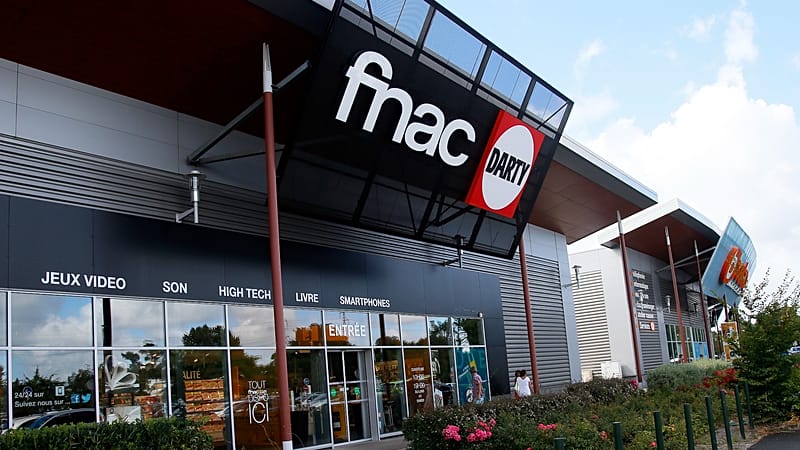
Customers entering a Fnac shop – AP Photo
The French Ministry of the Economy — known as Bercy — closely monitors all foreign investments in French companies and projects involving Chinese firms are subject to even tighter scrutiny.
The government is not only assessing the financial implications of such deals, it is also examining possible risks to France’s cultural sovereignty and its ability to maintain control over how cultural content is created, distributed, and curated.
This heightened vigilance reflects a broader government strategy that increasingly treats cultural industries as strategic assets, on a par with energy, defence, and other sensitive technologies.
According to sources familiar with the discussions, JD.com’s leadership has met officials at the Ministry to offer reassurances, stressing that the company intends to comply fully with French regulations and does not plan to increase its stake further. Economy Minister Roland Lescure recently confirmed that talks are ongoing.
JD.com has formally requested that Bercy review the deal. Under French investment-screening rules, the Ministry now has between one and three months to issue a decision.
Bercy, the French Ministry of the Economy, Finance and Industry – AP Photo
A major concern in JD.com’s case is the possibility that data belonging to Fnac Darty’s roughly two million customers could, in certain circumstances, be accessed by China.
The issue centres on China’s National Intelligence Law, introduced in 2017 and expanded several times since, which obliges Chinese organisations and citizens to assist the country’s intelligence services and hand over information deemed relevant to national security.
In practice, this means that a Chinese parent company such as JD.com could, at least in theory, be required to share data held by its subsidiaries or business partners abroad — a scenario that alarms French officials.
Related
Fnac Darty holds a significant amount of data on the cultural and technology habits of French and European consumers — information that could be highly valuable to any major digital player, and a source of concern for authorities focused on protecting France’s digital sovereignty.
The potential deal, which would make JD.com the second-largest shareholder in the retailer, raises a wider question that European governments are increasingly confronting: how far should China be allowed to expand its presence in the continent’s commercial and digital infrastructure — from warehouses and delivery networks to sensitive customer databases — without Europe losing control over sectors it considers strategic?
To educate the public and allied health professionals, Prevent Blindness offers free, expert-approved educational resources on GA including a fact sheet and a series of social media graphics, available in English and Spanish, a dedicated web page and expert and patient videos. This year’s GA Week is generously supported by Silver sponsor Apellis Pharmaceuticals, Inc.
Vision changes due to GA may include:
Difficulty seeing in the center of your vision, which is needed for reading, recognizing faces, and driving
Numbers or letters disappearing or missing when reading
A dim or dark spot in your central or near central (side) vision
Trouble seeing in dim light
Needing extra light to read
Dull or washed-out colors
Vision not as clear or sharp
However, in the early stages of GA, there may be no notable symptoms. This can delay early diagnosis and treatment during a critical period to preserve sight.
“Geographic atrophy can profoundly affect the independence and quality of life of millions of patients and their families,” said Jeff Todd, president and CEO of Prevent Blindness. “Our goal at Prevent Blindness is to bring GA into the spotlight- ensuring people recognize the symptoms, understand their options, and feel empowered to seek care earlier.”
Prevent Blindness recently hosted the community forum “Geographic Atrophy: Knowledge, Hope, and Help,” designed for those who have been diagnosed with GA, and/or their care partners. The discussion, available for viewing free online, includes an overview of GA, patient experiences of individuals living with the condition, and resources available to GA patients. This virtual event was supported by funding from Apellis, Astellas, and Johnson & Johnson.
Panelists of the “Geographic Atrophy: Knowledge, Hope, and Help” forum include:
Moderator: Kira Baldonado, MPH, Executive Vice President, Prevent Blindness
John W. Kitchens, MD, Retina Specialist, Retina Associates of Kentucky
Julie Grutzmacher, MSW, MPH, Director of Patient Advocacy + Population Health Initiatives, Prevent Blindness
Diane Marshall, Prevent Blindness ASPECT Patient Engagement Program Graduate, Individual Living with GA
Pete Poulsen, Prevent Blindness ASPECT Patient Engagement Program Graduate, Retired Business Communication Coordinator, Individual Living with GA
Additional educational videos from Prevent Blindness include the Focus on Eye Health Series episodes:
“Advancements in Treatments for Geographic Atrophy,” featuring Rajeev S. Ramchandran, MD, MBA, Associate Professor of Ophthalmology, Flaum Eye Institute, University of Rochester Medical Center.
“Geographic Atrophy and Patient Support,” featuring Prevent Blindness Ohio Past President and CEO, Sherry Williams, sharing her story as a care partner for her mother diagnosed with GA.
“Geographic Atrophy” episode featuring Janet S. Sunness, MD, medical director of the Richard E. Hoover Low Vision Rehabilitation Services at the Greater Baltimore Medical Center.
A recent study from the Centers for Disease Control and Prevention found that one in four adults with vision loss reported anxiety or depression. For those experiencing vision loss or blindness from GA, or other eye diseases or conditions, Prevent Blindness offers the Vision Loss and Mental Wellness resource from its Living Well With Low Vision program. Prevent Blindness strongly encourages those experiencing mental wellness issues, and their care partners, to contact a mental health professional, and seek out support groups of others who are living with GA.
For more information on GA, visit https://preventblindness.org/geographic-atrophy. For more information on wet and dry AMD, visit https://preventblindness.org/amd-age-related-macular-degeneration/. For more information on low vision and mental wellness, visit https://lowvision.preventblindness.org.
About Prevent Blindness Founded in 1908, Prevent Blindness is the nation’s leading volunteer eye health and safety organization dedicated to fighting blindness and saving sight. Focused on promoting a continuum of vision care, Prevent Blindness touches the lives of millions of people each year through public and professional education, advocacy, certified vision screening and training, community and patient service programs and research. These services are made possible through the generous support of the American public. Together with a network of affiliates, Prevent Blindness is committed to eliminating preventable blindness in America. For more information, visit us at PreventBlindness.org, and follow us on Facebook, X, Instagram, Threads, LinkedIn, TikTok, and YouTube.
Wondering if Iberdrola is a bargain or looking expensive these days? You are not alone, and it is time to dig into what really drives the value behind the stock.
The share price has had a strong run this year, up 32.5% year-to-date and 39.0% over the last 12 months. There was a slight dip of 0.8% in the past week.
Recent headlines have been buzzing about Iberdrola’s expansion into offshore wind projects and new partnerships, pushing the company’s global reach. These strategic moves helped explain much of the recent upward momentum and have also refocused investors’ attention on the long-term growth story in renewable energy.
Despite all this excitement, Iberdrola currently scores a 0/6 on our valuation checks for being undervalued. This means it does not pass any of our six undervaluation tests. Next, we will cover the different ways the stock’s value can be assessed, but stick around for an even better approach to valuation at the end of the article.
Iberdrola scores just 0/6 on our valuation checks. See what other red flags we found in the full valuation breakdown.
The Discounted Cash Flow (DCF) model estimates a company’s value by projecting its future cash flows and discounting them back to today’s terms. This approach helps gauge what the business is really worth, regardless of daily share price movements.
Iberdrola’s current Free Cash Flow stands at approximately €5.0 Billion. Analyst estimates cover the next several years, with projections indicating a notable decline in free cash flow over the coming decade. By 2028, discounted free cash flow is expected to be €1.7 Billion, and further extrapolations suggest a continued drop, reaching around €539 Million (discounted) by 2035. These declining figures are calculated in Euros, the company’s reporting currency.
Based on this DCF method, Iberdrola’s estimated intrinsic value is €3.50 per share. This is considerably lower than its current market price, and the model implies the stock is trading at a 413.8% premium to its fair value. This suggests that Iberdrola is substantially overvalued by this measure.
Result: OVERVALUED
Our Discounted Cash Flow (DCF) analysis suggests Iberdrola may be overvalued by 413.8%. Discover 922 undervalued stocks or create your own screener to find better value opportunities.
IBE Discounted Cash Flow as at Nov 2025
Head to the Valuation section of our Company Report for more details on how we arrive at this Fair Value for Iberdrola.
The Price-to-Earnings (PE) ratio is often a go-to valuation measure for profitable companies like Iberdrola, as it offers a simple way to assess whether the market price reflects current earnings power. A “fair” PE ratio varies from company to company and is typically shaped by factors such as expected earnings growth and business risk. Higher growth or lower risk usually leads to a higher reasonable PE, while companies with slower growth or more uncertainty tend to warrant lower multiples.
Iberdrola currently trades at a PE of 22.3x, which puts it well above the Electric Utilities industry average of 14.3x and the peer average of 13.7x. On the surface, this might suggest the stock is comparatively expensive. However, Simply Wall St’s proprietary “Fair Ratio” takes the analysis a step further. The Fair Ratio, calculated at 21.1x for Iberdrola, considers a deeper set of inputs including growth prospects, profit margins, market cap and risk profile, offering a more tailored benchmark than the standard industry or peer averages.
Given that Iberdrola’s current PE is only marginally above its Fair Ratio, the valuation now appears justified based on this method. The stock’s price is essentially in line with what would be expected based on the company’s specific fundamentals.
Result: ABOUT RIGHT
BME:IBE PE Ratio as at Nov 2025
PE ratios tell one story, but what if the real opportunity lies elsewhere? Discover 1434 companies where insiders are betting big on explosive growth.
Earlier we mentioned that there is an even better way to understand valuation, so let us introduce you to Narratives, the smarter, more dynamic approach to investing.
A Narrative is more than just numbers. It is your story behind the stock, your unique way to combine forecasts for revenue, earnings, and margins to decide what you think the company is really worth. Narratives connect Iberdrola’s business outlook and risks directly to a financial forecast, and then all the way to a fair value that makes sense for you.
On Simply Wall St’s Community page, millions of investors are already using Narratives to track their thinking, compare Fair Value to market Price, and decide when to buy or sell. Narratives are updated automatically when key news or results land, so your decision-making is always informed by the latest facts and perspectives, not stale data.
For example, some investors see Iberdrola’s clean energy expansion and stable network investments driving growth, justifying a Fair Value as high as €18.5. Others focus on regulatory risks and project delays to argue it could be as low as €9.7. Your Narrative lets you side with the view and assumptions that feel right for you.
Do you think there’s more to the story for Iberdrola? Head over to our Community to see what others are saying!
BME:IBE Community Fair Values as at Nov 2025
This article by Simply Wall St is general in nature. We provide commentary based on historical data and analyst forecasts only using an unbiased methodology and our articles are not intended to be financial advice. It does not constitute a recommendation to buy or sell any stock, and does not take account of your objectives, or your financial situation. We aim to bring you long-term focused analysis driven by fundamental data. Note that our analysis may not factor in the latest price-sensitive company announcements or qualitative material. Simply Wall St has no position in any stocks mentioned.
Companies discussed in this article include IBE.MC.
Have feedback on this article? Concerned about the content? Get in touch with us directly. Alternatively, email editorial-team@simplywallst.com
The Sean M. Healey & AMG Center for ALS at Mass General Brigham has selected Tiziana Life Sciences as one of the companies to enter the Healey ALS MyMatch Program for testing intranasal foralumab in a biomarker-driven phase 2a clinical trial for ALS. This trial is partially funded by the ALS Association’s Hoffman ALS Clinical Trial Awards Program.
The Healey ALS MyMatch program is changing the field of early phase ALS clinical trials (Phase 1b/2a). The program uses a personalized approach, an efficient program architecture and central governance that allows for faster trial access for participants across multiple sites and faster and better trials for drug developers. An ALS MyMatch trial evaluates if an experimental treatment being tested for ALS is safe, how it works at a molecular level or how much of a dosage to give to have a biological effect in ALS. Information learned from a successful ALS MyMatch trial can help refine strategy for future phase 2/3 clinical trials, whether the experimental treatment should be tested in select subgroups of ALS individuals with certain disease characteristics or more broadly in all people with ALS. ALS MyMatch uses smart tools like genetics, blood and spinal fluid biomarkers and artificial intelligence to help choose the right drug for the right people with ALS and track how well it works.
Expert ALS scientist members of the ALS MyMatch Therapy Evaluation Committee selected Tiziana Life Sciences to work with the Healey & AMG Center on a new trial to include in the program. The trial will be led by Principal Investigators Suma Babu, MBBS, MPH, Co-Director of the Neurological Clinical Research Institute (NCRI) and Healey & AMG Center at Mass General Brigham, and James Berry, MD, MPH, Chief of the Division of ALS and Motor Neuron Diseases at Mass General Brigham.
Howard Weiner, MD, Professor of Neurology, Harvard Medical School and Co-Director of the Ann Romney Center for Neurologic Diseases at Mass General Brigham, is a key scientific collaborator in the ALS MyMatch trial. His groundbreaking preclinical work with foralumab has laid the foundation for bench-to-bedside translation of foralumab into clinical trials for multiple neurological diseases, including multiple sclerosis (MS), Alzheimer’s disease, and multiple system atrophy (MSA). Now, in partnership with Tiziana Life Sciences, Dr. Weiner is helping advance foralumab’s potential in ALS. “Based on the effect of foralumab in ALS models and in MS and Alzheimer’s disease, my team and I are hopeful that foralumab will affect disease progression in ALS,” says Dr. Weiner.
Tiziana Life Sciences’ investigational product, foralumab, is a fully human anti-CD3 monoclonal antibody that has been shown to stimulate T regulatory cells when administered by a nasal spray. Neuroinflammation and immune dysregulation, particularly involving T-cell dysfunction and microglial activation, are increasingly recognized as key drivers of disease progression in ALS. Preclinical and clinical evidence indicate that nasally administered foralumab stimulates regulatory T cells in cervical lymph nodes, which then migrate to the central nervous system (CNS) to suppress pathogenic inflammation and restore microglial homeostasis.
“We are thrilled to finalize design and move towards next steps of trial conduct of this multi-site trial with Tiziana Life Sciences,” states Dr. Babu. “The trial will use cellular and biofluid biomarkers alongside advanced brain imaging to better understand how the drug works in the brain and to group participants in the trial based on their unique disease profile.”
“New treatments are urgently needed to make ALS livable and cure it, so we are pleased to see intranasal foralumab continue to advance in development. This ALS MyMatch trial will be a crucial first step toward larger trials that can determine efficacy,” said Kuldip Dave, PhD, Senior Vice President of Research at the ALS Association. The Association previously funded the preclinical development of foralumab through its Barnett Drug Development Program.
ALS MyMatch is a multi-site, collaborative initiative that currently brings together four trial-ready, high enrolling ALS research centers and is a Network of Excellence for ALS (NEALS) affiliated program. Research centers include Mass General in Boston; University of Minnesota in Minneapolis, Minn.; Northwestern University in Evanston, Ill.; and Nova Southeastern University in Fort Lauderdale, Fla. ALS MyMatch has partnered with the Acceleration Centers of Enrollment (ACE) program, a community-driven philanthropic partnership program focused on expediting start up and recruitment at study centers. Additional trials and high performing sites will be added as the program grows. Organizations can apply on the ALS MyMatch website.
For more information about ALS MyMatch, please visit: massgeneral.org/neurology/als/research/healey-mymatch
About the Sean M. Healey & AMG Center for ALS at Mass General Brigham
At the Sean M. Healey & AMG Center for ALS at Mass General Brigham, we are committed to bringing together a global network of scientists, physicians, nurses, foundations, federal agencies, and people living with ALS, their loved ones, and caregivers to accelerate the pace of ALS therapy discovery and development.
Launched in November 2018, the Healey & AMG Center, under the leadership of Merit Cudkowicz, MD and a Science Advisory Council of international experts, is reimagining how to develop and test the most promising therapies to treat the disease, identify cures and ultimately prevent it.
With many clinical trials and lab-based research studies in progress right now, we are ushering in a new phase of ALS treatment and care. Together, we will find the cures.
About the Neurological Clinical Research Institute
The Neurological Clinical Research Institute (NCRI) at Mass General Brigham is an academic research organization composed of innovative researchers experienced and passionate about designing, developing, facilitating, and conducting multicenter clinical trials in neurological diseases. Our mission is to accelerate translational research in neurological disorders by initiating clinical development of novel therapies and leading trials of these compounds. We strive to be at the cutting edge of innovative trial design to accelerate therapy development by creating new trial methodology, discovering novel biomarkers and refining outcome measures.
Hardin noted that renewable energy sources are expected to make up around 93% of new U.S. capacity additions this year. At the same time, she said, workforce constraints pose a significant barrier to scalability. Construction workers, welders, and electricians are essential to building the physical infrastructure that’s needed to scale clean energy technologies.
“If you think about the $650 billion in infrastructure projects announced since 2022, that’s going to require a tremendous workforce,” she said, citing the current shortage of around 500,000 construction workers in the U.S.
Vagneur-Jones grounded domestic developments in a global context, observing that the U.S. represents less than 10% of global demand for EVs; around 25% for batteries; and roughly 10% and 4% for solar and wind, respectively. China, which dominates clean energy manufacturing, accounts for 50% to 70% of global market share in the sector.
“We’re seeing a huge rise in Chinese exports to emerging economies, which is bringing the energy transition within reach for countries where it really wasn’t seriously considered,” Vagneur-Jones said, pointing out that Thailand now has a higher share of electric vehicles in passenger vehicle sales than the United States.
Speakers also noted that policy uncertainty—including questions about tariffs and tax credits—has complicated business planning. Building capacity takes time, Fazili noted, and there needs to be a “strong and consistent demand signal before companies can make large-scale capital investments.”
When it comes to U.S. manufacturing investments, Vagneur-Jones argued that continuity matters most.
“You’ve got to commit to one approach, and you have to do it over several years,” he said, adding that through sustained policy, “there is waste, and there are mistakes, and there are cycles—but there is also progress.”
Heathrow Airport’s plan for a third runway, which involves moving the M25 motorway, has been chosen by the government.
Two plans had been under consideration – one from the airport itself, and another from Arora Group, led by hotel tycoon Surinder Arora.
Heathrow had proposed a new runway which would be up to 3.5km (2.2 miles) long and require a new road tunnel under the airport. The rival bid from Arora Group would have involved a shorter runway at a lower cost, and did not require altering the M25.
A final decision on whether a third runway will get the green light is still years away.
Last month, the government asked for further information to help choose between the Heathrow and Arora schemes.
The Department for Transport said Heathrow’s own proposal offered the most deliverable option, and the “greatest likelihood” of getting a decision on planning approval within this parliament.
The plan that has been backed will inform the government’s review of the Airports National Policy Statement.
Once that is complete, Heathrow is expected to apply for planning permission. The government then hopes for a decision by 2029.
But any company will be able to submit an application to build the new runway and terminals at the site.
Heathrow had set out its plans for expansion in the summer. The whole project, which is expected to cost £49bn, includes:
the new runway, which Heathrow says will increase capacity to 756,000 flights and 150 million passengers a year. It currently serves about 84 million
a new terminal called T5X, expanding Terminal 2 and three new satellite terminals. It would close Terminal 3
enhancement of local rail connections and improvements to Heathrow’s bus and coach stations
diversion of the M25, which would involve a new road tunnel under the airport, and widening the motorway between junctions 14-15
The Arora Group said it accepted the government’s choice, adding it welcomed the decision to leave the option open for other firms to bid for the work.
“It’s imperative there is a clear and transparent process for selecting a promoter to ensure it best serves the interests of consumers,” the group said.
Transport Secretary Heidi Alexander said Heathrow was the UK’s only hub airport that supported trade, tourism and jobs.
“Today is another important step to enable a third runway and build on these benefits, setting the direction for the remainder of our work to get the policy framework in place for airport expansion,” she said.
“This will allow a decision on a third runway plan this parliament which meets our key tests including on the environment and economic growth.”
The government has already approved a string of other airport expansion plans, including a second runway at Gatwick Airport.
However, the Heathrow plans face opposition from environmental groups, politicians, and local residents.
Tony Bosworth, climate campaigner at Friends of the Earth, said the plan was “virtually the equivalent of bolting an airport the size of Gatwick onto Heathrow”.
“That would mean more noise and air pollution for local communities,” he said.
“Expanding Heathrow simply isn’t compatible with our legally binding climate targets, even if the government meets its hugely optimistic assumptions for emerging technologies, such as sustainable aviation fuels.”
The Mayor of London, Sir Sadiq Khan, said he thought the government’s backing of a new runway was a mistake.
“I want a better Heathrow, not a bigger one, particularly at a time where Gatwick’s going to be expanded, Stansted is going to be expanded, City Airport’s going to be expanded, Luton’s going to be expanded,” he said.
“I’m unclear how you get a new runway at Heathrow and it doesn’t cause environmental damage, noise pollution, air pollution being exacerbated.”
In reaching its decision, the government said that Heathrow’s runway plan was better developed and, while it required “major works” to the M25, the rival Arora scheme would also have had a “considerable impact” on the motorway.
It added that while the Heathrow proposal requires more land, it involves the acquisition of fewer houses around the airport than Arora’s plan.
The government also said the longer runway would provide “greater resilience and potential futureproofing for next-generation aircraft”.
A spokesperson for Heathrow welcomed the decision but said it needed “clarity as to how the crucial next phase of the project will be regulated”.
The airport is seeking reassurance that it will be allowed to increase its fees by enough to cover the cost of the planning application, which it says it will have to start very soon to meet the government’s timetable.
Earlier this month, the chief executive of British Airways, Sean Doyle, told industry members and MPs that Heathrow should be expanded without moving the M25.
“I think we should look at ways of potentially building a shorter runway,” he said.
Some airlines are concerned that the cost of building the third runway will make the airport more expensive for them, and ultimately for customers.
Three years ago, if someone needed to fix a leaky faucet or understand inflation, they usually did one of three things: typed the question into Google, searched YouTube for a how-to video or shouted desperately at Alexa for help.
Today, millions of people start with a different approach: They open ChatGPT and just ask.
I’m a professor and director of research impact and AI strategy at Mississippi State University Libraries. As a scholar who studies information retrieval, I see that this shift of the tool people reach for first for finding information is at the heart of how ChatGPT has changed everyday technology use.
Change in searching
The biggest change isn’t that other tools have vanished. It’s that ChatGPT has become the new front door to information. Within months of its introduction on Nov. 30, 2022, ChatGPT had 100 million weekly users. By late 2025, that figure had grown to 800 million. That makes it one of the most widely used consumer technologies on the planet.
Surveys show that this use isn’t just curiosity – it reflects a real change in behavior. A 2025 Pew Research Center study found that 34% of U.S. adults have used ChatGPT, roughly double the share found in 2023. Among adults under 30, a clear majority (58%) have tried it. An AP-NORC poll reports that about 60% of U.S. adults who use AI say they use it to search for information, making this the most common AI use case. The number rises to 74% for the under-30 crowd.
Traditional search engines are still the backbone of the online information ecosystem, but the kind of searching people do has shifted in measurable ways since ChatGPT entered the scene. People are changing which tool they reach for first.
For years, Google was the default for everything from “how to reset my router” to “explain the debt ceiling.” These basic informational queries made up a huge portion of search traffic. But these quick, clarifying, everyday “what does this mean” questions are the ones ChatGPT now answers faster and more cleanly than a page of links.
And people have noticed. A 2025 U.S. consumer survey found that 55% of respondents now use OpenAI’s ChatGPT or Google’s Gemini AI chatbots about tasks they previously would have asked Google search to help them with, with even higher usage figures for the U.K. Another analysis of more than 1 billion search sessions found that traffic from generative AI platforms is growing 165 times faster than traditional searches, and about 13 million U.S. adults have already made generative AI their go-to tool for online discovery.
This doesn’t mean people have stopped “Googling,” but it means ChatGPT has peeled off the kinds of questions for which users want a direct explanation instead of a list of links. Curious about a policy update? Need a definition? Want a polite way to respond to an uncomfortable email? ChatGPT is faster, feels more conversational and feels more definitive.
At the same time, Google isn’t standing still. Its search results look different than they did three years ago because Google started weaving its AI system Gemini directly into the top of the page. The “AI Overview” summaries that appear above traditional search links now instantly answer many simple questions – sometimes accurately, sometimes less so.
But either way, many people never scroll past that AI-generated snapshot. This fact combined with the impact of ChatGPT are the reasons the number of “zero-click” searches has surged. One report using Similarweb data found that traffic from Google to news sites fell from over 2.3 billion visits in mid-2024 to under 1.7 billion in May 2025, while the share of news-related searches ending in zero clicks jumped from 56% to 69% in one year.
Google search excels at pointing to a wide range of sources and perspectives, but the results can feel cluttered and designed more for clicks than clarity. ChatGPT, by contract, delivers a more focused and conversational response that prioritizes explanation over ranking. The ChatGPT response can lack the source transparency and multiple viewpoints often found in a Google search.
In terms of accuracy, both tools can occasionally get it wrong. Google’s strength lies in letting users cross-check multiple sources, while ChatGPT’s accuracy depends heavily on the quality of the prompt and the user’s ability to recognize when a response should be verified elsewhere.
OpenAI is aiming to make it even more appealing to turn to ChatPGT first for search by trying to get people to use a browser with ChatGPT built in.
Smart speakers and YouTube
The impact of ChatGPT has reverberated beyond search engines. Voice assistants, such as Alexa speakers and Google Home, continue to report high ownership, but that number is down slightly. One 2025 summary of voice-search statistics estimates that about 34% of people ages 12 and up own a smart speaker, down from 35% in 2023. This is not a dramatic decline, but the lack of growth may indicate a shift of more complex queries to ChatGPT or similar tools. When people want a detailed explanation, a step-by-step plan or help drafting something, a voice assistant that answers in a short sentence suddenly feels limited.
By contrast, YouTube remains a giant. As of 2024, it had approximately 2.74 billion users, with that number increasing steadily since 2010. Among U.S. teens, about 90% say they use YouTube, making it the most widely used platform in that age group. But what kind of videos people are looking for is changing.
People now tend to start with ChatGPT and then move to YouTube if they need the additional information a how-to video conveys. For many everyday tasks, such as “explain my health benefits” or “help me write a complaint email,” people ask ChatGPT for a summary, script or checklist. They head to YouTube only if they need to see a physical process.
You can see a similar pattern in more specialized spaces. Software engineers, for instance, have long relied on sites such as Stack Overflow for tips and pieces of software code. But question volume there began dropping sharply after ChatGPT’s release, and one analysis suggests overall traffic fell by about 50% between 2022 and 2024. When a chatbot can generate a code snippet and an explanation on demand, fewer people bother typing a question into a public forum.
So where does that leave us?
Three years in, ChatGPT hasn’t replaced the rest of the tech stack; it’s reordered it. The default search has shifted. Search engines are still for deep dives and complex comparisons. YouTube is still for seeing real people do real things. Smart speakers are still for hands-free convenience.
But when people need to figure something out, many now start with a chat conversation, not a search box. That’s the real ChatGPT effect: It didn’t just add another app to our phones – it quietly changed how we look things up in the first place.