Category: 3. Business

  • TDK Ventures’ Sauvage named chair of GCV Leadership Society –

    TDK Ventures’ Sauvage named chair of GCV Leadership Society –

    Nicolas Sauvage plans to promote best practices in corporate venture capital by launching a certificate for CVC professionals.

    Nicolas Sauvage, president of TDK Ventures, has been appointed as chair of the Global Corporate Venturing Leadership Society for 2026, taking over the helm from Bill Taranto and Arvind Purushotham.

    Sauvage set up TDK Ventures, the investment arm of Japanese technology company TDK, in 2019 and has subsequently built a team with offices in Silicon Valley, London, Bangalore and Tokyo. It launched a third $150m fund last year, taking its total assets after management to $500m.

    He is keen to use the chair position to explore ways to help develop the global CVC community, including bringing recognition and certification for industry practitioners.

    Maija Palmer

    Maija Palmer is editor of Global Venturing and puts together the weekly email newsletter (sign up here for free).


    Continue Reading

  • India’s Adani to set up 3.2GW coal-fired capacity

    India’s Adani to set up 3.2GW coal-fired capacity

    Indian private-sector firm Adani Power will set up a 3,200MW greenfield thermal power plant in the country’s northeastern Assam state.

    Bombay Stock Exchange-listed Adani Power, India’s largest private sector power generator, will invest 480bn rupees ($5.42bn) to set up this ultra super critical power plant in Assam, the company said on 14 November.

    Adani Power emerged as the successful bidder by offering the lowest tariff of Rs6.30/kWh in a tightly contested bidding process, it said.

    The plant will be set up under the Design, Build, Finance, Own and Operate (DBFOO) model. Coal linkage for the power plant has been allocated under coal allocation policy of the federal government.

    The project will have four units of 800MW each and will be commissioned in a phased manner between December 2030-December 2032, Adani said. Adani has a current operating capacity of 18.15GW from 12 thermal power plants and one solar plant and aims to reach a generation capacity of 42GW by 2032.

    The project award coincides with India’s aim to boost its overall generation to power its economic growth and provide round-the-clock electricity to all households in coming years.

    The award is also in line with India’s plans to add 80GW of new coal-fired generation capacity by 2032 to meet an anticipated growth in India’s power demand over the next decade. But bulk of these additions are expected to be based on domestic fuel, limiting prospects for imported coal.

    The project, along with other under construction and existing power plants, could buoy domestic coal demand and absorb surplus supplies, at a time when state-owned coal producer Coal India (CIL) aims to bulk up its output.

    CIL, which meets more than 80pc of India’s coal needs, plans to raise its production in the April 2025-March 2026 financial year to 875mn t, up by 12pc from the year earlier and lift it further to 1bn t in the 2026-27 financial year.

    The coal producer also aims to further raise the output to 1.04bn t in 2027-28, 1.08bn t in 2028-29 and 1.13bn t in 2029-30. The plans are part of India’s efforts to meet most of its coal demand through domestic sources and reduce non-essential coal imports.

    Continue Reading

  • Gartner IT Symposium/Xpo 2025 Kochi: Day 1 Highlights – Gartner

    1. Gartner IT Symposium/Xpo 2025 Kochi: Day 1 Highlights  Gartner
    2. Gartner Says Leaders Must Create Four Scenarios for Human-AI Collaboration at Work  Gartner
    3. Gartner: AI Will Touch All IT Work by 2030  digit.fyi
    4. AI will cause ‘jobs chaos’ within the next few years, says Gartner – what that means  ZDNET
    5. How to Balance Human-First and AI-First Strategies  digit.fyi

    Continue Reading

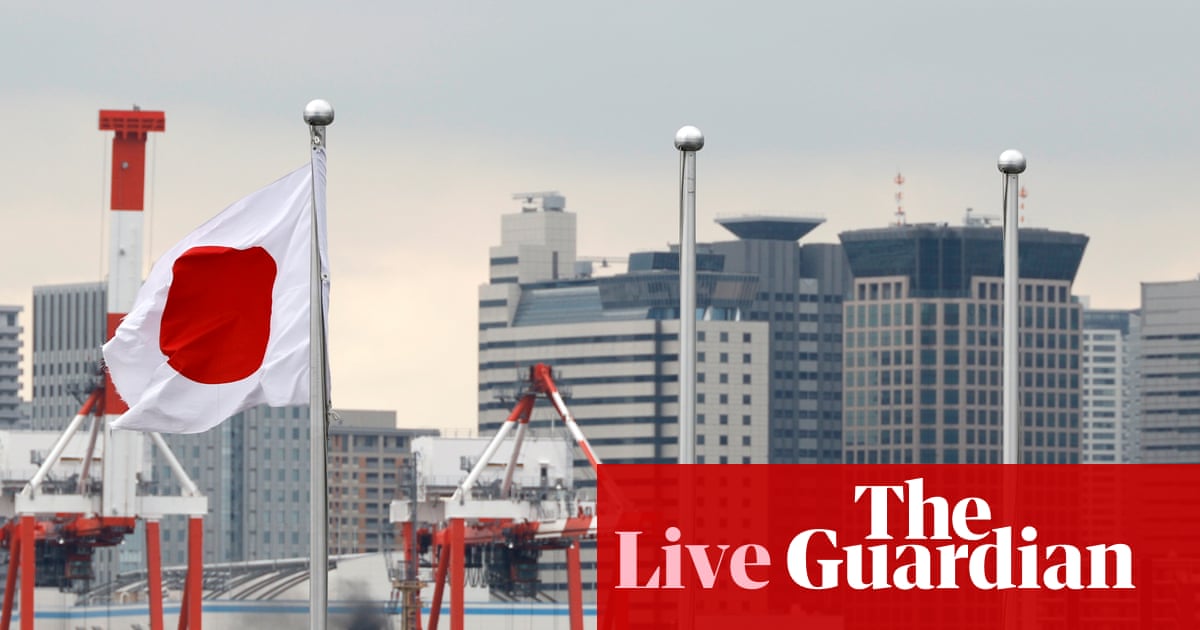
  • Japan’s economy contracts as exports are hit by US tariffs – business live | Business

    Japan’s economy contracts as exports are hit by US tariffs – business live | Business

    Key events

    Japan’s tourism shares slump as diplomatic rift with China deepens

    As well as news that its economy shrank in the last quarter, Japan has also been hit by an escalating dispute with China over Taiwan.

    Shares in Japanese tourism and retail companies have fallen today, after China advised its citizens to avoid travelling to Japan.

    This move by Beijing escalated a diplomatic feud sparked by comments from Tokyo’s new prime minister, Sanae Takaichi, on the possibility of deploying forces in the event of a hypothetical Chinese attack on Taiwan.

    This triggered a wave of selling across Japanese leisure stocks.

    Shares in Oriental Land, which operates Tokyo Disneyland, have fallen by 5.7% today. Department store chain Isetan Mitsukoshi, which makes substantial sales to Chinese visitors, has tumbled by 11.3%.

    Travel stocks were hit too, with Japan Airlines falling 3.75%.

    Masahiko Loo, a senior fixed income strategist at State Street Investment Management in Tokyo, explains:

    “The China–Japan dispute over Taiwan and Beijing’s advisory discouraging travel to Japan introduces near-term headwinds for consumer-facing sectors.

    “Chinese visitors account for roughly 25% of Japan’s inbound traffic, making department stores, luxury retail, and hospitality particularly vulnerable.”

    Share

    Updated at 

    Continue Reading

  • Tariffs steal spotlight as AI frenzy seems to fade

    Tariffs steal spotlight as AI frenzy seems to fade

    Mature soybeans remain unharvested near North Maple Grove Road after a rain shower on October 28, 2025, in Ellettsville, Indiana.

    Jeremy Hogan | Getty Images

    After a few weeks of intense focus on whether there is an AI bubble in the markets or not, a recurrent character of 2025 has emerged to the fore: tariffs. 

    On Friday stateside, tech stocks recovered slightly after the Nasdaq hit its lowest level in about 3 weeks, perhaps indicating that the AI-fueled volatility could be nearing an end. 

    However, just as AI steps away from the spotlight, tariffs enter the stage, like the next act in a Shakespearean play. 

    The Trump administration reached a deal with Switzerland Friday stateside to lower duties on Swiss exports to 15% from 39%, in return for a $200 billion investment in the U.S. by the end of 2028. 

    On the homefront, Trump also started to roll back tariffs on goods such as coffee, fruits and certain beef products after acknowledging that prices, specifically coffee, "were a little bit high."

    These rollbacks mark a sharp reversal in stance for the U.S. President and his officials, which said that tariffs will not raise prices. 

    In a way, the U.S. President may try to change the laws of politics with his sweeping tariff moves, but even he cannot change the laws of economics.

    What you need to know today

    Epstein files release. U.S. President Donald Trump called on Republicans in Congress to vote to release files related to deceased convicted sex offender Jeffrey Epstein, a sharp reversal from previous resistance within his inner circle.

    Alibaba reportedly helping China military. Alibaba is helping the Chinese military to target the U.S., according to a White House memo, the Financial Times reported Friday. "The assertions and innuendoes in the article are completely false," Alibaba said in a statement to CNBC on the FT report.

    Japan GDP falls. Japan's economy contracted by a smaller-than-expected 1.8% in the third quarter on an annualized basis, with growth in private and government consumption limiting the decline. On a quarter-on-quarter basis, GDP in the three months to September contracted for the first time in six quarters, falling 0.4%.

    Nasdaq recovers. The tech heavy index rebounded on Friday as investors bought up shares of key technology stocks, a day after the group led Wall Street to its worst day in more than a month. Asia-Pacific markets were mixed Monday as investors assessed rising friction between Japan and China. 

    [PRO] AI and EM for the next decade. Artificial intelligence and emerging markets are set to define the next decade, according to Goldman Sachs' 10 year investment outlook report.

    And finally...

    Two Chinese tourists wear kimonos as they visit the Sensoji Temple in the Asakusa district of Tokyo on Nov. 15, 2025.

    Greg Baker | Afp | Getty Images


    Continue Reading

  • Japan’s economy contracts as exports are hit by President Trump’s tariffs

    Japan’s economy contracts as exports are hit by President Trump’s tariffs

    By&nbspAP with Eleanor Butler

    Published on

    Japan’s economy sank at an annualised rate of 1.8% in the July to September period, government data showed on Monday, as President Donald Trump’s tariffs sent the nation’s exports spiralling.

    The fall in the annualised rate was still smaller than the 0.6% drop that the market had expected.

    On a quarter-by-quarter basis, Japan’s GDP, meaning the total value of a nation’s goods and services, slipped 0.4%. That marked the first contraction in six quarters.

    A big decline during the quarter came in exports, which were 1.2% down from the previous quarter.

    Where possible, some businesses sped up shipments to beat the tariff deadline, inflating some of the earlier data for exports.

    On an annualised basis, exports dropped 4.5% in the three months through September.

    Imports for the third quarter slipped 0.1%, while private consumption edged up 0.1% during the quarter.

    Tariffs are a major blow to Japan’s export-reliant economy, led by powerful automakers like Toyota Motor Corp., although such manufacturers have over the years moved production abroad to avoid the brunt of tariffs.

    The US now imposes a 15% tariff on nearly all Japanese imports, down from an earlier rate of 25%.

    The new GDP data comes as a challenge for new Prime Minister Sanae Takaichi, who took on the role in October.

    Takaichi is already contending with tensions between Japan and China related to disagreements over Taiwan. Earlier this month, the prime minister said that Tokyo could take military action if Beijing attacked the self-governing island, which Beijing views as part of its territory.

    Chinese and Japanese officials are expected to hold talks on Tuesday.

    Continue Reading

  • Baker McKenzie Advises Schulthess Maschinen AG on Financing of its Acquisition of Armstrong France SAS | Newsroom

    Baker McKenzie Advises Schulthess Maschinen AG on Financing of its Acquisition of Armstrong France SAS | Newsroom

    Baker McKenzie Switzerland acted as Swiss counsel to Schulthess Maschinen AG in relation to the Swiss legal aspects of financing its acquisition of Armstrong France SAS, a leader in the sale, rental and servicing of laundry equipment in France.

    The Baker McKenzie team was led by Markus Wolf (partner, Banking & Finance) and included Tatiana Ayranova (senior associate, Banking & Finance) and Sadia Raja (trainee lawyer, Banking & Finance).


    Continue Reading

  • CAE Prepares To Start Training Bombardier Global 8000 Business Jet Pilots – Aviation International News

    CAE Prepares To Start Training Bombardier Global 8000 Business Jet Pilots – Aviation International News

    1. CAE Prepares To Start Training Bombardier Global 8000 Business Jet Pilots  Aviation International News
    2. Bombardier Claims Mach 0.95 MMO for Global 8000 Business Jet  Business Jet Traveler
    3. New Business Jet Makes Flying at 41,000 Feet Feel Like a Walk on Top of the Burj Khalifa  autoevolution
    4. Bombardier Global 8000, world’s fastest business jet, awarded Transport Canada Type certification  ZAWYA

    Continue Reading

  • Average U.K. House Asking Prices Fall in November as Pre-Budget Blues Continue – The Wall Street Journal

    1. Average U.K. House Asking Prices Fall in November as Pre-Budget Blues Continue  The Wall Street Journal
    2. Asking prices fall as UK housing market hit by budget speculation, Rightmove says  The Guardian
    3. A THIRD of home sellers have slashed their asking price ahead of dreaded Autumn Budget  This is Money
    4. House prices drop by £6.5k in one month as buyers worry over Budget impact  The i Paper
    5. Average price tag on a home fell by £6,589 in November – Rightmove  Yahoo Finance UK

    Continue Reading

  • QFC employment case highlights the risk of relying on artificial intelligence in litigation : Clyde & Co

    QFC employment case highlights the risk of relying on artificial intelligence in litigation : Clyde & Co

    On 12 November 2025, the Qatar Financial Centre (QFC) Civil and Commercial Court delivered a landmark judgment in the case of Jonathan David Sheppard v Jillion LLC. The case has attracted significant attention due to the citation of ‘fake cases’ in submissions to the Court. The judgment not only addresses the specific conduct in question but also sets out broader guidance for legal professionals and clients alike, particularly regarding the use of artificial intelligence (AI) and secondary sources in legal research.

    Access the judgment

    Background: the facts of the case

    The dispute arose from an employment claim brought by Jonathan David Sheppard against Jillion LLC. During the proceedings, the defendant’s legal representative, an unnamed Dubai-based lawyer, submitted an application for an extension of time to file a defence. In support of the application, the lawyer cited several apparent cases, including “Al Khor International School v. Gulf Contracting Co. (QFC 2022)” and “Doha Bank v. KPMG (QFC App 2019)”.  

    However, when the Court Registry ordered the legal representative to provide copies of the judgements, it became apparent that the cases did not exist. The lawyer initially claimed difficulty accessing the judgments on the Court’s website but later admitted, via a witness statement, that the references were included in error due to reliance on secondary sources.

    The Court’s findings

    The QFC Court concluded the lawyer’s conduct amounted to a breach of Article 35.2 of the Rules and Procedures of the Civil and Commercial Court, which prohibits providing false or misleading information to the Court. The Court determined that the conduct was intentional because the lawyer had persisted in referencing the fake cases even after being challenged by the Registry. The Court found the lawyer had committed a contempt of court.

    However, the Court decided not to impose a penal sanction on the lawyer. Instead, it accepted the lawyer’s apology and determined that the publication of the judgment itself would serve as a sufficient deterrent to future conduct of this kind. The Court also chose to anonymise the lawyer’s identity, noting that public identification would be a disproportionately harsh penalty given the size of the legal profession practicing in the GCC.

    The use of AI in litigation

    The judgment situates the problem of ‘fake cases’ within a global context. The Court referred to the widely publicised US case of Mata v Avianca Inc (2023), where lawyers relied on AI-generated, non-existent cases in court submissions. Similar issues have arisen in England and Wales, Canada, and Australia, prompting courts and regulators to issue guidance on the responsible use of AI and the necessity of verifying legal authorities.

    The QFC Court acknowledged that AI and digital tools can enhance legal research, reducing costs and increasing efficiency. However, it emphasised that lawyers have a professional duty to verify the accuracy of any authorities cited, whether found via AI, internet searches, or traditional research methods.

    Practical implications for legal practitioners

    • The key lesson from this case is the absolute necessity for lawyers to verify the existence and content of any case law or authority cited in court.
    • Reliance on secondary sources, incomplete databases, or AI-generated content without proper verification is not acceptable and may result in findings of contempt or professional misconduct.
    • The QFC Court announced that a draft Practice Direction would be published alongside the judgment. This Practice Direction will require all advocates before the Court to verify any case or authority cited, with sanctions, including public identification and disgrace, for breaches.
    • The submission of fake cases can have serious consequences, not only for the lawyers involved but also for their clients. Courts may disregard arguments based on non-existent authorities, potentially weakening a client’s position.

    Final thoughts

    The judgment in Jonathan David Sheppard v Jillion LLC serves as a timely warning to the legal profession and clients alike. The use of fake cases, whether intentional or through careless reliance on AI and secondary sources, will not be tolerated by the QFC Court. Legal practitioners must ensure that all authorities cited are genuine and properly verified.

    Unlock a wealth of comprehensive insights by subscribing to our new innovative platform, Law at Work. If you have any questions, please contact our employment team at lawatwork@clydeco.com.

    Learn more about Law at Work

    Continue Reading