Category: 3. Business

  • Johann Strydom Buys Handful Of Shares In Old Mutual

    Johann Strydom Buys Handful Of Shares In Old Mutual

    Old Mutual Limited (JSE:OMU) shareholders (or potential shareholders) will be happy to see that the CEO & Director, Johann Strydom, recently bought a whopping R10.0m worth of stock, at a price of R13.27. There’s no denying a buy of that magnitude suggests conviction in a brighter future, although we do note that proportionally it only increased their holding by -100%.

    Trump has pledged to “unleash” American oil and gas and these 15 US stocks have developments that are poised to benefit.

    Notably, that recent purchase by Johann Strydom is the biggest insider purchase of Old Mutual shares that we’ve seen in the last year. So it’s clear an insider wanted to buy, at around the current price, which is R13.46. Of course they may have changed their mind. But this suggests they are optimistic. While we always like to see insider buying, it’s less meaningful if the purchases were made at much lower prices, as the opportunity they saw may have passed. In this case we’re pleased to report that the insider bought shares at close to current prices. The only individual insider to buy over the last year was Johann Strydom.

    You can see a visual depiction of insider transactions (by companies and individuals) over the last 12 months, below. If you click on the chart, you can see all the individual transactions, including the share price, individual, and the date!

    Check out our latest analysis for Old Mutual

    JSE:OMU Insider Trading Volume November 17th 2025

    There are plenty of other companies that have insiders buying up shares. You probably do not want to miss this free list of undervalued small cap companies that insiders are buying.

    Looking at the total insider shareholdings in a company can help to inform your view of whether they are well aligned with common shareholders. We usually like to see fairly high levels of insider ownership. Based on our data, Old Mutual insiders have about 0.07% of the stock, worth approximately R38m. I generally like to see higher levels of ownership.

    The recent insider purchase is heartening. And an analysis of the transactions over the last year also gives us confidence. Given that insiders also own a fair bit of Old Mutual we think they are probably pretty confident of a bright future. So while it’s helpful to know what insiders are doing in terms of buying or selling, it’s also helpful to know the risks that a particular company is facing. You’d be interested to know, that we found 1 warning sign for Old Mutual and we suggest you have a look.

    Of course, you might find a fantastic investment by looking elsewhere. So take a peek at this free list of interesting companies.

    For the purposes of this article, insiders are those individuals who report their transactions to the relevant regulatory body. We currently account for open market transactions and private dispositions of direct interests only, but not derivative transactions or indirect interests.

    Have feedback on this article? Concerned about the content? Get in touch with us directly. Alternatively, email editorial-team (at) simplywallst.com.

    This article by Simply Wall St is general in nature. We provide commentary based on historical data and analyst forecasts only using an unbiased methodology and our articles are not intended to be financial advice. It does not constitute a recommendation to buy or sell any stock, and does not take account of your objectives, or your financial situation. We aim to bring you long-term focused analysis driven by fundamental data. Note that our analysis may not factor in the latest price-sensitive company announcements or qualitative material. Simply Wall St has no position in any stocks mentioned.

    Continue Reading

  • Nabta Health closes $2 million pre-Series A to expand hybrid women’s health model

    Nabta Health closes $2 million pre-Series A to expand hybrid women’s health model

    Nabta Health closes $2 million pre-Series A to expand hybrid women’s health model

    News

    • UAE-based Nabta Health has closed a $2 million Pre-Series A round, bringing its total funding to $4.5 million. The company uses an AI-powered hybrid model combining digital, at-home and in-clinic care.
    • Founded in 2017 by Sophie Smith, NABTA is a healthcare company dedicated to transforming women’s health in the Middle East through a hybrid model that combines digital, at-home and in-clinic care.
    • Nabta will use the new capital to expand across MEA, build new diagnostic and at-home testing pathways, and strengthen clinical infrastructure through hospital partnerships.

    Press release:

    Nabta Health (“NABTA”) is pleased to announce the closing of a $2 million Pre-Series A funding round, bringing its total funding to date to US $4.5 million.

    The Pre-Series A funding will enable NABTA to accelerate its mission to deliver accessible, evidence-based women’s healthcare and to expand its AI-powered hybrid model across the Middle East and Africa. 

    The investment will be used to deepen partnerships with employers, insurers, and healthcare providers; introduce new diagnostic and at-home testing pathways; and strengthen NABTA’s clinical infrastructure in collaboration with leading hospitals. 

    This year, NABTA was named to TIME Magazine’s Top HealthTech Companies 2025 list, announced the launch of a Women’s Health Centre of Excellence in partnership with Clemenceau Medical Center Hospital Dubai, and expanded its corporate health solutions across the region. 

    Together, these milestones reflect NABTA’s growing role as the MEA region’s hub for innovation in women’s health – a model that blends virtual, in-clinic, and community care to improve health outcomes across every stage of a woman’s life.

    Sophie Smith, Founder and CEO, Nabta Health, said: 

    “We are delighted to have closed this Pre-Series A round and to bring our total funding to date to US$4.5 million. This investment validates our vision – that women’s health in the region can be reimagined through an AI-powered, hybrid care model that meets women where they are, respects cultural context and delivers measurable outcomes. We are now looking to accelerate our growth so that more women and employers benefit from what we believe is the future of women-centred health: affordable, mobile-first, and engineered for sovereignty.”

    “For employers and insurers in the region, addressing the women’s health gap is not just a moral imperative; it is a business and productivity one,” added Smith. “With this funding, we will drive scale, deepen impact and prepare for the next chapter of growth.”

    Iain McMillan, Chair, Nabta Health, said:

    “The closing of this Pre-Series A round is confirmation that Nabta Health is being increasingly recognised in the region as a key enabler of measurably better women’s health. The business has steadily gained traction and grown its customer base throughout 2025 and I am looking forward to seeing further acceleration in our success as we move forward into 2026 and beyond.

    Continue Reading

  • Visa leans into AI-enabled payments and stablecoins to stay ahead of the game, says Asia-Pacific president Stephen Karpin

    Visa leans into AI-enabled payments and stablecoins to stay ahead of the game, says Asia-Pacific president Stephen Karpin

    Societies are shifting away from cash, and embracing new ways to make payments and transfer money. In Asia, many have turned to e-wallets, QR codes, and super apps—skipping physical credit cards entirely. 

    Traditional card companies are reinventing themselves to stay ahead of the game. “These days, when people talk about ‘cards’, it’s not just a piece of plastic. It’s a digital network proposition where you can pay or be paid,” Stephen Karpin, Visa’s Asia-Pacific president, told Fortune on Tuesday.

    On Wednesday, on the sidelines of the Singapore FinTech Festival, Visa revealed two new features for its regional clientele: AI-enabled payments and stablecoin settlements.

    The first marks the company’s expansion into agentic commerce, where consumers across Asia can tap on AI-powered agents to shop and pay on their behalf. 

    OpenAI’s release of ChatGPT catalyzed a fundamental shift in commerce, Karpin said. “The breadth with which it’s transforming how one understands and finds things in the world is quite profound. Yet one of the things missing from the current state of a LLM-powered chatbot is the ability to make payment via an agent,” he said.

    This means that online shoppers can use AI chatbots to discover, browse and select items—but can’t yet use them to complete payments. 

    Customers can load their Visa cards on an agent system—just as they might with Apple or Google Pay. They are then given the option to opt in for ‘personalization’, to receive recommendations of “intelligent shopping decisions” based on their past preferences.

    Users are then prompted to make payment within the AI platform—securely, with tokenization and authentication—completing an end-to-end online shopping process. 

    Stablecoins

    The second initiative is Visa’s stable settlement pilot, which enables select partners to pay using stablecoins across supported blockchains. Stablecoins are digital currencies designed to have a stable value, by pegging them to less volatile assets such as fiat currencies, most commonly the U.S. dollar).

    Karpin said that Visa had recognized the value of blockchain technology for payments since the time first emerged a decade ago. Today, more cross-border transactions than ever are taking place via stablecoins.

    “​​We want to make [stablecoins] one of the options to make and receive payments all around the world, when the regulatory environment is ready,” Karpin added. “We’ve got some assets in the form of technology and capability, and want to help businesses large and small start conducting commerce in Web3.”

    Asia’s shifting payments space

    Karpin has worked at Visa for over a decade, cutting his teeth in the South Pacific, Southeast Asian, and Japanese markets—before becoming the firm’s Asia-Pacific president in 2023.

    Things are shifting in Asia’s payments space, he said, noting that more change has happened in the last five years as compared to the previous fifty.

    Super apps—single apps consolidating multiple services like ride-hailing, food delivery and digital payments—is one such disruptor, he said. 

    They first took off in mainland China, with the founding of Alipay in 2004 and WeChat Pay in 2013. Southeast Asian tech giant Grab followed suit, launching GrabPay in 2016.

    But instead of regarding super apps and e-wallets as competition, Visa is looking for ways to work with them.

    “You can live your life on a super app now, so we’re partnering with them to digitalize the Visa credential,” Karpin said.

    He cited Visa’s partnership with Taiwan’s Line Pay as an example, which allows Taiwanese users to travel abroad and pay by scanning any QR codes connected to the Visa network.

    Visa is also widely accepted in global destinations beyond Asia, making it easier for long-distance travelers to make seamless payments overseas.

    “[When traveling further abroad], you can’t use a super app with a QR. We’re partnering with e-wallets so you can use your phone to tap to get onto the New York subway, or buy lunch in London,” Karpin said.

    Visa is the world’s second-largest card payment organization based on the annual value of card payments transacted and the number of issued cards, after being surpassed by China’s UnionPay in 2015. Yet Visa, No. 127 on the Fortune 500, leads in global transaction volume.

    Continue Reading

  • Microsoft AI CEO Calls Superintelligence an ‘Anti-Goal’

    Microsoft AI CEO Calls Superintelligence an ‘Anti-Goal’

    While much of Silicon Valley races to build godlike AI, Microsoft’s AI chief is trying to pump the brakes.

    Mustafa Suleyman said on an episode of the “Silicon Valley Girl Podcast” published Saturday that the idea of artificial superintelligence shouldn’t just be avoided. It should be considered an “anti-goal.”

    Artificial superintelligence — AI that can reason far beyond human capability — “doesn’t feel like a positive vision of the future,” said Suleyman.

    “It would be very hard to contain something like that or align it to our values,” he added.

    Suleyman, who cofounded DeepMind before moving to Microsoft, said his team is “trying to build a humanist superintelligence” — one that supports human interest.

    Suleyman also said that granting AI anything resembling consciousness or moral status is a mistake.

    “These things don’t suffer. They don’t feel pain,” Suleyman said. “They’re just simulating high-quality conversation.”

    The debate on superintelligence

    Suleyman’s comments come as some industry leaders speak about building artificial superintelligence. Some say that it could arrive this decade.

    OpenAI CEO Sam Altman has repeatedly described artificial general intelligence — AI that can reason like a human — as the company’s core mission. Altman said earlier this year that OpenAI is already looking beyond AGI to superintelligence.

    “Superintelligent tools could massively accelerate scientific discovery and innovation well beyond what we are capable of doing on our own, and in turn massively increase abundance and prosperity,” Altman said in January.

    Altman also said in an interview in September that he’d be very surprised if superintelligence doesn’t emerge by 2030.

    Google DeepMind’s cofounder, Demis Hassabis, offered a similar timeline. He said in April that AGI could be achieved “in the next five to 10 years.”

    “We’ll have a system that really understands everything around you in very nuanced and deep ways and kind of embedded in your everyday life,” he said.

    Other leaders have urged skepticism. Meta’s chief AI scientist, Yann LeCun, said we may still be “decades” away from achieving AGI.

    “Most interesting problems scale extremely badly,” LeCun said at the National University of Singapore in April. “You cannot just assume that more data and more compute means smarter AI.”


    Continue Reading

  • Aquilius adds talent, enters Hong Kong to pursue Asia private equity secondaries

    Aquilius adds talent, enters Hong Kong to pursue Asia private equity secondaries

    Aquilius Investment Partners is looking to ramp up its Asia private equity secondaries exposure with the appointment of Martin Yung, formerly of HarbourVest Partners, to lead the strategy.

    The Singapore-headquartered secondaries specialist has been active in private equity and real estate since its establishment in 2021. It has invested several hundred million dollars on the private equity side across GP-led and LP-led transactions. The pace of deployment is expected to increase.

    “Over the medium term, we’d be looking to deploy well in excess of USD 500m a year,” said Yung, who previously spent more than a decade at HarbourVest and has now become a managing director and head of private equity secondaries at Aquilius.

    He will be based in the firm’s newly opened Hong Kong office, working alongside Patrick Qian, another HarbourVest alumnus who has joined as a principal.

    “When we started five years ago, there was no one in real estate secondaries in Asia. We’ve really had to create that market ourselves, heavily investing in dedicated resources on the ground. Now, we’re deploying on average north of USD 500m in real estate secondaries every year,” said Christian Keiber, a founding partner at Aquilius.

    “The market opportunity in private equity secondaries is many times larger, and we are very excited about the long-term potential of this market in Asia.”

    Aquilius closed its debut fund in 2023 with commitments of USD 400m and raised a further USD 200m for co-investment from separately managed accounts (SMAs). Earlier this month, the firm announced a final close of USD 750m for Fund II, beating a target of USD 700m. It has USD 1.1bn overall, including SMAs.

    AIP Secondary Fund II, which is already approximately 50% deployed across eight transactions, focuses solely on real estate. There are no immediate plans for a private equity secondaries fund, although Aquilius is open to the possibility. For now, it will use existing dedicated pools of capital – via the SMAs – that can address private equity opportunities.

    The firm’s LP base is predominantly institutional, comprising sovereign wealth funds, pension funds, financial institutions, and family offices. Keiber noted that institutional investors from Asia and the Middle East are well-represented.

    “Given their relative proximity to the Asian market, we very much see eye-to-eye on the size of the opportunity,” he said. “That’s how we’ve managed to scale alongside these clients over the last five years.”

    In private equity, the goal is to build a portfolio that is evenly balanced between GP-led and LP-led transactions and between developed and emerging markets. While there is appetite for China exposure, emphasis is placed on having a clear path to liquidity. The deal sweet spot is USD 25m-USD 150m.

    Aquilius essentially targets a middle market that it regards as underpenetrated by secondaries investors, many of which are global players that may struggle to win investment committee (IC) support for opportunities in Asia over those in other geographies. In this sense, the firm considers its Asian base and experience to be a competitive advantage.

    “You expend many more calories for every dollar invested in Asian secondaries than in the US and Europe. If you’re a global secondaries firm, you leverage economies of scale that you have in your home markets and focus less on Asia,” said Keiber.

    “That creates substantial white space for a dedicated player with on-the-ground resources to source and execute transactions effectively.”

    Most transactions are sourced on a proprietary basis. On the LP-led side, Aquilius has tracked increased selling activity of Asian fund positions by groups located outside the region – a consequence of investors looking to redeploy capital closer to home at times of uncertainty.

    The GP-led market is driven by growing familiarity with the secondaries universe, though education remains a feature of many transactions. Industry participants have also flagged a closing of the bid-ask spread in 2025 as GPs, under pressure to generate liquidity, agree to steeper discounts. Yung observed that the reality is more nuanced.

    “The notion of a discount is really a byproduct of our underwriting,” he explained. “We look at the portfolio, the quality of the assets, the quality of the GP, and the path to liquidity. So, the discount reflects that broad mix of different factors.”

    Aquilius has grown rapidly in a region where few local secondaries investors have achieved scale. It started out with Keiber and Bastian Wolff, who previously worked for Blackstone and Partners Group, respectively. Headcount has doubled in size every year, and there are now 30 investment professionals responsible for USD 2bn in assets under management.

    Kieber regards expansion into Hong Kong as the logical next step for a firm that wants to address an Asian market that is geographically dispersed and highly relationship-driven.

    “It allows us to tap into additional capital sources across North Asia; it allows us to tap into more transaction flow; and it allows us to tap into a deeper talent pool. I suspect it’s not the last expansion in our journey,” he said.

     

    Continue Reading

  • Rupee dragged by weaker Asian peers, held up by central bank line – Reuters

    1. Rupee dragged by weaker Asian peers, held up by central bank line  Reuters
    2. Indian rupee weaker against dollar  Business Recorder
    3. Rupee’s rough patch likely to persist, bond yields eye further central bank action  TradingView
    4. RBI Sells Dollars in Offshore Market as Rupee Nears Record Low: INR/USD  Bloomberg.com
    5. Rupee Gains Amid Market Rebound and Bihar Poll Boost  Devdiscourse

    Continue Reading

  • Navigating New Ventures and Market …

    Navigating New Ventures and Market …

    This article first appeared on GuruFocus.

    Release Date: November 14, 2025

    For the complete transcript of the earnings call, please refer to the full earnings call transcript.

    • BW Offshore Ltd (BWOFY) successfully commenced operations with its new flagship, BW Opal, marking the end of the construction phase and the start of cash flow recognition.

    • The company signed a heads of agreement with Ecuador for the Bay du Nord FPSO project, progressing towards engineering start in early 2026.

    • A joint venture with BW Group was established to design and build floating desalination units, expanding into a new business segment.

    • BW Offshore Ltd (BWOFY) reported strong safety performance with zero recordable incidents during the quarter.

    • The company maintained a strong financial position with a net cash position of $187 million and a comfortable equity ratio of 30.5%.

    • The commercial uptime of the fleet was slightly below 99% due to scheduled maintenance, impacting overall performance.

    • The practical completion of BW Opal has been delayed to the first quarter of 2026, affecting revenue recognition timing.

    • The company’s bondholders did not agree to proposed covenant amendments, maintaining existing restrictions until maturity in 2028.

    • BW Offshore Ltd (BWOFY) faces challenges in the FPSO market with larger and more complex developments requiring revised risk management approaches.

    • The company does not provide specific guidance on net profit for the fourth quarter, creating uncertainty for investors.

    Q: Could you update on the VHra and clarify if BW Offshore has purchased it and the opportunities being pursued for that unit? A: Yes, we have renamed the unit and completed the transaction as announced earlier. This unit is now available for redeployment, providing us with a competitive position for smaller projects based on tanker conversions. We see about three prospects where we can apply this solution. – Marco Beenen, CEO

    Q: What do you make of the Namibia opportunity, and how does it fit your harsh environment criteria? A: We are closely monitoring the Namibia development but are not bidding on the Venus project as there are already three companies actively working on it. We see potential in the Namibian market, especially for early production units based on redeployments. – Marco Beenen, CEO

    Q: Should we expect any CapEx related to BW Opel in the fourth quarter, and how should we think about maintenance CapEx for the current fleet going forward? A: There will be some CapEx in Q4 related to closing out contracts, estimated at $30-40 million gross. For the current fleet, our contracts are reimbursable, meaning clients reimburse us for maintenance, so we do not forecast additional regular CapEx. – Stolla Andreasen, CFO

    Continue Reading

  • HTTP Status 400 – Bad Request

    HTTP Status 400 – Bad Request


    Type Exception Report

    Message Invalid character found in the request target [/getdoc.jsp?containerId\u003dprAP53930325 ]. The valid characters are defined in RFC 7230 and RFC 3986

    Description The server cannot or will not process the request due to something that is perceived to be a client error (e.g., malformed request syntax, invalid request message framing, or deceptive request routing).

    Exception

    java.lang.IllegalArgumentException: Invalid character found in the request target [/getdoc.jsp?containerId\u003dprAP53930325 ]. The valid characters are defined in RFC 7230 and RFC 3986
    	org.apache.coyote.http11.Http11InputBuffer.parseRequestLine(Http11InputBuffer.java:479)
    	org.apache.coyote.http11.Http11Processor.service(Http11Processor.java:270)
    	org.apache.coyote.AbstractProcessorLight.process(AbstractProcessorLight.java:63)
    	org.apache.coyote.AbstractProtocol$ConnectionHandler.process(AbstractProtocol.java:935)
    	org.apache.tomcat.util.net.NioEndpoint$SocketProcessor.doRun(NioEndpoint.java:1826)
    	org.apache.tomcat.util.net.SocketProcessorBase.run(SocketProcessorBase.java:52)
    	org.apache.tomcat.util.threads.ThreadPoolExecutor.runWorker(ThreadPoolExecutor.java:1189)
    	org.apache.tomcat.util.threads.ThreadPoolExecutor$Worker.run(ThreadPoolExecutor.java:658)
    	org.apache.tomcat.util.threads.TaskThread$WrappingRunnable.run(TaskThread.java:63)
    	java.base/java.lang.Thread.run(Thread.java:829)
    

    Note The full stack trace of the root cause is available in the server logs.


    Apache Tomcat/9.0.106

    Continue Reading

  • Asian markets struggle as fears build over tech rally, US rates

    Asian markets struggle as fears build over tech rally, US rates

    Bitcoin has erased all the gains it had made in 2025 (Yuri CORTEZ)

    Asian markets struggled Monday on simmering concerns that the Federal Reserve will not cut interest rates as hoped next month, while fears of a bubble continue to weigh on sentiment.

    The increasingly risk-averse mood on trading floors also dragged on the crypto sector, with bitcoin erasing all its gains this year — just over a month after hitting a record high.

    Meanwhile, simmering tensions between China and Japan hit tourism and retail firms on Tokyo’s exchange.

    Stocks have enjoyed a healthy rally since their tariff-fuelled swoon in April, with tech firms leading the way as companies pumped eye-watering amounts of cash into all things linked to artificial intelligence.

    That has been compounded by a weakening US jobs market that has fanned expectations the Fed will cut rates.

    However, the gains have petered out in recent weeks as investors re-evaluate those two pillars.

    Fed boss Jerome Powell said a third-straight reduction in borrowing costs was not certain next month, while other officials have hinted they intend to stand pat.

    The decision makers said they were concerned that inflation remained stubbornly anchored above the bank’s two percent target, overshadowing labour market fears.

    Traders are keenly awaiting the release of several reports — including on jobs and inflation — that had been held up by the record government shutdown that ended last week.

    The winding back of rate cut bets comes amid growing unease about the sky-high valuations in the tech sector and warnings that a bubble has formed that could soon burst.

    All eyes are on this week’s release of earnings from chip titan Nvidia, which this month became the first $5 trillion company.

    “Nvidia has been partly responsible for powering the AI rally, but is now facing pressure amid concerns about stretched valuations in the sector,” wrote Fiona Cincotta, senior market analyst at City Index.

    “Worries about an AI bubble have weighed on the sector, and investors are questioning not only the amount of money companies are spending on the tech relative to the returns they’re seeing, but also the circular nature of the spending.”

    After a tepid lead from Wall Street, Asian markets mostly fell.

    Hong Kong, Shanghai, Sydney and Singapore all dropped, though Seoul, Manila and Taipei advanced.

    Tokyo also sank as figures showed Japan’s economy shrank 0.4 percent in the three months to September.

    Tourism and retail firms were among the worst hit after China advised its citizens not to travel to Japan amid a diplomatic spat over comments by Prime Minister Sanae Takaichi about Taiwan.

    Cosmetics firm Shiseido dived nine percent, department store group Takashimaya more than five percent and Fast Retailing — the owner of Uniqlo — more than four percent.

    China is the biggest source of tourists to Japan.

    Takaichi’s comments earlier this month were widely interpreted as implying an attack on Taiwan could warrant Tokyo’s military support.

    If a Taiwan emergency entails “battleships and the use of force, then that could constitute a situation threatening the survival (of Japan), any way you slice it”, she told parliament.

    The two sides last week summoned each other’s ambassadors, with China then telling its citizens to avoid travelling to Japan.

    Bitcoin was also suffering from the uncertain climate on trading floors, with the digital unit briefly dropping to $92,935.51 — below the $93,714 mark it finished at on December 31 — according to Bloomberg data.

    The cryptocurrency hit a peak of $126,251 on October 6.

    Investors spend most of the year piling into bitcoin after Donald Trump returned to the White House pledging to deregulate the crypto sector.

    The president’s embrace of digital assets has reversed years of US government scepticism towards the industry, with the US House of Representatives passing three landmark cryptocurrency bills in July.

    – Key figures at around 0230 GMT –

    Tokyo – Nikkei 225: DOWN 0.7 percent at 50,011.53 (break)

    Hong Kong – Hang Seng Index: DOWN 0.3 percent at 26,499.22

    Shanghai – Composite: DOWN 0.5 percent at 3,971.57

    Dollar/yen: UP at 154.57 yen from 154.55 yen on Friday

    Euro/dollar: DOWN at $1.1609 from $1.1621

    Pound/dollar: DOWN at $1.3157 from $1.3171

    Euro/pound: DOWN at 88.20 pence from 88.22 pence

    West Texas Intermediate: DOWN 1.0 percent at $59.51 per barrel

    Brent North Sea Crude: DOWN 0.9 percent at $63.82 per barrel

    New York – Dow: DOWN 0.7 percent at 47,147.48 points (close)

    London – FTSE 100: DOWN 1.1 percent at 9,696.47 points (close)

    dan/lb

    Continue Reading

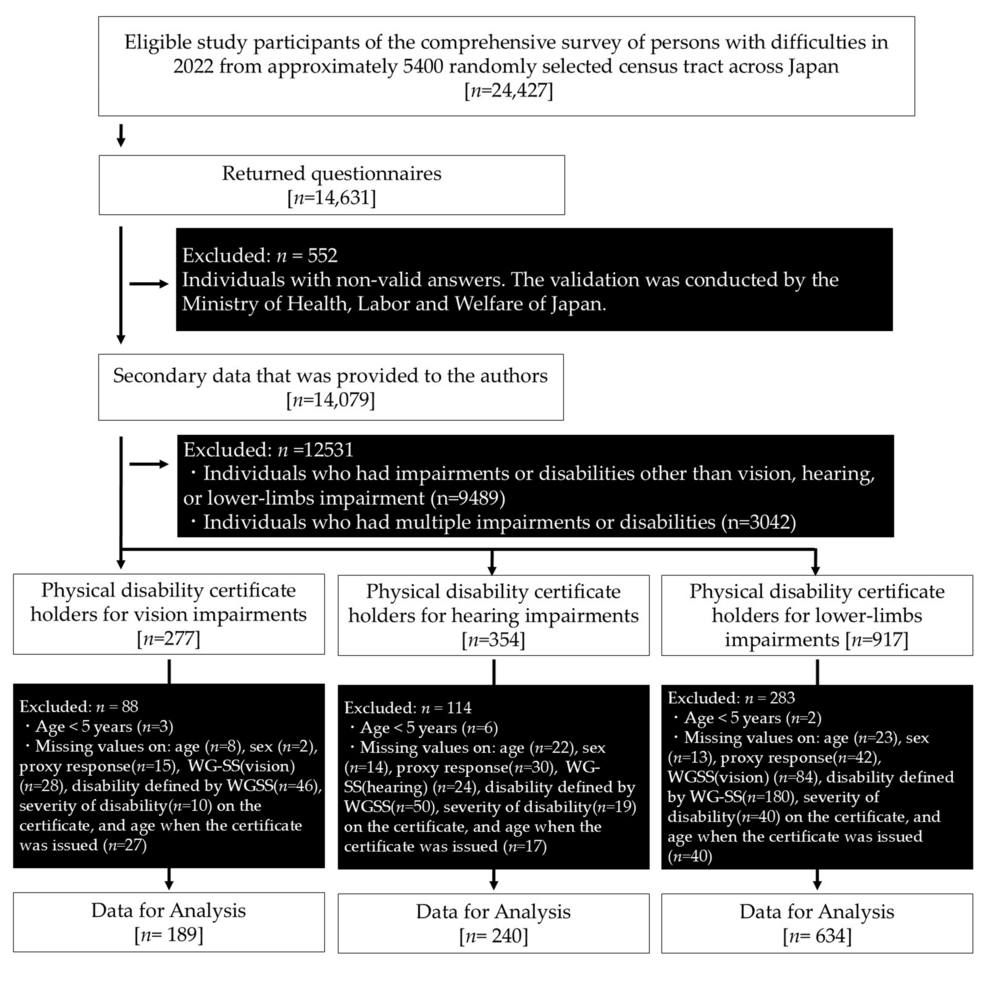
  • Characteristics of the Washington Group Short Set in Assessing Functional Difficulty Among People With Physical Disability Certificates of Vision, Hearing, and Lower-Limb Impairments in Japan

    Characteristics of the Washington Group Short Set in Assessing Functional Difficulty Among People With Physical Disability Certificates of Vision, Hearing, and Lower-Limb Impairments in Japan

    Continue Reading