Category: 3. Business

  • Linklaters advises on the US$300m Rule 144A and Reg S sovereign bond issuance by the Lao People’s Democratic Republic

    Linklaters advises on the US$300m Rule 144A and Reg S sovereign bond issuance by the Lao People’s Democratic Republic

    Linklaters has advised the managers on the successful issuance by the Lao People’s Democratic Republic (Lao PDR) of US$300m 11.25% senior unsecured notes due 2030. The notes were issued under Rule 144A and Regulation S and are listed on the Singapore Exchange Securities Trading Limited (SGX-ST).

    This transaction marks Lao PDR’s return to the international capital markets and engagement with global investors since its last issuance in 2019. The proceeds from the offering will be used to refinance existing government indebtedness and for general governmental purposes.

    The Linklaters team was led by partner and Head of Southeast Asia Capital Markets Amit Singh, with support from counsel Xunming Lim and managing associate Alwyn Loy.

    Linklaters’ Head of Southeast Asia Capital Markets Amit Singh commented:

    “We are delighted to have supported this significant transaction for Lao PDR. Furthermore, this deal underlines Linklaters’ strengths in advising on complex cross-border sovereign issuances across Southeast Asia.”

    With one of the largest teams focussed on Southeast Asia, Linklaters has worked on numerous high-profile and landmark transactions and has an established reputation in the global and Asian capital markets.

    Continue Reading

  • EBRD extends new guarantee to ProCredit Bank Ukraine to unlock EUR 200 million in new lending

    EBRD extends new guarantee to ProCredit Bank Ukraine to unlock EUR 200 million in new lending

    • EBRD provides new unfunded portfolio risk-sharing facility to ProCredit Bank Ukraine
    • Facility to enable up to €200 million in new lending to private businesses, including veteran-led enterprises
    • Loans will also drive business resilience, with EU support for competitiveness upgrades

    The European Bank for Reconstruction and Development (EBRD) is strengthening its support for Ukraine’s businesses and banking sector by providing a new portfolio risk-sharing facility to ProCredit Bank Ukraine (PCBU).

    The EBRD’s unfunded facility will partially cover PCBU’s credit risk on new lending, enhancing its capacity to provide much-needed funding to Ukrainian businesses. Backed by the EBRD’s guarantee, PCBU will extend €200 million in new loans to Ukrainian private businesses operating in key sectors such as agriculture, manufacturing, trade, transportation and logistics.

    This is the largest portfolio risk-sharing facility that the EBRD has provided to PCBU since the start of Russia’s full-scale invasion of Ukraine, building on the successful utilisation of six previous instruments.

    Overall, the EBRD has enabled close to €3.29 billion of finance for Ukrainian borrowers through 40 similar facilities with 12 partner financial institutions since the start of Russia’s full-scale invasion.

    The new facility – similar to previous instruments – will enhance the competitiveness of micro, small and medium-sized enterprises (MSMEs) in Ukraine. Twenty per cent of the subloans covered by the EBRD guarantee will be provided to MSMEs for long-term investments in EU-compliant and green technologies, improving the competitiveness of these firms on domestic and foreign markets.

    Eligible sub-borrowers will also receive EU-funded technical assistance and investment incentives such as grants on completion of their investment projects under the bloc’s EU4Business initiative. Higher levels of incentive will be provided for businesses and households most affected by the war (such as those experiencing asset destruction, loss or relocation), as well as for sub-borrowers, facilitating the reintegration into the workforce of war veterans, people living with disabilities, internally displaced persons and/or those located in territories most acutely affected by the war.

    The EBRD has already allocated €75.4 million of EU grant support to Ukrainian MSMEs under the EU4Business-EBRD Credit Line, of which €5.8 million has been issued to projects through PCBU.

    PCBU has also committed to supporting war veterans (both as employees and as clients). It will implement key recommendations set out in the Guidance Note to Support Ukrainian Financial Institutions in Becoming More Inclusive, Safer, and More Accessible Employers, which was developed by the EBRD and the National Bank of Ukraine.

    The EBRD facilities will be backed by partial first-loss risk cover from the EU under its Ukraine Investment Framework.

    PCBU is a wholly owned subsidiary of ProCredit Holding AG and one of Ukraine’s 20 largest banks in terms of assets. It is one of the market leaders in SME finance in Ukraine and a longstanding partner of the EBRD.

    The EBRD is Ukraine’s largest institutional lender and has significantly increased its lending to the country in recent years, making more than €8.5 billion available since the start of Russia’s full-scale invasion. The Bank has also secured agreement from its shareholders for a capital increase of €4 billion in order to continue lending at this level during wartime, and will increase its lending further when the time comes for reconstruction.

    Continue Reading

  • EBRD extends new guarantee to ProCredit Bank Ukraine to unlock EUR 200 million in new lending

    EBRD extends new guarantee to ProCredit Bank Ukraine to unlock EUR 200 million in new lending

    • EBRD provides new unfunded portfolio risk-sharing facility to ProCredit Bank Ukraine
    • Facility to enable up to €200 million in new lending to private businesses, including veteran-led enterprises
    • Loans will also drive business resilience, with EU support for competitiveness upgrades

    The European Bank for Reconstruction and Development (EBRD) is strengthening its support for Ukraine’s businesses and banking sector by providing a new portfolio risk-sharing facility to ProCredit Bank Ukraine (PCBU).

    The EBRD’s unfunded facility will partially cover PCBU’s credit risk on new lending, enhancing its capacity to provide much-needed funding to Ukrainian businesses. Backed by the EBRD’s guarantee, PCBU will extend €200 million in new loans to Ukrainian private businesses operating in key sectors such as agriculture, manufacturing, trade, transportation and logistics.

    This is the largest portfolio risk-sharing facility that the EBRD has provided to PCBU since the start of Russia’s full-scale invasion of Ukraine, building on the successful utilisation of six previous instruments.

    Overall, the EBRD has enabled close to €3.29 billion of finance for Ukrainian borrowers through 40 similar facilities with 12 partner financial institutions since the start of Russia’s full-scale invasion.

    The new facility – similar to previous instruments – will enhance the competitiveness of micro, small and medium-sized enterprises (MSMEs) in Ukraine. Twenty per cent of the subloans covered by the EBRD guarantee will be provided to MSMEs for long-term investments in EU-compliant and green technologies, improving the competitiveness of these firms on domestic and foreign markets.

    Eligible sub-borrowers will also receive EU-funded technical assistance and investment incentives such as grants on completion of their investment projects under the bloc’s EU4Business initiative. Higher levels of incentive will be provided for businesses and households most affected by the war (such as those experiencing asset destruction, loss or relocation), as well as for sub-borrowers, facilitating the reintegration into the workforce of war veterans, people living with disabilities, internally displaced persons and/or those located in territories most acutely affected by the war.

    The EBRD has already allocated €75.4 million of EU grant support to Ukrainian MSMEs under the EU4Business-EBRD Credit Line, of which €5.8 million has been issued to projects through PCBU.

    PCBU has also committed to supporting war veterans (both as employees and as clients). It will implement key recommendations set out in the Guidance Note to Support Ukrainian Financial Institutions in Becoming More Inclusive, Safer, and More Accessible Employers, which was developed by the EBRD and the National Bank of Ukraine.

    The EBRD facilities will be backed by partial first-loss risk cover from the EU under its Ukraine Investment Framework.

    PCBU is a wholly owned subsidiary of ProCredit Holding AG and one of Ukraine’s 20 largest banks in terms of assets. It is one of the market leaders in SME finance in Ukraine and a longstanding partner of the EBRD.

    The EBRD is Ukraine’s largest institutional lender and has significantly increased its lending to the country in recent years, making more than €8.5 billion available since the start of Russia’s full-scale invasion. The Bank has also secured agreement from its shareholders for a capital increase of €4 billion in order to continue lending at this level during wartime, and will increase its lending further when the time comes for reconstruction.

    Continue Reading

  • Like cash, but digital: the facts behind the digital euro – European Central Bank

    Like cash, but digital: the facts behind the digital euro – European Central Bank

    1. Like cash, but digital: the facts behind the digital euro  European Central Bank
    2. Italy’s banks support ECB’s digital euro plan, but want to spread out costs over time: Reuters  theblock.co
    3. ECB Advances Digital Euro Project Towards Potential 2029 Launch  Banking Exchange
    4. ABI senior official: Italian banks support the digital euro project but hope for phased investment  Bitget
    5. ECB’s digital euro plan hits resistance from banks and EU lawmakers  Financial Times

    Continue Reading

  • New podcast episode highlights key takeaways from IEA’s World Energy Outlook 2025 – News

    New podcast episode highlights key takeaways from IEA’s World Energy Outlook 2025 – News

    A new episode of the IEA podcast Everything Energy dives into the 2025 edition of the World Energy Outlook, the IEA’s flagship annual report that explores a range of possible energy futures and their implications for energy security, access and emissions. 

    Now available on Apple Podcasts and Spotify, the episode features insights from the report’s lead authors: Director of Sustainability, Technology and Outlooks Laura Cozzi and Chief Energy Economist Tim Gould. They discuss its key findings – including growing energy security risks across an unprecedented range of fuels and technologies, how the energy mix could evolve in the coming decades, the arrival of the Age of Electricity and how geographic centres of energy demand are shifting. More details on the scenarios in the World Energy Outlook 2025 can be found in this commentary.

    The new version of the IEA’s Everything Energy podcast, launched earlier this year, offers fresh insights on wide a range of global energy issues through conversations with IEA experts.

    Previous episodes of the podcast cover why global energy demand is surging, the vast potential of geothermal energy, the comeback of nuclear energy, how energy will shape the future of AI (and vice versa), what’s next for electric cars and trucks, key energy investment trends, the forces shaping oil markets, growing demand for air conditioning, efforts to expand access to clean cooking, where the world’s electricity comes from, petrochemicals, Southeast Asia’s growing energy importance, and Ukraine’s energy security this coming winter.

    Continue Reading

  • Gold Slips But Remains Set for Weekly Gain Amid U.S. Data Backlog, Rate-Cut Uncertainty – The Wall Street Journal

    1. Gold Slips But Remains Set for Weekly Gain Amid U.S. Data Backlog, Rate-Cut Uncertainty  The Wall Street Journal
    2. Gold falls 1% as broad market sell-off follows US government reopening  Reuters
    3. Gold prices edge higher; economic uncertainty persists as U.S. govt reopens  Investing.com
    4. Gold analysis: Will XAU/USD’s resilience hold?  FOREX.com
    5. Gold refreshes daily low as reduced Fed rate cut bets offset weaker USD, risk-off mood  FXStreet

    Continue Reading

  • Li Auto Inc. to Report Third Quarter 2025 Financial Results on November 26, 2025

    Li Auto Inc. to Report Third Quarter 2025 Financial Results on November 26, 2025

    BEIJING, China, Nov. 14, 2025 (GLOBE NEWSWIRE) — Li Auto Inc. (“Li Auto” or the “Company”) (Nasdaq: LI; HKEX: 2015), a leader in China’s new energy vehicle market, today announced that it will report its unaudited financial results for the third quarter of 2025 before the U.S. market opens on Wednesday, November 26, 2025.

    The Company’s management will hold an earnings conference call on Wednesday, November 26, 2025, at 7:00 A.M. U.S. Eastern Time or 8:00 P.M. Beijing/Hong Kong Time on the same day.

    For participants who wish to join the call, please complete online registration using the link provided below prior to the scheduled call start time. Upon registration, participants will receive the conference call access information, including dial-in numbers, passcode, and a unique access PIN. To join the conference, please dial the number provided, enter the passcode followed by your PIN, and you will join the conference instantly.

    Participant Online Registration: https://s1.c-conf.com/diamondpass/10051194-g5x3ws.html

    A replay of the conference call will be accessible through December 3, 2025, by dialing the following numbers:

    United States: +1-855-883-1031
    Mainland, China: +86-400-1209-216
    Hong Kong, China: +852-800-930-639
    International: +61-7-3107-6325
    Replay PIN: 10051194
       

    A live and archived webcast of the conference call will also be available at the Company’s investor relations website at https://ir.lixiang.com.

    About Li Auto Inc.

    Li Auto Inc. is a leader in China’s new energy vehicle market. The Company designs, develops, manufactures, and sells premium smart electric vehicles. Its mission is: Create a Mobile Home, Create Happiness (创造移动的家,创造幸福的家). Through innovations in product, technology, and business model, the Company provides families with safe, convenient, and comfortable products and services. Li Auto is a pioneer in successfully commercializing extended-range electric vehicles in China. While firmly advancing along this technological route, it builds platforms for battery electric vehicles in parallel. The Company leverages technology to create value for users. It concentrates its in-house development efforts on proprietary range extension systems, innovative electric vehicle technologies, and smart vehicle solutions. The Company started volume production in November 2019. Its current model lineup includes a high-tech flagship family MPV, four Li L series extended-range electric SUVs, and two Li i series battery electric SUVs. The Company will continue to expand its product lineup to target a broader user base.

    For more information, please visit: https://ir.lixiang.com.

    For investor and media inquiries, please contact:

    Li Auto Inc.
    Investor Relations
    Email: ir@lixiang.com

    Christensen Advisory 
    Roger Hu 
    Tel: +86-10-5900-1548 
    Email: Li@christensencomms.com 

    Continue Reading

  • Mining resilience: climate risk adaptation & net zero strategy

    Mining resilience: climate risk adaptation & net zero strategy

    The mining industry sits at the heart of the global economy and is a foundational component of the energy transition, supplying the critical minerals needed for electronics, electric vehicles, and renewable energy systems. For North American miners, embedding resilience into every stage of their decades-long lifecycle is necessary to lead this global charge.

    In today’s challenging environment, blind spots are costly. Unplanned disruptions – whether stemming from climate-related events, equipment failures, cyberattacks, geopolitical shocks, or people risks – can halt production, undermine stakeholder confidence, and drive financial losses. Resilience is no longer merely a defensive stance; it is now a source of advantage.

    Understanding the climate risk landscape

    The mining industry is uniquely vulnerable to the consequences of climate change due to its reliance on the natural environment and the long operational lifecycle of its projects. Risk managers and executive leaders must consider impacts extending decades into the future.

    According to the 2025 Global Risks Report, extreme weather is identified as the second highest risk most likely to present a material crisis globally in 2025 and is the primary long-term risk over the next decade. As the planet warms, extreme weather events are likely to become more frequent and severe.

    While climate risk focuses specifically on the consequences of adverse weather, rising temperatures, and the transition challenges related to decarbonisation, mining companies must also address broader sustainability and governance risks. These encompass environmental concerns like pollution, water scarcity, and biodiversity loss, alongside the social and regulatory implications of these challenges.

    Continue Reading

  • Global markets fall after tech sell-off and fears over Chinese economy | Stock markets

    Global markets fall after tech sell-off and fears over Chinese economy | Stock markets

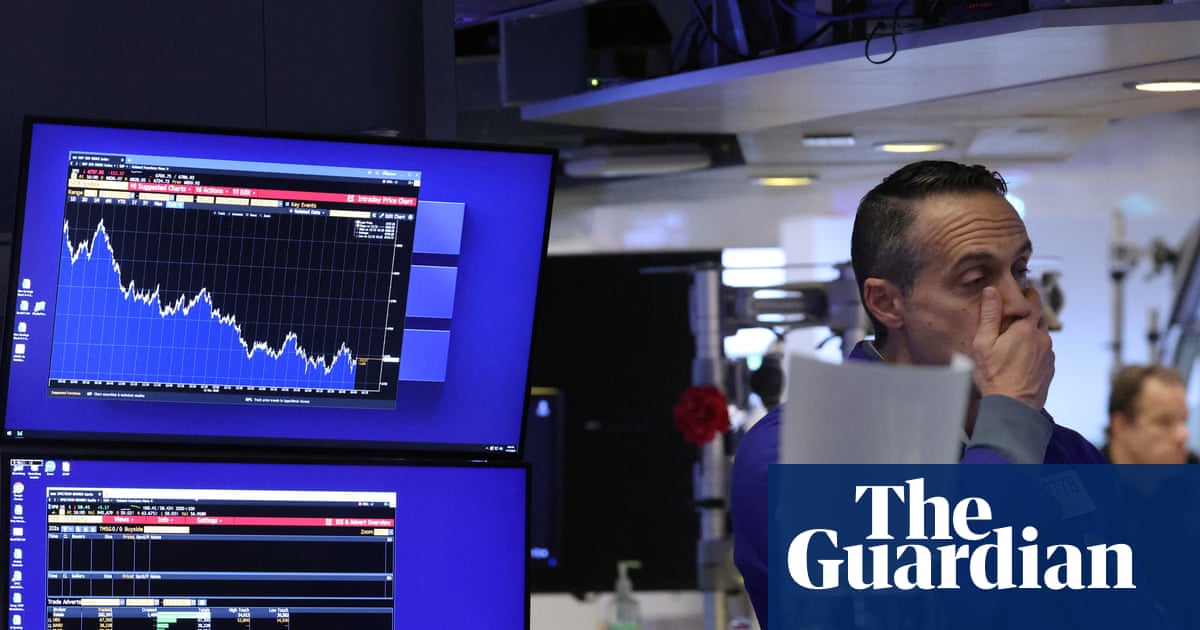
    Global markets have fallen after a tech sell-off that fuelled Wall Street’s worst day in a month and weak economic data in China showing an unprecedented slump in investment.

    Japan’s tech-heavy Nikkei fell 1.8% on Friday, South Korea’s Kospi plunged 2.6% and there was a 1.5% fall in Australia, after a torrid day on Wall Street as Nvidia and other tech companies tumbled over valuation concerns.

    Nvidia, the $4.5tn (£3.4tn) tech company, led a wider sector decline, falling 3.6% as investors reassessed the value of companies involved in the AI sector after Japan’s SoftBank sold its entire stake in the company.

    SoftBank and SK Hynix, a Chinese chipmaker for mobiles and computers, fell more than 6%, Samsung Electronics dropped 4% and Taiwan Semiconductor Manufacturing Company dropped 1.8%.

    Global markets also reacted to fears of a slowdown in the Chinese economy after data showed that activity cooled more than expected at the start of the final quarter of the year.

    Figures showed that fixed-asset investment shrank 1.7% in the first 10 months, a record decline, according to the National Bureau of Statistics.

    China’s CSI 300 fell 0.7%, while Hong Kong’s Hang Seng dropped 0.9% and Taiwan’s Taiex slumped by 1.4%.

    US markets were also jittery over the impact on the economy of the world’s largest market over the longest federal government shutdown in history.

    The shutdown has forced the government to put the release of data on inflation and jobs on hold.

    A growing number of officials have also signalled caution over the prospects of a US rate cut next month.

    skip past newsletter promotion

    Jim Reid, an analyst at Deutsche Bank, said: “It’s certainly been a volatile week in terms of sentiment, with relief over the end of the shutdown vying with concerns over AI valuations and whether the Fed will cut rates again after several speakers have struck a more cautious tone this week.

    “The S&P 500 posted its worst day in over a month with a December cut probability falling sharply from about 59% at Wednesday’s close to 49% last night.”

    Kyle Rodda, a senior financial market analyst at Capital.com, said: “The weakness in Asian markets wasn’t quite as profound as what was experienced on Wall Street. It stands to reason. There’s more air in US valuations and the locus of the sell-off is a combination of dialled back Fed rate cut expectations and a loss of momentum behind the AI trade amid fears of inadequate return on investment.

    “But there was still a high degree of sluggishness in Asian risk assets, notwithstanding a brief pop in Chinese stocks after underwhelming data, including extraordinarily weak investment figures, raised hopes of more stimulus from Chinese authorities.”

    Continue Reading

  • By 2030, how much will data centers contribute to fossil fuel emissions? Scientists mapped it. : Short Wave : NPR

    By 2030, how much will data centers contribute to fossil fuel emissions? Scientists mapped it. : Short Wave : NPR

    A team at Cornell University determined that, by 2030, the rate of AI growth in the U.S. would put an additional 24 to 44 million metric tons of carbon dioxide into the atmosphere.

    Jason Marz/Getty Images


    hide caption

    toggle caption

    Jason Marz/Getty Images

    Using data analytics – and, ironically, some artificial intelligence – a team at Cornell University has mapped the environmental impact of AI by state. They published their results in the journal Nature Sustainability this week.

    They determined that, by 2030, the rate of AI growth in the U.S. would put an additional 24 to 44 million metric tons of carbon dioxide into the atmosphere. The team further calculated that by 2030, AI could use as much water as 6 to 10 millions Americans do every year. All of this, they conclude, would put the tech industry’s climate goals out of reach.

    As previously reported on Short Wave, Google, Microsoft and Meta have all pledged to reach net zero carbon emissions and to be water positive by 2030. Amazon has set their net zero carbon deadline for 2040. But, according to this paper, AI is imperiling those climate goals.

    We reached out to these companies for comment. Google did not reply and the others declined to comment.

    A key takeaway from the study? The location of a data center matters.

    “If we build AI in the right place, on a clean power grid and with efficient cooling technologies, it could really grow without blowing past water and climate limits,” said Fengqi You, study author and a professor in energy systems engineering at Cornell University.

    You wants data centers to be built in places with low-water stress that are already transitioning to clean energy. Spots in the midwest and windbelt states – Texas, Montana, Nebraska and South Dakota – are good candidates. And tech companies have already been scouting future data centers in some of these states.

    Interested in reporting on the environmental impact of AI? Email us your question at shortwave@npr.org.

    Listen to every episode of Short Wave sponsor-free and support our work at NPR by signing up for Short Wave+ at plus.npr.org/shortwave.

    Listen to Short Wave on Spotify and Apple Podcasts.

    This episode was produced by Daniel Ofman and Rachel Carlson. It was edited by Rebecca Ramirez and Christopher Intagliata. Tyler Jones checked the facts. Simon Laslo-Janssen and Kwesi Lee were the audio engineers. 

    Continue Reading