Category: 3. Business

  • Bringing Together Expert Advocacy and Advanced Technology for better client outcomes

    Bringing Together Expert Advocacy and Advanced Technology for better client outcomes

    Aon Launches Claims Copilot: Bringing Together Expert Advocacy and Advanced Technology for better client outcomes

    Latest innovation builds on the firm’s Aon Broker Copilot and Risk Analyzers to deliver greater speed, insight and value in claims resolution and analytics

    DUBLIN, 11 Nov. 2025 – Aon plc (NYSE: AON), a leading global professional services firm, today announced the launch of Aon Claims Copilot, a single, integrated digital platform designed to enhance client outcomes through advanced analytics, automation, globally consistent claims management and the specialized expertise of Aon’s claims advocates.  

    Aon Claims Copilot reflects the firm’s commitment to delivering outstanding claims services to clients when it matters most. The new platform supports every stage of the claim’s lifecycle – from the occurrence of a claim to advocacy and negotiation and resolution with advanced analytics. It enables global consistency, data-led performance evaluation and tailored insight to support each client’s risk capital strategy, with additional AI-driven capabilities to come in the first half of 2026. Clients are equipped with access to claims analytics, while Aon colleagues benefit from advanced digital tools to deliver faster, more effective claims outcomes.

    “Aon Claims Copilot represents an exciting step forward in Aon’s commitment to deliver better information, advice and solutions to clients through technology,” said Joe Peiser, CEO of Commercial Risk at Aon. “It empowers our professionals to turn insight into action, helping clients achieve faster claims resolution, maximize recoveries and make better informed risk and coverage decisions.”

    The platform will launch in Germany first, then expand to North America, Asia Pacific and EMEA in 2026 with full global implementation by the end of 2027.

    Aon Claims Copilot enhances how Aon’s 1,800-strong team of Claims professionals – operating in more than 50 countries – deliver proactive advocacy and technical expertise across 20+ product lines. Its capabilities include:  

    • Analytics and Risk Insights: Real-time dashboards and analytics provide visibility into claims trends, portfolio performance and peer benchmarking.
    • Carrier Performance Evaluation: Enables data-driven feedback on carrier responsiveness, claim closure efficiency and outcomes.
    • Client Transparency: Allows clients to securely track claim progress and status through a dedicated portal.
    • Process Optimization: Automation and seamless integrations improve speed and accuracy throughout the end-to-end claims process.

    “Expert advocacy combined with AI-driven analytics will give our clients superior visibility and control over their claims,” said Mona Barnes, global chief claims officer for Commercial Risk at Aon. “Aon Claims Copilot empowers our teams, amplifying their expertise and maximizing claim payouts for our clients. It also creates a powerful feedback loop with our brokers, ensuring we place business with market partners that consistently deliver the best results.”

    Aon Claims Copilot equips professionals with tools to prepare and present complex claims, help clients maximize recoveries and reduce the lifecycle of a claim. It supports the firm’s broader goal of providing distinct claims-related services that strengthen clients’ overall risk mitigation strategies.

    The launch of Aon Claims Copilot follows Aon’s recent technology innovations including AI-powered Aon Broker Copilot and the firm’s Risk Analyzers, underscoring the firm’s continued investment in technology that enhances decision-making and resilience in an increasingly volatile world.

    About Aon

    Aon plc (NYSE: AON) exists to shape decisions for the better — to protect and enrich the lives of people around the world. Through actionable analytic insight, globally integrated Risk Capital and Human Capital expertise, and locally relevant solutions, our colleagues provide clients in over 120 countries with the clarity and confidence to make better risk and people decisions that protect and grow their businesses.

    Follow Aon on LinkedIn, X, Facebook and Instagram. Stay up-to-date by visiting Aon’s newsroom and sign up for news alerts here.

    Media Contact

    mediainquiries@aon.com

    Toll-free (U.S., Canada and Puerto Rico): +1 833 751 8114

    International: +1 312 381 3024

    Continue Reading

  • Gold at near 3-week peak on rate-cut bets, traders eye end to U.S. shutdown

    Gold at near 3-week peak on rate-cut bets, traders eye end to U.S. shutdown

    Gold prices rose further on Tuesday to hit their highest level in nearly three weeks, helped by growing expectations of another U.S. Federal Reserve interest rate cut in December and signs of an end to the U.S. government shutdown.

    Bloomberg | Bloomberg | Getty Images

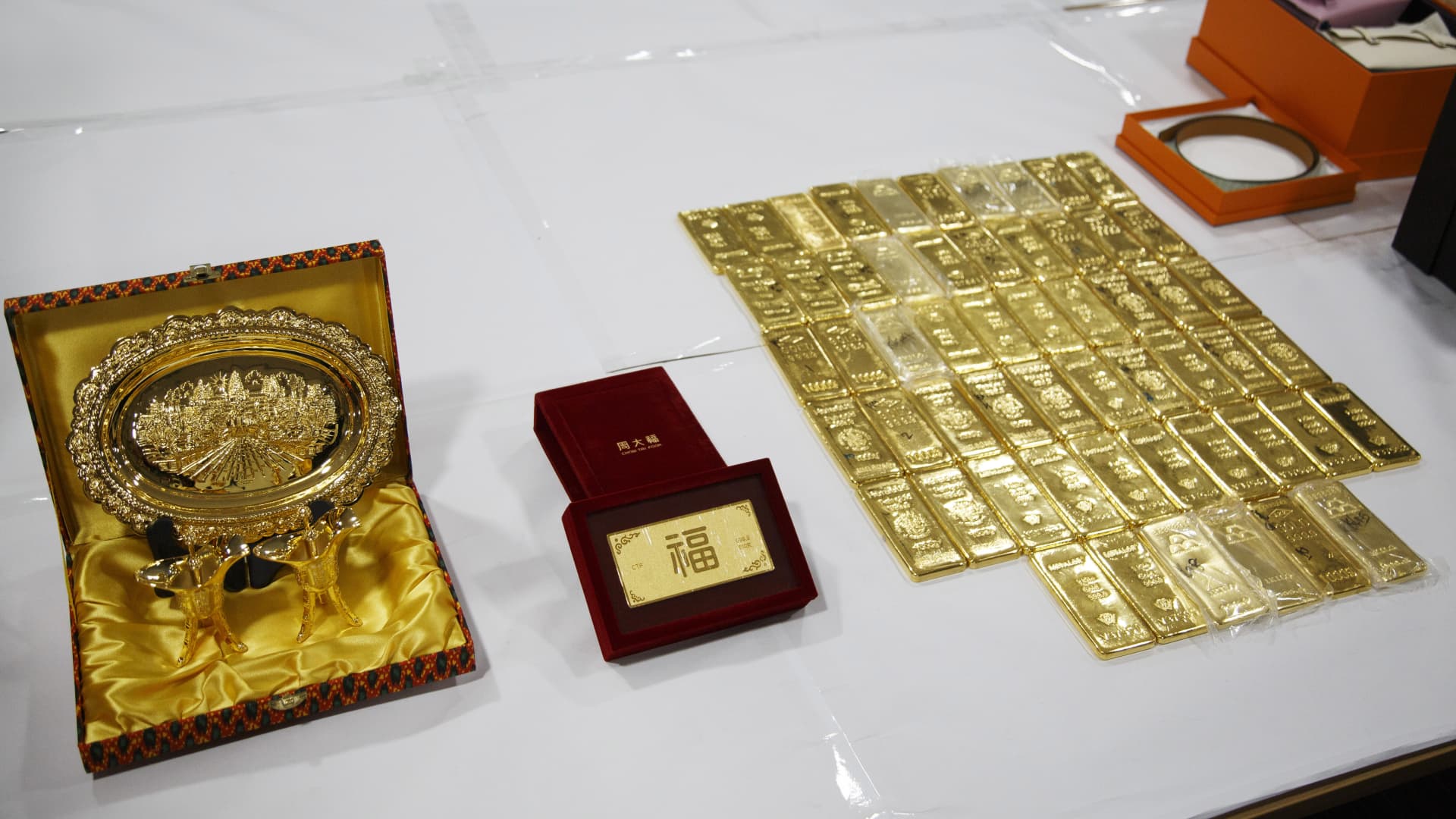
    Gold prices rose further Tuesday to hit their highest level in nearly three weeks, helped by growing expectations of another U.S. Federal Reserve interest rate cut in December and signs of an end to the U.S. government shutdown.

    Spot gold was up 0.4% at $4,131.32 per ounce, as of 0636 GMT, hitting its highest since October 23. U.S. gold futures for December delivery rose 0.4% to $4,137.50 per ounce.

    The U.S. Senate passed a deal on Monday that would restore federal funding and end the longest government shutdown.

    Key economic indicators such as the non-farm payrolls report have been delayed due to the shutdown. A government reopening in the coming days will offer more clarity on the U.S. economic outlook and the Fed’s interest rate path.

    “The idea that the shutdown is ending was really more met as lifting a level of uncertainty that gave markets permission to reengage with what has been one of the main speculative narratives this year,” said Ilya Spivak, head of global macro at Tastylive.

    “The bias for the rest of the year is at this point favouring the upside still. At this point, the path of least resistance for gold is back to October’s high, and then we might be heading higher thereafter.”

    Last week, data showed the U.S. economy shed jobs in October amid losses in the government and retail sectors.

    U.S. consumer sentiment weakened to a 3-1/2-year low in early November amid worries about the economic fallout from the shutdown, a survey showed on Friday.

    Traders are pricing in a roughly 64% probability that the Fed will cut rates by 25 basis points next month, according to CME Group’s FedWatch tool.

    Fed Governor Stephen Miran said on Monday a 50-bp rate cut would be appropriate for December, noting that inflation is falling while the unemployment rate is drifting higher.

    Non-yielding gold tends to do well in a low-interest-rate environment and during economic uncertainties.

    Elsewhere, spot silver gained 0.8% to $50.94 per ounce, platinum rose 0.4% to $1,584.40 and palladium climbed 1.4% to $1,435.43.

    Continue Reading

  • Days of declines won’t keep AI trade down

    Days of declines won’t keep AI trade down

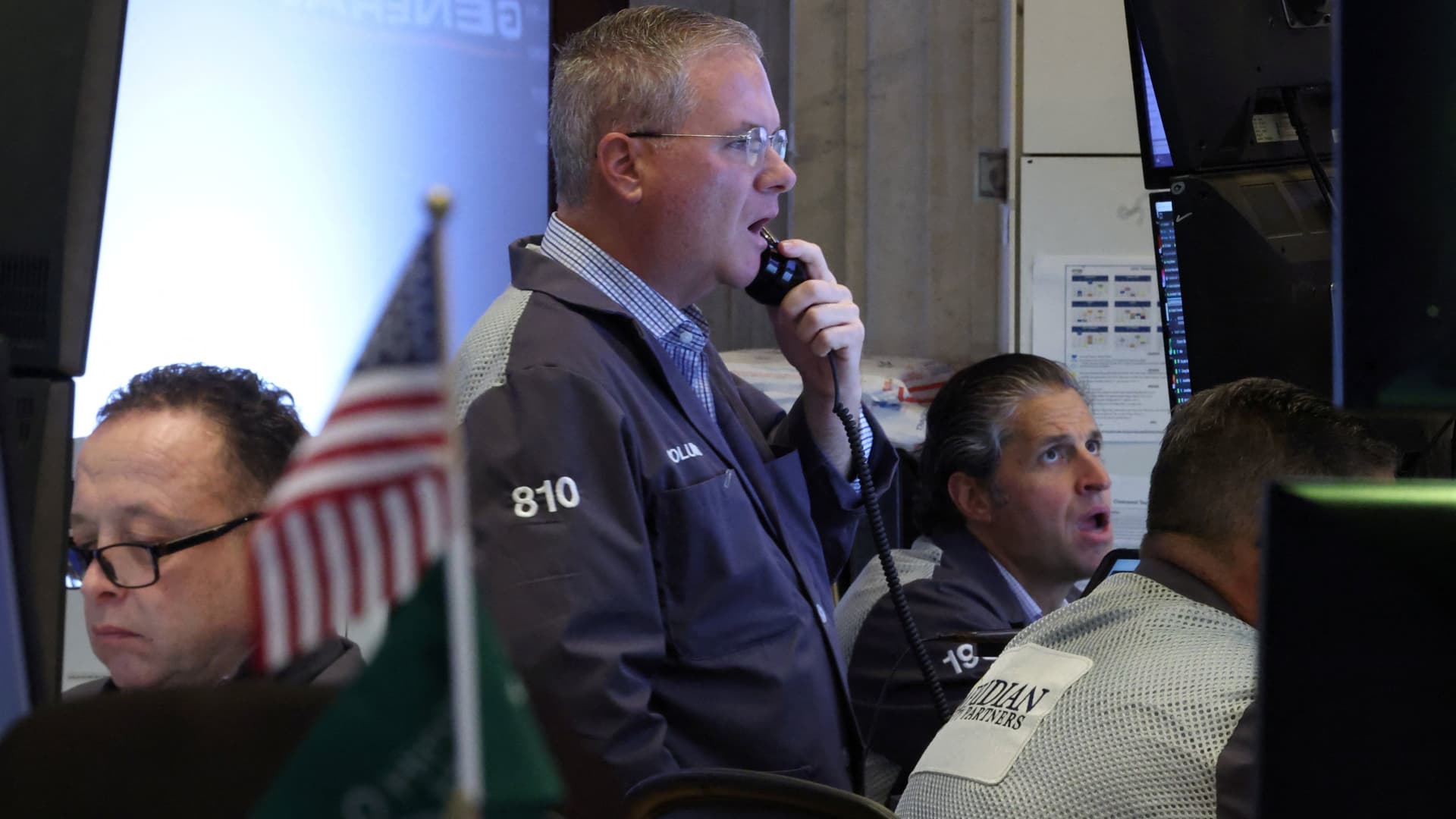
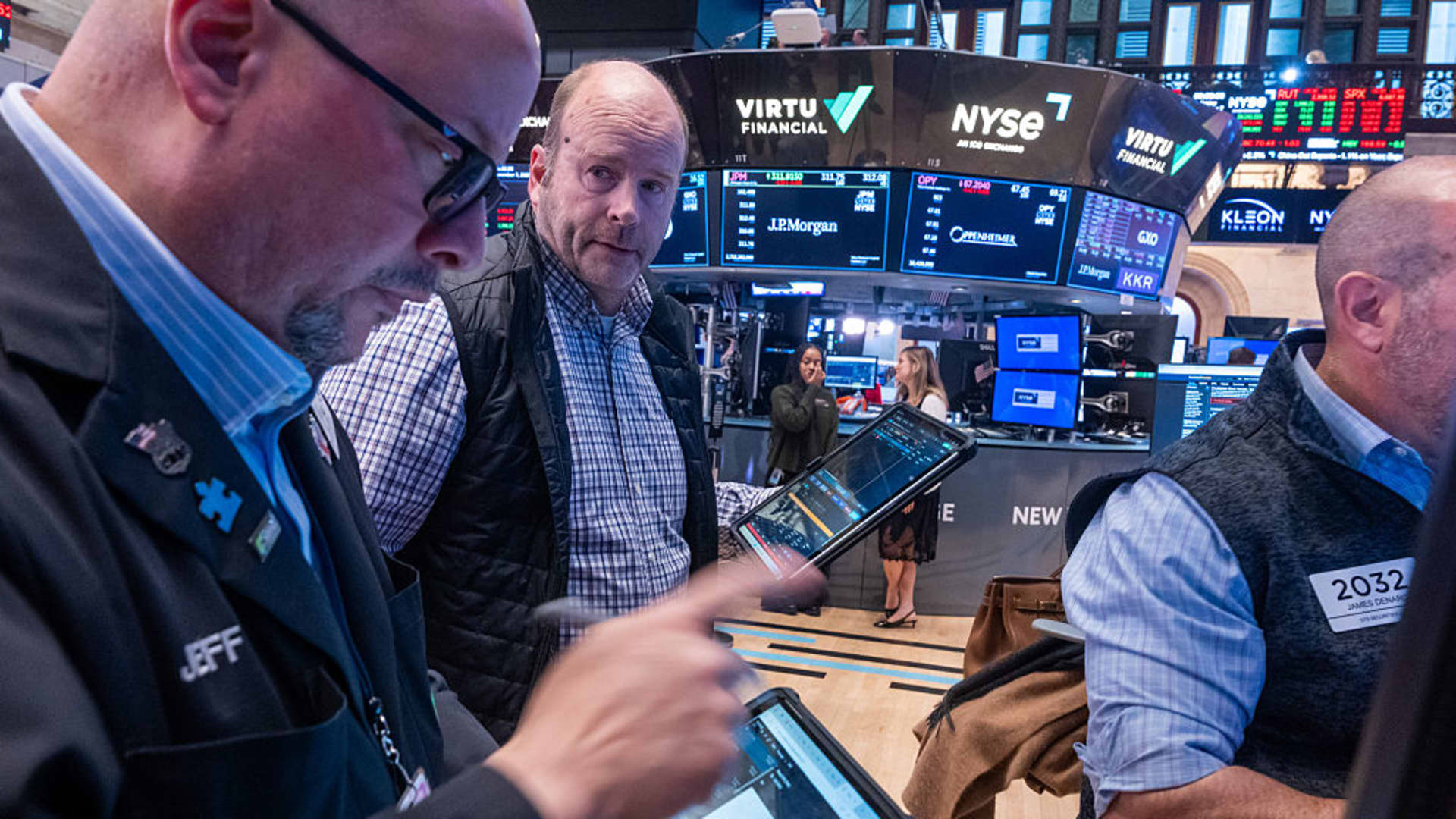
    Traders work on the floor at the New York Stock Exchange (NYSE) in New York City, U.S., Nov. 10, 2025.

    Brendan McDermid | Reuters

    Investors piled back into artificial intelligence names on Monday stateside. Shares of Nvidia jumped 5.8%, Broadcom advanced 2.6% and Microsoft climbed 1.9% to end its eight-day losing streak, its longest consecutive decline since 2011.

    Market watchers are hoping that another historically long streak — the U.S. government shutdown — could soon be snapped as well. The U.S. Senate has voted in favor for a deal to reopen the government, though it still has to pass through the House and then be signed into law by President Donald Trump (who has already given it his approval).

    That's not to say worries about AI's high valuations have gone away completely.

    CoreWeave on Monday reported its third-quarter earnings. It rents out Nvidia cards to AI-related firms, such as Google and Microsoft, a business model that ties it intimately to the AI trade. The company's revenue swelled 134% year on year, but it still reported a net loss and gave lower-than-expected guidance for this year.

    The general shape of those figures — high revenue and high losses — broadly reminds one of OpenAI, the industry-leading, money-bleeding startup that kickstarted the AI frenzy. Though it would of course be a stretch to equate the two companies and the factors driving their finances.

    Still, Mark Haefele, CIO of UBS's global wealth management, thinks "AI-related stocks should drive equity markets." With the U.S. government shutdown in sight to end (hopefully this doesn't jinx it), that's another obstacle surpassed for markets.

    What you need to know today

    And finally...

    Russian President Vladimir Putin on October 15, 2025.

    Alexander Zemlianichenko | Afp | Getty Images

    Russia is late to the party, but it's still preparing to enter the rare earths fray

    Russian President Vladimir Putin last week ordered his officials to complete a road map by Dec.1 "for the long-term development of the extraction and production of rare and rare earth metals."

    Moscow has fallen behind peers like China when it comes to the exploitation of its deposits of rare earth elements. While lagging behind the big players, Russia is still estimated to possess the fifth largest known reserves of rare earths, totaling 3.8 million tonnes, the United States Geological Survey stated. That's above the U.S. which is seen with 1.9 million tonnes.

    — Holly Ellyatt


    Continue Reading

  • SoftBank sells its entire stake in Nvidia for $5.83 billion

    SoftBank sells its entire stake in Nvidia for $5.83 billion

    Nvidia CEO Jensen Huang (L) and the CEO of the SoftBank Group Masayoshi Son pose during an AI event in Tokyo on November 13, 2024.

    Akio Kon | Bloomberg | Getty Images

    Japanese giant SoftBank said Tuesday it has sold its entire stake in tech giant Nvidia for $5.83 billion.

    The firm said in its earning statement that it sold 32.1 million shares of Nvidia in October. It also sold off part of its stake in T-Mobile for $9.17 billion.

    SoftBank’s investments in ChatGPT maker OpenAI and PayPay helped the Japanese giant post a $19 billion gain on its Vision Fund in its fiscal second quarter.

    This is a breaking news story. Please refresh for updates.

    Continue Reading

  • Asian shares mostly lower despite Wall St rally, potential end to the US shutdown

    Asian shares mostly lower despite Wall St rally, potential end to the US shutdown

    BANGKOK — Asian shares were mostly lower on Tuesday as the recent rebound fueled by buying of technology shares lost steam.

    Markets showed little reaction to the latest step toward ending the U.S. shutdown, after the Senate passed legislation to reopen the government.

    U.S. futures were little changed and oil prices slipped.

    Shares have been bouncing on criticism that tech share prices have shot too high due to the mania for artificial intelligence, which some have likened to the 2000 dot-com bubble that ultimately burst.

    In Tokyo, the Nikkei 225 lost 0.5% to 50,675.92.

    The U.S. dollar climbed to 154.15 against the Japanese yen, from 154.14 yen, near its highest since February. Expectations that the government will push back its schedule for trimming Japan’s huge national debt and boost spending have helped to weaken the yen.

    The euro inched up to $1.1563 from $1.1557.

    Chinese shares also declined. Hong Kong’s benchmark Hang Seng index fell 0.2% to 26,595.97 and the Shanghai Composite index shed 0.4% to 4,002.06.

    South Korea’s Kospi, recovering from last week’s fell below the 4,000 level, initially rose more than 1% but finished up 0.4% at 4,087.56.

    Australia’s S&P/ASX 200 dropped 0.2% to 8,818.80.

    Taiwan’s Taiex fell 0.3%, while the Sensex in India shed 0.4%.

    On Monday, Big Tech and other superstars of the U.S. stock market got back to rallying, and Wall Street recovered most of its loss from last week.

    The S&P 500 climbed 1.5% to 6,832.43, while the Dow Jones Industrial Average rose 0.8% to 47,368.63.

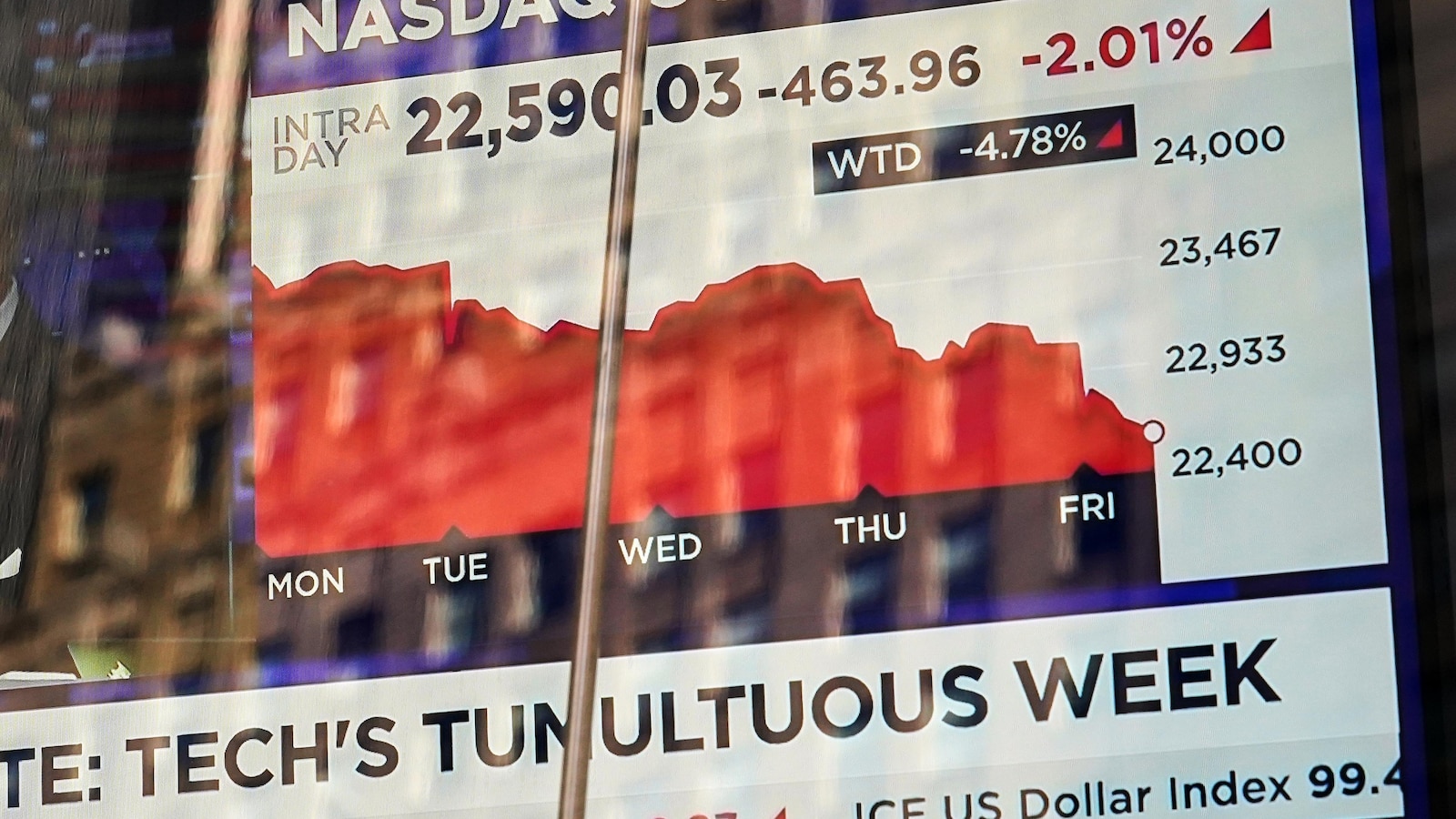
    The Nasdaq composite rallied 2.3% to 23,527.17.

    Nvidia was by far the strongest force lifting the market and leaped 5.8%. It was a powerful rebound after Nvidia and other winners of the frenzy around artificial-intelligence technology led last week’s drop. Critics say their stock prices shot too high and too fast in the AI mania, drawing comparisons to the 2000 dot-com bubble that ultimately burst.

    Drops for several health insurers helped keep the market’s gains in check. They fell as uncertainty remains about whether Washington will extend expiring health care tax credits, a sticking point on Capitol Hill that’s created the longest-ever shutdown for the U.S. government.

    Elsewhere on Wall Street, Berkshire Hathaway slipped 0.4% as its CEO, famed investor Warren Buffett, warned shareholders that many other companies will fare better in the decades ahead because of Berkshire Hathaway’s massive size. Buffett, 95, is set to step down in January.

    Tyson Foods climbed 2.3% after the seller of chicken, beef and pork reported a stronger profit for the latest quarter than analysts expected.

    Roughly four out of every five companies in the S&P 500 that have so far reported their results for the summer have also topped analysts’ profit expectations, according to FactSet. Companies usually beat analysts’ estimates each quarter, but the pressure was high this time around because they needed to justify the big moves upward for their stock prices since April.

    Delivering bigger profits is one of the easier ways companies can quiet criticism that their stock prices have become too expensive.

    In other dealings early Tuesday, U.S. benchmark crude oil lost 25 cents to $59.88 per barrel. Brent crude, the international standard, shed 25 cents to $63.81 per barrel.

    ___

    AP Business Writers Stan Choe and Matt Ott contributed.

    Continue Reading

  • UK unemployment rises to 5%, the highest level in four years | Economics

    UK unemployment rises to 5%, the highest level in four years | Economics

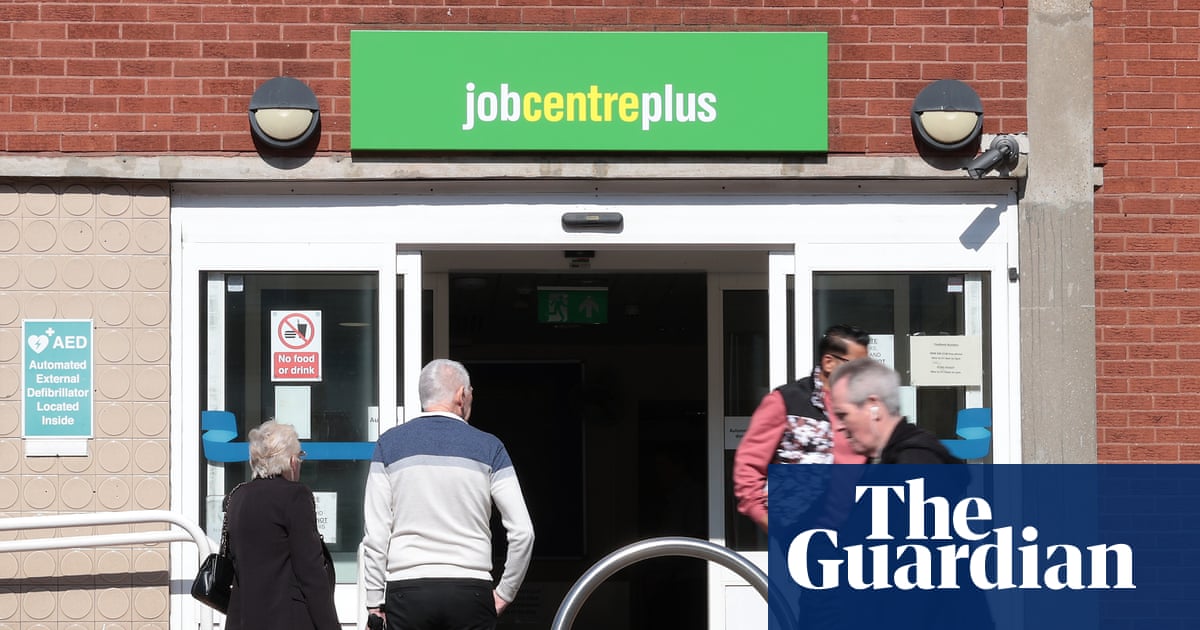
    Unemployment in the UK has risen by more than expected to the highest level in four years, official figures show, amid a worsening slowdown in the jobs market before Rachel Reeves’s autumn budget.

    With under three weeks to go before the chancellor’s tax and spending statement, figures from the Office for National Statistics (ONS) show the headline unemployment rate rose to 5.0% in the three months to the end of September, up from 4.8% in the previous quarter.

    City economists had forecast an increase to 4.9%. The official headline unemployment rate was last higher in the first quarter of 2021, during the height of the Covid pandemic.

    Liz McKeown, the ONS director of economic statistics, said: “These figures point to a weakening labour market.”

    The ONS’s figures are based on its widely criticised labour force survey, which has suffered from collapsing response rates. Experts have argued this leaves policymakers “flying blind”, risking decisions being taken based on flawed data.

    However, separate data suggests the jobs market has slowed sharply, as employers come under pressure from tax increase, stubborn inflation, elevated borrowing costs and a sluggish growth outlook.

    Figures from HMRC published on Tuesday showed the number of workers on company payrolls fell by 32,000 in October, compared with September.

    Reeves is expected to raise taxes in the budget to plug a shortfall in the government finances of up to £30bn. However, business leaders have warned doing so could hit jobs and growth.

    skip past newsletter promotion

    More details soon …

    Continue Reading

  • WBCSD and One Planet Network announce launch of the Global Circularity Protocol for business (GCP) at COP30

    WBCSD and One Planet Network announce launch of the Global Circularity Protocol for business (GCP) at COP30

    • GCP launches at COP30 as the world’s first global voluntary framework for measuring, managing, and communicating circularity impacts.  
    • Developed by WBCSD and One Planet Network (hosted by UNEP) with 150+ experts and 80+ organizations. 
    • Empowers companies to cut waste, reduce emissions, boost accountability and improve business performance. 
    • Impact analysis: up to 120 billion tonnes of material savings and 76 gigatons CO₂ can be avoided by 2050. 
    • Piloted by industry leaders, the GCP sets a new benchmark for credible, comparable circularity reporting. 

    Belém, 11 November 2025: The World Business Council for Sustainable Development (WBCSD) and One Planet Network (hosted by UNEP) have announced the official launch of the Global Circularity Protocol for business (GCP) at COP30, marking a major milestone in the global transition to a circular economy. 

    Developed in partnership with over 150 experts from more than 80 organizations – including leading businesses, policymakers, and scientific advisors – the GCP is the world’s first voluntary science-based, globally harmonized framework designed to help companies of all sizes measure, manage, and communicate their circular performance and impacts across value chains. 

    A new era for corporate performance and accountability 

    The GCP empowers businesses to move beyond linear, wasteful models by providing practical, standardized steps and metrics for reducing waste, cutting emissions, and creating value for people and planet while delivering business value for all. By aligning with leading global standards, the Protocol enables credible, comparable reporting and supports companies in meeting rising regulatory and stakeholder expectations.

    The Global Circularity Protocol for Business sets a new benchmark for corporate performance and accountability. Circularity is no longer optional – it is a strategic necessity for the resilience of business and the health of our planet. The GCP provides companies with standardized, science-based metrics and a clear roadmap for measurable action, enabling leaders to drive tangible progress, build resilience, and deliver long-term value to both business and planet. The scale of the opportunity is significant. Our analysis has revealed that by 2050, widespread adoption of the GCP could save up to 120 billion tonnes of materials – equivalent to one year’s current global consumption – and avoid up to 76 gigatons of CO₂ emissions – equivalent to one and a half times current global annual emissions. I encourage business leaders and policymakers alike to adopt the GCP as a practical foundation for accelerating the shift to a just, circular, and regenerative economy.

    – Peter Bakker, President and CEO, WBCSD

    Real-world impact and global collaboration 

    Piloted by industry leaders and a cohort of GCP Front Runners, the GCP is already delivering results – helping companies identify circularity hotspots and opportunities to drive innovation, and build resilient, future-fit value chains. The Protocol’s collaborative development process ensures it is robust, practical, and adaptable for diverse sectors and geographies. 

    The GCP is a powerful catalyst for value chain transformation. It enables companies to map material flows, identify circularity hotspots, and collaborate with partners at every stage – unlocking efficiencies, reducing risk, and scaling impact beyond individual operations. Launching the GCP at COP30 is no coincidence. We’re here on the international stage because the GCP is a truly global solution – it responds to some of the most pressing global risks, including resource scarcity, supply chain volatility, and climate change.

    – Diane Holdorf, Executive Vice President, WBCSD

    A game changer for credible circularity 

    The sustainability professionals, policy makers, and academics that contributed to develop the GCP are calling it “a game-changer for credible circularity,” “the missing link between ambition and action,” and “a roadmap for business value and accountability.” Their feedback continues to shape the Protocol as it evolves to meet the needs of a rapidly changing world. 

    The GCP delivers what the circular economy has long lacked: a globally harmonized framework to help companies measure, manage, and disclose circularity impacts. This collaborative effort reflects the multilateral ambitions of the Stockholm+50 Action Agenda and of the Global Strategy for Sustainable Consumption and Production launched by the United Nations in 2022.

    – Jorge Laguna-Celis, Head, One Planet Network (hosted by UNEP)

    At Philips, circularity is a powerful lever to reduce material use and our overall impact on climate and nature, while driving customer value and business success. Healthcare is a material-intensive industry. Embedding circular practices and innovations can help hospitals with reducing their environmental footprint while improving healthcare resilience and patient outcomes. That’s why we collaborated and co-championed the Global Circularity Protocol. GCP1.0 offers a clear and unified approach to set ambitious and adequate goals for circularity – a much-needed step towards a sustainable and healthy future.

    – Harald Tepper, Global Lead Circularity, Philips

    The GCP is important to TOMRA because it provides a common framework for businesses to measure progress on circularity initiatives. This is vital for ensuring that change can occur at scale, supporting circularity targets and policymaking going forward.

    – Tove Andersen, President and CEO, Tomra

    The Global Circularity Protocol (GCP) is a strategic enabler for resource-intensive sectors like mining to contribute meaningfully to global sustainability and energy transition goals. At Vale, advancing circularity means transforming extraction and processing systems to maximize material recovery, reduce environmental impact, and accelerate the shift toward low-carbon, circular production models that will deliver the ‘mining of the future’ we are aiming at.

     Bruno Pelli, Global Director in Mining Technical Services, Vale 

    Time to turn circular ambition into measurable business impact 

    The launch of the GCP at COP30 is a call to action for business leaders, sustainability professionals and policy makers to adopt the GCP and join the growing community of leading businesses that are accelerating the transition to a circular economy.

    We invite all stakeholders – from pioneering organizations and policymakers, to researchers and financial experts – to contribute ideas, pilot methodologies and share lessons learned, as this first version of the GCP is just the starting point of a dynamic, multi-year journey working for a resilient, regenerative economy that benefits people and planet. 

    Discover the GCP and help your organization turn circular ambition into measurable business impact. 

    The launch was co-hosted by the Ministry of the Environment Government of Japan (MOEJ), the World Business Council for Sustainable Development (WBCSD), and UNEP One Planet network at the COP30 Japan Pavilion. 


    Notes

    The potential impact of the GCP 

    Source: World Business Council for Sustainable Development, & One Planet Network. (2024). Global Circularity Protocol for Business: Impact Analysis on Climate, Nature, Equity and Business Performance. Link 

    • The GCP could enable 100-120 billion tonnes of cumulative material savings by 2050 – equivalent to one year’s current global material consumption. 
    • Adoption of the GCP could deliver 67-76 gigatons of CO₂ equivalent avoided by 2050, or about 1.3–1.5 times current annual global emissions. 
    • The GCP can double the pace at which businesses reach advanced circularity maturity levels, accelerating the benefits of circular business models by more than a decade. 
    • The protocol is expected to drive 11-12% annual reductions in PM2.5 air pollution between 2026 and 2050, contributing to significant public health gains. 
    • By 2050, the GCP could reduce arable land occupation by up to 2.9% (0.7-1.1 million km²) – comparable to the size of Ethiopia. 
    • Circularity, enabled by the GCP, could unlock $4.5 trillion in economic growth and create 6 million new jobs through activities such as recycling, repair, renting, and remanufacturing. 
    • These figures underscore the GCP’s potential to deliver measurable, system-wide benefits for business, society, and the environment – making it a critical tool for the global transition to a circular economy. 

    Continue Reading

  • SoftBank earnings report 2Q

    SoftBank earnings report 2Q

    The logo of Japanese company SoftBank Group is seen outside the company’s headquarters in Tokyo on January 22, 2025. 

    Kazuhiro Nogi | Afp | Getty Images

    Japanese giant SoftBank on Tuesday posted a $19 billion gain on its Vision Fund in its fiscal second quarter ended Sept. 30.

    The broader Vision Fund segment factors in non-investment performance such as administrative expenses and gains and losses attributable to third-party investors. The value of the fund had risen $4.8 billion in the company’s fiscal first quarter.

    Here’s how SoftBank fared in the fiscal second quarter:

    • Profit hit 2.502 trillion yen in the quarter, versus 206.89 billion yen expected, according to LSEG consensus estimates. It also compares to 1.18 trillion yen net profit a year earlier.
    • Revenue hit 1.92 trillion in the quarter, compared to an LSEG estimate of 1.9 trillion yen.

    Softbank is ploughing ahead with its push into artificial intelligence, investing and acquiring firms that will bolster its presence in robots and Artificial Super Intelligence (ASI).

    The Japanese conglomerate’s stock has slumped in the past week as concerns of an AI bubble sent jitters through global markets. Nearly $50 billion in market cap was wiped out from the stock last week, marking its worst weekly loss since March 2020. However, shares are up over 140% this year as its tech investment arm has showed signs of recovery.

    Last month Softbank reportedly approved its final tranche of funding to complete its $30 billion investment in OpenAI. The Japanese firm’s investment in the ChatGPT maker came with a caveat — that its total investment could be slashed to as low as $20 billion if OpenAI didn’t restructure into a for-profit entity by Dec. 31.

    The AI startup recently completed its recapitalization, cementing its structure as a nonprofit with a controlling stake in its for-profit business, which is now a public benefit corporation called OpenAI Group PBC.

    This is a breaking news story. Please refresh for updates.

    Continue Reading

  • Maersk Mammoth WAC Update | Maersk

    Due to deployment changes, MAERSK MAMMOTH (Voyage 549N) will phase out of the Western Australian Connect (WAC) service at Fremantle on 4th December 2025, following completion of discharge operations.

    The replacement vessel, MAERSK BISCAYNE, will phase in to the service at Tanjung Pelepas on 15th December 2025 on Voyage 551S, taking the position of MAERSK MAMMOTH in the WAC rotation.

    As a result, the Northbound MAERSK MAMMOTH (Voyage 549N) will be blanked.

    The below contingency routing has been secured for affected cargo:

    • Cargo scheduled to discharge MAERSK MAMMOTH 548S will discharge as planned.
    • Cargo scheduled to load on ex at Tanjung Pelepas and Singapore on the MAERSK MAMMOTH 551S will be updated to load MAERSK BISCAYNE 551S.
    • Cargo schedule to load on the MAERSK MAMMOTH 549N ex Fremantle will be transferred to the next available Greater Australian Connect vessel.

    Thank you for you continued support and trust in Maersk as your supply chain partner. Should you have any questions please contact our Customer Experience Team via our Live Chat channel.

    Continue Reading

  • European stocks set to open higher as U.S. government shutdown end nears – CNBC

    European stocks set to open higher as U.S. government shutdown end nears – CNBC

    1. European stocks set to open higher as U.S. government shutdown end nears  CNBC
    2. European markets close higher, following Wall Street recovery  CNBC
    3. European Equities: European stocks rose in early trading, with Germany and Italy’s markets up more than 1%. Aviation stocks performed well.  富途牛牛
    4. European Shares Seen Higher As US Senate Passes Bill To End Shutdown  Nasdaq
    5. Europe’s Bulls Take Charge as German DAX Index Soars, FTSE 100 and Ibex Break Records  FXLeaders

    Continue Reading