NEW YORK, Nov. 10, 2025 /PRNewswire/ — Gartner®, a company that delivers actionable, objective insights to executives and their teams, has recognized Deloitte as a Leader in the 2025 Gartner® Magic Quadrant™ for Digital Experience Services. Deloitte also scored highest in all five Use Cases in the accompanying 2025 Gartner Critical Capabilities for Digital Experience Services report.
Deloitte is placed in the Leaders Quadrant in the Gartner® Magic Quadrant™ for Digital Experience services, positioned highest on the “Ability to Execute” axis. Deloitte was also positioned furthest on the “Completeness of Vision” axis.
“For Deloitte Digital, this recognition from Gartner reflects our commitment to creating world-class customer, employee and citizen experiences that enable high-performing brands and drive profitable growth,” said Mark Lush, Deloitte Global Consulting Services Customer Offering Portfolio leader and Global Head of Deloitte Digital. “Our deep industry knowledge, advanced engineering, and Agentic AI capabilities enable our clients to confidently navigate today’s challenges and seize tomorrow’s opportunities for competitive advantage.”
Deloitte was the highest scoring provider across all Use Case categories in the new Critical Capabilities report. The report assessed how Deloitte delivers across five Use Cases: Experience Design, Experience Solution Implementation, Experience Solution Operations, Content & Creative Services, and Marketing Services.
“We are proud to be recognized as a Leader, especially in our Ability to Execute. This is an important part of our culture at Deloitte – to consistently deliver meaningful, impactful outcomes for our clients,” said Mike DeLone, Customer Offering Portfolio leader, Deloitte Consulting LLP. “Our industry depth, strategic insights, and digital transformation services help our clients envision what’s possible, and our teams’ focus on execution enables them to exceed their growth ambitions.”
Gartner Disclaimer
Gartner® Magic Quadrant™ for Digital Experience Services, By Brett Sparks, Irada Veliyeva, Tom Sieber, Alan Stanley, Published 29 October 2025 – ID G00827852 Gartner®, Critical Capabilities for Digital Experience Services, By Alan Stanley, Tom Sieber, Irada Veliyeva, Brett Sparks, 30 October 2025- ID G00827851
Gartner does not endorse any vendor, product or service depicted in its research publications, and does not advise technology users to select only those vendors with the highest ratings or other designation. Gartner research publications consist of the opinions of Gartner’s research organization and should not be construed as statements of fact. Gartner disclaims all warranties, expressed or implied, with respect to this research, including any warranties of merchantability or fitness for a particular purpose.
GARTNER is a registered trademark and service mark of Gartner and Magic Quadrant is a registered trademark of Gartner, Inc. and/or its affiliates in the U.S. and internationally and are used herein with permission. All rights reserved.
About Deloitte
Deloitte refers to one or more of Deloitte Touche Tohmatsu Limited (DTTL), its global network of member firms, and their related entities (collectively, the “Deloitte organization”). DTTL (also referred to as “Deloitte Global”) and each of its member firms and related entities are legally separate and independent entities, which cannot obligate or bind each other in respect of third parties. DTTL and each DTTL member firm and related entity is liable only for its own acts and omissions, and not those of each other. DTTL does not provide services to clients. Please see www.deloitte.com/about to learn more.
Deloitte provides leading professional services to nearly 90% of the Fortune Global 500® and thousands of private companies. Our people deliver measurable and lasting results that help reinforce public trust in capital markets and enable clients to transform and thrive. Building on its 180+-year history, Deloitte spans more than 150 countries and territories. Learn how Deloitte’s over 470,000 people worldwide work together every day to make an impact that matters at www.deloitte.com.
For more about Deloitte Analyst Relations, please visit our Analyst Recognitions page.
The UK is to investigate whether hundreds of Chinese-made buses can be controlled remotely by their manufacturer, amid increasing concerns over Beijing’s involvement in British infrastructure.
The Department for Transport and the National Cyber Security Centre are examining whether buses made by Yutong could be vulnerable to interference.
A spokesperson for the Department for Transport said: “We are looking into the case and working closely with the UK’s National Cyber Security Centre to understand the technical basis for the actions taken by the Norwegian and Danish authorities.
“The department takes security issues extremely seriously and works closely with the intelligence community to understand and mitigate potential risks.”
Yutong began as the Zhengzhou Bus Repair Factory in 1963 in the Central China province of Henan. It says it has exported nearly 110,000 buses to more than 100 countries, capturing more than 10% of the global market.
In the UK, its buses are used in Bristol, Essex, Leicester, Nottingham, south Wales and South Yorkshire, among other locations.
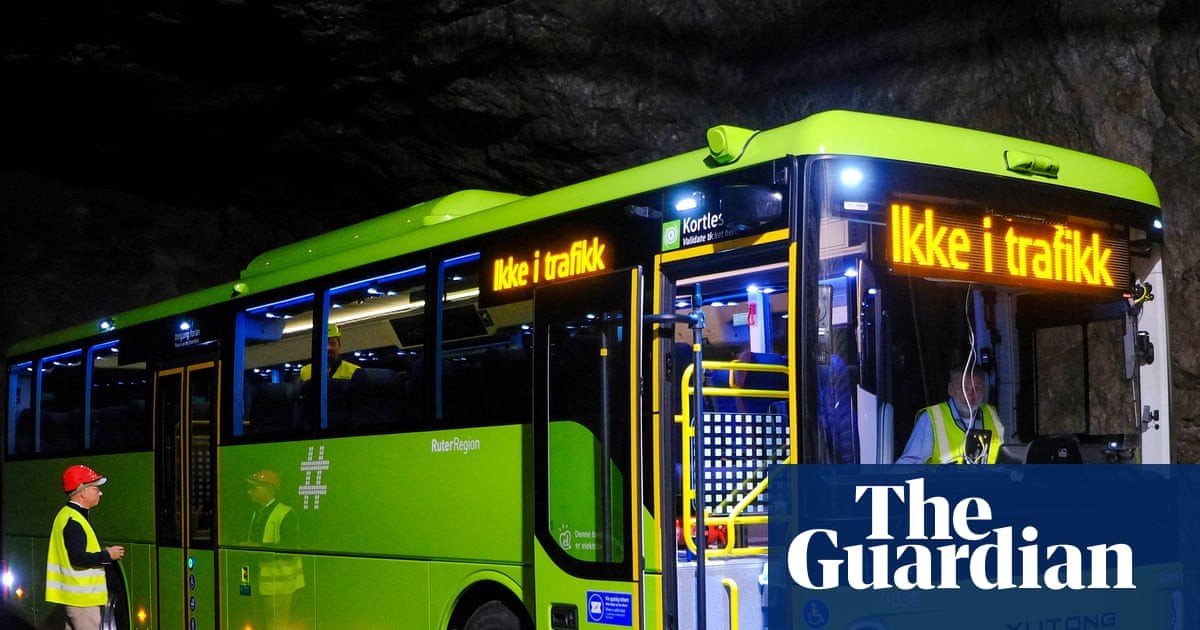
However, an investigation in Norway by Oslo’s public transport service, Ruter, found that Yutong buses could theoretically be “stopped or rendered inoperable” by the manufacturer. Denmark also opened an investigation after the Norwegian findings.
Ruter did not say there was any evidence that Yutong had tried to control the buses, and said it would impose “even stricter security requirements in future procurements”. It also said that the buses’ cameras are not connected to the internet, and “there is no risk of image or video transmission from the buses”.
Any evidence that a Chinese manufacturer had interfered with bus or car operations would probably have a devastating impact on vehicle exports, a key industrial aim for China’s government.
Nevertheless, digital security experts have warned for years that over-the-air updates to cars could be a security or privacy threat, either for a hostile state or criminal groups.
Ruter said it had tested two buses from Yutong and Dutch manufacturer VDL in a facility inside a mountain tunnel – a measure that would prevent remote tampering during tests. Yutong’s buses are capable of over-the-air software updates, meaning that the manufacturer has the ability to change software.
Ruter said: “There is access to the control system for battery and power supply via mobile network through a Romanian sim card. In theory, therefore, this bus can be stopped or rendered inoperable by the manufacturer.”
Over-the-air updates are a common feature of modern vehicles, including many mid-range cars made in the UK, US, Europe and China. With slick digital interfaces increasingly becoming one of the most important attractions for buyers, manufacturers and drivers value the ability to access the latest software.
Yutong did not immediately respond to a request for comment. The company previously told the Sunday Times that it “strictly complies with the applicable laws, regulations and industry standards of the locations where its vehicles operate”.
Carlsbad location is company’s third US-based radioligand therapy (RLT) manufacturing site
New site expands manufacturing footprint to meet future demand; ensures continued on-time delivery rate of >99.9% to patients across western US, Alaska and Hawaii
First to have delivered at scale, Novartis fortifies leadership in RLT innovation and infrastructure with California facility, additional plans for Florida and Texas
Basel, November 10, 2025 – Novartis, a leading global innovative medicines company, today announced the opening of a new 10,000-square-foot radioligand therapy (RLT) manufacturing facility in Carlsbad, California. This state-of-the-art site represents a key milestone in the company’s previously announced $23 billion investment in US infrastructure over the next five years.
The opening of the Carlsbad manufacturing facility allows Novartis to seamlessly meet future demand for RLT, adding additional capacity and augmenting the company’s world-class supply chain capabilities. The Carlsbad facility has been filed with the FDA as an additional US point of supply, and commercial manufacturing may begin once approval is granted.
RLTs are a form of precision medicine that combines a tumor-targeting molecule (ligand) with a therapeutic radioisotope, enabling the delivery of radiation to the tumor with the goal of limiting damage to the surrounding cells. Because each RLT dose is custom-made and time-sensitive, with a radioactive half-life measured in hours, proximity to treatment centers and transit hubs helps ensure patients receive their treatment when and where they need it.
“At Novartis, we tackle the toughest challenges in medicine by doing what’s never been done before for patients,” said Vas Narasimhan, CEO of Novartis. “Radioligand therapy is a breakthrough we’ve unlocked at scale, made possible by reimagining how innovation reaches patients. As the global leader in RLT for more than seven years, we’ve advanced this technology with a deep belief in its power to transform cancer care. The opening of our Carlsbad facility underscores our strong commitment to the US and dedication to bringing this pioneering treatment to patients across the country.”
Novartis is the only pharmaceutical company with a dedicated commercial RLT portfolio, and the Carlsbad facility is its third US RLT manufacturing site, reinforcing its global leadership in radioligand therapies with unmatched expertise in development, production, and delivery to patients worldwide. The Carlsbad facility is purpose-built to manufacture the company’s FDA-approved RLTs with capacity for future expansion.
“We commend Novartis for supporting our broader mission of bringing manufacturing capacity in the United States,” said FDA Commissioner Marty Makary, M.D., M.P.H.. “Our unique partnership approach is working.”
“Novartis is transforming the future of cancer care—and it’s happening right here in Carlsbad,” said Carlsbad City Council Member Melanie Burkholder. “This new advanced RLT production facility is a major milestone for our region, strengthening California’s position as a hub for life sciences innovation. It will bring exciting new opportunities for our community, including more engineering and manufacturing jobs. I’m proud our local community will be part of the future of cancer care.”
In addition to the Carlsbad opening, Novartis has announced multiple construction initiatives and future plans in the US, including:
Two additional RLT manufacturing facilities in Florida and Texas.
Expansion of existing sites in Durham, North Carolina, Indianapolis, Indiana, and Millburn, New Jersey.
Establishing its second global R&D hub in the US with a new state-of-the-art biomedical research innovation facility in San Diego, California.
These investments, enabled by a pro-innovation policy and regulatory environment in the US, reflect Novartis’ broad commitment to the market and building its infrastructure. Novartis expects to invest nearly $50 billion in its US operations over the next five years, including the $23 billion announced earlier this year, underscoring its long-term commitment to strengthening the US healthcare ecosystem.
Novartis and Radioligand Therapy (RLT)
Novartis is reimagining cancer care with RLT for patients with advanced cancers. By harnessing the power of targeted radiation and applying it to advanced cancers, RLT is designed to deliver treatment directly to target cells anywhere in the body3,4.
Novartis is actively investigating the application of RLTs across cancer types and settings, with one of the deepest and most advanced pipelines in the industry, with trials in prostate cancer, breast, colon, lung, brain, pancreatic and other cancers. Novartis has established global expertise, with specialized supply chain and manufacturing capabilities across its network of RLT production sites around the world.
Disclaimer
This press release contains forward-looking statements within the meaning of the United States Private Securities Litigation Reform Act of 1995. Forward-looking statements can generally be identified by words such as “potential,” “can,” “will,” “plan,” “may,” “could,” “would,” “expect,” “anticipate,” “look forward,” “believe,” “committed,” “investigational,” “pipeline,” “launch,” or similar terms, or by express or implied discussions regarding potential marketing approvals, new indications or labeling for the investigational or approved products described in this press release, or regarding potential future revenues from such products. You should not place undue reliance on these statements. Such forward-looking statements are based on our current beliefs and expectations regarding future events, and are subject to significant known and unknown risks and uncertainties. Should one or more of these risks or uncertainties materialize, or should underlying assumptions prove incorrect, actual results may vary materially from those set forth in the forward-looking statements. There can be no guarantee that the investigational or approved products described in this press release will be submitted or approved for sale or for any additional indications or labeling in any market, or at any particular time. Nor can there be any guarantee that such products will be commercially successful in the future. In particular, our expectations regarding such products could be affected by, among other things, the uncertainties inherent in research and development, including clinical trial results and additional analysis of existing clinical data; regulatory actions or delays or government regulation generally; global trends toward health care cost containment, including government, payor and general public pricing and reimbursement pressures and requirements for increased pricing transparency; our ability to obtain or maintain proprietary intellectual property protection; the particular prescribing preferences of physicians and patients; general political, economic and business conditions, including the effects of and efforts to mitigate pandemic diseases; safety, quality, data integrity or manufacturing issues; potential or actual data security and data privacy breaches, or disruptions of our information technology systems, and other risks and factors referred to in Novartis AG’s current Form 20-F on file with the US Securities and Exchange Commission. Novartis is providing the information in this press release as of this date and does not undertake any obligation to update any forward-looking statements contained in this press release as a result of new information, future events or otherwise.
About Novartis Novartis is an innovative medicines company. Every day, we work to reimagine medicine to improve and extend people’s lives so that patients, healthcare professionals and societies are empowered in the face of serious disease. Our medicines reach nearly 300 million people worldwide.
Reimagine medicine with us: Visit us at https://www.novartis.com and connect with us on LinkedIn, Facebook, X/Twitter and Instagram.
FORT LAUDERDALE, Fla., Nov. 10, 2025 /PRNewswire/ — Princess Cruises has announced Hampton Water Rosé as the latest addition to the Love Line Premium Liquors Collection. Known for its vibrant flavors and refined craftsmanship, the Hampton Water portfolio will offer Princess guests a still and sparkling rosé for toasting special moments at sea.
Hampton Water Rosé Joins Princess Cruises’ Love Line Premium Liquors Collection
Crafted in partnership with Jesse Bongiovi and his dad, Jon Bon Jovi, along with world-renowned winemaker, Gérard Bertrand, Hampton Water Rosé has received critical acclaim for its quality and lively fresh wine. The wines are available fleetwide and included in Princess Premier and Princess Plus beverage packages.
“Our Love Line Collection celebrates the spirit of connection through premium, celebrity-crafted libations that elevate the onboard experience,” said Sami Kohen, Princess Cruises Vice President of Food and Beverage. “Hampton Water Rosé is more than a wine – it’s a reflection of the lifestyle our guests embrace: vibrant, celebratory, and inspired by the stars they love.”
Princess Cruises Love Line Premium Liquors Collection features a selection of thoughtfully curated wines and spirits, offering both alcohol and non-alcoholic options with a diverse lineup of celebrity-crafted beverages:
Pantalones Organic Tequila by Camila and Matthew McConaughey
Meili Vodka by Jason Momoa and Blaine Halvorson
Sláinte Irish Whiskey by Liev Schreiber
Archer Roose co-owned by Elizabeth Banks
Seven Daughters Moscato by Taraji P. Henson
Melorosa Sauvignon Blanc and Red Blend co-founded by Jason Aldean, Kasi Wicks and Chuck Wicks
Love Prosecco by Romero Britto
Zero Alcohol Sparkling Rosé by Kylie Minogue
Betty Booze by Blake Lively
“Hampton Water is about bringing people together over great conversation and even better wine,” said Jesse Bongiovi. “To have it featured aboard Princess Cruises – a place where countless memories and connections are made – is an incredible opportunity to share our rosé with people who truly value celebration and togetherness.”
The addition of Hampton Water Rosé builds on Princess Cruises’ reputation for delivering exceptional culinary and beverage experiences, ensuring guests have access to innovative and exclusive offerings during their voyage.
For further details about the Love Line Premium Liquors Collection, visit www.princess.com.
Additional information about Princess Cruises is available through a professional travel advisor, by calling 1-800-Princess (1-800-774-6237) or by visiting www.princess.com.
*Princess’ Love Line non-alcohol beverages may contain up to 0.5% alcohol by volume (ABV). These beverages are classified as non-alcoholic under U.S. regulations but may contain trace amounts of alcohol.
About Hampton Water Jesse and his dad, Jon Bon Jovi, shared a vision to disrupt the wine category with a brand that is unlike all others. The father-son duo created the Hampton Water Wine brand concept, bringing on famed French winemaker, Gérard Bertrand. Launching in 2018 with Hampton Water Rosé, the brand quickly rose above the ranks to be more than just another celebrity brand. It is a family business that has earned four years of 90-point ratings from Wine Spectator, 91 points from Wine Enthusiast and Decanter, and was recognized as an Impact Hot Prospect brand two years in a row. With an incredibly engaged social media presence of over 625,000 followers, Hampton Water is making waves by taking a modern digital approach in an often-traditional category. Seeing such success with the still rosé, Hampton Water is proud to have expanded their brand portfolio with a sparkling rosé in 2024: Hampton Water Bubbly. The brand is creating loyal brand advocates, surpassing their category, and delivering double-digit volume growth year over year.
More information on the company can be found at www.hamptonwaterwine.com, www.facebook.com/hamptonwater, TikTok: @HamptonWater, Instagram: @HamptonWater, and X: @HamptonWater. Sip responsibly.
About Princess Cruises Princess Cruises is The Love Boat, the world’s most iconic cruise brand that delivers dream vacations to millions of guests every year in the most sought-after destinations on the largest ships that offer elite service personalization and simplicity customary of small, yacht-class ships. Well-appointed staterooms, world class dining, grand performances, award-winning casinos and entertainment, luxurious spas, imaginative experiences and boundless activities blend with exclusive Princess MedallionClass service to create meaningful connections and unforgettable moments in the most incredible settings in the world – the Caribbean, Alaska, Panama Canal, Mexican Riviera, Europe, South America, Australia/New Zealand, the South Pacific, Hawaii, Asia, Canada/New England, Antarctica, and World Cruises. Sun Princess, the brand’s new, next-level Love Boat named Condé Nast Traveler’s Mega Ship of the Year, introduces the groundbreaking Sphere Class platform and will be joined by sister ship, Star Princess, in Fall 2025. The company is part of Carnival Corporation & plc (NYSE/LSE:CCL; NYSE:CUK).
People walk past a Burger King restaurant with Chinese national flags displayed on a street during the National Day Golden Week holiday on October 5, 2024, in Chongqing, China.
Cheng Xin | Getty Images
Restaurant Brands International on Monday announced that it will form a joint venture with CPE, a Chinese alternative asset manager, to run Burger King’s restaurants in China.
Earlier this year, a subsidiary of Restaurant Brands acquired its equity interests from its previous Burger King China partners, Turkish-based operator TFI and U.S.-based private equity firm Cartesian Capital, for roughly $158 million in cash. At the time, the company said it planned to find a local operator as a partner.
Under the terms of the deal, CPE will own roughly 83% of Burger King China. Restaurant Brands will hold a minority stake of about 17%, along with a seat on the board of directors.
When the deal closes, CPE plans to invest $350 million into the joint venture. That investment will go toward a number of areas, from marketing to menu innovation, as well as restaurant expansion. Over the next decade, the joint venture aims to more than double the burger chain’s footprint in the market, from about 1,250 locations today to more than 4,000 by 2035.
“CPE is a well-capitalized, proven operator with exceptional leadership and extensive consumer and restaurant experience, making them an ideal partner to fuel the next chapter of Burger King China’s growth,” Restaurant Brands CEO Josh Kobza said in a statement.
The deal is expected to close in the first quarter of 2026, pending regulatory approval.
For decades, China’s massive population and fast-growing economy have made it an attractive market for U.S. companies, including restaurant chains. But in recent years, an economic slowdown have made some companies rethink their strategies. A week ago, Starbucks announced plans to form its own joint venture for its China business with Boyu Capital, a local alternative asset management firm.
A scoping exercise was carried out to assess the feasibility of a synthesis of MR studies with respect to survival. A query of the Guerra et al. [9] database indicated the number of mark–recapture studies with or without known-age releases, which is presented in Table 1. Though known-age studies are a minority, 51 were available with potential information. The set of ages-at-release in any study was usually small: single-age release, more occasionally two or three. A prime requirement was that MR data were available that could be put into the form of a capture history matrix or m-array (these data structures are explained further in the section hereafter). Scoping found that publications never reported the capture history matrix and rarely the full m-array but often reported m-array information directly in a tabular form or indirectly in graphical form. Single-release experiments were much more common and would usually yield information for a single-row m-array. Recapture was usually carried out with similar apparatus and effort from occasion to occasion. Mosquitoes were usually killed on recapture; experiments with re-release of recaptured mosquitoes were very unusual. The exercise concluded that there were no strong obstacles to a pooled analysis of studies making use of an age-dependent CJS model, and the assumption of time-independent capture probability was defensible.
Table 1 Counts of MR studies with or without known-age release from Ref. [9]
Data
The ‘capture history’ of the cohort(s) can be put in matrix form. This mark–recapture matrix forms a summary of the set of individual capture histories in the experiment, of which there are ({2}^{T}-1) possibilities where T is the number of recapture occasions. Under the assumptions of mark–recapture, an even more concise summary is provided by the ‘reduced m-array’ (henceforth ‘m-array’), which counts the numbers of mosquitoes released at i and next caught at j, without regard to the capture history prior to i or subsequent to j. The m-array is the usual form of reporting recapture data in publications.
When only a single release is carried out, the data reported can be structured as a single-row m-array, and this is the most common format. In some experiments, the release and/or recapture occasions are irregularly spaced.
An example m-array is shown here from Takagi et al. [14], in which three cohorts of 4-day old marked mosquitoes were released on three successive days (days 22, 23 and 24):
23
24
25
26
27
28
29
30
31
32
33
34
35
36
37
Uncaptured
1
4
14
2
1
12
5
6
2
1
3
0
4
241
1
2
0
0
6
3
3
1
0
0
1
0
144
7
0
1
3
2
5
1
1
0
0
0
229
The first to penultimate columns show a set of counts ({m}_{ij}) of animals released at occasion i and subsequently caught at occasion j. The final column shows the numbers released but not re-caught again over the course of the experiment. In this example, the final column was calculated from the supplied numbers released and numbers re-caught. No recaptures were attempted on days 32 and 35, so the columns are empty.
A much fuller expression of the study information contains m-arrays by age (the ‘full’ or ‘generalised’ m-array, McRea and Morgan [13]). This structure is a set of counts with ({m}_{ij}left(aright)) denoting the number of individuals which, when released on day i at age a days, are next captured at j. Accompanying it is an array ({R}_{i}left(aright)), which is the number of individuals released on day i of age a days. The generalised m-array is almost never reported directly but could in principle be surmised from the study report. A reduced m-array for an experiment with cohorts of known age can be expressed as a generalised m-array.
In the example above, the cohorts released were all of the same age on each occasion (multiple release, single age). An alternative is to release multiple ages simultaneously (single release, multiple ages), for which a full m-array data structure is required. Harrington et al. [15] simultaneously released ‘young’ and ‘old’ cohorts (3 and 13 days old, respectively) in Puerto Rico. The data can be formed to give the following R-array.
and generalised m-array:
Age
2
3
4
5
6
7
8
9
10
11
Uncaptured
3
20
15
9
0
3
0
1
1
0
1
92
13
13
3
1
1
0
0
0
0
1
0
103
Finally, different ages may be released at each occasion (single or multiple release and multiple age). For example, Eldridge and Reeves [16] released cohorts of ages 5, 1 and 2 on days 1, 4 and 7, respectively.
The MR and release data were extracted from the original studies and then entered into R as arrays.
A study may report more than one MR experiment, with releases separated in time and space. For example, Reisen et al. [17] reported separate experiments carried out in different months. When release cohorts overlap, for our study, a multiple-release m-array was formed where possible. Recaptures from separate releases were sometimes accumulated in the source publication in such a way that they could not be disaggregated and had to be treated as a single-release experiment, e.g. in Ref. [18].
Other aggregation or conditioning factors include experimental site, sex, mosquito species and age. For example, Reisen et al. [17] released and recaptured male and female cohorts of Cu. tarsalis and Cu. quinquefasciatus. However, the recapture data were only reported fully for Cu. tarsalis females. Table 2 presents a brief summary of study and dataset-level characteristics.
Table 2 Summary of included study characteristics
Searching
The references identified by Guerra et al. [9] were supplemented by a much smaller set of references collected ad hoc by the author (n = 26), and combined with a Web of Science search from 2014 to date [title terms: mosquito AND (surviv* OR longevity OR mortality)] to create the complete reference set, n = 188.
A flow diagram of the search and selection process is provided in Additional File 1: Supplementary Fig. S1 (Appendix S2). Studies in which a survival-related experimental negative intervention (e.g. genetic modification) was apparent from the title were excluded. Studies in which age of release was unknown were excluded. For example, Takken et al. [19] captured mosquitoes from houses with aspirators prior to marking, so the ages of these adults at release were not known. Studies without useable MR information were excluded. For example, the authors of Marini et al. [20] reported recapture numbers in aggregated form, e.g. in the first experiment as 2–5, 6–9 and 10–21 day totals; these data could not be put into the usual m-array form by recapture day, and the study was therefore excluded.
None of the selected datasets were exclusively concerned with males, and the majority contained female-specific MR information, so the analysis followed Ref. [9] in confining results to females. Similarly, the vast majority of datasets were in the three genera Anopheles, Aedes and Culex; other genera were excluded.
Studies were then filtered according to conditions established by simulation (details below). For example, Takagi et al. [14] released three laboratory-reared cohorts 4–5 days after emergence. Criteria established on the basis of simulation results excluded this single-age study because of the older age of the mosquito cohorts and the inadequate size (< 500) of the release cohorts (296, 161 and 249).
After exclusions, there were 73 MR datasets with ages known at release and, from these, 30 datasets of female mosquitoes with suitable MR information and experimental characteristics. The references supplying the final datasets are listed in Additional File 2.
Analysis
After the selection of studies described above, analysis is carried out in two stages. In the first stage, the parameters of a mark recapture model are estimated for each selected study, which include survival and capture parameters. The capture parameters have a modelling function, but the survival parameters are of primary interest. Study-specific capture probabilities are ascribed to each study, allowing study characteristics (experimental design, local conditions, etc.) to influence the data. For example, a study in which recapture uses baited recapture is allowed a different (probably higher) recapture probability to one that does not. In this way, important heterogeneity is modelled. In the second stage, the EL and its variance are estimated from the survival parameters, and this outcome is analysed by conventional meta-analysis.
In the first stage, each study is analysed using the CJS model. In our analysis, the Weibull survival curve determines the values of the discrete survival parameters in the CJS model, so the parameters in the likelihood are reduced from a potentially large set of discrete survival parameters to the small set of Weibull parameters that they map to. A summary of symbols used is presented in Table 3.
Table 3 Summary of symbols used (mostly from Ref. [13])
Analysis uses the age-specific CJS likelihood equation [13, p. 74] written here as:
$$L propto mathop prod limits_{a} mathop prod limits_{i = 1}^{T – 1} left{ {chi_{i} left( a right)^{{R_{i} left( a right) – sum m_{ij} left( a right)}} mathop prod limits_{j = i + 1}^{T} nu_{ij} left( a right)^{{m_{ij} left( a right)}} } right}$$
where ({R}_{i}left(aright)) and ({m}_{ij}left(aright)) are data arrays with examples given in the Data section, and for a mosquito of age a when released at occasion i, ({nu }_{ij}left(aright)) is the probability of next recapture at j, and ({chi }_{i}left(aright)) is the probability, of not being caught afterwards, so (chi_{i} left( a right) = 1 – mathop sum limits_{j} nu_{ij} left( a right).)
This is a multinomial likelihood and, leaving age aside for the purposes of explanation, includes:
the probability of no recapture (({chi }_{i})) raised to the power of the numbers not recaptured (({R}_{i}-sum {m}_{ij})); hence, the first term, and
the probabilities of recapture (({nu }_{ij})) raised to the power of the number of recaptures (({m}_{ij})); hence, the second term.
The parameters in the current analysis are relatively simple compared with the general form: p is the probability of capture on any recapture occasion, which is assumed time-independent, and (underset{_}{phi }) is a vector of probabilities, with element (phi left[kright]) the probability of surviving from age k to k + 1.
Then,
$$nu_{ij} left( a right) = left( {1 – p} right)^{j – i – 1} p times mathop prod limits_{k = i}^{j – 1} phi left[ {a + k – i} right]$$
Conventionally, discrete survival probabilities (({phi }_{k})) are used in MR analyses (see Ref. [13]). The analysis for age-dependence when interest lies in discrete age classes is set out by Pollock et al. [21], as is common in some fields (e.g. birds: immature and mature). Analysis with many age classes requires many parameters and associated limits on precision. Parametric age-dependence on a continuum has been additionally utilised in this paper because it provides a more compact parameterisation and potentially increased precision. The parameter vector for an individual study under the discrete survival formulation (with a time-independent capture model) is (left(p,{phi }_{1},…{phi }_{k}…right)), whereas under the compact parameterisation it is (for the Weibull survival model) (underset{_}{theta }=left(p,alpha ,eta right)).
A Weibull survival model is assumed with shape and scale parameters (alpha) and (eta). There are several textbook parameterisations of the Weibull, and the one adopted here corresponds to that coded in R. Note that the symbol for the Weibull scale parameter ((sigma)) in the R parameterisation is replaced in this paper with (eta) because (sigma) is also commonly used for measures of dispersion. The Weibull distribution is fairly flexible though monotonic, and it includes the exponential as a special case when (alpha =1).
For the Weibull, the continuous survival function is:
The conditional survival over a time step is (Sleft(k+1right)/Sleft(kright)) [22, p. 31], so the equation:
$$phi left( k right) = frac{{Sleft( {k + 1} right)}}{Sleft( k right)}$$
connects the continuous survival model with the discrete apparent survival of the CJS, in which (phi left(kright)) represents the probability of an animal alive at age (k) surviving to (k+1).
Weibull parameters are restricted to (alpha >0) and (eta >0). These constraints were implemented by numerical fitting with the Nelder–Mead method on the transformed variables (text{log}left(alpha right)) and (text{log}left(eta right)).
The EL of a mosquito is given by (int Sleft(tright)text{d}t) and has an analytic solution for the Weibull model for known parameter values. To incorporate the parameter uncertainty in estimates of (alpha) and (eta), further analysis is required. The calculation in this paper of the variance of the conditional mean of the EL under a Weibull model is described in Additional File 1: Appendix S3.
Meta-analysis was carried out using the metafor package in R. The meta-analysis on expected lifetimes used a log transformation for this positive-value outcome, with inverse-variance weighting. The variance of the log-transformed EL was approximated using the ‘delta method’, that is:
The pooled estimate from the meta-analysis used a random-effects model to account for heterogeneity, which incorporates extra ‘between-study’ variation in the estimates.
Each study receives its own (constant) capture probability, which means there are as many capture parameters as studies; however, it is the survival parameters that are of primary interest and the capture parameters serve a modelling function only. In the analysis with genus as a moderator, there is an average for each group (e.g. for genus Anopheles) shared by those studies.
Three sensitivity analyses were carried out with alternative constraints:
1.
For the overall model, with 0 < p < 0.05 and (alpha ge) 1. The analysis asserts increasing or constant mortality with age, and rules out capture probabilities > 0.05, which may be implausible.
2.
For the genus-specific model, 0 < p < 0.05 and (alpha) >0.1. The boundary on low values of (alpha) is a practical step to help avoid numerical difficulties, as discussed elsewhere.
3.
For the genus-specific model, a meta-analysis excluding any studies with (alpha <1), where simulations showed estimation, produced a high root mean square error (RSME) (Additional File 1: Appendix S4).
Simulations
Simulations of known-age MR experiments were carried out using known parameter values and known age, with time-independent capture probability and age-dependent survival. Four Weibull-derived survival models were used to generate simulated data, one exponential ((alpha =1)), two with larger shoulders and increasing mortality with age ((alpha >1)) and one where mortality fell with age ((alpha <1)). These survival curves are shown in Additional File 1: Supplementary Fig. S2 along with their parameter values. The capture probability was set to 0.01 throughout, and there were 1000 runs in each scenario. When summarising scenarios, simulated data were trimmed where (widehat{alpha }) > 30 or (widehat{eta })> 30. The proportion of simulations with these outliers was 0.13.
In broad terms, the simulations showed that bias and variance reduces with more recapture occasions and larger cohort sizes, with younger release ages, and with more releases. The following inclusion criteria were adopted, when mosquitoes are released at known age, to give broadly accurate estimates (details below): releases at young age (le 3), a sufficient number of recapture occasions (ge 8) and
1.
With single release, cohort size (Rge 1000)
2.
With multiple releases, (Rge 500)
The heuristic reasoning for allowing smaller cohort sizes for multiple release experiments (500 versus 1000 for single release) is that the resulting loss of efficiency from the smaller cohorts is somewhat balanced by further releases made within the same experiment. Studies that did not meet the inclusion criteria were excluded from the meta-analysis (see Appendix S2).
The statistical performance of the main outcome of interest in the present study (text{EL}), along with results for (alpha) and (eta), is summarised in Appendix S4. Under the inclusion criteria, it can be seen that the bias of (widehat{text{EL}}) is low (magnitude (lesssim) 0.5). Furthermore the RMSE of EL is rather smaller than the RMSE of (alpha) when (alpha gtrsim 2) (scenarios a and b). However, when (alpha <1) (scenario d), the RMSE of (widehat{text{EL}}) is large. The main conclusion of the simulations is that the bias of (widehat{text{EL}}) may be reduced to low-moderate levels by the inclusion criteria but that the RMSE of (widehat{text{EL}}) is especially high when (alpha <1). This is the region where Weibull variables are inherently most variable, and any estimates can be very imprecise.
Reaching out to strangers is a daunting prospect for many, but Carly Valancy has a “really special love” for networking, she says.
Valancy, 30, has had a wide-ranging career so far: she’s worked in tech, theater and marketing, before becoming the co-founder of Momentum Growth, a growth consultancy for female founders.
Through each professional pivot, networking has been key to her success, she says.
When she faced a career crossroads in her early 20s, Valancy challenged herself to contact one new person every day for 100 days, an idea inspired by Molly Beck’s networking strategy book “Reach Out.”
The experience “totally changed my life,” she says.
“Not only did it give me so many incredible opportunities, jobs and mentors, but it really gave me such a belief in myself — that I could ask for what I want, and I could reach out to a stranger and actually make a genuine connection.”
Five years later, Valancy is trying the 100 days of networking challenge again. She began in October, and the challenge — which, she clarifies, only takes place on weekdays — will conclude in March on her 31st birthday.
This time around, she already has a strong network by her side, so her main goal is to “plant seeds for my future self,” she says.
Her strategy for the challenge
The first time Valancy tried sending 100 messages in 100 days, she felt “chaotic and desperate to make a change.” By the end of it, she was feeling burnt out, she says.
“A lot of people turn to networking when they’re in those desperate situations, which makes sense,” she says. “Maybe you were laid off from a job, or maybe you’ve moved to a new city and all of a sudden you’re like, ‘Oh my gosh, I need to be networking.’”
This time, she’s being more intentional.
Having a concrete list of goals is crucial, Valancy says. Hers are to find “dream clients” for her consulting firm, make her personal brand “more visible” and to create “amazing experiences” for her family.
So far, Valancy has scheduled introductory meetings with potential clients, pitched herself to speak at a university, and secured sponsorship from her favorite baby brands for her son’s Formula 1-themed birthday party.
Valancy doesn’t plan who she reaches out to ahead of time, she says: “I don’t want it to feel like a to do list.”
Every day, she chooses a person to contact via LinkedIn, social media or email based on “just my curiosity of like, oh, this person seems really cool, or they’re doing work that I want to be doing in 5 years, or, they’ve written something that I really love.”
Valancy learned from her last attempt at the 100 days challenge that “the coolest opportunities came from the most random places and the most random people,” she says.
She logs every outreach message and response on Tether, an online platform she created to keep track of her networking efforts. Last time Valancy tried the challenge, she had a 70% response rate.
“It can be so easy to let these connections or attempts for connection just totally slip through our fingers,” she says, but Tether helps her stay organized.
How she overcomes networking nerves
Many people resist reaching out to others because they’re afraid “of being rejected or being judged,” Valancy says.
Even after sending hundreds of networking messages over the course of her career, Valancy still gets nervous: “The fear around putting yourself out there is so real, and to pretend it isn’t is such a lie,” she says.
Instead of letting that hold her back, Valancy chooses to be open about her feelings instead.
“It’s really disarming to just tell the truth, and to just say how you feel about attempting to connect with someone,” she says.
Valancy has found that people are more likely to respond positively when she openly acknowledges how stressful and awkward networking can be.
“I can’t tell you the amount of times I will reach out to someone and just be like, ‘You are way out of my league, and I feel so nervous to be reaching out to you right now,’” she says.
“The second that we can kind of like let our guard down, be honest, and share that with the person that we’re trying to connect with — first of all, the better it feels, the more genuine and truthful it feels, but also the better it is received,” Valancy continues.
Networking can feel “really icky” when people approach it from a transactional perspective, she says, but it doesn’t have to be that way.
She describes her networking ethos as “the anti-sales bro approach”: “I just want to like feel like myself when I talk to other people,” Valancy says.
The connections you make today can “have incredible effects on our life many years from now,” according to Valancy.
“Life really, really is about who you know,” she says. “The professional things, the personal things — all of the best things in our life are made possible by the people around us, and by the company we keep.”
Want to level up your AI skills? Sign up for Smarter by CNBC Make It’s new online course, How To Use AI To Communicate Better At Work. Get specific prompts to optimize emails, memos and presentations for tone, context and audience.
Plus, sign up for CNBC Make It’s newsletter to get tips and tricks for success at work, with money and in life, and request to join our exclusive community on LinkedIn to connect with experts and peers.
NEW YORK, Nov. 10, 2025 /PRNewswire/ — The Bank of New York Mellon Corporation (“BNY”) (NYSE: BK), a global financial services company, today announced that Robin Vince, Chief Executive Officer, will speak at the Goldman Sachs Financial Services Conference in New York at 10:00 a.m. ET on Wednesday, December 10, 2025. The discussion may include forward-looking statements and other material information.
A live webcast of the audio portion of the conference will be available on the BNY website (www.bny.com/investorrelations). An archived version of the audio portion will be available on the BNY website approximately 24 hours after the live webcast and will remain available until January 9, 2026.
About BNY
BNY is a global financial services company that helps make money work for the world – managing it, moving it and keeping it safe. For more than 240 years BNY has partnered alongside clients, putting its expertise and platforms to work to help them achieve their ambitions. Today BNY helps over 90% of Fortune 100 companies and nearly all the top 100 banks globally access the money they need. BNY supports governments in funding local projects and works with over 90% of the top 100 pension plans to safeguard investments for millions of individuals, and so much more. As of September 30, 2025, BNY oversees $57.8 trillion in assets under custody and/or administration and $2.1 trillion in assets under management.
BNY is the corporate brand of The Bank of New York Mellon Corporation (NYSE: BK). Headquartered in New York City, BNY has been named among Fortune’s World’s Most Admired Companies and Fast Company’s Best Workplaces for Innovators. Additional information is available on www.bny.com. Follow on LinkedIn or visit the BNY Newsroom for the latest company news.
Contacts:
Investors Marius Merz +1 212 298 1480 marius.merz@bny.com
Media Anneliese Diedrichs +1 646 468 6026 anneliese.diedrichs@bny.com
NEW YORK, Nov. 10, 2025 /PRNewswire/ — Kyndryl (NYSE: KD), a leading provider of mission-critical enterprise technology services, today announced the expansion of its nearly two-decade collaboration with Dow (NYSE: DOW), a global leader in materials science. Through this expanded engagement, Kyndryl will collaborate with Dow to modernize infrastructure applications leveraging AI and automation to boost operational agility and accelerate innovation across Dow’s technology stack.
“Dow’s IT mission is to empower our teams with modern, intelligent solutions that drive productivity and innovation across our global operations,” said Chris Koniecny, Enterprise Applications & Technology IT Director at Dow. “By partnering with Kyndryl to modernize our application landscape and infuse AI and automation, we are taking a bold step forward in our digital transformation journey. This collaboration has also delivered measurable cost savings for Dow. Kyndryl’s expertise in providing end-to-end modernization and applications services across the enterprise and commitment make them the ideal choice for this next phase.”
“We are proud to expand our collaboration with Dow,” said Gretchen Tinnerman, Managing Partner at Kyndryl. “By applying our advanced capabilities in application management, AI and automation, we are helping Dow drive enterprise-wide innovation, enhance efficiency and support its applications in becoming modern, resilient and future-ready.”
Over the two decades, the collaboration has enabled Dow to modernize and enhance operational efficiency across its global operations. Kyndryl also manages and provides Kyndryl Consult services to Dow’s IT infrastructure including cloud, network, digital workplace, and security and resiliency services.
About Kyndryl
Kyndryl (NYSE: KD) is a leading provider of mission-critical enterprise technology services offering advisory, implementation and managed service capabilities to thousands of customers in more than 60 countries. As the world’s largest IT infrastructure services provider, the company designs, builds, manages and modernizes the complex information systems that the world depends on every day. For more information, visit www.kyndryl.com.
NEW YORK, Nov. 10, 2025 /PRNewswire/ — S&P Global (NYSE: SPGI) announced today that its Board of Directors has approved the addition of Mr. Robert Moritz to the Board, effective March 1, 2026.
Mr. Moritz has more than four decades of global leadership experience specifically in audit and assurance in the financial services, banking sectors and capital markets. Most recently, Mr. Moritz served as global Chairman of PricewaterhouseCoopers LLC (PwC) where he led the company’s global leadership teams – setting strategy and elevating PwC’s brand among its clients and stakeholders.
Mr. Moritz is currently a member of Walmart’s Board of Directors, where he sits on the retailer’s audit and technology and e-commerce committees, and Northern Trust Corporation, as a member of the audit and human capital and compensation committees. In addition, he holds several not-for-profit Board seats, including at SUNY-Oswego College Foundation, his alma mater.
“We’re thrilled to welcome Bob to our Board,” said Martina L. Cheung, President and CEO, S&P Global. “He brings extensive global experience and unique perspectives on the opportunities and risks facing global companies in today’s fast-paced environment.”
“We’re delighted that Bob will be joining our Board,” said Ian P. Livingston, Non-Executive Chairman of the Board of S&P Global. “His experience as a global financial services industry leader will be extremely valuable in helping S&P Global to manage the opportunities and challenges that lie ahead and the evolving needs of our clients.”
“It’s a privilege to serve on the Board of a company that has built a trusted reputation in global markets anchored on integrity and independence,” said Bob Moritz. “I’m excited to collaborate with my fellow Board members, supporting Martina and S&P Global’s leaders as the company moves into its next phase of growth.”
Mr. Moritz will serve on the S&P Global Board’s Audit and Nominating and Corporate Governance committees.
About S&P Global
S&P Global (NYSE: SPGI) provides Essential Intelligence. We enable governments, businesses and individuals with the right data, expertise and connected technology so that they can make decisions with conviction. From helping our customers assess new investments to guiding them through sustainability and energy transition across supply chains, we unlock new opportunities, solve challenges and Accelerate Progress for the world.
We are widely sought after by many of the world’s leading organizations to provide credit ratings, benchmarks, analytics and workflow solutions in the global capital, commodity, and automotive markets. With every one of our offerings, we help the world’s leading organizations plan for tomorrow and today. For more information, visit www.spglobal.com.
Investor Contact:
Mark Grant Senior Vice President, Investor Relations and Treasurer +1 347-640-1521 [email protected]
Media Contact:
April Kabahar Global Head of Corporate Communications +1 917-796-3121 [email protected]