Category: 3. Business

  • Honda Cuts Guidance on Slumping Car Sales in Asia, Nexperia Chip Shortage — Update

    Honda Cuts Guidance on Slumping Car Sales in Asia, Nexperia Chip Shortage — Update

    By Kosaku Narioka

    Honda Motor cut its annual earnings forecasts after a weak first half, flagging slumping car sales in China and Southeast Asia and a nearly $1 billion drag due to a shortage of chips from Dutch supplier Nexperia.

    Executive Vice President Noriya Kaihara said the semiconductor crunch had affected production in North America since last Monday. He said the carmaker is working to restore production in the week of Nov. 21, as shipments of Nexperia chips from China appear to be resuming. China's Commerce Ministry said earlier this month that the country would permit exports of Nexperia chips in eligible cases, without specifying the criteria.

    The Japanese automaker on Friday estimated an operating profit hit of 150.0 billion yen, equivalent to $980 million, from the chip shortage for the year through March.

    Honda also lowered its car sales forecast, blaming weaker sales in Asia and the chip crunch amid a dispute between the Dutch and Chinese governments over control of the semiconductor maker.

    Kaihara said that demand is weaker in some Southeast Asian nations and that competition is intensifying in countries like Thailand as rival carmakers offer sales incentives and cut auto prices to compete with emerging Chinese players. The company needs to make drastic changes in Asia to address weak sales, he said.

    Honda now expects group car sales of 3.34 million units this fiscal year, down from 3.62 million forecast previously. First-half sales dropped 5.6% to 1.68 million vehicles.

    Tariffs remained a drag on results, with U.S. duties reducing operating profit by Y164.3 billion for the six months ended September, the company said. However, it projected a smaller tariff burden of Y385.0 billion for the fiscal year versus a previous estimate of Y450.0 billion.

    Honda's stock has lagged behind the broader market as U.S. tariffs clouded its earnings outlook. Its shares are up about 3% this year compared with the benchmark Nikkei Stock Average's roughly 26% gain.

    The automaker said Friday that first-half net profit fell 37% from a year earlier to Y311.83 billion. That missed the Y342.97 billion estimate of analysts in a poll by data provider Quick. Revenue declined 1.5% to Y10.633 trillion.

    Its motorcycle business fared better, with operating profit increasing 13% to Y368.2 billion as higher sales in Brazil and the Philippines offset a decline in Vietnam.

    The company also booked Y223.7 billion in one-time electric vehicle-related expenses as it provided for losses and impairment on EVs sold in the U.S. and wrote down EV development assets due to lineup changes.

    Honda said in May that it planned to cut its EV investment by some $20 billion in the coming years as the demand growth slows. The automaker said it would improve its lineup of hybrid models. That came as some consumers in the U.S. and other markets have shifted to hybrids from pure EVs amid concerns about charging problems and higher prices associated with fully electric cars.

    For the year ending March, the company projected revenue to decline 4.6% to Y20.700 trillion and net profit to drop 64% to Y300.00 billion. It previously projected revenue of Y21.100 trillion and net profit of Y420.00 billion.

    Honda was the last of Japan's biggest automakers to report earnings. Earlier this week, Toyota Motor posted stronger second-quarter net profit and raised its full-year sales and earnings guidance despite an expected $9 billion blow from U.S. tariffs. On Thursday, Nissan Motor booked its fifth straight quarterly net loss, driven in part by a tariff hit of more than half a billion dollars.

    Write to Kosaku Narioka at kosaku.narioka@wsj.com

    (END) Dow Jones Newswires

    November 07, 2025 08:24 ET (13:24 GMT)

    Copyright (c) 2025 Dow Jones & Company, Inc.

    Continue Reading

  • Alphabet (GOOG) Surged on Improved Demand for AI Services

    Alphabet (GOOG) Surged on Improved Demand for AI Services

    Pelican Bay Capital Management, an investment management company, released its third-quarter 2025 investor letter. A copy of the same can be downloaded here. PBCM Concentrated Value Strategy returned 7.8% in the quarter, compared to a 5.3% return for the Russell 1000 Value Index. YTD, the fund returned 11.2% compared to 11.6% for the index. In addition, please check the fund’s top five holdings to know its best picks in 2025.

    In its third-quarter 2025 investor letter, PBCM Concentrated Value Strategy highlighted stocks such as Alphabet Inc. (NASDAQ:GOOG). Alphabet Inc. (NASDAQ:GOOG), the parent company of Google, offers various platforms and services operating through Google Services, Google Cloud, and Other Bets segments. The one-month return of Alphabet Inc. (NASDAQ:GOOG) was 20.15%, and its shares gained 58.65% of their value over the last 52 weeks. On November 6, 2025, Alphabet Inc. (NASDAQ:GOOG) stock closed at $285.34 per share, with a market capitalization of $3.439 trillion.

    PBCM Concentrated Value Strategy stated the following regarding Alphabet Inc. (NASDAQ:GOOG) in its third quarter 2025 investor letter:

    “Alphabet Inc. (NASDAQ:GOOG) gained 41% this quarter as they also benefited from increasing demand for their AI services. GOOG’s Gemini AI app has recently surpassed OpenAI’s ChatGPT app in the Apple app store, and the company’s Tensor Processing Chips have become a viable alternative to Nvidia’s GPUs in Data Center’s dedicated to AI use. I would note that GOOG’s stock price has increased to the top end of our estimated intrinsic valuation range, and we have trimmed our position meaningfully.”

    Alphabet Inc. (NASDAQ:GOOG) is in the 7th position on our list of 30 Most Popular Stocks Among Hedge Funds. As per our database, 178 hedge fund portfolios held Alphabet Inc. (NASDAQ:GOOG) at the end of the second quarter which was 164 in the previous quarter. In the third quarter of 2025, Alphabet Inc. (NASDAQ: GOOG) achieved its first-ever $100 billion in revenue. While we acknowledge the potential of Alphabet Inc. (NASDAQ:GOOG) as an investment, we believe certain AI stocks offer greater upside potential and carry less downside risk. If you’re looking for an extremely undervalued AI stock that also stands to benefit significantly from Trump-era tariffs and the onshoring trend, see our free report on the best short-term AI stock.

    In another article, we covered Alphabet Inc. (NASDAQ:GOOG) and shared the list of stocks Jim Cramer discussed. In addition, please check out our hedge fund investor letters Q3 2025 page for more investor letters from hedge funds and other leading investors.

    Continue Reading

  • China poised to lift ban on chips exports to European carmakers after US deal | Automotive industry

    China poised to lift ban on chips exports to European carmakers after US deal | Automotive industry

    The vital flow of chips from China to the car industry in Europe looks poised to resume as part of the deal struck last week between Donald Trump and his Chinese counterpart, Xi Jinping.

    The Netherlands has signalled that its standoff with Beijing is close to a resolution amid signs China’s ban on exports of the key car industry components is easing.

    The dispute began when the Dutch government took control of chipmaker Nexperia at the end of September amid US security concerns about its Chinese owner, Wingtech. Beijing retaliated by halting all exports from Nexperia’s factories in the country, threatening to disrupt car production in Europe and Japan.

    The White House had put Wingtech on a list of companies that would have their exports to the US controlled under its “affiliate rule”. However, as part of the deal between Trump and Xi in Korea, the US authorities will now delay the implementation of this rule for a year in exchange for China pausing its own restrictions on exports of chips and crucial rare-earth minerals.

    The Netherlands’ economy minister, Vincent Karremans, said on Thursday he trusted that Nexperia chips would reach customers in Europe and the rest of the world in the coming days.

    Meanwhile, one of the main suppliers to the German car industry, Aumovio, confirmed on Friday it had received notice from China that chips supply would resume to its operations.

    “We applied for and received an exemption from the export restrictions. We received it ‌the day before yesterday verbally, yesterday in writing,” the Aumovio chief executive, Philipp von Hirschheydt, said after the company reported ⁠its third-quarter results.

    At the heart of the dispute is control of Nexperia’s operations in Nijmegen, the Netherlands, after the company was bought by China’s Wingtech in 2018. Karremans took control of the chipmaker on 30 September, amid fears its operations and intellectual property would be moved to China.

    Nexperia in the Netherlands said it was “pleased by the one-year suspension by US authorities of the so-called affiliate rule” and also welcomed “China’s commitment to facilitate the resumption of exports from Nexperia’s Chinese facility”.

    But it added there continue to be some concerns and it could tell “when products from our facility in China will be delivered”.

    The row that threatened to halt car assembly lines in Europe underlines the global nature of car industry’s supply chain and the vulnerability of European and Japanese companies that rely on China for chips.

    US authorities had also raised security concerns about Wingtech and Nexperia’s Chinese chief executive, Zhang Xuezheng, in June, court documents show.

    Four days after the seizure, China banned exports from Nexperia’s factories in the country, where about 70% of its chips are packaged before distribution. By the end of last month, Nexperia had retaliated by halting chip supplies to a Chinese plant.

    Bloomberg reports on Friday cited sources saying the Dutch government was ready to shelve the order that gave it power to block or change key corporate decisions at Nexperia on the condition that China resumes exports of critical chips.

    Karremans said the Netherlands had been informed by China and the US that the deal they struck in Korea last month would enable the resumption of supplies from Nexperia’s facilities in China.

    “This is also consistent with information provided to the European Commission by the Chinese Ministry of Commerce,” he said.

    Continue Reading

  • Constellation Energy misses quarterly profit estimates, narrows 2025 forecast – Reuters

    1. Constellation Energy misses quarterly profit estimates, narrows 2025 forecast  Reuters
    2. Constellation Energy to Report Q3 Earnings: How to Play the Stock?  Zacks Investment Research
    3. Here is What to Know Beyond Why NIO Inc. (NIO) is a Trending Stock  Yahoo Finance
    4. Constellation Energy Group, Inc. (CEG) call put ratio 1 call to 1.9 puts into quarter results  StreetInsider
    5. Constellation Reports Third Quarter 2025 Results  constellationenergy.com

    Continue Reading

  • Dupixent® (dupilumab) Pivotal Trial Met All Primary and Secondary Endpoints, Reducing Signs and Symptoms of Allergic Fungal Rhinosinusitis (AFRS); sBLA Accepted for FDA Priority Review – Regeneron

    1. Dupixent® (dupilumab) Pivotal Trial Met All Primary and Secondary Endpoints, Reducing Signs and Symptoms of Allergic Fungal Rhinosinusitis (AFRS); sBLA Accepted for FDA Priority Review  Regeneron
    2. Dupixent shows significant improvement for allergic fungal rhinosinusitis  Investing.com
    3. Dupixent meets all endpoints in allergic fungal rhinosinusitis study  Investing.com

    Continue Reading

  • Where next for Big Tech stocks? Pay attention to bitcoin, says Citi.

    Where next for Big Tech stocks? Pay attention to bitcoin, says Citi.

    By Jamie Chisholm

    The No. 1 crypto is closely correlated with the Nasdaq

    Liquidity pressures should ease, helping bitcoin rally

    The latest stock market pullback has been led by technology plays, it’s pretty clear. The tech-heavy Nasdaq Composite COMP closed Thursday down 3.8% from its record high registered last week, while the broader S&P 500 SPX has retreated 2.5% from its peak.

    Why Big Tech has been struggling of late, however, is more open to debate. The most popular theory is that rich valuations can’t cope with burgeoning doubts about returns on AI-linked capital investment.

    But strategists at Citi, led by Dirk Willer, are skeptical that recent volatility is because of angst over Big Tech ROI. “We will not wade into this debate, as our best guess is that the market will give the companies some more time before expecting a return on investment,” the Citi team said in a note published late Thursday.

    Citi does accept that hyperscalers raising debt on and off their balance sheet – rather than using cash – to pay for the AI build-out is a source of worry. But they argue the main cause of the stock market’s latest wobble is declining financial-system liquidity.

    And one of the best ways to track that, they reckon, is via the performance of bitcoin (BTCUSD). The crypto asset this week fell into bear market territory, having lost more than 20% from its recent record high. The move came as the Treasury is rebuilding its general account (TGA), which in effect takes funds from the market. Since mid-July, bank reserves have fallen by around $500 billion, and such a trend has historically impacted bitcoin, according to Citi.

    “Traditionally, falling reserves have also impacted equities negatively, but this did not happen prior to this week. But it is plausible that bitcoin is a more sensitive instrument for pure liquidity, especially with equities caught up in the fundamentally-driven AI narrative,” Citi says.

    And the problem for tech stocks is that bitcoin acts as a warning signal for the Nasdaq NDX, Citi suggests. “We had shown in the past that NDX trades much better when bitcoin is trading well, and vice versa,” Citi says. “In particular, being long NDX only when bitcoin is above its 55-day moving average (and lagging it by a day) improves the active information ratio for NDX from 0.95 to 1.4 and is similarly significant for longer 2 and 3 day lags.”

    The information ratio measures portfolio returns and indicates a portfolio manager’s ability to generate excess returns relative to a given benchmark.

    Bitcoin is currently below its 55-DMA. The good news for the crypto, and by extension tech stocks, is that Citi says the TGA has now reached more than $900 billion, a level at which the Treasury typically has stopped the rebuilding process in the post-COVID period.

    “This would suggest that liquidity conditions should improve going forward, which should support bitcoin, and could also get the NDX Santa rally back on track,” says Citi.

    The markets

    U.S. stock-index futures (ES00) (YM00) (NQ00) are lower as benchmark Treasury yields BX:TMUBMUSD10Y rise. The dollar index DXY is up, while oil prices (CL.1) gain ground and gold futures (GC00) are trading around $4,015 an ounce.

       Key asset performance                                                Last       5d      1m      YTD      1y 
       S&P 500                                                              6720.32    -1.75%  2.56%   14.26%   12.09% 
       Nasdaq Composite                                                     23,053.99  -2.24%  0.13%   19.38%   19.64% 
       10-year Treasury                                                     4.11       3.10    7.40    -46.60   -20.00 
       Gold                                                                 4012.5     -0.02%  -0.57%  52.03%   49.07% 
       Oil                                                                  60.16      -1.18%  3.30%   -16.29%  -14.58% 
       Data: MarketWatch. Treasury yields change expressed in basis points 

    Need to Know starts early and is updated until the opening bell, but sign up here to get it delivered once to your email box. The emailed version will be sent out at about 7:30 a.m. Eastern.

    Take control of your news. Make MarketWatch your preferred source on Google.

    The buzz

    U.S. economic data due Friday include the University of Michigan consumer sentiment survey for November, released at 10 a.m. Eastern.

    Federal Reserve officials speaking Friday include Fed Vice Chair Philip Jefferson at 7 a.m., and Fed governor Stephen Miran at 3 p.m.

    Tesla stock (TSLA) is slightly lower after investors approved Elon Musk’s $1 trillion pay package. Separately, Musk said Tesla plans an AI chip fabrication plant in conjunction with Intel (INTC).

    The U.S. will block sales to China of some scaled-down Nvidia (NVDA) chips, according to a report.

    Peloton Interactive shares (PTON) are jumping in premarket action after the fitness company beat first-quarter fiscal 2026 earnings estimates.

    DraftKings stock (DKNG) is falling after the betting group trimmed its full-year sales outlook, as it invests more in prediction markets.

    Expedia (EXPE) shares are jumping after the travel group gave upbeat guidance.

    Best of the web

    Beware the three Ls: leverage, liquidity and lunacy.

    Blackstone is offloading a flopped $1.8 billion investment in senior housing.

    The man who shaped the internet won’t be able to fix it.

    How the lowly soybean got trapped in the crossfire of the U.S.-China trade wars.

    The chart

    It’s time to buy cyclical stocks says Jim Paulsen. Writing in his Paulsen Perspectives blog, the Wall Street veteran strategist argues that this weeks news of a jump in the Challenger Job Cuts Announcements index makes it more likely that the Federal Reserve will continue cutting interest rates, “helping to spike the punch bowl for cyclical companies.”

    “Cyclical stocks have greatly underperformed this year, but with job losses mounting, during the months ahead, even the Mag7 may not be able to keep pace with old-line CYCLICALS!” says Paulsen.

    Top tickers

    Here were the most active stock-market tickers on MarketWatch as of 6 a.m. Eastern.

       Ticker  Security name 
       TSLA    Tesla 
       NVDA    Nvidia 
       PLTR    Palantir Technologies 
       AMD     Advanced Micro Devices 
       GME     GameStop 
       BYND    Beyond Meat 
       TSM     Taiwan Semiconductor Manufacturing 
       META    Meta Platforms 
       IREN    IREN 
       OPEN    Opendorr Technologies 

    Random reads

    Did you hear that?! Elf movie costume up for auction.

    U.K. housing website’s AI travails highlights adoption angst.

    ‘Lion’ on the loose in Ireland was a big dog ‘with a fresh haircut.’

    For more market updates plus actionable trade ideas for stocks, options and crypto, subscribe to MarketDiem by Investor’s Business Daily.

    -Jamie Chisholm

    This content was created by MarketWatch, which is operated by Dow Jones & Co. MarketWatch is published independently from Dow Jones Newswires and The Wall Street Journal.

    (END) Dow Jones Newswires

    11-07-25 0743ET

    Copyright (c) 2025 Dow Jones & Company, Inc.
    Continue Reading

  • ‘Redevelopment defence’ to telco Code rights fails

    ‘Redevelopment defence’ to telco Code rights fails

    Under the Electronic Communications Code 2017 (the Code), telecoms operators can ask a property tribunal to impose a so-called ‘Code agreement’ on landowners in the event they cannot agree on such an agreement between themselves. However, where landowners can demonstrate their intent to redevelop all or part of the land to which the desired Code rights would relate, or any neighbouring land, and that they could not reasonably do so if a Code agreement was imposed, the tribunal is prohibited from imposing such an agreement on the parties. This ‘redevelopment defence’ is provided for under Paragraph 21(5) of the Code.

    In a recent case ruled on by the First-tier Tribunal (Property Chamber) (FTT), Icon Tower Infrastructure Limited (Icon) sought to resist the imposition of a Code agreement on it in respect of freehold land it owns at Queens Oak Farm in Northamptonshire. On Tower UK Limited (On Tower) has maintained a telecoms mast on a site on that land since around 1997. On Tower’s mast is used by the UK’s biggest mobile network operators (MNOs) – EE, Three, Vodafone, and Virgin Media O2 – for hosting electronic communications apparatus.

    On Tower previously held a formal lease to operate from the Icon-owned site, but that lease agreement expired in 2016. Since then, On Tower has been operating from the site under a so-called tenancy at will, which is a form of tenancy that is not subject to a formal lease or end date. Under this arrangement, On Tower pays Icon an annual rent and a proportion of the income it receives from the mobile network operators for use of its mast.

    On Tower is seeking a Code agreement to enhance its rights to operate on the site. Compared to the preceding legislative regimes, the 2017 Code is weighted more heavily in favour of telecoms operators than landowners in respect of the rights a Code agreement confers on operators to install, inspect and maintain equipment such as masts, cables and other communications apparatus on others’ land.

    On Tower previously won a protracted legal battle that ended up in the UK Supreme Court over its rights to seek a Code agreement with AP Wireless, a company in the same group as Icon, in respect of the Queens Oak Farm site. However, when the case was remitted to FTT, Icon, which was by then the owner of the Queens Oak Farm site, claimed it had a redevelopment defence to defeat the imposition of the Code agreement sought.

    As well as being a landowner, Icon is also a telecoms company, part of the AP Wireless group. It has designs on installing its own mast on the site On Tower occupies at Queens Oak Farm and of encouraging the MNOs that use On Tower’s mast currently to switch to its mast. In the latest proceedings in this long-running dispute, the FTT had to decide whether Icon had a legitimate redevelopment defence it could rely on.

    The central question the Tribunal had to determine was whether Icon could demonstrate a “firm and settled intention” to redevelop the site, such that it could not reasonably do so if On Tower remained in occupation of the site.

    The Tribunal applied a two-stage test to help it answer this question, involving assessment of subjective and objective factors. In respect of the subjective part of the test, the Tribunal considered whether Icon did genuinely intend to redevelop. With the objective part of the test, it considered whether there was a reasonable prospect of Icon being able to carry out the redevelopment.

    The Tribunal also considered whether Icon’s intention was “conditional” – i.e. whether its plans for redevelopment were tied to the purpose of defeating On Tower’s bid for Code rights. It further had to determine whether the works Icon planned amounted to genuine “redevelopment”.

    On this last point, the Tribunal held that replacing one mast with another can constitute redevelopment under the Code, but only if the legal tests around intent and reasonable prospects are met.

    On Icon’s intent, the Tribunal found that the company’s redevelopment plan was investment-led, based on a business plan assuming all MNOs would migrate to the new mast. However, it found no evidence that Icon had actually engaged with the MNOs, and Icon’s own witnesses accepted there was a real risk the MNOs would not move to the new mast. The Tribunal said that while Icon has “a firm and settled intention to carry out its redevelopment” this plan is “wedded to MNO’s migrating from On Tower”.

    In considering the likelihood of redevelopment works going ahead, the Tribunal concluded that Icon had not shown a reasonable prospect of carrying out the redevelopment as planned, because “on the balance of probabilities … the most likely outcome is that the MNOs will not migrate to Icon’s new tower”. It reached this view after considering evidence that pointed to Icon’s lack of relationship with the MNOs, the fact Icon has built other “speculative” towers which remain unoccupied, and the fact the MNOs have been working with On Tower to find an alternative site.

    The FTT said: “MNOs have not migrated to any of Icon’s new towers. This litigation will have damaged any future relationship Icon may have had with MNOs.”

    On the issue of conditionality, the Tribunal accepted that while Icon’s strategy was partly motivated by a desire to remove On Tower as a competitor, this is “a perfectly legitimate business aim” and not improper. However, case law has established that, for the redevelopment defence to be relied upon, the intention to redevelop must exist independently of whether an operator asserts a claim to Code rights – and the Tribunal in this case considered that Icon’s redevelopment plan was so closely tied to the outcome of the litigation that it lacked that necessary independence.

    On the issue of conditionality, the Tribunal accepted that while Icon’s strategy was partly motivated by a desire to remove On Tower as a competitor, this is “a perfectly legitimate business aim” and not improper. However, case law has established that, for the redevelopment defence to be relied upon, the intention to redevelop must exist independently of whether an operator asserts a claim to Code rights – and the Tribunal in this case considered that “Icon would intend to do the same works” even if On Tower did not seek Code rights.

    As a result of its findings, the Tribunal held that Icon had not established a genuine and deliverable intention to redevelop within the meaning of paragraph 21(5) of the Code. As such, its redevelopment defence failed. The Tribunal ruled that the statutory test for imposing a new Code agreement in favour of On Tower was met.

    Property dispute resolution specialist Mairghread Yule of Pinsent Masons, who acted for On Tower in the case, said: “This decision will be welcomed by Code operators. This judgment will be of wide interest and application in the industry, especially regarding redevelopment. It provides useful findings on redevelopment intention – subjective, objective and conditionality intention – and how this will be assessed and considered by the judiciary.”

    Ian Morgan, who was part of the Pinsent Masons team involved in the earlier Supreme Court proceedings, added: “This decision will be of significance not only to parties dealing with the Electronic Communications Code, but also because it considers in some detail significant case law relevant to the Landlord and Tenant Act 1954, which may be of broader appeal.”

    Continue Reading

  • A&O Shearman represents banks on groundbreaking post-IPO financings

    A&O Shearman represents banks on groundbreaking post-IPO financings

    The financings included a EUR950million multicurrency revolving credit facility, EUR1.215bn Term Loan A and EUR1.25bn Term Loan B, as well as EUR1bn senior secured PIK toggle notes. The term loans refinanced existing debt, and the PIK notes funded a distribution to sponsor Hellman & Friedman. The revolving credit facility will provide Verisure with additional flexibility and liquidity going forward.

    Verisure is the leading provider of professionally monitored security services in Europe and Latin America, and a portfolio company of Hellman & Friedman.

    Continue Reading

  • A&O Shearman represents banks on groundbreaking post-IPO financings

    A&O Shearman represents banks on groundbreaking post-IPO financings

    The financings included a EUR950million multicurrency revolving credit facility, EUR1.215bn Term Loan A and EUR1.25bn Term Loan B, as well as EUR1bn senior secured PIK toggle notes. The term loans refinanced existing debt, and the PIK notes funded a distribution to sponsor Hellman & Friedman. The revolving credit facility will provide Verisure with additional flexibility and liquidity going forward.

    Verisure is the leading provider of professionally monitored security services in Europe and Latin America, and a portfolio company of Hellman & Friedman.

    Continue Reading

  • Why human-shaped robots loom large in Musk’s Tesla plans

    Why human-shaped robots loom large in Musk’s Tesla plans

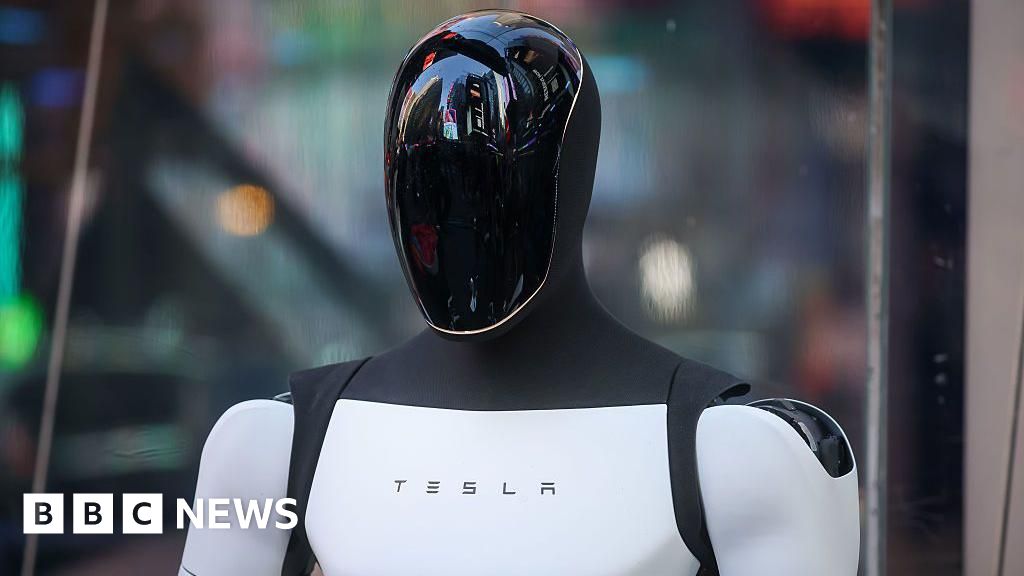
    It has appeared in Tesla showrooms, on its factory floors and has even posed with Kim Kardashian.

    But Elon Musk’s vision for his human-like robot Optimus is much grander than that.

    Since first unveiling it at a Tesla showcase in 2022, the tech billionaire has suggested his company’s droid could play a huge role in the homes and lives of people all over the world.

    Along with self-driving robotaxis and Cybertrucks, Musk believes Tesla robots are key to establishing a foothold in the artificial intelligence (AI) landscape.

    And investors who signed off on his $1tn pay package on Thursday would appear to agree.

    One of the many tasks Musk must complete to get his whopping pay deal is to deliver a million AI bots over the next decade.

    But is Tesla’s big bet on humanoid robots rooted in science fiction or reality?

    Silicon Valley is gunning hard for humanoids.

    A report released by Morgan Stanley on Friday predicted Apple, which is reportedly looking into the robots, could potentially earn $133bn a year from them by 2040.

    Foxconn is reported to be deploying them at its Nvidia factory in Texas.

    The idea of advanced AI within a human-shaped shell is an astonishingly powerful combination in theory. It would let the tech interact with the physical world around it – and yes that includes us.

    While many companies have sought to develop human-like robots for factory and industrial use – such as UK robotics firm Humanoid – some are already looking to insert the tech in homes.

    The highly-publicised Neo from tech firm 1X, slated to launch in 2026, can do menial chores like emptying the dishwasher, folding clothes and fetching you items.

    It will cost $20,000 but it does come with a caveat – the WSJ reported it was actually controlled by a person wearing a virtual reality headset.

    Forrester analyst Brian Hopkins said the falling costs of components, combined with improvements to robot dexterity and AI, was helping to make humanoid robots feasible for a variety of different settings.

    “From warehouses and restaurants to elder care and security, new use cases are gaining traction fast,” he wrote in a blog post.

    “If current trajectories hold, humanoid robots could disrupt many physical-service industries significantly by 2030.”

    Musk previously told investors his robots had “the potential to be more significant than the vehicle business, over time”.

    He went one step further after his pay package deal was approved on Thursday, saying he believed it could be “the biggest product of all time by far, bigger than cell phones, bigger than anything”.

    He has also suggested it might boost Tesla’s AI ambitions – particularly in advancing artificial general intelligence (AGI) systems capable of matching human abilities.

    “Tesla AI might play a role in AGI, given that it trains against the outside world, especially with the advent of Optimus,” he wrote on X in 2022.

    Elsewhere in the space, Boston Dynamics’ hydraulic humanoid Atlas has captivated millions on YouTube with its gymnastics and dance routines.

    Viral videos of its leaps, bounds, somersaults and backflips have shown the advances in robotics over the years – with scientists now seizing upon the AI boom to boost their capabilities with systems enabling them to undertake more complex tasks.

    When it was retired last year, it was replaced with a newer, fully electric model developers said could contort its metal frame in even more ways.

    But many of the roboticists the BBC has spoken to over the years have rolled their eyes about tech firms shaping robots like humans.

    Practically, there is little reason for robots to have legs.

    The mechanics and hardware involved in creating machine legs are far more intensive.

    As one scientist put it – “wheels are so much more efficient”.

    And don’t get them started on why a robot doesn’t need to have a head.

    Psychologically though, humanoids have long been a human fascination – and something reflected decades of sci-fi.

    You need only look to the legacy of characters such as Star Wars’ C-3PO, Futurama’s Bender or the Terminator to see humans might sometimes feel more comfortable around something closely resembling us.

    Back in reality, humanoid machines have been often far less polished and more gimmicky, clumsy and buggy than their fictional counterparts.

    But that appears to be changing with the likes of Optimus and sleeker droids which edge us closer to living in an uncanny valley.

    Tesla’s droid has been appearing in more public settings as of late – serving burgers and popcorn to customers at the company’s Hollywood diner.

    Sam Altman, boss of ChatGPT-maker OpenAI, said in May he doesn’t think the world is ready for humanoids, while simultaneously describing it as an incoming moment.

    There’s no love lost between him and Elon Musk but on this occasion they seem to be on the same page that the robots are on their way – and Musk certainly has the power, the influence and the cash to make it happen.

    Continue Reading