Category: 3. Business

  • CIIE to open, spotlighting China’s opportunities shared with the world

    BEIJING, Nov. 4 — This year’s China International Import Expo (CIIE), scheduled to run from Nov. 5 to 10, is the first important economic event that China hosts after the fourth plenary session of the 20th Central Committee of the Communist Party of China. It once again demonstrates China’s determination to promote high-standard opening up and shared development with the rest of the world.

    In the recommendations for formulating the 15th Five-Year Plan (2026-2030) adopted at the session concluded in late October, China reaffirmed its commitment to continuing to expand opening up at the institutional level, safeguarding the multilateral trading system, and promoting broader international economic flows. “We should draw momentum from opening up to propel reform and development, and share opportunities with the rest of the world and promote common development,” according to the recommendations.

    Eight years since its inception, the CIIE has stood as a vital gateway for foreign companies to tap new partnership opportunities with China, linking international enterprises with China’s super-sized market.

    The 8th CIIE features the largest exhibition space in its history and brings together a record 4,108 enterprises from 138 countries and regions. American companies have ranked the first in terms of exhibition space for seven consecutive years. These have reflected the international community’s enduring confidence in China’s economy.

    For businesses that have set their sights on China’s growth opportunities, the CIIE is an unmissable event. Some 461 new products, new technologies and new services will be introduced at this year’s expo, covering humanoid robots, digital consumption, silver economy and low-altitude economy. It will provide rich opportunities to share the fruits of innovation and access China’s expanding consumer market.

    Through attending the CIIE, foreign companies can gain more knowledge about China’s market development, consumption trends and habits. More importantly, they are able to meet their Chinese partners and consumers face to face, which facilitates exchanges and the discovery of cooperation opportunities.

    Notably, this year’s expo expands the dedicated section for products from African countries with diplomatic ties to China, allowing their businesses to fully leverage zero-tariff policies.

    The CIIE has been successfully held for seven consecutive years, with a cumulative intended transaction volume exceeding 500 billion U.S. dollars, helping enterprises across the globe tide over market fluctuations.

    China’s gross domestic product grew 5.2 percent year on year in the first three quarters. With a solid foundation, strong resilience and vast potential, the Chinese economy will continue to serve as a powerhouse of the global economy, as it continues its pursuit of high-quality development.

    Throughout these years, China’s sincerity in sharing development opportunities has been plain for all to see. Looking into the future, China is ready to work with all parties to further contribute to shared prosperity.

    Continue Reading

  • Tesla says Musk should be paid $1tn

    Tesla says Musk should be paid $1tn

    Lily JamaliNorth America Technology Correspondent, San Francisco

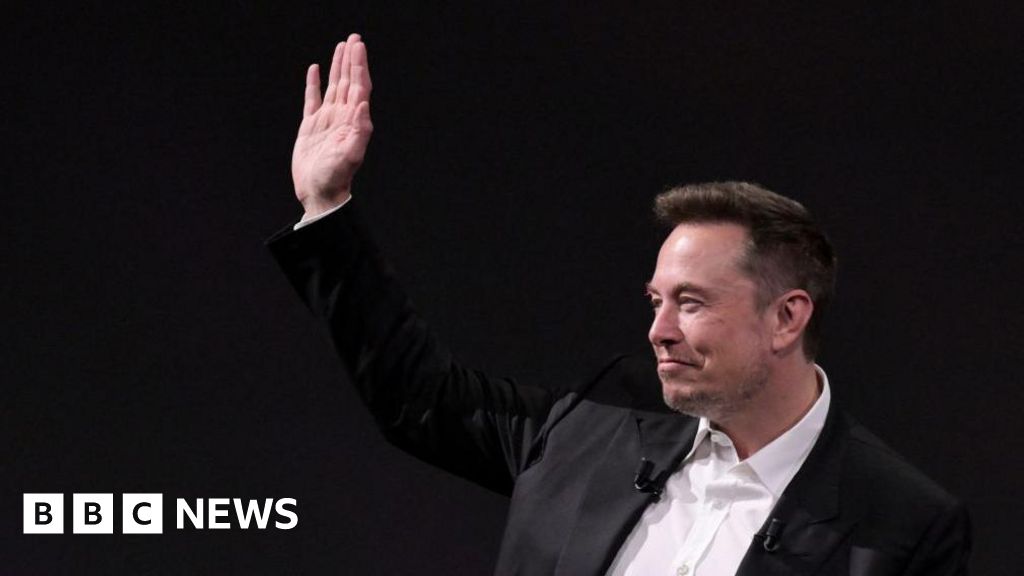
    Getty Images Musk in a white shirt and black jacket with his hand raisedGetty Images

    Ahead of Tesla’s annual general meeting (AGM) on Thursday there’s been one key message the electric car-maker has been hammering home to shareholders: the boss is worth $1tn.

    It has taken out digital ads to make the case for Elon Musk’s proposed bumper pay package, while Votetesla.com features a video of board chair Robyn Denholm and director Kathleen Wilson-Thompson praising him, as triumphant music crescendos in the background.

    It’s not clear that everyone is singing from the same hymn sheet though, meaning the AGM in Austin, Texas is set to become a referendum on Musk himself, after a rightward political turn which has made him one of the most polarising chief executives in recent memory.

    Musk himself has taken to X – which he owns – to raise the stakes higher still, saying the fate of Tesla “could affect the future of civilization.”

    He’s also used his social media megaphone to amplify some of the deal’s high-profile backers, including Dell Technologies’ Michael Dell, Ark Invest CEO Cathie Wood, and his brother, Kimbal, who sits on the Tesla board.

    “There is no one remotely close to my brother,” Kimbal said, extolling his sibling’s leadership qualities.

    “Thanks bro ❤️,” Musk replied.

    Not everyone agrees.

    For some, the focus on Musk and the soap opera around his pay is symptomatic of how the car firm – which has seen sales slide – has lost its way under his leadership.

    “What’s amazing to me is a company struggling to sell cars spends money on advertising to sell a pay package,” said Ross Gerber, CEO of Gerber Kawasaki Wealth and Investment Management.

    Mr Gerber has pared back his Tesla holdings in recent years – and turned up his criticism of the direction it’s heading in.

    “[Tesla] needs to change the focus of the company back to its core – to selling EVs again,” he said.

    The trillion dollar man

    The deal Tesla wants shareholders to back is not a salary of a one followed by twelve zeroes.

    Instead, it sets Musk the target of raising Tesla’s market value to $8.5tn, from $1.4tn at the time of writing.

    He would also have to oversee a massive boom in the company’s self-driving “Robotaxi” cars, getting a million of them into commercial operation – no small deal given their underwhelming launch.

    Do that, among meeting other benchmarks, and Musk would be given 423.7 million new shares, which would be worth nearly $1tn if the target valuation is reached.

    Tesla did not respond to the BBC’s requests for comment about its strategy to garner support from shareholders.

    Of course, this is not the first pay controversy Musk and Tesla have become embroiled in.

    Previously, Tesla got shareholders to twice ratify a pay package for Mr Musk that was worth tens of billions of dollars if he achieved a tenfold increase in Tesla’s market value.

    He met that milestone but, in 2024, a Delaware judge rejected the deal on the grounds that Tesla’s board members were too personally and financially enmeshed with the company’s boss.

    The Delaware Supreme Court is reviewing that decision – even as deliberations continue over this even larger pay package.

    “The strategy is more of the same from Tesla, which is not to say that this is normal. Nothing about Tesla is normal,” Dorothy Lund, a professor at Columbia Law School told BBC News.

    “They’re not a poster child for good corporate governance.”

    Professor Lund said get-out-the-vote campaigns like this sometimes take place when a company is worried, for example. about an activist shareholder forcing significant changes to how it operates, such as who is on its board of directors.

    “[But] never in my life have I seen something like that happen in the context of a compensation decision,” Professor Lund said.

    And unlike the vote on that earlier compensation package, Elon and Kimbal Musk will both get to vote as they push to reach the majority threshold required to seal the deal.

    Mr Musk is already the world’s richest man, becoming the first known half-trillionaire earlier this year.

    Getty Images A man holds a placard saying "This Musk Stop" in front of a banner reading "Boycott Tesla"Getty Images

    Anti-Musk and Tesla protests have happened in cities across the US

    A polarising figure

    Tesla’s argument in support of the pay package rests on the idea that Musk might leave the company if shareholders don’t follow the board’s recommendation and approve the pay package.

    It says it can’t afford to lose him, and that he “singularly possesses the leadership characteristics necessary to… realize its long-term mission”.

    In the video posted to votetesla.com, Ms Wilson-Thompson said the board undertook a seven month process using legal and compensation experts to devise the compensation deal.

    On last month’s earnings call, Musk minimised the focus on the payout, saying the real issue was ensuring he had adequate control in order to properly steer Tesla.

    But – aside from the question of whether Musk, with his preoccupations with autonomous cars and humanoid robots, is the setting the right course – there is also the matter of whether championing the boss is the board’s job.

    “The role of a board is to have fiduciary responsibility to shareholders and not to be advocating for a CEO,” said Yale School of the Environment’s Matthew Kotchen, an economics professor who co-authored a recent study attempting to quantify damage Mr Musk has done to Tesla of late.

    It’s clear a number of key decision-makers are unpersuaded the deal represents value for money.

    Proxy advisers Glass Lewis and Institutional Shareholder Services (ISS), which advise asset managers on how to vote on major corporate proposals, have recommended investors reject the pay package, saying it’s excessive and would dilute shareholder value.

    Norway’s sovereign wealth fund, the world’s largest national wealth fund, has followed suit, as has the largest public pension fund in the US, CalPERS.

    New York State Comptroller Thomas DiNapoli has urged investors to also reject directors up for re-election to the board, saying they’ve failed “to provide independent oversight and accountability.”

    As some institutions balk, that might leave Mr Musk more reliant on Tesla’s unusually large volume of retail investors – who tend to support him – to get his wish.

    It all means, in the words of Morgan Stanley analyst Adam Jonas, that Thursday’s vote is set to be one of “most important events” in Tesla’s history – with a “distinct possibility” the pay package won’t pass.

    It doesn’t help Musk’s cause that protesters continue to organise anti-Tesla rallies, months after his controversial turn as US President Donald Trump’s government efficiency tsar crashed and burned in May.

    “It’s hard for me to imagine that Elon Musk, in the very near term, shakes off the damage that he’s done to this brand,” said Mr Kotchen.

    Others though would say Musk’s extraordinary track record of entrepreneurship would make it unwise to bet against him, even when the sum being staked is as dizzyingly high as $1tn.

    “It’s hard to deny that Elon Musk’s larger-than-life personality has helped drive more interest and awareness for his organisation than almost any other corporate leader in the modern era,” said Edmunds’ head of insights Jessica Caldwell.

    “He’s become a more polarizing figure over time, but there’s still a belief in his ability to deliver on bold, unconventional ideas,” she added.

    The trillion dollar question now is – do Tesla shareholders agree?

    A green promotional banner with black squares and rectangles forming pixels, moving in from the right. The text says: “Tech Decoded: The world’s biggest tech news in your inbox every Monday.”

    Continue Reading

  • Stock market today: Live updates

    Stock market today: Live updates

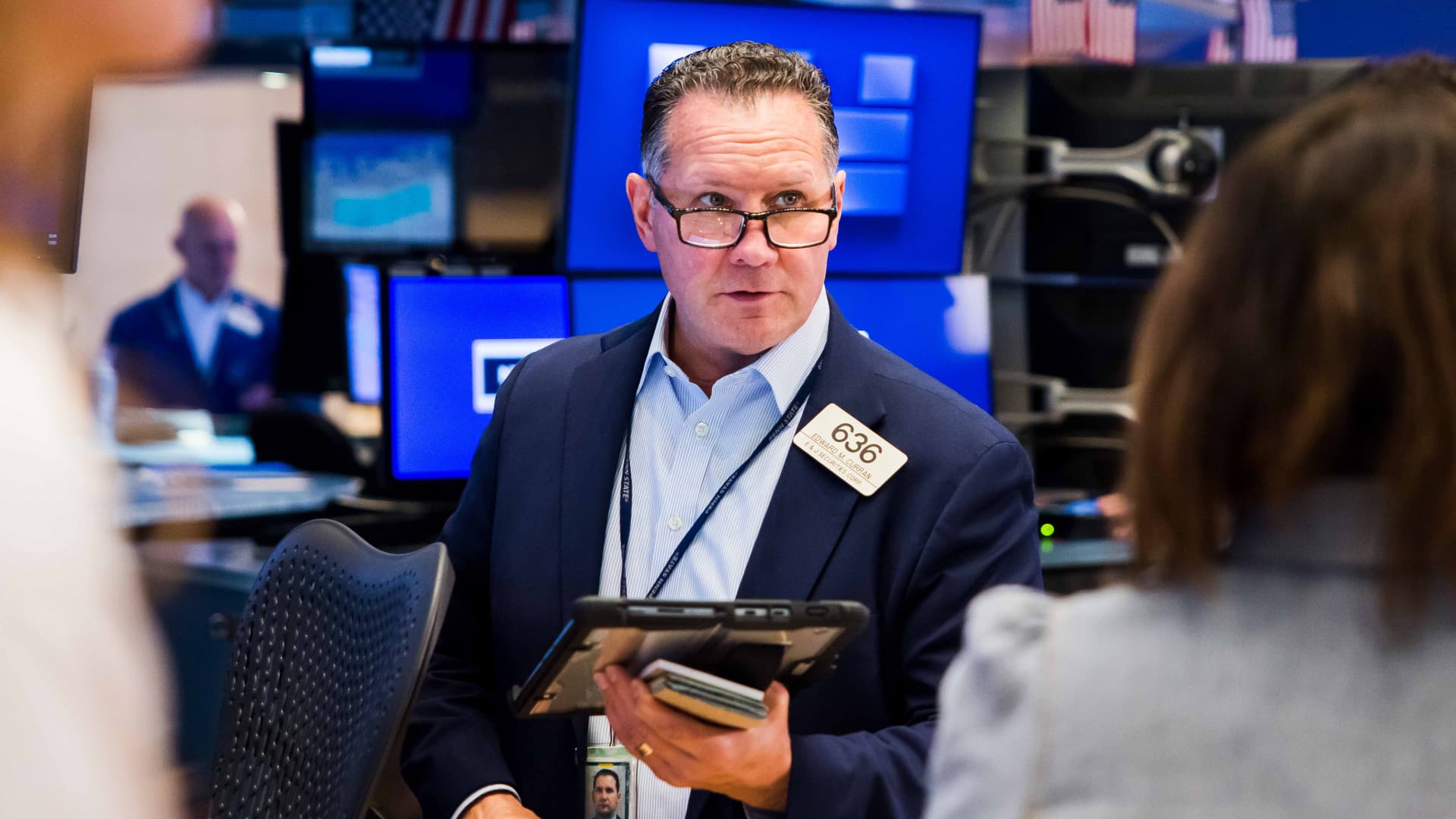
    Traders work at the New York Stock Exchange on Nov. 3 2025.

    NYSE

    Dow futures rose slightly Tuesday night, while futures tied to the tech-heavy Nasdaq slid, as investors continue to grapple with where megacap tech stocks head from here.

    Dow Jones Industrial Average futures rose 36 points, or nearly 0.1%. S&P 500 futures fell almost 0.2%, while Nasdaq 100 futures tumbled nearly 0.4%.

    Wall Street is coming off a losing session for the major averages. The S&P 500 declined 1.2%, while the Nasdaq Composite dropped 2%. The Dow Jones Industrial Average lost 251 points, or 0.5%.

    That comes after Palantir dropped about 8%, even after besting expectations for the third quarter, as investors worried that valuations for the software company — and the broader AI theme — have gotten untenable. After all, Palantir is trading at more than 200 times forward earnings.

    Yet many investors remain optimistic that the long-term trend is still favorable for tech stocks, even if there is a near-term pullback, given the strength of spending in AI infrastructure.

    “I don’t think that this is concerning today,” Liz Young Thomas, head of investment strategy at SoFi, said on CNBC’s “Closing Bell” on Tuesday. “I do think that as far as we’ve gotten, this extended, is concerning eventually, but I still think that we’re going to run into year end.”

    “I still think the chase is on. I still think the large cap love affair is on. And that’s probably not going to change over the longer term period,” she continued. “But today, I think we were looking for an excuse.”

    On the economic front, investors will continue to seek clarity using alternative data in lieu of government reports. On Wednesday, the ADP private payrolls report is set to be released. Weekly mortgage applications and ISM services data are also on deck.

    Earnings season continues with McDonald’s reporting Wednesday before the open. Of the 360 S&P 500 companies that have reported thus far, roughly 82% have beaten expectations, according to FactSet data. The S&P 500 is set to post a blended growth rate of more than 12%.

    Continue Reading

  • SoftBank wipes out about $32 billion in market cap as Asian AI stocks slide on valuation jitters

    SoftBank wipes out about $32 billion in market cap as Asian AI stocks slide on valuation jitters

    A woman uses her mobile phone as she walks past the logo of Japan’s telecommunications giant SoftBank in Tokyo on December 25, 2013.

    Toru Yamanaka | Afp | Getty Images

    Shares in Japan’s SoftBank Group plunged more than 14% Wednesday amid a broader drop in Asian AI-linked companies, tracking declines in U.S. peers, as investors turned wary of stretched valuations in the market’s most crowded trade.

    SoftBank, which has built a broad portfolio of AI-related investments spanning infrastructure, chips, and application firms, lost about $32 billion in market cap. If losses hold, the group’s shares will clock their worst day since last August when they tanked over 18%, data from LSEG showed.

    SoftBank has a controlling stake in U.K-based Arm Holdings, whose chip designs power mobile and AI processors, and acquired Ampere Computing this year to strengthen its AI data-center capabilities. Nasdaq-listed Arm Holdings saw shares drop 4.71% overnight.

    The group has backed leading AI model developers such as OpenAI, as well as application-level startups like OpusClip, a generative-AI video-editing platform, and Tempus AI, which applies machine learning to precision medicine.

    SoftBank has now erased nearly $50 billion in market cap over two days. Shares had dropped over 7% on Tuesday as well.

    Other Japanese tech stocks also fell: semiconductor testing equipment maker Advantest declined over 8%, chipmaker Renesas Electronics lost 5.48%, Tokyo Electron, a chip production equipment maker, fell more than 5%.

    South Korean memory chip giants Samsung Electronics and SK Hynix lost nearly 6%. The surge in chipmakers SK Hynix and Samsung Electronics this year has helped push South Korea’s Kospi Index to record highs.

    Taiwan’s TSMC, the world’s largest contract chipmaker, fell 2%. Alibaba declined over 3% while Tencent was more than 2% lower.

    The declines come after U.S. software company Palantir dropped about 8% overnight, even after topping expectations for the third quarter, as sky-high valuations across AI sector hit investor sentiment. The AI-led rally has pushed the S&P 500’s forward P/E above 23 — its highest since 2000, according to FactSet.

    The frenzy around AI has sparked concerns that markets could be in the midst of a tech bubble.

    “There is fear of an AI correction, and if it comes, it will sweep the rest of the market with it due to the heavy weight of the leading names,” market veteran Louis Navellier wrote in a note.

    Some analysts say valuations of AI companies increasingly resemble the dot-com boom of the late 1990s, with share prices soaring far ahead of credible profit expectations.

    Jared Bernstein, who headed the Council of Economic Advisers during the Joe Biden administration, noted that the share of the economy devoted to AI investment is almost a third higher than during the internet bubble, adding that the gap between earnings potential and spending “certainly looks bubbly.”

    Michael Burry, famed for predicting the 2008 financial crisis, has also stirred controversy with his bet against AI darlings Palantir and Nvidia. In a recent filing, Burry’s Scion Asset Management revealed significant short positions on these firms, which are at the forefront of AI and chip technology.

    Besides Palantir, other U.S. tech majors also fell overnight: Oracle lost 4%, Chipmaker AMD dropped nearly 4%, while Nvidia and Amazon also declined.

    “In my view, [the selloff] is short lived. I don’t believe this is a start of a more structural sell off,” said Dan Ives, managing director and senior equity research analyst at Wedbush. “I think it’s just a lot of nervous, sort of white knuckles and the selloff that we saw … along with the selloff that we’ve seen crypto and others, it was just a massive risk off.”

    Continue Reading

  • AMD forecasts fourth-quarter revenue above estimates on strong AI chip demand – Reuters

    1. AMD forecasts fourth-quarter revenue above estimates on strong AI chip demand  Reuters
    2. AMD posts top- and bottom-line beat in Q3 with Q4 sales guidance ahead of estimates  Sherwood News
    3. Advanced Micro Devices Q3 Gaming Revenue at $1.3 Billion vs FactSet Analyst Consensus of $1.08 Billion; Embedded Revenue at $857 Million vs Consensus of $889.4 Million  MarketScreener
    4. AMD’s data center, PC units shine in Q3  Constellation Research
    5. Key facts: AMD to Report Financial Results; Stock Target Raised to $250  TradingView

    Continue Reading

  • Senior Chinese official meets with Goldman Sachs CEO

    BEIJING, Nov. 4 — Senior Chinese official He Lifeng met with David Solomon, chairman and CEO of Goldman Sachs Group, in Beijing on Tuesday.

    He, who is a member of the Political Bureau of the Communist Party of China (CPC) Central Committee and director of the Office of the Central Commission for Financial and Economic Affairs, said that the heads of state of China and the United States recently held a successful meeting in Busan, the Republic of Korea, charting the course for the next phase of bilateral economic and trade relations.

    The two sides should work together to act on the important common understandings reached by the two heads of state, He said, adding that doing so will provide greater predictability for businesses from both countries.

    He noted that it will also promote the steady, sound and sustainable development of China-U.S. trade and economic relations, and contribute to global economic stability.

    China welcomes the Goldman Sachs Group to continue its investment and business operations in China, He said.

    Solomon said that Goldman Sachs is optimistic about the prospects of China’s economic development and remains committed to contributing to the high-quality development of China’s capital markets.

    Continue Reading

  • Ricoh Managed IT Services business in the United States acquired by Netrix | Global

    Ricoh Managed IT Services business in the United States acquired by Netrix | Global

    Ricoh is a leading provider of integrated digital services and print and imaging solutions designed to support digital transformation of workplaces, workspaces and optimize business performance.

    Headquartered in Tokyo, Ricoh’s global operation reaches customers in approximately 200 countries and regions, supported by cultivated knowledge, technologies, and organizational capabilities nurtured over its 85-year history. In the financial year ended March 2025, Ricoh Group had worldwide sales of 2,527 billion yen (approx. 16.8 billion USD).

    It is Ricoh’s mission and vision to empower individuals to find Fulfillment through Work by understanding and transforming how people work so we can unleash their potential and creativity to realize a sustainable future.

    For further information, please visit

    ###

    © 2025 RICOH COMPANY, LTD. All rights reserved. All referenced product names are the trademarks of their respective companies.

    Continue Reading

  • Gold Holds Drop as Investors Weigh Outlook for Dollar, US Rates – Bloomberg

    1. Gold Holds Drop as Investors Weigh Outlook for Dollar, US Rates  Bloomberg
    2. Gold slips more than 1% on stronger dollar as market awaits US jobs data  Reuters
    3. Gold prices slip as stronger dollar, Fed uncertainty weigh  Investing.com
    4. XAU/USD: Gold Prices Drift Below $3,950 as Uncertainty Sweeps Global Markets  TradingView
    5. Gold, silver down as USDX hits 6-mo. high  KITCO

    Continue Reading

  • Britain sliding ‘into economic crisis’ over £85bn sickness bill

    Britain sliding ‘into economic crisis’ over £85bn sickness bill

    Emer MoreauBusiness reporter

    Getty Images A woman lying on her couch, apparently sick. She is holding a tissue and has a blanket covering her.Getty Images

    The report said that a 22-year-old who falls out of work for health reasons could lose out on £1m over the course of their lifetime.

    The number of sick and disabled people out of work is putting the UK is at risk of an “economic inactivity crisis” that threatens the country’s prosperity, according to a new report.

    There were 800,000 more people out of work now than in 2019 due to health conditions, costing employers £85bn a year, according to the review by former John Lewis boss Sir Charlie Mayfield.

    The problem could worsen without intervention, but Sir Charlie, who will lead a taskforce aimed at helping people return to work, said this was “not inevitable”.

    The move has been broadly welcomed, but some business groups said Labour’s Employment Rights Bill included some disincentives to hiring people with existing illnesses.

    One in five working age people were out of work, and not seeking work, according to the report, which was commissioned by the Department for Work and Pensions by produced independently.

    Without intervention, another 600,000 people could leave work due to health reasons by the end of the decade.

    Sir Charlie said sickness cost employers £85bn a year through issues including lost productivity and sick pay, but it also cost the broader economy.

    “For employers, sickness and staff turnover bring disruption, cost and lost experience,” he said. “For the country, it means weaker growth, higher welfare spending and greater pressure on the NHS”.

    Speaking to the BBC, he said that “on the whole, work and health are mutually reinforcing”.

    “So keeping people in work, keeping them active, actually helps them to stay healthier.”

    The state spends £212bn per year on illness-related inactivity, or nearly 70% of income tax, through lost output, increased welfare payments and additional burdens on the NHS.

    People could be encouraged to stay in work if health is viewed as “a shared responsibility between employers, employees and health services”, he said.

    ‘I want to find a job’

    Loz Sandom has mental and physical health conditions which has made it difficult to find a job, and the last time they worked was a year ago.

    “I am willing to do the work, and I want to. I want to find a job,” said the 28-year-old, who has a degree in illustration and has previously worked as a digital marketing executive.

    They said that part of the challenge was employers did not realised they had “a duty to provide reasonable adjustments.”

    A female presenting person with dark rimmed glasses, a nose piercing, and hooped earings, and shortish dark hair - they are sitting being interviewed in a computer room

    “It’s such a shame because they’re missing out on so many fantastic disabled people that can do fabulous jobs.

    “And I’m not blaming employers entirely. They need support as well,” Loz added. “There are things that can be put in place to help employers, help save people.”

    Responding to the report, the government announced a major partnership with over 60 companies, many of them large employers, to “tackle the rising tide of ill-health that is pushing people out of work”.

    The companies include Tesco, Google UK, Nando’s and John Lewis.

    Over the next three years, they will “develop and refine workplace health approaches” which aim to “reduce sickness absence, improve return-to-work rates, and increase disability employment rate”.

    The government is aiming to develop these changes into a voluntary certified standard by 2029.

    Speaking to the BBC, Work and Pensions Secretary Pat McFadden said the report was a “win-win for employees and employers because its’ aimed at keeping people with sickness issues or developing disability issues in work”.

    “That’s in the interests of employers because these are good experienced staff and it’s in the interests of employees too because most people want to stay in work if they possibly can.”

    The Resolution Foundation think tank’s chief executive Ruth Curtice said: “The review has accurately identified a culture of fear, a dearth of support and structural barriers to work as key challenges to overcome in turning the tide for Britain’s economic inactivity problem – which is currently trending in the wrong direction.”

    The CIPD, which represents HR professionals, welcomed the government’s vision for a preventative approach to illness in the workplace.

    But its chief executive Peter Cheese said: “The report’s success will depend on the extent to which these recommendations are understood by business in driving positive outcomes and backed by policy makers at a national and regional level.”

    The report comes as the government tries to move ahead with its Employment Rights Bill – which some businesses say will stifle growth.

    The proposed new law includes a right to guaranteed hours and cracks down on zero-hour contracts without the offer of work.

    As well as that bill, Chancellor Rachel Reeves is aiming to guarantee paid work to young people who have been out of a job for 18 months.

    Those who do not to take up the offer could face being stripped of their benefits.

    Continue Reading

  • Ascletis Presents Full Analysis of Phase Ib Study of ASC30 Oral Tablet, Phase Ib Study of ASC30 Injection, and Preclinical Study of Combination of ASC31 and ASC47 at ObesityWeek® 2025 USA – English APAC – Traditional Chinese APAC – English

    -Positive data from Phase Ib study of ASC30 oral tablet demonstrated up to 6.5% placebo-adjusted mean body weight reduction; safe and well tolerated with only mild-to-moderate gastrointestinal (GI) adverse events (AEs) across all multiple ascending dose (MAD) cohorts.

    -Phase Ib study data of ASC30 subcutaneous (SQ) injection showed that observed half-life reached 46 days for the treatment formulation (Injection A) and 75 days for the maintenance formulation (Injection B).

    -Combination of ASC47 and ASC31, a novel peptide agonist targeting both GLP-1R and GIPR, significantly outperformed both tirzepatide and ASC31 monotherapy in promoting weight loss, body fat loss, and muscle preservation in diet-induced obesity (DIO) mouse studies.

    -Presentations further highlight the promising efficacy and safety profiles of Ascletis’ diverse obesity pipeline and validate its proprietary Artificial Intelligence-Assisted Structure-Based Drug Discovery (AISBDD) and Ultra-Long-Acting Platform (ULAP) technologies.

    HONG KONG, Nov. 4, 2025 /PRNewswire/ — Ascletis Pharma Inc. (HKEX: 1672, “Ascletis”) announces multiple poster presentations of the full analysis of the Phase Ib study of ASC30 once-daily oral tablet, Phase Ib study of ASC30 once-monthly injection, and preclinical study of the combination of ASC31 and ASC47 at ObesityWeek® 2025 in Atlanta, Georgia.

    Abstract Title: A full analysis of 28-Day MAD Study of Oral GLP-1R Biased Small Molecule Agonist ASC30 for obesity

    Results:

    Efficacy: Body weight changes from baseline were 6.3% reduction (multiple ascending dose (MAD) 2, n=8, 40 mg), 4.3% reduction (MAD 1, n=7, 20 mg), and 0.2% increase (placebo, n=6). No plateau was observed at Day 29. Body weight change from baseline was 4.8% reduction for MAD 3 (n=7, 60 mg), with the maximum body weight change being 9.3% reduction in this cohort. Excluding two outliers, the mean body weight change from baseline was 5.9% reduction for MAD 3.

    GI Tolerability: In the MAD study, MAD 1 (20 mg cohort) showed no vomiting, while MAD 2 (40 mg cohort) had events. Titrating from 2 mg to 5 mg did not cause vomiting in MAD 1, but titrating from 2 mg to 10 mg did result in vomiting in MAD 2. Compared with MAD 2, MAD 3 showed no increasing trend in severity or incidence of gastrointestinal (GI) adverse events (AEs), despite two discontinuations due to principal investigator’s decisions, and one discontinuation due to subject withdrawal.

    Safety: No serious adverse events (SAEs) or Grade ≥ 3 AEs, including GI events, were observed. Labs, vitals, ECGs (QTc), and physical exams were normal. No hepatic safety signals were detected across all MAD cohorts.

    Conclusion: ASC30 once-daily oral tablet demonstrated up to 6.5% placebo-adjusted mean body weight reduction from baseline after 28-day treatment. The highest dose level (MAD 3, 60 mg) exhibited up to 9.3% body weight reduction, showed no increasing trend in severity or incidence in GI AEs. ASC30 was safe and well tolerated with only mild-to-moderate GI AEs across all MAD cohorts. The safety profile of ASC30 tablets was consistent with or better than that of the GLP-1R agonist class.

    Abstract Title: ASC30, a Once-Monthly SQ Injected Small Molecule GLP-1RA in Participants with Obesity: A Ph Ib Study

    Results: The observed half-life (time for ASC30 concentrations to reduce to fifty percent (50%) of ASC30’s Cmax) reached 46 days and 75 days, for ASC30 subcutaneous (SQ) treatment formulation (Injection A) and ASC30 SQ maintenance formulation (Injection B), respectively. Cmax-to-Cday29 ratio of 1.5:1, supports ASC30 SQ treatment formulation monthly dosing, while Cmax-to-Cday85 ratio of 2.5:1, supports ASC30 SQ maintenance formulation quarterly dosing.

    No SAEs or Grade ≥ 3 AEs were observed. GI-related AEs were mild to moderate. Labs, vitals, ECGs (QTc), and physical exams were normal. No hepatic safety signals were detected across all cohorts.

    Conclusion: ASC30 ultra-long-acting, slow-release SQ depot formulations demonstrated 46-day observed half-life (treatment formulation) and 75-day observed half-life (maintenance formulation), supporting both once-monthly treatment and once-quarterly maintenance therapies.

    ASC30 SQ formulations were well tolerated, with only mild-to-moderate treatment-emergent adverse events (TEAEs), comparable or superior to those observed with GLP-1R agonists. Developed with Ascletis’ Ultra-Long-Acting Platform (ULAP) technology, ASC30 treatment and maintenance formulations represent a potential breakthrough in chronic weight management by improving treatment convenience, adherence, and quality of life.

    Abstract Title: GLP-1R/GIPR Peptide Agonist ASC31 + ASC47 Shows 119.6% More Weight Loss than Tirzepatide in DIO Mice

    Results: The combination of ASC47 plus ASC31 resulted in a 44.8% reduction in weight compared to a 19.1% reduction for ASC31 monotherapy. This was a 134% greater reduction than ASC31 alone. The combination of ASC47 plus tirzepatide resulted in a 38.1% reduction in weight compared to a 20.4% reduction for tirzepatide alone. This was an 87% greater reduction in weight compared to tirzepatide alone. The mean greater reduction in weight of ASC31 in combination with ASC47 compared to ASC31 alone (134%) is statistically significantly higher than that of tirzepatide plus ASC47 compared to tirzepatide alone (87%).

    Conclusion: The combination of ASC47 and ASC31 significantly outperformed both tirzepatide and ASC31 monotherapy in promoting weight loss, body fat loss, and muscle preservation. The combination of ASC47 with either ASC31 or tirzepatide restored the body composition of obese mice to the level of healthy non-obese mice. ASC31 is a dual GLP-1R and GIPR peptide agonist. ASC47 is a small molecule thyroid hormone receptor beta (THRβ)-selective agonist and was designed with unique and differentiated properties to enable targeted delivery to adipose tissue.

    Detailed data presented at ObesityWeek® 2025 can be found at Ascletis’ website (link).

    “These presentations highlight the exciting efficacy and safety profiles of our diverse obesity pipeline of both small molecules and peptides and validate our proprietary AISBDD and ULAP technologies,” said Jinzi Jason Wu, Ph.D., Founder, Chairman and CEO of Ascletis. “As we advance clinical development of ASC30, ASC31, and ASC47, we remain focused on close discussion with strategic partners to ensure that Ascletis is best positioned to address the needs of patients with obesity globally.”

    About ASC30

    ASC30 is an investigational GLP-1R biased small molecule agonist and has unique and differentiated properties that enable the same small molecule for both oral tablet and subcutaneous injection administrations. ASC30 is a new chemical entity (NCE), with U.S. and global compound patent protection until 2044 without patent extensions.

    About ASC31

    ASC31 is an in-house discovered and developed novel peptide agonist targeting both GLP-1R and GIPR, which demonstrated a favorable pharmacokinetic profile in non-human primates as well as promising in vitro activities and in vivo efficacy in the diet-induced obese (DIO) mice. ASC31 is part of Ascletis’ discovery efforts to apply its Ultra-Long-Acting Platform (ULAP) to in-house discovered novel subcutaneously (SQ) injectable peptides and oral peptides.

    About ASC47

    ASC47 is an adipose-targeted, once-monthly SQ injected THRβ-selective small molecule agonist, discovered and developed in-house at Ascletis. ASC47 possesses unique and differentiated properties to enable adipose targeting, resulting in dose-dependent high drug concentrations in the adipose tissue.

    About Ascletis Pharma Inc.

    Ascletis Pharma Inc. is a fully integrated biotechnology company focused on the development and commercialization of potential best-in-class and first-in-class therapeutics to treat metabolic diseases. Utilizing its proprietary Artificial Intelligence-Assisted Structure-Based Drug Discovery (AISBDD) and Ultra-Long-Acting Platform (ULAP) technologies, Ascletis has developed multiple drug candidates in-house, including its lead program, ASC30, a small molecule GLP-1R agonist designed to be administered once daily orally and once monthly to once quarterly subcutaneously as a treatment therapy and a maintenance therapy for chronic weight management. Ascletis is listed on the Hong Kong Stock Exchange (1672.HK). For more information, please visit www.ascletis.com.

    Contact:

    Peter Vozzo
    ICR Healthcare
    443-231-0505 (U.S.)
    [email protected]

    Ascletis Pharma Inc. PR and IR teams
    +86-181-0650-9129 (China)
    [email protected]
    [email protected]

    SOURCE Ascletis Pharma Inc.

    Continue Reading