Category: 3. Business

  • Another European car company gets knocked out by tariffs

    Another European car company gets knocked out by tariffs

    U.S. tariffs have taken their toll on a myriad of industries as the world continues to navigate the new international trade order instituted under President Donald Trump.

    But this week, German automakers were in the spotlight as some of the world’s best-known Bavarian brands all reported the same thing: profits are falling, and tariffs are to blame.

    The European Union has been able to negotiate its tariff burden down from 25% to 15%, but the 15% number still weighs heavily on automakers’ bottom lines.

    German auto marque Volkswagen said that U.S. tariffs would cost the company up to 5 billion euros this year ($5.8 billion). Through the first three quarters, tariffs have shaved 58% off its year-over-year profit.

    The company is shipping fewer vehicles to the States to avoid tariffs, and U.S. consumers are shying away from foreign brands that are now more expensive. Volkswagen’s sales in North America are down 11% through the first three quarters.

    Volkswagen and other German automakers have had to limit exports to the U.S. amid tense tariff circumstances.picture alliance/Getty Images

    The German auto industry struggles extend well past just Volkswagen.

    On Oct. 29, fellow German auto Mercedes-Benz Group reported a 70% year-over-year decline in EBIT to 750 million euros ($870 million) while overall revenue fell 7% to 32 billion euros ($37.13 billion).

    Related: Luxury automaker takes major hit

    Mercedes says it has been carefully managing its U.S. inventory as its third-quarter net profit fell to 1.19 billion euros, down from 1.72 billion euros a year ago ($1.38 billion from $1.99 billion).

    But it wasn’t all bad news for the luxury automaker on this side of the pond.

    “Despite the noticeable impact of US tariff policy on the US trade balance, after a slight decrease in the first quarter, GDP in the United States grew visibly in the further course of the year,” the company said in its earnings release.

    Overall, the company sold 12% fewer vehicles in the third quarter than it did the previous year.

    The one bright spot was for the company’s “top-end” category, where it reported 10% growth in unit sales.

    Despite the struggles, Mercedes-Benz reiterated its full-year guidance, unlike fellow German automaker Audi, which was forced to lower expectations due to the tariff impact.

    Audi Group said that its financial performance in the quarter “reflects the challenging economic situation” all German automakers are finding themselves in.

    Again, it wasn’t all bad for the company; revenue through the first three quarters rose 4.6% year over year to € 48.4 billion ($56.14 billion), including a 3.2% increase in the third quarter to € 15.81 billion ($18.34 billion).

    Related: Mercedes-Benz develops a unique way to solve a serious issue

    However, the Audi Group, which includes Audi, Bentley, Lamborghini, and Ducati, has lowered its operating margin expectations for the year to between 4% and 6%, down from its previous view of between 5% and 7%. Before the summer, the company had forecast an operating margin between 7% and 9% for the year.

    It left revenue and net cash flow guidance unchanged, at between € 65 billion and € 70 billion and between € 2.5 billion and € 3.5 billion, respectively.

    “We are responding to the challenging overall economic situation and intensified competition with stringent cost control measures and are continuing to work on our financial performance,” said CFO Jürgen Rittersberger.

    Related: Tesla report reveals concerning customer behavior

    This story was originally reported by TheStreet on Nov 2, 2025, where it first appeared in the Automotive section. Add TheStreet as a Preferred Source by clicking here.

    Continue Reading

  • Amazon says its AI shopping assistant Rufus is so effective it’s on pace to pull in an extra $10 billion in sales

    Amazon says its AI shopping assistant Rufus is so effective it’s on pace to pull in an extra $10 billion in sales

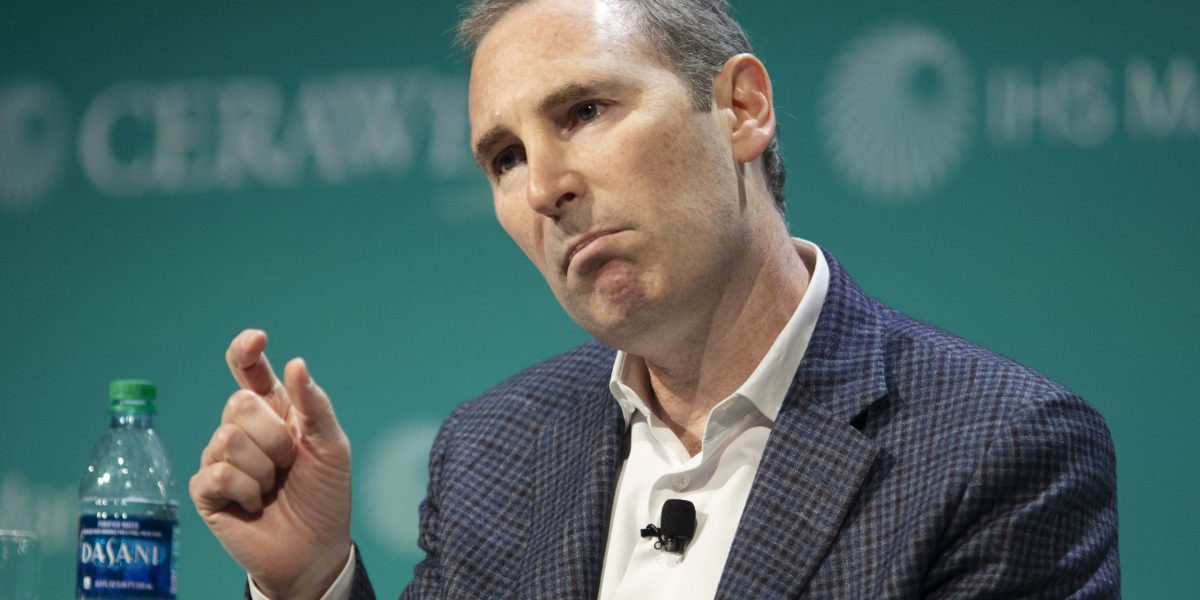
    In case you were unsure about Amazon’s ability to monetize artificial intelligence, “the everything store” assigned a staggering dollar figure to the performance of its AI shopping assistant, Rufus, estimating the chatbot will generate an additional $10 billion in annualized sales for the company.​

    The disclosure came during Amazon’s third-quarter earnings call on Thursday, when CEO Andy Jassy shared new metrics demonstrating the tool’s growing influence on customer behavior. According to Jassy, 250 million shoppers have used Rufus this year, with monthly active users growing 140% year over year and interactions increasing 210%.

    And here’s a killer stat from Amazon: Customers who engage with Rufus during their shopping journey are 60% more likely to complete a purchase compared to those who don’t use the assistant.​

    “Rufus is expected to generate over $10 billion in annual incremental sales for us,” Jassy said on the call, highlighting what has become one of Amazon’s most visible bets on consumer-facing AI.​

    Amazon reported third-quarter revenue rose 13% to $180.2 billion, exceeding analyst expectations of $177.8 billion. The company’s cloud-computing division, Amazon Web Services, posted 20% revenue growth to reach $33 billion—its fastest expansion since 2022, Jassy said.​

    Rufus, which launched in beta in February 2024, is a shopping assistant that’s embedded directly into Amazon’s mobile app and website. Amazon trained Rufus on its entire product catalog, as well as customer reviews, community Q&As, and information from across the web. Shoppers can ask questions from broad product comparisons—like differences between trail and road running shoes—to specific questions about individual items, like whether a certain coat is suitable for winter.​

    Rufus represents Amazon’s strategy to keep customers within its ecosystem rather than losing them to search engines like Google, where they might discover competing retailers, or other AI engines like ChatGPT. By answering product questions and offering recommendations without requiring users to leave Amazon’s platform, the goal of Rufus is to train people that Amazon can help you do research about its available products, in addition to simply advertising and selling them.​

    Amazon launched Rufus in the U.S. before rolling out the chatbot across the UK, India, France, Germany, Italy, Spain, and Canada. Amazon continually improved the tool throughout 2025; just last week, it introduced a feature called “Help Me Decide,” which uses algorithms to offer guidance when shoppers feel overwhelmed by choices.​

    The $10 billion sales estimate is tied to what Amazon internally calls “downstream impact,” a metric the company uses to measure how specific features or services drive additional consumer spending across its marketplace. For Rufus, this means tracking purchases that result from interactions with the chatbot, even if those transactions don’t happen immediately. The company employs a seven-day rolling attribution model to capture delayed conversions.​

    Business Insider reported in April that internal planning documents projected Rufus would indirectly contribute over $700 million in operating profits for the year, with expectations to reach $1.2 billion in profit contributions by 2027. Those projections included revenue from advertisements embedded within Rufus responses to user queries.​

    Jassy’s remarks during the earnings call emphasized how AI is reshaping Amazon’s retail operations. He noted the company has also launched generative AI features that convert product summaries and reviews into audio clips, and has expanded from covering hundreds of products at launch to millions currently. Another tool, Amazon Lens, allows customers to use their smartphone cameras to search for products visually, with tens of millions of customers using it each month.​

    Amazon’s advertising business also posted strong results, with revenue climbing 22% to $17.6 billion in the third quarter. Jassy attributed part of that growth to the company’s demand-side platform, which has been enhanced with new features over the past 20 months and now integrates ad inventory from Netflix, Spotify, and SiriusXM.​

    The Rufus announcement comes amid broader questions about Amazon’s investments in AI infrastructure. The company raised its 2025 capital expenditure forecast from $118 billion to $125 billion, with CFO Brian Olsavsky indicating that spending will likely increase again in 2026. Much of that investment is directed toward building data centers and acquiring the computing power needed to support AI applications across Amazon’s cloud and retail operations.​

    On Wednesday, Amazon officially opened Project Rainier, an $11 billion AI data center designed to train and run models from Anthropic, the startup behind the Claude chatbot. Amazon has invested $8 billion in Anthropic and announced that the company plans to use 1 million custom Amazon Trainium2 chips by the end of 2025.​

    Just days before the earnings report, Amazon confirmed it would eliminate approximately 14,000 corporate positions,. During the call, Jassy addressed the cuts, describing them as driven by a desire to operate with “fewer layers and more ownership” rather than by financial pressures or AI automation. However, a memo sent to affected employees cited AI as “the most transformative technology we’ve seen since the Internet,” stating it enables companies to innovate faster than before. Despite the workforce reductions, Amazon shares surged more than 13% in after-hours trading following the earnings announcement, reflecting investor optimism about the company’s cloud acceleration and AI momentum.

    Continue Reading

  • A Look at BNY Mellon’s (BK) Valuation After Strong Year-to-Date Gains

    A Look at BNY Mellon’s (BK) Valuation After Strong Year-to-Date Gains

    Bank of New York Mellon (BK) has shown steady performance over the past year, and its latest results offer investors a closer look at its current position in the financial sector. Shares have climbed nearly 39% year to date.

    See our latest analysis for Bank of New York Mellon.

    Bank of New York Mellon’s momentum has been impressive, with a year-to-date share price return of 39.43% and a total shareholder return of 46.49% over the past year. This strong performance has been fueled by renewed investor interest in financials and a robust earnings trend. This suggests that market confidence in the bank’s long-term prospects is gathering pace.

    If this kind of sustained growth has you rethinking what’s possible in today’s market, it could be the perfect time to broaden your search and discover fast growing stocks with high insider ownership

    The question now is whether Bank of New York Mellon’s impressive rally still leaves room for future gains, or if the current price already reflects all of its potential. This has investors wondering if a true opportunity remains.

    With the narrative fair value estimate at $118.07, Bank of New York Mellon’s last close of $107.93 suggests there could still be room for upside, drawing keen attention to the metrics behind this call.

    Accelerated investment in digital platforms (including digital asset custody, AI integration, and the NEXEN ecosystem), coupled with strong early adoption, positions BNY Mellon for improved operating leverage and net margin expansion over the coming years. Scalable technology helps reduce costs and increases cross-selling opportunities.

    Read the complete narrative.

    Curious what bold forecasts are fueling this target? The narrative relies heavily on key operational breakthroughs, higher profit margins, and a valuation multiple below the industry. Which numbers matter most for future upside? Dive in to discover the assumptions that could reshape expectations.

    Result: Fair Value of $118.07 (UNDERVALUED)

    Have a read of the narrative in full and understand what’s behind the forecasts.

    However, persistent outflows in investment management or an extended period of market volatility could undermine the positive growth narrative presented by Bank of New York Mellon.

    Find out about the key risks to this Bank of New York Mellon narrative.

    While multiples-based analysis suggests that Bank of New York Mellon looks undervalued compared to industry averages and its own fair ratio, the SWS DCF model offers a more cautious take. According to our DCF estimates, the current share price is actually trading above fair value, which hints at less upside than some might expect. Could patient investors see a better entry point ahead?

    Look into how the SWS DCF model arrives at its fair value.

    BK Discounted Cash Flow as at Nov 2025

    Simply Wall St performs a discounted cash flow (DCF) on every stock in the world every day (check out Bank of New York Mellon for example). We show the entire calculation in full. You can track the result in your watchlist or portfolio and be alerted when this changes, or use our stock screener to discover 840 undervalued stocks based on their cash flows. If you save a screener we even alert you when new companies match – so you never miss a potential opportunity.

    If you see the story differently, or want to dig deeper into the numbers yourself, you can put together your own view in just a few minutes. Do it your way

    A good starting point is our analysis highlighting 5 key rewards investors are optimistic about regarding Bank of New York Mellon.

    The smartest investors always stay one step ahead, and Simply Wall Street’s screeners put tomorrow’s biggest opportunities within reach. Don’t let the next wave of winners pass you by.

    This article by Simply Wall St is general in nature. We provide commentary based on historical data and analyst forecasts only using an unbiased methodology and our articles are not intended to be financial advice. It does not constitute a recommendation to buy or sell any stock, and does not take account of your objectives, or your financial situation. We aim to bring you long-term focused analysis driven by fundamental data. Note that our analysis may not factor in the latest price-sensitive company announcements or qualitative material. Simply Wall St has no position in any stocks mentioned.

    Companies discussed in this article include BK.

    Have feedback on this article? Concerned about the content? Get in touch with us directly. Alternatively, email editorial-team@simplywallst.com

    Continue Reading

  • UK Bonds’ Best Run in Two Years Is Winning Over Global Investors

    UK Bonds’ Best Run in Two Years Is Winning Over Global Investors

    UK yields are still the highest among Group-of-Seven nations, but the gap is narrowing thanks to a surge in market bets on interest-rate cuts.

    October was an unusually good month for the UK bond market.

    Most Read from Bloomberg

    Gilts posted their best performance in almost two years, and investors including Aberdeen Group Plc, Fidelity International and JPMorgan Asset Management are betting on more gains. Goldman Sachs Group Inc. analysts have slashed their yield forecasts, citing easing inflation pressures and signs Chancellor Rachel Reeves will announce tough steps needed to get the budget in order.

    Expectations for more Bank of England interest-rate cuts are powering the move. If a small — but growing — band of strategists are correct that officials will deliver a surprise cut at a meeting this week, the remarkable rebound that’s put UK bonds at the front of a global rally will likely pick up pace.

    “It’s always been a question of when inflation is going to start coming down and there are now signs that’s starting to happen,” said Seamus Mac Gorain, global head of rates at JPMorgan Asset Management, who said he is overweight gilts. “It’s pretty likely that the package that the chancellor announces is helpful to the gilt market.”

    Ever since Liz Truss’s unfunded budget plans unleashed an historic selloff that led to her ouster three years ago, the nation’s turbulent debt markets have loomed large. They’ll remain a political football ahead of Reeves’ budget on Nov. 26, when she’s expected to announce tax rises in order to keep on the right side of her fiscal rules.

    UK yields are still the highest among Group-of-Seven nations, but the gap is narrowing thanks to a surge in market bets on interest-rate cuts.

    While the BOE cites stubborn price pressures as the reason it hasn’t cut as much as the European Central Bank, the latest data challenge that narrative.

    CPI Surprise

    UK inflation unexpectedly held steady rather than quickening in September and separate figures last week showed food prices fell the most since late 2020. Meanwhile, Governor Andrew Bailey — a key swing voter on the nine-member Monetary Policy Committee — has raised concerns about the UK economy running “under potential” and a softening jobs market.

    Money markets are now pricing 60 basis points of rate reductions over the next year, compared with around 40 basis points at the start of October.

    Continue Reading

  • People Are More Willing to Cheat When They Can Blame AI

    People Are More Willing to Cheat When They Can Blame AI

    People are more likely to cheat when they delegate a task to artificial intelligence instead of doing it themselves, suggests a new study.

    To explore whether and under what circumstances AI supports dishonest behavior, researchers conducted an experiment in which participants were shown 10 die rolls on a computer screen and told to report the numbers. The higher the numbers rolled, the more money they would earn.

    Copyright ©2025 Dow Jones & Company, Inc. All Rights Reserved. 87990cbe856818d5eddac44c7b1cdeb8


    Continue Reading

  • 5 Best Live TV Streaming Services (2025), Tested and Reviewed

    5 Best Live TV Streaming Services (2025), Tested and Reviewed

    I won’t mince words: Sling TV is confusing. It has, by far, the most confusing lineup of plans and add-ons out of any of the live TV streaming services I tested. There are a handful of core plans, none of which encompass the scale of Hulu Live TV, YouTube TV, or DirecTV, as well as about half a dozen add-ons to bring the channel roster up to par. This modular approach is annoying while shopping, though it also means you can save quite a bit of money by only picking up what you need.

    The core of Sling is Blue and Orange. The Blue plan focuses on news and entertainment, while the Orange plan cuts news like MSNBC and CNN in favor of an array of ESPN channels. It’s clear Sling wants folks to pick up the Orange & Blue plan that combines these channel lineups. It’s about 30 percent cheaper getting them together than it is purchasing them separately (and about $30 cheaper than most other providers).

    The Orange & Blue plan, which I recommend for most people, covers the major bases, but it loses out on some of the secondary channels available elsewhere. For instance, you get ESPN channels and Fox Sports 1, but not Fox Sports 2 or the Big Ten Network. You’ll need an add-on for those.

    Most of Sling’s add-ons are $6 extra per month, minus the sports add-on, which is $15. The add-ons fill in the gaps depending on what you’re most interested in. The entertainment add-on includes Cartoon Network and MTV, for instance, while the movies add-on comes with Grit, TCM, and FXX. You can pick up all of the extras for $27 per month with Blue & Orange or $21 per month with other plans. Even with the full package, however, Sling comes in a few dollars below YouTube TV and Hulu Live TV, and there are opportunities to get your monthly price even lower by cutting some packages.

    For apps, Sling has just about everything you could want. Roku, Samsung, LG, Apple, and Google TV are all supported, as are boxes from Cox, Xfinity, and even TiVo Stream. Mobile apps are available, and there’s an app for the Xbox (though not the PlayStation 5).

    Although not as responsive as YouTube TV, the app felt smooth on my TCL QM8K. You can create profiles, see upcoming games, and favorite channels in the guide so they’re easy to find.

    Continue Reading

  • Khaled bin Mohamed bin Zayed meets global leaders in energy, AI and sustainability at ENACT Majlis in Abu Dhabi – مكتب أبوظبي الإعلامي

    1. Khaled bin Mohamed bin Zayed meets global leaders in energy, AI and sustainability at ENACT Majlis in Abu Dhabi  مكتب أبوظبي الإعلامي
    2. ENACT Rallies Global Leaders To Power AI Era With Reliable Energy, Bold Investments  UrduPoint
    3. PRESSR: ADNOC Gas partners with AIQ and Gecko Robotics to launch pioneering program to transform industrial maintenance  TradingView
    4. Infosys Executive: Ethical AI Use in the Energy Sector  AI Magazine
    5. Data Rich NOCs Gain Edge in AI-Driven Energy Sector  Crude Oil Prices Today | OilPrice.com

    Continue Reading

  • $950M Sequoia Capital Fund Aims To Back Next Amazon Of AI Era With Early-Stage Startup Investments Across Globe

    $950M Sequoia Capital Fund Aims To Back Next Amazon Of AI Era With Early-Stage Startup Investments Across Globe

    Sequoia Capital announced on Monday two new early-stage funds worth a combined $950 million, aimed at backing young startups worldwide building technologies that could evolve into the next Amazon (NASDAQ:AMZN) of the AI era.

    The new funds include a $750 million venture vehicle for Series A companies and a $200 million seed fund, according to TechCrunch. The launch comes amid an industry-wide rush toward artificial intelligence and follows two turbulent years for the firm.

    Sequoia Capital Partner Bogomil Balkansky said the company’s strategy remains grounded in identifying exceptional founders with bold ideas. “Markets go up and down, but our strategy remains consistent,” he told TechCrunch, describing Sequoia’s goal to build companies that can endure across generations.

    Don’t Miss:

    Sequoia Capital faced substantial headwinds over the previous three years. The firm sustained a documented loss exceeding $200 million when cryptocurrency exchange FTX collapsed in late 2022, according to media reports. Additionally, Sequoia Capital separated its India and China operations in 2023 following a structural reorganization.

    Prior to those developments, the venture company structured its portfolio operations in 2021 into an evergreen primary fund supplemented by strategy-specific subsidiary funds. This architecture enables Sequoia Capital to maintain equity positions in portfolio companies following initial public offerings, TechCrunch reported.

    Sequoia Capital has historically achieved recognition for early-stage investments in now-dominant technology companies. The firm backed Airbnb (NASDAQ:ABNB), Google, Nvidia (NASDAQ:NVDA), and Stripe during their founding phases, a track record that informs the company’s current investment thesis regarding AI startups..

    Trending: Microsoft’s Climate Innovation Fund Just Backed This Farmland Manager — And Accredited Investors Can Join the Same Fund

    “Our ambition has always been and continues to be to identify these founders as early as possible; to roll up our sleeves and be a very active participant in their company-building journey,” Balkansky told TechCrunch.

    The company recently deployed initial capital into three companies that subsequently raised funding at substantially higher valuations, TechCrunch reported.

    Sequoia Capital invested first in security testing platform Xbow, AI engineering firm Traversal, and AI alternative model Reflection AI. The firm recruited a former Databricks Chief Revenue Officer to Xbow’s board and facilitated introductions connecting Traversal with over 30 prospective customers, TechCrunch reported.

    Sequoia Capital also arranged a meeting between Reflection AI leadership and Nvidia CEO Jensen Huang, resulting in a $500 million capital commitment from the chipmaker, according to media reports.

    See Also: GM-Backed EnergyX Is Solving the Lithium Supply Crisis — Invest Before They Scale Global Production

    Sequoia Capital’s existing seed and Series A portfolio has gained value during the ongoing technology investment cycle. The company’s early-stage holdings in Clay, Harvey, n8n, Sierra, and Temporal have experienced valuation increases, TechCrunch reported.

    “We’re about to see a new world of consumer apps. Anytime there’s a platform shift, it opens up new dimensions in how people live,” Sequoia Capital Partner Josephine Chen said in the company’s statement.

    Sequoia Capital’s office renovation includes a collective written statement highlighting its operational principles. Each investor wrote the phrase “We are only as good as our next investment” on a wall within the firm’s newly updated office space, according to TechCrunch.

    Sequoia Capital said its new funds are designed to maintain long-term engagement with early-stage founders.

    Read Next: Wall Street’s $12B Real Estate Manager Is Opening Its Doors to Individual Investors — Without the Crowdfunding Middlemen

    Image: Shutterstock

    Up Next: Transform your trading with Benzinga Edge’s one-of-a-kind market trade ideas and tools. Click now to access unique insights that can set you ahead in today’s competitive market.

    Get the latest stock analysis from Benzinga:

    This article $950M Sequoia Capital Fund Aims To Back Next Amazon Of AI Era With Early-Stage Startup Investments Across Globe originally appeared on Benzinga.com

    © 2025 Benzinga.com. Benzinga does not provide investment advice. All rights reserved.

    Continue Reading

  • Ryoyu Systems (TSE:4685) Margin Beat Reinforces Strong Track Record, Underscores Valuation Discount

    Ryoyu Systems (TSE:4685) Margin Beat Reinforces Strong Track Record, Underscores Valuation Discount

    Ryoyu Systems (TSE:4685) posted annual earnings growth of 30.6%, easily outpacing its five-year average of 21.6% per year, while profit margins climbed to 8.2% from 7.4% the year before. Over the past five years, the company has grown earnings at a significant annual rate of 21.6%, highlighting both its consistent track record and high quality results for investors.

    See our full analysis for Ryoyu Systems.

    Next, we will compare these latest numbers to the prevailing narratives about Ryoyu Systems to see where the results fit expectations and where they surprise the market.

    Curious how numbers become stories that shape markets? Explore Community Narratives

    TSE:4685 Earnings & Revenue History as at Nov 2025
    • Profit margins reached 8.2%, improving from 7.4% the prior year. This marks a clear step-up in operational efficiency not just relative to last year, but also compared to typical margin ranges in the sector.

    • What is surprising is that Ryoyu’s momentum in expanding margins is seen as a direct validation of its ability to deliver stable IT infrastructure projects. This supports the scenario that it can continue carving out share in Japan’s digital transformation market.

      • This outpaces margin figures flagged among sector peers, which helps reinforce the view that incremental operational gains, rather than just general sector tailwinds, are behind the improvement.

      • Recent gains challenge doubts that competition might immediately squeeze margins, as Ryoyu’s quality focus is translating into real, visible profitability growth.

    • Ryoyu’s price-to-earnings ratio of 14x sits below both its direct peer average of 15.9x and the Japanese IT industry average of 17.3x. This signals a valuation that remains attractive for new investors despite five years of compounding profit growth.

    • The prevailing assessment is that the stock’s pricing reflects the company’s steady, reliable performance, but does not fully capture the upside if sector demand or operational leverage continue to drive earnings higher.

      • This discount stands out especially against peers with lower profit growth, suggesting the market is applying a conservative lens even as Ryoyu’s performance remains robust.

      • The pricing leaves room for re-rating, should Ryoyu demonstrate new catalysts such as large contract wins or further margin expansion that could shift its status from stable to stand-out in the industry.

    • While most financial indicators are strong, minor risks come from recent share price stability over the last three months and ongoing questions around how sustainable current dividends will be given sector competition.

    • The prevailing view acknowledges Ryoyu’s conservative growth approach appeals to risk-averse investors, but highlights how reliance on incremental gains and potential dividend pressure means outperformance is not guaranteed without future innovation.

      • Steady results are valued, but any prolonged stagnation in the share price or cuts to dividends could test investor patience and shift market perception toward a more cautious stance.

      • Incremental sector growth alone may not translate into further share gains unless the company can leverage new service lines or technology advances.

    Continue Reading

  • Huntington Ingalls Industries, Inc. (NYSE:HII) Beat Earnings, And Analysts Have Been Reviewing Their Forecasts

    Huntington Ingalls Industries, Inc. (NYSE:HII) Beat Earnings, And Analysts Have Been Reviewing Their Forecasts

    As you might know, Huntington Ingalls Industries, Inc. (NYSE:HII) just kicked off its latest third-quarter results with some very strong numbers. Results were good overall, with revenues beating analyst predictions by 8.3% to hit US$3.2b. Statutory earnings per share (EPS) came in at US$3.68, some 9.4% above whatthe analysts had expected. Following the result, the analysts have updated their earnings model, and it would be good to know whether they think there’s been a strong change in the company’s prospects, or if it’s business as usual. So we gathered the latest post-earnings forecasts to see what estimates suggest is in store for next year.

    AI is about to change healthcare. These 20 stocks are working on everything from early diagnostics to drug discovery. The best part – they are all under $10bn in marketcap – there is still time to get in early.

    NYSE:HII Earnings and Revenue Growth November 2nd 2025

    After the latest results, the ten analysts covering Huntington Ingalls Industries are now predicting revenues of US$12.6b in 2026. If met, this would reflect a reasonable 5.0% improvement in revenue compared to the last 12 months. Statutory earnings per share are predicted to climb 19% to US$17.21. Yet prior to the latest earnings, the analysts had been anticipated revenues of US$12.5b and earnings per share (EPS) of US$17.10 in 2026. So it’s pretty clear that, although the analysts have updated their estimates, there’s been no major change in expectations for the business following the latest results.

    See our latest analysis for Huntington Ingalls Industries

    The analysts reconfirmed their price target of US$311, showing that the business is executing well and in line with expectations. Fixating on a single price target can be unwise though, since the consensus target is effectively the average of analyst price targets. As a result, some investors like to look at the range of estimates to see if there are any diverging opinions on the company’s valuation. The most optimistic Huntington Ingalls Industries analyst has a price target of US$356 per share, while the most pessimistic values it at US$260. There are definitely some different views on the stock, but the range of estimates is not wide enough as to imply that the situation is unforecastable, in our view.

    Taking a look at the bigger picture now, one of the ways we can understand these forecasts is to see how they compare to both past performance and industry growth estimates. We would highlight that Huntington Ingalls Industries’ revenue growth is expected to slow, with the forecast 4.0% annualised growth rate until the end of 2026 being well below the historical 5.7% p.a. growth over the last five years. By way of comparison, the other companies in this industry with analyst coverage are forecast to grow their revenue at 8.5% per year. So it’s pretty clear that, while revenue growth is expected to slow down, the wider industry is also expected to grow faster than Huntington Ingalls Industries.

    The most important thing to take away is that there’s been no major change in sentiment, with the analysts reconfirming that the business is performing in line with their previous earnings per share estimates. On the plus side, there were no major changes to revenue estimates; although forecasts imply they will perform worse than the wider industry. The consensus price target held steady at US$311, with the latest estimates not enough to have an impact on their price targets.

    With that said, the long-term trajectory of the company’s earnings is a lot more important than next year. We have forecasts for Huntington Ingalls Industries going out to 2027, and you can see them free on our platform here.

    You should always think about risks though. Case in point, we’ve spotted 2 warning signs for Huntington Ingalls Industries you should be aware of.

    Have feedback on this article? Concerned about the content? Get in touch with us directly. Alternatively, email editorial-team (at) simplywallst.com.

    This article by Simply Wall St is general in nature. We provide commentary based on historical data and analyst forecasts only using an unbiased methodology and our articles are not intended to be financial advice. It does not constitute a recommendation to buy or sell any stock, and does not take account of your objectives, or your financial situation. We aim to bring you long-term focused analysis driven by fundamental data. Note that our analysis may not factor in the latest price-sensitive company announcements or qualitative material. Simply Wall St has no position in any stocks mentioned.

    Continue Reading