- Chapman Economic Forecast Points to Moderate U.S. Growth in 2026 Chapman Newsroom
- Here’s what lies ahead for the economy in 2026 – and it depends on who you ask The Independent
- 2026 Outlook: Data Centers, Inflation, and US Growth with ITR Economics Financial Sense
- California university economist sees ‘no gangbuster year’ in 2026 The Mercury News
- Knightley: Why 2026 will be good for some but not all in the US next year ING THINK economic and financial analysis | ING Think
Category: 3. Business
-
Chapman Economic Forecast Points to Moderate U.S. Growth in 2026 – Chapman Newsroom
-

SBP expected to hold interest rates at 11%, with rate cuts moved back amid inflation concerns
Analysts push first cut to late FY26 or FY27; rupee, external pressures limit room to ease
State Bank of Pakistan. Photo: File
KARACHI:The State Bank of Pakistan (SBP) is expected to retain interest rates at 11% on Monday, a Reuters poll showed, as analysts push back rate-cut forecasts to late 2026 after the International Monetary Fund (IMF) warned inflation risks persist and policy must stay “appropriately tight”.
All 12 analysts surveyed expect no cut in the policy meeting on Monday. A majority of them see inflation hovering at 6%-8% in the coming months before rising again towards the end of fiscal 2026 as base effects fade and food and transport prices stay volatile after flood-related supply disruptions.
Most respondents now believe the central bank will not begin easing until the closing months of FY26, which ends in June 2026, with some analysts pushing forecasts for the first cut into fiscal year 2027, beginning July 2026.
The IMF, in a second review released on Thursday, said monetary policy needs to remain “appropriately tight and data-dependent” to keep expectations anchored and noted that the SBP had maintained positive real interest rates on a forward-looking basis.
It said the tight stance had been pivotal in reducing inflation and should be maintained to ensure price stability and support the rebuilding of external buffers.
Analysts said these risks, along with the SBP’s preference for maintaining positive real interest rates, would keep policymakers cautious.
The SBP has held its policy rate at 11% since September, after cutting it by 1,100 basis points between June 2024 and May 2025 as inflation fell sharply from highs near 40% in 2023.
Continue Reading
-

US lawmakers question basis for allowing sale of Nvidia H200 chips to China
Unlock the White House Watch newsletter for free
Your guide to what Trump’s second term means for Washington, business and the world
The Republican chair of the US House of Representatives’ China committee has questioned the information on which the White House based its recent decision to allow Nvidia to export advanced chips to China.
John Moolenaar, the Michigan Republican who heads the influential China panel, cast doubt on arguments that China’s most advanced chips, which are manufactured by Huawei, rivalled those of Nvidia.
President Donald Trump this week said he would allow Nvidia to sell the H200 — its second most powerful chip — to China despite concerns from some US security officials that it would propel Chinese advances in artificial intelligence that would help accelerate its military’s modernisation.
Nvidia chief executive Jensen Huang has argued Huawei has made such progress in developing chips that it makes no sense to restrain the US company from competing in China.
But critics say Nvidia is overstating the progress that Huawei has made as part of a lobbying campaign.
“Huawei has sought to end-run US technology controls by linking ever-greater numbers of less-capable chips together to achieve individual service output comparable to Nvidia’s results,” Moolenaar wrote in a letter to commerce secretary Howard Lutnick obtained by the Financial Times.
John Moolenaar cited reports that Chinese company DeepSeek was relying on smuggled Nvidia chips to continue training its AI models © Bloomberg Moolenaar noted Huawei had argued that its flagship chip — the 910C — was a “genuine competitor” to Nvidia and some in the US have relied on that claim to justify exporting advanced chips to China in an effort to make Beijing more reliant on the American AI “tech stack”.
The Michigan lawmaker said Huawei was “less willing to acknowledge” that the 910C was manufactured in Taiwan by TSMC, something that is now prohibited after the commerce department determined it had violated American export controls.
Moolenaar said Huawei’s next design chip — the 910D — would have to be manufactured in China and had less advanced capabilities than the 910C.
“Given China’s relentless indigenisation drive, the fact that the 910D is a step backward in capability represents a tacit admission that China’s domestic fabs, without the benefit of illegal production abroad, are not yet able to replicate the 910C’s sophistication at scale,” he wrote.
Moolenaar also cited reports that DeepSeek, the Chinese AI champion, was having to rely on smuggled Nvidia chips to continue training its AI models.
“Approving the sale of cutting-edge chips to Chinese companies risks undercutting the extraordinary strategic advantage that President Trump achieved in his first term,” he said.
Moolenaar added that allowing China to buy millions of chips that were more advanced than its indigenous versions would undermine Trump’s efforts to ensure that the US maintained its dominance in the AI industry.
He also requested a briefing from Lutnick about the analysis used to justify allowing Nvidia to export the H200 to China.
A bipartisan group of six senators, including Republican Pete Ricketts and Democrat Chris Coons, have introduced a bill that would bar the US from providing H200 export licences for 30 months. Its co-sponsors include Republicans Tom Cotton and Dave McCormick.
Mark Warner, the Democratic vice-chair of the Senate intelligence committee, on Friday told the Defense Writers Group that “it was a mistake” to allow Nvidia to export the H200 chips to China.
Several people familiar with the debate in Congress said Republicans were very frustrated with the decision but were reluctant to criticise the move because they were nervous about a backlash from Trump.
Asked about the letter, Nvidia said critics had made similar arguments about the H20, a less-capable chip that the company developed for the Chinese market, which it dismissed as being “backwards”. Trump banned Nvidia from selling the H20 before later reversing course.
“Before the ban, selling H20 kept foreign competition at bay,” Nvidia said. “After H20 shipments were blocked, foreign AI chip firms stepped into the gap and grew dramatically — so much that when we were allowed to resume H20 shipments, we had no takers.”
The company added that critics of the administration and foreign competitors were trying to exclude US industry from a commercial business that “should provide America tens of billions of dollars and thousands of real jobs”.
Continue Reading
-
‘Most Reliable’ Cleary Gottlieb Excels in Chambers Asia-Pacific 2026 | News
Cleary Gottlieb continues to earn outstanding recognition in the 2026 edition of Chambers Asia-Pacific, with five practices and seven lawyers included in the directory.
Notably, in South Korea, Cleary was ranked Band 1 for Capital Markets: International Firms – the only firm ranked Band 1 for this practice since the category was created.
Partners Jinduk Han, Sang Jin Han, Insoo Park, Nallini Puri; counsel Jay Hoon Choi and Anne Saehee Kim; and associate JungAh Kim were all highly ranked in their respective practices.
The firm also received the following region-specific commendations:
India: Corporate/M&A: International Firms
- “Cleary Gottlieb understand what their clients want and are able to go and achieve that in an Indian context.”
- “We appreciate the team’s deep knowledge of India-specific issues and the hands-on approach of partners in navigating tricky issues.”
South Korea: Capital Markets: International Firms
- “Cleary Gottlieb is the most reliable counsel to both issuer and underwriter. The team takes a balanced approach and looks to find solutions.”
- “They explain things in a clear step-by-step manner and provide logical alternatives accordingly, which is why I am highly satisfied with Cleary’s service.”
Learn more about Cleary’s rankings.
Continue Reading
-
Access Denied
Access Denied
You don’t have permission to access “http://www.spglobal.com/energy/en/news-research/latest-news/crude-oil/121225-argentina-vows-to-include-upstream-projects-in-investment-incentive-scheme” on this server.
Reference #18.c8a0d517.1765588963.84076c99
https://errors.edgesuite.net/18.c8a0d517.1765588963.84076c99
Continue Reading
-

I Tried the New Sunscreen Ingredient the FDA Is Finally Approving After Over 20 Years
Some unexpected good news from the FDA: bemotrizinol, a sunscreen ingredient that has been used in Europe and Asia for decades, is finally being added to the allowable ingredients list for products sold in the U.S. Bemotrizinol is the active ingredient in sunscreens like Bioré Watery Essence, which has a cult following for being unlike anything we can get in the U.S.
I’ve tried Bioré UV Aqua Rich Watery Essence (that’s the full name of the product) in its original Japanese formulation. This sunscreen is a cult favorite on skincare and Asian beauty forums because of its non-greasy feel, and because it protects against both UVA and UVB rays without leaving a white cast. I got mine from a friend who had either picked it up while traveling or possibly ordered from overseas; you can’t buy it in U.S.-based stores.
I’ll explain why this is below, but first: it truly is nothing like anything we have locally. Even our most “non-greasy” sunscreens tend to feel a little goopy or sticky. This one really feels like nothing after you rub it in. I instantly understood why it’s so sought-after. Remembering that experience, I’m looking forward to what we might see in American sunscreens once manufacturers are allowed to include this ingredient.
What’s so special about bemotrizinol?
Bemotrizinol has a lot of things going for it. One is that it “plays well with other sunscreen ingredients,” as one dermatologist told Women’s Health. You can make lighter, nicer-feeling sunscreens with it, hence the popularity of the Bioré formulation I tried. To see what I mean, check out this video where a dermatologist shows off the differences between Bioré’s Japanese formulation and the version it sells in the U.S. The ingredients are different, and the texture just isn’t the same.
It’s also more effective at broad-spectrum protection. With our current sunscreen formulations, all active ingredients protect against UVB rays (the rays that cause sunburn) but only a few can also provide protection against UVA rays (which contribute to wrinkling and aging of skin). UVB is considered to be the bigger risk for skin cancer, but both probably contribute to cancer risk. Right now, most broad-spectrum U.S. sunscreens use mineral components like zinc oxide. Mineral sunscreens work pretty well, but can leave a white cast on your skin when applied as thickly as you’re supposed to.
Bemotrizinol is a chemical UV filter, so it doesn’t leave that white cast. But it protects well against UVA rays in addition to UVB, and it’s more photostable than a lot of our existing chemical sunscreen ingredients so it can last longer on the skin. In other words, it’s a chemical sunscreen, but combines some of the best features of both chemical and mineral sunscreens.
It’s also considered to be one of the safest sunscreens. All sunscreens on the market are much safer than going without sunscreen, but all of our chemical sunscreen ingredients are currently undergoing a safety evaluation because regulators determined they are probably fine but need more research to know for sure. Currently only our two mineral sunscreen ingredients (zinc oxide and titanium dioxide) are considered GRAS, or generally recognized as safe and effective. Bemotrizinol will be the third.
What do you think so far?
If you’re looking at ingredient lists on Asian or European sunscreens, be aware that it goes by several names. Tinosorb S is bemotrizinol; so is bis-ethylhexyloxyphenol methoxyphenyl triazine.
Why it’s taken so long
Ask anyone in the skincare world what they think about U.S. sunscreens, and for decades now you’d get complaints that we’re missing out on the best sunscreens that the rest of the world uses. (Our last new sunscreen ingredient was approved in 1996.) In most countries, sunscreens are regulated as cosmetics, but in the U.S. they are regulated as drugs. That means the U.S. requires more rigorous testing and approval.
The CARES act, passed in 2020 for pandemic relief, provided a way for over-the-counter drugs to be sold without going through the complete approval process, so long as the FDA was satisfied they were safe and effective. Bemotrizinol met the criteria, thanks in large part to the fact that it’s been used safely since 2000 in Europe, Asia, and Australia. The FDA’s rule on bemotrizinol still needs to be finalized, but it seems likely we’ll see new sunscreens on shelves before the end of 2026.
Continue Reading
-

Strengthening Collaboration: NTHSSA Public Administrator hosts in-person meeting with Minister of Health and Social Services and Regional Wellness Council Chairs
YELLOWKNIFE (December 12, 2025) – The Northwest Territories Health and Social Services Authority’s Public Administrator (PA) and Minister of Health and Social Services hosted a meeting earlier this week with Regional Wellness Council (RWC) Chairs to discuss and collaborate on matters of importance related to health and social services. The meeting also included participation from the Northwest Territories Health and Social Services Authority (NTHSSA), Hay River Health and Social Services Authority (HRSSA) and the Department of Health and Social Services (DHSS).
The PA works closely with the RWC Chairs throughout the year, and these meetings are especially important because they provide a full day for in-person discussions with the Minister of Health and Social Services. This time allows for open dialogue on challenges, progress, recommendations, and ongoing work that is essential to advancing health and social services programs and services that matter most to communities.
In addition to providing an opportunity to connect and collaborate on key priorities and overall progress in improving the health and social services system, the two-day meeting included presentations and focused discussions on items including:
- Cultural Safety and Organizational Culture: A presentation was offered about ongoing work to advance cultural safety and anti-racism across the health and social services system. This work must remain at the forefront of all other work. The team offered a guiding principle of ‘nothing about us, without us’, which was carried throughout the rest of the meeting.
- Healthcare System Sustainability: The Healthcare System Sustainability Unit presented on the status of their work which includes initial observations in which areas the system could benefit from a sustainability review. Their work is undertaken in collaboration with the 3 Health and Social Service Authorities and DHSS.
- Person-Centred Model of Care: A presentation and discussion took place on person-centred care (PCC). RWC Chairs play an important role; they experience the health and social services system as patients, family members and advisors to the system, and this discussion helped strengthen PCC efforts and identify barriers to its implementation.
- Medical Travel Modernization: Medical travel continues to be an area of importance to this group, and a presentation was offered on the status of the medical travel modernization project. While progress is ongoing, it is expected that over the next year, significant work will continue, including, policy updates and evaluating the gap between the current state and desired outcomes. The RWC Chairs are eager to see this work complete and look forward to future updates.
- Technology Enhancements: There was discussion about the importance of looking at new technology to support work across the system. This includes the use of virtual care in small communities and looking at AI technologies available. The discussion highlighted the need to balance risk with patient needs and to accept some level of risk when the potential benefits to patient care are substantial.
- Mental Health and Addictions: In addition to a presentation on the status of mental health and addictions programs and services funded by DHSS, there was discussion about the importance of supporting residents across the territory, particularly as drug use and mental health needs continue to increase. The presentation sparked a robust discussion about the ongoing drug crisis in NWT, especially in smaller communities. While counselling and other supports have improved, more is needed. Healing requires continuous care that honours both cultural and clinical approaches, alongside safe housing and stronger after-treatment supports. These gaps are urgent, particularly for Indigenous peoples facing intergenerational trauma. There was agreement that addressing these challenges will require collaboration beyond health and social services, learning from successes in other jurisdictions, and continued federal partnerships.
Overall, the meeting was constructive and collaborative, reflecting a shared commitment across Authorities and regions. The discussion reinforced the importance of regional voices and acknowledged the daily challenges faced by communities.
In closing, participants recognized the faults that exist across the system and acknowledged the difficult and critical work carried out by everyone across the health and social services system, particularly frontline staff.
Leaders from the Authorities and the Department of Health and Social Services reaffirmed their dedication to prioritizing staff safety and wellbeing and to working together to strengthen the health and social services system for the benefit of both residents and staff.
Quotes
“Regional Wellness Councils are the voice of communities. Their feedback ensures that reforms to the Health and Social Services System reflect the realities of the people and communities we serve. Together, we can build a system for healthy people and communities that is more responsive, equitable, and sustainable.”
- Lesa Semmler, Minister of Health and Social Services
“It is always a pleasure to get together with this group to discuss these important matters and hear directly from community leaders. Their insight and perspectives are critical as work continues to build a system that is equitable and responsive to the needs of residents. I look forward to continuing these conversations over the next year and making real progress on the work, together.”
- Dan Florizone, Public Administrator, Northwest Territories Health and Social Services Authority
Background
RWCs serve as advisory bodies to the Northwest Territories Health and Social Services System, offering insight and advice that support improved delivery of programs and services. By actively listening to residents in communities, representatives can offer both a local and regional voice to the health and social services system.
RWC Chairs meet regularly with the Public Administrator’s of the NTHSSA and the HRHSSA, alongside the Chairperson of the TCSA. This structure ensures that recommendations for improvements are heard and acted upon. It also establishes a formal mechanism for reporting and tracking of HSS system improvement initiatives, which strengthens accountability across the HSS system.
While these meetings are held privately to allow for focused and strategic discussion, public involvement remains essential to the process. RWC Chairs want to encourage all residents to participate in their local meetings. RWC meetings are open to the public and serve as the primary venue for community engagement and feedback on matters related to health and social services. Watch for posters and social media/email notifications in your community about when these meetings are held or contact your local RWC Chair.
For more information visit https://www.nthssa.ca/en/governance.
Media Requests
For media requests related to the Northwest Territories Health and Social Services Authority, including Regional Wellness Council Chairs or the Public Administrator, please contact nthssacomms@gov.nt.ca.
For media requests related to the Minister of Health and Social Services, please contact presssecretary@gov.nt.ca
Continue Reading
-
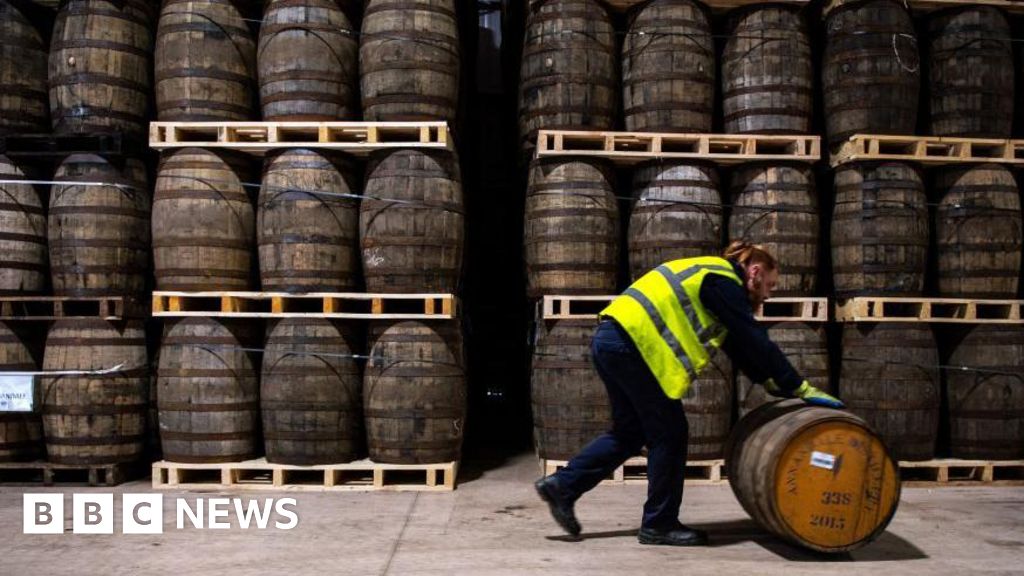
Whisky industry faces a bleak mid-winter as tariffs bite and exports stall
Douglas FraserScotland business and economy editor
 AFP via Getty Images
Scotch whisky is facing a sharp downturn in production as it adapts to tough market conditions around the world.
Tariffs for export to the USA, introduced under the Trump administration and adding 10% to importers’ costs, have hit sales in the industry’s biggest export market.
American tariffs on single malts, which were suspended four years ago, are on course to return next spring with a further 25% charge, unless a deal can be done with the Trump administration.
Single malts, which sell at premium prices, are a particularly important part of exports to the US.
However, the downturn is not only in the American market.
There is also weakening demand in other markets due to squeezed growth and consumer spending, increased tax and costs, including packaging regulation, and because of trade disruption.
Shipments to China last year fell by 31%, moving it from THE fifth biggest market to the tenth biggest. The first half of this year shows a 1% increase in the value of Scotch exports, to £2.5bn, while volumes were down nearly 4%.
And the negative effects of US tariffs may not become clear for some months, as distillers moved swiftly to build up stocks in the country ahead of the frontier tax being introduced.
 Getty Images
The full impact of Donald Trump’s tariffs is not yet clear as stocks were built up in the US before they took effect. One of the brightest prospects for distillers is the sharp tariff reductions in India, the world’s biggest whisky market which last year replaced France as the biggest importer of Scotch by volume.
Currently at 150% of the value of each bottle, the trade deal between the London and Delhi governments includes a staged reduction to 40% tariffs.
But with ratification in both countries expected to take time, that is seen as too far off to avoid the slump being felt in the shorter term.
Companies that supply the industry are also feeling the pressure.
Distillers’ demand for malted barley has slumped. Expectations for next year are of a cut from the range of 900,000 to 1 million tonnes to the lower range of 600 to 700,000 tonnes.
Grain farmers are finding it hard to secure contracts for their barley harvests next year. Many are planting other crops such as wheat and rapeseed, or plan to do so.
According to Jack Stevenson, chair of the crop committee of the National Farmers Union in Scotland, who runs Brangan farm between Portsoy and Banff: “A lot of the merchants are struggling to find contracts. The end users are cutting them back hugely.
“It’s the same story the length and breadth of Scotland. We’re trying to keep the dialogue open with the Scotch whisky industry, and it’ll come back. It’s a huge market for Scotland.”
But for now he says: “There’s doom and gloom in the cereals sector. And costs have been getting out of control on the machinery side of things.”
 Getty Images
The downturn affects not just distillers but their suppliers including farmers who grow barley He says the break-even point for barley is more than £200 per tonne, and around half of it is sold in contracts for future delivery. But the spot price, without a future contract, fell during September to £160 per tonne.
According to data compiled by market intelligence agency AHDB, use of barley for distilling and brewing during July to October was down 14% on last year.
One farmers’ co-operative in Aberdeenshire is facing a halving of its 70,000 tonne barley contract this year with Chivas Brothers, one of the largest whisky distillers, owned by French drinks giant Pernod Ricard.
A maltings plant, supplying distilleries with processed barley, is being permanently closed at Pencaitland in East Lothian, with the loss of around 20 jobs.
Julian South, executive director of the Maltsters’ Association of Great Britain (MAGB), says that is partly because the sector has grown its processing capacity elsewhere in recent years, with plans for more expansion.
“Whisky has its ups and downs, while brewing is more consistent,” he says. “Some people are quite surprised how quickly demand dropped off. Maltsters are having to look at their own production and contracts for barley in the coming season.”
A key signal to farmers is the industry’s forecast of its demand for all malted barley, including around 40% of it used for brewing beer. The MAGB estimated demand next year is down from 1.8m tonnes to 1.4m.

Some firms are forecasting reduced demand and are adjusting production Diageo, the biggest producer of Scotch whisky, has halted work at one of its main maltings, at Roseisle in Moray, until at least next June.
A Diageo spokesperson said: “We have temporarily paused production at Roseisle Maltings as we look to balance capacity against current demand. We continue to assess production volumes and will communicate future plans as part of the normal planning cycle.”
The firm has reduced production in some distilleries and has paused distilling at Teaninich, near Alness in Easter Ross.
Glenmorangie, at Tain in Easter Ross, is among distilleries where production has been halted for several months. Along with Ardbeg, it is a subsidiary of French luxury goods firm LVMH.
A spokeswoman says this is a “short term adjustment” to production based on forecast demand for Glenmorangie: “
There was a temporary pause in distillation early in the summer and another pause over the winter, with production scheduled to resume in spring 2026.
This is part of the strategy to grow the value of the brand, she said.
That reflects the risk that over-production could force down prices, and not only the profit margins but the premium status built up over years.

Man distilleries combine production with some kind of visitor experience that offers staff alternative roles In most cases, the small number of people required to run a distillery are being redeployed, and visitor centres remain open, though there are knock-on effects for hauliers and other suppliers.
The large US distilling firm that owns the smaller Glenglassaugh and Benriach distilleries in north-east Scotland has been operating only one of them since the start of this year, shutting down Glenglassaugh until autumn. As it started up again, Benriach was closed for two years.
Brown-Forman, based in Kentucky and owner of Jack Daniels whiskey, also operates the Glendronach distillery near Huntly, and says it has slowed production there, “based on demand planning”.
That is despite its output of single malt having to wait at least 12 years before it is bottled and available for sale. The whole industry has to forecast where demand will be at least three years from now – the minimum length of time for Scotch whisky to mature in casks.
Bourbon barrels
A recent update for investors from Brown-Forman warned about global markets: “We continue to anticipate the operating environment to be challenging, with low visibility due to macroeconomic and geopolitical volatility as we face headwinds from consumer uncertainty and lower non-branded sales of used barrels”.
The main customer for used bourbon barrels is the Scotch industry, which has been importing around £200m-worth each year.
The downturn suggests the forecast is for a prolonged downturn in demand, though it may also be due to warehousing, or whisky bonds, being full from high production levels in recent years.
There is criticism in the industry at slow planning decisions holding back investment in extra capacity.
Brown-Forman’s global brand director for malts, Adip Agarwal, emphasised that slowing production, and the two-year closure of Benriach, does not alter availability of its Scotch produce.
“This strategic decision aligns our production with the current market, allowing us to manage our resources effectively and optimise operations,” he said.
No cheer from the Autumn Budget
There have been signs of the downturn in pricing of whisky. The super-premium whiskies, which can typically be found in airport shops, have been coming down in price, and there is increased supermarket discounting of premium single malts.
Some distillers declined to comment on the downturn, referring inquiries to their trade body, the Scotch Whisky Association (SWA).
A spokeswoman there said: “There is no doubt that the industry is facing significant challenges both at home and on the world stage, including the 10% tariff in our biggest export market and a fall in global consumer demand.”
The industry has been critical of the UK Treasury’s duty on alcohol, which covers around 7% of Scotch output that is sold in the UK, as well as other spirits including vodka, gin and rum.
SWA chief executive Mark Kent said another rise in duty announced in the Westminster Budget last month puts “huge additional pressure on a sector suffering job losses, stalled investment and business closures”.
He added: “Put simply, the government cannot expect the Scotch whisky sector to just keep delivering growth, both at home and on the world stage, if the conditions which support growth are not nurtured”.
The SWA has been under pressure from farmers to develop more reliable and steady contracts for barley.
The spokeswoman commented: “The stability of the Scotch Whisky supply chain is of vital importance to our sector, and challenges that impact us will of course impact everyone from the farmers who grow our cereals, through to the hospitality venues who serve our products.
“Rising costs will impact Scotch Whisky producers’ margins, their long term planning and in some cases the viability of their businesses, and we are seeing the reverberating effects of that across our supply chain.”
She added: “We remain in regular communication with our colleagues in the farming sector to address our industries’ shared challenges and boost the resilience of the Scotch Whisky supply chain from grain to glass.”
Continue Reading
-

Opening up Victoria’s Otway basin to offshore gas exploration an ‘environmental betrayal’, Greens say | Energy
The Greens and environmental groups have condemned the federal government’s move to encourage more offshore gas exploration, describing it as an “environmental betrayal” that undermines Labor’s climate agenda.
The minister for resources, Madeleine King, this week announced five new areas in the Otway basin, stretching from waters off the south-west coast of Victoria to the ocean west of Tasmania, would be opened up for gas exploration as part of the government’s future gas strategy.
As cabinet deliberates over a major intervention into the east coast gas market, including a gas reservation, King said unlocking new supplies would help contain gas prices and avert potential shortfalls forecast for the end of the decade.
Sign up: AU Breaking News email
“Exploration and new discoveries will play an important role in underpinning our energy needs and support Australian industry and households as we meet our net zero commitments,” King said in a statement.
The announcement comes just days after the Victorian government opened tenders for gas exploration in the Otway and Gippsland basins.
The Australian Greens and the Wilderness Society have sharply criticised the federal government’s move, warning the search for new gas supplies would worsen the climate crisis and endanger marine wildlife.
“Labor’s new ocean acreage handout is an environmental betrayal and an early Christmas gift to the fossil fuel companies driving the climate crisis,” the Greens’ resources spokesperson, Steph Hodgins-May, said.
The party’s oceans spokesperson, Peter Whish-Wilson, questioned how opening new gas fields squared with the transition to clean energy.
“Labor’s two-faced climate act is wearing thin,” he said.
The Wilderness Society’s fossil fuel industry campaigner, Fern Cadman, said the waters earmarked in the latest acreage release were “wholly unsuitable” for gas exploration.
“It’s deeply disturbing that while parts of our country are on fire, fuelled by climate heating and burning of fossil fuels, the Albanese government is mindlessly paving the way for new gas drilling. Australia is meant to be on a path transitioning away from fossil fuels, not opening the door to brand new gas,” Cadman said.
King said the five new areas – all in commonwealth waters – had buffer zones to protect marine park boundaries.
Public consultation on the five zones is open until 6 February, with applications for exploration permits closing on 30 June.
The announcement comes as the Albanese government prepares to release the findings of a six-month review of the east coast gas market, which is widely expected to recommend establishing a new scheme to force producers to reserve supplies for domestic use.
Cabinet ministers are also reportedly considering bulk-buying gas and selling it to businesses at discounted rates to prevent the closure of struggling manufacturers.
Ahead of the review’s release, a coalition of environmentalists, inequality advocates and clean energy groups issued a statement opposing new taxpayer subsidises for gas companies, which they said have been “allowed to plunder Australia’s public resources without accountability for too long”.
The nine organisations backed a 25% tax on gas exports, an Australian Council of Trade Unions’ policy that has been championed by the Greens.
“Australia’s focus on gas exports has tripled domestic gas and electricity prices driving up inflation and household bills,” said Australian Council of Social Service climate and energy program director Kellie Caught, whose organisation was among the nine groups.
“The government must implement gas export market controls and avoid options that effectively subsidise gas companies or incentivise new polluting gas production. It’s time for this government to prioritise people over rich gas companies.”
Continue Reading
-
Implications of New White House Executive Order on Proxy Advisory Firms – Dentons
- Implications of New White House Executive Order on Proxy Advisory Firms Dentons
- Trump gives Elon Musk a win over a longtime foe CNN
- President Trump’s Proxy Firm Executive Order Will Protect Manufacturers and Main Street Investors National Association of Manufacturers – NAM
- GC Cheat Sheet: The Hottest Corporate News Of The Week Law360
- White House’s Executive Order on Proxy Advisors: 7 Things to Know Now JD Supra
Continue Reading
