Ms B carries on a business through her company, C Ltd. In each of the 2012–2017 tax years she provides management services to C Ltd and, in return, C Ltd pays her a salary of between $150,000 and $200,000.
In the 2018 tax year, C Ltd’s revenue reduces due to adverse market conditions. C Ltd also requires funds to meet capital expenditure. Ms B decides to forego her salary so C Ltd can pay for the capital expenditure and meet its ongoing operating costs.
By the start of the 2020 tax year, market conditions have improved, and C Ltd has met its capital expenditure needs and is trading near the levels it was trading at before the 2018 tax year. Despite this, C Ltd does not resume paying Ms B a salary. This creates a shortfall in the funds Ms B needs to meet her private expenditure. Ms B funds the shortfall using periodic borrowings obtained from C Ltd, and C Ltd funds the borrowings out of retained earnings. The borrowings are repayable on demand and interest is charged at the fringe benefit tax rate. All interest is capitalised at year end. The advances are recorded in a loan account Ms B maintains with C Ltd. At the end of the 2025 tax year, the account balance is $950,000.
The Commissioner considers s BG 1 of the ITA 2007 applies to the loan advances in the 2020–2025 tax years and proposes to treat the advances as income under s GA 1 of the ITA 2007. Ms B disputes this. In support of her position, she contends:
the amounts she received cannot be taxed as income because they are loan advances
the terms on which the advances were made are not objectionable because they are typical of the terms used in related-party transactions
her initial decision to stop being paid a salary had a commercial purpose of leaving funds in C Ltd to be used for business purposes
a person is entitled to live off capital, and under the loan she received advances of capital that she intends to repay.
Inland Revenue has released its final interpretation statement ‘Income tax and GST – industries other than forestry registered in Emissions Trading Scheme’ (IS 25/24). This statement applies to industries participating in the Emissions Trading Scheme (ETS) (excluding forestry, which is subject to separate tax treatment) and encompasses emissions-intensive and trade-exposed sectors, as well as those engaged in removal activities and certain horticultural operations.
The interpretation statement addresses the intricacies of ETS-related rules for non-forestry industries and should be carefully reviewed by affected parties.
In summary, the interpretation statement outlines that businesses may claim deductions for emissions liabilities incurred, calculated according to the number of New Zealand emission units (NZUs) required to be surrendered based on production levels and on an accrual accounting basis.
NZUs can be obtained through purchase in the open market or, in some cases, received as “free NZUs” as an annual government subsidy. The statement clarifies that NZUs are considered revenue account property, with specific valuation requirements upon acquisition and at balance date. Additional complexity arises when businesses are allocated free NZUs; rather than reducing the emissions liability deduction due to receipt of free NZUs, the market value of these units at balance date generates income that offsets the emissions liability deduction.
Challenges may also occur if there is a shortfall or excess in the number of free NZUs provided or when a business’s balance date does not correspond with the emissions year’s calendar period.
The statement highlights the complexity in accurately monitoring and documenting all purchased and free NZUs held, including their valuation and method of disposal (whether sold or surrendered) from a tax perspective, noting this may differ from NZU register records. As part of robust tax governance, it is essential for impacted taxpayers to monitor compliance and assess their tax positions annually to ensure that they are following the guidance outlined in the interpretation statement.
Many submitters on the exposure draft of the interpretation statement highlighted the significant complexity inherent in the current ETS regime for non-forestry industries. Submitters have advocated for legislative reforms aimed at simplifying the regime’s application and reducing administrative burdens for affected taxpayers.
Among the changes proposed by submitters are measures to remove the taxation of stockpiled free NZUs that have not been surrendered (or sold) to offset an emissions liability in an income year. Additionally, there are calls to allow taxpayers to calculate emissions liabilities and allocation of NZUs based on the emissions year that ends within their income year (much like inclusion of income from limited partnerships and CFCs), which would facilitate easier tracking and reconciliation of NZUs and associated tax obligations.
It is understood that these submissions have been forwarded to the Inland Revenue Tax Policy team for consideration. We will continue to monitor developments and keep readers informed regarding any future changes that may arise from this ongoing review process.
Please reach out to your usual Deloitte advisor if you have any queries on the ETS regime.
Back in 1993, the internet was something you dialled into (if you’d even heard of it), the cloud referred to actual clouds, and software came on floppy disks. Needless to say, a lot has changed since then.
Yet surprisingly, New Zealand’s tax laws and guidance for software still carry traces of that bygone era. Recognising the need for change, Inland Revenue has launched consultation on the income tax treatment of software development expenditure and the costs of configuring and customising Software-as-a-Service (SaaS).
What’s on the table?
At this stage… not much in terms of proposals. The consultation isn’t advancing specific policy options yet. Instead, it seeks to identify the challenges businesses face when determining the tax treatment of software-related expenditure and clarify which costs should be immediately deductible and which should be capitalised and depreciated. Detailed policy proposals are expected in a later round of consultation.
That said, the paper does hint at Inland Revenue’s thinking on software development and SaaS customisation costs. Here’s what you need to know.
Software development expenditure
The paper first looks at expenditure on software developed for sale or licensing, asking whether current approaches provide an appropriate basis for deductibility or depreciation. It outlines three main approaches currently in use:
1. Trading stock approach
In 1993, Inland Revenue’s position was that software development costs should be immediately deductible as the cost of producing trading stock. This made sense when software was sold on disks or CDs. Today, with software typically licensed or delivered as a service, Inland Revenue considers this approach outdated except where there is a full copyright assignment as part of an outright sale.
2. Depreciation approach
These days, software is typically distributed under non-exclusive licences or as a service, rather than sold outright, meaning it no longer qualifies as trading stock. Recognising this, Inland Revenue issued an issues paper in 2016 stating that software development expenditure should generally be capitalised as depreciable intangible property, with depreciation deductions applying when the software is available for use.
Under this approach:
The applicable depreciation rates are 50% (diminishing value) or 40% (straight line).
Upgrades can be capitalised and depreciated.
Abandoned projects may qualify for a deduction under section DB 40B of the Income Tax Act 2007.
Timing depends on asset recognition and whether the R&D rules apply.
Notably, this 2016 view was never finalised as Inland Revenue and tax administrations around the world continued to grapple with tax implications of software. However, most taxpayers would be using the depreciation approach (or the R&D approach described below), which often leads to questions of what expenditure, how much expenditure, and when expenditure should be capitalised. These questions are particularly relevant when considering the iterative nature of software development, especially in relation to maintenance and upgrades, and whether there is actually an upgrade or an improvement to the software.
3. R&D approach
Under section DB 34 of the Income Tax Act 2007, expenditure meeting the IFRS accounting definition of research or development (see NZ IAS 38 ‘Intangible Assets’) can be fully deducted in the year incurred or carried forward until an intangible asset must be recognised. Depreciation then applies to any remaining capital expenditure not covered by this section.
The paper acknowledges that applying section DB 34 can be challenging in practice. From our experience section DB 34 can provide businesses with a lot of clarity and reduce their compliance costs, however it is important to consider all the requirements for applying NZ IAS 38 and make sure that appropriate processes are put into place to be certain the appropriate position is taken.
The consultation paper also highlights that section DB 34 can result in asymmetric results. That is, expenditure can be deducted under section DB 34 but gains from the sale of assets created from the R&D may be non-taxable capital gains. Inland Revenue suggest a more symmetrical approach is justified, indicating this is likely something Inland Revenue will look at in more detail in the next round of consultation.
Inland Revenue’s view
Inland Revenue concludes that the current approaches to determining deductibility are broadly acceptable. However, they are seeking feedback on whether the unique nature of software development creates incorrect outcomes and whether alternative methods are warranted.
Software-as-a-Service (SaaS)
The second half of the consultation paper addresses configuration and customisation costs incurred by taxpayers licensed to use a SaaS application owned by a third party. In these arrangements, the SaaS provider hosts the software on its own cloud infrastructure and grants customers the right to use it. Business customers often require changes to the standard application of this software, which fall into two categories:
Configuration: Adjusting settings within existing code.
Customisation: Modifying or adding code to create new functionality.
For accounting purposes, the key question is whether any configuration or customisation creates an intangible asset. If no intangible asset is recognised (because the customer doesn’t control the software or no new resource separate from the software and controlled by the customer is created), costs are generally expensed.
For tax purposes, Inland Revenue’s 2023 interpretation guideline (covered in a previous Tax Alert) clarified that SaaS configuration and customisation costs may, depending on circumstances, be deductible as development expenditure or treated as relating to depreciable intangible property. But issues have emerged.
Under current law, deductions are allowed only if they meet section DA 1 (the general permission) and aren’t denied by the capital limitation in section DA 2(1). Inland Revenue considers the general permission to be met, but the capital limitation likely to apply, with the result being that the costs must be capitalised. Depending on the terms of the SaaS arrangement, a taxpayer may then be able to depreciate the right to use software under either the depreciable intangible property or fixed life intangible property rules.
Alternatively, even if the capital limitation does apply, section DB 34 could override this limitation if the costs qualify as “research” or “development” under NZ IAS 38, allowing the costs to be immediately expensed. The guidelines conclude that SaaS C&C costs are unlikely to be research but could be development; but would only fall under section DB 34 where the development work is undertaken in-house (i.e. not by a third party such as the SaaS provider).
From here, the consultation paper concludes that allowing SaaS C&C costs to be deductible under section DB 34 is not “tenable” from a policy perspective, though gives no reasoning other than the compliance burden. Instead, the paper suggests the best approach is for taxpayers to capitalise and depreciate all SaaS C&C costs—though officials are open to feedback on other approaches that may minimise compliance costs.
Deloitte’s view
Deloitte disagrees with Inland Revenue’s conclusion that allowing SaaS C&C costs to be deductible is untenable. Aligning the tax treatment with the IFRS treatment would be simpler, as SaaS costs expensed for accounting purposes are often hard to identify and capitalise for tax. Divergence between accounting and tax treatment creates unnecessary compliance costs for what is a minor timing difference (depreciation over roughly two and a half years given high depreciation rates for software). A separate rule / de minimis rule for those taxpayers who do not follow IFRS would also help.
Next steps
Submissions on the consultation close on 30 January 2026.
If you have questions about software or SaaS tax treatment, or if you would like to make a submission, please contact your usual Deloitte advisor.
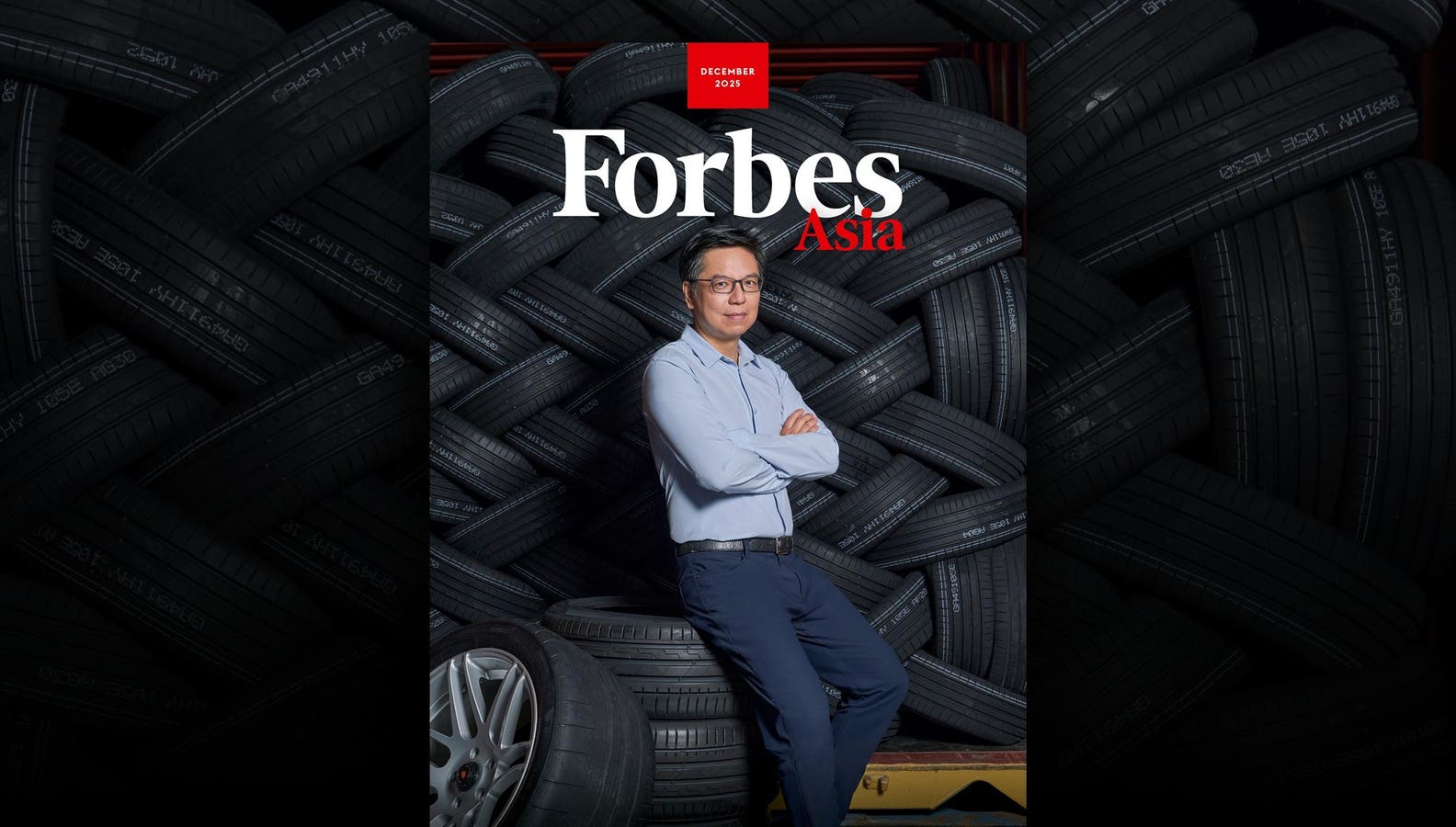
As an eventful 2025draws to a close, it’s worth reflecting on its biggest moments. Few pundits could have predicted that this year would bring us a new spectator sport: trade policy. The muscular tariff regime of Trump 2.0 unleashed turmoil that governments and businesses around the world scrambled to address. Some were better prepared than others, such as the protagonist of our cover story, former medical doctor Enki Tan, now executive chairman of Singapore-headquartered Giti Tire, a tiremaker with Indonesian roots.
Tan’s global ambitions for Giti (pronounced “GT”) spurred him to invest $560 million in building a U.S. factory in 2017 to be closer to the company’s American customers. In another prescient move, Tan went all out to sharpen Giti’s technological edge in a growing segment of the market: tires for electric vehicles. In September, Chinese EV giant BYD’s new electric hypercar, sporting Giti’s wheels, notched a speed record of nearly 500 kilometers per hour to become the world’s fastest production car. As Tan disclosed to our contributing editor Ardian Wibisono, tires these days are loaded with much more than meets the eye: “I have people telling me, ‘Hey, they’re very easy to make. You just pour the rubber inside the mold and then the tire comes out.’ It’s not so easy.”
Indeed, it wasn’t an easy year either for the tycoons on the accompanying list of Indonesia’s 50 Richest as a spell of civil unrest marked by street protests made investors skittish. Despite the uncertainty, the benchmark stock index was up by double-digits, resulting in the combined wealth of the country’s richest, ably compiled by our wealth team, crossing $300 billion.
Halter founder and CEO Craig Piggott
Adam Bove
Scaling up to the billion-dollar valuation mark is an uncommon feat for companies in New Zealand. One among a handful of Kiwi unicorns is agritech firm Halter, profiled by our reporter Catherine Wang. Halter’s founder and CEO Craig Piggott, who grew up on his parents’ dairy farm in Matamata, a town immortalized as a filming location of Lord of the Rings, created a solar-powered smart collar for cows to help farmers manage their herds through virtual fencing technology. An alum of our 30 Under 30 Asia list of young achievers (class of 2021), Piggott is looking further afield to the U.S. as Halter’s next growth market.
Forbes Asia’s 2025 Heroes Of Philanthropy
Illustrations by Marco Lawrence for Forbes Asia
In a month that marks the season of giving, we present a selection of Asia-Pacific’s notable givers in our annual Heroes of Philanthropy list. This unranked group, curated by a team led by editorial director Rana Wehbe Watson, spotlights wealthy individuals and families backing worthy causes, such as supporting young women studying science, technology, engineering and mathematics.
To round up the philanthropy theme is a stateside story about billionaire couple Cari Tuna, a former journalist, and her husband, Facebook cofounder Dustin Moskovitz, who are giving away the bulk of their multibillion-dollar fortune as fast as they can. Their charity, Coefficient Giving, backs a range of causes, such as AI safety research.
As the year turns, a heads-up about what we should brace for: Speed of Change, the theme of our Forbes Global CEO Conference to be held in Singapore in the fourth quarter of 2026. As always comments welcome at executiveeditor@forbesasia.com.
Online retailer Coupang is known as South Korea’s Amazon and built its reputation on its overnight “rocket delivery” service, but it has been a lot slower to respond to a hack that leaked the personal information of nearly two-thirds of the country’s population.
Coupang said South Korea’s worst-ever data breach began through its overseas servers in June, but it only became aware of it in November. The company’s chief executive resigned this week, but Bom Kim, its Korean-American founder and chair, has yet to offer any personal apology.
The hack compromised personal information including names and phone numbers, as well as email and shipping addresses, of more than 33mn active and former users, according to police.
President Lee Jae Myung has called the case a wake-up call for stronger cyber security, calling it “astonishing” that Coupang, South Korea’s largest online retailer by market share, did not detect the breach for five months.
“The wrong practice of not giving necessary care for protecting personal data, which is a key asset in the age of artificial intelligence and digitisation, must be completely changed,” Lee said last week.
Coupang, which boasts 25mn active users and offers services ranging from food delivery to streaming, said it had yet to establish full details of the cause and scope of the hack.
But former chief executive Park Dae-jun told a parliamentary hearing a week before his resignation that a former software developer was behind the attack.
Park said the alleged perpetrator was a Chinese national involved in authentication tasks at Coupang before his contract ended last December and he was believed to have returned to China.
Coupang’s chief information security officer, Brett Matthes, testified that the alleged perpetrator had a “privileged role” in the company that would have given him access to a private encryption key, which allowed him to generate a forged token to impersonate a customer.
Choi Min-hee, a member of South Korea’s National Assembly, said in a statement that the former employee used the key, which was still active even after he left the company, to access customer information, citing information she had received from Coupang.
Coupang has said its users’ login credentials, credit card numbers and payment details were not affected by the hack, but officials and legislators have warned that citizens could be vulnerable to targeted phishing attacks using the leaked information. “It is like the keys of almost everyone’s homes in Korea are stolen,” said National Assembly member Choi Hyung-du.
The company said in a statement to the Financial Times that after learning of the breach on November 18 it immediately reported it to authorities, blocked the unauthorised access route and strengthened internal monitoring. It said it would “significantly enhance our information security to prevent recurrences and will do everything we can do to recover trust”.
But legislators have lambasted Coupang for what they say is a lack of caution and a slow response. They are demanding that founder and chair Kim come forward and apologise himself. He has been summoned to a second parliamentary hearing next week.
Lee Hoon-ki, a lawmaker at last week’s hearing, suggested Coupang had been “negligent” about security issues as it rapidly expanded. Founded in 2010 as a website offering deals to group buyers, the company has seen its revenues soar more than 30-fold in the past decade to $30.2bn last year. It received a $3bn investment from SoftBank in 2015 and listed in New York in 2021 after the Covid-19 pandemic fuelled growth further.
Cyber security experts said Coupang was far from alone, with several high-profile cases contributing to what they expected to be South Korea’s worst year for large-scale data breaches.
SK Telecom, the country’s largest mobile carrier, was fined $97mn this year over the leak of information on 25mn customers. Telecoms rival KT and credit card provider Lotte Card also reported data breaches.
Upbit, the country’s dominant cryptocurrency exchange, suffered a hack last month that led to the unauthorised withdrawal of Won44.5bn ($30mn) in cryptocurrency.
Lee Chan-jin, governor of the Financial Supervisory Service, said South Korean companies’ investment in cyber security remained “awfully inadequate” compared with countries such as the US.
Simon Choi, chief technology officer of cyber security start-up StealthMole Intelligence, said businesses should see paying for data protection as insurance.
“If you talk to bosses of big companies, they often say there are too many offline issues to take care of, so cyber security often takes a back seat,” he said. “They scramble to invest more belatedly when major incidents happen, but prevention is more important.”
Kang Hoon-sik, the president’s chief of staff, said in a meeting with senior administration officials that the major data leaks in recent years showed “structural loopholes” in South Korea’s personal information protection and the Coupang case was an opportunity to improve the country’s punitive damages system.
Lawmakers have called for Coupang, which reported Won41tn in sales last year, to pay Won1.2tn in penalties under a law that allows companies that fail to implement adequate data protection measures to be fined up to 3 per cent of their revenue.
The country’s Personal Information Protection Act also allows punitive damages of up to five times actual harm if personal data is leaked due to wilful misconduct or gross negligence.
But the clause, introduced in 2015 after leaks involving credit card companies, and the 3 per cent rule have rarely been enforced.
“US companies have to pay huge damages if they lose class action lawsuits over data breaches,” said Wi Jong-hyun, business professor at Chung-Ang University in Seoul. “But Korean companies are not afraid of this because penalties are weak and there are few cases of collective legal action.”
Market tracker IGAWorks said the data leak had caused Coupang’s daily active users to fall by about 2mn to 16mn. JPMorgan analysts said in a note that customer departures were likely to be “limited”, citing the company’s “unrivalled market positioning and Korean customers being seemingly less sensitive to data breach issues” than consumers elsewhere.
Coupang controlled 22.7 per cent of the local e-commerce market last year, followed by Naver with 20.7 per cent, according to the Ministry of Data and Statistics.
But Chung Da-hye, a 45-year-old office worker in Seoul, said she recently quit Coupang’s paid membership to express her anger over the incident.
“I love Coupang’s dawn delivery of fresh produce, but it is so disappointing to see the company’s response to the data breach,” she said. “They are making all their money here in Korea, but Bom Kim doesn’t show up to apologise. No one is taking responsibility.”
Indonesia has the raw ingredients to play a major role in the global battery transition: vast nickel reserves, growing refining capacity and strong investor interest.
Our latest analysis shows that natural endowments are a necessary condition for long-term leadership in the sector, but alone are not sufficient.
The country’s trajectory will depend on choices about technology pathways, industrial strategy and how sustainability is embedded going forward.
What is the current state of Indonesia’s battery industry?
Indonesia has successfully downstreamed nickel and the nation now accounts for a large share of the global nickel supply.
But its domestic battery ecosystem is focused primarily on electric vehicle usage, and its development is patchy.
Indonesia’s domestic battery ecosystem is mainly focused on electric vehicles. (Unsplash: chuttersnap)
Upstream mining and some refining are robust, while midstream battery cell and pack manufacturing remain limited and geographically dispersed.
Without scaling midstream capacity, Indonesia risks being pigeonholed as a supplier of feedstock rather than a maker of finished battery systems.
If Indonesia leads in nickel supply, won’t it lead in battery supply too?
Battery technology is evolving, and global battery supply is not just about nickel.
While lithium-nickel-manganese-cobalt chemistries (NMC) deliver high energy density and favour certain vehicle types, lithium-iron-phosphate (LFP) batteries are cheaper, simpler and increasingly competitive in many Asian markets.
LFP does not rely on nickel and Indonesia does not have domestic lithium – meaning chemistry choices strongly influence trade relationships and the feasibility of an entirely domestic industry.
Nickel may be the starting point, but it does not need to be the destination.
Our analysis has identified these gaps and demonstrates how current policy levers – including protectionist rules, investment incentives and local content requirements – have steered investment but not consistently established a comprehensive, sustainable battery value chain.
What risks can Indonesia prioritise to meet its battery goals?
Environmental and social risks are central to Indonesia’s battery ambitions.
Mining and refining operations have already drawn scrutiny for their impacts on water quality, air pollution and community wellbeing.
As global buyers – from EV manufacturers to clean-energy developers – raise expectations around ethical sourcing, these issues increasingly shape market access and long-term competitiveness.
The carbon intensity of battery production is also heavily influenced by the electricity used in processing and manufacturing.
Facilities reliant on coal-fired power – especially those in industrial parks with captive plants – face higher lifecycle emissions, making their products less attractive in markets that implement carbon-based trade rules or low-emission procurement standards.
How can Indonesia avoid these risks?
Remaining competitive requires pairing growth with credibility.
Robust safeguards, transparent supply chains and emerging tools such as battery passports and verifiable recycling standards are essential.
These methods of demonstrating credibility show responsible practices from mine to finished product, protecting communities and meeting the demands of increasingly scrutiny-driven global markets.
So what can policymakers and industry do?
Climateworks, in partnership with the Purnomo Yusgiantoro Center (PYC), has brought together stakeholders and undertaken analysis to explore these options.
The results of this consultation suggests practical levers:
Publish a national battery roadmap that aligns industrial, energy and environmental planning.
Tie fiscal incentives to technology transfer, research and development collaboration, and clean-energy use.
Invest in midstream capacity and workforce development.
Seed a domestic recycling sector to recover critical materials and reduce long-term reliance on unprocessed ores.
The study’s final stakeholder consultation session with governments and industries was held on 8 December 2025 at the headquarters of Indonesia’s Chambers of Commerce and Industry. (Climateworks Centre)
Indonesia’s battery future is not preordained.
The nation can still avoid a narrow, nickel-centric outcome that leaves downstream value and decarbonisation opportunities elsewhere.
With thoughtful policy design – from conditional incentives to stronger sustainability rules – Indonesia can capture more value, create resilient jobs, and reduce environmental harm.
Climateworks and PYC are working together to develop a roadmap for critical mineral processing for the low-carbon battery industry between Indonesia and Australia, laying the foundation for future investments and collaborative efforts to meet the rising demand for clean energy technologies.
The U.S. seizure of an oil tanker off the Venezuelan coast looks designed to further squeeze the economy of President Nicolás Maduro’s country.
The Dec. 10, 2025, operation – in which American forces descended from helicopters onto the vessel – follows months of U.S. military buildup in the Caribbean and was immediately condemned by the Venezuelan government as “barefaced robbery and an act of international piracy.”
But what exactly is the Trump administraion’s aim in going after the tanker, and how could this impact the already beleaguered economy of Venezuela? The Conversation U.S. turned to Rice University’s Francisco J. Monaldi, an expert on Latin American energy policy, for answers.
What do we know about the tanker that was seized?
The seized tanker, which according to reports is a 20-year-old vessel called the Skipper, is a supertanker that can carry around 2 million barrels of oil.
According to the Trump administration, the vessel was heading to Cuba. But because of the size of the ship, I strongly suspect that the final destination was likely China – tankers the size of the seized one don’t tend to be used to take oil across the Caribbean to Cuba. The ones used for that task are far smaller.
This particular tanker was sanctioned by the U.S. Treasury in 2022 due to it carrying prohibited Iranian oil. At the time, it was claimed that the ship – then called Adisa – was controlled by Russian oil magnate Viktor Artemov and was engaged in an oil smuggling network.
Attorney General Pam Bondi released a video of the seizure on X.
So the latest U.S. seizure was, on the surface, unrelated to the sanctions placed on Venezuela by U.S. authorities in 2019 and expanded in 2020 to include secondary sanctions – that is, on countries that do business on the targeted nation or company.
As such, Venezuelan officials have said this is unprecedented. And they are largely right. While there have been a few occasions in which Iranian tankers have been seized due to sanctions busting, this is the first time that there has been a seizure of a vessel departing Venezuela and with a Venezuelan crew.
The Trump administration has signaled that it is not only seizing the cargo but the ship itself – which would represent a significant loss for the company owning the ship. The loss will be borne by the company, not Venezuela, as it was under a “Free on Board” contract, meaning that as soon as it left Venezuela the buyer takes responsibility for it.
Nonetheless, this is a significant escalation of the pressure campaign on Venezuela, which looks set to continue. Reuters has reported that around 30 other tankers near Venezuela have some kind of sanction against them. They form part of a large shadow fleet that try to skirt sanctions through hiding their identity while transporting oil from Russia, Venezuela and Iran.
The signal from U.S. officials is that they are prepared to go after more vessels and further squeeze Venezuela’s oil revenues through fresh sanctions.
How often they will seize vessels is not known, but the clear threat from the White House is that the U.S. will continue with this seizure campaign.
How important are oil exports to Venezuela?
Venezuela’s economy is tremendously dependent on oil production.
We do not have exact figures, as the Venezuela government has not published them in seven years, but most analysts believe oil constitutes north of 80% of all of the country’s exports – some even put this figure above 90%.
Most of that oil goes to the black market, and a majority ends up with independent refiners in China. State-owned enterprises in China tend not to buy this oil because they do not want to fall foul of the sanctions regime. But Beijing tends to turn a blind eye to tankers heading to non-state entities, especially if those tankers have hidden their true identity so it doesn’t look like they are coming from Venezuela.
Oil production makes up a large chunk of Venezuela’s economy. Federico Parra/AFP via Getty Images
Around 80% of Venezuelan oil goes to China in this way; around 17% goes to the U.S. through a license awarded by the U.S. Treasury to oil giant Chevron. And 3% goes to Cuba, which tends to be subsidized by the Venezuelan government.
Venezuela’s economy itself is also very dependent on oil, with the sector making up about 20% of total GDP, more than any other industry. And when it comes to government income, the oil sector makes up north of 50%.
How have US actions affected Venezuelan oil production?
It is important to know that even before U.S. sanctions began in 2019, Venezuela’s oil production was in severe decline.
In 1998, before Hugo Chávez, the leftist military officer who became a populist president, came to power, oil production peaked at around 3.4 million barrels a day. By the time Chávez died and Maduro succeeded him in 2013, it had fallen to 2.7 million barrels a day.
When U.S. sanctions targeting the state-owned oil company, Petróleos de Venezuela, were enacted in 2019, production was down to 1.3 million barrels a day – but that had already been affected by the other financial sanctions that came in two years earlier.
The oil sanctions of 2019 closed the U.S. market, taking away half a million barrels a day that at the time headed from Venezuela to the U.S. As a result, Venezuela had to increase oil sales to India and China.
But then the 2020 secondary sanctions, which apply to countries doing business with Venezuela, came in. As a result, Europe and India stopped buying Venezuelan oil, meaning that its only markets were Cuba and China. Of course, that year also saw the onset of the COVID-19 pandemic, which resulted in a massive cooling of the oil market globally.
Venezuelan oil production collapsed to 400,000 barrels a day that year. Today it has recovered to around 1 million barrels a day. This has been helped by the U.S. allowing Chevron – which, after Petróleos de Venezuela, is the second-largest oil company operating in the country – to continue production.
How does Venezuela get around oil sanctions?
Venezuela relies on a shadow fleet to help it skirt U.S. sanctions. These vessels hide their identity by using false flags and false names.
Companies often take a tanker that is going to be retired and change the identity, put on a new coat of paint and make sure transponders – devices that transmit radio signals to give a map reading – are doctored so that it looks like the ship is in a different place altogether.
These ships arrive in Venezuela, pick up oil and then set sail. Sometimes they then transfer the cargo to another ship – which carries huge environmental risks. And then it arrives typically in Malaysia, where it takes on a Malaysian identity and on it goes to China.
What impact has this latest seizure had on the price of oil?
The seizure had little impact on global oil prices, because of exiting oversupply and due to the fact that Venezuela makes up only around 1% of the overall market. That could change, depending on how aggressive the U.S. gets. But the Trump administration will be mindful that it doesn’t want to see domestic prices rise as a result.
Venezuelan leader Nicolás Maduro faces growing pressure over his country’s economic problems. Pedro Rances Mattey/Anadolu via Getty Images
As to the price of Venezuelan oil, that could be more drastic. Venezuelan oil is already sold at a discount on the black market because of the existing risk relating to the sanctions. This latest action is likely to widen these discounts even further.
In addition, Venezuela has until now required companies to pay some of the payment for oil cargo upfront – and a lot will be unwilling to do so now, due to high costs involved in a U.S. seizure. For example, a tanker of 2 million barrels, even with the current discount, will be worth around US$100 millon – no one wants to risk that much money. So very few buyers will be willing to prepay. Instead they will expect Venezuela to share the risk.
The bottom line for Maduro is that the only way to get someone to buy Venezuelan oil amid the heightened risk of this moment is to offer higher discounts with fewer prepayments. Besides discounts, export volumes could also be affected and that in turn would lead to production cuts, which are costly to reverse.
And all this will further choke off the already limited revenue that Maduro is relying on to keep Venezuela’s government functioning.
(Bloomberg) — Asian stocks rallied after gauges of US and global equities hit fresh records, with sentiment boosted by this week’s Federal Reserve’s rate cut and its upbeat assessment of the US economy.
MSCI Inc.’s index of Asian shares was up 0.9% on Friday, poised for its highest close in about a month. Japan’s Topix led regional gains, with financials favored on bets that a Bank of Japan interest-rate hike next week is all but certain. Chinese equities underperformed after the nation’s leadership signaled it will maintain economic support but refrain from ramping up stimulus next year.
While the S&P 500 climbed 0.2% to an all-time high on Thursday, some caution for tech names persisted. Shares of Broadcom Inc., a chip company vying with Nvidia Corp. for AI computing revenue, slid in late trading after its sales outlook for red-hot market failed to meet investors’ lofty expectations. S&P 500 futures were steady on Friday though contracts on the tech-heavy Nasdaq 100 fell 0.1%.
Thursday’s price action lifted the MSCI All Country World Index — one of the broadest measures of the stock market — to a new closing high. Up nearly 21% in 2025, it is on track for its best year since 2019.
“The momentum should continue into year-end. With rate cuts underway, a new Fed chair on deck, and earnings trending higher, the bull market looks positioned to extend into 2026,” said Gina Bolvin, President of Bolvin Wealth Management Group. “As more companies adopt AI, participation should broaden and sectors beyond the Magnificent Seven may start to show strength.”
Delivering a third consecutive interest-rate reduction on Wednesday, Fed Chair Jerome Powell voiced optimism that the US economy will strengthen as the inflationary impact from tariffs fades away. While officials maintained their outlook for just one cut in 2026, traders have stuck to bets for two such moves.
The Fed now expects the US economy to grow by 2.3% next year, up from its previous projection of 1.8%, while anticipating that the pace of inflation will slow to 2.4%.
An index of the dollar traded around a two-month low on Friday and was on track for a third weekly loss. Yields on 10-year Treasuries were little changed after a small gain on Thursday, when data showed that initial jobless claims rose more than expected in the Dec. 6 week.
“The Fed’s ‘hawkish-but-bullish’ cut last night reinforces this: stronger 2026 growth, faster disinflation,” said Florian Ielpo, head of macro at Lombard Odier Investment Managers. “Cuts are continuing, but they’re no longer automatic — and that’s usually a constructive backdrop for equities.”
In Asia, Thailand markets were in focus after Prime Minister Anutin Charnvirakul moved to dissolve parliament, setting the stage for an early election after reports of a key political party backing his minority government moving to withdraw its support.
Elsewhere, copper climbed to a fresh record high on Thursday and most other industrial metals rose after the Fed move. Gold steadied after three days of gains, supported by the prospect of further monetary easing in the US, while silver traded near a record high. Oil rallied from its lowest close in almost two months and Bitcoin flip-flopped in a tight range around $92,500.
The tech sector continues to be on traders’ radar after dominating much of the recent market action following Oracle Corp.’s results — which brought worries about valuations and whether heavy spending on AI infrastructure will pay off back into focus.
“The effect of Oracle has been greater than the Fed. This already tells us everything as we’ve been witnessing a strong concentration and one theme — AI — leading the market,” said Alberto Tocchio, a portfolio manager at Kairos Partners. “This doesn’t mean that AI is gone or it’s a bubble, but we need to focus on a wider scale.”
Corporate News
SoftBank Group Corp. is studying potential acquisitions including data center operator Switch Inc., as billionaire founder Masayoshi Son ramps up the search for deals that can help it ride the AI-fueled boom in digital infrastructure, people with knowledge of the matter said. Walt Disney Co. is licensing iconic characters including Mickey Mouse and Cinderella to OpenAI for use on its artificial intelligence video platform and has agreed to take a $1 billion stake in the startup. Huawei Technologies Co. and manufacturing partner Semiconductor Manufacturing International Corp. are making advances in chip production technology despite US attempts to limit their progress, according to analysis of a new phone’s components by research firm TechInsights. China’s internet search leader Baidu Inc. is seeing a fresh wave of bullish calls from analysts thanks to the possible listing of its chip unit Kunlunxin. OpenAI is rolling out a new artificial intelligence model designed to make ChatGPT better at coding, science and a wide range of work tasks, weeks after Alphabet Inc.’s Google put the startup on defense with the well-received launch of Gemini 3. Sembcorp Industries Ltd. agreed to buy Australian power generator and retailer Alinta Energy Pty for A$6.5 billion ($4.3 billion) in enterprise value, furthering the Singaporean company’s ambitions to expand outside its home market. Some of the main moves in markets:
Stocks
S&P 500 futures were little changed as of 11:30 a.m. Tokyo time Japan’s Topix rose 1.6% Australia’s S&P/ASX 200 rose 1.2% Hong Kong’s Hang Seng rose 1% The Shanghai Composite fell 0.4% Euro Stoxx 50 futures rose 0.3% Currencies
The Bloomberg Dollar Spot Index was little changed The euro was little changed at $1.1734 The Japanese yen was little changed at 155.70 per dollar The offshore yuan was little changed at 7.0536 per dollar Cryptocurrencies
Bitcoin fell 0.5% to $92,380.85 Ether was little changed at $3,248.42 Bonds
The yield on 10-year Treasuries was little changed at 4.15% Australia’s 10-year yield was little changed at 4.72% Commodities
West Texas Intermediate crude rose 0.7% to $58.02 a barrel Spot gold fell 0.1% to $4,275.28 an ounce This story was produced with the assistance of Bloomberg Automation.
–With assistance from Joanna Ossinger and Richard Henderson.
HONG KONG, Dec. 11, 2025 /PRNewswire/ — Akeso, Inc. (9926.HK) (“Akeso” or the “Company”) announced FDA approval to initiate COMPASSION-37/AK104-311 trial, a global multicenter Phase III trial in gastric cancer evaluating cadonilimab, a first-in-class PD-1/CTLA-4 bispecific antibody. The study will compare cadonilimab plus chemotherapy against chemotherapy with or without nivolumab as first-line treatment for HER2-negative, unresectable or metastatic gastric/gastroesophageal junction adenocarcinoma.
This is the second international registrational study for cadonilimab, following the ongoing trial in immunotherapy-resistant hepatocellular carcinoma. COMPASSION-37 represents a pivotal advancement in cadonilimab’s global development and a concrete step in Akeso’s worldwide strategy, reinforcing its leadership in next-generation immuno-oncology. The company remains committed to its dual-track approach of proprietary development and strategic collaboration, leveraging global resources to accelerate cadonilimab’s international availability and expand accessible treatment options for patients worldwide.
Chemotherapy with or without PD-1 inhibitors, such as nivolumab, represents the international standard of care for advanced gastric cancer. However, the disease exhibits significant heterogeneity. While PD-1 treatment in combination with chemotherapy remains an effective treatment in many gastric cancer patients with high PD-L1 expression (CPS >5), its efficacy is markedly limited in gastric cancer patients with low PD-L1 expression (CPS <5) or negative PD-L1 expression (CPS <1). These low and negative PD-L1 patients constitute well more than half of the total gastric cancer patient population.
In 2024, the FDA narrowed the indication for all approved PD-1 inhibitors in the first-line treatment of advanced gastric cancer, restricting their use to PD-L1-positive patients. Authoritative guidelines, including those from the National Comprehensive Cancer Network (NCCN) and the European Society for Medical Oncology (ESMO), also prioritize recommending nivolumab-based regimens for patients with PD-L1 CPS ≥5. This underscores that treating advanced gastric cancer in PD-L1 low-expressing and negative patients has become a globally recognized clinical challenge.
In 2024, based on the COMPASSION-15 study results, cadonilimab in combination with chemotherapy was approved in China for the first-line treatment of gastric cancer, demonstrating benefit across all patient populations, including both PD-L1 positive and negative subgroups.
COMPASSION-15 is the only global Phase III clinical study in first-line advanced gastric cancer to have demonstrated survival benefit across all patient populations, irrespective of PD-L1 expression status. In this trial, patients with low PD-L1 expression and those who were PD-L1-negative accounted for as high as 49.8% and 23% of the enrolled population, respectively, significantly exceeding proportions observed in historical studies of its kind. The robust representation of low and negative PD-L1 patients in the study and the effective treatment of these patients validates cadonilimab’s broad-spectrum antitumor efficacy beyond PD-L1 dependency in gastric cancer.
Long-term follow-up data showed that cadonilimab plus chemotherapy significantly reduced the risk of death by 39% in the overall population compared to the control group (OS HR 0.61), regardless of PD-L1 status. In the PD-L1 CPS ≥5 subgroup, the reduction in mortality risk reached 51% (OS HR 0.49). Importantly, even among patients with low PD-L1 expression (CPS <5), a statistically significant 24% reduction in mortality risk was maintained (OS HR 0.76). These results were presented as an oral report at ESMO 2025. Earlier interim analysis data from the COMPASSION-15 study had been released as a prominent oral presentation at AACR 2024, with the full manuscript subsequently published in the Nature Medicine. These results highlight cadonilimab’s potential to elevate the current standard of tumor immunotherapy and address clinical challenges unmet by single-target agents.
Forward-Looking Statement of Akeso, Inc.
This announcement by Akeso, Inc. (9926.HK, “Akeso”) contains “forward-looking statements”. These statements reflect the current beliefs and expectations of Akeso’s management and are subject to significant risks and uncertainties. These statements are not intended to form the basis of any investment decision or any decision to purchase securities of Akeso. There can be no assurance that the drug candidate(s) indicated in this announcement or Akeso’s other pipeline candidates will obtain the required regulatory approvals or achieve commercial success. If underlying assumptions prove inaccurate or risks or uncertainties materialize, actual results may differ materially from those set forth in the forward-looking statements.
Risks and uncertainties include but are not limited to, general industry conditions and competition; general economic factors, including interest rate and currency exchange rate fluctuations; the impact of pharmaceutical industry regulation and health care legislation in P.R.China, the United States and internationally; global trends toward health care cost containment; technological advances, new products and patents attained by competitors; challenges inherent in new product development, including obtaining regulatory approval; Akeso’s ability to accurately predict future market conditions; manufacturing difficulties or delays; financial instability of international economies and sovereign risk; dependence on the effectiveness of the Akeso’s patents and other protections for innovative products; and the exposure to litigation, including patent litigation, and/or regulatory actions.
Akeso does not undertake any obligation to publicly revise these forward-looking statements to reflect events or circumstances after the date hereof, except as required by law.
About Akeso
Akeso (HKEX: 9926.HK) is a leading biopharmaceutical company committed to the research, development, manufacturing and commercialization of the world’s first or best-in-class innovative biological medicines. Founded in 2012, the company has created a unique integrated R&D innovation system with the comprehensive end-to-end drug development platform (ACE Platform) and bi-specific antibody drug development technology (Tetrabody) as the core, a GMP-compliant manufacturing system and a commercialization system with an advanced operation mode, and has gradually developed into a globally competitive biopharmaceutical company focused on innovative solutions. With fully integrated multi-functional platform, Akeso is internally working on a robust pipeline of over 50 innovative assets in the fields of cancer, autoimmune disease, inflammation, metabolic disease and other major diseases. Among them, 26 candidates have entered clinical trials (including 15 bispecific/multispecific antibodies and bispecific ADCs. Additionally, 7 new drugs are commercially available. Through efficient and breakthrough R&D innovation, Akeso always integrates superior global resources, develops the first-in-class and best-in-class new drugs, provides affordable therapeutic antibodies for patients worldwide, and continuously creates more commercial and social values to become a global leading biopharmaceutical enterprise.
For more information, please visit https://www.akesobio.com/en/about-us/corporate-profile/ and follow us on Linkedin.