Pillsbury earned a Band 1 Asia-Pacific Region-wide ranking for International Trade/WTO, with partners Daniel Porter and James Durling recognized as leading lawyers in the category. The ranking underscores the firm’s market-leading regulatory capabilities as well as its regular engagement by clients worldwide to resolve highly complex cross-border international trade matters.
In Japan, Pillsbury maintained its impressive preexisting practice rankings for Banking & Finance, Construction, and Projects & Energy, with partners Simon Barrett and Olivia Matsushita both achieving two individual rankings across those categories. Partner Katsumi Shirai, who joined Pillsbury in June, was also recognized as a leading Bengoshi in the Real Estate arena.
To see the full rankings and write-ups from Chambers Asia-Pacific 2026, click here.
A new version of ChatGPT, based on GPT-5.2, comes as Google has stepped up its game with its rival Gemini offering
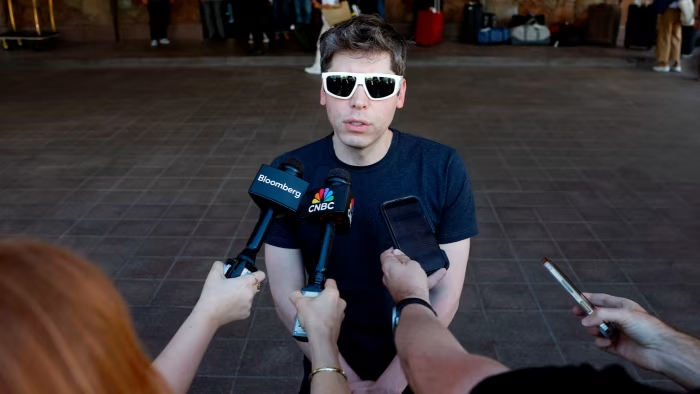
OpenAI, led by Sam Altman, released GPT-5.2 on Thursday.
OpenAI just unveiled what it’s calling its “most capable model” yet for professional work. The move comes only weeks after Google won praise for its Gemini 3 model, raising questions about who will win the chatbot wars.
The new model, called GPT-5.2, has improved from previous models in building spreadsheets and presentations, coding, “perceiving images,” processing longer contexts and “handling complex, multi-step projects,” OpenAI said.
The GPT-5.2 announcement follows Alphabet’s (GOOG) (GOOGL) Gemini 3 launch in mid-November. Google said at the time that Gemini 3 outperformed GPT-5.1 and Anthropic’s Claude Sonnet 4.5 on key metrics such as complex academic reasoning and understanding screen and video.
Google is perceived to be gaining ground in the AI race, which has had ripple effects across the market.
Usage of Gemini is still below that of ChatGPT, but reports from The Information and Sensor Tower found that Google’s model is gaining market share fast. Gemini’s monthly active users grew by more than 30% between August and November, while ChatGPT saw a 5% increase during that time, according to the data.
See more: Gemini deals ChatGPT a fresh blow as Google’s AI momentum builds
Within the semiconductor sector, investors have wondered if Google’s custom chips would cut into Nvidia’s (NVDA) market dominance. And Wall Street has generally been paying more attention to whether the massive budgets that companies are dedicating to AI will deliver commensurate returns. In recent months, OpenAI has made deals worth more than $1.4 trillion altogether to build out AI infrastructure to support its models.
With so many companies linked to OpenAI, there’s a lot riding on whether the ChatGPT creator continues growing adoption of its chatbot and improves the economics of its service.
On OpenAI’s GDPval benchmark, which measures how its models perform on real-world tasks spanning 44 occupations in the top nine industries that contribute to U.S. gross domestic product, the company said GPT5.2 outperformed “industry professionals at well-specified knowledge tasks” in those occupations.
GPT-5.2 Instant, Thinking and Pro will roll out in ChatGPT starting on Thursday beginning with paid subscribers, OpenAI said. Developers can also access the model on Thursday through OpenAI’s application programming interface.
Don’t miss: As ChatGPT turns 3, here’s what’s crashing the party
-Britney Nguyen
This content was created by MarketWatch, which is operated by Dow Jones & Co. MarketWatch is published independently from Dow Jones Newswires and The Wall Street Journal.
The real spark behind the latest move in TPG (TPG) stock is its $6.2 billion AG Credit Solutions Fund III closing, which landed about 40% above target and drew in several heavyweight public pensions.
See our latest analysis for TPG.
That successful $6.2 billion raise has clearly fed into sentiment, with a roughly 18.6% 1 month share price return helping push TPG to $67.57. Its 3 year total shareholder return above 140% shows that this momentum has been building for a while, not just this quarter.
If this kind of fundraising win has you thinking about what else is working in markets, now is a good time to explore fast growing stocks with high insider ownership for other fast moving ideas.
Yet with TPG now trading slightly above the average analyst price target, the real question is whether investors are underestimating its long term earnings power or whether the market is already pricing in years of growth.
With TPG closing at $67.57 against a most popular narrative fair value of $66.00, the story rests on aggressive profitability gains despite shrinking revenues.
Thematic investment focus in high-growth areas (sustainability, digital infrastructure, healthcare, AI) is enabling TPG to capitalize on long-term, secular shifts toward these sectors, which is supporting investment returns as well as growth in carried interest and incentive income, and positively impacting earnings.
Read the complete narrative.
Curious how falling revenues still back a richer valuation? This narrative leans on surging margins and future earnings power that look more like a growth stock than a traditional asset manager. Want to see which bold assumptions turn today’s price into “about right” rather than “too hot”?
Result: Fair Value of $66 (OVERVALUED)
Have a read of the narrative in full and understand what’s behind the forecasts.
However, persistent fundraising headwinds and tougher exits in volatile markets could quickly pressure fee growth, carried interest, and those optimistic margin assumptions.
Find out about the key risks to this TPG narrative.
While the narrative fair value pegs TPG as 2.4% overvalued, its 2.4x price to sales ratio still looks cheap versus the US Capital Markets industry at 4.1x and peers at 4.3x, yet expensive against its own 1.9x fair ratio. Is this a margin story or a valuation trap?
See what the numbers say about this price — find out in our valuation breakdown.
NasdaqGS:TPG PS Ratio as at Dec 2025
If you see the story differently or want to dig into the numbers yourself, you can build a custom view in minutes, Do it your way.
A great starting point for your TPG research is our analysis highlighting 2 key rewards and 1 important warning sign that could impact your investment decision.
Do not stop at one opportunity when entire themes are breaking out. Use the Simply Wall Street Screener to uncover fresh, data backed candidates before others notice.
This article by Simply Wall St is general in nature. We provide commentary based on historical data and analyst forecasts only using an unbiased methodology and our articles are not intended to be financial advice. It does not constitute a recommendation to buy or sell any stock, and does not take account of your objectives, or your financial situation. We aim to bring you long-term focused analysis driven by fundamental data. Note that our analysis may not factor in the latest price-sensitive company announcements or qualitative material. Simply Wall St has no position in any stocks mentioned.
Companies discussed in this article include TPG.
Have feedback on this article? Concerned about the content? Get in touch with us directly. Alternatively, email editorial-team@simplywallst.com
Cancer-targeted immunotherapies, such as Chimeric Antigen Receptor (CAR) T-cell therapies, bispecific antibodies, and checkpoint inhibitors, have made a profound impact on the treatment of oncology patients but may cause adverse events. Cytokine release syndrome (CRS) is a complex immune response characterized by the rapid release of cytokines into the blood by immune cells affected by the immunotherapy []. CRS incidence, onset, and severity vary by therapy, with CAR T-cell therapies having high rates of severe CRS compared to bispecific antibodies [-]. Since severe CRS (grade 3 or higher) can result in multiorgan failure and death, early detection and timely intervention are essential and have the potential to reduce clinical trial and health care costs associated with hospitalization and intensive care management, together promoting the broader adoption and accessibility of these innovative therapies [,]. Importantly, improved early detection has the potential to enhance patient outcomes by enabling prompt treatment that can mitigate severe symptoms, reduce complications, and improve survival. Furthermore, the availability of effective methods for early CRS detection and intervention may expand the use of these highly effective therapies into diverse care settings, such as community oncology clinics [,].
Several CRS grading scales have been developed to standardize the assessment of CRS severity, including the American Society for Transplantation and Cellular Therapy (ASTCT) consensus grading, the Penn scale, the Lee scale, the CAR T-Cell Therapy–Associated TOXicity (CARTOX) system, and the Common Terminology Criteria for Adverse Events (CTCAE) [-]. The existing CRS grading scales use intermittently measured physiological signs, laboratory markers, and clinical symptoms to assess CRS severity for clinical decision-making [-,]. For example, the ASTCT scale focuses on 3 core physiological signs (fever, hypotension, and hypoxia), aiming to streamline grading across institutions. The Penn and Lee scales incorporate broader clinical features and, in some cases, require more detailed assessments, such as organ dysfunction. Similarly, the CARTOX system includes neurologic symptoms in addition to CRS grading, with an emphasis on CAR T-cell therapy–associated toxicity. CTCAE, while widely used in oncology, has been adapted for CRS but may lack specificity for immunotherapy-related presentations.
Importantly, these grading scales are not used for early detection but rather are used postdiagnosis to assess CRS severity. These scales may miss early changes in the development of the syndrome and do not provide predictive insights into whether a patient will progress to severe CRS, restricting their clinical usage in guiding timely interventions.
Efforts to identify warning signs using digital health technologies (DHTs) have shown success in early CRS detection []. In a recent study, wearable sensors detected CRS episodes with a median lead time of 7 hours (IQR ~5.4-8.6) before recognition by standard nursing care, with patients maintaining a median adherence rate of 71% (IQR 55‐84) during the high-risk period []. Similarly, in patients receiving bispecific antibodies, remote monitoring detected significant pre-CRS changes in temperature (+1.7°C), heart rate (+16.66 beats per minute [bpm]), and respiratory rate (+1.86 respirations per minute [rpm]) up to 2 hours before detection by standard care and identified fever events nearly 5 hours earlier on average, including several missed entirely by conventional monitoring [].
DHTs are a broad range of emerging technologies using hardware, software, and computing platforms that offer a promising opportunity to enable early CRS warning, in part, through the real-time and remote capture of continuous physiological parameters []. Their adoption in clinical settings has grown steadily, with physician use of remote patient monitoring devices increasing from 12% in 2016 to 30% in 2022, reflecting a broader shift toward technology-enabled care delivery []. These data streams can be significantly more granular than traditional data measurements and support advanced analytics for detection of early warning signs by capturing continuous, high-frequency data that offers a more detailed and dynamic view of a patient’s condition.
DHTs can produce rich datasets; however, there is no standardization about what and how their data are reported for CRS. Additionally, because higher grades of CRS are less common events, data aggregation will be essential to create a sufficiently large, fit-for-purpose dataset that can overcome the challenge of data imbalance and enable development of early warning models. To achieve this, there is a need for standardization and uniform data collection during the immediate postimmunotherapy window. This research uses a scoping review and expert engagement to collate and evaluate potential early warning signs for CRS in oncology patients. Results were assembled into an associated ontology for use by researchers developing early warning models that are compatible with inpatient, outpatient, and hospital-at-home settings.
Methods
Overview
A mixed methods approach was used to construct the ontology of measures of early warning for CRS, combining quantitative data from a scoping review of peer-reviewed studies with qualitative expert insights derived from surveys, interviews, and focus groups to ensure a comprehensive and evidence-based framework for identifying early warning signs []. A mixed methods design was chosen to enhance the breadth and depth of the findings, with the peer-reviewed studies identifying reported CRS measurements, which were assessed for their relationship to early CRS through engagement with CRS experts.
Scoping Review
PRISMA (Preferred Reporting Items for Systematic Reviews and Meta-Analyses) guidelines for scoping reviews were followed () []. As a scoping review, this work did not meet the criteria for registration on PROSPERO (International Prospective Register of Systematic Reviews) []. The protocol is available from the corresponding author.
PubMed and Embase databases were searched for peer-reviewed articles between January 2014 and March 2024. The literature search used search terms as follows (1) medical subject heading (MeSH) term for human participants; (2) keywords for CRS including cytokine storm; (3) keywords for immunotherapy; (4) keywords for measures, including signs, biomarkers, and symptoms; and (5) keywords related to timing of measures including onset, early, and predict. The complete search string is provided in .
All articles identified in our search strategy underwent a two-stage screening process: (1) title and abstract screening and (2) full text screening based on the population, intervention, control, and outcome (PICO) criteria outlined in . Studies that were not available in English were excluded during the title and abstract screening process. To ensure the approach’s sensitivity and specificity in identifying relevant articles, 2 independent investigators began by screening a random selection of 20% of publications; disagreements were resolved by consensus, and clarifications were made using the eligibility criteria in relation to the order of exclusion metrics and timing of measure collection. It was determined a priori that agreement of ≥90% among the sample would support a single investigator extraction for the remaining publications. To ensure continued reliability, a second investigator conducted periodic quality checks on approximately 10% of the remaining publications during the screening and extraction process, maintaining interrater agreement above 90%. Disagreements were resolved through discussions between reviewers.
Table 1. Study selection eligibility criteria. Description of the patient, intervention, control, outcome (PICO) criteria [].
Criteria
Inclusion
Exclusion
Patient
Patients undergoing immunotherapy treatment and monitored for Cytokine Release Syndrome (CRS)
Studies that do not report data collected from human participants; studies that do not report cases of CRS
Intervention
Immunotherapy
Studies that do not assess an immunotherapy
Comparator
Any
None
Outcome
Early warning signals for the onset of CRS
Studies that do not report data on early signals of the onset of CRS defined as the time postimmunotherapy up to the diagnosis of CRS; studies that do not relate measures collected to CRS (ie, measures for overall response rate of immunotherapy)
A systematic data extraction process was used to construct the ontology. Extracted fields included publication record, CRS reporting, immunotherapy, reported measures and procedures, and study design and sample characteristics. Data extraction was either predefined categorical coding or open text, in which full text could be input to fulfill the response and minimize error. All data were descriptively analyzed, with frequency counts and percentages used to map study characteristics and reported measures. Bar graphs were generated to visualize key patterns and trends.
Focus Group
A group of CRS subject matter experts (SMEs; n=22), including clinicians specializing in oncology and immunotherapy, regulatory scientists, digital health researchers, and industry leaders with expertise in CRS and immunotherapy, and safety were convened from the Digital Health Measurement Collaborative Community (DATAcc), a collaborative community hosted by DiMe with the Food and Drug Administration’s Center for Devices and Radiological Health, to assess the measures of early warning for CRS identified through the scoping review [,]. A survey was deployed to (1) corroborate CRS measures identified in the scoping review and (2) evaluate early warning signs for outpatient monitoring (). Specifically, a Likert scale was used to measure the level of agreement or disagreement in the clinical measures identified from the scoping review for their clinical usage in assessing CRS, digital readiness, and predictive value. Qualitative questions were incorporated to allow for the identification of missing clinical measures not captured in the scoping review and to provide evidence for selection choices. The survey results, including deidentified responses for measures of inclusion and exclusion, were discussed in 3 focus group sessions (one main and 2 follow-up sessions) and used to collaboratively develop criteria for including measures in the ontology. Measures that were not selected by any SME were not considered for the ontology. Any measure selected by at least one SME or any new measure identified by >10% of SMEs was assessed for inclusion in the ontology. Consensus was reached if a measure was selected by >70% of SMEs with less than 15% disagreement, as used in other consensus processes []. The ontology was initially constructed by incorporating the survey data with findings of the scoping review, followed by iterative one-week rounds of refinement of the classes, concepts, properties, and values with focus group participants.
Interviews and Qualitative Analysis
Semistructured interviews were conducted with 8 key opinion leaders (KOLs) who have direct experience managing CRS (5 primary practice oncologists, 2 patient advocates, and a clinical trialist) to assess the identified measures from the scoping review and draft ontology from the focus group. KOLs were purposively sampled for their expertise in CAR T-cell and bispecific programs and were distinct from the SMEs engaged in the focus group. Interviews were conducted over Zoom (Zoom Video Communications, Inc) by a single interviewer in April and May 2024. The data collected during the interviews included direct feedback on the relevance and applicability of the proposed measures for the selected time frame, as well as suggestions for additional features or modifications, such as definitions, measurement values, and interrelationships between concepts ().
Interview responses were transcribed by 2 reviewers and analyzed using Braun and Clarke’s 6-phased framework for thematic analysis []. A deductive thematic approach was used with initial themes derived a priori from the identified early warning signs and their associated properties, values, and definitions. The analytic process involved repeated readings of transcripts for familiarization, coding of transcripts into ontology and measure categories and features, and collation of codes into candidate themes. Themes were iteratively reviewed against coded extracts and entire data sets, refined to capture their analytic scope, and finalized through team discussion.
Manual coding was conducted using basic word processing tools with discrepancies resolved through discussions. Interviews were conducted and coded by researchers from DiMe with expertise in digital health technologies and evidence synthesis, but without clinical expertise in CRS. This outsider perspective reduced the likelihood of imposing clinical assumptions during analysis, while reflexivity was maintained by documenting analytic decisions and triangulating findings with clinical experts. Rigor was supported through confirmability, dependability with documented procedures, credibility through expert validation, and transferability through detailed descriptions, in line with Braun and Clarke []. The findings from all interviews were synthesized, and the themes were reported to the focus group of SMEs to inform revisions of the ontology. Final themes were validated by presenting to the focus group for debrief and review. This deductive approach allowed us to evaluate the clinical relevance, feasibility, and patient-centeredness of proposed CRS early warning signs and to refine the draft ontology.
Ethical Considerations
This study involved surveys and interviews with SMEs and KOLs to collect expert insights relevant to the research aims. No personal or sensitive information was collected or analyzed. In accordance with institutional policies and federal regulations, the project was determined to be exempt from human participants regulations and formal institutional review board approval was not required []. Informed consent was obtained from all participants prior to the survey and interviews. Participants were informed about the study purpose and their voluntary participation, with the option to withdraw at any time. No compensation was provided for participation. All data were anonymized and confidentiality was maintained throughout the study. No identifiable participant information is included in the manuscript or supplementary materials.
Results
Early Warning Signs in the Literature
278 studies were identified during the literature search; 33/278 (11.9%) duplicates were removed. In total, 126/278 (45.3%) full-text studies were obtained following title and abstract screening. Around 30/126 studies (23.8%) met the eligibility criteria for review. The main reasons for exclusion were no reported cases of CRS, measures collected outside the timeframe of interest or not collected in relation to CRS, or the publication being a literature review ().
Figure 1. Preferred Reporting Items for Systematic Reviews and Meta-Analysis flow diagram of the scoping review process. PRISMA: Preferred Reporting Items for Systematic Reviews and Meta-Analysis; CRS: cytokine release syndrome.
The 30 eligible studies were published between 2016 and 2024 (Table S1 in ) [-]. The studies reported measures collected between the administration of immunotherapy and the onset of CRS, which was defined by multiple grading scales (). Clinically, the use of different grading scales can lead to variability in severity classification, affecting treatments and comparable outcomes across clinical research and clinical care []. A majority of studies used the American Society for Transplantation and Cellular Therapy (ASTCT) grading scale, with an increase in adoption following its release in 2019 (). Eighteen studies [-,,,,,,,-,,,,,,] reported CRS by severity with severe CRS indicating grade 3 or greater, while 9 studies [,,,,,,,,] referred to cases as severe CRS but did not indicate a CRS grade.
Figure 2. Timing of measure selection. To identify measures of CRS with early warning value, the literature review captured measures collected from the administration of immunotherapy to the onset of CRS, as defined by a clinical diagnosis of Grade 1 or higher. CRS: cytokine release syndrome. Figure 3. Report of cytokine release syndrome by grading scale. Distribution of the grading scales used based on publication date of the studies, supporting an uptake of ASTCT grading scale following its release in 2019. ASTCT: American Society for Transplantation and Cellular Therapy; CARTOX: CAR T-Cell Therapy–Associated Toxicity; CTCAE: Common Terminology Criteria for Adverse Events.
Measures were broadly classified into 3 categories: laboratory markers, physiological signs, and clinical symptoms (). Cytokines [-,,,,,,,-,,,] and temperature [,,-,-,-,-,] were the most common measures reported in 20 of the 30 articles. Cytokines were derived from either serum or plasma, typically as part of a panel, and were grouped into a single category for this study. Measurement of temperature and the report of a fever were grouped together as a physiological measurement based on the assumption that a report of a fever required a physical temperature recording. Clinical symptoms were reported in 20% of the articles.
Table 2. Study-reported measures captured between the administration of immunotherapy and the onset of cytokine release syndrome [-].
Measures by category
Studies, n
Physiological signs
Temperature or fever
20
BP
7
SpO2
7
HR
6
RR
2
Clinical symptoms
Chills
4
Fatigue
1
Headache
3
Myalgia
1
Vomiting
2
Malaise
1
Confusion
1
Dyspnea
1
Rash
1
Laboratory markers
Cytokines
20
CRP
19
Ferritin
11
CAR-T transgene copy numbers
2
White blood cell count
2
Presepsin
1
Procalcitonin
1
Neutrophils
1
Lymphocytes
1
ALT
3
AST
2
ALP
1
Bilirubin
3
Albumin
2
Prothrombin time
2
Creatinine
5
Blood urea nitrogen
1
Hemoglobin
2
Platelets
7
Fibrinogen
2
Fibrin
1
LDH
6
aBP: blood pressure.
bSpO2: saturation of peripheral oxygen.
cHR: heart rate.
dRR: respiratory rate.
eCRP: C-reactive protein.
fCAR-T: Chimeric Antigen Receptor T.
gALT: alanine transaminase.
hAST: aspartate aminotransferase.
iALP: alkaline phosphatase.
jLDH: lactate dehydrogenase.
Selection of Measures With Early Warning Value in CRS
The selection and refinement of early warning signs for CRS were achieved through a comprehensive mixed methods approach, integrating findings from a scoping literature review with qualitative and quantitative insights from SMEs (n=22) and KOLs (n=8). This iterative process focused on identifying the most reliable indicators to support the development of an ontology for early CRS detection. The integration of survey findings, focus group discussions, and thematic analysis of KOL interviews yielded four overarching themes that guided refinement of the CRS ontology.
Theme 1: Identification and Categorization of Measures That Inform Early CRS Detection
The survey identified 18 measures from the scoping review deemed likely to support early warning for CRS ( and ). Additionally, 2 new measures—activity level and heart rate variability—were recognized by over 10% of SMEs as measures with potential to provide early warning value for CRS. These measures were not identified in the peer-reviewed literature covered in our scoping review, highlighting a current evidence gap, though the measures have been noted in gray literature and early-stage digital health research []. Key points from the focus group discussion included (1) no measures should be excluded unless there was clear and substantial disagreement, and (2) those measures not sourced from peer-reviewed articles should be clearly notated. Accordingly, measures were categorized as primary (consensus-based), secondary (less than 15% disagreement), or emerging (identified by >10% of SMEs but lacking peer-reviewed evidence).
Table 3. Outcome to measure and properties of the common set of early warning signs for cytokine release syndrome.
Outcome to measure and property
Value
Use of property
Continuously collected data: binned
Fever generation
Rise in body temperature
°C over time or °F over time
Optional
Median, max, min, IQR
Core body temperature
Baseline
°C or °F
Recommended
Median, max, min, IQR
Current
°C or °F
Required
Median, max, min, IQR
Threshold
°C or °F
Recommended
max, min
Hypoxia
(SpO2) % over time
Optional
Median, max, min, IQR
Oxygen saturation
(SpO2) %
Recommended
Median, max, min, IQR
Current
(SpO2) %
Required
Median, max, min, IQR
Threshold
(SpO2) %
Recommended
max, min
Respiration rate
Baseline
rpm
Optional
Median, max, min, IQR
Current
rpm
Optional
Median, max, min, IQR
Threshold
rpm
Optional
max, min
Hypotension
Drop in blood pressure
mm Hg over time
Optional
Median, max, min, IQR
Blood pressure (systolic and diastolic)
Baseline
mm Hg
Recommended
Median, max, min, IQR
Current
mm Hg
Required
Median, max, min, IQR
Threshold
mm Hg
Recommended
max, min
Tachycardia
Rise in heart rate
bpm over time
Optional
Median, max, min, IQR
Heart rate
Baseline
bpm
Recommended
Median, max, min, IQR
Current
bpm
Required
Median, max, min, IQR
Threshold
bpm
Recommended
max, min
Measurement interval
Interval between measurements
sec, min, h
Required
bin at 1h intervals
Time postimmunotherapy
sec, min, h
Required
—
Start and end
Timestamp
Required
—
Minimum number of recordings
Number
Required
—
Metadata
Varies (variable-dependent)
Recommended
—
Environmental variables (eg, location of use)
Varies (variable-dependent)
Recommended
—
Context-of-use dependent (eg, disease)
Varies (variable-dependent)
Required
—
Measurement modality (eg, form factor)
Varies (variable-dependent)
Required
—
amax: maximum.
bmin: minimum.
cSpO2: peripheral capillary oxygen saturation.
drpm: respirations per minute.
ebpm: beats per minute.
fInterval between measurements for on-demand collections should not exceed 4 hours during awake hours.
gsec: second.
hmin: minute.
ih: hour.
jNot applicable.
Table 4. Measures to aid the common set of early warning signs of cytokine release syndrome. This table outlines supplementary measures that enhance the detection and monitoring of cytokine release syndrome beyond the core early warning signs.
Classes and measures
Values
Inflammatory markers
C-reactive protein (CRP)
Mass per volume (eg, pg/mL, mg/dL)
Ferritin
Mass per volume (eg, pg/mL, mg/dL)
Cytokines
Interleukins (eg, IL-6)
Mass per volume (eg, pg/mL, mg/dL)
Endothelial damage
Lactate dehydrogenase (LDH)
U/L
Platelet count
counts/L
Constitutional symptoms
Chills
Verified instrument
Fatigue
Verified instrument
Headache
Verified instrument
Myalgia
Verified instrument
Dyspnea
Verified instrument
Vomiting
Verified instrument
Emerging measures
Activity level
Time spent inactive, step count, etc
Heart rate variability (HRV)
Validated HRV measure
Skin temperature
°C or °F
apg/mL: picograms per milliliter
bmg/dL: milligram per deciliter.
cIL-6: interleukin-6.
Across focus groups and interviews, there was broad agreement on a core set of early warning signs and clinical characteristics that are essential for early warning of CRS. Temperature or fever emerged as the most sensitive early indicator.
For CAR T[-cell] patients, even modest temperature elevations (e.g., 99°F) can trigger re-evaluation due to neutropenia risk, whereas for bispecific therapies, fever may be combined with other factors for clinical decision-making. [Interviewee 1]
Blood oxygen saturation and blood pressure were identified as key measures for higher-grade CRS, while heart rate was indicated as an important early indicator, even though it is not consistently included in current grading scales.
Unanimous agreement was reached for the inclusion of the identified laboratory markers and physiological signs; however, perspectives diverged on the relationship between select clinical symptoms and CRS. The primary concern was discerning the difference between CRS and other adverse events, mainly immune effector cell-associated neurotoxicity syndrome (ICANS), a neurological syndrome that sometimes coincides with CRS or follows CRS.
The delineation of ICANS and CRS is difficult to define—they’re not perfectly separated. [Interviewee 6]
I would remove headache and confusion. Those are ICANS symptoms, and I would treat them differently. [Interviewee 1]
Recommendations were made for the removal of confusion and headaches by 5 oncologists and a clinical trialist and 4 out of 5 oncologists, respectively, as these symptoms were deemed to be clinical symptoms that were more informative of ICANS. Two interviewed oncologists also recommended removal of the rash, indicating it was not a classical symptom or a symptom associated with CRS.
After 2 SME follow-up sessions, consensus was reached to remove confusion and rash from the CRS early warning signs with no recommendations for inclusion of either measure by an SME following the second discussion. Consensus was not reached, however, for the removal of headache, and it was retained as a secondary measure.
Temperature was further defined into 2 distinct components to distinguish between different physiological processes (1) core body temperature, which is tightly regulated; the normal range (36.1°C to 37.2°C) is typically maintained regardless of environmental temperature changes, and (2) skin temperature, which can fluctuate heavily in response to surrounding changes in temperature and the patient’s activity level []. The former is an essential component of CRS, while the relationship of the latter is less clear.
Theme 2: Timing and Relative Changes Provide Critical Insight Beyond Fixed Thresholds
Findings from both focus groups and interviews emphasized that the clinical usage of early warning signs depends on how and when they are measured. Personalized baselines were consistently preferred over absolute thresholds, as relative changes were considered more informative than static cutoffs.
Heart rate is really more patient-specific. If I’m normally at 55, jumping to 85 is huge. If a patient is normally at 85 and hits 95, it may not be as big of an issue. [Interviewee 3]
Blood oxygen saturation and blood pressure were recognized for higher-grade or later-onset CRS, with suggested thresholds (SpO2 <90%, systolic BP <90‐100 mm Hg) reflecting clinical concern for rapid deterioration. Continuous or high-frequency monitoring was favored over intermittent assessments, particularly for temperature, as it allowed for more precise identification of clinical changes and treatment initiation points.
Monitoring should occur every 4 to 6 hours. Anything less than 4 times a day makes me worried. [Interviewee 5]
There should be a minimum number of temperature recordings, ideally measured continuously. Right now, patients are sent home with a thermometer (and asked to record) every 4 hours while awake. [Interviewee 6]
Monitoring strategies were noted to be variable and context dependent. For example, onset of CRS in CAR T-cell recipients typically occurs 4‐6 days after infusion, compared to earlier onset with bispecific therapies. Concerns were raised about the reliability of outpatient self-measurements and infrastructure to reliably implement outpatient monitoring at scale.
Theme 3: Balancing CRS Outpatient Monitoring With Patient and Caregiver Experience
Outpatient therapy requires the ability to effectively monitor key measures for CRS, including temperature, heart rate, blood oxygen saturation, and blood pressure. Patients often lack the energy to track symptoms and adhere to monitoring schedules, and caregivers frequently assume responsibility for tasks like symptom recording. Technology is seen as highly valuable in this context by helping to capture and share data with caregivers and care teams.
Given during the night, this is where DHTs shine… The patient and caregivers can rest with ease. [Interview 1]
Clear messaging is critical, as patients need guidance on when to return to the hospital without undue alarm; the narrow window for triage and treatment is particularly important for patients who live far from care centers.
Theme 4: Reliable Early Warning Requires Context-Rich, Interoperable Data
Effective early warning for CRS relies on robust, interoperable data systems that capture not just values but also their context. Accurate interpretation of data depends on metadata that capture variables like sensor location, patient positioning, medication administration, and therapy timing.
One of the things that stood out was getting to the nuances of how we can line up the data. It’s important to capture when variables change, the timing relative to therapy, and the sequence of events. [Interviewee 4]
Data standards like Fast Healthcare Interoperability Resources are strongly recommended to ensure interoperability and facilitate integration across technologies and settings. Implementing these systems for CRS in the outpatient setting requires infrastructure that supports consistent, high-quality data collection, including guidance on measurement methods, intervals, and operational procedures.
Collectively, findings from the literature review, survey, focus group, and expert interviews indicate the measures most informative as early warning signs of CRS. Across the 4 themes, patterns emerged regarding the clinical relevance, reliability, and practical implementation of the physiological signs, laboratory markers, and clinical symptoms. These findings informed the development of a consensus-derived common set of early warning signs for CRS.
A common set of early warning signs for CRS was established by identifying the minimum data required for the development of an early warning model for CRS. Four key measures—fever, hypoxia, tachycardia, and hypotension—were recognized as essential through the survey, whereas all remaining measures were selected in fewer than 25% of responses. The SMEs also supported the feasibility of digitally capturing these measures, with over 80% of responses indicating these measures can be derived digitally using currently available technology. KOLs similarly selected temperature, SpO2, heart rate, and blood pressure as the measures with the greatest likelihood of informing the development of an early warning model for CRS. The goal of the common set of early warning signs for CRS is to facilitate the collection of standard measures, which includes a minimum measurement frequency. Such a standardized approach, which is the focus of the ontology, is necessary to assemble fit-for-purpose datasets. In addition, it enables the evaluation of the early warning value of measure features for detecting CRS by defining measurement concepts, properties, and values.
An Ontology to Guide the Collection of Fit-for-Purpose Datasets and Model Development
The synthesis of the results was performed with the goal of identifying the parameters most strongly related to impending CRS during the early, posttreatment phase. An ontology was developed for CRS by incorporating the selected measures to begin the effort toward standardization in data collection. Impending CRS is characterized by an early warning sign, defined as a change in a measure over a period of time before a critical transition to a clinically diagnosable disease state, which is classified into primary or secondary measures, each with associated metadata.
Metadata included in the ontology is critical for characterizing the CRS response in relation to patient-specific features and managing the collected data. This information includes individual-specific variables (eg, age), environmental variables (eg, location of use), context-of-use variables (eg, disease), and measurement modality (eg, form factor). Classes of primary and secondary measures include information on specific concepts, properties, and their values. In general, concepts include selected measures and their measurement interval. Instead of introducing all concepts with their properties and values, the ontological structure is demonstrated using fever generation (, and ).
Figure 4. Ontology of early warning signs for CRS. This figure presents an ontology organizing early warning signs associated with CRS. CRS: Cytokine Release Syndrome.
Discussion
Principal Findings
This study presents an ontology of early warning signs for CRS designed to promote the uniform collection of high-frequency data, aiding the development of early warning models for CRS. To support this effort, a common set of digitally-derivable early warning signs for CRS (fever generation, tachycardia, hypotension, and hypoxia) was identified that facilitates data aggregation and promotes the evaluation of their early warning value for CRS.
The ontology provides measures that can be readily assessed with widely available technologies in inpatient, outpatient, and hospital-at-home settings (eg, temperature, heart rate, and other vital signs) as well as measures requiring specialized tests that may not be broadly available (eg, blood concentration of interleukin cytokines) ( and ) []. The ontology, therefore, provides a framework for applying DHTs in practice, enabling continuous, real-time data collection that complements established CRS grading systems (eg, ASTCT criteria), ensuring alignment with current clinical workflows while expanding to outpatient settings. It includes both objective (eg, DHT-based) and subjective (eg, self-reported) measures. The latter offers corroboration of objective measures, often including high-frequency data collection, and provides a way to include the patient’s lived experiences within their care journey [].
A key strength of the ontology is its ability to incorporate future measures as scientific understanding and technology evolve, ensuring ongoing relevance and usage. This design accommodates the future development of validated sensor-based DHTs to capture existing measures and for supporting validation of novel digital measures that have yet to be developed. The latter may provide objective data for subjective measures such as fatigue and chills ().
Common Set of Early Warning Signs for CRS
The identified common set of early warning signs for CRS—fever generation, hypotension, hypoxia, and tachycardia— represents a minimum set of measures to facilitate the development of models for early warning of CRS. Fever is a hallmark feature of CRS and defines the diagnosis of CRS once possible other causes of fever have been ruled out []. Likewise, hypoxia and hypotension are key components of CRS grading scales used to assess severity based on low oxygen levels and low blood pressure, respectively []. Tachycardia during CRS is described as a rise in heart rate above a personal normal baseline and acceptable threshold, typically defined as >100 beats per minute by most institutions, when there is no additional cause attributable to the increase, such as physical activity and emotional stress []. While heart rate is not part of common CRS grading scales, heart rate values and trends may reinforce other measures within the common set. Our approach focuses on the most impactful indicators, which can be captured remotely to support outpatient care, rather than forcing the use of an exhaustive set of measures.
Standardizing Data Collection for the Early Warning Signs for CRS Is Key to Advancing Data-Driven Tools for CRS
To support reproducible and interoperable data collection for CRS early warning, we outline clear guidance on measurement intervals, clinically meaningful thresholds, and quality control procedures below.
The process for measures collection should be well-defined with clear instructions, established frequency, timing and conditions, and specified quality controls and data handling procedures. The early warning signs for CRS are structured with properties and values to ensure unified reporting of data elements. We suggest that the properties consist of (1) the measure with an estimate of a patient’s baseline value, which may be outside of the normal range, current value, and clinically meaningful threshold value, and (2) the interval of measure, including the data capture period and interval between readings.
The data capture period should extend at least 2 SDs from the median onset time of CRS and continue until the patient is no longer within the data capture period or, at minimum, for 24 hours after the onset of CRS symptoms []. Likewise, the common set of early warning signs should be collected at least every 4 hours during the patient’s waking hours, with additional data collected during an event trigger (eg, feeling ill) clearly labeled to indicate it falls outside the standard collection frequency.
Accurate documentation of metadata is critical for contextualizing the early warning signs of CRS. This review has highlighted that variables such as immunotherapy type, disease burden, number and type of prior and concomitant treatments, and the administration of supportive care (ie, drugs like acetaminophen, tocilizumab, and dexamethasone; oxygen supplementation) serve as essential metadata and provide critical context for interpreting the common set of measures. Individual-level characteristics such as age, sex, and disease burden are important for understanding the broader clinical implications and their relationship to CRS onset and severity. Context-of-use data such as the cancer type and interventions (eg, steroids) can aid in understanding how differences in treatment strategies and management of adverse events impact CRS. Environmental variables may play vital roles in defining subpopulations to enhance model predictions.
Reporting data on measurement modalities supports quality control procedures, transparency in data collection methods, and comparison of sensor technology for potential influences on collected data. The accurate documentation of these metadata is at least as important as the common set of measures themselves, as they will often form the reference standard against which algorithms are trained and validated. To ensure these models are robust and generalizable, training must be performed on large, diverse datasets that reflect real-world patient variability across demographics, disease states, and clinical settings.
The properties of each measure (eg, baseline, threshold, collection intervals) offer varying levels of value. Baseline data provides a reference for understanding individual-level changes over time, offering the ability to improve early warning models. Collecting at least 24 hours of baseline data ensures a direct comparison over time, accounting for natural daily fluctuations, such as those driven by circadian rhythms []. Since CRS typically occurs more than 24 hours after immunotherapy, high-frequency collection of these measures may begin on the day of therapy administration. However, additional baseline monitoring prior to treatment is encouraged, as it may provide valuable insights into early signs and trends leading up to CRS onset.
Furthermore, thresholds for the measures may vary across institutions and between patients. While a set threshold value for fever is commonly agreed upon (38°C or 100.4°F) for grading CRS, there is currently no defined threshold for the other early warning signs of CRS []. It is critical to report the thresholds to ensure accurate comparison between patients and sites for CRS grading and management and support the collection of a representative population that may otherwise be constrained by exclusion criteria that will support building more personalized representative models based on a diverse population []. Physiologic baselines can differ significantly between individuals due to factors such as age, disease status, medication use, and comorbidities. As such, population-level thresholds may not adequately capture meaningful clinical changes for all patients. Establishing personalized baselines is critical to detect deviations that are clinically significant for a given individual and will improve both the accuracy and sensitivity of early warning models.
Finally, the current standard of care sets the minimum requirements for data collection. For example, following the gold standard of inpatient practice, the common set of measures for CRS should be collected at least every 4 hours, with a minimum of 4 readings per day. However, to develop high-quality models, more frequent data is likely necessary. Passive and continuous collection of these measures using fit-for-purpose DHTs offers an opportunity to meet this need.
The consistency across measures supports organized and structured data collection, which may simplify workflows, particularly for developing multimodal algorithms that will likely hold the highest sensitivity and specificity for the complex and variable nature of CRS [-]. While the current grading systems are based on multimodal but sporadic data, continuous monitoring of these measures, combined with data analytics and statistics, will provide data-driven insights that may help identify truly predictive features by grounding them in real-time, continuous data rather than static observations. Binning continuously collected data into one-hour intervals and reporting summary statistics (eg, minimum, maximum, median, and IQR) will enhance data availability, facilitate easier sharing and integration, and support data quality control.
Where available, the common set of early warning signs for CRS and their values also align with common content, terminology, and transport standards [-]. Structuring data according to Fast Healthcare Interoperability Resources, for example, supports integration of continuous monitoring data from sensor-based DHTs with clinical lab and electronic health record data, creating harmonized datasets suitable for training predictive models. Initial modeling efforts might focus on simpler, interpretable approaches such as decision trees and logistic regression to establish baseline performance, with opportunities to explore more sophisticated methods, including ensemble learning and time-series models, to capture complex temporal patterns in physiological data. This alignment facilitates data integration across platforms and will support the future development of more advanced early warning models for CRS leveraging machine learning and artificial intelligence technologies.
Importantly, these approaches also serve as the foundation for formal evaluation of the predictive value of CRS early warning signs. Future studies could systematically validate these measures by comparing model-based predictions against observed CRS onset and severity across diverse patient cohorts, assessing performance metrics as appropriate. Established methodologies such as the verification, analytical validation, and clinical validation (V3) framework, which offers a structured approach for validating sensor-based DHTs, and the Predictive Biomarker Modeling Framework which applies contrastive learning to systematically identify and assess predictive biomarkers, may guide this process [,]. Leveraging such frameworks would enable systematic assessment of predictive value and support the development of clinically relevant early warning models. Achieving reliable model performance will also depend on access to diverse datasets, which are essential for training algorithms that can generalize across patient populations and care environments.
The Ontology of Early Warning Signs for CRS Provides Space for Technological and Scientific Advancements for Future Inclusion of New and Novel Digital Measures
At present, the development and severity of CRS following cancer-targeted immunotherapies is assessed using clinical judgment. Clinical trial results for each therapeutic agent, including dose and dosing schedule, offer guidance on the mean time to onset, duration, and percentage of incidence and severity for CRS []. Furthermore, tumor burden and overall health status also inform clinical decision processes []. Despite these valuable observations, there are currently no validated predictive models for CRS incidence, onset, or severity.
The ontology for early warning signs for CRS provides a foundation to establish data-driven models for CRS. Monitoring the common set of early warning signs for CRS, which are all physiological indicators, can be monitored remotely []. Continuous monitoring of temperature, SpO2, and heart rate with DHTs greatly enhances the ability to track clinical status through objective physiologic changes. Indeed, tracking temperature using a wearable (eg, a patch or strap) temperature sensor may detect the onset of CRS several hours earlier than standard of care with the potential for additional improvements when using personalized data and thresholds [,]. In the future, using continuous measurements by DHTs to characterize a patient’s baseline measurements could permit the identification of CRS using rules based on changes from baseline and trends, in addition to a commonly accepted threshold (ie, 38°C).
Laboratory markers, including levels of interleukins, CRP, ferritin, platelets, and lactate dehydrogenase, on the other hand, endure time delay in processing and testing availability, particularly for cytokine measurements that may be more well defined and more foundationally central to identifying CRS but are not commonly measured in the community hospital setting or in the outpatient setting. These data reflect a fixed time point that may miss dynamic transitions or rates of change critical for identifying early warning signs of CRS [,]. These barriers to care may be resolved over time through scientific and technological advancements such as the development of continuous monitoring technologies of these laboratory markers or advancements toward affordable and widespread point-of-care testing. For example, devices are being developed to continuously monitor cytokine levels in real-time from interstitial fluid and sweat; however, improvements are needed to enhance specificity for individual cytokines [,].
There are also challenges associated with studying the symptomatology in the form of patient-reported outcomes (PROs) for CRS. Presenting clinical symptoms may be directly due to emerging CRS or attributed to underlying disease conditions, other treatments with their own adverse event profiles, or overlap with various comorbidities. Furthermore, symptoms can be difficult to identify or lack congruence between patients due to the subjective nature of the measure (eg, reporting malaise when feeling extremely tired instead of fatigue, variable presentation of symptoms based on treatment or personal factors). Regular self-reporting of symptoms via an app or another DHT could be valuable to improve consistency, and the occurrence or severity of specific symptoms such as chills could be integrated with the other outcome measures to inform predictive models.
Here, we have identified a preliminary set of symptoms that commonly occur before and up to the onset of CRS. Incorporating measures of symptoms into the data model permits the identification of symptom or groups of symptoms with defining features that are capable of producing new evidence for the advancement of early warning signs for CRS []. With no established PROs or observer-reported outcomes specific to CRS, it is important to critically assess and intentionally implement targeted assessments to minimize the burden to patients, caregivers, and clinical staff []. For instance, modification of the PRO-CTCAE for cancer clinical trials to allow for real-time reporting using the symptoms defined within the early warning signs ontology for CRS offers a validated open-access platform for creation of cancer-related PROs, which can be digitally deployed to support outpatient care and decentralized clinical trials []. Limitations of PROs (eg, recall bias, compliance, and data completion), however, reduce the probability of independently using PROs as an early warning sign for CRS []. As such, there is a growing need for novel digital clinical measures that can be continuously captured in real-time by sensor-based DHTs to objectively and passively define the symptomatology associated with CRS.
Our ontology provides an overview of the current state of early warning signs for CRS. Moving forward, more clinical trials will be needed to train and validate predictive algorithms across diverse cohorts, followed by randomized controlled trials to assess their feasibility and effectiveness in outpatient settings. Ideally, the DHTs will be noninvasive; for example, monitoring could involve wearable form factors, such as a chest strap or wristband, allowing patients to recover at home rather than in a hospital. This will contribute to ensuring patients’ compliance with the selected technology. Importantly, future implementation will require regulatory validation and seamless integration into existing clinical workflows. Additionally, a similar approach could be applied to other adverse events, such as ICANS. Given the significant clinical overlap between CRS and ICANS, which includes shared symptoms and treatment strategies, it is important to recognize that ICANS frequently follows CRS []. Developing a comprehensive ontology that integrates early warning signs for both conditions could improve predictive accuracy and facilitate more coordinated clinical decision-making. When combined with an early warning model for CRS, this could contribute to a comprehensive remote monitoring system for patients undergoing immunotherapy, better reflecting real-world management where these conditions often coexist.
Limitations
This scoping review did not consider predictive values outside of the defined time window, which may limit the generalizability of the findings to broader prediction-based models (eg, patient stratification prior to immunotherapy, patient stratification after development of CRS). Additionally, gray literature was not included in the review, which could contain valuable insights, particularly in this early stage of the field where much relevant information has yet to be published in peer-reviewed publications. The analysis was deductive, based on literature-derived measures, which provided a solid foundation but could limit the emergence of novel concepts. This informed the decision to include KOL interviews to supplement the review. Future research should consider expanding evidence sources to include gray literature such as preprints, ongoing clinical trials, and unpublished datasets. This requires systematic search strategies, quality appraisal, and transparent reporting to ensure comprehensive and reliable synthesis while minimizing duplication and bias.
Another limitation is the potential variability in CRS, adjudication, diagnostic criteria, and grading scales across studies, which may affect the consistency and comparability of findings, highlighting the need for standardized definitions in future digital health research. Furthermore, the review did not evaluate the actual predictive value of the measures, which remains a critical area for future research as outlined in the discussion. As the field moves toward more data-driven and decentralized approaches to CRS management, future systematic reviews and meta-analyses should aim to integrate data from both traditional and real-world sources, stratify findings by CRS grading frameworks, and assess heterogeneity in measurement modalities and data collection contexts. Such approaches would enhance the interpretability, reproducibility, and clinical relevance of predictive model development.
Future Directions
Identifying early warning biomarkers of CRS will rely on high-quality, fit-for-purpose data from the intended-use population and sufficiently large, diverse datasets to develop and validate algorithms. Several laboratory-based markers are being evaluated for predicting the occurrence, onset, and severity of CRS [,], but these markers are currently restrictive, especially for postimmunotherapy early warning, due to the processing time, limited number of data points available, and blood draws that normally require the patient to remain inpatient or otherwise involved in an intensive posttreatment monitoring program with frequent clinic visits.
Establishing predictive biomarkers, especially those that can be continuously and passively collected, represents a key future direction, as these biomarkers may mitigate the risks associated with CRS following cancer-targeted immunotherapies. Realizing this potential will require strong collaboration among clinicians, researchers, and technology developers to ensure comprehensive data collection, model development, and clinical integration. We encourage the collection of the early warning signs identified in the ontology and the adoption of the recommended primary and secondary measures of interest.
Conclusions
This ontology of early warning signs for CRS establishes a guide for building fit-for-purpose datasets from measures collected prior to the onset of CRS. These datasets will play an important role in advancing the development of early warning models and ultimately support decentralized clinical trials and outpatient treatment options. Consistent data collection will facilitate the training and validation of early warning models for CRS while remaining easy to adopt and integrate into clinical research and practice. Understanding the early factors that occur before the onset of CRS is paramount for developing diagnostic and predictive models for CRS onset and severity, and these data elements may contribute to more equitable and consistent access to these immunotherapies.
We wish to acknowledge Kara Chappie, Sam Ewing, Sana Sana Ghafoor, Christine Guo, Sara Hershey, Seth Kuzdzal, Matthew Rose, Len Rosenberg, Jaydev Thakkar, and Charlotte Yuan for their contributions to the development of the concepts and assessment of the scoping review and selected measures; Katie Gagel and Bethany McCrary for assistance with project management; and Alana O’Brien Del Campo and Jennifer Goldsack for providing feedback on the manuscript. This work was undertaken within the Digital Health Measurement Collaborative Community (DATAcc), hosted by the Digital Medicine Society (DiMe).
The comments/contributions are an informal communication and represent the best judgment of the authors. These comments do not bind or obligate the U.S. Food and Drug Administration. The views expressed in this publication do not necessarily reflect the official policy or position of the National Cancer Institute.
This work was funded by a precompetitive team, hosted by the Digital Medicine Society’s Digital Health Measurement Colaborative Community (DATAcc).
Conceptualization: CJM, CZA, ASB, SB, NC, MC, MD, DLWH, PK, EK, LK, CM, UN, MP, RP, DS, NS, JS, MS, CV, BV, MW, DZ, SZ, SM
Methodology: CJM, CZA, ASB, SB, NC, MC, MD, DLWH, PK, EK, LK, CM, UN, MP, RP, DS, NS, JS, MS, CV, BV, MW, DZ, SZ, SM
Writing – review & editing: CJM, CZA, ASB, SB, NC, MC, MD, DLWH, PK, EK, LK, CM, UN, MP, RP, DS, NS, JS, MS, CV, BV, MW, DZ, SZ, SM
NC is an employee of Pfizer and owns company stock. SZ is an employee of Actigraph. MP is an employee of Biofourmis Inc. and owns company stock. LK is an employee of Roche and owns company stock. CJM, ASB MD, and DS are employees of Johnson & Johnson Innovative Medicine. SB and RP are employees of Blue Spark Technologies. EK, MC, and JS are employees of Takeda. PK is an employee of Bristol Myers Squibb. MW is an employee of Current Health. CZA, UN, MS, CV NS, BV, DLWH, DZ, and SM report no conflicts of interest.
Edited by Amy Schwartz; submitted 11.Feb.2025; peer-reviewed by Alexander Shimabukuro-Vornhagen, Berivan Ece; final revised version received 30.Aug.2025; accepted 19.Sep.2025; published 11.Dec.2025.
This is an open-access article distributed under the terms of the Creative Commons Attribution License (https://creativecommons.org/licenses/by/4.0/), which permits unrestricted use, distribution, and reproduction in any medium, provided the original work, first published in the Journal of Medical Internet Research (ISSN 1438-8871), is properly cited. The complete bibliographic information, a link to the original publication on https://www.jmir.org/, as well as this copyright and license information must be included.
Sunscreens in the US could be allowed to contain an ingredient already widely used in Europe, Australia and Asia, under a proposal from the US Food and Drug Administration (FDA).
Experts say the chemical, Bemotrizinol, which acts as a broad-spectrum sunscreen, can offer better protection against Ultraviolet (UV) A and B rays emitted from the Sun than products currently approved in the US.
FDA Commissioner Marty Makary criticised the US on Thursday for having “moved too slowly” to approve new sunscreen technology, in comparison to other countries.
The new FDA proposal would allow for companies to use bemotrizinol in concentrations of up to 6% in their products.
“The agency has historically moved too slowly in this area, leaving Americans with fewer options than consumers abroad,” Dr Makary said in a statement released by the FDA.
“Americans deserve timely access to the best safe, effective, and consumer-friendly over-the-counter products available,” he added.
Karen Murry, the acting director of the US Office of Nonprescription Drugs, called the inclusion of Bemotrizinol “a welcome addition” for US consumers.
“We look forward to working with other companies on bringing products containing other new active ingredients to market for a wide array of conditions in multiple therapeutic areas, in a much more timely fashion than was possible in the past,” she added.
Mineral sunscreens work by forming a thin protective film that absorbs UV radiation before it penetrates the skin, whereas chemical sunscreens absorb UV light and release it as heat.
Sunscreen is important to use to prevent skin cancer and premature aging. According to health officials in the UK, most people do not use enough sunscreen. It is also important to wear sunglasses, as UV light can damage eyes, as well as clothing that covers skin from the sun, and a hat which shades the body.
Skin cancer is the most common cancer in America, and statistics suggest 6.1 million adults are treated each year for basal cell and squamous cell carcinomas, according to the Centers for Disease Control and Prevention.
Four Sidley lawyers contributed to the 22nd edition of The International Comparative Legal Guide – Merger Control 2026, a book recently published by Global Legal Group Ltd., London. The book provides corporate counsel and international practitioners with a comprehensive legal analysis of the merger control laws and regulations in 30 jurisdictions around the world. Laura Collins and Miriam Carrol Silvestri (both in Washington, D.C.) wrote the USA chapter, and Ken Daly and Iva Todorova (both in Brussels) wrote the European Union chapter.
This article appeared in the 2026 edition of The International Comparative Legal Guide – Merger Control 2026, published by Global Legal Group Ltd., London.
Acting Chairman Pham Announces Withdrawal of Outdated Digital Assets Guidance | CFTC
/PressRoom/PressReleases/9152-25
Skip to main content
December 11, 2025
WASHINGTON — Commodity Futures Trading Commission Acting Chairman Caroline D. Pham today announced the CFTC is withdrawing outdated guidance related to actual delivery of “virtual currencies,” given the substantial developments in crypto asset markets.
“Eliminating outdated and overly complex guidance that penalizes the crypto industry and stifles innovation is exactly what the Administration has set out to do this year,” said Acting Chairman Pham. “Today’s announcement shows that with decisive action, real progress can be made to protect Americans by promoting access to safe U.S. markets.”
The withdrawal of the guidance enables the CFTC to continue its ongoing work to implement the recommendations in the President’s Working Group on Digital Asset Markets report. The CFTC will consider whether updated guidance or FAQs are appropriate, and encourages the public to engage with feedback via the CFTC’s Crypto Sprint.
Roula Khalaf, Editor of the FT, selects her favourite stories in this weekly newsletter.
It normally takes a lot more than three companies to create an initial public offering boom. But if those three companies are SpaceX, OpenAI and Anthropic, Wall Street may soon find itself in the middle of an IPO boom for the ages.
In one of the first clear signs that some of the most valuable private tech companies have set the wheels in motion to go public, the Financial Times last week reported Anthropic had appointed lawyers to lay the groundwork. That puts it a step ahead of OpenAI, which is also considering an IPO. Reports in recent days, first by Bloomberg, suggest Elon Musk’s rocket company SpaceX is also gearing up to go public.
It’s not hard to see why. Private equity investors have provided huge amounts of capital for these companies, but they have their limits. OpenAI has raised $41bn of equity this year and will need much more before turning a profit. SpaceX is reported to be planning to raise more than $30bn in an IPO.
They would fill a useful niche for public market investors. As pure-play model builders, OpenAI and Anthropic would provide a new way for Wall Street to bet on artificial intelligence. And SpaceX, which accounted for more than half of all rocket launches last year, would be unrivalled as a wager on the future space economy.
If all three go public at roughly the same time, possibly next year, it would be an extraordinary moment for Wall Street. The headline numbers would be head-spinning. SpaceX is hoping to be valued at $800bn in its latest private share sale, while Anthropic is targeting $350bn. OpenAI’s most recent share sale was at $500bn.
Given that anyone investing now would be hoping for another big lift before IPO day, the eventual numbers, if all goes to plan, would be much larger still. Any one of these would put the previous record for a tech IPO — the valuation of more than $230bn Alibaba achieved in its 2014 debut — in the shade.
They might also break new ground with the scale of their losses and need to convince investors of the sustainability of their business models.
One indicator of the amount of red ink OpenAI is spilling has come from Microsoft, which put its share of the AI company’s losses at $4.1bn in the latest quarter. Given that it owned about a third of the company, that suggests the ChatGPT maker as a whole may have lost roughly $12bn — a daunting figure, though one-off factors or other things may have inflated the number.
At the same time, though, the growth of OpenAI’s business since the launch of ChatGPT has been nothing short of spectacular, and another year or 18 months could make a huge difference.
Its revenue has grown in rough proportion to its data-centre capacity, roughly tripling in each of the past two years, said a person familiar with its finances. With just under 2 gigawatts of capacity, it is ending this year with revenue at an annualised rate of $20bn. The company’s plans call for capacity to jump to 6GW — 6.5GW by the end of next year. It seems cautiously optimistic that the pattern will hold, putting the revenue run-rate at $60bn by the end of 2026, though a number of questions around the timing of its ability to monetise its new data centres may complicate the picture.
Even when they are willing to back lossmakers, though, public markets have a way of turning up the heat. Uber, the last big lossmaking tech company to list, faced intense pressure in its early years. It was not until after it reported its first operating profit years later that its shares finally found a sustainable level above the IPO price.
Then there is the question of governance. Wall Street has been open to tech companies that concentrate voting power in the hands of founders. It has less experience of groups whose missions might put them at odds with the interests of their shareholders.
A fundamental question hangs over the crop of mega-IPO candidates. Does OpenAI see ChatGPT and others as a way to fund its original mission, which was to make sure AI benefits all of humanity? Or is it a profit-maximising business that just happens to see helping humanity as a side-benefit?
A similar question hangs over SpaceX. If Musk’s overriding goal is to get to Mars — the reason he said he set the company up — what kind of trade-offs might his company make between profitability and space exploration?
The stock market, though, has shown plenty of appetite for one Musk stock, lifting Tesla well above its possible value as a pure car company. Given the chance to invest in the dominant commercial rocket company, there is every reason to believe it would welcome a second.
(Bloomberg) — Buyers emerged for US stocks after concerns on Oracle Corp.’s plans for vast capital outlays on artificial-intelligence infrastructure drove a broad retreat from risky assets.
The S&P 500 clawed back losses to climb 0.1%, putting it back near its October peak. Blue-chip and small-cap gauges, long laggards in the tech-led equity bull run, climbed to all-time highs. The Nasdaq 100 pared a 1.6% drop, though sentiment for tech stocks remained downbeat after a disappointing earnings report for Oracle, a bellwether of the AI investment boom. Traders will get another read on the strength of the AI trade when Broadcom Inc. reports after the close.
Subscribe to the Stock Movers Podcast on Apple, Spotify and other Podcast Platforms.
Caution toward AI heavyweights persisted, with Nvidia Corp. down around 1.9% amid Magnificent Seven losses. Bitcoin pared a drop after dipping below $90,000. The dollar ticked lower.
Broadcom’s stock has more than doubled from its April low, and Bloomberg Intelligence expects results that are in line with, or slightly above, estimates as hyperscaler customers continue to ramp up spending.
Oracle’s results pushed worries about tech valuations and whether heavy spending on AI infrastructure will pay off back into focus, reviving concerns that fueled weeks of volatility in November. While the sector has powered the S&P 500’s stunning rally this year, spending fears have prompted some investors to rotate into other areas as the US economic outlook remains robust.
“Markets have grown far more wary of AI-related spending, which is a sharp contrast with mid-2025 when anything hinting at higher capex sparked excitement,” said Susana Cruz, a strategist at Panmure Liberum. “Oracle has been the weakest link in all this, largely because it’s funding a big chunk of its investment with debt.”
Oracle’s earnings landed after the S&P 500 closed just shy of a record on Wednesday, lifted by a Federal Reserve interest-rate cut and Chair Jerome Powell’s sanguine economic outlook.
Investors had taken comfort in Fed policymakers leaving the door open to more easing next year, even though the quarter-point cut drew three dissents. Traders stuck to bets on two cuts in 2026, even as the Fed’s new projections signaled only one such move.
“The effect of Oracle has been greater than the Fed. This already tells us everything as we’ve been witnessing a strong concentration and one theme — AI — leading the market,” said Alberto Tocchio, a portfolio manager at Kairos Partners. “This doesn’t mean that AI is gone or it’s a bubble, but we need to focus on a wider scale.”
US Treasuries rallied after the rate cut was paired with the authorization of fresh bill purchases to rebuild bank reserves. The gains continued after initial jobless claims rose more than expected in the Dec. 6 week, but waned in late afternoon trading as the yield on the 10-year note steadied at 4.14%.
Powell suggested that the Fed had now acted sufficiently to help stabilize the labor market while leaving rates high enough to continue weighing on price pressures. Officials upgraded their median outlook for growth in 2026, to 2.3% from the 1.8% they projected in September. They also foresaw inflation declining to 2.4% next year, from the 2.6% in the previous projection.
“The Fed’s ‘hawkish-but-bullish’ cut last night reinforces this: stronger 2026 growth, faster disinflation,” said Florian Ielpo, head of macro at Lombard Odier Investment Managers. “Cuts are continuing, but they’re no longer automatic — and that’s usually a constructive backdrop for equities.”
In commodities, oil retreated tracking wider losses in risk assets. Silver extended an all-time high past $63 an ounce.
What Bloomberg Strategists say…
“Rather than signaling an imminent bust in tech shares, Oracle’s earnings disappointment is poised to further redefine the divide between AI winners and losers. The next stage of the AI cycle promises even more dispersion, as companies battle for a share of booming AI spending as well as superior efficiency and cost advantages on the provider side.”
—Tatiana Darie, Macro Strategist, Markets Live. For the full analysis, click here.
Corporate News
Walt Disney Co. agreed to invest $1 billion in OpenAI and license characters from Disney, Marvel, Pixar and Star Wars for use on the Sora generative video platform. A next-generation obesity shot from Eli Lilly & Co. helped patients lose almost a quarter of their body weight, potentially making the experimental drug the most potent weight-loss medicine yet. The stock rose in premarket trading. Oracle Corp. shares fell in early trading after the company reported a jump in spending on AI data centers and other equipment, rising outlays that are taking longer to translate into cloud revenue than investors want. OpenAI and its investor Microsoft were sued over a Connecticut murder-suicide in the latest case to blame the popular ChatGPT chatbot for dangerous psychological manipulation of users. Novo Nordisk A/S shares have fallen so much this year that it’s almost as if the frenzy around weight-loss drugs that propelled the Danish pharmaceutical company’s meteoric rise never happened. Coca-Cola Co. said Chief Executive Officer James Quincey is stepping down and will be replaced at the end of March by Henrique Braun, the company’s chief operating officer. Some of the main moves in markets:
Stocks
The S&P 500 rose 0.1% as of 3:32 p.m. New York time The Nasdaq 100 fell 0.5% The Dow Jones Industrial Average rose 1.4% The MSCI World Index rose 0.3% The Russell 2000 Index rose 1.2% Currencies
The Bloomberg Dollar Spot Index fell 0.3% The euro rose 0.4% to $1.1743 The British pound was little changed at $1.3392 The Japanese yen rose 0.3% to 155.54 per dollar Cryptocurrencies
Bitcoin fell 1.3% to $91,177.64 Ether fell 4% to $3,206.95 Bonds
The yield on 10-year Treasuries was little changed at 4.14% Germany’s 10-year yield was little changed at 2.84% Britain’s 10-year yield declined two basis points to 4.48% Commodities
West Texas Intermediate crude fell 1.2% to $57.75 a barrel Spot gold rose 1% to $4,270.69 an ounce This story was produced with the assistance of Bloomberg Automation.
–With assistance from Neil Campling and Sagarika Jaisinghani.