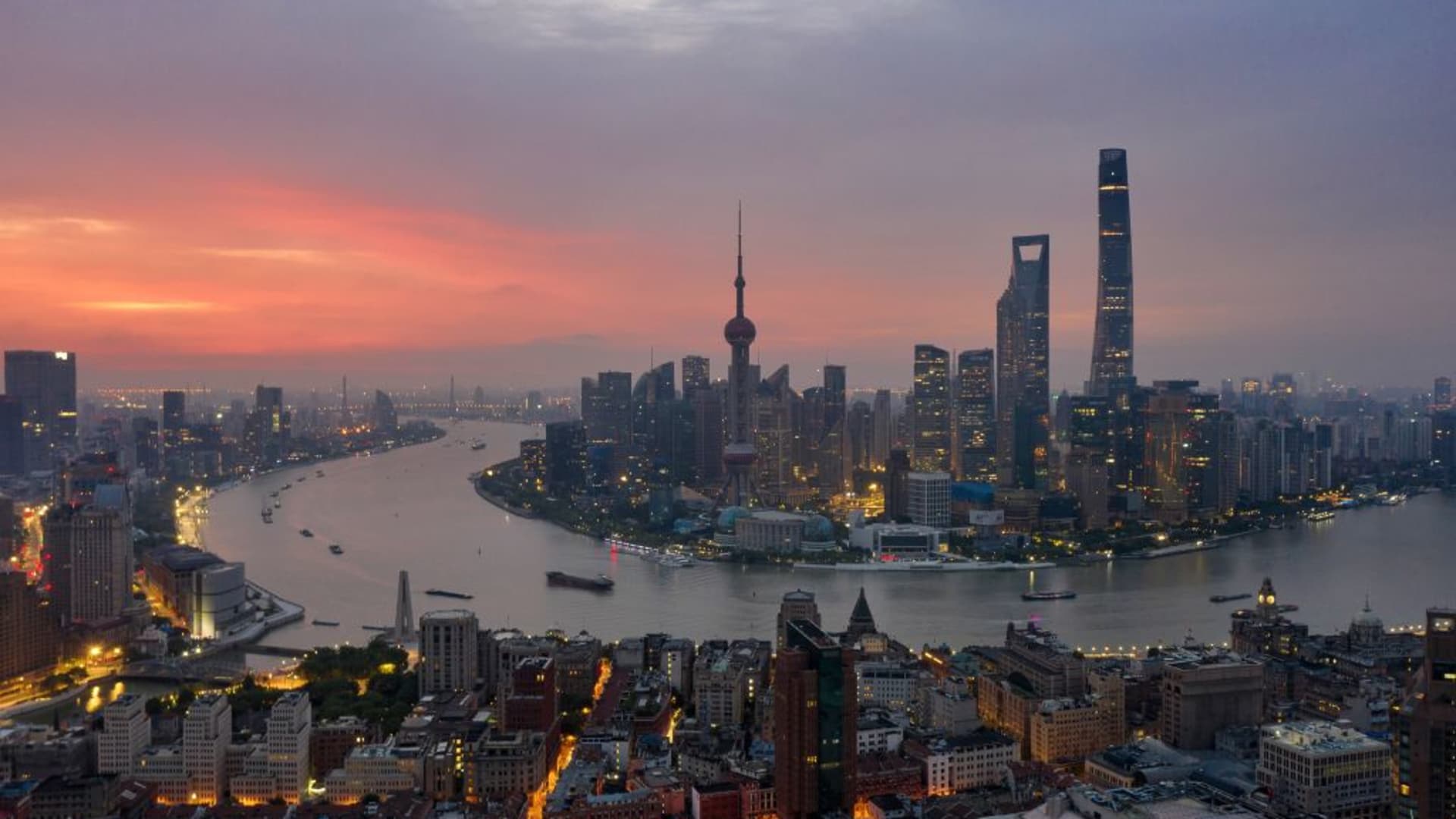
SHANGHAI, CHINA – JUNE 08: Aerial view of skyscrapers standing at the Lujiazui Financial District at sunrise on June 8, 2022 in Shanghai, China.
Vcg | Visual China Group | Getty Images
Asia-Pacific markets were set to open higher Wednesday, tracking Wall Street gains on hopes that the U.S. Federal Reserve could cut benchmark interest rates in December.
Expectations rose after Bloomberg reported that White House National Economic Council Director Kevin Hassett was being considered as the frontrunner to become the next Fed chair. Investors see Hassett as someone more likely to push the central bank toward a lower-rate environment favored by President Donald Trump.
Treasury Secretary Scott Bessent told CNBC on Tuesday that there was a “very good chance” that Trump could name new Fed chair before Christmas.
Markets are pricing in more than 84% chance that the Fed would cut rates in December, according to the CME FedWatch tool. New York Fed President John Williams also said on Friday that there was room to lower rates “in the near term.”
Japan’s benchmark Nikkei 225 index was set for a higher open, with its futures contract in Chicago trading at 49,120, and its counterpart in Osaka at 49,100, against the index’s Tuesday close of 48,659.52.
Australia’s ASX/S&P 200 was trading 1.2% higher on open.
Futures for Hong Kong’s Hang Seng Index pointed to a higher open, trading at 25,977, against the index’s previous close of 25,894.55.
Overnight, the key U.S. benchmarks closed higher after a volatile session.
The Dow Jones Industrial Average index advanced 664.18 points, or 1.43%, to close at 47,112.45. The S&P 500 gained 0.91% to settle at 6,765.88, while the Nasdaq Composite climbed 0.67% to finish at 23,025.59. That marks a turnaround from the losses seen earlier in the day.
At session lows, the S&P 500 was down about 0.7%, while the Dow and tech-heavy Nasdaq had dropped more than 100 points, or 0.2%, and more than 1%, respectively.
— CNBC’s Sean Conlon and Pia Singh contributed to this report.
Meta Platforms META 3.78%increase; green up pointing triangle is in talks to use chips made by Google in its artificial-intelligence efforts, a step toward diversifying away from its reliance on Nvidia NVDA -2.59%decrease; red down pointing triangle, according to people familiar with the matter.
A deal could be worth billions of dollars, but the talks are continuing and may not result in one. It is still up in the air whether Meta would use the chips, known as tensor processing units or TPUs, to train its AI models or to do inference, one of the people said. Inference, the process a trained model uses to generate the response to a query, requires less computational power than training.
Nov 25 (Reuters) – The U.S. Food and Drug Administration on Tuesday extended its review of Ascendis Pharma’s (A71.F), opens new tab therapy for children with a rare genetic disorder that causes dwarfism, the company said.
The health regulator extended its review by 3 months to February 28, 2026.
Sign up here.
The FDA extended the deadline after Ascendis submitted additional information on November 5 regarding a required follow-up study, prompting a major change to the application, the company said.
Ascendis had answered all remaining questions from the agency, including providing a revised plan for the post-approval study, and would continue to work closely with the FDA to finalize the requirements, CEO Jan Mikkelsen said.
The rare disorder, called achondroplasia, is caused by a genetic mutation that affects a protein in the body called fibroblast growth factor receptor 3, or FGFR3, resulting in dwarfism.
Ascendis’ therapy, TransCon CNP, targets a naturally occurring peptide called C-type natriuretic peptide (CNP), which has been shown to counteract the growth-inhibiting effects of the FGFR3 mutation and stimulate growth.
Reporting by Sriparna Roy, Sahil Pandey and Sneha S K in Bengaluru; Editing by Leroy Leo
Our Standards: The Thomson Reuters Trust Principles., opens new tab
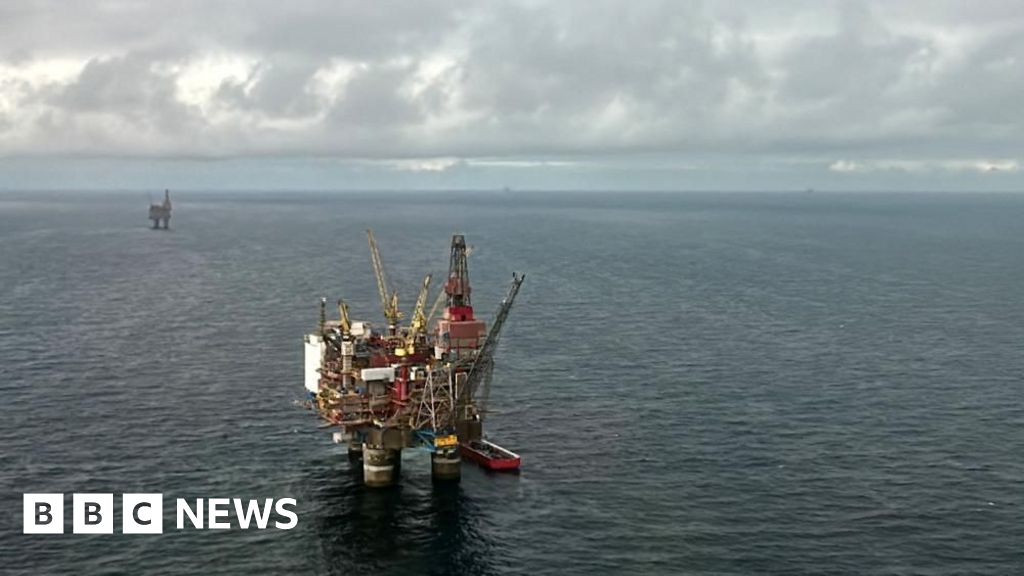
Plans to relax restrictions on new oil and gas drilling in the North Sea will be unveiled on Wednesday under the government’s North Sea Strategy.
Chancellor Rachel Reeves will announce the publication of the strategy as part of her Budget speech, the BBC understands. The Department for Energy Security and Net Zero will release a document on it shortly after.
The strategy is expected to confirm the government is relaxing its moratorium on new drilling for oil and gas in a form in which it can argue the new areas are extensions of existing infrastructure.
This idea for allowing new drilling in a way that can be “tied back” to existing fields was first floated at the Labour conference in September.
The results of the North Sea review will not directly reference the decision being considered by ministers over whether to give the go ahead to the controversial Rosebank field, which Ed Miliband was vocally opposed to while in opposition.
That project is the subject of a separate and ongoing regulatory and judicial process. However, the wider relaxation in rules is widely thought to increase the chances Rosebank will ultimately be approved.
Tiebacks have historically been used for small remote extensions to existing oil and gas fields which geologically stray into currently unlicenced areas of seabed.
Rosebank is a much larger facility which requires its own production infrastructure.
There has also been speculation that the windfall tax of 78% – due to expire in 2030 – might be phased out earlier.
The oil and gas industry has been lobbying hard in recent months for changes to the windfall tax, or energy profits levy, which they say has been crippling the industry.
Investment is at an all-time low with operators instead looking to spend their money in parts of the world with more favourable tax rates.
Research from Robert Gordon University in Aberdeen estimates that about 1,000 jobs a month are currently being lost.
It is understood the green light for “tie backs” would be viewed as a hollow gesture without at least some concessions on taxation.
A kind of “cap and floor” mechanism would seem like the most likely move from government, which would kick in if oil prices returned to high levels like they did in the aftermath of the Russian invasion of Ukraine.
The industry argues that subsequent falls in the price of crude oil demonstrate that the “windfall” has now ended and that taxation should reflect that change.
– ViaSat-3 F2, second of three ultra-high-capacity satellites Boeing is building for global network operator Viasat, launched via United Launch Alliance’s Atlas V
CAPE CANAVERAL SPACE FORCE STATION, Fla., Nov. 14, 2025 — Boeing [NYSE: BA] mission controllers confirmed the second ViaSat‑3 satellite, built on the company’s high‑power 702MP+ platform,…
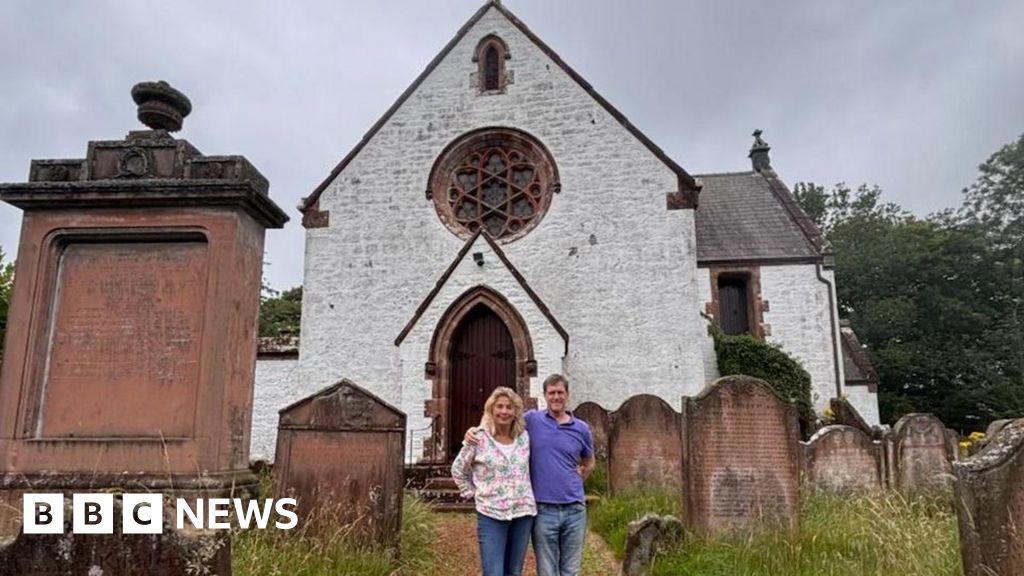
Kirsteen and Andrew Mitchell own the manse next door to Applegarth Church
A couple who decided to save their local church took just two days to raise the money to make the purchase – thanks to donations from well-wishers around the world.
Andrew and Kirsteen Mitchell crowd-funded £70,000 to buy Applegarth Church near Lockerbie following an appeal to members of Clan Jardine, whose ancient family set lies within the tiny hamlet.
Descendants from the United States, South Africa and Canada put their hands in their pockets to help secure the future of the building.
The couple, who kick-started the fundraising campaign with a £15,000 donation, have now established a charity for the church to be used as a place for weddings, funerals and events.
“In 48 hours we had raised more than the asking price of £55,000. We were astounded,” the couple said.
Mitchell family
The church is one of many to be sold by the Church of Scotland
The church closed in 2023 and since then the Applegarth congregation has merged with others in nearby Lockerbie.
It was put on the market by the Church of Scotland earlier this year – one of several properties it is selling to cover rising costs amid shrinking congregations.
Mr and Mrs Mitchell own the neighbouring manse property, which was once home to the church minister and is also used as luxury accommodation.
The couple wanted to preserve the history of the church and the building itself, which had been earmarked for a potential recording studio or storage facility.
“I emailed families who had stayed with us over the years – not just Jardines, but those who had come to find their forebears in the churchyard. In particular a family of Beatties in Canada”, said Kirsteen.
One Jardine family donated about £30,000 towards the purchase price of the church, which dates back to 1760.
Mitchell family
The church was closed in 2023 and advertised for sale in 2025
Mrs Mitchell said: “We believe a church has stood on this site in some capacity since around 600 AD. We’re overwhelmed by all of those who have come forward to offer support.”
The church has served as the spiritual home of the Jardine family, who were among the infamous Border Reivers and frequently carried out raids over the border between the 13th and 15th centuries.
A ceremony and a blessing to mark the keys being officially handed over to the newly established Friends of Applegarth Church, which is now a registered Scottish charity, will be held at the church on 30 November.
Clan Chief Sir William Jardine will be in attendance with his family, alongside visitors from the United States and South Africa.
“Credit to my husband Andrew who has been instrumental in establishing the charity,” Mrs Mitchell said.
“We welcome anyone with an interest in the church to come along to the ceremony.
“We are interested to hear ideas about potential future use and look forward to marking this next chapter.”
It is the second time this year a clan has saved a south Scotland church this year.
Members of Clan Turnbull stepped in to preserve Ruberslaw Parish Church at Bedrule – between Hawick and Jedburgh – during the summer.
Italian company Bending Spoons flew largely under the radar — until last month. In a span of 48 hours, the company announced the acquisition of AOL and a massive $270 million raise, quadrupling its valuation to $11 billion, up from $2.55 billion set in early 2024.
Bending Spoons has grown rapidly by acquiring stagnating tech brands like Evernote, Meetup, and Vimeo, then turning them profitable through aggressive cost-cutting and price increases. While the company’s approach is similar to private equity, there is one key difference: Bending Spoons has no plans to sell these businesses.
Andrew Dumont, the founder and CEO of Curious, a firm that also acquires and revitalizes what he calls “venture zombies,” is convinced this “hold forever” strategy will become increasingly prominent in the coming years as AI-native startups make older VC-backed software businesses less relevant.
“Our belief is that the venture power law, in which 80% of companies ‘fail,’ produces many great businesses, even if they’re not unicorns,” Dumont told TechCrunch.
Dumont defines a “great business” as one that can be purchased at a low price and quickly revived to generate substantial cash flows. This “buy, fix, and hold” strategy is the playbook for a growing number of investors, from the 30-year-old Constellation Software, which pioneered the model, to newer players, including Bending Spoons, Tiny, SaaS.group, Arising Ventures, and Calm Capital, according to Dumont.
“Our whole model is to buy these companies, make them profitable, and use those earnings to grow the business,” Dumont said.
In 2023, Curious raised $16 million in dedicated capital for buying software companies that have stalled and can no longer secure follow-on investment.
Since then, the firm has bought five businesses, including UserVoice, a 17-year-old startup that raised $9 million in VC funding from Betaworks and SV Angel.
“It’s a great business, but the cap table wasn’t aligned with keeping it. These funds get old, and these companies just sit there,” Dumont said. “We provide liquidity and also reset these companies for profitability.”
Although Dumont didn’t disclose how much he paid for UserVoice, he said that stagnant companies sell for a fraction of the valuation commanded by healthy SaaS startups, which typically sell for 4x annual revenue or more. Based on our conversation, we estimate that “venture zombies” sometimes sell for as low as 1x yearly revenue.
By implementing cost-cutting and price increases, Curious can push these businesses to achieve 20% to 30% profit margins almost immediately. “If you have a million-dollar business, you’re kicking off $300,000 in earnings,” he offered as an example.
They achieve the turnarounds because, unlike the stand-alone companies, they can centralize functions like sales, marketing, finance, and other admin roles, across all of their portfolio companies. “We’re not trying to sell the businesses we acquire and don’t need VC-scale exits, so we can balance growth and profitability more sustainably,” Dumont said.
When asked why VCs don’t urge their startups to be profitable like Curious does, Dumont responded by saying: “Investors don’t care about earnings; they only care about growth. Without it, there’s no VC-scale exit, so there’s no incentive to operate with that level of profitability.”
The cash generated from Curious’ companies is then used to buy other startups, Dumont said.
The firm plans to buy 50 to 75 startups like UserVoice over the next five years, and Dumont is certain he won’t have a shortage of targets to choose from. Curious is focused on acquiring startups that generate $1 million to $5 million in recurring revenue annually, a segment of the software market that, according to Dumont, private equity shops and secondary investors have historically ignored.
“We’ve been doing this for a little under two years now, and we’ve probably looked at at least 500 companies, and we bought five,” Dumont said.
While Bending Spoons’ big valuation hike may validate the “venture zombie” acquisition model, Dumont doesn’t expect a lot of new competition. Turning profits out of stagnation isn’t easy. “It’s a ton of work,” he said.
(Bloomberg) — Asian stocks were set for a third day of gains, tracking similar advances on Wall Street as weak US consumer data lifted bets of a Federal Reserve interest rate cut next month.
Equity-index futures pointed to strong starts for Japan and Australia, with a more modest increase for Hong Kong, at Wednesday’s open. In the US, the S&P 500 rose 0.9% and the Nasdaq 100 climbed 0.6% in choppy sessions as Alphabet Inc. threatened Nvidia Corp.’s dominance in the artificial intelligence sector.
Delayed economic reports out of the US further cemented bets for a Fed cut in December, with traders now pricing in a roughly 90% chance. Retail sales rose modestly in September, suggesting consumer spending is cooling after months of strong demand. While wholesale inflation picked up, consumer confidence in November saw its steepest drop since April.
“Downbeat economic data is delivering gains to stock and bond bulls alike, as weaker-than-expected retail sales and consumer confidence numbers coincide with accelerating job losses and rising odds of a December Fed cut,” said José Torres, senior economist at Interactive Brokers.
The latest US economic reports have taken on added weight ahead of the Fed’s December meeting, given the lack of fresh data. Governor Stephen Miran underscored that outlook by reaffirming his belief that the US economy requires substantial interest‑rate reductions. While the Fed typically adjusts rates in 25‑basis‑point increments, it has on occasion moved by 50 basis points or more.
White House National Economic Council Director Kevin Hassett’s emergence as the frontrunner to replace the Fed chair helped drive Treasury yields down, with the 10‑year slipping to 4% for the first time in a month. The dollar slipped 0.3%.
Traders bolstered bets on lower rates over the next year, reflecting the view that a Hassett‑led Fed would deliver the aggressive cuts that President Donald Trump has advocated.
“The argument will be a weaker US dollar, lower front-end rates from May’s meeting onwards and steeper curves,” said Jordan Rochester, a head of macro strategy at Mizuho in London. Hassett is “a credible economist by background, previously working at the Fed as a senior economist, but some may argue his closeness to Trump makes him the patsy.”
In Asia, recent weakening of the yen is increasing the likelihood of the Bank of Japan raising its benchmark rate next month, according to a former executive director of the central bank. The currency hit a fresh 10-month low against the dollar last week and is fueling inflationary pressure via higher import costs.
AI Battle
Alphabet shares jumped 1.6%, moderating earlier gains, after a report that Meta Platforms Inc. was in talks to spend billions on Google’s artificial-intelligence chips. Nvidia shares dropped 2.6%, pulling back from gains it made in Monday’s tech-fueled rally.
“Nvidia’s dominant position is unlikely to be fundamentally threatened in the short-term, but markets are all about forward expectations, and it certainly seems like Alphabet is poised to snatch market share away from Jensen Huang’s empire,” said Chris Beauchamp, chief market analyst at IG.
The rally in Alphabet shares is poised to shake up the rankings of the world’s most valuable companies. A potential changing of the guard comes at a time when the AI industry has come under scrutiny, with stretched valuations causing some volatility.
Elsewhere in commodities, oil fell as signs of progress in peace talks between Ukraine and Russia buoyed expectations that Moscow’s supply will stay online. Gold closed little changed.
Some of the main moves in markets:
Stocks
Nikkei 225 futures rose 1% as of 7:26 a.m. Tokyo time Hang Seng futures rose 0.3% S&P/ASX 200 futures rose 1.1% Currencies
The Bloomberg Dollar Spot Index fell 0.3% The euro was little changed at $1.1571 The Japanese yen was little changed at 156.00 per dollar The offshore yuan was little changed at 7.0825 per dollar The Australian dollar was little changed at $0.6467 Cryptocurrencies
Bitcoin was little changed at $87,086.84 Ether was little changed at $2,928.49 Bonds
Australia’s 10-year yield was little changed at 4.43% This story was produced with the assistance of Bloomberg Automation.
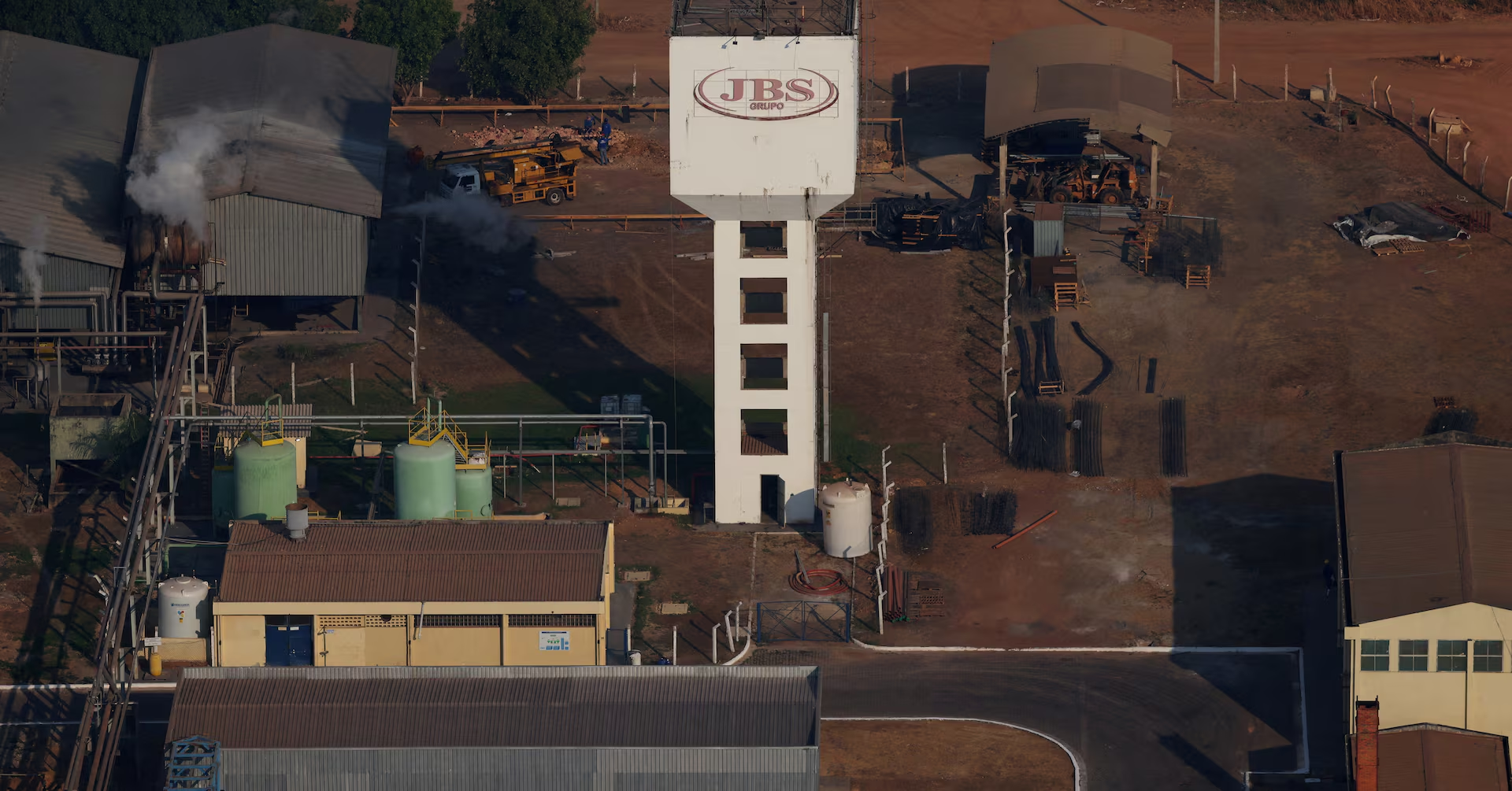
SAO PAULO, Nov 25 (Reuters) – Brazilian meatpacker JBS (Z98.F), opens new tab said on Tuesday it had signed a binding memorandum of understanding with the shareholders of Viva to combine both firms’ assets related to leather production and commercialization.
In a securities filing, JBS said the new company will be called JBS VIVA and will be owned 50% by JBS and 50% by Viva’s shareholders — Vanz Holding and Viposa.
Sign up here.
The company will process more than 20 million leathers per year, with 31 factories and over 11,000 employees, JBS said, adding that the deal still lacks conditions including the signature of definitive agreements.
JBS will name the chairman and the Chief Financial Officer of JBS VIVA, while Viva’s shareholders will appoint the Chief Executive Officer and the Chief Operating Officer, according to JBS.
Reporting by Andre Romani, Editing by Natalia Siniawski
Our Standards: The Thomson Reuters Trust Principles., opens new tab
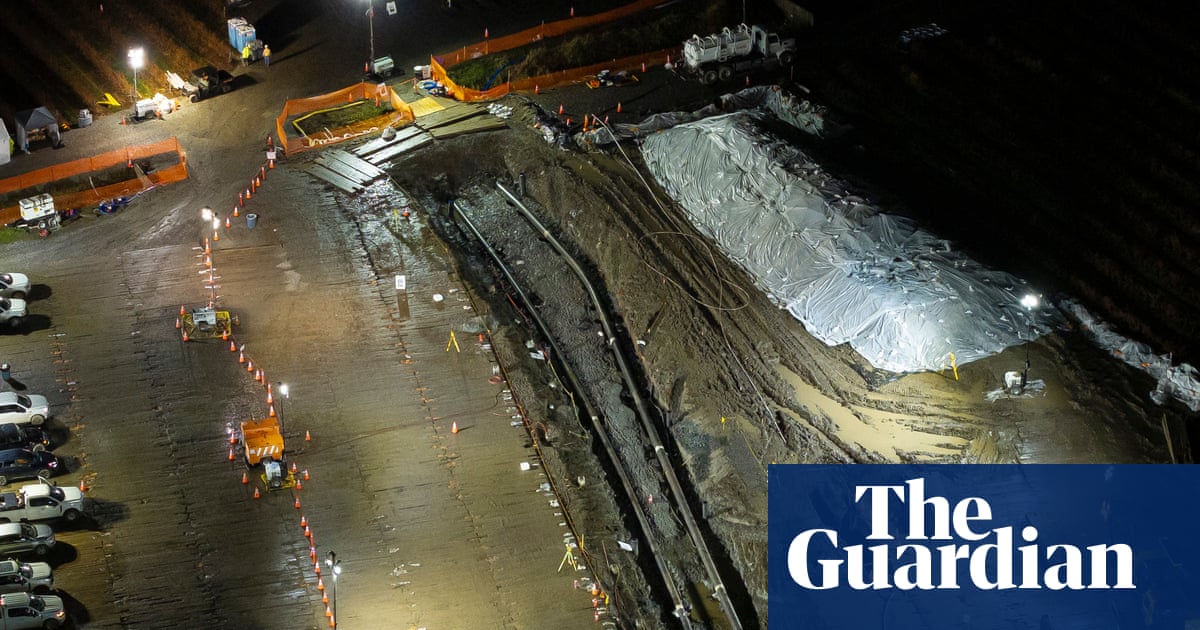
Investigators have identified the source of a leak in the Olympic pipeline two weeks after fuel was first spotted in a ditch near an Everett, Washington, blueberry farm.
Oil and gas company BP, the operator of the pipeline, shared in a statement that it had determined the leak occurred in a 20in pipeline and not a neighboring 16in pipeline, allowing that pipeline to be restarted.
“Repair plans for the 20-inch segment are being developed and a timeline for repair and restart will be shared when available,” BP said.
The news follows announcements by the Washington and Oregon governors, Bob Ferguson and Tina Kotek, respectively, declaring states of emergency due to the disruptions in fuel supplies. The Olympic pipeline carries gasoline, diesel, jet fuel and other petroleum products to both states, including 90% of Oregon’s transportation fuel and much of the Seattle-Tacoma international airport’s jet fuel.
The leak was first reported on 11 November between the Washington towns of Everett and Snohomish. The state department of ecology determined the leak consisted of a combination of gasoline, jet fuel and diesel. BP shut off two pipelines that ran side by side in the Olympic pipeline system to determine the source of the leak, either a 16in or a 20in pipeline.
On 16 November, the company restarted the 16in pipeline, but shut if off again after observing “an increase in product observed in a collection point”, it said in a statement.
Later that week, on 19 November, Ferguson issued a state of emergency in Washington, waiving state regulations to allow commercial vehicle operators to drive longer hours to transport jet fuel to Seattle-Tacoma airport.
Kotek followed suit in Oregon on Monday, declaring a similar state of emergency and waiver of commercial driving regulations.
In statements to Reuters on Monday, major airlines operating through Seattle-Tacoma and the airport itself said they had developed contingencies to prevent disruptions to holiday travel.
“We do not expect disruption to our operations at Seattle-Tacoma international airport through the Thanksgiving travel week,” Alaska Airlines said, adding that it had brought extra fuel into Seattle on inbound flights and additional trucking shipments, and added fuel stops to certain flights.
Delta Air Lines similarly said it had transported additional fuel to the airport and added refueling stops to some long-haul flights.
On Monday, BP reported that it had excavated “over 200 feet of pipeline” and expected to “continue overnight operations tonight”. By Tuesday morning, the company had found the source of the leak.
In updated statements to Reuters on Tuesday, Delta said it “is operating our full Seattle hub schedule and has discontinued fuel stops on select long-haul flights”. Alaska added that it had “discontinued all planned fuel stops but will continue to tanker and truck in additional fuel on a reduced basis as the pipeline increases to normal capacity”.
Repairs to the 20in pipeline come as Washington state’s ecology department has fined BP $3.8m for a 2023 gasoline spill from the Olympic pipeline. The Olympic pipeline has leaked at least 13 times since 1999, when a leak near Bellingham caused an explosion that killed a teenager and two younger children. According to the Pipeline Safety Trust, a Washington state-based non-profit, the pipeline has leaked three times in 2025.
“These incidents have caused over $100m in property damage,” Kenneth Clarkson, spokesperson for the Pipeline Safety Trust, said in a statement to the Associated Press. “Olympic Pipeline must explain what has changed and what they’re doing to stop it.”