The new translation service, now available in beta to select KDP authors, supports translations between English and Spanish and from German to English. Authors can manage and access their translations on the KDP portal, including selecting languages, setting list prices, and publishing. Within a few days, authors can publish fully formatted translations of their books. All translations are automatically evaluated for accuracy before publication, and authors can choose whether to preview or automatically publish completed translations.
This launch builds on Amazon KDP’s ongoing commitment to supporting independent authors in reaching global audiences and increasing their earning potential. Kindle Translate provides free translation services for independent authors like Roxanne St. Claire, who said: “For decades, indie authors have been unable to find a cost-effective and trustworthy solution to foreign language translation. With services like Kindle Translate, we are able to easily bring our stories to a wide international audience—a win for authors and readers!” Fellow KDP author Kristen Painter added, “Foreign translations open doors to new readers around the world and give my titles a second life. It’s one of the smartest ways to expand both reach and revenue.”
Category: 3. Business
-

AI-powered service for multilingual eBooks
-

Stock market today: Live updates
A trader works on the floor of the New York Stock Exchange.
NYSE
U.S. stocks retreated on Thursday as names in the artificial intelligence trade came under pressure yet again amid worries around eye-watering valuations.
The Dow Jones Industrial Average slipped 439 points, or 0.9%. The S&P 500 traded down by 1.1%, while the Nasdaq Composite shed 1.8%.
AI stocks remained in focus for those on Wall Street during the session. Qualcomm shed 4%, even after the chipmaker posted better-than-expected quarterly results. Advanced Micro Devices, a standout name in the prior day, declined 7%, while Palantir Technologies and Oracle dipped 5% and 3%, respectively. Shares of AI darling Nvidia and fellow “Magnificent Seven” name Meta Platforms slid as well.
“So much of this stuff from a valuation standpoint was so lofty and priced for perfection that we’re seeing in the market a bit of a dichotomy between companies that are are beating and raising versus those that maybe are beating on the top line but providing tepid guidance on the bottom line or from an operating profit standpoint,” said Mike Mussio, president at FBB Capital Partners. “That’s the difference between some of these companies on earnings being up double digits versus being down double digits, and there’s not a lot of in-between.”
Equities linked to the AI space rebounded on Wednesday from valuation concerns that swirled earlier this week, serving as a potential boon for the major indexes. AMD closed more than 2% higher in the previous session after the semiconductor company reported better-than-expected third-quarter results. The performance pulled up some other AI stocks alongside it, including Broadcom and Micron Technology. Oracle also recouped some recent losses.
While the recovery of the AI names helped the market bounce back a bit following a soft start to the weekly period, all three major U.S. indexes are still firmly in the red week to date.
Thursday’s pullback was exacerbated by concerns about the state of the labor market, as October saw a significant number of layoff announcements. Job cuts for the month totaled 153,074, marking an increase of 183% from September and 175% from the year-ago period, according to Challenger, Gray & Christmas. That’s the highest level recorded for an October in 22 years. Not only that, 2025 is the worst year for layoffs since 2009.
That data paints a shaky picture of the U.S. economy, particularly in light of the lack of data releases with the ongoing U.S. government shutdown. The stoppage, now in its 37th day, has become the longest in the country’s history.
“We’re starting to get dribs and drabs of the economic data … that’s not government related, and it’s not super rosy,” Mussio said, adding that “all that stuff is just setting up for some for some market weakness.” Though that doesn’t necessarily mean “this is the start of a major skid or anything,” he believes that if the government reopens and the data thereafter shows the consumer is “really not dead” as the holiday season unfolds, that “typical” year-end rally could “continue.”
Investors were also looking at Washington, as the Supreme Court heard arguments over the legality of the Trump administration’s tariffs. They increasingly expect the Supreme Court to rule against the Trump administration’s aggressive trade policy after high court justices on Wednesday expressed some skepticism about the trade taxes’ legality.
The potential ruling would trigger a rollback of the president’s tariffs, likely pushing stocks higher.
Continue Reading
-

Porsche clinches top spot for sales satisfaction in J.D. Power Study for third year in a row
1. All information offered on Porsche Newsroom, including but not limited to, texts, images, audio and video documents, are subject to copyright or other legislation for the protection of intellectual property. They are intended exclusively for use by journalists as a source for their own media reporting and are not intended for commercial use, in particular for advertising purposes. It is not permitted to pass on texts, images, audio or video data to unauthorised third parties.
2. All logos and trademarks mentioned on Porsche Newsroom are trademarks of Dr. Ing. h.c. F. Porsche AG (hereinafter: Porsche AG), unless otherwise stated.
3. All contents of Porsche Newsroom are carefully researched and compiled. Nevertheless, the information may contain errors or inaccuracies. Porsche AG does not accept any liability with respect to the results that may be achived through the use of the information, in particular with respect to accuracy, up-to-dateness and completeness.
4. Insofar as Porsche Newsroom provides information concerning vehicles, the data refers to the German market. Statements concerning standard equipment and statutory, legal and tax regulations and repercussion are valid for the Federal Public of Germany only.
5. With respect to the use of Porsche Newsroom, technical faults such as, delays to news transmission, cannot be ruled out. Porsche AG does not accept any liability for any resulting damage.
6. Insofar as Porsche Newsroom provides links to the internet sites of third parties, Porsche AG does not accept any responsibility for the content of the linked sites. On using the links, the user leaves the Porsche AG information products.
7. In agreeing to these rights of use, the user shall be obliged to refrain from any improper use of Porsche Newsroom.
8. In the event of improper use, Porsche AG reserves the right to block access to Porsche Newsroom.
9. Should one or more provisions of these terms and conditions be or become invalid, this shall not affect the validity of the remaining provisions.
Continue Reading
-

Tesla’s trillion-dollar pay package for Elon Musk : NPR
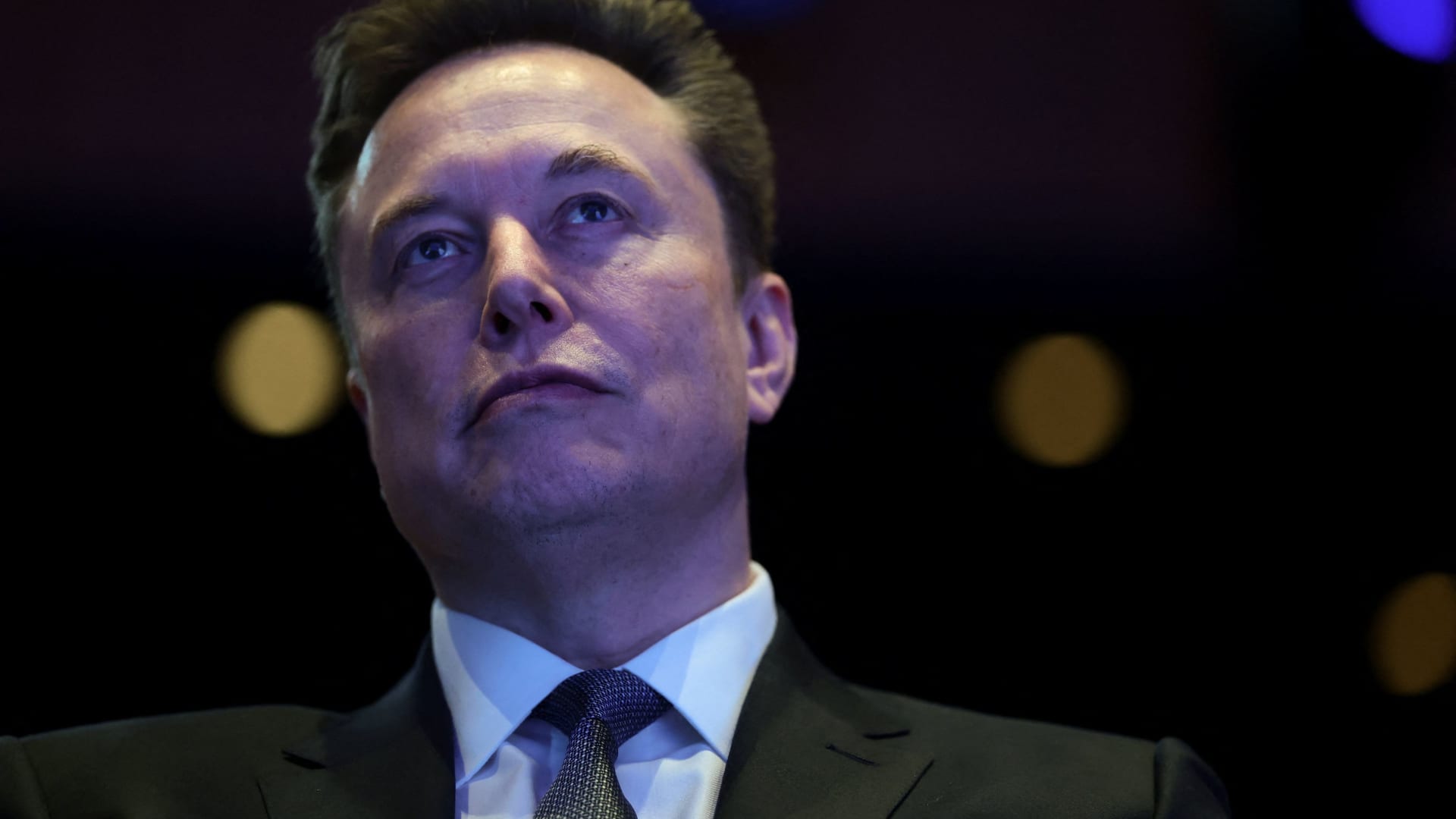
Elon Musk arrives at the Tenth Breakthrough Prize Ceremony at the Academy Museum of Motion Pictures in Los Angeles, California, on April 13, 2024. Tesla shareholders vote Thursday on a pay package that could award Musk a trillion dollars’ worth of Tesla stock if he meets certain targets.
Etienne Laurent/AFP via Getty Images
hide captiontoggle caption
Etienne Laurent/AFP via Getty Images
On Thursday afternoon, Tesla shareholders will vote on a proposed pay package of extraordinary proportions for Elon Musk.
That package is conditional: Musk would earn no salary, but would unlock Tesla stock worth about a trillion dollars if the company meets certain criteria within the next decade.
Among other targets, he would have to raise the company’s market capitalization, the value of all its stock put together, from about $1.5 trillion today to above $8.5 trillion.
For comparison, the most valuable company in the world, Nvidia — the chipmaker boosted by the AI boom — is worth $4.83 trillion. (Its CEO, who is seen as pivotal to the company’s success, is paid $50 million per year and owns 3.5% of the company.)
Musk is already unfathomably wealthy, worth some $460 billion, according to the Bloomberg Billionaires Index. That’s thanks in large part to Tesla’s soaring stock price, currently worth about $465 per share. (That’s more than 400 times more valuable than at the company’s IPO in 2010.)

A previous pay package that offered Musk a then-unprecedented $55.8 billion has been tied up in a lengthy court battle after a judge ruled that the board was too cozy with Musk in designing it. That case is still pending, and Tesla’s board has made sure that Musk will receive tens of billions of dollars’ worth of stock for his last few years of work, no matter how it is resolved.
But what about pay for his future work? Tesla’s board argues that they need to incentivize him to “remain at Tesla and focus his unmatched leadership abilities” on the company, and that extraordinary results merit extraordinary pay. Even some of Musk’s hard-core fans feel that, over the last few years, he has been distracted by politics and other projects, to the detriment of Tesla’s efforts to sell cars. Tesla’s profits have been down from last year throughout 2025.
The new package, like the previous one, is entirely based on performance and divided into twelve tranches. If Tesla’s stock value grows to hit each of 12 targets, and Tesla also meets separate earnings or product-specific sales targets, Musk earns a tranche of stock for each pair of targets he hits. He won’t be able to sell that stock immediately, to further incentivize him to stick around.
Tesla did not respond to a requests for comment, but the board has strongly advocated for this pay package in SEC filings and public comments. Supporters of the pay package emphasize that Musk only gets his big payday if Tesla’s value grows enormously, boosting shareholders. Critics note that he could take home hundreds of billions even if he only unlocks a few relatively modest targets.
Musk only gets the full trillion-dollar prize if he pulls off the “Mars-shot” of hitting all the targets. (Technically, he could take home slightly less, because of some details governing how the restricted stock units would be granted. Of course, it could be more, if the stock growth beats the top target.)
A trillion dollars is hard to wrap your head around, so we did a little number crunching to put this extraordinary pay package in perspective.
$8.8 billion per year
All-stock compensation packages are tricky to value, because their true worth fluctuates with the company’s share price. So what costs the company a small amount to give in 2025 might be worth an enormous amount in 2035, for instance.
Based on recent stock prices, Tesla’s board values this pay package at around $88 billion, which is a small fraction of what Musk would actually receive if he hits his targets and Tesla stock soars. But even using that very conservative figure, it works out to $8.8 billion a year.
Glass Lewis, a proxy advisory firm, analyzes company books and recommends how shareholders should vote on decisions like this. The firm estimates that the entire S&P 500 combined paid all its CEOs about $9 billion last year. So Musk would make about as much as every other major corporate CEO combined — before factoring in stock growth.
28.8%
That’s how much of Tesla’s voting shares Musk would own if he unlocks the full pay package.
Musk and Tesla’s board have publicly said it’s this control — not the money — that is the real prize. “It’s less about compensation and more about the voting influence,” board chair Robyn Denholm told CNBC recently. Critics view it the same way. Tom Dinapoli, the comptroller of New York State, recently called the proposal “pay for unchecked power.”
A Tesla Optimus robot scoops popcorn and gestures at attendees during the opening of the Tesla Diner and Drive-In restaurant and Supercharger in Los Angeles, Calif., on July 21, 2025.
Patrick T. Fallon/AFP via Getty Images
hide captiontoggle caption
Patrick T. Fallon/AFP via Getty Images
One of the pay package targets is for Tesla to sell a million robots. Tesla has been developing a humanoid robot called Optimus, designed to work in factories as well as homes. Musk imagines one for every person on Earth, all of them running Tesla software. And on an earnings call last month, he said he wants to make sure that if he builds what he calls a “robot army,” he stays in charge of it.
“It’s not like I’m going to go spend the money. It’s just, if we build this robot army, do I have at least a strong influence over that robot army? Not control, but strong influence,” Musk said. “I don’t feel comfortable building that robot army if I don’t have at least a strong influence.”
33x
This pay package, by Tesla’s own lowball valuation, is more than 33 times larger than the previous biggest-ever package … which was Musk’s 2018 pay package, then given an equally conservative $2.6 billion valuation. (The value of that 2018 package today is actually above $100 billion, thanks to the rise in Tesla’s share price.)
That 2018 package, meanwhile, was 33 times larger than the biggest award before that. Which was Elon Musk’s 2012 pay package, worth approximately $78 million.
$942 billion
Glass Lewis has calculated that Musk would actually take home $942 billion once he hits the targets, after some payments he’d be required to make for tax purposes.
Musk has said he won’t spend the money. But what could he buy if he did? To give a sense of scale, we pulled the numbers for some of the world’s priciest luxury items.
Let’s say Musk bought every single Rolls Royce sold in a year — last year that was 5,712 cars at about $500,000 each. That’s $2.85 billion.
Let’s say he also bought every yacht on offer for a year. Global yacht sales in the first quarter of this year were $1 billion, so call it $4 billion for the year.
How about a year’s worth of jet sales? According to one estimate, the entire global private jet market will hit $39.84 billion this year.
So let’s say that Musk buys every new Rolls-Royce, private jet and yacht sold in the entire world. And then does the same thing every year for a decade.
He’d still have $475 billion left over.
At press time, that’s more money than the richest person on Earth possesses, according to the Bloomberg’s Billionaires Index. That person is, of course, Elon Musk.
Continue Reading
-

Capgemini is recognized as a Leader in Connected Product Engineering Services by independent research firm
Capgemini is recognized as a Leader in Connected Product Engineering Services by independent research firm – Capgemini
Continue Reading
-

Datadog’s stock soars 20% on Q3 earnings beat, strong forecast
Omar Marques | SOPA Images | Lightrocket | Getty Images
Datadog shares jumped 20% on Thursday after the software company reported third-quarter revenue that topped Wall Street estimates and issued a strong forecast for the fourth quarter.
The company reported revenue of $885.7 million, which was up 28% year over year, and topped the $852.8 million expected by LSEG analysts.
The cloud software company expects fourth quarter revenue to reach between $912 million and $916 million, far surpassing Wall Street’s projections of $887 million.
As artificial intelligence-driven demand for cloud-security products has continued to increase, Datadog has been rolling out multiple AI technologies and security tools over the past year.
“The Datadog R&D team is innovating rapidly to help our customers solve problems in the AI space,” CEO Olivier Pomel said in a release.
The company launched in June Bits AI Agents for SRE, an AI assistant that immediately investigates alerts and drafts incident responses and status updates. Datadog also added multiple new features to its LLM Observability over the summer, including agentic AI monitoring and expanded LLM experimentation.
In June, Datadog also released its MCP Server, which connects AI agents with data sources, and its foundation model TOTO.
Adjusted earnings per share came in at 55 cents, which beat FactSet analyst expectations of 45 cents.
The number of customers with at least $100,000 in annual recurring revenue grew 16% for the quarter.
Datadog reported net income of 33.9 million, or 10 cents per share. Last year, the company had $51.7 million in net income, or 14 cents per share.
Datadog year-to-date stock chart.
Continue Reading
-

Boeing Company – Boeing Pioneering Next-Generation Training Tools with Launch of Virtual Airplane
– Boeing launches Virtual Airplane Procedures Trainer powered by Microsoft Azure and Microsoft Flight Simulator
– Enables pilots to practice procedures outside of traditional training environmentsCASCAIS, Portugal, Nov. 6, 2025 /PRNewswire/ — Boeing [NYSE: BA] announced the launch of its latest product, Virtual Airplane Procedures Trainer (VAPT) at the European Aviation Training Summit. A training platform powered by Microsoft Azure and Microsoft Flight Simulator, the tool is designed to empower pilots and flight training teams with immersive, accessible and customizable tools that elevate pilot learning and readiness.
“We’re very excited about the launch of Virtual Airplane. This new software will significantly impact how and when pilots and operators train and will provide them with much needed flexibility,” said Chris Raymond, Chief Executive Officer of Boeing Global Services. “This new platform reflects Boeing’s commitment to digital innovation as we seek to leverage the latest technologies to improve our offerings and outcomes for our customers.”
The Procedures Trainer is the first application within the Virtual Airplane product suite and equips flight training teams with tools for realistic flight-deck practice.
- High-fidelity simulations: Pilots experience 3D simulations in light-weight devices to help standardize training, reduce simulator familiarization time and improve readiness before working with flight training devices.
- Intuitive authoring tool: Training operators manage content through an intuitive, configurable self-service authoring tool that lets them author, customize and distribute training lessons across their training programs. With the authoring tool, airlines can launch or change procedures instantly to their pilot pool.
“The launch of Virtual Airplane underscores our commitment to pilot training and enhancing aviation safety. With this product, pilots can hone their skills and training operators can tailor lessons to meet individual and organizational needs,” said Chris Broom, vice president of Boeing Global Services, Commercial Training Solutions.
“Microsoft is committed to accelerating learning while optimizing confidence for pilots with safety at the core. Partnering with Boeing, we are advancing the future of flight by empowering the people at the heart of it,” said Dayan Rodriguez, Corporate Vice President, Manufacturing and Mobility, Microsoft.
Virtual Airplane is enabled for use on computers and iPad devices for Boeing 737 MAX, with additional Boeing models coming soon.
For more information about Virtual Airplane, visit: https://services.boeing.com/training-solutions/flight-training/virtual-airplane
A leading global aerospace company and top U.S. exporter, Boeing develops, manufactures and services commercial airplanes, defense products and space systems for customers in more than 150 countries. Our U.S. and global workforce and supplier base drive innovation, economic opportunity, sustainability and community impact. Boeing is committed to fostering a culture based on our core values of safety, quality and integrity.
Contact
Boeing Media Relations
media@boeing.com
View original content to download multimedia:https://www.prnewswire.com/news-releases/boeing-pioneering-next-generation-training-tools-with-launch-of-virtual-airplane-302607464.htmlSOURCE Boeing
Continue Reading
-

UBS to liquidate funds with substantial First Brands exposure
Unlock the Editor’s Digest for free
Roula Khalaf, Editor of the FT, selects her favourite stories in this weekly newsletter.
UBS has told clients that it will wind down an investment vehicle with significant debt exposure to First Brands Group, in the first major fund liquidation following the US auto parts maker’s shock bankruptcy.
The Swiss bank is grappling with more than $500mn of exposure to First Brands across its asset management and investment arms, while facing particularly acute challenges at US hedge fund units that provided invoice-linked financing to First Brands.
UBS has told clients of its Chicago-based O’Connor subsidiary that it is liquidating several invoice finance funds, according to people familiar with the matter, including a strategy that did not have exposure to First Brands.
“We informed investors last month that O’Connor’s Working Capital Opportunistic funds are being wound down and the majority of the funds’ assets will be monetised by the end of the year,” UBS told the Financial Times.
“As a priority, we’re taking steps to protect clients’ interests and maximise recovery of the remaining First Brands Group-related positions through the complex bankruptcy process.”
The FT reported last month that a fund specialising in invoice finance at O’Connor, a private credit and commodities specialist, had 30 per cent of its portfolio tied to First Brands.
The level of exposure has sparked anger among some investors who were previously assured that the fund would not hold more than 20 per cent of assets in a single “position”. UBS has argued that it complied with these rules, however, as 21.4 per cent of the exposure was “indirect” and split across First Brands’ various customers.
On an earnings call last week, UBS’s chief financial officer Todd Tuckner confirmed that the bank itself “does not have balance sheet exposure to First Brands”, with “only a small number of funds” impacted, although it was “always unfortunate when clients generate losses”.
“That said, it’s important to note that the most affected funds were targeted at sophisticated investors and had clear risk disclosures,” he added. “No investment guidelines were breached.”
UBS is aiming to “monetise” 70 per cent of the O’Connor fund with First Brands exposure by the end of the year, according to a person familiar with the matter.
The bank is also liquidating a “High Grade” fund that invested in invoices linked to less risky companies, even though it did not have exposure to First Brands. The whole of that fund’s assets are expected to be sold by year-end, the person added. The invoice finance funds have a total of around $600mn in assets.
The fund liquidation comes amid growing concerns around the validity of First Brands’ customer invoices and wider jitters around the fast-growing market for private lending against corporate assets.
First Brands this week claimed in a lawsuit against its founder and longtime chief executive Patrick James that the group had raised financing against “erroneous or fabricated invoices”. James has denied allegations of fraud and financial impropriety.
O’Connor is in the process of being sold by UBS to Cantor Fitzgerald, the Wall Street brokerage whose longtime leader, Howard Lutnick, stepped down as chair and chief executive in February to become Donald Trump’s commerce secretary. The fund liquidations are likely to prompt the terms of that deal to be renegotiated, however.
The invoice financing platform that O’Connor used for its investments has also come under scrutiny.
Raistone, which was founded by a former Greensill Capital employee, became heavily dependent on arranging financing for First Brands and is also experiencing difficulties as a consequence of the bankruptcy. UBS confirmed to the FT last month that an O’Connor fund also holds an equity stake in Raistone.
Raistone is one of many parties involved in a First Brands bankruptcy hearing in Houston, Texas on Thursday, where various creditors that hold nearly $12bn in debt are expected to clash over competing claims on various collateral.
Continue Reading
-
Finerenone shows positive results for kidney disease in T1D – Breakthrough T1D
- Finerenone shows positive results for kidney disease in T1D Breakthrough T1D
- Kerendia® (finerenone) meets primary endpoint in phase III clinical trial for adults with type 1 diabetes and chronic kidney disease MarketScreener
- Kidney drug trial raises hopes for new type 1 diabetes treatment upi.com
- Bayer (BAYRY) reports Kerendia met Phase III goal; 25% UACR cut in T1D CKD trial Stock Titan
- Finerenone versus spironolactone in patients with chronic kidney disease and type 2 diabetes: a target trial emulation Nature
Continue Reading
-

WFW advises lenders on £235m financing for 680 MW BESS project
Watson Farley & Williams (“WFW”) advised a consortium of lenders – comprising Lloyds, NatWest, Mizuho, Santander, SEB and Siemens Financial Services through Siemens Bank – on a £235m financing granted to Statera Energy (“Statera”) to develop a 680 MW BESS project in Carrington, Greater Manchester, UK.
Due for completion in 2026, the project is Statera’s largest consented BESS project to date and, once energised, will be one of the largest of its kind in Europe. Once completed, the project will be optimised by Statkraft Markets GmbH.
Statera, a part of the EQT group, is a builder, owner and operator of grid-scale energy storage and flexible generation technology. Founded in 2015, it has a portfolio of 2.1 GW of operational or in construction projects across the UK.
The multidisciplinary WFW London Energy team that advised the lenders was led by London Projects Partner Jennifer Charles, supported by Associates Sindana Ulaganathan and Elias Votta. Senior Associate James Fryer advised on project development matters, with Partner John Rosmini, Counsel Charlotte Williams and Associate Mia Langston leading on the real estate aspects of the transaction. Partner Nick Walker and Associate Hamish Ungless provided RPC expertise.
Jennifer commented: “We’re proud to have once again advised on a major UK BESS project deal that will help the UK meet its 2030 target to decarbonise its electricity grid. Being instructed on such a deal, which furthers Statera’s aims of strengthening grid resilience and decarbonising power systems, reinforces WFW’s reputation as a leader in this space”.
Continue Reading